Search Results: "evo"

1 November 2021

Paul Wise: FLOSS Activities October 2021

Focus This month I didn't have any particular focus. I just worked on issues in my info bubble.

Changes

Issues

Review
  • Spam: reported 2 Debian bug reports and 73 Debian mailing list posts
  • Patches: merged whohas/iotop-py/libusbgx patches
  • Debian wiki: RecentChanges for the month
  • Debian BTS usertags: changes for the month
  • Debian screenshots:

Administration
  • Debian BTS: unarchive/reopen/triage bugs for reintroduced packages
  • Debian IRC: disable anti-spam channel modes for some channels, rescue #debian-printing from retired chanop
  • Debian wiki: unblock IP addresses, approve accounts

Communication

Sponsors The valgrind bug was sponsored by my employer. All other work was done on a volunteer basis.

26 October 2021

Russell Coker: Links October 2021

Bloomburg has an insightful article about Juniper, the NSA, and the compromise of Netscreen [1]. It was worse than we previously thought and the Chinese government was involved. Haaretz has an amusing story about security issues at a credit card company based on a series of major WTFs [2]. They used WhatsApp for communicating with customers (despite the lack of support from Facebook for issues like account compromise), stored it on a phone (they should have used a desktop PC), didn t lock the phone down (should have been in a locked case and bolted down like any other financial security device), and allowed it to get stolen. Fortunately the thief was only after a free phone not the financial data stored on it. David Brin wrote an insightful blog post Should facts and successes matter in economics? Or politics? [3] which is part of his series about challenging conservatives to bet on their policies. Vice has an interesting article about a normal-looking USB-C to Lightning cable that intercepts data transfer and sends it out via an embedded Wifi AP [4]. Getting that into such a small space is an impressive engineering feat. The vendor already has a YSB-A to lightning cable with such features for $120 [5]. That s too expensive to just leave them lying around and hope that someone with interesting data finds them, but it s also quite cheap for a targeted attack. Interesting article about tracking people via Bluetooth MAC address or device name [6]. Most of the research is based on a man riding a bike around Norway and passively sniffing Bluetooth transmissions. You can buy commercial devices that can receive Bluetooth from 1Km away. A recent version of Bluetooth has random Mac addresses but that still allows tracking by device name which for many people is their own name. Cory Doctorow has a good summary of the ways that Facebook is rotten [7]. It s worse than you think. In 2019 almost all Facebook s top Christian pages were run by foreign troll farms [8]. This is partly due to Christians being gullible, but Facebook is also to blame for this. Cornell has an interesting article about using CRISPR to identify the gender of chicken eggs before they hatch [9]. This means that instead of killing roosters hatched from eggs for egg production they can just put those eggs for eating and save some money. Another option would be to genetically engineer more sexual dimorphism into chickens as the real problem is that hens for laying eggs are too thin to be good for eating so if you could have a breed of chicken with thin hens and fat cocks then all eggs could be hatched and the chickens used. The article claims that this is an ethical benefit of not killing baby roosters, but really it s about saving 50 cents per egg. Umair Haque wrote an insightful article about why everything will get more expensive as the externalities dating back to the industrial revolution have to be paid for [9]. Alexei Navalny (the jailed Russian opposition politician who Putin tried to murder) wrote an insightful article about why corruption is at the root of most world problems and how to solve it [10]. Cory Doctorow wrote an insightful article about breaking in to the writing industry which can apply to starting in most careers [11]. The main point is that people who have established careers have knowledge about starting a career that s at best outdated and at most totally irrelevant. Learning from people who are at most one step ahead of you is probably best. Peter Wehner wrote an insightful article for The Atlantic about the way churches in the US are breaking apart due to political issues [12]. Similar things appear to be happening in Australia for the same reason, conservative fear based politics which directly opposes everything in the Bible about Jesus is taking over churches. On the positive side this should destroy churches and the way churches are currently going they should be destroyed. The Guardian has an article about the incidence of reinfection with Covid19 [13]. The current expectation is that people who aren t vaccinated will probably get it about every 16 months if it becomes endemic (as it has in the US and will do in Australia if conservatives have their way). If the mortality rate is 2% each time then an unvaccinated person could expect a 15% chance of dying over the course of 10 years if there is no cumulative damage. However if damage to the heart and lungs accumulates over multiple courses of the disease then the probability of death over 10 years could be a lot higher. Psyche has an interesting article by Professor Jan-Willem van Prooijeni about the way that conspiracy theories bypass rationality [14]. The way that entertaining stories bypass rationality is particularly concerning given the way Facebook and other social media are driven by clickbait.

23 October 2021

Antoine Beaupr : The Neo-Colonial Internet

I grew up with the Internet and its ethics and politics have always been important in my life. But I have also been involved at other levels, against police brutality, for Food, Not Bombs, worker autonomy, software freedom, etc. For a long time, that all seemed coherent. But the more I look at the modern Internet -- and the mega-corporations that control it -- and the less confidence I have in my original political analysis of the liberating potential of technology. I have come to believe that most of our technological development is harmful to the large majority of the population of the planet, and of course the rest of the biosphere. And now I feel this is not a new problem. This is because the Internet is a neo-colonial device, and has been from the start. Let me explain.

What is Neo-Colonialism? The term "neo-colonialism" was coined by Kwame Nkrumah, first president of Ghana. In Neo-Colonialism, the Last Stage of Imperialism (1965), he wrote:
In place of colonialism, as the main instrument of imperialism, we have today neo-colonialism ... [which] like colonialism, is an attempt to export the social conflicts of the capitalist countries. ... The result of neo-colonialism is that foreign capital is used for the exploitation rather than for the development of the less developed parts of the world. Investment, under neo-colonialism, increases, rather than decreases, the gap between the rich and the poor countries of the world.
So basically, if colonialism is Europeans bringing genocide, war, and its religion to the Africa, Asia, and the Americas, neo-colonialism is the Americans (note the "n") bringing capitalism to the world. Before we see how this applies to the Internet, we must therefore make a detour into US history. This matters, because anyone would be hard-pressed to decouple neo-colonialism from the empire under which it evolves, and here we can only name the United States of America.

US Declaration of Independence Let's start with the United States declaration of independence (1776). Many Americans may roll their eyes at this, possibly because that declaration is not actually part of the US constitution and therefore may have questionable legal standing. Still, it was obviously a driving philosophical force in the founding of the nation. As its author, Thomas Jefferson, stated:
it was intended to be an expression of the American mind, and to give to that expression the proper tone and spirit called for by the occasion
In that aging document, we find the following pearl:
We hold these truths to be self-evident, that all men are created equal, that they are endowed by their Creator with certain unalienable Rights, that among these are Life, Liberty and the pursuit of Happiness.
As a founding document, the Declaration still has an impact in the sense that the above quote has been called an:
"immortal declaration", and "perhaps [the] single phrase" of the American Revolutionary period with the greatest "continuing importance." (Wikipedia)
Let's read that "immortal declaration" again: "all men are created equal". "Men", in that context, is limited to a certain number of people, namely "property-owning or tax-paying white males, or about 6% of the population". Back when this was written, women didn't have the right to vote, and slavery was legal. Jefferson himself owned hundreds of slaves. The declaration was aimed at the King and was a list of grievances. A concern of the colonists was that the King:
has excited domestic insurrections amongst us, and has endeavoured to bring on the inhabitants of our frontiers, the merciless Indian Savages whose known rule of warfare, is an undistinguished destruction of all ages, sexes and conditions.
This is a clear mark of the frontier myth which paved the way for the US to exterminate and colonize the territory some now call the United States of America. The declaration of independence is obviously a colonial document, having being written by colonists. None of this is particularly surprising, historically, but I figured it serves as a good reminder of where the Internet is coming from, since it was born in the US.

A Declaration of the Independence of Cyberspace Two hundred and twenty years later, in 1996, John Perry Barlow wrote a declaration of independence of cyberspace. At this point, (almost) everyone has a right to vote (including women), slavery was abolished (although some argue it still exists in the form of the prison system); the US has made tremendous progress. Surely this text will have aged better than the previous declaration it is obviously derived from. Let's see how it reads today and how it maps to how the Internet is actually built now.

Borders of Independence One of the key ideas that Barlow brings up is that "cyberspace does not lie within your borders". In that sense, cyberspace is the final frontier: having failed to colonize the moon, Americans turn inwards, deeper into technology, but still in the frontier ideology. And indeed, Barlow is one of the co-founder of the Electronic Frontier Foundation (the beloved EFF), founded six years prior. But there are other problems with this idea. As Wikipedia quotes:
The declaration has been criticized for internal inconsistencies.[9] The declaration's assertion that 'cyberspace' is a place removed from the physical world has also been challenged by people who point to the fact that the Internet is always linked to its underlying geography.[10]
And indeed, the Internet is definitely a physical object. First controlled and severely restricted by "telcos" like AT&T, it was somewhat "liberated" from that monopoly in 1982 when an anti-trust lawsuit broke up the monopoly, a key historical event that, one could argue, made the Internet possible. (From there on, "backbone" providers could start competing and emerge, and eventually coalesce into new monopolies: Google has a monopoly on search and advertisement, Facebook on communications for a few generations, Amazon on storage and computing, Microsoft on hardware, etc. Even AT&T is now pretty much as consolidated as it was before.) The point is: all those companies have gigantic data centers and intercontinental cables. And those are definitely prioritizing the western world, the heart of the empire. Take for example Google's latest 3,900 mile undersea cable: it does not connect Argentina to South Africa or New Zealand, it connects the US to UK and Spain. Hardly a revolutionary prospect.

Private Internet But back to the Declaration:
Do not think that you can build it, as though it were a public construction project. You cannot. It is an act of nature and it grows itself through our collective actions.
In Barlow's mind, the "public" is bad, and private is good, natural. Or, in other words, a "public construction project" is unnatural. And indeed, the modern "nature" of development is private: most of the Internet is now privately owned and operated. I must admit that, as an anarchist, I loved that sentence when I read it. I was rooting for "us", the underdogs, the revolutionaries. And, in a way, I still do: I am on the board of Koumbit and work for a non-profit that has pivoted towards censorship and surveillance evasion. Yet I cannot help but think that, as a whole, we have failed to establish that independence and put too much trust in private companies. It is obvious in retrospect, but it was not, 30 years ago. Now, the infrastructure of the Internet has zero accountability to traditional political entities supposedly representing the people, or even its users. The situation is actually worse than when the US was founded (e.g. "6% of the population can vote"), because the owners of the tech giants are only a handful of people who can override any decision. There's only one Amazon CEO, he's called Jeff Bezos, and he has total control. (Update: Bezos actually ceded the CEO role to Andy Jassy, AWS and Amazon music founder, while remaining executive chairman. I would argue that, as the founder and the richest man on earth, he still has strong control over Amazon.)

Social Contract Here's another claim of the Declaration:
We are forming our own Social Contract.
I remember the early days, back when "netiquette" was a word, it did feel we had some sort of a contract. Not written in standards of course -- or barely (see RFC1855) -- but as a tacit agreement. How wrong we were. One just needs to look at Facebook to see how problematic that idea is on a global network. Facebook is the quintessential "hacker" ideology put in practice. Mark Zuckerberg explicitly refused to be "arbiter of truth" which implicitly means he will let lies take over its platforms. He also sees Facebook as place where everyone is equal, something that echoes the Declaration:
We are creating a world that all may enter without privilege or prejudice accorded by race, economic power, military force, or station of birth.
(We note, in passing, the omission of gender in that list, also mirroring the infamous "All men are created equal" claim of the US declaration.) As the Wall Street Journal's (WSJ) Facebook files later shown, both of those "contracts" have serious limitations inside Facebook. There are VIPs who systematically bypass moderation systems including fascists and rapists. Drug cartels and human traffickers thrive on the platform. Even when Zuckerberg himself tried to tame the platform -- to get people vaccinated or to make it healthier -- he failed: "vaxxer" conspiracies multiplied and Facebook got angrier. This is because the "social contract" behind Facebook and those large companies is a lie: their concern is profit and that means advertising, "engagement" with the platform, which causes increased anxiety and depression in teens, for example. Facebook's response to this is that they are working really hard on moderation. But the truth is that even that system is severely skewed. The WSJ showed that Facebook has translators for only 50 languages. It's a surprisingly hard to count human languages but estimates range the number of distinct languages between 2500 and 7000. So while 50 languages seems big at first, it's actually a tiny fraction of the human population using Facebook. Taking the first 50 of the Wikipedia list of languages by native speakers we omit languages like Dutch (52), Greek (74), and Hungarian (78), and that's just a few random nations picks from Europe. As an example, Facebook has trouble moderating even a major language like Arabic. It censored content from legitimate Arab news sources when they mentioned the word al-Aqsa because Facebook associates it with the al-Aqsa Martyrs' Brigades when they were talking about the Al-Aqsa Mosque... This bias against Arabs also shows how Facebook reproduces the American colonizer politics. The WSJ also pointed out that Facebook spends only 13% of its moderation efforts outside of the US, even if that represents 90% of its users. Facebook spends three more times moderating on "brand safety", which shows its priority is not the safety of its users, but of the advertisers.

Military Internet Sergey Brin and Larry Page are the Lewis and Clark of our generation. Just like the latter were sent by Jefferson (the same) to declare sovereignty over the entire US west coast, Google declared sovereignty over all human knowledge, with its mission statement "to organize the world's information and make it universally accessible and useful". (It should be noted that Page somewhat questioned that mission but only because it was not ambitious enough, Google having "outgrown" it.) The Lewis and Clark expedition, just like Google, had a scientific pretext, because that is what you do to colonize a world, presumably. Yet both men were military and had to receive scientific training before they left. The Corps of Discovery was made up of a few dozen enlisted men and a dozen civilians, including York an African American slave owned by Clark and sold after the expedition, with his final fate lost in history. And just like Lewis and Clark, Google has a strong military component. For example, Google Earth was not originally built at Google but is the acquisition of a company called Keyhole which had ties with the CIA. Those ties were brought inside Google during the acquisition. Google's increasing investment inside the military-industrial complex eventually led Google to workers organizing a revolt although it is currently unclear to me how much Google is involved in the military apparatus. Other companies, obviously, do not have such reserve, with Microsoft, Amazon, and plenty of others happily bidding on military contracts all the time.

Spreading the Internet I am obviously not the first to identify colonial structures in the Internet. In an article titled The Internet as an Extension of Colonialism, Heather McDonald correctly identifies fundamental problems with the "development" of new "markets" of Internet "consumers", primarily arguing that it creates a digital divide which creates a "lack of agency and individual freedom":
Many African people have gained access to these technologies but not the freedom to develop content such as web pages or social media platforms in their own way. Digital natives have much more power and therefore use this to create their own space with their own norms, shaping their online world according to their own outlook.
But the digital divide is certainly not the worst problem we have to deal with on the Internet today. Going back to the Declaration, we originally believed we were creating an entirely new world:
This governance will arise according to the conditions of our world, not yours. Our world is different.
How I dearly wished that was true. Unfortunately, the Internet is not that different from the offline world. Or, to be more accurate, the values we have embedded in the Internet, particularly of free speech absolutism, sexism, corporatism, and exploitation, are now exploding outside of the Internet, into the "real" world. The Internet was built with free software which, fundamentally, was based on quasi-volunteer labour of an elite force of white men with obviously too much time on their hands (and also: no children). The mythical writing of GCC and Emacs by Richard Stallman is a good example of this, but the entirety of the Internet now seems to be running on random bits and pieces built by hit-and-run programmers working on their copious free time. Whenever any of those fails, it can compromise or bring down entire systems. (Heck, I wrote this article on my day off...) This model of what is fundamentally "cheap labour" is spreading out from the Internet. Delivery workers are being exploited to the bone by apps like Uber -- although it should be noted that workers organise and fight back. Amazon workers are similarly exploited beyond belief, forbidden to take breaks until they pee in bottles, with ambulances nearby to carry out the bodies. During peak of the pandemic, workers were being dangerously exposed to the virus in warehouses. All this while Amazon is basically taking over the entire economy. The Declaration culminates with this prophecy:
We will spread ourselves across the Planet so that no one can arrest our thoughts.
This prediction, which first felt revolutionary, is now chilling.

Colonial Internet The Internet is, if not neo-colonial, plain colonial. The US colonies had cotton fields and slaves, we have disposable cell phones and Foxconn workers. Canada has its cultural genocide, Facebook has his own genocides in Ethiopia, Myanmar, and mob violence in India. Apple is at least implicitly accepting the Uyghur genocide. And just like the slaves of the colony, those atrocities are what makes the empire run. The Declaration actually ends like this, a quote which I have in my fortune cookies file:
We will create a civilization of the Mind in Cyberspace. May it be more humane and fair than the world your governments have made before.
That is still inspiring to me. But if we want to make "cyberspace" more humane, we need to decolonize it. Work on cyberpeace instead of cyberwar. Establish clear code of conduct, discuss ethics, and question your own privileges, biases, and culture. For me the first step in decolonizing my own mind is writing this article. Breaking up tech monopolies might be an important step, but it won't be enough: we have to do a culture shift as well, and that's the hard part.

Appendix: an apology to Barlow I kind of feel bad going through Barlow's declaration like this, point by point. It is somewhat unfair, especially since Barlow passed away a few years ago and cannot mount a response (even humbly assuming that he might read this). But then again, he himself recognized he was a bit too "optimistic" in 2009, saying: "we all get older and smarter":
I'm an optimist. In order to be libertarian, you have to be an optimist. You have to have a benign view of human nature, to believe that human beings left to their own devices are basically good. But I'm not so sure about human institutions, and I think the real point of argument here is whether or not large corporations are human institutions or some other entity we need to be thinking about curtailing. Most libertarians are worried about government but not worried about business. I think we need to be worrying about business in exactly the same way we are worrying about government.
And, in a sense, it was a little naive to expect Barlow to not be a colonist. Barlow is, among many things, a cattle rancher who grew up on a colonial ranch in Wyoming. The ranch was founded in 1907 by his great uncle, 17 years after the state joined the Union, and only a generation or two after the Powder River War (1866-1868) and Black Hills War (1876-1877) during which the US took over lands occupied by Lakota, Cheyenne, Arapaho, and other native American nations, in some of the last major First Nations Wars.

Appendix: further reading There is another article that almost has the same title as this one: Facebook and the New Colonialism. (Interestingly, the <title> tag on the article is actually "Facebook the Colonial Empire" which I also find appropriate.) The article is worth reading in full, but I loved this quote so much that I couldn't resist reproducing it here:
Representations of colonialism have long been present in digital landscapes. ( Even Super Mario Brothers, the video game designer Steven Fox told me last year. You run through the landscape, stomp on everything, and raise your flag at the end. ) But web-based colonialism is not an abstraction. The online forces that shape a new kind of imperialism go beyond Facebook.
It goes on:
Consider, for example, digitization projects that focus primarily on English-language literature. If the web is meant to be humanity s new Library of Alexandria, a living repository for all of humanity s knowledge, this is a problem. So is the fact that the vast majority of Wikipedia pages are about a relatively tiny square of the planet. For instance, 14 percent of the world s population lives in Africa, but less than 3 percent of the world s geotagged Wikipedia articles originate there, according to a 2014 Oxford Internet Institute report.
And they introduce another definition of Neo-colonialism, while warning about abusing the word like I am sort of doing here:
I m loath to toss around words like colonialism but it s hard to ignore the family resemblances and recognizable DNA, to wit, said Deepika Bahri, an English professor at Emory University who focuses on postcolonial studies. In an email, Bahri summed up those similarities in list form:
  1. ride in like the savior
  2. bandy about words like equality, democracy, basic rights
  3. mask the long-term profit motive (see 2 above)
  4. justify the logic of partial dissemination as better than nothing
  5. partner with local elites and vested interests
  6. accuse the critics of ingratitude
In the end, she told me, if it isn t a duck, it shouldn t quack like a duck.
Another good read is the classic Code and other laws of cyberspace (1999, free PDF) which is also critical of Barlow's Declaration. In "Code is law", Lawrence Lessig argues that:
computer code (or "West Coast Code", referring to Silicon Valley) regulates conduct in much the same way that legal code (or "East Coast Code", referring to Washington, D.C.) does (Wikipedia)
And now it feels like the west coast has won over the east coast, or maybe it recolonized it. In any case, Internet now christens emperors.

Arthur Diniz: Dropdown for GitHub workflows input parameters

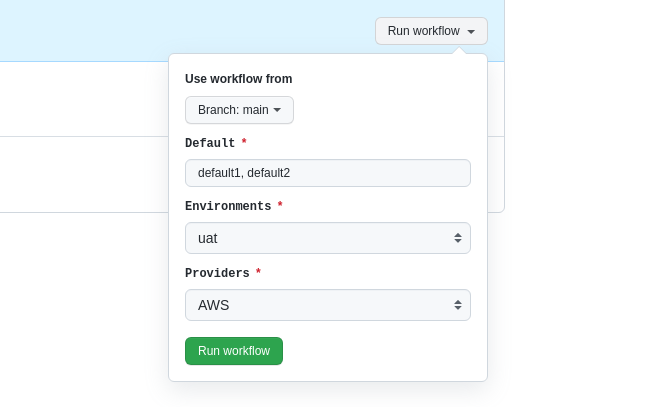
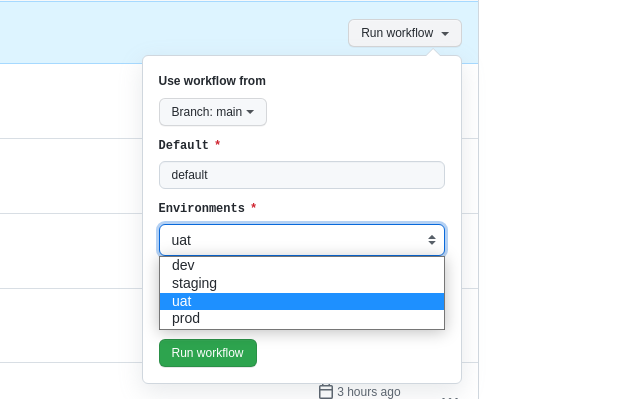
Dropdown for GitHub workflows input parameters Sometimes when we look at CI/CD tools embedded within git-based software repository manager like GitHub, GitLab or Bitbucket, we ran into a lack of some features. This time me and my DevOps/SRE team were facing a pain of not being able to have the option to create drop-downs within GitHub workflows using input parameters. Although this functionality is already available on other platforms such as Bitbucket, the specific client we were working on stored the code inside GitHub. At first I thought that someone has already solved this problem somehow, but doing an extensive search on the internet I found several angry GitHub users opening requests within the Support Community and even in the stack overflow. comment-1 comment-2 comment-3 comment-5 comment-4 So I decided to create a solution for this, always thinking about simplicity and in a way that makes it easy to get this missing functionality. I started by creating an input array pattern using commas and using a tag (the selector) e.g brackets as the default value marker. Here is an example of what an input string would look like:
name: gh-action-dropdown-list-input
on:
  workflow_dispatch:
    inputs:
      environment:
        description: 'Environment'
        required: true
        default: 'dev,staging,[uat],prod'
Now the final question that would turn out to be the most complicated to deal with. How can I change the GitHub Actions interface to replace the input pattern we created earlier to a dropdown? The simplest answer I thought was to create a chrome and firefox extension that would do all this logic behind the scenes and replace the HTML input element with the selected tag containing the array values and leaving the tag value (selector) always as the default. All code was developed in pure JavaScript, open-source licensed under Apache 2.0 and available at https://github.com/arthurbdiniz/gh-action-dropdown-list-input.

Install extension Once installed, the extension is ready to use and the final result we see is the Actions interface with drop-downs. :) showcase-1 showcase-2

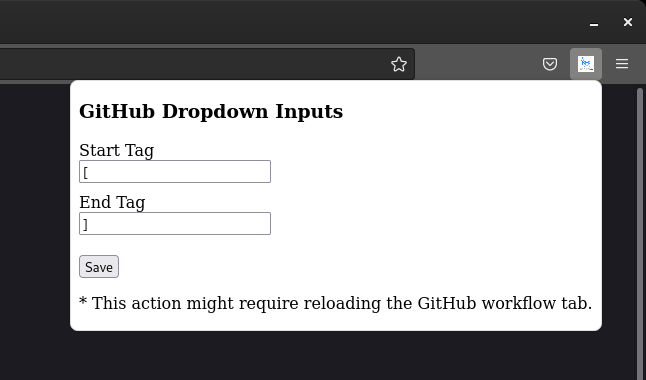
Configuring selectors Go to the top right corner of the browser you are using and click on the extension logo. A screen will popup with tag options. Choose the right tags for you and save it.
This action might require reloading the GitHub workflow tab. config

Have fun using drop-downs inside GitHub. If you liked this project please share this post and if possible star within the repository. Also feel free to connect with me on LinkedIn: https://www.linkedin.com/in/arthurbdiniz

References
  • https://github.community/t/can-workflow-dispatch-input-be-option-list/127338
  • https://stackoverflow.com/questions/69296314/dropdown-for-github-workflows-input-parameters

19 October 2021

Rapha&#235;l Hertzog: Freexian s report about Debian Long Term Support, September 2021

A Debian LTS logo
Like each month, have a look at the work funded by Freexian s Debian LTS offering. Debian project funding Folks from the LTS team, along with members of the Debian Android Tools team and Phil Morrel, have proposed work on the Java build tool, gradle, which is currently blocked due to the need to build with a plugin not available in Debian. The LTS team reviewed the project submission and it has been approved. After approval we ve created a Request for Bids which is active now. You ll hear more about this through official Debian channels, but in the meantime, if you feel you can help with this project, please submit a bid. Thanks! This September, Freexian set aside 2550 EUR to fund Debian projects. We re looking forward to receive more projects from various Debian teams! Learn more about the rationale behind this initiative in this article. Debian LTS contributors In September, 15 contributors have been paid to work on Debian LTS, their reports are available: Evolution of the situation In September we released 30 DLAs. September was also the second month of Jeremiah coordinating LTS contributors. Also, we would like say that we are always looking for new contributors to LTS. Please contact Jeremiah if you are interested! The security tracker currently lists 33 packages with a known CVE and the dla-needed.txt file has 26 packages needing an update. Thanks to our sponsors Sponsors that joined recently are in bold.

4 October 2021

Rapha&#235;l Hertzog: Freexian s report about Debian Long Term Support, August 2021

A Debian LTS logo
Like each month, have a look at the work funded by Freexian s Debian LTS offering. Debian project funding In August, we put aside 2460 EUR to fund Debian projects. We received a new project proposal that got approved and there s an associated bid request if you feel like proposing yourself to implement this project. We re looking forward to receive more projects from various Debian teams! Learn more about the rationale behind this initiative in this article. Debian LTS contributors In August, 14 contributors have been paid to work on Debian LTS, their reports are available: Evolution of the situation In August we released 30 DLAs.

This is the first month of Jeremiah coordinating LTS contributors. We would like to thank Holger Levsen for his work on this role up to now.

Also, we would like to remark once again that we are constantly looking for new contributors. Please contact Jeremiah if you are interested! The security tracker currently lists 73 packages with a known CVE and the dla-needed.txt file has 29 packages needing an update. Thanks to our sponsors Sponsors that joined recently are in bold.

Paul Wise: FLOSS Activities September 2021

Focus This month I didn't have any particular focus. I just worked on issues in my info bubble.

Changes

Issues

Review

Administration
  • Debian BTS: reopened bugs closed by a spammer
  • Debian wiki: unblock IP addresses, approve accounts

Communication
  • Respond to queries from Debian users and contributors on the mailing lists and IRC

Sponsors The purple-discord/harmony/pyemd/librecaptcha/esprima-python work was sponsored by my employer. All other work was done on a volunteer basis.

27 September 2021

Russ Allbery: Review: The Problem with Work

Review: The Problem with Work, by Kathi Weeks
Publisher: Duke University Press
Copyright: 2011
ISBN: 0-8223-5112-9
Format: Kindle
Pages: 304
One of the assumptions baked deeply into US society (and many others) is that people are largely defined by the work they do, and that work is the primary focus of life. Even in Marxist analysis, which is otherwise critical of how work is economically organized, work itself reigns supreme. This has been part of the feminist critique of both capitalism and Marxism, namely that both devalue domestic labor that has traditionally been unpaid, but even that criticism is normally framed as expanding the definition of work to include more of human activity. A few exceptions aside, we shy away from fundamentally rethinking the centrality of work to human experience. The Problem with Work begins as a critical analysis of that centrality of work and a history of some less-well-known movements against it. But, more valuably for me, it becomes a discussion of the types and merits of utopian thinking, including why convincing other people is not the only purpose for making a political demand. The largest problem with this book will be obvious early on: the writing style ranges from unnecessarily complex to nearly unreadable. Here's an excerpt from the first chapter:
The lack of interest in representing the daily grind of work routines in various forms of popular culture is perhaps understandable, as is the tendency among cultural critics to focus on the animation and meaningfulness of commodities rather than the eclipse of laboring activity that Marx identifies as the source of their fetishization (Marx 1976, 164-65). The preference for a level of abstraction that tends not to register either the qualitative dimensions or the hierarchical relations of work can also account for its relative neglect in the field of mainstream economics. But the lack of attention to the lived experiences and political textures of work within political theory would seem to be another matter. Indeed, political theorists tend to be more interested in our lives as citizens and noncitizens, legal subjects and bearers of rights, consumers and spectators, religious devotees and family members, than in our daily lives as workers.
This is only a quarter of a paragraph, and the entire book is written like this. I don't mind the occasional use of longer words for their precise meanings ("qualitative," "hierarchical") and can tolerate the academic habit of inserting mostly unnecessary citations. I have less patience with the meandering and complex sentences, excessive hedge words ("perhaps," "seem to be," "tend to be"), unnecessarily indirect phrasing ("can also account for" instead of "explains"), or obscure terms that are unnecessary to the sentence (what is "animation of commodities"?). And please have mercy and throw a reader some paragraph breaks. The writing style means substantial unnecessary effort for the reader, which is why it took me six months to read this book. It stalled all of my non-work non-fiction reading and I'm not sure it was worth the effort. That's unfortunate, because there were several important ideas in here that were new to me. The first was the overview of the "wages for housework" movement, which I had not previously heard of. It started from the common feminist position that traditional "women's work" is undervalued and advocated taking the next logical step of giving it equality with paid work by making it paid work. This was not successful, obviously, although the increasing prevalence of day care and cleaning services has made it partly true within certain economic classes in an odd and more capitalist way. While I, like Weeks, am dubious this was the right remedy, the observation that household work is essential to support capitalist activity but is unmeasured by GDP and often uncompensated both economically and socially has only become more accurate since the 1970s. Weeks argues that the usefulness of this movement should not be judged by its lack of success in achieving its demands, which leads to the second interesting point: the role of utopian demands in reframing and expanding a discussion. I normally judge a political demand on its effectiveness at convincing others to grant that demand, by which standard many activist campaigns (such as wages for housework) are unsuccessful. Weeks points out that making a utopian demand changes the way the person making the demand perceives the world, and this can have value even if the demand will never be granted. For example, to demand wages for housework requires rethinking how work is defined, what activities are compensated by the economic system, how such wages would be paid, and the implications for domestic social structures, among other things. That, in turn, helps in questioning assumptions and understanding more about how existing society sustains itself. Similarly, even if a utopian demand is never granted by society at large, forcing it to be rebutted can produce the same movement in thinking in others. In order to rebut a demand, one has to take it seriously and mount a defense of the premises that would allow one to rebut it. That can open a path to discussing and questioning those premises, which can have long-term persuasive power apart from the specific utopian demand. It's a similar concept as the Overton Window, but with more nuance: the idea isn't solely to move the perceived range of accepted discussion, but to force society to examine its assumptions and premises well enough to defend them, or possibly discover they're harder to defend than one might have thought. Weeks applies this principle to universal basic income, as a utopian demand that questions the premise that work should be central to personal identity. I kept thinking of the Black Lives Matter movement and the demand to abolish the police, which (at least in popular discussion) is a more recent example than this book but follows many of the same principles. The demand itself is unlikely to be met, but to rebut it requires defending the existence and nature of the police. That in turn leads to questions about the effectiveness of policing, such as clearance rates (which are far lower than one might have assumed). Many more examples came to mind. I've had that experience of discovering problems with my assumptions I'd never considered when debating others, but had not previously linked it with the merits of making demands that may be politically infeasible. The book closes with an interesting discussion of the types of utopias, starting from the closed utopia in the style of Thomas More in which the author sets up an ideal society. Weeks points out that this sort of utopia tends to collapse with the first impossibility or inconsistency the reader notices. The next step is utopias that acknowledge their own limitations and problems, which are more engaging (she cites Le Guin's The Dispossessed). More conditional than that is the utopian manifesto, which only addresses part of society. The least comprehensive and the most open is the utopian demand, such as wages for housework or universal basic income, which asks for a specific piece of utopia while intentionally leaving unspecified the rest of the society that could achieve it. The demand leaves room to maneuver; one can discuss possible improvements to society that would approach that utopian goal without committing to a single approach. I wish this book were better-written and easier to read, since as it stands I can't recommend it. There were large sections that I read but didn't have the mental energy to fully decipher or retain, such as the extended discussion of Ernst Bloch and Friedrich Nietzsche in the context of utopias. But that way of thinking about utopian demands and their merits for both the people making them and for those rebutting them, even if they're not politically feasible, will stick with me. Rating: 5 out of 10

22 September 2021

Ian Jackson: Tricky compatibility issue - Rust's io::ErrorKind

This post is about some changes recently made to Rust's ErrorKind, which aims to categorise OS errors in a portable way. Audiences for this post Background and context Error handling principles Handling different errors differently is often important (although, sadly, often neglected). For example, if a program tries to read its default configuration file, and gets a "file not found" error, it can proceed with its default configuration, knowing that the user hasn't provided a specific config. If it gets some other error, it should probably complain and quit, printing the message from the error (and the filename). Otherwise, if the network fileserver is down (say), the program might erroneously run with the default configuration and do something entirely wrong. Rust's portability aims The Rust programming language tries to make it straightforward to write portable code. Portable error handling is always a bit tricky. One of Rust's facilities in this area is std::io::ErrorKind which is an enum which tries to categorise (and, sometimes, enumerate) OS errors. The idea is that a program can check the error kind, and handle the error accordingly. That these ErrorKinds are part of the Rust standard library means that to get this right, you don't need to delve down and get the actual underlying operating system error number, and write separate code for each platform you want to support. You can check whether the error is ErrorKind::NotFound (or whatever). Because ErrorKind is so important in many Rust APIs, some code which isn't really doing an OS call can still have to provide an ErrorKind. For this purpose, Rust provides a special category ErrorKind::Other, which doesn't correspond to any particular OS error. Rust's stability aims and approach Another thing Rust tries to do is keep existing code working. More specifically, Rust tries to:
  1. Avoid making changes which would contradict the previously-published documentation of Rust's language and features.
  2. Tell you if you accidentally rely on properties which are not part of the published documentation.
By and large, this has been very successful. It means that if you write code now, and it compiles and runs cleanly, it is quite likely that it will continue work properly in the future, even as the language and ecosystem evolves. This blog post is about a case where Rust failed to do (2), above, and, sadly, it turned out that several people had accidentally relied on something the Rust project definitely intended to change. Furthermore, it was something which needed to change. And the new (corrected) way of using the API is not so obvious. Rust enums, as relevant to io::ErrorKind (Very briefly:) When you have a value which is an io::ErrorKind, you can compare it with specific values:
    if error.kind() == ErrorKind::NotFound   ...
  
But in Rust it's more usual to write something like this (which you can read like a switch statement):
    match error.kind()  
      ErrorKind::NotFound => use_default_configuration(),
      _ => panic!("could not read config file  :  ", &file, &error),
     
  
Here _ means "anything else". Rust insists that match statements are exhaustive, meaning that each one covers all the possibilities. So if you left out the line with the _, it wouldn't compile. Rust enums can also be marked non_exhaustive, which is a declaration by the API designer that they plan to add more kinds. This has been done for ErrorKind, so the _ is mandatory, even if you write out all the possibilities that exist right now: this ensures that if new ErrorKinds appear, they won't stop your code compiling. Improving the error categorisation The set of error categories stabilised in Rust 1.0 was too small. It missed many important kinds of error. This makes writing error-handling code awkward. In any case, we expect to add new error categories occasionally. I set about trying to improve this by proposing new ErrorKinds. This obviously needed considerable community review, which is why it took about 9 months. The trouble with Other and tests Rust has to assign an ErrorKind to every OS error, even ones it doesn't really know about. Until recently, it mapped all errors it didn't understand to ErrorKind::Other - reusing the category for "not an OS error at all". Serious people who write serious code like to have serious tests. In particular, testing error conditions is really important. For example, you might want to test your program's handling of disk full, to make sure it didn't crash, or corrupt files. You would set up some contraption that would simulate a full disk. And then, in your tests, you might check that the error was correct. But until very recently (still now, in Stable Rust), there was no ErrorKind::StorageFull. You would get ErrorKind::Other. If you were diligent you would dig out the OS error code (and check for ENOSPC on Unix, corresponding Windows errors, etc.). But that's tiresome. The more obvious thing to do is to check that the kind is Other. Obvious but wrong. ErrorKind is non_exhaustive, implying that more error kinds will appears, and, naturally, these would more finely categorise previously-Other OS errors. Unfortunately, the documentation note
Errors that are Other now may move to a different or a new ErrorKind variant in the future.
was only added in May 2020. So the wrongness of the "obvious" approach was, itself, not very obvious. And even with that docs note, there was no compiler warning or anything. The unfortunate result is that there is a body of code out there in the world which might break any time an error that was previously Other becomes properly categorised. Furthermore, there was nothing stopping new people writing new obvious-but-wrong code. Chosen solution: Uncategorized The Rust developers wanted an engineered safeguard against the bug of assuming that a particular error shows up as Other. They chose the following solution: There is now a new ErrorKind::Uncategorized which is now used for all OS errors for which there isn't a more specific categorisation. The fallback translation of unknown errors was changed from Other to Uncategorised. This is de jure justified by the fact that this enum has always been marked non_exhaustive. But in practice because this bug wasn't previously detected, there is such code in the wild. That code now breaks (usually, in the form of failing test cases). Usually when Rust starts to detect a particular programming error, it is reported as a new warning, which doesn't break anything. But that's not possible here, because this is a behavioural change. The new ErrorKind::Uncategorized is marked unstable. This makes it impossible to write code on Stable Rust which insists that an error comes out as Uncategorized. So, one cannot now write code that will break when new ErrorKinds are added. That's the intended effect. The downside is that this does break old code, and, worse, it is not as clear as it should be what the fixed code looks like. Alternatives considered and rejected by the Rust developers Not adding more ErrorKinds This was not tenable. The existing set is already too small, and error categorisation is in any case expected to improve over time. Just adding ErrorKinds as had been done before This would mean occasionally breaking test cases (or, possibly, production code) when an error that was previously Other becomes categorised. The broken code would have been "obvious", but de jure wrong, just as it is now, So this option amounts to expecting this broken code to continue to be written and continuing to break it occasionally. Somehow using Rust's Edition system The Rust language has a system to allow language evolution, where code declares its Edition (2015, 2018, 2021). Code from multiple editions can be combined, so that the ecosystem can upgrade gradually. It's not clear how this could be used for ErrorKind, though. Errors have to be passed between code with different editions. If those different editions had different categorisations, the resulting programs would have incoherent and broken error handling. Also some of the schemes for making this change would mean that new ErrorKinds could only be stabilised about once every 3 years, which is far too slow. How to fix code broken by this change Most main-line error handling code already has a fallback case for unknown errors. Simply replacing any occurrence of Other with _ is right. How to fix thorough tests The tricky problem is tests. Typically, a thorough test case wants to check that the error is "precisely as expected" (as far as the test can tell). Now that unknown errors come out as an unstable Uncategorized variant that's not so easy. If the test is expecting an error that is currently not categorised, you want to write code that says "if the error is any of the recognised kinds, call it a test failure". What does "any of the recognised kinds" mean here ? It doesn't meany any of the kinds recognised by the version of the Rust stdlib that is actually in use. That set might get bigger. When the test is compiled and run later, perhaps years later, the error in this test case might indeed be categorised. What you actually mean is "the error must not be any of the kinds which existed when the test was written". IMO therefore the right solution for such a test case is to cut and paste the current list of stable ErrorKinds into your code. This will seem wrong at first glance, because the list in your code and in Rust can get out of step. But when they do get out of step you want your version, not the stdlib's. So freezing the list at a point in time is precisely right. You probably only want to maintain one copy of this list, so put it somewhere central in your codebase's test support machinery. Periodically, you can update the list deliberately - and fix any resulting test failures. Unfortunately this approach is not suggested by the documentation. In theory you could work all this out yourself from first principles, given even the situation prior to May 2020, but it seems unlikely that many people have done so. In particular, cutting and pasting the list of recognised errors would seem very unnatural. Conclusions This was not an easy problem to solve well. I think Rust has done a plausible job given the various constraints, and the result is technically good. It is a shame that this change to make the error handling stability more correct caused the most trouble for the most careful people who write the most thorough tests. I also think the docs could be improved.
edited shortly after posting, and again 2021-09-22 16:11 UTC, to fix HTML slips


comment count unavailable comments

21 September 2021

Russell Coker: Links September 2021

Matthew Garrett wrote an interesting and insightful blog post about the license of software developed or co-developed by machine-learning systems [1]. One of his main points is that people in the FOSS community should aim for less copyright protection. The USENIX ATC 21/OSDI 21 Joint Keynote Address titled It s Time for Operating Systems to Rediscover Hardware has some inssightful points to make [2]. Timothy Roscoe makes some incendiaty points but backs them up with evidence. Is Linux really an OS? I recommend that everyone who s interested in OS design watch this lecture. Cory Doctorow wrote an interesting set of 6 articles about Disneyland, ride pricing, and crowd control [3]. He proposes some interesting ideas for reforming Disneyland. Benjamin Bratton wrote an insightful article about how philosophy failed in the pandemic [4]. He focuses on the Italian philosopher Giorgio Agamben who has a history of writing stupid articles that match Qanon talking points but with better language skills. Arstechnica has an interesting article about penetration testers extracting an encryption key from the bus used by the TPM on a laptop [5]. It s not a likely attack in the real world as most networks can be broken more easily by other methods. But it s still interesting to learn about how the technology works. The Portalist has an article about David Brin s Startide Rising series of novels and his thought s on the concept of Uplift (which he denies inventing) [6]. Jacobin has an insightful article titled You re Not Lazy But Your Boss Wants You to Think You Are [7]. Making people identify as lazy is bad for them and bad for getting them to do work. But this is the first time I ve seen it described as a facet of abusive capitalism. Jacobin has an insightful article about free public transport [8]. Apparently there are already many regions that have free public transport (Tallinn the Capital of Estonia being one example). Fare free public transport allows bus drivers to concentrate on driving not taking fares, removes the need for ticket inspectors, and generally provides a better service. It allows passengers to board buses and trams faster thus reducing traffic congestion and encourages more people to use public transport instead of driving and reduces road maintenance costs. Interesting research from Israel about bypassing facial ID [9]. Apparently they can make a set of 9 images that can pass for over 40% of the population. I didn t expect facial recognition to be an effective form of authentication, but I didn t expect it to be that bad. Edward Snowden wrote an insightful blog post about types of conspiracies [10]. Kevin Rudd wrote an informative article about Sky News in Australia [11]. We need to have a Royal Commission now before we have our own 6th Jan event. Steve from Big Mess O Wires wrote an informative blog post about USB-C and 4K 60Hz video [12]. Basically you can t have a single USB-C hub do 4K 60Hz video and be a USB 3.x hub unless you have compression software running on your PC (slow and only works on Windows), or have DisplayPort 1.4 or Thunderbolt (both not well supported). All of the options are not well documented on online store pages so lots of people will get unpleasant surprises when their deliveries arrive. Computers suck. Steinar H. Gunderson wrote an informative blog post about GaN technology for smaller power supplies [13]. A 65W USB-C PSU that fits the usual wall wart form factor is an interesting development.

14 September 2021

Joachim Breitner: A Candid explainer: Quirks

This is the fifth and final post in a series about the interface description language Candid. If you made it this far, you now have a good understanding of what Candid is, what it is for and how it is used. For this final post, I ll put the spotlight on specific aspects of Candid that are maybe surprising, or odd, or quirky. This section will be quite opinionated, and could maybe be called what I d do differently if I d re-do the whole thing . Note that these quirks are not serious problems, and they don t invalidate the overall design. I am writing this up not to discourage the use of Candid, but merely help interested parties to understand it better.

References in the wire format When the work on Candid began at DFINITY, the Internet Computer was still far away from being a thing, and many fundamental aspects about it were still in the air. I particular, there was still talk about embracing capabilities as a core feature of the application model, which would be implemented as opaque references on the system level, likely building on WebAssembly s host reference type proposal (which only landed recently), and could be used to model access permissions, custom tokens and many other things. So Candid is designed with that in mind, and you ll find that its wire format is not just a type table and a value table, but actually
a triple (T, M, R), where T ( type ) and M ( memory ) are sequences of bytes and R ( references ) is a sequence of references.
Also the wire format for values of function service tyeps have an extra byte to distinguish between public references (represented by a principal and possible a method name in the data part), and these opaque references. Alas, references never made it into the Internet Computer, so all Candid implementations simply ignore that part of the specification. But it s still in the spec, and if it confused you before, now you know why.

Hashed field names Candid record and variant types look like they have textual field names:
type T = record   syndactyle : nat; trustbuster: bool  
But that is actually only true superficially. The wire format for Candid only stores hashes of field names. So the above is actually equivalent to
type T = record   4260381820 : nat; 3504418361 : bool  
or, for that matter, to
type T = record   destroys : bool; rectum : nat  
(Yes, I used an english word list to find these hash collisions. There aren t that many actually.) The benefit of such hashing is that the messages are a bit smaller in most (not all) cases, but it is a big annoyance for dynamic uses of Candid. It s the reason why tools like dfx, if they don t know the Candid interface of a service, will print the result with just the numerical hash, letting you guess which field is which. It also complicates host languages that derive Candid types from the host language, like Motoko, as some records (e.g. record trustbuster: bool; destroys : int ) with field name hash collisions can not be represented in Candid, and either the host language s type system needs to be Candid aware now (as is the case of Motoko), or serialization/deserialization will fail at runtime, or odd bugs can happen. (More discussion of this issue).

Tuples Many languages have a built-in notion of a tuple type (e.g. (Int, Bool)), but Candid does not have such a type. The only first class product type is records. This means that tuples have to encoded as records somehow. Conveniently(?) record fields are just numbers after all, so the type (Int, Bool) would be mapped to the type
record   0 : int; 1 : bool  
So tuples can be expressed. But from my experience implementing the type mappings for Motoko and Haskell this is causing headaches. To get a good experience when importing from Candid, the tools have to try to reconstruct which records may have been tuples originally, and turn them into tuples. The main argument for the status quo is that Candid types should be canonical, and there should not be more than one product type, and records are fine, and there needs to be no anonymous product type. But that has never quite resonated with me, given the practical reality of tuple types in many host languages.

Argument sequences Did I say that Candid does not have tuple types? Turns out it does, sort of. There is no first class anonymous product, but since functions take sequences of arguments and results, there is a tuple type right there:
func foo : (bool, int) -> (int, bool)
Again, I found that ergonomic interaction with host languages becomes relatively unwieldy by requiring functions to take and return sequences of values. This is especially true for languages where functions take one argument value or return one result type (the latter being very common). Here, return sequences of length one are turned into that type directly, longer argument sequences turn into the host language s tuple type, and nullary argument sequences turn into the idiomatic unit type. But this means that the types (int, bool) -> () and (record 0: int, 1: bool ) -> () may be mapped to the same host language type, which causes problems when you hope to encode all necessary Candid type information in the host language. Another oddity with argument and result sequences is that you can give names to the entries, e.g. write
func hello : (last_name : text; first_name : text) -> ()
but these names are completely ignored! So while this looks like you can, for example, add new optional arguments in the middle, such as
func hello : (last_name : text; middle_name: opt text, first_name : text) -> ()
without breaking clients, this does not have the effect you think it has and will likely break. My suggestion is to never put names on function arguments and result values in Candid interfaces, and for anything that might be extended with new fields or where you want to name the arguments, use a single record type as the only argument:
func hello : (record   last_name : text; first_name : text ) -> ()
This allows you to add and remove arguments more easily and reliably.

Type shorthands The Candid specification defines a system of types, and then adds a number of syntactic short-hands . For example, if you write blob in a Candid type description, it ought to means the same as vec nat8. My qualm with that is that it doesn t always mean the same. A Candid type description is interpreted by a number of, say, consumers . Two such consumers are part of the Candid specification:
  • The specification that defines the wire format for that type
  • The upgrading (subtyping) rules
But there are more! For every host language, there is some mapping from Candid types to host language types, and also generic tools like Candid UI are consumers of the type algebra. If these were to take the Candid specification as gospel, they would be forced to treat blob and vec nat8 the same, but that would be quite unergonomic and might cause performance regressions (most language try to map blob to some compact binary data type, while vec t tends to turn into some form of array structure). So they need to be pragmatic and treat blob and vec nat8 differently. But then, for all practical purposes, blob is not just a short-hand of vec nat8. They are different types that just happens to have the same wire representations and subtyping relations. This affects not just blob, but also tuples (record blob; int; bool ) and field names , as discussed above.

The value text format For a while after defining Candid, the only implementation was in Motoko, and all the plumbing was automatic, so there was never a need for users to to explicitly handle Candid values, as all values were Motoko values. Still, for debugging and testing and such things, we eventually needed a way to print out Candid values, so the text format was defined ( To enable convenient debugging, the following grammar specifies a text format for values ). But soon the dfx tool learned to talk to canisters, and now users needed to enter Candid value on the command line, possibly even when talking to canisters for which the interface was not known to dfx. And, sure enough, the textual interface defined in the Candid spec was used. Unfortunately, since it was not designed for that use case, it is rather unwieldy:
  • It is quite verbose. You have to write record , not just . Vectors are written vec ; instead of some conventional syntax like [ , ]. Variants are written as variant error = " " with braces that don t any value here, and something like #error " " might have worked as well. With a bit more care, a more concise and ergonomic syntax might have been possible.
  • It wasn t designed to be sufficient to create a Candid value from it. If you write 5 it s unclear whether that s a nat or an int16 or what (and all of these have different wire representations). Type annotations were later added, but are relatively unwieldy, and don t cover all cases (e.g. a service reference with a recursive type cannot be represented in the textual format at the moment).
  • Not really the fault of the textual format, but some useful information about the types is not reflected in the type description that s part of the wire format. In particular not the field names, and whether a value was intended to be binary data (blob) or a list of small numbers (vec nat8), so pretty-printing such values requires guesswork. The Haskell library even tries to brute-force the hash to guess the field name, if it is short or in a english word list!
In hindsight I think it was too optimistic to assume that correct static type information is always available, and instead of actively trying to discourage dynamic use, Candid might be better if we had taken these (unavoidable?) use cases into account.

Custom wire format At the beginning of this post, I have a Candid is list. The list is relatively long, and the actual wire format is just one bullet point. Yes, defining a wire format that works isn t rocket science, and it was easiest to just make one up. But since most of the interesting meat of Candid is in other aspects (subtyping rules, host language integration), I wonder if it would have been better to use an existing, generic wire format, such as CBOR, and build Candid as a layer on top. This would give us plenty of tools and libraries to begin with. And maybe it would have reduced barrier of entry for developers, which now led to the very strange situation that DFINITY advocates for the universal use of Candid on the Internet Computer, so that all services can smoothly interact, but two of the most important services on the Internet Computer (the registry and the ledger) use Protobuf as their primary interface format, with Candid interfaces missing or an afterthought.

Sideways Interface Evolution This is not a quirk of Candid itself, but rather an idiom of how you can use Candid that emerged from our solution for record extensions and upgrades. Consider our example from before, a service with interface
service   add_user : (record   login : text; name : text  ) -> ()  
where you want to add an age field, which should be a number. The official way of doing that is to add that field with an optional type:
service   add_user : (record   login : text; name : text; age : opt nat  ) -> ()  
As explained above, this will not break old clients, as the decoder will treat a missing argument as null. So far so good. But often when adding such a field you don t want to bother new clients with the fact that this age was, at some point in the past, not there yet. And you can do that! The trick is to distinguish between the interface you publish and the interface you implement. You can (for example in your documentation) state that the interface is
service   add_user : (record   login : text; name : text; age : nat  ) -> ()  
which is not a subtype of the old type, but it is the interface you want new clients to work with. And then your implementation uses the type with opt nat. Calls from old clients will come through as null, and calls from new clients will come through as opt 42. We can see this idiom used in the Management Canister of the Internet Computer. The current documented interface only mentions a controllers : vec principal field in the settings, but the implementation still can handle both the old controller : principal and the new controllers field. It s probably advisable to let your CI system check that new versions of your service continue to implement all published interfaces, including past interfaces. But as long as the actual implementation s interface is a subtype of all interfaces ever published, this works fine. This pattern is related to when your service implements, say, http_request (so its implemented interface is a subtype of that common interface), but does not include that method in the published documentation (because clients of your service don t need to call it).

Self-describing Services As you have noticed, Candid was very much designed assuming that all parties always have the service type of services they want to interact with. But the Candid specification does not define how one can obtain the interface of a given service, and there isn t really a an official way to do that on the Internet Computer. That is unfortunate, because many interesting features depend on that: Such as writing import C "ic:7e6iv-biaaa-aaaaf-aaada-cai" in your Motoko program, and having it s type right there. Or tools like ic.rocks, that allow you to interact with any canister right there. One reason why we don t really have that feature yet is because of disagreements about how dynamic that feature should be. Should you be able to just ask the canister for its interface (and allow the canister to vary the response, for example if it can change its functionality over time, even without changing the actual wasm code)? Or is the interface a static property of the code, and one should be able to query the system for that data, without the canister s active involvement. Or, completely different, should interfaces be distributed out of band, maybe together with API documentation, or in some canister registry somewhere else? I always leaned towards the first of these options, but not convincingly enough. The second options requires system assistance, so more components to change, more teams to be involved that maybe intrinsically don t care a lot about this feature. And the third might have emerged as the community matures and builds such infrastructure, but that did not happen yet. In the end I sneaked in an implementation of the first into Motoko, arguing that even if we don t know yet how this feature will be implemented eventually, we all want the feature to exist somehow, and we really really want to unblock all the interesting applications it enables (e.g. Candid UI). That s why every Motoko canister, and some rust canisters too, implements a method
__get_candid_interface_tmp_hack : () -> (text)
that one can use to get the Candid interface file. The name was chosen to signal that this may not be the final interface, but like all good provisional solutions, it may last longer than intended. If that s the case, I m not sorry. This concludes my blog post series about Candid, for now. If you want to know more, feel free to post your question on the DFINTY developer forum, and I ll probably answer.

7 September 2021

Joachim Breitner: A Candid explainer: Opt is special

This is the third post in a series about the interface description language Candid.

The record extension problem Initially, the upgrade rules of Candid were a straight-forward application of the canonical subtyping rules. This worked and was sound, but it forbid one very commonly requested use case: Extending records in argument position. The subtyping rule for records say that
   record   old_field : nat; new_field : int  
<: record   old_field : nat  
or, in words, that subtypes can have more field than supertypes. This makes intuitive sense: A user of a such a record value that only expects old_field to be there is not bothered if suddenly a new_field appears. But a user who expects new_field to be there is thrown off if it suddenly isn t anymore. Therefore it is ok to extend the records returned by a service with new fields, but not to extend the record in your methods s argument types. But users want to extend their record types over time, also in argument position! In fact, they often want to extend them in both positions. Consider a service with the following interface, where the CUser record appears both in argument and result position:
type CUser = record   login : text; name : text  ;
service C :  
  register_user : (CUser) -> ();
  get_user_data : (text) -> (CUser);
 
It seems quite natural to want to extend the record with a new field (say, the age of the user). But simply changing the definition of CUser to
type CUser = record   login : text; name : text; age : nat  
is not ok, because now register_user requires the age field, but old clients don t provide it. So how can we allow developers to make changes like this (because they really really want that), while keeping the soundness guarantees made by Candid (because we really really want that)? This question has bothered us for over two years, and we even created a meta issue that records the dozen approached we considered, discussed and eventually ditched.

Dynamic subtyping checks in opt I will spare you the history lesson, though, and explain the solution we eventually came up with. In the example above it seems unreasonable to let the developer add a field age of type nat. Since there may be old clients around, the service unavoidably has to deal with records that don t have an age field. If the code expects an age value, what should it do in that case? But one can argue that changing the record type to
type CUser = record   login : text; name : text; age : opt nat  
could work: If the age field is present, use the value. If the field is absent, inject a null value during decoding. In the first-order case, this rather obvious solution would work just fine, and we d be done. But Candid aims to solve the higher order case, and I said things get tricky here, didn t I? Consider another, independent service D with the following interface:
type DUser = record   login : text; name : text  ;
service D :  
  on_user_added : (func (DUser) -> ()) -> ()
 
This service has a method that takes a method reference, presumably with the intention of calling it whenever a new user was added to service D. And because the types line up nicely, we can compose these two services, by once calling D.on_user_added(C.register_user), so that from now on D calls C.register_user( ). These kind of service mesh-ups are central to the vision of the Internet Computer! But what happens if the services now evolve their types in different ways, e.g. towards
type CUser = record   login : text; name : text; age : opt nat  
and
type DUser = record   login : text; name : text; age : opt variant   under_age; adult  
Individually, these are type changes that we want to allow. But now the call from D to C may transmit a value of record ; age = opt variant under_age when C expects a natural number! This is precisely what we want to prevent by introducing types, and it seems we have lost soundness. The best solution we could find is to make the opt type somewhat special, and apply these extra rules when decoding at an expected type of opt t.
  • If this was a record field, and the provided record value doesn t even have a field of that name, don t fail but instead treat this as null. This handles the first-order example above.
  • If there is a value, look at its type (which, in Candid, is part of the message).
    • If it is opt t' and t' <: t, then decode as normal.
    • If it is opt t' but t' <: t does not hold, then treat that as null. This should only happen in these relatively obscure higher-order cases where services evolved differently and incompatibly, and makes sure that the calls that worked before the upgrades will continue to work afterwards. It is not advisable to actually use that rule when changing your service s interface. Tools that assist the developer with an upgrade check should prevent or warn about the use of this rule.
  • Not strictly required here, but since we are making opt special anyways: If its type t' is not of the form opt , pretend it was opt t', and also pretend that the given value was wrapped in opt. This allows services to make record field in arguments that were required in the old version optional in a new version, e.g. as a way to deprecated them. So it is mildly useful, although I can report that it makes the meta-theory and implementation rather complex, in particular together with equirecursion and beasts like type O = opt O. See this discussion for a glimpse of that.
In the above I stress that we look at the type of the provided value, and not just the value. For example, if the sender sends the value opt vec at type opt vec nat, and the recipient expects opt vec bool, then this will decode as null, even though one could argue that the value opt vec could easily be understood at type opt vec bool. We initially had that, but then noticed that this still breaks soundness when there are references inside, and we have to do a full subtyping check in the decoder. This is very unfortunate, because it makes writing a Candid decoder a noticeably harder task that requires complicated graph algorithms with memoization (which I must admit Motoko has not implemented yet), but it s the least bad solution we could find so far.

Isn t that just dynamic typing? You might have noticed that with these rules, t <: opt t' holds for all types t and t'. In other words, every opt is a top type (like reserved), thus all optional types are equivalent. One could argue that we are throwing all of the benefits of static typing over board this way. But it s not quite as bad: It s true that decoding Candid values now involves a dynamic check inserting null values in certain situations, but as long as everyone plays by the rules (i.e. upgrades their services according to the Candid safe upgrade rules, and heeds the warning alluded to above), these certain situations will only happen in the obscurest of cases. It is, by the way, not material to this solution that the special subtyping behavior is applied to the opt type, and a neighboring point in the design space would be a dedicated upgraded t type constructor. That would allow developers to use the canonical opt type with the usual subtyping rules and communicate their intent ( clients should consider this field optional vs. old clients don t know about this field, but new clients should use it ) more cleanly at the expense of having more non-canonical types in the type system. To see why it is convenient if Candid has mostly just the normal types, read the next post, which will describe how Candid can be integrated into a host language.

5 September 2021

Antoine Beaupr : Automating major Debian upgrades

It's major upgrade time again! The Debian project just published the Debian 11 "bullseye" release, and it's pretty awesome! This makes me realized that I have never written here about my peculiar upgrade process, and figured it was worth bringing that up to a wider audience. My upgrade process also has a notable changes section which includes major version changes (e.g. Inkscape 1.0!), new packages (e.g. podman!) and important behavior changes (e.g. driverless scanning and printing!). I'm particularly interested to hear about any significant change I might have missed. If you know of a cool new package that shipped with bullseye and that I forgot, do let me know! But that's for the cool new stuff. We need to talk about the problems with Debian major upgrades.

Background I have been maintaining detailed upgrade guides, on my wiki, starting with the jessie release, but I have actually written such guides for Koumbit.org as far back as Debian squeeze in 2011 (another worker wrote the older Debian lenny upgrade guide in 2009). Koumbit, since then, has kept maintaining those guides all the way to the latest bullseye upgrade, through 7 major releases! Over the years, those guides evolved from a quick "cheat-sheet" format copied from the release notes into a more or less "scripted" form that I currently use. Each guide has a procedure made of a few steps that can be basically copy-pasted to batch-upgrade a host (or multiple hosts in parallel) as quickly as possible. There is also the predict-os script which allows you to keep track of progress of the upgrades in a Puppet cluster.

Limitations of the official procedure In comparison with my procedure, the official upgrade guide is mostly designed to upgrade a single machine, typically a workstation, with a rather slow and exhaustive process. The PDF version of the upgrade guide is 14 pages long! This, obviously, does not work when you have tens or hundreds of machines to upgrade. Debian upgrades are notorious for being extremely reliable, but we have a lot of packages, and there are always corner cases where the upgrade will just fail because of a bug specific to your environment. Those will only be fixed after some back and forth in the community (and that's assuming users report those bugs, which is not always the case). There's no obvious way to deploy "hot fixes" in this context, at least not without fixing the package and publishing it on an unofficial Debian archive while the official ones catch up. This is slow and difficult. Or some packages require manual labor. Examples of this are the PostgreSQL or Ganeti packages which require you to upgrade your clusters by hand, while the old and new packages live side by side. Debian packages bring you far in the upgrade process, but sometimes not all the way. Which means every Debian install needs to be manually upgraded and inspected when a new release comes out. That's slow and error prone and we can do better.

How to automate major upgrades I have a proposal to automate this. It's been mostly dormant in the Debian wiki, for 5 years now. Fundamentally, this is a hard problem: Debian gets installed in so many different environments, from workstations to physical servers to virtual machines, embedded systems and so on, that it's extremely hard to come up with a "one size fits all" system. The (manual) procedure I'm using is mostly targeting servers, but I'm also using it on workstations. And I'll note that it's specific to my home setup: I have a different procedure at work, although it has a lot of common code. To automate this, I would factor out that common code with hooks where you could easily inject special code like "you need to upgrade ferm first", "you need an extra reboot here", or "this is how you finish the PostgreSQL upgrade". With Debian getting closer to a 2 year release cycle, with the previous release being supported basically only one year after the new stable comes out, I feel more and more strongly that this needs better automation. So I'm thinking that I should write a prototype for this. Ubuntu has do-release-upgrade that is too Ubuntu-specific to be reused. An attempt at collaborating on this has been mostly met with silence from Ubuntu's side as well. I'm thinking that using something like Fabric, Mitogen, or Transilience: anything that will allow me to write simple, portable Python code that can run transparently on a local machine (for single systems upgrades, possibly with a GUI frontend) to remote servers (for large clusters of servers, maybe with canaries and grouping using Cumin). I'll note that Koumbit started experimenting with Puppet Bolt in the bullseye upgrade process, but that feels too site-specific to be useful more broadly.

Trade-offs I am not sure where this stands in the XKCD time trade-off evaluation, because the table doesn't actually cover the time frequency of Debian release (which is basically "biennial") and the amount of time the upgrade would take across a cluster (which varies a lot, but that I estimate to be between one to 6 hours per machine). Assuming I have 80 machines to upgrade, that is 80 to 480 hours (between ~3 to 20 days) of work! It's unclear how much work such an automated system would shave off, however. Assuming things are an order of magnitude faster (say I upgrade 10 machines at a time), I would shave off between 3 and 18 days of work, which implies I might allow myself to spend a minimum of 5 days working on such a project.

The other option: never upgrade Before people mention those: I am aware of containers, Kubernetes, and other deployment mechanisms. Indeed, those may be a long-term solution, we currently can't afford to migrate everything over to containers right now: that is a huge migration and a total paradigm shift. At that point, whatever is left might not even be Debian in the first place. And besides, if you run Kubernetes, you still need to run some OS underneath and upgrade that, so that problem never completely disappears. Still, maybe that's the final answer: never upgrade. For some stateless machines like DNS replicas or load balancers, that might make a lot of sense as there's no or little data to carry to the new host. But this implies a seamless and fast provisioning process, and we don't have that either: at my work, installing a machine takes about as long as upgrading it, and that's after a significant amount of work automating that process, partly writing my own Debian installer with Fabric (!).

What is your process? I'm curious to hear what people think of those ideas. It strikes me as really odd that no one has really tackled that problem yet, considering how many clusters of Debian machines are out there. Surely people are upgrading those, and not following that slow step by step guide, right? I suspect everyone is doing the same thing: we all have our little copy-paste script we batch onto multiple machines, sometimes in parallel. That is what the Debian.org sysadmins are doing as well. There must be a better way. What is yours?

My upgrades so far So far, I have upgraded 2 out of my 3 home machines running buster -- others have been installed directly in bullseye -- with only my main, old, messy server left. Upgrades have been pretty painless so far (see another report, for example), much better than the previous buster upgrade. Obviously, for me personal use, automating this is pointless. Work-side, however, is another story: we have over 80 boxes to upgrade there and that will take a while. The last stretch to buster cycle took about two years to complete, so we might be done by the time the next release (12, "bookworm") is released, but that's actually a full year after "buster" becomes EOL, so it's actually too late... At least I fixed the installers so that new the machines we create all ship with bullseye, so we stopped accumulating new buster hosts...
Thanks to lelutin and pabs for reviewing a draft of this post.

30 August 2021

Joachim Breitner: A Candid explainer: Safe higher-order upgrades

This is the second post in a series about the interface description language Candid.

Safe upgrades A central idea behind Candid is that services evolve over time, and so also their interfaces evolve. As they do, it is desirable to keep the interface usable by clients who have not been updated. In particular on a blockchainy platform like the Internet Computer, where some programs are immutable and cannot be changed to accommodate changes in the interface of the services they use, this is of importance. Therefore, Candid defines which changes to an interface are guaranteed to be backward compatible. Of course it s compatible to add new methods to a service, but some changes to a method signature can also be ok. For example, changing
service A1 :  
  get_value : (variant   current; previous : nat  )
    -> (record   value : int; last_change : nat  )
 
to
service A2 :  
  get_value : (variant   current; previous : nat; default  )
    -> (record   value : int; last_change : nat; committed : bool  )
 
is fine: It doesn t matter that clients that still use the old interface don t know about the new constructor of the argument variant. And the extra field in the result record will silently be ignored by old clients. In the Candid spec, this relation is written as A2 <: A1 (note the order!), and the formal footing this builds on is subtyping. We thus say that it is safe to upgrade a service to a subtype , and that A2 s interface is a subtype of A1 s. In small examples, I often use nat and int, because every nat is also a int, but some int values are not not nat values, namely the negative ones. We say nat is a subtype of int, nat <: int. So a function that in the first returns a int can in the new version return a nat without breaking old clients. But the other direction doesn t work: If the old version s method had a return type of nat, then changing that to int would be a breaking change, as old clients would not be prepared to handle negative numbers. Note that arguments of function types follow different rules. In fact, the rules are simply turned around, and in argument position (also called negative position ), we can evolve the interface to accept supertypes. Concretely, a function that originally expected an nat can be changed to expect an int, but the other direction doesn t work, because there might still be old clients around that send negative numbers. This reversing-of-the-rules is called contravariance. The vision is that the developer s tooling will warn the developer before they upgrade the code of a running service to a type that is not a subtype of the old interface. Let me stress, though, that all this is about not breaking existing clients that use the old interface. It does not mean that a client developer who fetches the new interface for your service won t have to change their code to make his programs compile again.

Higher order composition So far, we considered the simple case of one service with a bunch of clients, i.e. the first order situation. Things get much more interesting if we have multiple services that are composed, and that pass around references to each other, and we still want everything to be nicely typed and never fail even as we upgrade services. Therefore, Candid s type system can express that a service s method expects or a returns a reference to another service or method, and the type that this service or method should have. For example
service B :   add_listener : (text, func (int) -> ()) -> ()  
says that the service with interface B has a method called add_listener which takes two arguments, a plain value of type text and a reference to a function that itself expects a int-typed argument. The contravariance of the subtyping rules explained above also applies to the types of these function reference. And because the int in the above type is on the left of two function arrows, the subtyping rule direction flips twice, and it is therefore safe to upgrade the service to accept the following interface:
service B :   add_listener : (text, func (nat) -> ()) -> ()  

Soundness theorem and Coq proof The combination of these higher order features and the safe upgrade mechanism is maybe the unique selling point of Candid, but also what made its design quite tricky sometimes. And although the conventional subtyping rules work well, we wanted to do some less conventional things (more on that below), and more than once thought we had a good solution, only to notice that it did not hold water in complicated higher-order cases. But what does it mean to hold water? I felt the need to precisely define a soundness criteria for higher order interface description languages, which you can find in the document An IDL Soundness Proposition. This is a general framework which you can instantiate with your concrete IDL language and rules, and then it tells you what you have to prove to consider your language to be sound. Intuitively, it simulates all possible ways in which services can be defined and upgraded, and in which they can pass around references to each other, and the soundness property is that then that for all messages sent between services, they can always be understood. The document also shows, in general, that any system that builds on canonical subtyping in sound, as expected. That is still a generic theorem that you can instantiate with a concrete system, but now there is less to do. Because these proofs can get tricky in corner cases, it is valuable to mechanize them in an interactive theorem prover and have the computer check the proofs. So I have created a Coq formalization that defines the soundness criteria, including the reduction to canonical subtyping. It also defines MiniCandid, a greatly simplified variant of Candid, proves various properties about it (transitivity etc.) and finally instantiates the soundness theorem. I am particularly fond of the use of coinduction to model the equirecursive types, and the use of named cases, as we know them from Isabelle, to make the proofs a bit more readable and maintainable. I am less fond of how much work it seems to be to extend MiniCandid with more of Candid s types. Already adding vec was more work than it s worth it, and I defensively blame Coq s not-so-great support for nested recursion. The soundness relies on subtyping, and that is all fine and well as long as we stick to canonical rules. Unfortunately, practical considerations force us to deviate from these a bit, as we see in the next post of this series.

Russell Coker: Links August 2021

Sciencealert has an interesting article on a game to combat misinformation by microdosing people [1]. The game seemed overly simplistic to me, but I guess I m not the target demographic. Research shows it to work. Vice has an interesting and amusing article about mass walkouts of underpaid staff in the US [2]. The way that corporations are fighting an increase in the minimum wage doesn t seem financially beneficial for them. An increase in the minimum wage means small companies have to increase salaries too and the ratio of revenue to payroll is probably worse for small companies. It seems that companies like McDonalds make oppressing their workers a higher priority than making a profit. Interesting article in Vice about how the company Shot Spotter (which determines the locations of gunshots by sound) forges evidence for US police [3]. All convictions based on Shot Spotter evidence should be declared mistrials. BitsNBites has an interesting article on the fundamental flaws of SIMD (Single Instruction Multiple Data) [4]. The Daily Dot has a disturbing article anbout the possible future of the QAnon movement [5]. Let s hope they become too busy fighting each other to hurt many innocent people. Ben Taylor wrote an interesting blog post suggesting that Web Assembly should be a default binary target [6]. I don t support that idea but I think that considering it is useful. Web assembly could be used more for non-web things and it would be a better option than Node.js for some things. There are also some interesting corner cases like games, Minecraft was written in Java and there s no reason that Web Assembly couldn t do the same things. Vice has an interesting article about the Phantom encrypted phone service that ran on Blackberry handsets [7]. Australia really needs legislation based on the US RICO law! Vice has an interesting article about an encrypted phone company run by drug dealers [8]. Apparently after making an encrypted phone system for their own use they decided to sell it to others and made millions of dollars. They could have run a successful legal business. Salon has an insightful interview with Michael Petersen about his research on fake news and people who share it because they need chaos [9]. Apparently low status people who are status seeking are a main contributor to this, they share fake news knowingly to spread chaos. A society with less inequality would have less problems with fake news. Salon has another insightful interview with Michael Petersen, about is later research on fake news as an evolutionary strategy [10]. People knowingly share fake news to mobilise their supporters and to signal allegiance to their group. The more bizarre the beliefs are the more strongly they signal allegiance. If an opposing group has a belief then they can show support for their group by having the opposite belief (EG by opposing vaccination if the other political side supports doctors). He also suggests that lying can be a way of establishing dominance, the more honest people are opposed by a lie the more dominant the liar may seem. Vice has an amusing article about how police took over the Encrochat encrypted phone network that was mostly used by criminals [11]. It s amusing to read of criminals getting taken down like this. It s also interesting to note that the authorities messed up by breaking the wipe facility which alerted the criminals that their security was compromised. The investigation could have continued for longer if they hadn t changed the functionality of compromised phones. A later vice article mentioned that the malware installed on Encrochat devices recorded MAC addresses of Wifi access points which was used to locate the phones even though they had the GPS hardware removed. Cory Doctorow wrote an insightful article for Locus about the insufficient necessity of interoperability [12]. The problem if monopolies is not just an inability to interoperate with other services or leave it s losing control over your life. A few cartel participants interoperating will be able to do all the bad things to us tha a single monopolist could do.

29 August 2021

Joachim Breitner: A Candid explainer: The rough idea

One of the technologies that was created by DFINITY as we built the Internet Computer is Candid. Candid is In this in-depth blog post series I want to shed some light onto these aspects of Candid. The target audience is mainly anyone who wants to deeply understand Candid, e.g. researchers, implementors of Candid tools, anyone who wants to builds a better alternative, but no particular prior Candid knowledge is expected. Also, much of what is discussed here is independent of the Internet Computer. Some posts may be more theoretical or technical than others; if you are lost in one I hope you ll rejoin for the subsequent post Much in these posts is not relevant for developers who just want to use Candid in their projects, and also much that they want to know is missing. The Internet Computer dev docs will hopefully cater to that audience.

Blog post series overview
  1. The rough idea (this post) Announcing the blog post series, and very briefly outlining what an Interface Description Language even is.
  2. Safe higher-order upgrades Every can do first-order interface description languages. What makes Candid special is its support for higher-order service composition. This post also contains some general meta-theory and a Coq proof!
  3. Opt is special Extending records in argument position is surprisingly tricky. Lean why, and how we solved it.
  4. Language integration The point of Candid is inter-op, so let s look the various patterns of connecting Candid to your favorite programming language.
  5. Quirks The maybe most interesting post in this series: Candid has a bunch of quirks (hashed field names, no tuples but sequnces, references that nobody used, and more). I ll explain some of them, why they are there, and what else we could have done. Beware: This post will be opinionated.

The rough idea The idea of an interface description language is easy to begin with. Something like
service A :  
  add : (int) -> ();
  get : () -> (int);
 
clearly communicates that a service called A provides two methods add and get, that add takes an integer as an argument, and that get returns such a number. Of course, this only captures the outer shape of the service, but not what it actually does we might assume it implements a counter of sorts, but that is not part of the Candid interface description. In order to now use the service, we also need a (low-level) transport mechanism. Candid itself does not specify that, but merely assumes that it exists, and is able to transport the name of the invoked method and a raw sequence of bytes to the service, and a response (again a raw sequence of bytes) back. Already on the Internet Computer we have two distinct transport mechanisms used are external calls via an HTTP-based RPC interface and on-chain inter-canister calls. Both are handled by the service in the same way. Here we can see that Candid succeeds in abstracting over differences in the low-level transport mechanism. Because of this abstraction, it is possible to use Candid over other transportation mechanisms as well (conventional HTTPS, E-Mail, avian carrier). I think Candid has potential there as well, so even if you are not interested in the Internet Computer, this post may be interesting to you. The translation of argument and result values (e.g. numbers of type int) to the raw sequence of bytes is specified by Candid, defining a wire format. For example, the type int denotes whole numbers of arbitrary size, and they are encoded using the LEB128 scheme. The Candid wire format also contains a magic number (DIDL, which is 0x4449444c in hex) and a type description (more on that later). So when passing the value 2342 to the add, the raw bytes transported will be 0x4449444c00017da612. Of course we want to transfer more data than just integers, and thus Candid supports a fairly complete set of common basic types (nat, int, nat8, nat16, nat32, nat64, int8, int16, int32, int64, float32, float64, bool, text, blob) and composite types (vectors, optional values , records and variants). The design goal is to provide a canonical set of types enough to express most data that you might want to pass, but no more than needed, so that different host languages can support these types easily. The Candid type system is structural. This means that two types are the same when they are defined the same way. Imagine two different services defining the same
type User = record   name : text; user_id : nat  
then although User is defined in two places, it s still the same type. In other words, these name type definitions are always just simple aliases, and what matters is their right-hand side. Because Candid types can be recursive (e.g. type Peano = opt Peano), this means we have an equirecursive type system, which makes some things relatively hard. So far, nothing too special about Candid compared to other interface definition languages (although a structural equirecursive type system is already something). In the next post we look at reference types, and how such higher order features make Candid an interesting technology.

25 August 2021

Rapha&#235;l Hertzog: Freexian s report about Debian Long Term Support, July 2021

A Debian LTS logo
Like each month, have a look at the work funded by Freexian s Debian LTS offering. Debian project funding In July, we put aside 2400 EUR to fund Debian projects. We haven t received proposals of projects to fund in the last months, so we have scheduled a discussion during Debconf to try to to figure out why that is and how we can fix that. Join us on August 26th at 16:00 UTC on this link. We are pleased to announce that Jeremiah Foster will help out to make this initiative a success : he can help Debian members to come up with solid proposals, he can look for people willing to do the work once the project has been formalized and approved, and he will make sure that the project implementation keeps on track when the actual work has begun. We re looking forward to receive more projects from various Debian teams! Learn more about the rationale behind this initiative in this article. Debian LTS contributors In July, 12 contributors have been paid to work on Debian LTS, their reports are available: Evolution of the situation In July we released 30 DLAs. Also we were glad to welcome Neil Williams and Lee Garrett who became active contributors. The security tracker currently lists 63 packages with a known CVE and the dla-needed.txt file has 17 packages needing an update. We would like to thank Holger Levsen for the years of work where he managed/coordinated the paid LTS contributors. Jeremiah Foster will take over his duties. Thanks to our sponsors Sponsors that joined recently are in bold.

23 August 2021

Leandro Doctors: Clojure CLI Tools in Debian - GSoC 2021 Final Report

NOTE: this blog post is based on my "Clojure CLI Tools in Debian" GSoC 2021 project Final Report.

IntroMy name is Leandro Doctors ( allentiak on IRC), and I ve been the GSoC intern working with the Debian Clojure Team during 2021. This is my final report. You can also check my original proposal and my first report.

SummaryWhereas the raw data may not sound by itself very positive, my personal conclusion is. This is, whereas I didn t fully finish the required deliverables envisioned in my original proposal, I do feel I am much closer to, eventually, becoming a Debian Developer. So, by all means, I consider this project has had a positive outcome.

ProjectThe goal of the Clojure Build Tools in Debian project was to provide Clojure Debian users with some of the latest advanced build tools and libraries the upstream Clojure developers have been lately working on. These include tools.deps.alpha, a library for dependency graph resolution and classpath building, and the CLI tool clj, for REPL interaction. If time permitted, I was also to improve the quality of both new and existing Clojure packages, and the overall Debian Clojure packaging process. My mentor was Louis-Louis-Philippe V ronneau, and my co-mentor was Utkarsh Gupta.

MotivationWhy this project? On the one side, if you re a Clojure lover like me, you may have noticed that the Clojure experience in Debian is, as of mid 2021, well... still quiet limited. Additionally, this project aligned with my own background in Free Software community building and my research interest in Peer Production.When I mention how limited today s Clojure experience in Debian is, I can see two reasons for this, deeply intertwined. The first one is that there currently aren t many Clojure-specific packaging tools in Debian (such as a clojure-debian-helper). The second reason for which we only currently have a suboptimal Clojure experience in Debian, and probably the root of the previous one, is that many core build tools and libraries for the language have not simply been packaged yet. My project aimed to attack that seemingly root cause.As I said, another reason for me choosing this project is my own experience as the Co-founder and Leader of, probably, the first Free Software Community experience in my hometown of San Juan, Argentina. That interest in Free Software evolved in a first PhD attempt in what is now known as the field of Peer Production. A subject that has lived within me as a research interest during my day job at a University.Being a Clojure fan, it felt only logical combining all those interests somehow. And this project seemed like the ideal combination.

The Debian Clojure TeamI ve been working with a small, yet very warm team. The current incarnation of the Debian Clojure Team exists thanks to the hard work of three people.Elana Hashman (aka the Clojure necromancer ), revived the team around three years ago. Later on, the team gained the invaluable presence of Louis-Philippe V ronneau and Utkarsh Gupta (my mentor and co-mentor, respectively).Together, these Three Musketeers have maintained the team alive, allowing us, Debian users, to enjoy Clojure.

StatusDuring the first part of my project, I mainly worked on learning the basics of Debian packaging, and got my first package uploaded. I have to thank Louis-Philippe, Utkarsh, and Elana for their immense patience and support during that part, as it took me quite some effort grasping the basics of Debian packaging.During the second part of my project, I worked on my last packages, and almost completed the originally required scope of the project. I only have to finish working on the transition from the currently provided set of packages (based on a Debian-specific clojure runner) to the newly provided upstream clojure and clj runners.Unfortunately, I didn t have much time left to start working on the opportunities for improvement already identified by the Debian Clojure Team originally outlined in my proposal. Whereas I did update one older Clojure package not built using leiningen (tools-data-xml-clojure), I didn t write any Lintian tags to make Clojure packaging in Debian more robust, nor worked towards the automation of Clojure unit tests in autopkgtests via autodep8.

Deliverables: Data vs. ConclusionsIf we are to talk about deliverables, we should start with the data. According to my original proposal, I was required to provide both new and updated Clojure packages accepted into Debian unstable , and updated Clojure packaging documentation. Additionally, if time permitted, I was to also provide new Clojure Lintian tags merged by the Lintian maintainers, and new Clojure autodep8 scripts merged by the autodep8 maintainers. Whereas I partially accomplished both required tasks, I didn t manage to start working on any of the optional deliverables.When looked in isolation, those numbers may look somewhat disappointing for some people. However, I can draw a much more positive conclusion. Why?Firstly, GSoC is supposed to be a learning experience. Moreover, as I said in my original proposal, I approach[ed] this project as a great opportunity to, finally, start my journey towards becoming a Debian Developer . In that sense, I consider the time invested into this project fruitful. In this way, I have learned the basics of packaging, how to interact with the Debian Clojure Team, and and already got my first packages accepted. Plus, I m looking forward to continuing to work with the Debian Clojure Team so I can attain the original scope of the project. Therefore, all things considered, I can consider this experience as a moderate success.

Lessons LearnedTechnically speaking, if I have learned one thing during these weeks, is that packaging, although easy to be underestimated, is by no means a trivial process. As any Debian Developer surely knows, the onboarding process can take some time. Plus, what is easy for some people, can be difficult for others. In my case, this was quite evident. Whereas I can speak several languages and learning new ones takes me little effort, grasping the basics of packaging took me (literally!) blood, sweat and tears. Indeed, the packaging learning curve was quite steep for me.That being said, I did learn a thing or two about packaging. So, if I managed to get here, I m sure many others can. It may take them more or less time than what it took me, but learning (at least the basics) of packaging is an achievable goal.Technical skill learning aside, I value very highly the non-technical skills I have so far improved during this project.For instance, I also learned that it can take some time to adapt to real-time online communication. Before this project, remote working meant either exchanging emails or getting into video or audio calls, with a low emphasis on chat-based interaction. Early on, I realized that the Debian Clojure Team interacts almost exclusively via, well... chat! And those two approaches are very different indeed. It has taken me some time to adjust, but I ve improved greatly in this aspect as well.Finally, improving my time management skills has been also a key part of this process. Whereas I had already been working remotely for over a year and a half already, my day job is not so interaction-dependent as this project (specially in the beginning). So it took me some time to adapt to this way of working, and to plan my workload so I could use those waiting moments to advance in other parts of the project. Still a lot to improve here, but improving nevertheless.

AcknowledgmentsI first have to thank upstream. More specifically, one of the upstream developers of the clojure-tools, Alex Miller. Everytime I needed specific information on what do specific parts of the Clojure CLI tools s codebase do, tools.deps.alpha do, he popped up a reply in a matter of hours. He has shown genuine interest in the success of is project during by carefully replying to my emails with detailed explanations of code intent and form, both in private and in public conversations. Thank you for all that, Alex!Let s move on to the Debian Clojure Team.First, Elana. I thank Elana for her initial openness when I first contacted her about this idea. It was *her* who initially contacted Louis-Philippe so he would become my mentor. I wouldn t have started to work on this project if it wasn t for her. Plus, she provided quite a piece of advise in more that one ocassion. So, thank you very much for all that, Elana!I also thank Utkarsh, my co-mentor, for his overall technical advise. And a special mention to his initial help to setup my Matrix client for OFTC chat. At that moment, it was *him* who took the time to help me in real time so I could solve that problem. So, thank you very much for all that, Utkarsh!I finally have to thank Louis-Philippe, my mentor, for his patient guidance during the whole process. His dedication and hard work has been *instrumental* for my progress. And a special mention for his tolerance with respect to some unforeseen personal circumstances I had to endure during the first weeks. When one is playing the newbie, times abound when one depends on other people s feedback. And Debian is made of volunteers, who have a life outside it. Every time I asked, Louis-Philippe was there. I wouldn t have gotten here if it wasn t for him. So, thank you *so* much for all that, Louis-Philippe!

Final WordsI would like to close this report with a reflection.I have been using Debian for many, many years now, and I had been looking for a way to contribute back to the project for some time already. I even did some work on a non-packaging Debian project. That being said, I never managed to deliver much, really.So, the very existence of outreach programs as this one is, in my humble opinion, crucial. In my case, the funding I got through the GSoC program was instrumental in being able to allocate time for this endeavor, and to finally get started contributing to Debian. Plus, it has had a very positive impact on me; in many ways, some of which I am only starting to discover now that the project is ending.When I put things into perspective, this project is very important for me. Actually, it is nothing but the first step within a long-term journey: becoming a Debian member. Hopefully, I would like to be able to apply for Debian membership by the end of this year.

Questions?Thank you very much for your time reading this! I look forward to hearing (or reading) your feedback. Please come and meet with the Debian Clojure Team Moreover, I will be in the Clojure BoF on DebConf2021. Moreover, do not hesitate to send me an email.

Data

Task Status
  • Required Tasks:
    • T1: Setting up a full Debian packaging development environment and learning the basics of Debian packaging.
      • Successfully completed the first part during the Application period.
      • Successfully completed the second part during the Coding periods.
    • T2: Identifying and packaging the missing dependencies to package clojure-cli.
      • Successfully completed as of the end of Coding II.
    • T3: Packaging clojure-cli.
      • 90% done as of the end of Coding II.
    • T4: Updating clojure to use clojure-cli.
      • To be completed after GSoC.
    • T5: Updating the Clojure Packaging Guide with information on how to use the new clojure-cli scripts.
      • Improved existing documentation. To be completed after GSoC.
  • Optional Tasks:
    • T6: Writing Lintian tags to make Clojure packaging in Debian more robust.
      • To be completed after GSoC.
    • T7: Working to automate Clojure unit testing in autopkgtests using autodep8.
      • To be completed after GSoC.
    • T8: Updating older Clojure packages not built using leiningen or clojure-cli.
      • To be completed after GSoC.

Packages
  1. Updated packages:
  2. New packages:
    • tools-gitlibs-clojure -- Clojure API for programatically accessing git libraries. ITP: #905543 in NEW.
    • ITP: tools-deps-alpha-clojure -- functional API for dependency management and classpath creation https://bugs.debian.org/891136 Needs to be uploaded by Louis-Philippe.
  3. In-Progress packages:
    • ITP: clojure-cli -- upstream CLI entrypoints for Clojure https://bugs.debian.org/891141 90% done - Package completed. I only need to finish implementing the transition from existing clojure scripts. To be completed after GSoC.
  4. Opened ITPs:
  5. Reported bugs

Other
  1. Interactions with upstream in the Debian-Clojure mailing list:
    • Many productive interactions with one of the upstream developers, Alex Miller (June, August).
  2. Wiki page:
    1. https://wiki.debian.org/Clojure/Goals/ClojureCLIToolsInDebian

10 August 2021

Shirish Agarwal: BBI, IP report, State Borders and Civil Aviation I

If I have seen further, it is by standing on the shoulders of Giants Issac Newton, 1675. Although it should be credited to 12th century Bernard of Chartres. You will know why I have shared this, probably at the beginning of Civil Aviation history itself.

Comments on the BBI court case which happened in Kenya, then and the subsequent appeal. I am not going to share much about the coverage of the BBI appeal as Gautam Bhatia has shared quite eloquently his observations, both on the initial case and the subsequent appeal which lasted 5 days in Kenya and was shown all around the world thanks to YouTube. One of the interesting points which stuck with me was that in Kenya, sign language is one of the official languages. And in fact, I was able to read quite a bit about the various sign languages which are there in Kenya. It just boggles the mind that there are countries that also give importance to such even though they are not as rich or as developed as we call developed economies. I probably might give more space and give more depth as it does carry some important judicial jurisprudence which is and which will be felt around the world. How does India react or doesn t is probably another matter altogether  But yes, it needs it own space, maybe after some more time. Report on Standing Committee on IP Regulation in India and the false promises. Again, I do not want to take much time in sharing details about what the report contains, as the report can be found here. I have uploaded it on WordPress, in case of an issue. An observation on the same subject can be found here. At least, to me and probably those who have been following the IP space as either using/working on free software or even IP would be aware that the issues shared have been known since 1994. And it does benefit the industry rather than the country. This way, the rent-seekers, and monopolists win. There is ample literature that shared how rich countries had weak regulation for decades and even centuries till it was advantageous for them to have strong IP. One can look at the history of Europe and the United States for it. We can also look at the history of our neighbor China, which for the last 5 decades has used some provision of IP and disregarded many others. But these words are of no use, as the policies done and shared are by the rich for the rich.

Fighting between two State Borders Ironically or because of it, two BJP ruled states Assam and Mizoram fought between themselves. In which 6 policemen died. While the history of the two states is complicated it becomes a bit more complicated when one goes back into Assam and ULFA history and comes to know that ULFA could not have become that powerful until and unless, the Marwaris, people of my clan had not given generous donations to them. They thought it was a good investment, which later would turn out to be untrue. Those who think ULFA has declined, or whatever, still don t have answers to this or this. Interestingly, both the Chief Ministers approached the Home Minister (Mr. Amit Shah) of BJP. Mr. Shah was supposed to be the Chanakya but in many instances, including this one, he decided to stay away. His statement was on the lines of you guys figure it out yourself. There is a poem that was shared by the late poet Rahat Indori. I am sharing the same below as an image and will attempt to put a rough translation.
kisi ke baap ka hindustan todi hain Rahat Indori
Poets, whether in India or elsewhere, are known to speak truth to power and are a bit of a rebel. This poem by Rahat Indori is provocatively titled Kisi ke baap ka Hindustan todi hai , It challenges the majoritarian idea that Hindustan/India only belongs to the majoritarian religion. He also challenges as well as asserts at the same time that every Indian citizen, regardless of whatever his or her religion might be, is an Indian and can assert India as his home. While the whole poem is compelling in itself, for me what hits home is in the second stanza

:Lagegi Aag to aayege ghat kayi zad me, Yaha pe sirf hamara makan todi hai The meaning is simple yet subtle, he uses Aag or Fire as a symbol of hate sharing that if hate spreads, it won t be his home alone that will be torched. If one wants to literally understand what he meant, I present to you the cult Russian movie No Escapes or Ogon as it is known in Russian. If one were to decipher why the Russian film doesn t talk about climate change, one has to view it from the prism of what their leader Vladimir Putin has said and done over the years. As can be seen even in there, the situation is far more complex than one imagines. Although, it is interesting to note that he decried Climate change as man-made till as late as last year and was on the side of Trump throughout his presidency. This was in 2017 as well as perhaps this. Interestingly, there was a change in tenor and note just a couple of weeks back, but that could be only politicking or much more. Statements that are not backed by legislation and application are usually just a whitewash. We would have to wait to see what concrete steps are taken by Putin, Kremlin, and their Duma before saying either way.

Civil Aviation and the broad structure Civil Aviation is a large topic and I would not be able to do justice to it all in one article/blog post. So, for e.g. I will not be getting into Aircraft (Boeing, Airbus, Comac etc., etc.) or the new electric aircraft as that will just make the blog post long. I will not be also talking about cargo or Visa or many such topics, as all of them actually would and do need their own space. So this would be much more limited to Airports and to some extent airlines, as one cannot survive without the other. The primary reason for doing this is there is and has been a lot of myth-making in India about Civil Aviation in general, whether it has to do with Civil Aviation history or whatever passes as of policy in India.

A little early history Man has always looked at the stars and envisaged himself or herself as a bird, flying with gay abandon. In fact, there have been many paintings, sculptors who imagined how we would fly. The Steam Engine itself was invented in 82 BCE. But the attempt to fly was done by a certain Monk called Brother Elmer of Malmesbury who attempted the same in 1010., shortly after the birth of the rudimentary steam engine The most famous of all would be Leonardo da Vinci for his amazing sketches of flying machines in 1493. There were a couple of books by Cyrano de Bergerac, apparently wrote two books, both sadly published after his death. Interestingly, you can find both the book and the gentleman in the Project Gutenberg archives. How much of M/s Cyrano s exploits were his own and how much embellished by M/S Curtis, maybe a friend, a lover who knows, but it does give the air of the swashbuckling adventurer of the time which many men aspired to in that time. So, why not an author???

L Autre Monde: ou les tats et Empires de la Lune (Comical History of the States and Empires of the Moon) and Les tats et Empires du Soleil (The States and Empires of the Sun). These two French books apparently had a lot of references to flying machines. Both of them were authored by Cyrano de Bergerac. Both of these were sadly published after his death, one apparently in 1656 and the other one a couple of years later. By the 17th century, while it had become easy to know and measure the latitude, measuring longitude was a problem. In fact, it can be argued and probably successfully that India wouldn t have been under British rule or UK wouldn t have been a naval superpower if it hadn t solved the longitudinal problem. Over the years, the British Royal Navy suffered many blows, one of the most famous or infamous among them might be the Scilly naval disaster of 1707 which led to the death of 2000 odd British Royal naval personnel and led to Queen Anne, who was ruling over England at that time via Parliament and called it the Longitude Act which basically was an open competition for anybody to fix the problem and carried the prize money of 20,000. While nobody could claim the whole prize, many did get smaller amounts depending upon the achievements. The best and the nearest who came was John Harrison who made the first sea-watch and with modifications, over the years it became miniaturized to a pocket-sized Marine chronometer although, I doubt the ones used today look anything in those days. But if that had not been invented, we surely would have been freed long ago. The assumption being that the East India Company would have dashed onto rocks so many times, that the whole exercise would have been futile. The downside of it is that maritime trade routes that are being used today and the commerce would not have been. Neither would have aircraft or space for that matter, or at the very least delayed by how many years or decades, nobody knows. If one wants to read about the Longitudinal problem, one can get the famous book Longitude .

In many mythologies, including Indian and Arabian tales, in which we had the flying carpet which would let its passengers go from one place to the next. Then there is also mention of Pushpak Vimana in ancient texts, but those secrets remain secrets. Think how much foreign exchange India could make by both using it and exporting the same worldwide. And I m being serious. There are many who believe in it, but sadly, the ones who know the secret don t seem to want India s progress. Just think of the carbon credits that India could have, which itself would make India a superpower. And I m being serious.

Western Ideas and Implementation. Even in the late and early 18th century, there were many machines that were designed to have controlled flight, but it was only the Wright Flyer that was able to demonstrate a controlled flight in 1903. The ones who came pretty close to what the Wrights achieved were the people by the name of Cayley and Langley. They actually studied what the pioneers had done. They looked at what Otto Lilienthal had done, as he had done a lot of hang-gliding and put a lot of literature in the public domain then.

Furthermore, they also consulted Octave Chanute. The whole system and history of the same are a bit complicated, but it does give a window to what happened then. So, it won t be wrong to say that whatever the Wright Brothers accomplished would probably not have been possible or would have taken years or maybe even decades if that literature and experiments, drawings, etc. in the commons were not available. So, while they did experimentation, they also looked at what other people were doing and had done which was in public domain/commons.

They also did a lot of testing, which gave them new insights. Even the propulsion system they used in the 1903 flight was a design by Nicolaus Otto. In fact, the Aircraft would not have been born if the Chinese had not invented kites in the early sixth century A.D. One also has to credit Issac Newton because of the three laws of motion, again without which none of the above could have happened. What is credited to the Wilbur brothers is not just they made the Kitty Hawk, they also made it commercial as they sold it and variations of the design to the American Air Force and also made a pilot school where pilots were trained for warfighting. 119 odd pilots came out of that school. The Wrights thought that air supremacy would end the war early, but this turned out to be a false hope.

Competition and Those Magnificent Men and their flying machines One of the first competitions to unlock creativity was the English Channel crossing offer made by Daily Mail. This was successfully done by the Frenchman Louis Bl riot. You can read his account here. There were quite a few competitions before World War 1 broke out. There is a beautiful, humorous movie that does dedicate itself to imagining how things would have gone in that time. In fact, there have been two movies, this one and an earlier movie called Sky Riders made many a youth dream. The other movie sadly is not yet in the public domain, and when it will be nobody knows, but if you see it or even read it, it gives you goosebumps.

World War 1 and Improvements to Aircraft World War 1 is remembered as the Great War or the War to end all wars in an attempt at irony. It did a lot of destruction of both people and property, and in fact, laid the foundation of World War 2. At the same time, if World War 1 hadn t happened then Airpower, Plane technology would have taken decades. Even medicine and medical techniques became revolutionary due to World War 1. In order to be brief, I am not sharing much about World War 1 otherwise that itself would become its own blog post. And while it had its heroes and villains who, when, why could be tackled perhaps another time.

The Guggenheim Family and the birth of Civil Aviation If one has to credit one family for the birth of the Civil Aviation, it has to be the Guggenheim family. Again, I would not like to dwell much as much of their contribution has already been noted here. There are quite a few things still that need to be said and pointed out. First and foremost is the fact that they made lessons about flying from grade school to college and afterward till college and beyond which were in the syllabus, whereas in the Indian schooling system, there is nothing like that to date. Here, in India, even in Engineering courses, you don t have much info. Unless until you go for professional Aviation or Aeronautical courses and most of these courses cost a bomb so either the very rich or the very determined (with loans) only go for that, at least that s what my friends have shared. And there is no guarantee you will get a job after that, especially in today s climate. Even their fund, grants, and prizes which were given to people for various people so that improvements could be made to the United States Civil Aviation. This, as shared in the report/blog post shared, was in response to what the younger child/brother saw as Europe having a large advantage both in Military and Civil Aviation. They also made several grants in several Universities which would not only do notable work during their lifetime but carry on the legacy researching on different aspects of Aircraft. One point that should be noted is that Europe was far ahead even then of the U.S. which prompted the younger son. There had already been talks of civil/civilian flights on European routes, although much different from what either of us can imagine today. Even with everything that the U.S. had going for her and still has, Europe is the one which has better airports, better facilities, better everything than the U.S. has even today. If you look at the lists of the Airports for better value of money or facilities, you would find many Airports from Europe, some from Asia, and only a few from the U.S. even though they are some of the most frequent users of the service. But that debate and arguments I would have to leave for perhaps the next blog post as there is still a lot to be covered between the 1930s, 1950s, and today. The Guggenheims archives does a fantastic job of sharing part of the story till the 1950s, but there is also quite a bit which it doesn t. I will probably start from that in the next blog post and then carry on ahead. Lastly, before I wind up, I have to share why I felt the need to write, capture and share this part of Aviation history. The plain and simple reason being, many of the people I meet either on the web, on Twitter or even in real life, many of them are just unaware of how this whole thing came about. The unawareness in my fellow brothers and sisters is just shocking, overwhelming. At least, by sharing these articles, I at least would be able to guide them or at least let them know how it all came to be and where things are going and not just be so clueless. Till later.

9 August 2021

Russ Allbery: Review: The Last Battle

Review: The Last Battle, by C.S. Lewis
Illustrator: Pauline Baynes
Series: Chronicles of Narnia #7
Publisher: Collier Books
Copyright: 1956
Printing: 1978
ISBN: 0-02-044210-6
Format: Mass market
Pages: 184
The Last Battle is the seventh and final book of the Chronicles of Narnia in every reading order. It ties together (and spoils) every previous Narnia book, so you do indeed want to read it last (or skip it entirely, but I'll get into that). In the far west of Narnia, beyond the Lantern Waste and near the great waterfall that marks Narnia's western boundary, live a talking ape named Shift and a talking donkey named Puzzle. Shift is a narcissistic asshole who has been gaslighting and manipulating Puzzle for years, convincing the poor donkey that he's stupid and useless for anything other than being Shift's servant. At the start of the book, a lion skin washes over the waterfall and into the Cauldron Pool. Shift, seeing a great opportunity, convinces Puzzle to retrieve it. The king of Narnia at this time is Tirian. I would tell you more about Tirian except, despite being the protagonist, that's about all the characterization he gets. He's the king, he's broad-shouldered and strong, he behaves in a correct kingly fashion by preferring hunting lodges and simple camps to the capital at Cair Paravel, and his close companion is a unicorn named Jewel. Other than that, he's another character like Rilian from The Silver Chair who feels like he was taken from a medieval Arthurian story. (Thankfully, unlike Rilian, he doesn't talk like he's in a medieval Arthurian story.) Tirian finds out about Shift's scheme when a dryad appears at Tirian's camp, calling for justice for the trees of Lantern Waste who are being felled. Tirian rushes to investigate and stop this monstrous act, only to find the beasts of Narnia cutting down trees and hauling them away for Calormene overseers. When challenged on why they would do such a thing, they reply that it's at Aslan's orders. The Last Battle is largely the reason why I decided to do this re-read and review series. It is, let me be clear, a bad book. The plot is absurd, insulting to the characters, and in places actively offensive. It is also, unlike the rest of the Narnia series, dark and depressing for nearly all of the book. The theology suffers from problems faced by modern literature that tries to use the Book of Revelation and related Christian mythology as a basis. And it is, most famously, the site of one of the most notorious authorial betrayals of a character in fiction. And yet, The Last Battle, probably more than any other single book, taught me to be a better human being. It contains two very specific pieces of theology that I would now critique in multiple ways but which were exactly the pieces of theology that I needed to hear when I first understood them. This book steered me away from a closed, judgmental, and condemnatory mindset at exactly the age when I needed something to do that. For that, I will always have a warm spot in my heart for it. I'm going to start with the bad parts, though, because that's how the book starts. MAJOR SPOILERS BELOW. First, and most seriously, this is a second-order idiot plot. Shift shows up with a donkey wearing a lion skin (badly), only lets anyone see him via firelight, claims he's Aslan, and starts ordering the talking animals of Narnia to completely betray their laws and moral principles and reverse every long-standing political position of the country... and everyone just nods and goes along with this. This is the most blatant example of a long-standing problem in this series: Lewis does not respect his animal characters. They are the best feature of his world, and he treats them as barely more intelligent than their non-speaking equivalents and in need of humans to tell them what to do. Furthermore, despite the assertion of the narrator, Shift is not even close to clever. His deception has all the subtlety of a five-year-old who doesn't want to go to bed, and he offers the Narnians absolutely nothing in exchange for betraying their principles. I can forgive Puzzle for going along with the scheme since Puzzle has been so emotionally abused that he doesn't know what else to do, but no one else has any excuse, especially Shift's neighbors. Given his behavior in the book, everyone within a ten mile radius would be so sick of his whining, bullying, and lying within a month that they'd never believe anything he said again. Rishda and Ginger, a Calormene captain and a sociopathic cat who later take over Shift's scheme, do qualify as clever, but there's no realistic way Shift's plot would have gotten far enough for them to get involved. The things that Shift gets the Narnians to do are awful. This is by far the most depressing book in the series, even more than the worst parts of The Silver Chair. I'm sure I'm not the only one who struggled to read through the first part of this book, and raced through it on re-reads because everything is so hard to watch. The destruction is wanton and purposeless, and the frequent warnings from both characters and narration that these are the last days of Narnia add to the despair. Lewis takes all the beautiful things that he built over six books and smashes them before your eyes. It's a lot to take, given that previous books would have treated the felling of a single tree as an unspeakable catastrophe. I think some of these problems are due to the difficulty of using Christian eschatology in a modern novel. An antichrist is obligatory, but the animals of Narnia have no reason to follow an antichrist given their direct experience with Aslan, particularly not the aloof one that Shift tries to give them. Lewis forces the plot by making everyone act stupidly and out of character. Similarly, Christian eschatology says everything must become as awful as possible right before the return of Christ, hence the difficult-to-read sections of Narnia's destruction, but there's no in-book reason for the Narnians' complicity in that destruction. One can argue about whether this is good theology, but it's certainly bad storytelling. I can see the outlines of the moral points Lewis is trying to make about greed and rapacity, abuse of the natural world, dubious alliances, cynicism, and ill-chosen prophets, but because there is no explicable reason for Tirian's quiet kingdom to suddenly turn to murderous resource exploitation, none of those moral points land with any force. The best moral apocalypse shows the reader how, were they living through it, they would be complicit in the devastation as well. Lewis does none of that work, so the reader is just left angry and confused. The book also has several smaller poor authorial choices, such as the blackface incident. Tirian, Jill, and Eustace need to infiltrate Shift's camp, and use blackface to disguise themselves as Calormenes. That alone uncomfortably reveals how much skin tone determines nationality in this world, but Lewis makes it far worse by having Tirian comment that he "feel[s] a true man again" after removing the blackface and switching to Narnian clothes. All of this drags on and on, unlike Lewis's normally tighter pacing, to the point that I remembered this book being twice the length of any other Narnia book. It's not; it's about the same length as the rest, but it's such a grind that it feels interminable. The sum total of the bright points of the first two-thirds of the book are the arrival of Jill and Eustace, Jill's one moment of true heroism, and the loyalty of a single Dwarf. The rest is all horror and betrayal and doomed battles and abject stupidity. I do, though, have to describe Jill's moment of glory, since I complained about her and Eustace throughout The Silver Chair. Eustace is still useless, but Jill learned forestcraft during her previous adventures (not that we saw much sign of this previously) and slips through the forest like a ghost to steal Puzzle and his lion costume out from the under the nose of the villains. Even better, she finds Puzzle and the lion costume hilarious, which is the one moment in the book where one of the characters seems to understand how absurd and ridiculous this all is. I loved Jill so much in that moment that it makes up for all of the pointless bickering of The Silver Chair. She doesn't get to do much else in this book, but I wish the Jill who shows up in The Last Battle had gotten her own book. The end of this book, and the only reason why it's worth reading, happens once the heroes are forced into the stable that Shift and his co-conspirators have been using as the stage for their fake Aslan. Its door (for no well-explained reason) has become a door to Aslan's Country and leads to a reunion with all the protagonists of the series. It also becomes the frame of Aslan's final destruction of Narnia and judging of its inhabitants, which I suspect would be confusing if you didn't already know something about Christian eschatology. But before that, this happens, which is sufficiently and deservedly notorious that I think it needs to be quoted in full.
"Sir," said Tirian, when he had greeted all these. "If I have read the chronicle aright, there should be another. Has not your Majesty two sisters? Where is Queen Susan?" "My sister Susan," answered Peter shortly and gravely, "is no longer a friend of Narnia." "Yes," said Eustace, "and whenever you've tried to get her to come and talk about Narnia or do anything about Narnia, she says 'What wonderful memories you have! Fancy your still thinking about all those funny games we used to play when we were children.'" "Oh Susan!" said Jill. "She's interested in nothing nowadays except nylons and lipstick and invitations. She always was a jolly sight too keen on being grown-up." "Grown-up indeed," said the Lady Polly. "I wish she would grow up. She wasted all her school time wanting to be the age she is now, and she'll waste all the rest of her life trying to stay that age. Her whole idea is to race on to the silliest time of one's life as quick as she can and then stop there as long as she can."
There are so many obvious and dire problems with this passage, and so many others have written about it at length, that I will only add a few points. First, I find it interesting that neither Lucy nor Edmund says a thing. (I would like to think that Edmund knows better.) The real criticism comes from three characters who never interacted with Susan in the series: the two characters introduced after she was no longer allowed to return to Narnia, and a character from the story that predated hers. (And Eustace certainly has some gall to criticize someone else for treating Narnia as a childish game.) It also doesn't say anything good about Lewis that he puts his rather sexist attack on Susan into the mouths of two other female characters. Polly's criticism is a somewhat generic attack on puberty that could arguably apply to either sex (although "silliness" is usually reserved for women), but Jill makes the attack explicitly gendered. It's the attack of a girl who wants to be one of the boys on a girl who embraces things that are coded feminine, and there's a whole lot of politics around the construction of gender happening here that Lewis is blindly reinforcing and not grappling with at all. Plus, this is only barely supported by single sentences in The Voyage of the Dawn Treader and The Horse and His Boy and directly contradicts the earlier books. We're expected to believe that Susan the archer, the best swimmer, the most sensible and thoughtful of the four kids has abruptly changed her whole personality. Lewis could have made me believe Susan had soured on Narnia after the attempted kidnapping (and, although left unstated, presumably eventual attempted rape) in The Horse and His Boy, if one ignores the fact that incident supposedly happens before Prince Caspian where there is no sign of such a reaction. But not for those reasons, and not in that way. Thankfully, after this, the book gets better, starting with the Dwarfs, which is one of the two passages that had a profound influence on me. Except for one Dwarf who allied with Tirian, the Dwarfs reacted to the exposure of Shift's lies by disbelieving both Tirian and Shift, calling a pox on both their houses, and deciding to make their own side. During the last fight in front of the stable, they started killing whichever side looked like they were winning. (Although this is horrific in the story, I think this is accurate social commentary on a certain type of cynicism, even if I suspect Lewis may have been aiming it at atheists.) Eventually, they're thrown through the stable door by the Calormenes. However, rather than seeing the land of beauty and plenty that everyone else sees, they are firmly convinced they're in a dark, musty stable surrounded by refuse and dirty straw. This is, quite explicitly, not something imposed on them. Lucy rebukes Eustace for wishing Tash had killed them, and tries to make friends with them. Aslan tries to show them how wrong their perceptions are, to no avail. Their unwillingness to admit they were wrong is so strong that they make themselves believe that everything is worse than it actually is.
"You see," said Aslan. "They will not let us help them. They have chosen cunning instead of belief. Their prison is only in their own minds, yet they are in that prison; and so afraid of being taken in that they cannot be taken out."
I grew up with the US evangelical version of Hell as a place of eternal torment, which in turn was used to justify religious atrocities in the name of saving people from Hell. But there is no Hell of that type in this book. There is a shadow into which many evil characters simply disappear, and there's this passage. Reading this was the first time I understood the alternative idea of Hell as the absence of God instead of active divine punishment. Lewis doesn't use the word "Hell," but it's obvious from context that the Dwarfs are in Hell. But it's not something Aslan does to them and no one wants them there; they could leave any time they wanted, but they're too unwilling to be wrong. You may have to be raised in conservative Christianity to understand how profoundly this rethinking of Hell (which Lewis tackles at greater length in The Great Divorce) undermines the system of guilt and fear that's used as motivation and control. It took me several re-readings and a lot of thinking about this passage, but this is where I stopped believing in a vengeful God who will eternally torture nonbelievers, and thus stopped believing in all of the other theology that goes with it. The second passage that changed me is Emeth's story. Emeth is a devout Calormene, a follower of Tash, who volunteered to enter the stable when Shift and his co-conspirators were claiming Aslan/Tash was inside. Some time after going through, he encounters Aslan, and this is part of his telling of that story (and yes, Lewis still has Calormenes telling stories as if they were British translators of the Arabian Nights):
[...] Lord, is it then true, as the Ape said, that thou and Tash are one? The Lion growled so that the earth shook (but his wrath was not against me) and said, It is false. Not because he and I are one, but because we are opposites, I take to me the services which thou hast done to him. For I and he are of such different kinds that no service which is vile can be done to me, and none which is not vile can be done to him. Therefore if any man swear by Tash and keep his oath for the oath's sake, it is by me that he has truly sworn, though he know it not, and it is I who reward him. And if any man do a cruelty in my name, then, though he says the name Aslan, it is Tash whom he serves and by Tash his deed is accepted. Dost thou understand, Child? I said, Lord, thou knowest how much I understand. But I said also (for the truth constrained me), Yet I have been seeking Tash all my days. Beloved, said the Glorious One, unless thy desire had been for me, thou wouldst not have sought so long and so truly. For all find what they truly seek.
So, first, don't ever say this to anyone. It's horribly condescending and, since it's normally said by white Christians to other people, usually explicitly colonialist. Telling someone that their god is evil but since they seem to be a good person they're truly worshiping your god is only barely better than saying yours is the only true religion. But it is better, and as someone who, at the time, was wholly steeped in the belief that only Christians were saved and every follower of another religion was following Satan and was damned to Hell, this passage blew my mind. This was the first place I encountered the idea that someone who followed a different religion could be saved, or that God could transcend religion, and it came with exactly the context and justification that I needed given how close-minded I was at the time. Today, I would say that the Christian side of this analysis needs far more humility, and fobbing off all the evil done in the name of the Christian God by saying "oh, those people were really following Satan" is a total moral copout. But, nonetheless, Lewis opened a door for me that I was able to step through and move beyond to a less judgmental, dismissive, and hostile view of others. There's not much else in the book after this. It's mostly Lewis's charmingly Platonic view of the afterlife, in which the characters go inward and upward to truer and more complete versions of both Narnia and England and are reunited (very briefly) with every character of the series. Lewis knows not to try too hard to describe the indescribable, but it remains one of my favorite visions of an afterlife because it makes so explicit that this world is neither static or the last, but only the beginning of a new adventure. This final section of The Last Battle is deeply flawed, rather arrogant, a little bizarre, and involves more lectures on theology than precise description, but I still love it. By itself, it's not a bad ending for the series, although I don't think it has half the beauty or wonder of the end of The Voyage of the Dawn Treader. It's a shame about the rest of the book, and it's a worse shame that Lewis chose to sacrifice Susan on the altar of his prejudices. Those problems made it very hard to read this book again and make it impossible to recommend. Thankfully, you can read the series without it, and perhaps most readers would be better off imagining their own ending (or lack of ending) to Narnia than the one Lewis chose to give it. But the one redeeming quality The Last Battle will always have for me is that, despite all of its flaws, it was exactly the book that I needed to read when I read it. Rating: 4 out of 10

Next.

Previous.