Scarlett Gately Moore: KDE: Snaps, KDEneon, Debian and my future.

 I recently started playing with Terraform/OpenTofu almost on a daily basis.
The other day I was working with Amazon Managed Prometheus (or AMP), and wanted to define prometheus alert rules on YAML files.
I decided that I needed a way to put the alerts on a bunch of files, and then load them by the declarative code, on the correct
AMP workspace.
I came up with this code pattern that I m sharing here, for my future reference, and in case it is interesting to someone else.
The YAML file where I specify the AMP workspace, and where the alert rule files live:
---
alert_files:
  my_alerts_production:
    amp:
      workspace: "production"
    files: "alert_rules/production/*.yaml"
  my_alerts_staging:
    amp:
      workspace: "staging"
    files: "alert_rules/staging/*.yaml"
files entry contains a file pattern. I will later expand the pattern using the fileset() function.
Each rule file would be something like this:
---
name: "my_rule_namespace"
rule_data:
  # this is prometheus-specific config
  groups:
    - name: "example_alert_group"
      rules:
      - alert: Example_Alert_Cpu
        # just arbitrary values, to produce an example alert
        expr: avg(rate(ecs_cpu_seconds_total container=~"something" [2m])) > 1
        for: 10s
        annotations:
          summary: "CPU usage is too high"
          description: "The container average CPU usage is too high."
---
alert_files:
  my_alerts_production:
    amp:
      workspace: "production"
    alerts_data:
      - name: rule_namespace_1
        rule_data:
          # actual alert definition here
          [..]
      - name: rule_namespace_2
        rule_data:
          # actual alert definition here
          [..]
  my_alerts_staging:
    amp:
      workspace: "staging"
    alerts_data:
      - name: rule_namespace_1
        rule_data:
          # actual alert definition here
          [..]
      - name: rule_namespace_2
        rule_data:
          # actual alert definition here
          [..]
locals
  alerts_config =
    for x, y in
      for k, v in local.config.alert_files :
      k =>
        amp : (v.amp),
        files : fileset("", v.files)

        : x =>
      amp : (y.amp),
      alertmanager_data : [
        for z in(y.files) :
        yamldecode(file(z))
      ]
    for k, v in local.config.alert_files :
    k =>
        amp : (v.amp),
        files : fileset("", v.files)
amp entry, and expanding the file globs using the
fileset() into a temporal files entry.
Second loop:
    for x, y in
        # previous fileset() loop
        : x =>
      amp : (y.amp),
      alertmanager_data : [
        # yamldecode() loop
      ]
fileset() loop
to remap it calling the next loop, the yamldecode() one. Note how the amp entry is being rebuilt in each remap (first loop
and this one), otherwise we would lose it!
Third loop:
    alertmanager_data : [
        for z in(y.files) :
        yamldecode(file(z))
    ]
file entry that was created in the first loop,
calling yamldecode() for each of the file names generated by fileset().
The resulting data structure should allow you to easily create resources later in a for_each loop.

Daniel Kahn Gillmor<dkg@debian.org><dkg@fifthhorseman.net>-----BEGIN PGP PUBLIC KEY BLOCK-----
xjMEZXEJyxYJKwYBBAHaRw8BAQdA5BpbW0bpl5qCng/RiqwhQINrplDMSS5JsO/Y
O+5Zi7HCwAsEHxYKAH0FgmVxCcsDCwkHCRC7fpEBSV5r90cUAAAAAAAeACBzYWx0
QG5vdGF0aW9ucy5zZXF1b2lhLXBncC5vcmfUAgfN9tyTSxpxhmHA1r63GiI4v6NQ
mrrWVLOBRJYuhQMVCggCmwECHgEWIQTUdwQMcMIValwphUm7fpEBSV5r9wAAmaEA
/3MvYJMxQdLhIG4UDNMVd2bsovwdcTrReJhLYyFulBrwAQD/j/RS+AXQIVtkcO9b
l6zZTAO9x6yfkOZbv0g3eNyrAs0QPGRrZ0BkZWJpYW4ub3JnPsLACwQTFgoAfQWC
ZXEJywMLCQcJELt+kQFJXmv3RxQAAAAAAB4AIHNhbHRAbm90YXRpb25zLnNlcXVv
aWEtcGdwLm9yZ4l+Z3i19Uwjw3CfTNFCDjRsoufMoPOM7vM8HoOEdn/vAxUKCAKb
AQIeARYhBNR3BAxwwhVqXCmFSbt+kQFJXmv3AAALZQEAhJsgouepQVV98BHUH6Sv
WvcKrb8dQEZOvHFbZQQPNWgA/A/DHkjYKnUkCg8Zc+FonqOS/35sHhNA8CwqSQFr
tN4KzRc8ZGtnQGZpZnRoaG9yc2VtYW4ubmV0PsLACgQTFgoAfQWCZXEJywMLCQcJ
ELt+kQFJXmv3RxQAAAAAAB4AIHNhbHRAbm90YXRpb25zLnNlcXVvaWEtcGdwLm9y
ZxLvwkgnslsAuo+IoSa9rv8+nXpbBdab2Ft7n4H9S+d/AxUKCAKbAQIeARYhBNR3
BAxwwhVqXCmFSbt+kQFJXmv3AAAtFgD4wqcUfQl7nGLQOcAEHhx8V0Bg8v9ov8Gs
Y1ei1BEFwAD/cxmxmDSO0/tA+x4pd5yIvzgfGYHSTxKS0Ww3hzjuZA7NE0Rhbmll
bCBLYWhuIEdpbGxtb3LCwA4EExYKAIAFgmVxCcsDCwkHCRC7fpEBSV5r90cUAAAA
AAAeACBzYWx0QG5vdGF0aW9ucy5zZXF1b2lhLXBncC5vcmd7X4TgiINwnzh4jar0
Pf/b5hgxFPngCFxJSmtr/f0YiQMVCggCmQECmwECHgEWIQTUdwQMcMIValwphUm7
fpEBSV5r9wAAMuwBAPtMonKbhGOhOy+8miAb/knJ1cIPBjLupJbjM+NUE1WyAQD1
nyGW+XwwMrprMwc320mdJH9B0jdokJZBiN7++0NoBM4zBGVxCcsWCSsGAQQB2kcP
AQEHQI19uRatkPSFBXh8usgciEDwZxTnnRZYrhIgiFMybBDQwsC/BBgWCgExBYJl
cQnLCRC7fpEBSV5r90cUAAAAAAAeACBzYWx0QG5vdGF0aW9ucy5zZXF1b2lhLXBn
cC5vcmfCopazDnq6hZUsgVyztl5wmDCmxI169YLNu+IpDzJEtQKbAr6gBBkWCgBv
BYJlcQnLCRB3LRYeNc1LgUcUAAAAAAAeACBzYWx0QG5vdGF0aW9ucy5zZXF1b2lh
LXBncC5vcmcQglI7G7DbL9QmaDkzcEuk3QliM4NmleIRUW7VvIBHMxYhBHS8BMQ9
hghL6GcsBnctFh41zUuBAACwfwEAqDULksr8PulKRcIP6N9NI/4KoznyIcuOHi8q
Gk4qxMkBAIeV20SPEnWSw9MWAb0eKEcfupzr/C+8vDvsRMynCWsDFiEE1HcEDHDC
FWpcKYVJu36RAUlea/cAAFD1AP0YsE3Eeig1tkWaeyrvvMf5Kl1tt2LekTNWDnB+
FUG9SgD+Ka8vfPR8wuV8D3y5Y9Qq9xGO+QkEBCW0U1qNypg65QHOOARlcQnLEgor
BgEEAZdVAQUBAQdAWTLEa0WmnhUmDBdWXX0ZlYAa4g1CK/fXg0NPOQSteA4DAQgH
wsAABBgWCgByBYJlcQnLCRC7fpEBSV5r90cUAAAAAAAeACBzYWx0QG5vdGF0aW9u
cy5zZXF1b2lhLXBncC5vcmexrMBZe0QdQ+ZJOZxFkAiwCw2I7yTSF2Ox9GVFWKmA
mAKbDBYhBNR3BAxwwhVqXCmFSbt+kQFJXmv3AABcJQD/f4ltpSvLBOBEh/C2dIYa
dgSuqkCqq0B4WOhFRkWJZlcA/AxqLWG4o8UrrmwrmM42FhgxKtEXwCSHE00u8wR4
Up8G
=9Yc8
-----END PGP PUBLIC KEY BLOCK-----
 Welcome to the November 2023 report from the Reproducible Builds project! In these reports we outline the most important things that we have been up to over the past month. As a rather rapid recap, whilst anyone may inspect the source code of free software for malicious flaws, almost all software is distributed to end users as pre-compiled binaries (more).
amd64, arm64, armhf, i386, ppc64el, riscv64 and s390 for Debian trixie, unstable and experimental, this is only around 500GB ie. less than 1%. Although the new service not yet ready for usage, it has already provided a promising outlook in this regard. More information is available on https://rebuilder-snapshot.debian.net and we hope that this service becomes usable in the coming weeks.
 The adjacent picture shows a sticky note authored by Jan-Benedict Glaw at the summit in Hamburg, confirming Holger Levsen s theory that rebuilding all Debian packages needs a very small subset of packages, the text states that 69,200 packages (in Debian sid) list 24,850 packages in their
.buildinfo files, in 8,0200 variations. This little piece of paper was the beginning of rebuilder-snapshot and is a direct outcome of the summit!
The Reproducible Builds team would like to thank our event sponsors who include Mullvad VPN, openSUSE, Debian, Software Freedom Conservancy, Allotropia and Aspiration Tech.
 On November 4th, Vagrant Cascadian presented Beyond Trusting FOSS at SeaGL in Seattle, WA in the United States. Founded in 2013, SeaGL is a free, grassroots technical summit dedicated to spreading awareness and knowledge about free source software, hardware and culture. The summary of Vagrant s talk mentions that it will:
[ ] introduce the concepts of Reproducible Builds, including best practices for developing and releasing software, the tools available to help diagnose issues, and touch on progress towards solving decades-old deeply pervasive fundamental security issues Learn how to verify and demonstrate trust, rather than simply hoping everything is OK!Germane to the contents of the talk, the slides for Vagrant s talk can be built reproducibly, resulting in a PDF with a SHA1 of
cfde2f8a0b7e6ec9b85377eeac0661d728b70f34 when built on Debian bookworm and c21fab273232c550ce822c4b0d9988e6c49aa2c3 on Debian sid at the time of writing.
 Marcel Fourn , Dominik Wermke, Sascha Fahl and Yasemin Acar have published an article in a Special Issue of the IEEE s Security & Privacy magazine. Entitled A Viewpoint on Human Factors in Software Supply Chain Security: A Research Agenda, the paper justifies the need for reproducible builds to reach developers and end-users specifically, and furthermore points out some under-researched topics that we have seen mentioned in interviews. An author pre-print of the article is available in PDF form.
[ ] today I hold in my hands the first two bit-identical LibreOffice rpm packages. And this is the success I wanted to share with you all today [and] it makes me feel as if we can solve anything.
esp32c3 microcontroller firmware reproducible with Rust, repro-env and Arch Linux:
I chose theesp32c3[board] because it has good Rust support from theesp-rsproject, and you can get a dev board for about 6-8 . To document my build environment I usedrepro-envtogether with Arch Linux because its archive is very reliable and contains all the different Rust development tools I needed.
dump command and hopes that someone may be able to help.
 Bernhard M. Wiedemann has created a wiki page outlining an proposal to create a general-purpose Linux distribution which consists of 100% bit-reproducible packages albeit minus the embedded signature within RPM files. It would be based on openSUSE Tumbleweed or, if available, its Slowroll-variant.
In addition, Bernhard posted another monthly update for his work elsewhere in openSUSE.
 As recently reported in the most recent Debian Developer News, Paul Gevers has integrated a package s reproducibility status into the way Debian migrates packages into the next stable release. For the
amd64, arm64, i386 and armhf architectures, data is collected from the Reproducible Builds testing framework is collected by this migration software even though, at the time of writing, it neither causes nor migration bonuses nor blocks migration. Indeed, the information only results are visible on Britney s excuses as well as on individual packages pages on tracker.debian.org.
.buildinfo files
Back in 2017, Steve Langasek filed a bug against Ubuntu s Launchpad code hosting platform to report that .changes files (artifacts of building Ubuntu and Debian packages) reference .buildinfo files that aren t actually exposed by Launchpad itself. This was causing issues when attempting to process .changes files with tools such as Lintian. However, it was noticed last month that, in early August of this year, Simon Quigley had resolved this issue, and .buildinfo files are now available from the Launchpad system.
 Firstly, the widely-deployed PHPUnit framework for the PHP programming language have recently released version 10.5.0, which introduces the inclusion of a
composer.lock file, ensuring total reproducibility of the shipped binary file. Further details and the discussion that went into their particular implementation can be found on the associated GitHub pull request.
In addition, the presentation Leveraging Nix in the PHP ecosystem has been given in late October at the PHP International Conference in Munich by Pol Dellaiera. While the video replay is not yet available, the (reproducible) presentation slides and speaker notes are available.
 diffoscope is our in-depth and content-aware diff utility that can locate and diagnose reproducibility issues. This month, Chris Lamb made a number of changes, including:
7z. [ ]RequiredToolNotFound import. [ ]252 to Debian unstable. [ ] A huge number of notes were added to our website that were taken at our recent Reproducible Builds Summit held between October 31st and November 2nd in Hamburg, Germany. In particular, a big thanks to Arnout Engelen, Bernhard M. Wiedemann, Daan De Meyer, Evangelos Ribeiro Tzaras, Holger Levsen and Orhun Parmaks z.
In addition to this, a number of other changes were made, including:
SOURCE_DATE_EPOCH and CMake [ ], added iomart (ne Bytemark) and DigitalOcean to our sponsors page [ ] and dropped an unnecessary link on some horizontal navigation buttons [ ].
amber-cli (date-related issue)bin86 (FTBFS-2038)buildah (timestamp)colord (CPU)google-noto-fonts (file modification issue)grub2 (directory-related metadata)guile-fibers (parallelism issue)guile-newt (parallelism issue)gutenprint (embedded date/hostname)hub (random build path)ipxe (nondeterministic behavoiour)joker / jokerkopete (undefined behaviour)kraft (embedde hostname)libcamera (signature)libguestfs (embeds build host file)llvm (toolchain/Rust-related issue)nfdump (date-related issue)ovmf (unknown cause)quazip (missing fonts)rdflib (nondeterminstic behaviour)rpm (toolchain)tigervnc (embedded an RSA signature)whatsie (date-related issue)xen (time-related issue)policycoreutils (sort-related issue)python-ansible-pygments.bidict.meson.radsecproxy.taffybar.php-doc.pelican.maildir-utils.openmrac-data.vectorscan. The Reproducible Builds project operates a comprehensive testing framework (available at tests.reproducible-builds.org) in order to check packages and other artifacts for reproducibility. In October, a number of changes were made by Holger Levsen:
Priority: important in a new package set. [ ][ ]pool_buildinfos script to be re-run for a specific year. [ ]osuosl4 node [ ][ ] along with lynxis [ ].amd64 Ionos builders from 48 GiB to 64 GiB; thanks IONOS! [ ]arm64 architecture workers from 24 to 16 in order to improve stability [ ], reduce the workers for amd64 from 32 to 28 and, for i386, reduce from 12 down to 8 [ ].cache_dir size setting to 16 GiB. [ ]systemd-oomd as it unfortunately kills sshd [ ]debootstrap from backports when commisioning nodes. [ ]live_build_debian_stretch_gnome, debsums-tests_buster and debsums-tests_buster jobs to the zombie list. [ ][ ]jekyll build with the --watch argument when building the Reproducible Builds website. [ ]rc.local s Bash syntax so it can actually run [ ], commenting away some file cleanup code that is (potentially) deleting too much [ ] and fixing the html_brekages page for Debian package builds [ ]. Finally, diagnosed and submitted a patch to add a AddEncoding gzip .gz line to the tests.reproducible-builds.org Apache configuration so that Gzip files aren t re-compressed as Gzip which some clients can t deal with (as well as being a waste of time). [ ]
#reproducible-builds on irc.oftc.net.
rb-general@lists.reproducible-builds.org
apt source, or dpkg-source. Instead, use dgit and work in git.
Also, don t use: VCS links on official Debian web pages, debcheckout, or Debian s (semi-)official gitlab, Salsa. These are suitable for Debian experts only; for most people they can be beartraps. Instead, use dgit.
>
Struggling with Debian source packages?
A friend of mine recently asked for help on IRC. They re an experienced Debian administrator and user, and were trying to: make a change to a Debian package; build and install and run binary packages from it; and record that change for their future self, and their colleagues. They ended up trying to comprehend quilt.
quilt is an ancient utility for managing sets of source code patches, from well before the era of modern version control. It has many strange behaviours and footguns. Debian s ancient and obsolete tarballs-and-patches source package format (which I designed the initial version of in 1993) nowadays uses quilt, at least for most packages.
You don t want to deal with any of this nonsense. You don t want to learn quilt, and suffer its misbehaviours. You don t want to learn about Debian source packages and wrestle dpkg-source.
Happily, you don t need to.
Just use dgit
One of dgit s main objectives is to minimise the amount of Debian craziness you need to learn. dgit aims to empower you to make changes to the software you re running, conveniently and with a minimum of fuss.
You can use dgit to get the source code to a Debian package, as a git tree, with dgit clone (and dgit fetch). The git tree can be made into a binary package directly.
The only things you really need to know are:
dgit clone PACKAGE bookworm,-security (yes, with a comma).
debian/changelog to make your packages have a different version number.
dpkg-buildpackage -uc -b.
debian/rules clean can be inadequate, or crazy. Always commit before building, and use git clean and git reset --hard instead of running clean rules from the package.
dpkg-source manual!) Instead, to preserve and share your work, use the git branch.
dgit pull or dgit fetch can be used to get updates.
There is a more comprehensive tutorial, with example runes, in the dgit-user(7) manpage. (There is of course complete reference documentation, but you don t need to bother reading it.)
Objections
But I don t want to learn yet another tool
One of dgit s main goals is to save people from learning things you don t need to. It aims to be straightforward, convenient, and (so far as Debian permits) unsurprising.
So: don t learn dgit. Just run it and it will be fine :-).
Shouldn t I be using official Debian git repos?
Absolutely not.
Unless you are a Debian expert, these can be terrible beartraps. One possible outcome is that you might build an apparently working program but without the security patches. Yikes!
I discussed this in more detail in 2021 in another blog post plugging dgit.
Gosh, is Debian really this bad?
Yes. On behalf of the Debian Project, I apologise.
Debian is a very conservative institution. Change usually comes very slowly. (And when rapid or radical change has been forced through, the results haven t always been pretty, either technically or socially.)
Sadly this means that sometimes much needed change can take a very long time, if it happens at all. But this tendency also provides the stability and reliability that people have come to rely on Debian for.
I m a Debian maintainer. You tell me dgit is something totally different!
dgit is, in fact, a general bidirectional gateway between the Debian archive and git.
So yes, dgit is also a tool for Debian uploaders. You should use it to do your uploads, whenever you can. It s more convenient and more reliable than git-buildpackage and dput runes, and produces better output for users. You too can start to forget how to deal with source packages!
A full treatment of this is beyond the scope of this blog post. The following contributors got their Debian Developer accounts in the last two months:
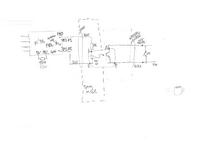
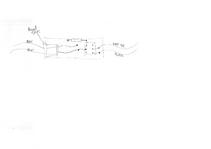 (click for diagram scans as pdfs).
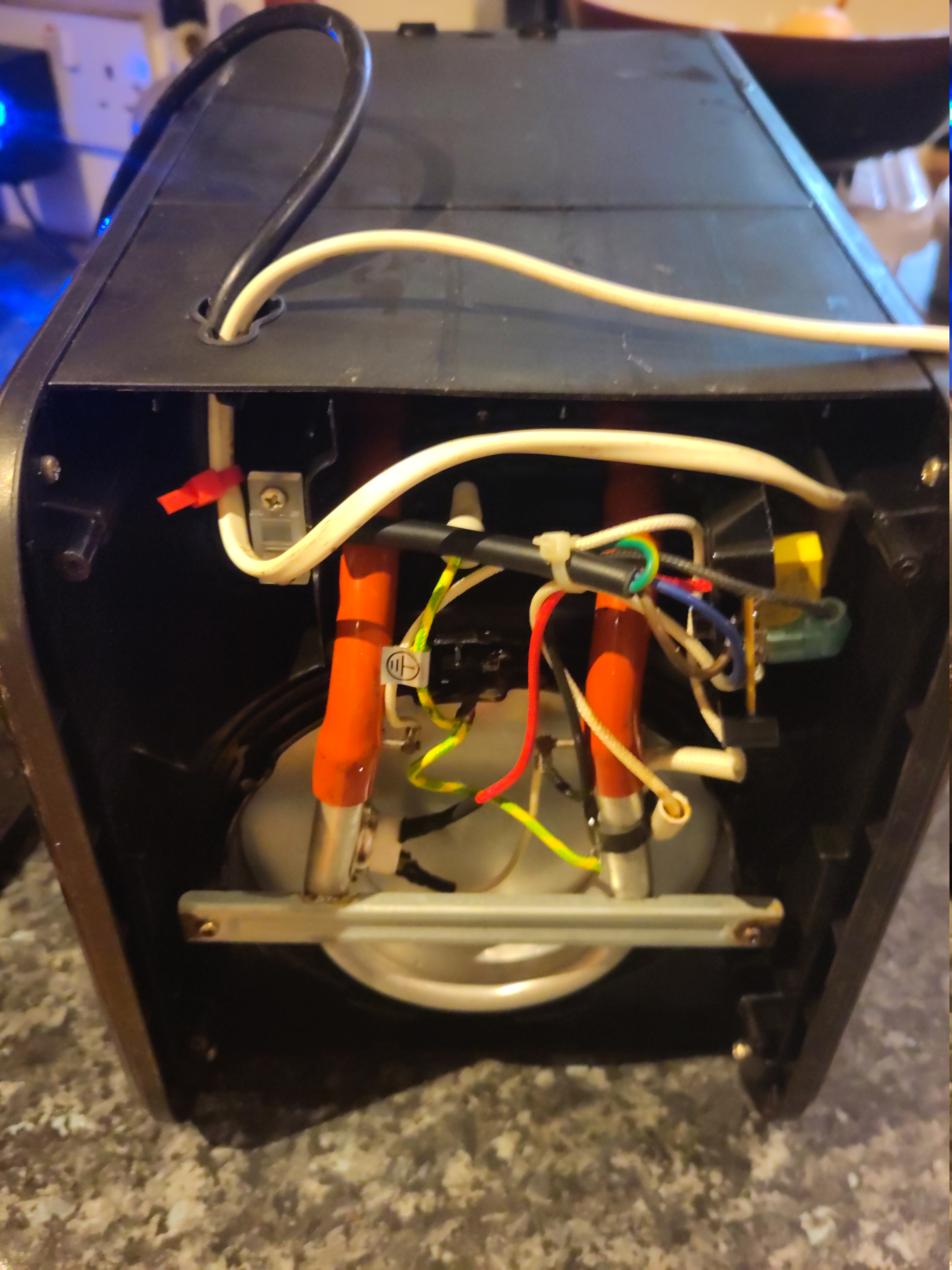
The DigiSpark has just a USB tongue, which is very wobbly in a normal USB socket. I designed a 3D printed case which also had an approximation of the rest of the USB A plug. The plug is out of spec; our printer won t go fine enough - and anyway, the shield is supposed to be metal, not fragile plastic. But it fit in the USB PSU I was using, satisfactorily if a bit stiffly, and also into the connector for programming via my laptop.
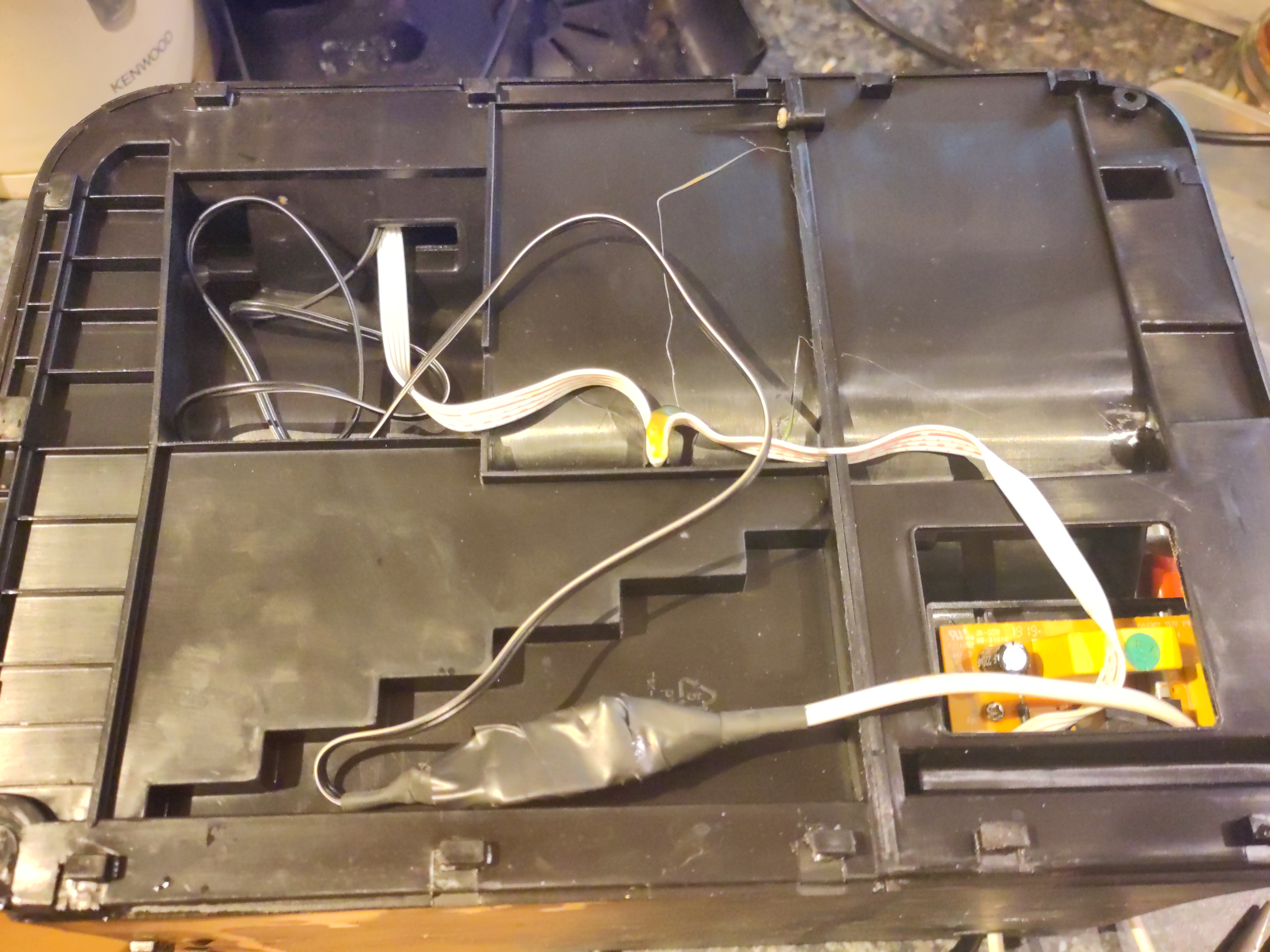
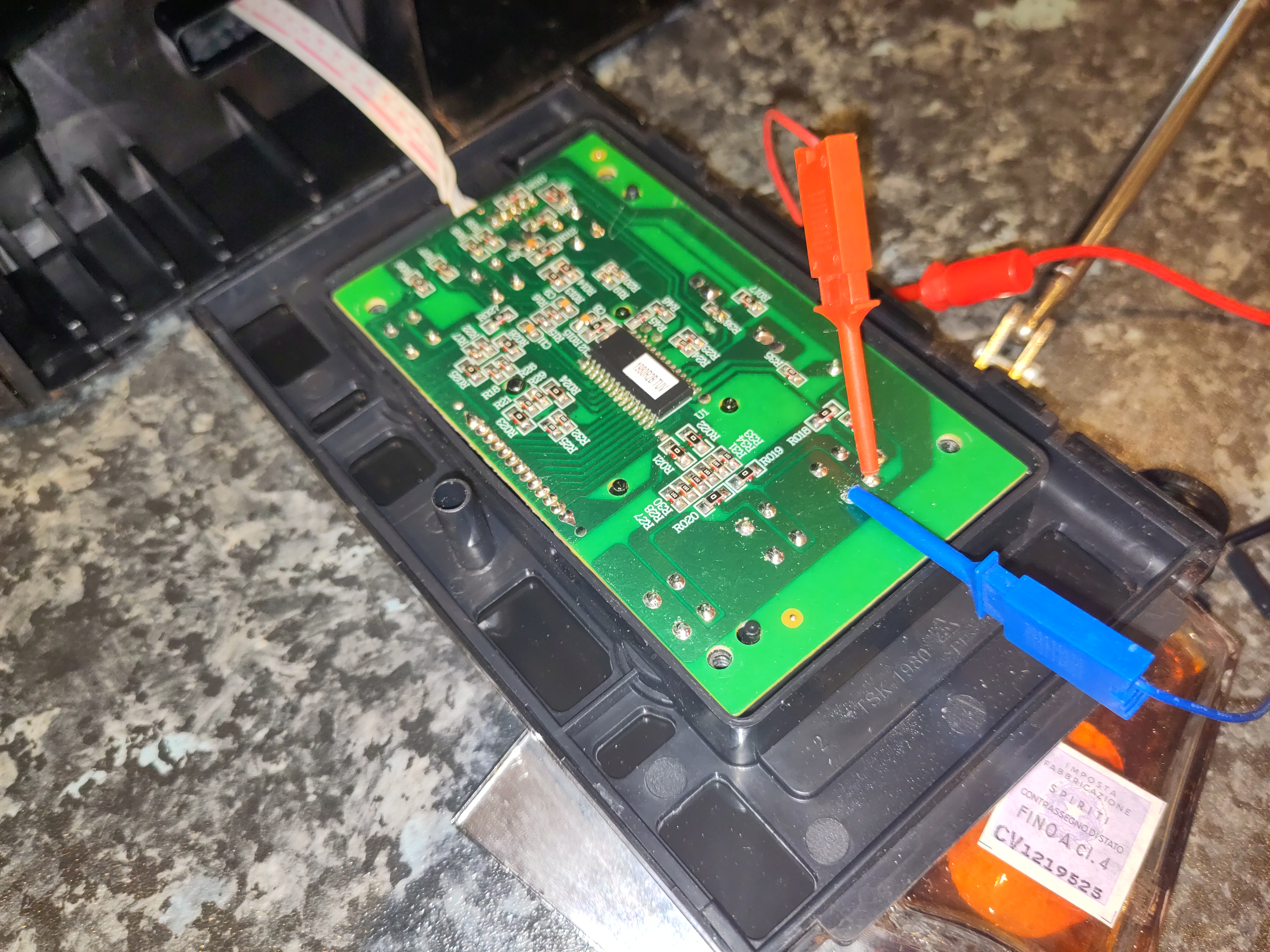
Inside the coffee machine, there s the boundary between the original, coupled to mains, UI board, and the isolated low voltage of the microcontroller. I used a reasonably substantial cable to bring out the low voltage connection, past all the other hazardous innards, to make sure it stays isolated.
I added a drain power supply resistor on another of the GPIOs. This is enabled, with a draw of about 30mA, when the microcontroller is soon going to off / on cycle the coffee machine. That reduces the risk that the user will turn off the smart plug, and turn off the machine, but that the microcontroller turns the coffee machine back on again using the remaining power from USB PSU. Empirically in my setup it reduces the time from smart plug off to microcontroller stops from about 2-3s to more like 1s.
Optoisolator board (inside coffee machine) pictures
(Click through for full size images.)
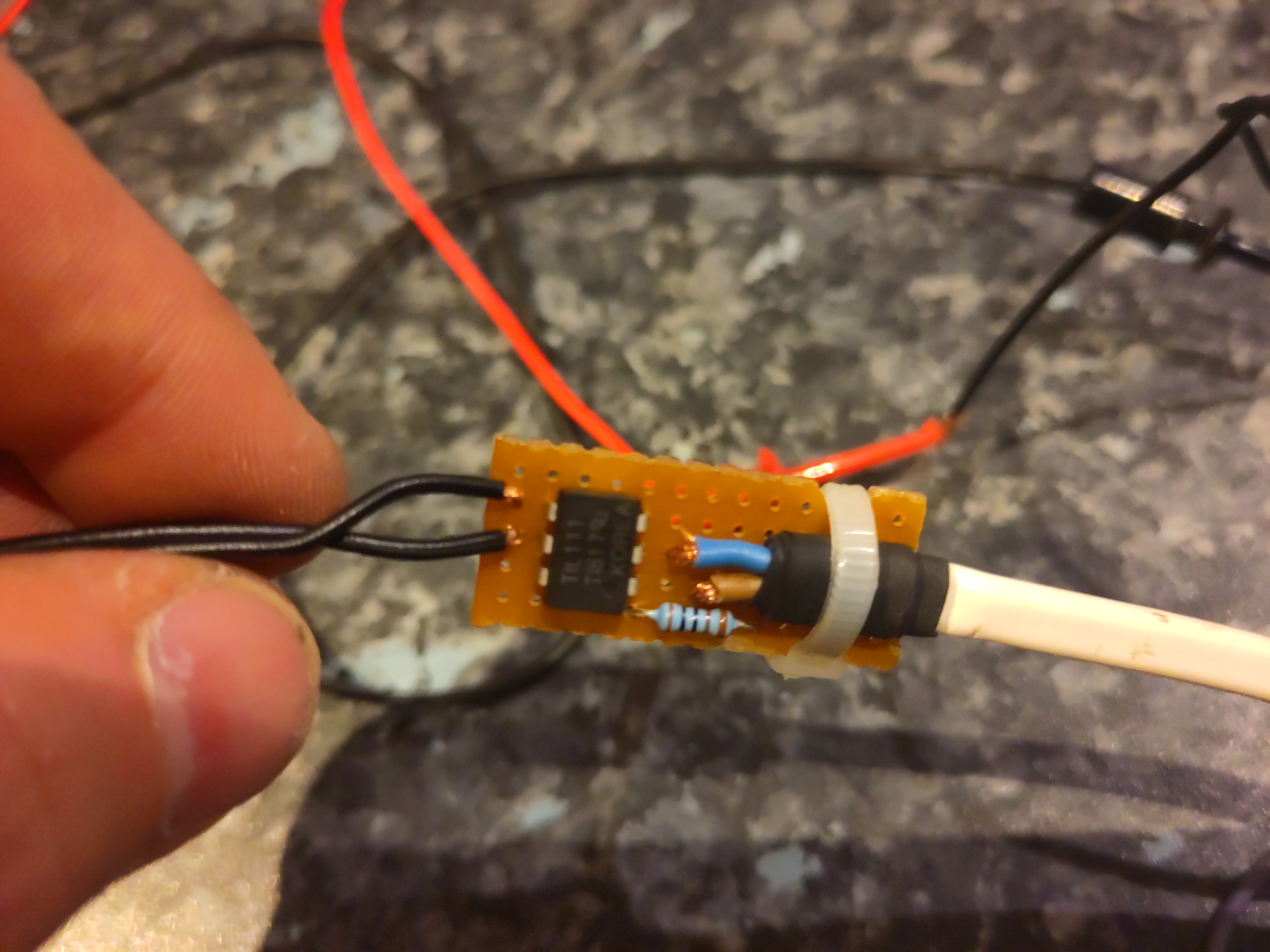
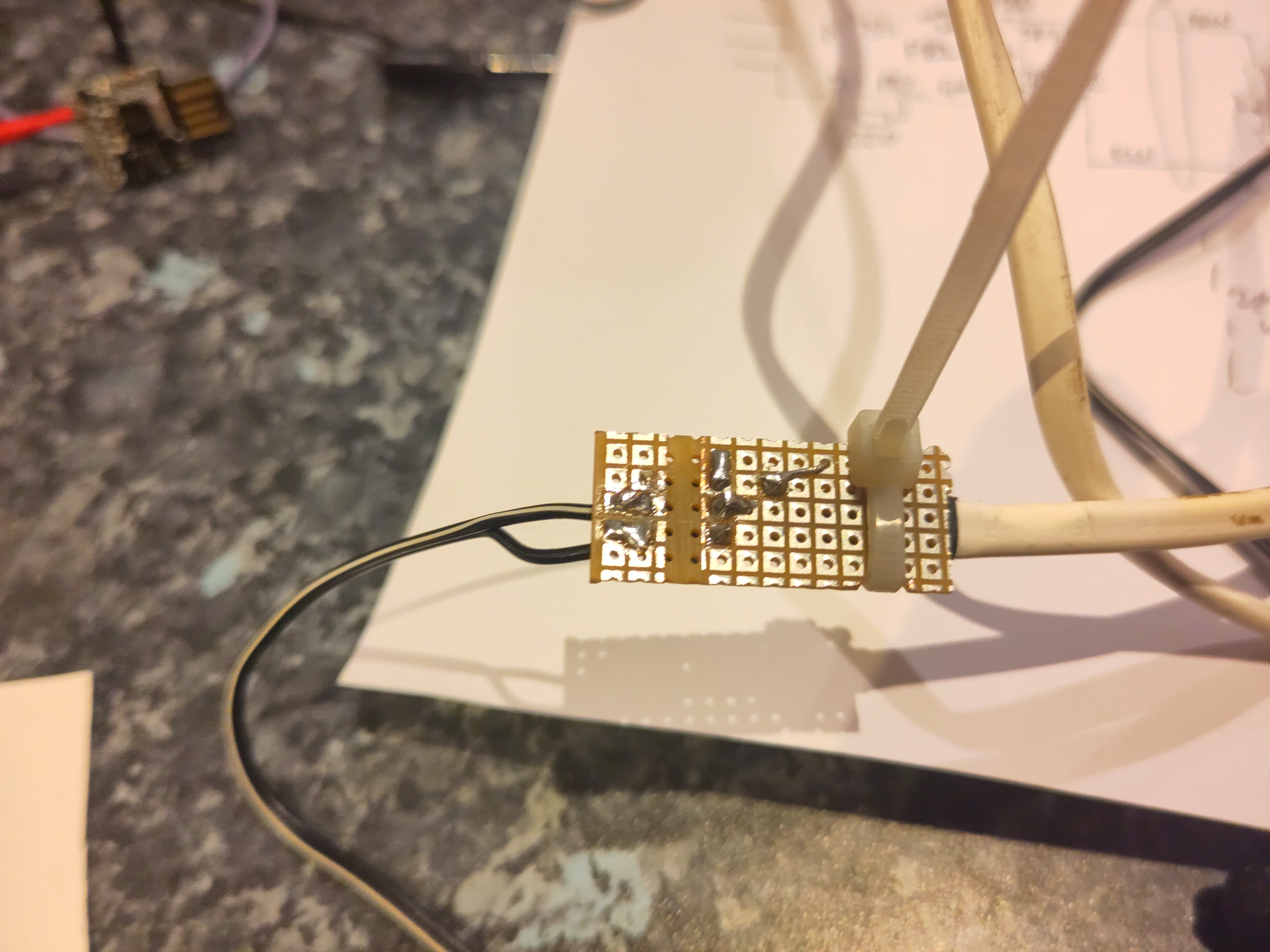
 Microcontroller board (in USB-plug-ish housing) pictures
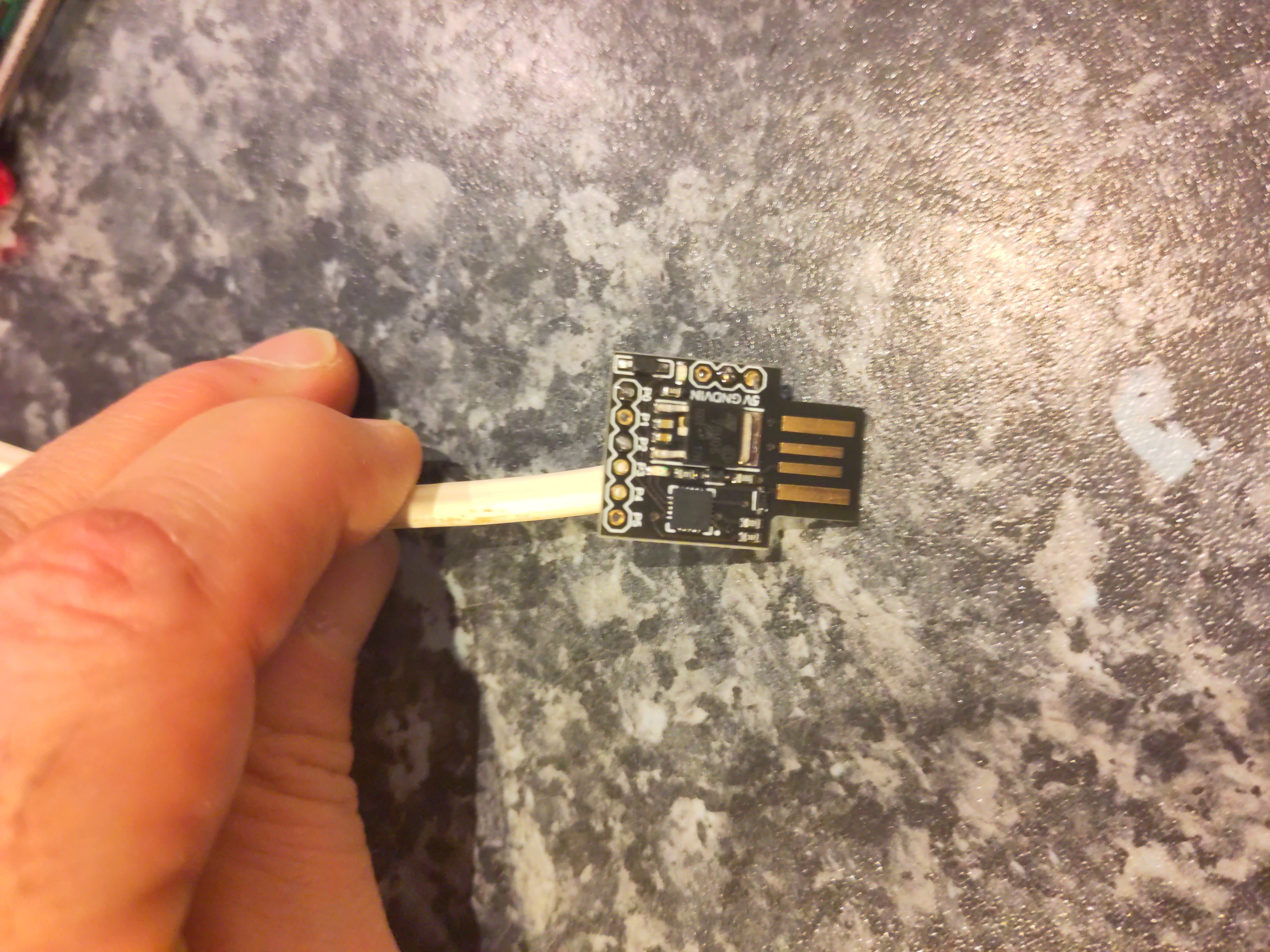
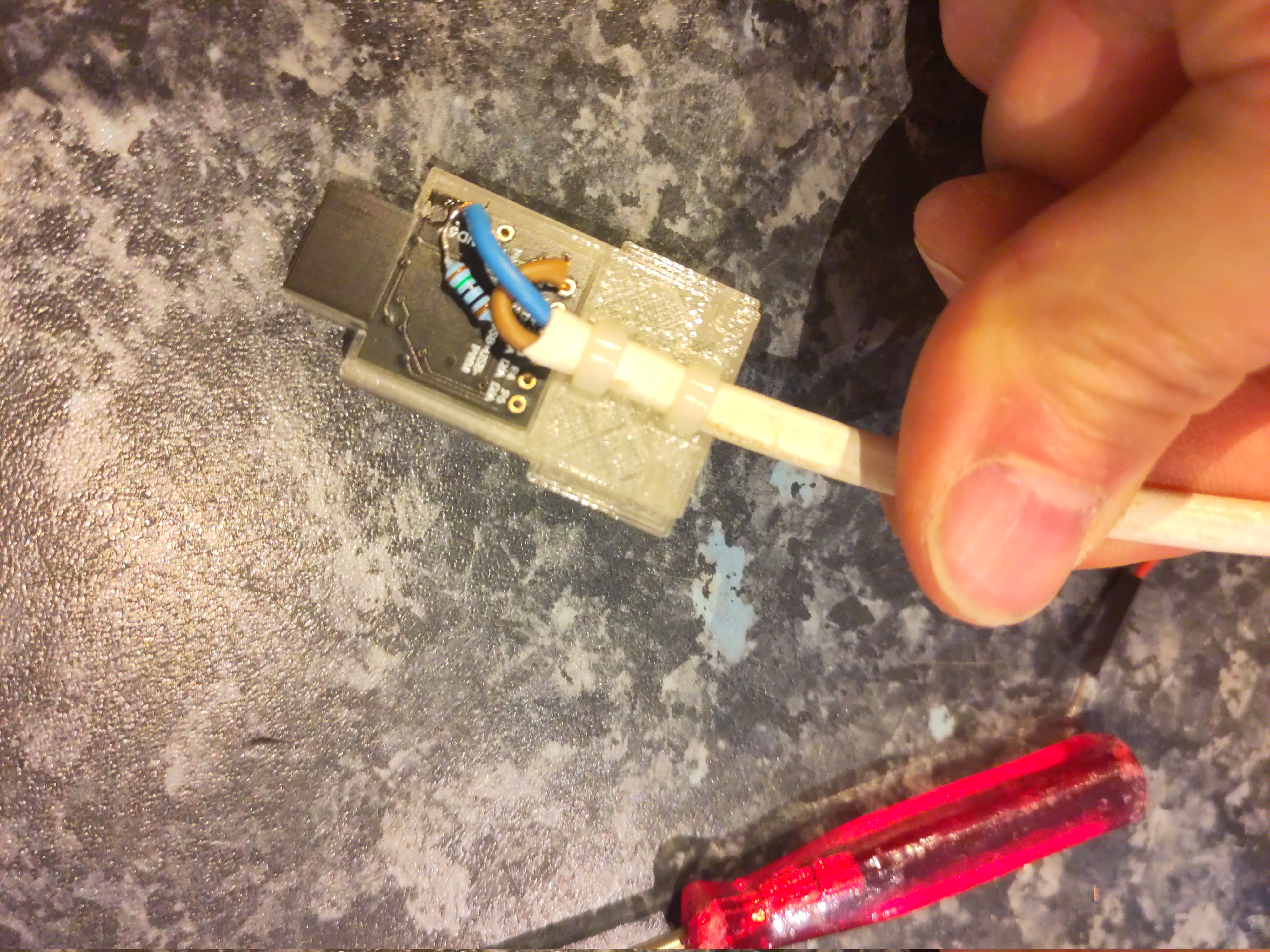
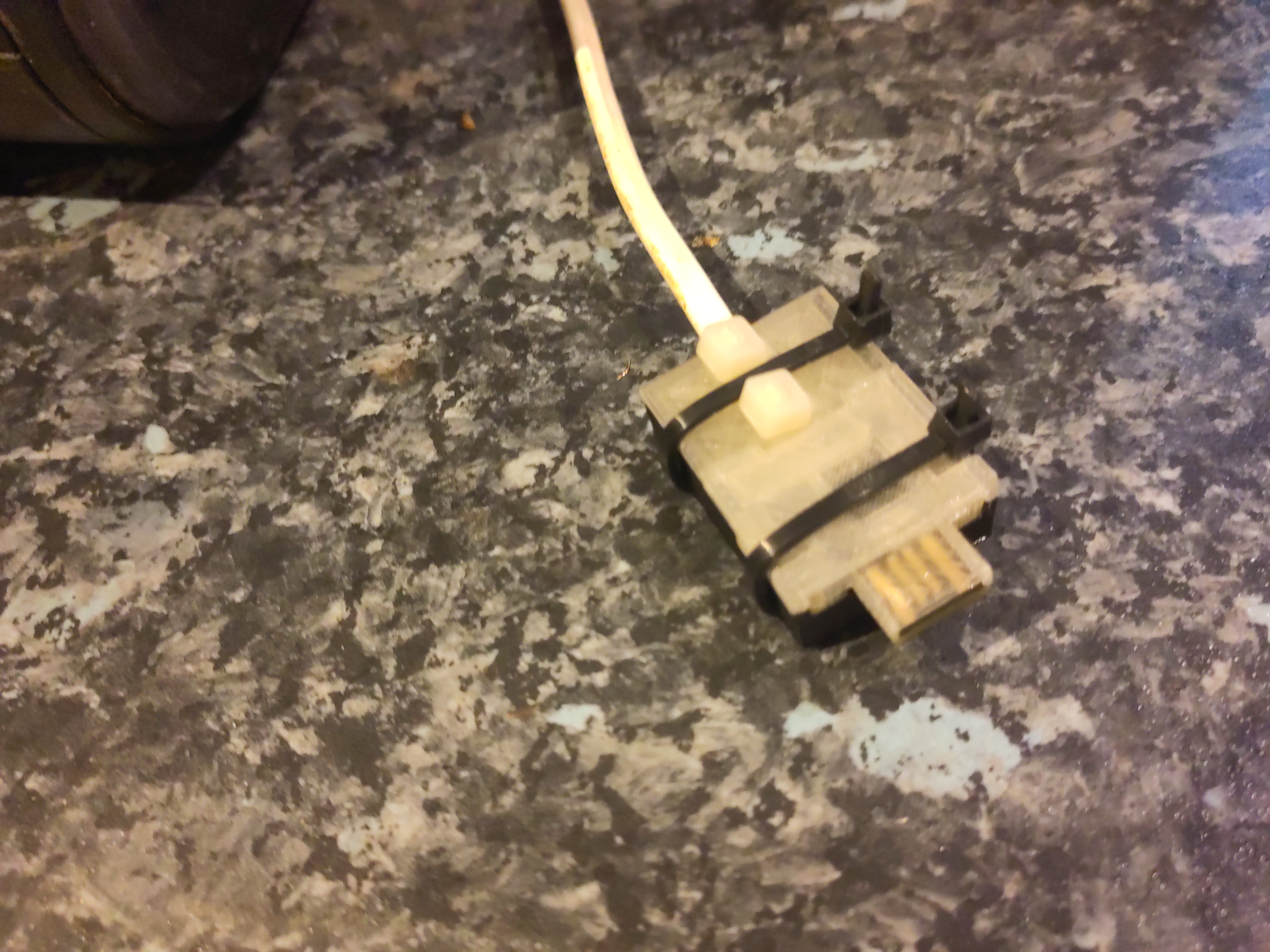 Implementation - software
I originally used the Arduino IDE, writing my program in C. I had a bad time with that and rewrote it in Rust.
The firmware is in a repository on Debian s gitlab
Results
I can now cause the coffee to start, from my phone. It can be programmed more than 12h in advance. And it stays warm until we ve drunk it.
UI is worse
There s one aspect of the original Morphy Richards machine that I haven t improved: the user interface is still poor. Indeed, it s now even worse:
To turn the machine on, you probably want to turn on the smart plug instead. Unhappily, the power button for that is invisible in its installed location.
In particular, in the usual case, if you want to turn it off, you should ideally turn off both the smart plug (which can be done with the button on it) and the coffee machine itself. If you forget to turn off the smart plug, the machine can end up being turned on, very briefly, a handful of times, over the next hour or two.
Epilogue
We had used the new features a handful of times when one morning the coffee machine just wouldn t make coffee. The UI showed it turning on, but it wouldn t get hot, so no coffee. I thought oh no, I ve broken it!
But, on investigation, I found that the machine s heating element was open circuit (ie, completely broken). I didn t mess with that part. So, hooray! Not my fault. Probably, just being inverted a number of times and generally lightly jostled, had precipitated a latent fault. The machine was a number of years old.
Happily I found a replacement, identical, machine, online. I ve transplanted my modification and now it all works well.
Bonus pictures
(Click through for full size images.)
 edited 2023-11-26 14:59 UTC in an attempt to fix TOC links

.gitignore file, was bug 774109. It added a script to install the prerequisites to build Firefox on macOS (still called OSX back then), and that would print a message inviting people to obtain a copy of the source code with either Mercurial or Git. That was a precursor to current bootstrap.py, from September 2012.
Following that, as far as I can tell, the first real incursion of Git in the Firefox source tree tooling happened in bug 965120. A few days earlier, bug 952379 had added a mach clang-format command that would apply clang-format-diff to the output from hg diff. Obviously, running hg diff on a Git working tree didn't work, and bug 965120 was filed, and support for Git was added there. That was in January 2014.
A year later, when the initial implementation of mach artifact was added (which ultimately led to artifact builds), Git users were an immediate thought. But while they were considered, it was not to support them, but to avoid actively breaking their workflows. Git support for mach artifact was eventually added 14 months later, in March 2016.
From gecko-dev to git-cinnabar
Let's step back a little here, back to the end of 2014. My user experience with Mercurial had reached a level of dissatisfaction that was enough for me to decide to take that script from a couple years prior and make it work for incremental updates. That meant finding a way to store enough information locally to be able to reconstruct whatever the incremental updates would be relying on (guess why other tools hid a local Mercurial clone under hood). I got something working rather quickly, and after talking to a few people about this side project at the Mozilla Portland All Hands and seeing their excitement, I published a git-remote-hg initial prototype on the last day of the All Hands.
Within weeks, the prototype gained the ability to directly push to Mercurial repositories, and a couple months later, was renamed to git-cinnabar. At that point, as a Git user, instead of cloning the gecko-dev repository from GitHub and switching to a local Mercurial repository whenever you needed to push to a Mercurial repository (i.e. the aforementioned Try server, or, at the time, for reviews), you could just clone and push directly from/to Mercurial, all within Git. And it was fast too. You could get a full clone of mozilla-central in less than half an hour, when at the time, other similar tools would take more than 10 hours (needless to say, it's even worse now).
Another couple months later (we're now at the end of April 2015), git-cinnabar became able to start off a local clone of the gecko-dev repository, rather than clone from scratch, which could be time consuming. But because git-cinnabar and the tool that was updating gecko-dev weren't producing the same commits, this setup was cumbersome and not really recommended. For instance, if you pushed something to mozilla-central with git-cinnabar from a gecko-dev clone, it would come back with a different commit hash in gecko-dev, and you'd have to deal with the divergence.
Eventually, in April 2020, the scripts updating gecko-dev were switched to git-cinnabar, making the use of gecko-dev alongside git-cinnabar a more viable option. Ironically(?), the switch occurred to ease collaboration with KaiOS (you know, the mobile OS born from the ashes of Firefox OS). Well, okay, in all honesty, when the need of syncing in both directions between Git and Mercurial (we only had ever synced from Mercurial to Git) came up, I nudged Mozilla in the direction of git-cinnabar, which, in my (biased but still honest) opinion, was the more reliable option for two-way synchronization (we did have regular conversion problems with hg-git, nothing of the sort has happened since the switch).
One Firefox repository to rule them all
For reasons I don't know, Mozilla decided to use separate Mercurial repositories as "branches". With the switch to the rapid release process in 2011, that meant one repository for nightly (mozilla-central), one for aurora, one for beta, and one for release. And with the addition of Extended Support Releases in 2012, we now add a new ESR repository every year. Boot to Gecko also had its own branches, and so did Fennec (Firefox for Mobile, before Android). There are a lot of them.
And then there are also integration branches, where developer's work lands before being merged in mozilla-central (or backed out if it breaks things), always leaving mozilla-central in a (hopefully) good state. Only one of them remains in use today, though.
I can only suppose that the way Mercurial branches work was not deemed practical. It is worth noting, though, that Mercurial branches are used in some cases, to branch off a dot-release when the next major release process has already started, so it's not a matter of not knowing the feature exists or some such.
In 2016, Gregory Szorc set up a new repository that would contain them all (or at least most of them), which eventually became what is now the mozilla-unified repository. This would e.g. simplify switching between branches when necessary.
7 years later, for some reason, the other "branches" still exist, but most developers are expected to be using mozilla-unified. Mozilla's CI also switched to using mozilla-unified as base repository.
Honestly, I'm not sure why the separate repositories are still the main entry point for pushes, rather than going directly to mozilla-unified, but it probably comes down to switching being work, and not being a top priority. Also, it probably doesn't help that working with multiple heads in Mercurial, even (especially?) with bookmarks, can be a source of confusion. To give an example, if you aren't careful, and do a plain clone of the mozilla-unified repository, you may not end up on the latest mozilla-central changeset, but rather, e.g. one from beta, or some other branch, depending which one was last updated.
Hosting is simple, right?
Put your repository on a server, install hgweb or gitweb, and that's it? Maybe that works for... Mercurial itself, but that repository "only" has slightly over 50k changesets and less than 4k files. Mozilla-central has more than an order of magnitude more changesets (close to 700k) and two orders of magnitude more files (more than 700k if you count the deleted or moved files, 350k if you count the currently existing ones).
And remember, there are a lot of "duplicates" of this repository. And I didn't even mention user repositories and project branches.
Sure, it's a self-inflicted pain, and you'd think it could probably(?) be mitigated with shared repositories. But consider the simple case of two repositories: mozilla-central and autoland. You make autoland use mozilla-central as a shared repository. Now, you push something new to autoland, it's stored in the autoland datastore. Eventually, you merge to mozilla-central. Congratulations, it's now in both datastores, and you'd need to clean-up autoland if you wanted to avoid the duplication.
Now, you'd think mozilla-unified would solve these issues, and it would... to some extent. Because that wouldn't cover user repositories and project branches briefly mentioned above, which in GitHub parlance would be considered as Forks. So you'd want a mega global datastore shared by all repositories, and repositories would need to only expose what they really contain. Does Mercurial support that? I don't think so (okay, I'll give you that: even if it doesn't, it could, but that's extra work). And since we're talking about a transition to Git, does Git support that? You may have read about how you can link to a commit from a fork and make-pretend that it comes from the main repository on GitHub? At least, it shows a warning, now. That's essentially the architectural reason why. So the actual answer is that Git doesn't support it out of the box, but GitHub has some backend magic to handle it somehow (and hopefully, other things like Gitea, Girocco, Gitlab, etc. have something similar).
Now, to come back to the size of the repository. A repository is not a static file. It's a server with which you negotiate what you have against what it has that you want. Then the server bundles what you asked for based on what you said you have. Or in the opposite direction, you negotiate what you have that it doesn't, you send it, and the server incorporates what you sent it. Fortunately the latter is less frequent and requires authentication. But the former is more frequent and CPU intensive. Especially when pulling a large number of changesets, which, incidentally, cloning is.
"But there is a solution for clones" you might say, which is true. That's clonebundles, which offload the CPU intensive part of cloning to a single job scheduled regularly. Guess who implemented it? Mozilla. But that only covers the cloning part. We actually had laid the ground to support offloading large incremental updates and split clones, but that never materialized. Even with all that, that still leaves you with a server that can display file contents, diffs, blames, provide zip archives of a revision, and more, all of which are CPU intensive in their own way.
And these endpoints are regularly abused, and cause extra load to your servers, yes plural, because of course a single server won't handle the load for the number of users of your big repositories. And because your endpoints are abused, you have to close some of them. And I'm not mentioning the Try repository with its tens of thousands of heads, which brings its own sets of problems (and it would have even more heads if we didn't fake-merge them once in a while).
Of course, all the above applies to Git (and it only gained support for something akin to clonebundles last year). So, when the Firefox OS project was stopped, there wasn't much motivation to continue supporting our own Git server, Mercurial still being the official point of entry, and git.mozilla.org was shut down in 2016.
The growing difficulty of maintaining the status quo
Slowly, but steadily in more recent years, as new tooling was added that needed some input from the source code manager, support for Git was more and more consistently added. But at the same time, as people left for other endeavors and weren't necessarily replaced, or more recently with layoffs, resources allocated to such tooling have been spread thin.
Meanwhile, the repository growth didn't take a break, and the Try repository was becoming an increasing pain, with push times quite often exceeding 10 minutes. The ongoing work to move Try pushes to Lando will hide the problem under the rug, but the underlying problem will still exist (although the last version of Mercurial seems to have improved things).
On the flip side, more and more people have been relying on Git for Firefox development, to my own surprise, as I didn't really push for that to happen. It just happened organically, by ways of git-cinnabar existing, providing a compelling experience to those who prefer Git, and, I guess, word of mouth. I was genuinely surprised when I recently heard the use of Git among moz-phab users had surpassed a third. I did, however, occasionally orient people who struggled with Mercurial and said they were more familiar with Git, towards git-cinnabar. I suspect there's a somewhat large number of people who never realized Git was a viable option.
But that, on its own, can come with its own challenges: if you use git-cinnabar without being backed by gecko-dev, you'll have a hard time sharing your branches on GitHub, because you can't push to a fork of gecko-dev without pushing your entire local repository, as they have different commit histories. And switching to gecko-dev when you weren't already using it requires some extra work to rebase all your local branches from the old commit history to the new one.
Clone times with git-cinnabar have also started to go a little out of hand in the past few years, but this was mitigated in a similar manner as with the Mercurial cloning problem: with static files that are refreshed regularly. Ironically, that made cloning with git-cinnabar faster than cloning with Mercurial. But generating those static files is increasingly time-consuming. As of writing, generating those for mozilla-unified takes close to 7 hours. I was predicting clone times over 10 hours "in 5 years" in a post from 4 years ago, I wasn't too far off. With exponential growth, it could still happen, although to be fair, CPUs have improved since. I will explore the performance aspect in a subsequent blog post, alongside the upcoming release of git-cinnabar 0.7.0-b1. I don't even want to check how long it now takes with hg-git or git-remote-hg (they were already taking more than a day when git-cinnabar was taking a couple hours).
I suppose it's about time that I clarify that git-cinnabar has always been a side-project. It hasn't been part of my duties at Mozilla, and the extent to which Mozilla supports git-cinnabar is in the form of taskcluster workers on the community instance for both git-cinnabar CI and generating those clone bundles. Consequently, that makes the above git-cinnabar specific issues a Me problem, rather than a Mozilla problem.
Taking the leap
I can't talk for the people who made the proposal to move to Git, nor for the people who put a green light on it. But I can at least give my perspective.
Developers have regularly asked why Mozilla was still using Mercurial, but I think it was the first time that a formal proposal was laid out. And it came from the Engineering Workflow team, responsible for issue tracking, code reviews, source control, build and more.
It's easy to say "Mozilla should have chosen Git in the first place", but back in 2007, GitHub wasn't there, Bitbucket wasn't there, and all the available options were rather new (especially compared to the then 21 years-old CVS). I think Mozilla made the right choice, all things considered. Had they waited a couple years, the story might have been different.
You might say that Mozilla stayed with Mercurial for so long because of the sunk cost fallacy. I don't think that's true either. But after the biggest Mercurial repository hosting service turned off Mercurial support, and the main contributor to Mercurial going their own way, it's hard to ignore that the landscape has evolved.
And the problems that we regularly encounter with the Mercurial servers are not going to get any better as the repository continues to grow. As far as I know, all the Mercurial repositories bigger than Mozilla's are... not using Mercurial. Google has its own closed-source server, and Facebook has another of its own, and it's not really public either. With resources spread thin, I don't expect Mozilla to be able to continue supporting a Mercurial server indefinitely (although I guess Octobus could be contracted to give a hand, but is that sustainable?).
Mozilla, being a champion of Open Source, also doesn't live in a silo. At some point, you have to meet your contributors where they are. And the Open Source world is now majoritarily using Git. I'm sure the vast majority of new hires at Mozilla in the past, say, 5 years, know Git and have had to learn Mercurial (although they arguably didn't need to). Even within Mozilla, with thousands(!) of repositories on GitHub, Firefox is now actually the exception rather than the norm. I should even actually say Desktop Firefox, because even Mobile Firefox lives on GitHub (although Fenix is moving back in together with Desktop Firefox, and the timing is such that that will probably happen before Firefox moves to Git).
Heck, even Microsoft moved to Git!
With a significant developer base already using Git thanks to git-cinnabar, and all the constraints and problems I mentioned previously, it actually seems natural that a transition (finally) happens. However, had git-cinnabar or something similarly viable not existed, I don't think Mozilla would be in a position to take this decision. On one hand, it probably wouldn't be in the current situation of having to support both Git and Mercurial in the tooling around Firefox, nor the resource constraints related to that. But on the other hand, it would be farther from supporting Git and being able to make the switch in order to address all the other problems.
But... GitHub?
I hope I made a compelling case that hosting is not as simple as it can seem, at the scale of the Firefox repository. It's also not Mozilla's main focus. Mozilla has enough on its plate with the migration of existing infrastructure that does rely on Mercurial to understandably not want to figure out the hosting part, especially with limited resources, and with the mixed experience hosting both Mercurial and git has been so far.
After all, GitHub couldn't even display things like the contributors' graph on gecko-dev until recently, and hosting is literally their job! They still drop the ball on large blames (thankfully we have searchfox for those).
Where does that leave us? Gitlab? For those criticizing GitHub for being proprietary, that's probably not open enough. Cloud Source Repositories? "But GitHub is Microsoft" is a complaint I've read a lot after the announcement. Do you think Google hosting would have appealed to these people? Bitbucket? I'm kind of surprised it wasn't in the list of providers that were considered, but I'm also kind of glad it wasn't (and I'll leave it at that).
I think the only relatively big hosting provider that could have made the people criticizing the choice of GitHub happy is Codeberg, but I hadn't even heard of it before it was mentioned in response to Mozilla's announcement. But really, with literal thousands of Mozilla repositories already on GitHub, with literal tens of millions repositories on the platform overall, the pragmatic in me can't deny that it's an attractive option (and I can't stress enough that I wasn't remotely close to the room where the discussion about what choice to make happened).
"But it's a slippery slope". I can see that being a real concern. LLVM also moved its repository to GitHub (from a (I think) self-hosted Subversion server), and ended up moving off Bugzilla and Phabricator to GitHub issues and PRs four years later. As an occasional contributor to LLVM, I hate this move. I hate the GitHub review UI with a passion.
At least, right now, GitHub PRs are not a viable option for Mozilla, for their lack of support for security related PRs, and the more general shortcomings in the review UI. That doesn't mean things won't change in the future, but let's not get too far ahead of ourselves. The move to Git has just been announced, and the migration has not even begun yet. Just because Mozilla is moving the Firefox repository to GitHub doesn't mean it's locked in forever or that all the eggs are going to be thrown into one basket. If bridges need to be crossed in the future, we'll see then.
So, what's next?
The official announcement said we're not expecting the migration to really begin until six months from now. I'll swim against the current here, and say this: the earlier you can switch to git, the earlier you'll find out what works and what doesn't work for you, whether you already know Git or not.
While there is not one unique workflow, here's what I would recommend anyone who wants to take the leap off Mercurial right now:
git-cinnabar where mach bootstrap would install it.
$ mkdir -p ~/.mozbuild/git-cinnabar
$ cd ~/.mozbuild/git-cinnabar
$ curl -sOL https://raw.githubusercontent.com/glandium/git-cinnabar/master/download.py
$ python3 download.py && rm download.pygit-cinnabar to your PATH. Make sure to also set that wherever you keep your PATH up-to-date (.bashrc or wherever else).
$ PATH=$PATH:$HOME/.mozbuild/git-cinnabar$ git init
$ git remote add origin https://github.com/mozilla/gecko-dev
$ git remote update origin$ git remote set-url origin hg::https://hg.mozilla.org/mozilla-unified
$ git config --local remote.origin.cinnabar-refs bookmarks
$ git remote update origin --prune$ git -c cinnabar.refs=heads fetch hg::$PWD refs/heads/default/*:refs/heads/hg/*hg/<sha1> local branches, not all relevant to you (some come from old branches on mozilla-central). Note that if you're using Mercurial MQ, this will not pull your queues, as they don't exist as heads in the Mercurial repo. You'd need to apply your queues one by one and run the command above for each of them.$ git -c cinnabar.refs=bookmarks fetch hg::$PWD refs/heads/*:refs/heads/hg/*hg/<bookmark_name> branches.
$ git reset $(git cinnabar hg2git $(hg log -r . -T ' node '))mach build won't rebuild anything it doesn't have to.
$ git branch <branch_name> $(git cinnabar hg2git <hg_sha1>).hg directory. Or move it into some empty directory somewhere else, just in case. But don't leave it here, it will only confuse the tooling. Artifact builds WILL be confused, though, and you'll have to ./mach configure before being able to do anything. You may also hit bug 1865299 if your working tree is older than this post.
If you have any problem or question, you can ping me on #git-cinnabar or #git on Matrix. I'll put the instructions above somewhere on wiki.mozilla.org, and we can collaboratively iterate on them.
Now, what the announcement didn't say is that the Git repository WILL NOT be gecko-dev, doesn't exist yet, and WON'T BE COMPATIBLE (trust me, it'll be for the better). Why did I make you do all the above, you ask? Because that won't be a problem. I'll have you covered, I promise. The upcoming release of git-cinnabar 0.7.0-b1 will have a way to smoothly switch between gecko-dev and the future repository (incidentally, that will also allow to switch from a pure git-cinnabar clone to a gecko-dev one, for the git-cinnabar users who have kept reading this far).
What about git-cinnabar?
With Mercurial going the way of the dodo at Mozilla, my own need for git-cinnabar will vanish. Legitimately, this begs the question whether it will still be maintained.
I can't answer for sure. I don't have a crystal ball. However, the needs of the transition itself will motivate me to finish some long-standing things (like finalizing the support for pushing merges, which is currently behind an experimental flag) or implement some missing features (support for creating Mercurial branches).
Git-cinnabar started as a Python script, it grew a sidekick implemented in C, which then incorporated some Rust, which then cannibalized the Python script and took its place. It is now close to 90% Rust, and 10% C (if you don't count the code from Git that is statically linked to it), and has sort of become my Rust playground (it's also, I must admit, a mess, because of its history, but it's getting better). So the day to day use with Mercurial is not my sole motivation to keep developing it. If it were, it would stay stagnant, because all the features I need are there, and the speed is not all that bad, although I know it could be better. Arguably, though, git-cinnabar has been relatively stagnant feature-wise, because all the features I need are there.
So, no, I don't expect git-cinnabar to die along Mercurial use at Mozilla, but I can't really promise anything either.
Final words
That was a long post. But there was a lot of ground to cover. And I still skipped over a bunch of things. I hope I didn't bore you to death. If I did and you're still reading... what's wrong with you? ;)
So this is the end of Mercurial at Mozilla. So long, and thanks for all the fish. But this is also the beginning of a transition that is not easy, and that will not be without hiccups, I'm sure. So fasten your seatbelts (plural), and welcome the change.
To circle back to the clickbait title, did I really kill Mercurial at Mozilla? Of course not. But it's like I stumbled upon a few sparks and tossed a can of gasoline on them. I didn't start the fire, but I sure made it into a proper bonfire... and now it has turned into a wildfire.
And who knows? 15 years from now, someone else might be looking back at how Mozilla picked Git at the wrong time, and that, had we waited a little longer, we would have picked some yet to come new horse. But hey, that's the tech cycle for you.

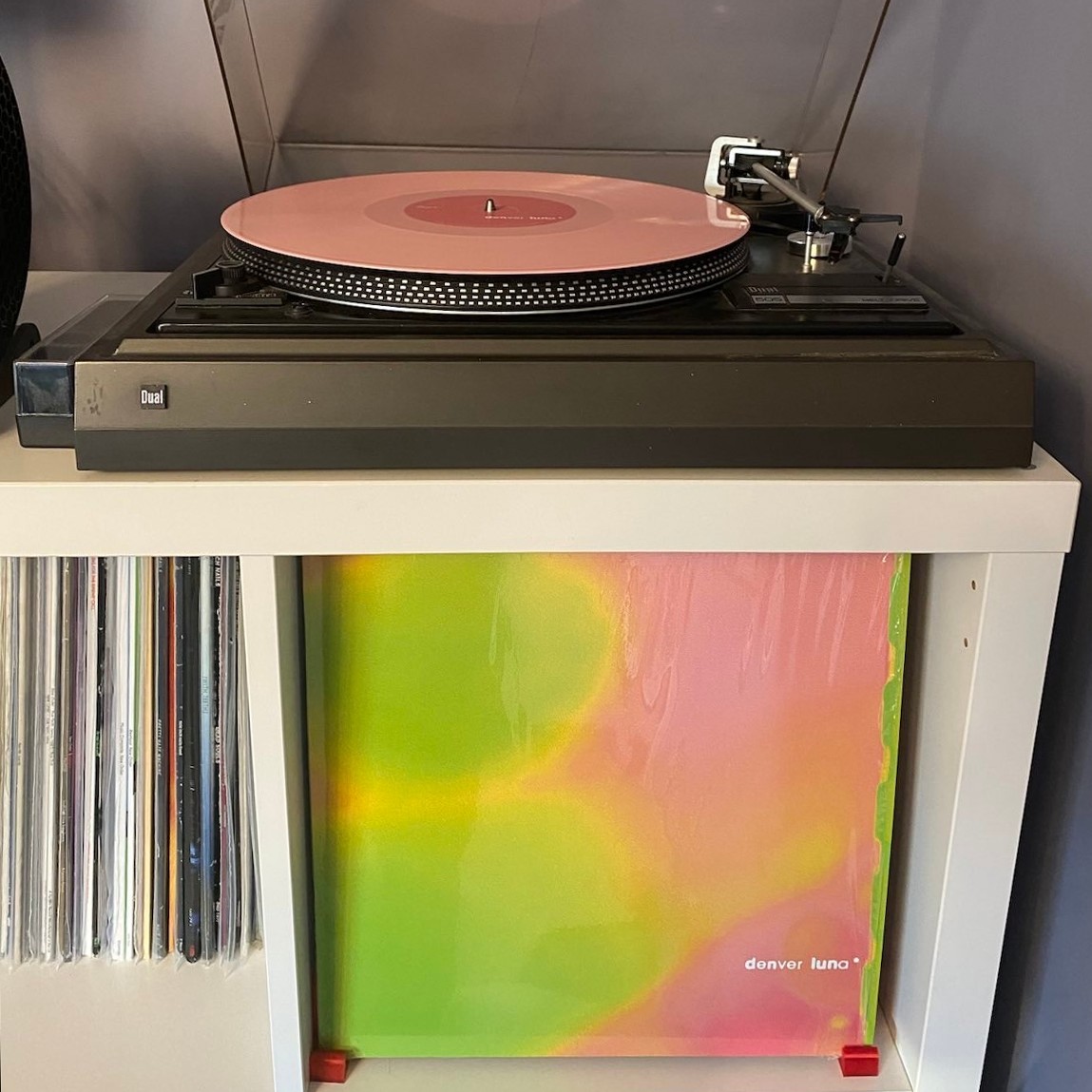

 Check it out on GitHub, or get the release tarball or read the documentation or release notes!

release elements that reference downloadable data without an artifact block, which has not been supported for a while. For all of these, I checked to remove only things that had close to no users and that were a significant maintenance burden. So as a rule of thumb: If your XML validated with no warnings with the 0.16.x branch of AppStream, it will still be 100% valid with the 1.0 release.
Another notable change is that the generated output of AppStream 1.0 will always be 1.0 compliant, you can not make it generate data for versions below that (this greatly reduced the maintenance cost of the project).
developer_name tag. With AppStream 1.0, this is changed a bit. There is now a developer tag with a name child (that can be translated unless the translate="no" attribute is set on it). This allows future extensibility, and also allows to set a machine-readable id attribute in the developer element. This permits software centers to group software by developer easier, without having to use heuristics. If we decide to extend the developer information per-app in future, this is also now possible. Do not worry though the developer_name tag is also still read, so there is no high pressure to update. The old 0.16.x stable series also has this feature backported, so it can be available everywhere. Check out the developer tag specification for more details.
scale attribute, to indicate an (integer) scaling factor to apply. This feature was a breaking change and therefore we could not have it for the longest time, but it is now available. Please wait a bit for AppStream 1.0 to become deployed more widespread though, as using it with older AppStream versions may lead to issues in some cases. Check out the screenshots tag specification for more details.
environment attribute on the respective screenshot tag. This was also a breaking change, so use it carefully for now! If projects want to, they can use this feature to supply dedicated screenshots depending on the environment the application page is displayed in. Check out the screenshots tag specification for more details.
references tag, you can associate the AppStream component with a DOI (Digital object identifier) or provide a link to a CFF file to provide citation information. It also allows to link to other scientific registries. Check out the references tag specification for more details.

appstreamcli utility also has much improved support for relation checks, and I wrote about these changes in a previous post. Check it out!
With these changes, I hope this feature will be used much more, and beyond just drivers and firmware.
 Welcome to the October 2023 report from the Reproducible Builds project. In these reports we outline the most important things that we have been up to over the past month. As a quick recap, whilst anyone may inspect the source code of free software for malicious flaws, almost all software is distributed to end users as pre-compiled binaries.
 Between October 31st and November 2nd, we held our seventh Reproducible Builds Summit in Hamburg, Germany!
Our summits are a unique gathering that brings together attendees from diverse projects, united by a shared vision of advancing the Reproducible Builds effort, and this instance was no different.
During this enriching event, participants had the opportunity to engage in discussions, establish connections and exchange ideas to drive progress in this vital field. A number of concrete outcomes from the summit will documented in the report for November 2023 and elsewhere.
Amazingly the agenda and all notes from all sessions are already online.
The Reproducible Builds team would like to thank our event sponsors who include Mullvad VPN, openSUSE, Debian, Software Freedom Conservancy, Allotropia and Aspiration Tech.
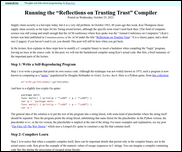 Russ Cox posted a fascinating article on his blog prompted by the fortieth anniversary of Ken Thompson s award-winning paper, Reflections on Trusting Trust:
[ ] In March 2023, Ken gave the closing keynote [and] during the Q&A session, someone jokingly asked about the Turing award lecture, specifically can you tell us right now whether you have a backdoor into every copy of gcc and Linux still today?Although Ken reveals (or at least claims!) that he has no such backdoor, he does admit that he has the actual code which Russ requests and subsequently dissects in great but accessible detail.
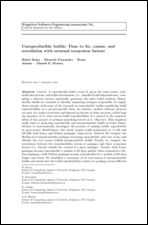 Rahul Bajaj, Eduardo Fernandes, Bram Adams and Ahmed E. Hassan from the Maintenance, Construction and Intelligence of Software (MCIS) laboratory within the School of Computing, Queen s University in Ontario, Canada have published a paper on the Time to fix, causes and correlation with external ecosystem factors of unreproducible builds.
The authors compare various response times within the Debian and Arch Linux distributions including, for example:
Arch Linux packages become reproducible a median of 30 days quicker when compared to Debian packages, while Debian packages remain reproducible for a median of 68 days longer once fixed.A full PDF of their paper is available online, as are many other interesting papers on MCIS publication page.
 On the NixOS Discourse instance, Arnout Engelen (raboof) announced that NixOS have created an independent, bit-for-bit identical rebuilding of the
nixos-minimal image that is used to install NixOS. In their post, Arnout details what exactly can be reproduced, and even includes some of the history of this endeavour:
You may remember a 2021 announcement that the minimal ISO was 100% reproducible. While back then we successfully tested that all packages that were needed to build the ISO were individually reproducible, actually rebuilding the ISO still introduced differences. This was due to some remaining problems in the hydra cache and the way the ISO was created. By the time we fixed those, regressions had popped up (notably an upstream problem in Python 3.10), and it isn t until this week that we were back to having everything reproducible and being able to validate the complete chain.Congratulations to NixOS team for reaching this important milestone! Discussion about this announcement can be found underneath the post itself, as well as on Hacker News.
 Seth Larson published a blog post investigating the reproducibility of the CPython source tarballs. Using diffoscope, reprotest and other tools, Seth documents his work that led to a pull request to make these files reproducible which was merged by ukasz Langa.
arm64 hardware from Codethink
 Long-time sponsor of the project, Codethink, have generously replaced our old Moonshot-Slides , which they have generously hosted since 2016 with new KVM-based
arm64 hardware. Holger Levsen integrated these new nodes to the Reproducible Builds continuous integration framework.
ext4 filesystem images. [ ]
 distro-info is a Debian-oriented tool that can provide information about Debian (and Ubuntu) distributions such as their codenames (eg. bookworm) and so on. This month, Benjamin Drung uploaded a new version of distro-info that added support for the
SOURCE_DATE_EPOCH environment variable in order to close bug #1034422. In addition, 8 reviews of packages were added, 74 were updated and 56 were removed this month, all adding to our knowledge about identified issues.
Bernhard M. Wiedemann published another monthly report about reproducibility within openSUSE.
edje_cc (race condition)elasticsearch (build failure)erlang-retest (embedded .zip timestamp)fdo-client (embeds private keys)fftw3 (random ordering)gsoap (date issue)gutenprint (date)hub/golang (embeds random build path)Hyprland (filesystem issue)kitty (sort-related issue, .tar file embeds modification time)libpinyin (ASLR)maildir-utils (date embedded in copyright)mame (order-related issue)mingw32-binutils & mingw64-binutils (date)MooseX (date from perl-MooseX-App)occt (sorting issue)openblas (embeds CPU count)OpenRGB (corruption-related issue)python-numpy (random file names)python-pandas (FTBFS)python-quantities (date)python3-pyside2 (order)qemu (date and Sphinx issue)qpid (sorting problem)rakudo (filesystem ordering issue)SLOF (date-related issue)spack (CPU counting issue)xemacs-packages (date-related issue)file -i returns text/plain, fallback to comparing as a text file. This was originally filed as Debian bug #1053668) by Niels Thykier. [ ] This was then uploaded to Debian (and elsewhere) as version 251.
 The Reproducible Builds project operates a comprehensive testing framework (available at tests.reproducible-builds.org) in order to check packages and other artifacts for reproducibility. In October, a number of changes were made by Holger Levsen:
#debian-reproducible-changes IRC channel. [ ][ ][ ]systemd-oomd on all Debian bookworm nodes (re. Debian bug #1052257). [ ]schroots. [ ]arm64 machines from Codethink. [ ][ ][ ][ ][ ][ ]#reproducible-builds on irc.oftc.net.
rb-general@lists.reproducible-builds.org
 Tomorrow is going to be a new first day in a new job for me: I am joining the Lean FRO, and I m excited.
armhf and arm64) is not even
mentioned. Is this really true? It is, after all a Debian-based
system, so it should in theory be doable. Let s try!
We have always said that for a major version upgrade, you should re-image your SD card and start again with a clean image. In the past, we have suggested procedures for updating an existing image to the new version, but always with the caveat that we do not recommend it, and you do this at your own risk. This time, because the changes to the underlying architecture are so significant, we are not suggesting any procedure for upgrading a Bullseye image to Bookworm; any attempt to do this will almost certainly end up with a non-booting desktop and data loss. The only way to get Bookworm is either to create an SD card using Raspberry Pi Imager, or to download and flash a Bookworm image from here with your tool of choice.Which means, it s time to actually try it turns out it s actually trivial, if you use RPIs as headless servers. I had only three issues:
initrd, the new initrd-building scripts/hooks are
looking for some binaries in /usr/bin, and not in /bin;
solution: install manually the usrmerge package, and then re-run
dpkg --configure -a;/boot/config-$(uname -r), and the raspberry pi
kernel package doesn t provide this; workaround: modprobe configs && zcat /proc/config.gz > /boot/config-$(uname -r);/etc/network/interface, migrating
from the previous dhcpcd to NetworkManager will break network
connectivity, and require you to log in locally and fix things.login.defs
being rewritten from scratch and showing a baffling diff, for
example), it was easy.
Is it worth doing? Definitely. Had no data loss, and no non-booting
system.
devscripts, since you will need dget dpkg --add-architecture arm64whiptail:amd64 and rejoice at
running a 64-bit binary!dget
and dpkg -iarmhf and arm64 versions
before doing dpkg -i, since you ll need to rollback some
installsdpkg and apt to
arm64, at which point the default architecture flips over; from
here, if you ve done it at the right moment, it becomes very easy;
you ll probably need an apt install --fix-broken, though, at
firstarm64 versionsdpkg --remove-architecture armhf, reboot, and profit!apt-show-versions to see which packages have
versions that are no longer in any repo, then downgrade them.
There s a further, minor, complication that there were about 3-4
packages with same version but different hash (!), which simply needed
apt install --reinstall, I think.
arch:any), that is
fine. But architecture-independent packages (arch:all) are
problematic since usually they depend on a binary package, but they
always depend on the default architecture version!
Hrmm, and I just realise I don t have logs from this, so I m only ~80% confident. But basically:
vim-solarized (arch:all) depends on vim (arch:any)vim-solarized, until the default architecture becomes arm64Multi-Arch: foreign solves this, per the debian wiki which says:
Note that even thoughIt also has warnings about how to properly use this. But, in general, not many packages have it, so it is a problem.Architecture: allandMulti-Arch: foreignmay look like similar concepts, they are not. The former means that the same binary package can be installed on different architectures. Yet, after installation such packages are treated as if they were native architecture (by definition the architecture of the dpkg package) packages. Thus Architecture: all packages cannot satisfy dependencies from other architectures without being marked Multi-Arch foreign.
dpkg -i)# apt install systemd:arm64 --no-install-recommends
The following packages will be REMOVED:
systemd
The following NEW packages will be installed:
systemd:arm64
0 upgraded, 1 newly installed, 1 to remove and 35 not upgraded.
Do you want to continue? [Y/n] y
dpkg: systemd: dependency problems, but removing anyway as you requested:
systemd-sysv depends on systemd.
Removing systemd (247.3-7+deb11u2) ...
systemd is the active init system, please switch to another before removing systemd.
dpkg: error processing package systemd (--remove):
installed systemd package pre-removal script subprocess returned error exit status 1
dpkg: too many errors, stopping
Errors were encountered while processing:
systemd
Processing was halted because there were too many errors.dpkg -i
from /var/cache/apt/archives.
In this case it manifested via a prerm script, in other cases is
manifests via dependencies that are no longer satisfied for packages
that can t be removed, etc. etc. So you will have to resort to dpkg -i a lot.
lib package,
in one go, since these can coexist.
Well, this simple plan is complicated by the fact that some packages
are named libfoo-bar, but are actual holding (e.g.) the bar binary
for the libfoo package. Examples:
libmagic-mgc contains /usr/lib/file/magic.mgc, which conflicts
between the 32 and 64 bit versions; of course, it s the exact same
file, so this should be an arch:all package, but libpam-modules-bin and liblockfile-bin actually contain binaries
(per the -bin suffix)# apt install $(dpkg -i grep ^ii awk ' print $2 ' grep :amrhf sed -e 's/:armhf/:arm64')| Publisher: | W.W. Norton & Company |
| Copyright: | 2023 |
| ISBN: | 1-324-07434-5 |
| Format: | Kindle |
| Pages: | 255 |

xzcat haos_generic-x86-64-11.0.img.xz dd of=/dev/mmcblk0 bs=1M
That just worked, prefectly and really fast. If you want to use a GUI in a live environment, then just using
the gnome-disk-utility ("Disks" in Gnome menu) and using the "Restore Disk Image ..." on a partition would
work just as well. It even supports decompressing the XZ images directly while writing.
But that image is small, will it not have a ton of unused disk space behind the fixed install partition? Yes,
it will ... until first boot. The HA OS takes over the empty space after its install partition on the first
boot-up and just grows its main partition to take up all the remaining space. Smart. After first boot is
completed, the first boot wizard can be accessed via your web browser and one of the prominent buttons there
is restoring from backup. So you just give it the backup file and wait. Sadly the restore does not actually give
any kind of progress, so your only way to figure out when it is done is opening the same web adress in another
browser tab and refresh periodically - after restoring from backup it just boots into the same config at it had
before - all the settings, all the devices, all the history is preserved. Even authentification tokens are
preserved so if yu had a Home Assitant Mobile installed on your phone (both for remote access and to send
location info and phone state, like charging, to HA to trigger automations) then it will just suddenly start
working again without further actions needed from your side. That is an almost perfect backup/restore experience.
The first thing you get for using the OS version of HA is easy automatic update that also automatically takes
a backup before upgrade, so if anything breaks you can roll back with one click. There is also a command-line
tool that allows to upgrade, but also downgrade ha-core and other modules. I had to use it today as HA version
23.10.4 actually broke support for the Sonoff bridge that I am using to control Zigbee devices, which are like
90% of all smart devices in my home. Really helpful stuff, but not a must have.
What is a must have and that you can (really) only get with Home Assistant Operating System are Addons. Some
addons are just normal servers you can run alongside HA on the same HA OS server, like MariaDB or Plex or a
file server. That is not the most important bit, but even there the software comes pre-configured to use in
a home server configuration and has a very simple config UI to pre-configure key settings, like users,
passwords and database accesses for MariaDB - you can litereally in a few clicks and few strings make serveral
users each with its own access to its own database. Couple more clicks and the DB is running and will be kept
restarted in case of failures.
But the real gems in the Home Assistant Addon Store are modules that extend Home Assitant core functionality
in way that would be really hard or near impossible to configure in Home Assitant Container manually,
especially because no documentation has ever existed for such manual config - everyone just tells you to
install the addon from HA Addon store or from HACS. Or you can read the addon metadata in various repos and
figure out what containers it actually runs with what settings and configs and what hooks it puts into the HA
Core to make them cooperate. And then do it all over again when a new version breaks everything 6 months later
when you have already forgotten everything. In the Addons that show up immediately after installation are
addons to install the new Matter
server, a MariaDB and MQTT server
(that other addons can use for data storage
and message exchange), Z-Wave support and ESPHome integration and very handy File manager that includes
editors to edit Home Assitant configs directly in brower and SSH/Terminal addon that boht allows SSH
connection and also a
web based terminal that gives access to the OS itself and also to a comand line interface, for example, to
do package downgrades if needed or see detailed logs. And also there is where you can get the features
that are the focus this year for HA developers - voice enablers.
However that is only a beginning. Like in Debian you can add additional repositories to expand your list of
available addons. Unlike Debian most of the amazing software that is available for Home Assistant is outside
the main, official addon store. For now I have added the most popular addon repository - HACS (Home Assistant
Community Store) and repository maintained by Alexbelgium. The first includes things like NodeRED (a workflow
based automation programming UI), Tailscale/Wirescale for VPN servers, motionEye for CCTV control, Plex for
home streaming. HACS also includes a lot of HA UI enhacement modules, like themes, custom UI control panels
like Mushroom or mini-graph-card and integrations that provide more advanced functions, but also require
more knowledge to use, like Local Tuya - that is harder to set up, but allows fully local control of (normally)
cloud-based devices. And it has AppDaemon - basically a Python based automation framework where you put in
Python scrips that get run in a special environment where they get fed events from Home Assistant and can
trigger back events that can control everything HA can and also do anything Python can do. This I will need
to explore later.
And the repository by Alex includes the thing that is actually the focus of this blog post (I know :D) -
Firefly III addon and Firefly Importer addon that you can then add to your Home Assistant OS with a few
clicks. It also has all kinds of addons for NAS management, photo/video server, book servers and
Portainer that
lets us setup and run any Docker container inside the HA OS structure. HA OS will detect this and warn you
about unsupported processes running on your HA OS instance (nice security feature!), but you can just dismiss
that. This will be very helpful very soon.
This whole environment of OS and containers and apps really made me think - what was missing in Debian that
made the talented developers behind all of that to spend the immense time and effor to setup a completely
new OS and app infrastructure and develop a completel paraller developer community for Home Assistant apps,
interfaces and configurations. Is there anything that can still be done to make HA community and the
general open source and Debian community closer together? HA devs are not doing anything wrong: they are
using the best open source can provide, they bring it to people whould could not install and use it otherwise,
they are contributing fixes and improvements as well. But there must be some way to do this better, together.
So I installed MariaDB, create a user and database for Firefly. I installed Firefly III and configured
it to use the MariaDB with the web config UI. When I went into the Firefly III web UI I was confronted with
the normal wizard to setup a new instance. And no reference to any backup restore. Hmm, ok. Maybe that goes
via the Importer? So I make an access token again, configured the Importer to use that, configured the
Nordlinger bank connection settings. Then I tried to import the export that I downloaded from Firefly III
before. The importer did not auto-recognose the format. Turns out it is just a list of transactions ...
It can only be barely useful if you first manually create all the asset accounts with the same names as
before and even then you'll again have to deal with resolving the problem of transfers showing up twice.
And all of your categories (that have not been used yet) are gone, your automation rules and bills are gone,
your budgets and piggy banks are gone. Boooo. It will be easier for me to recreate my account data from
bank exports again than to resolve data in that transaction export.
Turns out that Firefly III documenation explicitly
recommends making a mysqldump of your own and not rely
on anything in the app itself for backup purposes. Kind of sad this was not mentioned in the export page
that sure looked a lot like a backup :D
After doing all that work all over again I needed to make something new not to feel like I wasted days of
work for no real gain. So I started solving a problem I had for a while already - how do I add cash
transations to the system when I am out of the house with just my phone in the hand? So far my workaround has
been just sending myself messages in WhatsApp with the amount and description of any cash expenses. Two
solutions are possible: app and bot.
There are actually multiple Android-based phone apps that work with Firefly III API to do full
financial management from the phone. However, after trying it out, that is not what I will be using most
of the time. First of all this requires your Firefly III instance to be accessible from the Internet. Either
via direct API access using some port forwarding and secured with HTTPS and good access tokens, or via
a VPN server redirect that is installed on both HA and your phone. Tailscale was really easy to get working.
But the power has its drawbacks - adding a new cash transaction requires opening the app, choosing new
transaction view, entering descriptio, amount, choosing "Cash" as source account and optionally choosing
destination expense account, choosing category and budget and then submitting the form to the server.
Sadly none of that really works if you have no Internet or bad Internet at the place where you are using
cash. And it's just too many steps. Annoying.
An easier alternative is setting up a Telegram bot -
it is running in a custom Docker container right
next to your Firefly (via Portainer) and you talk to it via a custom Telegram chat channel that you create
very easily and quickly. And then you can just tell it "Coffee 5" and it will create a transaction
from the (default) cash account in 5 amount with description "Coffee". This part also works if you are
offline at the moment - the bot will receive the message once you get back online. You can use Telegram
bot menu system to edit the transaction to add categories or expense accounts, but this part only work
if you are online. And the Firefly instance does not have to be online at all. Really nifty.
So next week I will need to write up all the regular payments as bills in Firefly (again) and then I can start
writing a Python script to predict my (financial) future!arduino was in Debian.
But it turns out that the Debian package s version doesn t support the DigiSpark. (AFAICT from the list it offered me, I m not sure it supports any ATTiny85 board.) Also, disturbingly, its board manager seemed to be offering to install board support, suggesting it would download stuff from the internet and run it. That wouldn t be acceptable for my main laptop.
I didn t expect to be doing much programming or debugging, and the project didn t have significant security requirements: the chip, in my circuit, has only a very narrow ability do anything to the real world, and no network connection of any kind. So I thought it would be tolerable to do the project on my low-security video laptop . That s the machine where I m prepared to say yes to installing random software off the internet.
So I went to the upstream Arduino site and downloaded a tarball containing the Arduino IDE. After unpacking that in /opt it ran and produced a pointy-clicky IDE, as expected. I had already found a 3rd-party tutorial saying I needed to add a magic URL (from the DigiSpark s vendor) in the preferences. That indeed allowed it to download a whole pile of stuff. Compilers, bootloader clients, god knows what.
However, my tiny test program didn t make it to the board. Half-buried in a too-small window was an error message about the board s bootloader ( Micronucleus ) being too new.
The boards I had came pre-flashed with micronucleus 2.2. Which is hardly new, But even so the official Arduino IDE (or maybe the DigiSpark s board package?) still contains an old version. So now we have all the downsides of curl bash-ware, but we re lacking the it s up to date and it just works upsides.
Further digging found some random forum posts which suggested simply downloading a newer micronucleus and manually stuffing it into the right place: one overwrites a specific file, in the middle the heaps of stuff that the Arduino IDE s board support downloader squirrels away in your home directory. (In my case, the home directory of the untrusted shared user on the video laptop,)
So, whatever . I did that. And it worked!
Having demo d my ability to run code on the board, I set about writing my program.
Writing C again
The programming language offered via the Arduino IDE is C.
It s been a little while since I started a new thing in C. After having spent so much of the last several years writing Rust. C s primitiveness quickly started to grate, and the program couldn t easily be as DRY as I wanted (Don t Repeat Yourself, see Wilson et al, 2012, 4, p.6). But, I carried on; after all, this was going to be quite a small job.
Soon enough I had a program that looked right and compiled.
Before testing it in circuit, I wanted to do some QA. So I wrote a simulator harness that #included my Arduino source file, and provided imitations of the few Arduino library calls my program used. As an side advantage, I could build and run the simulation on my main machine, in my normal development environment (Emacs, make, etc.). The simulator runs confirmed the correct behaviour. (Perhaps there would have been some more faithful simulation tool, but the Arduino IDE didn t seem to offer it, and I wasn t inclined to go further down that kind of path.)
So I got the video laptop out, and used the Arduino IDE to flash the program. It didn t run properly. It hung almost immediately. Some very ad-hoc debugging via led-blinking (like printf debugging, only much worse) convinced me that my problem was as follows:
Arduino C has 16-bit ints. My test harness was on my 64-bit Linux machine. C was autoconverting things (when building for the micrcocontroller). The way the Arduino IDE ran the compiler didn t pass the warning options necessary to spot narrowing implicit conversions. Those warnings aren t the default in C in general javax.jmdns, with hex DNS packet dumps. WTF.
Other things that were vexing about the Arduino IDE: it has fairly fixed notions (which don t seem to be documented) about how your files and directories ought to be laid out, and magical machinery for finding things you put nearby its sketch (as it calls them) and sticking them in its ear, causing lossage. It has a tendency to become confused if you edit files under its feet (e.g. with git checkout). It wasn t really very suited to a workflow where principal development occurs elsewhere.
And, important settings such as the project s clock speed, or even the target board, or the compiler warning settings to use weren t stored in the project directory along with the actual code. I didn t look too hard, but I presume they must be in a dotfile somewhere. This is madness.
Apparently there is an Arduino CLI too. But I was already quite exasperated, and I didn t like the idea of going so far off the beaten path, when the whole point of using all this was to stay with popular tooling and share fate with others. (How do these others cope? I have no idea.)
As for the integer overflow bug:
I didn t seriously consider trying to figure out how to control in detail the C compiler options passed by the Arduino IDE. (Perhaps this is possible, but not really documented?) I did consider trying to run a cross-compiler myself from the command line, with appropriate warning options, but that would have involved providing (or stubbing, again) the Arduino/DigiSpark libraries (and bugs could easily lurk at that interface).
Instead, I thought, if only I had written the thing in Rust . But that wasn t possible, was it? Does Rust even support this board?
Rust on the DigiSpark
I did a cursory web search and found a very useful blog post by Dylan Garrett.
This encouraged me to think it might be a workable strategy. I looked at the instructions there. It seemed like I could run them via the privsep arrangement I use to protect myself when developing using upstream cargo packages from crates.io.
I got surprisingly far surprisingly quickly. It did, rather startlingly, cause my rustup to download a random recent Nightly Rust, but I have six of those already for other Reasons. Very quickly I got the trinket LED blink example, referenced by Dylan s blog post, to compile. Manually copying the file to the video laptop allowed me to run the previously-downloaded micronucleus executable and successfully run the blink example on my board!
I thought a more principled approach to the bootloader client might allow a more convenient workflow. I found the upstream Micronucleus git releases and tags, and had a look over its source code, release dates, etc. It seemed plausible, so I compiled v2.6 from source. That was a success: now I could build and install a Rust program onto my board, from the command line, on my main machine. No more pratting about with the video laptop.
I had got further, more quickly, with Rust, than with the Arduino IDE, and the outcome and workflow was superior.
So, basking in my success, I copied the directory containing the example into my own project, renamed it, and adjusted the path references.
That didn t work. Now it didn t build. Even after I copied about .cargo/config.toml and rust-toolchain.toml it didn t build, producing a variety of exciting messages, depending what precisely I tried. I don t have detailed logs of my flailing: the instructions say to build it by cd ing to the subdirectory, and, given that what I was trying to do was to not follow those instructions, it didn t seem sensible to try to prepare a proper repro so I could file a ticket. I wasn t optimistic about investigating it more deeply myself: I have some experience of fighting cargo, and it s not usually fun. Looking at some of the build control files, things seemed quite complicated.
Additionally, not all of the crates are on crates.io. I have no idea why not. So, I would need to supply local copies of them anyway. I decided to just git subtree add the avr-hal git tree.
(That seemed better than the approach taken by the avr-hal project s cargo template, since that template involve a cargo dependency on a foreign git repository. Perhaps it would be possible to turn them into path dependencies, but given that I had evidence of file-location-sensitive behaviour, which I didn t feel like I wanted to spend time investigating, using that seems like it would possibly have invited more trouble. Also, I don t like package templates very much. They re a form of clone-and-hack: you end up stuck with whatever bugs or oddities exist in the version of the template which was current when you started.)
Since I couldn t get things to build outside avr-hal, I edited the example, within avr-hal, to refer to my (one) program.rs file outside avr-hal, with a #[path] instruction. That s not pretty, but it worked.
I also had to write a nasty shell script to work around the lack of good support in my nailing-cargo privsep tool for builds where cargo must be invoked in a deep subdirectory, and/or Cargo.lock isn t where it expects, and/or the target directory containing build products is in a weird place. It also has to filter the output from cargo to adjust the pathnames in the error messages. Otherwise, running both cd A; cargo build and cd B; cargo build from a Makefile produces confusing sets of error messages, some of which contain filenames relative to A and some relative to B, making it impossible for my Emacs to reliably find the right file.
RIIR (Rewrite It In Rust)
Having got my build tooling sorted out I could go back to my actual program.
I translated the main program, and the simulator, from C to Rust, more or less line-by-line. I made the Rust version of the simulator produce the same output format as the C one. That let me check that the two programs had the same (simulated) behaviour. Which they did (after fixing a few glitches in the simulator log formatting).
Emboldened, I flashed the Rust version of my program to the DigiSpark. It worked right away!
RIIR had caused the bug to vanish. Of course, to rewrite the program in Rust, and get it to compile, it was necessary to be careful about the types of all the various integers, so that s not so surprising. Indeed, it was the point. I was then able to refactor the program to be a bit more natural and DRY, and improve some internal interfaces. Rust s greater power, compared to C, made those cleanups easier, so making them worthwhile.
However, when doing real-world testing I found a weird problem: my timings were off. Measured, the real program was too fast by a factor of slightly more than 2. A bit of searching (and searching my memory) revealed the cause: I was using a board template for an Adafruit Trinket. The Trinket has a clock speed of 8MHz. But the DigiSpark runs at 16.5MHz. (This is discussed in a ticket against one of the C/C++ libraries supporting the ATTiny85 chip.)
The Arduino IDE had offered me a choice of clock speeds. I have no idea how that dropdown menu took effect; I suspect it was adding prelude code to adjust the clock prescaler. But my attempts to mess with the CPU clock prescaler register by hand at the start of my Rust program didn t bear fruit.
So instead, I adopted a bodge: since my code has (for code structure reasons, amongst others) only one place where it dealt with the underlying hardware s notion of time, I simply changed my delay function to adjust the passed-in delay values, compensating for the wrong clock speed.
There was probably a more principled way. For example I could have (re)based my work on either of the two unmerged open MRs which added proper support for the DigiSpark board, rather than abusing the Adafruit Trinket definition. But, having a nearly-working setup, and an explanation for the behaviour, I preferred the narrower fix to reopening any cans of worms.
An offer of help
As will be obvious from this posting, I m not an expert in dev tools for embedded systems. Far from it. This area seems like quite a deep swamp, and I m probably not the person to help drain it. (Frankly, much of the improvement work ought to be done, and paid for, by hardware vendors.)
But, as a full Member of the Debian Project, I have considerable gatekeeping authority there. I also have much experience of software packaging, build systems, and release management. If anyone wants to try to improve the situation with embedded tooling in Debian, and is willing to do the actual packaging work. I would be happy to advise, and to review and sponsor your contributions.
An obvious candidate: it seems to me that micronucleus could easily be in Debian. Possibly a DigiSpark board definition could be provided to go with the arduino package.
Unfortunately, IMO Debian s Rust packaging tooling and workflows are very poor, and the first of my suggestions for improvement wasn t well received. So if you need help with improving Rust packages in Debian, please talk to the Debian Rust Team yourself.
Conclusions
Embedded programming is still rather a mess and probably always will be.
Embedded build systems can be bizarre. Documentation is scant. You re often expected to download board support packages full of mystery binaries, from the board vendor (or others).
Dev tooling is maddening, especially if aimed at novice programmers. You want version control? Hermetic tracking of your project s build and install configuration? Actually to be told by the compiler when you write obvious bugs? You re way off the beaten track.
As ever, Free Software is under-resourced and the maintainers are often busy, or (reasonably) have other things to do with their lives.
All is not lost
Rust can be a significantly better bet than C for embedded software:
The Rust compiler will catch a good proportion of programming errors, and an experienced Rust programmer can arrange (by suitable internal architecture) to catch nearly all of them. When writing for a chip in the middle of some circuit, where debugging involves staring an LED or a multimeter, that s precisely what you want.
Rust embedded dev tooling was, in this case, considerably better. Still quite chaotic and strange, and less mature, perhaps. But: significantly fewer mystery downloads, and significantly less crazy deviations from the language s normal build system. Overall, less bad software supply chain integrity.
The ATTiny85 chip, and the DigiSpark board, served my hardware needs very well. (More about the hardware aspects of this project in a future posting.)Welcome to the September 2023 report from the Reproducible Builds project
 In these reports, we outline the most important things that we have been up to over the past month. As a quick recap, whilst anyone may inspect the source code of free software for malicious flaws, almost all software is distributed to end users as pre-compiled binaries.
 Andreas Herrmann gave a talk at All Systems Go 2023 titled Fast, correct, reproducible builds with Nix and Bazel . Quoting from the talk description:
You will be introduced to Google s open source build system Bazel, and will learn how it provides fast builds, how correctness and reproducibility is relevant, and how Bazel tries to ensure correctness. But, we will also see where Bazel falls short in ensuring correctness and reproducibility. You will [also] learn about the purely functional package manager Nix and how it approaches correctness and build isolation. And we will see where Bazel has an advantage over Nix when it comes to providing fast feedback during development.Andreas also shows how you can get the best of both worlds and combine Nix and Bazel, too. A video of the talk is available.
 diffoscope is our in-depth and content-aware diff utility that can locate and diagnose reproducibility issues. This month, Chris Lamb fixed compatibility with
file(1) version 5.45 [ ] and updated some documentation [ ]. In addition, Vagrant Cascadian extended support for GNU Guix [ ][ ] and updated the version in that distribution as well. [ ].
 Yet another reminder that our upcoming Reproducible Builds Summit is set to take place from October 31st November 2nd 2023 in Hamburg, Germany.
If you haven t been before, our summits are a unique gathering that brings together attendees from diverse projects, united by a shared vision of advancing the Reproducible Builds effort. During this enriching event, participants will have the opportunity to engage in discussions, establish connections and exchange ideas to drive progress in this vital field.
If you re interested in joining us this year, please make sure to read the event page, the news item, or the invitation email that Mattia Rizzolo sent out recently, all of which have more details about the event and location.
We are also still looking for sponsors to support the event, so please reach out to the organising team if you are able to help. Also note that PackagingCon 2023 is taking place in Berlin just before our summit.
BUILDSPEC.md file. [ ] And Fay Stegerman fixed the builds failing because of a YAML syntax error.
 In Debian, this month:
.dsc file modulo the GPG signature . This month, however, Russ Allbery closed the bug due to concerns about the viability of source reproducibility.
 September saw F-Droid add ten new reproducible apps, and one existing app switched to reproducible builds. In addition, two reproducible apps were archived and one was disabled for a current total of 199 apps published with Reproducible Builds and using the upstream developer s signature. [ ] In addition, an extensive blog post was posted on f-droid.org titled Reproducible builds, signing keys, and binary repos .
linuxsampler (benchmarking issue)antlr3 (date)rpm (embeds too many build details)seamonkey (date)conky (date and ordering-related issue)lsp-plugins-shared (date/copyright year issue)build-comparehelix (ASLR-related non-determinism)intel-graphics-compiler (ASLR)sphinxcontrib-mermaid.mkdocs-material.apophenia.lapackpp.blaspp.mysql-connector-java, java-21-openjdk, apache-ivy, maven-assembly-plugin, eclipse, antlr3, groovy18, hbci4java, ini4j, hppc, checkstyle, glassfish-jaxb, tycho, xmvn, mockito, languagetool, json-lib, jnr-unixsocket, jnr-ffi, jnr-enxio, jboss-jaxrs-2.0-api, istack-commons, rxtx-java, glassfish-jaxb, glassfish-hk2, findbugs, docker-client-java, maven, xmvn-connector-ivy, xmlstreambuffer, checkstyle, cglib, bean-validation-api, aws-sdk-java, javapackages-tools, ant, scala, osgi-service-log, jmdns, xml-security, super-csv, osgi-service-jdbc, msv, junit5, jsr-311, jersey, itextpdf, httpcomponents-asyncclient, ed25519-java, jnacl, javaparser, picocli, freemarker, extra166y, javaparser, xstream, woodstox-core, uom-lib, unit-api, uncommons-maths, tycho, treelayout, tiger-types, super-csv, stax-ex, stax2-api, sqlite-jdbc, reflectasm, prometheus-simpleclient-java, powermock, paranamer, opennlp, netty3, mybatis, morfologik-stemming, minlog, maven-archetype, mariadb-java-client, logback, kryo, jsonp, jopt-simple, jnr-posix, jnr-constants, jnr-a64asm, jfreechart, jffi, jetty-schemas, jetty-minimal, jeromq, jctools, jcsp, jboss-websocket-1.0-api, jboss-marshalling, jboss-logmanager, jboss-logging, javaewah, jatl, janino, jackson-modules-base, jackson-jaxrs-providers, jackson-datatypes-collections, jackson-dataformat-xml, jackson-dataformats-text, jackson-dataformats-binary, indriya, google-gson, glassfish-websocket-api, glassfish-transaction-api, glassfish-jsp, glassfish-jax-rs-api, glassfish-hk2, glassfish-fastinfoset, felix-scr, felix-gogo-shell, felix-gogo-command, disruptor, apache-commons-ognl, apache-commons-math, apache-commons-csv, antlr4, jettison, sisu, maven The Reproducible Builds project operates a comprehensive testing framework (available at tests.reproducible-builds.org) in order to check packages and other artifacts for reproducibility. In August, a number of changes were made by Holger Levsen:
armhf and i386 builds due to Debian bug #1052257. [ ][ ][ ][ ]ionice priority. [ ]dinstall again. [ ]schroot running the tested suite. [ ][ ]diffoscope --version (as suggested by Fay Stegerman on our mailing list) [ ], worked on an openQA credential issue [ ] and also made some changes to the machine-readable reproducible metadata, reproducible-tracker.json [ ]. Lastly, Roland Clobus added instructions for manual configuration of the openQA secrets [ ].
#reproducible-builds on irc.oftc.net.
rb-general@lists.reproducible-builds.org
Next.