Search Results: "will"

31 December 2016

Steve Kemp: So I'm gonna start doing arduino-things

Since I've got a few weeks off I've decided I need to find a project, or two, to occupy me. Happily the baby is settling in well, mostly he sleeps for 4-5 hours, then eats, before the cycle repeats. It could have been so much worse. My plan is to start exploring Arduino-related projects. It has been years since I touched hardware, with the exception of building a new PC for myself every 12-48 months. There are a few "starter kits" you can buy, consisting of a board, and some discrete components such as a bunch of buttons, an LCD-output screen, some sensors (pressure, water, tilt), etc. There are also some nifty little pre-cooked components you can buy such as: The appeal of the former is that I can get the hang of marrying hardware with software, and the appeal of the latter is that the whole thing is pre-built, so I don't need to worry about anything complex. Looking over similar builds people have made, the process is more akin to building with Lego than real hardware-assembling. So, for the next few weeks my plan is to : The end result should be that I will be able to listen to music in my living room. Albeit in a constrained fashion (if I want to change the music I'll have to swap out the files on the SD-card). But it's something that's vaguely useful, and something that I think is within my capability, even as a beginner. I'm actually not sure what else I could usefully do, but I figured I could probably wire up a vibration sensor to another wireless board. The device can sit on the top of my washing machine: There's probably more to it than that, but I expect that a simple vibration sensor will be sufficient to allow me to get an alert of some kind when the washing machine is ready to be emptied - and I don't need to poke inside the guts of the washing machine, nor hang reed-switches off the door, etc. Anyway the only downside to my plan is that no doubt shipping the toys from AliExpress will take 2-4 weeks. Oops.

Chris Lamb: Free software activities in December 2016

Here is my monthly update covering what I have been doing in the free software world (previous month):
Reproducible builds

Whilst anyone can inspect the source code of free software for malicious flaws, most software is distributed pre-compiled to end users. The motivation behind the Reproducible Builds effort is to permit verification that no flaws have been introduced either maliciously or accidentally during this compilation process by promising identical results are always generated from a given source, thus allowing multiple third-parties to come to a consensus on whether a build was compromised. This month:
I also made the following changes to our tooling:
diffoscope

diffoscope is our in-depth and content-aware diff utility that can locate and diagnose reproducibility issues.

  • Optimisations:
    • Avoid unnecessary string manipulation writing --text output (~20x speedup).
    • Avoid n iterations over archive files (~8x speedup).
    • Don't analyse .deb s twice when comparing .changes files (2x speedup).
    • Avoid shelling out to colordiff by implementing color support directly.
    • Memoize calls to distutils.spawn.find_executable to avoid excessive stat(1) syscalls.
  • Progress bar:
    • Show current file / ELF section under analysis etc. in progress bar.
    • Move the --status-fd output to use JSON and to include the current filename.
  • Code tidying:
    • Split out the try.diffoscope.org client so that it can be released separately on PyPI.
    • Completely rework the diffoscope and diffoscope.comparators modules, grouping similar utilities into their own modules, etc.
  • Miscellaneous:
    • Update dex_expected_diffs test to ensure compatibility with enjarify 1.0.3.
    • Ensure that running from Git will always use that checkout's Python modules.
    • Add a simple profiling framework.

strip-nondeterminism

strip-nondeterminism is our tool to remove specific non-deterministic results from a completed build.

  • Makefile.PL: Change NAME argument to a Perl package name.
  • Ensure our binaries are available in autopkgtest tests.

try.diffoscope.org

trydiffoscope is a web-based version of the diffoscope in-depth and content-aware diff utility. Continued thanks to Bytemark for sponsoring the hardware.

  • Show progress bar and position in queue, etc. (#25 & #26)
  • Promote command-line client with PyPI instructions.
  • Increase comparison time limit to 90 seconds.

buildinfo.debian.net

buildinfo.debian.net is my experiment into how to process, store and distribute .buildinfo files after the Debian archive software has processed them.

  • Added support for version 0.2 .buildinfo files. (#15)

Debian
Debian LTS

This month I have been paid to work 13 hours on Debian Long Term Support (LTS). In that time I did the following:
  • "Frontdesk" duties, triaging CVEs, etc.
  • Issued DLA 733-1 for openafs, fixing an information leak vulnerability. Due to incomplete initialization or clearing of reused memory, directory objects could contain 'dead' directory entry information.
  • Issued DLA 734-1 for mapserver closing an information leakage vulnerability.
  • Issued DLA 737-1 for roundcube preventing arbitrary remote code execution by sending a specially crafted email.
  • Issued DLA 738-1 for spip patching a cross-site scripting (XSS) vulnerability.
  • Issued DLA 740-1 for libgsf fixing a null pointer deference exploit via a crafted .tar file.

Debian Uploads
  • redis:
    • 3.2.5-5 Add RunTimeDirectory=redis to systemd .service files.
    • 3.2.5-6 Add missing Depends on lsb-base for /lib/lsb/init-functions usage in redis-sentinel's initscript.
    • 3.2.6-1 New upstream release.
    • 4.0-1 & 4.0-rc2-1 New upstream experimental releases.
  • aptfs: 0.9-1 & 0.10-1 New upstream releases.


Debian FTP Team

As a Debian FTP assistant I ACCEPTed 107 packages: android-platform-libcore, compiz, debian-edu, dehydrated, dh-cargo, gnome-shell-extension-pixelsaver, golang-1.8, golang-github-btcsuite-btcd-btcec, golang-github-elithrar-simple-scrypt, golang-github-pelletier-go-toml, golang-github-restic-chunker, golang-github-weaveworks-mesh, golang-google-genproto, igmpproxy, jimfs, kpmcore, libbio-coordinate-perl, libdata-treedumper-oo-perl, libdate-holidays-de-perl, libpgobject-type-bytestring-perl, libspecio-library-path-tiny-perl, libterm-table-perl, libtext-hogan-perl, lighttpd, linux, linux-signed, llmnrd, lua-geoip, lua-sandbox-extensions, lua-systemd, node-cli-cursor, node-command-join, node-death, node-detect-indent, node-domhandler, node-duplexify, node-end-of-stream, node-first-chunk-stream, node-from2, node-glob-stream, node-has-binary, node-inquirer, node-interpret, node-is-negated-glob, node-is-unc-path, node-lazy-debug-legacy, node-lazystream, node-load-grunt-tasks, node-merge-stream, node-object-assign-sorted, node-orchestrator, node-pkg-up, node-resolve-from, node-resolve-pkg, node-rx, node-sorted-object, node-stream-shift, node-streamtest, node-string.prototype.codepointat, node-strip-bom-stream, node-through2-filter, node-to-absolute-glob, node-unc-path-regex, node-vinyl, openzwave, openzwave-controlpanel, pcb-rnd, pd-upp, pg-partman, postgresql-common, pybigwig, python-acora, python-cartopy, python-codegen, python-efilter, python-flask-sockets, python-intervaltree, python-jsbeautifier, python-portpicker, python-pretty-yaml, python-protobix, python-sigmavirus24-urltemplate, python-sqlsoup, python-tinycss, python-watson-developer-cloud, python-zc.customdoctests, python-zeep, r-cran-dbitest, r-cran-dynlm, r-cran-mcmcpack, r-cran-memoise, r-cran-modelmetrics, r-cran-plogr, r-cran-prettyunits, r-cran-progress, r-cran-withr, ruby-clean-test, ruby-gli, ruby-json-pure, ruby-parallel, rustc, sagemath, sbuild, scram, sidedoor, toolz & yabasic. I additionally filed 4 RC bugs against packages that had incomplete debian/copyright files against jimfs, compiz, python-efilter & ruby-json-pure.

Sean Whitton: Burkeman on time management

Burkeman: Why time management is ruining our lives Over the past semester I ve been trying to convince one graduate student and one professor in my department to use Inbox Zero to get a better handle on their e-mail inboxes. The goal is not to be more productive. The two of them get far more academic work done than I do. However, both of them are far more stressed than I am. And in the case of the graduate student, I have to add items to my own to-do list to chase up e-mails that I ve sent him, which only spreads this stress and tension around. The graduate student sent me this essay by Oliver Burkeman about how these techniques can backfire, creating more stress, tension and anxiety. It seems to me that this happens when we think of these techniques as having anything to do with productivity. Often people will say use this technique and you ll be less stressed, more productive, and even more productive because you re less stressed. Why not just say use this technique and you ll be less anxious and stressed ? This is a refusal to treat lower anxiety as merely a means to some further end. People can autonomously set their own ends, and they ll probably do a better job of this when they re less anxious. Someone offering a technique to help with their sense of being overwhelmed need not tell them what to do with their new calm. It might be argued that this response to Burkeman fails to address the huge sense of obligation that an e-mail inbox can generate. Perhaps the only sane response to this infinite to-do list is to let it pile up. If we follow a technique like Inbox Zero, don t we invest our inbox with more importance than it has? Like a lot of areas of life, the issue is that the e-mails that will advance truly valuable projects and relationships, projects of both ourselves and of others, are mixed in with reams of stuff that doesn t matter. We face this situation whenever we go into a supermarket, or wonder what to do during an upcoming vacation. In all these situations, we have a responsibility to learn how to filter the important stuff out, just as we have a responsibility to avoid reading celebrity gossip columns when we are scanning through a newspaper. Inbox Zero is a technique to do that filtering in the case of e-mail. Just letting our inbox pile up is an abdication of responsibility, rather than an intelligent response to a piece of technology that most of the world abuses.

Russ Allbery: Review: Magician's Gambit

Review: Magician's Gambit, by David Eddings
Series: The Belgariad #3
Publisher: Del Rey
Copyright: June 1983
Printing: February 1990
ISBN: 0-345-33545-7
Format: Mass market
Pages: 305
Magician's Gambit is the third book of the Belgariad, and although it's the best, you probably can't start here. Too much setup has already happened by this point of the story. In retrospect, it's my memories of this book that led me to hang on to this series all these years and pick it up for a re-read. Garion has finally gotten past his whining (mostly), the party puts Ce'Nedra in a hole and leaves her there for a bunch of the book, and the characters finally do something concrete (and significant) in advancement of the plot. Eddings does a good job of avoiding the series problem of saving up all the climactic moments for the end of the story and instead adds a very good middle climax to the story that wraps up the main plot line of the first three books. I think this is also the book that best displays the interestingly quirky ways that Eddings approaches the epic fantasy genre. (Now to figure out how to talk about them without spoiling the story....) One of my favorite bits in this series is the dry voice in the back of Garion's head. I don't want to say too much about it, since discovering the nature of that voice slowly over the series is part of the fun. But this is the book where most of that mystery is revealed, and it's a rather different spin on the wise advisor trope. Garion has more than the usual number of mentor figures, and like many books of this type they function partly as plot devices to force the story down the correct path. One of the things that makes plot devices irritating is that they feel forced on the story from outside. Eddings here pulls a trick to embed that device inside the story, so it feels less like the hand of the author and more like an aspect of the mythology. I'm not sure it would work for everyone, and the execution isn't that sophisticated, but it's entertained me every time I read this series. It helps that the voice is an interesting character in its own right, and one of the few characters in the book who takes Garion seriously and explains things to him. By comparison, Belgarath and Polgara are still annoyingly high-handed and uncommunicative (particularly Polgara). Another highlight of this book is a lovely interlude in Belgarath's home, where we meet some of his colleagues (Beldin is a delight) and Garion finally starts experimenting with his own power. I mostly read this series for the supporting characters, not for Garion, who spends far too much time whining and most of the rest of the time being just neutrally there. But in this book Eddings finally gives him some moments of real awe and discovery, using one of my favorite approaches to the powerful chosen one character: making normally-hard things easy but normally-easy things unintuitive because they think about magic differently than anyone else. Most of the moments when Garion does something that shouldn't be possible are highlights. We also get nearly the final characters for Garion's band, and they're good ones. Relg is mostly amusing in some of his later reactions to specific characters and is a bit tedious in this book, but Errand is a unique idea and one of my favorite characters of the series. He fits well with the tendency of this series to not take itself, or power, or mythology, too seriously. Eddings avoids the trap of making everything Significant and Fraught; characters snark and do things on a whim, power has funny side effects, and the most powerful object in the story is treated in a way that has one both laughing and flinching at the same time. (It's a nice twist on and homage to some of the trappings around the One Ring, while making it far more light-hearted.) There are a few things I could complain about (the gender stereotyping between Garion and Ce'Nedra is so strong, for instance), but they're more minor here than in previous books. I enjoy reading about characters doing things they're very good at, and there's quite a lot of that here. (That said, I do feel like I should mention somewhere that one of the characters is very good at killing Murgos, who are supposedly human. I suppose it wouldn't be epic fantasy without a bit of casual genocide, and to be fair the Murgos in question are mostly trying to track down and kill the party, but the way that's played partly for laughs gets distasteful if one thinks about it too much.) This series is at its best when it balances dramatic prophecy with irreverent poking, gives the protagonists moments of odd and very human joy (Garion's colt!), and celebrates the unlikely and unexpected collection of people (or fable characters) who are drawn together by the story. I think this book hits those notes well, and although the flaws of the previous books are still there, they're muted and don't get as much screen time. Instead, we get some fun foreshadowing, a sense of power and growth, a few moments of delight and awe, and a lot of the sort of exasperated wise-cracking common to experienced people who trust each other and are working together on something hard. Magician's Gambit, and this whole series, will not be to everyone's taste, but it's the first book of the series I can comfortably recommend if you like this sort of thing. Followed by Castle of Wizardry. Rating: 8 out of 10

30 December 2016

Antoine Beaupr : My free software activities, November and December 2016

Debian Long Term Support (LTS) Those were 8th and 9th months working on Debian LTS started by Raphael Hertzog at Freexian. I had trouble resuming work in November as I had taken a long break during the month and started looking at issues only during the last week of November.

Imagemagick, again I have, again, spent a significant amount of time fighting the ImageMagick (IM) codebase. About 15 more vulnerabilities were found since the last upload, which resulted in DLA-756-1. In the advisory, I unfortunately forgot to mention CVE-2016-8677 and CVE-2016-9559, something that was noticed by my colleague Roberto after the upload... More details about the upload are available in the announcement. When you consider that I worked on IM back in october, which lead to an upload near the end of November covering around 80 more vulnerabilities, it doesn't look good for the project at all. Of the 15 vulnerabilities I worked on, only 6 had CVEs assigned and I had to request CVEs for the other 9 vulnerabilities plus 11 more that were still unassigned. This lead to the assignment of 25 distinct CVE identifiers as a lot of issues were found to be distinct enough to warrant their own CVEs. One could also question how many of those issues affect the fork, Graphicsmagick. A lot of the vulnerabilities were found through fuzzing searches that may not have been tested on Graphicsmagick. It seems clear to me that a public corpus of test data should be available to test regressions and cross-project vulnerabilities. It's already hard enough to track issues withing IM itself, I can't imagine what it would be for the fork to keep track of those issues, especially since upstream doesn't systematically request CVEs for issues that they find, a questionable practice considering the number of issues we all need to keep track of.

Nagios I have also worked on the Nagios package and produced DLA 751-1 which fixed two fairly major issues (CVE-2016-9565 and CVE-2016-9566) that could allow remote root access under certain conditions. Fortunately, the restricted permissions setup by default in the Debian package made both exploits limited to information disclosure and privilege escalation if the debug log is enabled. This says a lot about how proper Debian packaging can help in limiting the attack surface of certain vulnerabilities. It was also "interesting" to have to re-learn dpatch to add patches to the package: I regret not converting it to quilt, as the operation is simple and quilt is so much easier to use. People new to Debian packaging may be curious to learn about the staggering number of patching systems historically used in Debian. On that topic, I started a conversation about how much we want to reuse existing frameworks when we work on those odd packages, and the feedback was interesting. Basically, the answer is "it depends"...

NSS I had already worked on the package in November and continued the work in December. Most of the work was done by Raphael, which fixed a lot of issues with the test suite. I tried to wrap this up by fixing CVE-2016-9074, the build on armel and the test suite. Unfortunately, I had to stop again because I ran out of hours and the fips test suite was still failing, but fortunately Raphael was able to complete the work with DLA-759-1. As things stand now, the package is in better shape than in other suites as tests (Debian bug #806639) and autopkgtest (Debian bug #806207) are still not shipped in the sid or stable releases.

Other work For the second time, I forgot to formally assign myself a package before working on it, which meant that I wasted part of my hours working on the monit package. Those hours, of course, were not counted in my regular hours. I still spent some time reviewing mejo's patch to ensure it was done properly and it turned out we both made similar patches working independently, always a good sign. As I reported in my preliminary November report, I have also triaged issues in libxml2, ntp, openssl and tiff. Finally, I should mention my short review of the phpMyAdmin upload, among the many posts i sent to the LTS mailing list.

Other free software work One reason why I had so much trouble getting paid work done in November is that I was busy with unpaid work...

manpages.debian.org A major time hole for me was trying to tackle the manpages.debian.org service, which had been offline since August. After a thorough evaluation of the available codebases, I figured the problem space wasn't so hard and it was worth trying to do an implementation from scratch. The result is a tool called debmans. It took, obviously, way longer than I expected, as I experimented with Python libraries I had been keeping an eye on for a while. For the commanline interface, I used the click library, which is really a breeze to use, but a bit heavy for smaller scripts. For a web search service prototype, I looked at flask, which was also very interesting, as it is light and simple enough to use that I could get started quickly. It also, surprisingly, fares pretty well in the global TechEmpower benchmarking tests. Those interested in those tools may want to look at the source code, in particular the main command (using an interesting pattern itself, __main__.py) and the search prototype. Debmans is the first project for which I have tried the CII Best Practices Badge program, an interesting questionnaire to review best practices in software engineering. It is an excellent checklist I recommend every project manager and programmer to get familiar with. I still need to complete my work on Debmans: as I write this, I couldn't get access to the new server the DSA team setup for this purpose. It was a bit of a frustrating experience to wait for all the bits to get into place while I had a product ready to test. In the end, the existing manpages.d.o maintainer decided to deploy the existing codebase on the new server while the necessary dependencies are installed and accesses are granted. There's obviously still a bunch of work to be done for this to be running in production so I have postponed all this work to January. My hope is that this tool can be reused by other distributions, but after talking with Ubuntu folks, I am not holding my breath: it seems everyone has something that is "good enough" and that they don't want to break it...

Monkeysign I spent a good chunk of time giving a kick in the Monkeysign project, with the 2.2.2 release, which features contributions from two other developers, which may be a record for a single release. I am especially happy to have adopted a new code of conduct - it has been an interesting process to adapt the code of conduct for such a relatively small project. Monkeysign is becoming a bit of a template on how to do things properly for my Python projects: documentation on readthedocs.org including a code of conduct, support and contribution information, and so on. Even though the code now looks a bit old to me and I am embarrassed to read certain parts, I still think it is a solid project that is useful for a lot of people. I would love to have more time to spend on it.

LWN publishing As you may have noticed if you follow this blog, I have started publishing articles for the LWN magazine, filed here under the lwn tag. It is a way for me to actually get paid for some of my blogging work that used to be done for free. Reports like this one, for example, take up a significant amount of my time and are done without being paid. Converting parts of this work into paid work is part of my recent effort to reduce the amount of time I spend on the computer. An funny note: I always found the layout of the site to be a bit odd, until I looked at my articles posted there in a different web browser, which didn't have my normal ad blocker configuration. It turns out LWN uses ads, and Google ones too, which surprised me. I definitely didn't want to publish my work under banner ads, and will never do so on this blog. But it seems fair that, since I get paid for this work, there is some sort of revenue stream associated with it. If you prefer to see my work without ads, you can wait for it to be published here or become a subscriber which allows you to get rid of the ads on the site. My experience with LWN is great: they're great folks, and very supportive. It's my first experience with a real editor and it really pushed me in improving my writing to make better articles that I normally would here. Thanks to the LWN folks for their support! Expect more of those quality articles in 2017.

Debian packaging I have added a few packages to the Debian archive:
  • magic-wormhole: easy file-transfer tool, co-maintained with Jamie Rollins
  • slop: screenshot tool
  • xininfo: utility used by teiler
  • teiler (currently in NEW): GUI for screenshot and screencast tools
I have also updated sopel and atheme-services.

Other work Against my better judgment, I worked again on the borg project. This time I tried to improve the documentation, after a friend asked me for help on "how to make a quick backup". I realized I didn't have any good primer to send regular, non-sysadmin users to and figured that, instead of writing a new one, I could improve the upstream documentation instead. I generated a surprising 18 commits of documentation during that time, mainly to fix display issues and streamline the documentation. My final attempt at refactoring the docs eventually failed, unfortunately, again reminding me of the difficulty I have in collaborating on that project. I am not sure I succeeded in making the project more attractive to non-technical users, but maybe that's okay too: borg is a fairly advanced project and not currently aimed at such a public. This is yet another project I am thinking of creating: a metabackup program like backupninja that would implement the vision created by liw in his A vision for backups in Debian post, which was discarded by the Borg project. Github also tells me that I have opened 19 issues in 14 different repositories in November. I would like to particularly bring your attention to the linkchecker project which seems to be dead upstream and for which I am looking for collaborators in order to create a healthy fork. Finally, I started on reviving the stressant project and changing all my passwords, stay tuned for more!

Chris Lamb: My favourite books of 2016

Whilst I managed to read almost sixty books in 2016 here are ten of my favourites in no particular order. Disappointments this year include Stewart Lee's Content Provider (nothing like his stand-up), Christopher Hitchens' And Yet (his best essays are already published) and Heinlein's Stranger in a Strange Land (great exposition, bizarre conclusion). The worst book I finished, by far, was Mark Edward's Follow You Home.


https://images-eu.ssl-images-amazon.com/images/P/B010EAQLV2.01._PC__.jpg Animal QC Gary Bell, QC Subtitled My Preposterous Life, this rags-to-riches story about a working-class boy turned eminent lawyer would be highly readable as a dry and factual account but I am compelled to include it here for its extremely entertaining style of writing. Full of unsurprising quotes that take one unaware: would you really expect a now-Queen's Counsel to "heartily suggest that if you find yourself suffering from dysentery in foreign climes you do not medicate it with lobster thermidor and a bottle of Ecuadorian red?" A real good yarn.
https://images-eu.ssl-images-amazon.com/images/P/B0196HJ6OS.01._PC__.jpg So You've Been Publically Shamed Jon Ronson The author was initially recommended to me by Brad but I believe I started out with the wrong book. In fact, I even had my doubts about this one, prematurely judging from the title that it was merely cashing-in on a fairly recent internet phenomenon like his more recent shallow take on Trump and the alt-Right but in the end I read Publically Shamed thrice in quick succession. I would particularly endorse the audiobook version: Ronson's deadpan drawl suits his writing perfectly.
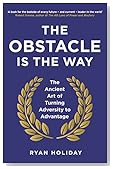
https://images-eu.ssl-images-amazon.com/images/P/B00IX49OS4.01._PC__.jpg The Obstacle is the Way Ryan Holiday Whilst everyone else appears to be obligated to include Ryan's recent Ego is the Enemy in their Best of 2016 lists I was actually taken by his earlier "introduction by stealth" to stoic philosophy. Certainly not your typical self-help book, this is "a manual to turn to in troubling times". Returning to this work at least three times over the year even splashing out on the audiobook at some point I feel like I learned a great deal, although it is now difficult to pinpoint exactly what. Perhaps another read in 2017 is thus in order
https://images-eu.ssl-images-amazon.com/images/P/071563335X.01._PC__.jpg Layer Cake J.J. Connolly To judge a book in comparison to the film is to do both a disservice, but reading the book of Layer Cake really underscored just how well the film played to the strengths of that medium. All of the aspects that would not have worked had been carefully excised from the screenplay, ironically leaving more rewarding "layers" for readers attempting the book. A parallel adaption here might be No Country for Old Men - I would love to read (or write) a comparative essay between these two adaptions although McCarthy's novel is certainly the superior source material.
https://images-eu.ssl-images-amazon.com/images/P/B00G1SRB6Q.01._PC__.jpg Lying Sam Harris I've absorbed a lot of Sam Harris's uvre this year in the form of his books but moreover via his compelling podcast. I'm especially fond of Waking Up on spirituality without religion and would rank that as my favourite work of his. Lying is a comparatively short read, more of a long essay in fact, where he argues that we can radically simplify our lives by merely telling the truth in situations where others invariably lie. Whilst it would take a brave soul to adopt his approach his case is superlatively well-argued and a delight to read.
https://images-eu.ssl-images-amazon.com/images/P/0140442103.01._PC__.jpg Letters from a Stoic Seneca

Great pleasure is to be found not only in keeping up an old and established friendship but also in beginning and building up a new one. Reading this in a beautifully svelte hardback, I tackled a randomly-chosen letter per day rather than attempting to read it cover-to-cover. Breaking with a life-long tradition, I even decided to highlight sections in pen so I could return to them at ease. I hope it's not too hackneyed to claim I gained a lot from "building up" a relationship with this book. Alas, it is one of those books that is too easy to recommend given that it might make one appear wise and learned, but if you find yourself in a slump, either in life or in your reading habits, it certainly has my approval.


https://images-eu.ssl-images-amazon.com/images/P/B00BHD3TIE.01._PC__.jpg Solo: A James Bond Novel William Boyd I must have read all of the canonical Fleming novels as a teenager and Solo really rewards anyone who has done so. It would certainly punish anyone expecting a Goldeneye or at least be a little too foreign to be enjoyed. Indeed, its really a pastiche of these originals, both in terms of the time period, general tone (Bond is more somber; more vulnerable) and in various obsessions of Fleming's writing, such as the overly-detailed description of the gambling and dining tables. In this universe, 007's restaurant expenses probably contributed signifcantly to the downfall of the British Empire, let alone his waistline. Bond flicking through a ornithological book at one point was a cute touch
https://images-eu.ssl-images-amazon.com/images/P/B019MMUA8S.01._PC__.jpg The Subtle Art of Not Giving A F*ck Mark Manson Certainly a wildcard to include here and not without its problems, The Subtle Art is a curious manifesto on how to approach life. Whilst Manson expouses an age-old philosophy of grounding yourself and ignoring the accumulation of flatscreen TVs, etc. he manages to do so in a fresh and provocative "21st-centry gonzo" style. Highly entertaining, at one point the author posits an alternative superhero ("Disappointment Panda") that dishes out unsolicited and uncomfortable truths to strangers before simply walking away: "You know, if you make more money, that s not going to make your kids love you," or: "What you consider friendship is really just your constant attempts to impress people." Ouch.
https://images-eu.ssl-images-amazon.com/images/P/B004ZLS5RK.01._PC__.jpg The Fourth Protocol Frederick Forsyth I have a crystal-clear memory from my childhood of watching a single scene from a film in the dead of night: Pierce Brosnan sets a nuclear device to detonate after he can get away but a double-crossing accomplice surreptitiously brings the timetable forward in order that the bomb also disposes of him Anyway, at some point whilst reading The Fourth Protocol it dawned on me that this was that book. I might thus be giving the book more credit due to this highly satisfying connection but I think it stands alone as a superlative political page-turner and is still approachable outside the machinations of the Cold War.
https://images-eu.ssl-images-amazon.com/images/P/B003IDMUSG.01._PC__.jpg The Partner John Grisham After indulging in a bit too much non-fiction and an aborted attempt at The Ministry of Fear, I turned to a few so-called lower-brow writers such as Jeffrey Archer, etc. However, it was The Partner that turned out to be a real page-turner for somewhat undefinable reasons. Alas, it appears the rest of the author's output is unfortunately in the same vein (laywers, etc.) so I am hesitant to immediately begin others but judging from various lists online I am glad I approached this one first.
https://images-eu.ssl-images-amazon.com/images/P/B00D3J2QKC.01._PC__.jpg Shogun: The First Novel of the Asian saga James Clavell Despite its length, I simply couldn't resist returning to Shogun this year although it did fatigue me to the point that I have still yet to commence on its sequel, Tai-Pan. Like any good musical composition, one is always rewarded by returning to a book and I took great delight in uncovering more symbolism throughout (such as noticing that one of the first words Blackthorne learns in Japanese is "truth") but also really savouring the tragic arcs that run throughout the novel, some beautiful phrases ("The day seemed to lose its warmth ") and its wistful themes of inevitability and karma.

Shirish Agarwal: Mausaji, Samosaji

mausaji

Mausaji, Never born Never died, Always in the heart.

Dear Friends, I have shared a few times that I had a privileged childhood. I never had led a hand-to-mouth existence but more than that I was privileged to have made the acquaintance of Jaipur wale Mausaji while I was very young. I have been called miserly by my cousin sisters whenever they write letters to me and I don t answer simply because whatever I feel for them, words feel inadequate and meaningless. The same thing applies in this as well. I am sharing few bits here as there are too many memories of a golden past which will not let me go till I have shared a few of them. First let me start by sharing the relation I had with him. By relation he was my mother s-sister s husband. In English, he would probably be termed as Maternal Uncle although he was much more than that. My one of the first remembrances of him was during Madhu Didi s Shaadi (marriage). Madhu Didi is uncle s daughter and I would have been a impish 4-5 year old at the time. This was the first time I was gonna be part of The Great North Indian Wedding and I didn t know what was in store for me as I had grown in Pune. I remember finishing my semester tests and mummy taking me to Pune Station. I was just excited that I would be travelling somewhere and had no clue what would be happening. We landed in Agra, took another train and landed in Jaipur in the middle of the night at their home at Sangram Colony. While I had known few of the cousins, I was stumped to see so many cousins jumping out of everywhere. The look on my face was one of stupefaction and surprise . The only thing which would closely resemble that would be Bilbo s 111st Birthday party in Lord of the Rings (Part 1). In fact, by a curious quirk/twist of fate, I came to know of a Naniji or somebody like that who by relation was far elder to me, while she was either my age or below my age. As was customary, had to bow down sheepishly. As a somewhat alone boy, to be thrown in this rambunctious bunch and be the babe in the woods, I was quickly chopped and eaten up but had no complaints. I would get into trouble onto a drop of a hat. While Mausiji would threaten me, Mausaji would almost always defend me. While Mausiji could see through me, the twinkle in Mausaji s eyes used to tell me that while he knew what I was upto, for reasons unknown, he would always defend me. Mausaji s Sangram Colony s house became my cricket ground, football ground and all and any ground to play and be. Mausaji and his brothers used to live near each other and the lane they had, had hardly any vehicles on it, so all the cousins could play all they want with me being the longest, perhaps unconsciously trying either to make for lost time or knowing/unknowing this was too good to last. Today s Pokemon generation might not be able to get it but that s alright. They also had a beautiful garden where Mausiji used to grow vegetables. While playing, we sometimes used to hurt her veggies (unconsciously) or just have shower with the garden hose. Mausaji used to enjoy seeing our antics. One of the relatives even had a dog who used to join in the fun sometimes. When mummy and Mausiji expressed concern about the dog biting, Mausaji would gently brush it aside. One of the other things in Didi s marriage is we got a whole lot of sweets. While Mausiji tried to keep us in check with sweets, both Manish Bhaiya and Mausaji used to secrete sweets from time to time. When I was hungry and used to steal food (can t wait till the appointed time) either Bhaiya or Mausaji would help me with the condition I would have to take the blame if and when we got caught as we invariably did. Mausaji s house had a basement where all the secreted sweets and food used to get in. Both me and Manish Bhaiya would be there and we would have a riot in ourselves. We would enjoy the adrenaline when we were stealing the food. As I was pretty young, I was crazy about the Tom and Jerry cartoons that used to come on Television that time. I and Bhaiya used to act like Jerry and/or his cronies while Mausiji would invariably be the Tom with Mausaji all-knowing about it but acting as a mere bystander. I remember him egging me for many of the antics I would do and get in trouble in but as shared would also be defended by him. The basement was also when I was becoming a teenager where Manish Bhaiya showed me his collection and we had a heart-to-heart about birds and bees. While whatever little I had known till that time was from school-friends and my peers at school and I didn t know what was right or wrong. Bhaiya clarified lot of things, concepts which I was either clueless or confused about. When I look back now, it is possible that Mausaji might have instructed Bhaiya to be my tutor as I used to be somewhat angry and lash out by the confusing times. As we used to go there for part of holidays, I remember doing all sorts of antics to make sure I would get an extra day, an extra hour to be there. I never used to understand why we had to go to meet the other relatives when all the fun I could have was right there only, couldn t Mummy know/see that I used to enjoy the most here. Mausaji was a clothier as we understand the term today and a gentleman to the core. He was the co-owner of Rajputana Cloth Store in Jaipur. Many VIP s as well as regular people used to visit him for getting clothes designed and stitched under his watchful eyes. I never saw him raise his voice against any of the personnel working under him and used to be a thorough gentleman to one and all. Later, as I grew up I came to know and see that people would phone up and just ask him to do the needful. He would get the right cloth, stitch it right and people used to trust him for that. He was such an expert on cloth and type of clothes, that by mere touch he could talk/share about what sort of cloth it is. One of his passions was driving and from the money he had saved, he had got an Ambassador Car. Every day or every other day or whenever he felt like it, he used to take either the gang or me with mummy or me with anybody else. Each ride used to be an adventure in itself, with a start beginning and an end. I always used to watch out for the car-rides as I knew we would get sweets or something as well as he would regale us with stories about a place here and there. There was a childlike curiosity and interest in him which was infectious to one and all. The only weakness that he had was he liked to drink wine once in a while. When I was a kid, I was never able to give him company, only few years back, for the first time I was able to share wine with him which was also a memory I treasure. Those who know him closely knew the many up and downs that he went through, but as a gentleman he never let on the hurts he had or didn t curse his fate or anything else that we do when things go bad from our perspective. While there is much to write about him, it will not accomplish anything that is not known about him. I ll add with the private joke that was between him and me. When I was little, I used to call him Mausaji, Samosaji for a) I liked Samosa and b) Samosa has a bit thick skin outside and underneath it s all gravy. In reality though, he was butter all the way. I miss you Mausaji and wish I could turn the clock back and come with Mummy to visit both Mausiji and you. I hope your new journey takes you to even further heights than this life. Savouring the memories mummy and I, hope we meet you again in some new Avataar
Filed under: Miscellenous Tagged: #antics, #growing up, #holidays, #Manish Bhiaya, #Mausaji, #Sangram Colony

29 December 2016

Philipp Kern: Automating the installation of Debian on z/VM instances

I got tired of manually fetching installation images via either FTP or by manually transferring files to z/VM to test s390x installs. Hence it was about time to automate it. Originally I wanted to instrument an installation via vmcp from another instance on the same host but I figured that I cannot really rely on a secondary instance when I need it and went the s3270/x3270-script way instead.

The resulting script isn't something I'm particularly proud of, especially as it misses error handling that really should be there. But this is not expect instead you operate on whole screens of data and z/VM is not particularly helpful in telling you that you just completed your logon either. Anyway, it seems to work for me. It downloads the most recent stable or daily image if they are not present yet, uploads them via DFT to CMS and makes sure that the installation does not terminate when the script disconnects. Sadly DFT is pretty slow, so I'm stuck with 70 kB/s and about five minutes of waiting until kernel and initrd are finally uploaded. Given that installations themselves are usually blazingly fast on System z, I'm not too annoyed by that, though.

I previously wrote about a parmfile example that sets enough options to bring debian-installer to the point of a working network console via SSH without further prompting. It's a little unfortunate that s390-netdevice needs to be preseeded with the hardware addresses of the network card in all cases, even if only one is available. I should go and fix that. For now this means that the parmfile will be dependent on the actual VM system definition. With that in mind there is an example script in the same gist that writes out a parmfile and then calls the reinstall script mentioned above. Given that debian-installer now supports HTTPS (so far only in the daily images) you can even do a reasonably secure bootstrapping of the network console credentials and preseeding settings.

If you put this pretty generic preseed configuration file onto a securely accessible webserver and reference it from the parmfile, you can also skip the more tedious questions at the beginning of debian-installer. A secure transport is encouraged as preseed files can do anything to your installation process. Unfortunately it seems that there is no way to preseed SSH keys for the resulting installation yet, neither for the created user nor for root. So I haven't achieved my desired target of a fully automated installation just yet. Debian's Jenkins setup just went with insecure defaults, but given that my sponsored VMs are necessarily connected to the public Internet that seemed like a bad idea to me. I suppose one way out would be to IP/password ACL the preseed file. Another one to somehow get SSH key support into user-setup.

Sven Hoexter: Out of the comfort zone: OpenSuSE support for an ordinary user - f*ck my morals

A friend of mine choose for $reasons to install the latest OpenSuSE 42.2 release as his new laptop operating system. It's been a while that I had contact with the SuSE Linux distribution. Must be around 12 years or so. The unsual part here is that I've to support a somewhat eccentric, but mostly ordinary user of computers. And to my surprise it's still hard to just plug in your existing stuff and expect it work. I've done so many dirty things to this installation in the last three days, my system egineering heart is bleeding. printing with a Canon Pixma iP100 printer This is a small portable Canon printer, about four years old. It provides a decent quality and its main strength is that it's small and really portable. Sadly the gutenprint driver just pushes through a blank page. No ink wasted on it at all. So the only reasonable other choice was a four year old binary rpm package provided by Canon. It has a file dependency on "libtiff.so.3" which is no longer available in recent GNU/Linux distributions. So I cheated and
- unpacked the tarball
- installed the rpm from the "packages" folder
zypper install cnijfilter-common-3.70-1.x86_64.rpm cnijfilter-ip100series-3.70-1.x86_64.rpm
... and choose to ignore the missing file dependency on libtiff.so.5.
ln -s /usr/lib64/libtiff.so /usr/lib64/libtiff.so.5
- re-ran the ./install.sh which registered the printer with cups and does whatever else
  magic is included in 1906 lines of shell.
To my surprise this driver still works and provides the expected quality. Though it's just a question of time until this setup will break. Be it an incompatible ABI change in libtiff or another lib in use by those Canon provided tools. QGIS and gdal with ECW support While the printer stuff is a rather common use case, having a map viewer for map files in the ECW format is the eccentric part. I found some hints on stackoverflow and subsequently https://trac.osgeo.org/gdal/wiki/ECW that a non-free library is required and a specific build of gdal. Then QGIS should be able to work with ECW files. Lucky us there is at least a OpenSuSE repository for gdal and QGIS. So I did the following:
zypper addrepo http://download.opensuse.org/repositories/Application:/Geo/openSUSE_Leap_42.2/Application:Geo.repo
zypper install qgis
Then I had to download the non-free ECW SDK from http://download.hexagongeospatial.com/downloads/erdas-ecw-jp2-sdk-v5.3-%28linux%29 - you'll and up with a '.bin' installer file. The installation process left me with "ERDAS-ECW_JPEG_2000_SDK-5.3.0" folder in my $HOME. I moved that one to /opt. Next step is adding the library to the ldconfig search path.
echo "/opt/ERDAS-ECW_JPEG_2000_SDK-5.3.0/Desktop_Read-Only/lib/x64/release/" > /etc/ld.so.conf.d/ecw.conf; ldconfig
Now it was "just" about rebuild gdal with ECW support. So I downloaded the required source packages with "zypper source-install gdal", edited the spec somewhere in "/usr/src/" to make the following modifications
--with-ecw=/opt/ERDAS-ECW_JPEG_2000_SDK-5.3.0/Desktop_Read-Only
added to the "./configure" invocation. And somewhere at the top we had to relax the requirement that all installed files have to be referenced inside the package.
%define _unpackaged_files_terminate_build 0
As a last step I had to "rpmbuild -ba" the package and force the installation via zypper once more, because this time we have a file depedency on the libecw stuff and it's obviously not listed in the rpm database. Last but not least I tried to put the gdal build on hold with
zypper addlock gdal libgdal20
to ensure it's not removed on the next update. Other non-free tools Beside of those two issues I had to install a range of other non-free tools, but currently they work without further issues or modifications. One is Teamviewer (i686 multiarch rpm) and the other one is XnViewMP. XnView is also able to show ECW files, but only the smaller ones. It crashes on bigger ones but that's also the case on Windows. Then there is also (required by some Italian map related websites) the ugly Adobe Flash Plugin for Firefox, but that one is sadly still a widespread issue. We also tried to try out the nvidia graphic drivers but at the moment we could only get the build in Intel card to work. Usually the preferred solution from my point of view but sometimes we see rendering glitches and I'm not sure if it's the driver or something else. my personal take away I hate to admit it but it's nothing extraordinary that was requested here. But still it took me the better part of two evenings to figure everything out. And even now it's not properly integrated and doomed to fail any day due to various updates and changes in the surounding ecosystem. I've full sympathy for every average user that would give up after two hours of research and try&error on this journey. For the printer drivers I'm happy to blame Canon. The printer situation as a whole improved from my point of view during the last decade, but it's still a pain in the ass with the very short shelf life you usually see with consumer models. For the ECW case one could discuss if it would be legally possible and helpful to do ugly dlopen() stuff to dynamcially load the shared libs. But then again someone has to make his hands dirty during the build and discussions about the legal use of header files will be the next chapter (hello Oracle). It's just ugly. Actually I know too little about the world of image formats to judge if someone has a good reason to keep this format commercial or not. From my personal point of view it's not useful and maybe even morally wrong. Technically one could argue if it would make sense to keep a local copy of the gdal build in "/opt" and start QGIS with a modified library path to prefer the private gdal build. Not sure if that is any better. On the other hand there are evolving mechanism like flatpack that would ease the handling of such situations. Buth then again we would be catering non-free software. It feels a lot like giving up. While my private working environment is except for firmware blobs free, I now created for someone a real "FrankenSuSE" to satisfy his everyday needs. On the one hand we now have another mostly satisfied user of a mostly free operating system. On the other hand that was only possible by adding a vast amount of non-free software. For sure we did not win the war, I'm not even sure if we've won a single battle here. It's just frustrating to see what is required to get someone up and running. With my personal attitude towards open source software it even feels wrong to invest so much time into fiddling with non-free components. What is still missing We currently lack an image viewer that allows us to print only a selection of an image, which is useful to print parts of a map. That usually works with XnView on Windows but does not work with the Linux version at the moment. I also tried gwenview and geeqie and had the same issue. Not sure if it's maybe a bug in XnView or one of the Qt parts (gwenview is also Qt based). I did not research that yet. Update: I spent quite some time looking into open bug reports for geeqie and gwenview. Seems the feature to print only a section of an image is something new. I've created #374299 (gwenview) and #457 (geeqie). For XnView I expect it's a difference between XnViewMP (the portable version) and the Windows only XnView Classic. Needs to be clarified and it might be worth to try XnView Classic with wine. Maybe printing with wine via cups works, I found at least some results for it on the internet.

Reproducible builds folks: Reproducible Builds: week 87 in Stretch cycle

What happened in the Reproducible Builds effort between Sunday December 18 and Saturday December 24 2016: Media coverage 100% Of The 289 Coreboot Images Are Now Built Reproducibly by Phoronix, with more details in German by Pro-Linux.de. We have further reports on our Reproducible Builds World summit #2 in Berlin from Rok Garbas of NixOS as well as Clemens Lang of MacPorts Debian infrastructure work Dak now archives buildinfo files thanks to a patch from Chris Lamb. We also have mostly finalised a design of how they will be distributed by the Debian FTP mirror network which we will start implementing soon. This is great for the future of Debianb but unfortunately this also means that we won't have .buildinfo files for Stretch as Debian will not rebuild its source packages and because these binary packages currently in the archive were mostly built with dpkg > 1.18.11. reprepro/5.0.0-1 has added support for dealing with .buildinfo files that are included in .changes files. (Closes: #843402) Reproducible work in other projects The Chromium project is now working on making their build process (mostly) deterministic. Their motivation is to save both "[money] (less hardware is required) and developer time (reduced latency by having less work to do on the TS and CI)". Unreproducible bugs filed Reviews of unreproducible packages 39 package reviews have been added, 75 have been updated and 44 have been removed in this week, adding to our knowledge about identified issues. 2 issue types have been updated: Weekly QA work During our reproducibility testing, some FTBFS bugs have been detected and reported by: diffoscope development diffoscope 66 was uploaded to unstable by Chris Lamb. It included contributions from: strip-nondeterminism development strip-nondeterminism 0.029-1 was uploaded to unstable by Chris Lamb. It included no new content from this week, but rather included contributions from previous weeks. reproducible-website development The website is now also accessible via the https://www.reproducible-builds.org URL. tests.reproducible-builds.org Misc. This week's edition was written by Ximin Luo, Holger Levsen & Chris Lamb and reviewed by a bunch of Reproducible Builds folks on IRC and the mailing lists.

Russ Allbery: Review: Pawn of Prophecy

Review: Pawn of Prophecy, by David Eddings
Series: The Belgariad #1
Publisher: Del Rey
Copyright: April 1982
Printing: August 1990
ISBN: 0-345-33551-1
Format: Mass market
Pages: 258
I hit a period in November when I felt like reading something entirely undemanding and fun, something that was predictable, comfortable, and guaranteed to be a happy ending. There are times in life for books like that. I've been vaguely thinking of re-reading the Belgariad for a while, which I'd not read since I was in college, and that seemed to fit the bill. Garion is a farm-boy in Sendaria, a quiet and industrious kingdom full of farmers. His only family is his Aunt Pol, who ran the kitchen at Faldor's farm. His life has all the hallmarks of being entirely unremarkable, despite occasional visits by a traveling vagabond, Wolf, who clearly knows his Aunt Pol. But then something extremely important is stolen elsewhere, Wolf and Pol have to leave to pursue it for reasons that are quite murky to Garion, and Pol is unwilling to leave Garion behind. This begins Garion's great adventure, in which he becomes far more important and powerful than he would have ever imagined. That's the promise, at least, and the stock plot of every series like this. And let me be clear up front: the Belgariad is very stock. That's part of what I was in the mood for, but don't come to this series looking for interesting differentiation. It's clearly in the center of the secondary world chosen one fantasy genre, with a great evil, forces of good arrayed against it, and someone who unknowingly has the power to stop evil but has to learn how to use it. If you're in the mood for this, every note will be comfortably familiar; if not, it might be boringly predictable. Unfortunately, this particular book does not cast the Belgariad in a good light. Garion's introduction to this story is intensely irritating, almost entirely because no one will tell him what's going on. Pol is excessively protective (smotheringly so), but shuts down any questions he has and doesn't explain why she's freaking out. (This doesn't become entirely clear until towards the end of the second book.) What little scraps Garion picks up, he has to get by eavesdropping. Even by the end of this book, when Garion has met royalty and started helping with larger political issues (albeit mostly by accident), everyone is keeping him in the dark and he doesn't believe the hints he's gotten. I can't remember how I reacted to this the first time I read this series, but the second time through, it was extremely frustrating. The frustration is stronger because any regular reader of this genre knows exactly what Garion is, although not precisely how the story will play out, and can make fairly good guesses about Pol and Wolf from early in the story. Everyone playing coy doesn't even add legitimate suspense or set up a big reveal. It just made me irritated at Garion's blindness (it's mildly understandable given how foreign the idea is to his life, but he seems remarkably dense even with that), and even more irritated at Wolf and, in particular, Aunt Pol for keeping him so thoroughly in the dark. Garion is very attached to his aunt; on this re-reading, I wasn't entirely sure why. She occasionally shows love and support, and she's certainly wise, but for most of the book she treats him with brusque condescension and tries to keep him as ignorant as possible. Garion's weird entanglement with a black rider that he'd seen for most of his life doesn't make this any better. It's creepy and disturbing, it's not entirely resolved in this book, and Garion is clearly in danger, which wasn't the vibe that I was looking for when starting this re-read. And it's hard to escape the feeling that Garion might have managed to tell someone if all the adult figures in his life weren't so secretive, dismissive, and excessively controlling. So, all in all, an inauspicious beginning. It was good enough to keep me reading when I first read the series, and it was good enough on this re-read, but just barely. The saving grace is Silk and Barak, when the story finally meets them. Those who have read this series will know that they're just the beginning of the party-building process that will take up much of this series (so many Lord of the Rings resonances), but the one thing I will give Eddings is that he writes entertaining supporting characters. Both of them are a bit stereotyped, but they add so much to this story. Silk in particular is a delight and remains a delight throughout the series, adding a much-needed level of snark and sneaky enjoyment that lightens so many of the serious episodes of this story. The Belgariad in general is highly derivative map exploration fantasy, and you shouldn't expect anything deeper. It is, however, enjoyable map exploration fantasy with some entertaining supporting cast members. Sadly, only the glimmers of that are visible from this book. Pawn of Prophecy is mostly an irritating tour of bad parenting techniques, refusal to talk to teenagers, sneaking around to get information that should have been legitimately shared, and taking forever to get around to the mythology that we all know is coming. I therefore can't recommend this book, although one does have to read it in order to read the rest of the series, which as I recall gets considerably better. Followed by Queen of Sorcery. Rating: 5 out of 10

28 December 2016

Wouter Verhelst: NBD talk at FOSDEM 2017

You may have noticed (but you probably did not), but on 2017-02-04, at 14:00, in room UB2.252A (aka "Lameere"), which at that point in time will be the Virtualisation and IaaS devroom, I'll be giving a talk on the Network Block Device protocol. Having been involved in maintaining NBD in one way or another for over fifteen years now, I've never seen as much activity around the concept as I have in the past few years. The result of that has been that we've added a number of new features to the protocol, to allow it to be used in settings where it was not as useful or as attractive as it would have been before. As a result, these are exciting times for those who care about NBD, and I thought it would be about time that I'd speak about it somewhere. The Virtualisation/IaaS devroom seemed like the right fit today (even though I wouldn't have thought so a mere two years ago), and so I'm happy they agreed to have me. While I still have to start writing my slides, and therefore don't really know (yet) exactly what I'll be talking about, the schedule already contains an outline. See you there?

27 December 2016

Joey Hess: multi-terminal applications

While learning about and configuring weechat this evening, I noticed a lot of complexity and unsatisfying tradeoffs related to its UI, its mouse support, and its built-in window system. Got to wondering what I'd do differently, if I wrote my own IRC client, to avoid those problems. The first thing I realized is, it is not a good idea to think about writing your own IRC client. Danger will robinson.. So, let's generalize. This blog post is not about designing an IRC client, but about exploring simpler ways that something like an IRC client might handle its UI, and perhaps designing something general-purpose that could be used by someone else to build an IRC client, or be mashed up with an existing IRC client. What any modern IRC client needs to do is display various channels to the user. Maybe more than one channel should be visible at a time in some kind of window, but often the user will have lots of available channel and only want to see a few of them at a time. So there needs to be an interface for picking which channel(s) to display, and if multiple windows are shown, for arranging the windows. Often that interface also indicates when there is activity on a channel. The most recent messages from the channel are displayed. There should be a way to scroll back to see messages that have already scrolled by. There needs to be an interface for sending a message to a channel. Finally, a list of users in the channel is often desired. Modern IRC clients implement their own UI for channel display, windowing, channel selection, activity notification, scrollback, message entry, and user list. Even the IRC clients that run in a terminal include all of that. But how much of that do they need to implement, really? Suppose the user has a tabbed window manager, that can display virtual terminals. The terminals can set their title, and can indicate when there is activity in the terminal. Then an IRC client could just open a bunch of terminals, one per channel. Let the window manager handle channel selection, windowing (naturally), and activity notification. For scrollback, the IRC client can use the terminal's own scrollback buffer, so the terminal's regular scrollback interface can be used. This is slightly tricky; can't use the terminal's alternate display, and have to handle the UI for the message entry line at the bottom. That's all the UI an IRC client needs (except for the user list), and most of that is already implemented in the window manager and virtual terminal. So that's an elegant way to make an IRC client without building much new UI at all. But, unfortunately, most of us don't use tabbed window managers (or tabbed terminals). Such an IRC client, in a non-tabbed window manager, would be a many-windowed mess. Even in a tabbed window manager, it might be annoying to have so many windows for one program. So we need fewer windows. Let's have one channel list window, and one channel display window. There could also be a user list window. And there could be a way to open additional, dedicated display windows for channels, but that's optional. All of these windows can be seperate virtual terminals. A potential problem: When changing the displayed channel, it needs to output a significant number of messages for that channel, so that the scrollback buffer gets populated. With a large number of lines, that can be too slow to feel snappy. In some tests, scrolling 10 thousand lines was noticiably slow, but scrolling 1 thousand lines happens fast enough not to be noticiable. (Terminals should really be faster at scrolling than this, but they're still writing scrollback to unlinked temp files.. sigh!) An IRC client that uses multiple cooperating virtual terminals, needs a way to start up a new virtual terminal displaying the current channel. It could run something like this:
x-terminal-emulator -e the-irc-client --display-current-channel
That would communicate with the main process via a unix socket to find out what to display. Or, more generally:
x-terminal-emulator -e connect-pty /dev/pts/9
connect-pty would simply connect a pty device to the terminal, relaying IO between them. The calling program would allocate the pty and do IO to it. This may be too general to be optimal though. For one thing, I think that most curses libraries have a singleton terminal baked into them, so it might be hard to have a single process control cursors on multiple pty's. And, it might be innefficient to feed that 1 thousand lines of scrollback through the pty and copy it to the terminal. Less general than that, but still general enough to not involve writing an IRC client, would be a library that handled the irc-client-like channel display, with messages scrolling up the terminal (and into the scrollback buffer), a input area at the bottom, and perhaps a few other fixed regions for status bars and etc. Oh, I already implemented that! In concurrent-output, over a year ago: a tiling region manager for the console I wonder what other terminal applications could be simplified/improved by using multiple terminals? One that comes to mind is mutt, which has a folder list, a folder view, and an email view, that all are shoehorned, with some complexity, into a single terminal.

Gunnar Wolf: Giving up on the Drupal 8 debianization

I am sad (but feel my duty) to inform the world that we will not be providing a Drupal 8 package in Debian. I filed an Intent To Package bug a very long time ago, intending to ship it with Jessie; Drupal 8 was so deep a change that it took their community overly long to achieve and stabilize. Still, Drupal 8 was released over a year ago today. I started working on debianizing the package shortly afterwards. There is also some online evidence As my call for help sent through this same blog. I have been too busy this last year. I let the packaging process lay dormant for too long, without even touching it for even half a year. Then, around September, I started working with the very nice guys of Indava, David and Enrique, and did very good advances. They clearly understood Debian's needs when it comes to full source inclusion (as D8 ships many minified Javascript libraries), attribution (as additionally to all those, many third-party PHP projects are bundled in the infamous vendor/ directory), and system-wide dependency management (as Drupal builds on some frameworks and libraries already available within Debian, chiefly Symfony, Doctrine, Twig... Even more, most of them appeared to work at the version levels we will be shipping, so all was dandy and for some weeks, I was quite optimistic on finishing the package on time and with the needed quality and testing. Yay! But... Reality bites. When I started testing my precious package... It broke in horrible ways. Uncomprehensible PHP errors (and I have to add here, I am a PHP newbie and am reluctant to learn better a language that strikes me as so inconsistent, so ugly), which we spent some time tackling... Of course, configuration changes are more than expected... But, just as we Debianers learnt some important lessons after the way-too-long Sarge freeze (ten years ago, many among you won't remember those frustrating days), Drupal learnt as well. They changed their release strategy Instead of describing it, those interested can read it at its source. What it meant for me, sadly, is that this process does not align with the Debian maintenance model. This means: The Drupal API stays mostly-stable between 8.0.x, 8.1.x, 8.2.x, etc. However, Drupal will incorporate new versions of their bundled libraries. I understood the new versions would be incorporated at minor-level branches, but if I read correctly some of my errors, some dependencies change even at patch-level updates. And... Well, if you update a PHP library, and the invoking PHP code (that is, Drupal) relies in this new version... Sadly, it makes it unmaintainable for Debian. So, long story short: I have decided to drop Drupal8 support in Debian. Of course, if somebody wants to pick up the pieces, the Git repository is still there (although I do plan on erasing it in a couple of weeks, as it means useless waste of project resources otherwise), and you could probably even target unstable+backports in a weird way (as it's software that, given our constraints, shouldn't enter testing, at least during a freeze). So... Sigh, a tear is dropped for every lost hour of work, and my depeest regrets to David and Enrique who put their work as well to make D8 happen in Debian. I will soon be closing the ITP and... Forgetting about the whole issue?

25 December 2016

Steinar H. Gunderson: Cracking a DataEase password

I recently needed to get access to a DataEase database; the person I helped was the legitimate owner of the data, but had forgotten the password, as the database was largely from 1996. There are various companies around the world that seem to do this, or something similar (like give you an API), for a usually unspecified fee; they all have very 90s homepages and in general seem like they have gone out of business a long time ago. And I wasn't prepared to wait. For those of you who don't know DataEase, it's a sort-of relational database for DOS that had its heyday in the late 80s and early 90s (being sort of the cheap cousin of dBase); this is before SQL gained traction as the standard query language, before real multiuser database access, and before variable-width field storage. It is also before reasonable encryption. Let's see what we can do. DataEase has a system where tables are mapped through the data dictionary, which is a table on its own. (Sidenote: MySQL pre-8.0 still does not have this.) This is the file RDRRTAAA.DBM; I don't really know what RDRR stands for, but T is the database letter in case you wanted more than one database in the same directory, and AAA, AAB, AAC etc. is a counter so that a table grows to be too big for one file. (There's also .DBA files for structure of non-system tables, and then some extra stuff for indexes.) DBM files are pretty much the classical, fixed-length 80s-style database files; each row has some flags (I believe these are for e.g. row is deleted ) and then just the rows in fixed format right after each other. For instance, here's one I created as part of testing (just the first few lines of the hexdump are shown):
00000000: 0e 00 01 74 65 73 74 62 61 73 65 00 00 00 00 00  ...testbase.....
00000010: 00 00 00 00 00 00 00 73 46 cc 29 37 00 09 00 00  .......sF.)7....
00000020: 00 00 00 00 00 43 3a 52 44 52 52 54 41 41 41 2e  .....C:RDRRTAAA.
00000030: 44 42 4d 00 00 01 00 0e 00 52 45 50 4f 52 54 20  DBM......REPORT 
00000040: 44 49 52 45 43 54 4f 52 59 00 00 00 00 00 1c bd  DIRECTORY.......
00000050: d4 1a 27 00 00 00 00 00 00 00 00 00 43 3a 52 45  ..'.........C:RE
00000060: 50 4f 54 41 41 41 2e 44 42 4d 00 00 01 00 0e 00  POTAAA.DBM......
00000070: 52 65 6c 61 74 69 6f 6e 73 68 69 70 73 00 00 00  Relationships...
Even without going in-depth, we can see the structure here; there's testbase which maps to C:RDRRTAA.DBM (the RDRR itself), there's a table called REPORT DIRECTORY that maps to C:REPOTAAA.DBM, and then more stuff after that, and so on. However, other tables are not so easily read, because you can ask DataEase to encrypt a table. Let's look at such an encrypted table, like the Users table (containing usernames, passwords not password hashes and some extra information like access level), which is always encrypted:
00000000: 0c 01 9f ed 94 f7 ed 34 ba 88 9f 78 21 92 7b 34  .......4...x!. 4
00000010: ba 88 0f d9 94 05 1e 34 ba 88 a0 78 21 92 7b 34  .......4...x!. 4
00000020: e2 88 9f 78 21 92 7b 34 ba 88 9f 78 21 92 7b 34  ...x!. 4...x!. 4
00000030: ba 88 9f 78 21 92 7b 34 ba 88 9f 78 21 92 7b     ...x!. 4...x!. 
Clearly, this isn't very good encryption; it uses a very short, repetitive key of eight bytes (64 bits). (The data is mostly zero padding, which makes it much easier to spot this.) In fact, in actual data tables, only five of these bytes are set to a non-zero value, which means we have a 40-bit key; export controls? My first assumption here was of course XOR, but through some experimentation, it turned out what you need is actually 8-bit subtraction (with wraparound). The key used is derived from both a database key and a per-table key, both stored in the RDRR; again, if you disassemble, I'm sure you can find the key derivation function, but that's annoying, too. Note, by the way, that this precludes making an attack by just copying tables between databases, since the database key is different. So let's do a plaintext attack. If you assume the plaintext of the bottom row is all padding, that's your key and here's what you end up with:
00000000: 52 79 00 75 73 65 72 00 00 00 00 00 00 00 00 00  Ry.user.........
00000010: 00 00 70 61 73 73 a3 00 00 00 01 00 00 00 00 00  ..pass..........
00000020: 28 00 00 00 00 00 00 00 00 00 00 00 00 00 00 00  (...............
00000030: 00 00 00 00 00 00 00 00                          ........ 
Not bad, eh? Actually the first byte of the key here is wrong as far as I know, but it didn't interfere with the fields, so we have what we need to log in. (At that point, we've won, because DataEase will helpfully decrypt everything transparent for us.) However, there's a twist; if the password is longer than four characters, the entire decryption of the Users table changes. Of course, we could run our plaintext attack against every data table and pick out the information by decoding the structure, but again; annoying. So let's see what it looks like if we choose passs instead:
00000000: 0e 01 9f 7a ae 9e 21 f5 08 63 07 6d a3 a1 17 5d  ...z..!..c.m...]
00000010: 70 cb df 36 7e 7c 91 c5 d8 33 d8 3d 73 71 e7 2d  p..6~ ...3.=sq.-
00000020: 7b 9b 3f a5 db d9 4f 95 a8 03 a7 0d 43 41 b7 fd   .?...O.....CA..
00000030: 10 6b 0f 75 ab a9 1f 65 78 d3 77 dd 13 11 87     .k.u...ex.w....
Distinctly more confusing. At this point, of course, we know at which byte positions the username and password start, so if we wanted to, we could just try setting the start byte of the password to every possible byte in turn until we hit 0x00 (DataEase truncates fields at the first zero byte), which would allow us to get in with an empty password. However, I didn't know the username either, and trying two bytes would mean 65536 tries, and I wasn't up for automating macros through DOSBox. So an active attack wasn't too tempting. However, we can look at the last hex byte (where we know the plaintext is 0); it goes 0x5d, 0x2d, 0xfd... and some other bytes go 0x08, 0xd8, 0xa8, 0x78, and so on. So clearly there's an obfuscation here where we have a per-line offset that decreases with 0x30 per line. (Actually, the increase/decrease per line seems to be derived from the key somehow, too.) If we remove that, we end up with:
00000000: 0e 01 9f 7a ae 9e 21 f5 08 63 07 6d a3 a1 17 5d  ...z..!..c.m...]
00000010: a0 fb 0f 66 ae ac c1 f5 08 63 08 6d a3 a1 17 5d  ...f.....c.m...]
00000020: db fb 9f 05 3b 39 af f5 08 63 07 6d a3 a1 17 5d  ....;9...c.m...]
00000030: a0 fb 9f 05 3b 39 af f5 08 63 07 6d a3 a1 17     ....;9...c.m...
Well, OK, this wasn't much more complicated; our fixed key is now 16 bytes long instead of 8 bytes long, but apart from that, we can do exactly the same plaintext attack. (Also, it seems to change per-record now, but we don't see it here, since we've only added one user.) Again, assume the last line is supposed to be all 0x00 and thus use that as a key (plus the last byte from the previous line), and we get:
00000000: 6e 06 00 75 73 65 72 00 00 00 00 00 00 00 00 00  n..user.........
00000010: 00 00 70 61 73 73 12 00 00 00 01 00 00 00 00 00  ..pass..........
00000020: 3b 00 00 00 00 00 00 00 00 00 00 00 00 00 00 00  ;...............
00000030: 00 00 00 00 00 00 00 00 00 00 00 00 00 00 00     ...............
Well, OK, it wasn't perfect; we got pass\x12 instead of passs , so we messed up somehow. I don't know exactly why the fifth character gets messed up like this; actually, it cost me half an hour of trying because the password looked very real but the database wouldn't let me in, but eventually, we just guessed at what the missing letter was supposed to be. So there you have it; practical small-scale cryptanalysis of DOS-era homegrown encryption. Nothing advanced, but the user was happy about getting the data back after a few hours of work. :-)

Russ Allbery: DocKnot 1.01

This is the second release of my new documentation generation system for my packages. It's still probably not of much interest to anyone other than me, particularly since the metadata format is still rapidly evolving so I've not documented it yet. But the templates are getting fleshed out and it's generating more and more of my package documentation, which will make releases much easier. This release adds generation of build and test instructions for my packages from templates and metadata, with some support for adding a bit of custom wording. It also offers a few new options for expanding license notices, and for annotating packages with additional bootstrap requirements. You can get the latest version from the DocKnot distribution page.

Russ Allbery: Review: A Man Called Ove

Review: A Man Called Ove, by Fredrik Backman
Translator: Henning Koch
Publisher: Washington Square
Copyright: 2012, 2014
Printing: May 2015
ISBN: 1-4767-3802-5
Format: Trade paperback
Pages: 337
Ove is 59 years old and drives a Saab. He's grumpy, often taciturn, very particular in how things should be done, and extremely judgmental about how other people do them. He is the sort of person who regularly rants about how poorly things are done these days and how much better they used to be. Ove does not like change. A Man Called Ove opens with him terrorizing the employees of an Apple Store, trying to buy a computer, but this incident is actually foreshadowing, and will only make sense at the very end of the book. The story actually begins in the second chapter, with Ove making his morning rounds of the neighborhood in which he lives, discovering an out-of-place bicycle and a mangy cat, and then starting to put a hook in his ceiling. But just as he's getting started, he's interrupted by new neighbors, who are incapable of backing up a trailer properly without scraping it against his house. Not that motor vehicles are allowed in the area anyway. That inauspicious beginning changes Ove's life, mostly through the sheer persistence of other people's disasters. It's not obvious at first that it will, and at the start A Man Called Ove could be a funny collection of stories about a curmudgeon. But as Backman shows more of Ove's life and tells more of his background and situation, it becomes something so much more, something satisfying and heart-breaking and deeply human. I've been struggling to review this book because I find it hard to capture what makes it so wonderful. Making that even harder, several key plot elements are introduced gradually in the story in ways that add a lot to the rhythm of the plot, and I don't want to spoil them. I think the closest I can get in a spoiler-free review is that A Man Called Ove is about empathy. It's about human connection, even when people seem unlikable, unreachable, or angrily off-putting. And it's a book about seeing the best inside other people, and about finding ways to be persistently oneself while still changing enough to find new connections, and about recognizing those moments when someone is showing you their best without getting caught up on the surface presentation. The man Ove is the center of this story, the subject of tight third person perspective for nearly all of the book. He's 59 when the story opens, but by the end of the book, mostly through flashback chapters, the reader knows his childhood and early adulthood and much of the story of his marriage. At first, he seems to be an obnoxious, surly, angry curmudgeon, the sort of old man who yells at clouds. But the joy of this book is how the reader's perception changes, how one gains sympathy, and then respect, first for Ove's unshakable inner sense of morality that he got from his father and then for his rule-based approach to how the world should work. One never entirely agrees with him, but Backman demystifies and explains Ove's thought process and ties it into a different generation and a different way of interacting with work (although Ove was still uncommon even in his youth, just not as unique). As I write this review, news and opinion in the United States are very focused on the plight of the white working class and how that does or does not explain recent election results. Backman is Swedish (I read this book in translation), so it's not coming from US culture and the cultural fault lines are not quite the same. But I think this book says something deeply valuable and fascinating about the working-class culture of Ove's youth, something that's much less about specific politics and much more about how it feels to make things with one's hands, to build or rebuild one's own house, or to work for thirty years at the same job and not be interested in a promotion to management. Backman does a truly spectacular job conveying the sense of angry frustration at the changes in work and life, the difficulty communicating one's internal feelings meaningfully, and the quiet joy of finding those places in life where one can do things properly. Ove is, of course, not the only character in this book, and every character here is a delight in their own idiosyncratic ways. The main story arc involves the various people in his neighborhood, particularly his new next-door neighbors: a pregnant Iranian woman and her very laid-back husband who is incapable of doing things around the house but keeps trying. I think Parvaneh, the woman, is my favorite character of the story except for Ove, and it's fitting that she's the first to work out the broad outlines of what's happening in Ove's life and the tricky path to effectively helping him. In a way, she's Ove's opposite: fiery, mercurial, talkative, and meddling. But she sees things in Ove that no one else seems to notice. (And the scene between her and Ove when she's learning to drive is a thing of beauty.) This is a book that could have been extremely sad, and yet isn't. It's a book about somber, depressing topics that somehow manages to be delightfully funny. And it's about a curmudgeon who persistently fails to have any sort of stereotyped heart of gold, but is nonetheless one of the most satisfying, fascinating, ethical, and good-willed characters I've ever read about. It manages to treat a collection of very different characters with individualized deep empathy and appreciation, while never pushing them all into the same mold. And the ending is wonderful. I rarely read slice of life stories, but this one is worth making an exception for. It's one of the best books I've ever read. Highly, highly recommended. Rating: 10 out of 10

24 December 2016

Shirish Agarwal: Trains, Planes and the future

Swacch Bharat - Indian Railways Copyright: Indian Express

Swacch Bharat Indian Railways Copyright: Indian Express

Some of the content may be NSFW. viewer discretion advised. I have had a life-long fascination with trains. One of my first memories was that of 5-7 year old, clutching my mother or grandmother s hand seeing the steam engine lumbering down whistling and smoking at the same time. I was both afraid and strangely drawn to the iron beast and the first time I knew and then slowly understood that if we come with luggage and the steam-engine comes, it means we are going to travel. I have travelled some, but there are lots to explore still and I do hope that I cover some more of it during my lifetime. The reason I am writing about trains is an article which caught my eye couple of days. Besides seeing the changing geography, the variety of food one can get on train and in stations is one of the primary reasons that Indians love to travel by trains. It is one place where you could have incredible conversations over cup of tea or favourite food and unlike air travel and the famed IFE (In-flight entertainment) people are actually pretty social even with all the gadgets. For those who are wondering, the author was travelling between Jamshedpur, Gujarat to Kolkatta, a train ride which has now gone on my bucket list for the delectable items the author has described To add to the above, it is still cheaper than air travel, although that is changing a bit as Indian Railways seeks to modernize Railways and make it into world-class bullet trains. Indian Railways has a long, rich culture and some of the most interesting nuggets you learn over time adds to the fascination of the Railways. For instance I m sharing this letter which I read first in book and then saw in the New Delhi Railway Museum. The letter I am sharing below was written by a certain Shri Okhil Chandra Sen to the Sahibganj Railway Office in year 1909, almost 38 years before India became independent. I am arrive by passenger train Ahmedpur station and my belly is too much swelling with jackfruit. I am therefore went to privy. Just I doing the nuisance that guard making whistle blow for train to go off and I am running with lotah in one hand and dhoti in the next when I am fall over and expose all my shocking to man and female women on plateform. I am got leaved at Ahmedpur station. This too much bad, if passenger go to make dung that dam guard not wait train five minutes for him. I am therefore pray your honour to make big fine on that guard for public sake. Otherwise I am making big report! to papers. If it were not for Mr. Okhil Chandra Sen we would still be running with water bottle (improvement) and jeans/shorts/whatever (again improvement) while the possibility of falling over would always be omnipresent in a hurry. Now we do have toilets and some of the better trains even have Bio-toilets which should make things better as well.(/NSFW) For the plane bit, most of my flights have been domestic flying. Some of my most memorable flights is when flying from Mumbai on a clear sky overlooking the Queen s necklace, loving it and landing in Bangalore during mist or rain or both. Delhi is also good as airports go but nothing much adventurous about it. It was only with the experience of my first international flight, I realized the same feeling again, nervousness and sense of adventure as you meet new people. Nowadays every week I do try and broaden my horizon by seeking and learning a bit about International Travel.
Copyright: National Geographic Magazine

Copyright: National Geographic Magazine

In this I came across an article on National Geographic site which also evoked similar feelings. While I can t go back to the past and even if I did (in distant past before I was born), I wouldn t want to improve my financial situation at all (as otherwise I would hit the Grandfather Paradox or/and the Butterfly effect (essentially saying there s no free lunch), it still makes you wonder about a time when people had lot more adventure and lot more moving parts. I do wish they had a much bigger snapshot of that plane so I could really see how people sat in the old aircraft. The low-resolution picture doesn t do justice to the poster and the idea of that time. https://en.wikipedia.org/wiki/A_Sound_of_Thunder for an implementation of Butterfly effect. The Grandfather Paradox has been seen plenty of times in fantasy movies like the Back to the Future, Planet of the Apes and many others so will not go there. For the average joe today, s/he has to navigate security,check bags, get her/imself processed through passport control, get boarding pass, get to the gate on-time, get to the aircraft via bridge or bus, get to the seat, somehow make it through the ascent and use your IFE and get snacks and meals till it s time to touch-down and re-do the whole drill again as many times you are connecting. I really admire Gunnar Wolf for the tenacity he showed for the x number of connections he made both ways.
The world's 10 best airports Copyright: Changi International Airport

Photo Courtesy Changi International Airport, Singapore

While leafing through the interweb today, came across an article . While you can slice and dice the report anyway you want, for me if ever I get a chance again for an International Travel, I would try to see I get a layover at these three airports in order of preference (this is on the basis that none of these airports need a transit visa for the activities shared) a. Changi International Airport It is supposed to have shower amenities, has a movie theatre (+1), free tour of the city (+1) and of course as many Indians do go to Singapore as a destination in itself would have multiple vegetarian options (+2) so would be nice if I need to layover. b. Zurich Airport (ZRH) For passengers with an extended layover, Zurich Airport offers bicycle and inline-skate rentals and excursions to the Swiss Museum of Transport Lucerne. From business-insider.com. While I m not much of a bicycle and inline-skating freak, if the Swiss Museum of Transport Lucerne is anything to the scale of Isiko Museum which I shared in a blog post sometime before, it would be worth by itself. I haven t tried to find the site but can imagine, for e.g. if it has a full-scale model of a submarine or train engine, either steam-engines or ones like SNCF or any of the other bullet-trains and early aircraft, it would just blow my mind. When you are talking about transport, there is so much science, business, logistics etc. that I m sure I ll overload with information, photos and any trinkets they have to buy. c. Central Japan International Airport (NGO) It has a 1,000-foot-long sky deck where passengers can watch ships sail into Nagoya Port. There s also a traditional Japanese bathhouse where you can have a relaxing soak while watching the sunset over the bay. BusinessInsider.com Not a bad place to be if you need a layover. Just sink yourself in the bathhouse and see the bay and ships coming in. Luxury indeed. Honourable mention d. Munich Airport (MUC) A nearby visitors park features mini golf and a display of historic aircraft. Business-Insider.com . Now this would have made my list but I guess one would need a Schengen visa to access the visitors park but then if you have that, then why just stay in the Airport itself, could travel through Europe itself and have a longish stop-over. So all in all, it s indeed a fascinating time to be alive, dreaming and just being. Till later. Update I had forgotten to share one more reason why I was writing this article. Although somewhat of a cynic, am hopeful that Pune metro happens. Also, if I had just waited a day, would have been able to add couple of wonderful articles that would make people wanderlust more
Filed under: Miscellenous Tagged: #Best Airports, #Central Japan International Airport, #Changi International Airport, #Food, #Loo, #Nostalgia, #NSFW, #Planes, #Steam Engine, #Trains, #Zurich Airport, Indian Railways, memories

Next.

Previous.