Search Results: "nic"

26 April 2015

Petter Reinholdtsen: First Jessie based Debian Edu beta release

I am happy to report that the Debian Edu team sent out this announcement today:
the Debian Edu / Skolelinux project is pleased to announce the first
*beta* release of Debian Edu "Jessie" 8.0+edu0~b1, which for the first
time is composed entirely of packages from the current Debian stable
release, Debian 8 "Jessie".
(As most reading this will know, Debian "Jessie" hasn't actually been
released by now. The release is still in progress but should finish
later today ;)
We expect to make a final release of Debian Edu "Jessie" in the coming
weeks, timed with the first point release of Debian Jessie. Upgrades
from this beta release of Debian Edu Jessie to the final release will
be possible and encouraged!
Please report feedback to debian-edu@lists.debian.org and/or submit
bugs: http://wiki.debian.org/DebianEdu/HowTo/ReportBugs
Debian Edu - sometimes also known as "Skolelinux" - is a complete
operating system for schools, universities and other
organisations. Through its pre- prepared installation profiles
administrators can install servers, workstations and laptops which
will work in harmony on the school network.  With Debian Edu, the
teachers themselves or their technical support staff can roll out a
complete multi-user, multi-machine study environment within hours or
days.
Debian Edu is already in use at several hundred schools all over the
world, particularly in Germany, Spain and Norway. Installations come
with hundreds of applications pre-installed, plus the whole Debian
archive of thousands of compatible packages within easy reach.
For those who want to give Debian Edu Jessie a try, download and
installation instructions are available, including detailed
instructions in the manual explaining the first steps, such as setting
up a network or adding users.  Please note that the password for the
user your prompted for during installation must have a length of at
least 5 characters!
== Where to download ==
A multi-architecture CD / usbstick image (649 MiB) for network booting
can be downloaded at the following locations:
    http://ftp.skolelinux.org/skolelinux-cd/debian-edu-8.0+edu0~b1-CD.iso
    rsync -avzP ftp.skolelinux.org::skolelinux-cd/debian-edu-8.0+edu0~b1-CD.iso . 
The SHA1SUM of this image is: 54a524d16246cddd8d2cfd6ea52f2dd78c47ee0a
Alternatively an extended DVD / usbstick image (4.9 GiB) is also
available, with more software included (saving additional download
time):
    http://ftp.skolelinux.org/skolelinux-cd/debian-edu-8.0+edu0~b1-USB.iso
    rsync -avzP ftp.skolelinux.org::skolelinux-cd/debian-edu-8.0+edu0~b1-USB.iso 
The SHA1SUM of this image is: fb1f1504a490c077a48653898f9d6a461cb3c636
Sources are available from the Debian archive, see
http://ftp.debian.org/debian-cd/8.0.0/source/ for some download
options.
== Debian Edu Jessie manual in seven languages ==
Please see https://wiki.debian.org/DebianEdu/Documentation/Jessie/ for
the English version of the Debian Edu jessie manual.
This manual has been fully translated to German, French, Italian,
Danish, Dutch and Norwegian Bokm l. A partly translated version exists
for Spanish.  See http://maintainer.skolelinux.org/debian-edu-doc/ for
online version of the translated manual.
More information about Debian 8 "Jessie" itself is provided in the
release notes and the installation manual:
- http://www.debian.org/releases/jessie/releasenotes
- http://www.debian.org/releases/jessie/installmanual
== Errata / known problems ==
    It takes up to 15 minutes for a changed hostname to be updated via
    DHCP (#780461).
    The hostname script fails to update LTSP server hostname (#783087). 
Workaround: run update-hostname-from-ip on the client to update the
hostname immediately.
Check https://wiki.debian.org/DebianEdu/Status/Jessie for a possibly
more current and complete list.
== Some more details about Debian Edu 8.0+edu0~b1 Codename Jessie released 2015-04-25 ==
=== Software updates ===
Everything which is new in Debian 8 Jessie, e.g.:
 * Linux kernel 3.16.7-ctk9; for the i386 architecture, support for
   i486 processors has been dropped; oldest supported ones: i586 (like
   Intel Pentium and AMD K5).
 * Desktop environments KDE Plasma Workspaces 4.11.13, GNOME 3.14,
   Xfce 4.12, LXDE 0.5.6
   * new optional desktop environment: MATE 1.8
   * KDE Plasma Workspaces is installed by default; to choose one of
     the others see the manual.
 * the browsers Iceweasel 31 ESR and Chromium 41
 * LibreOffice 4.3.3
 * GOsa 2.7.4
 * LTSP 5.5.4
 * CUPS print system 1.7.5
 * new boot framework: systemd
 * Educational toolbox GCompris 14.12
 * Music creator Rosegarden 14.02
 * Image editor Gimp 2.8.14
 * Virtual stargazer Stellarium 0.13.1
 * golearn 0.9
 * tuxpaint 0.9.22
 * New version of debian-installer from Debian Jessie.
 * Debian Jessie includes about 43000 packages available for installation.
 * More information about Debian 8 Jessie is provided in its release
   notes and the installation manual, see the link above.
=== Installation changes ===
    Installations done via PXE now also install firmware automatically
    for the hardware present.
=== Fixed bugs ===
A number of bugs have been fixed in this release; the most noticeable
from a user perspective:
 * Inserting incorrect DNS information in Gosa will no longer break
   DNS completely, but instead stop DNS updates until the incorrect
   information is corrected (710362)
 * shutdown-at-night now shuts the system down if gdm3 is used (775608). 
=== Sugar desktop removed ===
As the Sugar desktop was removed from Debian Jessie, it is also not
available in Debian Edu jessie.
== About Debian Edu / Skolelinux ==
Debian Edu, also known as Skolelinux, is a Linux distribution based on
Debian providing an out-of-the box environment of a completely
configured school network. Directly after installation a school server
running all services needed for a school network is set up just
waiting for users and machines being added via GOsa , a comfortable
Web-UI. A netbooting environment is prepared using PXE, so after
initial installation of the main server from CD or USB stick all other
machines can be installed via the network. The provided school server
provides LDAP database and Kerberos authentication service,
centralized home directories, DHCP server, web proxy and many other
services.  The desktop contains more than 60 educational software
packages and more are available from the Debian archive, and schools
can choose between KDE, GNOME, LXDE, Xfce and MATE desktop
environment.
== About Debian ==
The Debian Project was founded in 1993 by Ian Murdock to be a truly
free community project. Since then the project has grown to be one of
the largest and most influential open source projects. Thousands of
volunteers from all over the world work together to create and
maintain Debian software. Available in 70 languages, and supporting a
huge range of computer types, Debian calls itself the universal
operating system.
== Thanks ==
Thanks to everyone making Debian and Debian Edu / Skolelinux happen!
You rock.

Russell Coker: Anti-Systemd People

For the Technical People This post isn t really about technology, I ll cover the technology briefly skip to the next section if you aren t interested in Linux programming or system administration. I ve been using the Systemd init system for a long time, I first tested it in 2010 [1]. I use Systemd on most of my systems that run Debian/Wheezy (which means most of the Linux systems I run which aren t embedded systems). Currently the only systems where I m not running Systemd are some systems on which I don t have console access, while Systemd works reasonably well it wasn t a standard init system for Debian/Wheezy so I don t run it everywhere. That said I haven t had any problems with Systemd in Wheezy, so I might have been too paranoid. I recently wrote a blog post about systemd, just some basic information on how to use it and why it s not a big deal [2]. I ve been playing with Systemd for almost 5 years and using it in production for almost 2 years and it s performed well. The most serious bug I ve found in systemd is Bug #774153 which causes a Wheezy->Jessie upgrade to hang until you run systemctl daemon-reexec [3]. I know that some people have had problems with systemd, but any piece of significant software will cause problems for some people, there are bugs in all software that is complex enough to be useful. However the fact that it has worked so well for me on so many systems suggests that it s not going to cause huge problems, it should be covered in the routine testing that is needed for a significant deployment of any new version of a distribution. I ve been using Debian for a long time. The transitions from libc4 to libc5 and then libc6 were complex but didn t break much. The use of devfs in Debian caused some issues and then the removal of devfs caused other issues. The introduction of udev probably caused problems for some people too. Doing major updates to Debian systems isn t something that is new or which will necessarily cause significant problems, I don t think that the change to systemd by default compares to changing from a.out binaries to ELF binaries (which required replacing all shared objects and executables). The Social Issue of the Default Init Recently the Debian technical committee determined that Systemd was the best choice for the default init system in Debian/Jessie (the next release of Debian which will come out soon). Decisions about which programs should be in the default install are made periodically and it s usually not a big deal. Even when the choice is between options that directly involve the user (such as the KDE and GNOME desktop environments) it s not really a big deal because you can just install a non-default option. One of the strengths of Debian has always been the fact that any Debian Developer (DD) can just add any new package to the archive if they maintain it to a suitable technical standard and if copyright and all other relevant laws are respected. Any DD who doesn t like any of the current init systems can just package a new one and upload it. Obviously the default option will get more testing, so the non-default options will need more testing by the maintainer. This is particularly difficult for programs that have significant interaction with other parts of the system, I ve had difficulties with this over the course of 14 years of SE Linux development but I ve also found that it s not an impossible problem to solve. It s generally accepted that making demands of other people s volunteer work is a bad thing, which to some extent is a reasonable position. There is a problem when this is taken to extremes, Debian has over 1000 developers who have to work together so sometimes it s a question of who gets to do the extra work to make the parts of the distribution fit together. The issue of who gets to do the work is often based on what parts are the defaults or most commonly used options. For my work on SE Linux I often have to do a lot of extra work because it s not part of the default install and I have to make my requests for changes to other packages be as small and simple as possible. So part of the decision to make Systemd be the default init is essentially a decision to impose slightly more development effort on the people who maintain SysVInit if they are to provide the same level of support of course given the lack of overall development on SysVInit the level of support provided may decrease. It also means slightly less development effort for the people who maintain Systemd as developers of daemon packages MUST make them work with it. Another part of this issue is the fact that DDs who maintain daemon packages need to maintain init.d scripts (for SysVInit) and systemd scripts, presumably most DDs will have a preference for one init system and do less testing for the other one. Therefore the choice of systemd as the default means that slightly less developer effort will go into init.d scripts. On average this will slightly increase the amount of sysadmin effort that will be required to run systems with SysVInit as the scripts will on average be less well tested. This isn t going to be a problem in the short term as the current scripts are working reasonably well, but over the course of years bugs may creep in and a proposed solution to this is to have SysVInit scripts generated from systemd config files. We did have a long debate within Debian about the issue of default init systems and many Debian Developers disagree about this. But there is a big difference between volunteers debating about their work and external people who don t contribute but believe that they are entitled to tell us what to do. Especially when the non-contributors abuse the people who do the work. The Crowd Reaction In a world filled with reasonable people who aren t assholes there wouldn t be any more reaction to this than there has been to decisions such as which desktop environment should be the default (which has caused some debate but nothing serious). The issue of which desktop environment (or which version of a desktop environment) to support has a significant affect on users that can t be avoided, I could understand people being a little upset about that. But the init system isn t something that most users will notice apart from the boot time. For some reason the men in the Linux community who hate women the most seem to have taken a dislike to systemd. I understand that being conservative might mean not wanting changes to software as well as not wanting changes to inequality in society but even so this surprised me. My last blog post about systemd has probably set a personal record for the amount of misogynistic and homophobic abuse I received in the comments. More gender and sexuality related abuse than I usually receive when posting about the issues of gender and sexuality in the context of the FOSS community! For the record this doesn t bother me, when I get such abuse I m just going to write more about the topic in question. While the issue of which init system to use by default in Debian was being discussed we had a lot of hostility from unimportant people who for some reason thought that they might get their way by being abusive and threatening people. As expected that didn t give the result they desired, but it did result in a small trend towards people who are less concerned about the reactions of users taking on development work related to init systems. The next thing that they did was to announce a fork of Debian. Forking software means maintaining a separate version due to a serious disagreement about how it should be maintained. Doing that requires a significant amount of work in compiling all the source code and testing the results. The sensible option would be to just maintain a separate repository of modified packages as has been done many times before. One of the most well known repositories was the Debian Multimedia repository, it was controversial due to flouting legal issues (the developer produced code that was legal where they lived) and due to confusion among users. But it demonstrated that you can make a repository containing many modified packages. In my work on SE Linux I ve always had a repository of packages containing changes that haven t been accepted into Debian, which included changes to SysVInit in about 2001. The latest news on the fork-Debian front seems to be the call for donations [4]. Apparently most of the money that was spent went to accounting fees and buying a laptop for a developer. The amount of money involved is fairly small, Forbes has an article about how awful people can use controversy to get crowd-funding windfalls [5]. MikeeUSA is an evil person who hates systemd [6]. This isn t any sort of evidence that systemd is great (I m sure that evil people make reasonable choices about software on occasion). But it is a significant factor in support for non-systemd variants of Debian (and other Linux distributions). Decent people don t want to be associated with people like MikeeUSA, the fact that the anti-systemd people seem happy to associate with him isn t going to help their cause. Conclusion Forking Debian is not the correct technical solution to any problem you might have with a few packages. Filing bug reports and possibly forking those packages in an external repository is the right thing to do. Sending homophobic and sexist abuse is going to make you as popular as the GamerGate and GodHatesAmerica.com people. It s not going to convince anyone to change their mind about technical decisions. Abusing volunteers who might consider donating some of their time to projects that you like is generally a bad idea. If you abuse them enough you might get them to volunteer less of their time, but the most likely result is that they just don t volunteer on anything associated with you. Abusing people who write technical blog posts isn t going to convince them that they made an error. Abuse is evidence of the absence of technical errors.

25 April 2015

Neil Williams: ARMMP Jessie

Whilst the rest of Debian was very busy actually making the Jessie release, I was trying to prepare the ground to test the armhf installer images. Cubietruck is fine, it s a nice install and the documentation on the wiki works nicely. I tried to automate it (as it would be something I d like to test in LAVA which is new in Jessie) with preseeding but although I have got a jessie-x86 preseed file which works in libvirt, the cubietruck installer doesn t seem to want to listen to all of the preseeding. Some of the options (notably the wifi firmware screen, hostname and user passwords) don t go away. x86 wasn t completely as expected either though it works nicely in libvirt and Virtual Machine Manager but trying to (automate it again) do it manually on the command line with qemu raised an awkward grub2 bug where it couldn t work out where to install and failed to then reboot if manually installed. iMX.53 was the next target got a few steps along the road with that one, except that the kernel in the installer isn t able to see the SATA even though the bootloader can, nor can it see the USB stick. This means that the only media the installer can see is the SD card from which the installer was booted trying to use that ends badly. Beaglebone-black required a little bit of tweaking. Don t forget that the firmware & partition.img together don t give a lot of space, so creating a second partition on the SD card upon which to put the CD image itself is useful. The Debian ARMMP kernel in Jessie doesn t see USB, so the option here is actually what I wanted. Install from SD card onto eMMC. It s a 2Gb space, but it s ideal for a default location, leaving the SD card for other testing. I ran out of time to see about preseeding BBB installs to eMMC but one word of warning, installing to the eMMC doesn t mean that you have a bootloader on the eMMC the SD card is still needed to reboot, unless that is fixed manually post-install. (Haven t got that working yet either.) Speaking of time, this post is more brief on the detail than I would like for a couple of reasons:

  1. I haven t actually got things working well enough (clearly from some of the end states above)
  2. the new code to test these in LAVA isn t ready yet either
I did mean to test on an iMX6.quad Wandboard will see about that, hopefully, later. In general, the armhf SD card support is the best start for installing Jessie on a range of ARMv7 hardware. (I haven t got as far as ARMv8 yet either.) However, when I describe that as the best start , it is lacking in many areas typically due to restrictions in the u-boot support, mainline kernel support and general board variability. It s a lot easier than it used to be but ARMv7 boards are some distance from a single installer setup or even a single set of installer documentation, for any distribution.

Patrick Schoenfeld: WordPress(ed) again.

I just migrated my blog(s) to WordPress. Just recently I decided to put more time into blogging again. I wasn t entirely happy with Movable Type anymore, especially since the last update broke my customized theme and I struggled with the installation of another theme, which basically just were never found, no matter which path I put it into. What I wanted is just more blogging, not all that technical stuff. And since the Movable Type makers also seem to have gone crazy (their Getting started site tells users to head over to movabletype.com to get a 999$ license) I decided to get back to WordPress. There were reasons, why I haven t chosen WordPress back when I migrated from blogger to MT, but one has to say anyway, that things have moved a lot since then. And WordPress is as easy as it can be and has a prosper community, something I cannot say about MovableType. The migration went okay, although there were some oddities in the blog entries exported by MT (e.g. datetime strings with EM and FM at the EOL) and I needed to figure out how the multisite feature in WordPress works. But now I have exactly what I want.

24 April 2015

Mike Gabriel: Arctica Project - New Remote (Desktop) Computing Project

This is to announce a new upcoming FLOSS project addressing the remote (desktop) computing realm in the GNU/Linux (and possibly other *nices) server world. The new project's name will be The Arctica Project [1, 2]. In the Arctica Project, 5-6 developers from all over the world have come together to revisit the field of remote (desktop) computing and write a remote computing framework from scratch. At the moment, there are not many solutions around that (a) are 100% Free Software, (b) work acceptable for most users and (c) also address large scale deployments and enterprise grade customers. To be honest, IMHO there is actually no such solution at all. The Arctica Project attempts at changing this sustainably; and we are starting with it NOW. If anyone reads this and gets curious, please join us on IRC and get in touch! If you feel like a potential contributor, we happily invite you to become one. We are open to your input. Please share it. (Thanks!) light+love,
Mike [1] https://github.com/ArcticaProject
[2] IRC channel #arctica on Freenode

22 April 2015

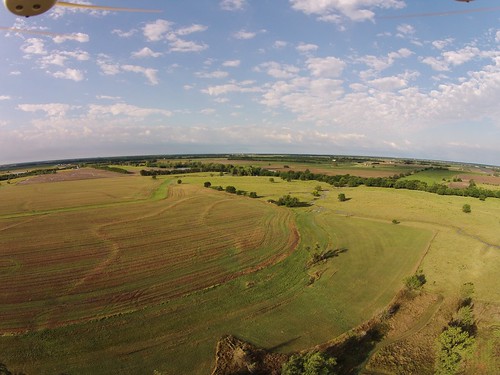
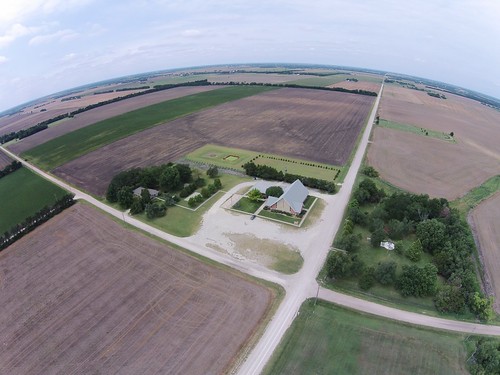
John Goerzen: Today I FLEW A PLANE

DJI00694
For once you have tasted flight,
You will walk the earth with your eyes turned skyward;
For there you have been,
And there you long to return. Leonardo da Vinci
There is something of a magic to flight, to piloting. I remember the first flight I ever took, after years of dreaming of flying in a plane: my grandma had bought me a plane ticket. In one of the early morning flights, I witnessed a sunrise above cumulus clouds. Although I was just 10 or so at the time, that still is a most beautiful image seared into my memory. I have become meh about commercial flight over the years. The drive to the airport, the security lines, the lack of scenery at 35,000 feet. And yet, there is much more to flight than that. When I purchased what was essentially a flying camera, I saw a whole new dimension of the earth s amazing beauty. All the photos in this post, in fact, are ones I took. I then got a RC airplane, because flying the quadcopter was really way too easy. DJI00620
It s wonderful to climb the liquid mountains of the sky.
Behind me and before me is God, and I have no fears. Helen Keller
Start talking to pilots, and you notice a remarkable thing: this group of people that tends to be cool and logical, methodical and precise, suddenly finds themselves using language almost spiritual. Many have told me that being a pilot brings home how much all humans have in common, the unifying fact of sharing this beautiful planet together. Many volunteer with organizations such as Angel Flight. And having been up in small planes a few times, I start to glimpse this. Flying over my home at 1000 up, or from lake to lake in Seattle with a better view than the Space Needle, seeing places familiar and new, but from a new perspective, drives home again and again the beauty of our world, the sheer goodness of it, and the wonderful color of the humanity that inhabits it. DJI00120
The air up there in the clouds is very pure and fine, bracing and delicious. And why shouldn t it be? It is the same the angels breathe. Mark Twain
The view from 1000 feet, or 3000, is often so much more spectacular than the view from 35,000 ft as you get on a commercial flight. The flexibility is too; there are airports all over the country that smaller planes can use which the airlines never touch. Here is one incredible video from a guy that is slightly crazy but does ground-skimming, flying just a few feet off the ground: (try skipping to 9:36) So what comes next is something I blame slightly on my dad and younger brother. My dad helped get me interested in photography as a child, and that interest has stuck. It s what caused me to get into quadcopters ( a flying camera for less than the price of a nice lens! ). And my younger brother started mentioning airplanes to me last year for some reason, as if he was just trying to get me interested. Eventually, it worked. I started talking to the pilots I know (I know quite a few; there seems to be a substantial overlap between amateur radio and pilots). I started researching planes, flight, and especially safety the most important factor. And eventually I decided I wanted to be a pilot. I ve been studying feverishly, carrying around textbooks and notebooks in the car, around the house, and even on a plane. There is a lot to learn. And today, I took my first flight with a flight instructor. Today I actually flew a plane for awhile. Wow! There is nothing quite like that experience. Seeing a part of the world I am familiar with from a new perspective, and then actually controlling this amazing machine I really fail to find the words to describe it. I have put in many hours of study already, and there will be many more studying and flying, but it is absolutely worth it. Here is one final video about one of the most unique places you can fly to in Kansas. And a blog with lots of photos of a flight to Beaumont called Horse on the runway .

21 April 2015

Dirk Eddelbuettel: Introducing ghrr: GitHub Hosted R Repository

ghrr logo

Background R relies on package repositories for initial installation of a package via install.packages(). A crucial second step is update.packages(): For all currently installed packages, a list of available updates is constructed or offered for either one-by-one or bulk updates. This keeps the local packages in sync with upstream, and provides for a very convenient way to obtain new features, bug fixes and other improvements. So by installing from a repository, we automatically have the ability to track the repository for updates.

Enter drat Fairly recently, the drat package was added to the R ecosystem. It makes both aspects of package distribution easy: providing a package (if you are an author) as well as installing it (if you are a user). Now, because drat is at the same time source code (as it is also a package providing the functionality), and a repository (using what drat provides ib features), the "namespace" becomes a little cluttered. But because a key feature of drat is the "one variable" unique identification via the GitHub, I opted to create a drat repository in the name of a new organisation: ghrr. This is a simple acronym for GitHub Hosted R Repository.

Use cases We can outline several use case for packages in ghrr:
  • packages not published in a repo by their authors: I already use two like that:
    • fasttime, an impeccably fast parser for ISO datetimes by Simon Urbanek which was however never released into a repo by Simon, and
    • RcppR6, a very nice extension to both R6 (by Winston) and Rcpp, by Rich FitzJohn; similarly never released beyond GitHub;
  • packages possibly unsuitable for mainline repos:
    • Rblpapi is a great package by Whit Armstong and John Laing to which I have been contributing quite a bit of late. As it requires a free-to-use but not open source library and headers from Bloomberg, it will never make it to the mainline repository for R, but hosting it in ghrr is perfect as I can easily update several machines at work once I cut a new development release;
    • winsorize is a small package I needed a few weeks ago; it is spun out of robustHD but does not yet contain new code so Andreas and I are content to keep it in this drat for now;
  • packages in pre-relase mode:
    • RcppArmadillo where I announced both a release candidate before Armadillo 5.000 came out, as well as the actual RcppArmadillo 0.500.0.0 which is not (yet) on the mainline repository as two affected packages need a small update first. Users, however, can get RcppArmadillo already from the sibling Rcpp drat repo.
    • RcppToml is a new package I am currently working on implementing a toml parser based on cpptoml. It works, but it not quite ready for public announcements yet, and hence perfect for ghrr.

Going forward ghrr is meant to be open. While anybody can open a drat repository, particularly on GitHub, it may be beneficial to somehow group packages. This is however not something that can be planned ex-ante: it may just happen if others who see similar benefits in this can in fact contribute. In that spirit, I strongly encourage pull requests. Early on, I made my commit messages conform to a pattern of package version sha1 repourl to make code provenance of every commit very clear. Ideally, subsequent commits would conform to such a scheme, or replace it with a better one.

Some Resources A few links to learn more about drat and ghrr: Comments and questions via email or issue tickets are more than welcome. We hope that others find ghrr to be a useful tool for easy repository management and use via GitHub.

This post by Dirk Eddelbuettel originated on his Thinking inside the box blog. Please report excessive re-aggregation in third-party for-profit settings.

Olivier Berger: How to publish an HTML5+RDFa Web site from org-mode

I m a big fan of org-mode (see previous posts), and I ve started maintaining (sic) my professional webpage(s) with it. But I ve also recently tried and publish some more Semantic/Linked Data aware documents too (again, previous posts). Ideally, I think my preferred workflow for publishing articles or documents of some importance, would be to author them in org-mode, and then publish them as HTML5 including RDFa meta-data and annotations. Instead, I ve more frequently been doing conversions of org-mode to LaTeX, in order to submit a printable version, and later-on decided to convert the LaTeX to HTML5+RDFa But one of the issues is how to properly embed the RDF meta-data inside the org-mode documents, so that the syntax is both compact and expressive enough. I doubt there s a universal solution, given that RDF tends to be complex, and graphs may not project easilly along a mainly linear structure of an org-mode document, but anyway, there seems to be possible middle grounds that are practically good enough. I ve tried and implement a solution, which reuses the principles set by John Kitchin in Extending the org-mode link syntax with attributes, i.e. implementing an HTML exporter for a particular custom link type, which will convert the plist-like syntax to some RDFa constructs. Here s a description of the whole solution : http://www-public.telecom-sudparis.eu/~berger_o/test-org-publishing-rdfa.html The nice thing about org-mode, and its litterate programming babel environment, is that it allows to embed the code of the links exporter inside the org document, avoiding to dissociate the converter from the document s source, making it auto-complete. Next step will probably be to author a paper (or convert back a preprint of mines) with org-mode, in order to provide Linked Research meta-data. Stay tuned for more details, and in the meantime, I welcome any improvement to the org/babel/elisp setup. Edit: I ve recorded a webcast to provide a bit more details, available on YouTube : https://youtu.be/OyI3DVqllx4

Manuel A. Fernandez Montecelo: About the Debian GNU/Linux port for OpenRISC or1k

In my previous post I mentioned my involvement with the OpenRISC or1k port. It was the technical activity in which I spent most time during 2014 (Debian and otherwise, day job aside). I thought that it would be nice to talk a bit about the port for people who don't know about it, and give an update for those who do know and care. So this post explains a bit how it came to be, details about its development, and finally the current status. It is going to be written as a rather personal account, for that matter, since I did not get involved enough in the OpenRISC community at large to learn much about its internal workings and aspects that I was not directly involved with. There is not much information about all of this elsewhere, only bits and pieces scattered here and there, but specially not much public information at all about the development of the Debian port. There is an OpenRISC entry in the Debian wiki, but it does not contain much information yet. Hopefully, this piece will help a bit to preserve history and give an insight for future porters. First Things First I imagine that most people reading this post will be familiar with the terminology, but just in case, to create a new Debian port means to get a Debian system (GNU/Linux variant, in this case) to run in the OpenRISC or1k computer architecture. Setting to one side all differences between hardware and software, and as described in their site:
The aim of the OpenRISC project is to create free and open source computing platforms
It is therefore a good match for the purposes of Debian and Free Software world in general. The processor has not been produced in silicon, or not available for the masses in any case. People with the necessary know-how can download the hardware description (Verilog) and synthesise it in a FPGA, or otherwise use simulators. It is not some piece of hardware that people can purchase yet, and there are no plans to mass-produce it in the near future either. The two people (including me) involved in this Debian port did not have the hardware, so we created the port entirely through cross-compiling from other architectures, and then compiling inside Qemu. In a sense, we were creating a Debian port for hardware that "does not [phisically] exist". The software that we built was tested by people who had hardware available in FPGA, though, so it was at least usable. I understand that people working in the arm64 port had to work similarly in the initial phases, working in the dark without access to real hardware to compile or test. The Spark The first time that I heard about the initiative to create the port was in late February of 2014, in a post which appeared in Linux Weekly News (sent by Paul Wise) and Slashdot. The original post announcing it was actually from late January, from Christian Svensson (blueCmd):
Some people know that I've been working on porting Glibc and doing some toolchain work. My evil master plan was to make a Debian port, and today I'm a happy hacker indeed! Below is a link to a screencast of me installing Debian for OpenRISC, installing python2.7 via apt-get (which you shouldn't do in or1ksim, it takes ages! (but it works!)) and running a small Python script. http://asciinema.org/a/7362
So, now, what can a Debian Hacker do when reading this? (Even if one's Hackery Level is not that high, as it is my case). And well, How Hard Can It Be? I mean, Really? Well, in my own defence, I knew that the answer to the last two questions would be a resounding Very . But for some reason the idea grabbed me and I couldn't help but think that it would be a Really Exciting Project, and that somehow I would like to get involved. So I wrote to Christian offering my help after considering it for a few days, around mid March, and he welcomed me aboard. The Ball Was Already Rolling Christian had already been in contact with the people behind DebianBootstrap, and he had already created the repository http://openrisc.debian.net/ with many packages of the base system and beyond (read: packages name_version_or1k.deb available to download and install). Still nowadays the packages are not signed with proper keys, though, so use your judgement if you want to try them. After a few weeks, I got up to speed with the status of the project and got my system working with the necessary tools. This meant basically sbuild/schroot to compile new packages, with the base system that Christian already got working, installed in a chroot, probably with the help of debootstrap, and qemu-system-or1k to simulate the system. Only a few of the packages were different from the version in Debian, like gcc, binutils or glibc -- they had not been upstreamed yet. sbuild ran through qemu-system-or1k, so the compilation of new packages could happen "natively" (running inside Qemu) rather than cross-compiling the packages, pulling _or1k.deb packages for dependencies from the repository that he had prepared, and _all.deb packages from snapshots.debian.org. I started by trying to get the packages that I [co-]maintain in Debian compiled for this architecture, creating the corresponding _or1k.deb. For most of them, though, I needed many dependencies compiled before I could even compile my packages. The GNU autotools / autoreconf Problem Since very early, many of the packages failed to build with messages such as:
Invalid configuration 'or1k-linux-gnu': machine 'or1k' not recognized
configure: error: /bin/bash ../config.sub or1k-linux-gnu failed
This means that software packages based on GNU autotools and using configure scripts need recent versions of the files config.sub and config.guess that they ship in their root directory, to be able to detect the architecture and generate the code accordingly. This is counter-intuitive, having into account that GNU autotools were designed to help with portability. Yet, in the case of creating new Debian ports, it meant that unless upstream had very recent versions of config. guess,sub , it would prevent the package to compile straight away in the new architectures -- even if invoking gcc without ado would have worked without problems in most cases for native compilation. Of course this did not only affect or1k, and there was already the autoreconf effort underway as a way to update these files automatically when building Debian packages, pushed by people porting Debian to the new architectures added in 2013/2014 (mips64el, arm64, ppc64el), which encountered the same roadblock. This affected around a thousand source packages in unstable. A Royal Pain. Also, all of their reverse dependencies (packages that depended on those to be built) could not be compiled straight away. The bugs were not Release Critical, though (none of these architectures were officially accepted at the time), so for people not concerned with the new ports there was no big incentive to get them fixed. This problem, which conceptually is easily solvable, prevented new ports to even attempt compile vast portions of the archive straight away (cleanly, without modifications to the package or to the host system), for weeks or months. The GNU autotools / autoreconf Solution We tackled this problem mainly in two ways. First, more useful for Debian in general, was to do as other porters were doing and submit bug reports and patches to Debian packages requesting them to use autoreconf, and NMUing packages (uploading changes to the archive without the official maintainers' intervention). A few NMUs were made for packages which had bug reports with patches available for a while, that were in the critical path to get many other packages compiled, and that were orphan or had almost no maintainer activity. The people working in the other new ports, and mainly Ubuntu people which helped with some of those ports and wanted to support them, had submitted a large amount of requests since late 2013, so there was no shortage of NMUs to be made. Some porters, not being Debian Developers, could not easily get the changes applied; so I also helped a bit the porters of other architectures, specially later on before the freeze of Jessie, to get as many packages compiled in those architectures as possible. The second way was to create dpkg-buildpackage hooks that updated unconditionally config. guess,sub before attempting to build the package in the local build system. This local and temporary solution allowed us in the or1k port to get many _or1k.deb packages in the experimental repository, which in turn would allow many more packages to compile. After a few weeks, I set up many sbuilds in a multi-core machine attempting to build uninterruptedly packages that were not previously built and which had their dependencies available. Every now and then (typically several times per day in peak times) I pushed the resulting _or1k.deb files to the repository, so more packages would have the necessary dependencies ready to attempt to build. Christian was doing something similar, and by April at peak times, among the two of us, we were compiling some days more than a hundred packages -- a huge amount of packages did not need any change other than up-to-date config. guess,sub files. At some point, late April, Christian set up wanna-build in a few hosts to do this more elegantly and smartly than my method, and more effectively as well. Ugly Hacks, Bugs and Shortcomings in the Toolchain and Qemu Some packages are extremely important because many other packages need them to compile (like cmake, Qt or GTK+), and they are themselves very complex and have dependency loops. They had deeper problems than the autoreconf issue and needed some seriously dirty hacking to get them built. To try to get as many packages compiled as possible, we sometimes compiled these important packages with some functionality disabled, disabling some binary packages (e.g. Java bindings) or specially disabling documentation (using DEB_BUILD_OPTIONS=nodoc when possible, and more aggressively when needed by removing chunks of debian/rules). I tried to use the more aggressive methods in as few packages as possible, though, about a dozen in total. We also used DEB_BUILD_OPTIONS=nocheck for speeding up compilation and avoiding build failures -- many packages' tests failed due to qemu-system-or1k not supporting multi-threading, which we could do nothing about at the time, but otherwise the packages mostly passed tests fine. Due to bugs and shortcomings in Qemu and the toolchain --like the compiler lacking atomics, missing functionality in glibc, Qemu entering in endless loops, or programs segfaulting (especially gettext, used by many packages and causing the packages failing to build)--, we had to resort to some very creative ways or time-consuming dull work to edit debian/rules, or to create wrappers of the real programs avoiding or forcing certain options (like gcc -O0, since -O2 made buggy binaries too often). To avoid having a mix of cleanly compiled and hacked packages in the same repository, Christian set up a two-tiered repository system -- the clean one and the dirty one. In the dirty one we dumped all of the packages that we got built, no matter how. The packages in the clean one could use packages from the dirty one to build, but they themselves were compiled without any hackery. Of course this was not a completely airtight solution, since they could contain code injected at build time from the "dirty repository" (e.g. by static linking), and perhaps other quirks. We hoped to get rid of these problems later by rebuilding all packages against clean builds of all their dependencies. In addition, Christian also spent significant amounts of time working inside the OpenRISC community, debugging problems, testing and recompiling special versions of the toolchain that we could use to advance in our compilation of the whole archive. There were other people in the OpenRISC community implementing the necessary bits in the toolchain, but I don't know the details. Good Progress Olof Kindgren wrote the OpenRISC health report April 2014 (actually posted in May), explaining the status at the time of projects in the broad OpenRISC community, and talking about the software side, Debian port included. Sadly, I think that there have been no more "health reports" since then. There was also a new post in Slashdot entitled OpenRISC Gains Atomic Operations and Multicore Support shortly thereafter. In the side of the Debian port, from time to time new versions of packages entered unstable and we started to use those newer versions. Some of them had nice fixes, like the autoreconf updates, so they did not require local modifications. In other cases, the new versions failed to build when old ones had worked (e.g. because the newer versions added support and dependencies of new versions of gnutls, systemd or other packages not yet available for or1k), and we had to repeat or create more nasty hacks to get the packages built again. But in general, progress was very good. There were about 10k arch-dependent packages in Debian at the time, and we got about half of them compiled by the beginning of May, counting clean and dirty. And, if I recall correctly, there were around the same number of arch=all (which can be installed in any architecture, after the package is built in one of them). Counting both, it meant that systems using or1k got about 15k packages available, or 75% of the whole Debian archive (at least "main", we excluded "contrib" and "non-free"). Not bad. By the middle to end of May, we had about 6k arch-dependent packages compiled, and 4k to go. The count of packages eventually reached ~6.6k at its peak (I think that in June/July). Many had been built with hacks and not rebuilt cleanly yet, but everything was fine until the amount of packages built plateaued. Plateauing There were multiple reasons for that. One of them is that after having fixed the autoreconf issue locally in some packages, new versions were uploaded to Debian without fixing that problem (in many cases there was no bug report or patch yet, so it was understandable; in other cases the requests were ignored). The wanna-build for the clean repository set up by Christian rightly considered the package out-of-date and prepared to build the more recent version, that failed. Then, other packages entering the unstable archive and build-depending on newer versions of those could not be built ("BD-Uninstallable"), until we built the newer versions of the dependencies in the dirty repository with local hacks. Consequently, the count of cleanly built packages went back-and-forth, when not backwards. More challenging was the fact that when creating a new port, language compilers which are written in that same language need to be built for that architecture first. Sometimes it is not the compiler, but compile-time or run-time support for modules of a language are not ported yet. Obviously, as with other dependencies, large amounts of packages written in those languages are bound to remain uncompiled for a long time. As Colin Watson explained in porting Haskell's GHC to arm64 and ppc64el, untangling some of the chicken-and-egg problems of language compilers for new ports is extremely challenging. Perl and Python are pretty much a pre-requisite of the base Debian system, and Christian got them working early on. But for example in May, 247 packages depended on r-base-dev (GNU R) for building, and 736 on ghc, and we did not have these dependencies compiled. Just counting those two, 1k source packages of the remaining 4k to 5k to be compiled for the new architecture would have to wait for a long time. Then there was Java, Mono, etc... Even more worrying problems were the pending issues with the toolchain, like atomics in glibc, or make check failing for some packages in the clean repository built with wanna-build. Christian continued to work on the toolchain and liasing with the rest of the OpenRISC community, I continued to request more changes to the Debian archive through a few requests to use autoreconf, and pushing a few more NMUs. Though many requests were attended, I soon got negative replies/reactions and backed off a bit. In the meantime, the porters of other new architectures at the time were mostly submitting requests to support them and not NMUing much either. Upstreaming Things continued more or less in the same state until the end of the summer. The new ports needed as many packages built as possible before the evaluation of which official ports to accept (in early September, I think, the final decision around the time of the freeze). Porters of the other new architectures (and maintainers, and other helpful Debian Developers) were by then more active in pushing for changes, specially remaining autoreconf issues, many of which benefited or1k. As I said before, I also kept pushing NMUs now and then, specially during summer, for packages which were not of immediate benefit for our port but helped the others (e.g. ppc64el needed updates to ltmain.sh for libtool which were not necessary for or1k, in addition to config. guess,sub ). In parallel in the or1k camp, there were patches that needed changes to be sent upstream, like for example Python's NumPy, that I submitted in May to the Debian package and upstream, and was uploaded to Debian in September with a new upstream release. Similar paths were followed between May and September for packages such as jemalloc, ocaml, gstreamer0.10, libgc, mesa, X.org's cf module and cmake (patch created by Christian). In April, Christian had reached the amazing milestone of tracking and getting all of the contributors of the port of GNU binutils to assign copyright to the Free Software Foundation (FSF), all of the work was refreshed and upstreamed. In July or August, he started to gather information about the contributors of the GCC port, which had started more than a decade ago. After that, nothing much happened (from the outside) until the end of the year, when Christian sent a message about the status of upstreaming GCC to the OpenRISC community. There was only one remaining person to assign the copyright to the FSF, but it was a blocker. In addition, there was the need to find one or more maintainers to liaise with upstream, review the patches, fix the remaining failures in the test suite and keeping the port in good shape. A few months after that and from what I could gather, the status remains the same. Current Status, and The Future? In terms of the Debian port, there have not been huge visible changes since the end of the summer, and not only because of the Jessie freeze. It seems that for this effort to keep going forward and be sustainable, sorting out the issues with GCC and Glibc is essential. That means having the toolchain completely pushed upstream and in good shape, and particularly completing the copyright assignment. Debian will not accept private forks of those essential packages without a very good reason even in unofficially supported ports; and from the point of view of porters, working in the remaining not-yet-built packages with continuing problems in the toolchain is very frustrating and time-consuming. Other than that, there is already a significant amount of software available that could run in an or1k system, so I think that overall the project has achieved a significant amount of success. Granted, KDE and LibreOffice are not available yet, neither are the tools depending on Haskell or Java. But a lot of software is available (including things high in the stack, like XFCE), and in many aspects it should provide a much more functional system that the one available in Linux (or other free software) systems in the late 1990s. If the blocking issues are sorted out in the near future, the effort needed to get a very functional port, on par with the unofficial Debian ports, should not be that big. In my opinion, and looking at the big picture, not bad at all for an architecture whose hardware implementation is not easy to come by, and in which the port was created almost solely with simulators. That it has been possible to get this far with such meagre resources, it's an amazing feat of Free Software and Debian in particular. As for the future, time will tell, as usual. I will try to keep you posted if there is any significant change in the future.

20 April 2015

B lint R czey: Hot upgrading Erlang applications using tools in Debian

Erlang lets you write applications supporting zero downtime by switching one live system to another running a different application version converting the application s state on the fly to the new representation. Debian packages however can have only one installed version on a system which prevents using Erlang s hot-upgrade feature easily. Engineers at Yakaz (Jean-S bastien P dron) came up with a nice solution by creating separate directories for each application release and creating .deb packages for managing the transitions. I had to solve the same problem recently and found that the erlsvc Perl application they created needed a few patches to be usable with latest Erlang and other packages and with the changes it worked perfectly. Yakaz was not interested in accepting the patches and developing it further, but let me continue the maintenance. Please find the updated erlsvc application under my GitHub account and feel free to submit patches if you find something to fix in it. I have also packaged erlsvc as an official Debian package and it is waiting in the NEW queue for being accepted. When it enters unstable you will have to make very little effort to make your applications hot-upgradeable on Debian!

Russ Allbery: Review: The Girls from Alcyone

Review: The Girls from Alcyone, by Cary Caffrey
Series: Girls from Alcyone #1
Publisher: Tealy
Copyright: 2011
ISBN: 1-105-33727-8
Format: Kindle
Pages: 315
Sigrid is a very special genetic match born to not particularly special parents, deeply in debt in the slums of Earth. That's how she finds herself being purchased by a mercenary corporation at the age of nine, destined for a secret training program involving everything from physical conditioning to computer implants, designed to make her a weapon. Sigrid, her friend Suko, and the rest of their class are a special project of the leader of the Kimura corporation, one that's controversial even among the corporate board, and when the other mercenary companies unite against Kimura's plans, they become wanted contraband. This sounds like it could be a tense SF thriller, but I'll make my confession at the start of the review: I had great difficulty taking this book seriously. Initially, it had me wondering what horrible alterations and mind control Kimura was going to impose on the girls, but it very quickly turned into, well, boarding school drama, with little of the menace I was expecting. Not that bullying, or the adults who ignore it to see how the girls will handle it themselves, are light-hearted material, but it was very predictable. As was the teenage crush that grows into something deeper, the revenge on the nastiest bully that the protagonist manages to not be responsible for, and the conflict between unexpectedly competent girls and an invasion of hostile mercenaries. I'm not particularly well-read or informed about the genre, so I'm not the best person to make this comparison, but the main thing The Girls from Alcyone reminded me of was anime or manga. The mix of boarding-school interpersonal relationships, crushes and passionate love, and hypercompetent female action heroes who wear high heels and have constant narrative attention on their beauty had that feel to it. Add in the lesbian romance and the mechs (of sorts) that show up near the end of the story, and it's hard to shake the feeling that one is reading SF yuri as imagined by a North American author. The other reason why I had a hard time taking this seriously is that it's over-the-top action sequences (it's the Empire Strikes Back rescue scene!) mixed with rather superficial characterization, with one amusing twist: female characters almost always end up being on the side of the angels. Lady Kimura, when she appears, turns into exactly the sort of mentor figure that one would expect given the rest of the story (and the immediate deference she got felt like it was lifted from anime). The villains, meanwhile, are hissable and motivated by greed or control. While there's a board showdown, there's no subtle political maneuvering, just a variety of more or less effective temper tantrums. I found The Girls from Alcyon amusing, and even fun to read in places, but that was mostly from analyzing how closely it matched anime and laughing at how reliably it delivered characteristic tropes. It thoroughly embraces its action-hero story full of beautiful, deadly women, but it felt more like a novelization of a B-grade sci-fi TV show than serious drama. It's just not well-written or deep enough for me to enjoy it as a novel. None of the characters were particularly engaging, partly because they were so predictable. And the deeper we got into the politics behind the plot, the less believable I found any of it. I picked this up, along with several other SFF lesbian romances, because sometimes it's nice to read a story with SFF trappings, a positive ending, and a lack of traditional gender roles. The Girls from Alcyone does have most of those things (the gender roles are tweaked but still involve a lot of men looking at beautiful women). But unless you really love anime-style high-tech mercenary boarding-school yuri, want to read it in book form, and don't mind a lot of cliches, I can't recommend it. Followed by The Machines of Bellatrix. Rating: 3 out of 10

19 April 2015

Laura Arjona: Six months selfhosting: my userop experiences

Note: In this post I mention some problems and ask questions (to myself, like thinking aloud ). The goal is not to get answers to those questions (I suppose that I will find them soon or later in the internet, manuals and so), but to show the kind of problems and questions that arise in my selfhosting adventures, which I suppose are common to other people trying to administer a home server with some web services. Am I an userop? Well I m something in the middle of (GNU/Linux) user and sysadmin: I have studied computer technical engineering but most of my experience has been in helpdesk, providing support for Windows users. I m running Debian in some LAMP boxes at work (without GUI) since 2008 or so, and in my desktops (with GUI) since 2010. I don t code nor package, but I don t mind trying to read code and understand it (or not). I know a bit of C, a bit of Python, of PHP, and enough Perl to open a Perl file and close it after two minutes, understanding that it s great, but too much for me :) I translate software, so I m not scared to clone a repository, edit files, commit or submit a patch. I m not scared of compiling a program (except if it s an Android app: I try to avoid setting up the development environment just to try some translation that I made but I built my Puma before it was the binary available for download or in F-Droid). In conclusion, I feel more like a GNU/Linux power user than a sysadmin . Sometimes just a user or even a newbie (for example, I don t know very well the Unix/Linux folder tree where are the wallpapers stored? Does it depend on the desktop that I use?). Anyway. I won t stop my free software + free networks digital life because I don t know many things. I bought a small server for home last September, and I wanted to try to selfhost some services, for me and for my family. I want to be a home sysadmin or something like that, so I joined the userops mailing list :) Here you have my experiences on selfhosting/being an userop until now. Mail I even didn t try to setup my mail server, because many people say it s a pain (although nice articles were published about how to do it, for example this series in ArsTechnica) and I need a static IP which is 14 /month more to my ISP, and Gandi, the place where I rented my domain name, provides mail, and they use Debian and Roundcube, and sponsor Debian too, so I decided to trust on them. So this is my strategy now, to try to keep mail under my control: MediaGoblin I ve setup two MediaGoblin instances (yes, two!). I managed to do it in Debian 7 stable (I think NodeJS npm was not needed then), but soon later I upgraded to Jessie so now it s even better. I installed Nginx and PostgreSQL via apt, to use them for both instances (and probably some more software later). One instance is public, and I use a Debian user, a PostgreSQL database, and it s running in http://media.larjona.net
I have requested an SSL cert to Gandi but I still didn t deployed it (lazy LArjona!!). The other instance is private, for family photos. I didn t know very well how much of my existing setup could reuse and how to keep both instances in case of downtimes or attack I know more or less the concept or chroot but I don t know how to deploy it in my machine. So I decided to use another Debian user, another PostgreSQL database, deploy MediaGoblin in a different folder, and create another virtual server in my Nginx to serve it. I managed to setup that virtual server to http-authenticate and to serve content via a different port, and use a self-signed SSL certificate (it s only for family, so it does not matter). I created another (unprivileged) Debian user with a password for the nginx authentication, and gave my family the URL in the form https://mediaprivate.larjona.net:PortNumber and the user and password (mediaprivate is a string, and PortNumber is a number). I think they don t use the instance too much, but at least I upload photos there from time to time and email the link instead of emailing the photos themselves (they don t use GPG either ). Upgrades I upgraded MediaGoblin from 0.7.1 to 0.8.0 successfully, I sent a report about how I did it to the mailing list. First I upgraded the public instance, when I figure out the process, I upgraded the second instance to test my instructions, and then, I sent the report with the instructions to the mailing list. Static site and LimeSurvey: the power of free software (with instructions) I wanted to act as a mirror of floss2013.libresoft.es and surveys.libresoft.es since they suffer a downtime and I participated in that project (not in the sysadmin part, but in the research and content creation). The static site floss2013.libresoft.es offered a zip with the whole website tree (since the website was licensed as AGPL), and I had access to the git repo holding the development copy of the website. So I just cloned the repository and setup another nginx virtual server in my machine, and tuned my DNS zone in Gandi website to serve floss2013.larjona.net from home. 10 minutes setup YAY! #inGitWeTrust #FreeSoftwareFTW :) For surveys.larjona.net I had to install a LimeSurvey instance. I knew how to do it because we use LimeSurvey at work, but at home I had Nginx instead of Apache, and PostgreSQL instead of MySQL. And no PHP I searched about how to install PHP in Nginx (I can use apt-get, nice!) and how to install LimeSurvey with Nginx and PostgreSQL (I had documentation about that, so I followed, and it worked). For making available the data (one survey and its results, so people can login as visitor to query and get statistics), I downloaded the LimeSurvey export dataset that we were providing in the static website, followed the replication instructions (hey, I wrote them!), and they worked #oleole! (And here, dear researchers, gets demonstrated that free software and free culture really empower your research and help spreading your results). Etherpad: not so easy, it seems! I m trying to install Etherpad-Lite, but I m suffering a bit. I think I did everything ok according to some guides but I get Bad Gateway and these kind of errors when trying to browse with Lynx in the host:
[error] 3615#0: *24 upstream timed out (110: Connection timed out) 
while reading response header from upstream, 
client: 127.0.0.1, 
server: pad.larjona.net, 
request: "GET / HTTP/1.0", 
upstream: "http://127.0.0.1:9001/", 
host: "pad.larjona.net"
2015/04/17 20:52:56 [error] 3615#0: *24 connect() failed 
(111: Connection refused) while connecting to upstream, 
client: 127.0.0.1, 
server: pad.larjona.net, 
request: "GET / HTTP/1.0", 
upstream: "http://[::1]:9001/", 
host: "pad.larjona.net"
I m not sure if I need to open some port in iptables, my router, or change my nginx configuration because the guides assume you re only serving one website in the port 80 (and I have several of them, now ), or what I ve spent three chunks of time (maybe ~2h each?) on this, in different days, and couldn t figure it out, so I decided to round-robin in my TODO list. Userops thoughts Debian brings peace of mind (for me) On one side, maintaining a Debian box it s quite easy, and the more software that it s packaged, the less time that I spend installing or upgrading. I like being in stable, I m in Jessie now (I migrated when it was frozen), but I ll stay in stable as much as I can. I like that I can use the software that I installed via apt-get for several services (nginx, PostgreSQL ). About the software that is not packaged (MediaGoblin, LimeSurvey, EtherPad, maybe others later), I wonder how dependencies and updates are handled. And maybe (probably) I have installed some components several times, one for each service (this sounds like a Windows box #grr). For example MediaGoblin uses PyPump. PyPump 0.5 is packaged in Debian Jessie. MediaGoblin uses PyPump 0.7+. What if PyPump 0.7+ gets, let s say, into Jessie-backports? Can I benefit from that? I know that MediaGoblin upgrade instructions includes upgrading the dependencies, but what about some security patch in one dependency? Should I upgrade the pip modules periodically? How to know if some upgrade is recommended because patches a vulnerability, or it s just new features (and maybe breaking my setup)? This kind of things are the peace of mind that Debian packaging brings to me: when some piece of software is packaged, I know maybe I need to care about proper setup and configuration, but later, it s kind-of-easy to maintain (since the Debian maintainers care about the rest). I don t mind about cloning a repo and compiling, I mind about later, or coexistance with other program/services. I trust in the MediaGoblin community and I m an active member (I m not developer, but hang on IRC, follow the mailing list, etc) but for example I don t know anything about the EtherPad project. And I don t feel like joining the community (I m already an active member in Debian, MediaGoblin, F-Droid, Pump.io, translator of LimeSurvey and many other small apps that I use, and in the future will use more services, like OwnCloud, XMPP ), joining the community of each software that I use is becoming not sustainable :s Free software is more than software I follow the userop mailing list, and it s becoming very technical. I mostly understand the problems (which are similar to the problems that I face: how to isolate different services, how to easily-configure them, how to make them installable by average user ) But I don t understand most of the solutions proposed, and I think that probably we need technical solutions, but in the meanwhile, some issues can be addressed not with software, but with other means: good documentation, community support, translations, beta-testers This is my conclusion until now. When a project is well documented, I think I can find my way to selfhost no matter if the software is packaged (or contained ) or not. MediaGoblin, and LimeSurvey, are well documented, and the user support channels are very responsive. I find lots of instructions that assume that you will use a whole machine for their service (and not for other things). And lots of documentation for the LAMP stack, but not for Nginx + PostgreSQL and Node instead of PHP So, for each particularity of my setup, I search the internet and try to pick good sources to help me do what I wanted to do. I m kind of privileged Some elements, not software related, to take into account as pre-requisites for succeed selfhosting services: These aspects are not present in a lot of people. If I look around to the computer users that I know (mostly Windows+Android, some GNU/Linux users, some Mac OSX users, some iOS users), I find that they search things like X does not work or they cannot write a proper search query in English. Or they trust some random person writing a recipe in their blog, without trying first to understand what the recipe does. Other people just say I m not a professional sysadmin, I ll just do what everybody does (aka use Google services or whatever). What if I try and I don t succeed? . Things like that. We may need some technical solutions (and hackers are thinking about that, and working on that). But I feel that we need (more) a huge group of beta-testers, dogfooding people, aventurers that try the half-cooked solutions and provide successful and unsuccessful experiences, to guide the research and make software technologies advance. I m not sure if I am an userop, but I feel part of that vanguard force , I want to be part of the future of free software and free networks. Comments? You can comment about this post on this pump.io thread.
Filed under: My experiences and opinion Tagged: Communities, Contributing to libre software, Debian, Developer motivations, English, free networks, Free Software, Freedom, innovation, MediaGoblin, Moving into free software, Project Management, selfhosting, sysadmin

18 April 2015

Gregor Herrmann: RC bugs 2015/11-16

only one week left until the jessie release. yay! in the last weeks I didn't find many RC bugs that I could fix; still, here's the short list; nice feature: I mostly help others or could build an work done by others.

Russ Allbery: Review: The Long Way to a Small, Angry Planet

Review: The Long Way to a Small, Angry Planet, by Becky Chambers
Publisher: CreateSpace
Copyright: 2014
ISBN: 1-5004-5330-7
Format: Kindle
Pages: 503
The Wayfarer is a tunneling ship: one of the small, unremarked construction ships that help build the wormhole network used for interstellar transport. It's a working ship with a crew of eight (although most people would count seven and not count the AI). They don't all like each other particularly not the algaeist, who is remarkably unlikeable but they're used to each other. It's not a bad life, although a more professional attention to paperwork and procedure might help them land higher-paying jobs. That's where Rosemary Harper comes in. At the start of the book, she's joining the ship as their clerk: nervous, hopeful, uncertain, and not very experienced. But this is a way to get entirely away from her old life and, unbeknownst to the ship she's joining, her real name, identity, and anyone who would know her. Given that introduction, I was expecting this book to be primarily about Rosemary. What is she fleeing? Why did she change her identity? How will that past come to haunt her and the crew that she joined? But that's just the first place that Chambers surprised me. This isn't that book at all. It's something much quieter, more human, more expansive, and more joyful. For one, Chambers doesn't stick with Rosemary as a viewpoint character, either narratively or with the focus of the plot. The book may open with Rosemary and the captain, Ashby, as focal points, but that focus expands to include every member of the crew of the Wayfarer. We see each through others' eyes first, and then usually through their own, either in dialogue or directly. This is a true ensemble cast. Normally, for me, that's a drawback: large viewpoint casts tend to be either jarring or too sprawling, mixing people I want to read about with people I don't particularly care about. But Chambers avoids that almost entirely. I was occasionally a touch disappointed when the narrative focus shifted, but then I found myself engrossed in the backstory, hopes, and dreams of the next crew member, and the complex ways they interweave. Rosemary isn't the center of this story, but only because there's no single center. It's very hard to capture in a review what makes this book so special. The closest that I can come is that I like these people. They're individual, quirky, human (even the aliens; this is from more the Star Trek tradition of alien worldbuilding), complicated, and interesting, and it's very easy to care about them. Even characters I never expected to like. The Long Way to a Small, Angry Planet does have a plot, but it's not a fast-moving or completely coherent one. The ship tends to wander, even when the mission that gives rise to the title turns up. And there are a lot of coincidences here, which may bother you if you're reading for plot. At multiple points, the ship ends up in exactly the right place to trigger some revelation about the backstory of one of the crew members, even if the coincidence strains credulity. Similar to the algae-driven fuel system, some things one just has to shrug about and move past. On other fronts, though, I found The Long Way to be refreshingly willing to take a hard look at SF assumptions. This is not the typical space opera: humans are a relatively minor species in this galaxy, one that made rather a mess of their planet and are now refugees. They are treated with sympathy or pity; they're not somehow more flexible, adaptable, or interesting than the rest of the galaxy. More fascinatingly to me, humans are mostly pacifists, a cultural reaction to the dire path through history that brought them to their current exile. This is set against a backdrop of a vibrant variety of alien species, several of whom are present onboard the Wayfinder. The history and background of the other species are not, sadly, as well fleshed out as the humans, but each with at least a few twists that add interest to the story. But the true magic of this book, the thing that it has in overwhelming abundance, is heart. Not everyone in this book is a good person, but most of them are trying. I've rarely read a book full of so much empathy and willingness to reach out to others with open hands. And, even better, they're all nice in different ways. They bring their own unique personalities and approaches to their relationships, particularly the complex web of relationships that connects the crew. When bad things happen, and, despite the overall light tone, a few very bad things happen, the crew rallies like friends, or like chosen family. I have to say it again: I like these people. Usually, that's not a good sign for a book, since wholly likeable people don't generate enough drama. But this is one of the better-executed "protagonist versus nature" plots I've read. It successfully casts the difficulties of making a living at a hard and lonely and political job as the "nature" that provides the conflict. This is a rather unusual book. It's probably best classified as space opera, but it doesn't fit the normal pattern of space opera and it doesn't have enough drama. It's not a book about changing the universe; at the end of the book, the universe is in pretty much the same shape as we found it. It's not even about the character introduced in the first pages, or really that much about her dilemma. And it's certainly not a book about winning a cunning victory against your enemies. What it is, rather, is a book about friendships, about chosen families and how they form, about being on someone else's side, about banding together while still being yourself. It's about people making a living in a hard universe, together. It's full of heart, and I loved it. I'm unsurprised that The Long Way to a Small, Angry Planet had to be self-published via a Kickstarter campaign to find its audience. I'm also unsurprised that, once it got out there, it proved very popular and has now been picked up by a regular publisher. It's that sort of book. I believe it's currently out of print, at least in the US, as its new publisher spins up that process, but it should be back in print by late 2015. When that happens, I recommend it to your attention. It was the most emotionally satisfying book I've read so far this year. Rating: 9 out of 10

15 April 2015

Michal Čihař: Packaging python-gammu

After Monday release of separate Gammu and python-gammu, the obvious task was to get the new package to distributions. First I've started with Debian packages, what was quite easy as from quite complex CMake + Python package it is now purely CMake and it was mostly about removing stuff. Soon the updated Gammu package was uploaded to experimental. Once having that ready, I've also update the backports for Ubuntu and these are available in Gammu PPA. Creating new python-gammu package was a bit harder as this is the first Python 3 compatible package I've created, but it's now ready and sitting in the NEW queue. While working on python-gammu package, I've realized that some of the data used in testsuite are missing in the tarball. While not being critical, this is definitely not nice, so I've decided to release python-gammu 2.1 today. It also includes fixes for some corner cases found by coverity. For openSUSE the packaging was quite easy as well, stripping out unneeded parts of Gammu package went smoothly and it's now in hardware project, SR to Factory is pending. With python-gammu it turned out to be much harder as the testsuite had failed there with some strange error coming out of libdbi. After looking deeper into it, the problem is in new return type available in Git snapshot openSUSE is shipping. Fortunately producing fix was quite easy, so next Gammu upstream will handle that properly and package in hardware project is already patched. You can now use python-python-gammu from devel:languages:python and SR to Factory is pending as well.

Filed under: Debian English Gammu python-gammu SUSE Wammu 0 comments

Petter Reinholdtsen: Debian Edu interview: Shirish Agarwal

It was a surprise to me to learn that project to create a complete computer system for schools I've involved in, Debian Edu / Skolelinux, was being used in India. But apparently it is, and I managed to get an interview with one of the friends of the project there, Shirish Agarwal. Who are you, and how do you spend your days? My name is Shirish Agarwal. Based out of the educational and historical city of Pune, from the western state of Maharashtra, India. My bread comes from giving training, giving policy tips, installations on free software to mom and pop shops in different fields from Desktop publishing to retail shops as well as work with few software start-ups as well. How did you get in contact with the Skolelinux / Debian Edu project? It started innocently enough. I have been using Debian for a few years and in one local minidebconf / debutsav I was asked if there was anything for schools or education. I had worked / played with free educational softwares such as Gcompris and Stellarium for my many nieces and nephews so researched and found Debian Edu or Skolelinux as it was known then. Since then I have started using the various education meta-packages provided by the project. What do you see as the advantages of Skolelinux / Debian Edu? It's closest I have seen where a package full of educational software are packed, which are free and open (both literally and figuratively). Even if I take the simplest software which is gcompris, the number of activities therein are amazing. Another one of the softwares that I have liked for a long time is stellarium. Even pysycache is cool except for couple of issues I encountered #781841 and #781842. I prefer software installed on the system over web based solutions, as a web site can disappear any time but the software on disk has the possibility of a larger life span. Of course with both it's more a question if it has enough users who make it fun or sustainable or both for the developer per-se. What do you see as the disadvantages of Skolelinux / Debian Edu? I do see that the Debian Edu team seems to be short-handed and I think more efforts should be made to make it popular and ask and take help from people and the larger community wherever possible. I don't see any disadvantage to use Skolelinux apart from the fact that most apps. are generic which is good or bad how you see it. However, saying that I do acknowledge the fact that the canvas is pretty big and there are lot of interesting ideas that could be done but for reasons not known not done or if done I don't know about them. Let me share some of the ideas (these are more upstream based but still) I have had for a long time : 1. Classical maths question of two trains in opposing directions each running @x kmph/mph at y distance, when they will meet and how far would each travel and similar questions like these. The computer is a fantastic system where questions like these can be drawn, animated and the methodology and answers teased out in interactive manner. While sites such as the Ask Dr. Math FAQ on The Two Trains problem (as an example or point of inspiration) can be used there is lot more that can be done. I dunno if there is a free software which does something like this. The idea being a blend of objects + animation + interaction which does this. The whole interaction could be gamified with points or sounds or colourful celebration whenever the user gets even part of the question or/and methodology right. That would help reinforce good behaviour. This understanding could be used to share/showcase everything from how the first wheel came to be, to evolution to how astronomy started, psychics and everything in-between. One specific idea in the train part was having the Linux mascot on one train and the BSD or GNU mascot on the other train and they meeting somewhere in-between. Characters from blender movies could also be used. 2. Loads of crossword-puzzles with reference to subjects: We have enormous data sets in Wikipedia and Wikitionary. I don't think it should be a big job to design crossword puzzles. Using categories and sub-categories it should be doable to have Q&A single word answers from the existing data-sets. What would make it easy or hard could be the length of the word + existence of many or few vowels depending on the user's input. 3. Jigsaw puzzles - We already have a great software called palapeli with number of slicers making it pretty interesting. What needs to be done is to download large number of public domain and copyleft images, tease and use IPTC tags to categorise them into nature, history etc. and let it loose. This could turn to be really huge collection of images. One source could be taken from commons.wikimedia.org, others could be huge collection of royalty-free stock photos. Potential is immense. Apart from this, free software suffers in two directions, we lag both in development (of using new features per-se) and maintenance a lot. This is more so in educational software as these applications need to be timely and the opportunity cost of missing deadlines is immense. If we are able to solve issues of funding for development and maintenance of such software I don't see any big difficulties. I know of few start-ups in and around India who would love to develop and maintain such software if funding issues could be solved. Which free software do you use daily? That would be huge list. Some of the softwares are obviously apt, aptitude, debdelta, leafpad, the shell of course (zsh nowadays), quassel for IRC. In games I use shisen-sho while card-games are evenly between kpat and Aiselriot. In desktops it's a tie between gnome-flashback and mate. Which strategy do you believe is the right one to use to get schools to use free software? I think it should first start with using specific FOSS apps. in whatever environment they are. If it's MS-Windows or Mac so be it. Once they are habitual with the apps. and there is buy-in from the school management then it could be installed anywhere. Most of the people now understand the concept of a repository because of the various online stores so it isn't hard to convince on that front. What is harder is having enough people with technical skills and passion to service them. If you get buy-in from one or two teachers then ideas like above could also be asked to be done as a project as well. I think where we fall short more than anything is in marketing. For instance, Debian has this whole range of fonts in its archive but there isn't even a page where all those different fonts in the La Ipsum format could be tried out for newcomers. One of the issues faced constantly in installations is with updates and upgrades. People have this myth that each update and upgrade means the user interface will / has to change. I have seen this innumerable times. That perhaps is one of the reasons which browsers like Iceweasel / Firefox change user interfaces so much, not because it might be needed or be functional but because people believe that changed user interfaces are better. This, can easily be pointed with the user interfaces changed with almost every MS-Windows and Mac OS releases. The problems with Debian Edu for deployment are many. The biggest is the huge gap between what is taught in schools and what Debian Edu is aimed at. Me and my friends did teach on week-ends in a government school for around 2 years, and gathered some experience there. Some of the things we learnt/discovered there was :
  1. Most of the teachers are very territorial about their subjects and they do not want you to teach anything out of the portion/syllabus given.
  2. They want any activity on the system in accordance to whatever is in the syllabus.
  3. There are huge barriers both with the English language and at times with objects or whatever. An example, let's say in gcompris you have objects falling down and you have to name them and let's say the falling object is a hat or a fedora hat, this would not be as recognizable as say a Puneri Pagdi so there is need to inject local objects, words wherever possible. Especially for word-games there are so many hindi words which have become part of english vocabulary (for instance in parley), those could be made into a hinglish collection or something but that is something for upstream to do.

Mike Hommey: Announcing git-cinnabar 0.2.1

Git-cinnabar is a git remote helper to interact with mercurial repositories. It allows to clone, pull and push from/to mercurial remote repositories, using git. Get it on github. What s new since 0.2.0? Not much, but this felt important enough to warrant a release, even though the issue has been there since before 0.1.0: Mercurial can be slower when cloning or pulling a list of heads that contain non-topological heads. On repositories like the mercurial repository, it s not so much of a big deal, taking 7s instead of 4s. But on big repositories like mozilla-central, it s taking 23 minutes instead of 2 minutes and 20s (on my machine). And that s with 100% CPU use on the server side. The problem is that mozilla-central recently merged some old closed heads, such that it now has branch heads that aren t topological heads. Git-cinnabar, until this release, would request those branch heads, leading the server to use the slow path mentioned above. This release works around the issue. It also fixes an issue pushing to a remote empty mercurial repository.

14 April 2015

Mario Lang: Bjarne Stoustrup talking about organisations that can raise expectations

At time index 22:35, Bjarne Stroustrup explains in this video what he thinks is very special about organisatrions like Cambridge or Bell Labs. When I just heard him explain this, I couldn't help but think of Debian. This is exactly how I felt (and actually still do) when I joined Debian as a Developer in 2002. This is, what makes Debian, amongst other things, very special to me. If you don't want to watch the video, here is the excerpt I am talking about:
One of the things that Cambridge could do, and later Bell Labs could do, is somehow raise peoples expectations of themselves. Raise the level that is considered acceptable. You walk in and you see what people are doing, you see how people are doing, you see how apparently easily they do it, and you see how nice they are while doing it, and you realize, I better sharpen up my game. This is something where you have to, you just have to get better. Because, what is acceptable has changed. And some organisations can do that, and well, most can't, to that extent. And I am very very lucky to be in a couple places that actually can increase your level of ambition, in some sense, level of what is a good standard.

12 April 2015

Mark Brown: Acer Aspire E11

Recently I was in Seoul in the middle of three weeks of travel and my laptop died on me. Since I had some work that needed doing fairly urgently I took myself over to Yongsan Electronics Market and got myself a cheap replacement to tide myself over. What I ended up with was an Acer Aspire E11. There s a bunch of different models all with very similar plastics, I got one which has a N2940 SoC, 2G of RAM (upgraded to 4G in store), a 500G hard disk and no fans for just over 200000 Korean Won, or about $200. As you d expect at that price it s got shortcomings but overall I ve been extremely happy with it, it s worth looking at if you need something cheap. The keyboard in particular is probably the nicest I ve used 0n a laptop in a long time with a good, definite but not excessive click feel as you press. Battery life is about 5 hours as advertised which is not wonderful but basically fine for me most of the time, and while not exactly Retina it s clear with good viewing angles and generally pleasant to look at. Everything is plastic but feels very solid and robust, better than a lot of more expensive devices I ve used, and there s not much bezel around the screen which means it s the first laptop I ve had which has been comfortable to use in a standard economy seat on a plane. The biggest drawback is performance it s a little slow opening applications sometimes and kernel builds crawl with an x86 allmodconfig taking about one and three quarter hours. For e-mail and web browsing there s no problem at all, I did have to move from offlineimap to mbsync to get my mail to sync in a reasonable time but that s more to do with the performance of offlineimap than that of the system. Overall in use it feels like the Dell I was using from about 2008-2011 or so, comfortable in use outside of builds, and I do appreciate having a system with no fans. There were a couple of small tricks getting Debian installed this is the first system I ve seen with secure boot enabled by default which took me a few moments to work out (but is really good to see). Once that was disabled the install was smooth other than being bitten by Debian bug#778810 which meant I needed a manual fixup to actually get it to boot from the disk. It s also got a Broadcom WiFi module which means it doesn t work at all with mainline but it looked like that was on a standard mini PCI Express module so easily replaceable (I happened to have a USB dongle handy so haven t bothered) and the wired ethernet just worked. Like I say I ve been very happy with it, there s a bunch of other models with different specs for everything except the case (some touchscreen, some with small 32G eMMC drives) as well. Were it not for my need to do kernel builds I d probably be keeping it as my primary laptop.

Wouter Verhelst: LOADays 2015 talk done

I just uploaded my LOADays 2015 slides to slideshare. The talk seems to have been well received; I got a number of positive comments from some attendees, which is always nice. As an aside, during the talk I did a short demo of how to sign something from within Libreoffice using my eID card. Since the slides were made in Libreoffice Impress, the easiest thing to do was just to sign the slides themselves, which worked perfectly well. So, having uploaded, downloaded, and verified these slides, I can now say with 100% certainty that slideshare does not tamper with files you upload. They may reformat them so it's easier to view on a website, but if you click on the download link, you get the original, untampered version. At least that's the case if you sign documents, of course; it's always possible that they check for that and special-case such things. Would surprise me, though.

Next.

Previous.