Search Results: "nate"

22 October 2012

Julien Danjou: Inside Synaps, a CloudWatch-like implementation for OpenStack

A few days ago, Samsung released the source code of Synaps, an implementation of the Amazon Web Service CloudWatch API for OpenStack. Being a developer on the Ceilometer project, I've been curious to look on this project and how it could overlap with Ceilometer or other projects like Heat. What is CloudWatch? CloudWatch is a monitoring system provided by Amazon on its Web Services platform to monitor services. This allows you get notifications and trigger an action on certain threshold. For example, this can be used to scale your architecture by monitoring the number of requests you get on it and its general load by starting new servers. Synaps Synaps is written in around 7k lines of Python (with 28 % of which are comments), reuses at least one common module of OpenStack (openstack.common.cfg) and copy some modules from Nova. One thing that strikes me, is that there seems to be only a few unit tests compared to most OpenStack projects. Also, many parts of the code and documentation contains text written in korean, which won't be very helpful for most people! :-) It uses some external technologies, like Storm, Cassandra to store its persistent data and Pandas to do data analysis. The API server provides an EC2 compatible API only: no OpenStack specific API. This is probably not a bad thing for now, since I am not aware of any work in this direction. The API access directly the Cassandra back-end for read operation, but relies on RPC to do writes. This way, a set of daemon handles the write using the Storm part of Synaps and do data aggregation. The authentication only supports LDAP, but it should still be possible to add a driver for Keystone. A Java and a Python SDK are provided to record metrics into Synaps, but there's not enough documentation for it to be useful. Overlap with Heat For now, there's not a lot of overlap with Heat, because Heat does not implement completely the CloudWatch API. Heat actually still misses a lot of the CloudWatch functions. But as soon as it will implement the CloudWatch API completely, the overlap will be complete with Synaps in this regard. One divergence point however, is that Heat uses RPC to access data from the storage back-end via its engine (the central daemon), whereas Synaps directly connects to Cassandra. Also, Heat relies on SQLAlchemy, like most OpenStack projects needing a database. Overlap with Ceilometer One of the goal of Ceilometer is to provide data probes and pollsters for all OpenStack components (Nova, Swift, Quantum ) whereas Synaps let the OpenStack users to put any kind of metric inside it, and therefore doesn't provide anything for now. But the storage of metrics is the main common point between Synaps and Ceilometer. Synaps chose only one technology, Cassandra, to store its metrics, whereas Ceilometer took care of building an abstraction layer for the storage engine. Ceilometer currently allows an operator to use SQL or MongoDB, but Cassandra could likely be added. Data metric consolidation is done by Synaps. This makes sense, since Synaps don't need to have the full data history to trigger alarms. On the opposite, Ceilometer needs to have a full history to allow things like billing, and don't do any aggregation on data. Also, in Synaps, the data analysis is done using Pandas. This means the data used are retrieved from the Cassandra back-end, and then transformed by Pandas inside Synaps in something else. It's likely that in such a case, Synaps should use CQL to achieve that. Ceilometer manipulates the data near their storage: it means that the computation are done by back-end to be efficient (SQL, mapreduce ). Conclusion Considering Samsung open-sourced Synaps late in the development process, I don't feel like they aimed to have it becoming a core component. This is always sad, because the effort put into this implementation are big and it would have probably little to add some abstraction layers to follow what other OpenStack projects do. But this takes time and energy, and it's understandable that Samsung didn't want to achieve this in a short time frame. There's a part of the code and architecture that overlaps with Ceilometer and Heat. Ceilometer is becoming a specialized point to store data metrics from any source: so it's sad, but understandable, that Synaps did not tried to reuse it. Fortunately, Heat is working with Ceilometer to achieve exactly that. This means OpenStack would have only one metrics storage point, used for billing, for monitoring and alarming. Therefore, I think Synaps is an implementation of CloudWatch that should be looked at as an inspiration for Heat and Ceilometer to build a better and more integrated solution!

Riku Voipio: F-droid store for android

Christopher complained that in android, you need a user account to install software. That is not true, there is F-droid which is a catalog of Free/Open Source Software, no user account needed. Lack of multitasking is yes annoying sometimes, yes, but that is really a poweruser problem. Most users don't load web pages in background while playing. Most users will simply not bother with web pages that take too long to load. Given the choice, most users will prefer a snappy UI over a UI that allows proper multitasking. N900 was never snappy, stutters were common, and it would often hang for long times if you had too many apps or browser windows open at the same time. Even for Android there are way more complaints about non-fluid UI than lack of proper multitasking. It is thus only logical for the Android developers to concentrate in developing a snappier UI over improving multitasking. The fact that Android has given 400+ million Linux computers out in the hands of consumers is one of the MOST AMAZING THINGS ever. But it seems others on FOSS community seem to consider Android a rather unfortunate event, because it's not "Real Linux" or "100% free software" or "because it's not bug free". Err, like Maemo or MeeGo ever is any of those... It is fair to complain about usability quirks Android as enduser. But if you believe Free Software, you should also see the opportunity the open source parts of Android provides to you fix it to your needs. After all, the point of Free Software is that you don't need to depend on the upstream to fix you everything? Christoph complains that the stock email app is lacking. Android Email app is Open Source (Maemo and N9 email apps are not). Android email has been forked as K-9 Mail. The app lifecycle is fixable allowing you to return from browser to the mail you were at - at least a plenty of other apps manage to do that. The question is, are we consumers or creators. If we are just sitting waiting to Google provide us a perfect shrinkwrapped Android, we could just as well use iPhone or Windows phone. We should instead see Android as an opportunity - when it's 90% open source, fix the remaining closed source bits like open source 3D drivers and open source replacements for proprietary interfaces.

21 October 2012

Jonas Smedegaard: How I (don't) use Facebook images

Dear Facebook friend, I like you and I am happy that you take/tag/share photos of me, just not on Facebook! I have a Facebook account but don't hang out there. Please share your photos in public, not (only) inside Facebook. And please consider allowing Free reuse of your photos, by licensing them with a Free license like CC-BY-SA or CC0.

Here & Now My suggestion for now is to use Flickr, and license all images as "Attribution, share alike".

The Perfect Way Ideally you would publish the photos on some server that you control, like the Freedombox, but those are unfortunately not yet easy to find or use.

Why not Facebook? Facebook is a closed system: all activities happen at one central place. Maybe you don't care who is spying on the photo gallery that you share. That's fine - but please respect those of your friends who do care, by putting a copy of your photos somewhere with less thirdparty control. Regards, Jonas

19 October 2012

Martin F. Krafft: Digital picture frames and random image order

I am moving into an office. And as any proud husband and father, I want to have photos of my wife and daughter on my desk. The year being 2012, I did not hike to the photo shop to get a print framed, but instead thought to myself that I should put a digital photo frame onto my table. This idea exposed me to the ridiculous world of consumer electronics. It led me to conclude that digital picture frame designers need to be whacked with cluebats. Step by step Once accepted, the thought of a digital photo frame developed into a product definition along the following lines: my idea photo frame would connect to my Wifi-network, and obtain the photos on-the-go from a folder exposed via HTTP or CIFS, and then go on to display them in random order, incorporating new photos as it encounters them. With this in mind, I went to the shops, and since I believe in specialised retailers and want to support them, my first stop was Foto Sauter at Sendlinger Tor. Unfortunately, none of the frames they had came with Wifi, so I decided to look further. I vehemently oppose to the business practices of the Metro group, thus skipped Saturn and MediaMarkt, and eventually ended up at Conrad. They had a frame with Wifi! I jumped for joy, until I read the manual: pictures can be obtained from Flickr and Picasa. Period. All other models on the Internet seem to be similarly limited, including the new Sony S-frame. The night before, Penny had researched the field a bit and came to the conclusion that the S-frame would be the best product available. This led me to scratch Wifi off my requirements list and get a model that would read photos off a USB stick. I went back to the photo store and bought a "Sony S-frame", only to discover that it cannot show photos in random order. It has three viewing modes (single photo, collage, single photo with clock), and a random mode, but guess what: the random mode randomly switches the viewing modes, which then display the photos in lexicographical order. How stupid is that??? I returned the product and left the store after discovering that none of their products could do random playback. I went back to Conrad and found an "Intenso MediaCreator" (what media does it create???), which displayed the photos seemingly randomly. But at home I found out that the "random" order is always the same, probably because the bright engineer that programmed this thought it was better to sort filenames by last letter and call it random, than to figure out a way to roll a dice on the device. I wrote to the support team and asked them. The response was that the desired functionality (random selection) is not possible and won't be made available. So I am returning the product. Gah! Would someone please tell me about a digital picture frame (8 inch or so) that can display images in random order, ideally loading them off a CIFS share via Wifi? Or is it really the case that consumer electronics are completely useless these days, by which I mean that "consumers" have dumbed down so far to buy this crap? Update: a lot of people wrote in suggesting to invest in a cheap Android tablet. Some suggested Raspberry Pis in USB host mode (emulating the USB stick and hence the source of the images, provided that the frame doesn't cache). Other suggestions included the Samsung SPF-85V which can display images according to an RSS feed but needs Microsoft for that (or maybe not), and the community-developed, Linux-based Joggler. Regarding the non-random order on the Intenso frame, Paul Hedderly postulated that the order comes from the filesystems (FAT order) and can be changed by writing the files differently.

Martin F. Krafft: Configuration management

Puppet I've really had it with Puppet. I used to be able to put up with all its downsides
  • Non-Unix approach to everything (own transport, self-made PKI, non-intuitive configuration language, a faint attempt at versioning (bitbucket), and much much more )
  • Ruby
  • Abysmal slowness
  • Lack of basic functionality (e.g. replace a line of text)
  • Host management and configuration programming intertwined, lack of a high-level approach to defining functionality
  • Horrific error messages
  • Catastrophic upgrade paths
  • Did I mention Ruby and its speed?
  • Lack of IPv6 support
  • [I could keep going ]
but now that my fourth attempt to upgrade my complex configuration from version 0.25.5 to version 2.7 failed due to a myriad of completely incomprehensible errors ("err: Could not run Puppet configuration client: interning empty string") and many hours were lost in trying to hunt these down using binary searches, I am giving up. Bye bye Puppet.

An alternative But I need an alternative. I want a system that is capable of handling a large number of hosts, but not so complex that one wouldn't put it to use for half a dozen machines. The configuration management system I want looks about as follows: It
  • makes use of existing infrastructure (e.g. SSH transport and public keys, Unix toolchain, Debian package management and debconf)
  • interacts with the package management system (Debian only in my case)
  • can provision files whose contents might depend on context, particular machine data and conditionals. There should be a unified templating approach for static and dynamic files, with the ability to override the source of data (e.g. a default template used unless a template exists for a class of machine, or a specific hostname)
  • can edit files on the target machine in a flexible and robust manner
  • can remove files
  • can run commands when files change
  • can reference data from other machines (e.g. obtain the certificate fingerprint of each hosts that define me as their SMTP smarthost)
  • can control running services (i.e. enable init.d scripts, check that a process is running
  • is written in a sensible language
  • is modular and easily extensible, ideally using a well-known language (e.g. Python!)
  • allows to specify infrastructure with tags ("all webservers", "all machines in Zurich", "machines that are in Munich and receive mail"), but with the ability to override every parameter for a specific host
  • should just do configuration management, and not try to take away jobs from monitoring software
  • logs changes per-machine and collects data about applied configurations in a central location
  • is configured using flat files that are human-readable so that the configuration may be stored in Git (e.g. YAML, not XML)
  • can be configured using scripts in a flexible way
Since for me, Ruby is a downside of Puppet, I won't look at Chef, but from this page, I gleaned a couple of links: Ansible, Quattor, Salt, and bcfg2 (which uses XML though). And of course, there remains the ephemeral cfengine.

cfengine I haven't used cfengine since 2002, but I am not convinced it's worth a new look because it seems to be an academic project with gigantic complexity and a whole vernacular to its own. There is no doubt that it is a powerful solution, and the most mature of all of them, but it's far away from the Unix-like simplicity that I've come to love in almost 20 years of Debian. Do correct me if I am wrong.

Ansible Ansible looks interesting. It seems rather bottom-up, first introducing a way to remotely execute commands on hosts, which you can then later extend/automate to manage the host configurations. It uses SSH for transport, and its reason-to-be made me want to look at it. My ventures into the Ansible domain are not over yet, but I've put them on hold. First of all, it's not yet packaged for Debian (Ubuntu-PPA packages work on Debian squeeze and wheezy). Second, I was put off a bit by its gratuitous use of the shell to run commands, as well as other design decisions. Check this out: there are modules for the remote execution of commands, namely "shell", "command", and "raw". The shell modules should be self-explanatory; the command module provides some idempotency, such as not running the command if a file exists (or not). To do this, it creates a Python script in /tmp on the target and then executes that like so:
$SHELL -c /tmp/ansible/ansible-1350291485.22-74945524909437/command

Correct me if I am wrong, but there is zero need for this shell indirection. My attempts at finding an answer on IRC were met by user "daniel_hozac" with a reason along the lines of "it's needed, believe me", and on the mailing list, I am told that only the shell can execute a script by parsing the interpreter line at the top of the module. Finally, the raw execution module also executes using the shell And there a few other design decisions that I can't quite explain, around the command-line switch --sudo see the aforementioned message In short: running a command like
ansible -v arnold.madduck.net -a "/usr/bin/apt-get update" --sudo

does not invoke apt-get with sudo, as one might like; it invokes the shell that runs the Python script that runs the command. Effectively therefore, you need to allow sudo shell execution, and for proper automation, this has to be possible without a password. And then you might just as well allow root logins again. The author seems to think that "core behaviour" is that sudo allows all execution and that limiting the commands to run is not a use-case that Ansible will support. Apparently, I was the first to ever suggest this. There are always ways around (e.g. skip --sudo and just use sudo as the command, simply ignore the useless shell invocation and trust that your machine can handle it, but when such design decisions remain incomprehensible and get defended by the project people, then I am hesitant to invest more time on principle.

Salt Finally, I've looked at Salt, which is what I've spent most time on so far. From the discussions I started on host targeting and data collection, it soon became apparent that Salt is very thin and flexible, and that the user community is accomodating. Unfortunately, Salt does not use SSH, but at least it reuses existing functionality (ZeroMQ). As opposed to the push/pull model, Salt "minions" interestingly maintain a persistent connection to the server (which is not yet very stable), and while non-root usage is still not unproblematic, at least there has already been work done in this direction. I think I will investigate Salt more as it does look like it can do what I want. The YAML-based syntax does seem a bit brittle, but it's the best I've found so far. NP: The Pineapple Thief: Someone Here is Missing

17 October 2012

Martin Pitt: Running a Samba server as normal user for testing

For writing tests for GVFS (current tests, proposed improvements) I want to run Samba as normal user, so that we can test gvfs smb backend without root privileges and thus can run them safely and conveniently in a make check environment for developers and in JHBuild for continuous integration testing. Before these tests could only run under gvfs-testbed, which needs root. Unlike other servers such as ssh or ftp, this turned out surprisingly non-obvious and hard, so I want to document it in this blog post for posterity s benefit. Running the server Running smbd itself is mainly an exercise of figuring out all the options that you need to set; Alex Larsson and I had some fun figuring out all the quirks and hiccups that happen between Ubuntu s and Fedora s packaging and 3.6 vs. 4.0, but finally arrived at something working. First, you need to create an empty directory where smbd can put all its databases and state files in. For tests you would use mkdtemp(), but for easier reading I just assume mkdir /tmp/samba here. The main knowledge is in the Samba configuration file, let s call it /tmp/smb.conf:
[global]
workgroup = TESTGROUP
interfaces = lo 127.0.0.0/8
smb ports = 1445
log level = 2
map to guest = Bad User
passdb backend = smbpasswd
smb passwd file = /tmp/smbpasswd
lock directory = /tmp/samba
state directory = /tmp/samba
cache directory = /tmp/samba
pid directory = /tmp/samba
private dir = /tmp/samba
ncalrpc dir = /tmp/samba
[public]
path = /tmp/public
guest ok = yes
[private]
path = /tmp/private
read only = no
For running this as a normal user you need to set a port > 1024, so this uses 1445 to resemble the original (privileged) port 445. The map to guest line makes anonymous logins work on Fedora/Samba 4.0 (I m not sure whether it s a distribution or a version issue). Don t ask about dir vs. directory , that s an inconsistency in Samba; with above names it works on both 3.6 and 4.0. We use the old smbpasswd backend as shipping large tdb files is usually too inconvenient and brittle for test suites. I created an smbpasswd file by running smbpasswd on a real Samba installation, and then using pdbedit to convert it to a smbpasswd file:
sudo smbpasswd -a martin
sudo pdbedit -i tdbsam:/var/lib/samba/passdb.tdb -e smbpasswd:/tmp/smbpasswd
The result for password foo is
myuser:0:XXXXXXXXXXXXXXXXXXXXXXXXXXXXXXXX:AC8E657F83DF82BEEA5D43BDAF7800CC:[U          ]:LCT-507C14C7:
which you are welcome to copy&paste (you can replace myuser with any valid user name, of course). This also defines two shares, one public, one authenticated. You need to create the directories and populate them a bit:
mkdir /tmp/public /tmp/private
echo hello > /tmp/public/hello.txt
echo secret > /tmp/private/myfile.txt
Now you can run the server with
smbd -iFS -s /tmp/smb.conf
The main problem with this approach is that smbd exits ( Server exit (failed to receive smb request) ) after a client terminates, so you need to write your tests in a way to only run one connection/request per test, or to start smbd in a loop. Running the client If you merely use the smbclient command line tool, this is rather simple: It has a -p option for specifying the port:
$ smbclient -p 1445 //localhost/private
Enter martin's password: [enter "foo" here]
Domain=[TESTGROUP] OS=[Unix] Server=[Samba 3.6.6]
smb: \> dir
  .                                   D        0  Wed Oct 17 08:28:23 2012
  ..                                  D        0  Wed Oct 17 08:31:24 2012
  myfile.txt                                   7  Wed Oct 17 08:28:23 2012
In the case of gvfs it wasn t so simple, however. Surprisingly, libsmbclient does not have an API to set the port, it always assumes 445. smbclient itself uses some internal libcli API which does have a way to change the port, but it s not exposed through libsmbclient. However, Alex and I found some mailing list posts ([1], [2]) that mention $LIBSMB_PROG, and it s also mentioned in smbclient s manpage. It doesn t quite work as advertised in the second ML post (you can t set it to smbd, smbd apparently doesn t speak the socket protocol over stdin/stdout), and it s not being used anywhere in the current Samba sources, but what does work is to use good old netcat:
export LIBSMB_PROG="nc localhost 1445"
with that, you can use smbclient or any program using libsmbclient to talk to our test smb server running as user.

15 October 2012

Tanguy Ortolo: Why phishers must looove smartphones

Phishing is a fraud technique that consists in reproducing the content of a targeted website, directing users to it, and recording their credentials when they log into your website. It is like fishing fish with fake food, only you phish humans with fake websites. Well, I have a good news for the phishers: people are using more and more smartphones, and mobile browsers are making your job really easy. In fact, many regular smartphone user simply have no way to tell your fake website apart from the real one.For instance, this is what my bank website looks like in my desktop browser, and what a corresponding phishing website would look like:
Iceweasel Web browser, with  caisse-epargne.fr  in its address bar

A bank website in Iceweasel

Iceweasel Web browser, with  evilpirate.net/caisse-epargne  in its address bar

A phishing website in Iceweasel

See the difference? It is not that obvious, but it is easy to detect when you are trained: the page address is not the same, with the fake website it refers to the phisher's server instead of the bank's one. Now, what does it look like on a Firefox Mobile? Well, here is the answer: the same, absolutely the same:
Firefox Mobile Web browser, with  Banque et Assurances  in its address bar

A bank website in Firefox Mobile

Firefox Mobile Web browser, with  Banque et Assurances  in its address bar

A phishing website in Firefox Mobile

The page address is hidden for space reasons, and only shown when touching the address page title bar. Want to browse the Web safely? After each link you follow, click on the page title bar. Good luck if you are using such a mobile Web browser. Fortunately, I am not.

12 October 2012

Russell Coker: Cheap Bulk Storage

The Problem Some of my clients need systems that store reasonable amounts of data. This is enough data that we can expect some data corruption on disk such that traditional RAID doesn t work, that old fashioned filesystems like Ext3/4 will have unreasonable fsck fimes, and that the number of disks in a small server isn t enough. NetApp is a really good option for bulk reliable storage, but their products are very expensive. BTRFS has a lot of potential, but the currently released versions (as supported in distributions such as Debian/Wheezy) lack significant features. One significant lack in current BTRFS releases is something equivalent to the ZFS send/receive functionality for remote backups, this was a major factor when I analysed the options for hard drive based backup [1], and you should always think about backup before deploying a new system. Currently ZFS is the best choice for bulk storage which is reliable if you can t afford NetApp. Any storage system needs a minimum level of reliability if only to protect it s own metadata and a basic RAID array doesn t protect against media corruption with current data volumes. The combination of performance, lack of fsck (which is a performance feature), large storage support, backup, and significant real-world use makes ZFS a really good option. Now I need to get some servers for more than 8.1TiB of storage (the capacity of a RAID-Z array of 4*3TB disks). One of my clients needs significantly more, probably at least 10 disks in a RAID-Z array so none of the cheaper servers will do. Basically the issue that some of my clients are dealing with (and which I have to solve) is how to provide a relatively cheap ZFS system for storing reasonable amounts of data. For some systems I need to start with about 10 disks and be able to scale to 24 disks or more without excessive expense. Also to make things a little easier and cheaper 24*7 operation is not required, so instead of paying for hot-swap disks we can just schedule down-time outside business hours. The Problem with Dell Dell is really good for small systems, the PowerEdge tower servers that support 2*3.5 or 4*3.5 disks and which have space for an SSD or two are really affordable and easy to order. But even in the mid-size Dell tower servers (which are small by server standards) you have problems with just getting a few disks operating outside a RAID array [2]. The Dell online store is really great for small servers, any time I m buying a server for less than $2500 I check the Dell online store first and usually their price is good enough that there is no need to get a quote from another company. Unfortunately all the servers with bigger storage involve disks that are unreasonably expensive (it seems that Dell makes their profit on the parts) and prices are not available online. I gave my email address and phone number to the Dell web site on Wednesday and they haven t cared to get back to me yet. This is the type of service that makes me avoid IBM and HP for any server deployment where the Dell online store sells something suitable! BackBlaze For some time BackBlaze have been getting interest by describing how they store lots of data in a small amount of space by tightly stacking SATA disks. They don t think that ZFS on Linux is ready for production, but their hardware ideas are useful. They have recently described their latest architecture [3]. They describe it as 135TB for $7,384. Of course the 135TB number is based on the idea of getting the full 3TB capacity out of each disk which they can do as they have redundancy over multiple storage pods. But anyone who wants a single fileserver needs some internal redundancy to cover disk failure. One option might be to have three RAID-Z2 arrays of 15 disks which gives a usable capacity of 42*3TB==126TB==113TiB. Note that while the ZFS documentation recommends between 3 and 9 disks per zpool for performance I don t expect performance problems, when you only have a gigabit Ethernet connection there shouldn t be a problem with three ZFS zpools making the network the bottleneck. For this option the way to go would be to start with an array of 15 disks and then buy a second set of 15 disks when the first storage pool becomes full. It seems likely that 4TB disks will become cheap before a 35TiB array is filled so we can get more efficiency by delaying purchases. The BackBlaze pod isn t cheap, they are sold as a complete system without storage disks for $US5,395 by Protocase [4]. That gives a markup of $US3,411 over the BackBlaze cost which isn t too bad given that BackBlaze are quoting the insane bulk discount hardware prices that I could never get. Protocase also offer the case on it s own for anyone who wants to build a system around it. It seems like the better option is to buy the system from Protocase, but that would end up being over $6,000 when Australian import duty is added and probably close to $7,000 when shipping etc is included. Norco Norco offers a case that takes 24 hot-swap SATA/SAS disks and a regular PC motherboard for $US399 [5]. It s similar to the BackBlaze pod but smaller, cheaper, and there s no obvious option to buy a configured and tested system. 24 disks would allow two RAID-Z2 arrays of 12 disks, the first array could provide 27TiB and the second array could provide something bigger when new disks are released. SuperMicro SuperMicro has a range of storage servers that support from 12 to 36 disks [6]. They seem good, but I d have to deal with a reseller to buy them which would involve pain at best and at worst they wouldn t bother getting me a quote because I only want one server at a time. Conclusion Does anyone know of any other options for affordable systems suitable for running ZFS on SATA disks? Preferably ones that don t involve dealing with resellers. At the moment it seems that the best option is to get a Norco case and build my own system as I don t think that any of my clients needs the capacity of a BackBlaze pod at the moment. Supermicro seems good but I d have to deal with a reseller. In my experience the difference between the resellers of such computer systems and used car dealers is that used car dealers are happy to sell one car at a time and that every used car dealer at least knows how to drive. Also if you are an Australian reader of my blog and you want to build such storage servers to sell to my clients in Melbourne then I d be interested to see an offer. But please make sure that any such offer includes a reference to your contributions to the Linux community if you think I won t recognise your name. If you don t contribute then I probably don t want to do business with you. As an aside, I was recently at a camera store helping a client test a new DSLR when one of the store employees started telling me how good ZFS is for storing RAW images. I totally agree that ZFS is the best filesystem for storing large RAW files and this is what I am working on right now. But it s not the sort of advice I expect to receive at a camera store, not even one that caters to professional photographers. Related posts:
  1. Cheap SATA Disks in a Dell PowerEdge T410 A non-profit organisation I support has just bought a Dell...
  2. ZFS vs BTRFS on Cheap Dell Servers I previously wrote about my first experiences with BTRFS [1]....
  3. Flash Storage and Servers In the comments on my post about the Dell PowerEdge...

11 October 2012

Paul Tagliamonte: Stuff that's bothering me about Ubuntu right now

As many of you know, I love Ubuntu. I ve given years of my life for Ubuntu. I ve served as much as anyone s expected to, and long upheld the ideology and technical motivations behind Ubuntu as second to none. Until recently. Now, with advertisements in the default DE (and don t tell me they re not, when I search for term and get The Terminator on DVD, it s a ad if you care so much about whatever binding to search applications, why not disable ads by default, and let super-s do your shopping ), and now, begging for a handout when people Download Ubuntu without an option to donate to Debian, which composes over 70% of the Desktop, I get upset. I feel cheated, and I m not even involved on a day-to-day anymore. I m ashamed of what s going on now, and I hope we find a better way to serve our users.

10 October 2012

Jonathan Carter: LTSP By The Sea 2012


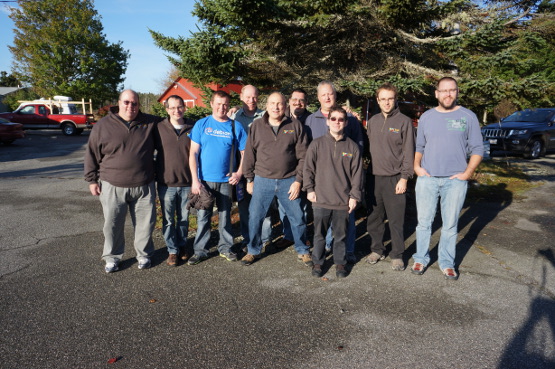
Last weekend I was in Southwest Harbour, Maine again for the annual LTSP hackfest (called By The Sea). It s a fun and productive event and as always it s been good catching up with LTSP folk, even though we were missing Oliver, Alkis and Vagrant. Here is a summary of what I can recall from the discussions of the weekend Recent Happenings in LTSP Going Forward
  • Libpamssh - This has been ongoing work in the LTSP project that will allow you to authenticate against another machine using SSH with local PAM. This will make it somewhat trivial to adapt LightDM (Light Display Manager) as a remote login manager and we can then do away with LDM (LTSP Display Manager) which currently has several big limitations. Scott Balneaves and St phane Graber made big progress on this over the weekend and it s close to an initial release.
  • New LTSP Cluster Control Center - Simon Poirier has been working on a new LTSP Cluster Control Center, the old one has been rusting away and other attempts at rewriting it didn t quite work out. He did a demonstration of the proof-of-concept code and it s looking quite nice already.
  • Squashed Bugs - Marc Gari py took some time to squash some bugs: LP: #996533, LP: #1048689 and LP: #1062947
  • Documentation - I m taking it upon myself to fix some problems we have with documentation. The lts.conf documentation is incomplete and difficult to maintain, so I will be going through the client/server code and tag all the possible settings that there are so that we can auto-generate documentation from it. David Trask will be helping out there and will be writing some nice descriptions for the config settings.
  • LTSP 6.0 and the Future of LTSP - There was a good opening discussion about the future of LTSP. The combination of all the recent partial rewrites that Alkis has been doing combined with the deprecation of LDM will culminate in what will be called LTSP 6.0. There was also some interest in having an LTSP standalone distribution again (that can be installed on none-integrated distributions) and things like an LTSP live client disc. We were also wondering about the future of pure thin clients, many upstreams are writing software that aren t at all thin client friendly (Clutter-based software like Gnome Shell and Totem, Unity, etc) and at the same time, thin client hardware is becoming increasingly powerful. It s possible that there may be a focus on making diskless fat clients working even better with LTSP and make it easier to use remote-apps for running only certain applications the application servers. We re also quite interested in projects like FreeRDP for users who would still require pure thin clients.
Social It was great seeing everyone again. I first started using LTSP around 9 years ago and never imagined back then that I d get to meet the people behind it. Ron Colcernian sourced us some really cool LTSP tops that you can see us wearing in the group photo. I hope to get to BTS again next year!

9 October 2012

Stefano Zacchiroli: bits from the DPL for September 2012

Just posted to d-d-a, bits from the DPL for Septemer 2012.
Heya,
here is the periodic report of DPL activities, this time related to September 2012 (posted here with some delay, as I've been traveling oversea on behalf of Debian for the past few days). Help needed: Google Code-In The Google Code-In (GCI) initiative is about to start again. We don't have a great track record of participating into it, and that's a pity. The initiative revolves around small tasks that other Free Software projects have come to call "easy hacks", showing how effective they're in attracting new volunteers. To participate, we need both mentors and admins. If you're interested see Ana's call for help and please volunteer on the soc-coordination list. Related to this, you've probably seen the report of our participation in GSoC 2012. I'd like to thank all students, mentors, and admins for a very well organized edition. Logo relicensing & other assets The DFSG-relicensing of the Debian logo, which I've mentioned in recent updates, has now happened. The so called Debian "Open Use" logo, in both variants (with and without "Debian") is now dually licensed under LGPL3+ / CC-BY-SA 3.0. The change has been made effective with a resolution of the SPI Board of Directors. Note that the so called "official" logo, which we seem to use very little, is still released under the terms of a non-free license. Discussion is ongoing on -project to stop promoting it. If you're using it or if you've arguments in favor of against that, please participate in the discussion. I've got from SFLC an updated draft of the new proposed trademark policy, implementing most of the changes requested during related August discussions on -project. I'll post it for review there shortly. The Japanese Trademark Office (JPO) has sent us the final confirmation that trademark transfer request (from individuals Debian contributors in the area to SPI) has happened. We've paid the needed fee of 457 CHF to conclude the transaction. We finally settled a domain transfer agreement with the current owner of the debian.eu. Technically, the domain will be transferred to FFIS in the coming weeks. Core teams (non-)news Quite some core teams are in the process of changing their formations these weeks, but most are still pending proper delegation (or equivalent). So here are just a few "teasers": I hope to finalize all the pending tasks above this month. Future events I've spent quite some time to plan my participation in events I'll be attending during October on behalf of Debian, such as the ACM Reflections conference in Urbana-Champaign (at the time of writing, this has already happened), the Ubuntu Developer Summit in Copenhagen, and the LinuxDay event in Turin. Cheers.
PS the day-to-day activity log for September 2012 is available at the usual place master:/srv/leader/news/bits-from-the-DPL.txt.201209

8 October 2012

Rudy Godoy: MySQL data enconding conversion latin1 utf8

I was about to post a different story but things turned out differently, for good. Now I ll post tips that may save the day in the event of encoding issues when dealing with MySQL table data. Hopefully you find it useful. Say you have a MySQL table that has collation set to latin1 but you have utf8-encoded data stored. This happened when importing a dump, or because of Murphy s law. When querying the data from your application or from mysql s tools you get awful results for non-ascii characters such tildes. Changing the table s collation definition will only work for new columns and records. Altering the collation for the said column would make things worse. So what to do? Fortunately MySQL offers a nice way to save the day. You can use a transition conversion and then set the table encoding back to utf8, so it pairs accordingly with the encoding type for the data it has stored. ALTER TABLE table_name CHANGE column_name column_name BLOB; Issuing the previous command will make the table change it s type to BLOB. Why? Because by doing it the stored data is kept untouched. This is important. If you use the CONVERT or MODIFY commands the data will be converted by MySQL. We don t want that since the data is already in the encoding type we want. You can note that column_name is repeated twice, this is because the CHANGE command copies the data and we want the resulting column to have the same name. Now, we have to put the data back on the encoding we want, so everything is under control again. This is done by issuing the following command. ALTER TABLE table_name CHANGE column_name column_name COLUMN_TYPE CHARACTER SET utf8; COLUMN_TYPE depends on the content s column type. For instance, for a TEXT column it should be. ALTER TABLE table_name CHANGE column_name column_name TEXT CHARACTER SET utf8; It works for VARCHAR, LONGTEXT and other data types that are used to store characters.

6 October 2012

Matthew Garrett: The importance of trustworthy power structures

Direct harassment and overt sexism are certainly a significant part of why the gender ratios in the Linux community[1] are so skewed, but they're not the whole story. Part of feeling comfortable with a community is the knowledge that those in positions of power can be relied upon to engage in appropriate action when undesirable situations arise - no matter how compelling your code of conduct, no matter how detailed your diversity policy, if someone contravenes them and nothing happens, those documents are worthless and your community is unwelcoming. You can't rely on enforcement unless the community can trust its leadership.

Setting a good example in terms of behaviour is obviously vital, but it's not sufficient. Leaders who engage in sexist behaviour or who harass community members are clearly untrustworthy and undermine any attempts the rest of the community may be making. Failing to step in when they see examples of unacceptable behaviour is as bad. But less obvious is that it's possible to destroy that community trust without clearly contravening those community standards.

An example of this is Todd Akin, a candidate for the upcoming US Senate elections. In August he justified his support for making abortion illegal even in cases of rape, on the basis that women can't become pregnant through being victims of "legitimate rape". Of course, this had little to do with his fiscal or wider social policies, positions that are more directly relevant to most of his potential constituents, and in an election year that's primarily about the economy and healthcare it might be expected that a single issue would have little effect on the election standings. Instead, there was a huge uproar and a previously safe victory has now turned into a real chance of a loss.

Why? A significant part of it is because many people now have difficulty believing that they can trust him to represent them. If he understands women so little that he's willing to make entirely spurious justifications for his positions, how could any woman trust him to consider any other problems they may face? If he's willing to use fake science to back himself up, how could anyone trust him to consider any issue involving science? Through a single statement to a journalist he demonstrated to many that he was unsuited to be their representative in government. Many people who would otherwise have voted for him simply don't feel that they can rely on him to be there for them. Whether he wins his election or not, that distrust is going to remain and it's going to compromise his ability to work with his constituents.

It's the same in technical communities. If a member of a project's technical leadership frequently and loudly expresses their disdain for Python coders, anyone advocating for increased use of Python in that project is unlikely to feel that they can get unbiased opinions from that leader. If the project as a whole is uninterested in adopting Python then that's probably for the best, but if the rest of the project is open to using Python then there's a problem. People working with Python are less likely to join the project, and perhaps the project will lose out as a result.

But it's worth remembering that technical communities are still communities. If a member of a project's technical leadership vociferously argues that slavery benefited minority groups in the long run, members of those minority groups are going to feel that they're not going to be well represented by that leader. If they blog about how homosexuality is a lifestyle choice then homosexuals are unlikely to flock to the project. Likewise, if they downplay the prevalence or impact of rape, women are going to feel marginalised and find something better to do with their time.

It's impossible to separate these things. No matter how technically competent a community leader is, no matter how much code review they perform or how much mentorship they provide, if they're expressing unacceptable social opinions then they're diminishing the community. People I know and respect have left technical communities simply because people in positions of responsibility have engaged in this kind of behaviour without it causing them any problems.

We shouldn't be willing to give people a pass simply because they aren't actually groping anyone or because they're not members of the KKK. Those who drive people away from the community on the basis of race, gender or sexual orientation deserve vocal condemnation, and if they're unwilling to change their behaviour then the community should instead act to drive them away.

We're pretty bad at that in the Linux world at the moment. Too many people have behaved in this way and are left with positions of power or responsibility. There's no easy solution to the problem, but the Ada Initiative is continuing to work to improve awareness and work with communities to reduce the alienation that results from this kind of behaviour. If you want this to be anything other than a straight white male dominated community, you should give them money.

[1] (and computing in general, though to a lesser extent)

comment count unavailable comments

4 October 2012

Raphaël Hertzog: My Debian Activities in September 2012

This is my monthly summary of my Debian related activities. If you re among the people who made a donation to support my work (1086.48 , thanks everybody!), then you can learn how I spent your money. Otherwise it s just an interesting status update on my various projects. Dpkg I am subscribed to Launchpad s dpkg bug tracker and I was getting annoyed with the amount of noise I got under the form of bug reports that look like package foo failed to install/upgrade: package foo is already installed and configured . Those reports are a combination of a bug in APT and of random other failures (often hardware related like corrupted .deb files, or I/O errors, but sometimes also real problems in other packages) but they always end up assigned on dpkg (because dpkg is outputting an error message complaining about APT s decision to configure something that doesn t have to be configured). I simply don t have the time required to manually process and inspect all those reports, so I decided to filter them at the apport level with a new Ubuntu bug pattern that indicates that those reports are a duplicate of LP#541595. Thanks to this, the dpkg bug count quickly went down from 130 to about 80. Packaging I sponsored a new upstream version of ledgersmb. I quickly updated WordPress to version 3.4.2 since it contains security relevant fixes. I also pushed a small update of nautilus-dropbox fixing #686863 because upstream renamed the binary package that they hand out on their website from nautilus-dropbox to dropbox. Their dropbox package only conflicts with old versions of nautilus-dropbox and not with the version that Debian is shipping and thus I had to add a Conflicts on our side to forbid co-installation of both packages. Testing wheezy s installation I bought a new laptop (Lenovo Thinkpad X230) and used this as an excuse to test Wheezy s installation process. It worked mostly fine except for two things:
  1. First I noticed that it would not accept my passphrase for my encrypted partition during early boot this turned out to be already reported as #619711 but was no longer getting any attention from the package maintainer. After some IRC discussion with Julien Cristau, we prodded Michael Prokop who had apparently already offered to take care of this issue. I tested his updated package and the result got quickly uploaded.
  2. I had weird networking problems that turned out to be related to the lack of the loopback network (i.e. on localhost). This was the result of a broken /etc/network/interfaces: it had been incorrectly modified by NetworkManager. I reported this in #688355. This issue affects people with IPv6 enabled networks.
Debian France There s a resurgence of activity in Debian France. Sylvestre Ledru is leading the organization of a mini-debconf in Paris on November 24-25th. And Tanguy Ortolo is now taking care of some merchandising (Polo shirts, to change from the usual T-Shirt). I might give a talk during this mini-debconf, possibly about multi-arch. Misc It s been a few months that I noticed a 2 second lag of gnome-shell everytime that smuxi (my IRC client) sent a notification. It s very annoying, you have the impression that the entire machine freezes. So I contacted Mirco Bauer on #smuxi and we investigated a bit. It turns out that smuxi is using an old version of the notification protocol where the picture is sent as a bytestream leading to huge dbus messages. This is clearly sub-optimal so smuxi will be fixed to be able to send the path of the picture instead of the picture itself. On the other hand, it s really a bug of gnome-shell that it freezes during the time it takes to handle the bigger-than-usual dbus message. So I also filed a bug on GNOME Shell (Bugzilla #683829) to get this fixed. Librement: funding free software work I started a new project with the goal of helping free software developers to fund their free software work. It s still mostly vaporware for now but I have a public code repository, a nice logo and lots of ideas. If the topic is of interest to you, and you d like to be involved, feel free to get in touch. Otherwise stay tuned. Thanks See you next month for a new summary of my activities.

4 comments Liked this article? Click here. My blog is Flattr-enabled.

3 October 2012

Stefano Zacchiroli: put some Debian salt in the Ubuntu charity marathon

Fellow geeks of the Canonical community team will be doing something pretty weird this week. They're fund-raising for charity, for causes ranging from environment to autism, from homeless support to kids education, from poverty fight to water supplies. But that's not weird. What's weird is that the fund-raising will culminate in a 24-hour work marathon stream live, which will kick off tomorrow (Thursday) at 10:00 UTC. As I like charity, and as I like contributing to Free Software, I gladly accepted to rely here a challenge to the Debian community by one of the marathon "horsemen", Michael Hall: Raising the stakes, Nick Skaggs has decided to propose a similar challenge: Wanna take the challenge? And how about the other 4 horsemen? No challenges to the Debian community? Feel free to leave a comment and I'll raise the stakes even more, updating the list above. Update 4/10/2012, 13:35 +0200: Daniel Holbach added his own challenge to the Debian community:

1 October 2012

Andrew Pollock: [opinion] On helicopter parenting and strangers in day care facilities

It appears that a recent incident at a different campus of the "preschool" (I call it day care) that Zoe goes to has gotten the attention of the Free-Range Kids blog. Firstly, I need to say that on the parenting spectrum, I definitely self-identify closer to the free-range end than the helicopter end. I'm not sure that I'd let an 8 year old ride the New York subway on their own, but Zoe's not 8 yet, so I really can't say. Sarah and I received the same email that is reprinted on the blog, on Friday night, and we were both (very) mildly alarmed at the situation, but not particularly concerned, mostly because it wasn't the facility that Zoe goes to. I'm not sure I'd be that much more concerned if it was, to be honest. I did like the statistics that the parent quoted in response. I thought that that put things into perspective, but didn't really take abductions by estranged parents into consideration. My one reaction to reading the email was, "why did they wait until after the incident to escalate it?" but then, from my own experiences in dropping off or picking up Zoe, I could totally understand not all the staff knowing on sight all the parents or guardians that do pickups and drop offs. This does lead to one asking how they know who to buzz in, but that's another can of worms. Anyway, I read the 50 or so varyingly indignant comments on the Free Range Kids blog, and since they were talking about the company that I give a not inconsequential amount of money to, I feel the need to write a response. The whole episode raises the question: who was this person and what were they doing there? Some of the commentators hypothesize that they were casing the joint for a future incident, or just giving themselves an impromptu tour before placing their child there (Zoe and I toured before we signed up, but that was an official, prearranged thing). It really is unfortunate that the staff didn't challenge this person, but as I said, they probably all had to review the video surveillance footage together to ascertain that none of them knew who the person was. I consider this a bit of a deficiency itself, but I don't really expect them to all have photographic memory, especially if one parent mostly does drop off and pick up. The other (expensive) option would be to issue each authorized person with an electronically revocable proximity card, so they can let themselves in, but I feel that that's taking things to the extreme. They staff all carry portable radios. If they don't have a discreet "code" they can call when one of them sees a person they don't know, I'm sure they will have after this incident. I personally found the majority of the comments on the Free Range Kids blog to be on the extreme overreaction side of things. As much as I'm a believer in Free Range parenting, I think the day care provider has mostly reacted appropriately. Do I agree with their "locked facility" policy? It's my first experience with a commercial day care facility, so I don't have anything to compare it with. As I said earlier, I can totally understand where they're coming from in terms of limiting their liability. Previously, Zoe was in a "home day care" facility, without any locks, and I for one wasn't constantly worrying about someone wandering into that provider's home and abducting my daughter, so I guess the whole "locked facility" thing is on the more extreme end of the scale for me in the first place, but like I said, I'm uncalibrated for commercial day care centres. I'd certainly like to see the primary school environment that Zoe goes to not be such a locked down affair.

28 September 2012

Don Armstrong: Switching to KGB from CIA

CIA.vc has unfortunately disappeared, and is unlikely to return any time soon. I personally have decided to switch to KGB, but other alternatives such as FBI and irker exist. To switch, you first need to find or set up a kgb bot. If this is a Debian associated FOSS project, feel free to contact me or join #kgb-devel on irc.oftc.net and ask for someone to allow your project to talk to their bot. Once you've found a bot, we need to set up the client. [I'll talk about bot set up at the end.]

kgb-client configuration Install the kgb-client and kgb-client-git packages. Currently, kgb only supports subversion and git, but I suspect this will be rectified shortly. For git repositories, add a post-receive hook like the following:
#!/bin/sh
tee hooks/reflog   kgb-client --conf /path/to/kgbclient.conf --repository git --git-reflog -
For subversion repositories, add a post-commit hook like the following:
#!/bin/sh
kgb-client --conf /path/to/kgbclient.conf --repository svn "$1" "$2"
Then update the configuration file /path/to/kgbclient.conf:
---
repo-id: my-repository
servers:
 - uri: http://servername:9999/
   password: verysecret
# optional link to a website where the commits are;
# needs newish kgb-client and server
web-link: http://example.com/?p=my-repository;a=commitdiff;h=$ commit 
Then, send the bot owner the password, repo-id, channel, and network you'd like the changes to be reported to.

Configuring kgb-bot The bots just listen to soap requests and if the password matches, sends the commit to the appropriate IRC channel. To set one up, install kgb-bot. Then, enable the bot (set BOT_ENBALED=1 in /etc/default/kgb-bot), and configure the bot's configuration file /etc/kgb-bot/kgb.conf:
---
soap:
  server_addr: 0.0.0.0
  server_port: 9999
  service_name: KGB
queue_limit: 150
log_file: "/var/log/kgb-bot.log"
repositories:
  # just a name to identify it
  my-repository:
    # needs to be the same on the client
    password: verysecret
networks:
  oftc:
    nick: KGB-you
    ircname: KGB bot
    username: kgb
    password: ~
    nickserv_password: yournickservpassword
    server: irc.oftc.net
    port: 6667
  freenode:
    nick: KGB-you
    ircname: KGB bot
    username: kgb
    password: ~
    nickserv_password: yournickservpassword
    server: irc.freenode.net
    port: 6667
channels:
  - name: '#your-channel'
    network: oftc
    repos:
     - your-repo
  - name: '#commits'
    network: freenode
    repos:
     - your-repo
Then start the bot (/etc/init.d/kgb-bot start), and watch as it joins channels and reports your changes! You'll probably actually want to register whatever nick you are using on the networks, etc... but you can figure that out yourself!

Keith Packard: DRI-Next

Thoughts about DRI.Next On the way to the X Developer s Conference in Nuremberg, Eric and I chatted about how the DRI2 extension wasn t really doing what we wanted. We came up with some fairly rough ideas and even held an informal presentation about it. We didn t have slides that day, having come up with the content for the presentation in the hours just before the conference started. This article is my attempt to capture both that discussion and further conversations held over roast pork dinners that week. A brief overview of DRI2 Here s a list of the three things that DRI2 currently offers. Application authentication. The current kernel DRM authentication mechanism restricts access to the GPU to applications connected to the DRM master. DRI2 implements this by having the application request the DRM cookie from the X server which can then be passed to the kernel to gain access to the device. This is fairly important because once given access to the GPU, an application can access any flink d global buffers in the system. Given that the application sends screen data to the X server using flink d buffers, that means all screen data is visible to any GPU-accessing application. This bypasses any GPU hardware access controls. Allocating buffers. DRI2 defines a set of attachment points for buffers which can be associated with an X drawable. An application needing a specific set of buffers for a particular rendering operation makes a request of the X server which allocates the buffers and passes back their flink names. The server automatically allocates new buffers when window sizes change, sending an event to the application so that it knows to request the new buffers at some point in the future. Presenting data to the user. The original DRI2 protocol defined only the DRI2CopyRegion request which copied data between the allocated buffers. SwapBuffers was implemented by simply copy data from the back buffer to the front buffer. This didn t provide any explicit control over frame synchronization, so a new request, DRI2SwapBuffers, was added to expose controls for that. This new request only deals with the front and back buffers, and either copies from back to front or exchanges those two buffers. Along with DRI2SwapBuffers, there are new requests that wait for various frame counters and expose those to GL applications through the OMLsynccontrol extension What s wrong with DRI2? DRI2 fixed a lot of the problems present with the original DRI extension, and made reliable 3D graphics on the Linux desktop possible. However, in the four years since it was designed, we ve learned a lot, and the graphics environment has become more complex. Here s a short list of some DRI2 issues that we d like to see fixed. Proposed changes for DRI.Next Given the three basic DRI2 operations (authentication, allocation, presentation), how can those be improved? Eliminate DRI/DRM magic-cookie based authentication Kristian H gsberg, Martin Peres, Timoth e Ravier & Daniel Vetter gave a talk on DRM2 authentication at XDC this year that outlined the problems with the current DRM access control model and proposed some fairly simple solutions, including using separate device nodes one for access to the GPU execution environment and a separate, more tightly controlled one, for access to the display engine. Combining that with the elimination of flink for communicating data between applications and there isn t a need for the current magic-cookie based authentication mechanism; simple file permissions should suffice to control access to the GPU. Of course, this ignores the whole memory protection issue when running on a GPU that doesn t provide access control, but we already have that problem today, and this doesn t change that, other than to eliminate the global uncontrolled flink namespace. Allocate all buffers in the application DRI2 does buffer allocation in the X server. This ensures that that multiple (presumably cooperating) applications drawing to the same window will see the same buffers, as is required by the GLX extension. We suspected that this wasn t all that necessary, and it turns out to have been broken several years ago. This is the traditional way in X to phase out undesirable code, and provides an excellent opportunity to revisit the original design. Doing buffer allocations within the client has several benefits: Present buffers through DMA-buf The new DMA-buf infrastructure provides a cross-driver/cross-process mechanism for sharing blobs of data. DMA-buf provides a way to take a chunk of memory used by one driver and pass it to another. It also allows applications to create file descriptors that reference these objects. For our purposes, it s the file descriptor which is immediately useful. This provides a reliable and secure way to pass a reference from an underlying graphics buffer from the client to the X server by sending the file descriptor over the local X socket. An additional benefit is that we get automatic integration of data from other devices in the system, like video decoders or non-primary GPUs. The Prime support added in DRI version 2.8 hacks around this by sticking a driver identifier in the driverType value. Once the buffer is available to the X server, we can create a request much like the current DRI2SwapBuffers request, except instead of implicitly naming the back and front buffers, we can pass an arbitrary buffer and have those contents copied or swapped to the drawable. We also need a way to copy a region into the drawable. I don t know if that needs the same level of swap control, but it seems like it would be nice. Perhaps the new SwapBuffers request could take a region and offset as well, copying data when swapping isn t possible. Managing buffer allocations One trivial way to use this new buffer allocation mechanism would be to have applications allocate a buffer, pass it to the X server and then simply drop their reference to it. The X server would keep a reference until the buffer was no longer in use, at which point the buffer memory would be reclaimed. However, this would eliminate a key optimization in current drivers the ability to re-use buffers instead of freeing and allocating new ones. Re-using buffers takes advantage of the work necessary to setup the buffer, including constructing page tables, allocating GPU memory space and flushing caches. Notifying the application of idle buffers Once the X server is finished using a buffer, it needs to notify the application so that the buffer can be re-used. We could send these notifications in X events, but that ends up in the twisty mess of X client event handling which has already caused so much pain with Invalidate events. The obvious alternative is to send them back in a reply. That nicely controls where the data are delivered, but causes the application to block waiting for the X server to send the reply. Fortunately, applications already want to block when swapping buffers so that they get throttled to the swap buffers rate. That is currently done by having them wait for the DRI2SwapBuffers reply. This provides a nice place to stick the idle buffer data. We can simply list buffers which have become idle since the last SwapBuffers reply was delivered. Releasing buffer memory Applications which update only infrequently end up with a back buffer allocated after their last frame which can t be freed by the system. The fix for this is to mark the buffer purgable, but that can only be done after all users of the buffer are finished with it. With this new buffer management model, the application effectively passes ownership of its buffers to the X server, and the X server knows when all use of the buffer are finished. It could mark buffers as purgable at that point. When the buffer was sent back in the SwapBuffers reply, the application would be able to ask the kernel to mark it un-purgable again. A new extension? Or just a new DRI2 version? If we eliminate the authentication model and replace the buffer allocation and presentation interfaces, what of the existing DRI2 protocol remains useful? The only remaining bits are the other synchronization requests: DRI2GetMSC, DRI2WaitMSC, DRI2WaitSBC and DRI2SwapInterval. Given this, does it make more sense to leave DRI2 as it is and plan on deprecating, and eventually eliminating, it? Doing so would place a support burden on existing applications, as they d need to have code to use the right extension for the common requests. They ll already need to support two separate buffer management versions though, so perhaps this burden isn t that onerous?

Gunnar Wolf: Rethinking copyright in the digital era: Dialogs on arts, regulation and culture availability Museo del Chopo, Mexico City

I was invited as a panelist for the Laboratorio Repensar el derecho de autor y el derecho de copia en la era digital:
di logo sobre artes, regulaciones y disponibilidad de la cultura
at the beautiful Foro del Dinosaurio in the Museo del Chopo, located very centrally in Mexico City. The list of speakers is quite interesting, and makes me very interested and happy to be there. The laboratory will be next week, Wednesday through Friday. I am scheduled to be part of the 17:00 table, Knowledge availability and regulation in Internet, coordinated by Pedro Mendiz bal (Creative Commons Per ), and together with Juan Vouts s (Biblotecologic Research Institute, UNAM), Armida Aponte (Creative Commons M xico). The other topics that will be covered are: Sadly, it does not seem they have planned for remote people to follow along. I will ask and update here if there is any way for people outside Mexico City to tune in For people able to attend, it's free entrance (and certificates will be given to people pre-registered, if you are interested, call 5535-2288 ext. 123) For further details on the participants, go to the laboratory's web page. Update: The talks will be streamed! http://www.chopo.unam.mx/chopoenvivo.html, via UStream.

Joachim Breitner: The might applicative left fold

Just about three years ago, I created the automatic rule-based time tracker (arbtt), a tool that quietly runs in the background, records your current windows and their titles, and allows you to later process this data using, well, rules. By now, I have almost half a million records, spanning 317 days of me working at the computer. Processing this amount of data has become very memory-hungry: It takes 1G of RAM to process my data. Other users, with a presumably higher sampling rate, report even worse performance, which finally made me approach the problem again. Naturally, one wonders why it is such a memory hog, after all it takes just one run over the data to produce a report. The data itself is a lazy list so the garbage collector should the be able to drop the seen elements immediately. But arbtt is able to print several reports in one run; there is even an option (--each-category) that creates a number of reports based on the data itself. The code was structured that first a number of values that are possibly used by several reports are first created one and then re-used by the reports. And then there is the issue of the filters: The user specifies a what predicates are interesting (e.g., those where he was active) and some reports need to know not only which samples were matched, but also distinguish the consecutive runs of selected samples. Lots of reasons that made it hard to not use the list of of samples several times, which causes it to be completely retained in memory. The idea of completely rewriting everything in a much more imperative way was not appealing. But luckily Haskell s good abstraction possibilities can help here. What is the correct way to traverse a lazy list and calculate some information about it? It is a strict left fold, i.e. an algorithm that can be represented as arguments to
foldl' :: (s -> x -> s) -> s -> [x] -> s
For those who are new to folds: The first argument is a function that processes one element from the list, returning the new state of the processing. The second argument is the initial state. And foldl' can apply such an algorithm to a list to return a final state. So obviously I had to express my reports as left folds. To think clearer about it, I gave them a name. I also added a finishing step to the mix, which is handy:
data LeftFold x a = forall s. LeftFold  
  start :: s,
  process :: s -> x -> s,
  finish :: s -> a
   
A value of type LeftFold x a is then an algorithm that traverses a list of xes and returns something of type a. The forall s. means that the user of such a processor must not make any assumptions about the type of the state. I also have a function that runs such a list processor, simply by invoking foldl' with the arguments stored in the LeftFold constructor:
runLeftFold :: LeftFold x a -> [x] -> a
runLeftFold (LeftFold st1 p1 f1) xs = f1 (foldl' p1 st1 xs)
Now, as a Haskell programmer, I am searching for monads everywhere, and it really would have been nice if this were a monad, as they are very easy to compose. But unfortunately, they do not form a monad. If they did then I could decide after running one processor and looking at the result how I would want to process the list now, but this obviously contradicts with the desire to traverse the list only once. But there is the monad s smaller ugly sibling, the applicative functor. One can still somewhat nicely compose them to form more complex algorithms, just with more restrictions. Here is my instance:
instance Functor (LeftFold x) where
  fmap f (LeftFold st1 p1 f2) = LeftFold st1 p1 (f . f2)
instance Applicative (LeftFold x) where
  pure x = LeftFold () const (const x)
  LeftFold st1 p1 f1 <*> LeftFold st2 p2 f2 = LeftFold  
  start  =  st1 :!: st2,
  process = \(s1 :!: s2) x -> p1 s1 x :!: p2 s2 x,
  finish  = \(s1 :!: s2)  -> f1 s1 (f2 s2)
   
The :!: operator is a strict tuple constructor. This is important, as otherwise the fold would be come a lazy one, I would be building up huge numbers of thunks and performance would be very bad. For the same reason every list processor should make sure that its state does not build thunks once it is in weak head normal form. Now I am at a abstraction level that I feel comfortable working in, by writing functions that combine the list processors in various ways. Probably the most important one for me is already present in the libraries (here with a specialized type):
sequenceA :: [LeftFold x a] -> LeftFold x [a]
This is the whole trick: Now I can, based on the user input, run any number and selection of reports in one single list traversal. I find it very elegant that under the hood , the strict tuples are nested at precisely the right depth depending on the length of the list. As hinted at before, I do some interesting stuff that was previously represented as lists of lists of values. Expressing these as left folds was a bit tricky, but again, the complexity is contained in the combinators that I wrote (although it still gets confusing, check out processIntervalReport in Stats.hs):
monoidFold :: Monoid m => LeftFold m m
mapElems :: LeftFold y a -> (x -> y) -> LeftFold x a 
filterWith :: (x -> Bool) -> LeftFold (Bool :!: x) a -> LeftFold x a
onSelected :: LeftFold x a -> LeftFold (Bool :!: x) a
onJusts :: LeftFold x a -> LeftFold (Maybe x) a
onAll :: LeftFold x a -> LeftFold (Bool :!: x) a
runOnGroups :: (x -> x -> Bool) -> LeftFold x y -> LeftFold y z -> LeftFold x z
runOnIntervals :: LeftFold x y -> LeftFold y z -> LeftFold (Bool :!: x) z
lfLength :: LeftFold x Int
lfFirst :: LeftFold x (Maybe x)
lfLast :: LeftFold x (Maybe x)
toList :: LeftFold x [x]
concatFold :: LeftFold [x] [x]
As a result, the program now only requires 10MB and runs 18% faster. If you wonder why, in the definition of runLeftFold, I do not apply the finish function strictly: That is intentional; I am actually passing the result of a processor that calculates some often required data (e.g. total time recorded) as an argument to all the list processors. (Near the end of the main function in stats-main.hs) This loop works fine as long as I am using these only in the finish functions.
There is one downside to this approach: I cannot easily calculate stuff on demand and share it between two reports. Previously, I could just bind this to a variable, pass it to all reports, only if at least one is interested it would be evaluated and if several are interested, the result would be shared. I do not have a good solution for this yet. The code above is in the self-contained module LeftFold.hs in the arbtt sources.
Several People have had this idea before, here is one blog post by Max Rabkin.
Flattr this post

Next.

Previous.