Search Results: "edd"

21 June 2007

Edd Dumbill: Jeni Tennison on women in computing

For a long time I've been vexed by the gender bias of computing towards men. It's clear that computing has multiple issues, ranging from its perception to the nature of its society. As organizer of computing conferences, I care about ensuring that participation is meritocratic and inclusive.
As various debates have taken place over blogs in the past on women in computing, I have stayed silent. Not because I don't care, but because I really didn't know what to say. I try to understand, but at the end of the day I'm a man, I tend to misunderstand important points, and I suspect my contributions would come across as at best naïve, and more likely, patronising. So many conversations between men and women on this topic end up in mutual uncomprehension. Better to stay silent than be a fool.
This is why I'm very grateful for Jeni Tennison's analysis of women in computing. It is the most helpful blog post I have read recently on the topic. Perhaps it's because Jeni's British, and we share some of the same cultural assumptions and constraints. But more importantly, it's because her article builds bridges to my experience and understanding.
An argument of femininity Rather than simply appealing to tribes of men and women, Jeni places the discussion in terms of feminine and masculine traits. Like many men, I identify with certain attitudes and preferences more closely allied to my feminine side. By not excluding me, her wording helped me view the points she unfolded in terms that my own experience, however poor, could identify with. I've often found contemporary computing communities to be suffocatingly macho. There's a strong pressure to succeed in terms of attention from the chattering bloggers, privileged inner circles and the capacity for vicious excoriation of those who fall from grace.As I grew up through school and university, I held these sorts of social forms in contempt, as well as occasionally suffering at their hands. Yet now, bafflingly, I find myself under the impression I need to belong and compete in these spheres.Self-efficacy One of Jeni's central points is concern about one's own self-efficacy. This was the real revelation to me. I tend to assume most capable people I meet are aware of their own capability. Jeni turned this on its head for me when she wrote
... look at how Ruby on Rails is marketed. A big play is made of how easy it is. But if a language or framework is easy then people with low self-efficacy can’t win: if they manage to do something with it then they haven’t really achieved very much because anyone can do it; if they don’t manage to do something with it then they’re complete idiots. I’m not saying that we should advertise languages or frameworks as being hard, because obviously that can put people off as well, but a recognition of the barriers that people might face may, in a strange way, make them more approachable.
As Jeni brings her article to a close, it's with some shock and shame that I get the punchline loud and clear: "this isn't about you."It's about empathy, inclusivity and selflessness. Human qualities that are unrestricted to either gender.
20 June 2007

Adam Rosi-Kessel: On the Twitter Bandwagon

Just to prevent people from thinking I’ve gotten old and stodgy, I’ve joined the Twitter bandwagon. Here’s my feed, which also appears in my sidebar. I’m reminded of a Utah Phillips quote, from a different context:
Well, and I’m open to all those things. If you live in California, you’ve got to be open; if you’re not they pry you open.
I’m not sure whether I really agree with Twitter–it reminds me of this interesting collection of postmodern thoughts from n+1 magazine:
The Decivilizing Process As the specific addressee of any set of remarks becomes less important, in the midst of more and more babble, it will become more and more difficult to remember the special status of listening human beings, in the confusion of shouted orders.
But, hey, it’s worth a try.

Edd Dumbill: Why Bazaar rocks, and the highs and lows of its use with Rails

While Subversion is for many the source code revision system of choice, I've never stopped long with it myself. Why? Because it's mostly a fixed-up CVS, and doesn't fix the really gnarly problem with revision control: merging.Mark Shuttleworth has written an insightful little article on the key aspects of merging source code. Some of the points he makes underpin my choice of revision control system.For several years now I've been a very contented user of Bazaar, in its first arch-based incarnation, and now in its latter form. The key reason has been ease of merging.While most articles praising Bazaar are reports of open source development, I've also found it very handy for small in-house teams working on web applications.There are very often multiple arcs of development going on at once, and the ease of merging makes it easy to ensure that long-running development arcs don't get ridiculously far from the main trunk of development. Bazaar's merging also makes it easier for lead developers to police the merging of the code base.Using Bazaar with Rails and other toolsWorking mostly with Rails, one repeatedly runs up against the assumption that Subversion is the golden path for revision control. This is perhaps a little telling about the level of participation most Rails-based projects have reached.The tools story for a Bazaar user is both good and bad.The goodThe bad

Neil Williams: dpkg filtering

This started as an Emdebian idea but it is growing into a more all-purpose option. The requirement is to be able to filter packages during installation or cross-building so that manpages, infopages, documentation (including changelogs, copyright and readme etc.) and translation files for unsupported locales are omitted. When installing, the files would simply not appear on the filesystem or in the dpkg status information. When building, the files would disappear from the package completely (hence the role of filtering in Emdebian). The intention is that embedded systems can have empty /usr/share/man/ /usr/share/info/ and /usr/share/doc directories and a much reduced number of translation files in /usr/share/locale - the default would be only the translation files for languages that are supported on that machine, via 'dpkg-reconfigure locales'. Initially, only the narrow filters needed by Emdebian were considered - discussions at DebConf7 have shown how this can be easily extended to support arbitrary filters - necessarily the risks of using such optional filters would be made clear to the users in the manpage etc. - so that any file in any package could be omitted from the install process and the package file lists as well as during the preparation of packages for embedded devices.

Filters would be glob patterns held in a file in /etc/ (possibly /etc/dpkg/filters.d/) and would include the option to exclude files en-masse and specifically include some files that may otherwise be excluded in specific circumstances. The same filters could be used when building packages for embedded usage as well as installing Debian packages on systems where space is a problem. The main benefit of this filtering for Emdebian is that it makes it much easier to isolate the package changes needed to make the package cross-compilable from the changes needed to remove stuff that embedded devices don't need but which Debian Policy requires. This in turn makes Emdebian patches more useful to Debian maintainers when bugs are filed on their packages about a failed cross-build.

So far, it's taken up most of my hacking time in DebConf. Ian Jackson, Enrico Zini and Wookey have all helped improve the original ideas during that time. Prototype code is mostly complete but the extended filtering support will now have to wait until after DebConf. I'm hopeful that the patch will be accepted, once it is ready.

If this seems strange or unnecessary, just compare the disc usage of /usr/share/doc (which you can control) with /usr/share/locale/ (which you cannot currently control) or view the baobab images from my current laptop installation.

19 June 2007

Russell Coker: Who Benefits when Cheap Electricity is used?

In a comment on my previous blog post a question was asked as to who benefits when customers are able to use cheap electricity. The answer is that the electricity company benefits the most! When electricity sources such as wind and solar power which can vary in capacity are used the electricity would be cheaper when there is adequate or excess supply. The electricity would be cheaper then to encourage customers to use power hungry devices at those times rather than when the electricity supply is reduced. The larger the capacity of back-up power plants such as gas-fired plants the larger the overall cost of the system (having extra peak-load capacity that is unused most of the time is a waste of money). However the company that I once worked for on a project related to this was not an electricity company. I can’t name the company due to the confidentiality agreement but if the project ever goes into production I’ll blog about it. Recently some of the major investment banks have been focussing on how climate change affects business. I think that with these developments there will be a lot of new investment in environment related technologies. Probably if a few people started work on an embedded Linux box for scheduling power use they could have a good chance of getting some investment. The ideal feature list would include control and monitoring over the Internet, the ability to schedule operations based on power price (received from the grid via a technology similar to X10) and local conditions (how charged the batteries are in your photo-voltaic system). It would control devices via standard X10 modules (which can control the power to the device) as well as directly interfacing with machines that need to be turned on all the time. I would be happy to offer more suggestions via private email to anyone who is interested in implementing this.

16 June 2007

Eddy Petrișor: I'm in EDI

Since about 4 hours ago... :-)

Eddy Petrișor: I have a bad feeling...

Since a couple of weeks ago I have been having a bad feeling about my trip to Edinburg. I don't know what it is, but I hope is just my paranoia and nothing bad will happen.

15 June 2007

Paul van Tilburg: DebCamp Update

It is time for a DebCamp update, since I’ve been here three days now. I have mainly been working on picking up the slack regarding Debian/Ruby Extras. This meant: getting rid of a CDBS rule that substitutes the entire team in the Uploaders field, cleaning up some package, uploading some packages with new upstream, solving and filing bugs. During all this, the “picture” of the environment outside is actually only missing yellow/brown trees shedding their leaves. Ruby D-Bus 0.2.0 In between the Debian/Ruby Extras work I have been able to finish the documentation of our Ruby D-Bus protocol implementation. It is due for release this weekend and I think we’ll make it.

Dirk Eddelbuettel: New York bound

On the second try I got lucky with the lottery for the New York Marathon on November 4 this year. So that may make it Boston, Chicago (on October 7) and now New York for 2007.

Dirk Eddelbuettel: Madeleine Peyroux at Ravinia

Returning from Toronto, we went straight to Ravinia to see one of my favourite vocalists: Madeleine Peyroux who didn't disappoint. Lovely afternoon / evening as Ravinia is such a treat: summer, lawn, picnic and excellent live music. Let's see if I get out there another time this year.

Dirk Eddelbuettel: Toronto the good

Went to Toronto last weekend for a wedding. Couldn't have been nicer -- on Toronto Island with its nice view of the city. The ceremony got slightly rescheduled because of the massive storm coming through last Friday afternoon which forced everything inside. Only drawback was that the party ended too soon due to ferry schedule. Caught up with some friends in town and glanced and a few of those fancy new digs that have come up since we left in 2000: the Opera house, lots of construction at the AGO and the neat building next door, the intriguing chrystal at the ROM. Always nice to come back, especially with the very nicest weather as it was last weekend.

Eddy Petrișor: libgnome-dev + libsvn-dev = problems

On Debian Etch systems it is impossible to install out of the box both libglade-gnome0-dev and libsvn-dev due to a conflict between depended upon libraries.

In order to install them side by side you will have to modify an existing libdb4.4-dev deb package to add "libdb3-dev" to the Provides: field of the package. You can do this by editing DEBIAN/control after running:

deb-reversion -k /bin/sh libdb4.4-dev_*.deb

When done, exit and install the newly created libdb4.4-dev package:

dpkg -i libdb4.4-dev*LOCAL*.deb


I managed to find this solution thanks to mrvn and other people on IRC. Thanks.

14 June 2007

Eddy Petrișor: Argh, I just hate...

...doing needless, mindless extra work just because of some PR stunts carried out by sales people!

Edd Dumbill: BarCamps and unconferences: what software support do you need?

My latest venture, Expectnation, is conference management software aimed primarily at the traditional form of running conferences. The schedule, speakers and topics are all lined up in advance. Foo Camp
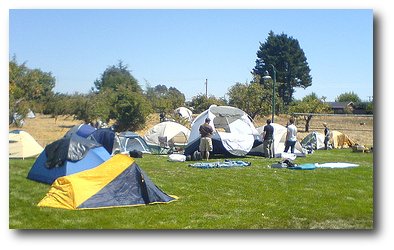
Campers at O'Reilly's Foo Camp unconference However, many conferences now are taking the form of "unconferences" in whole or part, exemplified by the BarCamp movement. At these events, the schedule is assembled just in time, and almost everybody is a presenter. The same problems exist for BarCamp organizers as for conventional event organizers. They still need to use a bunch of diverse tools for their web sites, registration, communication and reportage. Expectnation solves this problem by being a "one-stop shop" tool for conventional conference structures, and we want to do it for BarCamps and unconferences too. Tell me what you need  I'm asking for feedback from attendees and organizers of BarCamp-like events as to what kinds of features they're seeking in their support software. We already have the platform to build on, and we want to find out the best ways in which to do it.The sort of subject areas I'm keen to hear about includeIf you have views on this, please join the discussion thread over on the forums. It's worth restating too that I'm very keen to talk about this with attendees as well as organizers.

13 June 2007

Eddy Petrișor: Whacky ideas, my addition...

PriorityIncreaseIfBinariesFromTheSameSource:

It would be really useful if a -dev package's priority would inflate proportionally with every binary package originating from the same source as the dev package.

This way I would never see this[1]:

# LANG=C apt-get install libxmu-dev libagg-dev libgstreamer0.10-dev libgtkglext1-dev libmad0-dev libxul-dev libdirectfb-dev libkonq4-dev libcurl3-gnutls-dev libcaca-dev libboost-date-time-dev libavcodec-dev libavformat-dev libming-dev
Reading package lists... Done
Building dependency tree... Done
The following extra packages will be installed:
kdelibs4-dev liba52-0.7.4-dev libacl1-dev libarts1-dev libartsc0-dev libasound2-dev libaspell-dev libattr1-dev
libaudio-dev libavahi-qt3-dev libcucul-dev libcupsys2-dev libdc1394-13-dev libdts-dev libfam-dev libfam0
libgl1-mesa-dev libglu1-mesa-dev libgsm1-dev libgtkglext1 libidn11-dev libjack0.100.0-dev libjasper-1.701-dev
liblcms1-dev liblua50-dev liblualib50-dev libmng-dev libmozjs-dev libmpeg3-dev libnspr4-dev libnss3-dev libogg-dev
libopenexr-dev libqt3-headers libqt3-mt-dev libraw1394-dev libsasl2-dev libslang2-dev libtheora-dev libtiff4-dev
libvorbis-dev libxslt1-dev libxt-dev mesa-common-dev qt3-dev-tools xlibmesa-gl-dev
Suggested packages:
libasound2-doc aspell-doc libqt3-i18n qt3-doc libraw1394-doc
Recommended packages:
fam gstreamer0.10-doc libqt3-compat-headers
The following packages will be REMOVED:
gamin libgamin0
The following NEW packages will be installed:
kdelibs4-dev liba52-0.7.4-dev libacl1-dev libagg-dev libarts1-dev libartsc0-dev libasound2-dev libaspell-dev
libattr1-dev libaudio-dev libavahi-qt3-dev libavcodec-dev libavformat-dev libboost-date-time-dev libcaca-dev
libcucul-dev libcupsys2-dev libcurl3-gnutls-dev libdc1394-13-dev libdirectfb-dev libdts-dev libfam-dev libfam0
libgl1-mesa-dev libglu1-mesa-dev libgsm1-dev libgstreamer0.10-dev libgtkglext1 libgtkglext1-dev libidn11-dev
libjack0.100.0-dev libjasper-1.701-dev libkonq4-dev liblcms1-dev liblua50-dev liblualib50-dev libmad0-dev libming-dev
libmng-dev libmozjs-dev libmpeg3-dev libnspr4-dev libnss3-dev libogg-dev libopenexr-dev libqt3-headers libqt3-mt-dev
libraw1394-dev libsasl2-dev libslang2-dev libtheora-dev libtiff4-dev libvorbis-dev libxmu-dev libxslt1-dev libxt-dev
libxul-dev mesa-common-dev qt3-dev-tools xlibmesa-gl-dev
0 upgraded, 60 newly installed, 2 to remove and 0 not upgraded.
Need to get 21.6MB/22.2MB of archives.
After unpacking 108MB of additional disk space will be used.
Do you want to continue [Y/n]?


[1] these are gnash's build deps, in case you're wondering

Eddy Petrișor: NaughtySVN

After the feedback related to my latest post about NaughtySVN I thought it would be nice to commit my pending changes about update, although they are not enough to make a functional update feature.

I also thought is time to clarify a few things about the project:
[1] see the comment starting from "A word of caution" in this message from Alexander Thomas

Eddy Petrișor: Your next Gnome subversion client...

... is NaughtySVN.

I have joined this project which was started by Alexander Thomas a few weeks ago and I have convinced him that is better to have a release sooner rather than later. The project is still in its early alpha stage[*] but I thought is better to have a rather minimalist and functional client first.
So, I talked to Alexander and we came up with a roadmap; for the 0.0.1 release I am working on the update feature which is about 40% done[1][2] (update dialog screenshot).

Of course, after the release I will probably make a debian package, too, unless someone else beats me to it :-) .

So, the future is bright.


Update: as a response to a comment, NaughtySVN is designed to be not only a Subversion client, but also a framework for other VCS-es and other clients. It just happens that we are working on the Subversion backend and client at the moment.

P.S.: as curiosity of mine, I have written in python a small nautilus plugin that does the svn update (is a svn frontend) and I must say I really miss the development speed of python when writing in C (or maybe I am out of practice).

[*] only a few features are implemented and can't be used yet as a SVN client without being forced to use another client.
[1] according to my estimations
[2] update related code is not committed yet

Eddy Petrișor: first moto lesson

Monday morning I went to the first lesson of motorcycle driving. The instructor gave me a little 125cc motorcycle, as he does at the first lessons. At first I felt weird with the protection gear on me[1], but I got used to it in about 5 minutes.

Next lesson is Thursday morning, then Friday. After returning from DebConf7 I will continue the lessons.

[1] not that the lessons are risky, but the gear is mandatory and is good practice to learn to always wear it

12 June 2007

Sune Vuorela: bikeshedding

Bastian suggests on planet that we need to spend even more time on bikeshedding. Please. Let us move on. ps.: kblogger seems to be able to do the job.

11 June 2007

David Welton: Dunbar's number and online communities

It's widely known that online communities tend to follow a certain pattern if they are successful. They get larger, and beyond a certain point, they start degrading. Slashdot, digg, reddit, usenet - there are countless examples. My idle thought for the day: how might one go about reconciling the vastness of the internet with Dunbar's number.
Dunbar's number, which is 150, represents a theoretical maximum number of individuals with whom a set of people can maintain a social relationship, the kind of relationship that goes with knowing who each person is and how each person relates socially to every other person.
The ideal system would work to expose you to all the new and interesting things you can find only by interacting with a large group of people, yet keep the actual community aspects (comments, for instance) small, in order to facilitate happier, more interesting and productive communities, rather than the vicious circle turd-flinging matches that a lot of popular sites seem to descend into. I don't have a clear idea of how that might be accomplished at a practical level, but the idea interests me as a way to create something that grows a lot, yet doesn't become unpleasant.

Next.

Previous.