Search Results: "spa"

23 January 2015

Jaldhar Vyas: Mini-Debconf Mumbai 2015

Last weekend I went to Mumbai to attend the Mini-Debconf held at IIT-Bombay. These are my impressions of the trip. Arrival and Impressions of Mumbai Getting there was a quite an adventure in itself. Unlike during my ill-fated attempt to visit a Debian event in Kerala last year when a bureaucratic snafu left me unable to get a visa, the organizers started the process much earlier at their end this time and with proper permissions. Yet in India, the wheels only turn as fast as they want to turn so despite their efforts, it was only literally at the last minute that I actually managed to secure my visa. I should note however that Indian government has done a lot to improve the process compared to the hell I remember from, say, a decade ago. It's fairly straightforward for tourist visas now and I trust they will get around to doing the same for conference visas in the fullness of time. I didn't want to commit to buying a plane ticket until I had the visa so I became concerned that the only flights left would be either really expensive or on the type of airline that flies you over Syria or under the Indian Ocean. I lucked out and got a good price on a Swiss Air flight, not non-stop but you can't have everything. So Thursday afternoon I set off for JFK. With only one small suitcase getting there by subway was no problem and I arrived and checked in with plenty of time. Even TSA passed me through with only a minimal amount of indignity. The first leg of my journey took me to Zurich in about eight hours. We were only in Zurich for an hour and then (by now Friday) it was another 9 hours to Mumbai. Friday was Safala Ekadashi but owing to the necessity of staying hydrated on a long flight I drank a lot of water and ate some fruit which I don't normally do on a fasting day. It was tolerable but not too pleasant; I definitely want to try and make travel plans to avoid such situations in the future. Friday evening local time I got to Mumbai. Chhattrapati Shivaji airport has improved a lot since I saw t last and now has all the amenities an international traveller needs including unrestricted free wifi (Zurich airport are you taking notes?) But here my first ominous piece of bad luck began. No sign of my suitcase. Happily some asking around revealed that it had somehow gotten on some earlier Swiss Air flight instead of the one I was on and was actually waiting for me. I got outside and Debian Developer Praveen Arimbrathodiyil was waiting to pick me up. Normally I don't lke staying in Mumbai very much even though I have relatives there but that's because we usually went during July-August the monsoon season when Mumbai reverts back to the swampy archipelago it was originally built on. This time the weather was nice, cold by local standards, but lovely and spring-like to someone from snowy New Jersey. There have been a lot of improvements to the road infrastructure and people are actually obeying the traffic laws. (Within reason of course. Whether or not a family of six can arrange themselves on one Bajaj scooter is no business of the cops.) The Hotel Tuliip (yes, two i's. Manager didn't know why.) Residency where I was to stay while not quite a five star establishment was adequate for my needs with a bed, hot water shower, and air conditioning. And a TV which to the bellhops great confusion I did not want turned on. (He asked about five times.) There was no Internet access per se but the manager offered to hook up a wireless router to a cable. Which on closer inspection turned out to have been severed at the base. He assured me it would be fixed tomorrow so I didn't complain and decided to do something more productive thank checking my email like sleeping. The next day I woke up in total darkness. Apparently there had been some kind of power problem during the night which tripped a fuse or something. A call to the front desk got them to fix that and then the second piece of bad luck happened. I plugged my Thinkpad in and woke it up from hibernation and a minute later there was a loud pop from the power adapter. Note I have a travel international plug adapter with surge protector so nothing bad ought to have happened but the laptop would on turning on display the message "critical low battery error" and immediately power off. I was unable to google what that meant without Internet access but I decided not to panic and continue getting ready. I would have plenty of opportunity to troubleshoot at the conference venue. Or so I thought... I took an autorickshaw to IIT. There also there have been positive improvements. Being quite obviously a foreigner I was fully prepared to be taken along the "scenic route." But now there are fair zones and the rickshaws all have (tamperproof!) digital fare meters so I was deposited at the main gate without fuss. After reading a board with a scary list of dos and don'ts I presented myself at security only to be inexplicably waved through without a second glance. Later I found out they've abandoned all the security theatre but not got around to updating the signs yet. Mumbai is one of the biggest, densely populated cities in the world but the IIT campus is an oasis of tranquility on the shores of Lake Powai. It's a lot bigger than it looked on the map so I had to wander around a bit before I reached the conference venue but I did make for the official registration time. Registration I was happy to meet several old friends (Such as Kartik Mistry and Kumar Appiah who along with Praveen and myself were the other DDs there,) people who I've corresponded with but never met, and many new people. I'm told 200+ people registered altogether. Most seemed to be students from IIT and elsewhere in Mumbai but there were also some Debian enthusiasts from further afield and most hearteningly some "civilians" who wanted to know what this was all about. With the help of a borrowed Thinkpad adapter I got my laptop running again. (Thankfully, despite the error message, the battery itself was unharmed.) However, my streak of bad luck was not yet over. It was that very weekend that IIT had a freak campus-wide network outage something that had never happened before. And as the presentation for the talk I was to give had apparently been open when I hibernated my laptop the night before, the sudden forced shutdown had trashed the file. (ls showed it as 0 length. An fsck didn't help.) I possibly had a backup on my server but with no Internet access I had no way to retrieve it. I still remained cool. The talk was scheduled for the second day so I could recover it at the hotel. Keynotes Professor Kannan Maudgalya of the FOSSEE (Free and Open Source Software for Education) Project which is part of the central government Ministry for Human Resource Development spoke about various activities of his project. Of particular interest to us are: FOSSEE is well funded, backed by the government and has enthusiastic staff so we should be seeing a lot more from them in the future. Veteran Free Software activist Venky Hariharan spoke about his experiences in lobbying the government on tech issues. He noted that there has been a sea change in attitudes towards Linux and Open source in the bureacracy of late. Several states have been aggressively mandating the use of it as have several national ministries and agencies. We the community can provide a valuable service by helping them in the transition. They also need to be educated on how to work with the community (contributing changes back, not working behind closed doors etc.) Debian History and Debian Cycle Shirish Agarwal spoke about the Debian philosophy and foundational documents such as the social contract and DFSG and how the release cycle works. Nothing new to an experienced user but informative to the newcomers in the audience and sparked some questions and discussion. Keysigning One of my main missions in attending was to help get as many isolated people as possible into the web of trust. Unfortunately the keysigning was not adequately publicized and few people were ready. I would have led them through the process of creating a new key there and then but with the lack of connectivity that idea had to be abandoned. I did manage to sign about 8-10 keys during other times. Future Directions for Debian-IN BOF I led this one. Lots of spirited discussion and I found feedback from new users in particular to be very helpful. Some take aways are: Lil' Debi Kumar Sukhani was a Debian GSoC student and his project which he demonstrated was to be able to install Debian on an Android phone. Why would you want to do this? Apart from the evergreen "Because I can", you can run server software such as sshd on your phone or even use it as an ARM development board. Unfortunately my phone uses Blackberry 10 OS which can run android apps (emulated under QNX) but wouldn't be able to use this. When I get a real Android phone I will try it out. Debian on ARM Siji Sunny gave this talk which was geared more towards hardware types which I am not but one thing I learned was thee difference between all the different ARM subarchitectures. I knew Siji first from a previous incarnation when he worked at CDAC with the late and much lamented Prof. R.K. Joshi. We had a long conversation about those days. Prof. Joshi/CDAC had developed an Indic rendering system called Indix which alas became the Betamax to Pango's VHS but he was also very involved in other Indic computing issues such as working with the Unicode Consortium and the preseration of Sanskrit manuscripts which is also an interest of mine. One good thing that cameout of Indix was some rather nice fonts. I had thought they were still buried in the dungeons of CDAC but apparently they were freed at one point. That's one more thing for me to look into. Evening/Next morning< My cousin met me and we had a leisurely dinner together. It was quite late by the time I got back to the hotel. FOSSEE had kindly lent me one of their tablets (which incidently are powerful enough to run LibreOffice comfortably.) so I thought I might be able to quickly redo my presentation before bedtime. Well, wouldn't you know it the wifi was not fixed. As I should have guessed but all the progress I'd had made me giddily optimistic. There was an option of trying to find an Internet cafe in a commercial area 15-20 minutes walk away. If this had been Gujarat I would have tried it but although I can more or less understand Hindi I can barely put together two sentences and Marathi I don't know at all. So I gave up that idea. I redid the slides from memory as best I could and went to sleep. In the morning I checked out and ferried myself and my suitcase via rickshaw back to the IIT campus. This time I got the driver to take me all the way in to the conference venue. Prof. Maudgalya kindly offered to let me keep the tablet to develop stuff on. I respectfully had to decline because although I love to collect bits of tech the fact it is it would have just gathered dust and ought to go to someone who can make a real contribution with it. I transferred my files to a USB key and borrowed a loaner laptop for my talk. Debian Packaging Workshop While waiting to do my talk I sat in on a workshop Praveen ran taking participants through the whole process of creating a Debian package (a ruby gem was the example.) He's done this before so it was a good presentation and well attended but the lack of connectivity did put a damper on things. Ask Me Anything It turned out the schedule had to be shuffled a bit so my talk was moved later from the announced time. A few people had already showed up so I took some random questions about Debian from them instead. GNOME Shell Accessibility With Orca Krishnakant Mane is remarkable. Although he is blind, he is a developer and a major contributor to Open Source projects. He talked about the Accessibility features of GNOME and compared them (favorably I might add) with proprietary screen readers. Not a subject that's directly useful to me but I found it interesting nonetheless. Rust: The memory safe language Manish Goregaokar talked about one of the new fad programming languages that have gotten a lot of buzz lately. This one is backed by Mozilla and it's interesting enough but I'll stick with C++ and Perl until one of the new ones "wins." Building a Mail Server With Debian Finally I got to give my talk and, yup, the video out on my borrowed laptop was incompatible with the projector. A slight delay to transfer everything to another laptop and I was able to begin. I talked about setting up BIND, postfix, and of course dovecot along with spamassassin, clamav etc. It turned out I had more than enough material and I went atleast 30 minutes over time and even then I had to rush at the end. People said they liked it so I'm happy. The End I gave the concluding remarks. Various people were thanked (including myself) mementos were given and pictures were taken. Despite a few mishaps I enjoyed myself and I am glad I attended. The level of enthusiasm was very high and lessons were learned so the next Debian-IN event should be even better. My departing flight wasn't due to leave until 1:20AM so I killed a few hours with my family before the flight. Once again I was stopping in Zurich, this time for most of a day. The last of my blunders was not to take my coat out of my suitcase and the temperature outside was 29F so I had to spend that whole time enjoing the (not so) many charms of Zurich airport. Atleast the second flight took me to Newark instead of JFK so I was able to get home a little earlier on Monday evening, exhausted but happy I made the trip.

22 January 2015

Erich Schubert: Year 2014 in Review as Seen by a Trend Detection System

We ran our trend detection tool Signi-Trend (published at KDD 2014) on news articles collected for the year 2014. We removed the category of financial news, which is overrepresented in the data set. Below are the (described) results, from the top 50 trends (I will push the raw result to appspot if possible due to file limits).
I have highlighted the top 10 trends in bold, but otherwise ordered them chronologically.
Updated: due to an error in a regexp, I had filtered out too many stories. The new results use more articles.

January
2014-01-29: Obama's state of the union address
February
2014-02-07: Sochi Olympics gay rights protests
2014-02-08: Sochi Olympics first results
2014-02-19: Violence in Ukraine and Maidan in Kiev
2014-02-20: Wall street reaction to Facebook buying WhatsApp
2014-02-22: Yanukovich leaves Kiev
2014-02-28: Crimea crisis begins
March
2014-03-01: Crimea crisis escalates futher
2014-03-02: NATO meeting on Crimea crisis
2014-03-04: Obama presents U.S. fiscal budget 2015 plan
2014-03-08: Malaysia Airlines MH-370 missing in South China Sea
2014-03-08: MH-370: many Chinese on board of missing airplane
2014-03-15: Crimean status referencum (upcoming)
2014-03-18: Crimea now considered part of Russia by Putin
2014-03-21: Russian stocks fall after U.S. sanctions.
April
2014-04-02: Chile quake and tsunami warning
2014-04-09: False positive? experience + views
2014-04-13: Pro-russian rebels in Ukraine's Sloviansk
2014-04-17: Russia-Ukraine crisis continues
2014-04-22: French deficit reduction plan pressure
2014-04-28: Soccer World Cup coverage: team lineups
May
2014-05-14: MERS reports in Florida, U.S.
2014-05-23: Russia feels sanctions impact
2014-05-25: EU elections
June
2014-06-06: World cup coverage
2014-06-13: Islamic state Camp Speicher massacre in Iraq
2014-06-14: Soccer world cup: Spain surprisingly destoyed by Netherlands
July
2014-07-05: Soccer world cup quarter finals
2014-07-17: Malaysian Airlines MH-17 shot down over Ukraine
2014-07-18: Russian blamed for 298 dead in airline downing
2014-07-19: Independent crash site investigation demanded
2014-07-20: Israel shelling Gaza causes 40+ casualties in a day
August
2014-08-07: Russia bans food imports from EU and U.S.
2014-08-08: Obama orders targeted air strikes in Iraq
2014-08-20: IS murders journalist James Foley, air strikes continue
2014-08-30: EU increases sanctions against Russia
September
2014-09-05: NATO summit with respect to IS and Ukraine conflict
2014-09-11: Scottish referendum upcoming - poll results are close
2014-09-23: U.N. on legality of U.S. air strikes in Syria against IS
2014-09-26: Star manager Bill Gross leaves Allianz/PIMCO for Janus
October
2014-10-22: Ottawa parliament shooting
2014-10-26: EU banking review
November
2014-11-05: U.S. Senate and governor elections
2014-11-12: Foreign exchange manipulation investigation results
2014-11-17: Japan recession
December
2014-12-11: CIA prisoner and U.S. torture centers revieled
2014-12-15: Sydney cafe hostage siege
2014-12-17: U.S. and Cuba relations improve unexpectedly
2014-12-18: Putin criticizes NATO, U.S., Kiev
2014-12-28: AirAsia flight QZ-8501 missing

As you can guess, we are really happy with this result - just like the result for 2013 it mentiones (almost) all the key events.
There probably is one "false positive" there: 2014-04-09 has a lot of articles talking about "experience" and "views", but not all refer to the same topic (we did not do topic modeling yet).
There are also some events missing that we would have liked to appear; many of these barely did not make it into the top 50, but do appear in the top 100, such as the Sony cyberattack (#51) and the Fergusson riots on November 11 (#66).
You can also explore the results online in a snapshot.

21 January 2015

Tomasz Buchert: Expired keys in Debian keyring

A new version of Stellarium was recently released (0.13.2), so I wanted to upload it to Debian unstable as I usually do. And so I did, but it was rejected without me even knowing, since I got no e-mail response from ftp-masters. It turns out that my GPG key in the Debian keyring expired recently and so my upload was rightfully rejected. Not a big deal, actually, since you can easily move the expiration date (even after its expiration!). I did it already and the updated key is already propagated, but be aware that Debian keyring does not synchronize with other keyservers! To update your key in Debian (if you are a Debian Developer or Mantainer) you must send your updated keys to keyring.debian.org like that (you should replace my ID with your own):
$ gpg --keyserver keyring.debian.org --send-keys 24B17D29
Debian keyring is distributed as a standard DEB package and apparently it may take up to a month to have your updated key in Debian. It seems that I may be unable to upload packages for some time. But the whole story made me thinking: am I the only one who forgot to update his key in Debian keyring? To verify it I wrote the following snippet (works in Python 2 and 3!) which shows keys expired in the Debian keyring (well, two of them). As a bonus, it also shows keys that have non-UTF8 characters in UIDs see #738483 for more information.
#
# be sure to do "apt-get install python-gnupg"
#
import gnupg
import datetime
def check_keys(keyring, tab = ""):
    gpg = gnupg.GPG(keyring = keyring)
    gpg.decode_errors = 'replace' # see: https://bugs.debian.org/738483
    keys = gpg.list_keys()
    now = datetime.datetime.now()
    for key in keys:
        uids = key['uids']
        uid = uids[0]
        if key['expires'] != '':
            expire = datetime.datetime.fromtimestamp(int(key['expires']))
            diff = expire - now
            if diff.days < 0:
                print(u' EXPIRED: Key of   expired   days ago.'.format(tab, uid, -diff.days))
        mangled_uids = [ u for u in uids if u'\ufffd' in u ]
        if len(mangled_uids) > 0:
            print(u' MANGLED: Key of   has some mangled uids:  '.format(tab, uid, mangled_uids))
keyrings = [
    "/usr/share/keyrings/debian-keyring.gpg",
    "/usr/share/keyrings/debian-maintainers.gpg"
]
for keyring in keyrings:
    print(u"CHECKING  ".format(keyring))
    check_keys(keyring, tab = "    ")
I m not going to show the output of this code, because it contains names and e-mail adresses which I really shouldn t post. But you can run it yourself. You will see that there is a small group of people with expired keys (including me!). Interestingly, some keys have expired a long time ago: there is one that expired more than 7 years ago! The outcome of the story is: yes, you should have an expiration date on your key for safety reasons, but be careful - it can surprise you at the worst moment.

Enrico Zini: miniscreen

Playing with python, terminfo and command output I am experimenting with showing progress on the terminal for a subcommand that is being run, showing what is happening without scrolling away the output of the main program, and I came out with this little toy. It shows the last X lines of a subcommand output, then gets rid of everything after the command has ended. Usability-wise, it feels like a tease to me: it looks like I'm being shown all sorts of information then they are taken away from me before I managed to make sense of them. However, I find it cute enough to share:
#!/usr/bin/env python3
#coding: utf-8
# Copyright 2015 Enrico Zini <enrico@enricozini.org>.  Licensed under the terms
# of the GNU General Public License, version 2 or any later version.
import argparse
import fcntl
import select
import curses
import contextlib
import subprocess
import os
import sys
import collections
import shlex
import shutil
import logging
def stream_output(proc):
    """
    Take a subprocess.Popen object and generate its output, line by line,
    annotated with "stdout" or "stderr". At process termination it generates
    one last element: ("result", return_code) with the return code of the
    process.
    """
    fds = [proc.stdout, proc.stderr]
    bufs = [b"", b""]
    types = ["stdout", "stderr"]
    # Set both pipes as non-blocking
    for fd in fds:
        fcntl.fcntl(fd, fcntl.F_SETFL, os.O_NONBLOCK)
    # Multiplex stdout and stderr with different prefixes
    while len(fds) > 0:
        s = select.select(fds, (), ())
        for fd in s[0]:
            idx = fds.index(fd)
            buf = fd.read()
            if len(buf) == 0:
                fds.pop(idx)
                if len(bufs[idx]) != 0:
                    yield types[idx], bufs.pop(idx)
                types.pop(idx)
            else:
                bufs[idx] += buf
                lines = bufs[idx].split(b"\n")
                bufs[idx] = lines.pop()
                for l in lines:
                    yield types[idx], l
    res = proc.wait()
    yield "result", res
@contextlib.contextmanager
def miniscreen(has_fancyterm, name, maxlines=3, silent=False):
    """
    Show the output of a process scrolling in a portion of the screen.

    has_fancyterm: true if the terminal supports fancy features; if false, just
    write lines to standard output

    name: name of the process being run, to use as a header

    maxlines: maximum height of the miniscreen

    silent: do nothing whatsoever, used to disable this without needing to
            change the code structure

    Usage:
        with miniscreen(True, "my process", 5) as print_line:
            for i in range(10):
                print_line(("stdout", "stderr")[i % 2], "Line # ".format(i))
    """
    if not silent and has_fancyterm:
        # Discover all the terminal control sequences that we need
        output_normal = str(curses.tigetstr("sgr0"), "ascii")
        output_up = str(curses.tigetstr("cuu1"), "ascii")
        output_clreol = str(curses.tigetstr("el"), "ascii")
        cols, lines = shutil.get_terminal_size()
        output_width = cols
        fg_color = (curses.tigetstr("setaf") or
                    curses.tigetstr("setf") or "")
        sys.stdout.write(str(curses.tparm(fg_color, 6), "ascii"))
        output_lines = collections.deque(maxlen=maxlines)
        def print_lines():
            """
            Print the lines in our buffer, then move back to the beginning
            """
            sys.stdout.write("  progress:".format(name))
            sys.stdout.write(output_clreol)
            for msg in output_lines:
                sys.stdout.write("\n")
                sys.stdout.write(msg)
                sys.stdout.write(output_clreol)
            sys.stdout.write(output_up * len(output_lines))
            sys.stdout.write("\r")
        try:
            print_lines()
            def _progress_line(type, line):
                """
                Print a new line to the miniscreen
                """
                # Add the new line to our output buffer
                msg = "   ".format("." if type == "stdout" else "!", line)
                if len(msg) > output_width - 4:
                    msg = msg[:output_width - 4] + "..."
                output_lines.append(msg)
                # Update the miniscreen
                print_lines()
            yield _progress_line
            # Clear the miniscreen by filling our ring buffer with empty lines
            # then printing them out
            for i in range(maxlines):
                output_lines.append("")
            print_lines()
        finally:
            sys.stdout.write(output_normal)
    elif not silent:
        def _progress_line(type, line):
            print(" :  ".format(type, line))
        yield _progress_line
    else:
        def _progress_line(type, line):
            pass
        yield _progress_line
def run_command_fancy(name, cmd, env=None, logfd=None, fancy=True, debug=False):
    quoted_cmd = " ".join(shlex.quote(x) for x in cmd)
    log.info("%s running command %s", name, quoted_cmd)
    if logfd: print("runcmd:", quoted_cmd, file=logfd)
    # Run the script itself on an empty environment, so that what was
    # documented is exactly what was run
    proc = subprocess.Popen(cmd, stdout=subprocess.PIPE, stderr=subprocess.PIPE, env=env)
    with miniscreen(fancy, name, silent=debug) as progress:
        stderr = []
        for type, val in stream_output(proc):
            if type == "stdout":
                val = val.decode("utf-8")
                if logfd: print("stdout:", val, file=logfd)
                log.debug("%s stdout: %s", name, val)
                progress(type, val)
            elif type == "stderr":
                val = val.decode("utf-8")
                if logfd: print("stderr:", val, file=logfd)
                stderr.append(val)
                log.debug("%s stderr: %s", name, val)
                progress(type, val)
            elif type == "result":
                if logfd: print("retval:", val, file=logfd)
                log.debug("%s retval: %d", name, val)
                retval = val
    if retval != 0:
        lastlines = min(len(stderr), 5)
        log.error("%s exited with code %s", name, retval)
        log.error("Last %d lines of standard error:", lastlines)
        for line in stderr[-lastlines:]:
            log.error("%s: %s", name, line)
    return retval
parser = argparse.ArgumentParser(description="run a command showing only a portion of its output")
parser.add_argument("--logfile", action="store", help="specify a file where the full execution log will be written")
parser.add_argument("--debug", action="store_true", help="debugging output on the terminal")
parser.add_argument("--verbose", action="store_true", help="verbose output on the terminal")
parser.add_argument("command", nargs="*", help="command to run")
args = parser.parse_args()
if args.debug:
    loglevel = logging.DEBUG
elif args.verbose:
    loglevel = logging.INFO
else:
    loglevel = logging.WARN
logging.basicConfig(level=loglevel, stream=sys.stderr)
log = logging.getLogger()
fancy = False
if not args.debug and sys.stdout.isatty():
    curses.setupterm()
    if curses.tigetnum("colors") > 0:
        fancy = True
if args.logfile:
    logfd = open("output.log", "wt")
else:
    logfd = None
retval = run_command_fancy("miniscreen example", args.command, logfd=logfd)
sys.exit(retval)

Jonathan McDowell: Moving to Jekyll

I ve been meaning to move away from Movable Type for a while; they no longer provide the Open Source variant, I ve had some issues with the commenting side of things (more the fault of spammers than Movable Type itself) and there are a few minor niggles that I wanted to resolve. Nothing has been particularly pressing me to move and I haven t been blogging as much so while I ve been keeping an eye open for a replacement I haven t exerted a lot of energy into the process. I have a little bit of time at present so I asked around on IRC for suggestions. One was ikiwiki, which I use as part of helping maintain the SPI website (and think is fantastic for that), the other was Jekyll. Both are available as part of Debian Jessie. Jekyll looked a bit fancier out of the box (I m no web designer so pre-canned themes help me a lot), so I decided to spend some time investigating it a bit more. I d found a Movable Type to ikiwiki converter which provided a starting point for exporting from the SQLite3 DB I was using for MT. Most of my posts are in markdown, the rest (mostly from my Blosxom days) are plain HTML, so there wasn t any need to do any conversion on the actual content. A minor amount of poking convinced Jekyll to use the same URL format (permalink: /:year/:month/:title.html in the _config.yml did what I wanted) and I had to do a few bits of fix up for some images that had been uploaded into MT, but overall fairly simple stuff. Next I had to think about comments. My initial thought was to just ignore them for the moment; they weren t really working on the MT install that well so it s not a huge loss. I then decided I should at least see what the options were. Google+ has the ability to embed in your site, so I had a play with that. It worked well enough but I didn t really want to force commenters into the Google ecosystem. Next up was Disqus, which I ve seen used in various places. It seems to allow logins via various 3rd parties, can cope with threading and deals with the despamming. It was easy enough to integrate to play with, and while I was doing so I discovered that it could cope with importing comments. So I tweaked my conversion script to generate a WXR based file of the comments. This then imported easily into Disqus (and also I double checked that the export system worked). I m sure the use of a third party to handle comments will put some people off, but given the ability to export I m confident if I really feel like dealing with despamming comments again at some point I can switch to something locally hosted. I do wish it didn t require Javascript, but again it s a trade off I m willing to make at present. Anyway. Thanks to Tollef for the pointer (and others who made various suggestions). Hopefully I haven t broken (or produced a slew of new posts for) any of the feed readers pointed at my site (but you should update to use feed.xml rather than any of the others - I may remove them in the future once I see usage has died down). (On the off chance it s useful to someone else the conversion script I ended up with is available. There s a built in Jekyll importer that may be a better move, but I liked ending up with a git repository containing a commit for each post.)

20 January 2015

Jonathan Wiltshire: Never too late for bug-squashing

With over a hundred RC bugs still outstanding for Jessie, there s never been a better time to host a bug-squashing party in your local area. Here s how I do it.
  1. At home is fine, if you don t mind guests. You don t need to seek out a sponsor and borrow or hire office space. If there isn t room for couch-surfers, the project can help towards travel and accommodation expenses. My address isn t secret, but I still don t announce it it s fine to share it only with the attendees once you know who they are.
  2. You need a good work area. There should be room for people to sit and work comfortably a dining room table and chairs is ideal. It should be quiet and free from distractions. A local mirror is handy, but a good internet connection is essential.
  3. Hungry hackers eat lots of snacks. This past weekend saw five of us get through 15 litres of soft drinks, two loaves of bread, half a kilo of cheese, two litres of soup, 22 bags of crisps, 12 jam tarts, two pints of milk, two packs of chocolate cake bars, and a large bag of biscuits (and we went out for breakfast and supper). Make sure there is plenty available before your attendees arrive, along with a good supply of tea and coffee.
  4. Have a work plan. Pick a shortlist of RC bugs to suit attendees strengths, or work on a particular packaging group s bugs, or have a theme, or something. Make sure there s a common purpose and you don t just end up being a bunch of people round a table.
  5. Be an exemplary host. As the host you re allowed to squash fewer bugs and instead make sure your guests are comfortable, know where the bathroom is, aren t going hungry, etc. It s an acceptable trade-off. (The reverse is true: if you re attending, be an exemplary guest and don t spend the party reading news sites.)
Now, go host a BSP of your own, and let s release!
Never too late for bug-squashing is a post from: jwiltshire.org.uk Flattr

Sven Hoexter: Heads up: possible changes in fonts-lyx

Today the super nice upstream developers of LyX reached out to me (and pelle@) as the former and still part time lyx package maintainers to inform us of an ongoing discussion in http://www.lyx.org/trac/ticket/9229. The current aproach to fix this bug might result in a name change of all fonts shipped in fonts-lyx with the next LyX release. Why is it relevant for people not using LyX? For some historic reasons beyond my knowledge the LyX project ships a bunch of math symbol fonts converted to ttf files. From a seperate source package they moved to be part of the lyx source package and are currently delivered via the fonts-lyx package. Over time a bunch of other packages picked this font package up as a dependency. Among them also rather popular packages like icedove, which results in a rather fancy popcon graph. Drawback as usual is that changes might have a visible impact in places where you do not expect them. So if you've some clue about fonts, or depend on fonts-lyx in some way, you might want to follow that issue cited above and/or get in contact with the LyX developers. If you've some spare time feel also invited to contribute to the lyx packaging in Debian. It really deserves a lot more love then what it seldomly gets today by the brave Nick Andrik, Per and myself.

18 January 2015

Dirk Eddelbuettel: Running UBSAN tests via clang with Rocker

Every now and then we get reports from CRAN about our packages failing a test there. A challenging one concerns UBSAN, or Undefined Behaviour Sanitizer. For background on UBSAN, see this RedHat blog post for gcc and this one from LLVM about clang. I had written briefly about this before in a blog post introducing the sanitizers package for tests, as well as the corresponding package page for sanitizers, which clearly predates our follow-up Rocker.org repo / project described in this initial announcement and when we became the official R container for Docker. Rocker had support for SAN testing, but UBSAN was not working yet. So following a recent CRAN report against our RcppAnnoy package, I was unable to replicate the error and asked for help on r-devel in this thread. Martyn Plummer and Jan van der Laan kindly sent their configurations in the same thread and off-list; Jeff Horner did so too following an initial tweet offering help. None of these worked for me, but further trials eventually lead me to the (already mentioned above) RedHat blog post with its mention of -fno-sanitize-recover to actually have an error abort a test. Which, coupled with the settings used by Martyn, were what worked for me: clang-3.5 -fsanitize=undefined -fno-sanitize=float-divide-by-zero,vptr,function -fno-sanitize-recover. This is now part of the updated Dockerfile of the R-devel-SAN-Clang repo behind the r-devel-ubsan-clang. It contains these settings, as well a new support script check.r for littler---which enables testing right out the box. Here is a complete example:
docker                              # run Docker (any recent version, I use 1.2.0)
  run                               # launch a container 
    --rm                            # remove Docker temporary objects when dome
    -ti                             # use a terminal and interactive mode 
    -v $(pwd):/mnt                  # mount the current directory as /mnt in the container
    rocker/r-devel-ubsan-clang      # using the rocker/r-devel-ubsan-clang container
  check.r                           # launch the check.r command from littler (in the container)
    --setwd /mnt                    # with a setwd() to the /mnt directory
    --install-deps                  # installing all package dependencies before the test
    RcppAnnoy_0.0.5.tar.gz          # and test this tarball
I know. It is a mouthful. But it really is merely the standard practice of running Docker to launch a single command. And while I frequently make this the /bin/bash command (hence the -ti options I always use) to work and explore interactively, here we do one better thanks to the (pretty useful so far) check.r script I wrote over the last two days. check.r does about the same as R CMD check. If you look inside check you will see a call to a (non-exported) function from the (R base-internal) tools package. We call the same function here. But to make things more interesting we also first install the package we test to really ensure we have all build-dependencies from CRAN met. (And we plan to extend check.r to support additional apt-get calls in case other libraries etc are needed.) We use the dependencies=TRUE option to have R smartly install Suggests: as well, but only one level (see help(install.packages) for details. With that prerequisite out of the way, the test can proceed as if we had done R CMD check (and additional R CMD INSTALL as well). The result for this (known-bad) package:
edd@max:~/git$ docker run --rm -ti -v $(pwd):/mnt rocker/r-devel-ubsan-clang check.r --setwd /mnt --install-deps RcppAnnoy_0.0.5.tar.gz 
also installing the dependencies  Rcpp ,  BH ,  RUnit 
trying URL 'http://cran.rstudio.com/src/contrib/Rcpp_0.11.3.tar.gz'
Content type 'application/x-gzip' length 2169583 bytes (2.1 MB)
opened URL
==================================================
downloaded 2.1 MB
trying URL 'http://cran.rstudio.com/src/contrib/BH_1.55.0-3.tar.gz'
Content type 'application/x-gzip' length 7860141 bytes (7.5 MB)
opened URL
==================================================
downloaded 7.5 MB
trying URL 'http://cran.rstudio.com/src/contrib/RUnit_0.4.28.tar.gz'
Content type 'application/x-gzip' length 322486 bytes (314 KB)
opened URL
==================================================
downloaded 314 KB
trying URL 'http://cran.rstudio.com/src/contrib/RcppAnnoy_0.0.4.tar.gz'
Content type 'application/x-gzip' length 25777 bytes (25 KB)
opened URL
==================================================
downloaded 25 KB
* installing *source* package  Rcpp  ...
** package  Rcpp  successfully unpacked and MD5 sums checked
** libs
clang++-3.5 -fsanitize=undefined -fno-sanitize=float-divide-by-zero,vptr,function -fno-sanitize-recover -I/usr/local/lib/R/include -DNDEBUG -I../inst/include/ -I/usr/local/include    -fpic  -pipe -Wall -pedantic -
g  -c Date.cpp -o Date.o
[...]
* checking examples ... OK
* checking for unstated dependencies in  tests  ... OK
* checking tests ...
  Running  runUnitTests.R 
 ERROR
Running the tests in  tests/runUnitTests.R  failed.
Last 13 lines of output:
  +     if (getErrors(tests)$nFail > 0)  
  +         stop("TEST FAILED!")
  +      
  +     if (getErrors(tests)$nErr > 0)  
  +         stop("TEST HAD ERRORS!")
  +      
  +     if (getErrors(tests)$nTestFunc < 1)  
  +         stop("NO TEST FUNCTIONS RUN!")
  +      
  +  
  
  
  Executing test function test01getNNsByVector  ... ../inst/include/annoylib.h:532:40: runtime error: index 3 out of bounds for type 'int const[2]'
* checking PDF version of manual ... OK
* DONE
Status: 1 ERROR, 2 WARNINGs, 1 NOTE
See
   /tmp/RcppAnnoy/..Rcheck/00check.log 
for details.
root@a7687c014e55:/tmp/RcppAnnoy# 
The log shows that thanks to check.r, we first download and the install the required packages Rcpp, BH, RUnit and RcppAnnoy itself (in the CRAN release). Rcpp is installed first, we then cut out the middle until we get to ... the failure we set out to confirm. Now having a tool to confirm the error, we can work on improved code. One such fix currently under inspection in a non-release version 0.0.5.1 then passes with the exact same invocation (but pointing at RcppAnnoy_0.0.5.1.tar.gz):
edd@max:~/git$ docker run --rm -ti -v $(pwd):/mnt rocker/r-devel-ubsan-clang check.r --setwd /mnt --install-deps RcppAnnoy_0.0.5.1.tar.gz
also installing the dependencies  Rcpp ,  BH ,  RUnit 
[...]
* checking examples ... OK
* checking for unstated dependencies in  tests  ... OK
* checking tests ...
  Running  runUnitTests.R 
 OK
* checking PDF version of manual ... OK
* DONE
Status: 1 WARNING
See
   /mnt/RcppAnnoy.Rcheck/00check.log 
for details.
edd@max:~/git$
This proceeds the same way from the same pristine, clean container for testing. It first installs the four required packages, and the proceeds to test the new and improved tarball. Which passes the test which failed above with no issues. Good. So we now have an "appliance" container anybody can download from free from the Docker hub, and deploy as we did here in order to have fully automated, one-command setup for testing for UBSAN errors. UBSAN is a very powerful tool. We are only beginning to deploy it. There are many more useful configuration settings. I would love to hear from anyone who would like to work on building this out via the R-devel-SAN-Clang GitHub repo. Improvements to the littler scripts are similarly welcome (and I plan on releasing an updated littler package "soon").

This post by Dirk Eddelbuettel originated on his Thinking inside the box blog. Please report excessive re-aggregation in third-party for-profit settings.

EvolvisForge blog: Debian/m68k hacking weekend cleanup

OK, time to clean up tarent so people can work again tomorrow. Not much to clean though (the participants were nice and cleaned up after themselves ), so it s mostly putting stuff back to where it belongs. Oh, and drinking more of the cool Belgian beer Geert (Linux upstream) brought We were productive, reporting and fixing kernel bugs, fixing hardware, swapping and partitioning discs, upgrading software, getting buildds (mostly Amiga) back to work, trying X11 (kdrive) on a bare metal Atari Falcon (and finding a window manager that works with it), etc. I hope someone else writes a report; for now we have a photo and a screenshot (made with trusty xwd). Watch the debian-68k mailing list archives for things to come. I think that, issues with electric cars aside, everyone liked the food places too ;-)

Andreas Metzler: Another new toy

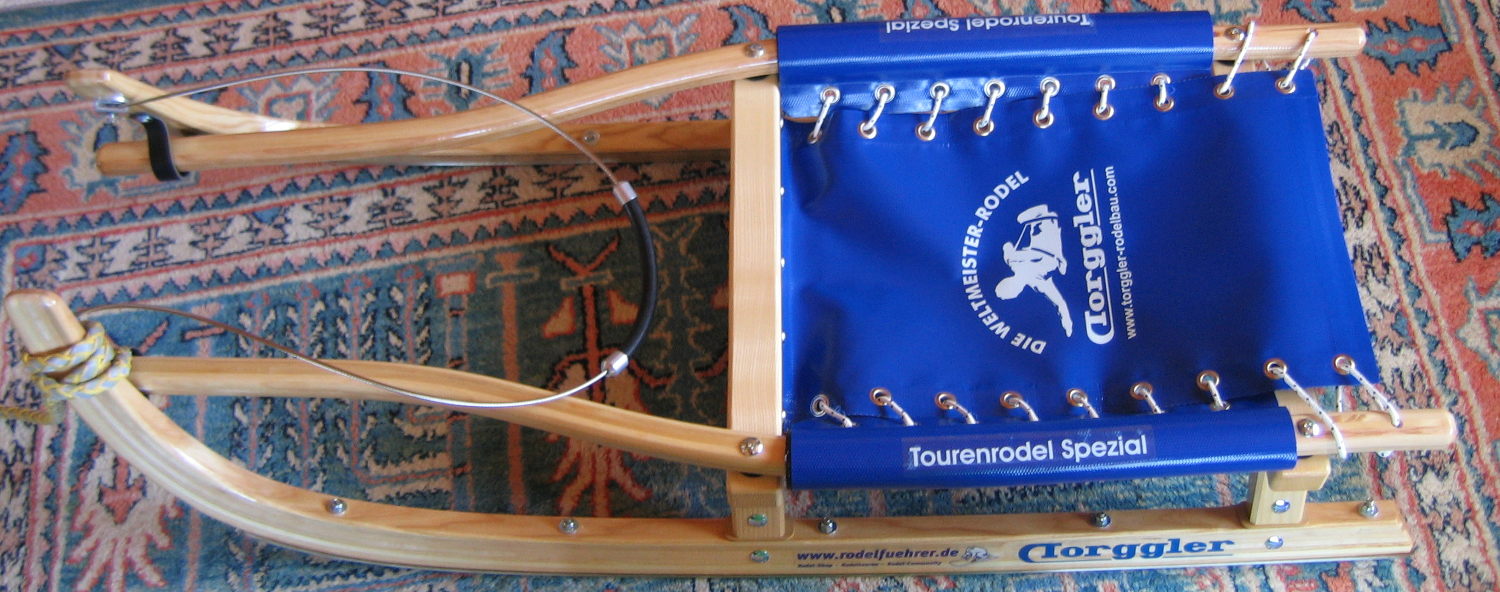
Given that snow is yet a little bit sparse for snowboarding and the weather could be improved on I have made myself a late christmas present: Torggler TS 120 Tourenrodel Spezial It is a rather sporty rodel (Torggler TS 120 Tourenrodel Spezial 2014/15, 9kg weight, with fast (non stainless) "racing rails" and 22 angle of the runners) but not a competition model. I wish I had bought this years ago. It is a lot more comfortable than a classic sled ("Davoser Schlitten"), since one is sitting in instead of on top of the sled somehow like in a hammock. Being able to steer without putting a foot into the snow has the nice side effect that the snow stays on the ground instead of ending up in my face. Obviously it is also faster which is a huge improvement even for recreational riding, since it makes the difference between riding the sledge or pulling it on flattish stretches. Strongly recommended. FWIW I ordered this via rodelfuehrer.de (they started with a guidebook of luge tracks, which translates to "Rodelf hrer"), where I would happily order again.

Chris Lamb: Adjusting a backing track with SoX

Earlier today I came across some classical sheet music that included a "playalong" CD, just like a regular recording except it omits the solo cello part. After a quick listen it became clear there were two problems: SoX, the "Swiss Army knife of sound processing programs", can easily adjust the latter, but to remedy the former it must be provided with a dimensionless "cent" unit ie. 1/100th of a semitone rather than the 442Hz and 440Hz reference frequencies. First, we calculate the cent difference with: https://d1icoid1cnixnp.cloudfront.net/yadt/blog.Image/image/original/24.jpeg Next, we rip the material from the CD:
$ sudo apt-get install ripit flac
[..]
$ ripit --coder 2 --eject --nointeraction
[..]
And finally we adjust the tempo and pitch:
$ apt-get install sox libsox-fmt-mp3
[..]
$ sox 01.flac 01.mp3 pitch -7.85 tempo 1.00 # (Tuning notes)
$ sox 02.flac 02.mp3 pitch -7.85 tempo 0.95 # Too fast!
$ sox 03.flac 03.mp3 pitch -7.85 tempo 1.01 # Close..
$ sox 04.flac 04.mp3 pitch -7.85 tempo 1.03 # Too slow!
(I'm converting to MP3 at the same time it'll be more convenient on my phone.)

17 January 2015

Diego Escalante Urrelo: Link Pack #03

What s that? The third edition of Link Pack of course!
Playing with Power (7 minutes, Vimeo)
A super awesome story about a stop motion animator that turned a Nintendo Power Glove into the perfect animation tool. It s a fun, inspiring video :-). I love the Power Glove, it s so bad. The Power Glove Angry Video Game Nerd Episode 14 (12 minutes, YouTube)
On the topic of the Power Glove, here s the now classic Angry Video Game Nerd video about it. James Rolfe is funny. Ship Your Enemies Glitter
A rising star in the internet business landscape. You pay them $9.99 and they send an envelope full of glitter to your worst enemy. They promise it will jump into everything, as usual. Damn you glitter. A Guide to Practical Contentment
Be happy with what you have, but understand why:
( ) if you start in this place of fixing what s wrong with you, you keep looking for what else is wrong with you, what else you need to improve. So maybe now feel like you don t have enough muscles, or six pack abs, or you think your calves don t look good, or if it s not about your body, you ll find something else. So it s this never-ending cycle for your entire life. You never reach it. If you start with a place of wanting to improve yourself and feeling stuck, even if you re constantly successful and improving, you re always looking for happiness from external sources. You don t find the happiness from within, so you look to other things.
The Comments Section For Every Video Where Someone Does A Pushup
Comments. From YouTube. Enough said.
These are dips. Not pushups. In the entire history of the world, no one has ever successfully performed a pushup. They re all just dips. STOP DRIVING WITH YOUR HIPS. IF YOU RE DOING A PUSHUP CORRECTLY, YOUR HIPS SHOULD CEASE TO EXIST. You could do 100 pushups like this and it wouldn t improve your strength at all. You re just bending your arms.
Self-Taught Chinese Street Photographer Tao Liu Has an Eye for Peculiar Moments
This Chinese photog uses his lunch break to snap interesting street photography. Funny selection by PetaPixel, his Flickr page has even more stuff. Even more in his photoblog.
From https://www.flickr.com/photos/58083590@N05/14613273495/By Liu Tao. https://www.flickr.com/photos/58083590@N05/14613273495/
Enrique Castro-Mendivil s Agua Dulce photo set
Another interesting photo link. This time it s the most popular beach in Lima, with most people coming from low income neighborhoods, it shows how fragmented the city is.
By Enrique Castro-Mendivil. http://www.castromendivilphoto.com/index.php/component/content/article/11-work/69-agua-dulceBy Enrique Castro-Mendivil. http://www.castromendivilphoto.com/index.php/component/content/article/11-work/69-agua-dulce

Also on Link Pack

16 January 2015

EvolvisForge blog: Debian/m68k hacking weekend commencing soonish

As I said, I did not certain events that begun with lea and end with ing prevent me from organising a Debian/m68k hack weekend. Well, that weekend is now. I m too unorganised, and I spent too much time in the last few evenings to organise things so I built up a sleep deficit already and the feedback was slow. (But so are the computers.) And someone I d have loved to come was hurt and can t come. On the plus side, several people I ve long wanted to meet IRL are coming, either already today or tomorrow. I hope we all will have a lot of fun. Legal disclaimer: Debian/m68k is a port of Debian to m68k. It used to be official, but now isn t. It belongs to debian-ports.org, which may run on DSA hardware, but is not acknowledged by Debian at large, unfortunately. Debian is a registered trademark owned by Software in the Public Interest, Inc.

Rapha&#235;l Hertzog: Freexian s fifth report about Debian Long Term Support

Like each month, here comes a report about the work of paid contributors to Debian LTS. Individual reports In December 46 work hours have been equally split among 4 paid contributors (note that Thorsten and Rapha l have actually spent more hours because they took over some hours that Holger did not do over the former months). Their reports are available: Evolution of the situation Compared to last month, the number of paid work hours has almost not increased (we are at 48 hours per month). We still have a couple of new sponsors in the pipe but with the new year they did not complete the process yet. Hopefully next month will see a noticeable increase. As usual, we are looking for more sponsors to reach our our minimal goal of funding the equivalent of a half-time position. Those of you who are struggling to spend money in the last quarter due to budget overrun, now is a good time to see if you want to include Debian LTS support in your 2015 budget! In terms of security updates waiting to be handled, the situation looks similar to last month: the dla-needed.txt file lists 30 packages awaiting an update (3 more than last month), the list of open vulnerabilities in Squeeze shows about 56 affected packages in total. We do not manage to clear the backlog but it s not getting significantly worse either. Thanks to our sponsors

No comment Liked this article? Click here. My blog is Flattr-enabled.

15 January 2015

Noah Meyerhans: Spamassassin updates

If you're running Spamassassin on Debian or Ubuntu, have you enabled automatic rule updates? If not, why not? If possible, you should enable this feature. It should be as simple as setting "CRON=1" in /etc/default/spamassassin. If you choose not to enable this feature, I'd really like to hear why. In particular, I'm thinking about changing the default behavior of the Spamassassin packages such that automatic rule updates are enabled, and I'd like to know if (and why) anybody opposes this. Spamassassin hasn't been providing rules as part of the upstream package for some time. In Debian, we include a snapshot of the ruleset from an essentially arbitrary point in time in our packages. We do this so Spamassassin will work "out of the box" on Debian systems. People who install spamassassin from source must download rules using spamassassin's updates channel. The typical way to use this service is to use cron or something similar to periodically check for rule changes via this service. This allows the anti-spam community to quickly adapt to changes in spammer tactics, and for you to actually benefit from their work by taking advantage of their newer, presumably more accurate, rules. It also allows for quick reaction to issues such as the one described in bug 738872 and 774768. If we do change the default, there are a couple of possible approaches we could take. The simplest would be to simply change the default value of the CRON variable in /etc/default/spamassassin. Perhaps a cleaner approach would be to provide a "spamassassin-autoupdates" package that would simply provide the cron job and a simple wrapper program to perform the updates. The Spamassassin package would then specify a Recommends relationship with this package, thus providing the default enabled behavior while still providing a clear and simple mechanism to disable it.

14 January 2015

Ritesh Raj Sarraf: apt-offline 1.6

I am pleased to announce the release of apt-offline - 1.6 This release is mostly a bug fix release, which every user should upgrade to. It also fixes a major bug in the way we limited the validation of GPG integrity, for the APT repository lists (Thank you Paul Wise). Also, In the last release, we migrated from custom magic library to the python shipped ctype python-magic library. That allowed some bugs to creep, and hopefully now, all those bugs should be fixed. A big thanks to Roland Summers for his bug reports and continuous feedback. What is apt-offline ?
Description-en: offline APT package manager
 apt-offline is an Offline APT Package Manager.
 .
 apt-offline can fully update and upgrade an APT based distribution without
 connecting to the network, all of it transparent to APT.
 .
 apt-offline can be used to generate a signature on a machine (with no network).
 This signature contains all download information required for the APT database
 system. This signature file can be used on another machine connected to the
 internet (which need not be a Debian box and can even be running windows) to
 download the updates.
 The downloaded data will contain all updates in a format understood by APT and
 this data can be used by apt-offline to update the non-networked machine.
 .
 apt-offline can also fetch bug reports and make them available offline.
Debian changelog for the 1.6 release.
apt-offline (1.6) experimental; urgency=medium
  * [2a4a7f1] Don't abuse exception handlers.
    Thanks to R-Sommer
  * [afc51b3] MIME type for a deb package.
    Thanks to R-Sommer
  * [ec2d539] Also include debian-archive-keyring.
    Thanks to Hans-Christoph Steiner (Closes: #748082)
  * [dc602ac] Update MIME type for .gpg
  * [c4f9b71] Cycle through possible apt keyrings.
    Thanks to Paul Wise (Closes: #747163)
  * [de0fe4d] Clarify manpage for install
  * [b5e1075] Update manpage with some doc about argparse positional
    values to arguments
  * [c22d64d] Port is data type integer.
    Thanks to Roland Sommer
  * [67edebe] autodetect release name
  * [5803141] Disable python-apt support
 -- Ritesh Raj Sarraf <rrs@debian.org>  Wed, 14 Jan 2015 15:34:45 +0530
[1] https://alioth.debian.org/projects/apt-offline/

Categories:

Keywords:

12 January 2015

Petter Reinholdtsen: Norwegian Bokm l subtitles for the FSF video User Liberation

A few days ago, the Free Software Foundation announced a new video explaining Free software in simple terms. The video named User Liberation is 3 minutes long, and I recommend showing it to everyone you know as a way to explain what Free Software is all about. Unfortunately several of the people I know do not understand English and Spanish, so it did not make sense to show it to them. But today I was told that English subtitles were available and set out to provide Norwegian Bokm l subtitles based on these. The result has been sent to FSF and made available in a git repository provided by Github. Please let me know if you find errors or have improvements to the subtitles.

Ritesh Raj Sarraf: What firmware

Dear Lazy Web, I have an HP Envy J104TS laptop. Recently I saw an interesting message in the kernel log. [99360.969652] [Firmware Bug]: battery: (dis)charge rate invalid. Does anybody know what firmware is it referring to here ? I don't think the current set of firmwares shiped by linux are involved in battery related information. Is it the BIOS ?
[95474.561491] IPv6: ADDRCONF(NETDEV_UP): wlan0: link is not ready
[95474.803578] r8169 0000:0f:00.0 eth0: link down
[95474.803627] IPv6: ADDRCONF(NETDEV_UP): eth0: link is not ready
[95474.933797] IPv6: ADDRCONF(NETDEV_UP): wlan0: link is not ready
[95477.111599] wlan0: authenticate with 00:03:7f:fe:00:02
[95477.127389] wlan0: send auth to 00:03:7f:fe:00:02 (try 1/3)
[95477.129315] wlan0: authenticated
[95477.131352] wlan0: associate with 00:03:7f:fe:00:02 (try 1/3)
[95477.133605] wlan0: RX AssocResp from 00:03:7f:fe:00:02 (capab=0x411 status=0 aid=3)
[95477.133686] wlan0: associated
[95477.133703] IPv6: ADDRCONF(NETDEV_CHANGE): wlan0: link becomes ready
[99125.123138] device vethNLAABF entered promiscuous mode
[99125.123377] IPv6: ADDRCONF(NETDEV_UP): vethNLAABF: link is not ready
[99125.188568] IPv6: ADDRCONF(NETDEV_CHANGE): vethNLAABF: link becomes ready
[99125.188615] lxcbr0: port 1(vethNLAABF) entered forwarding state
[99125.188631] lxcbr0: port 1(vethNLAABF) entered forwarding state
[99140.239301] lxcbr0: port 1(vethNLAABF) entered forwarding state
[99360.969652] [Firmware Bug]: battery: (dis)charge rate invalid.
[99361.729291] NMI watchdog: enabled on all CPUs, permanently consumes one hw-PMU counter.
[99361.864205] EXT4-fs (dm-2): re-mounted. Opts: errors=remount-ro,data=writeback,commit=0
[99361.905210] EXT4-fs (sda6): re-mounted. Opts: data=ordered,commit=0
[102236.267648] lxcbr0: port 1(vethNLAABF) entered disabled state
[102236.556452] lxcbr0: port 1(vethNLAABF) entered disabled state
[102236.557476] device vethNLAABF left promiscuous mode
[102236.557483] lxcbr0: port 1(vethNLAABF) entered disabled state

Categories:

Keywords:

Chris Lamb: Giant's Causeway puzzle

https://d1icoid1cnixnp.cloudfront.net/yadt/blog.Image/image/original/23.jpeg Over Christmas I found the above puzzle at my parent's house. I don't know if it has a name but it seemed apt to name it after The Giant's Causeway. The idea is that you swap and/or rotate the outer tiles until the colours at the edges match. The center tile is fixed, or at least I assume it is as the wooden edges are deliberately less rounded. Of course, solving it manually would be boring so here's a dumb brute force solution. I actually admire how inefficient and stupid it is...
import itertools
class Tile(list):
    def __getitem__(self, x):
        return super(Tile, self).__getitem__(x % len(self))
    def rotate(self, x):
        return Tile(self[x:] + self[:x])
COLOURS = ('YELLOW', 'WHITE', 'BLACK', 'RED', 'GREEN', 'BLUE')
YELLOW, WHITE, BLACK, RED, GREEN, BLUE = range(len(COLOURS))
TILES = (
    Tile((WHITE, YELLOW, RED, BLUE, BLACK, GREEN)),
    Tile((RED, BLUE, BLACK, YELLOW, GREEN, WHITE)),
    Tile((WHITE, BLACK, YELLOW, GREEN, BLUE, RED)),
    Tile((WHITE, BLUE, GREEN, YELLOW, BLACK, RED)),
    Tile((GREEN, BLUE, BLACK, YELLOW, RED, WHITE)),
    Tile((RED, YELLOW, GREEN, BLACK, BLUE, WHITE)),
)
CENTER = Tile((WHITE, BLACK, RED, GREEN, BLUE, YELLOW))
def pairwise(it):
    a, b = itertools.tee(it)
    next(b, None)
    return itertools.izip(a, b)
def validate(xs):
    for idx, x in enumerate(xs):
        if x[idx + 3] != CENTER[idx]:
            raise ValueError("Tile does not match center")
    for idx, (a, b) in enumerate(pairwise(xs)):
        if a[idx + 2] != b[idx + 5]:
            raise ValueError("Tile does not match previous anticlockwise tile")
    return xs
def find_solution():
    # For all possible tile permutations..
    for xs in itertools.permutations(TILES):
        # ... try all possible rotations
        for ys in itertools.product(range(len(COLOURS)), repeat=len(COLOURS)):
            try:
                return validate([x.rotate(y) for x, y in zip(xs, ys)])
            except ValueError:
                pass
    raise ValueError("Could not find a solution.")
for x in find_solution():
    print ', '.join(COLOURS[y] for y in x)
This prints (after 5 minutes!):
$ python giants.py
GREEN, BLUE, RED, WHITE, BLACK, YELLOW
WHITE, BLUE, GREEN, YELLOW, BLACK, RED
YELLOW, GREEN, BLACK, BLUE, WHITE, RED
GREEN, WHITE, YELLOW, RED, BLUE, BLACK
RED, BLUE, BLACK, YELLOW, GREEN, WHITE
BLUE, BLACK, YELLOW, RED, WHITE, GREEN
python giants.py  269.08s user 0.02s system 99% cpu 4:29.36 total
UPDATE: Seems like this puzzle is called "Circus Seven". Now to dust off my Prolog...

11 January 2015

Diego Escalante Urrelo: Practical contentment and art

I was browsing Eric Kim s street photography blog, when I stumbled across one article about the well-known Gear Acquisition Syndrome that plagues enthusiast photographers. Gear Acquisition Syndrome is the obsession that enthusiasts tend to have for new gear, new gadgets, new stuff, as an excuse for not developing their skills or taking action. You can recognize it by phrases like: If only I had that new gear, I would be better at what I do I can t do that project until I buy this gear My super expensive camera is not good for that, I need an even more expensive one (etc). The article, How to Be Grateful For What You Have is a funny and well argued look on why photographers, or artists in general, can get lost in what they don t have, instead of what they have. The article is a recommended read in itself and delivers the point whether you are into photography or not. That said, inside the article I found three nice links worth noting: The Tiny Collective
A group of photographers that use only their phones as their camera. It s inspiring to see a specific, curated, selection of images made with phones. It definitely makes you wonder why would you need anything but a phone to make great images (answer: phones work great, even old ones). A Guide to Practical Contentment
One of the most simple and effective messages about contentment that I have read. It s not about not wanting things or settling for whatever . It s all about taking a step back and realizing that life is not about absolutes. If you are not a billionaire, that doesn t mean you have failed in life. Perhaps you are just a millionaire, and that s fine :).
( ) if you start in this place of fixing what s wrong with you, you keep looking for what else is wrong with you, what else you need to improve. So maybe now feel like you don t have enough muscles, or six pack abs, or you think your calves don t look good, or if it s not about your body, you ll find something else. So it s this never-ending cycle for your entire life. You never reach it. If you start with a place of wanting to improve yourself and feeling stuck, even if you re constantly successful and improving, you re always looking for happiness from external sources. You don t find the happiness from within, so you look to other things. If you re externally looking for happiness, it s easy to get too into food, or shopping, or partying, or overwork, to try to be happy. If instead, you can find contentment within and not need external sources of happiness, then you ll have a reliable source of happiness.
So, instead of looking at sources of external happiness, why don t you look into sources of internal happiness? It s one of the hardest things to learn how to do, but I m personally slowly getting there. It s life changing. Bonus points: quotes on simplification and minimalism
For extra credit, here are some interesting quotes on the above topics, note that as every internet quote page it might be filled with false quotes. I happen to like the one attributed to Donald Horban, who apparently doesn t exist outside quote pages in the internet. Maybe that s the biggest minimalism? Not existing?
We don t need to increase our goods nearly as much as we need to scale down our wants. Not wanting something is as good as possessing it.
Anyway, take these with a grain of salt, and just read them as interesting phrases. Just take it easy :).

Next.

Previous.