Russ Allbery: Review: Artemis Fowl
| Series: | Artemis Fowl #1 |
| Publisher: | Disney-Hyperion |
| Copyright: | 2001 |
| ISBN: | 1-4231-2452-9 |
| Format: | Kindle |
| Pages: | 281 |
| Series: | Artemis Fowl #1 |
| Publisher: | Disney-Hyperion |
| Copyright: | 2001 |
| ISBN: | 1-4231-2452-9 |
| Format: | Kindle |
| Pages: | 281 |
Lintian is a static analysis tool for Debian packages, reporting on various errors, omissions and general quality-assurance issues to maintainers.
I've previously written about my exploits with Lintian as well as authoring a short tutorial on how to write your own Lintian check.
Anyway, I recently uploaded version 2.5.53 about two months since previous release. The biggest changes you may notice are supporting the latest version of the Debian Policy as well the addition of checks to encourage the migration to Python 3.
Thanks to all who contributed patches, code review and bug reports to this release. The full changelog is as follows:
lintian (2.5.53) unstable; urgency=medium
The "we are all Perl developers now" release.
* Summary of tag changes:
+ Added:
- alternatively-build-depends-on-python-sphinx-and-python3-sphinx
- build-depends-on-python-sphinx-only
- dependency-on-python-version-marked-for-end-of-life
- maintainer-script-interpreter
- missing-call-to-dpkg-maintscript-helper
- node-package-install-in-nodejs-rootdir
- override-file-in-wrong-package
- package-installs-java-bytecode
- python-foo-but-no-python3-foo
- script-needs-depends-on-sensible-utils
- script-uses-deprecated-nodejs-location
- transitional-package-should-be-oldlibs-optional
- unnecessary-testsuite-autopkgtest-header
- vcs-browser-links-to-empty-view
+ Removed:
- debug-package-should-be-priority-extra
- missing-classpath
- transitional-package-should-be-oldlibs-extra
* checks/apache2.pm:
+ [CL] Fix an apache2-unparsable-dependency false positive by allowing
periods (".") in dependency names. (Closes: #873701)
* checks/binaries.pm:
+ [CL] Apply patches from Guillem Jover & Boud Roukema to improve the
description of the binary-file-built-without-LFS-support tag.
(Closes: #874078)
* checks/changes. pm,desc :
+ [CL] Ignore DFSG-repacked packages when checking for upstream
source tarball signatures as they will never match by definition.
(Closes: #871957)
+ [CL] Downgrade severity of orig-tarball-missing-upstream-signature
from "E:" to "W:" as many common tools do not make including the
signatures easy enough right now. (Closes: #870722, #870069)
+ [CL] Expand the explanation of the
orig-tarball-missing-upstream-signature tag to include the location
of where dpkg-source will look. Thanks to Theodore Ts'o for the
suggestion.
* checks/copyright-file.pm:
+ [CL] Address a number of issues in copyright-year-in-future:
- Prevent false positives in port numbers, email addresses, ISO
standard numbers and matching specific and general street
addresses. (Closes: #869788)
- Match all violating years in a line, not just the first (eg.
"2000-2107").
- Ignore meta copyright statements such as "Original Author". Thanks
to Thorsten Alteholz for the bug report. (Closes: #873323)
- Expand testsuite.
* checks/cruft. pm,desc :
+ [CL] Downgrade severity of file-contains-fixme-placeholder
tag from "important" (ie. "E:") to "wishlist" (ie. "I:").
Thanks to Gregor Herrmann for the suggestion.
+ [CL] Apply patch from Alex Muntada (alexm) to use "substr" instead
of "substring" in mentions-deprecated-usr-lib-perl5-directory's
description. (Closes: #871767)
+ [CL] Don't check copyright_hints file for FIXME placeholders.
(Closes: #872843)
+ [CL] Don't match quoted "FIXME" variants as they are almost always
deliberate. Thanks to Adrian Bunk for the report. (Closes: #870199)
+ [CL] Avoid false positives in missing source checks for "CSS Browser
Selector". (Closes: #874381)
* checks/debhelper.pm:
+ [CL] Prevent a false positive of
missing-build-dependency-for-dh_-command that can be exposed by
following the advice for the recently added
useless-autoreconf-build-depends tag. (Closes: #869541)
* checks/debian-readme. pm,desc :
+ [CL] Ensure readme-debian-contains-debmake-template also checks
for templates "Automatically generated by debmake".
* checks/description. desc,pm :
+ [CL] Clarify explanation of description-starts-with-leading-spaces
tag. Thanks to Taylor Kline for the report
and patch. (Closes: #849622)
+ [NT] Skip capitalization-error-in-description-synopsis for
auto-generated packages (such as dbgsym packages).
* checks/fields. desc,pm :
+ [CL] Ensure that python3-foo packages have "Section: python", not
just python2-foo. (Closes: #870272)
+ [RG] Do no longer require debug packages to be priority extra.
+ [BR] Use Lintian::Data for name/section mapping
+ [CL] Check for packages including "?rev=0&sc=0" in Vcs-Browser.
(Closes: #681713)
+ [NT] Transitional packages should now be "oldlibs/optional" rather
than "oldlibs/extra". The related tag has been renamed accordingly.
* checks/filename-length.pm:
+ [NT] Skip the check on auto-generated binary packages (such as
dbgsym packages).
* checks/files. pm,desc :
+ [BR] Avoid privacy-breach-generic false positives for legal.xml.
+ [BR] Detect install of node package under /usr/lib/nodejs/[^/]*$
+ [CL] Check for packages shipping compiled Java class files. Thanks
Carn Draug . (Closes: #873211)
+ [BR] Privacy breach is no longer experimental.
* checks/init.d.desc:
+ [RG] Do not recommend a versioned dependency on lsb-base in
init.d-script-needs-depends-on-lsb-base. (Closes: #847144)
* checks/java.pm:
+ [CL] Additionally consider .cljc files as code to avoid false-
positive codeless-jar warnings. (Closes: #870649)
+ [CL] Drop problematic missing-classpath check. (Closes: #857123)
* checks/menu-format.desc:
+ [CL] Prevent false positives in desktop-entry-lacks-keywords-entry
for "Link" and "Directory" .desktop files. (Closes: #873702)
* checks/python. pm,desc :
+ [CL] Split out Python checks from "scripts" check to a new, source
check of type "source".
+ [CL] Check for python-foo without corresponding python3-foo packages
to assist in Python 2.x deprecation. (Closes: #870681)
+ [CL] Check for packages that Build-Depend on python-sphinx only.
(Closes: #870730)
+ [CL] Check for packages that alternatively Build-Depend on the
Python 2 and Python 3 versions of Sphinx. (Closes: #870758)
+ [CL] Check for binary packages that depend on Python 2.x.
(Closes: #870822)
* checks/scripts.pm:
+ [CL] Correct false positives in
unconditional-use-of-dpkg-statoverride by detecting "if !" as a
valid shell prefix. (Closes: #869587)
+ [CL] Check for missing calls to dpkg-maintscript-helper(1) in
maintainer scripts. (Closes: #872042)
+ [CL] Check for packages using sensible-utils without declaring a
dependency after its split from debianutils. (Closes: #872611)
+ [CL] Warn about scripts using "nodejs" as an interpreter now that
nodejs provides /usr/bin/node. (Closes: #873096)
+ [BR] Add a statistic tag giving interpreter.
* checks/testsuite. desc,pm :
+ [CL] Remove recommendations to add a "Testsuite: autopkgtest" field
to debian/control as it is added when needed by dpkg-source(1)
since dpkg 1.17.1. (Closes: #865531)
+ [CL] Warn if we see an unnecessary "Testsuite: autopkgtest" header
in debian/control.
+ [NT] Recognise "autopkgtest-pkg-go" as a valid test suite.
+ [CL] Recognise "autopkgtest-pkg-elpa" as a valid test suite.
(Closes: #873458)
+ [CL] Recognise "autopkgtest-pkg-octave" as a valid test suite.
(Closes: #875985)
+ [CL] Update the description of unknown-testsuite to reflect that
"autopkgtest" is not the only valid value; the referenced URL
is out-of-date (filed as #876008). (Closes: #876003)
* data/binaries/embedded-libs:
+ [RG] Detect embedded copies of heimdal, libgxps, libquicktime,
libsass, libytnef, and taglib.
+ [RG] Use an additional string to detect embedded copies of
openjpeg2. (Closes: #762956)
* data/fields/name_section_mappings:
+ [BR] node- package section is javascript.
+ [CL] Apply patch from Guillem Jover to add more section mappings.
(Closes: #874121)
* data/fields/obsolete-packages:
+ [MR] Add dh-systemd. (Closes: #872076)
* data/fields/perl-provides:
+ [CL] Refresh perl provides.
* data/fields/virtual-packages:
+ [CL] Update data file from archive. This fixes a false positive for
"bacula-director". (Closes: #835120)
* data/files/obsolete-paths:
+ [CL] Add note to /etc/bash_completion.d entry regarding stricter
filename requirements. (Closes: #814599)
* data/files/privacy-breaker-websites:
+ [BR] Detect custom donation logos like apache.
+ [BR] Detect generic counter website.
* data/standards-version/release-dates:
+ [CL] Add 4.0.1 and 4.1.0 as known standards versions.
(Closes: #875509)
* debian/control:
+ [CL] Mention Debian Policy v4.1.0 in the description.
+ [CL] Add myself to Uploaders.
+ [CL] Drop unnecessary "Testsuite: autopkgtest"; this is implied from
debian/tests/control existing.
* commands/info.pm:
+ [CL] Add a --list-tags option to print all tags Lintian knows about.
Thanks to Rajendra Gokhale for the suggestion. (Closes: #779675)
* commands/lintian.pm:
+ [CL] Apply patch from Maia Everett to avoid British spelling when
using en_US locale. (Closes: #868897)
* lib/Lintian/Check.pm:
+ [CL] Stop emitting maintainer,uploader -address-causes-mail-loops
for @packages.debian.org addresses. (Closes: #871575)
* lib/Lintian/Collect/Binary.pm:
+ [NT] Introduce an "auto-generated" argument for "is_pkg_class".
* lib/Lintian/Data.pm:
+ [CL] Modify Lintian::Data's "all" to always return keys in insertion
order, dropping dependency on libtie-ixhash-perl.
* helpers/coll/objdump-info-helper:
+ [CL] Apply patch from Steve Langasek to accommodate binutils 2.29
outputting symbols in a different format on ppc64el.
(Closes: #869750)
* t/tests/fields-perl-provides/tags:
+ [CL] Update expected output to match new Perl provides.
* t/tests/files-privacybreach/*:
+ [CL] Add explicit test for packages including external fonts via
the Google Font API. Thanks to Ian Jackson for the report.
(Closes: #873434)
+ [CL] Add explicit test for packages including external fonts via
the Typekit API via <script/> HTML tags.
* t/tests/*/desc:
+ [CL] Add missing entries in "Test-For" fields to make
development/testing workflow less error-prone.
* private/generate-tag-summary:
+ [CL] git-describe(1) will usually emit 7 hexadecimal digits as the
abbreviated object name, However, as this can be user-dependent,
pass --abbrev=0 to ensure it does not vary between systems. This
also means we do not need to strip it ourselves.
* private/refresh-*:
+ [CL] Use deb.debian.org as the default mirror.
+ [CL] Update locations of Contents-<arch> files; they are now
namespaced by distribution (eg. "main").
-- Chris Lamb <lamby@debian.org> Wed, 20 Sep 2017 09:25:06 +0100
Here s my weekly report for week 38 of 2017. This week has not been a great
week as I saw my primary development machine die in a spectacular reboot
loop. Thanks to the wonderful
community around Debian and free software (that if you re reading this, you re
probably part of), I should be back up to speed soon. A replacement workstation
is currently moving towards me and I ve received a number of smaller donations
that will go towards video converters and upgrades to get me back to full
productivity.
cd /var/spool/mail mkdir -p /mailstore/example.com for U in * ; do ~/mb2md.pl -s $(pwd)/$U -d /mailstore/example.com/$U doneTo convert the inboxes shell code like the above is needed. If the users don t have IMAP folders (EG they are just POP users or use local Unix MUAs) then that s all you need to do.
cd /home
for DIR in */mail ; do
U=$(echo $DIR cut -f1 -d/)
cd /home/$DIR
for FOLDER in * ; do
~/mb2md.pl -s $(pwd)/$FOLDER -d /mailstore/example.com/$U/.$FOLDER
done
cp .subscriptions /mailstore/example.com/$U/ subscriptions
done
Some shell code like the above will convert the IMAP folders to Maildir format. The end result is that the users will have to download all the mail again as their MUA will think that every message had been deleted and replaced. But as all servers with significant amounts of mail or important mail were probably converted to Maildir a decade ago this shouldn t be a problem.
__init__.py and remove obsolete earlier code.--variations flag to support parameters to
certain variations like user_group, and document examples in README.--vary flag for the new syntax and deprecate --dont-vary.--extra-build flag.artifact_pattern to avoid arbitrary shell execution.Many voices arise now and then against risks linked to the Github use by Free Software projects. Yet the infatuation for the collaborative forge of the Octocat Californian start-ups doesn t seem to fade away.

These recent years, Github and its services take an important role in software engineering as they are seen as easy to use, efficient for a daily workload with interesting functions in enterprise collaborative workflow or amid a Free Software project. What are the arguments against using its services and are they valid? We will list them first, then we ll examine their validity.
The Github application belongs to a single entity, Github Inc, a US company which manage it alone. So, a unique company under US legislation manages the access to most of Free Software application code sources, which may be a problem with groups using it when a code source is no longer available, for political or technical reason.

This centralization leads to another trouble: as it obtained critical mass, it becomes more and more difficult not having a Github account. People who don t use Github, by choice or not, are becoming a silent minority. It is now fashionable to use Github, and not doing so is seen as out of date . The same phenomenon is a classic, and even the norm, for proprietary social networks (Facebook, Twitter, Instagram).
When you interact with Github, you are using a proprietary software, with no access to its source code and which may not work the way you think it is. It is a problem at different levels. First, ideologically, but foremost in practice. In the Github case, we send them code we can control outside of their interface. We also send them personal information (profile, Github interactions). And mostly, Github forces any project which goes through the US platform to use a crucial proprietary tools: its bug tracking system.

Windows, the epitome of proprietary software, even if others took the same path
Working with Github interface seems easy and intuitive to most. Lots of companies now use it as a source repository, and many developers leaving a company find the same Github working environment in the next one. This pervasive presence of Github in free software development environment is a part of the uniformization of said developers working space.

Uniforms always bring Army in my mind, here the Clone army
As said above, nowadays, Github is the main repository of Free Software source code. As such it is a favorite target for cyberattacks. DDOS hit it in March and August 2015. On December 15, 2015, an outage led to the inaccessibility of 5% of the repositories. The same occurred on November 15. And these are only the incident reported by Github itself. One can imagine that the mean outage rate of the platform is underestimated.
Today many dependency maintenance tools, as npm for javascript, Bundler for Ruby or even pip for Python can access an application source code directly from Github. Free Software projects getting more and more linked and codependents, if one component is down, all the developing process stop.
One of the best examples is the npmgate. Any company could legally demand that Github take down some source code from its repository, which could create a chain reaction and blocking the development of many Free Software projects, as suffered the Node.js community from the decisions of Npm, Inc, the company managing npm.
Github didn t appear out of the blue. In his time, its predecessor, SourceForge, was also extremely popular.
Heavily centralized, based on strong interaction with the community, SourceForge is now seen as an aging SAAS (Software As A Service) and sees most of its customers fleeing to Github. Which creates lots of hurdles for those who stayed. The Gimp project suffered from spams and terrible advertising, which led to the departure of the VLC project, then from installers corrupted with adwares instead of the official Gimp installer for Windows. And finally, the Project Gimp s SourceForge account was hacked by SourceForge team itself!
These are very recent examples of what can do a commercial entity when it is under its stakeholders pressure. It is vital to really understand what it means to trust them with data and exchange centralization, where it could have tremendous repercussion on the day-to-day life and the habits of the Free Software and open source community.
Mostly based on ideology, this point deals with the definition every member of the community gives to Free Software and open source. Mostly about one thing: is it viral or not? Or GPL vs MIT/BSD.

Those on the side of the viral Free Software will have trouble to use a proprietary software as this last one shouldn t even exist. It must be assimilated, to quote Star Trek, as it is a connected black box, endangering privacy, corrupting for profit our uses and restrain our freedom to use as we re pleased what we own, etc.

Those on the side of complete freedom have no qualms using proprietary software as their very existence is a consequence of freedom without restriction. They even agree that code they developed may be a part of proprietary software, which is quite a common occurrence. This part of the Free Software community has no qualm using Github, which is well within their ideology parameters. Just take a look at the Janson amphitheater during Fosdem and check how many Apple laptops running on macOS are around.

Even without ideological consideration, and just focusing on Github infrastructure, the bug tracking system is a major problem by itself.
Bug report builds the memory of Free Software projects. It is the entrance point for new contributors, the place to find bug reporting, requests for new functions, etc. The project history can t be limited only to the code. It s very common to find bug reports when you copy and paste an error message in a search engine. Not their historical importance is precious for the project itself, but also for its present and future users.
Github gives the ability to extract bug reports through its API. What would happen if Github is down or if the platform doesn t support this feature anymore? In my opinion, not that many projects ever thought of this outcome. How could they move all the data generated by Github into a new bug tracking system? One old example now is Astrid, a TODO list bought by Yahoo a few years ago. Very popular, it grew fast until it was closed overnight, with only a few weeks for its users to extract their data. It was only a to-do list. The same situation with Github would be tremendously difficult to manage for several projects if they even have the ability to deal with it. Code would still be available and could still live somewhere else, but the project memory would be lost. A project like Debian has today more than 800,000 bug reports, which are a data treasure trove about problems solved, function requests and where the development stand on each. The developers of the Cpython project have anticipated the problem and decided not to use Github bug tracking systems.

Issues, the Github proprietary bug tracking system
Another thing we could lose if Github suddenly disappear: all the work currently done regarding the push requests (aka PRs). This Github function gives the ability to clone one project s Github repository, to modify it to fit your needs, then to offer your own modification to the original repository. The original repository s owner will then review said modification, and if he or she agrees with them will fuse them into the original repository. As such, it s one of the main advantages of Github, since it can be done easily through its graphic interface.
However reviewing all the PRs may be quite long, and most of the successful projects have several ongoing PRs. And this PRs and/or the proprietary bug tracking system are commonly used as a platform for comment and discussion between developers.
Code itself is not lost if Github is down (except one specific situation as seen below), but the peer review works materialized in the PRs and the bug tracking system is lost. Let s remember than the PR mechanism let you clone and modify projects and then generate PRs directly from its proprietary web interface without downloading a single code line on your computer. In this particular case, if Github is down, all the code and the work in progress is lost. Some also use Github as a bookmark place. They follow their favorite projects activity through the Watch function. This technological watch style of data collection would also be lost if Github is down.

Debian, one of the main Free Software projects with at least a thousand official contributors
The Free Software community is walking a thigh rope between normalization needed for an easier interoperability between its products and an attraction for novelty led by a strong need for differentiation from what is already there.
Github popularized the use of Git, a great tool now used through various sectors far away from its original programming field. Step by step, Git is now so prominent it s almost impossible to even think to another source control manager, even if awesome alternate solutions, unfortunately not as popular, exist as Mercurial.

A new Free Software project is now a Git repository on Github with README.md added as a quick description. All the other solutions are ostracized? How? None or very few potential contributors would notice said projects. It seems very difficult now to encourage potential contributors into learning a new source control manager AND a new forge for every project they want to contribute. Which was a basic requirement a few years ago. It s quite sad because Github, offering an original experience to its users, cut them out of a whole possibility realm. Maybe Github is one of the best web versioning control systems. But being the main one doesn t let room for a new competitor to grow. And it let Github initiate development newcomers into a narrow function set, totally unrelated to the strength of the Git tool itself.
Fight against centralization is a main part of the Free Software ideology as centralization strengthens the power of those who manage it and who through it control those who are managed by it. Uniformization allergies born against main software companies and their wishes to impose a closed commercial software world was for a long time the main fuel for innovation thirst and intelligent alternative development. As we said above, part of the Free Software community was built as a reaction to proprietary software and their threat. The other part, without hoping for their disappearance, still chose a development model opposite to proprietary software, at least in the beginning, as now there s more and more bridges between the two.
The Github effect is a morbid one because of its consequences: at least centralization, uniformization, proprietary software usage as their bug tracking system. But some years ago the Dear Github buzz showed one more side effect, one I ve never thought about: laziness. For those who don t know what it is about, this letter is a complaint from several spokespersons from several Free Software projects which demand to Github team to finally implement, after years of polite asking, new functions. Since when Free Software project facing a roadblock request for clemency and don t build themselves the path they need? When Torvalds was involved in the Bitkeeper problem and the Linux kernel development team couldn t use anymore their revision control software, he developed Git. The mere fact of not being able to use one tool or functions lacking is the main motivation to seek alternative solutions and, as such, of the Free Software movement. Every Free Software community member able to code should have this reflex. You don t like what Github offers? Switch to Gitlab. You don t like it Gitlab? Improve it or make your own solution.

The Gitlab logo
Let s be crystal clear. I ve never said that every Free Software developers blocked should code his or her own alternative. We all have our own priorities, and some of us even like their beauty sleep, including me. But, to see that this open letter to Github has 1340 names attached to it, among them some spokespersons for major Free Software project showed me that need, willpower and strength to code a replacement are here. Maybe said replacement will be born from this letter, it would be the best outcome of this buzz.
In the end, Github usage is just another example of Internet usage massification. As Internet users are bound to go to massively centralized social network as Facebook or Twitter, developers are following the same path with Github. Even if a large fraction of developers realize the threat linked this centralized and proprietary organization, the whole community is following this centralization and uniformization trend. Github service is useful, free or with a reasonable price (depending on the functions you need) easy to use and up most of the time. Why would we try something else? Maybe because others are using us while we are savoring the convenience? The Free Software community seems to be quite sleepy to me.

The lion enjoying the hearth warm
Here s a summary of the bugs against the Debian Policy Manual. Please
consider getting involved, whether or not you re an existing
contributor.
Consensus has been reached and help is needed to write a patch
#172436 BROWSER and sensible-browser standardization
#273093 document interactions of multiple clashing package diversions
#299007 Transitioning perms of /usr/local
#314808 Web applications should use /usr/share/package, not /usr/share/doc/
#425523 Describe error unwind when unpacking a package fails
#452393 Clarify difference between required and important priorities
#476810 Please clarify 12.5, Copyright information
#484673 file permissions for files potentially including credential informa
#491318 init scripts should support start/stop/restart/force-reload - why
#556015 Clarify requirements for linked doc directories
#568313 Suggestion: forbid the use of dpkg-statoverride when uid and gid ar
#578597 Recommend usage of dpkg-buildflags to initialize CFLAGS and al.
#582109 document triggers where appropriate
#587991 perl-policy: /etc/perl missing from Module Path
#592610 Clarify when Conflicts + Replaces et al are appropriate
#613046 please update example in 4.9.1 (debian/rules and DEB_BUILD_OPTIONS)
#614807 Please document autobuilder-imposed build-dependency alternative re
#628515 recommending verbose build logs
#664257 document Architecture name definitions
#682347 mark editor virtual package name as obsolete
#685506 copyright-format: new Files-Excluded field
#685746 debian-policy Consider clarifying the use of recommends
#688251 Built-Using description too aggressive
#749826 [multiarch] please document the use of Multi-Arch field in debian/c
#757760 please document build profiles
#759316 Document the use of /etc/default for cron jobs
#761219 document versioned Provides
#767839 Linking documentation of arch:any package to arch:all
#770440 policy should mention systemd timers
#773557 Avoid unsafe RPATH/RUNPATH
#780725 PATH used for building is not specified
#793499 The Installed-Size algorithm is out-of-date
#810381 Update wording of 5.6.26 VCS-* fields to recommend encryption
#823256 Update maintscript arguments with dpkg >= 1.18.5
#833401 virtual packages: dbus-session-bus, dbus-default-session-bus
#835451 Building as root should be discouraged
#838777 Policy 11.8.4 for x-window-manager needs update for freedesktop menus
#845715 Please document that packages are not allowed to write outside thei
#853779 Clarify requirements about update-rc.d and invoke-rc.d usage in mai
#874019 Note that the -e argument to x-terminal-emulator works like
#874206 allow a trailing comma in package relationship fields
Wording proposed, awaiting review from anyone and/or seconds by DDs
#515856 remove get-orig-source
#542288 Versions for native packages, NMU s, and binary only uploads
#582109 document triggers where appropriate
#610083 Remove requirement to document upstream source location in debian/c
#645696 [copyright-format] clearer definitions and more consistent License:
#649530 [copyright-format] clearer definitions and more consistent License:
#662998 stripping static libraries
#682347 mark editor virtual package name as obsolete
#683222 say explicitly that debian/changelog is required in source packages
#688251 Built-Using description too aggressive
#737796 copyright-format: support Files: paragraph with both abbreviated na
#756835 Extension of the syntax of the Packages-List field.
#786470 [copyright-format] Add an optional License-Grant field
#810381 Update wording of 5.6.26 VCS-* fields to recommend encryption
#835451 Building as root should be discouraged
#845255 Include best practices for packaging database applications
#850729 Documenting special version number suffixes
#874090 Clarify wording of some passages
#874095 copyright-format: Use the synopsis term established in the de
Merged for the next release
#661928 recipe for determining shlib package name
#679751 please clarify package account and home directory location in policy
#683222 say explicitly that debian/changelog is required in source packages
#870915 [5.6.30] Testsuite: There are much more defined values
#872893 Chapters, sections, appendices and numbering
#872895 Include multi-page HTML in package
#872896 An html.tar.gz has leaked into the .deb?
#872900 Very generic info file name
#872950 Too much indirection in info file menus
#873819 upgrading-checklist.txt: typo pgpsignurlmangle in section 4.11 of V
#874411 missing line breaks in summary of ways maintainers scripts are call
defer_pwchange support in Heimdal, and I spent
some time on that and tracked it down to an upstream bug in Heimdal as
well as a few issues in pam-krb5. The pam-krb5 issues are now fixed in
Git, but I haven't gotten any response upstream from the Heimdal bug
report. I also dusted off three old Heimdal patches and submitted them as
upstream merge requests and reported some more deficiencies I found in
FAST support. On the pam-krb5 front, I updated the test suite for the
current version of Heimdal (which changed some of the prompting) and
updated the portability support code, but haven't yet pulled the trigger
on a new release.
Other Software
I merged a couple of pull requests in podlators, one to fix various typos
(thanks, Jakub Wilk) and one to change the formatting of man page
references and function names to match the current Linux manual page
standard (thanks, Guillem Jover). I also documented a bad interaction
with line-buffered output in the Term::ANSIColor man page. Neither of
these have seen a new release yet.
I d like to start making weekly reports again on my free software efforts. Part of the reason for these reports is for me to see how much time I m putting into free software. Hopefully I can keep these reports up.
This week's energy was provided by Club Mate
Like each month, here comes a report about the work of paid contributors to Debian LTS.
Individual reports
In August, about 189 work hours have been dispatched among 12 paid contributors. Their reports are available:
No comment Liked this article? Click here. My blog is Flattr-enabled.
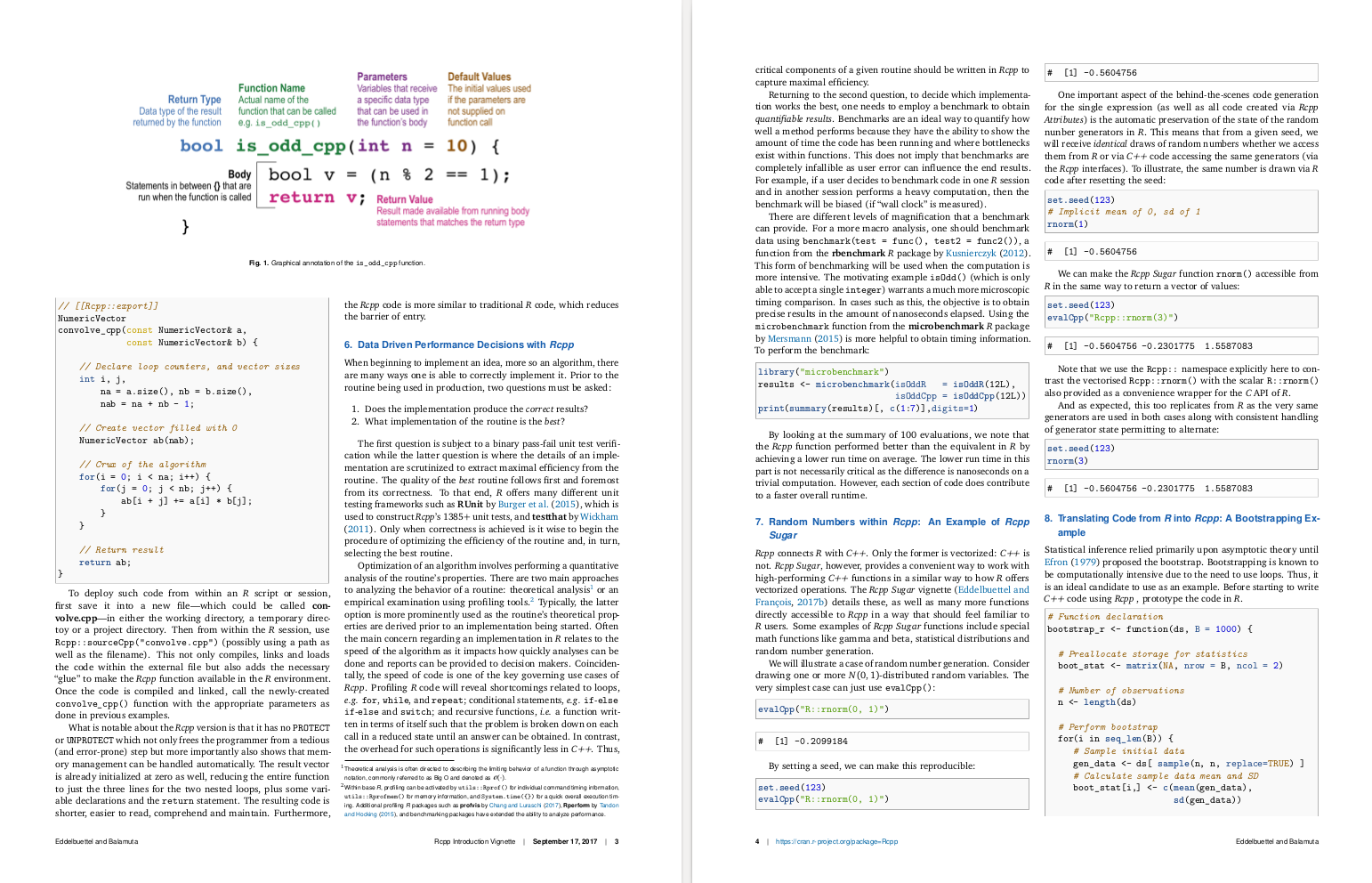
A brandnew and very exciting (to us, at least) package called pinp just arrived on CRAN, following a somewhat unnecessarily long passage out of incoming. It is based on the PNAS LaTeX Style offered by the Proceeding of the National Academy of Sciences of the United States of America, or PNAS for short. And there is already a Markdown version in the wonderful rticles packages.
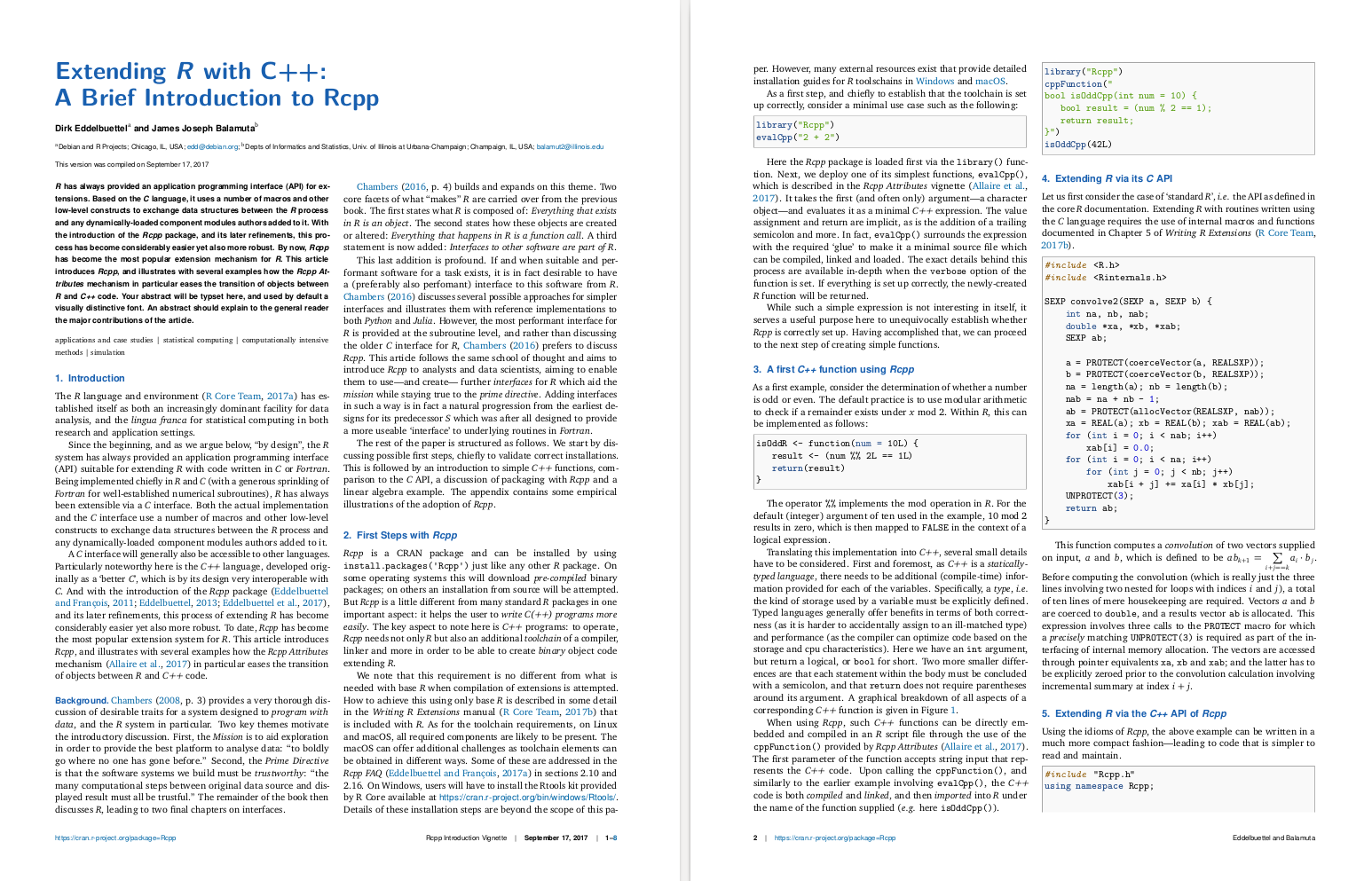
But James Balamuta and I thought we could do one better when we were looking to typeset our recent PeerJ Prepint as an attractive looking vignette for use within the Rcpp package.
And so we did by changing a few things (font, color, use of natbib and Chicago.bst for references, removal of a bunch of extra PNAS-specific formalities from the frontpage) and customized a number of other things for easier use by vignettes directly from the YAML header (draft mode watermark, doi or url for packages, easier author naming in footer, bibtex file and more).
We are quite pleased with the result which seems ready for the next Rcpp release---see e.g., these two teasers:
This post by Dirk Eddelbuettel originated on his Thinking inside the box blog. Please report excessive re-aggregation in third-party for-profit settings.
Why is software created using taxpayers money not released as Free Software?See https://publiccode.eu/ for the campaign details. This makes me think of starting an Israeli version
We want legislation requiring that publicly financed software developed for the public sector be made publicly available under a Free and Open Source Software licence. If it is public money, it should be public code as well. Code paid by the people should be available to the people!
A new and much enhanced version of RcppMsgPack arrived on CRAN a couple of days ago. It came together following this email to the r-package-devel list which made it apparent that Travers Ching had been working on MessagePack converters for R which required the very headers I had for use from, inter alia, the RcppRedis package.
So we joined our packages. I updated the headers in RcppMsgPack to the current upstream version 2.1.5 of MessagePack, and Travers added his helper functions allow direct packing / unpacking of MessagePack objects at the R level, as well as tests and a draft vignette. Very exciting, and great to have a coauthor!
So now RcppMspPack provides R with both MessagePack header files for use via C++ (or C, if you must) packages such as RcppRedis --- and direct conversion routines at the R prompt.
MessagePack itself is an efficient binary serialization format. It lets you exchange data among multiple languages like JSON. But it is faster and smaller. Small integers are encoded into a single byte, and typical short strings require only one extra byte in addition to the strings themselves.
Courtesy of CRANberries, there is also a diffstat report for this release. More information is on the RcppRedis page. More information may be on the RcppMsgPack page. Issues and bugreports should go to the GitHub issue tracker.Changes in version 0.2.0 (2017-09-07)
- Added support for building on Windows
- Upgraded to MsgPack 2.1.5 (#3)
- New R functions to manipulate MsgPack objects: msgpack_format, msgpack_map, msgpack_pack, msgpack_simplify, mgspack_unpack (#4)
- New R functions also available as msgpackFormat, msgpackMap, msgpackPack, msgpackSimplify, mgspackUnpack (#4)
- New vignette (#4)
- New tests (#4)
This post by Dirk Eddelbuettel originated on his Thinking inside the box blog. Please report excessive re-aggregation in third-party for-profit settings.
A new minor release of RcppRedis arrived on CRAN last week, following the release 0.2.0 of RcppMsgPack which brought the MsgPack headers forward to release 2.1.5. This required a minor and rather trivial change in the code. When the optional RcppMsgPack package is used, we now require this version 0.2.0 or later.
We made a few internal updates to the package as well.
Courtesy of CRANberries, there is also a diffstat report for this release. More information is on the RcppRedis page.Changes in version 0.1.8 (2017-09-08)
- A new file
init.cwas added with calls toR_registerRoutines()andR_useDynamicSymbols()- Symbol registration is enabled in
useDynLib- Travis CI was updated to using
run.sh- The (optional MessagePack) code was updated for MsgPack 2.*
This post by Dirk Eddelbuettel originated on his Thinking inside the box blog. Please report excessive re-aggregation in third-party for-profit settings.
This would be a longish piece so please bear and play with tea, coffee, beer or anything stronger that you desire while reading below
I had bought an Android phone, a Samsung J5 just before going to debconf 2016. It was more for being in-trend rather than really using it. The one which I shared is the upgraded version (recentish) the one I have is 2 GB for which I had paid around double of what the list price was. The only reason I bought the model is that it had removable battery at the price point I was willing to pay. I did see that Samsung has the same ham-handed issues with audio as previous Nokia devices use to, the speakers and microphone probably the cheapest you can get on the market. Nokia was same too, at least on the lower-end of the market, while Oppo has loud ringtones and loud music, perfect for those who are a bit hard of hearing (as yours truly is).
I had been pleasantly surprised by the quality of photos Samsung J5 was churning even though I m less than average shooter, never been really into it so was a sort of wake-up call for where camera sensor technology is advancing. And of course with newer phones the kind of detail it can capture is mesmerizing to say the least, although wide-angle shots still would take some time to get right I guess.
If memory serves me right, sometime back Laura Arjona Reina (who handles part of debian-publicity and part of debian-women among other responsibilities) shared a blog post on p.d.o. where she had shared the troubles she had while exporting data from the phone. While she shared that and I lack the time or the energy to try and find it ( the entry is really bookmarkable, at least that specific blog post).
What was interesting though that I had gone few years ago to Bangalore, there is an organization which I like and admire CIS great for researchers. Anyways they had done a project getting between 10-20 phones from the market made of Chinese origin (almost all mobiles sold in India, the fabrication of CPU and APU etc. are done in China/Taiwan and then assembled here). Here what is done at the most is assembly which for all political purposes is called manufacturing . All the mobiles kept quite a bit of info. on the device even after you wiped them clean/put some other ROM on them. The CIS site is more than a bit cluttered otherwise would have shared the direct link. I do hope to send an e-mail to CIS and hopefully they will respond with the report and will share that here as and when. It would be interesting to know if after people flash a custom rom if the status quo is the same as it was before. I do suspect it would be the former as flashing ROMs on phones is still a bit of specialized subject at least here in India with even an average phone costing a month or two s salary or more and the idea of bricking the phone scares most people (including yours truly).
Anyways, for a long time I was on bed and had the phone. I used 2 games from the android marketplace which both mum and I enjoy and enjoyed. Those are Real jigsaw and Jigsaw puzzle HD . The permissions dialog which Real jigsaw among other games has is horrible and part of me freaks that all such apps. have unrestricted access to my storage area. Ideally, what Android should have done is either partition or give functionality to the user to have private space for their photos and whatever media they have and the rest of the area is like a public park. If anybody has any thoughts on partitioning on Android phone would like to hear that.
One game though which really hooked mumma and me is The Island Experiment . It reminded me of my younger days when gaming addiction was not treated as a disease but thankfully now is . I would call myself somewhat of a functional addict as in do my every day things, work etc. but do dream about the game as to what it will show me next. A part of it is the game is web-based (which means it needs constant internet connection) and web access is somewhat pricey, although with Reliance Jio an upcoming data network operator having bundles of money and promising the moon, network issues at least on low-bandwidth game which I and mum are playing hopefully will not have any issues. I haven t used tshark or any such tool to analyze the traffic but I guess it probably just sends short messages of number of clicks in a time period and things like that, all the rest (I guess) is happening on the mobile itself. I know at sometime I probably will try to put a custom rom on it but which one is the question as there are so many and also which is most compatible with my device. It seems I would have to do lot of homework before I can make any choices.
Couple of months back, a friend of mine Akshat who has been using Android for few years enabled Developer Options which I didn t know about till he shared that info. with me. I do hope people do check Akshat s repo. as he has made/has quite a few useful scripts, especially if you are into digital photography. I have shared with him gimp scripting few days back so along with imagemagick you might see him doing some rough scripts in it. Of course, if people use it and give feedback he might clean the scripts a bit so it gives useful error messages and gives statement like gimp is not installed on your system, please install it or ask for specific version but as it works in free software it is somewhat directly proportional to the number of users, bugs and users behind it.
A good example of what I mean is youtube-dl . I filed 873853 where I shared the upstream ticket. Apparently YouTube again changed few days back and while upstream has fixed it, the youtube-dl maintainer probably needs to find time and get the new version up. Apparently the issues lies in
[$] dpkg -L youtube-dl grep youtube.py
/usr/lib/python3/dist-packages/youtube_dl/extractor/youtube.py
Hopefully somebody does the needful.
Btw, I find f-droid extremely useful and especially osmand but sadly both of them are not shared or talked about by people
The reason I shared about Developer Options in Android is that few days back I noticed that the phone wonks off and has unpredictable behaviour such as not letting me browse the web, do additions or deletions using the google play store and alike . Things came to a head when few days back I saw a fibre-optic splicing operation being carried by some workers near my home by the state operator which elated me and wanted to shoot the video for it but the battery died/there was no power even though I hadn t used it much. I have deliberately shared the hindi version which tells how that knowledge is now coming to the masses. I had seen fibre-optic splicing more than a decade and a half back at some net conference where it was going to be in your neighbourhood soonish, hopefully it will happen soon
I had my suspicions for quite sometime all the issues with the phone were not due to proper charging. During course of my investigation, found out that in Developer Options there is an option called USB Configuration and changing that from the default MTP (Media Transfer Protocol) (which is basically used to put or take movies, music or any file from the phone to the computer or vice-versa improved much better behaviour on my android phone. But this caused an unexpected side-effect, I got pretty aggressive polling of the phone by the computer even after saying I do not want to share the phone details with the computer. This I filed as 874216 . The phone and I am guessing most Samsung phones today come with an adaptor with a USB male socket which goes in to the phone s usb port. There is the classical port for electricity but like most people heavily rely on usb charging even for deep fully powered down phone for full charging.
One interesting project which I saw which came in Debian some days back is dummydroid. I did file a bug about it . I do hope that either the maintainer gives some more documentation. I am sure many people might use and add to the resource if the documentation was/is there. I did take a look at the package and the profile seems to be like an xml pair kind of database. Having more profiles shouldn t be hard if we knew what info. needs to be added and how do we find that info.
Lastly, I am slowly transferring all the above knowledge to my mum as well, although in small doses. She, just like me has and had problems coming from resistive touchscreen to capacitive touchscreen. You can call me wrong but resistive touchscreen seemed to be superior and not as error-prone or liable to commit mistakes as is possible in capacitive touchscreens. There may be a setting to higher/lower the threshold for touching which I have not been able to find as of yet.
Hope somebody finds something useful in there. I do hope that Debian does become a replacement to be used on such mobiles but then they would have to duplicate/also have some sort of mainstream content with editors to help people find stuff, something that Debian is not so good at currently. Also I m not sure Synaptic is good fit as a mobile store.
A common way to establish an IPsec tunnel on Linux is to use an IKE daemon, like
the one from the strongSwan project, with a minimal
configuration1:
conn V2-1 left = 2001:db8:1::1 leftsubnet = 2001:db8:a1::/64 right = 2001:db8:2::1 rightsubnet = 2001:db8:a2::/64 authby = psk auto = route
2001:db8: 1::1 and 2001:db8: 2::1. The protected subnets are
2001:db8: a1::/64 and 2001:db8: a2::/64. As a result, strongSwan
configures the following policies in the kernel:
$ ip xfrm policy src 2001:db8:a1::/64 dst 2001:db8:a2::/64 dir out priority 399999 ptype main tmpl src 2001:db8:1::1 dst 2001:db8:2::1 proto esp reqid 4 mode tunnel src 2001:db8:a2::/64 dst 2001:db8:a1::/64 dir fwd priority 399999 ptype main tmpl src 2001:db8:2::1 dst 2001:db8:1::1 proto esp reqid 4 mode tunnel src 2001:db8:a2::/64 dst 2001:db8:a1::/64 dir in priority 399999 ptype main tmpl src 2001:db8:2::1 dst 2001:db8:1::1 proto esp reqid 4 mode tunnel [ ]
out, in or fwd2),transport or tunnel),esp or ah), andreqid and the endpoint source and destination
addresses):
$ ip xfrm state src 2001:db8:1::1 dst 2001:db8:2::1 proto esp spi 0xc1890b6e reqid 4 mode tunnel replay-window 0 flag af-unspec auth-trunc hmac(sha256) 0x5b68[ ]8ba2904 128 enc cbc(aes) 0x8e0e377ad8fd91e8553648340ff0fa06 anti-replay context: seq 0x0, oseq 0x0, bitmap 0x00000000 [ ]
$ tcpdump -pni eth0 -c2 -s0 esp 13:07:30.871150 IP6 2001:db8:1::1 > 2001:db8:2::1: ESP(spi=0xc1890b6e,seq=0x222) 13:07:30.872297 IP6 2001:db8:2::1 > 2001:db8:1::1: ESP(spi=0xcf2426b6,seq=0x204)
V1-1 and V2-1 could be:
conn V1-1-to-V2-1 left = 2001:db8:1::1 leftsubnet = 2001:db8:a1::/64,2001:db8:a6::cc:1/128,2001:db8:a6::cc:5/128 right = 2001:db8:2::1 rightsubnet = 2001:db8:a2::/64,2001:db8:a6::/64,2001:db8:a8::/64 authby = psk keyexchange = ikev2 auto = route
2001:db8: a6::/64 on one
side and 2001:db8: a6::cc:1/128 at the other) can also be problematic.
The alternative is to use route-based VPNs: any packet traversing a
pseudo-interface will be encapsulated using a security policy bound to the
interface. This brings two features:
V3-2 to V1-1. First, we
need to configure the tunnel interface and bind it to the private routing
instance containing only internal routes (with IPv4, they would have been RFC 1918 routes):
interfaces st0 unit 1 family inet6 address 2001:db8:ff::7/127; routing-instances private instance-type virtual-router; interface st0.1;
security /* Phase 1 configuration */ ike proposal IKE-P1 authentication-method pre-shared-keys; dh-group group20; encryption-algorithm aes-256-gcm; policy IKE-V1-1 mode main; proposals IKE-P1; pre-shared-key ascii-text "d8bdRxaY22oH1j89Z2nATeYyrXfP9ga6xC5mi0RG1uc"; gateway GW-V1-1 ike-policy IKE-V1-1; address 2001:db8:1::1; external-interface lo0.1; general-ikeid; version v2-only; /* Phase 2 configuration */ ipsec proposal ESP-P2 protocol esp; encryption-algorithm aes-256-gcm; policy IPSEC-V1-1 perfect-forward-secrecy keys group20; proposals ESP-P2; vpn VPN-V1-1 bind-interface st0.1; df-bit copy; ike gateway GW-V1-1; ipsec-policy IPSEC-V1-1; establish-tunnels on-traffic;
st0.1 interface to the
VPN-V1-1 VPN. Once the VPN is up, any packet entering st0.1 will be
encapsulated and sent to the 2001:db8: 1::1 endpoint.
The last step is to configure BGP in the private routing instance to exchange
routes with the remote site:
routing-instances private routing-options router-id 1.0.3.2; maximum-paths 16; protocols bgp preference 140; log-updown; group v4-VPN type external; local-as 65003; hold-time 6; neighbor 2001:db8:ff::6 peer-as 65001; multipath; export [ NEXT-HOP-SELF OUR-ROUTES NOTHING ];
OUR-ROUTES needs to select the routes to be advertised to
the other peers. For example:
policy-options policy-statement OUR-ROUTES term 10 from protocol ospf3; route-type internal; then metric 0; accept;
2001:db8: a1::/64:
> show route 2001:db8:a1::/64 protocol bgp table private.inet6.0 best-path private.inet6.0: 15 destinations, 19 routes (15 active, 0 holddown, 0 hidden) + = Active Route, - = Last Active, * = Both 2001:db8:a1::/64 *[BGP/140] 01:12:32, localpref 100, from 2001:db8:ff::6 AS path: 65001 I, validation-state: unverified to 2001:db8:ff::6 via st0.1 > to 2001:db8:ff::14 via st0.2
V1-1 (through st0.1) and V1-2 (through
st0.2). The route is part of the private routing instance but encapsulated
packets are sent/received in the public routing instance. No route-leaking is
needed for this configuration. The VPN cannot be used as a gateway from internal
hosts to external hosts (or vice-versa). This could also have been done with
JunOS security policies (stateful firewall rules) but doing the separation with
routing instances also ensure routes from different domains are not mixed and a
simple policy misconfiguration won t lead to a disaster.
# ip netns add private # ip netns exec private sysctl -qw net.ipv6.conf.all.forwarding=1
# ip link set netns private dev eth1 # ip link set netns private dev eth2 # ip netns exec private ip link set up dev eth1 # ip netns exec private ip link set up dev eth2
vti6, a tunnel interface (similar to st0.1 in the JunOS
example):
# ip tunnel add vti6 \ mode vti6 \ local 2001:db8:1::1 \ remote 2001:db8:3::2 \ key 6 # ip link set netns private dev vti6 # ip netns exec private ip addr add 2001:db8:ff::6/127 dev vti6 # ip netns exec private sysctl -qw net.ipv4.conf.vti6.disable_policy=1 # ip netns exec private sysctl -qw net.ipv4.conf.vti6.disable_xfrm=1 # ip netns exec private ip link set vti6 mtu 1500 # ip netns exec private ip link set vti6 up
conn V3-2 left = 2001:db8:1::1 leftsubnet = ::/0 right = 2001:db8:3::2 rightsubnet = ::/0 authby = psk mark = 6 auto = route keyexchange = ikev2 keyingtries = %forever ike = aes256gcm16-prfsha384-ecp384! esp = aes256gcm16-prfsha384-ecp384! mobike = no
$ ip xfrm policy src ::/0 dst ::/0 dir out priority 399999 ptype main mark 0x6/0xffffffff tmpl src 2001:db8:1::1 dst 2001:db8:3::2 proto esp reqid 1 mode tunnel src ::/0 dst ::/0 dir fwd priority 399999 ptype main mark 0x6/0xffffffff tmpl src 2001:db8:3::2 dst 2001:db8:1::1 proto esp reqid 1 mode tunnel src ::/0 dst ::/0 dir in priority 399999 ptype main mark 0x6/0xffffffff tmpl src 2001:db8:3::2 dst 2001:db8:1::1 proto esp reqid 1 mode tunnel [ ]
router id 1.0.1.1; protocol device scan time 10; protocol kernel persist; learn; import all; export all; merge paths yes; protocol bgp IBGP_V3_2 local 2001:db8:ff::6 as 65001; neighbor 2001:db8:ff::7 as 65003; import all; export where ifname ~ "eth*"; preference 160; hold time 6;
$ ip netns exec private ip -6 route show 2001:db8:a3::/64 2001:db8:a3::/64 proto bird metric 1024 nexthop via 2001:db8:ff::5 dev vti5 weight 1 nexthop via 2001:db8:ff::7 dev vti6 weight 1
V3-1 (through vti5) and V3-2 (through
vti6). Like for the JunOS version, there is no route-leaking between the
private namespace and the initial one. The VPN cannot be used as a gateway
between the two namespaces, only for encapsulation. This also prevent a
misconfiguration (for example, IKE daemon not running) from allowing packets to
leave the private network.
As a bonus, unencrypted traffic can be observed with tcpdump on the tunnel
interface:
$ ip netns exec private tcpdump -pni vti6 icmp6 tcpdump: verbose output suppressed, use -v or -vv for full protocol decode listening on vti6, link-type LINUX_SLL (Linux cooked), capture size 262144 bytes 20:51:15.258708 IP6 2001:db8:a1::1 > 2001:db8:a3::1: ICMP6, echo request, seq 69 20:51:15.260874 IP6 2001:db8:a3::1 > 2001:db8:a1::1: ICMP6, echo reply, seq 69
fwd is for incoming packets on non-local addresses. It only makes
sense in transport mode and is a Linux-only particularity.
Next.