Search Results: "ads"

27 April 2020

Dirk Eddelbuettel: #26: Upgrading to R 4.0.0

Welcome to the 26th post in the rationally regularized R revelations series, or R4 for short. R 4.0.0 was released two days ago, and a casual glance at some social media conversations appears to suggest quite some confusion, almost certainly some misunderstandings, and possibly also a fair amount of fear, uncertainty, and doubt about the process. So I thought I could show how I upgrade my own main workstation, live and in colour without a safety net. (Almost: I did upgrade my laptop yesterday which went swimmingly, if more slowly.) So here is a fresh video about upgrading to R 4.0.0, with some support slides as usual:

The slides used in the video are at this link. A few quick follow-ups to the live nature of this. The pbdZMQ package did in fact install smoothly once the (Ubuntu) -dev packages for Zero MQ were (re-)installed; then IRkernel also followed. BioConductor completed once I realized that GOSemSim needed the annotation package GO.db to be updated, that allowed MNF to install. So the only bug, really, was the circular depdency between pkgload and testthat. Overall, not bad at all for a quick afternoon session! And as mentioned, if you are interested and have questions concerning use of R on a .deb based system like Debain or Ubuntu (or Mint or ), the r-sig-debian list is a very good and friendly place to ask them. If you like this or other open-source work I do, you can now sponsor me at GitHub. For the first year, GitHub will match your contributions.

This post by Dirk Eddelbuettel originated on his Thinking inside the box blog. Please report excessive re-aggregation in third-party for-profit settings.

25 April 2020

Reinhard Tartler: Building Packages with Buildah in Debian

1 Building Debian Packages with buildah
Building packages in Debian seems to be a solved problem. But is it? At the bottom, installing the dpkg-dev package provides all the basic tools needed. Assuming that you already succeeded with creating the necessary packaging metadata (i.e., debian/changelog, debian/control, debian/copyright, etc., and there are great helper tools for this such ash dh-make, dh-make-golang, etc.,) it should be as simple as invoking the dpkg-buildpackage tool. So what's the big deal here?

The issue is that dpkg-buildpackage expects to be called with an appropriately setup build context, that is, it needs to be called in an environment that satisfies all build dependencies on the system. Let's say you are building a package for Debian unstable on your Debian stable system (this is the common scenario for the official Debian build machines), you would need your build to link against libraries in unstable, not stable. So how to tell the package build process where to find its dependencies?

The answer (in Debian and many other Linux distributions) is you do not at all. This is actually a somewhat surprising answer for software developers without a Linux distribution development background1. Instead, chroots "simulate" an environment that has all dependencies that we want to build against at the system locations, that is. /usr/lib, etc.

Chroots are basically full system installations in a subdirectory that includes system and application libraries. In order to use them, a package build needs to use the chroot(2) system call, which is a privileged operation. Also creating these system installations is a somewhat finicky process. In Debian, we have tools that make this process easier, the most popular ones are probably pbuilder(1)2 and sbuild(1)3. Still, they are somewhat clumsy to use, add significant levels of abstraction in the sense that they do quite a bit of magic behind the scenes to work hide the fact that privileged operations (need root to run chroot(2), etc.) are required. They are also somewhat brittle, for instance, if a build process is aborted (SIGKILL, or system crash), you may end up with temporary directories and files under userids other than your own that again may require root-privileges to cleanup.

What if there was an easy way to do all of the above without any process running as root? Enter rootless buildah.

Modern Linux container technologies allow unprivileged users to "untie" a process from the system (cf. the unshare(2) system call). This means that a regular user may run a process (and its child processes) in an "environment" where system calls behave differently and provide a configurable amount of isolation levels. This article demonstrates a novel build tool buildah, which is:
  • easy to setup build environment from the command line
  • secure, as no process needs to run as root
  • simple in architecture, requires no running daemon like for example docker
  • convenient to use: you can debug your debian/rules interactively
Architecturally, buildah is written in golang and compiled as a (mostly) statically linked executable. It builds on top a number of libraries written in golang, including github.com/containers/storage and github.com/containers/image. The overlay functionality is provided by the fuse-overlayfs(1) utility.

1.1 Preparation:
The Kernel in Debian bullseye (and in buster, and recent Ubuntu kernels to the best of my knowledge) do support usernamespaces, but leave them disabled by default. Here is how to enable them:
echo kernel.unprivileged_userns_clone = 1   sudo tee -a /etc/sysctl.d/containers.conf
systemctl -p /etc/sysctl.d/containers.conf
I have to admit that I'm not entirely sure why the Debian kernels don't enable usernamespaces by default. I've found a reference on stackexchange4 that claims this disables some "hardening" features in the Debian kernel. I also understand this step is not necessary if you chose to compile and run a vanilla upstream kernel. I'd appreciate a better reference and am happy to update this text.
$ c=$(buildah from docker.io/debian:sid)
Getting image source signatures
Copying blob 2bbc6b8c460d done
Copying config 9b90abe801 done
Writing manifest to image destination
Storing signatures
This command downloads the image from docker.io and stores it locally in your home directory. Let's install essential utilities for building Debian packages:
1: buildah run $c apt-get update -qq
2: buildah run $c apt-get install dpkg-dev -y
3: buildah config --workingdir /src $c
4: buildah commit $c dpkg-dev
The command on line 1 and 2 execute the installation of compilers and dpkg development tools such as dpkg-buildpackage, etc. The buildah config command in line 4 arranges that whenever you start a shell in the container, the current working directory in the container is in /src. Don't worry about this location not existing yet, we will make sources from your host system available there. The last command creates an OCI image with the name dpkg-dev. BTW, the name you use for the image in the commit command can be used in podman (but not the "containers"). See 5 and 6 for a comparison between podman and buildah.
buildah images -a
This output might look like this:
  REPOSITORY                 TAG      IMAGE          ID   CREATED   SIZE             
localhost/dpkg-dev latest b85c34f95d3e 16 seconds ago 406 MB
docker.io/library/debian sid 9b90abe801db 11 hours ago 124 MB

1.2 Running a package build
Now we have a working container with the reference in the variable $c. To use it conveniently with source packages that I have stored in /srv/scratch/packages/containers, let's introduce a shell alias r like this:
alias r='buildah run --tty -v /srv/scratch/packages/containers:/src $c '
This allows you to easily execute commands in that container:
r pwd
r bash
The last command will give you an interactive shell that we'll be using for building packages!
siretart@x1:~/scratch/packages/containers/libpod$ r bash

root@x1:/src# cd golang-github-openshift-imagebuilder

root@x1:/src/golang-github-openshift-imagebuilder# dpkg-checkbuilddeps
dpkg-checkbuilddeps: error: Unmet build dependencies: debhelper (>= 11) dh-golang golang-any golang-github-containers-storage-dev (>= 1.11) golang-github-docker-docker-dev (>= 18.09.3+dfsg1) golang-github-fsouza-go-dockerclient-dev golang-glog-dev

root@x1:/src/golang-github-openshift-imagebuilder# apt-get build-dep -y .
Note, using directory '.' to get the build dependencies
Reading package lists... Done
Building dependency tree
Reading state information... Done
The following NEW packages will be installed:
[...]

root@x1:/src/golang-github-openshift-imagebuilder# dpkg-checkbuilddeps

root@x1:/src/golang-github-openshift-imagebuilder#
Now we have a environment that has all build-dependencies available and we are ready to build the package:
root@x1:/src/golang-github-openshift-imagebuilder# dpkg-buildpackage -us -uc -b
Assuming the package builds, the package build results are placed in /src inside the container, and are visible at ~/scratch/packages/containers on the host. There you can inspect, extract or even install them. The latter part allows you to interactively rebuild packages against updated dependencies, without the need of setting up an apt archive or similar.

2 Availability
The buildah(1) tool is available in debian/bullseye since 2019-12-17. Since is a golang binary, it only links dynamically against system libraries such as libselinux and libseccomp, which are all available in buster-backports. I'd expect buildah to just work on a debian/buster system as well provided you install those system libraries and possibly the backported Linux kernel.

Keeping the package at the latest upstream version is challenging because of its fast development pace that picks up new dependencies on golang libraries and new versions of existing libraries with every new upstream release. In general, this requires updating several source packages, and in many cases also uploading new source packages to the Debian archive that need to be processed by the Debian ftp-masters.

As an exercise, I suggest to install the buildah package from bullseye, 'git clone' the packaging repository from https://salsa.debian.org/go-team/packages/golang-github-containers-buildah and build the latest version yourself. Note, I would expect the above to even work on a Fedora laptop.

The Debian packages have not swept into the Ubuntu distributions yet, but I expect them to be included in the Ubuntu 20.10 release. In the mean time, ubuntu users can install the package that are provided by the upstream maintainers in the "Project Atomic" PPA at https://launchpad.net/~projectatomic/+archive/ubuntu/ppa

3 Related Tools
The buildah tool is accompanied with two "sister" tools:

The Skopeo package provides tooling to work with remote images registries. This allows you download, upload images to remote registries, convert container images between different formats. It has been available in Debian since 2020-04-20.

The podman tool is a 'docker' replacement. It provides a command-line interface that mimics the original docker command to an extend that a user familiar with docker might want to place this in their ~/.bashrc file:
alias docker='podman'
Unfortunately, at the time of writing podman is still being processed by the ftp-masters since 01-03-2020. At this point, I recommend building the package from our salsa repository at https://salsa.debian.org/debian/libpod

4 Conclusion
Building packages in the right build context is a fairly technical issue for which many tools have been written for. They come with different trade-off when it comes to usability. Containers promise a secure alternative to the tried and proven chroot-based approaches, and the buildah makes using this technology very easy to use.

I'd love to get into a conversation with you on how these tools work for you, and would like to encourage participation and assistance with keeping the complicated software stack up-to-date in Debian (and by extension, in derived distribution such as Ubuntu, etc.).

Footnotes:
1
At my day-job, we build millions of lines of C++ code on Solaris10 and AIX6, where concepts such as "chroots" are restricted to the super user 'root' and is therefore not available to developers, not even through wrappers. Instead, libraries and headers are installed into "refroots", that is, subdirectories that mimic the structure of the "sysroot" directories that are used in the embedded Linux community for cross-compiling packages, and we use Makefiles that set include flags (-I rules and -L flags) to tell the compiler and linker where to look.

Junichi Uekawa: Troubleshooting mdns issuses.

Troubleshooting mdns issuses. I've noticed that mdns wasn't working on crostini. It seems like avahi-browse -a returns empty results. Chrome browser also doesn't seem to resolve .local host names, so that might be related.

24 April 2020

Norbert Preining: (Working) Unison Sync between for Debian/Buster and Sid

Since many years I am a big big fan of Unison. It is a two-way synchronization tool, meaning that changes on both sides are carried over as long as there is no conflict. Unison is the bread and butter for keeping my computers (main desktop, laptop, server) in sync. There is only one problem with Unison it is extremely picky about with what kind of Unison on the other side it speaks: Even the very same version, compiled with a slightly different OCaml compiler version, already produces incompatibilities. And with me having to sync between Debian/Buster (my server) and Debian/sid (my other machines), this always ended in tears. But heyhoh! the pain is over! My solution up to now was to keep a Unison binary from Buster on my Sid system, and used that binary when syncing to Buster server, but the normal Unison binary when syncing between two sid computers. This created lots of pain, because, when using a incompatible Unison binary, already a simple connect without a sync trial messed up the state files and required a complete resync. And so it happened often that I used the wrong binary, and had to resync a few gigabyte, what a pain. The Debian maintainer is working with upstream to improve this rather unfortunate situation, so maybe this will change in the future, but I need a solution now. BTW, thanks a lot to the excellent work of the current maintainers, setting up the new package was a blaze and only needed a bit of adjustments for the changed layout of recent sources. Big kudos to the maintainers of unison!!! So I have ventured out to create my own Unison package for Debian. And what I mean for Debian/Buster and Debian/sid, so that they are compatible, by using the very same compiler and the very same source and the very same dependencies to build the binaries. Fortunately, the lessons learned from my KDE/Plasma updates for Debian helped, and with a bit of magic and the nice service from the openSUSE build service, I now have packages for Unison ready for Debian/Buster and Debian/sid that are compatible, and in addition also the latest version, not the 5 year old package that is currently Debian. So here it is, the Debian Unison repository, binaries of (currently) Unison 2.51.2 are available for both i386 and amd64: For Debian/Buster
deb http://download.opensuse.org/repositories/home:/npreining:/debian-unison/Debian_10  ./
For Debian/sid:
deb http://download.opensuse.org/repositories/home:/npreining:/debian-unison/Debian_Unstable  ./
To use this repository, you need to import my OBS key obs-npreining.asc, best put it as is into /etc/apt/trusted.gpg.d/obs-npreining.asc. The sources are available at the OBS project debian-unison. For those interested, I had to backport a few package to Buster to ensure that the builds agree: debhelper (because dh_dwz is buggy in Buster), dh-ocaml, findlib, lablgl, lablgtk2, labltk, and ocaml. These packages are available in the OBS debian-ocaml-backports repository, and are also apt accessible if necessary. I guess you can conjure up the correct line ;-). That s it. I can now forget about all the differences between versions and happily sync between Buster and sid. Enjoy.

23 April 2020

Evgeni Golov: Controlling roller shutters using a Shelly 2.5, ESPHome and Home Assistant

Our house has roller shutters on all windows and most of them have an electric motor to open and close them. The motors are Schellenberg shaft motors (not sure this is the right English term), that you can configure end positions for and then by applying current to the right pair of pins they move the shutters up and down until the current is removed or one of the endstops is reached. As the motors were installed over a long period of time, the attached control units varied in functionality: different ways to program open/close times, with and without battery for the clock/settings etc, but they all had something in common: no central management and pretty ugly. We decided to replace those control units with regular 2 gang light switches that match the other switches in the house. And as we didn't want to lose the automatic open/close timer, we had to add some smarts to it. Shelly 2.5 and ESPHome Say hello to Shelly 2.5! The Shelly 2.5 is an ESP8266 with two relays attached to it in a super tiny package you can hide in the wall behind a regular switch. Pretty nifty. It originally comes with a Mongoose OS based firmware and an own app, but ain't nobody needs that, especially nobody who wants to implement some crude logic. That said, the original firmware isn't bad. It has a no-cloud mode, a REST API and does support MQTT for integration into Home Assistant and others. My ESP firmware of choice is ESPHome, which you can flash easily onto a Shelly (no matter 1, 2 or 2.5) using a USB TTL adapter that provides 3.3V. Home Assistant has native ESPHome support with auto-discovery, which is much nicer than manually attaching things to MQTT topics. To get ESPHome compiled for the Shelly 2.5, we'll need a basic configuration like this:
esphome:
  name: shelly25
  platform: ESP8266
  board: modwifi
  arduino_version: 2.4.2
We're using board: modwifi as the Shelly 2.5 (and all other Shellys) has 2MB flash and the usually recommended esp01_1m would only use 1MB of that - otherwise the configurations are identical (see the PlatformIO entries for modwifi and esp01_1m). And arduino_version: 2.4.2 is what the Internet suggests is the most stable SDK version, and who will argue with the Internet?! Now an ESP8266 without network connection is boring, so we add a WiFi configuration:
wifi:
  ssid: !secret wifi_ssid
  password: !secret wifi_password
  power_save_mode: none
The !secret commands load the named variables from secrets.yaml. While testing, I found the network connection of the Shelly very unreliable, especially when placed inside the wall and thus having rather bad bad reception (-75dBm according to ESPHome). However, setting power_save_mode: none explicitly seems to have fixed this, even if NONE is supposed to be the default on ESP8266. At this point the Shelly has a working firmware and WiFi, but does not expose any of its features: no switches, no relays, no power meters. To fix that we first need to find out the GPIO pins all these are connected to. Thankfully we can basically copy paste the definition from the Tasmota (another open-source firmware for ESPs) template:
pin_led1: GPIO0
pin_button1: GPIO2
pin_relay1: GPIO4
pin_switch2n: GPIO5
pin_sda: GPIO12
pin_switch1n: GPIO13
pin_scl: GPIO14
pin_relay2: GPIO15
pin_ade7953: GPIO16
pin_temp: A0
If we place that into the substitutions section of the ESPHome config, we can use the names everywhere and don't have to remember the pin numbers. The configuration for the ADE7953 power sensor and the NTC temperature sensor are taken verbatim from the ESPHome documentation, so there is no need to repeat them here. The configuration for the switches and relays are also rather straight forward:
binary_sensor:
  - platform: gpio
    pin: $ pin_switch1n 
    name: "Switch #1"
    internal: true
    id: switch1
  - platform: gpio
    pin: $ pin_switch2n 
    name: "Switch #2"
    internal: true
    id: switch2
switch:
  - platform: gpio
    pin: $ pin_relay1 
    name: "Relay #1"
    internal: true
    id: relay1
    interlock: &interlock_group [relay1, relay2]
  - platform: gpio
    pin: $ pin_relay2 
    name: "Relay #2"
    internal: true
    id: relay2
    interlock: *interlock_group
All marked as internal: true, as we don't need them visible in Home Assistant. ESPHome and Schellenberg roller shutters Now that we have a working Shelly 2.5 with ESPHome, how do we control Schellenberg (and other) roller shutters with it? Well, first of all we need to connect the Up and Down wires of the shutter motor to the two relays of the Shelly. And if they would not be marked as internal: true, they would show up in Home Assistant and we would be able to flip them on and off, moving the shutters. But this would also mean that we need to flip them off each time after use, as while the motor knows when to stop and will do so, applying current to both wires at the same time produces rather interesting results. So instead of fiddling around with the relays directly, we define a time-based cover in our configuration:
cover:
  - platform: time_based
    name: "$ location  Rolladen"
    id: rolladen
    open_action:
      - switch.turn_on: relay2
    open_duration: $ open_duration 
    close_action:
      - switch.turn_on: relay1
    close_duration: $ close_duration 
    stop_action:
      - switch.turn_off: relay1
      - switch.turn_off: relay2
We use a time-based cover because that's the easiest thing that will also turn the relays off for us after the shutters have been opened/closed, as the motor does not "report" any state back. We could use the integrated power meter of the Shelly to turn off when the load falls under a threshold, but I was too lazy and this works just fine as it is. Next, let's add the physical switches to it. We could just add on_press automations to the binary GPIO sensors we configured for the two switch inputs the Shelly has. But if you have kids at home, you'll know that they like to press ALL THE THINGS and what could be better than a small kill-switch against small fingers?
switch:
  [ previous definitions go here ]
  - platform: template
    id: block_control
    name: "$ location  Block Control"
    optimistic: true
  - platform: template
    name: "Move UP"
    internal: true
    lambda:  -
      if (id(switch1).state && !id(block_control).state)  
        return true;
        else  
        return false;
       
    on_turn_on:
      then:
        cover.open: rolladen
    on_turn_off:
      then:
        cover.stop: rolladen
  - platform: template
    name: "Move DOWN"
    internal: true
    lambda:  -
      if (id(switch2).state && !id(block_control).state)  
        return true;
        else  
        return false;
       
    on_turn_on:
      then:
        cover.close: rolladen
    on_turn_off:
      then:
        cover.stop: rolladen
This adds three more template switches. The first one, "Block Control", is exposed to Home Assistant, has no lambda definition and is set to optimistic: true, which makes is basically a dumb switch that can be flipped at will and the only thing it does is storing the binary on/off state. The two others are almost identical. The name differs, obviously, and so does the on_turn_on automation (one triggers the cover to open, the other to close). And the really interesting part is the lambda that monitors one of the physical switches and if that is turned on, plus "Block Control" is off, reports the switch as turned on, thus triggering the automation. With this we can now block the physical switches via Home Assistant, while still being able to control the shutters via the same. All this (and a bit more) can be found in my esphome-configs repository on GitHub, enjoy!

22 April 2020

Anisa Kuci: Salsa username update

Debian salsa now allows usernames without the -guest suffix for everyone. The Debian GitLab instance, salsa, used to append -guest to every username that was not a Debian Developer (DD). This has recently been changed and every user can register any available username now. Existing usernames can also be renamed:
  1. Go to your account settings
  2. Change the username in the Change Username section
  3. Click Update username
Please make sure to also update your bookmarks and pages you have linked your Debian salsa profile. You can find me now as anisa. Stay safe and happy hacking!

Jonathan Dowland: SUPERHOT

Continuing a series of blog posts about casual Nintendo Switch games, next in the series is SUPERHOT. Normally 19.99, I picked it up for 13.99 in a sale. That's a little bit more than I would usually pay for a casual game. SUPERHOT first came on my radar because someone I know from a baby group worked on their VR port in some capacity.
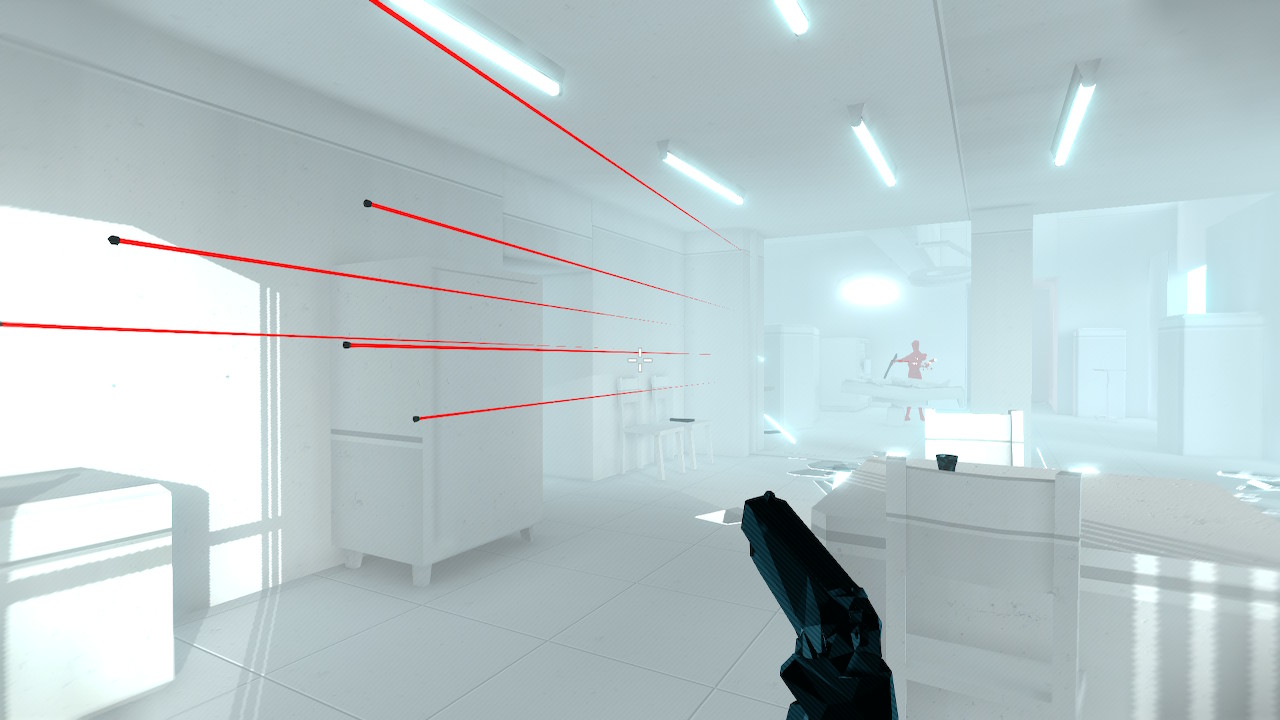
Slow-motion buckshot Slow-motion buckshot
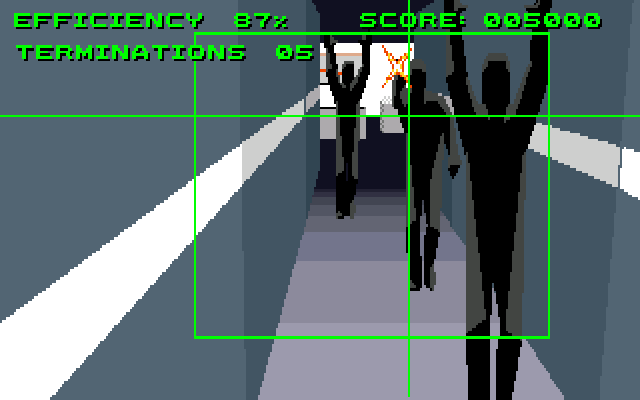
A first-person shooter, SUPERHOT's USP is that time only progresses when you move well, nearly. Time is slowed to a complete crawl when you are not moving. The game's visual style is very distinctive: Almost everything is a washed out grey or white colour and porcelean-like texture, except weapons and objects you can interact with, which are a matt black, and enemies, which are a bright red. It reminds me a lot of the 1992 Amiga game Robocop 3.
Robocop 3 Robocop 3
The play-style is very reminiscent of the "Bullet Time" sequences in The Matrix seemingly impossibly overwhelming odds deftly manoeuvred through thanks to superhuman reaction times. The game has a relatively short campaign of little vignettes, linked together by a cyberpunk narrative. The game is sometimes criticised for the short campaign, but for me that's ideal. And the vignettes being short and quite standalone suits my play requirements very well.
Amiga easter-egg Amiga easter-egg
The narrative interspersed between the play scenarios is a little bit over-long, and you can spend an unreasonable amount of time bashing buttons to get through it. Despite that it's a moderately interesting story. Once you've beaten the campaign, you can go back and play any of the scenarios again, or try the newly unlocked endless mode. I haven't tried that yet. The original prototype for the game is a free-to-play in-browser demo, available here. On Windows PC, there's a sequel-of-sorts in the works called MIND CONTROL DELETE with a lot of new features to add replay value.

21 April 2020

Matthew Garrett: Linux kernel lockdown, integrity, and confidentiality

The Linux kernel lockdown patches were merged into the 5.4 kernel last year, which means they're now part of multiple distributions. For me this was a 7-year journey, which means it's easy to forget that others aren't as invested in the code as I am. Here's what these patches are intended to achieve, why they're implemented in the current form and what people should take into account when deploying the feature.

Root is a user - a privileged user, but nevertheless a user. Root is not identical to the kernel. Processes running as root still can't dereference addresses that belong to the kernel, are still subject to the whims of the scheduler and so on. But historically that boundary has been very porous. Various interfaces make it straightforward for root to modify kernel code (such as loading modules or using /dev/mem), while others make it less straightforward (being able to load new ACPI tables that can cause the ACPI interpreter to overwrite the kernel, for instance). In the past that wasn't seen as a significant issue, since there were no widely deployed mechanisms for verifying the integrity of the kernel in the first place. But once UEFI secure boot became widely deployed, this was a problem. If you verify your boot chain but allow root to modify that kernel, the benefits of the verified boot chain are significantly reduced. Even if root can't modify the on-disk kernel, root can just hot-patch the kernel and then make this persistent by dropping a binary that repeats the process on system boot.

Lockdown is intended as a mechanism to avoid that, by providing an optional policy that closes off interfaces that allow root to modify the kernel. This was the sole purpose of the original implementation, which maps to the "integrity" mode that's present in the current implementation. Kernels that boot in lockdown integrity mode prevent even root from using these interfaces, increasing assurances that the running kernel corresponds to the booted kernel. But lockdown's functionality has been extended since then. There are some use cases where preventing root from being able to modify the kernel isn't enough - the kernel may hold secret information that even root shouldn't be permitted to see (such as the EVM signing key that can be used to prevent offline file modification), and the integrity mode doesn't prevent that. This is where lockdown's confidentiality mode comes in. Confidentiality mode is a superset of integrity mode, with additional restrictions on root's ability to use features that would allow the inspection of any kernel memory that could contain secrets.

Unfortunately right now we don't have strong mechanisms for marking which bits of kernel memory contain secrets, so in order to achieve that we end up blocking access to all kernel memory. Unsurprisingly, this compromises people's ability to inspect the kernel for entirely legitimate reasons, such as using the various mechanisms that allow tracing and probing of the kernel.

How can we solve this? There's a few ways:
  1. Introduce a mechanism to tag memory containing secrets, and only restrict accesses to this. I've tried to do something similar for userland and it turns out to be hard, but this is probably the best long-term solution.
  2. Add support for privileged applications with an appropriate signature that implement policy on the userland side. This is actually possible already, though not straightforward. Lockdown is implemented in the LSM layer, which means the policy can be imposed using any other existing LSM. As an example, we could use SELinux to impose the confidentiality restrictions on most processes but permit processes with a specific SELinux context to use them, and then use EVM to ensure that any process running in that context has a legitimate signature. This is quite a few hoops for a general purpose distribution to jump through.
  3. Don't use confidentiality mode in general purpose distributions. The attacks it protects against are mostly against special-purpose use cases, and they can enable it themselves.

My recommendation is for (3), and I'd encourage general purpose distributions that enable lockdown to do so only in integrity mode rather than confidentiality mode. The cost of confidentiality mode is just too high compared to the benefits it provides. People who need confidentiality mode probably already know that they do, and should be in a position to enable it themselves and handle the consequences.

comment count unavailable comments

Wouter Verhelst: Extrepo GitLab update

Earlier this month, GitLab B.V.'s package signing key expired, requiring them to rotate their key. This means that anyone who uses one of their packages needs to jump through a number of manual hoops to update their apt key configuration, which is an annoying manual process that also requires people to download random files from the Internet -- something extrepo was written to prevent. At least they're served over https, but still. I didn't notice until today, but I just updated the extrepo metadata to carry the new key. That means that if you enable one of the GitLab repositories through extrepo enable, you will get the new key rather than the old one. On top of that, if you had already enabled the repository through extrepo, all that is needed for you right now to pull in the new key is to run extrepo update. While I do apologise for the late update, hopefully this should make some people's lives a bit easier. And if GitLab B.V. reads this: please send me a MR to the repository next time, so that we can make process be done in time ;-)

Enrico Zini: Python 2 is dead

It's dead, that's what's wrong with it! It's passed on! This Python is no more! It has ceased to be! It's expired and gone to meet its maker! It's a stiff! Bereft of life, it rests in peace! If you hadn't nailed it to the perch it'd be pushing up the daisies! Its metabolic processes are now 'istory! It's off the twig! It's kicked the bucket, it's shuffled off its mortal coil, run down the curtain and joined the bleedin' choir invisible!! THIS IS AN EX-PYTHON!!

Gunnar Wolf: Fresh, daily built Debian images for your Raspberries (finally!)

So, after I took over or at least, said to take over maintainership of the Raspberry Pi build images originally produced by Michael Stapelberg in mid-2018, I pushed very few updates. Yes, there was some good and visible work, migrated the image-spec repository from GitHub to Salsa, ironed out several outstanding issues, and most important for me managed to get an image built and running for all Raspberry models below the Raspberry Pi 4 Today, I am happy to announce a very good step in the right direction, so I am now

Announcing raspi.debian.net! I have registered and set up an (unofficial!) site, raspi.debian.net, that should serve as a go-grab-it destination for regularly autobuilt images for the Raspberry Pi family. Of course, today you will get an early view of the site. I plan to fix the lack of https due to a mistake on my part WRT the processes at my hosting provider, do some testing in the hardware I have handy (and bless + gpg-sign some images as tested), migrate and update the information in the Debian Wiki, etc. Oh! And I hope to get good news on the Raspberry 4 front, as I know work is actively underway to achieve it.

20 April 2020

Norbert Preining: Gaming: What Remains of Edith Finch

I never thought I could finish a game which is completely linear, has hardly any interaction necessary, hardly any riddles, no fighting. What Remains of Edith Finch taught be differently. And it is amazing.
A friend recently pointed me at a blog about casual games, and surprisingly I found two games I have played on the list: Firewatch and The Witness. One of the other games on the list was What Remains of Edith Finch. This games was lurking in my Steam library for quite some time, and I realized I actually started playing it long ago, but only for a few minutes, before having given up, back then. What a failure I realized! The games plays completely in the now deserted house of the family Finch. The youngest member of the family returns with a key to the house and uncovers the stories of her family. This is about all that is happening in the game. And it is so well done that I couldn t stop playing (wouldn t it be for my daughter interrupting me), and leaves you with the feeling to replay as soon as possible. The graphics are very well done, beautiful scenery, lots of love to details. The story progresses by walking (completely linearly) through the house, and text fragments appearing around you, telling part of the story, small hints, little secrets, everything that makes up a tangible set of family memories.

Exploring the house filled with locked rooms sealed as shrines for the deceased members of the family, Edith uncovers one by one the final moments of her family members, a family seemingly cursed. In these stories the player dives into the world and playing the role of the family members, re-living events of the past.

As I wrote in the beginning don t expect fights, don t expect riddles, but be prepared for an emotional roller coaster, for a deep dive into a well written family history with lots of weird twists. An absolute great game with a playing time of around 2h.

19 April 2020

Dirk Eddelbuettel: prrd 0.0.3: More improvements

Back in early 2018, the prrd package was introduced as release 0.0.1, uploaded to CRAN, and updated once as release 0.0.2. I have used it extensively for every CRAN release of Rcpp, RcppArmadillo, RcppEigen, BH, and possibly others. The idea of prrd is simple, and described in some more detail on its webpage and its GitHub repo. Reverse dependency checks are an important part of package development and is easily done in a (serial) loop. But these checks are also generally embarassingly parallel as there is no or little interdependency between them (besides maybe shared build depedencies). See the following (dated) screenshot (running six parallel workers, arranged in split byobu session). Since the two early releases, I made a few changes to e.g. the analysis of package checks and their summaries (but never pushed these) as well as a few usability enhancements. This release regroups these. The release is summarised in the NEWS entry:

Changes in prrd version 0.0.3 (2020-04-19)
  • Extended functionality summarise() with optional use of package foghorn (Dirk)
  • New scripts enqueueDepends, dequeueDepends and summmariseJobs (Dirk)
  • Added tweaks and enhancements throughout (Dirk)
  • The default queue location can now be set via options (Dirk)
  • Meta-data on package, version and date is now stored, and shown on dequeue startup (Dirk)
  • The README.md was clarified and improved (Dirk, Avraham Adler in #8, Robert Nuske in #10)

CRANberries provides the usual summary of changes to the previous version. See the aforementioned webpage and its repo for details. For more questions or comments use the issue tracker off the GitHub repo. If you like this or other open-source work I do, you can now sponsor me at GitHub. For the first year, GitHub will match your contributions.

This post by Dirk Eddelbuettel originated on his Thinking inside the box blog. Please report excessive re-aggregation in third-party for-profit settings.

Bits from Debian: DPL elections 2020, congratulations Jonathan Carter!

The Debian Project Leader elections just finished and the winner is Jonathan Carter! His term as project leader starts next Tuesday April 21st and expires on April 20th 2021. Of a total of 1011 developers, 339 developers voted using the Condorcet method. More information about the result is available in the Debian Project Leader Elections 2020 page. Many thanks to Jonathan Carter, Sruthi Chandran and Brian Gupta for running. And special thanks to Sam Hartman for his service as DPL during these last twelve months!

Sven Hoexter: Emulating Raspi2 like hardware with Rasbian in 2020

To follow some older (as in two years) ARM assembler howto, I searched for a quick and dirty way to run a current Rasbian with qemu 4.2 on Debian/unstable. The end result are the following notes to get that up and running:
# Download a binary device tree file and matching kernel a good soul uploaded to github
wget https://github.com/vfdev-5/qemu-rpi2-vexpress/raw/master/kernel-qemu-4.4.1-vexpress
wget https://github.com/vfdev-5/qemu-rpi2-vexpress/raw/master/vexpress-v2p-ca15-tc1.dtb
# Download the official Rasbian image without X
wget -O raspbian_lite_latest.zip https://downloads.raspberrypi.org/raspbian_lite_latest
unzip raspbian_lite_latest.zip
# Convert it from the raw image to a qcow2 image and add some space
qemu-img convert -f raw -O qcow2 2020-02-13-raspbian-buster-lite.img rasbian.qcow2
qemu-img resize rasbian.qcow2 +2G
# start qemu
qemu-system-arm -m 2048M -M vexpress-a15 -cpu cortex-a15 \
 -kernel kernel-qemu-4.4.1-vexpress -no-reboot \
 -smp 2 -serial stdio \
 -dtb vexpress-v2p-ca15-tc1.dtb -sd rasbian.qcow2 \
 -append "root=/dev/mmcblk0p2 rw rootfstype=ext4 console=ttyAMA0,15200 loglevel=8" \
 -nic user,hostfwd=tcp::5555-:22
# login at the serial console as user pi with password raspberry
sudo -i
# enable ssh
systemctl enable ssh
# resize partition and filesystem
parted /dev/mmcblk0 resizepart 2 100%
resize2fs /dev/mmcblk0p2
Now I can login via ssh and start to play:
ssh pi@localhost -p 5555
So for me that is sufficient, I have network connectivity to install an editor, transfer files and can otherwise work with tmux to have some session multiplexing. Additional Notes

18 April 2020

Jonathan Dowland: How many function arguments?

In Haskell (and many other functional languages) it's quite common for the implementation of a function to reference one less argument than the type signature declares:
g :: foo -> bar
g = length . reverse
Known as point-free style by proponents (and pointless style by opponents), the function definition is a list of other functions which are composed together to produce a composite requiring a single argument: the missing one. Sometimes I come across the opposite: a function with a type signature and a definition beginning in a way similar to this
f :: foo -> bar
f a b =  
That is, the type signature declares that the function accepts a single argument of type foo, but the definition is in terms of two arguments. Huh? What's going on is that bar is really a type synonym for another function. In other words
type bar = baz -> qux
So we can consider f to actually be
f :: foo -> baz -> qux
With this definition of bar, in the definition of f above, the second parameter b maps to the type baz. When I've encountered this, I strongly suspect what has happened is the function was originally written with the longer type signature, and later on the type synonym was declared and function signatures updated to use it. I'm not aware of anyone advocating for this style.

Jonathan McDowell: Building a very minimal initramfs

I m working on trying to get a Qualcomm IPQ8064 device working properly. I d got as far as an extremely hacked up chain of networking booting and the serial console working, so the next stage was to try and get a basic userland in place to try and make poking things a bit easier. While I have a cross-compiling environment all setup (that s how I m building my kernels) I didn t really want to get into something complicated just to be able to poke around sysfs etc. I figured I could use a static BusyBox in an initramfs. I was right, but there were a couple of hiccups along the way so I m writing it up so I remember next time. First, I cheated and downloaded a prebuilt static binary from https://busybox.net/downloads/binaries/ (very convenient, thanks) - the IPQ8064 is a dual core ARMv7 so I used busybox-armv7l. There were various sites with init scripts to go along with this; I ended up with a variation of Star Brilliant s gist:
Minimal init script
#!/bin/busybox sh
busybox mkdir -p /dev /etc /proc /root /sbin /sys /usr/bin /usr/sbin
busybox mount -t proc proc /proc
busybox mount -t sysfs sys /sys
busybox mount -t devtmpfs dev /dev
echo Starting up...
echo ttyMSM0::respawn:/sbin/getty -L ttyMSM0 115200 vt100 >> /etc/inittab
echo Login with root and no password. > /etc/issue
echo >> /etc/issue
echo root::0:0:root:/root:/bin/sh > /etc/passwd
busybox mdev -s
busybox --install
hostname localhost
ip link set lo up
echo 5 > /proc/sys/kernel/printk
exec /linuxrc
busybox and the init script aren t sufficient. If you have any problems then you re going to want a console device. Otherwise you ll do what I did, forget to change one of the tty references in the script to the right device, and spend too long trying to figure out why you re not getting any output as soon as you start running userspace. It turns out that CONFIG_DEVTMPFS_MOUNT isn t sufficient for the initramfs (the Kconfig help even tells you that). So I need to create a /dev/console device file inside the initramfs too. And I don t build as root (and you shouldn t either) which makes creating a device node hard. It s ok though, because the Linux kernel doesn t need you to be root to build it, and it has a default initramfs with a console device in it. This is helpfully generated using usr/gen_init_cpio, which takes a file defining what you want to put in the cpio file that becomes your initramfs. I used the following:
Minimal initramfs creation file
# Simple busybox based initramfs
dir /dev 0755 0 0
nod /dev/console 0600 0 0 c 5 1
dir /root 0700 0 0
dir /bin 0755 0 0
dir /sbin 0755 0 0
file /init basic-init 0755 0 0
file /bin/busybox busybox-armv7l 0755 0 0
All that then needs to be done is linux/usr/gen_init_cpio initramfs.list > initramfs.cpio and the resulting initramfs.cpio is suitable for inclusion in your kernel. The precompiled binaries have a lot of stuff enabled, which makes for a pretty useful debugging environment with fairly minimal work.

17 April 2020

Julien Danjou: Being in Charge

Being in ChargeIf you never heard of the 10x engineer myth, it's a pretty great concept. It boils down to the idea where an engineer could be 10x more efficient than a random engineer. I find this fantastically twisted.Last week, I sat and chat with Alexis Monville in Le Podcast a podcast that equips you to make positive change in your organization. We talked about that 10x Engineer myth, and from there we digressed on how to grow your career and handle the different aspects of it.This was a very interesting exchange. Alexis is actually going to publish a new book next month (May 2020) entitled I am a Software Engineer and I am in charge.
Being in Charge
Lucky me, this week, I had the chance to be able to read the book before everybody else which means I actually read after our recording. I understood why Alexis said that a lot of what I was talking about during our podcast resonated with him. I send a detailed review of the book to Alexis and Michael if you're curious. I'm definitely recommending this book if you want to stop complaining about your job and start understanding how to pull the strings.I wish I had this book available 10 years ago!

Daniel Kahn Gillmor: Tech-assisted Contact-Tracing against the COVID-19 pandemic

Today at the ACLU, we released a whitepaper discussing how to evaluate some novel cryptographic schemes that are being considered to provide technology-assisted contact-tracing in the face of the COVID-19 pandemic. The document offers guidelines for thinking about potential schemes like this, and what kinds of safeguards we need to expect and demand from these systems so that we might try to address the (hopefully temporary) crisis of the pandemic without also creating a permanent crisis for civil liberties. The proposals that we're seeing (including PACT, DP^3T, TCN, and the Apple/Google proposal) work in pretty similar ways, and the challenges and tradeoffs there are remarkably similar to Internet protocol design decisions. Only now in addition to bytes and packets and questions of efficiency, privacy, and control, we're also dealing directly with risk of physical harm (who gets sick?), society-wide allocation of scarce and critical resources (who gets tested? who gets treatment?), and potentially serious means of exercising powerful social control (who gets forced into quarantine?). My ACLU colleague Jon Callas and i will be doing a Reddit AMA in r/Coronavirus tomorrow starting at 2020-04-17T19:00:00Z (that's 3pm Friday in TZ=America/New_York) about this very topic, if that's the kind of thing you're into.

16 April 2020

Raphaël Hertzog: Freexian s report about Debian Long Term Support, March 2020

A Debian LTS logo Like each month, here comes a report about the work of paid contributors to Debian LTS. Individual reports In March, 252 work hours have been dispatched among 14 paid contributors. Their reports are available: Evolution of the situation March was a strange month for many people all over the globe. Here we ll just express our hopes that you are and will be well! LTS gained a new contributor in March, Anton Gladky, however he then decided to become active later this year. Similarly Hugo Lefeuvre notified us that he ll be inactive in April. In case you missed it (or missed to act), please read this post about keeping Debian 8 Jessie alive for longer than 5 years. If you expect to have Debian 8 servers/devices running after June 30th 2020, and would like to have security updates for them, please get in touch with Freexian. Hurry up: the end of Jessie LTS is coming in less than three months! The security tracker currently lists 25 packages with a known CVE and the dla-needed.txt file has 23 packages needing an update. Thanks to our sponsors New sponsors are in bold.

No comment Liked this article? Click here. My blog is Flattr-enabled.

Next.

Previous.