Search Results: "beh"

4 September 2006

Margarita Manterola: RC bug-squashing second-week

So, last week was a bit bumpy since I was sick for a couple of days, and then had a power outage on Friday and Saturday, thus not being able to keep up with my daily RC bug fixing, but I've been catching up since then. I've uploaded patches done by Arjan Oosting, for packages that wouldn't compile with autoconf2.6: #379812 (kde-style-polyester), #379813 (kxmleditor) and #379815 (klog).

I uploaded a patch by Mart n Ferrari for lilo: #374477 (use MAKEDEV instead of mknod at postinst), and another patch by Mart n for courier-authlib #378571 (fixing the permissions of /var/run/courier/authdaemon).

I uploaded a patch by Andreas Jochens for ntlmaps: #379700 (fixing the build-dependency). A patch by Luca Bruno for predict: #379495 (fixing a change of location of forms.h). And a patch by Mike O'Connor for stardict: #379152 (fixing a misuse of size_t that made it fail in 64bit architectures).
Stardict had a problem with rpath that made me get to know the LIBTOOL_IS_A_FOOL hack, and I had to apply that, so that the binaries were not screwed up.

I also uploaded a fixed version of yacas, that included patches from Arjan Oosting (fixing #379261 and #379895) and Braun Gabor (fixing non-RC #295413). However, it's not like the only thing I've done is upload patches done by others. I've also done some patches myself: The amount of bugs currently affecting the next release is 247. It's not a secret that we are a bit behind the schedule (we should be at less than 200 bugs by now). But it's also totally possible to get back on track if we work together on fixing the current bugs and we stop uploading unneeded new releases that trigger new transitions.

Branden Robinson: Sometimes You Hear the Tires

I was in a multiple-car accident yesterday. I've been having to tell this story a fair amount in person and on IRC, so I thought I'd blog about it. Short version: it was a fender-bender. I'm doing fine, nobody was hurt, Michelle wasn't in the car, and 75% of the cars involved were driven away from the scene — including mine, by me. Want the long version? Well, I'm gonna tell it anyway. I had just pulled to a stop at a traffic light, heading northbound on Keystone Avenue where it intersects 106th Street, in Hamilton County. The line of cars at the light was pretty long, and people love to try hauling ass on the stretch between 96th Street and 106th. Apparently the person behind me was one of them. The line of cars stopped in the left lane (where I was) at the light was pretty long, and much shorter in the right — the cars over there were still moving at a good clip. I looked in my rearview mirror, thinking "if someone's trying to match pace with the cars in the right-hand lane, they're gonna need to brake pretty hard to stop." It was about 1815, so it was starting to get dark. A pair of headlights approach. Fast. Oh boy. I don't stop right up on people's tails, so if I'm hit, hopefully I won't go into the car ahead. I look forward again. Yeah, there's some room here. Screech. I didn't tense up; I felt a strange sense of calm and curiosity, as I'd never been in a car accident before. I bought my car, a Volkswagen Golf, in part because of its fairly good safety ratings. It has lots of air bags, and I always use a seat belt. Plus, in this instance I figured I wouldn't get hit a high speed. "Strange Deja Vu" by Dream Theater, from the Scenes from a Memory CD, was playing. Normally I listen to All Things Considered while commuting home, but I was annoyed because when I got in the car, I heard Nina Totenberg signing off a report, which means I'd just missed some Supreme Court coverage. Damn. Anyway. BONK. I got hit. Ouch. My teeth had chomped together too hard. Maybe they should install rubber mouthpieces in the doors of cars so you can grab them right before a crash. You know, car crashes never sound like the stock sound effects that have been around for about 50 years. I guess that's because they build cars to crumple these days instead of act like steel shrapnel bombs. Damn that Ralph Nader. My wreck doesn't sound cool and stuff. And I get to walk away, well, get back in the car and drive away, instead of my wife collecting on my life insurance policy. But I digress again. A middle-aged woman in a Honda Civic skidded into me, and knocked me into the Buick Park Avenue ahead of me, which in turn tapped the minivan ahead of him. I blinked a bit and tried to reorient myself, and then turned off the CD player. We all got out of our cars. The woman in back was very distressed, and immediately and repeatedly said the thing your insurance card tells you never to say after an accident. Oh well. Being a middle-aged woman, she'd probably have to wreck a school bus full of children — twice — before her premium would go up. Mine, on the other hand — we'll see. Called 911. Reported the incident. Tried to call my wife, but she decided not to answer. I later found out she was gabbing it up with my mom. Isn't it nice when your wife gets along with your mother? I COULD BE BLEEDING OUT ON THE COLD ASPHALT, BUT YOU TWO JUST KEEP ON TALKING. Michelle and I have the same model of cell phone, and we have call waiting with caller ID, so I know she knew it was me. Anyway, I try a couple of times, then give up and leave voice mail. Turns out the guy in front, in the minivan, was a Deputy Prosecutor for Hamilton County. He said something about being experienced in car wrecks, but I don't clearly remember it. Anyway, perhaps in part because he decided he was only "tapped" and didn't need to file an insurance claim, and perhaps in part out of professional courtesy, when the cops showed up, they let him go very quickly, so I didn't get any of his information. Everybody was fine, polite, and decent about the whole thing. The couple ahead of me, whom I got knocked into, didn't have their insurance info on them (or maybe this is a euphemism for "don't have insurance"). But, except for the deputy prosecutor guy, who was outta there, we all traded names, addresses, and phone numbers. I hope the Debian Project doesn't mind that I used my Debian Project Leader business cards for this purpose. These people (and the Carmel Police Department) now have my GPG key fingerprint. Uh oh. Anyway, that's about it. Appointment tomorrow with the insurance agent, to get help filling out INDIANA OPERATOR'S VEHICLE CRASH REPORT, State Form 38656 (R6/7-91) Stock 301 Effective 1-92, which has to be filed with the Indiana State Police within ten business days, or my driver's license will be suspended. Aww, yeah. Gotta move fast, because on Friday I leave for Mérida, Spain, to attend the 2nd Annual Open Source World Conference in Extremadura. Also have an appointment with the claims adjustor tomorrow. Then I'm hoping to just leave my car at the dealership so they can work on it over the week when I'm gone. My wife and my mom, those talkative two from a couple of paragraphs ago, will be coming along with me. My mom's got a jones to visit Spain, and I've had a jones to take my wife to Europe. We'll have a couple of extra days to see what Spain is like — I'll be there from 22 October to 28 October. I hope one day to visit Barcelona and hang out with some proper anarcho-syndicalists.

Branden Robinson: Managing Debian's Trademark

On 21 August, Don Armstrong, a Debian developer, accepted my offer to serve as my delegate in handling trademark issues vis-à-vis the DCCA. As an employee of a DCCA member company, I found it wise to avoid the perception of a conflict of interest. I should stress that any such perception would merely have been conjectural, however; at no point have I been asked by anyone to put my thumb on the scales, as it were, and deal with the DCCA or any of its member organizations in a preferential way. It is widely understood within the Debian Project that our existing trademark policy, originally formulated in 1998, is too vague, and has not scaled well to suit Debian's much greater degree of success and market penetration (on its own, and in the form of derivatives) seven years later. However, grappling with the issue has proven challenging for Debian's membership. I believe this is mainly because the Free Software hackers that comprise our organization have tended to self-educate to a far greater extent on copyright law, and even patent law, than they have on trademark law. Recently (within the past year or so), Debian gained access via its U.S.-affiliated charitable organization, Software in the Public Interest, Inc. to a pro bono legal counsel who understands the Free Software culture. Debian's difficulty with trademark management is not unique — we have been on the other side of this problem when dealing with the Firefox and AbiWord trademarks, since we customize the codebases of these software projects in our GNU/Linux distribution, but ship them with their names (and logos) intact. It so happens in these cases that the originators of the software (who hold the trademarks) approve of our modifications. One of the essential pillars of software freedom, however, is the user's right to make modifications that the authors or rights-holders in the software may not agree with. Free Software hackers can feel, with some justification, that it is misleading to uphold the freedom of a work on the one hand (by using a copyright license such as the GNU GPL), and take it away with the other (by asserting a trademark on some essential aspect of the work, such as its name). It is true that a work can be renamed, or descriptive text changed, to identify itself as distinct from an "official" version of the work, but this in turn, it is feared, can damage perceptions of the work through at least two mechanisms. Firstly, disclaimers about unofficial status may be unnerving to users who aren't schooled in the vagaries of trademark law, in which — at least in the United States — you are expected to aggressively defend your mark lest you lose a future infringement case you bring against a well-heeled defendant. Users may mistake strident proclamations of unofficial, unendorsed status in a piece of software as a warning that it is unsuitable for use, or has known severe flaws. Secondly, aggressive use of trademarks, or even just the tension observed above between giving with a copyright license and taking away with a trademark license, may lead some distributors to rename a work, obscuring its origins to the casual user. This can happen pre-emptively, before a distributor even knows whether the modifications they have made (or think they might make in the future) have met with any objection from the trademark holders in that work. The "freedom to fork" (i.e., make a derived version unendorsed by the original author) is an essential part of Free Software, and while Free Software hackers' sense of community generally leads them to eschew forking in favor of compromise and consensus, occasionally a fork ends up growing the userbase or improving the overall quality of the Free Software landscape. A hacker may fear that brash trademark assertions by an author constitute mere lip service towards the freedom to modify the work without changing its name, and may be tempted to fork it, leaving the trademark encumbrance behind. Even among those who do not guard their software freedoms quite so jealously, the fear can exist that a simple difference of opinion over some technical programming detail, such as choice of sorting algorithm or graphical toolkit, will escalate to the point where the trademark license on the work (implicit or otherwise) is withdrawn. This is the inverse of the previous situation — instead of a modifier choosing to fork a work, the original author of a work (or, at any rate, the holder of the trademark associated with it), can force the modifier to fork. The dilemma this imposes upon the people creating the modified versions — revert your existing change or be legally compelled to make an additional one — can rub people the wrong way. When forking occurs, for whatever reason, and even in the relatively benign case of "rebranding" to remove legally protected marks, the threat exists that the competitive strength of the corresponding software will be diluted. Imagine if each of four major GNU/Linux distributors rebranded their version of Mozilla Firefox, calling it instead things like "Lizardfox", "Hatfox", "Swirlfox", and "Hearstfox". How many users would deduce that the web browsers in question were all "really" Mozilla Firefox, each one with a fig leaf placed delicately over it so that the legally-minded types at the Mozilla Foundation and the distributors could wink at each other? Even the somewhat savvy GNU/Linux user may be more confused than one might expect, given that other names used for Mozilla's suite of applications include Sunbird and Thunderbird, yet there is an independent Free Software project called Firebird, which was established prior to the Mozilla Foundation's adoption of its product naming scheme. "What's in a name?", you may ask. They're important because they are simple labels we can use to refer to Free Software success stories. There's a lot of Free Software to talk about; the phenomenon of copyleft does much to ensure a competitive culture. It's difficult to achieve an unnatural monopoly in this environment, because anyone who steers a software project in a direction the users don't want to go has to cope with the prospect of seeing a group of those users organize their own community based around a derived version that does what they want. The hypothetical hydra-headed Firefox situation described above, however, is an example of false competition, because the distributors were compelled to distinguish their Web browsers for legal, rather than technical, reasons. In actuality, Mozilla Firefox is a good example of what's right about Free Software, not just because of its licensing but because a web browser is a familiar concept to nearly every computer user today. Free Software's early successes were more esoteric — GNU Make, the GNU Compiler Collection, the GNU C Library, GNU Emacs, and even the Linux kernel are not pieces of software that the general user can easily conceptualize. It is beneficial — to say nothing of convenient — to refer to the leading freely-licensed web browser as "Mozilla Firefox" rather than "a suite of mostly-compatible, similarly-named Web browsers shipped by the various GNU/Linux distributors". Those who seek to foment confusion and FUD about Free Software would doubtless capitalize on such a situation. These issues are challenging but not insuperable. A coherent policy will enable the community to establish a set of common practices, whereas now there are few conventions in the trademark arena. Ultimately, it is my hope that Debian will be able to promulgate a trademark policy that not only satisfies our needs, but serves as a model for others. To establish a successful policy, I suspect we need to build one up from basic concepts, and formulate explicit answers to fundamental questions. Originally published 2005-09-14.
Updated 2005-10-15 to add licensing in comments.

Branden Robinson: On Leader Reports

Philipp Kern: to put it simply, you're right. I appreciate your frankness, and yours is exactly the kind of feedback I need to do a better job. The primary reason for transitioning DPL reportage from monthly reports to blog entries is because I have found that most things in Debian that require my attention do not unfold neatly on a month-to-month basis. The ongoing attention to stable security updates, for example, began in June, carried forward through DebConf, and brings me to Oldenburg this weekend. Activity tends to be "bursty" instead of steady, which makes sense given that most of us don't have salaried jobs we can dedicate to Debian (I don't, certainly — my day job just has some overlap with my avocation). The emphasis I placed on visibility, demystification of Debian processes, and reform of the ones that don't work well remain my focus. To that end, it seems logical to me that it would only compound a failure to issue monthly reports by withholding information until I do issue one again. I'm trying to keep people informed, and if the information I've been sharing via my blog entries about DPL matters is of little value, then I need to know that — please tell me. planet.debian.org, by virtue of its .debian.org address, is an official project resource, which is why I think it's a suitable forum to use for communication with Debian's developers and users. Similarly, I am acting in my elected position when I post to any other Debian mailing list, even though subscription to other lists by developers is not required, and I act in that position when I speak with the press. I expect to be held to account for my statements in those forums, and I suspect you'd agree that I couldn't avoid responsibility for them by claiming that I didn't make them to debian-devel-announce. Whether I have good reasons for falling behind on the monthly reports or not, and whether or not I still think now they are the best way to maintain visibility is beside the point. I fully expect, if I run for election against next year, for my rivals to make much of the failure. My primary concern, however, remains serving the membership of our organization, and the users of our distribution, as best I can. To that end, I have a question for you and others: should I re-post blog entries about leadership matters to debian-devel-announce, or is that needlessly duplicative? Along the same lines, is it desirable that I stop (or reduce) blogging in favor of emails to debian-devel-announce? Let me know what you think; post to the Planet, and/or mail me at leader@debian.org.

Dann Frazier: Trying to install a Sun Blade 1000

Troy Heber and I have been setting up a multi-architecture Debian build cluster - basically a bunch of machines we can build/test kernels on. We got our hands on a Sun Blade 1000 a while back, and I had a good excuse to try and install it today. Troy said he'd tried one of the d-i nightlies, but had problems with it, so I decided to try sarge. I burned a sarge CD (which is 2.4 only, surprisingly), but it hangs after printing "Remapping the kernel...". Unlike other instances google finds, it never prints "done". I found that the net boot flavor has a 2.6 kernel - I tried it, but I get an oops as soon as it tries to load the scsi driver (sym53c8xx_2). It leaves modprobe hung in the D state, and all further modprobes hang behind it. Hoping that the cdrom boot method was to blame, I tried netbooting the 2.4 kernel flavor. This went smoothly, at first. But immediately after configuring the network w/ dhcp, the keyboard goes to hell. Only the left ctrl key seems to work (which I discovered using the tried and true bang-all-keys method), and it behaves like an escape. I tried a non-sun USB keyboard, but it had the same problem. I dug up an old non-USB sparc keyboard, but the box won't boot w/o a USB keyboard connected and d-i won't respond to the non-USB one anyway. I guess I could try running d-i with the text frontend, or maybe preseeding the whole thing... I remember some keyboard remapping on my sparc32 box that occurred when I moved to a 2.6 kernel - I wonder if something in userspace is attempting to compenate for that change? But that wouldn't explain why it only happens post-dhcp. Also.. I wonder why d-i is all monochrome on this box? Kind of annoying to navigate the menus when I can't see which option is highlighted. Unfortunately, this box has no serial port - I'll have to try to dig up one of the four port serial pci cards we once had lying around & try to setup serial console, which is what we'll want eventually anyway. Another option, I suppose, is to try installing woody then upgrading to sarge..

Dann Frazier: Liquid Cheese @ SurfSide 7

I ran into a guy I knew from high school when I was back home - he told me about his band Liquid Cheese and that they were trying to book a show in Fort Collins. Last week I noticed a poster for their show outside of a small venue in town (SurfSide 7), so I showed up to check it out. The opening band was Thank You Donnie from Denver - a pop/punk 4-piece that were actually pretty good. Thank You Donnie finished their set around 11 & packed up their instruments. We waited 10 minutes.. 30 minutes... after a while, one of the bar employees took down the backdrop behind the stage. wtf? I went outside to call the guy I know from the band, and he says their booking agent forgot to e-mail them back to tell them they got the show - they were in Denver where they'd be playing the next night. Shit... well, sorry Shawn - I'll catch you guys next time. The cover was only $2, and it was an excuse to drink beer on a Tuesday night, so it wasn't all bad - plus I stole one of their posters.

Benjamin Mako Hill: Stepping Down From Software in the Public Interest, Inc.

Three years ago, I was elected to the board of directors of Software in the Public Interest, Inc. About halfway through my three year term, I was elected by the board to the (largely ceremonial?) role of Vice President of the organization. This month, my term is up and after a good deal of soul searching over the last weeks, I've decided to not run again. With time, I've become busy with other projects including work and graduate school at the MIT Media Lab, Debian, Ubuntu, One Laptop per Child, several book projects and more. Recently, I've found that I've simply had less time to put toward SPI than I have had in the past. Of course, I continue to care very much about SPI and its mission and feel that I done a good job of fulfilling my responsibilities throughout my term. The real reason I'd like to step aside to let some new blood and energy take a more active role and to let SPI take off in new directions. Since I've served a full term, I thought I would take the opportunity to look back at my work with SPI over the last three years and to the future. SPI's Recent Past Three years ago, I ran for the SPI board on a platform that I would like to see SPI work more like a real pro-active non-profit organization and less like Debian's legal shell. SPI was at at transition point then and the board spent a lot of time thinking about it was that SPI should do and what role it should fill in the free software community. Many of these questions are still open but the following is my round up. There are two types of non-profit organizations in the free/open source community. The first is the large-project foundation. Example are the GNOME Foundation, KDE Foundation, and Plone Foundation. These support and work closely with one large and otherwise institutionally independent project. The second type is concerned with advocacy or issues of concern to many or all free software projects. The FSG/LSB, Open Source Initiative, Software Freedom International, Linux International, and the Free Software Foundation are all examples of this type (although the FSF also supports the GNU Project so can be put into both camps). Three years ago, SPI was basically the Debian Foundation under a different name. However, SPI also supported a handful of other medium-sized projects (at the time, this included Berlin and OFTC). In this way, SPI provided some of the benefits of a 501(c)(3) non-profit organization to groups that were large and important enough to care about issues like the tax-deductability of donations, but small enough that starting their own foundation didn't quite make sense. This, I am convinced, is SPI's niche and its where the organization can make the greatest difference. While Debian continues to be the driving force behind SPI, this mirrors Debian close relationship with other free software projects as a downstream and a distribution. Debian may ultimately decide its has outgrown SPI and wants its own foundation but it's role in providing an umbrella for other free software project also makes a lot of sense. Over the last years, SPI has added several new member projects including GNUStep, Drupal and PostgreSQL and members of these projects have played an increasingly important role in SPI. OFTC members including SPI secretary David Graham have continued to drive the organization. I am thrilled to see that PostgreSQL's Josh Berkus is running for a seat on the board and wish him the best of luck. He has put a huge amount of effort into SPI in the past several months and I believe he would make a great board member. Of course, not everything has been rosy. While our organization is in slightly better shape than it has been in the past, SPI still suffers from a lack of interest and activity by participants in its member projects. SPI handles Debian's money and every Debian developer should be interested and involved in SPI; yet only a relatively small percentage are. I've run SPI sessions, talks, and BOFs at three of the last four Debian conferences but haven't been able to make a satisfactory dent in either the Debian community or SPI. The next board of directors will need to work actively and creatively to help do what the last board did not accomplish. While things are currently much better than they have been in the past, SPI has continued to be mired in a number of bureaucratic issues. Simple issues like accurate, timely and transparent bookkeeping have proved more difficult than the board or those brave (or foolhardy) enough to take on the treasurer position seem to have thought. I worked with the treasurer and our lawyer to meet with a bookkeeping service in New York City. The Future In the future, I'd like see to more members projects and more active participants from all members projects. I'd like to see a more active organization in general but am beginning to conclude that a fully volunteer "staff" is only going to be able to do so much. In terms of bureaucratic issues, several board members have lobbied hard to spend money to hire full or part time help either in an administrative capacity or as some sort of combination administrator/executive director. For a number of reasons, the board has been reticent to do this but I think it's become increasingly clear that our growth and relevance as an organization is going to require this. I think hiring the bookkeeping service was a good first step. I think at the very least, SPI should "outsource" most of the non-fun administrative work to others so that the board can focus on the important work of advocating free software and helping our member projects. I'm famously concerned with introducing paid labor into voluntary free software projects but I think that, if done right, this could be a very good step. In terms of my own involvement, I'm planning to stay involved as a contributing member or perhaps even as an adviser if the board will have me. I'd like to continue work on the SPI-Trademark committee and look forward to the day that we can create a general policy for helping folks use and license the Debian mark (and other trademark SPI may hold in the future) as permissively as possible. I'd also like to see a better documented process for becoming an SPI member project. This should explain to projects what SPI expects from them (e.g., democratic decision making, an active representative to SPI, etc), what they will get from SPI, and what is necessary to make it all happen. I'd like to work with some of the recent member projects to help document their experience and make easier for the next batch. I'm looking forward to taking some time off and look forward to the possibility of running for a seat on the SPI board again at some point in the future.

Isaac Jones: General status report

I've been busy with various things at work and at home. Hopefully if all works out well, you'll see something I wrote last week here soon. I'm very pleased that the darcs package has entered Debian unstable and builds on most platforms, after some tweaking. Darcs is an advanced revision control system. I'm pretty excited about it, and have started using it to track changes in my packages. It would be so wonderful if every upstream author used a distributed system like darcs or arch, since I could cherry-pick changes from the unstable branch to apply to the stable branch (if the author didn't do so themselves). For instance, I reported build problems in the darcs package on PowerPC, the upstream author fixed it in HEAD, I used "darcs get" to pick out the change I wanted, applied it to the stable version, and voila. This leads to a discussion I'm having with some Haskell developers about using version control systems other than CVS for certain projects. There's some resistance to it, even though darcs is written in Haskell, though the momentum isn't really a bad thing. I just wish that everyone were as excited as me about version control. For something so critical, caution is definitely called for, but I hope we can phase-in newer systems. So yeah, a bit of hacking on the Haskell Library Infrastructure Project, mostly behind the scenes working on making hmake into an API suitable for our purposes. Ohio LinuxFest got some Slashdot coverage. Cool!

3 September 2006

David Nusinow: So Much For One Entry A Day

Too many good responses not to reply now. Both aba and buxy suggest merging the steering committee with the DPL, thus allowing such a committee to be elected democratically. This has its merits, but I'm hesitant for one main reason: Project SCUD was a complete and utter failure from the point of view of many DD's, myself included. There were reasons for it, and I'm sure they're valid, and I'm not blaming anyone, but it does make me distrust that structure for anything useful. The DPL as an office has had the opportunity to create this sort of structure and make it work for a long time now, and it hasn't happened. I'd imagine it's because the DPL is simply bogged down with other things. If the DPL could make this happen, I'd be fine with it, but our past experience suggests that we need a different solution than a non-functional DPL team.

The current setup, with the 2IC, seems to be working very well, but it's not actively going after issues in this way, even though it has the authority to do so. Indeed, I think if the DPL did start exercising his authority in this way, people would complain and threaten to resign and so forth. While many of us might envy Ubuntu's success, I don't think we really want the DPL to become a dictator.

The tech-ctte, on the other hand, works very well when things are brought before it, even moreso now that it's been revitalized. Allowing the DPL to delegate the steering committee would allow fresh faces to replace inactive ones each year, which would be a further check on the committee's powers (which I've done my best to limit to the scope of the problem). Also, by acting as a delegate of the DPL, the committee is essentially a focused extension of whatever team the DPL has assembled. By having a group of people who are focused on this specific task, it allows them to get work done without being bogged down by most of the issues that the DPL faces. I admit that this takes some of the glamor out of being DPL, but there's nothing wrong with having the DPL as a member of the steering committee that I can see, provided the committee is large enough. One possibility I've considered is to make the DPL the chair of the steering committee by default, which would give them the same powers as that of the tech-ctte chair.

As for how the steering committee would work with the release managers, it would, as madduck said, be a fairly close relationship, with some very likely overlap. The RM's are currently loaded up with plenty of work just making the current set of packages and features tight enough to release. Adding the burden of crafting and helping implement a vision isn't something I'd want to force on them. The RM's should be, as they currently are, concerned primarily with getting a high quality release out the door. They would remain the focal point for transitions and RC bug fixes, as well as determining what is actually release critical. The steering committee would give people the power to work towards release goals (hence working closely with the release team) but they don't have the power to say that the release should be held up for any given feature. That power would belong to the release team, the same way it currently does. I'd imagine that any release goals set by the release team would be approved by the steering committee without much effort.

One final issue. The tech-ctte works out in the open, on public mailing lists and the BTS. Team SCUD, as well as the DPL in general, does not really work out in the open. While I think having some things taken behind closed doors is good, I feel very strongly that the steering committee would have to do its work out in the open in the same manner as the tech-ctte. This is a major reason why I don't want the DPL office to take on this power.

2 September 2006

Simon Richter: The energy crisis

Russell, I believe that the way of teh Phuture will be that cars are for short distances only. Essentially, what the world needs to solve both the energy and the traffic problems are standard containers that you can transport with an electrical car, or hand off to the local tube system for transport. At the supermarket, you'd put your stuff into such a container, take the tube home, and your stuff would be waiting for you there. You'd get one of the little antigravity transporters (or a car, if antigravity has not been invented yet), let the robot at the station put the container into it, drive home, unpack your stuff, mark the car as being free, and be done. As the maximum distance a car has to travel is pretty small, it doesn't need a vast energy storage, since cars would not be personalised, you'd simply leave one that ran out of energy, hook it up to one of the ubiquitous power stations and take another one. The idea behind this is to eliminate the advantages cars have over public transport.

Michael Janssen: I can work overtime I can work in a mine

Labor day weekend approacheth, and myself and [info]ceilingsarecool have secured a little getaway for ourselves. It is proving to be a nice way to relax a while before a big rush of work. I have been in all true form not updating the blog lately, so I get to give everyone a big update all at once.

The iBook problems which I mentioned in the last blog entry proved to be fatal to the machine, so I went out and bought a shiny new MacBook to replace it. Given the pricing behind most of the small laptops and the experience that I had with my iBook, I was happy with my decision. I plan to add ram (Apple's ram is so expensive) and replace the hard drive (also cheaper elsewhere) sometime before the end of the year. After I bought the new book, looking through my old receipts I discovered that my iBook is still under AppleCare so I took it in to get it fixed. The Genius Bar at the MOA store was very busy today so we had to walk around the mall and then wait for ages still. However, we successfully got the thing to freeze twice in the presence of a MacGenius(tm) so it is now off to the magic depot in the sky for fixing before I sell it used to someone. It is a nice machine and works great other than the freezing which will be fixed, and I was informed by the MacGenius(tm) that the AppleCare travels with the machine, so if it breaks in the next 8 months or so the buyer can get it fixed for free.

Honeywell this week was pretty hectic and non-normal. There was a deadline which required the working of an application I hadn't planned on having working until the end of the week, so I had to work Monday and Tuesday, putting in 20 hours before mid-week. This made it slightly hard to get anything else done, but still not bad because it means I have a little leeway for next week. The good news is that we got it done, and the even better news is that it's possible to focus on other things which I have more experience in there now.

After the weekend (which I'm sure we'll have pictures from) is the start of the new school year. This means that my schedule is being impacted a lot, and I will need to get used to classes again. With any luck, this semester will be the last time I ever take classes in grad school. I also need to start a paper next week which is due on the 14th, so it's a little tight on the scheduling end. Hopefully I will be able to pull it off, because the conference is in Italy next year and [info]ceilingsarecool has a keen interest in going with me.

But for now, I get a little R&R time before rejoining previously scheduled overwhelming work, already in progress.

1 September 2006

Erich Schubert: Busy with life

Today, I've been quite busy with "real life". First of all, I retrieved keys for my new room (see below), and was busy half of the day with packing stuff. Around noon, I had to go to a funeral. A friend of mine has died, most likely from cancer (maybe smoking-related, I don't know). He was very active for a NPO helping people with the internet. We'll really miss him there, too. In the afternoon I packed more of my stuff together, bought some new things; then took a break to go dancing - I started taking a Balboa class today - and finally took most of my stuff to my new room. Until around midnight I was cleaning the room, fighting the "malfunctioning" doors of the huge wardrobe and moving stuff in. Tomorrow I'll probably spend my first night in the new room. Picture of the plain room This is a shot of the new room. I don't have a wide angle lense, so that is the best I could do (I have the lens on my Amazon Wishlist, but it's horribly expensive...). It's the plain room, nothing of my stuff in there yet. The first thing I did was putting up some nice yellow curtains, to add some color. The flash makes some funny light effects with the mirrors of the wardrobe on this picture. ;-) The room isn't huge, but it's well done. The bed fits in behind the door, a desk will fit next to the bed, and there is this huge wardrobe. The mirrors on it make the room appear larger and brighter. Now with some sunny colors this will be a room I can enjoy. I'll probably post another picture when I've added some more color to the room. I have a couple of nice computer artworks printed out to hang to the walls. Oh, and the linux sourcecode poster. ;-) (No, I probably won't put that one up. It's mostly gray. It wouldn't match the room. It will be interesting how my life will change the next months. I'll be doing a lot more dancing - I intend to join a Boogie sports club, learn Balboa and Boogie and train Lindy Hop - and since I'll be living closer to the city, I expect to go out more. And I hope the people I'll live with in that house are fun, so we'll be spending some time together. We have a pool table and a dart board in the living room, and a perfect spot for placing a projector. Also since I've passed my final exams, I'll now focus on my final thesis. My topic is about semantic wikis [wikipedia.org], at my university and a research institute. The last months, I had been rather bored with university life; the thesis will likely set the course for the next few years of my life: research, entrepreneurship or just working at some larger company.

31 August 2006

Clint Adams: Scaramouche, scaramouche, will you do the moviefone

A couple of arrogant fucks once boasted to me of the coed naked T-shirts which they had commissioned for their special hobby (which is far too embarrassing for me to mention even though I do not participate in it). The gist of it was that they were mocking the stupidity of the people who wear coed naked shirts by... wearing them ironically. I tried to explain to the intelligent one of the pair that she wasn't actually mocking the people who wear coed naked shirts because it just so happened that, by virtue of the fact that she had purchased and donned a coed naked shirt of her own design, she had become one of the people who wears coed naked shirts. She didn't seem to comprehend my point. So when I sally forth into the following paragraph, in mockery of bloggers who refer to people by initial, you may wonder whether I am mocking the people who use initials or if I have just become one of those people. For example, both K. and K. are getting married this year, and they're both getting married to men named J. Is that creepy? In contrast, K., who only dates men named J. (which is definitely creepy), is not getting married this year, but you don't need to get married when you're in Europe. Get it? Okay, here we go. Y. calls me up and says, Clint, do you want to go to the opera tonight? Two questions later, I say, Sure. Is there any pre-opera dinner action? I have dinner plans, she replies haughtily, T. was interested in dinner though. Call C . about it. Don't invite C .! I had no intention of inviting either C . or C ., but I called C . C . didn't answer, so I constructed a voodoo doll and stabbed it. After some time, circumstances changed a bit, and in order to accommodate reality a bit, Y. cancelled her dinner plans, and we arranged a meeting place with T. and C . and E. Since none of us were going to end up having time for dinner, Y. said that she'd bring finger sandwiches . There was some discussion of buying wine to go with the finger sandwiches , which I thought was a little silly, and the conclusion was a bunch of vague non-committal grunts. I was surprised when three bottles of wine showed up. I was surprised by the enormity of the finger sandwiches . I was surprised to see M. at our meeting spot. Then M. got a phone call and proceeded to announce that A. was en route. There was some quibbling over whether we should all wait for A. or whether M. should wait while the rest of us got our seats. We concluded that the latter was the sanest option. I opted to wolf down one of the foot-long finger sandwiches and a healthy amount of whichever wine got opened first. A. shows up with a large bag of food. She explains that she had gone shopping at Whole Foods, and as she is still drunk from the margaritas she had started drinking at lunchtime, she had bought a bit too much food. At this point, there is no indication of her drunkenness, though she has bought numerous cheeses, loaves of bread, candies, a giant low-fat or fat-free cake-like abomination, cookies, a several-pound chunk of chocolate, and a sizeable bottle of Orangina. She drinks the Orangina as not to get any drunker, and I cringe in terror as a boor gets on stage and screams about how the fatcats in Washington are trying to purge the Earth of the performing arts and how we've all got to take action to fight that. I consider writing to my elected representatives in the Federal government, but only because the guy on stage is one of them. A. switches from Orangina to wine at M.'s coaxing. Some asshat in front of us starts waving the flag of another country for no reason we can discern. Y. starts hissing about how she needs someone to fetch her a shotgun. It takes far too long for anyone to forcibly stop the flag waver, but it happens eventually. No shotguns were involved. Now, among those not in the know, there are often rumors that A. and I have a thing going. This is because I call her fat and threaten to do possibly-unpleasant things to her breasts, and in return she calls me things I won't mention and threatens to do non-breast-related things to me, and makes obscure Lloyd Alexander references that only I understand. Those in the know, on the other hand, are aware that she cheated on her husband with M., and are somewhat irritated by this because apparently her husband is a really nice guy. I've never been allowed to meet him, so I've no idea. Anyway, we start misbehaving. E. managed to maintain decorum the entire time, but M. and A. started fondling each other and kissing and giggling, and C . started SMSing comments about how these people can't behave themselves, and T. is on IRC complaining about how people are misbehaving. A. grabbed at my cell phone in protest of our rude electronic communication, so I slapped the hell out of her. Do you want me to beat him up? M. inquired from A.'s lap. Being possessive and protective of girls with whom you wish to copulate is apparently a rather popular pastime in the white trash community, because C . had threatened to beat me up on A.'s behalf not two days before. Anyway, to her credit, she said, No, I deserved it. To show my admiration, I beaned her with a wine cork. C . had some hand sanitizer, which we entertained ourselves with while arguing about which opera La donna mobile is from. I wish the consensus had been West Side Story, but the majority opinion was for La boh me. I'll assume that the had something to do with the confusion. Against all odds, they managed to finish the opera despite us and the other miscreants, and we proceeded to leave. On the way out, M. and A. had an utterly inane discussion which would have been utterly forgettable had they not ended each sentence by calling each other baby . Thenceforth, I have addressed them both as baby , which makes them very embarrassed and quiet. Clint, A. whined, Give me your job. You're drunk, I countered. But I'm cute! A. insisted. Oh, I see. You're REALLY drunk, I observed. Meh, she mumbled, no longer on her sluttiness high. Men are dumb. M. declared that I must absolutely go see some museum exhibit I'm sure I don't care about, and A. said, No! We're going to see that! Yes, we are, M. agreed. Okay, baby, I said patronizingly, then went home with T.

Jesus Climent: No place for a MasterCard.

I have joined the “Once a year visiting London for some shopping” club after my visit there. I found a great small shop for electronic music that has most of the producers I have been purchasing online. I must admit I quite enjoyed the visit. Thanks, Phil. On the other hand, it is the weirdest experience to try to find a place where they would accept MasterCard (my Visa with “chip and pin” was way off over limit) around King’s Cross station. Only M&S accepted it, after showing an ID (and after the girl behind the counter showing some shock once she read Jesus on it).

29 August 2006

Erich Schubert: Keeping your users out.

Today I was trying to find some information in the Ubuntu forums. I'm seriously annoyed. There was one thread that seemed relevant, but it has some 310 pages. Yes, thats over 3000 posts. Unfortunately, Ubuntu (and I consider this arrogant behaviour) doesn't allow you to search the forum or access attached images if you are not registered. I can understand things like spam protection. But WTF do you require registration for searching? I mean... I was trying to find out if the Ubuntu community could help, and all I get is "register first"!? Thats pure harrasment of non-registered users. I don't think I'll bother to remember another username and password just for their crappy forums. I hate forums anyway. And the size of that thread just shows that forums don't scale well. Especially if you can't search. [Update: yes, I've been a bit harsh here. The front page says that they're experiencing speed issues, and thus have disabled search within the forum. Actually I can't believe that search requests make such a huge load (especially compared to me browsing a 30-page thread...) - but maybe their search function is just implemented badly? I wouldn't be surprised if they do some huge SELECT to search, and don't have an index optimized for text searching. Maybe they shouldn't be using a closed source software for running their forum. I guess they could just fix the search functionality then. If opensource software doesn't meet their requirements, they're bound to get some support by the community to make the software meet them, if vBulletin actually is better in some points. IMHO vBulletin sucks. And given the speed issues "it is what the admin prefers" might miss some important point - that at some point you can't just keep getting a larger CPU]

Rodrigo Gallardo: Start at the beginning

So, how does one go about becoming a DD? Well, one reads the new maintainer section of the debian website, of course. And then? The path I’m going to travel is that of being a maintainer for some packages. It’s supposed to be possible to enter Debian by being a translator or a documentation writer, but my skills are not there, and so that’s not what I’ll try. I had previously started packaging pubtal, a website builder that I use for my company’s site. But I hadn’t tried to get it into Debian. When talking about this at DebConf Santiago Ruano offered to be my sponsor for that package. Quite frankly, my fist packaging attempt was horrible. debhelper is a wonderful thing, but some brain is needed behind it, anyways. And then I managed to start all this right in the middle of the python transition. Eventually, with my sponsor’s guidance and some lintian and linda and piuparts runs later, I got the package into proper shape and thus the journey started.

28 August 2006

MJ Ray: BAA plc

Aigarius Blog mentions "government's BAA" in passing, but doesn't allow comments (stupid buggy maths test), so I note this here and trackback: BAA plc was privatised in the mid-1990s and is currently being bought by the Ferrovial Consortium. Government may behave like it's still theirs, but it's just another market-dominating privatised corporation.

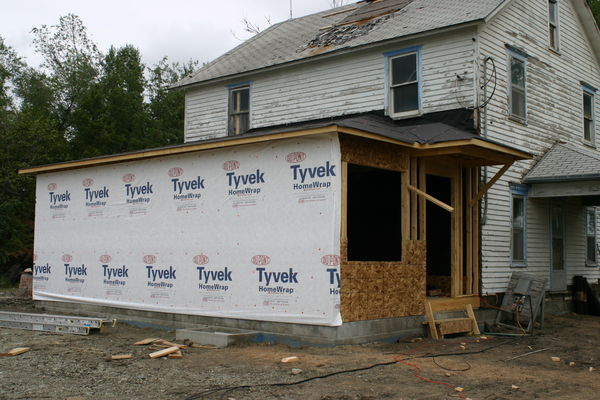
John Goerzen: Renovation: Weeks 8-9

We've been very busy lately, so I'm a bit behind on renovation updates.

I've posted the photos for weeks 8 and 9. The new kitchen is starting to take shape!

We're also going to get a nice heating/air system. My great uncle, who is doing that work for us, came up with a 3-zone system. We'll have one furnace & AC, but three temperature sensors. There will be motorized dampers in the ducts that are controlled by that system, so we can direct hot or cold air only where it needs to be. We'll break even on it now because we can make do with a smaller AC and furnace, and will save money over the long run due to lower utility bills.

We also learned that the wood floors in pretty much the entire house can be saved, so that'll be nice, too.

Here's a sample:


Click here for the rest.

26 August 2006

Scott James Remnant: Upstart in Universe

upstart is a replacement for the init daemon, the process spawned by the kernel that is responsible for starting, supervising and stopping all other processes on the system. The existing daemon is based on the one found in UNIX System V, and is thus known as sysvinit. It separates jobs into different “run levels” and can either run a job when particular run levels are entered (e.g. /etc/init.d/rc 2) or continually during a particular run level (e.g. /sbin/getty). The /etc/init.d/rc script is also based on the System V one (and is in the sysv-rc package), it simply executes the stop then start scripts found in /etc/rcN.d (where N is the run level) in numerical order. Why change it? Running a fixed set of scripts, one after the other, in a particular order has served us reasonably well until now. However as Linux has got better and better at dealing with modern computing (arguably Linux’s removable device support is better than Windows’ now) this approach has begun to have problems. The old approach works as long as you can guarantee when in the boot sequence things are available, so you can place your init script after that point and know that it will work. Typical ordering requirements are: This worked ten years ago, why doesn’t it work now? The simple answer is that our computer has become far more flexible: We’ve been able to hack the existing system to make much of this possible, however the result is chock-full of race conditions and bugs. It was time to design a new system that can cope with all of these things without any problems. What we needed was an init system that could dynamically order the start up sequence based on the configuration and hardware found as it went along. Design of upstart upstart is an event-based init daemon; events generated by the system cause jobs to be started and running jobs to be stopped. Events can include things such as: In fact, any process on the system may send events to the init daemon over its control socket (subject to security restrictions, of course) so there is no limit. Each job has a life-cycle which is shown in the graph below: The two states shown in red (“waiting” and “running”) are rest states, normally we expect the job to remain in these states until an event comes in, at which point we need to take actual to get the job into the next state. The other states are temporary states; these allow a job to run shell script to prepare for the job itself to be run (“starting”) and clean up afterwards (“stopping”). For services that should be respawned if they terminate before an event that stops them is received, they may run shell script before the process is started again (“respawning”). Jobs leave a state because the process associated with them terminates (or gets killed) and move to the next appropriate state, following the green arrow if the job is to be started or the red arrow if it is to be stopped. When a script returns a non-zero exit status, or is killed, the job will always be stoped. When the main process terminates and the job should not be respawned, the job will also always be stopped. As already covered, events generated by the init daemon or received from other processes cause jobs to be started or stopped; also manual requests to start or stop a job may be received. The communication between the init daemon and other processes is bi-directional, so the status of jobs may be queries and even changes of state to all jobs be received. How does it differ from launchd? launchd is the replacement init system used in MacOS X developed as an “Open Source” project by Apple. For much of its life so far, the licence has actually been entirely non-free and thus it has only become recently interesting with the licence change. Much of the goal of both systems appears initially to be the same; they both start jobs based on system events, however the launchd system severly limits the events to only the following: Therefore it does not actually allow us to directly solve the problems we currently have; we couldn’t mount filesystems once the “filesystem checked” event has been recived, we couldn’t check filesystems when the block device is added and we certainly couldn’t start daemons once the complete filesystem (as described by /etc/fstab) is available and writable. The launchd model expects the job to “sit and wait” if it is unable to start, rather than provide a mechanism for the job to only be started when it doesn’t need to wait. Jobs that need /usr to be mounted would need to spin in a loop waiting for /usr to be available before continuing (or use a file in a tmpfs to indicate it’s available, and use that modification as the event). This is not especially surprising given that Apple have a high degree of control over both their hardware and the actual underlying operating system; they don’t need to deal with the wide array of different configurations that we have in the Linux world. Had the licence been sufficiently free at the point we began development of our own system, we would probably have extended launchd rather than implement our own. At the point Apple changed the licence, our own system was already more suitable for our purposes. How does it differ from initng? Initng by Jimmy Wennlund is another replacement init daemon intended to replace the sysvinit system used by Linux. It is a dependency-based system, where upstart is an event-based system. The notion of a dependency-based system is interesting to talk about at this point. Jobs declare dependencies on other jobs that need to happen before the job itself can be started. Starting the job causes its dependencies to be started first, and their dependencies, and so on. When jobs are stopped, if running jobs have no dependencies, they themselves can be stopped. It’s a neat solution to the problem of ordering a fixed boot sequence and the problem of keeping the number of running processes to a minimum needed. However this means that you need to have goals in mind when you boot the system, you need to have decided that you want gdm to be started in order for it, and its dependencies, to be started. Initng uses run levels to ensure this happens, where a run level is a list of goal jobs that should be running in that run level. It’s also not clear how the dependencies interact with the different types of job, a dependency on Apache would need the daemon to be running where a dependency on “checkroot” would need the script to have finished running. Upstart handles this by using different events (“apache running” vs. “checkroot stopping”). Again while interesting, Initng does not solve the problems that we wanted to solve. It can reorder a fixed set of jobs, but cannot dynamically determine the set of jobs needed for that particular boot. A typical example would be that if the only dependency on the job that configures networking is the mount network filesystems job, then should that job fail or notbe a goal (e.g. because there are no network filesystems to be mounted) the result is that network devices themselves will not be configured. You could make everything a goal, and just use the dependencies to determine the order, however this is less efficient than just ordering the existing sysv-rc scripts (which
can be done at install time). Another example is that often you simply don’t know whether something is a dependency or not without reading other configuration, for example the mount network filesystems may be a dependency of everything under /usr or may just be a dependency of anything allowing the user to login if it just mounts /home. The difference in model can be summed up as “initng starts with a list of goals and works out how to get there, upstart starts with nothing and finds out where it gets to.” How does it differ from Solaris SMF? SMF is another approach to replacing init developed by Sun for the Solaris operating system. Like initng it’s a dependency-based system, so see above for the differences between those systems and upstart. SMF’s main focus is serive management; making sure that once services are running, they stay running, and allowing the system administrator to query and modify the states of jobs on the system. Upstart provides the same set of functionality in this regard, services are respawned when they fail and system administrators can at any time query the state of running services and adjust the state to their liking. Will it replace cron, inetd, etc? The goal of upstart is to replace those daemons, so that there is only one place (/etc/event.d) where system administrators need to configure when and how jobs should be run. In fact, the goal is that upstart should also replace the “run event scripts” functionality of any daemon on the system. Daemons such as acpid, apmd and Network Manager would send events to init instead of running scripts themselves with their own perculiar configuration and semantics. A system administrator who only wanted a particular daemon to be run while the computer was on AC power would simply need to edit /etc/event.d/daemon and change “on startup” to “on ac power”. What about compatibility? There’s a lot of systems administrators out there who have learned how Linux works already and will not want to learn again immediately, there’s also a large number of books that cover the existing software and won’t cover upstart for at least a couple of years. For this reason, compatibility is very important. upstart will continue to run the existing scripts for the forseeable future so that packages will not need to be updated until the author wants. Compatibility command-line tools that behave like their existing equivalents will also be implemented, a system administrator would never need to know that crontab -e is actually changing upstart jobs. Does it use D-BUS?
“To D-BUS people, every problem seems like a D-BUS problem.”
—Erik Troan
The UNIX philosophy is that something should do just one job, and do it very well. upstart’s one job is starting, supervising and stopping other jobs; D-BUS’s one job is passing messages between other jobs. D-BUS does provide a mechanism for services to be activated when the first message is sent to them, thereby starting other jobs. Some people have taken this idea and extended it to suggest that all a replacement init system need do is register jobs with D-BUS and turn booting into a simple matter of message parsing. This seems wrong to me, D-BUS would need to be extended to supervise these services, provide means for them to be restarted and stopped; as well as deal with being process #1 which means cleaning up after children whose parent’s have died, etc. It seems far simpler to arrange for D-BUS to send an event to init when it needs a service to be started, and focus on being a very good message passing system. The IPC mechanism used by upstart is not currently D-BUS because of various problems, however it’s always been expected that even if init itself doesn’t communicate with D-BUS directly, there would be a D-BUS proxy that would ensure messages about all init jobs and events would be given to D-BUS and D-BUS clients could send messages to init to query and change the state of jobs. What is the implementation plan? Because this is process #1 we are changing, we want to make sure that we get it right. Therefore instead of releasing a fully-featured daemon and configuration to the world, we’re developing it in the following stages:
  1. Principal development; at the end of this stage the daemon has been implemented and can manage jobs as described.
  2. Replacement of /sbin/init while running the existing sysv-rc scripts. This is the shake-down test of the daemon, can it perform the same job as the existing sysvinit daemon without any regressions?
  3. /etc/rcS.d scripts replaced by upstart jobs. These consitute the majority of tasks for booting the system into at least single-user mode, and contain many of the current ordering problems and race conditions. If the daemon solves the problems here, it will be a success.
  4. Other daemon’s scripts replaced by upstart jobs on a package-by-package basis; this will be an ongoing effort during which upstart will continue running the existing sysv-rc scripts as well as its own jobs. During this time the event system may be tweaked to ensure it truly solves the problems we need.
  5. Replcement of cron, atd, anacron and inetd. This will happen alongside the above and result in a single place to configure system jobs.
  6. Modification of other daemons and processes to send events to init instead of trying to run things themselves.
The current plan is that we will be at least part of the way into stage #3 by the time edgy is released, with that release shipping with upstart as the init daemon and the most critical rcS scripts being run by it to correct the major problems For edgy+1 we hope to have completed stage #5 and be at least part of the way into the implementation of stage #6. From the start of development of edgy+2, no new packages will be accepted unless they provide upstart jobs instead of init scripts and init scripts will be considered deprecated. What state is it in now? The init daemon has been written and is able to manage jobs as described above, receiving events on the control socket to start and stop them. This has now been uploaded to the Ubuntu universe component in the upstart package for testing before it becomes the init daemon. We welcome any experienced users who want to help test this; install the package and follow the instructions in /usr/share/doc/upstart/README.Debian to add a boot option that will use upstart instead of init. If your system boots and shut downs normally (other than a slightly more verbose boot without usplash running) then it is working correctly. Other types of events will be added as required during development and testing. Currently only a basic client tool (initctl) has been written, compatibility tools such as shutdown will be written over the next week or two before it replaces our sysvinit package.

Jeff Bailey: When I breathe in...

Wow, haven't had time to post in a while. Some major highlights over the past couple of weeks:

(longish entry, hidding behind an lj-cut to avoid flooding various aggregators...)


Opus and ConCentric

Angie and I went to Opus and ConCentric. For those not familiar, it's an annual UU Young Adult (18-35yr olds) campout and spritual retreat. When we're there, we do activities, workshops, worship, cook, clean, sit around the fire, swim, talk, laugh, cry, and all the things that come when you throw people together in a space for 10 days. Every time that I go, I both miss it and am glad when I leave. Over the course of the year, I start to think about only the good parts and when I go back. But when I'm there, there's tempers, hurt feelings, things go wrong. At the same time, when I'm there, I meet some of the people I'll connect with the strongest over the course of the year. Sometimes just a feeling or a song from the camp will help me reconnect and push through in the year in between.

This Opus in particular was interesting. I'd been away for two years, after having been on the planning committee for two years. There were things I loved: There were new people, new songs, new games. I learned to crochet, swam naked under the stars, reconnected with many old and new friends. This particular camp in Maryland is the one at which I proposed to Angie in 2000. There were things that sucked: The cooking staff had trouble getting food out for the first few days, which resulted in one of them quitting; a few hospital visits for people onsite stressed my friend who was the first aid attendant. Fortunately, Angie and I have worked in camp kitchens before, and she was able to step in and fill that roll. A ...

I need a collective for a group of people that doesn't sound like 90's corporate psychobabble. 'team's are things that compete. Maybe I'll steal the word from the current Ubuntu release.

... knot of 4 of us are applying to be kitchen staff next year. I have to be careful what I commit to this year, since in general all commitments I'm making to people officially expire in February. I can't tell what life will be like on the other side of having a child!

It's also hard going to a camp where we've been before, I think. My memories of that camp are mostly centred around people who weren't there. One of whom is dead, many have aged out, many just didn't come this time. I miss all of you.

For the drive down, Angie and I rented a Smart Car from Avis. (Photo by Simon Law) Driving down to Maryland was fun. These things aren't for sale in the US until 2008, and there were many pictures of us taken on the drive and at gas stations. At least a dozen SUV drivers walked over to us to ask the mileage. It sustains 120km/h with no problems and doesn't get blown around too much on the highway. A few times I took it up to 130km/h, but at that point it starts to blow around alot. It *is* tiny, though. Packing enough for Angie and me to travel for 10 days was a bit tight, and driving a Yarris when I got back felt *huge*. On the way down, including Angie going to work once, and us taking a detour, the Diesel cost us $35, and the tolls cost us $40.

We did the drive down in two days. The first day making sure that we crossed the border and getting from Montr al to Albany. On the drive down on the second day, we didn't want to hit the NJ Turnpike at 5pm on a Friday, so we stopped for lunch at a place called Eduardo's Pizza in Boonton, NJ. They had some of the best pizza we've ever had, and the nicest staff. They gave us directions to a waterpark nearby which had a neat ride called High Anxiety (Picture 2 Picture 3). I prefered to call it Funnel of Doom. The park was overpriced for a full day for what you'd get, but the half-day discount prices were worth it and the park was mostly empty because of a state fair.

The drive back was mostly a day of hard driving. Being at camp was wonderful, but we wanted our own *beds*. We got a bit lost coming back, and somehow paid less than $10 in tolls, despite travelling in the same amount of time. I like adventures like that.

So what's next? Re-entry into the world is almost done, but now there's re-entry into the mainstream UU communities. This is the part I find the hardest. Opus is such an idealised world, where we talk about anti-oppression work, changing the world, changing ourselves to help create this new world. The worships are spritually alive (Elandria, YOU ROCK MY WORLD!) and the group doesn't stay long enough for alot of politicking to set in. Our jobs leaving there are always to take a part of that community and recreate it elsewhere. I think it's the toughest job I've ever had.

Go out into the highways and byways. Give the people something of your new vision. You may possess only a small light, but uncover it, let it shine, use it in order to bring more light and understanding to the hearts and minds of men and women. Give them not Hell, but hope and courage. Do not push them deeper into their theological despair, but preach the kindness and everlasting love of God.
- John Murray


For whatever God means to you of course. Blessed be. =)

Next.

Previous.