Search Results: "he"

26 July 2022

Raphaël Hertzog: Freexian s report about Debian Long Term Support, June 2022


A Debian LTS logo
Like each month, have a look at the work funded by Freexian s Debian LTS offering. Debian project funding No any major updates on running projects.
Two 1, 2 projects are in the pipeline now.
Tryton project is in a review phase. Gradle projects is still fighting in work. In June, we put aside 2254 EUR to fund Debian projects. We re looking forward to receive more projects from various Debian teams! Learn more about the rationale behind this initiative in this article. Debian LTS contributors In June, 15 contributors have been paid to work on Debian LTS, their reports are available: Evolution of the situation In June we released 27 DLAs.

This is a special month, where we have two releases (stretch and jessie) as ELTS and NO release as LTS. Buster is still handled by the security team and will probably be given in LTS hands at the beginning of the August. During this month we are updating the infrastructure, documentation and improve our internal processes to switch to a new release.
Many developers have just returned back from Debconf22, hold in Prizren, Kosovo! Many (E)LTS members could meet face-to-face and discuss some technical and social topics! Also LTS BoF took place, where the project was introduced (link to video).
Thanks to our sponsors Sponsors that joined recently are in bold. We are pleased to welcome Alter Way where their support of Debian is publicly acknowledged at the higher level, see this French quote of Alterway s CEO.

Michael Ablassmeier: Added remote capability to virtnbdbackup

Latest virtnbdbackup version now supports backing up remote libvirt hosts, too. No installation on the hypervisor required anymore:
virtnbdbackup -U qemu+ssh://usr@hypervisor/system -d vm1 -o /backup/vm1
Same applies for restore operations, other enhancements are: Next up: add TLS support for remote NBD connections.

25 July 2022

Bits from Debian: DebConf22 closes in Prizren and DebConf23 dates announced

DebConf22 group photo - click to enlarge On Sunday 24 July 2022, the annual Debian Developers and Contributors Conference came to a close. Hosting 260 attendees from 38 different countries over a combined 91 event talks, discussion sessions, Birds of a Feather (BoF) gatherings, workshops, and activities, DebConf22 was a large success. The conference was preceded by the annual DebCamp held 10 July to 16 July which focused on individual work and team sprints for in-person collaboration towards developing Debian. In particular, this year there have been sprints to advance development of Mobian/Debian on mobile, reproducible builds and Python in Debian, and a BootCamp for newcomers, to get introduced to Debian and have some hands-on experience with using it and contributing to the community. The actual Debian Developers Conference started on Sunday 17 July 2022. Together with activities such as the traditional 'Bits from the DPL' talk, the continuous key-signing party, lightning talks and the announcement of next year's DebConf (DebConf23 in Kochi, India), there were several sessions related to programming language teams such as Python, Perl and Ruby, as well as news updates on several projects and internal Debian teams, discussion sessions (BoFs) from many technical teams (Long Term Support, Android tools, Debian Derivatives, Debian Installer and Images team, Debian Science...) and local communities (Debian Brasil, Debian India, the Debian Local Teams), along with many other events of interest regarding Debian and free software. The schedule was updated each day with planned and ad-hoc activities introduced by attendees over the course of the entire conference. Several activities that couldn\'t be organized in past years due to the COVID pandemic returned to the conference\'s schedule: a job fair, open-mic and poetry night, the traditional Cheese and Wine party, the group photos and the Day Trip. For those who were not able to attend, most of the talks and sessions were recorded for live streams with videos made, available through the Debian meetings archive website. Almost all of the sessions facilitated remote participation via IRC messaging apps or online collaborative text documents. The DebConf22 website will remain active for archival purposes and will continue to offer links to the presentations and videos of talks and events. Next year, DebConf23 will be held in Kochi, India, from September 10 to September 16, 2023. As tradition follows before the next DebConf the local organizers in India will start the conference activites with DebCamp (September 03 to September 09, 2023), with particular focus on individual and team work towards improving the distribution. DebConf is committed to a safe and welcome environment for all participants. See the web page about the Code of Conduct in DebConf22 website for more details on this. Debian thanks the commitment of numerous sponsors to support DebConf22, particularly our Platinum Sponsors: Lenovo, Infomaniak, ITP Prizren and Google. About Debian The Debian Project was founded in 1993 by Ian Murdock to be a truly free community project. Since then the project has grown to be one of the largest and most influential open source projects. Thousands of volunteers from all over the world work together to create and maintain Debian software. Available in 70 languages, and supporting a huge range of computer types, Debian calls itself the universal operating system. About DebConf DebConf is the Debian Project's developer conference. In addition to a full schedule of technical, social and policy talks, DebConf provides an opportunity for developers, contributors and other interested people to meet in person and work together more closely. It has taken place annually since 2000 in locations as varied as Scotland, Argentina, and Bosnia and Herzegovina. More information about DebConf is available from https://debconf.org/. About Lenovo As a global technology leader manufacturing a wide portfolio of connected products, including smartphones, tablets, PCs and workstations as well as AR/VR devices, smart home/office and data center solutions, Lenovo understands how critical open systems and platforms are to a connected world. About Infomaniak Infomaniak is Switzerland\'s largest web-hosting company, also offering backup and storage services, solutions for event organizers, live-streaming and video on demand services. It wholly owns its datacenters and all elements critical to the functioning of the services and products provided by the company (both software and hardware). About ITP Prizren Innovation and Training Park Prizren intends to be a changing and boosting element in the area of ICT, agro-food and creatives industries, through the creation and management of a favourable environment and efficient services for SMEs, exploiting different kinds of innovations that can contribute to Kosovo to improve its level of development in industry and research, bringing benefits to the economy and society of the country as a whole. About Google Google is one of the largest technology companies in the world, providing a wide range of Internet-related services and products such as online advertising technologies, search, cloud computing, software, and hardware. Google has been supporting Debian by sponsoring DebConf for more than ten years, and is also a Debian partner sponsoring parts of Salsa's continuous integration infrastructure within Google Cloud Platform. Contact Information For further information, please visit the DebConf22 web page at https://debconf22.debconf.org/ or send mail to press@debian.org.

23 July 2022

Wouter Verhelst: Planet Grep now running PtLink

Almost 2 decades ago, Planet Debian was created using the "planetplanet" RSS aggregator. A short while later, I created Planet Grep using the same software. Over the years, the blog aggregator landscape has changed a bit. First of all, planetplanet was abandoned, forked into Planet Venus, and then abandoned again. Second, the world of blogging (aka the "blogosphere") has disappeared much, and the more modern world uses things like "Social Networks", etc, making blogs less relevant these days. A blog aggregator community site is still useful, however, and so I've never taken Planet Grep down, even though over the years the number of blogs that was carried on Planet Grep has been reducing. In the past almost 20 years, I've just run Planet Grep on my personal server, upgrading its Debian release from whichever was the most recent stable release in 2005 to buster, never encountering any problems. That all changed when I did the upgrade to Debian bullseye, however. Planet Venus is a Python 2 application, which was never updated to Python 3. Since Debian bullseye drops support for much of Python 2, focusing only on Python 3 (in accordance with python upstream's policy on the matter), that means I have had to run Planet Venus from inside a VM for a while now, which works as a short-term solution but not as a long-term one. Although there are other implementations of blog aggregation software out there, I wanted to stick with something (mostly) similar. Additionally, I have been wanting to add functionality to it to also pull stuff from Social Networks, where possible (and legal, since some of these have... scary Terms Of Use documents). So, as of today, Planet Grep is no longer powered by Planet Venus, but instead by PtLink. Rather than Python, it was written in Perl (a language with which I am more familiar), and there are plans for me to extend things in ways that have little to do with blog aggregation anymore... There are a few other Planets out there that also use Planet Venus at this point -- Planet Debian and Planet FSFE are two that I'm currently already aware of, but I'm sure there might be more, too. At this point, PtLink is not yet on feature parity with Planet Venus -- as shown by the fact that it can't yet build either Planet Debian or Planet FSFE successfully. But I'm not stopping my development here, and hopefully I'll have something that successfully builds both of those soon, too. As a side note, PtLink is not intended to be bug compatible with Planet Venus. For one example, the configuration for Planet Grep contains an entry for Frederic Descamps, but somehow Planet Venus failed to fetch his feed. With the switch to PtLink, that seems fixed, and now some entries from Frederic seem to appear. I'm not going to be "fixing" that feature... but of course there might be other issues that will appear. If that's the case, let me know. If you're reading this post through Planet Grep, consider this a public service announcement for the possibility (hopefully a remote one) of minor issues.

22 July 2022

Aigars Mahinovs: Debconf 22 photos

Finally after a long break, the in-person Debconf is a thing again, this time Debconf 22 is happening in Prizren, Kosovo. And it has been my pleasure to again be here and take lots of pictures of the event and of the surroundings. The photos can be found in this Google Photo shared album and also on this git-lfs share. But the main photographic delight, as always is the DebConf 22 Group Photo. And here it is!!! DebConf 22 Group photo small You can also see it in:

20 July 2022

Antoine Beaupr : Relaying mail through debian.org

Back in 2020, I wrote this article about using DKIM to sign outgoing debian.org mail. This worked well for me for a while: outgoing mail was signed with DKIM and somehow was delivered. Maybe. Who knows. But now we have a relay server which makes this kind of moot. So I have changed my configuration to use that relay instead of sending email on my own. It seems more reliable that mail seems to be coming from a real debian.org machine, so I'm hoping this will have better reputation than my current setup. In general, you should follow the DSA documentation which includes a Postfix configuration. In my case, it was basically this patch:
diff --git a/postfix/main.cf b/postfix/main.cf
index 7fe6dd9e..eabe714a 100644
--- a/postfix/main.cf
+++ b/postfix/main.cf
@@ -55,3 +55,4 @@ smtp_sasl_security_options =
 smtp_sender_dependent_authentication = yes
 sender_dependent_relayhost_maps = hash:/etc/postfix/sender_relay
 sender_dependent_default_transport_maps = hash:/etc/postfix/sender_transport
+smtp_tls_policy_maps = hash:/etc/postfix/tls_policy
diff --git a/postfix/sender_relay b/postfix/sender_relay
index b486d687..997cce19 100644
--- /dev/null
+++ b/postfix/sender_relay
@@ -0,0 +1,2 @@
+# Per-sender provider; see also /etc/postfix/sasl_passwd.
+@debian.org    [mail-submit.debian.org]:submission
diff --git a/postfix/sender_transport b/postfix/sender_transport
index ca69bc7a..c506c1fc 100644
--- /dev/null
+++ b/postfix/sender_transport
@@ -0,0 +1,1 @@
+anarcat@debian.org     smtp:
diff --git a/postfix/tls_policy b/postfix/tls_policy
new file mode 100644
index 00000000..9347921a
--- /dev/null
+++ b/postfix/tls_policy
@@ -0,0 +1,1 @@
+submission.torproject.org:submission   verify ciphers=high
This configuration differs from the one provided by DSA because I already had the following configured:
sender_dependent_relayhost_maps = hash:/etc/postfix/sender_relay
smtp_sender_dependent_authentication = yes
smtp_sasl_auth_enable = yes
smtp_sasl_password_maps = hash:/etc/postfix/sasl_passwd
smtp_sasl_tls_security_options = noanonymous
I also don't show the patch on /etc/postfix/sasl_passwd for obvious security reasons. I also had to setup a tls_policy map, because I couldn't use dane for all my remotes. You'll notice I also had to setup a sender_transport because I use a non-default default_transport as well. It also seems like you can keep the previous DKIM configuration in parallel with this one, as long as you don't double-sign outgoing mail. Since this configuration here is done on my mail client (i.e. not on the server where I am running OpenDKIM), I'm not double-signing so I left the DKIM configuration alone. But if I wanted to remove it, the magic command is:
echo "del dkimPubKey"   gpg --clearsign   mail changes@db.debian.org

Enrico Zini: Deconstruction of the DAM hat

Further reading Talk notes Intro Debian Account Managers Responsibility for official membership What DAM is not Unexpected responsibilities DAM warnings DAM warnings? House rules Interpreting house rules Governance by bullying How about the Community Team? How about DAM? How about the DPL? Concentrating responsibility Empowering developers What needs to happen

19 July 2022

Russell Coker: DDC as a KVM Switch

With the recent resurgence in Covid19 I ve been working from home a lot and using both my work laptop and personal PC on the same monitor. HDMI KVM switches start at $150 and I didn t feel like buying one. So I wrote a script to change inputs on my monitor. The following script locks the session on the local machine and switches the monitor s input to the other machine. I ran the command ddcutil vcpinfo grep Input which shows that (on my monitor at least) 60 is the VCP for input. Then I ran the command ddcutil getvcp 60 to get the current value and tried setting values sequentially to find the value for the other port. Below is the script I m using on one system, the other is the same but setting the different port via setvcp. The loginctl command is to lock the screen to prevent accidental keyboard or mouse input from messing anything up.
# lock the session, assumes that seat0 is the only session
loginctl lock-session $(loginctl list-sessions grep "seat0 *$" cut -c1-7)
# 0xf is DisplayPort, 0x11 is HDMI-1
ddcutil setvcp 60 0x11
For keyboard, mouse, and speakers I m using a USB 2.0 hub that I can switch between computers. I idly considered getting a three-pole double-throw switch (four pole switches aren t available at my local electronic store) to switch USB 2.0 as I only need to switch 3 of the 4 wires. But for the moment just plugging the hub into different systems is enough, I only do that a couple of times a day.

Craig Small: Linux Memory Statistics

Pretty much everyone who has spent some time on a command line in Linux would have looked at the free command. This command provides some overall statistics on the memory and how it is used. Typical output looks something like this:
             total        used        free      shared  buff/cache  available
Mem:      32717924     3101156    26950016      143608     2666752  29011928
Swap:      1000444           0     1000444
Memory sits in the first row after the headers then we have the swap statistics. Most of the numbers are directly fetched from the procfs file /proc/meminfo which are scaled and presented to the user. A good example of a simple stat is total, which is just the MemTotal row located in that file. For the rest of this post, I ll make the rows from /proc/meminfo have an amber background. What is Free, and what is Used? While you could say that the free value is also merely the MemFree row, this is where Linux memory statistics start to get odd. While that value is indeed what is found for MemFree and not a calculated field, it can be misleading. Most people would assume that Free means free to use, with the implication that only this amount of memory is free to use and nothing more. That would also mean the used value is really used by something and nothing else can use it. In the early days of free and Linux statistics in general that was how it looked. Used is a calculated field (there is no MemUsed row) and was, initially, Total - Free. The problem was, Used also included Buffers and Cached values. This meant that it looked like Linux was using a lot of memory for something. If you read old messages before 2002 that are talking about excessive memory use, they quite likely are looking at the values printed by free. The thing was, under memory pressure the kernel could release Buffers and Cached for use. Not all of the storage but some of it so it wasn t all used. To counter this, free showed a row between Memory and Swap with Used having Buffers and Cached removed and Free having the same values added:
             total       used       free     shared    buffers     cached
Mem:      32717924    6063648   26654276          0     313552    2234436
-/+ buffers/cache:    3515660   29202264
Swap:      1000444          0    1000444
You might notice that this older version of free from around 2001 shows buffers and cached separately and there s no available column (we ll get to Available later.) Shared appears as zero because the old row was labelled MemShared and not Shmem which was changed in Linux 2.6 and I m running a system way past that version. It s not ideal, you can say that the amount of free memory is something above 26654276 and below 29202264 KiB but nothing more accurate. buffers and cached are almost never all-used or all-unused so the real figure is not either of those numbers but something in-between. Cached, just not for Caches That appeared to be an uneasy truce within the Linux memory statistics world for a while. By 2014 we realised that there was a problem with Cached. This field used to have the memory used for a cache for files read from storage. While this value still has that component, it was also being used for tmpfs storage and the use of tmpfs went from an interesting idea to being everywhere. Cheaper memory meant larger tmpfs partitions went from a luxury to something everyone was doing. The problem is with large files put into a tmpfs partition the Free would decrease, but so would Cached meaning the free column in the -/+ row would not change much and understate the impact of files in tmpfs. Lucky enough in Linux 2.6.32 the developers added a Shmem row which was the amount of memory used for shmem and tmpfs. Subtracting that value from Cached gave you the real cached value which we call main_cache and very briefly this is what the cached value would show in free. However, this caused further problems because not all Shem can be reclaimed and reused and probably swapped one set of problematic values for another. It did however prompt the Linux kernel community to have a look at the problem. Enter Available There was increasing awareness of the issues with working out how much memory a system has free within the kernel community. It wasn t just the output of free or the percentage values in top, but load balancer or workload placing systems would have their own view of this value. As memory management and use within the Linux kernel evolved, what was or wasn t free changed and all the userland programs were expected somehow to keep up. The kernel developers realised the best place to get an estimate of the memory not used was in the kernel and they created a new memory statistic called Available. That way if how the memory is used or set to be unreclaimable they could change it and userland programs would go along with it. procps has a fallback for this value and it s a pretty complicated setup.
  1. Find the min_free_kybtes setting in sysfs which is the minimum amount of free memory the kernel will handle
  2. Add a 25% to this value (e.g. if it was 4000 make it 5000), this is the low watermark
  3. To find available, start with MemFree and subtract the low watermark
  4. If half of both Inactive(file) and Active(file) values are greater than the low watermark, add that half value otherwise add the sum of the values minus the low watermark
  5. If half of Slab Claimable is greater than the low watermark, add that half value otherwise add Slab Claimable minus the low watermark
  6. If what you get is less than zero, make available zero
  7. Or, just look at Available in /proc/meminfo
For the free program, we added the Available value and the +/- line was removed. The main_cache value was Cached + Slab while Used was calculated as Total - Free - main_cache - Buffers. This was very close to what the Used column in the +/- line used to show. What s on the Slab? The next issue that came across was the use of slabs. At this point, main_cache was Cached + Slab, but Slab consists of reclaimable and unreclaimable components. One part of Slab can be used elsewhere if needed and the other cannot but the procps tools treated them the same. The Used calculation should not subtract SUnreclaim from the Total because it is actually being used. So in 2015 main_cache was changed to be Cached + SReclaimable. This meant that Used memory was calculated as Total - Free - Cached - SReclaimable - Buffers. Revenge of tmpfs and the return of Available The tmpfs impacting Cached was still an issue. If you added a 10MB file into a tmpfs partition, then Free would reduce by 10MB and Cached would increase by 10MB meaning Used stayed unchanged even though 10MB had gone somewhere. It was time to retire the complex calculation of Used. For procps 4.0.1 onwards, Used now means not available . We take the Total memory and subtract the Available memory. This is not a perfect setup but it is probably going to be the best one we have and testing is giving us much more sensible results. It s also easier for people to understand (take the total value you see in free, then subtract the available value). What does that mean for main_cache which is part of the buff/cache value you see? As this value is no longer in the used memory calculation, it is less important. Should it also be reverted to simply Cached without the reclaimable Slabs? The calculated fields In summary, what this means for the calculated fields in procps at least is: Almost everything else, with the exception of some bounds checking, is what you get out of /proc/meminfo which is straight from the kernel.

18 July 2022

Bits from Debian: DebConf22 welcomes its sponsors!

DebConf22 is taking place in Prizren, Kosovo, from 17th to 24th July, 2022. It is the 23rd edition of the Debian conference and organizers are working hard to create another interesting and fruitful event for attendees. We would like to warmly welcome the sponsors of DebConf22, and introduce you to them. We have four Platinum sponsors. Our first Platinum sponsor is Lenovo. As a global technology leader manufacturing a wide portfolio of connected products, including smartphones, tablets, PCs and workstations as well as AR/VR devices, smart home/office and data center solutions, Lenovo understands how critical open systems and platforms are to a connected world. Infomaniak is our second Platinum sponsor. Infomaniak is Switzerland's largest web-hosting company, also offering backup and storage services, solutions for event organizers, live-streaming and video on demand services. It wholly owns its datacenters and all elements critical to the functioning of the services and products provided by the company (both software and hardware). The ITP Prizren is our third Platinum sponsor. ITP Prizren intends to be a changing and boosting element in the area of ICT, agro-food and creatives industries, through the creation and management of a favourable environment and efficient services for SMEs, exploiting different kinds of innovations that can contribute to Kosovo to improve its level of development in industry and research, bringing benefits to the economy and society of the country as a whole. Google is our fourth Platinum sponsor. Google is one of the largest technology companies in the world, providing a wide range of Internet-related services and products such as online advertising technologies, search, cloud computing, software, and hardware. Google has been supporting Debian by sponsoring DebConf for more than ten years, and is also a Debian partner sponsoring parts of Salsa's continuous integration infrastructure within Google Cloud Platform. Our Gold sponsors are: Roche, a major international pharmaceutical provider and research company dedicated to personalized healthcare. Microsoft, enables digital transformation for the era of an intelligent cloud and an intelligent edge. Its mission is to empower every person and every organization on the planet to achieve more. Ipko Telecommunications, provides telecommunication services and it is the first and the most dominant mobile operator which offers fast-speed mobile internet 3G and 4G networks in Kosovo. Ubuntu, the Operating System delivered by Canonical. U.S. Agency for International Development, leads international development and humanitarian efforts to save lives, reduce poverty, strengthen democratic governance and help people progress beyond assistance. Our Silver sponsors are: Pexip, is the video communications platform that solves the needs of large organizations. Deepin is a Chinese commercial company focusing on the development and service of Linux-based operating systems. Hudson River Trading, a company researching and developing automated trading algorithms using advanced mathematical techniques. Amazon Web Services (AWS), is one of the world's most comprehensive and broadly adopted cloud platforms, offering over 175 fully featured services from data centers globally. The Bern University of Applied Sciences with near 7,800 students enrolled, located in the Swiss capital. credativ, a service-oriented company focusing on open-source software and also a Debian development partner. Collabora, a global consultancy delivering Open Source software solutions to the commercial world. Arm: with the world s Best SoC Design Portfolio, Arm powered solutions have been supporting innovation for more than 30 years and are deployed in over 225 billion chips to date. GitLab, an open source end-to-end software development platform with built-in version control, issue tracking, code review, CI/CD, and more. Two Sigma, rigorous inquiry, data analysis, and invention to help solve the toughest challenges across financial services. Starlabs, builds software experiences and focus on building teams that deliver creative Tech Solutions for our clients. Solaborate, has the world s most integrated and powerful virtual care delivery platform. Civil Infrastructure Platform, a collaborative project hosted by the Linux Foundation, establishing an open source base layer of industrial grade software. Matanel Foundation, operates in Israel, as its first concern is to preserve the cohesion of a society and a nation plagued by divisions. Bronze sponsors: bevuta IT, Kutia, Univention, Freexian. And finally, our Supporter level sponsors: Altus Metrum, Linux Professional Institute, Olimex, Trembelat, Makerspace IC Prizren, Cloud68.co, Gandi.net, ISG.EE, IPKO Foundation, The Deutsche Gesellschaft f r Internationale Zusammenarbeit (GIZ) GmbH. Thanks to all our sponsors for their support! Their contributions make it possible for a large number of Debian contributors from all over the globe to work together, help and learn from each other in DebConf22. DebConf22 logo

17 July 2022

Martin-Éric Racine: Trying to chainload iPXE on old Etherboot hardware

Among my collection of PC hardware, I have a few rarities whose netboot implementation predates PXE. Since I recently managed to configure dnsmasq as a potent TFTP and PXE server, I figured that I'd try chainloading iPXE via BOOTP options. This required preparing a boot image using antiquated tools: $ sudo mkelf-linux --param=autoboot --output=/srv/tftp/ipxe.nbi /srv/tftp/ipxe.lkrn The host succesufully loads the boot image, except that the iPXE blob fails to find the network card:
Any ideas?

Bits from Debian: DebConf22 starts today in Prizren

DebConf22, the 23rd annual Debian Conference, is taking place in Prizren, Kosovo from July 17th to 24th, 2022. Debian contributors from all over the world have come together at Innovation and Training Park (ITP) in Prizren, Kosovo, to participate and work in a conference exclusively run by volunteers. Today the main conference starts with over 270 attendants expected and 82 activities scheduled, including 45-minute and 20-minute talks and team meetings ("BoF"), workshops, and a job fair, as well as a variety of other events. The full schedule at https://debconf2.debconf.org/schedule/ is updated every day, including activities planned ad-hoc by attendees during the whole conference. If you want to engage remotely, you can follow the video streaming available from the DebConf22 website of the events happening in the three talk rooms: Drini, Lumbardhi and Ereniku. Or you can join the conversation about what is happening in the talk rooms: #debconf-drini, #debconf-lumbardhi and #debconf-ereniku (all those channels in the OFTC IRC network). You can also follow the live coverage of news about DebConf22 on https://micronews.debian.org or the @debian profile in your favorite social network. DebConf is committed to a safe and welcoming environment for all participants. See the web page about the Code of Conduct in DebConf22's website for more details on this. Debian thanks the commitment of numerous sponsors to support DebConf22, particularly our Platinum Sponsors: Lenovo, Infomaniak, ITP Prizren and Google. DebConf22 banner open registration

Russ Allbery: Review: Trang

Review: Trang, by Mary Sisson
Series: Trang #1
Publisher: Mary Sisson
Copyright: 2011
Printing: December 2013
ASIN: B004I6DAQ8
Format: Kindle
Pages: 374
In 2113, a radio mapping satellite near the Titan station disappeared. It then reappeared five days later, apparently damaged and broadcasting a signal that made computers crash. The satellite was immediately sent back to the Space Authority base in Beijing for careful examination, but the techs on the station were able to decode the transmission: a request for the contents of databases. The general manager of the station sent a probe to the same location and it too vanished, returning two days later with a picture of a portal, followed shortly by an alien probe. Five years later, Philippe Trang has been assigned as the first human diplomat to an alien space station in intergalactic space at the nexus of multiple portals. Humans will apparently be the eighth type of intelligent life to send a representative to the station. He'll have a translation system, a security detail, and the groundwork of five years of audiovisual communications with the aliens, including one that was able to learn English. But he'll be the first official diplomatic representative physically there. The current style in SF might lead you to expect a tense thriller full of nearly incomprehensible aliens, unexplained devices, and creepy mysteries. This is not that sort of book. The best comparison point I could think of is James White's Sector General novels, except with a diplomat rather than a doctor. The aliens are moderately strange (not just humans in prosthetic makeup), but are mostly earnest, well-meaning, and welcoming. Trang's security escort is more military than he expects, but that becomes a satisfying negotiation rather than an ongoing problem. There is confusion, misunderstandings, and even violence, but most of it is sorted out by earnest discussion and attempts at mutual understanding. This is, in other words, diplomat competence porn (albeit written by someone who is not a diplomat, so I wouldn't expect too much realism). Trang defuses rather than confronts, patiently sorts through the nuances of a pre-existing complex dynamic between aliens without prematurely picking sides, and has the presence of mind to realize that the special forces troops assigned to him are another culture he needs to approach with the same skills. Most of the book is low-stakes confusion, curiosity, and careful exploration, which could have been boring but wasn't. It helps that Sisson packs a lot of complexity into the station dynamics and reveals it in ways that I found enjoyably unpredictable. Some caveats: This is a self-published first novel (albeit by an experienced reporter and editor) and it shows. The book has a sort of plastic Technicolor feel that I sometimes see in self-published novels, where the details aren't quite deep enough, the writing isn't quite polished, and the dialog isn't quite as tight as I'm used to. It also meanders in a way that few commercial novels do, including slice-of-life moments and small asides that don't go anywhere. This can be either a bug or a feature depending on what you're in the mood for. I found it relaxing and stress-relieving, which is what I was looking for, but you may have a different experience. I will warn that the climax features a sudden escalation of stakes that I don't think was sufficiently signaled by the tone of the writing, and thus felt a bit unreal. Sisson also includes a couple deus ex machina twists that felt a bit predictable and easy, and I didn't find the implied recent history of one of the alien civilizations that believable. The conclusion is therefore not the strongest part of the book; if you're not enjoying the journey, it probably won't get better. But, all that said, this was fun, and I've already bought the second book in the series. It's low-stakes, gentle SF with a core of discovery and exploration rather than social dynamics, and I haven't run across much of that recently. The worst thing in the book is some dream glimpses at a horrific event in Trang's past that's never entirely on camera. It's not as pacifist as James White, but it's close. Recommended, especially if you liked Sector General. White's series is so singular that I previously would have struggled to find a suggestion for someone who wanted more exactly like that (but without the Bewitched-era sexism). Now I have an answer. Score another one for Susan Stepney, who is also how I found Julie Czerneda. Trang is also currently free for Kindle, so you can't beat the price. Followed by Trust. Rating: 8 out of 10

16 July 2022

Petter Reinholdtsen: Automatic LinuxCNC servo PID tuning?

While working on a CNC with servo motors controlled by the LinuxCNC PID controller, I recently had to learn how to tune the collection of values that control such mathematical machinery that a PID controller is. It proved to be a lot harder than I hoped, and I still have not succeeded in getting the Z PID controller to successfully defy gravity, nor X and Y to move accurately and reliably. But while climbing up this rather steep learning curve, I discovered that some motor control systems are able to tune their PID controllers. I got the impression from the documentation that LinuxCNC were not. This proved to be not true The LinuxCNC pid component is the recommended PID controller to use. It uses eight constants Pgain, Igain, Dgain, bias, FF0, FF1, FF2 and FF3 to calculate the output value based on current and wanted state, and all of these need to have a sensible value for the controller to behave properly. Note, there are even more values involved, theser are just the most important ones. In my case I need the X, Y and Z axes to follow the requested path with little error. This has proved quite a challenge for someone who have never tuned a PID controller before, but there is at least some help to be found. I discovered that included in LinuxCNC was this old PID component at_pid claiming to have auto tuning capabilities. Sadly it had been neglected since 2011, and could not be used as a plug in replacement for the default pid component. One would have to rewriting the LinuxCNC HAL setup to test at_pid. This was rather sad, when I wanted to quickly test auto tuning to see if it did a better job than me at figuring out good P, I and D values to use. I decided to have a look if the situation could be improved. This involved trying to understand the code and history of the pid and at_pid components. Apparently they had a common ancestor, as code structure, comments and variable names were quite close to each other. Sadly this was not reflected in the git history, making it hard to figure out what really happened. My guess is that the author of at_pid.c took a version of pid.c, rewrote it to follow the structure he wished pid.c to have, then added support for auto tuning and finally got it included into the LinuxCNC repository. The restructuring and lack of early history made it harder to figure out which part of the code were relevant to the auto tuning, and which part of the code needed to be updated to work the same way as the current pid.c implementation. I started by trying to isolate relevant changes in pid.c, and applying them to at_pid.c. My aim was to make sure the at_pid component could replace the pid component with a simple change in the HAL setup loadrt line, without having to "rewire" the rest of the HAL configuration. After a few hours following this approach, I had learned quite a lot about the code structure of both components, while concluding I was heading down the wrong rabbit hole, and should get back to the surface and find a different path. For the second attempt, I decided to throw away all the PID control related part of the original at_pid.c, and instead isolate and lift the auto tuning part of the code and inject it into a copy of pid.c. This ensured compatibility with the current pid component, while adding auto tuning as a run time option. To make it easier to identify the relevant parts in the future, I wrapped all the auto tuning code with '#ifdef AUTO_TUNER'. The end result behave just like the current pid component by default, as that part of the code is identical. The end result entered the LinuxCNC master branch a few days ago. To enable auto tuning, one need to set a few HAL pins in the PID component. The most important ones are tune-effort, tune-mode and tune-start. But lets take a step back, and see what the auto tuning code will do. I do not know the mathematical foundation of the at_pid algorithm, but from observation I can tell that the algorithm will, when enabled, produce a square wave pattern centered around the bias value on the output pin of the PID controller. This can be seen using the HAL Scope provided by LinuxCNC. In my case, this is translated into voltage (+-10V) sent to the motor controller, which in turn is translated into motor speed. So at_pid will ask the motor to move the axis back and forth. The number of cycles in the pattern is controlled by the tune-cycles pin, and the extremes of the wave pattern is controlled by the tune-effort pin. Of course, trying to change the direction of a physical object instantly (as in going directly from a positive voltage to the equivalent negative voltage) do not change velocity instantly, and it take some time for the object to slow down and move in the opposite direction. This result in a more smooth movement wave form, as the axis in question were vibrating back and forth. When the axis reached the target speed in the opposing direction, the auto tuner change direction again. After several of these changes, the average time delay between the 'peaks' and 'valleys' of this movement graph is then used to calculate proposed values for Pgain, Igain and Dgain, and insert them into the HAL model to use by the pid controller. The auto tuned settings are not great, but htye work a lot better than the values I had been able to cook up on my own, at least for the horizontal X and Y axis. But I had to use very small tune-effort values, as my motor controllers error out if the voltage change too quickly. I've been less lucky with the Z axis, which is moving a heavy object up and down, and seem to confuse the algorithm. The Z axis movement became a lot better when I introduced a bias value to counter the gravitational drag, but I will have to work a lot more on the Z axis PID values. Armed with this knowledge, it is time to look at how to do the tuning. Lets say the HAL configuration in question load the PID component for X, Y and Z like this:
loadrt pid names=pid.x,pid.y,pid.z
Armed with the new and improved at_pid component, the new line will look like this:
loadrt at_pid names=pid.x,pid.y,pid.z
The rest of the HAL setup can stay the same. This work because the components are referenced by name. If the component had used count=3 instead, all use of pid.# had to be changed to at_pid.#. To start tuning the X axis, move the axis to the middle of its range, to make sure it do not hit anything when it start moving back and forth. Next, set the tune-effort to a low number in the output range. I used 0.1 as my initial value. Next, assign 1 to the tune-mode value. Note, this will disable the pid controlling part and feed 0 to the output pin, which in my case initially caused a lot of drift. In my case it proved to be a good idea with X and Y to tune the motor driver to make sure 0 voltage stopped the motor rotation. On the other hand, for the Z axis this proved to be a bad idea, so it will depend on your setup. It might help to set the bias value to a output value that reduce or eliminate the axis drift. Finally, after setting tune-mode, set tune-start to 1 to activate the auto tuning. If all go well, your axis will vibrate for a few seconds and when it is done, new values for Pgain, Igain and Dgain will be active. To test them, change tune-mode back to 0. Note that this might cause the machine to suddenly jerk as it bring the axis back to its commanded position, which it might have drifted away from during tuning. To summarize with some halcmd lines:
setp pid.x.tune-effort 0.1
setp pid.x.tune-mode 1
setp pid.x.tune-start 1
# wait for the tuning to complete
setp pid.x.tune-mode 0
After doing this task quite a few times while trying to figure out how to properly tune the PID controllers on the machine in, I decided to figure out if this process could be automated, and wrote a script to do the entire tuning process from power on. The end result will ensure the machine is powered on and ready to run, home all axis if it is not already done, check that the extra tuning pins are available, move the axis to its mid point, run the auto tuning and re-enable the pid controller when it is done. It can be run several times. Check out the run-auto-pid-tuner script on github if you want to learn how it is done. My hope is that this little adventure can inspire someone who know more about motor PID controller tuning can implement even better algorithms for automatic PID tuning in LinuxCNC, making life easier for both me and all the others that want to use LinuxCNC but lack the in depth knowledge needed to tune PID controllers well. As usual, if you use Bitcoin and want to show your support of my activities, please send Bitcoin donations to my address 15oWEoG9dUPovwmUL9KWAnYRtNJEkP1u1b.

Thomas Goirand: My work during debcamp

I arrived in Prizren late on Wednesday. Here s what I did during debcamp (so over 3 days). I hope this post just motivates others to contribute more to Debian. At least 2 DDs want to upload packages that need a new version of python3-jsonschema (ie: version > 4.x). Unfortunately, version 4 broke a few packages. I therefore uploaded it to Experimental a few months/week, so I could see the result of autopkgtest reading the pseudo excuse page. And it showed a few packages broke. Here s the one used (or part of) OpenStack: Thanks to a reactive upstream, I was able to fix the first 4 above, but not Sahara yet. Vitrage poped-up when I uploade Debian release 2 of jsonschema, surprisingly. Also python3-jsonschema autopkgtest itself was broken because missing python3-pip in depends, but that should be fixed also.
I then filed bugs for packages not under my control: It looks tlike now there s also spyder which wasn t in the list a few hours ago. Maybe I should also file a bug against it. At this point, I don t think the python-jsonschema transition is finished, but it s on good tracks.
Then I also uploaded a new package of Ceph removing the ceph-mgr-diskprediction-local because it depended on python3-sklearn that the release team wanted to remove. I also prepared a point release update for it, but I m currently waiting for the previous upload to migrate to testing before uploading the point release.

Last, I wrote the missing update command for extrepo, and pushed the merge request to Salsa. Now extrepo should be feature complete (at least from my point of view). I also merged the patch for numberstation fixing the debian/copyright, and uploaded it to the NEW queue. It s a new package that does 2 factor authentication, and is mobile friendly: it works perfectly on any Mobian powered phone. Next, I intend to work with Arthur on the Cloud image finder. I hope we can find the time to work on it so it does what I need (ie: support the kind of setup I want to do, with HA, puppet, etc.).

Russ Allbery: INN 2.7.0

This is the first major release of the INN news server package since 2015. It incorporates tons of work on just about every part of INN, ranging from a brand new overview backend contributed by Bo Lindbergh through Cancel-Lock support contributed by Julien LIE to numerous smaller changes in configuration files, protocol support, and overall simplification. Since this represents seven years of development, there are too many major changes to summarize in a short blog post, so I'll simply link to the INN 2.7.0 NEWS file for all of the details, including breaking changes to watch out for when upgrading. INN 2.7 is now the stable branch, and will be maintained on the 2.7 Git branch. The main branch is now open for development targeting 2.8.0. (I'm still hoping to get to the build system overhaul before 2.8.0 is released.) As of tonight, if all goes well, the nightly stable snapshots will be generated from the 2.7 branch instead of the 2.6 branch, so be aware that you will need to pay close attention to the upgrade if you're using a snapshot. As always, thanks to Julien LIE for preparing this release and doing most of the maintenance work on INN! You can get the latest version from the official ISC download page or from my personal INN pages. The latter also has links to the other INN documentation.

15 July 2022

Mike Hommey: Announcing git-cinnabar 0.5.9

Git-cinnabar is a git remote helper to interact with mercurial repositories. It allows to clone, pull and push from/to mercurial remote repositories, using git. Get it on github. These release notes are also available on the git-cinnabar wiki. What s new since 0.5.8?

Bits from Debian: (Unofficial) Debian Perl Sprint 2022

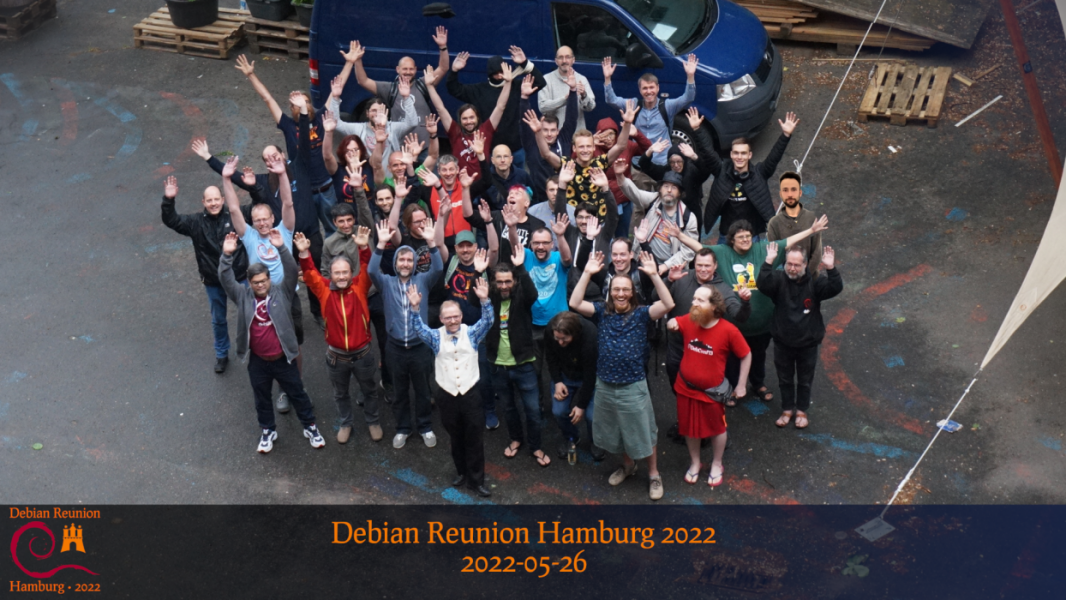
Three members of the Debian Perl Group met in Hamburg between May 23 and May 30 2022 as part of the Debian Reunion Hamburg to continue perl development work for Bookworm and to work on QA tasks across our 3800+ packages. The participants had a good time and met other Debian friends. The sprint was also productive: The more detailed report was posted to the Debian Perl mailing list. The participants would like to thank the Debian Reunion Hamburg organizers for providing the framework for our sprint, all sponsors of the event, and all donors to the Debian project who helped to cover parts of our expenses. Debian Reunion Hamburg 2022 group photo

Steve Kemp: So we come to Lisp

Recently I've been working with simple/trivial scripting languages, and I guess I finally reached a point where I thought "Lisp? Why not". One of the reasons for recent experimentation was thinking about the kind of minimalism that makes implementing a language less work - being able to actually use the language to write itself. FORTH is my recurring example, because implementing it mostly means writing a virtual machine which consists of memory ("cells") along with a pair of stacks, and some primitives for operating upon them. Once you have that groundwork in place you can layer the higher-level constructs (such as "for", "if", etc). Lisp allows a similar approach, albeit with slightly fewer low-level details required, and far less tortuous thinking. Lisp always feels higher-level to me anyway, given the explicit data-types ("list", "string", "number", etc). Here's something that works in my toy lisp:
;; Define a function,  fact , to calculate factorials (recursively).
(define fact (lambda (n)
  (if (<= n 1)
    1
      (* n (fact (- n 1))))))
;; Invoke the factorial function, using apply
(apply (list 1 2 3 4 5 6 7 8 9 10)
  (lambda (x)
    (print "%s! => %s" x (fact x))))
The core language doesn't have helpful functions to filter lists, or build up lists by applying a specified function to each member of a list, but adding them is trivial using the standard car, cdr, and simple recursion. That means you end up writing lots of small functions like this:
(define zero? (lambda (n) (if (= n 0) #t #f)))
(define even? (lambda (n) (if (zero? (% n 2)) #t #f)))
(define odd?  (lambda (n) (! (even? n))))
(define sq    (lambda (x) (* x x)))
Once you have them you can use them in a way that feels simple and natural:
(print "Even numbers from 0-10: %s"
  (filter (nat 11) (lambda (x) (even? x))))
(print "Squared numbers from 0-10: %s"
  (map (nat 11) (lambda (x) (sq x))))
This all feels very sexy and simple, because the implementations of map, apply, filter are all written using the lisp - and they're easy to write. Lisp takes things further than some other "basic" languages because of the (infamous) support for Macros. But even without them writing new useful functions is pretty simple. Where things struggle? I guess I don't actually have a history of using lisp to actually solve problems - although it's great for configuring my editor.. Anyway I guess the journey continues. Having looked at the obvious "minimal core" languages I need to go further afield: I'll make an attempt to look at some of the esoteric programming languages, and see if any of those are fun to experiment with.

Reproducible Builds (diffoscope): diffoscope 219 released

The diffoscope maintainers are pleased to announce the release of diffoscope version 219. This version includes the following changes:
* Don't traceback if we encounter an invalid Unicode character in Haskell
  versioning headers. (Closes: reproducible-builds/diffoscope#307)
* Update various copyright years.
You find out more by visiting the project homepage.

Next.

Previous.