Search Results: "sf"

21 January 2010

MJ Ray: In Berkeley or Boston? Want to work for a co-op?

Our four comrades over at Quilted co-op are looking for a new worker-owner, either a project manager, a developer (Drupal, Wordpress, Rails, Perl and/or PHP), or a designer based in Berkeley or Boston. The eventual plan is to all be in one location, probably SF bay. The job ad mentions encouraging LGBTQQ people . Lesbian, Gay, Bi, Trans and I ll show my ignorance, but what s the QQ?

Benjamin Mako Hill: Annual Free Software Foundation Membership Drive Appeal

I wrote this for the FSF's annual membership drive where it was originally published. I am reposting it here.
At its core, I think of free software as about the ability of computer users to take control of their technology. Insofar as our software defines our experience of the world and each other, software freedom is an important part of what allows us to determine the way we live, work, and communicate. Free software is not really about software in this fundamental sense; it's about bringing freedom to users through software. In free software's incredible success over the last two decades, many people have lost sight of this simple fact. We have created an incredible array of applications, libraries, and tools. We have created vibrant development and support communities. We have created new development methodologies, powerful copyleft licenses, and massive collaborative projects. But these are all how we give users freedom. They are not freedom itself. They are not what we were trying to achieve. They are our instruments, not our goal. This distinction becomes central in a world where technology is in flux. Indeed, we live in such a world. We can see signs of this in how, as most users' primary computers become mobile phones and new types of network services make up most of many users' interactions with computers, the free software movement's old applications, communities, development methodologies, and licenses can become ill-suited to, or ineffective at, protecting user freedoms. And indeed, in the next few years, bringing freedom to computer users will need to involve new software and new forms of advocacy. It will need to involve new licenses and new techniques for their enforcement. It will need to involve new forms of collaboration and organization. If the free software movement is to succeed, it must stay focused on computer users' freedom -- on the question of why we do what we do -- and then work creatively on how to best respect and protect the freedom we are working toward. If we are overly focused on how we've done things in the past, we may lose sight of the most fundamental goal of supporting users' control over their technology in general. There are many organizations that support the how of today's free software in various ways -- they are law firms and companies and nonprofit organizations supporting various free software projects. The Free Software Foundation is, by far, the most important organization focused on why --- on the underlying principle of software freedom. As such, it plays an essential role in keeping our broader community focused on the key issues, threats, and challenges that will affect the success of every free software project, and every computer user, in the present and in the future. In this period of rapid change in computer technology, its role is more vital than ever. The consequence of any failure is more dire. Here are some of the ways that I will be encouraging the FSF to serve the free software movement in the coming year: Mobile Phones In a short essay I wrote earlier this year, I pointed out that there are now billions of mobile phones and that, although these phones are increasingly powerful computers, they represent one of the most locked-down, proprietary, and unfree technologies in wide use. The implications of this fact for users' control over their technology are dire. Although some widely used phones make extensive use of free software, most free phones are locked down and Tivoized and their users remain fettered, divided, and helpless. We must raise awareness of free software issues among users of phones, communicate to users that phones are powerful general purpose computers, and explain that control over these devices has critical implications for individual autonomy in the future. Toward this end, the FSF staff will launch an advocacy campaign around mobile phones and software freedom in the coming year. Network Services As network services -- like those built by Facebook, Google, and others -- have continued to grow both in scope and penetration over the last year, the importance of a meaningful free software responses grows as well. The launch of products like Google's network-centric ChromeOS offers one glimpse of what a future computing platform may look like. The implications for user freedom, and for the effectiveness of traditional free software approaches, are frightening. The fact that many network services are built using free software does not make the effect of these services on users' autonomy and freedom any less catastrophic. In the next year, the FSF is planning to release the first of what I hope will be several statements on software freedom and network services. Building off the work of the FSF-supported group Autonomous, the Foundation will help provide guidelines for those implementing network services, for users deciding whether to use services, and for developers trying to build services that go further to respect their users' freedom. Reaching beyond our traditional communities Successfully fighting for user freedom is going to mean successfully reaching out to users outside the FSF's historical base . The FSF continues to do so with its Defective By Design anti-DRM campaign and its End Software Patents work. In the last year, the FSF has also reached out to younger users through its "GNU Generation" campaign run by and for high school students. Additionally, the FSF convened a summit this year on women in free software. The FSF plans to build on these successes in the coming year and to expand similar outreach projects. Of course, fighting for and promoting software freedom is more work than today's FSF has the resources to accomplish. Each of my three points above represents an ambitious undertaking, and yet just a portion of the items on the plate of the FSF's small but dedicated staff. Even just continuing its existing projects will require that the FSF adds hundreds of new members by the end of this period. Your membership and donations help make goals like this possible. A strong free software movement focused on the principled issues of software freedom -- and a strong FSF in particular -- will determine what freedoms the next generation of computer users will enjoy. At stake is no less than that next generation's autonomy. I know that this is not the first fundraising appeal you've read this season and I know that the weakened economy makes giving difficult for many. I understand that the cost of a membership or donation may be less easy to afford this year. But we also cannot afford a weakened FSF at this important point of technological transition. If you are not an FSF associate member, now is the time to become one. If you've read my appeal the last two years and decided to wait, now is the time to take the plunge. Membership is $120 per year ($60 for students) and payable monthly. If you are already a member, please join me in giving generously through a tax-deductible donation, or encourage a friend to sign up. The FSF is a small, humble organization of passionate individuals working tirelessly for our software freedom. I've seen firsthand that even small gifts make a difference.

Join now with a $10 monthly donation

19 January 2010

Robert Collins: LCA2010 Wednesday Keynote


Another must-grab-the-video talk : Mako s keynote. Antifeatures, principles vs pragmatism do come together. The principled side RMS & the FSF important to control ones technology because its important to control ones life. The pragmatic side quality, no vendor lock etc. False dichotomy.. freedom imparts pragmatic benefits even though it doesn t intrinsically import quality, good design: 95% of projects 5 contributors; median number of contributors 1, and such small collaborations are no different than a closed source one. Definition of antifeatures built functionality to make a product do something one does not want it to do. Great example of phone books: spammers pay for access to the lists, and thus we have to pay *not to be listed*, but its actually harder to list and print our numbers in the first place. Mako makes a lovely analogy to the mafia there. Similarly with Sony charging 50 dollars not to install trialware on windows laptops in the past. Cameras: Canon cameras disabled RAW saving . CHDK, an open source addon for the camera outputs RAW again. Panasonic are locking down their cameras to reject third party batteries. The tivo is an example of how focusing on licensing can miss the big picture: free stack, but still locked into a subscription to get an ongoing revenue stream. Dongles! Mako claimed there wasn t a facebook appreciation group for dongles there is. Github: paying for the billing model lots of code there to figure out how many projects in a repo, so that they can charge on that basis. DRM is the mother of all antifeatures 10K people writing DRM code that no users want!

18 January 2010

Russell Coker: Why Internet Access in Australia Sucks

In a comment on my post about (relatively) Cheap Net Access in Australia [1] sin from Romania said Somebody needs to whack the aussie ISP in the head with a cluebat. The prices that you pay are insane . In Eastern Europe you have optic fibers from Germany and other western European countries that carry vast amounts of data. As the demand for capacity increases it s not THAT difficult to lay more fibers. You also have competition between different companies that lay fiber. To get data to Australia you must lay cables under the sea, this is expensive and can t be done quickly. Therefore all international data transfers are expensive to cover the expense of laying the cables. I don t think that we have any real competition in the market for International connectivity from Australia either. Now the links between Europe and the US aren t cheap either, but I believe that there are economies of scale (as well as shorter distances) that make them significantly cheaper than the links to Australia. Also a good portion of the traffic that you generate as a customer of a European ISP will stay within Europe as there are heaps of good sites in Europe. The number of people living in Europe who speak English as their first language is more than twice that of Australia. The number of Europeans who communicate in English almost as fluently as the native speakers (such as about half the population of the Netherlands) is also quite significant. I expect that the amount of English-language material on the net that is published from the EU is more than three times greater than the quantity published from Australia. People who speak languages that have a more limited geographic spread (IE anything other than English, Spanish, French, and Portuguese) will have a higher portion of local traffic which is therefore cheaper for their ISP. So based on the relative population sizes we should expect to have Australians making a higher portion of their Internet bandwidth be expensive international data transfers than that of Europeans. Then of course there is the issue of server costs. Running servers in Australia is horribly expensive, while user access to the net is merely annoyingly expensive, the costs of hosting servers are significant and usually the offers have slower hardware and slower transfers (particularly to the important US and EU markets). My blog is hosted in Germany because the company that was offering me free hosting in Australia encouraged me to host it elsewhere due to the price. Also hosting in Germany gives me slightly lower ping times to the US and significantly lower ping times to Europe. As about half the readers of my blog are based in the US, a significant quantity of the readers are based in the EU, and Australia only contains a small portion of the readers the overall experience for readers of my blog is improved by having it hosted outside Australia. It would be better to have it hosted in the US (where most of my readers are located) but I was offered free hosting in the EU. It would be nice if there was a cheap and easy way of getting a mirror of my blog running in Australia with Geo-DNS so that people using Australian IP addresses would get a local server. Putting the static images on an Australian server would be trivial, setting up Geo-DNs would be painful and probably increase reliability issues later on but isn t insurmountable (I have root on both DNS servers). The Debian blog gives some basic information on how to setup GeoDNS [2]. Then I would need to set up a MySQL slave for Wordpress data and modify Wordpress to send it s writes to the master server which is probably impossible for me unless someone else has already written a Wordpress plugin for this, I m really not good at PHP programming. Another possibility would be one of the Wordpress cache plugins that maintain static files to avoid needless database lookups. Until/unless I do such things, every Australian reader of my web site (and those of my friends who do similar things to me regarding hosting) will slightly tilt the balance of Internet transfers in favor of expensive data from foreign servers instead of cheap content from local servers. Sometimes it just sucks to live on an island.

17 January 2010

Andrew Pollock: [life] A Prairie Home Companion

We listen pretty much exclusively to NPR in the car these days, and often when we're pottering around on the weekend, we catch A Prairie Home Companion. It's a light-hearted radio show, which makes us laugh. When we learned that it was coming to town, we lashed out on some tickets. We went to the recording of today's episode at the War Memorial Opera House. We had seats towards the back of the balcony on the fourth floor. The opera house is a beautiful building. The seating is incredibly steep. The stage was miles away, I wish I'd brought binoculars. The opera house normally holds 3200, but because there was no orchestra they could put in some extra seats. It was a full house. It was cool to get to see how the show is put together, and we had an entertaining time.

15 January 2010

Russell Coker: Cheap Net Access in Australia

The cheapest ADSL or Cable net access in Australia seems to be about $30 per month. I ve been using 3G net access by the Three phone company for 18 months now and it s been working well [1]. I recently bought a new 3G modem because the old one broke, so it has cost me $250 in modems plus $15 per month for the connection which compares well to $100 (or more) for an ADSL or Cable installation plus $30 per month. My Three net access gives me 1G of data per month. I have just noticed that they have pre-paid net access that gives 12G of data that must be used within one year which costs $149 per year [2] that is $12.41 per month or 83% the price of the plan access plus it means that any bandwidth quota that isn t used in one month can be used the next month (so you can save up for upgrading to a newer distribution of Linux). Dodo has pre-paid mobile net access on the Optus network for $139 which gives 15G of data that must be used within one year [3]. So that s equivalent to $11.58 per month or $9.20 per gig. A member of my local LUG mentioned that Exetel has a 3G plan which is good value if you don t use much data transfer but which has per-megabyte charges for excess data transfer. I couldn t recommend it for my parents as I never know when they will do something that may transfer a lot of data, I could just imagine them saying loading web pages was really slow for a week and then I got a big bill . Ross Barkman s GPRS/UMTS page gives some critical information on using a 3G phone with a tether [4]. Using that information I discovered that I need to use AT+CGDCONT=1,"IP","3netaccess" in my chatscript to get ppp going with my old LG U890 mobile phone (with 3netaccess being the important word). I plan to give my old mobile phone to my parents and let them use prepaid 3G net access to reduce their net access bill by more than 1/3 while also giving them more data transfer quota for times when they need to transfer a lot (EG when my sister visits them). At this stage I m not sure whether I will get them to use Three or Dodo. One advantage of Three is that I ve used them a lot and know exactly how to get it all working, the other is that my old mobile phone is locked to Three they agreed to unlock it on demand after the contract is ended (which happened over a year ago) but it will be a hassle to get it done. Saving the hassle of getting an old phone unlocked may be worth the $10 per year cost. Also I have used my 3G modem at my parents house on a few occasions and know that the reception is quite good, while the reception for Dodo (Optus) 3G is unknown One extra benefit with doing this is that my parents will have some freedom to move their PC. If they decide that the computer room is too hot in summer and want to move their PC to below their air-conditioner they will be able to do so without needing a long Ethernet cable to connect their PC to the cable modem. For my personal 3G net access (which I require for fixing servers on occasion) I am stuck with Three. When I bought a new 3G modem I decided to save about $20 by getting a device that s locked to Three. 12G per year is more than enough for sshing to servers and checking email and if I had paid extra for the unlocked modem it would it would probably have died before the savings on net access made up for the higher purchase price. Update:
Crazy John has a good deal, $129 for 7.5G which expires in a year [5]. I won t use that for my parents though, the probability of them going over 7.5G is too high to make it worth the risk for a $10 saving.

14 January 2010

Jonny Lamb: Monorail

Recently, I've been working on a file transfer app for the N900. It's called monorail and I uploaded it to extras-devel last night, so you can try it out right now. Click for full-sized image I implemented an OssoABookContactView with support for filtering on Contact Capabilities (or a draft of it, at least) as old-style caps aren't great. This gives a nice list of address book contacts who have at least one account that should support receiving file transfers. It would be nice if these extra caps could go into the address book which is where they belong, but it won't. If someone would find this widget useful, I'll clean up the code and maybe throw it in its own library. Click for full-sized image
Choose one of the accounts which support file transfer. I also started to implement a sharing plugin, but it turns out it's poorly documented and appears to be impossible to do anything useful for my use-case, like popping up a dialog when the user taps "Share". The example isn't very exemplary, but does contain some amusing code. This sharing plugin is only half-written and impossible to debug. If anyone has any pointers on writing these plugins, I would appreciate them. Click for full-sized image It's a shame that although Hildon widgets can look really good on the device, it can often take some fiddling to make them look consistent with the rest of the UI. Additionally, oddities in some widgets can leave you baffled, or amused. The most annoying thing I have come across regarding this app is just how little I can get it integrated. The file manager is all hard-coded so there's no way to add a Send to Contact menu item, and no buttons can be added to the libsharing dialog (which appears when the user shares a photo) which is annoying as it looks like it's missing this feature. Click for full-sized image Oh, and Telepathy is pretty sweet.

Russell Coker: Links January 2010

Magnus Larsson gave an interesting TED talk about using bacteria to transform dunes into architecture [1]. The concept of making a wall across Africa to stop sand dunes from overtaking farm land is obviously a good one, the idea of using bacteria to convert sand into sandstone to do so cheaply is also good. But making that into houses seems a little risky. I wouldn t want to live under shifting sand with only bacteria generated sandstone to protect me. Cory Doctorow gave an interesting speech titled How to Destroy the Book , here is the transcript [2]. He talks about how much he loves books and described his opposition to the DRM people who want to destroy the book culture. Sendmail has a DKIM Wizard for generating ADSP (Domain Signing Policy) records [3]. If I knew that ADSP records were so easy to implement then I would have used them a year ago! Loretta Napoleoni gave an insightful TED talk about the economics of terrorism [4]. Apparently the US dollar used to be THE currency for international crime, when the PATRIOT act was passed it s anti-money-laundering provisions encouraged many shady people to invest in Euros instead and thus led to the devaluation of the US currency. It s also interesting to note that terrorist organisations are driven by economics, if only we could prevent them from making money Ryan Lobo gave an interesting TED talk about his photographic work [5]. The effectiveness of the all-women peace-keeping force is noteworthy. The part about the Liberian war criminal who has become an evangelical Christian and who now tours Liberia begging forgiveness from his victims (and their relatives in the case of the people he murdered). Should someone like that be permitted to remain free if his victims forgive him? Charles Stross has an appealing vision for how Apple and Google can destroy the current mobile telephony market [6]. I can t wait for the mobile phone market to be entirely replaced by mobile VOIP devices! James Geary gave an interesting TED talk about metaphors [7]. The benefits of metaphors in poetry are well known (particularly in lyrics), but the impact of metaphors in influencing stock market predictions surprised me. Shaffi Mather gave an interesting TED talk about his company that makes money from fighting corruption [8]. Instead of paying a bribe you can pay his company to force the official(s) in question to do the right thing. Apparently the cost of doing so tends to be less than 10% the cost of the bribe if you know what you are doing. His previous company was an ambulance service that charges what the patient can afford is also interesting. John Robb wrote an interesting article about lottery winners and griefers [9]. He suggests that publishing the names, addresses, etc of rich people will be a new trend in Griefing. One thing I ve been wondering about is the value of the HR database at a typical corporation. A single database typically contains the home addresses, phone numbers, and salaries of all the employees. It would be very easy to do an SQL dump and store it on a USB flash device to carry out of the office. Then it could be sold to the highest bidder. They could probably make a market in the private data about rich people in the same way that there is currently a market for credit card data maybe they have already done this but it s kept quiet to stop others from implementing the same idea. Michael Smith wrote an interesting article for the Washington Times about home schooling and socialisation [10]. It seems that people who were home schooled as children tend to be more academically successful and involved in civic life as well as being happier and having career success. Richard Seager wrote an interesting article for American Scientist about ocean currents and heat transfer from the tropics [11]. It seems that when the ocean currents shut down the UK and other parts of northern Europe won t be getting a mini ice-age. Ian Lance Taylor (most known for the gold linker) has written a good summary of the situation in regard to climate change and what must be done about it [12]. The Wrath of the Killdozer article about how one angry man converted a bulldozer into a tank [13]. This wasn t a big bulldozer (every mining company has bigger ones) and he didn t have any serious weapons (only rifles). Imagine what terrorists could do if they started with a mining vehicle and serious weapons Simon Singh has written about being sued for libel by the British Chiropractic Association [14]. The BCA didn t like his article criticising chiropractors for claiming to be able to treat many conditions unrelated to the spine. Remember, chiropractors are not doctors all they can do is alleviate some back problems. See a GP if you have any medical condition that doesn t involve a sore back or neck. Avoid uppity chiropracters who claim to be able to cure all ills. Nicholas D. Kristof wrote an interesting article for the New York times about how happy the people in Costa Rica are [15]. He claims that the Costa Rican government s decision in 1949 to dissolve it s armed forces and invest the money in education is the root cause of the happy population. Maybe if the US government would scale back military spending the US population could be as happy as the Costa Ricans. While there are good arguments for having some sort of military, there are no good arguments for spending more money on the military than the rest of the world combined (as the US does).

11 January 2010

Ingo Juergensmann: Drupal Updates in Debian

There is a drupal6 package in Debian, but for me as a Drupal User its support in Debian is somewhat unsatisfactory. Apparently it's not just me, but several other users are in the same situation. Drupal releases new version when a security issue was fixed in Drupal Core. Currently there are several security issues pending that are fixed in newer upstream version 6.15, which was releases on 2009-12-16. Bug #561726 deals with this as well as #562165.
It seems as if the maintainer is busy with other things, which is fairly ok, and if he isn't following Drupal security mailing list as we, as the users, are always need to forward and remember him about the security updates. Not just now, but also in the past. Remembering the maintainer about security updates is ok for me, alas it's somewhat tedious doing so. And beside the current situation, which made be ok giving Christmas vacation, Happy New Year and such, I'm quite satisfied with the work of the maintainer. But: could someone else please upload a new version of Debian in the meanwhile, please?! ;-)

UPDATE:
Luigi uploaded drupal 6.15 to unstable and I'm subscribed to pkg-drupal-devel on Alioth... ;)

10 January 2010

Gunnar Wolf: Winter in the tropics

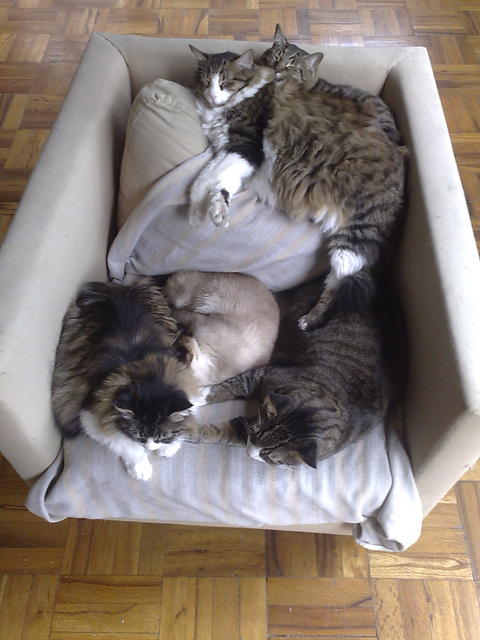
Five out of six experts agree: Five out of six cats cannot be mistaken
It. Is. Cold.
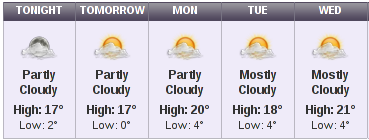
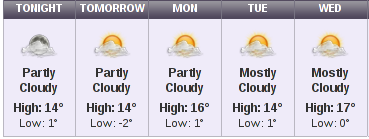
No, we are far from this very impressive picture of a fully-snowed UK seen from the sky that everybody and their dog must have seen by now. Still, in Mexico City we are experiencing the traditional one-or-two-weeks-a-year where it is genuinely cold. And, very strange being this Winter (the rainy season is Summer around here, January should be dry!) we have rain all day long. The Ajusco mountain is around 15Km south from my home, and it is the closest of the giants that surround our valley. Yesterday I managed to get some peeks at it behind the very thick layer of clouds we have. Ajusco looks really gorgeous all snowed, maybe down to the 3400m line (while the city's main area is at 2300m). This picture was not taken this year, we have snow in Ajusco almost every year (although very seldom as much as this time): (last photo is not current, we have not yet had a clear day to take a picture of our Ajusco yet this year) How does it feel? Well, I live in Coyoac n, in the flat area of the valley. Remember that houses here are not built to endure extreme temperatures (and this week is what we call extreme, of course ;-) ). According to Yahoo! Weather: And while the difference appears to be small, what about Magdalena Contreras, ~200m higher, where many people dear to me live (and have even a window pending to be installed)? People say this cold wave is the strongest in 120 years, since records are being taken. Every year people get excited, expecting that this time we will get snow. This has only happened once in at least a century, in 1966 AFAIR. I do not think this year to be atypical. Still, I have a reputation for being insensible to cold weather. Everybody wears heavy jackets while I still go to work with my usual long-sleeved shirt and that's it. But the last two days, I have been using jacket and scarf... But, of course, I don't look as gratious or cute as my cats :-
9 January 2010

Andrew Pollock: [life/americania] TransLink, the Bay Area's best kept public transportation secret?

We're not huge users of Caltrain, because frankly, it sucks. It's way slower than driving to San Francisco, and by the time you've paid for two return tickets, you might as well have driven and paid for parking. That said, we do use it from time to time. One of the things I noticed when we first moved over here was this intriguing box on a pole, to the side of the normal ticket vending machine. It looked all battered and faded, kind of like a deprecated form of ticketing that had been phased out years ago. Except it looked too high-tech to be phased out. Fast forward to four years later, and we're using Caltrain to get back from SFO after returning from Atlanta for Christmas, and there's this "Don't forget to tag off" TransLink poster inside the carriage. I'm now officially intrigued. I did some browsing of their website on the journey home. How could this be? Hong Kong's MTR has the Octopus Card. London's Tube has the Oyster Card, and the Bay Area has TransLink? Why the hell isn't this thing being pimped out more? It's awesome! I mentioned it to a co-worker the other day, who's been in the Bay Area for 7 years, and he'd never heard of it. So I signed up for it for myself and Sarah, and two cards promptly arrived. If you sign up with an autoload of $20 or more, there's no cost for cards at all. So from now on, whenever we need to ride Caltrain (or BART or Muni, which are the public transport networks we're ever likely to use) we can just wave these cards at something and never have to worry about a ticket ever again. It's awesome. Apparently VTA is coming on board with it later this year, so that'll round things out nicely. It sounds like it's been an epic implementation, starting back in 1999, and still rolling out ten years later. Better late than never. The added bonus will be for our visitors. When they come, we can just give them these cards, and they won't have to deal with BART's utterly confusing (for casual riders) fare system. One of my favourite things about Hong Kong was the MTR and the Octopus Card. Now we just need awesome mass transit for the Bay Area. Somehow, I think that's going to take even longer than TransLink.

5 January 2010

Russell Coker: Which is Better, Original DVD or Pirate MP4?

For a long time it has been obvious that in all cases anti-piracy technologies discourage purchases and in many cases encourage piracy. I first discovered the significance of this in about 1991 when I attended a public lecture by a senior employee of Borland and a member of the audience claimed that the Borland product he bought didn t function correctly due to anti-piracy measures. The Borland employee firmly stated that Borland did not use anti-copying technology on any of it s products, didn t have any plans to do so, and the problem in question must have been caused by something else. Of all the hostile questions that were asked, this was the only one that caused the speaker to appear agitated so it was obviously an issue that was considered to be important within Borland. In the late 80 s anti-piracy measures were mostly based around creating floppy disks that couldn t be easily copied (violations of various aspects of the disk formatting standards). This meant that you couldn t make a backup copy of the data, so it wasn t uncommon for people to seek pirate copies of their commercial software for daily use to avoid wearing out their valuable original floppy disks. Then the dongle was invented and people who bought software sometimes sought pirate copies so that they could use their printer and their commercial software without having to change plugs on their PC. But in those cases the benefits to uncrippled software to the users were small. Now a large part of the battle on copy protection concerns DVDs. If you had a DVD of a recent movie and an MP4 which would you rather watch? Would you prefer to be forced to watch some anti-piracy rubbish for a couple of minutes at the start of the movie (with fast-forward disabled) or would you prefer to just start watching it? Would you prefer to be able to pre-program the sections of the movie that you watch (as some parents desire to skip the sex and/or violence in movies for their teenagers) or would you prefer to be forced to watch the movie straight-through with only a manual fast-forward to skip sections? Would you prefer to have a DVD that can t be played properly on many (most?) computers because of the CSS encoding or an MP4 that plays on everything from PCs to mobile phones without an issue? Would you rather have 100 movies in the spare space on your laptop hard drive when you travel and 1000 movies on your desktop system or the much smaller number of boxed DVDs that you can store? I think that in most cases a pirate MP4 will give a better experience than a DVD. So the question is, why pay for a DVD when in most cases you get a lesser experience than you will get from a MP4 file downloaded by bittorrent? One reason for buying the DVD is to support the film industry. But I doubt that such a profitable industry will get much sympathy in today s economy. Another reason is the morality, some people consider piracy to be theft (it isn t by definition theft requires that for at least a moment the property be completely in the possession of the thief) and therefore avoid it. One technical reason for buying a DVD is the fact that it may have multiple languages supported, it will have subtitles, it may have an audio track with the creators giving a commentary, and it may have extra scenes that were cut from the main release. I believe that work on adding subtitles to the video file formats is a work in progress, so it s only a matter of time before the DVD rips include all this extra data. Really the content creators should focus on making a product that meets the needs of users and that they want to pay for. Pirating books is technically possible, but almost no-one does it. Some successful authors such as Charles Stross freely publish significant parts of their work and Cory Doctorow freely publishes all his work in electronic form. Books just work well, they meet the needs of users and people want to buy them. Sure they can sell them second hand, lend them to other people, and it s technically possible to pirate them, but they remain profitable. On my documents blog I have a page of links to free short stories that I liked [1] and a page of links to free books [2]. It seems to me that creators of other copyright content should consider how they can be of service to their customers. We are all familiar with corporations and misguided individuals who get whiny about the supposed losses due to piracy. Bruce Everiss has unfortunately joined this trend and demanded the disconnection of Internet users based on unproven accusations of game piracy [3]. I don t know whether the game buying experience sucks as badly as the DVD buying experience, but based on the reports of locked-down consoles that have to be cracked before they run Linux I expect that the modern game industry is doing at least as badly as the movie industry. They need to provide things that users want! One thing to note is that a Windows or console game player who uses pirate games will probably buy some games at some future time, while someone like me who uses free software both by principle and because it gives a better user experience will probably never pay for a game (I haven t got time to play all the free games so I probably wouldn t even buy a Linux game).

3 January 2010

Dirk Eddelbuettel: Rcpp 0.7.1

Two weeks after the Rcpp 0.7.0 release, Romain and I are happy to announce release 0.7.1 of Rcpp. It is currently in the incoming section of CRAN and has been accepted into Debian. Mirrors will catch up over the next few days, in the meantime the local page is available for download too. A lot has changed under the hood since 0.7.0, and this is the first release that really reflects many of Romain's additions. Some of the changes are As before, fuller details are in the ChangeLog on the Rcpp page.

1 January 2010

Thorsten Glaser: RCBD #1

My first RC Bug-squashing Day (or rather night): I picked all of them mostly randomly from the list Zack gave me, and except dietlibc they are packages I had not even heard of before. The first one begun easily (track down licencing information, pimp debian/copyright, but I ended up fixing compiler and lintian warnings and even wrote a manpage for it while there (but for this one, I didn t bump the Standards-Version). The second one was only the second one to complete because the others took longer; it s basically a change of a d mon to use two instead of one listening socket, to work with a doble stack OS instead of just a dual stack OS by not using v4-mapped IPv6 addresses (I considered if to use select(2) or poll(2), or to just fork and have two d mons running, but that seemed too ressource-consuming to me so I chose the less-complicated poll(2) method, looking at popa3d(8) s source code (inherited from OpenBSD) in the MirBSD tree since I could not find my network programming book. The third one was basically communicating with upstream; the bug can be blosed with no change to the package. The fourth one took me a while; luckily I have qemu 0.11.0 on MirBSD, and aurel32 s mipsel qemu images helped a great deal; however, cowbuilder --create failed for me, so I ended up waiting almost the entire night for a-g d-u to finish; in the end, it was simply a bug in upstream s configure.ac which is only exposed due to a toolchain bug on mips(el). To do: my AM Zack needs to upload the NMUs (after checking, of course); I need to communicate some of the fixes upstream (the gidentd upstream is NXDOMAIN ), produce a very small testcase for the mipsel toolchain bug, maybe fix some more mipsel FTBFSen as I have a working qemu instance now, but maybe I ll do that at the BSP when I can t find IPv6 bugs or so that I feel I can fix (I also want to do an mksh release which has to be prepared first RSN, and there s still the need to formally publish the MirBSD-current bi-arch snapshot and make another ISO out of it for BT and prepare the multi-BSD USB stick for allbsd.de ). Annoyances: a-g d-u could ask me things at the start before working for some four+ hours instead of in the middle, and the same questions several times (PAM restart). The sid kernel doesn t boot today but did yesterday, the lenny kernel produces this:
Starting the hotplug events dispatcher: udevdudevd[320]: udev: missing sysfs features; please update the kernel or disable the kernel's CONFIG_SYSFS_DEPRECATED option; udev may fail to work correctly
(I hate udev.) And, worst of all, these annoying fireworks (some sounded like originating from inside our staircase, I pity the neighbour s cats) when one wants to hack Finally, I *loathe* CDBS. Debhelper v5 rules! Oh, and I also was under the impression that Firstname LASTNAME was a French thing, and to a much lesser extent Asian. (@bubulle)

Joey Hess: naught but a decade

This has been a big decade for me. Ten years ago, I was living in Sunnyvale, in the heart of Silicon Valley; VA had just had its crazy IPO; my unvested options were worth over a million dollars on paper. I remember sitting in first class[1] on the way out of Atlanta after the holidays and wondering what one did with a million dollars. Avoid working too much? Have a lot of interesting computers? Build a distributed house[2]? Mostly I decided to not count my chickens, which turned out to be the right choice. Six months later, I started debian-installer, in many ways my biggest project to date. In spring of '01, VA was crashing; I was sick of the Valley; gloom was everywhere. I took the hint and quit, cashed in my options for five figures, not seven, bade forewell to the many people I'd come to know, and moved back east. By reading my old journal, I can tell that subconciously, I had long before decided what to do when it was time to leave the Bay Area. So without really thinking too much about why I was able to do this, about how not just my own family, but others were indirectly making it possible, I moved to a 150 acre wooded "farm", and mostly went off and did mostly my own thing for three years. This was such a huge life change. I lived in a building affectionatly called "the shack". It was renovated from a chicken coop in the 70's and leaked during heavy rain, but I preferred it to the main house (warmer). I went back to dialup for internet. I hauled groceries and most everything half a mile in by hand. There was an outhouse and washwater hauled from a creek. I cut barely enough firewood and readapted my body from California to cold. My main tech project during this time was mooix. In some ways my largest failed project, but it was neat to be able to go off and do such a thing. This was a blissful, reflective, peaceful, amazing time. Parts were a second childhood. Somewhere in there I properly confronted my mortality. And learned to use a chainsaw. And over the course of three years, I dug myself into a rut, a hole. I wasn't going anywhere. (Except for a month in Honduras, and my first DebConf in Oslo.) In '04, I found myself talking on the phone to a cosmonaut in a house that had been without power for days in a hard winter. I realized I was ready to leave the farm if I could figure out how to do it, and I almost took him up on the job working on his new Linux distro -- but at the last minute Oslo connections suggested I work for SkoleLinux instead, and so I did. Soon after moving into a rented house in town, I was jaunting off to Brazil for a month, a great time. Followed by a productive year where I got heavily back into debian-installer, started Debian's testing security tream, and generally worked a lot. The next summer I fooled around with an RV, and sort of fell into a job with ADS. But my time on the farm had changed me, I think. I ended up going back to the farm for a year and working part time from there. During this time I also started ikiwiki and other smaller projects. One day I came back from a camping trip and found the kitchen had been torn down in my absence. Reminded unsubtly that I was not the only one with a claim to the place, I got out, though I somehow suspect not for good. For the last four years, I've been more outwardly settled, buying a house in town, continuing to work at the same job, starting little projects like pristine-tar, mr, and etckeeper. About two years in I began to feel antsy sometimes (and had a minor medical scare), and set up the yurt as a relief valve so I can have crazy adventures in the cold woods again. Still, I sometimes feel that a big change is building up. From here, this decade feels like it contained endless changes, important decisions, interesting projects, strong experiences. The 90's, containing only little things like college and moving to California, pale in comparison. Maybe the naught's will be the decade I always remember.. or maybe not. Anything could be around the corner.
  1. Bumped up due to an airline scheduling snafu, not because I was throwing money around.
  2. Concept of mine perhaps not worth explaining here although it was oddly similar to how I ended up living at the farm. Good ol' subconcious..

31 December 2009

Bdale Garbee: TeleMetrum v0.2 Boards Ordered

Some quotes are in for professional SMT assembly of TeleMetrum v0.2, and I've had to reset my expectations. The shop I thought would be my first choice came in with a quote much higher than I expected. Another shop we've heard good things about gave us a much more reasonable quote, but can't get any made before LCA. So... This morning, I ordered some bare circuit boards and a paste stencil from the places I used quite successfully for v0.1. With any luck, they'll be in my hands in time to load a few boards before leaving for LCA. If all goes well, we'll put a set out for professional fab sometime later.

30 December 2009

Filip Van Raemdonck: Unconscious imitation?

Forgetting that the product named Internet Explorer is from a certain Redmond company, and thus has to promote other products and services of the same company, I typed in a search term straight into the address bar in an IE6 window.
I ended up on the search results page for what I typed on Bing, and noticed a link at the top right which read Gebruik Bing om beslissingen te nemen ( Make Bing your decision engine ).


Curious about what a decision engine could do for me, I followed that link. The decisions weren't all that exciting I could add Bing as a search engine, but actually it already was the default one; and I could set Bing as my homepage not something that Microsoft already aimed for before, with live.com, and something which other search engines do as well if they have a chance.

What struck me however, was the example bing.com screenshot used on the page using a graphic of a puffin. Which, while not being some species of, could remotely pass for some sort of penguin.
Would it really be coincidence that they'd use this image of all possibilities, or is this a wicked taste of humor from someone within Microsoft?

29 December 2009

John Goerzen: Review: The Happiest Days of Our Lives (by Wil Wheaton)

I started to write this review last night, and went looking for Wil Wheaton s blog, where many of the stories came from, so I can link to it from my review. It was getting late, I was tired, and so I was a bit disoriented for a few seconds when I saw my own words flash up on the screen. At the time, his most recent story had excerpted my review of paper books. Wow, I thought. This never happens when I m about to review Dickens. And actually, it s never happened before, ever. I ll admit to owning a big grin when I saw that one of my favorite authors liked one of my blog posts. And Wil Wheaton is one of my favorite authors for sure. I enjoy reading others too, of course, but Wil s writing is something I can really identify with like no other. My parents were never in a London debtor s prison like Dickens were; I was never a promising medical student like A. C. Doyle. But I was, and am, a geek, and Wil Wheaton captures that more perfectly than anyone. After I read Just a Geek a few years ago, I gave it to my wife to read, claiming it would help her understand me better. I think it did. In The Happiest Days of Our Lives, Wil recounts memories of his childhood, and of more recent days. He talks of flashbacks to his elementary school days, when he and his classmates tried to have the coolest Star Wars action figures (for me: calculator watches). Or how his aunt introduced him to D&D, which reminded me of how my uncle got me interested in computers. Teaching himself D&D was an escape for the geeky kid that wasn t good at sports, as teaching myself Pascal and C was for me. Between us, the names and activities are different, but the story is the same. I particularly appreciated Wil s reflections on his teenage years. Like him, at that age, I often found myself as the youngest person in a room full of adults. Yet I was still a teenager, and like any teenager, did some things that I look back on with some embarrassment now. Wil was completely honest with himself he admitted crashing a golf cart on the Paramount studio lot, for instance, but also reminds me that he was a teenager then. He recognizes that he didn t always make the best choices and wasn t always successful with what he did, but isn t ashamed of himself either. That s helpful for me to remember; I shouldn t be unreasonably harsh on my 16-year-old self, and need to remember that I had to be a teenager too. I also identify with him as a dad. He wrote of counting the days until he could teach his boys about D&D, about passing on being a geek to his sons. I ve had a similar excitement about being able to help Jacob build his first computer. Already Jacob, who is 3, loves using the manual typewriter I cleaned up for him, and spent an hour using the adding machine I dug out on Sunday while I was watching the boys. (I regret that I didn t have time to take it apart and show him how it worked right then when he asked). And perhaps his 2nd-favorite present of Christmas was the $3.50 large-button calculator with solar cell power I got him as an impulse buy at the pharmacy the other day. He is particularly enamored with the square root button because a single press replaces all the numbers on the screen with completely different numbers! I can t find the exact passage now, but Wil wrote at one point about his transition from a career in acting to a career in writing. He said that he likes the feeling he gets when his writing can touch people. He s been able to redefine himself not as a guy that used to be an actor on Star Trek but a person that is a good author, now. I agree, and think his best work has been done with a keyboard instead of a camera. And that leaves me wondering where my career will take me. Yes, I m an author, but of technical books. Authors of technical books rarely touch people s hearts. There s a reason we read Shakespeare and Dickens in literature classes, but no high school English teacher has ever assigned Newton s Opticks, despite its incredible importance to the world. Newton revolutionized science, mathematics, and philosophy, but Opticks doesn t speak to the modern heart like Romeo and Jiuliet still does. Generations of people have learned more about the world from Shakespeare than from Newton. I don t have Wil s gift for writing such touching stories. I ve only been able to even approach that sort of thing once or twice, and it certainly won t make a career for me. Like Wil, I m rarely the youngest person in the room anymore. His days of being a famous teenage actor on a scifi series are long gone, as are mine of single-handedly defeating entire teams at jr. high programming contests. (OK, that s a stretch, but at the time it sure felt exciting.) But unlike him, I m not completely content with my niche yet. I blog about being a geek in rural Kansas, where there still aren t many. I m a dad, with an incredible family. And I write about programming, volunteer for Debian and a few other causes, and have a surprisingly satisfying job working for a company that builds lawn mowers. And yet, I have this unshakable feeling of unsettledness. That I need to stop and think more about what I really want to do with my life, perhaps cultivate some talents I don t yet have, or perhaps find a way to make my current path more meaningful. So I will take Wil s book as a challenge, to all those that were once sure of what their lives would look like, and are less sure with each passing year: take a chance, and make it yours. And on that score, perhaps I ve done more than I had realized at first. Terah and I took a big chance moving to Kansas, and another one when we bought my grandparents run-down house to fix up and live in. Perhaps it s not a bad idea to pause every few years and ask the question: Do I still like the direction I m heading? Can I change it? Wil Wheaton gives me lots to think about, in the form of easy-to-read reflections on his own life. I heartily recommend both Just a Geek and The Happiest Days of Our Lives. (And that has nothing to do with the fact that the Ubuntu machine he used to write the book probably had installed on it a few pieces of code that I wrote, I promise you.)

Neil Williams: Intermittent tasks

Sometimes, the main task at any one time is simply going to take time and cannot be shortened. With my poor network connection, this tends to occur any time I need to do network tasks like multistrap and debootstrap tests, archive updates and the rest. The problem is that my network connection is so bad, most apt type tasks completely saturate all available bandwidth, especially when downloading a single large package like those built from gcc or OOo.

Thankfully, gpdftext has provided an intermittent task that is useful, intermittent, non-network dependent and relatively straightforward (so as not to be too distracting from the main task) without being sufficiently routine to make me think about automating it.
I've downloaded some 70 public domain novels as A4 PDF and I'm gradually working through them in gpdftext to tidy up the chapter headings and reformat as an A5 PDF, ready to be transferred back to my ebook reader.

This version of gpdftext isn't released yet (it's current SVN, 0.1.0) as it's in string freeze. However, it provides a fairly robust test of the next release. :-)

Current list includes: Little Women, Fairy Tales of Hans Christian Andersen, Lady Susan, Northanger Abbey, Pride and Prejudice, Sense and Sensibility, Peter Pan (Peter and Wendy), Lorna Doone: A Romance Of Exmoor, The Gap in the Curtain, The Thirty-Nine Steps, Through the Looking Glass (And What Alice Found There), Fanny Hill: Memoirs of a Woman of Pleasure, Moll Flanders, Robinson Crusoe, The Further Adventures of Robinson Crusoe, A Tale of Two Cities, David Copperfield, Great Expectations, Little Dorrit, Oliver Twist, The Life And Adventures Of Nicholas Nickleby, The Adventures of Sherlock Holmes, The Casebook of Sherlock Holmes, The Hound of the Baskervilles, The Memoirs of Sherlock Holmes, The Return of Sherlock Holmes, Cranford, The Wind in the Willows, King Solomon's Mines, Tess of the d'Urbervilles, The Hunchback of Notre Dame, Declaration of Independence, Just so Stories, Kim, The Jungle Book, The Man Who Would be King, The Arabian Nights, Lady Chatterley's Lover, Sons and Lovers, Women in Love, The Story of Doctor Dolittle, The Call of the Wild, The Game, White Fang, Moby Dick, Anne of Green Gables, The Well at the World's End, Pygmalion, An Inquiry into the Nature and Causes of the Wealth of Nations, East is West, Strange Case of Dr Jekyll and Mr Hyde, The Jewel of Seven Stars, Anna Karenina, The Adventures of Huckleberry Finn, The Adventures of Tom Sawyer, The Kama Sutra, 20,000 Leagues Under the Sea, The Aeneid of Virgil.

That should be enough for now.... (21 converted so far).

27 December 2009

Francois Marier: Ignoring files in git repositories

According to the man page, there are three ways to exclude files from being tracked by git.

Shared list of files to ignore The most well-known way of preventing files from being part of a git branch is to add such files in .gitignore. (This is analogous to CVS' .cvsignore files.)

Here's an example:
*.generated.html
/config.php
The above ignore list will prevent automatically generated HTML files from being committed by mistake to the repository. Because this is useful to all developers on the project, .gitignore is a good place for this.

The next line prevents the local configuration file from being tracked by git, something else that all developers will want to have.

One thing to note here is the use of a leading slash character with config.php. This is to specifically match the config file in the same directory as the .gitignore file (in this case, the root directory of the repository) but no other. Without this slash, the following files would also be ignored by git:
/app/config.php
/plugins/address/config.php
/module/config.php

Local list (specific to one project)For those custom files that you don't want version controlled but that others probably don't have or don't want to automatically ignore, git provides a second facility: .git/info/exclude

It works the same way as .gitignore but be aware that this list is only stored locally and only applies to the repository in which it lives.

(I can't think of a good example for when you'd want to use this one because I don't really use it. Feel free to leave a comment if you do use it though, I'm curious to know what others do with it.)

Local list (common to all projects)Should you wish to automatically ignore file patterns in all of your projects, you will need to use the third gitignore method: core.excludesfile

Put this line in your ~/.gitconfig:
[core]
excludesfile = /home/username/.gitexcludes
(you need to put the absolute path to your home directory, ~/ will not work here unless you use git 1.6.6 or later)

and then put the patterns to ignore in ~/.gitexcludes. For example, this will ignore the automatic backups made by emacs when you save a file:
*~
This is the ideal place to put anything that is generated by your development tools and that doesn't need to appear in your project repositories.

Next.

Previous.