Search Results: "reg"

1 August 2014

Russell Coker: More BTRFS Fun

I wrote a BTRFS status report yesterday commenting on the uneventful use of BTRFS recently [1]. Early this morning the server that stores my email (which had 93 days uptime) had a filesystem related problem. The root filesystem became read-only and then the kernel message log filled with unrelated messages so there was no record of the problem. I m now considering setting up rsyslogd to log the kernel messages to a tmpfs filesystem to cover such problems in future. As RAM is so cheap it wouldn t matter if a few megs of RAM were wasted by that in normal operation if it allowed me to extract useful data when something goes really wrong. It s really annoying to have a system in a state where I can login as root but not find out what went wrong. After that I tried 2 kernels in the 3.14 series, both of which had kernel BUG assertions related to Xen networking and failed to network correctly, I filed Debian Bug #756714. Fortunately they at least had enough uptime for me to run a filesystem scrub which reported no errors. Then I reverted to kernel 3.13.10 but the reboot to apply that kernel change failed. Systemd was unable to umount the root filesystem (maybe because of a problem with Xen) and then hung the system instead of rebooting, I filed Debian Bug #756725. I believe that if asked to reboot a system there is no benefit in hanging the system with no user space processes accessible. Here are some useful things that systemd could have done:
  1. Just reboot without umounting (like reboot -nf does).
  2. Pause for some reasonable amount of time to give the sysadmin a possibility of seeing the error and then rebooting.
  3. Go back to a regular runlevel, starting daemons like sshd.
  4. Offer a login prompt to allow the sysadmin to login as root and diagnose the problem.
Options 1, 2, and 3 would have saved me a bit of driving. Option 4 would have allowed me to at least diagnose the problem (which might be worth the drive). Having a system on the other side of the city which has no remote console access just hang after a reboot command is not useful, it would be near the top of the list of things I don t want to happen in that situation. The best thing I can say about systemd s operation in this regard is that it didn t make the server catch fire. Now all I really know is that 3.14 kernels won t work for my server, 3.13 will cause problems that no-one can diagnose due to lack of data, and I m now going to wait for it to fail again. As an aside the server has ECC RAM and it s hardware is known to be good, so I m sure that BTRFS is at fault.

31 July 2014

Russell Coker: Links July 2014

Dave Johnson wrote an interesting article for Salon about companies ripping off the tax system by claiming that all their income is produced in low tax countries [1]. Seb Lee-Delisle wrote an insightful article about how to ask to get paid to speak [2]. I should do that. Daniel Pocock wrote an informative article about the reConServer simple SIP conferencing server [3]. I should try it out, currently most people I want to conference with are using Google Hangouts, but getting away from Google is a good thing. Fran ois Marier wrote an informative post about hardening ssh servers [4]. S. E. Smith wrote an interesting article I Am Tired of Hearing Programmers Defend Gender Essentialism [5]. Bert Archer wrote an insightful article about lazy tourism [6]. His initial example of love locks breaking bridges was a bit silly (it s not difficult to cut locks off a bridge) but his general point about lazy/stupid tourism is good. Daniel Pocock wrote an insightful post about new developments in taxis, the London Taxi protest against Uber, and related changes [7]. His post convinced me that Uber is a good thing and should be supported. I checked the prices and unfortunately Uber is more expensive than normal taxis for my most common journey. Cory Doctorow wrote an insightful article for The Guardian about the moral issues related to government spying [8]. The Verge has an interesting review of the latest Lytro Lightbox camera [9]. Not nearly ready for me to use, but interesting technology. Prospect has an informative article by Kathryn Joyce about the Protestant child sex abuse scandal in the US [10]. Billy Graham s grandson is leading the work to reform churches so that they protect children instead of pedophiles. Prospect also has an article by Kathryn Joyce about Christians home-schooling kids to try and program them to be zealots and how that hurts kids [11]. The Daily Beast has an interesting article about the way that the extreme right wing in the US are trying to kill people, it s the right wing death panel [12]. Jay Michaelson wrote an informative article for The Daily Beast about right-wing hate groups in the US who promote the extreme homophobic legislation in Russia and other countries [13]. It also connects to the Koch brothers who seem to be associated with most evil. Elias Isquith wrote an insightful article for Salon about the current right-wing obsession with making homophobic discrimination an issue of religious liberty will hurt religious people [14]. He also describes how stupid the right-wing extremists are in relation to other issues too. EconomixComix.com has a really great comic explaning the economics of Social Security in the US [15]. They also have a comic explaining the TPP which is really good [16]. They sell a comic book about economics which I m sure is worth buying. We need to have comics explaining all technical topics, it s a good way of conveying concepts. When I was in primary school my parents gave me comic books covering nuclear physics and other science topics which were really good. Mia McKenzie wrote an insightful article for BlackGirlDangerous.com about dealing with racist white teachers [17]. I think that it would be ideal to have a school dedicated to each minority group with teachers from that group.

Russell Coker: BTRFS Status July 2014

My last BTRFS status report was in April [1], it wasn t the most positive report with data corruption and system hangs. Hacker News has a brief discussion of BTRFS which includes the statement Russell Coker s reports of his experiences with BTRFS give me the screaming heebie-jeebies, no matter how up-beat and positive he stays about it [2] (that s one of my favorite comments about my blog). Since April things have worked better. Linux kernel 3.14 solves the worst problems I had with 3.13 and it s generally doing everything I want it to do. I now have cron jobs making snapshots as often as I wish (as frequently as every 15 minutes on some systems), automatically removing snapshots (removing 500+ snapshots at once doesn t hang the system), balancing, and scrubbing. The fact that I can now expect that a filesystem balance (which is a type of defragment operation for BTRFS that frees some chunks ) from a cron job and expect the system not to hang means that I haven t run out of metadata chunk space. I expect that running out of metadata space can still cause filesystem deadlocks given a lack of reports on the BTRFS mailing list of fixes in that regard, but as long as balance works well we can work around that. My main workstation now has 35 days of uptime and my home server has 90 days of uptime. Also the server that stores my email now has 93 days uptime even though it s running Linux kernel 3.13.10. I am rather nervous about the server running 3.13.10 because in my experience every kernel before 3.14.1 had BTRFS problems that would cause system hangs. I don t want a server that s an hour s drive away to hang The server that runs my email is using kernel 3.13.10 because when I briefly tried a 3.14 kernel it didn t work reliably with the Xen kernel 4.1 from Debian/Wheezy and I had a choice of using the Xen kernel 4.3 from Debian/Unstable to match the Linux kernel or use an earlier Linux kernel. I have a couple of Xen servers running Debian/Unstable for test purposes which are working well so I may upgrade my mail server to the latest Xen and Linux kernels from Unstable in the near future. But for the moment I m just not doing many snapshots and never running a filesystem scrub on that server. Scrubbing In kernel 3.14 scrub is working reliably for me and I have cron jobs to scrub filesystems on every system running that kernel. So far I ve never seen it report an error on a system that matters to me but I expect that it will happen eventually. The paper An Analysis of Data Corruption in the Storage Stack from the University of Wisconsin (based on NetApp data) [3] shows that nearline disks (IE any disks I can afford) have an incidence of checksum errors (occasions when the disk returns bad data but claims it to be good) of about 0.42%. There are 18 disks running in systems I personally care about (as opposed to systems where I am paid to care) so with a 0.42% probability of a disk experiencing data corruption per year that would give a 7.3% probability of having such corruption on one disk in any year and a greater than 50% chance that it s already happened over the last 10 years. Of the 18 disks in question 15 are currently running BTRFS. Of the 15 running BTRFS 10 are scrubbed regularly (the other 5 are systems that don t run 24*7 and the system running kernel 3.13.10). Newer Kernels The discussion on the BTRFS mailing list about kernel 3.15 is mostly about hangs. This is correlated with some changes to improve performance so I presume that it has exposed race conditions. Based on those discussions I haven t felt inclined to run a 3.15 kernel. As the developers already have some good bug reports I don t think that I could provide any benefit by doing more testing at this time. I think that there would be no benefit to me personally or the Linux community in testing 3.15. I don t have a personal interest in RAID-5 or RAID-6. The only systems I run that have more data than will fit on a RAID-1 array of cheap SATA disks are ones that I am paid to run and they are running ZFS. So the ongoing development of RAID-5 and RAID-6 code isn t an incentive for me to run newer kernels. Eventually I ll test out RAID-6 code, but at the moment I don t think they need more bug reports in this area. I don t have a great personal interest in filesystem performance at this time. There are some serious BTRFS performance issues. One problem is that a filesystem balance and subtree removal seem to take excessive amounts of CPU time. Another is that there isn t much support for balancing IO to multiple devices (in RAID-1 every process has all it s read requests sent to one device). For large-scale use of a filesystem these are significant problems. But when you have basic requirements (such as a mail server for dozens of users or a personal workstation with a quad-core CPU and fast SSD storage) it doesn t make much difference. Currently all of my systems which use BTRFS have storage hardware that exceeds the system performance requirements by such a large margin that nothing other than installing Debian packages can slow the system down. So while there are performance improvements in newer versions of the BTRFS kernel code that isn t an incentive for me to upgrade. It s just been announced that Debian/Jessie will use Linux 3.16, so I guess I ll have to test that a bit for the benefit of Debian users. I am concerned that 3.16 won t be stable enough for typical users at the time that Jessie is released.

30 July 2014

Bits from Debian: Jessie will ship Linux 3.16

The Debian Linux kernel team has discussed and chosen the kernel version to use as a basis for Debian 8 'jessie'. This will be Linux 3.16, due to be released in early August. Release candidates for Linux 3.16 are already packaged and available in the experimental suite. If you maintain a package that is closely bound to the kernel version - a kernel module or a userland application that depends on an unstable API - please ensure that it is compatible with Linux 3.16 prior to the freeze date (5th November, 2014). Incompatible packages are very likely to be removed from testing and not included in 'jessie'.
  1. My kernel module package doesn't build on 3.16 and upstream is not interested in supporting this version. What can I do?
    The kernel team might be able to help you with forward-porting, but also try Linux Kernel Newbies or the mailing list(s) for the relevant kernel subsystem(s).
  2. There's an important new kernel feature that ought to go into jessie, but it won't be in 3.16. Can you still add it?
    Maybe - sometimes this is easy and sometimes it's too disruptive to the rest of the kernel. Please contact the team on the debian-kernel mailing list or by opening a wishlist bug.
  3. Will Linux 3.16 get long term support from upstream?
    The Linux 3.16-stable branch will not be maintained as a longterm branch at kernel.org. However, the Ubuntu kernel team will continue to maintain that branch, following the same rules for acceptance and review, until around April 2016. Ben Hutchings is planning to continue maintenance from then until the end of regular support for 'jessie'.

29 July 2014

Ian Campbell: Debian Installer ARM64 Dailies

It's taken a while but all of the pieces are finally in place to run successfully through Debian Installer on ARM64 using the Debian ARM64 port. So I'm now running nightly builds locally and uploading them to http://www.hellion.org.uk/debian/didaily/arm64/. If you have CACert in your CA roots then you might prefer the slightly more secure version. Hopefully before too long I can arrange to have them building on one of the project machines and uploaded to somewhere a little more formal like people.d.o or even the regular Debian Installer dailies site. This will have to do for now though. Warning The arm64 port is currently hosted on Debian Ports which only supports the unstable "sid" distribution. This means that installation can be a bit of a moving target and sometimes fails to download various installer components or installation packages. Mostly it's just a case of waiting for the buildd and/or archive to catch up. You have been warned! Installing in a Xen guest If you are lucky enough to have access to some 64-bit ARM hardware (such as the APM X-Gene, see wiki.xen.org for setup instructions) then installing Debian as a guest is pretty straightforward. I suppose if you had lots of time (and I do mean lots) you could also install under Xen running on the Foundation or Fast Model. I wouldn't recommend it though. First download the installer kernel and ramdisk onto your dom0 filesystem (e.g. to /root/didaily/arm64). Second create a suitable guest config file such as:
name = "debian-installer"
disk = ["phy:/dev/LVM/debian,xvda,rw"]
vif = [ '' ] 
memory = 512
kernel = "/root/didaily/arm64/vmlinuz"
ramdisk= "/root/didaily/arm64/initrd.gz"
extra = "console=hvc0 -- "
In this example I'm installing to a raw logical volume /dev/LVM/debian. You might also want to use randmac to generate a permanent MAC address for the Ethernet device (specified as vif = ['mac=xx:xx:xx:xx:xx:xx']). Once that is done you can start the guest with:
xl create -c cfg
From here you'll be in the installer and things carry on as usual. You'll need to manually point it to ftp.debian-ports.org as the mirror, or you can preseed by appending to the extra line in the cfg like so:
mirror/country=manual mirror/http/hostname=ftp.debian-ports.org mirror/http/directory=/debian
Apart from that there will be a warning about not knowing how to setup the bootloader but that is normal for now. Installing in Qemu To do this you will need a version of http://www.qemu.org which supports qemu-system-aarch64. The latest release doesn't yet so I've been using v2.1.0-rc3 (it seems upstream are now up to -rc5). Once qemu is built and installed and the installer kernel and ramdisk have been downloaded to $DI you can start with:
qemu-system-aarch64 -M virt -cpu cortex-a57 \
    -kernel $DI/vmlinuz -initrd $DI/initrd.gz \
    -append "console=ttyAMA0 -- " \
    -serial stdio -nographic --monitor none \
    -drive file=rootfs.qcow2,if=none,id=blk,format=qcow2 -device virtio-blk-device,drive=blk \
    -net user,vlan=0 -device virtio-net-device,vlan=0
That's using a qcow2 image for the rootfs, I think I created it with something like:
qemu-img create -f qcow2 rootfs.qcow2 4G
Once started installation proceeds much like normal. As with Xen you will need to either point it at the debian-ports archive by hand or preseed by adding to the -append line and the warning about no bootloader configuration is expected. Installing on real hardware Someone should probably try this ;-).

Russell Coker: Happiness and Lecture Questions

I just attended a lecture about happiness comparing Australia and India at the Australia India Institute [1]. The lecture was interesting but the questions were so bad that it makes a good case for entirely banning questions from public lectures. Based on this and other lectures I ve attended I ve written a document about how to recognise worthless questions and cut them off early [2]. As you might expect from a lecture on happiness there were plenty of stupid comments from the audience about depression, as if happiness is merely the absence of depression. Then they got onto stupidity about suicide. One question claimed that Australia has a high suicide rate, Wikipedia however places Australia 49th out of 110 countries, that means Australia is slightly above the median for suicide rates per country. Given some of the dubious statistics in the list (for example the countries claiming to have no suicides and the low numbers reported by some countries with extreme religious policies) I don t think we can be sure that Australia would be above the median if we had better statistics. Another question claimed that Sweden had the highest suicide rate in Europe, while Greenland, Belgium, Finland, Austria, France, Norway, Denmark, Iceland, and most of Eastern Europe are higher on the list. But the bigger problem in regard to discussing suicide is that the suicide rate isn t about happiness. When someone kills themself because they have a terminal illness that doesn t mean that they were unhappy for the majority of their life and doesn t mean that they were any unhappier than the terminally ill people who don t do that. Some countries have a culture that is more positive towards suicide which would increase the incidence, Japan for example. While people who kill themselves in Japan are probably quite unhappy at the time I don t think that there is any reason to believe that they are more unhappy than people in other countries who only keep living because suicide is considered to be wrong. It seems to me that the best strategy when giving or MCing a lecture about a potentially contentious topic is to plan ahead for what not to discuss. For a lecture about happiness it would make sense to rule out all discussion of suicide, anti-depressants, and related issues as they aren t relevant to the discussion and can t be handled in an appropriate manner in question time.

25 July 2014

Juliana Louback: Extending an xTuple Business Object

xTuple is in my opinion incredibly well designed; the code is clean and the architecture ahderent to a standardized structure. All this makes working with xTuple software quite a breeze. I wanted to integrate JSCommunicator into the web-based xTuple version. JSCommunicator is a SIP communication tool, so my first step was to create an extension for the SIP account data. Luckily for me, the xTuple development team published an awesome tutorial for writing an xTuple extension. xTuple cleverly uses model based business objects for the various features available. This makes customizing xTuple very straightforward. I used the tutorial mentioned above for writing my extension, but soon noticed my goals were a little different. A SIP account has 3 data fields, these being the SIP URI, the account password and an optional display name. xTuple currently has a business object in the core code for a User Account and it would make a lot more sense to simply add my 3 fields to this existing business object rather than create another business object. The tutorial very clearly shows how to extend a business object with another business object, but not how to extend a business object with only new fields (not a whole new object). Now maybe I m just a whole lot slower than most people, but I had a ridiculously had time figuring this out. Mind you, this is because I m slow, because the xTuple documentation and code is understandable and as self-explanatory as it gets. I think it just takes a bit to get used to. Either way, I thought this just might be useful to others so here is how I went about it. Setup First you ll have to set up your xTuple development environment and fork the xtuple and xtuple-extesions repositories as shown in this handy tutorial. A footnote I d like to add is please verify that your version of Vagrant (and anything else you install) is the one listed in the tutorial. I think I spent like two entire days or more on a wild goose (bug) chase trying to set up my environment when the cause of all the errors was that I somehow installed an older version of Vagrant - 1.5.4 instead of 1.6.3. Please don t make the same mistake I did. Actually if for some reason you get the following error when you try using node:
<<ERROR 2014-07-10T23:52:46.948Z>> Unrecoverable exception. Cannot call method 'extend' of undefined
    at /home/vagrant/dev/xtuple/lib/backbone-x/source/model.js:37:39
    at Object.<anonymous> (/home/vagrant/dev/xtuple/lib/backbone-x/source/model.js:1364:3)
    ...
chances are, you have the wrong version. That s what happened to me. The Vagrant Virtual Development Environment automatically installs and configures everything you need, it s ready to go. So if you find yourself installing and updating and apt-gets and etc, you probably did something wrong. Coding So by now we should have the Vagrant Virtual Development Environment set up and the web app up and running and accessible at localhost:8443. So far so good. Disclaimer: You will note that much of this is similar - or rather, nearly identical - to xTuple s tutorial but there are some small but important differences and a few observations I think might be useful. Other Disclaimer: I m describing how I did it, which may or may not be up to snuff . Works for me though. Schema First let s make a schema for the table we will create with the new custom fields. Be sure to create the correct directory stucture, aka /path/to/xtuple-extensions/source/<YOUR EXTENSION NAME>/database/source or in my case /path/to/xtuple-extensions/source/sip_account/database/source, and create the file create_sa_schema.sql, sa is the name of my schema. This file will contain the following lines:
do $$
  /* Only create the schema if it hasn't been created already */
  var res, sql = "select schema_name from information_schema.schemata where schema_name = 'sa'",
  res = plv8.execute(sql);
  if (!res.length)  
    sql = "create schema sa; grant all on schema sa to group xtrole;"
    plv8.execute(sql);
   
$$ language plv8;
Of course, feel free to replace sa with your schema name of choice. All the code described here can be found in my xtuple-extensions fork, on the sip_ext branch. Table We ll create a table containing your custom fields and a link to an existing table - the table for the existing business object you want to extend. If you re wondering why make a whole new table for a few extra fields, here s a good explanation, the case in question is adding fields to the Contact business object. You need to first figure out what table you want to link to. This might not be uber easy. I think the best way to go about it is to look at the ORMs. The xTuple ORMs are a JSON mapping between the SQL tables and the object-oriented world above the database, they re .json files found at path/to/xtuple/node_modules/xtuple/enyo-client/database/orm/models for the core business objects and at path/to/xtuplenyo-client/extensions/source/<EXTENSION NAME>/database/orm/models for exension business objects. I ll give two examples. If you look at contact.json you will see that the Contact business object refers to the table cntct . Look for the type : Contact on the line above, so we know it s the Contact business object. In my case, I wanted to extend the UserAccount and UserAccountRelation business objects, so check out user_account.json. The table listed for UserAccount is xt.usrinfo and the table listed for UserAccountRelation is xt.usrlite. A closer look at the sql files for these tables (usrinfo.sql and usrlite.sql) revealed that usrinfo is in fact a view and usrlite is A light weight table of user information used to avoid punishingly heavy queries on the public usr view . I chose to refer to xt.usrlite - that or I received error messages when trying the other table names. Now I ll make the file /path/to/xtuple-extensions/source/sip_account/database/source/usrlitesip.sql, to create a table with my custom fields plus the link to the urslite table. Don t quote me on this, but I m under the impression that this is the norm for naming the sql file joining tables: the name of the table you are referring to ( usrlite in this case) and your extension s name. Content of usrlitesip.sql:
select xt.create_table('usrlitesip', 'sa');
select xt.add_column('usrlitesip','usrlitesip_id', 'serial', 'primary key', 'sa');
select xt.add_column('usrlitesip','usrlitesip_usr_username', 'text', 'references xt.usrlite (usr_username)', 'sa');
select xt.add_column('usrlitesip','usrlitesip_uri', 'text', '', 'sa');
select xt.add_column('usrlitesip','usrlitesip_name', 'text', '', 'sa');
select xt.add_column('usrlitesip','usrlitesip_password', 'text', '', 'sa');
comment on table sa.usrlitesip is 'Joins User with SIP account';
Breaking it down, line 1 creates the table named usrlitesip (no duh), line 2 is for the primary key (self-explanatory). You can then add any columns you like, just be sure to add one that references the table you want to link to. I checked usrlite.sql and saw the primary key is usr_username, be sure to use the primary key of the table you are referencing. You can check what you made by executing the .sql files like so:
$ cd /path/to/xtuple-extensions/source/sip_account/database/source
$ psql -U admin -d dev -f create_sa_schema.sql
$ psql -U admin -d dev -f usrlitesip.sql
After which you will see the table with the columns you created if you enter:
$ psql -U admin -d dev -c "select * from sa.usrlitesip;"
Now create the file /path/to/xtuple-extensions/source/sip_account/database/source/manifest.js to put the files together and in the right order. It should contain:
 
  "name": "sip_account",
  "version": "1.4.1",
  "comment": "Sip Account extension",
  "loadOrder": 999,
  "dependencies": ["crm"],
  "databaseScripts": [
    "create_sa_schema.sql",
    "usrlitesip.sql",
    "register.sql"
  ]
 
I think the name has to be the same you named your extension directory as in /path/to/xtuple-extensions/source/<YOUR EXTENSION NAME>. I think the comment can be anything you like and you want your loadOrder to be high so it s the last thing installed (as it s an add on.) So far we are doing exactly what s instructed in the xTuple tutorial. It s repetitive, but I think you can never have too many examples to compare to. In databaseScripts you will list the two .sql files you just created for the schema and the table, plus another file to be made in the same directory named register.sql. I m not sure why you have to make the register.sql or even if you indeed have to. If you leave the file empty, there will be a build error, so put a ; in the register.sql or remove the line register.sql from manifest.js as I think for now we are good without it. Now let s update the database with our new extension:
$ cd /path/to/xtuple
$ ./scripts/build_app.js -d dev -e ../xtuple-extensions/source/sip_account
$ psql -U admin -d dev -c "select * from xt.ext;"
That last command should display a table with a list of extensions; the ones already in xtuple like crm and billing and some others plus your new extension, in this case sip_account . When you run build_app.js you ll probably see a message along the lines of <Extension name> has no client code, not building client code and that s fine because yeah, we haven t worked on the client code yet. ORM Here s where things start getting different. So ORMs link your object to an SQL table. But we DON T want to make a new business object, we want to extend an existing business object, so the ORM we will make will be a little different than the xTuple tutorial. Steve Hackbarth kindly explained this new business object/existing business object ORM concept here. First we ll create the directory /path/to/xtuple-extensions/source/sip_account/database/orm/ext, according to xTuple convention. ORMs for new business objects would be put in /path/to/xtuple-extensions/source/sip_account/database/orm/models. Now we ll create the .json file /path/to/xtuple-extensions/source/sip_account/database/orm/ext/user_account.jscon for our ORM. Once again, don t quote me on this, but I think the name of the file should be the name of the business object you are extending, as is done in the turorial example extending the Contact object. In our case, UserAccount is defined in user_account.json and that s what I named my extension ORM too. Here s what you should place in it:
 1 [
 2    
 3     "context": "sip_account",
 4     "nameSpace": "XM",
 5     "type": "UserAccount",
 6     "table": "sa.usrlitesip",
 7     "isExtension": true,
 8     "isChild": false,
 9     "comment": "Extended by Sip",
10     "relations": [
11        
12         "column": "usrlitesip_usr_username",
13         "inverse": "username"
14        
15     ],
16     "properties": [
17        
18         "name": "uri",
19         "attr":  
20           "type": "String",
21           "column": "usrlitesip_uri",
22           "isNaturalKey": true
23          
24        ,
25        
26         "name": "displayName",
27         "attr":  
28           "type": "String",
29           "column": "usrlitesip_name"
30          
31        ,
32        
33         "name": "sipPassword",
34         "attr":  
35           "type": "String",
36           "column": "usrlitesip_password"
37          
38        
39     ],
40     "isSystem": true
41    ,
42    
43     "context": "sip_account",
44     "nameSpace": "XM",
45     "type": "UserAccountRelation",
46     "table": "sa.usrlitesip",
47     "isExtension": true,
48     "isChild": false,
49     "comment": "Extended by Sip",
50     "relations": [
51        
52         "column": "usrlitesip_usr_username",
53         "inverse": "username"
54        
55     ],
56     "properties": [
57        
58         "name": "uri",
59         "attr":  
60           "type": "String",
61           "column": "usrlitesip_uri",
62           "isNaturalKey": true
63          
64        ,
65        
66         "name": "displayName",
67         "attr":  
68           "type": "String",
69           "column": "usrlitesip_name"
70          
71        ,
72        
73         "name": "sipPassword",
74         "attr":  
75           "type": "String",
76           "column": "usrlitesip_password"
77          
78        
79     ],
80     "isSystem": true
81    
82 ]
Note the context is my extension name, because the context + nameSpace + type combo has to be unique. We already have a UserAccount and UserAccountRelation object in the XM namespace in the xtuple context in the original user_account.json, now we will have a UserAccount and UserAccountRelation object in the XM namespace in the sip_account conext. What else is important? Note that isExtension is true on lines 7 and 47 and the relations item contains the column of the foreign key we referenced. This is something you might want to verify: column (lines 12 and 52) is the name of the attribute on your table. When we made a reference to the primary key usr_usrname from the xt.usrlite table we named that column usrlitesip_usr_usrname. But the inverse is the attribute name associated with the original sql column in the original ORM. Did I lose you? I had a lot of trouble with this silly thing. In the original ORM that created a new UserAccount business object, the primary key attribute is named username , as can be seen here. That is what should be used for the inverse value. Not the sql column name (usr_username) but the object attribute name (username). I m emphasizing this because I made that mistake and if I can spare you the pain I will. If we rebuild our extension everything should come along nicely, but you won t see any changes just yet in the web app because we haven t created the client code. Client Create the directory /path/to/xtuple-extensions/source/sip_account/client which is where we ll keep all the client code. Extend Workspace View I want the fields I added to show up on the form to create a new User Account, so I need to extend the view for the User Account workspace. I ll start by creating a directory /path/to/xtuple-extensions/source/sip_account/client/views and in it creating a file named workspace.js containing this code:
XT.extensions.sip_account.initWorkspace = function ()  
	var extensions = [
  	 kind: "onyx.GroupboxHeader", container: "mainGroup", content: "_sipAccount".loc() ,
  	 kind: "XV.InputWidget", container: "mainGroup", attr: "uri"  ,
  	 kind: "XV.InputWidget", container: "mainGroup", attr: "displayName"  ,
  	 kind: "XV.InputWidget", container: "mainGroup", type:"password", attr: "sipPassword"  
	];
	XV.appendExtension("XV.UserAccountWorkspace", extensions);
 ;
So I m initializing my workspace and creating an array of items to add (append) to view XV.UserAccountWorkspace. The first item is this onyx.GroupboxHeader which is a pretty divider for my new form fields, the kind you find in the web app at Setup > User Accounts, like Overview . I have no idea what other options there are for container other than mainGroup , so let s stick to that. I ll explain content: _sipAccount .loc() in a bit. Next I created three input fields of the XV.InputWidget kind. This also confused me a bit as there are different kinds of input to be used, like dropdowns and checkboxes. The only advice I can give is snoop around the webapp, find an input you like and look up the corresponding workspace.js file to see what was used. What we just did is (should be) enough for the new fields to show up on the User Account form. But before we see things change, we have to package the client. Create the file /path/to/xtuple-extensions/source/sip_account/client/views/package.js. This file is needed to package groups of files and indicates the order the files should be loaded (for more on that, see this). For now, all the file will contain is:
enyo.depends(
"workspace.js"
);
You also need to package the views directory containing workspace.js, so create the file Create the file /path/to/xtuple-extensions/source/sip_account/client/package.js and in it show that the directory views and its contents must be part of the higher level package:
enyo.depends(
"views"
);
I like to think of it as a box full of smaller boxes. This will sound terrible, but apparently you also need to create the file /path/to/xtuple-extensions/source/sip_account/client/core.js containing this line:
XT.extensions.icecream =  ;
I don t know why. As soon as I find out I ll be sure to inform you. As we ve added a file to the client directory, be sure to update /path/to/xtuple-extensions/source/sip_account/client/package.js so it included the new file:
enyo.depends(
"core.js",
"views"
);
Translations Remember _sipAccount .loc() in our workspace.js file? xTuple has great internationalization support and it s easy to use. Just create the directory and file /path/to/xtuple-extensions/source/sip_account/client/en/strings.js and in it put key-value pairs for labels and their translation, like this:
(function ()  
  "use strict";
  var lang = XT.stringsFor("en_US",  
    "_sipAccount": "Sip Account",
    "_uri": "Sip URI",
    "_displayName": "Display Name",
    "_sipPassword": "Password"
   );
  if (typeof exports !== 'undefined')  
    exports.language = lang;
   
 ());
So far I included all the labels I used in my Sip Account form. If you write the wrong label (key) or forget to include a corresponding key-value pair in strings.js, xTuple will simply name your lable _lableName , underscore and all. Now build your extension and start up the server:
$ cd /path/to/xtuple 
$ ./scripts/build_app.js -d dev -e ../xtuple-extensions/source/sip_account
$ node node-datasource/main.js
If the server is already running, just stop it and restart it to reflect your changes. Now if you go to Setup > User Accounts and click the + button, you should see a nice little addition to the form with a Sip Account divider and three new fields. Nice, eh? Extend Parameters Currently you can search your User Accounts list using any of the User Account fields. It would be nice to be able to search with the Sip account fields we added as well. To do that, let s create the directory /path/to/xtuple-extensions/source/sip_account/client/widgets and there create the file parameter.js to extend XV.UserAccountListParameters. One again, you ll have to look this up. In the xTuple code you ll find the application s parameter.js in /path/to/xtuple/enyo-client/application/source/widgets. Search for the business object you are extending (for example, XV.UserAccount) and look for some combination of the business object name and Parameters . If there s more than one, try different ones. Not a very refined method, but it worked for me. Here s the content of our parameter.js:
XT.extensions.sip_account.initParameterWidget = function ()  
  var extensions = [
     kind: "onyx.GroupboxHeader", content: "_sipAccount".loc() ,
     name: "uri", label: "_uri".loc(), attr: "uri", defaultKind: "XV.InputWidget" ,
     name: "displayName", label: "_displayName".loc(), attr: "displayName", defaultKind: "XV.InputWidget" 
  ];
  XV.appendExtension("XV.UserAccountListParameters", extensions);
 ;
Node that I didn t include a search field for the password attribute for obvious reasons. Now once again, we package this new code addition by creating a /path/to/xtuple-extensions/source/sip_account/client/widgets/package.js file:
enyo.depends(
"parameter.js"
);
We also have to update /path/to/xtuple-extensions/source/sip_account/client/package.js:
enyo.depends(
"core.js",
"widgets"
"views"
);
Rebuild the extension (and restart the server) and go to Setup > User Accounts. Press the magnifying glass button on the upper left side of the screen and you ll see many options for filtering the User Accounts, among them the SIP Uri and Display Name. Extend List View You might want your new fields to show up on the list of User Accounts. There s a bit of an issue here because unlike what we did in workspace.js and parameter.js, we can t append new things to the list of UserAccounts with the funciton XV.appendExtension(args). First I tried overwriting the original UserAccountList, which works but it s far from ideal as this could result in a loss of data from the core implementation. After some discussion with the xTuple dev community, now there s a better alternative: Create the file /path/to/xtuple-extensions/source/sip_account/client/views/list.js and add the following:
1 var oldUserAccountListCreate = XV.UserAccountList.prototype.create;
2 
3 XV.UserAccountList.prototype.create = function ()  
4   oldUserAccountListCreate.apply(this, arguments);
5   this.createComponent(
6    kind: "XV.ListColumn", container: this.$.listItem, components: [
7         kind: "XV.ListAttr", attr: "uri" 
8    ] )
9  ;
To understand what I m doing, check out the XV.UserAccountList implementation in /path/to/xtuple/enyo-client/application/source/views/list.js the entire highlighted part. What we are doing is extending XV.UserAccountList through prototype-chaining ; this is how inheritance works with Enyo. In line 1 we create a prototype and in line 4 we inherit the features including original components array which the list is based on. We then create an additional component immitating the setup shown in XV.UserAccountList: An XV.ListColumn containing an XV.ListAttr, which should be placed in the XV.ListItem components array as is done with the existing columns (refer to implementation). Components can or should (?) have names which are used to access said components. You d refer to a specific component by the this.$.componentName hash. The components in XV.UserAccountList don t have names, so Enyo automatically names them (apparently) based on the kind name, for example something of the kind ListItem is named listItem. I found this at random after a lot of trial and error and it s not a bullet proof solution. Can be bettered. It s strange because if you encapsulate that code with
XT.extensions.sip_account.initList = function ()  
 //Code here
 ;
as is done with parameter.js and workspace.js (and in the xTuple tutorial you are supposed to do that with a new business object), it doesn t work. I have no idea why. This might be wrong or against xTuple coding norms; I will find out and update this post ASAP. But it does work this way. * shrugs * That said, as we ve created the list.js file, we need to ad it to our package by editing /path/to/xtuple-extensions/source/sip_account/client/views/package.js:
enyo.depends(
"list.js",
"workspace.js"
);
That s all. Rebuild the app and restart your server and when you select Setup > User Accounts in the web app you should see the Sip URI displayed on the User Accounts that have the Sip Account data. Add a new User Account to try this out.

Wouter Verhelst: Multiarchified eID libraries for Debian

A few weeks back, I learned that some government webinterfaces require users to download a PDF files, sign them with their eID, and upload the signed PDF document. On Linux, the only way to do this appeared to be to download Adobe Reader for Linux, install the eID middleware, make sure that the former would use the latter, and from there things would just work. Except for the bit where Adobe Reader didn't exist in a 64-bit version. Since the eid middleware packages were not multiarch ready, that meant you couldn't use Adobe Reader to create signatures with your eID card on a 64-bit Linux distribution. Which is, pretty much, "just about everything out there". For at least the Debian packages, that has been fixed now (I still need to handle the RPM side of things, but that's for later). When I wanted to test just now if everything would work right, however... ... I noticed that Adobe no longer provides any downloads of the Linux version of Adobe Reader. They're just gone. There is an ftp.adobe.com containing some old versions, but nothing more recent than a 5.x version. Well, I suppose that settles that, then. Regardless, the middleware package has been split up and multiarchified, and is ready for early adopters. If you want to try it out, you should: You should, however, note that the continuous repository is named so because it contains the results of our continuous integration system; that is, every time a commit is done to the middleware, packages in this repository are updated automatically. This means the software in the continuous repository might break. Or it might eat your firstborn. Or it might cause nasal daemons. As such, FedICT does not support these versions of the middleware. Don't try the above if you're not prepared to deal with that...

24 July 2014

Martin Pitt: vim config for Markdown+LaTeX pandoc editing

I have used LaTeX and latex-beamer for pretty much my entire life of document and presentation production, i. e. since about my 9th school grade. I ve always found the LaTeX syntax a bit clumsy, but with good enough editor shortcuts to insert e. g. \begin itemize \item...\end itemize with just two keystrokes, it has been good enough for me. A few months ago a friend of mine pointed out pandoc to me, which is just simply awesome. It can convert between a million document formats, but most importantly take Markdown and spit out LaTeX, or directly PDF (through an intermediate step of building a LaTeX document and calling pdftex). It also has a template for beamer. Documents now look soo much more readable and are easier to write! And you can always directly write LaTeX commands without any fuss, so that you can use markdown for the structure/headings/enumerations/etc., and LaTeX for formulax, XYTex and the other goodies. That s how it should always should have been! So last night I finally sat down and created a vim config for it:
"-- pandoc Markdown+LaTeX -------------------------------------------
function s:MDSettings()
    inoremap <buffer> <Leader>n \note[item] <Esc>i
    noremap <buffer> <Leader>b :! pandoc -t beamer % -o %<.pdf<CR><CR>
    noremap <buffer> <Leader>l :! pandoc -t latex % -o %<.pdf<CR>
    noremap <buffer> <Leader>v :! evince %<.pdf 2>&1 >/dev/null &<CR><CR>
    " adjust syntax highlighting for LaTeX parts
    "   inline formulas:
    syntax region Statement oneline matchgroup=Delimiter start="\$" end="\$"
    "   environments:
    syntax region Statement matchgroup=Delimiter start="\\begin .* " end="\\end .* " contains=Statement
    "   commands:
    syntax region Statement matchgroup=Delimiter start=" " end=" " contains=Statement
endfunction
autocmd BufRead,BufNewFile *.md setfiletype markdown
autocmd FileType markdown :call <SID>MDSettings()
That gives me good enough (with some quirks) highlighting without trying to interpret TeX stuff as Markdown, and shortcuts for calling pandoc and evince. Improvements appreciated!

Matthew Palmer: First Step with Clojure: Terror

$ sudo apt-get install -y leiningen
[...]
$ lein new scratch
[...]
$ cd scratch
$ lein repl
Downloading: org/clojure/clojure/1.3.0/clojure-1.3.0.pom from repository central at http://repo1.maven.org/maven2
Transferring 5K from central
Downloading: org/sonatype/oss/oss-parent/5/oss-parent-5.pom from repository central at http://repo1.maven.org/maven2
Transferring 4K from central
Downloading: org/clojure/clojure/1.3.0/clojure-1.3.0.jar from repository central at http://repo1.maven.org/maven2
Transferring 3311K from central
[...]
Wait what? lein downloads some random JARs from a website over HTTP1, with, as far as far I can tell, no verification that what I m asking for is what I m getting (has nobody ever heard of Man-in-the-Middle attacks in Maven land?). It downloads a .sha1 file to (presumably) do integrity checking, but that s no safety net if I can serve you a dodgy .jar, I can serve you an equally-dodgy .sha1 file, too (also, SHA256 is where all the cool kids are at these days). Finally, jarsigner tells me that there s no signature on the .jar itself, either. It gets better, though. The repo1.maven.org site is served by the fastly.net2 pseudo-CDN3, which adds another set of points in the chain which can be subverted to hijack and spoof traffic. More routers, more DNS zones, and more servers. I ve seen Debian take a kicking more than once because packages aren t individually signed, or because packages aren t served over HTTPS. But at least Debian s packages can be verified by chaining to a signature made by a well-known, widely-distributed key, signed by two Debian Developers with very well-connected keys. This repository, on the other hand oy gevalt. There are OpenPGP (GPG) signatures available for each package (tack .asc onto the end of the .jar URL), but no attempt was made to download the signatures for the .jar I downloaded. Even if the signature was downloaded and checked, there s no way for me (or anyone) to trust the signature the signature was made by a key that s signed by one other key, which itself has no signatures. If I were an attacker, it wouldn t be hard for me to replace that key chain with one of my own devising. Even ignoring everyone living behind a government- or company-run intercepting proxy, and everyone using public wifi, it s pretty well common knowledge by now (thanks to Edward Snowden) that playing silly-buggers with Internet traffic isn t hard to do, and there s no shortage of evidence that it is, in fact, done on a routine basis by all manner of people. Serving up executable code to a large number of people, in that threat environment, with no way for them to have any reasonable assurance that code is trustworthy, is very disappointing. Please, for the good of the Internet, improve your act, Maven. Putting HTTPS on your distribution would be a bare minimum. There are attacks on SSL, sure, but they re a lot harder to pull off than sitting on public wifi hijacking TCP connections. Far better would be to start mandating signatures, requiring signature checks to pass, and having all signatures chain to a well-known, widely-trusted, and properly secured trust root. Signing all keys that are allowed to upload to maven.org with a maven.org distribution root key (itself kept in hardware and only used offline), and then verifying that all signatures chain to that key, wouldn t be insanely difficult, and would greatly improve the security of the software supply chain. Sure, it wouldn t be perfect, but don t make the perfect the enemy of the good. Cost-effective improvements are possible here. Yes, security is hard. But you don t get to ignore it just because of that, when you re creating an attractive nuisance for anyone who wants to own up a whole passel of machines by slipping some dodgy code into a widely-used package.
  1. To add insult to injury, it appears to ignore my http_proxy environment variable, and the repo1.maven.org server returns plain-text error responses with Content-Type: text/xml. But at this point, that s just icing on the shit cake.
  2. At one point in the past, my then-employer (a hosting provider) blocked Fastly s caching servers from their network because they took down a customer site with a massive number of requests to a single resource, and the incoming request traffic was indistinguishable from a botnet-sourced DDoS attack. The requests were coming from IP space registered to a number of different ISPs, with no distinguishing rDNS (184-106-82-243.static.cloud-ips.com doesn t help me to distinguish between I m a professionally-run distributed proxy and I m a pwned box here to hammer your site into the ground ).
  3. Pretty much all of the new breed of so-called CDNs aren t actually pro-actively distributing content, they re just proxies. That isn t a bad thing, per se, but I rather dislike the far-too-common practice of installing varnish (and perhaps mod_pagespeed, if they re providing advanced capabilities) on a couple of AWS instances, and hanging out your shingle as a CDN. I prefer a bit of truth in my advertising.

23 July 2014

Michael Prokop: Book Review: The Docker Book

Docker is an open-source project that automates the deployment of applications inside software containers. I m responsible for a docker setup with Jenkins integration and a private docker-registry setup at a customer and pre-ordered James Turnbull s The Docker Book a few months ago. Recently James he s working for Docker Inc released the first version of the book and thanks to being on holidays I already had a few hours to read it AND blog about it. :) (Note: I ve read the Kindle version 1.0.0 and all the issues I found and reported to James have been fixed in the current version already, jey.) The book is very well written and covers all the basics to get familiar with Docker and in my opinion it does a better job at that than the official user guide because of the way the book is structured. The book is also a more approachable way for learning some best practices and commonly used command lines than going through the official reference (but reading the reference after reading the book is still worth it). I like James approach with ENV REFRESHED_AT $TIMESTAMP for better controlling the cache behaviour and definitely consider using this in my own setups as well. What I wasn t aware is that you can directly invoke docker build $git_repos_url and further noted a few command line switches I should get more comfortable with. I also plan to check out the Automated Builds on Docker Hub. There are some references to further online resources, which is relevant especially for the more advanced use cases, so I d recommend to have network access available while reading the book. What I m missing in the book are best practices for running a private docker-registry in a production environment (high availability, scaling options, ). The provided Jenkins use cases are also very basic and nothing I personally would use. I d also love to see how other folks are using the Docker plugin, the Docker build step plugin or the Docker build publish plugin in production (the plugins aren t covered in the book at all). But I m aware that this are fast moving parts and specialised used cases upcoming versions of the book are already supposed to cover orchestration with libswarm, developing Docker plugins and more advanced topics, so I m looking forward to further updates of the book (which you get for free as existing customer, being another plus). Conclusion: I enjoyed reading the Docker book and can recommend it, especially if you re either new to Docker or want to get further ideas and inspirations what folks from Docker Inc consider best practices.

22 July 2014

Russell Coker: Public Lectures About FOSS

Eventbrite I ve recently started using the Eventbrite Web site [1] and the associated Eventbrite Android app [2] to discover public events in my area. Both the web site and the Android app lack features for searching (I d like to save alerts for my accounts and have my phone notify me when new events are added to their database) but it is basically functional. The main issue is content, Eventbrite has a lot of good events in their database (I ve got tickets for 6 free events in the next month). I assume that Eventbrite also has many people attending their events, otherwise the events wouldn t be promoted there. At this time I haven t compared Eventbrite to any similar services, Eventbrite events have taken up much of my available time for the next 6 weeks (I appreciate the button on the app to add an entry to my calendar) so I don t have much incentive to find other web sites that list events. I would appreciate comments from users of competing event registration systems and may write a post in future comparing different systems. Also I have only checked for events in Melbourne, Australia as I don t have any personal interest in events in other places. For the topic of this post Eventbrite is good enough, it meets all requirements for Melbourne and I m sure that if it isn t useful in other cities then there are competing services. I think that we need to have free FOSS events announced through Eventbrite. We regularly have experts in various fields related to FOSS visiting Melbourne who give a talk for the Linux Users of Victoria (and sometimes other technical groups). This is a good thing but I think we could do better. Most people in Melbourne probably won t attend a LUG meeting and if they did they probably wouldn t find it a welcoming experience. Also I recommend that anyone who is looking for educational things to do in Melbourne visit the Eventbrite web site and/or install the Android app. Accessible Events I recently attended an Eventbrite event where a professor described the work of his research team, it was a really good talk that made the topic of his research accessible to random members of the public like me. Then when it came to question time the questions were mostly opinion pieces disguised as questions which used a lot of industry specific jargon and probably lost the interest of most people in the audience who wasn t from the university department that hosted the lecture. I spent the last 15 minutes in that lecture hall reading Wikipedia and resisted the temptation to load an Android game. Based on this lecture (and many other lectures I ve seen) I get the impression that when the speaker or the MC addresses a member of the audience by name (EG John Smith has a question ) then it s strongly correlated with a low quality question. See my previous post about the Length of Conference Questions for more on this topic [3]. It seems to me that when running a lecture everyone involved has to agree about whether it s a public lecture (IE one that is for any random people) as opposed to a society meeting (which while free for anyone to attend in the case of a LUG is for people with specific background knowledge). For a society meeting (for want of a better term) it s OK to assume a minimum level of knowledge that rules out some people. If 5% of the audience of a LUG don t understand a lecture that doesn t necessarily mean it s a bad lecture, sometimes it s not possible to give a lecture that is easily understood by those with the least knowledge that also teaches the most experienced members of the audience. For a public lecture the speaker has to give a talk for people with little background knowledge. Then the speaker and/or the MC have to discourage or reject questions that are for a higher level of knowledge. As an example of how this might work consider the case of an introductory lecture about how an OS kernel works. When one of the experienced Linux kernel programmers visits Melbourne we could have an Eventbrite event organised for a lecture introducing the basic concepts of an OS kernel (with Linux as an example). At such a lecture any questions about more technical topics (such as specific issues related to compilers, drivers, etc) could be met with we are having a meeting for more technical people at the Linux Users of Victoria meeting tomorrow night or we are having coffee at a nearby cafe afterwards and you can ask technical questions there . Planning Eventbrite Events When experts in various areas of FOSS visit Melbourne they often offer a talk for LUV. For any such experts who read this post please note that most lectures at LUV meetings are by locals who can reschedule, so if you are only in town for a short time we can give you an opportunity to speak at short notice. I would like to arrange to have some of those people give a talk aimed at a less experienced audience which we can promote through Eventbrite. The venue for LUV talks (Melbourne University 7PM on the first Tuesday of the month) might not work for all speakers so we need to find a sponsor for another venue. I will contact Linux companies that are active in Melbourne and ask whether they would be prepared to sponsor the venue for such a talk. The fallback option would be to have such a lecture at a LUV meeting. I will talk to some of the organisers of science and technology events advertised on Eventbrite and ask why they chose the times that they did. Maybe they have some insight into which times are best for getting an audience. Also I will probably get some idea of the best times by just attending many events and observing the attendance. I think that the aim of an Eventbrite event is to attract delegates who wouldn t attend other meetings, so it is a priority to choose a suitable time and place. Finally please note that while I am a member of the LUV committee I m not representing LUV in this post. My aim is that community feedback on this post will help me plan such events. I will discuss this with the LUV committee after I get some comments here. Please comment if you would like to give such a public lecture, attend such a lecture, or if you just have any general ideas.

Andrew Pollock: [debian] Day 174: Kindergarten, startup stuff, tennis

I picked up Zoe from Sarah this morning and dropped her at Kindergarten. Traffic seemed particularly bad this morning, or I'm just out of practice. I spent the day powering through the last two parts of the registration block of my real estate licence training. I've got one more piece of assessment to do, and then it should be done. The rest is all dead-tree written stuff that I have to mail off to get marked. Zoe's doing tennis this term as her extra-curricular activity, and it's on a Tuesday afternoon after Kindergarten at the tennis court next door. I'm not sure what proportion of the class is continuing on from previous terms, and so how far behind the eight ball Zoe will be, but she seemed to do okay today, and she seemed to enjoy it. Megan's in the class too, and that didn't seem to result in too much cross-distraction. After that, we came home and just pottered around for a bit and then Zoe watched some TV until Sarah came to pick her up.

21 July 2014

DebConf team: Talks review and selection process. (Posted by Ren Mayorga)

Today we finished the talk selection process. We are very grateful to everyone who decided to submit talks and events for DebConf14. If you have submitted an event, please check your email :). If you have not received any confirmation regarding your talk status, please contact us on talks@debconf.org During the selection process, we bore in mind the number of talk slots during the conference, as well as maintaining a balance among the different submitted topics. We are pleased to announce that we have received a total of 115 events, of which 80 have been approved (69%). Approval means your event will be scheduled during the conference and you will have video coverage. The list of approved talks can be found on the following link: https://summit.debconf.org/debconf14/all/ If you got an email telling your talk have being approved, and your talk is not listed, don t panic. Check the status on summit, and make sure to select a track, if you have some track suggestions please mail us and tell us about it. This year, we expect to also have a sort of unconference schedule. This will take place during the designated hacking time . During that time the talks rooms will be empty, and ad hoc meetings can be scheduled on-site while we are in the Conference. The method for booking a room for your ad hoc meeting will be decided and announced later, but is expected to be flexible (i.e: open scheduling board / 1 day or less in advance booking), Please don t abuse the system: bear in mind the space will be limited, and only book your event if you gather enough people to work on your idea. Please make sure to read the email regarding your talk. :) and prepare yourself. Time is ticking and we will be happy to meet you in Portland.

Keith Packard: Glamorous Intel

Reworking Intel Glamor The original Intel driver Glamor support was based on the notion that it would be better to have the Intel driver capture any fall backs and try to make them faster than Glamor could do internally. Now that Glamor has reasonably complete acceleration, and its fall backs aren t terrible, this isn t as useful as it once was, and because this uses Glamor in a weird way, we re making the Glamor code harder to maintain. Fixing the Intel driver to not use Glamor in this way took a bit of effort; the UXA support is all tied into the overall operation of the driver. Separating out UXA functions The first task was to just identify which functions were UXA-specific by adding _uxa to their names. A couple dozen sed runs and now a bunch of the driver is looking better. Next, a pile of UXA-specific functions were actually inside the non-UXA parts of the code. Those got moved out, and a new intel_uxa.h file was created to hold all of the definitions. Finally, a few non UXA-specific functions were actually in the uxa files; those got moved over to the generic code. Removing the Glamor paths in UXA Each one of the UXA functions had a little piece of code at the top like:
if (uxa_screen->info->flags & UXA_USE_GLAMOR)  
    int ok = 0;
    if (uxa_prepare_access(pDrawable, UXA_GLAMOR_ACCESS_RW))  
        ok = glamor_fill_spans_nf(pDrawable,
                      pGC, n, ppt, pwidth, fSorted);
        uxa_finish_access(pDrawable, UXA_GLAMOR_ACCESS_RW);
     
    if (!ok)
        goto fallback;
    return;
 
Pulling those out shrank the UXA code by quite a bit. Selecting Acceleration (or not) The intel driver only supported UXA before; Glamor was really just a slightly different mode for UXA. I switched the driver from using a bit in the UXA flags to having an accel variable which could be one of three options: I added ACCEL_NONE to give us a dumb frame buffer mode. That actually supports DRI3 so that we can bring up Mesa and run it under X before we have any acceleration code ready; avoiding a dependency loop when doing new hardware. All that it requires is a kernel that offers mode setting and buffer allocation. Initializing Glamor With UXA no longer supporting Glamor, it was time to plug the Glamor support into the top of the driver. That meant changing a bunch of the entry points to select appropriate Glamor or UXA functionality, instead of just calling into UXA. So, now we ve got lots of places that look like:
        switch (intel->accel)  
#if USE_GLAMOR
        case ACCEL_GLAMOR:
                if (!intel_glamor_create_screen_resources(screen))
                        return FALSE;
                break;
#endif
#if USE_UXA
        case ACCEL_UXA:
                if (!intel_uxa_create_screen_resources(screen))
                        return FALSE;
        break;
#endif
        case ACCEL_NONE:
                if (!intel_none_create_screen_resources(screen))
                        return FALSE;
                break;
         
Using a switch means that we can easily elide code that isn t wanted in a particular build. Of course accel is an enum, so places which are missing one of the required paths will cause a compiler warning. It s not all perfectly clean yet; there are piles of UXA-only paths still. Making It Build Without UXA The final trick was to make the driver build without UXA turned on; that took several iterations before I had the symbols sorted out appropriately. I built the driver with various acceleration options and then tried to count the lines of source code. What I did was just list the source files named in the driver binary itself. This skips all of the header files and the render program source code, and ignores the fact that there are a bunch of #ifdef s in the uxa directory selecting between uxa, glamor and none.
    Accel                    Lines          Size(B)
    -----------             ------          -------
    none                      7143            73039
    glamor                    7397            76540
    uxa                      25979           283777
    sna                     118832          1303904
    none legacy              14449           152480
    glamor legacy            14703           156125
    uxa legacy               33285           350685
    sna legacy              126138          1395231
The legacy addition supports i810-class hardware, which is needed for a complete driver. Along The Way, Enable Tiling for the Front Buffer While hacking the code, I discovered that the initial frame buffer allocated for the screen was created without tiling (!) because a few parameters that depend on the GTT size were not initialized until after that frame buffer was allocated. I haven t analyzed what effect this has on performance. Page Flipping and Resize Page flipping (or just flipping) means switching the entire display from one frame buffer to another. It s generally the fastest way of updating the screen as you don t have to copy any bits. The trick with flipping is that a client hands you a random pixmap and you need to stuff that into the KMS API. With UXA, that s pretty easy as all pixmaps are managed through the UXA API which knows which underlying kernel BO is tied with each pixmap. Using Glamor, only the underlying GL driver knows the mapping. Fortunately (?), we have the EGL Image extension, which lets us take a random GL texture and turn it into a file descriptor for a DMA-BUF kernel object. So, we have this cute little dance:

fd = glamor_fd_from_pixmap(screen,
                               pixmap,
                               &stride,
                               &size);
bo = drm_intel_bo_gem_create_from_prime(intel->bufmgr, fd, size);
    close(fd);
    intel_glamor_get_pixmap(pixmap)->bo = bo;
That last bit remembers the bo in some local memory so we don t have to do this more than once for each pixmap. glamorfdfrompixmap ends up calling eglCreateImageKHR followed by gbmbo_import and then a kernel ioctl to convert a prime handle into an fd. It s all quite round-about, but it does seem to work just fine. After I d gotten Glamor mostly working, I tried a few OpenGL applications and discovered flipping wasn t working. That turned out to have an unexpected consequence all full-screen applications would run flat-out, and not be limited to frame rate. Present recovers from a failed flip queue operation by immediately performing a CopyArea; not waiting for vblank. This needs to get fixed in Present by having it re-queued the CopyArea for the right time. What I did in the intel driver was to add a bunch more checks for tiling mode, pixmap stride and other things to catch pixmaps that were going to fail before the operation was queued and forcing them to fall back to CopyArea at the right time. The second adventure was with XRandR. Glamor has an API to fix up the screen pixmap for a new frame buffer, but that pulls the size of the frame buffer out of the pixmap instead of out of the screen. XRandR leaves the pixmap size set to the old screen size during this call; fixing that just meant getting the pixmap size set correctly before calling into glamor. I think glamor should get fixed to use the screen size rather than the pixmap size. Painting Root before Mode set The X server has generally done initialization in one order:
  1. Create root pixmap
  2. Set video modes
  3. Paint root window
Recently, we ve added a -background none option to the X server which causes it to set the root window background to none and have the driver fill in that pixmap with whatever contents were on the screen before the X server started. In a pre-Glamor world, that was done by hacking the video driver to copy the frame buffer console contents to the root pixmap as it was created. The trouble here is that the root pixmap is created long before the upper layers of the X server are ready for drawing, so you can t use the core rendering paths. Instead, UXA had kludges to call directly into the acceleration functions. What we really want though is to change the order of operations:
  1. Create root pixmap
  2. Paint root window
  3. Set video mode
That way, the normal root window painting operation will take care of getting the image ready before that pixmap is ever used for scanout. I can use regular core X rendering to get the original frame buffer contents into the root window, and even if we re not using -background none and are instead painting the root with some other pattern (like the root weave), I get that presented without an intervening black flash. That turned out to be really easy just delay the call to I830EnterVT (which sets the modes) until the server is actually running. That required one additional kludge I needed to tell the DIX level RandR functions about the new modes; the mode setting operation used during server init doesn t call up into RandR as RandR lists the current configuration after the screen has been initialized, which is when the modes used to be set. Calling xf86RandR12CreateScreenResources does the trick nicely. Getting the root window bits from fbcon, setting video modes and updating the RandR/Xinerama DIX info is now all done from the BlockHandler the first time it is called. Performance I ran the current glamor version of the intel driver with the master branch of the X server and there were not any huge differences since my last Glamor performance evaluation aside from GetImage. The reason is that UXA/Glamor never called Glamor s image functions, and the UXA GetImage is pretty slow. Using Mesa s image download turns out to have a huge performance benefit:
1. UXA/Glamor from April
2. Glamor from today
       1                 2                 Operation
------------   -------------------------   -------------------------
     50700.0        56300.0 (     1.110)   ShmGetImage 10x10 square 
     12600.0        26200.0 (     2.079)   ShmGetImage 100x100 square 
      1840.0         4250.0 (     2.310)   ShmGetImage 500x500 square 
      3290.0          202.0 (     0.061)   ShmGetImage XY 10x10 square 
        36.5          170.0 (     4.658)   ShmGetImage XY 100x100 square 
         1.5           56.4 (    37.600)   ShmGetImage XY 500x500 square 
     49800.0        50200.0 (     1.008)   GetImage 10x10 square 
      5690.0        19300.0 (     3.392)   GetImage 100x100 square 
       609.0         1360.0 (     2.233)   GetImage 500x500 square 
      3100.0          206.0 (     0.066)   GetImage XY 10x10 square 
        36.4          183.0 (     5.027)   GetImage XY 100x100 square 
         1.5           55.4 (    36.933)   GetImage XY 500x500 square
Running UXA from today the situation is even more dire; I suspect that enabling tiling has made CPU reads through the GTT even worse than before?
1: UXA today
2: Glamor today
       1                 2                 Operation
------------   -------------------------   -------------------------
     43200.0        56300.0 (     1.303)   ShmGetImage 10x10 square 
      2600.0        26200.0 (    10.077)   ShmGetImage 100x100 square 
       130.0         4250.0 (    32.692)   ShmGetImage 500x500 square 
      3260.0          202.0 (     0.062)   ShmGetImage XY 10x10 square 
        36.7          170.0 (     4.632)   ShmGetImage XY 100x100 square 
         1.5           56.4 (    37.600)   ShmGetImage XY 500x500 square 
     41700.0        50200.0 (     1.204)   GetImage 10x10 square 
      2520.0        19300.0 (     7.659)   GetImage 100x100 square 
       125.0         1360.0 (    10.880)   GetImage 500x500 square 
      3150.0          206.0 (     0.065)   GetImage XY 10x10 square 
        36.1          183.0 (     5.069)   GetImage XY 100x100 square 
         1.5           55.4 (    36.933)   GetImage XY 500x500 square
Of course, this is all just x11perf, which doesn t represent real applications at all well. However, there are applications which end up doing more GetImage than would seem reasonable, and it s nice to have this kind of speed up. Status I m running this on my crash box to get some performance numbers and continue testing it. I ll switch my desktop over when I feel a bit more comfortable with how it s working. But, I think it s feature complete at this point. Where s the Code As usual, the code is in my personal repository. It s on the glamor branch.
git://people.freedesktop.org/~keithp/xf86-video-intel  glamor

20 July 2014

John Goerzen: Beautiful Earth

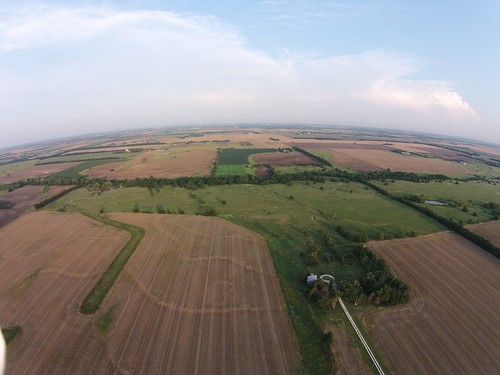
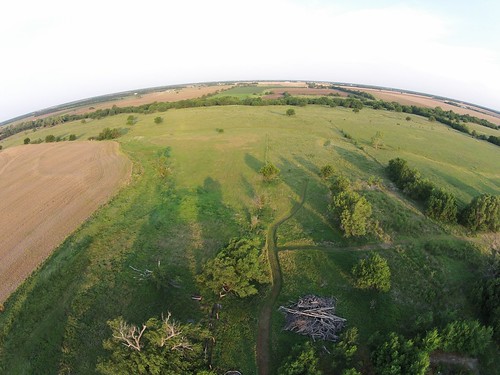
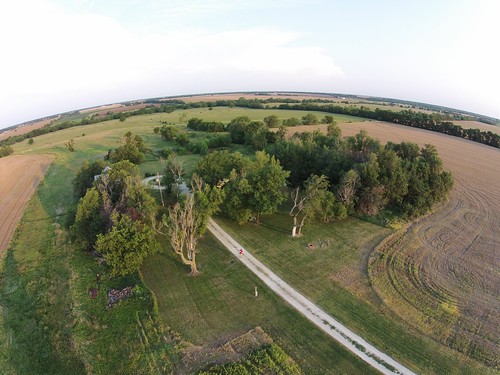
Sometimes you see something that takes your breath away, maybe even makes your eyes moist. That happened when I saw this photo one morning: Sunrise on the Prairie Photography has been one of my hobbies since I was a child, and I ve enjoyed it all these years. Recently I was inspired by the growing ease of aerial photography using model aircraft, and now can fly two short-range RC quadcopters. That photo came from the first one, and despite being a low-res 1280 720 camera, tha image of our home in the yellow glow of sunrise brought a deep feeling a beauty and peace. DJI00196 Somehow seeing our home surrounded by the beauty of the immense wheat fields and green pastures drives home how small we all are in comparison to the vastness of the earth, and how lucky we are to inhabit this beautiful planet. DJI00204 As the sun starts to come up over the pasture, the only way you can tell the height of the grass at 300ft is to see the shadow it makes on the mowed pathway Laura and I use to get down to the creek. DJI00149 This is a view of our church in a small town nearby the church itself is right in the center of the photo. Off to the right, you see the grain elevators that can be seen for miles across the Kansas prairie, and of course the fields are never all that far off in the background. Here you can see the quadcopter taking off from the driveway: And here it is flying over my home church out in the country: DJI00120 That s the country church, at the corner of two gravel roads with its lighted cross facing east that can be seen from a mile away at night. To the right is the church park, and the green area along the road farther back is the church cemetery. DJI00063 Sometimes we get in debates about environmental regulations, politics, religion, whatever. We hear stories of missiles, guns, and destruction. It is sad, this damage we humans inflict on ourselves and our earth. Our earth our home is worth saving. Its stunning beauty from all its continents is evidence enough of that. To me, this photo of a small corner of flat Kansas is proof enough that the home we all share deserves to be treated well, and saved so that generations to come can also get damp eyes viewing its beauty from a new perspective. DJI00183

18 July 2014

Ian Donnelly: How-To: Write a Plug-In

Hi Everybody! I wanted to write a how-to on how to write an Elektra plug-in. Plug-ins are what allow Elektra to translate regular configuration files into the Elektra key database, and allow keys to be coverted back into regular configuration files. For example, the hosts plug-in is used to transcribe a hosts file into a meaningful KeySet in the Elektra Key Database. This plugin is what allows the kdb tool to be able to work with hosts files like in our mount tutorial. While there are already a good number of plug-ins written for Elektra, we obviously don t cover all the different types of configuration files. If you want to be able to use the features of Elektra, you may have to write a plug-in for your type of configuration file. Luckily, its not hard to do. Over the new few weeks I will be writing a tutorial for how to write your very own plug-in as well as explaining all the components of an Elektra plug-in. I will link the tutorials below as I finish them for easy reference, or if you already follow my blog I am sure you will notice them as they get published. Part 1: The Basics Sincerely,
Ian S. Donnelly

17 July 2014

Jonathan McDowell: On the state of Free VoIP

Every now and then I decide I'll try and sort out my VoIP setup. And then I give up. Today I tried again. I really didn't think I was aiming that high. I thought I'd start by making my email address work as a SIP address. Seems reasonable, right? I threw in the extra constraints of wanting some security (so TLS, not UDP) and a soft client that would work on my laptop (I have a Grandstream hardphone and would like an Android client as well, but I figure those are the easy cases while the "I have my laptop and I want to remain connected" case is a bit trickier). I had a suitable Internet connected VM, access to control my DNS fully (so I can do SRV records) and time to read whatever HOWTOs required. And oh my ghod the state of the art is appalling. Let's start with getting a SIP server up and running. I went with repro which seemed to be a reasonably well recommended SIP server to register against. And mostly getting it up and running and registering against it is fine. Until you try and make a TLS SIP call through it (to a sip5060.net test address). Problem the first; the StartCom free SSL certs are not suitable because they don't advertise TLS Client. So I switch to CACert. And then I get bitten by the whole question about whether the common name on the cert should be the server name, or the domain name on the SIP address (it's the domain name on the SIP address apparently, though that might make your SIP client complain). That gets the SIP side working. Of course RTP is harder. repro looks like it's doing the right thing. The audio never happens. I capitulate at this point, and install Lumicall on my phone. That registers correctly and I can call the sip:test.time@sip5060.net test number and hear the time. So the server is functioning, it's the client that's a problem. I try the following (Debian/testing): I'm bored at this point. Can I "dial" my debian.org SIP address from Lumicall? Of course not; I get a "Codecs incompatible" (SIP 488 Not Acceptable Here) response. I have no idea what that means. I seem to have all of the options on Lumicall enabled. Is it a NAT thing? A codec thing? Did I sacrifice the wrong colour of goat? At some point during this process I get a Skype call from some friends, which I answer. Up comes a video call with them, their newborn, perfect audio, and no hassle. I have a conversation with them that doesn't involve me cursing technology at all. And then I go back to fighting with SIP. Gunnar makes the comment about Skype creating a VoIP solution 10 years ago when none was to be found. I believe they're still the market leader. It just works. I'm running the Linux client, and they're maintaining it (a little behind the curve, but close enough), and it works for text chat, voice chat and video calls. I've spent half a day trying to get a Free equivalent working and failing. I need something that works behind NAT, because it's highly likely when I'm on the move that's going to be the case. I want something that lets my laptop be the client, because I don't want to rely on my mobile phone. I want my email address to also be my VoIP address. I want some security (hell, I'm not even insisting on SRTP, though I'd like to). And the state of the Open VoIP stack just continues to make me embarrassed. I haven't given up yet, but I'd appreciate some pointers. And Skype, if you're hiring, drop me a line. ;)

16 July 2014

Jon Dowland: Mac

My job exposes me to a large variety of computing systems and I regularly use Mac, Windows and Linux desktops. My main desktop environment at home and work has been Debian GNU/Linux for over 10 years. However every now and then I take a little "holiday" and use something else for a few weeks. Often I'm spurred on by some niggle or other on the GNOME desktop, or burn-out with whatever the current contentious issue of the moment is in Debian. Usually I switched to Windows and I used it as an excuse to play some computer games. Last November I had just such an excuse to take a holiday but this time I opted to go for Mac. I had a back-log of Mac issues to investigate at work anyway. I haven't looked back. It appears I have switched for good. I've been meaning to write about this for some time, but I couldn't quite get the words right. I doubted I could express my frustrations in a constructive, helpful way, even if I think that my experiences are useful and my discoveries valuable, perhaps I would put them across in a way that seemed inciteful rather than insightful. I wasn't sure anyone cared. Certainly the GNOME community doesn't seem interested in feedback. I turns out that one person that doesn't care is me: I didn't realise just how broken the F/OSS desktop is. The straw that broke the camel's back was the file manager replacing type-ahead find with a search but (to seemlessly switch metaphor) it turns out I'd been cut a thousand times already. I'm not just on the other side of the fence, I'm several fields away. Sometimes community people write about their concerns with whether they're going in the right direction, or how to tell the difference between legitimate complaints, trolls and whiners. When I look at conferences now, the sea of Thinkpads was replaced with a sea of Apple Macs a long time ago now, and the Thinkpads haven't come back. I'd suggest: don't worry about the whiners. Worry about the leavers. What does this mean for my Debian involvement? Well, you can't help but have noticed that I've done very little this year. I've written nearly exclusively about music so far. the good news is: I still regularly use Debian, and I still intend to stay involved, just not on the desktop. I'm essentially only maintaining two packages now, lhasa and squishyball. I might pick up a few more (possibly archivemail if the situation doesn't improve) but I'm happy with a low package load; I'd like to make sure the ones I do maintain are maintained well. The sum of all my Debian efforts this year have been to get these two (or three) ship-shape. I have a bunch of other things I'd like to achieve in Debian which are not packages, and a larger package load would just distract from them. (We really are too package-oriented in Debian).

12 July 2014

Dirk Eddelbuettel: RcppArmadillo 0.4.320.0

While I was out at the (immensely impressive and equally enjoyable) useR! 2014 conference at UCLA, Conrad provided a bug-fix release 4.320 of Armadillo, the nifty templated C++ library for linear algebra. I quickly rolled that into RcppArmadillo release 0.4.320.0 which has been on CRAN and in Debian for a good week now. This release fixes some minor things with sparse and dense Eigen solvers (as well as one RNG issue probably of lesser interest to R users deploying the RNGs from R) as shown in the NEWS entry below.
Changes in RcppArmadillo version 0.4.320.0 (2014-07-03)
  • Upgraded to Armadillo release Version 4.320 (Daintree Tea Raider)
    • expanded eigs_sym() and eigs_gen() to use an optional tolerance parameter
    • expanded eig_sym() to automatically fall back to standard decomposition method if divide-and-conquer fails
    • automatic installer enables use of C++11 random number generator when using gcc 4.8.3+ in C++11 mode
Courtesy of CRANberries, there is also a diffstat report for the most recent release. As always, more detailed information is on the RcppArmadillo page. Questions, comments etc should go to the rcpp-devel mailing list off the R-Forge page.

This post by Dirk Eddelbuettel originated on his Thinking inside the box blog. Please report excessive re-aggregation in third-party for-profit settings.

Next.

Previous.