Search Results: "don"

28 December 2016

Wouter Verhelst: NBD talk at FOSDEM 2017

You may have noticed (but you probably did not), but on 2017-02-04, at 14:00, in room UB2.252A (aka "Lameere"), which at that point in time will be the Virtualisation and IaaS devroom, I'll be giving a talk on the Network Block Device protocol. Having been involved in maintaining NBD in one way or another for over fifteen years now, I've never seen as much activity around the concept as I have in the past few years. The result of that has been that we've added a number of new features to the protocol, to allow it to be used in settings where it was not as useful or as attractive as it would have been before. As a result, these are exciting times for those who care about NBD, and I thought it would be about time that I'd speak about it somewhere. The Virtualisation/IaaS devroom seemed like the right fit today (even though I wouldn't have thought so a mere two years ago), and so I'm happy they agreed to have me. While I still have to start writing my slides, and therefore don't really know (yet) exactly what I'll be talking about, the schedule already contains an outline. See you there?

27 December 2016

Dominique Dumont: New dzil command to install author dependencies as Debian packages

Hello Dist::Zilla is a great tool to limit tedious tasks while working on Perl modules. For instance, dzil provides tools like dzil authordeps or dzil listdeps to list dependencies.
This list of Perl modules can then be installed with cpanm:
dzil authordeps --missing   cpanm
dzil listdeps --missing   cpanm
On a Debian system, one may prefer to install Perl modules using Debian packages. Installing build dependencies can be done with apt build-dep, but apt does not handle Dist::Zilla author dependencies. The new authordebs Dist::Zilla sub-command was wriiten to fill this gap. When run in a directory containing the source of a Perl module that uses Dist::Zilla, you can run dzil installdebs to list the Debian packages required to run the dzil command. You can also run dzil installdebs -install to install author dependencies (using sudo under the hood). See: On Debian, authordebs is provided by libdist-zilla-app-command-authordebs-perl All the best
Tagged: debian, dist-zilla, Perl

Joey Hess: multi-terminal applications

While learning about and configuring weechat this evening, I noticed a lot of complexity and unsatisfying tradeoffs related to its UI, its mouse support, and its built-in window system. Got to wondering what I'd do differently, if I wrote my own IRC client, to avoid those problems. The first thing I realized is, it is not a good idea to think about writing your own IRC client. Danger will robinson.. So, let's generalize. This blog post is not about designing an IRC client, but about exploring simpler ways that something like an IRC client might handle its UI, and perhaps designing something general-purpose that could be used by someone else to build an IRC client, or be mashed up with an existing IRC client. What any modern IRC client needs to do is display various channels to the user. Maybe more than one channel should be visible at a time in some kind of window, but often the user will have lots of available channel and only want to see a few of them at a time. So there needs to be an interface for picking which channel(s) to display, and if multiple windows are shown, for arranging the windows. Often that interface also indicates when there is activity on a channel. The most recent messages from the channel are displayed. There should be a way to scroll back to see messages that have already scrolled by. There needs to be an interface for sending a message to a channel. Finally, a list of users in the channel is often desired. Modern IRC clients implement their own UI for channel display, windowing, channel selection, activity notification, scrollback, message entry, and user list. Even the IRC clients that run in a terminal include all of that. But how much of that do they need to implement, really? Suppose the user has a tabbed window manager, that can display virtual terminals. The terminals can set their title, and can indicate when there is activity in the terminal. Then an IRC client could just open a bunch of terminals, one per channel. Let the window manager handle channel selection, windowing (naturally), and activity notification. For scrollback, the IRC client can use the terminal's own scrollback buffer, so the terminal's regular scrollback interface can be used. This is slightly tricky; can't use the terminal's alternate display, and have to handle the UI for the message entry line at the bottom. That's all the UI an IRC client needs (except for the user list), and most of that is already implemented in the window manager and virtual terminal. So that's an elegant way to make an IRC client without building much new UI at all. But, unfortunately, most of us don't use tabbed window managers (or tabbed terminals). Such an IRC client, in a non-tabbed window manager, would be a many-windowed mess. Even in a tabbed window manager, it might be annoying to have so many windows for one program. So we need fewer windows. Let's have one channel list window, and one channel display window. There could also be a user list window. And there could be a way to open additional, dedicated display windows for channels, but that's optional. All of these windows can be seperate virtual terminals. A potential problem: When changing the displayed channel, it needs to output a significant number of messages for that channel, so that the scrollback buffer gets populated. With a large number of lines, that can be too slow to feel snappy. In some tests, scrolling 10 thousand lines was noticiably slow, but scrolling 1 thousand lines happens fast enough not to be noticiable. (Terminals should really be faster at scrolling than this, but they're still writing scrollback to unlinked temp files.. sigh!) An IRC client that uses multiple cooperating virtual terminals, needs a way to start up a new virtual terminal displaying the current channel. It could run something like this:
x-terminal-emulator -e the-irc-client --display-current-channel
That would communicate with the main process via a unix socket to find out what to display. Or, more generally:
x-terminal-emulator -e connect-pty /dev/pts/9
connect-pty would simply connect a pty device to the terminal, relaying IO between them. The calling program would allocate the pty and do IO to it. This may be too general to be optimal though. For one thing, I think that most curses libraries have a singleton terminal baked into them, so it might be hard to have a single process control cursors on multiple pty's. And, it might be innefficient to feed that 1 thousand lines of scrollback through the pty and copy it to the terminal. Less general than that, but still general enough to not involve writing an IRC client, would be a library that handled the irc-client-like channel display, with messages scrolling up the terminal (and into the scrollback buffer), a input area at the bottom, and perhaps a few other fixed regions for status bars and etc. Oh, I already implemented that! In concurrent-output, over a year ago: a tiling region manager for the console I wonder what other terminal applications could be simplified/improved by using multiple terminals? One that comes to mind is mutt, which has a folder list, a folder view, and an email view, that all are shoehorned, with some complexity, into a single terminal.

26 December 2016

Russ Allbery: Review: The Kingdom of Gods

Review: The Kingdom of Gods, by N.K. Jemisin
Series: Inheritance #3
Publisher: Orbit
Copyright: 2011
Printing: April 2012
ISBN: 0-316-04394-X
Format: Mass market
Pages: 567
The Kingdom of Gods is the third and final book of the Inheritance trilogy and rests very heavily on the events of The Hundred Thousand Kingdoms and The Broken Kingdoms. I think it's the best book of the trilogy as well, but this isn't the place to start. The build-up from the previous books is very important to this story. The first book of this series followed Yeine in her introduction to the highly political, abusive, and exploitative world of the Arameri, and her deeper introduction to the complex theology and mythology of Jemisin's constructed world. The second involved fewer theological fireworks and more day-to-day decisions, but it followed the implications of the first book's climax and revealed another important lurking weapon from the past. The Kingdom of Gods returns to a theological focus, this time putting Sieh front and center, and is once again concerned with the fate of the entire world, or even reality itself. Sieh played a significant role in the first book, but only seen from Yeine's perspective. He's the trickster god, the god of childhood, of play and whim and unfairness and practical jokes, of all the chaos and lack of impulse control and impudence of childhood. The Kingdom of Gods opens with him encountering two Arameri children in the abandoned areas under Sky and making an unlikely and impulsive pledge of friendship. One that leads to an unexplained catastrophe, a long blackout, and possibly the end of his existence, since Sieh starts aging. And growing up directly undermines his power. One of the two children turns out to be the heir of the haughty, devious, and deeply racist Arameri, whose position atop the hierarchy of the world has been weakened by earlier events but not shaken entirely. Her relationship with Sieh is much more fraught and complex when both of them are teenagers and Sieh is struggling badly to remain true to himself. But what drives the plot is a deadly new form of magic that is targeting the Arameri family and threatening to bring back world-wide war. This is my favorite book of the trilogy, not so much because it brings a relatively satisfying conclusion (The Hundred Thousand Kingdoms wasn't bad at that either), but because for once I like all of the main characters. Yeine and Nahadoth are hit and miss (the second two books of the trilogy make it clear that Nahadoth can be a real asshole), and as mentioned in the review of The Broken Kingdoms, I found Shiny exasperating. But Sieh is fun, even when he's being obnoxious, and both of the kids he befriends are complex and multifaceted. Shahar, with her hard and complex relationship with her mother, is probably my favorite character in the book, but her brother certainly has his moments. I did not like Sieh's maturation process. There are parts of this story that are squirm-inducing, and not in a good way (at least for me). And he does tend to get whiny in places. But he knows everyone in Jemisin's complex mythology, he has a great first-person narrative voice, and there are some very fun moments of interaction with his sibling gods. It says something that I really enjoyed this story even though books about slow, ongoing illness and diminution are rather far from my favorites (and Sieh's aging falls into that category). While there are some beautiful set-pieces here once the shit starts to hit the fan in earnest, the concluding fireworks didn't really work for me. The final confrontation was too abstracted, too indescribable, and too full of ancillary carnage to be the ending I was looking for. (Perhaps because of what I've been playing recently, I keep thinking of it as one of those chaotic, floating, dream-like cut-scene disasters in a Final Fantasy game that's trying to hint at indescribable magic.) But the denouement made me happy, and it fit the characters. And don't miss the glossary at the end of the book that Sieh has scribbled all over. This book includes, as a bonus, a short story: "Not the End": This is the ending that The Broken Kingdoms actually needed. It (plus some key bits in the rest of The Kingdom of Gods) made me feel much better about the end of that book, and added a much-needed light note to the rather heavy bits at the end of this book. And I do love Oree. It's very short, and it's not in any way a standalone story (more of a belated epilogue to the previous novel), but that's all that was needed. (8) Rating: 8 out of 10

Lucas Nussbaum: The Linux 2.5, Ruby 1.9 and Python 3 release management anti-pattern

There s a pattern that comes up from time to time in the release management of free software projects. To allow for big, disruptive changes, a new development branch is created. Most of the developers focus moves to the development branch. However at the same time, the users focus stays on the stable branch. As a result: This situation can grow up to a quasi-deadlock, with people questioning whether it was a good idea to do such a massive fork in the first place, and if it is a good idea to even spend time switching to the new branch. To make things more unclear, the development branch is often declared stable by its developers, before most of the libraries or applications have been ported to it. This has happened at least three times. First, in the Linux 2.4 / 2.5 era. Wikipedia describes the situation like this:

Before the 2.6 series, there was a stable branch (2.4) where only relatively minor and safe changes were merged, and an unstable branch (2.5), where bigger changes and cleanups were allowed. Both of these branches had been maintained by the same set of people, led by Torvalds. This meant that users would always have a well-tested 2.4 version with the latest security and bug fixes to use, though they would have to wait for the features which went into the 2.5 branch. The downside of this was that the stable kernel ended up so far behind that it no longer supported recent hardware and lacked needed features. In the late 2.5 kernel series, some maintainers elected to try backporting of their changes to the stable kernel series, which resulted in bugs being introduced into the 2.4 kernel series. The 2.5 branch was then eventually declared stable and renamed to 2.6. But instead of opening an unstable 2.7 branch, the kernel developers decided to continue putting major changes into the 2.6 branch, which would then be released at a pace faster than 2.4.x but slower than 2.5.x. This had the desirable effect of making new features more quickly available and getting more testing of the new code, which was added in smaller batches and easier to test. Then, in the Ruby community. In 2007, Ruby 1.8.6 was the stable version of Ruby. Ruby 1.9.0 was released on 2007-12-26, without being declared stable, as a snapshot from Ruby s trunk branch, and most of the development s attention moved to 1.9.x. On 2009-01-31, Ruby 1.9.1 was the first release of the 1.9 branch to be declared stable. But at the same time, the disruptive changes introduced in Ruby 1.9 made users stay with Ruby 1.8, as many libraries (gems) remained incompatible with Ruby 1.9.x. Debian provided packages for both branches of Ruby in Squeeze (2011) but only changed the default to 1.9 in 2012 (in a stable release with Wheezy 2013). Finally, in the Python community. Similarly to what happened with Ruby 1.9, Python 3.0 was released in December 2008. Releases from the 3.x branch have been shipped in Debian Squeeze (3.1), Wheezy (3.2), Jessie (3.4). But the python command still points to 2.7 (I don t think that there are plans to make it point to 3.x, making python 3.x essentially a different language), and there are talks about really getting rid of Python 2.7 in Buster (Stretch+1, Jessie+2). In retrospect, and looking at what those projects have been doing in recent years, it is probably a better idea to break early, break often, and fix a constant stream of breakages, on a regular basis, even if that means temporarily exposing breakage to users, and spending more time seeking strategies to limit the damage caused by introducing breakage. What also changed since the time those branches were introduced is the increased popularity of automated testing and continuous integration, which makes it easier to measure breakage caused by disruptive changes. Distributions are in a good position to help here, by being able to provide early feedback to upstream projects about potentially disruptive changes. And distributions also have good motivations to help here, because it is usually not a great solution to ship two incompatible branches of the same project. (I wonder if there are other occurrences of the same pattern?) Update: There s a discussion about this post on HN

25 December 2016

Steinar H. Gunderson: Cracking a DataEase password

I recently needed to get access to a DataEase database; the person I helped was the legitimate owner of the data, but had forgotten the password, as the database was largely from 1996. There are various companies around the world that seem to do this, or something similar (like give you an API), for a usually unspecified fee; they all have very 90s homepages and in general seem like they have gone out of business a long time ago. And I wasn't prepared to wait. For those of you who don't know DataEase, it's a sort-of relational database for DOS that had its heyday in the late 80s and early 90s (being sort of the cheap cousin of dBase); this is before SQL gained traction as the standard query language, before real multiuser database access, and before variable-width field storage. It is also before reasonable encryption. Let's see what we can do. DataEase has a system where tables are mapped through the data dictionary, which is a table on its own. (Sidenote: MySQL pre-8.0 still does not have this.) This is the file RDRRTAAA.DBM; I don't really know what RDRR stands for, but T is the database letter in case you wanted more than one database in the same directory, and AAA, AAB, AAC etc. is a counter so that a table grows to be too big for one file. (There's also .DBA files for structure of non-system tables, and then some extra stuff for indexes.) DBM files are pretty much the classical, fixed-length 80s-style database files; each row has some flags (I believe these are for e.g. row is deleted ) and then just the rows in fixed format right after each other. For instance, here's one I created as part of testing (just the first few lines of the hexdump are shown):
00000000: 0e 00 01 74 65 73 74 62 61 73 65 00 00 00 00 00  ...testbase.....
00000010: 00 00 00 00 00 00 00 73 46 cc 29 37 00 09 00 00  .......sF.)7....
00000020: 00 00 00 00 00 43 3a 52 44 52 52 54 41 41 41 2e  .....C:RDRRTAAA.
00000030: 44 42 4d 00 00 01 00 0e 00 52 45 50 4f 52 54 20  DBM......REPORT 
00000040: 44 49 52 45 43 54 4f 52 59 00 00 00 00 00 1c bd  DIRECTORY.......
00000050: d4 1a 27 00 00 00 00 00 00 00 00 00 43 3a 52 45  ..'.........C:RE
00000060: 50 4f 54 41 41 41 2e 44 42 4d 00 00 01 00 0e 00  POTAAA.DBM......
00000070: 52 65 6c 61 74 69 6f 6e 73 68 69 70 73 00 00 00  Relationships...
Even without going in-depth, we can see the structure here; there's testbase which maps to C:RDRRTAA.DBM (the RDRR itself), there's a table called REPORT DIRECTORY that maps to C:REPOTAAA.DBM, and then more stuff after that, and so on. However, other tables are not so easily read, because you can ask DataEase to encrypt a table. Let's look at such an encrypted table, like the Users table (containing usernames, passwords not password hashes and some extra information like access level), which is always encrypted:
00000000: 0c 01 9f ed 94 f7 ed 34 ba 88 9f 78 21 92 7b 34  .......4...x!. 4
00000010: ba 88 0f d9 94 05 1e 34 ba 88 a0 78 21 92 7b 34  .......4...x!. 4
00000020: e2 88 9f 78 21 92 7b 34 ba 88 9f 78 21 92 7b 34  ...x!. 4...x!. 4
00000030: ba 88 9f 78 21 92 7b 34 ba 88 9f 78 21 92 7b     ...x!. 4...x!. 
Clearly, this isn't very good encryption; it uses a very short, repetitive key of eight bytes (64 bits). (The data is mostly zero padding, which makes it much easier to spot this.) In fact, in actual data tables, only five of these bytes are set to a non-zero value, which means we have a 40-bit key; export controls? My first assumption here was of course XOR, but through some experimentation, it turned out what you need is actually 8-bit subtraction (with wraparound). The key used is derived from both a database key and a per-table key, both stored in the RDRR; again, if you disassemble, I'm sure you can find the key derivation function, but that's annoying, too. Note, by the way, that this precludes making an attack by just copying tables between databases, since the database key is different. So let's do a plaintext attack. If you assume the plaintext of the bottom row is all padding, that's your key and here's what you end up with:
00000000: 52 79 00 75 73 65 72 00 00 00 00 00 00 00 00 00  Ry.user.........
00000010: 00 00 70 61 73 73 a3 00 00 00 01 00 00 00 00 00  ..pass..........
00000020: 28 00 00 00 00 00 00 00 00 00 00 00 00 00 00 00  (...............
00000030: 00 00 00 00 00 00 00 00                          ........ 
Not bad, eh? Actually the first byte of the key here is wrong as far as I know, but it didn't interfere with the fields, so we have what we need to log in. (At that point, we've won, because DataEase will helpfully decrypt everything transparent for us.) However, there's a twist; if the password is longer than four characters, the entire decryption of the Users table changes. Of course, we could run our plaintext attack against every data table and pick out the information by decoding the structure, but again; annoying. So let's see what it looks like if we choose passs instead:
00000000: 0e 01 9f 7a ae 9e 21 f5 08 63 07 6d a3 a1 17 5d  ...z..!..c.m...]
00000010: 70 cb df 36 7e 7c 91 c5 d8 33 d8 3d 73 71 e7 2d  p..6~ ...3.=sq.-
00000020: 7b 9b 3f a5 db d9 4f 95 a8 03 a7 0d 43 41 b7 fd   .?...O.....CA..
00000030: 10 6b 0f 75 ab a9 1f 65 78 d3 77 dd 13 11 87     .k.u...ex.w....
Distinctly more confusing. At this point, of course, we know at which byte positions the username and password start, so if we wanted to, we could just try setting the start byte of the password to every possible byte in turn until we hit 0x00 (DataEase truncates fields at the first zero byte), which would allow us to get in with an empty password. However, I didn't know the username either, and trying two bytes would mean 65536 tries, and I wasn't up for automating macros through DOSBox. So an active attack wasn't too tempting. However, we can look at the last hex byte (where we know the plaintext is 0); it goes 0x5d, 0x2d, 0xfd... and some other bytes go 0x08, 0xd8, 0xa8, 0x78, and so on. So clearly there's an obfuscation here where we have a per-line offset that decreases with 0x30 per line. (Actually, the increase/decrease per line seems to be derived from the key somehow, too.) If we remove that, we end up with:
00000000: 0e 01 9f 7a ae 9e 21 f5 08 63 07 6d a3 a1 17 5d  ...z..!..c.m...]
00000010: a0 fb 0f 66 ae ac c1 f5 08 63 08 6d a3 a1 17 5d  ...f.....c.m...]
00000020: db fb 9f 05 3b 39 af f5 08 63 07 6d a3 a1 17 5d  ....;9...c.m...]
00000030: a0 fb 9f 05 3b 39 af f5 08 63 07 6d a3 a1 17     ....;9...c.m...
Well, OK, this wasn't much more complicated; our fixed key is now 16 bytes long instead of 8 bytes long, but apart from that, we can do exactly the same plaintext attack. (Also, it seems to change per-record now, but we don't see it here, since we've only added one user.) Again, assume the last line is supposed to be all 0x00 and thus use that as a key (plus the last byte from the previous line), and we get:
00000000: 6e 06 00 75 73 65 72 00 00 00 00 00 00 00 00 00  n..user.........
00000010: 00 00 70 61 73 73 12 00 00 00 01 00 00 00 00 00  ..pass..........
00000020: 3b 00 00 00 00 00 00 00 00 00 00 00 00 00 00 00  ;...............
00000030: 00 00 00 00 00 00 00 00 00 00 00 00 00 00 00     ...............
Well, OK, it wasn't perfect; we got pass\x12 instead of passs , so we messed up somehow. I don't know exactly why the fifth character gets messed up like this; actually, it cost me half an hour of trying because the password looked very real but the database wouldn't let me in, but eventually, we just guessed at what the missing letter was supposed to be. So there you have it; practical small-scale cryptanalysis of DOS-era homegrown encryption. Nothing advanced, but the user was happy about getting the data back after a few hours of work. :-)

Russ Allbery: krb5-strength 3.1

krb5-strength provides password strength checking plugins and programs for MIT Kerberos and Heimdal, and a password history implementation for Heimdal. This is the first new upstream release since I left Stanford, since I don't personally use the package any more. But it's easy enough to maintain, and it was overdue for merging some contributed patches. This release adds a new configuration directive, cracklib_maxlen, which can be used to not run longer passwords through CrackLib (whose concepts of password strength were not designed for longer passwords and which can spuriously reject passphrases). It also allows require_classes to require a certain number of character classes in a password, not just specific classes. There are also a variety of portability and cleanup fixes. Thanks to Jorj Bauer, Toby Blake, and Bernt Jernberg for their contributions. I've merged into the embedded CrackLib all the relevant security patches that have come out, although none of them turned out to be relevant for this package due to how CrackLib was called. I also applied a patch from Mark Sirota to fix mkdict and packer to force C locale, which keeps them from creating corrupted dictionaries. Finally, configuration instructions for the plugin are now installed as a new krb5-strength man page, and configuration instructions are included in the heimdal-history and heimdal-strength man pages, instead of just being in the README file. This makes them more accessible after the package is installed. You can get the latest version from the krb5-strength distribution page.

Russ Allbery: Review: A Man Called Ove

Review: A Man Called Ove, by Fredrik Backman
Translator: Henning Koch
Publisher: Washington Square
Copyright: 2012, 2014
Printing: May 2015
ISBN: 1-4767-3802-5
Format: Trade paperback
Pages: 337
Ove is 59 years old and drives a Saab. He's grumpy, often taciturn, very particular in how things should be done, and extremely judgmental about how other people do them. He is the sort of person who regularly rants about how poorly things are done these days and how much better they used to be. Ove does not like change. A Man Called Ove opens with him terrorizing the employees of an Apple Store, trying to buy a computer, but this incident is actually foreshadowing, and will only make sense at the very end of the book. The story actually begins in the second chapter, with Ove making his morning rounds of the neighborhood in which he lives, discovering an out-of-place bicycle and a mangy cat, and then starting to put a hook in his ceiling. But just as he's getting started, he's interrupted by new neighbors, who are incapable of backing up a trailer properly without scraping it against his house. Not that motor vehicles are allowed in the area anyway. That inauspicious beginning changes Ove's life, mostly through the sheer persistence of other people's disasters. It's not obvious at first that it will, and at the start A Man Called Ove could be a funny collection of stories about a curmudgeon. But as Backman shows more of Ove's life and tells more of his background and situation, it becomes something so much more, something satisfying and heart-breaking and deeply human. I've been struggling to review this book because I find it hard to capture what makes it so wonderful. Making that even harder, several key plot elements are introduced gradually in the story in ways that add a lot to the rhythm of the plot, and I don't want to spoil them. I think the closest I can get in a spoiler-free review is that A Man Called Ove is about empathy. It's about human connection, even when people seem unlikable, unreachable, or angrily off-putting. And it's a book about seeing the best inside other people, and about finding ways to be persistently oneself while still changing enough to find new connections, and about recognizing those moments when someone is showing you their best without getting caught up on the surface presentation. The man Ove is the center of this story, the subject of tight third person perspective for nearly all of the book. He's 59 when the story opens, but by the end of the book, mostly through flashback chapters, the reader knows his childhood and early adulthood and much of the story of his marriage. At first, he seems to be an obnoxious, surly, angry curmudgeon, the sort of old man who yells at clouds. But the joy of this book is how the reader's perception changes, how one gains sympathy, and then respect, first for Ove's unshakable inner sense of morality that he got from his father and then for his rule-based approach to how the world should work. One never entirely agrees with him, but Backman demystifies and explains Ove's thought process and ties it into a different generation and a different way of interacting with work (although Ove was still uncommon even in his youth, just not as unique). As I write this review, news and opinion in the United States are very focused on the plight of the white working class and how that does or does not explain recent election results. Backman is Swedish (I read this book in translation), so it's not coming from US culture and the cultural fault lines are not quite the same. But I think this book says something deeply valuable and fascinating about the working-class culture of Ove's youth, something that's much less about specific politics and much more about how it feels to make things with one's hands, to build or rebuild one's own house, or to work for thirty years at the same job and not be interested in a promotion to management. Backman does a truly spectacular job conveying the sense of angry frustration at the changes in work and life, the difficulty communicating one's internal feelings meaningfully, and the quiet joy of finding those places in life where one can do things properly. Ove is, of course, not the only character in this book, and every character here is a delight in their own idiosyncratic ways. The main story arc involves the various people in his neighborhood, particularly his new next-door neighbors: a pregnant Iranian woman and her very laid-back husband who is incapable of doing things around the house but keeps trying. I think Parvaneh, the woman, is my favorite character of the story except for Ove, and it's fitting that she's the first to work out the broad outlines of what's happening in Ove's life and the tricky path to effectively helping him. In a way, she's Ove's opposite: fiery, mercurial, talkative, and meddling. But she sees things in Ove that no one else seems to notice. (And the scene between her and Ove when she's learning to drive is a thing of beauty.) This is a book that could have been extremely sad, and yet isn't. It's a book about somber, depressing topics that somehow manages to be delightfully funny. And it's about a curmudgeon who persistently fails to have any sort of stereotyped heart of gold, but is nonetheless one of the most satisfying, fascinating, ethical, and good-willed characters I've ever read about. It manages to treat a collection of very different characters with individualized deep empathy and appreciation, while never pushing them all into the same mold. And the ending is wonderful. I rarely read slice of life stories, but this one is worth making an exception for. It's one of the best books I've ever read. Highly, highly recommended. Rating: 10 out of 10

24 December 2016

Russell Coker: Video Mode and KVM

I recently changed my KVM servers to use the kernel command-line parameter nomodeset for the virtual machine kernels so that they don t try to go into graphics mode. I do this because I don t have X11 or VNC enabled and I want a text console to use with the -curses option of KVM. Without the nomodeset KVM just says that it s in 1024*768 graphics mode and doesn t display the text. Now my KVM server running Debian/Unstable has had it s virtual machines start going into graphics mode in spite of nomodeset parameter. It seems that an update to QEMU has added a new virtual display driver which recent kernels from Debian/Unstable support with the bochs_drm driver, and that driver apparently doesn t respect nomodeset. The solution is to create a file named /etc/modprobe.d/blacklist.conf with the contents blacklist bochs_drm and now my virtual machines have a usable plain-text console again! This blacklist method works for all video drivers, you can blacklist similar modules for the other virtual display hardware. But it would be nice if the one kernel option would cover them all.

23 December 2016

Petter Reinholdtsen: Appstream just learned how to map hardware to packages too!

I received a very nice Christmas present today. As my regular readers probably know, I have been working on the the Isenkram system for many years. The goal of the Isenkram system is to make it easier for users to figure out what to install to get a given piece of hardware to work in Debian, and a key part of this system is a way to map hardware to packages. Isenkram have its own mapping database, and also uses data provided by each package using the AppStream metadata format. And today, AppStream in Debian learned to look up hardware the same way Isenkram is doing it, ie using fnmatch():
% appstreamcli what-provides modalias \
  usb:v1130p0202d0100dc00dsc00dp00ic03isc00ip00in00
Identifier: pymissile [generic]
Name: pymissile
Summary: Control original Striker USB Missile Launcher
Package: pymissile
% appstreamcli what-provides modalias usb:v0694p0002d0000
Identifier: libnxt [generic]
Name: libnxt
Summary: utility library for talking to the LEGO Mindstorms NXT brick
Package: libnxt
---
Identifier: t2n [generic]
Name: t2n
Summary: Simple command-line tool for Lego NXT
Package: t2n
---
Identifier: python-nxt [generic]
Name: python-nxt
Summary: Python driver/interface/wrapper for the Lego Mindstorms NXT robot
Package: python-nxt
---
Identifier: nbc [generic]
Name: nbc
Summary: C compiler for LEGO Mindstorms NXT bricks
Package: nbc
%
A similar query can be done using the combined AppStream and Isenkram databases using the isenkram-lookup tool:
% isenkram-lookup usb:v1130p0202d0100dc00dsc00dp00ic03isc00ip00in00
pymissile
% isenkram-lookup usb:v0694p0002d0000
libnxt
nbc
python-nxt
t2n
%
You can find modalias values relevant for your machine using cat $(find /sys/devices/ -name modalias). If you want to make this system a success and help Debian users make the most of the hardware they have, please helpadd AppStream metadata for your package following the guidelines documented in the wiki. So far only 11 packages provide such information, among the several hundred hardware specific packages in Debian. The Isenkram database on the other hand contain 101 packages, mostly related to USB dongles. Most of the packages with hardware mapping in AppStream are LEGO Mindstorms related, because I have, as part of my involvement in the Debian LEGO team given priority to making sure LEGO users get proposed the complete set of packages in Debian for that particular hardware. The team also got a nice Christmas present today. The nxt-firmware package made it into Debian. With this package in place, it is now possible to use the LEGO Mindstorms NXT unit with only free software, as the nxt-firmware package contain the source and firmware binaries for the NXT brick. As usual, if you use Bitcoin and want to show your support of my activities, please send Bitcoin donations to my address 15oWEoG9dUPovwmUL9KWAnYRtNJEkP1u1b.

22 December 2016

Shirish Agarwal: My letter to Government of Maharashtra on Real Estate Rules and Regulation Draft rules

While I try to minimize Politics and Economics as much as I can on this blog, it sometimes surfaces. It is possible that some people may benefit or at least be aware. A bit of background is necessary before I jump into the intricacies of the Maharashtra Real Estate Rules and Regulation Draft Rules 2016 (RERA) . Since ever, but more prominently since 2007/8 potential homeowners from across the country have been suffering at the hands of the builder/promoter for number of years. While it would be wrong to paint all the Real Estate Developers and Builders as cheats (we as in all tenants and homeowners hope there are good ones out there) many Real Estate Builders and promoters have cheated homeowners of their hard-earned money. This has also lessened the secondary (resale) market and tenants like me have to fight over morsels as supply is tight. There were two broad ways in which the cheating is/was done a. Take deposits and run away i.e. fly by night operators Here the only option for a homeowner is to file an FIR (First Information Report) and hope the culprits are caught. 99% of the time the builder/promoter goes somewhere abroad and the potential home buyers/home-owners are left holding the can. This is usually done by small real estate promoters and builders. b. The big boys would take all or most money of the project, may register or not register the flat in your name, either build a quarter or half-finished building and then make excuses. There are some who do not even build. The money given is used by the builder/developer either for his own needs or using that money in some high-profile project which is expensive and may have huge returns. They know that home-owners can t do anything, at the most go to the court which will take more than a decade or two during which time the developer would have interest-free income and do whatever he wants to do. One of the bigger stories which came up this year was when the Indian Cricket Captain, M.S. Dhoni (cricket is a religion in India, and the cricketers gods for millions of Indians) had to end his brand engagement and ambassadorship from Amrapali Housing Group. Apparently, his wife Sakshi was on the Board of directors at Amrapali Housing and had to resign The Government knew of such issues and had been working since last few years. Under the present Government, a Model Agreement and a Model Real Estate Rules and Regulation Bill was passed on 31st March and came into force on 1st May 2016. India, similar to the U.S. and U.K. follows a federal structure. While I have shared this before, most of the laws in India fall in either of three lists, Central List, Concurrent Lists and State Lists. Housing for instance, is a state subject so any laws concerning housing has to be made by the state legislature. Having a statutory requirement to put the bill in 6 months from 1st of May, the Government of Maharashtra chose to put the draft rules in public domain on 12th December 2016, about 10 days ago and there were efforts to let it remain low-key so people do not object as we are still in the throes of demonetisation. By law they should have given 30 days for people to raise objections and give suggestions. The State Government too could have easily asked an extension and as both the State and the Centre are of the same Political Party they would have easily got it. With that, below is the e-mail I sent to suggesstionsonrera@maharashtra.gov.in Sub Some suggestions for RERA biggest suggestion, need to give more time study the implications for house-owners. Respected Sir/Madame, I will be publishing the below mail as a public letter on my blog as well. I am writing as a citizen, a voter, a potential home owner, currently a tenant . If houses supply is not in time, it is us, the tenants who have the most to lose as we have to fight over whatever is in the market. I do also hope to be a home buyer at some point in time so these rules would affect me also somewhere in the hazy future. I came to know through the media that Maharashtra Govt. recently introduced draft rules for RERA Real Estate (Regulation and Development) Act, 2016 . I hope to impress upon you that these proposed Rules and Regulations need to be thoroughly revised and new draft rules shared with the public at large with proper announcement in all newspapers and proper time ( more than a month ) to study and give replies on the said matter. My suggestions and complaints are as under a. The first complaint and suggestion is that the date between the draft regulations and suggestions being invited by members of public is and was too little 12 December 2016 23 December 2016 (only 11 days) for almost 90 pages of Government rules and regulations which needs multiple rounds of re-reading to understand the implications of the draft rules . Add to that unlike the Central Building Legislation, Model Agreement which was prepared by Centre and also given wide publicity, the Maharashtra Govt. didn t do any such publicity to bring it to the
notice of the people. b. I ask where was the hurry to publish these draft rules now when everybody is suffering through the result of cash-crunch on top of other things. If the said draft rules were put up in January 2017, I am sure more people would have responded to the draft rules. Ir raises suspicion in the mind of everybody the timing of sharing the draft rules and the limited time given to people to respond. E.g. When TRAI (Telephone Regulatory Authority of India) asked for suggestion it gives more than a month, and something like housing which is an existential question for everybody, i.e. the poor, the middle and the rich, you have given pretty less time. While I could change my telephone service providers at a moment s notice without huge loss, the same cannot be said either for a house owner (in case of builder) or a tenant as well. This is just not done. c. The documents are at https://housing.maharashtra.gov.in/sitemap/housing/Rera_rules.htm under different sub-headings while the correct structure of the documents can be found at nared s site
http://naredco.in/notifications.asp . At the very least, the documents should have been in proper order. Coming to some of the salient points raised both in the media and elsewhere 1. On page 6 of Part IV-A Ext1.pdf you have written Explanation.-The registration of a real estate project shall not be required,- (i) for the purpose of any renovations or repair or redevelopment which does not involve marketing, advertisement, selling or new allotment of any apartment , plot or building as the case may be under
the real estate project; RERA draft rules What it means is that the house owner and by the same stroke the tenant would have absolutely no voice to oppose any changes made to the structure at any point of time after the building is built. This means the builder is free to build 12-14-16 even 20 stories building when the original plans were for 6-8-10. This rule gives the builder to do free for all till the building doesn t get converted into a society, a process which does and can take years to happen. 2. A builder has to take innumerable permissions from different authorities at each and every stage till possession of a said property isn t handed over to a home buyer and by its extension to the tenant. Now any one of these authorities could sit on the papers and there is no accountability of by when papers would be passed under a competent authority s desk. There was a wide belief that there would be some
rules and regulations framed in this regard but the draft rules are silent on the subject matter. 3. In Draft rule 5. page 8 of Part IV-A Ext1.pdf you write Withdrawal of amounts deposited in separate account.-(1) With regard to the withdrawal of amounts deposited under sub-clause (D) of clause (l) of sub-section (2) of section 4, the following provisions shall apply:- (i) For new projects which will be registered after commencement. Deposit in the escrow account is from now onwards. So what happens to the projects which are ongoing at the moment, either at the registration stage or at building stage, thousands of potential house owners would be left to fend for themselves. There needs to be some recourse for them as well. 3b. Another suggestion is that the house-owners are duly informed when promoters/builders are taking money from the bank and should have the authority to see that proper documents and procedure was followed. It is possible that unscrupulous elements may either bypass it or give some different documents which are not in knowledge of the house-owner, thus defeating the purpose of the escrow account itself. 4. On page 44 of Pt.IV-A Ext.161 in the Model Agreement to be entered
between the Promoter and the Alottee you have mentioned (i)The Allottee hereby agrees to purchase from the Promoter and the Promoter hereby agrees to sell to the Allottee one Apartment No. .. of the type .. of carpet area admeasuring .. sq. metres on floor in the building __________along with (hereinafter referred to as the Apartment ) as shown in the Floor plan thereof hereto annexed and marked Annexures C
for the consideration of Rs. . including Rs. . being the proportionate price of the common areas and facilities appurtenant to the premises, the nature, extent and description of the common/limited common areas and facilities which are more particularly described in the Second Schedule annexed herewith. (the price of the Apartment including the proportionate price of the limited common areas and facilities and parking spaces should be shown separately). (ii) The Allottee hereby agrees to purchase from the Promoter and the Promoter hereby agrees to sell to the Allottee garage bearing Nos ____ situated at _______ Basement and/or stilt and /or ____podium being
constructed in the layout for the consideration of Rs. ____________/- (iii) The Allottee hereby agrees to purchase from the Promoter and the Promoter hereby agrees to sell to the Allottee Car parking spaces bearing Nos ____ situated at _______ Basement and/or stilt and /or ____podium and/or open parking space, being constructed in the layout for the
consideration of Rs. ____________/-. The total aggregate consideration amount for the apartment including garages/car parking spaces is
thus Rs.______/- Draft rules. What has been done here is the parking space has been divorced from sale of the flat . It is against natural justice, logic, common sense as well-known precedents in jurisprudence (i.e. law) In September 2010, the bench of Justices R M Lodha and A K Patnaik had ruled in a judgement stating developers cannot sell parking spaces as independent real-estate units. The court ruled that parking areas are common areas and facilities . This was on behalf of a precedent in Mumbai High Court as well. http://www.reinventingparking.org/2010/09/important-parking-ruling-by-indias.html This has been reiterated again and again in courts as well as consumer
forums http://timesofindia.indiatimes.com/city/mumbai/Cant-charge-flat-buyer-extra-for-parking-slot/articleshow/22475233.cms and has been the norm in several Apartment Acts over multiple states http://apartmentadda.com/blog/2015/02/19/rules-pertaining-to-parking-spaces-in-apartment-complexes/ 5. In case of dispute, the case will high court which is inundated by huge number of pending cases. As recently as August 2016 there was a news item in Indian Express which talks about the spike in pending cases. Putting a case in the high court will weigh heavily on the homeowner, financially and
mentally http://indianexpress.com/article/cities/mumbai/more-cases-and-increased-staff-strength-putting-pressure-on-bombay-high-court-building-2964796/ It may be better to use the services of National Consumer Disputes Redressal Commission'(NCDRC) where there is possibility of quicker justice and quick resolution. There is possibility of group actions taking place which will reduce duplicity of work on behalf of the petitioners. 6. There is neither any clarity, incentive or punitive action against the promoter/builder if s/he delay conveyance to the society in order to get any future developmental and FSI rights. To delay handing over conveyance, the builders delay completion of the last building in a said project. there should be both a compensatory and punitive actions taken against the builder if he is unable to prove any genuine cause for the same. 7. There needs to be the provision with regard to need for developers to make public disclosures pertaining to building approvals. This while I had shared above needs to be explicitly mentioned so house-owners know the promoter/builder are on the right path. 8. There needs to be a provision that prohibits refusal to sell property to any person on the basis of his/her religion, marital status or dietary preferences. 9. There is lot of ambiguity if criminal proceedings can be initiated against a promoter/developer if s/he fails to deliver the flat on time. The developer should be criminally liable if he doesn t give the flat with all the amenities, fixtures and anything which was on agreement signed by both parties and for which the payment has been given in
full at time of possession of a flat. 10. Penalties for the promoter/builder is capped at 10% in case of any wrong-doing. Apart from proving the charge, the onus of which would lie on the house-owner, capping it at 10% is similar to A teacher telling a naughty student, do whatever you want to do, I am only going to hit you 5 times. Such a drafting encourages the Promoter/builder to play mischief. The builder knows his exposure is pretty limited. Liability is limited so he will try to get with whatever he can. Having a high penalty clause will deter him. 11. There was talk and shown in the Center s model agreement the precedent of providing names, addresses and contact details of other allot-tees or home-owners of a building that would have multiple dwelling units . This is nowhere either in the agreement or mentioned anywhere else in the four documents. 12. An addition to the above would be that the details provided should be correct and updated as per the records maintained by the Promoter/builder. 13. Today, there is no way for a potential house-owner to know if the builder had broken any norms or has any cases in court pending against him. There should be a way for the potential house-owner to find out. 14. A builder can terminate a flat purchase agreement by giving just a week s notice on email to the buyer who defaults on an instalment. But the developer can refund the money without interest to the
purchaser at leisure, within six months.Under MOFA (the earlier rules), the developer could cancel the agreement after giving a 15 days notice, and the builder could resell the flat only after refunding money to the original buyer. Under the new draft rules, a builder can immediately sell the flat after terminating the agreement. 15. The new draft rules say a buyer must pay 30% of the total cost while signing the agreement and 45% when the plinth of the building is constructed. The earlier state law stipulated 20% payment when the
agreement is signed with the developer. 16. The Central model agreement and rules proposed a fee of INR Rs 1,000 for filing complaints before housing authority; the state draft has proposed to hike this fee to Rs INR Rs. 10,000/- 17. Reading the Central Model Agreement, key disclosures under Section 4 (2)and Rule 3 (2) of the Central Model Rules have been excluded to be put up on the website of the Authority. These included carpet area of flat, encumbrance certificate (this would have disclosed encumbrances in respect of the land where the real estate project is proposed to be undertaken), copy of the legal title report and sanctioned plan of the building. Due to this house-owner would always be in dark and assume that everything is alright. There have been multiple instances of this over years Some examples http://www.deccanchronicle.com/140920/nation-current-affairs/article/builder-encroaches-%E2%80%98raja-kaluve%E2%80%99 http://indianexpress.com/article/cities/ahmedabad/surat-builder-grabs-tribal-land-using-fake-documents/ http://www.thehindu.com/news/cities/bangalore/bmtf-books-exmayor-wife-for-grabbing-ca-site/article7397062.ece http://timesofindia.indiatimes.com/city/thane/24-acre-ambernath-plot-usurped-with-fake-docus/articleshow/55654139.cms 18. The Central rule requires a builder to submit an annual report including profit and loss account, balance sheet, cash flow statement, directors report and auditors report for the preceding three financial years, among other things. However, the Maharashtra draft rules are silent on such a requirement. While the above is what I could perceive in the limited amount I came to know. This should be enough to convince that more needs to be done from the house-owner s side. Update Just saw Quint s Op-Ed goes in more detail.
Filed under: Miscellenous Tagged: #Draft Rules for Real Estate Rules and Regulation (2016), #hurry, #Name, #Response, Amrapali Group, Contact details of other hom-owners in a scheme., M.S. Dhoni

Urvika Gola: Outreachy- Week 1,2 Progress

Since the past few weeks I have been researching and working on creating a white label version of Lumicall with my mentors Daniel, Juliana and Bruno. Lumicall is a free and convenient app for making encrypted phone calls from Android. It uses the SIP protocol to interoperate with other apps and corporate telephone systems. Think of any app that you use to call others using an SIP ID. What does it mean to make a white label version of Lumicall?
White labelling is the idea of taking the whole or piece of Lumicall s code by business users and tweaking it according to their requirements and functionality they want. The white label version would have client s name, logo, icons, themes etc which reflect their brand. Although, the underlying working of both the applications would be same. Think of it like getting a cake from the local bakery, putting it into a home baking dish and passing it off as something you made in front of your friends and earning all the praise. Except cake is more appealing than apps.
What whitelabelling does is it takes away the pain of collecting cake ingredients, mixing them in right proportion, baking at the right temperature and uses the experience of one cake base to create more and more fancier, prettier, grander cakes. This lets the cool bakers (or the business users of lumicall) to focus on other aspects of the party like decoration, games and drinks (or monetization, publicity and new features)
Now you would wonder who these cool bakers or business users of lumicall would be? While researching this work that despite the commonalities, there would need to be a unique identifier for any application in the app store. I found that there is difference between the package name and the applicationID. When I create a new project in Android Studio, the applicationId exactly matches the Java-style package name I chose during setup. However, the application ID and package name are independent of each other beyond this point. The thing to keep in mind is that app stores identify as a changed application ID as a different app altogether.

So if I were to make N separate copies of the application code for N clients, it would be a maintenance nightmare, If the build system is Gradle, using product flavors is a trick that will make this maintenance easier. Instead of N separate copies, I would simply have N product flavors. Each flavor corresponds to a customized version of my application. Pro, free, whitelabel, Debug (for development purposes), Release (for production purposes) are the basic flavors I have identified.

Each flavor would use the same source code and files of the application but resources, icons, manifests etc that are specific to each flavor can be defined again in main/src/flavor_name directory under res folders etc. according to the requirement.
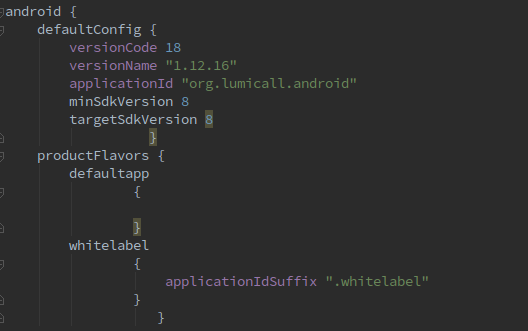
Here is a snippet from my build.gradle file::

snippetcrop Note: You have to define at least two flavors to be able to build multiple variants.
Because once you have flavors, you can only build flavored application. You can t just build default configuration anymore. Define an empty flavor, with no applicationIdSuffix at all, and it will use all of the default config section.

This week I d be moving forward with the implementation of whitelabelling using productFlavors in Lumicall.
I would love to hear from someone who has done this before!
Comment here or email me and I promise you an excellent home-made-store-brought cake!

Wishing you all HAPPY HOLIDAYS! !
-U

Shirish Agarwal: The wine and dine at debconf16

For the wine connoisseur

FOR the Wine Connoisseur

All photos courtesy KK . If any deviations, would put up labels sharing whose copyright it is. Before I get into all of that, I was curious about Canada and taking the opportunity of debconf happening there in a few months, asked few people what they thought of digital payments, fees and expenses in their country and if plastic cash is indeed used therein. The first to answer was Tyler McDonald (no idea if he is anyway related to the fast-food chain McDonalds which is a worldwide operation.) This is what he had to say/share
You can use credit / debit cards almost everywhere. Restaurant waiters also usually have wireless credit / debit terminals that they will bring to your table for you to settle your bill. How much your bank charges depends on your Canadian bank and the banking plan you are on. For instance, on my plan through the Bank Of Montreal, I get (I think) 20 free transactions a month and then after that I m charged $0.50CDN/piece. However, if I go to a Bank Of Montreal ATM and withdraw cash, there is no service fee for that. There is no service fee for using *credit* cards, only *debit* cards tend to have the fee. I live in a really rural area so I can t always get to a Bank Of Montreal machine for cash. So what I usually end up doing, is either pay by credit and then pay of the balance right away so I don t have to pay interest, or when I do use my bank card to pay for something, I ask if I can get cash back as well. Yes, Canada converted to plastic notes a few years ago. We ve also eliminated the penny. For cashless transactions, you pay the exact amount billed. If you re paying somebody in cash, it is rounded up or down to the nearest 5 cents. And for $1 or $2, instead of notes, we ve moved over to coins. I personally like the plastic notes. They re smoother and feel more durable than the paper notes. I ve had one go through a laundry load by accident and it came out the other side fine.
Another gentleman responded with slightly more information which probably would interest travellers from around the world, not just Indians
Quebec has its own interbank system called Interac (https://interac.ca/en/about/our-company.html). Quebec is a very proud and independent region and for many historical reasons they want to stand on their own, which is why they support their local systems. Some vendors will support only Interac for debit card transactions (at least this was the case when I stayed there the beginning of this decade, it might have changed a bit). *Most* vendors (including supermarkets like Provigo, Metro, etc) will accept major credit and debit cards, although MasterCard isn t accepted as widely there as Visa is. So, if you have one of both, load up your Visa card instead of your MasterCard or get a prepaid Visa card from your bank. They support chip cards everywhere so don t worry about that. If you have a 5 digit pin on any of your cards and a vendor asks you for a 4 digit pin, it will work 90%+ of the times if you just enter the first 4 digits, but it s usually a good idea to go change your pin to a 4 digit just to be safe.
From the Indian perspective all of the above fits pretty neat as we also have Pin and Chip cards (domestically though most ATMs still use the magnetic strip and is suspected that the POS terminals aren t any better.) That would be a whole different story so probably left for another day. I do like the bit about pocketing the change tip. As far as number of free transactions go, it was pretty limited in India for few years before the demonetization happening now. Few years before, I do remember doing as many transactions on the ATM as I please but then ATM s have seen a downward spiral in terms of technology upgradation, maintenance etc. There is no penalty to the bank if the ATM is out-of-order. If there was significant penalty then we probably would have seen banks taking more care of ATM s. It is a slightly more complex topic hence would take a stab at it some other day. Do hope though that the terms for ATM usage for bank customers become lenient similar to Canada otherwise it would be difficult for Indians to jump on the digital band-wagon as you cannot function without cheap, user-friendly technology. Cash machines: Uneven spread, slowing growth - Copyright Indian Express The image has been taken from this fascinating article which appeared in Indian Express couple of days back. Coming back to the cheese and wine in the evening. I think we started coming back from Eagle Encounters around 16:30/17:00 hrs Cape Town time. Somehow the ride back was much more faster and we played some Bollywood party music while coming back (all cool). Suddenly remembered that I had to buy some cheese as I hadn t bought any from India. There is quite a bit of a post where I m trying to know/understand if spices can be smuggled (which much later I learnt I didn t need to but that s a different story altogether), I also had off-list conversations with people about cheese as well but wasn t able to get any good recommendations. Then saw that KK bought Mysore Pak (apparently she took a chance not declaring it) which while not being exactly cheese fit right into things. In her own words a South Indian ghee sweet fondly nicknamed the blocks of cholesterol and reason #3 for bypass surgery . KK So with Leonard s help we stopped at a place where it looked like a chain of stores. Each store was selling something. Seeing that, I was immediately transported to Connaught Place, Delhi Connaught Place, Delhi The image comes from http://planetden.com/food/roundabout-world-connaught-place-delhi which attempts to explain Connaught Place. While the article is okish, it lacks soul and not written like a Delhite would write or anybody who has spent a chunk having spent holidays at CP. Another day, another story, sorry. What I found interesting about the stores while they were next to each other, I also eyed an alcohol shop as well as an Adult/Sex shop. I asked Leonard as to how far we were from UCT and he replied hardly 5 minutes by car and was shocked to see both alcohol and a sex shop. While an alcohol shop some distance away from a college is understandable, there are few and far around Colleges all over India, but adult shops are a rarity. Unfortunately, none of us have any photos of the place as till that time everybody s phone was dead or just going to be dead and nobody had thought to bring a portable power pack to juice our mobile devices. A part of me was curious to see what the sex shop would have and look from inside, but as was with younger people didn t think it was appropriate. All of us except Jaminy and someone else (besides Leonard) decided to stay back, while the rest of us went inside to explore the stores. It took me sometime to make my way to the cheese corner and had no idea which was good and which wasn t. So with no idea of brands therein, the only way to figure out was the pricing. So bought two, one a larger 500 gm cheap piece and a smaller slightly more expensive one just to make sure that the Debian cheese team would be happy. We did have a mini-adventure as for sometime Jaminy was missing, apparently she went goofing off or went to freshen up or something and we were unable to connect with her as all our phones were dead or dying. Eventually we came back to UCT, barely freshened up when it was decided by our group to go and give our share of goodies to the cheese and wine party. When I went up to the room to share the cheese, came to know they needed a volunteer for cutting veggies etc. Having spent years seeing Yan Can Cook and having practised quite a bit tried to do some fancy decoration and some julian cutting but as we got dull knives and not much time, just did some plain old cutting
The salads

The Salads, partly done by me.

I have to share I had a fascinating discussion about cooking in Pressure Cookers. I was under the assumption that everybody knows how to use Pressure Cookers as they are one of the simplest ways to cook food without letting go of all the nutrients. At least, I believe this to be predominant in the Asian subcontinent and even the chinese have similar vessels for cooking. I use what is called the first generation Pressure Cooker. I have been using a 1.5 l Prestige Pressure Cooker over half a decade, almost used daily without issues. http://www.amazon.in/Prestige-Nakshatra-Aluminium-Pressure-Cooker/dp/B00CB7U1OU
Prestige 1.5 L Pressure Cooker

1.5 Litre Pressure Cooker with gasket and everything.

There are also induction pressure cookers nowadays in the Indian market and this model https://www.amazon.in/Prestige-Deluxe-Induction-Aluminum-Pressure/dp/B01KZVPNGE/ref=sr_1_2
Induction base cooking for basmati rice

Best cooker for doing Basmati Biryanis and things like that.

Basmati is long-grain, aromatic rice which most families used in very special occasions such as festivals, marriages, anything good and pure is associated with the rice. I had also shared my lack of knowledge of industrial Microwave Ovens. While I do get most small Microwave Ovens like these , cooking in industrial ovens I simply have no clue. Anyways, after that conversation I went back, freshened up a bit and sometime later found myself in the middle of this
Collection of Wine Bottles

Random selection of wine bottles from all over the world.

Also at times found myself in middle of this
Chocolates all around me.

CHOCOLATES

I tried quite a few chocolates but the best one I liked (don t remember the name) was a white caramel chocolate which literally melted into my mouth. Got the whole died and went to heaven experience . Who said gluttony is bad Or this
French Bread, Wine and chaos

French Bread, Wine and chaos

As can be seen the French really enjoy their bread. I do remember a story vaguely (don t remember if it was a children s fairy tale or something) about how the French won a war through their french bread. Or this
Juices for those who love their health

Juices for those who love their health

We also had juices for the teetotaller or who can t handle drinks. Unsurprisingly perhaps, by the end of the session, almost all the different wines were finito while there was still some juices left to go around. From the Indian perspective, it wasn t at all exciting, there were no brawls, everybody was too civilized and everybody staggered off when they met their quota. As I was in holiday spirit, stayed up late, staggered to my room, blissed out and woke up without any headache. Pro tip Drink lots and lots and lots of water especially if you are drinking. It flushes out most of the toxins and also helps in not having after-morning headaches. If I m going drinking, I usually drown myself in at least a litre or two of water, even if I had to the bathroom couple of times before going to bed. All in all, a perfect evening. I was able to connect/talk with some of the gods whom I had wanted to for a long time and they actually listened. Don t remember if I mumbled something or made some sense in small-talk or whatever I did. But as shared, a perfect evening
Filed under: Miscellenous Tagged: #ATM usage, #Canada, #Cheese and Wine party, #Cheese shopping, #Connaught Place Delhi, #Debconf16, #Debit card, #French bread, #Julian cutting, #Mysore Pak, #white caramel chocolate

John Goerzen: Singing with Kids

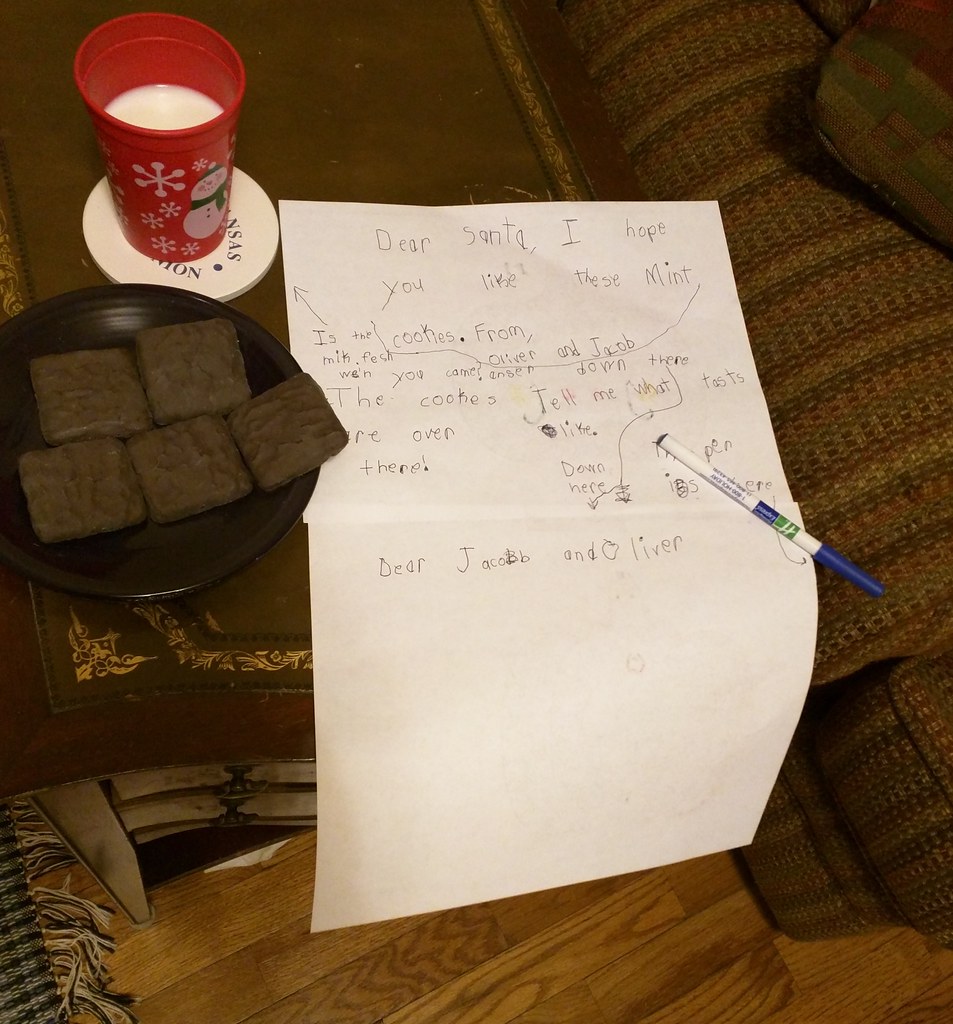
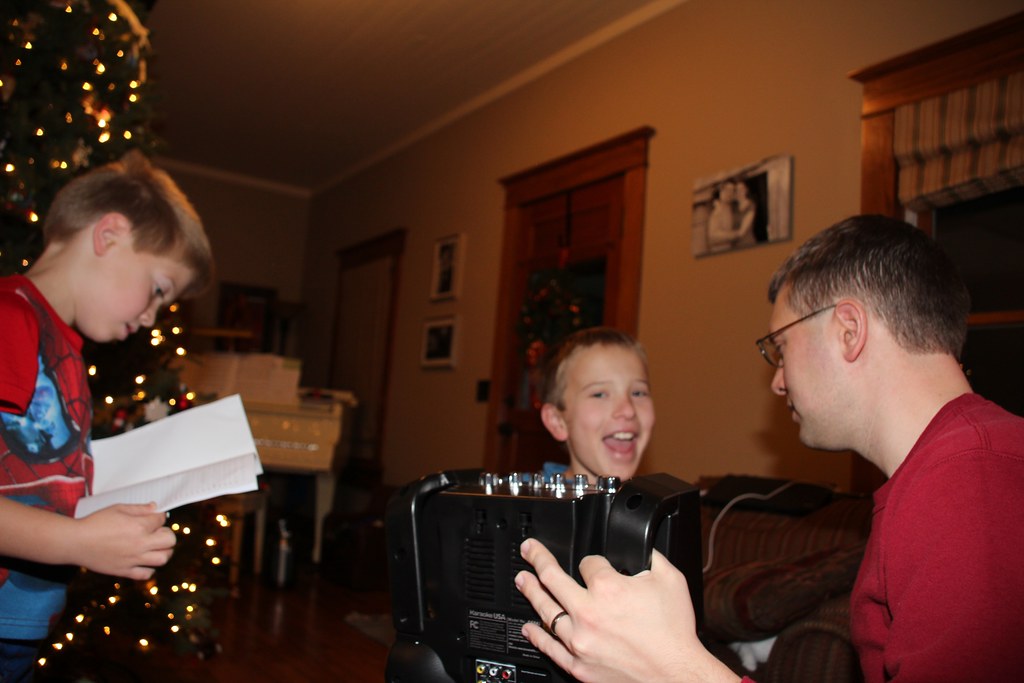
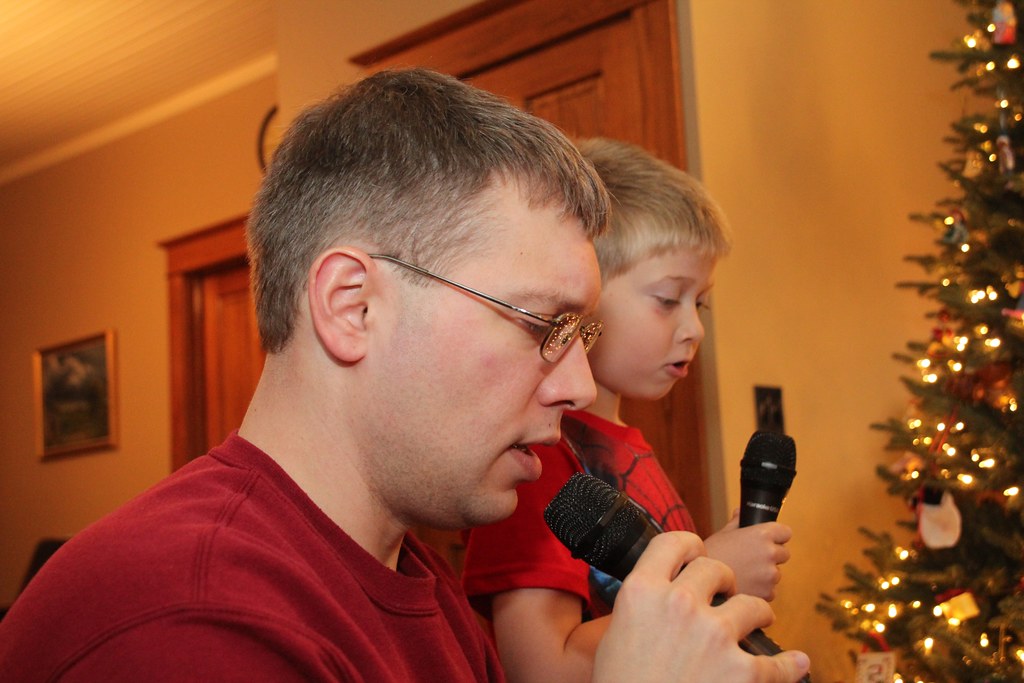
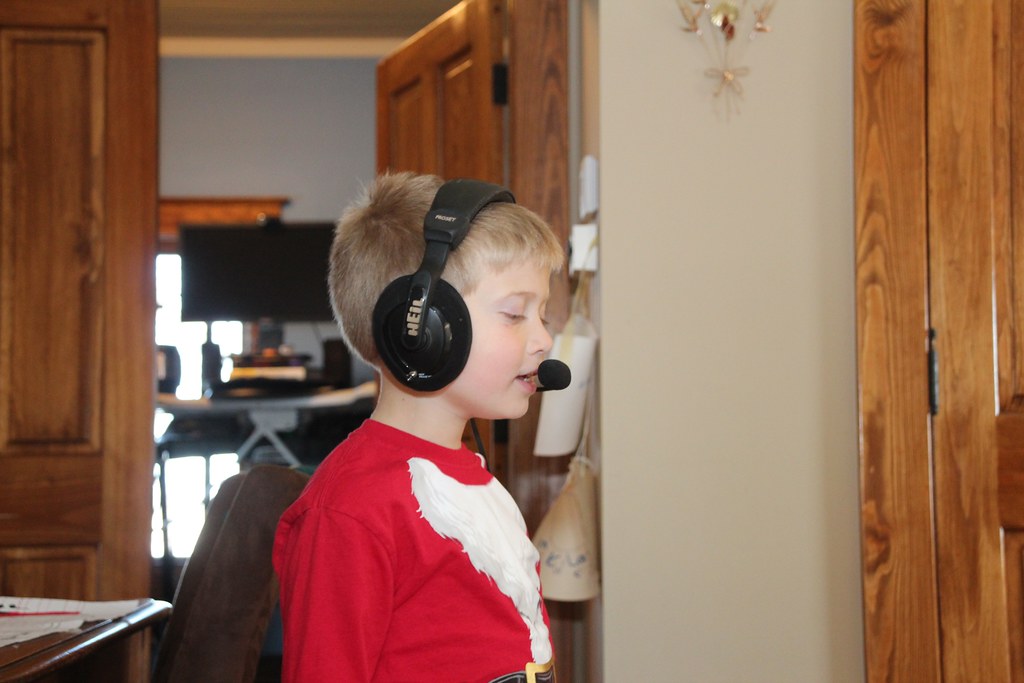
For four years now, we ve had a tradition: I go up to the attic one night, make a lot of noise, and pretend to be Santa. The boys don t think Santa is real, but they get a huge kick out of this anyway. The other day, this wound up with me singing a duet with my 7-year-old Oliver, and seeing a hugely delighted 10-year-old Jacob. All last week, the boys had been lobbying for me to be Santa . They aren t going to be able to be here on Christmas day this year, so I thought why not let them have some fun. I chose one present to give them early too. So, Saturday night, I said they could get ready for Santa. They found some cookies somewhere, got out some milk. And Oliver wrote this wonderful note to Santa : IMG_20161217_204244_cropped That is a note I m going to keep for a long time. He helpfully drew arrows pointing to the milk, cookies, and even the pen. He even started Santa s reply at the bottom! So, Saturday night, I snuck up to the attic, pretended to be Santa, and ate some cookies, drank some milk, and wrote Oliver a note. And I left a present. Jacob has been really getting into music lately, and Laura suggested I find something for the boys. I went looking for something that could record also, and came up with what has got to be a kid s dream: a karaoke machine. The particular one I found came with two microphones, a CD player, audio recording onto SD card (though it s a little dodgy), and a screen for showing words on any music that s karaoke-enhanced. Cue gasps of awe and excitement from the boys when we came down in our PJs and sweats at 6:45 Sunday morning to check it out. IMG_8895 Jacob excitedly began exploring all the knobs and options on it (they were particularly fond of the echo feature), while Oliver wanted to sing. So we found one of his favorite Christmas songs, and here he is singing it with me. IMG_8908 When you have a system with a line in, line out, and several microphone jacks, you can get creative. With a few bits of adapters from my attic, the headset I use for amateur radio worked with it perfectly. Add on a little mic extension cord, and pretty soon Oliver was pretending to be an announcer for a football game! IMG_8919 Then, Oliver decided he would act out a football game while Jacob and I were the announcers. Something tells me there will be much fun had with this over the next while! Just wait until I show them how to hook up a handheld radio to it in order to make a remotely-activated loudspeaker

21 December 2016

Holger Levsen: 20161221-debian-edu-sprint-in-oslo

What we did at the Debian Edu / Skolelinux gathering in November 2016 in Oslo From November 25 to 27 some people met in the hackerspace bitraf in downtown Oslo. On Saturday and Sunday we met in the morning and hacked and translated all day until we went for dinners in the evening. Despite the short time I think we managed to get a lot done and had good fun, so I'm hoping we'll have another gathering in 2017! Debian Edu / Skolelinux is currently in better shape regarding the upcoming Debian release than we ever have been, which is pretty awesome. Today, on December 21st, all our changes are in Stretch, except for debian-edu-artwork.git, which awaits a desktop-base upload to unstable the only thing missing is being able to install Debian Edu using our profiles from official media releasing Debian Edu Stretch on the same day as Debian Stretch would be a huge success though! These are the notes taken in a pad (thanks riseup!) during the meeting: Phil Hands worked on Knut Yrvin worked on Ingrid Yrvin worked on Ole-Erik Yrvin worked on Wolfgang Schweer worked on Petter Reinholdtsen worked on Dominik George worked on Holger Levsen worked on Mike Gabriel was sick and couldnt come to Oslo and worked at home instead: Thanks to the Debian sprints programm and our sponsors for supporting the travel of Wolfgang, Dominik, Phil and myself! Mike opted out from reimbursement as he couldn't travel due to sickness.

20 December 2016

Petter Reinholdtsen: Isenkram updated with a lot more hardware-package mappings

The Isenkram system I wrote two years ago to make it easier in Debian to find and install packages to get your hardware dongles to work, is still going strong. It is a system to look up the hardware present on or connected to the current system, and map the hardware to Debian packages. It can either be done using the tools in isenkram-cli or using the user space daemon in the isenkram package. The latter will notify you, when inserting new hardware, about what packages to install to get the dongle working. It will even provide a button to click on to ask packagekit to install the packages. Here is an command line example from my Thinkpad laptop:
% isenkram-lookup  
bluez
cheese
ethtool
fprintd
fprintd-demo
gkrellm-thinkbat
hdapsd
libpam-fprintd
pidgin-blinklight
thinkfan
tlp
tp-smapi-dkms
tp-smapi-source
tpb
%
It can also list the firware package providing firmware requested by the load kernel modules, which in my case is an empty list because I have all the firmware my machine need:
% /usr/sbin/isenkram-autoinstall-firmware -l
info: did not find any firmware files requested by loaded kernel modules.  exiting
%
The last few days I had a look at several of the around 250 packages in Debian with udev rules. These seem like good candidates to install when a given hardware dongle is inserted, and I found several that should be proposed by isenkram. I have not had time to check all of them, but am happy to report that now there are 97 packages packages mapped to hardware by Isenkram. 11 of these packages provide hardware mapping using AppStream, while the rest are listed in the modaliases file provided in isenkram. These are the packages with hardware mappings at the moment. The marked packages are also announcing their hardware support using AppStream, for everyone to use: air-quality-sensor, alsa-firmware-loaders, argyll, array-info, avarice, avrdude, b43-fwcutter, bit-babbler, bluez, bluez-firmware, brltty, broadcom-sta-dkms, calibre, cgminer, cheese, colord, colorhug-client, dahdi-firmware-nonfree, dahdi-linux, dfu-util, dolphin-emu, ekeyd, ethtool, firmware-ipw2x00, fprintd, fprintd-demo, galileo, gkrellm-thinkbat, gphoto2, gpsbabel, gpsbabel-gui, gpsman, gpstrans, gqrx-sdr, gr-fcdproplus, gr-osmosdr, gtkpod, hackrf, hdapsd, hdmi2usb-udev, hpijs-ppds, hplip, ipw3945-source, ipw3945d, kde-config-tablet, kinect-audio-setup, libnxt, libpam-fprintd, lomoco, madwimax, minidisc-utils, mkgmap, msi-keyboard, mtkbabel, nbc, nqc, nut-hal-drivers, ola, open-vm-toolbox, open-vm-tools, openambit, pcgminer, pcmciautils, pcscd, pidgin-blinklight, printer-driver-splix, pymissile, python-nxt, qlandkartegt, qlandkartegt-garmin, rosegarden, rt2x00-source, sispmctl, soapysdr-module-hackrf, solaar, squeak-plugins-scratch, sunxi-tools, t2n, thinkfan, thinkfinger-tools, tlp, tp-smapi-dkms, tp-smapi-source, tpb, tucnak, uhd-host, usbmuxd, viking, virtualbox-ose-guest-x11, w1retap, xawtv, xserver-xorg-input-vmmouse, xserver-xorg-input-wacom, xserver-xorg-video-qxl, xserver-xorg-video-vmware, yubikey-personalization and zd1211-firmware If you know of other packages, please let me know with a wishlist bug report against the isenkram-cli package, and ask the package maintainer to add AppStream metadata according to the guidelines to provide the information for everyone. In time, I hope to get rid of the isenkram specific hardware mapping and depend exclusively on AppStream. Note, the AppStream metadata for broadcom-sta-dkms is matching too much hardware, and suggest that the package with with any ethernet card. See bug #838735 for the details. I hope the maintainer find time to address it soon. In the mean time I provide an override in isenkram.

Thorsten Glaser: How to use the subtree git merge strategy

This article might be perceived as a blatant ripoff of this Linux kernel document, but, on the contrary, it s intended as add-on, showing how to do a subtree merge (the multi-project merge strategy that s actually doable in a heterogenous group of developers, as opposed to subprojects, which many just can t wrap their heads around) with contemporary git ( stupid content tracker ). Furthermore, the commands are reformatted to be easier to copy/paste.

To summarise: you re on the top level of a checkout of the project into which the other project (Bproject) is to be merged. We wish to merge the top level of Bproject s master branch as (newly created) subdirectory dir-B under the current project s top level.

	$ git remote add --no-tags -f Bproject /path/to/B/.git
	$ git merge -s ours --allow-unrelated-histories --no-commit Bproject/master
	$ git read-tree -u --prefix=dir-B/ Bproject/master
	$ git commit -m 'Merge B project as our subdirectory dir-B'
	Later updates are easy:
	$ git pull -s subtree Bproject master
 

(mind the trailing slash after dir-B/ on the read-tree command!) Besides reformatting, the use of --allow-unrelated-histories recently became necessary. --no-tags is also usually what you want, because tags are not namespaced like branches.

Another command you might find relevant is how to clean up orphaned remote branches:

	$ for x in $(git remote); do git remote prune "$x"; done
 

This command locally deletes all remote branches (those named origin/foo ) that have been deleted on the remote side. Update: Natureshadow wishes you to know that there is such a command as git subtree which can do similar things to the subtree merge strategy explained above, and several more related things. It does, however, need the pr fix on every subsequent pull.

19 December 2016

Mike Gabriel: [Arctica Project] Release of nx-libs (version 3.5.99.3)

Introduction NX is a software suite which implements very efficient compression of the X11 protocol. This increases performance when using X applications over a network, especially a slow one. NX (v3) has been originally developed by NoMachine and has been Free Software ever since. Since NoMachine obsoleted NX (v3) some time back in 2013/2014, the maintenance has been continued by a versatile group of developers. The work on NX (v3) is being continued under the project name "nx-libs". Release Announcement On Monday, Dec 19th, version 3.5.99.3 of nx-libs has been released [1]. This release brings another major backport of libNX_X11 (to the status of X.org's libX11 1.6.4, i.e. latest HEAD) and also a major backport of the xtrans library (status of latest HEAD at X.org, as well). This big chunk of work has again been performed by Ulrich Sibiller. Thanks for your work on this. This release is also the first version of nx-libs (v3) that has dropped nxcompext as shared library. We discovered that shipping nxcompext as shared library is a big design flaw as it has to be built against header files private to the Xserver (namely, dix.h). Conclusively, code from nxcompext was moved into the nxagent DDX [2]. Furthermore, we worked again and again on cleaning up the code base. We dropped various files from the Xserver code shipped in nx-libs and various compilier warnings have been amended. In the upstream ChangeLog you will find some more items around code clean-ups and .deb packaging, see the diff [3] on the ChangeLog file for details. A very special and massive thanks to all major contributors, namely Ulrich Sibiller, Mihai Moldovan and Vadim Troshchinskiy. Well done!!! Also a special thanks to Vadim Troshchinskiy for fixing some regressions in nxcomp introduced by the Unix socketeering support. Change Log A list of recent changes (since 3.5.99.2) can be obtained from here. Known Issues from 3.5.99.2 (solved in 3.5.99.3) This version of nx-libs now works fine again with LDFLAGS / CFLAGS having the -pie / -fPIE hardening flags set. Binary Builds You can obtain binary builds of nx-libs for Debian (jessie, stretch, unstable) and Ubuntu (trusty, xenial) via these apt-URLs: Our package server's archive key is: 0x98DE3101 (fingerprint: 7A49 CD37 EBAE 2501 B9B4 F7EA A868 0F55 98DE 3101). Use this command to make APT trust our package server:
 wget -qO - http://packages.arctica-project.org/archive.key   sudo apt-key add -
The nx-libs software project brings to you the binary packages nxproxy (client-side component) and nxagent (nx-X11 server, server-side component). Ubuntu developers, please note: we have added nightly builds for Ubuntu latest to our build server. This has been Ubuntu 16.10 so far, but we will soon drop 16.10 support in nightly builds and add 17.04 support. References

Next.

Previous.