Search Results: "agi"

31 July 2011

Uwe Hermann: The FONIC Surf-Stick, Huawei E1750 HSPA USB modem, on Debian GNU/Linux via usb_modeswitch and wvdial

FONIC Surf-Stick, Huawei E1750, package
I recently got myself a FONIC account for mobile Internet. This (German) prepaid-provider offers a "daily flatrate" for 2.50 per day. After the 10th day of usage (i.e., 25 ) you don't pay any more. This means, even if you need mobile Internet access 31 days a month, you only pay for 10 days. After 500MB/day or 5GB/month you're throttled down to GPRS speed (but you can still connect, and you don't pay more). The FONIC account comes with the "FONIC Surf-Stick", a Huawei E1750 HSPA USB modem (apparently it supports GPRS, EDGE, UMTS, HSDPA (up to 7.2Mbit/s), HSUPA (up to 5.76 Mbit/s), and a SIM card. In order to use the device on Linux you need two packages, usb_modeswitch and wvdial:
  $ apt-get install usb-modeswitch wvdial
Recent versions of usb_modeswitch (and matching udev entries) already support the Huawei E1750 out of the box, a few seconds after attaching the device it's automatically switched into modem mode. After this has been done you should have three new serial devices, usually /dev/ttyUSB0, /dev/ttyUSB1, and /dev/ttyUSB2. You'll need /dev/ttyUSB0 for talking to the device using AT commands. The lsusb output should look like this (see here for full lsusb -vvv):
  $ lsusb
  Bus 001 Device 045: ID 12d1:1436 Huawei Technologies Co., Ltd. 
(before usb_modeswitch was run, the USB IDs were 12d1:1446) FONIC Surf-Stick, Huawei E1750, front The required settings for connecting are documented at fonic.de, specifically the APN (pinternet.interkom.de). A username and/or password is not required. You need to provide your FONIC PIN though. Dialing is done using the *99# number and using the ATDT command. I'm using the following wvdial config file:
  $ cat /etc/wvdial.conf
  [Dialer Defaults]
  Modem = /dev/ttyUSB0
  Baud = 460800
  [Dialer pin]
  Init1 = AT+CPIN=1234
  [Dialer fonic]
  Phone = *99#
  Username = foo
  Password = foo
  Stupid Mode = 1
  Dial Command = ATDT
  Init2 = ATZ
  Init3 = AT+CGDCONT=1,"IP","pinternet.interkom.de"
FONIC Surf-Stick, Huawei E1750, back For mobile Internet access you would do the following:
  1. Attach the device via USB, wait a few seconds to let usb_modeswitch do its magic.
  2. Run wvdial pin and wait a few seconds (until the prompt returns):
      $ wvdial pin
      --> WvDial: Internet dialer version 1.61
      --> Initializing modem.
      --> Sending: AT+CPIN=1234
      AT+CPIN=1234
      OK
      --> Modem initialized.
      --> Configuration does not specify a valid phone number.
      --> Configuration does not specify a valid login name.
      --> Configuration does not specify a valid password.
    
  3. Run wvdial fonic and wait until the "CONNECT" message appears and you get DNS addresses:
      $ wvdial fonic
      --> WvDial: Internet dialer version 1.61
      --> Initializing modem.
      --> Sending: ATZ
      ATZ
      OK
      --> Sending: ATZ
      ATZ
      OK
      --> Sending: AT+CGDCONT=1,"IP","pinternet.interkom.de"
      AT+CGDCONT=1,"IP","pinternet.interkom.de"
      OK
      --> Modem initialized.
      --> Sending: ATDT*99#
      --> Waiting for carrier.
      ATDT*99#
      CONNECT
      --> Carrier detected.  Starting PPP immediately.
      --> Starting pppd at Mon Aug  1 xx:xx:xx 2011
      --> Pid of pppd: 18672
      --> Using interface ppp0
      --> local  IP address xxx.xxx.xxx.xxx
      --> remote IP address yyy.yyy.yyy.yyy
      --> primary   DNS address 193.189.244.225
      --> secondary DNS address 193.189.244.206
    
If everything worked fine you should now have connected successfully. There are other alternatives for achieving the same result, including umtsmon (Qt3 in the last release from 2009, looks a bit unmaintained), kppp, the GNOME NetworkManager, and others, but wvdial worked OK for me. For more details about the Huawei E1750 device (e.g. lsusb -vvv and more photos), see my wiki page at http://randomprojects.org/wiki/FONIC_Surf-Stick_Huawei_E1750 Update 2011-08-03: My measured download speed for a Debian ISO (over HTTP via wget, at night, roughly 22:00 o'clock) is 350-470 KB/s in case anyone is interested. During this download the blue LED on the stick was enabled, which denotes a UMTS connection (green == GPRS/EDGE, turquoise == HSDPA).

Mesutcan Kurt: Python Multi-Build for Python Extensions Packaging - Report 4

Hello,

This is the fourth report of my GSoC project for Debian. It has been a long time
since I wrote third report. So past four weeks a lot of things are implemented.

Firstly, I've changed tool's main script's name to py3build (removed .py suffix)
and make it executable so after you cloned my git repository you can use tool
with "./py3build".

I fixed a bug which occurs when the tool is invoked from somewhere except
its directory. If you invoke it like "./path/to/py3build/py3build" then the tool give
errors (f.e. could not find plugins etc.). Now this is fixed.

When I'm designing the API, I think if there is given build system (with
--system parameter) there is no need to invoke detect method but when
I'm writing autotools plugin, I realized that I need to learn which files are
exists and according to that information I'll invoke right thing (f.e. autoconf
or directly configure). So even if there is a given build system with --system
parameter its detect method invokes.

When I'm implementing plugins to tool, I need clean args (f.e. parameters
which are using with make clean) and install args (f.e. parameters with
make install) and I added it.

I added --dest-dir parameter this is passing to distutils plugin's root parameter.
In distutils plugin --install-dir parameter is passing as --install-platlib,
--install-purelib and --install-scripts so that maintainer can override it
with py3build's --install-args parameter.

Now, I implemented distutils, autotools, cmake plugins and working on
scons and packaging plugins. During the writing period of plugins I'm
testing them. After I finished these plugins I'm planning to write a patch
to dh and cdbs. After that I will write the tool and plugins for Python2.X.

30 July 2011

Torsten Werner: DebConf11: Jigsaw Progress in Debian

Tom Marble and Guillaume Mazoyer gave a talk about Jigsaw Progress in Debian during DebConf11 in Banja Luka. Guillaume is a Google Summer of Code student mentored by Tom and Sylvestre Ledru. The project is about modularizing OpenJDK which replaces the old fashioned classpath by a modulepath that knows about versioned dependencies. It can reduce the memory footprint and the startup time for applications running in the JVM. It would be interesting to match Debian package versions to Jigsaw module versions. Debian could influence the JDK version 8 in this area. Upstream is already building Debian packages but they do not follow the Debian policy and do not use the Debian packaging tools. Guillaume has uploaded 2 packages (jtharness, jtreg) to Debian. These packages are needed to run the upstream testsuite which ships 3484 individual tests. More than 99% of them are working in Debian. There is a GIT repository of his Jigsaw work at http://anonscm.debian.org/gitweb/?p=pkg-java/jigsaw.git;a=summary. The slides of the talk are available at http://penta.debconf.org/dc11_schedule/events/718.en.html.

28 July 2011

Ian Wienand: The quickest way to do nothing

As I was debugging something recently, an instruction popped up that seemed a little incongruous:
lea 0x0(%edi,%eiz,1),%edi
Now this is an interesting instruction on a few levels. Firstly, %eiz is a psuedo-register that simply equates to zero somewhat like MIPS r0; I don't think it is really in common usage. But when you look closer, this instruction is a fancy way of doing nothing. It's a little clearer in Intel syntax mode:
lea    edi,[edi+eiz*1+0x0]
So we can see that this is using scaled indexed addressing mode to load into %edi the value in %edi plus 0 * 1 with an offset of 0x0; i.e. put the value of %edi into %edi, i.e. do nothing. So why would this appear? What we can see from the disassembley is that this single instruction takes up an impressive 7 bytes:
8048489:	8d bc 27 00 00 00 00	lea    edi,[edi+eiz*1+0x0]
Now, compare that to a standard nop which requires just a single byte to encode. Thus to pad out 7 bytes of space would require 7 nop instructions to be issued, which is a significantly slower way of doing nothing! Let's investigate just how much... Below is a simple program that does nothing in a tight-loop; firstly using nops and then the lea do-nothing method.
#include <stdio.h>
#include <stdint.h>
#include <time.h>
typedef uint64_t cycle_t;
static inline cycle_t
i386_get_cycles(void)
 
        cycle_t result;
        __asm__ __volatile__("rdtsc" : "=A" (result));
        return result;
 
#define get_cycles i386_get_cycles
int main()  
	int i;
	uint64_t t1, t2;
	t1 = get_cycles();
	/* nop do nothing */
	while (i < 100000)  
		__asm__ __volatile__("nop;nop;nop");
		i++;
	 
	t2 = get_cycles();
	printf("%ld\n", t2 - t1);
	i = 0;
	t1 = get_cycles();
	/* lea do-nothing */
	while (i < 100000)  
		__asm__ __volatile__("lea 0x0(%edi,%eiz,1),%edi");
		i++;
	 
	t2 = get_cycles();
	printf("%ld\n", t2 - t1);
 
Firstly, you'll notice that rather than the 7-bytes mentioned before, we're comparing 3-byte sequences. That's because the lea instruction ends up encoded as:
 8048388:       8d 3c 27                lea    (%edi,%eiz,1),%edi
When you hand-code this instruction, you can't actually convince the assembler to pad out those extra zeros for the zero displacement because it realises it doesn't need them, so why would it waste the space! So, how did they get in there in the original disassembley? If gas is trying to align something by padding, it has built-in sequences for the most efficient way of doing that for different sizes (you can see it in i386_align_code of gas/config/tc-i386.c which adds the extra 4 bytes in directly). Anyway, we can build and test this out (note you need the special -mindex-reg flag passed to gas to use the %eiz syntax):
$ gcc -O3 -Wa,-mindex-reg  -o wait wait.c
$ ./wait
300072
189945
So, if you need 3-bytes of padding in your code for some reason, it's ~160% slower to pad out 3-bytes with no-ops rather than a single larger instruction (at least on my aging Pentium M laptop). So now you can rest easy knowing that even though your code is doing nothing, it is doing it in the most efficient manner possible!

Tim Retout: DebConf 11

It feels good to be at DebConf again, this time in Banja Luka. This is my fifth consecutive DebConf. Getting here was fairly painful; a flight from Split was delayed, so I had to get a later bus than planned from Zagreb. Still, I met a bunch of DebConf attendees getting the same bus, so at least there was conversation. Packaging-wise, I have been working on adding KiokuDB (and associated backends) into Debian. I wrote a patch for libossp-uuid-perl yesterday to fix a bug with its Data::UUID compatibility; this probably means I'll drop the Data::UUID ITP. Having looked at the code, I don't see how it can be easily fixed for multi-user systems. The Perl team's forthcoming move to git has come as a pleasant surprise; I've been trying out the new workflow. Earlier in the week I went running with bubulle et. al. - I must have missed the bit in the email where the very steep hill was mentioned. And the rain. So I had to slow down and turn around, and probably didn't quite do 15km in the end. :) Beer is half the price of Coca-Cola here. Awesome. So generally, I've been decompressing, and introspecting. The cafes are good for philosophical discussions; preferably when it's not raining. More later.

Jon Dowland: mr-lint

mr (multi-repository) is a useful script by Joey Hess for managing multiple version control check-outs. It's particularly useful for team Debian package maintenance, where you can have a common mrconfig file allowing team members to have easy access to all packages. Here's the mrconfig file for the Games team (which bizarrely only lists git repositories despite being maintained in svn ). It could also be useful for maintaining a collection of puppet modules from separate places. I frequently find myself wanting to sanity check my local copies of repositories. Have I forgotten to push commits upstream? Are my local branches not up-to-date? In a package management context, have I remembered to tag each package release? Are all the upstream releases tagged? To aid this process, I've hacked together a script I've called mr-lint. This reads your mrconfig file and performs the above tests on every repository it finds. It attempts to determine whether the check-out is a debian package or not, and performs additional tests where appropriate. Sample output:
$ mr-lint wd/debian/bup
wd/debian/bup: local branches not present in origin: rescue-diverge
wd/debian/bup: local branch debian does not match origin branch debian
wd/debian/bup: local branch master does not match origin branch master
wd/debian/bup: 5 missing upstream tags: 0.21, 0.17b, 0.20, 0.24b, 0.14a
wd/debian/bup: 3 missing debian tags: debian/0.17b-1, debian/0.20-2,
debian/0.21-1
I've called it mr-lint because I hope that if people think the idea is sound or the script useful, I might be able to adapt it into a patch against mr itself. Here's the script. If there is any interest, I'll put it somewhere more permanent.

27 July 2011

Thorsten Glaser: jupp: new release, new distro package

jupp 3.1.17 uploaded today, mostly thanks to user input suggesting I improve things, especially the syntax highlighting. (Maybe more to come.) I like users who don t complain but give helpful comments and send in patches even. Since the Debian FTP masters complain that the NEW queue is empty for the first time in ages, I also uploaded jupp to Debian proper (got requests, several, from actual users independent of each other). I originally thought I were the only user, it s not worth it, maybe too close to joe (which segfaults a lot more and has some ugly things, so I cherry-picked the better features of it instead of rebasing jupp), but it s had a package in mports (MidnightBSD ports) for ages, users submitted one to FreeBSD last year and keep it updated, there s even a WIP package in pkgsrc , and who knows where else or how many people are using my OpenSuSE Buildservice package or have had installed the previous DEB package I uploaded to my play repo. So now I feel it worth to upload. I even invested some major packaging rework, such as splitting the build-arch and build-indep parts from each other, and importing the upstream source into the packaging VCS, as I have learned in the packaging with git talk here at DebConf. (No guys, I will stick to CVS as git doesn t give me anything.)

26 July 2011

Matthew Garrett: Further adventures in EFI booting

Many people still install Linux from CDs. But a growing number install from USB. In an ideal world you'd be able to download one image that would let you do either, but it turns out that that's quite difficult. Shockingly enough, it's another situation where the system firmware exists to make your life difficult.

Booting a hard drive is pretty easy. The BIOS reads the first 512 bytes off the drive, copies them to RAM and executes them. That code is then responsible for either starting your bootloader or identifying the currently active partition and jumping to its boot sector, but before too long you're in a happy place where you're executing whatever you want to. Life is good. So you'd think that CDs would work in a similar way. The ISO 9660 format even leaves a whole 32KB at the start of a filesystem, which is enough space for a pretty awesome bootloader. But no. This is not how CDs work. That would be far too easy.

Let's imagine we're back in the 90s. People want to be able to boot off CD without needing a boot floppy to do so. And you're a PC vendor with a BIOS that's been lovingly[1] forced into a tiny piece of flash and which has to execute out of an almost as tiny piece of RAM if you want your users to be able to play any games. Letting boot code read arbitrary content off the CD would mean adding a new set of interrupt hooks, and that's going to be even more complicated because CDs have a sector size of 2K while hard drives are 512 bytes[2] and who's going to pay to implement this and for the extra flash and RAM and look surely there has to be another way?

So, of course, another way was found. The El Torito specification defines a way for shoving a reference to some linear blocks into the ISO 9660 header. The BIOS reads those blocks into memory and then redirects either the floppy or hard drive access interrupts (depending on the El Torito type) to that region. The boot code can then proceed as if it had been read off a floppy without all the trouble of actually putting a floppy in the machine, and the extra code required in the system BIOS is minimal.

USB sticks, however, are treated as hard drives. The BIOS won't look for El Torito images on them. Instead, it'll try to execute a boot sector. That isn't there on a CD image. Sigh.

A few years ago a piece of software called isohybrid popped up and solved this problem nicely. isohybrid is a companion to isolinux, which itself is a bootloader that fits into an El Torito image and can then load your kernel and installer from CD. isohybrid takes an ISO image, adds an x86 boot sector and partition table and does some more fiddling to turn a valid ISO image into one that can be copied directly onto a USB stick and booted. The world suddenly becomes a better place.

But that's BIOS. EFI makes this easier, right? Right?

No. EFI does not make this easier.

Despite EFI being a modern firmware for the modern world[3], EFI implementations are not required to be able to understand ISO 9660. In fact, I've never seen one that does. FAT is all the spec requires, and FAT is typically all you get. Nor will EFI just execute some arbitrary boot code from the start of the CD. So, how does EFI boot off CD?

El Torito. Obviously.

It's not quite as bad as it sounds, merely almost as bad as it sounds. While the typical way of using El Torito for a long time was to use floppy or hard drive emulation, it also supports a "No emulation" mode. It also supports setting a type flag for your media, which means you can distinguish between images intended for BIOS booting and EFI booting. But the fact remains that your CD has to include an embedded FAT partition that then contains a bootloader that's able to read ISO 9660 because your firmware is too inept to handle that itself[4].

How about USB sticks? Thankfully, booting these on EFI doesn't require any boot sectors at all. Instead you just have to have a partition table, a FAT partition and a bootloader in a well known location in that FAT partition. The required partition is, in fact, identical to the one you need in an El Torito image. And so this is where we start introducing some extra hacks.

Like I said earlier, isohybrid fakes up an MBR and adds some boot code that points at the actual bootloader. It needs to do a little more on EFI. The first problem is that the isohybrid MBR partition has to cover the entire ISO 9660 filesystem on the USB stick so that the operating system can access it later, but the El Torito FAT image is inside that partition. A lot of MBR-based code becomes very unhappy if you try to set up a partition that's a subset of another partition. So we can't really use MBR. On to GPT.

GPT, or the GUID Partition Table, is the EFI era's replacement for MBR partitions. It has two main advantages over MBR - firstly it can cover partitions larger than 2TB without having to increase sector size, and secondly it doesn't have the primary/logical partition horror that still makes MBR more difficult than it has any right to be. The format is pretty simple - you have a header block 1 logical block into the media (so 512 bytes on a typical USB stick), and then a pointer to a list of partitions. There's then a secondary table one block from the end of the disk, which points at another list of partitions. Both blocks have multiple CRCs that guarantee that neither the header nor the partition list have been corrupted. It turns out to be a relatively straightforward modification of isohybrid to get it to look for a secondary EFI image and construct a GPT entry pointing at it. This works surprisingly well, and media prepared this way will boot EFI machines if burned to a CD or written to a USB stick.

There's a few quirks. Macs will show two boot icons for these CDs[6], one marked "EFI Boot" and one helpfully marked "Windows"[7], with the latter booting the BIOS El Torito image. That's a little irritating, but not insurmountable. The other issue is that older Macs won't look for boot loaders in the legacy locations. This is where things start getting horrible.

Back in the old days, Apple boot media used to have a special "blessed" folder. Attempting to boot would involve the firmware looking for such a folder and then using that to start itself up. Any folder in the filesystem could be blessed. Modern hardware doesn't use boot folders, but does use boot files. For an HFS+ filesystem, the inode of the bootloader is written to a specific offset in the filesystem superblock and the firmware simply finds that inode and executes it. And this appears to be all that older Macs support.

So, having written a small tool to bless an HFS+ partition, I tried the obvious first step of burning a CD with three El Torito images (one BIOS, one FAT, one HFS+). It failed. While Refit could see the bootloader in the HFS+ image, the firmware appeared to have no interest at all in booting off it. Yet Apple install media would boot. What was the difference?

The difference, obviously, was that these earlier Macs don't appear to support El Torito booting. The Apple install media contained an Apple partition map.

The Apple partition map (APM) is Apple's legacy partition table format. Apple mostly dropped it when they went to x86, where it's retained for two purposes. The first is for drives that need to be shared between Intel Macs and PPC ones. The second seems to be for their install DVDs. Some further playing revealed that burning a CD with an APM entry pointing at the HFS+ filesystem on the CD gave me a boot icon. Problem solved?

Not really. Remember how I earlier mentioned that ISO 9660 leaves 32KB at the start of the image, and that an isohybrid image then writes an MBR and boot sector in the first 512 bytes of that, and the GPT header starts 512 bytes into a drive? That means that it's easy to produce an ISO that has both a boot sector, MBR partition table and GPT. None of them overlap. APM, on the other hand, has a header that's located at byte 0 of the media, overlapping with the boot sector. And it has a partition listing that's located at sector 1, overlapping with the GPT. Is all lost?

No. Merely sanity.

The first thing to remember is that the boot sector is just raw assembler. It's a byte stream that's executed by the CPU. And there's a lot of things you can tell a CPU to do that result in nothing happening. Peter Jones pointed out that the only bits of the AFP header you actually need are the letters "ER", followed by the sector size as a two byte big endian integer. These disassemble to harmless instructions, so we can simply move the boot code down a little and stick these at the beginning. A PC that executes it will read straight through the bizarre (but harmless) Apple bytes and then execute the real boot code.

The second thing that's important here is that we were just given the opportunity to specify the sector size. The GPT is only relevant when the image is written to a USB stick, so assumes a sector size of 512 bytes. So when the GPT starts one sector into the drive, it's actually starting 512 bytes into the drive. APM also starts one sector into the drive, but we can simply put a different sector size into the header and suddenly we're able to choose where that's going to be. 2K seems like a good choice, and so the firmware will now look for the header at byte 2048.

That's still in them middle of the GPT partition listing, though. Except we can avoid that as well. GPT lets you specify where the partition listing starts and doesn't require it to be immediately after the header. So we can offset the partition listing to, say, byte 8192 and leave a hole for the Apple partition map.

And, shockingly, this works. Setting up a CD this way gives a boot icon on old Macs. On new Macs, it gives three - one for legacy boot, one for EFI boot via FAT and one for EFI boot via HFS. Less than ideal, but eh. The one remaining problem is that this doesn't work for USB sticks (the firmware sees the GPT and ignores the APM), so we also need to add a GPT entry for the HFS+ partition. Job done.

So, it is possible to produce install media that will work if burned to CD or written to a USB stick. It's even possible to produce a version that will work on Macs, as long as you're willing to put up with three partition tables and an x86 boot sector that doubles as an APM header. And patches to isohybrid to do all of this will be turning up as soon as I tidy the code to the point where it works without having to hack in offsets by hand.

[1] Insert some other adverb here if you feel like it
[2] Why yes, 15 years later BIOSes still tend to assume 512 bytes. Which is why your 4K sector disk is much harder to work with than you'd like it to be.
[3] Ever noticed how the modern world involves a great deal of suffering, misery and death? EFI fits into that world perfectly.
[4] Obviously if you want your media to be bootable via both BIOS and EFI you need to produce a CD with two El Torito images. BIOS systems should ignore the image that says it's for EFI, and EFI systems should ignore the BIOS one. Some especially creative BIOS authors[5] have decided that users shouldn't have their choices limited in such a way, and so pop up a screen that says:
1.
2.
Select CD-ROM boot type:

and wait for the user to press a key. The lack of labels after the numbers is not a typographical error on my part.
[5] Older (pre-2009, and some 2009 models) Apple hardware has this bug if a dual-El Torito CD is booted via the BIOS compatibility layer. This is especially unfortunate because said machines often fail to provide a working keyboard emulation at this stage, resulting in you being stuck forever at an impressively unhelpful screen. This isn't a Linux bug, since it's happening before we've run any of our code at all. It's not even limited to Linux. 64-bit install media for Vista SP1, Windows 7 and Server 2008 all have similar El Torito layout and all trigger the same bug on Apple hardware. Apple's aware of this, and has resolved the issue by declaring that these machines don't support 64 bit Windows.
[6] Even further investigation reveals that Apple will show you as many icons as there are El Torito images, which is a rare example of Apple giving the user the freedom to brutally butcher their extremities if they so desire
[7] "Windows" is Apple code for "Booting via BIOS compatibility". The Apple boot menu will call any filesystem with a BIOS boot sector Windows.

Joachim Breitner: SAT-solving the testing transition problem

It is half-time for me at DebCamp/DebConf11 in Banja Luka, Bosnia-Herzegovina, and that is a good time to write about my work so far. I started with some finger exercises, such as the HTML copying for gnome-terminal (as blogged previously) and cosmetic changes to the buildd.debian.org/status website. After that, I began my main project: A SAT-based solver for the testing transition problem. In Debian, new software first enters a repository called unstable, where it is tested. Once some requirements are fulfilled (package has been in unstable for usually at least 10 days and has no new release critical bugs), it is entitled to enter the repository called testing, which will eventually form a new stable Debian release. But some packages need to migrate together, usually because either requires the new version of the other. Also, no packages in testing ought to become uninstallable by some seemingly unrelated change. The software that decides these things is called britney. It is sufficiently good in making sure nothing bad happens, but not smart enough to figure out what to do in case more than two packages need to migrate simultaneously. My goal is to improve this. Now, the the various requirements can all be expressed as predicative formulas, and a lot of research has been going into writing good solvers for such problems, called SAT-solvers. Hence my plan was to only specify what we expect from a testing migration, but leave the search for a solution to such a general purpose and highly optimized program. My initial progress was good and I had some result after two days of hacking, and the approach is promising. Because the data sets are pretty large (1.5GB of input data, the final SAT problem has 1.8 million clauses with 250.000 variables), so I learned quite a bit about profiling and optimizing Haskell programs, and that parsec is slower than working with BS.lines and BS.split to parse simple input. I also used the FFI to use dpkg code directly to compare Debian version numbers. At some point I noticed that I actually want to solve PMAX-SAT problems: Given two set of clauses, hard clauses and soft clauses, find a variable assignment that fulfills the hard clauses and as many of the soft clauses as possible. Unfortunately, there are no fast Free PMAX-SAT solvers around. The ones that I found and that were fast enough that I could use them, msuncore by Joao Marques-Silva at the University College Dublin and MiniMaxSat by Federico Heras at the Universitat Polit cnica de Catalunya, are only available as statically linked binaries. It is a shame that this is acceptable by the academic community; imagine mathematicians would stop including the proofs in their papers, and only share their theorems. So if you happen to have written a PMAX-SAT solver and can solve this instance (in weighted DIMACS format) in less than five minutes, and want to brag that the Debian project is using your code, then please release it under a Free license (e.g. GPL or BSD) and tell me about it! The code of my SAT-based solver is, of course, available, though slightly unpolished. Parts of it (notably the interface to picosat and the PMAX-SAT solvers) might be of general interest and I plan to put them on Hackage as a separate license. Update: I have contacted the authors of the SAT solvers mentioned above, and they have reconfirmed that they have no intention of releasing the source. Now I put my hope in maxsatz2009 by Chumin LI, which is GPL but was not able to cope with my large instance directly; I think I need to change the memory management.

Flattr this post

John Goerzen: Jacob and the Amazing Technicolor Adding Machine

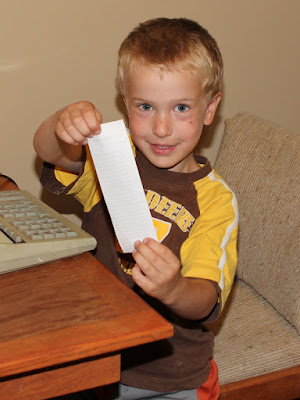
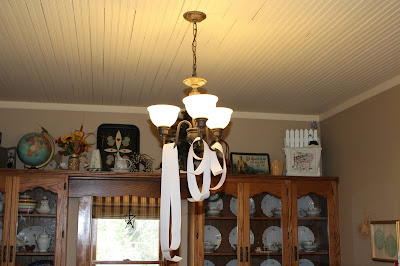
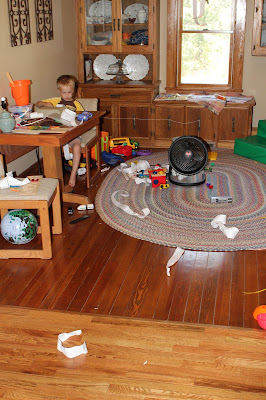
Jacob has been eagerly awaiting this day for at least, well, 2 days now. This morning he started asking questions. All day long he has been wondering how long until the big event. And that event is the arrival of the UPS truck carrying a special $8 package for him. And in that $8 package is not a DVD, or a book, or a toy, but rather 12 rolls of adding machine tape (totaling 1/3 of a mile). Oh yes, our four-year-old can hardly contain his excitement over office supplies. Let me back up a bit to explain. I am always on the lookout for a certain kind of toy. The sort of thing that you don t find in the toy section of a store. The sort of thing that is interesting and engages the curiosity of our boys, that most people would consider would toss, and that usually costs less than $5. Along those lines, Jacob has an old manual typewriter he can use, he and I built a switchbox full of switches and light bulbs that the boys love to play with, we built him a command-line-only PC out of spare parts, the boys have some radios they can use, and one day I salvaged a decades-old adding machine that was going to be thrown out. Jacob liked it he enjoys number and letter games and had some fun, but didn t zealously engage with it until just a few days ago. He sat down at his table and started making cards . He will print out a bunch of numbers, making a strip a couple of feet long, and then say, Dad, I made another card for you! We will then happily accept the card and he will continue making more. Here he is, holding up one of his cards: Jacob had a ton of fun making them, and Oliver wanted in on the action too. Oliver was somewhat interested in the adding machine, but not as much as Jacob, and Jacob didn t want to share. So somehow they decided that Oliver would run and get cards from Jacob and then take them to whatever parent Jacob said. Today Jacob said, Dad, the Oliver delivery service will bring you a card! Saturday morning we had some time to hang around and play, so we played some adding machine tape games. I tucked some long cards under my waistband, and the boys happily chased me all over the house trying to get them back. We also decorated: And here is what the room looked like after some cleanup: That orange bucket on the desk is my card bucket where I can put all the cards he gives me. He even helpfully empties it out into the recycle bin when there are too many old cards in it! But then tragedy struck it was out of paper! I ordered a 12-roll pack off Amazon, and boy was it a long couple of days until it arrived. Today before the UPS truck got here, I showed him how we could feed old paper through and print on the back side an incredible innovation, it seemed! Terah had a conversation with him earlier that went like this: Terah: Jacob, we need to clean up the house. Jacob: Why? Terah: Because some people are coming over. Jacob: Who is OH YES! The UPS delivery man! Yes, let s clean! Terah: Ah, well yes he will be here too, but your great uncle and aunt are coming. Jacob: Oh yay! And the UPS man! It is hard to describe Jacob s excitement when the package arrived. I quickly opened it up, and at his great uncle s prompting, he counted to see if he really did get 12 rolls of paper. IT IS TWELVE ROLLS! YAY! And then we quickly installed it in the machine and off he went. At his great uncle s prompting, he started writing a J on each card . This meant Jacob , or maybe he d put two J s, meaning To John From Jacob , or perhaps the two J s meant To Terah From Jacob he d always have to clue us in. Anyhow, for an $8 investment in paper this has brought hours of joy to our boys. Even though Jacob isn t yet really using it to perform arithmetic, it is setting him up to enjoy that sort of thing and encouraging his curiosity. Both good things.

24 July 2011

Tore S. Bekkedal: Ut ya: English version

If a single man can display so much hatred
think only of how much love we all can display together.

Stine Renate H heim

I wrote a Norwegian post explaining my experience at Ut ya. I had taken this blog for dead, and had entirely forgotten that it was syndicated on Planet Debian. I don t want to let Google Translate make this disaster any worse than it is the translation of bullets into balls being particularly bad so the international attention the massacre has garnered in consideration, I am writing an English translation of my experiences. I feel somehow duty-bound to make people aware of what happened, but I don t want to get into anything else but a sober description of the events and some very brief reflections. There are many details I have chosen to omit. Others have written their experiences of the events at Ut ya. I wanted to write mine down as well, and get it out there . Partly, I want to write this down because I m unsure if I will remember all the details at a later point in time, although I think I d prefer it if I couldn t. I m also writing this because people are asking about my experiences and it s much better to have an URL to give them, lest I have to keep going through the same spiel over and over again. Our former Prime Minister and current labour movement demigod Gro Harlem Brundtland had recently left the island. I had been the cameraman for a video interview of her talking about Ut ya, and I was in the media group room encoding the video into a file suitable for YouTube, when someone else in the room startled and said that Twitter was full of messages about a loud explosion in Oslo. As the newspapers brought us information about the extent of the damages, a consensus arose that an informational meeting was in order. As soon as the current round of talks finished, we were gathered into the main hall. The meeting was duly held, and after the statement was made that a TV feed would be made available, I took it upon myself as the local alpha geek to make it happen. Of course, the situation caused both the wireless network and the GPRS networks to become totally unusable. As I was waiting for someone to set up a password, I took the opportunity to face the consequences of having eaten two bits of a microwavable dish called Hold-It the local equivalent of a Hot Pocket and went to the toilet. As I was in there, I first heard agitated shouting, then screams, then gunshots coming from just outside the toilets. More than anything else, it sounded like a toy gun. I was convinced that someone was making a joke in incredibly bad taste and I stormed out of the booth with the intent of halting it. As I tore the door open, I saw two of my comrades hiding in a recessed corner. Their facial expressions left absolutely no doubt that this was no toy. They signalled for me to get back in the booth. I closed the door, did a mental double-take in utter, complete confusion, and opened it again. They were still signalling. Had they not stood there, I would have run straight into the gunman; they saved my life. I looked out into the hallway, and I made eye contact with a young boy lying in a pool of blood. He was motioning for me to help him. I heard more gunshots from inside the building and retreated back inside. As I was trying to think through my next move, I realized that the decidedly insubstantial wood-fiber door would not resist any kind of bullets. I made my way out into the hallway, with the intent of escaping outside. At that point, I was of course not aware that there was an intention to kill as many as possible, so I thought that the open spaces outside would be a place of relative safety. Of course, this proved to be wrong and my life was probably saved a second time by one of the caf volunteers taking me into a hard-to-spot employee s bathroom. We sat there for ninety minutes. Always ready to make a run for it, ready for just about anything. A peculiar group dynamic arose with these two people with whom I had barely previously spoken. We came to share a strange sense of common destiny and gallows humour. One of them had seen the shooter and described the police uniform. I perceived it to be realistic that we were the only ones aware of the wounded outside the toilet. I tried to reach the emergency services, but all their lines were busy; the terror attack in Oslo had probably clogged their lines. I finally got through to the fire services, who could inform me that the police did know about the situation and were on their way. This was to take 90 minutes and by the time we evacuated, the young boy outside my door had perished. The despair I first saw in his eyes as I passed him, fleeing from one room to the other and the empty, blank stare as we left, are burned into me and they are images I will never in my life forget. Finally, the real police arrived. We walked out. I chose the path through the minor conference hall something I now regret. The sight was simply beyond my capacity to describe fully, and so terrifying that I barely remember the sight only the terror it struck in me. There were several people bunched up in a corner, a big amorphous heap of bodies. Some were conscious and yelled at me not to do anything that could startle the police, others lay still. Their bodies were all covered in blood, and a thick pool of blood extended at least a half-metre in all directions around them. The policeman across the hall was screaming orders at me, but he was screaming so loudly that I couldn t make out his words at first. We were first moved into the camp newspaper s offices. There were about eight of us there, I think, in addition to one girl who lay wounded. Towards the end she was drifting in and out of consciousness. We covered her with sweaters to keep her warm and one of us tried to at least temper her bleeding. The bullet had missed her heart, but by the entry wound it was clear that it was not by far. I do not know who this girl was or how she is now. I sat behind and never saw her face. The wounded were evacuated first. I don t remember how long we remained; I had lost all concept of time. In spite of protests from the group who knew him, one kid was put in handcuffs. At the time I didn t understand why, and the policeman seemed to say something almost to the effect that there was no reason for it at all. I didn t see when they undid his cuffs, but I remember thinking that this treatment made a terrible experience even worse for him. I tried my best to comfort him but knew it would be little help. Later, when things stabilised a little, we were told that he was handcuffed because he had come from an unsecured area. The police was extremely good at carefully explaining what was happening and why; this was a big help and I am grateful for it. Eventually we were moved out into the main corridor of the building, where we joined up into a group of about fifty. Only when I saw the two people who saved my life did any emotion other than mild confusion arise. I broke down shivering in tears in one of their arms. After a few seconds, I came back to my senses and realised that this was not the time. I quickly gathered myself, got the shaking under control, and sat down. We were given some chocolate and soda from the kiosk. I remember making an offhand remark that an inability to find joy in free candy was a sure sign of a bad situation. We all laughed out loud. Gallows humour is a coping mechanism, but in retrospect one almost feels guilty for it. We were shown out in a single file with hands above our heads. I remember an intense concern that someone would slip in the steep, muddy slope and create a misunderstanding. Outside, there were more bodies. Some under improvised covers a tarpaulin from the waffle stand, the deflated bouncy castle but some simply lay there. Everyone I met displayed a courage, a mental discipline and unity of purpose far beyond anything one would ever wish to expect from people this young. Everyone conducted themselves with an attitude that could almost be described as stiff upper lip . Safely across the fjord we were offered blankets. I was asked if I was aware of any injuries, and asked to lift my shirt and show my abdominal region. We were shown into the bus which took us to the hotel used by the survivors and their family. I simply cannot describe in any words the relief I felt when I was able to embrace my living comrades. It was completely unlike anything I had ever felt before in my life. The euphoric feeling was tempered only by the realisation that there would be many I could never see again, comrades whom I had taken great pride in calling my friends, with futures in the service of all mankind, futures I had previously found such great joy in pondering and guessing about. The feeling which continues to upset me the most, is the feeling that so many of my comrades left behind grieving families and friends. Torn away senselessly. I do not know how much more than this relatively sober account of the events on Ut ya I can muster. I would, however, like to offer some reflections. First of all, from the bottom of my heart, I want to thank the police who saved the lives of so many still on the island, the holidaymakers who took aboard swimmers into their boats and the rescue services staffed primarily by volunteers who have spared no effort in trying to soften the blow as much as they can. The opportunity to spend time with those comrades who underwent the same experience as myself has also been an immeasurable aid. I was also so relieved to find my very closest friend among the survivors, which has also been an indescribable help. If I can name a single positive in this tragedy: Had he arrived with his automatic weapon fifteen or twenty minutes prior, he would have arrived during the informational meeting, at a time when the major hall was absolutely jam-packed the death toll would be many times what it ended up being. I am agonisingly aware of the meager comfort this provides to those who have been bereft of their closest, but I do find some solace in this. We cannot sweep under a rug that this was without question! a political attack on the labour movement. But it is thankfully also an attack which has been perceived by everyone as an attack on the Norwegian society, and on a symbol of the wide recruitment to the participatory democracy which lies at our very national soul. I cannot thank the Norwegian people, and indeed the people in other nations who have offered their condolences, enough for their shows of support and shared grief. It really has been a tremendous help to me knowing that so many people feel with us. I also want to thank from the bottom of my heart the rock-steadiness of everyone in both the national and local wings of the Labour Party and Labour Youth in supporting us, and the political milieu in general for their resolute steadfastness saving me from losing yet more that I cherish; our freedoms in a participatory democracy. Our Party has lost many of its very brightest youngsters. Personally I feel an angry spite, a deep restless urge to get the wheels of society going again. I want to show his kind that we will not be broken. We re stronger than that. I will not be frightened into silence and passivity. I want to remember the dead, and honor them by carrying on our common work. I want to end this with a request to everyone who reads this, echoing a statement I read by one of my good friends and comrades: Please, don t let me see any messages of hatred, wishes for the death penalty, anything like that. If anyone should be of the belief that anything will improve by murdering this sad little person, they would be profoundly wrong. All attention now should be plowed into caring for those victims and their relatives who did not share my luck, and not giving an audience to a perpetrator who wants one. Tore Sinding Bekkedal

Russell Coker: SE Linux File Context Precedence

In my previous post I expressed a desire to use regular expressions for files that may appear in multiple places in the tree due to bind mounts for /run and /var/run etc [1]. However there is a problem with this idea. The SE Linux file labeling program restorecon reads the file /etc/selinux/$SELINUXTYPE/contexts/files/file_contexts which contains a set of regular expressions to assign labels to files. That file is ordered and the last entry which matches is the one that counts. When the file_contexts file is created the order is based on how many characters at the start of the file specification aren t regular expression meta-characters. For example the entry /.* is at the top of the file (and therefore has the lowest precedence), which makes it the catch-all entry for files that have no other match. So an entry for /var/run/REGEX will have a higher precedence than one for /var/REGEX , this means however that when I replaced the /var/run part with a regular expression then it had a lower precedence and it didn t work properly. I should have remembered this as I did a lot of work on setfiles (which became restorecon) in the early days. I have now developed a new way of solving this and this time I m testing it before blogging about it. I have written the following PERL program to fix the file contexts, this adds multiple lines and uses a distro_debian conditional on them so that they don t slip into upstream use and so that if I lose track of where each patch came from I ll know that I can delete them in future because it only matters to Debian. #!/usr/bin/perl
use warnings;
use strict; open(LIST, "find . -name \"*.fc\" xargs egrep \"^/(var.*run) (var/lock) (dev/shm)\" cut -f1 -d: uniq ") or die "Can't get file list\n";
while(<LIST>)

my $filename = $_;
chomp $filename;
open(my $infile, "<", $filename) or die "Can't open file $filename";
open(my $outfile, ">", $filename . ".new") or die "Can't open file ". $filename . ".new";
while(<$infile>)

print $outfile $_;
my $newline;
if($_ =~ /^\/var\/run/)

print $outfile "ifdef( distro_debian', \n";
$newline = $_;
$newline =~ s/^\/var//;
print $outfile $newline;
print $outfile "')\n";

if($_ =~ /^\/var\/lock/)

print $outfile "ifdef( distro_debian', \n";
$newline = $_;
$newline =~ s/^\/var/\/var\/run/;
print $outfile $newline;
$newline =~ s/^\/var//;
print $outfile $newline;
print $outfile "')\n";

if($_ =~ /^\/dev\/shm/)

print $outfile "ifdef( distro_debian', \n";
$newline = $_;
$newline =~ s/^\/dev/\/run/;
print $outfile $newline;
print $outfile "/var" . $newline;
print $outfile "')\n";


close($infile);
close($outfile);
rename $filename . ".new", $filename or die "Can't rename " . $filename . ".new to " . $filename;
The next policy thing that I have to work on is systemd. From a quick test it seems that systemd policy changes will be more invasive than is suitable for Squeeze. This means that someone who wants to upgrade from Squeeze to Wheezy+systemd will have to upgrade to Wheeze policy before installing systemd. I think that I will make 0.2.20100524-10 the last version in Unstable based on the 2010 release, I will now start work on packaging the latest upstream policy for Unstable. PS I m not much of a PERL programmer, so if anyone has suggestions for how to improve the above PERL code then please let me know. Please note however that I m not interested in making my code look like line-noise.

Tore S. Bekkedal: Ut ya

Oppdatering: Jeg har skrevet en engelsk versjon av dette som er mer gjennomtenkt. I have written an English version of this post which I have had more time to think through. Det var meningen f rst ha dette som en kladd, for senere g igjennom og skrive mer, men WordPress krangler og jeg orker ikke finne ut av det. Derfor publiserer jeg dette n . Jeg har lenge nsket sette opp en ny bloggmotor men har aldri kommet meg til gj re det og dette er definitivt ikke tidspunktet, s jeg gjenoppliver min gamle, engelskspr klige blogg. Andre har skrevet sine fortellinger om hva som skjedde p Ut ya. Jeg ville gjerne skrive ned min ogs , f den ut. Jeg vil dels skrive det ned fordi jeg ikke vet om jeg vil huske alle disse detaljene senere. P en m te h per jeg ikke det. Dels ogs for at jeg skal slippe m tte beskrive dette hele tiden for alle som sp r. Gro Harlem Brundtland hadde nylig forlatt leiren. Jeg hadde tatt opp en videohilsen fra henne, og var i kontoret til mediegruppen for redigere filen til noe vi kunne laste opp p YouTube. En av de som var i rommet skvatt til og fortalte at Twitter var fullt av meldinger om en eksplosjon i Oslo. Etterhvert som pressen kunne fortelle om hvor angrepet hadde skjedd, ble det mer og mer tydelig at et informasjonsm te var p sin plass. Det ble enighet om at det m tet skulle avholdes etter at bolken med innledninger var ferdig. Informasjonsm tet ble avholdt, og jeg tok p meg som den lokale nerd-in-chief sette opp en laptop som kunne vise NRK Nett-TV s folk kunne f sett hva som skjedde. Det tr dl se nettverket gikk nesten umiddelbart ned, s vi ble enige om at det skulle settes et passord p det. I p vente av at noen andre gjorde det, gikk jeg p do. Idet jeg satt der, h rte jeg f rst agitert roping, s skriking, s skudd. Det h rtes mer ut som en lekepistol enn noe annet og jeg antok at dette bare var en eller annen som kom med en totalt smakl s vits. Med dette i tankene, kom jeg n rmest stormende ut av b sen men idet jeg vrengte opp d ren s jeg to mennesker som signaliserte at jeg skulle komme meg inn igjen. Ansiktsuttrykkene deres levnet overhodet ingen tvil om at dette var alvor. At de var der reddet utvilsomt livet mitt. Jeg var mest av alt forvirret. Jeg antok der og da det var en AUFer som hadde gjort dette, g tt amok. Jeg tittet ut igjen. De to var der fremdeles. Denne gangen s jeg en person som l der p gulvet, i en blodp l. Jeg hadde yekontakt med ham, og han signaliserte tydelig etter hjelp. Jeg tenkte umiddelbart at de d rene ikke ville st imot noen som helst type kuler, s jeg tenkte kun p forflytte meg vekk fra b sen. Min f rste tanke var komme meg utend rs. Jeg l p ut korridoren, og akkurat da kom en fra kaf gjengen mot meg. Hun pnet ansatt-toalettet, og jeg, hun, og en annen kastet seg inn. Det er bare en av de mange tilfeldighetene som jeg i etterkant m innse at jeg antar reddet livet mitt. Vi satt der, i halvannen time. Klare til l pe, klare for egentlig hva som helst. Det ble til en eiendommelig dynamikk mellom oss tre, en slags perpleks galgenhumor. Jeg, ettersom det var helt realistisk at v r gruppe var den eneste som visste om likene i bygget, pr vde umiddelbart f varslet om det. 112 fungerte ikke. 110 fungerte ikke. Til slutt kom jeg igjennom p 113, og de kunne opplyse om at politiet var klar over situasjonen og var p vei. Det skulle ta halvannen time, og da vi ble evakuert l han der d d. Det ekte politiet ankom omsider. Vi gikk ut. Jeg tok veien rundt lillesalen, noe jeg i etterkant angrer p ; det jeg s der vil nok bli med meg en stund. Det l en haug med folk jeg husker ingen ansikter, bare et stort, amorft sammensurium av kropper i en fryktelig stor blodp l noen av dem, jeg mener huske to, var fremdeles bevisste. Vi ble f rst flyttet til Planet Ut ya-kontoret leiravisa hvor det var en jente som hadde blitt skutt. Vi rev opp noen poser med gensere fra lageret og dekket til henne. Der satt vi en stund jeg hadde forlengst mistet tidsbegrepet jeg mener det m ha v rt tolv av oss. En av ungdommene ble trass i protester fra de i gruppa som kjente og gikk god for ham p f rt h ndjern. Jeg forstod ikke helt hvorfor. Senere ble vi forklart at det var fordi han hadde kommet fra et omr de politiet ikke hadde oversikt over. Jeg s ikke n r de h ndjernene ble l snet, men jeg husker ihvertfall at det slo meg som uverdig behandling. Politimannen som hadde vakt p posten der vi var, var veldig dyktig til forklare oss situasjonen. Vi ble flyttet ut til hovedkorridoren, hvor omkring 50 av oss var. F rst idet jeg s og omfavnet de som antakeligvis reddet livet mitt, knakk jeg sammen i gr t. Jeg tok meg fort inn igjen, fikk skjelvingen under kontroll, og etter en del venting ble vi marsjert med hendene p hodet mot fergen. Jeg husker hvor redd jeg var for at noen skulle gli i den bratte, gj rmete bakken og skape en misforst else. Det var flere lik ute. Noen var tildekket p improvisert vis, andre l der bare. Alle jeg s viste mot, ro og beherskelse p et niv langt over det noen nsker forvente fra folk i de aldersgruppene. Det var et samhold og en m lbevissthet som gjorde et inntrykk. Vel over fjorden ble vi tilbudt tepper. Jeg ble spurt om jeg var skadet, og bedt om vise mageregionen. Vi ble loset ombord i bussen, og kj rt til Sundvolden hotell. F lelsen, den totalt utrolige lettelsen av se sine n rmeste venner igjen kan jeg virkelig ikke beskrive. Lettelsen ble temperert av usikkerheten rundt de man ikke s . Det dreier seg blant annet om mennesker som jeg i skrivende stund m anta har mistet livet. Blant dem mennesker jeg tidligere hadde hatt stor glede av vissheten om at kom til gj re fantastiske ting i landets og verdens tjeneste n er de revet vekk. Jeg vet ikke hvor mye mer enn denne litt n kterne rapport av hendelsene jeg klarer komme med akkurat n . Men slik var det ihvertfall jeg opplevde situasjonen jeg kom ut av takket v re en serie tilfeldigheter. Litt kort vil jeg legge til: Redningstjenestene var en stor hjelp. Vel s stor, om ikke st rre, har muligheten til tilbringe tid sammen med de andre overlevende v rt. Vi holder sammen og tr ster hverandre med v r felles erfaring. Ett lyspunkt ser jeg her: Mest av alt er jeg s utrolig glad for at han ikke var fremme tyve minutter tidligere, under informasjonsm tet. Da var hele Ut ya samlet som sild i t nne i hovedsalen, og med hans automatv pen ville d dstallene i l pet av noen titalls sekunder blitt det mangedobbelte av det vi endte opp med. At det er en veldig mager tr st for de etterlatte er jeg inderlig klar over. Mine aller dypeste tanker er med dem alle. Dette var et angrep p hele det norske demokratiet. I forvirrelsen f ler jeg en bitter trass. Vi skal vise hans likesinnede at det er sterkere enn som s . Jeg vil ikke la meg skremme til taushet og passivitet. Jeg nsker minnes de d de, og deretter hedre dem ved fortsette arbeidet de var en del av.

22 July 2011

Cosimo Alfarano: D-Bus eavesdroppers and unicast signals

There was an interesting issue in D-Bus, related to unicast vs broadcast signals, which led [edit: typo] to a small change in specs and which might be of some interest for D-Bus developers.

Unicast signals are not widely known and probably even less used, but they are possible.
They are useful, for instance, when you need to trigger an action from a single client, among your listeners.

Until some days ago, when a unicast signal was emitted, it was actually received by everyone listening to the signal's interface (unless a strict rule was added, unusual), waking up a number of processes which actually weren't interested in the signal.
Collateral effect, waking up cost apart: those processes might actually consider the signal as they were the actual recipient and take some action upon it. Bad.

Typical rule having this problem is "sender="org.foo,interface=org.bar".
Imagine several clients using this rule to listen to org.foo, but org.foo wanting to send a signal to :1.23 only.
Specifying destination=:1.23 for the signal object didn't really work since no dest=val was specified in the rule, allowing any destination actually matching it and all the listeners to be woken up anyway.

The problem with this situation was fixing the bad behaviour without filter out eavesdroppers, which actually wanted to receive the message even if not for them.

The solution is a sort of "eavesdrop opt-in", as Thiago proposed to add a keyword to DBusMatchRule, "eavesdrop=true false" which defaults to false and with which the listener declares that it really wants to eavesdrop, enabling it to receive messages (including signals) not meant for it (AKA eavesdropping).
Otherwise any message (again, including signals) with a specified destination won't match a filter with no or different destination. Also a rule with a specific destination won't match broadcast messages.


In other words, by default a match rule filter will match only broadcast messages or the ones specifically for you, unless you declare your very nature of eavesdropper by adding "eavesdrop=true" to your filter rule.

This is a behavioural change and consequently means a small amend to the D-Bus spec for 1.5.x.

It also means that if you maintain some code which acts as an eavesdropper, you should fix the code adding "eavesdrop=true" to your filter.
Note that it's only for 1.5.x branch; adding the "eavesdrop" keyword to a filter sent to a 1.4.x bus will fail as the keyword is not recognized.
An example on how to deal with this change keeping compatibility toward 1.4.x (stable branch) and 1.5.x (devel branch) at the same time is shown by this bustle fix. It checks for the feature presence and prepends the keyword if supported.

21 July 2011

Stefano Zacchiroli: Test Driven Development in Debian

... or TDDD and DEP8 context As a nice byproduct of the huge "rolling" discussion we had back in April/May, various people have brainstormed about applying Test-Driven Development (TDD) techniques to Debian development. Here is a brief summary of some opinions on the matter:
  • a seminal conversation on identi.ca
  • a couple of blog posts by Lars, discussing the general problem of how to use TDD in distribution development and to a lesser extent its instantiation to Debian
  • a separate post by Daniel stressing the specific TDD advantage of increasing the confidence of maintainers in making far reaching changes
... and hey, they've also coined the cool TDDD acronym, which I hereby took the freedom to re-target to Test-Driven Development in Debian. Having a cool acronym, we are already half-way to actually having the process up and running *g*. more testing I believe Debian needs more testing and I've been advocating for that since quite a while e.g. at DebConf10, as one of the main goals we should pursue in the near future. Of course advocating alone is not enough in Debian to make things happen and that is probably why this goal has been (thus far) less successful that others we have put forward, such as welcoming non-packaging contributors as Debian Project members. There are important reasons for increasing testing in Debian. quality assurance Quality Assurance has always been, and still is, one of the distinctive traits of Debian. I often say that Debian has a widespread culture of technical excellence and that is visible in several places: the Debian Policy process, lintian, piuparts, periodic full archive rebuilds, the EDOS/Mancoosi QA tools, the cultural fact that maintainers tend to know a lot about the software they're packaging rather than only about packaging, the we release when it's ready mantra, etc. But caring about quality is not a boolean, it's rather something that should be continuously cherished, refining quality requirements over time. By simply maintaining the status quo in its QA tools and processes, Debian won't remain for long a distribution who could claim to care about package quality. Others will catch up and are in fact already doing that. In particular, we surely have room for improvements in our quality tools and processes for:
  • Build time package testing. Several packages run their build-time test suites during package build. This aspect is somewhat supported by the Debian policy; we also do a best effort attempt to run build-time test suites via debhelper (starting from version 7). At the same time we could probably campaign more to encourage maintainers to look for build-time test suites which do not follow common Makefile target naming or, fwiw, which don't rely on make at all. TodoList.add("investigate and possibly file bug report against policy to encourage maintainers to run build-time test suites")
    TodoList.add("investigate and possibly file bug report against lintian to spot the presence of [non-invoked] build-time test suites")
  • Runtime package testing (AKA "as-installed package testing"). Some kinds of test-suites are difficult to run at build-time (e.g. complex applications that don't offer easy way to re-configure on the fly their filesystem paths) and some others are plainly impossible to run without having the packages to be tested properly setup (e.g. running services that are accessible only through the network) or an isolated, throw-away testbed (e.g. bootloaders, kernels, etc.). TTBOMK this kind of testing is not currently in use neither in Debian nor, indirectly, in any of its derivatives. autopkgtest (AKA DEP8) is a step in this direction; I will get back to it later on in this post.
  • Integration testing. When applied in the context of distributions, integration testing is about testing package combinations, task (as in tasksel) combinations, basic system functionalities, automated installations, etc. This is the aspect that Lars has discussed the most (and in which he seems to be interested the most) so I don't feel like adding much. Still, it's interesting to note that on this front Debian has an important potential to exploit. The large base of its developers and the fact that the average Debian user is technical savvy mean that we can potentially collect a lot of test cases. It's "just" (with well-deserved double quotes) a matter of deciding a standard interface for test case submissions and developing a most likely virtualized test runner. At that point a continuous integration service that periodically run and publishes results can be setup independently from the rest of the Debian infrastructure and offered to interested eyes, such as Release Team's. Any taker?
  • Automated code analysis and in particular automated bug finding is something which is becoming more and more common and finally, after decades of research viable. Successful proprietary tools and businesses are aplenty (a nice and very fun read on the subject is the story of Coverity), as well as FOSS solutions. For instance, the Linux kernel is routinely using Coccinelle to automatically find bugs and even produce the corresponding patches. Add to the above the fact that Debian is one of the largest software collection in existence (and quite probably the largest collection of Free software in existence) and is upstream of the packaging of that software for the most part. That turns Debian into a very peculiar platform for large scale automated code analyses. Not that we can aim at fixing all the bugs we are going to find, or even hope to tame all the false positives we are going to find. But we can offer an important service to the whole ecosystem of Free software and use it to pinpoint important class of bugs from a distribution point of view, such as nasty security bugs (as long as they can be automatically found ). DACA is a very good step in the right direction, even though it is still in its infancy.
reducing inertia Inertia is a recurring topic among Debian lovers (and haters). It is often argued how difficult it is to make changes in Debian, both small and large, due to several (alleged) hindrances such as the size of the archive, the number of ports, the number of maintainers that should agree before proceeding with a cross-package change, etc. It's undeniable that the more code/ports/diversity you have, the more difficult is to apply "global" changes. But at least for what concerns the archive size, I believe that for the most part it's just FUD: simply debunking the self-inflicted culture about how "dangerous" doing NMUs is might go and has already gone, imho a long way to fight inertia. Adding per-package and integration tests will make us go another long way in reducing inertia when it comes to performing archive-wide changes. Indeed if a package you are not entirely familiar with has extensive test suites, and if they still pass after your changes, you can be more confident in your changes. The barrier to contribution, possibly via NMU, gets reduced as a result. And if your change will turn out to be bad but still not spot by the test suites, then you can NMU (or otherwise contribute) again to extend the test suite and make the life easier for future contributors to that package. It smells a lot like an useful virtuous cycle to me. autopkgtest / DEP8 how you can help Of all the above, the topic that intrigues me the most is as-installed package testing. Work on that front has been started a few years ago by Ian Jackson when he was working for Canonical. The status quo is embodied by the autopkgtest package. At present, the package contains of various tools and the following two specs:
  1. README.package-tests provides a standard format to declare per-package tests using the new debian/tests/control file. Tests come as executable files which will be run by the adt-run tool in a testbed where the package(s) to be tested is already installed. This part of the specs has been reified as DEP8 which I'm (supposedly) co-driving with Iustin Pop and Ian (for well-deserved credits).
  2. README.virtualisation-sever describes the interface among the test runner and the testbed. A nice separation is provided among the runner and the testbed, enabling different testbed environments with a varying degree of isolation: you can have a "null" testbed which runs tests on your real machines (needless to say, this is highly discouraged, but is provided by the adt-virt-null tool), a chroot testbed (adt-chroot), or a XEN/LVM based testbed (adt-virt-xenlvm).
The specs allow for several runtime testing scenarios and look quite flexible. The tools on the other hand suffer a bit of bitrot, which is unsurprisingly given they haven't been used much for several years. At the very minimum the following Python development tasks are in need of some love:
  • The usage of python-apt needs to be ported to recent API, as several used methods and attributes are now gone.
  • Porting from dchroot to schroot is needed for the adt-virt-chroot backend.
  • A kvm backend for the test runner would be nice.
If you are both interested in TDDD and grok Python, the above and many others tasks might whet your appetite. If this is the case don't hesitate to contact me, I'll be happy to provide some guidance.
Note: this post is the basis for the TDDD BoF that I will co-host with Tom Marble at DebConf11. If you plan to come, we will appreciate your thoughts on this matter as well as your help in getting the autopkgtest toolchain up and running again.

19 July 2011

Olivier Berger: Migrating mail from Evolution local storage to Evolution + local Imap (dovecot with Maildir) 1/X

I ve been fed up with Evolution being so buggy and slow, which was making managing my mail ever more painful as time passes. Still, one of the advantages of Evolution over other MUAs is the vfolders feature, which I ve been using intensively for years. Would there be some alternate way of managing my mail ? I ve been reading about notmuch s progress in becoming a very powerful mail management / retrieval tool (it could very well replace the vfolder feature of Evolution), but unfortunately, it is not (yet) integrated with Evolution. Others have documented their mail setup, and it seems that I could achieve a middle ground solution by migrating all my mail folders, currently stored inside Evolution s local storage, into Maildir folders managed by a local dovecot IMAP server. Evolution would still be my MUA, but it would store my mail inside Maildirs through dovecot. I ve been told that Evolution may be less buggy with IMAP than with local folders, which could solve my main annoyances. Also, it would make it possible to index mail with notmuch, as it supports the Maildir storage format. I ve then decided to take the opportunity of a holiday period to start the migration attempt. I ll document it in another post.

18 July 2011

John Goerzen: Pooh, Books, and Dads

If I think back to fond memories of being with my dad during my childhood, there s one thing that always comes back first. It s those late summer evenings outside. Dad often had outdoor projects going on of some sort. I d go out there hanging around, maybe chatting, maybe playing with cats, or maybe doing something of my own. Dad often had an old AM radio sitting around and would be listening to a baseball game while working. As it got darker, lights would come on, and the bugs would start flying near them. Sometimes dad would be working just inside the barn, and the bugs would start flying in there, while some light poured out the big front door. There s something about that scratchy AM signal, the evening slowly getting darker, the slow pace of the baseball game, and just being around dad and a peripheral part of whatever he was doing that stirs a wonderfully fond recollection in me. I don t remember the specifics of any one of those times, nor do I really remember how often it happened, but it does stick with me. We ve had a routine in our house, starting early enough that neither of our boys know anything different, where right before bed, I read a book and sing a song to each of them individually. Last November, I was looking for some books to challenge Jacob a little more than what we had been reading. I found The Complete Winnie the Pooh used for $4 on Amazon. This contains the original A. A. Milne stories, not the Disney series. It had a few line drawings, but there were many pages without any. It s 352 pages and written in a rather dated form of British English. So for all these reasons, I wasn t sure if Jacob would like it. But it was $4 so I bought it. And Jacob was hooked. Each evening, we start bedtime with looking at the map of the 100-acre forest, just inside the cover. He gets to pick out 4 things for me to describe, and then we turn to our story. We usually read somewhere between 2 and 5 pages at bedtime, depending on how well he got ready without wasting time. And then we sing. A. A. Milne has his Pooh character make up songs throughout the book. They are printed with words only, no tune, so I make up a tune for them as we go. Jacob has taken to requesting these songs for his bedtime song as well. Jacob always gets to choose his bedtime story, and sometimes he chooses a different one but about 75% of the time, it s been Pooh. A few weeks ago, he started noticing that we were almost to the end. He got very concerned, asking what we d do next. I suggested a different book, which he didn t like. Then I pointed out that we could restart the Pooh stories from the beginning, which was exciting for him. Last night, we finished the book. The very last story was an interesting one, suggesting Christopher Robin growing up and no longer having imaginary adventures with the animals, but making Pooh promise to always be there for him. I don t think Jacob caught onto that meaning, though. When we finished it, we had this conversation: Jacob: Dad, is that the end? Me: Yes. Jacob, getting a big smile: Yay! So can we start back at the beginning tomorrow? Me: Sure! Jacob then gave a clap, shouted Yay! again, and was a very happy boy. Sometimes I wonder what our boys will remember in 25 years of their fun times with me. I don t know if Jacob will remember all the days reading about the animals in the 100-acre wood when he was 4, or maybe he ll remember watching train and combine videos, or playing radio hide-and-seek, or maybe something entirely different. But I have no doubt that I will remember sitting on the couch in his room, holding him on my lap, and reading a 350-page book to a loving 4-year-old. As Pooh aptly put it, Sometimes, the smallest things take up the most room in your heart.

Rapha&#235;l Hertzog: Deciphering one of dpkg s weirdest errors: unable to open /path/to/foo.dpkg-new

We already studied one weird error of dpkg, let s do another one:
Unpacking replacement libexo-common ...
dpkg: error processing /var/cache/apt/archives/libexo-common_0.6.1-1_all.deb (--unpack):
 unable to open '/usr/share/doc/exo/html/C/images/exo-preferred-applications-internet.png.dpkg-new': No such file or directory
Rather difficult to understand on the first look right? Let s see in detail what s usually happening when you get this error. The first hint comes from the file extension .dpkg-new . This extension is used by dpkg to unpack the updated files near the old files. When everything has been unpacked, they are renamed over the old files. The failure happens precisely when dpkg tries to rename the file (in fact when it tries to fsync() it before the rename) but why does it fail? Usually because there are unexpected symlinks (or bind mounts) involved that resulted in two different files being installed in the same directory. For example consider package that provides /dir1/a-file and /dir2/a-file. Now imagine that on the target system, /dir1 is a real directory but /dir2 is a symbolic link that points to /dir1. When dpkg processes /dir1/a-file.dpkg-new everything is fine, but when it tries to process /dir2/a-file.dpkg-new it will fail because that file is the same than /dir1/a-file.dpkg-new which has already been renamed. Diagnosing further the problem requires to understand why there s a symlink instead of a real directory. It might be two packages that were badly coordinated, or a problem in the package itself because it lacks some code that drops the symlink in the preinst (so that dpkg installs the real directory instead of keeping the symlink). There might be variations in the way two files end up sharing the same directory, but this simple example should have clarified the nature of the underlying problem.
Subscribe to this blog by RSS, by email or on Facebook.

No comment Liked this article? Click here. My blog is Flattr-enabled.

17 July 2011

Cyril Brulebois: Thoughts on multiple webcams

Keeping an eye on something with a webcam is really easy: just a matter of setting up for example (c)vlc to multicast from /dev/videoX to the network, and done. Example:
# Streaming:
cvlc v4l2:///dev/video0 --no-audio --sout "#transcode vcodec=mp2v,vb=3072 :std access=udp,mux=ts,dst=224.0.0.1 "
# Playing, possibly on a remote machine:
vlc udp://@224.0.0.1:1234
Notes:
  • v4l2 vs. v4l depending on the distribution (sid vs. squeeze).
  • Triple slash needed, two for the v4l[2]:// part, one for the device (/dev/video0).
  • Why this address? See Wikipedia s Multicast address article.
Possible problems:
  • If switches don t have IGMP snooping enabled, throwing multicast at them turns it into plain broadcast. In other words: instead of having packets sent to the hosts subscribed to that multicast address, everyone gets those packets, polluting the network.
  • Trying to stream from multiple devices may fail, due to USB bandwidth issues. At least that can be seen with two random devices using the uvcvideo module, getting No space left on device when the second (c)vlc is started.
Where to go from here:
  • fswebcam to the rescue! It can capture a frame from a given device. The following options are particularly useful: --resolution to request a specific resolution (the device will fall back to another resolution if the requested one is unavailable); --frames to specify the number of frames to capture (lower noise, but possibly higher blurriness).
  • A tiny python wrapper around it makes it possible to set various webcams, with different options (number of frames, delay between two captures, resolution), operating at the same time thanks to the help of the threading module. To avoid encountering the same bandwidth issue, a tiny lock ensures a single fswebcam instance runs at a time.
  • That also makes it possible to save all images as videoX-timestamp.jpg and to log rotate them after a while, for further viewing/reviewing during a given time window.
  • Thanks to ImageMagick, it s also trivial to process the captured images:
    # Only keep a rectangle of width W, height H, starting at the point (X,Y):
    convert -crop WxH+X+Y capture.jpg capture.jpg
    # Include a timestamp on the top-left corner:
    convert -box white -font Fixed -draw "text 2,12 \"$timestamp\"" capture.jpg capture.jpg
    
  • Keeping a videoX-current.jpg symlink for each /dev/videoX device is trivial.
  • Add to that a lightweight webserver and a single page showing the most recent capture for each device thanks to the symlinks, with a meta refresh of say 5 seconds, and tada! Keeping an eye on multiple things at once. Of course that s not a real video, but that can fulfill some needs.

14 July 2011

Dominique Dumont: I m a Debian Developer now :-)

He he , after6 months of hard labor (just kidding, it wasn t difficult) I m now a brand new Debian Developer. I plan to continue the work I did before, mainly Perl module packaging, helping getting a recent rakudo in Debian, and improving configuration tools (as upstream author). I wish to thanks heartfully all the people that helped me before and during the new maintainer process:
gregoa, xoswald and the whole pkg-perl team. Too bad I can t go to Banja-Luka. All the best

Next.

Previous.