Search Results: "tim"

26 May 2020

Christian Kastner: Curved Monitor

It's been two weeks since I purchased my first curved monitor. Switching away from a flat panel proved to be a novel and unusual experience so much, in fact, that within the first five minutes, I already wanted to return it. Nevertheless, I gave it a try, and I'm glad I did, because not only did I eventually get over the initially perceived issues, I'm now extremely satisfied with it.
Shifted Perspective My sole motivation for the switch was that I had become irritated (to a probably irrational degree) by reading and writing text in whatever window tile was on the left side of my desktop. Even though my previous monitor wasn't a particularly large one with 24", the shift in perspective on the far side of that window always made me feel as if I were reading something to the side of me, rather than in front of me even if I turned to face it directly. It was time to try out a curved monitor.
Process Purchasing something like a monitor is always a pain; there's just so much choice. I would have preferred something with an IPS panel, 4K resolution, and either a 27" or 32" size, and would compromise for a VA panel and WQHD resolution. On geizhals.at, an Austrian price comparison site, ~50 monitors satisfied those criteria. Further limiting the list to reputable brands and reasonable prices still left me with more than two dozen options. Without going into the details why (I was just glad to be done with it), I eventually settled for an MSI Optix MAG271CQR, a 27" WQHD monitor with a VA panel. Once the new monitor arrived, I removed the old monitor from my VESA desk mount, installed the new one, booted, and gave it a try. Within the first five minutes of use, I made three key observations:
  1. My shifted perspective issue on the sides was solved (great!), and
  2. I had gained quite a bit of screen real estate (great!), but
  3. Because of the curvature, the bottom task bar now looked bent (Oh Noes).
Now, point (3) might not sound like that big of an issue, but when you're willing to change your monitor just because vim looks kind of weird to you when it's window is on the left side of the desktop, then a bent-looking task bar is a deal-breaker. I decided that I had to return it. However, that meant: removing it, re-boxing it, shipping it back, etc. Tedious work. As it was already mounted and connected, a friend encouraged me to give it a day or two anyway, just in case. That turned out to be great advice. I would never have expected this, but I got over the bent-looking task bar issue pretty fast. The pleasure of a corrected perspective on either side (everything just looks "right" now) more than makes up for the bent-looking tar bar at the bottom; I don't even notice it anymore. And the added screen real estate is a bonus I hadn't planned for. The MAG271CQR targets the gaming demographic, and thus comes loaded with various features. My new favorite is "Reader Mode", which has an effect quite similar to "Night Mode" on mobile devices (reduced brightness, blue light filter). My eyes barely tire anymore, even after a long day's use. It also has a Picture-in-Picture mode for a second input which I haven't tried yet, but should come in handy for SBCs and the like.

Russ Allbery: Review: The Ten Thousand Doors of January

Review: The Ten Thousand Doors of January, by Alix E. Harrow
Publisher: Redhook
Copyright: September 2019
ISBN: 0-316-42198-7
Format: Kindle
Pages: 373
In 1901, at the age of seven, January found a Door. It was barely more than a frame in a ruined house in a field in Kentucky, but she wrote a story about opening it, and then did.
Once there was a brave and temeraryous (sp?) girl who found a Door. It was a magic Door that's why it has a capital D. She opened the Door.
The Door led to a bluff over the sea and above a city, a place very far from Kentucky, and she almost stayed, but she came back through the Door when her guardian, Mr. Locke, called. The adventure cost her a diary, several lectures, days of being locked in her room, and the remnants of her strained relationship with her father. When she went back, the frame of the Door was burned to the ground. That was the end of Doors for January for some time, and the continuation of a difficult childhood. She was cared for by her father's employer as a sort of exotic pet, dutifully attempting to obey, grateful for Mr. Locke's protection, and convinced that he was occasionally sneaking her presents through a box in the Pharaoh Room out of some hidden kindness. Her father appeared rarely, said little, and refused to take her with him. Three things helped: the grocery boy who smuggled her stories, an intimidating black woman sent by her father to replace her nurse, and her dog.
Once upon a time there was a good girl who met a bad dog, and they became the very best of friends. She and her dog were inseparable from that day forward.
I will give you a minor spoiler that I would have preferred to have had, since it would have saved me some unwarranted worry and some mental yelling at the author: The above story strains but holds. January's adventure truly starts the day before her seventeenth birthday, when she finds a book titled The Ten Thousand Doors in the box in the Pharaoh Room. As you may have guessed from the title, The Ten Thousand Doors of January is a portal fantasy, but it's the sort of portal fantasy that is more concerned with the portal itself than the world on the other side of it. (Hello to all of you out there who, like me, have vivid memories of the Wood between the Worlds.) It's a book about traveling and restlessness and the possibility of escape, about the ability to return home again, and about the sort of people who want to close those doors because the possibility of change created by people moving around freely threatens the world they have carefully constructed. Structurally, the central part of the book is told by interleaving chapters of January's tale with chapters from The Ten Thousand Doors. That book within a book starts with the framing of a scholarly treatment but quickly becomes a biography of a woman: Adelaide Lee Larson, a half-wild farm girl who met her true love at the threshold of a Door and then spent much of her life looking for him. I am not a very observant reader for plot details, particularly for books that I'm enjoying. I read books primarily for the emotional beats and the story structure, and often miss rather obvious story clues. (I'm hopeless at guessing the outcomes of mysteries.) Therefore, when I say that there are many things January is unaware of that are obvious to the reader, that's saying a lot. Even more clues were apparent when I skimmed the first chapter again, and a more observant reader would probably have seen them on the first read. Right down to Mr. Locke's name, Harrow is not very subtle about the moral shape of this world. That can make the early chapters of the book frustrating. January is being emotionally (and later physically) abused by the people who have power in her life, but she's very deeply trapped by false loyalty and lack of external context. Winning free of that is much of the story of the book, and at times it has the unpleasantness of watching someone make excuses for her abuser. At other times it has the unpleasantness of watching someone be abused. But this is the place where I thought the nested story structure worked marvelously. January escapes into the story of The Ten Thousand Doors at the worst moments of her life, and the reader escapes with her. Harrow uses the desire to switch scenes back to the more adventurous and positive story to construct and reinforce the emotional structure of the book. For me, it worked extremely well. It helps that the ending is glorious. The payoff is worth all the discomfort and tension-building in the first half of the book. Both The Ten Thousand Doors and the surrounding narrative reach deeply satisfying conclusions, ones that are entangled but separate in just the ways that they need to be. January's abilities, actions, and decisions at the end of the book were just the outcome that I needed but didn't entirely guess in advance. I could barely put down the last quarter of this story and loved every moment of the conclusion. This is the sort of book that can be hard to describe in a review because its merits don't rest on an original twist or easily-summarized idea. The elements here are all elements found in other books: portal fantasy, the importance of story-telling, coming of age, found family, irrepressible and indomitable characters, and the battle of the primal freedom of travel and discovery and belief against the structural forces that keep rulers in place. The merits of this book are in the small details: the way that January's stories are sparse and rare and sometimes breathtaking, the handling of tattoos, the construction of other worlds with a few deft strokes, and the way Harrow embraces the emotional divergence between January's life and Adelaide's to help the reader synchronize the emotional structure of their reading experience with January's.
She writes a door of blood and silver. The door opens just for her.
The Ten Thousand Doors of January is up against a very strong slate for both the Nebula and the Hugo this year, and I suspect it may be edged out by other books, although I wouldn't be unhappy if it won. (It probably has a better shot at the Nebula than the Hugo.) But I will be stunned if Harrow doesn't walk away with the Mythopoeic Award. This seems like exactly the type of book that award was created for. This is an excellent book, one of the best I've read so far this year. Highly recommended. Rating: 9 out of 10

Norbert Preining: Multi-device and RAID1 with btrfs

I have been using btrfs, a modern modern copy on write filesystem for Linux, since many years now. But only recently I realized how amateurish my usage has been. Over the last day I switched to multiple devices and threw in a RAID1 level at the same time.
For the last years, I have been using btrfs in a completely naive way, simply creating new filesystems, mounting them, moving data over, linking the directories into my home dir, etc etc. It all became a huge mess over time. I have heard of multi-device support , but always thought that this is for the big players in the data centers not realizing that it works trivially on your home system, too. Thanks to an article by Mark McBride I learned how to better use it! Btrfs has an impressive list of features, and is often compared to (Open)ZFS (btw, they domain openzfs.org has a botched SSL certificate .. umpf, my trust disappears even more) due to the high level of data security. I have been playing around with the idea to use ZFS for quite some time, but first of all it requires compiling extra modules all the time, because ZFS cannot be included in the kernel source. And much more, I realized that ZFS is simply too inflexible with respect to disks of different sizes in a storage pool. Btrfs on the other hand allows adding and removing devices to the filesystem on a running system. I just added a 2TB disk to my rig, and called:
btrfs device add /dev/sdh1 /
and with that alone, my root filesystem grew immediately. At the end I have consolidated data from 4 extra SSDs into this new filesystem spanning multiple disks, and got rid of all the links and loops. For good measure, and since I had enough space left, I also switched to RAID1 for this filesystem. This again, surprisingly, works on a running system!
btrfs balance start -dconvert=raid1 -mconvert=raid1 /
Here, both data and metadata are mirrored on the devices. With 6TB of total disk space, the balancing operation took quite some time, about 6h in my case, but finished without a hiccup. After all that, the filesystem now looks like this:
$ sudo btrfs fi show /
Label: none  uuid: XXXXXX
	Total devices 5 FS bytes used 2.19TiB
	devid    1 size 899.01GiB used 490.03GiB path /dev/sdb3
	devid    2 size 489.05GiB used 207.00GiB path /dev/sdd1
	devid    3 size 1.82TiB used 1.54TiB path /dev/sde1
	devid    4 size 931.51GiB used 649.00GiB path /dev/sdf1
	devid    5 size 1.82TiB used 1.54TiB path /dev/sdc1
and using btrfs fi usage / I can get detailed information about the device usage and status. Stumbling blocks You wouldn t expect such a deep rebuilding of the intestines of a system to go without a few bumps, and indeed, there are a few: First of all, update-grub is broken when device names are used. If you have GRUB_DISABLE_LINUX_UUID=true, so that actual device nodes are used in grub.cfg, the generated entries are broken because they list all the devices. This comes from the fact that grub-mkconfig uses grub-probe --target=device / to determine the root device, and this returns in our case:
# grub-probe --target=device /
/dev/sdb3
/dev/sdd1
/dev/sde1
/dev/sdf1
/dev/sdc1
and thus the grub config file contains entries like:
...
menuentry 'Debian GNU/Linux ...' ...  
  ...
  linux	/boot/vmlinuz-5.7.0-rc7 root=/dev/sdb3
/dev/sdd1
/dev/sde1
/dev/sdf1
/dev/sdc1 ro <other options>
 
This is of course an invalid entry, but fortunately grub still boots, but ignores the rest of the command line options. So I decided to turn back to using UUID for the root entry, which should be better supported. But alas, what happened, I couldn t even boot anymore. Grub gave me very cryptic messages like cannot find UUID device and dropping you into the grub rescue shell, then having the grub rescue shell being unable to read any filesystem at all (not even FAT or ext2!). The most cryptic one was grub header bytenr is not equal node addr, where even Google gave up on it. At the end I booted into a rescue image (you always have something like SystemRescueCD on an USB stick next to you during these operations, right?), mounted the filesystem manually, and reinstalled grub, which fixed the problem, and now the grub config file contains only the UUID for root. I don t blame btrfs for that, this is more like we are, after sooo many years, we still don t have a good boot system  All in all, a very smooth transition, and at least for some time I don t have to worry about which partition has still some space left. Thanks btrfs and Open Source!

25 May 2020

Elana Hashman: Beef and broccoli

Beef and broccoli is one of my favourite easy weeknight meals. It's savoury, it's satisfying, it's mercifully quick, and so, so delicious. The recipe here is based on this one but with a few simplifications and modifications. The ingredients are basically the same, but the technique is a little different. Oh, and I include some fermented black beans because they're yummy :3 and Serves 3. Active time: 20-30m. Total time: 30m. Ingredients: For the marinade: For the sauce: For the rice: Recipe:
  1. Begin by preparing the rice: combine rice, water, and salt in a small saucepan and bring to a boil. Once it reaches a boil, cover and reduce to a simmer for 20 minutes. Then turn off the heat and let it rest.
  2. Mix the marinade in a bowl large enough to hold the meat.
  3. Thinly slice the beef. Place slices in the marinade bowl and toss to evenly coat.
  4. Start heating a wok or similar pan on medium-high to high heat. This will ensure you get a good sear.
  5. Prep the garlic, black beans, and broccoli. If you use frozen broccoli, you can save some time here :)
  6. Combine the ingredients for the sauce and mix well to ensure the corn starch doesn't form any lumps.
  7. By this point the beef should have been marinating for about 10-15m. Add a tablespoon of neutral cooking oil (like canola or soy) to the meat, give it one more toss to ensure it's thoroughly coated, then add a layer of meat to the dry pan. You may need to sear in batches. On high heat, cooking will take 1-2 minutes per side, ensuring each is nicely browned. Once the strips are cooked, remove from the pan and set aside.
  8. While the beef is cooking, steam the broccoli until it's almost (but not quite) cooked through. I typically do this by putting it in a large bowl, adding 2 tbsp water, covering it and microwaving: 3 minutes on high if frozen, 1 minutes on high if fresh, pausing halfway through to stir.
  9. Once all the beef is cooked and set aside, spray the pan or add oil to coat and add the garlic and black bean (if using). Stir and cook for 30-60 seconds until fragrant.
  10. When the garlic is ready, give the sauce a quick stir and add it to the pan, using it to deglaze. Once there are no more bits stuck to the bottom and the sauce is thick to your liking, add the broccoli and beef to the pan. Mix until thoroughly coated in sauce and heated through. Taste and adjust seasoning (salt, pepper, soy, etc.) if necessary.
  11. Fluff the rice and serve. Enjoy!
But I am a vegetarian??? Seitan can substitute for the beef relatively easily. Finding a substitute for oyster sauce is a little bit trickier, especially since it's the star ingredient. You can buy vegetarian or vegan oyster sauce (they're usually mushroom-based), but I have no idea how good they taste. You can also try making it at home! If you do, let me know how it turns out?

Bits from Debian: DebConf20 registration is open!

DebConf20 banner We are happy to announce that registration for DebConf20 is now open. The event will take place from August 23rd to 29th, 2020 at the University of Haifa, in Israel, and will be preceded by DebCamp, from August 16th to 22nd. Although the Covid-19 situation is still rather fluid, as of now, Israel seems to be on top of the situation. Days with less than 10 new diagnosed infections are becoming common and businesses and schools are slowly reopening. As such, we are hoping that, at least as far as regulations go, we will be able to hold an in-person conference. There is more (and up to date) information at the conference's FAQ. Which means, barring a second wave, that there is reason to hope that the conference can go forward. For that, we need your help. We need to know, assuming health regulations permit it, how many people intend to attend. This year probably more than ever before, prompt registration is very important to us. If after months of staying at home you feel that rubbing elbows with fellow Debian Developers is precisely the remedy that will salvage 2020, then we ask that you do register as soon as possible. Sadly, things are still not clear enough for us to make a final commitment to holding an in-person conference, but knowing how many people intend to attend will be a great help in making that decision. The deadline for deciding on postponing, cancelling or changing the format of the conference is June 8th. To register for DebConf20, please visit our website and log into the registration system and fill out the form. You can always edit or cancel your registration, but please note that the last day to confirm or cancel is July 26th, 2020 23:59:59 UTC. We cannot guarantee availability of accommodation, food and swag for unconfirmed registrations. We do suggest that attendees begin making travel arrangements as soon as possible, of course. Please bear in mind that most air carriers allow free cancellations and changes. Any questions about registrations should be addressed to registration@debconf.org. Bursary for travel, accomodation and meals In an effort to widen the diversity of DebConf attendees, the Debian Project allocates a part of the financial resources obtained through sponsorships to pay for bursaries (travel, accommodation, and/or meals) for participants who request this support when they register. As resources are limited, we will examine the requests and decide who will receive the bursaries. They will be destined: Giving a talk, organizing an event or helping during DebConf20 is taken into account when deciding upon your bursary, so please mention them in your bursary application. For more information about bursaries, please visit Applying for a Bursary to DebConf Attention: deadline to apply for bursaries using the registration form before May 31st, 2019 23:59:59 UTC. This deadline is necessary in order to the organisers to have some time to analyze the requests. To register for the Conference, either with or without a bursary request, please visit: https://debconf20.debconf.org/register Participation to DebConf20 is conditional to your respect of our Code of Conduct. We require you to read, understand and abide by this code. DebConf would not be possible without the generous support of all our sponsors, especially our Platinum Sponsor Lenovo and Gold Sponsors deepin and Matanel Foundation. DebConf20 is still accepting sponsors; if you are interested, or think you know of others who would be willing to help, please get in touch!

Russ Allbery: Review: The Last Emperox

Review: The Last Emperox, by John Scalzi
Series: Interdependency #3
Publisher: Tor
Copyright: April 2020
ISBN: 0-7653-8917-7
Format: Kindle
Pages: 318
This is the conclusion of the Interdependency trilogy, which is a single story told in three books. Start with The Collapsing Empire. You don't want to read this series out of order. All the pieces and players are in place, the causes and timeline of the collapse of the empire she is accidentally ruling are now clear, and Cardenia Wu-Patrick knows who her friends and enemies are. What she doesn't know is what she can do about it. Her enemies, unfettered Cardenia's ethics or desire to save the general population, have the advantage of clearer and more achievable goals. If they survive and, almost as important, remain in power, who cares what happens to everyone else? As with The Consuming Fire, the politics may feel a bit too on-the-nose for current events, this time for the way that some powerful people are handling (or not handling) the current pandemic. Also as with The Consuming Fire, Scalzi's fast-moving story, likable characters, banter, and occasional humorous descriptions prevent those similarities from feeling heavy or didactic. This is political wish fulfillment to be sure, but it doesn't try to justify itself or linger too much on its improbabilities. It's a good story about entertaining people trying (mostly) to save the world with a combination of science and political maneuvering. I picked up The Last Emperox as a palate cleanser after reading Gideon the Ninth, and it provided exactly what I was looking for. That gave me an opportunity to think about what Scalzi does in his writing, why his latest novel was one of my first thoughts for a palate cleanser, and why I react to his writing the way that I do. Scalzi isn't a writer about whom I have strong opinions. In my review of The Collapsing Empire, I compared his writing to the famous description of Asimov as the "default voice" of science fiction, but that's not quite right. He has a distinct and easily-recognizable style, heavy on banter and light-hearted description. But for me his novels are pleasant, reliable entertainment that I forget shortly after reading them. They don't linger or stand out, even though I enjoy them while I'm reading them. That's my reaction. Others clearly do not have that reaction, fully engage with his books, and remember them vividly. That indicates to me that there's something his writing is doing that leaves substantial room for difference of personal taste and personal reaction to the story, and the sharp contrast between The Last Emperox and Gideon the Ninth helped me put my finger on part of it. I don't feel like Scalzi's books try to tell me how to feel about the story. There's a moment in The Last Emperox where Cardenia breaks down crying over an incredibly difficult decision that she's made, one that the readers don't find out about until later. In another book, there would be considerably more emotional build-up to that moment, or at least some deep analysis of it later once the decision is revealed. In this book, it's only a handful of paragraphs and then a few pages of processing later, primarily in dialogue, and less focused on the emotions of the characters than on the forward-looking decisions they've made to deal with those emotions. The emotion itself is subtext. Many other authors would try to pull the reader into those moments and make them feel what the characters are feeling. Scalzi just relates them, and leaves the reader free to feel what they choose to feel. I don't think this is a flaw (or a merit) in Scalzi's writing; it's just a difference, and exactly the difference that made me reach for this book as an emotional break after a book that got its emotions all over the place. Calling Scalzi's writing emotionally relaxing isn't quite right, but it gives me space to choose to be emotionally relaxed if I want to be. I can pick the level of my engagement. If I want to care about these characters and agonize over their decisions, there's enough information here to mull over and use to recreate their emotional states. If I just want to read a story about some interesting people and not care too much about their hopes and dreams, I can choose to do that instead, and the book won't fight me. That approach lets me sidle up on the things that I care about and think about them at my leisure, or leave them be. This approach makes Scalzi's books less intense than other novels for me. This is where personal preference comes in. I read books in large part to engage emotionally with the characters, and I therefore appreciate books that do a lot of that work for me. Scalzi makes me do the work myself, and the result is not as effective for me, or as memorable. I think this may be part of what I and others are picking up on when we say that Scalzi's writing is reminiscent of classic SF from decades earlier. It used to be common for SF to not show any emotional vulnerability in the main characters, and to instead focus on the action plot and the heroics and martial virtues. This is not what Scalzi is doing, to be clear; he has a much better grasp of character and dialogue than most classic SF, adds considerable light-hearted humor, and leaves clear clues and hooks for a wide range of human emotions in the story. But one can read Scalzi in that tone if one wants to, since the emotional hooks do not grab hard at the reader and dig in. By comparison, you cannot read Gideon the Ninth without grappling with the emotions of the characters. The book will not let you. I think this is part of why Scalzi is so consistent for me. If you do not care deeply about Gideon Nav, you will not get along with Gideon the Ninth, and not everyone will. But several main characters in The Last Emperox (Mance and to some extent Cardenia) did little or nothing for me emotionally, and it didn't matter. I liked Kiva and enjoyed watching her strategically smash her way through social conventions, but it was easy to watch her from a distance and not get too engrossed in her life or her thoughts. The plot trundled along satisfyingly, regardless. That lack of emotional involvement precludes, for me, a book becoming the sort of work that I will rave about and try to press into other people's hands, but it also makes it comfortable and gentle and relaxing in a way that a more emotionally fraught book could not be. This is a long-winded way to say that this was a satisfying conclusion to a space opera trilogy that I enjoyed reading, will recommend mildly to others, and am already forgetting the details of. If you liked the first two books, this is an appropriate and fun conclusion with a few new twists and a satisfying amount of swearing (mostly, although not entirely, from Kiva). There are a few neat (albeit not horribly original) bits of world-building, a nice nod to and subversion of Asimov, a fair bit of political competency wish fulfillment (which I didn't find particularly believable but also didn't mind being unbelievable), and one enjoyable "oh no she didn't" moment. If you like the thing that Scalzi is doing, you will enjoy this book. Rating: 8 out of 10

24 May 2020

Fran ois Marier: Printing hard-to-print PDFs on Linux

I recently found a few PDFs which I was unable to print due to those files causing insufficient printer memory errors: I found a detailed explanation of what might be causing this which pointed the finger at transparent images, a PDF 1.4 feature which apparently requires a more recent version of PostScript than what my printer supports. Using Okular's Force rasterization option (accessible via the print dialog) does work by essentially rendering everything ahead of time and outputing a big image to be sent to the printer. The quality is not very good however.

Converting a PDF to DjVu The best solution I found makes use of a different file format: .djvu Such files are not PDFs, but can still be opened in Evince and Okular, as well as in the dedicated DjVuLibre application. As an example, I was unable to print page 11 of this paper. Using pdfinfo, I found that it is in PDF 1.5 format and so the transparency effects could be the cause of the out-of-memory printer error. Here's how I converted it to a high-quality DjVu file I could print without problems using Evince:
pdf2djvu -d 1200 2002.04049.pdf > 2002.04049-1200dpi.djvu

Converting a PDF to PDF 1.3 I also tried the DjVu trick on a different unprintable PDF, but it failed to print, even after lowering the resolution to 600dpi:
pdf2djvu -d 600 dow-faq_v1.1.pdf > dow-faq_v1.1-600dpi.djvu
In this case, I used a different technique and simply converted the PDF to version 1.3 (from version 1.6 according to pdfinfo):
ps2pdf13 -r1200x1200 dow-faq_v1.1.pdf dow-faq_v1.1-1200dpi.pdf
This eliminates the problematic transparency and rasterizes the elements that version 1.3 doesn't support.

23 May 2020

Reproducible Builds (diffoscope): diffoscope 145 released

The diffoscope maintainers are pleased to announce the release of diffoscope version 145. This version includes the following changes:
[ Chris Lamb ]
* Improvements:
  - Add support for Apple Xcode mobile provisioning .mobilepovision files.
    (Closes: reproducible-builds/diffoscope#113)
  - Add support for printing the signatures via apksigner(1).
    (Closes: reproducible-builds/diffoscope#121)
  - Use SHA256 over MD5 when generating page names for the HTML directory
    presenter, validate checksums for files referenced in .changes files
    using SHA256 too, and move to using SHA256 in "Too much input for diff"
    output too. (Closes: reproducible-builds/diffoscope#124)
  - Don't leak the full path of the temporary directory in "Command [..]
    exited with 1".  (Closes: reproducible-builds/diffoscope#126)
  - Identify "iOS App Zip archive data" files as .zip files.
    (Closes: reproducible-builds/diffoscope#116)
* Bug fixes:
  - Correct "differences" typo in the ApkFile handler.
    (Closes: reproducible-builds/diffoscope#127)
* Reporting/output improvements:
  - Never emit the same id="foo" TML anchor reference twice, otherwise
    identically-named parts will not be able to linked to via "#foo".
    (Closes: reproducible-builds/diffoscope#120)
  - Never emit HTML with empty "id" anchor lements as it is not possible to
    link to "#" (vs "#foo"). We use "#top" as a fallback value so it will
    work for the top-level parent container.
  - Clarify the message when we cannot find the "debian" Python module.
  - Clarify "Command [..] failed with exit code" to remove duplicate "exited
    with exit" but also to note that diffoscope is interpreting this as an
    error.
  - Add descriptions for the 'fallback' Debian module file types.
  - Rename the --debugger command-line argument to --pdb.
* Testsuite improvements:
  - Prevent CI (and runtime) apksigner test failures due to lack of
    binfmt_misc on Salsa CI and elsewhere.
* Codebase improvements:
  - Initially add a pair of comments to tidy up a slightly abstraction level
    violating code in diffoscope.comparators.mising_file and the
    .dsc/.buildinfo file handling, but replace this later by by inlining
    MissingFile's special handling of deb822 to prevent leaking through
    abstraction layers in the first place.
  - Use a BuildinfoFile (etc.) regardless of whether the associated files
    such as the orig.tar.gz and the .deb are present, but don't treat them as
    actual containers. (Re: reproducible-builds/diffoscope#122)
  - Rename the "Openssl" command class to "OpenSSLPKCS7" to accommodate other
    commands with this prefix.
  - Wrap a docstring across multiple lines, drop an inline pprint import and
    comment the HTMLPrintContext class, etc.
[ Emanuel Bronshtein ]
* Avoid build-cache in building the released Docker image.
  (Closes: reproducible-builds/diffoscope#123)
[ Holger Levsen ]
* Wrap long lines in older changelog entries.
You find out more by visiting the project homepage.

22 May 2020

Steve Kemp: Updated my linux-security-modules for the Linux kernel

Almost three years ago I wrote my first linux-security-module, inspired by a comment I read on LWN I did a little more learning/experimentation and actually produced a somewhat useful LSM, which allows you to restrict command-execution via the use of a user-space helper: Because the detection is done in userspace writing your own custom rules is both safe and easy. No need to touch the kernel any further! Yesterday I rebased all the modules so that they work against the latest stable kernel 5.4.22 in #7.
The last time I'd touched them they were built against 5.1, which was itself a big jump forwards from the 4.16.7 version I'd initially used.
Finally I updated the can-exec module to make it gated, which means you can turn it on, but not turn it off without a reboot. That was an obvious omission from the initial implementation #11. Anyway updated code is available here: I'd kinda like to write more similar things, but I lack inspiration.

Bits from Debian: Debian welcomes the 2020 GSOC interns

GSoC logo We are very excited to announce that Debian has selected nine interns to work under mentorship on a variety of projects with us during the Google Summer of Code. Here are the list of the projects, students, and details of the tasks to be performed.
Project: Android SDK Tools in Debian Deliverables of the project: Make the entire Android toolchain, Android Target Platform Framework, and SDK tools available in the Debian archives.
Project: Packaging and Quality assurance of COVID-19 relevant applications Deliverables of the project: Quality assurance including bug fixing, continuous integration tests and documentation for all Debian Med applications that are known to be helpful to fight COVID-19
Project: BLAS/LAPACK Ecosystem Enhancement Deliverables of the project: Better environment, documentation, policy, and lintian checks for BLAS/LAPACK.
Project: Quality Assurance and Continuous integration for applications in life sciences and medicine Deliverables of the project: Continuous integration tests for all Debian Med applications, QA review, and bug fixes.
Project: Systemd unit translator Deliverables of the project: A systemd unit to OpenRC init script translator. Updated OpenRC package into Debian Unstable.
Project: Architecture Cross-Grading Support in Debian Deliverables of the project: Evaluate, test, and develop tools to evaluate cross-grade checks for system and user configuration.
Project: Upstream/Downstream cooperation in Ruby Deliverables of the project: Create guide for rubygems.org on good practices for upstream maintainers, develop a tool that can detect problems and, if possible fix those errors automatically. Establish good documentation, design the tool to be extensible for other languages.
Congratulations and welcome to all the interns! The Google Summer of Code program is possible in Debian thanks to the efforts of Debian Developers and Debian Contributors that dedicate part of their free time to mentor interns and outreach tasks. Join us and help extend Debian! You can follow the interns' weekly reports on the debian-outreach mailing-list, chat with us on our IRC channel or reach out to the individual projects' team mailing lists.

20 May 2020

Norbert Preining: Plasma 5.19 coming to Debian

The KDE Plasma desktop is soon getting an update to 5.19, and beta versions are out for testing.
In this release, we have prioritized making Plasma more consistent, correcting and unifying designs of widgets and desktop elements; worked on giving you more control over your desktop by adding configuration options to the System Settings; and improved usability, making Plasma and its components easier to use and an overall more pleasurable experience.
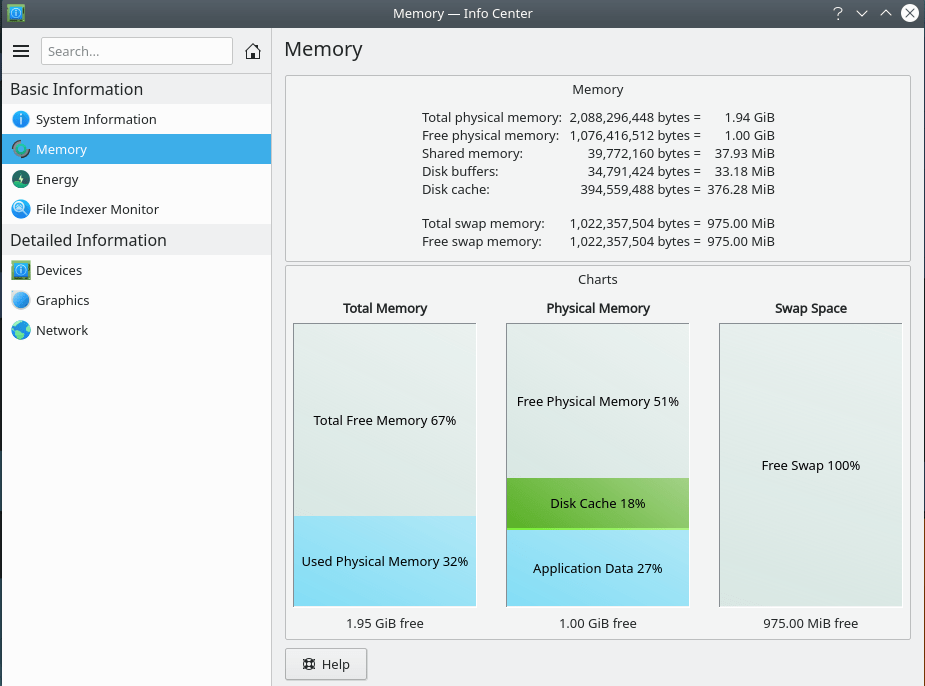
There are lots of new features mentioned in the release announcement, I like in particular the much more usable settings application as well as the new info center.
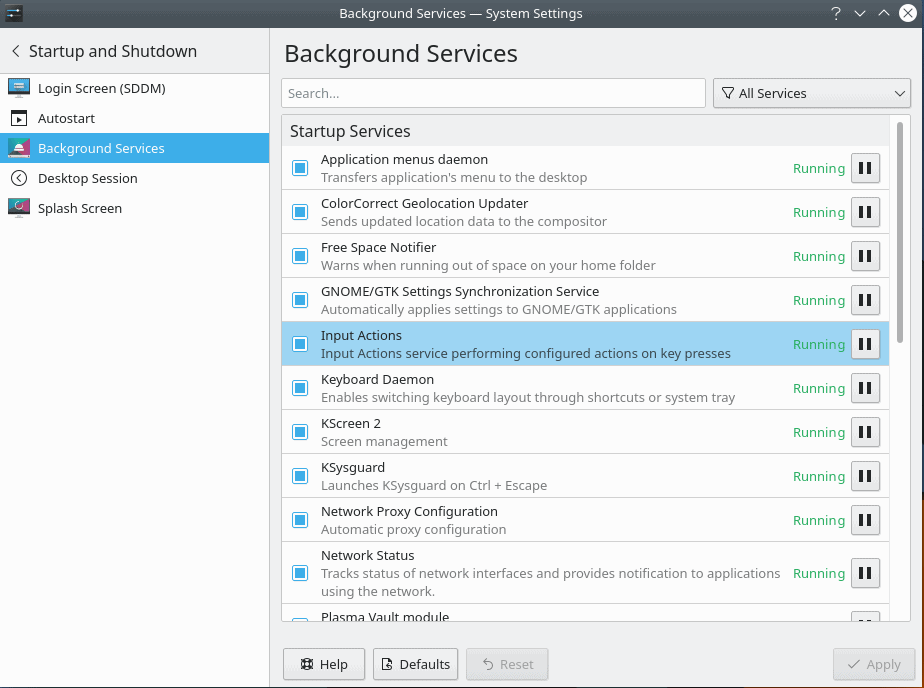


I have been providing builds of KDE related packages since quite some time now, see everything posted under the KDE tag. In the last days I have prepared Debian packages for Plasma 5.18.90 on OBS, for now only targeting Debian/sid and amd64 architecture. These packages require Qt 5.14, which is only available in the experimental suite, and there is no way to simply update to Qt 5.14 since all Qt related packages need to be recompiled. So as long as Qt 5.14 doesn t hit unstable, I cannot really run these packages on my main machine, but I tried a clean Debian virtual machine installing only Plasma 5.18.90 and depending packages, plus some more for a pleasant desktop experience. This worked out quite well, the VM runs Plasma 5.18.90. I don t have 3D running on the VM, so I cannot really check all the nice new effects, but I am sure on my main system they would work. Well, bottom line, as soon as we have Qt 5.14 in Debian/unstable, we are also ready for Plasma 5.19!

18 May 2020

Arturo Borrero Gonz lez: A better Toolforge: upgrading the Kubernetes cluster

Logos This post was originally published in the Wikimedia Tech blog, and is authored by Arturo Borrero Gonzalez and Brooke Storm. One of the most successful and important products provided by the Wikimedia Cloud Services team at the Wikimedia Foundation is Toolforge. Toolforge is a platform that allows users and developers to run and use a variety of applications that help the Wikimedia movement and mission from the technical point of view in general. Toolforge is a hosting service commonly known in the industry as a Platform as a Service (PaaS). Toolforge is powered by two different backend engines, Kubernetes and GridEngine. This article focuses on how we made a better Toolforge by integrating a newer version of Kubernetes and, along with it, some more modern workflows. The starting point in this story is 2018. Yes, two years ago! We identified that we could do better with our Kubernetes deployment in Toolforge. We were using a very old version, v1.4. Using an old version of any software has more or less the same consequences everywhere: you lack security improvements and some modern key features. Once it was clear that we wanted to upgrade our Kubernetes cluster, both the engineering work and the endless chain of challenges started. It turns out that Kubernetes is a complex and modern technology, which adds some extra abstraction layers to add flexibility and some intelligence to a very old systems engineering need: hosting and running a variety of applications. Our first challenge was to understand what our use case for a modern Kubernetes was. We were particularly interested in some key features: Soon enough we faced another Kubernetes native challenge: the documentation. For a newcomer, learning and understanding how to adapt Kubernetes to a given use case can be really challenging. We identified some baffling patterns in the docs. For example, different documentation pages would assume you were using different Kubernetes deployments (Minikube vs kubeadm vs a hosted service). We are running Kubernetes like you would on bare-metal (well, in CloudVPS virtual machines), and some documents directly referred to ours as a corner case. During late 2018 and early 2019, we started brainstorming and prototyping. We wanted our cluster to be reproducible and easily rebuildable, and in the Technology Department at the Wikimedia Foundation, we rely on Puppet for that. One of the first things to decide was how to deploy and build the cluster while integrating with Puppet. This is not as simple as it seems because Kubernetes itself is a collection of reconciliation loops, just like Puppet is. So we had to decide what to put directly in Kubernetes and what to control and make visible through Puppet. We decided to stick with kubeadm as the deployment method, as it seems to be the more upstream-standardized tool for the task. We had to make some interesting decisions by trial and error, like where to run the required etcd servers, what the kubeadm init file would look like, how to proxy and load-balance the API on our bare-metal deployment, what network overlay to choose, etc. If you take a look at our public notes, you can get a glimpse of the number of decisions we had to make. Our Kubernetes wasn t going to be a generic cluster, we needed a Toolforge Kubernetes service. This means we don t use some of the components, and also, we add some additional pieces and configurations to it. By the second half of 2019, we were working full-speed on the new Kubernetes cluster. We already had an idea of what we wanted and how to do it. There were a couple of important topics for discussions, for example: We will describe in detail the final state of those pieces in another blog post, but each of the topics required several hours of engineering time, research, tests, and meetings before reaching a point in which we were comfortable with moving forward. By the end of 2019 and early 2020, we felt like all the pieces were in place, and we started thinking about how to migrate the users, the workloads, from the old cluster to the new one. This migration plan mostly materialized in a Wikitech page which contains concrete information for our users and the community. The interaction with the community was a key success element. Thanks to our vibrant and involved users, we had several early adopters and beta testers that helped us identify early flaws in our designs. The feedback they provided was very valuable for us. Some folks helped solve technical problems, helped with the migration plan or even helped make some design decisions. Worth noting that some of the changes that were presented to our users were not easy to handle for them, like new quotas and usage limits. Introducing new workflows and deprecating old ones is always a risky operation. Even though the migration procedure from the old cluster to the new one was fairly simple, there were some rough edges. We helped our users navigate them. A common issue was a webservice not being able to run in the new cluster due to stricter quota limiting the resources for the tool. Another example is the new Ingress layer failing to properly work with some webservices s particular options. By March 2020, we no longer had anything running in the old Kubernetes cluster, and the migration was completed. We then started thinking about another step towards making a better Toolforge, which is introducing the toolforge.org domain. There is plenty of information about the change to this new domain in Wikitech News. The community wanted a better Toolforge, and so do we, and after almost 2 years of work, we have it! All the work that was done represents the commitment of the Wikimedia Foundation to support the technical community and how we really want to pursue technical engagement in general in the Wikimedia movement. In a follow-up post we will present and discuss more in-depth about some technical details of the new Kubernetes cluster, stay tuned! This post was originally published in the Wikimedia Tech blog, and is authored by Arturo Borrero Gonzalez and Brooke Storm.

Russell Coker: A Good Time to Upgrade PCs

PC hardware just keeps getting cheaper and faster. Now that so many people have been working from home the deficiencies of home PCs are becoming apparent. I ll give Australian prices and URLs in this post, but I think that similar prices will be available everywhere that people read my blog. From MSY (parts list PDF ) [1] 120G SATA SSDs are under $50 each. 120G is more than enough for a basic workstation, so you are looking at $42 or so for fast quiet storage or $84 or so for the same with RAID-1. Being quiet is a significant luxury feature and it s also useful if you are going to be in video conferences. For more serious storage NVMe starts at around $100 per unit, I think that $124 for a 500G Crucial NVMe is the best low end option (paying $95 for a 250G Kingston device doesn t seem like enough savings to be worth it). So that s $248 for 500G of very fast RAID-1 storage. There s a Samsung 2TB NVMe device for $349 which is good if you need more storage, it s interesting to note that this is significantly cheaper than the Samsung 2TB SSD which costs $455. I wonder if SATA SSD devices will go away in the future, it might end up being SATA for slow/cheap spinning media and M.2 NVMe for solid state storage. The SATA SSD devices are only good for use in older systems that don t have M.2 sockets on the motherboard. It seems that most new motherboards have one M.2 socket on the motherboard with NVMe support, and presumably support for booting from NVMe. But dual M.2 sockets is rare and the price difference is significantly greater than the cost of a PCIe M.2 card to support NVMe which is $14. So for NVMe RAID-1 it seems that the best option is a motherboard with a single NVMe socket (starting at $89 for a AM4 socket motherboard the current standard for AMD CPUs) and a PCIe M.2 card. One thing to note about NVMe is that different drivers are required. On Linux this means means building a new initrd before the migration (or afterwards when booted from a recovery image) and on Windows probably means a fresh install from special installation media with NVMe drivers. All the AM4 motherboards seem to have RADEON Vega graphics built in which is capable of 4K resolution at a stated refresh of around 24Hz. The ones that give detail about the interfaces say that they have HDMI 1.4 which means a maximum of 30Hz at 4K resolution if you have the color encoding that suits text (IE for use other than just video). I covered this issue in detail in my blog post about DisplayPort and 4K resolution [2]. So a basic AM4 motherboard won t give great 4K display support, but it will probably be good for a cheap start. $89 for motherboard, $124 for 500G NVMe, $344 for a Ryzen 5 3600 CPU (not the cheapest AM4 but in the middle range and good value for money), and $99 for 16G of RAM (DDR4 RAM is cheaper than DDR3 RAM) gives the core of a very decent system for $656 (assuming you have a working system to upgrade and peripherals to go with it). Currently Kogan has 4K resolution monitors starting at $329 [3]. They probably won t be the greatest monitors but my experience of a past cheap 4K monitor from Kogan was that it is quite OK. Samsung 4K monitors started at about $400 last time I could check (Kogan currently has no stock of them and doesn t display the price), I d pay an extra $70 for Samsung, but the Kogan branded product is probably good enough for most people. So you are looking at under $1000 for a new system with fast CPU, DDR4 RAM, NVMe storage, and a 4K monitor if you already have the case, PSU, keyboard, mouse, etc. It seems quite likely that the 4K video hardware on a cheap AM4 motherboard won t be that great for games and it will definitely be lacking for watching TV documentaries. Whether such deficiencies are worth spending money on a PCIe video card (starting at $50 for a low end card but costing significantly more for 3D gaming at 4K resolution) is a matter of opinion. I probably wouldn t have spent extra for a PCIe video card if I had 4K video on the motherboard. Not only does using built in video save money it means one less fan running (less background noise) and probably less electricity use too. My Plans I currently have a workstation with 2*500G SATA SSDs in a RAID-1 array, 16G of RAM, and a i5-2500 CPU (just under 1/4 the speed of the Ryzen 5 3600). If I had hard drives then I would definitely buy a new system right now. But as I have SSDs that work nicely (quiet and fast enough for most things) and almost all machines I personally use have SSDs (so I can t get a benefit from moving my current SSDs to another system) I would just get CPU, motherboard, and RAM. So the question is whether to spend $532 for more than 4* the CPU performance. At the moment I ll wait because I ll probably get a free system with DDR4 RAM in the near future, while it probably won t be as fast as a Ryzen 5 3600, it should be at least twice as fast as what I currently have.

17 May 2020

Erich Schubert: Contact Tracing Apps are Useless

Some people believe that automatic contact tracing apps will help contain the Coronavirus epidemic. They won t. Sorry to bring the bad news, but IT and mobile phones and artificial intelligence will not solve every problem. In my opinion, those that promise to solve these things with artificial intelligence / mobile phones / apps / your-favorite-buzzword are at least overly optimistic and blinder Aktionismus (*), if not naive, detachted from reality, or fraudsters that just want to get some funding. (*) there does not seem to be an English word for this doing something just for the sake of doing something, without thinking about whether it makes sense to do so Here are the reasons why it will not work:
  1. Signal quality. Forget detecting proximity with Bluetooth Low Energy. Yes, there are attempts to use BLE beacons for indoor positioning. But these use that you can learn fingerprints of which beacons are visible at which points, combined with additional information such as movement sensors and history (you do not teleport around in a building). BLE signals and antennas apparently tend to be very prone to orientation differences, signal reflections, and of course you will not have the idealized controlled environment used in such prototypes. The contacts have a single device, and they move this is not comparable to indoor positioning. I strongly doubt you can tell whether you are close to someone, or not.
  2. Close vs. protection. The app cannot detect protection in place. Being close to someone behind a plexiglass window or even a solid wall is very different from being close otherwise. You will get a lot of false contacts this way. That neighbor that you have never seen living in the appartment above will likely be considered a close contact of yours, as you sleep next to each other every day
  3. Low adoption rates. Apparently even in technology affine Singapore, fewer than 20% of people installed the app. That does not even mean they use it regularly. In Austria, the number is apparently below 5%, and people complain that it does not detect contact But in order for this approach to work, you will need Chinese-style mass surveillance that literally puts you in prison if you do not install the app.
  4. False alerts. Because of these issues, you will get false alerts, until you just do not care anymore.
  5. False sense of security. Honestly: the app does not pretect you at all. All it tries to do is to make the tracing of contacts easier. It will not tell you reliably if you have been infected (as mentioned above, too many false positives, too few users) nor that you are relatively safe (too few contacts included, too slow testing and reporting). It will all be on the quality of about 10 days ago you may or may not have contact with someone that tested positive, please contact someone to expose more data to tell you that it is actually another false alert .
  6. Trust. In Germany, the app will be operated by T-Systems and SAP. Not exactly two companies that have a lot of fans SAP seems to be one of the most hated software around. Neither company is known for caring about privacy much, but they are prototypical for business first . Its trust the cat to keep the cream. Yes, I know they want to make it open-source. But likely only the client, and you will still have to trust that the binary in the app stores is actually built from this source code, and not from a modified copy. As long as the name T-Systems and SAP are associated to the app, people will not trust it. Plus, we all know that the app will be bad, given the reputation of these companies at making horrible software systems
  7. Too late. SAP and T-Systems want to have the app ready in mid June. Seriously, this must be a joke? It will be very buggy in the beginning (because it is SAP!) and it will not be working reliably before end of July. There will not be a substantial user before fall. But given the low infection rates in Germany, nobody will bother to install it anymore, because the perceived benefit is 0 one the infection rates are low.
  8. Infighting. You may remember that there was the discussion before that there should be a pan-european effort. Except that in the end, everybody fought everybody else, countries went into different directions and they all broke up. France wanted a centralized systems, while in Germany people pointed out that the users will not accept this and only a distributed system will have a chance. That failed effort was known as Pan-European Privacy-Preserving Proximity Tracing (PEPP-PT) vs. Decentralized Privacy-Preserving Proximity Tracing (DP-3T) , and it turned out to have become a big clusterfuck . And that is just the tip of the iceberg.
Iceleand, probably the country that handled the Corona crisis best (they issued a travel advisory against Austria, when they were still happily spreading the virus at apres-ski; they massively tested, and got the infections down to almost zero within 6 weeks), has been experimenting with such an app. Iceland as a fairly close community managed to have almost 40% of people install their app. So did it help? No: The technology is more or less I wouldn t say useless [ ] it wasn t a game changer for us. The contact tracing app is just a huge waste of effort and public money. And pretty much the same applies to any other attempts to solve this with IT. There is a lot of buzz about solving the Corona crisis with artificial intelligence: bullshit! That is just naive. Do not speculate about magic power of AI. Get the data, understand the data, and you will see it does not help. Because its real data. Its dirty. Its late. Its contradicting. Its incomplete. It is all what AI currently can not handle well. This is not image recognition. You have no labels. Many of the attempts in this direction already fail at the trivial 7-day seasonality you observe in the data For example, the widely known John Hopkins Has the curve flattened trend has a stupid, useless indicator based on 5 day averages. And hence you get the weekly up and downs due to weekends. They show pretty up and down indicators. But these are affected mostly by the day of the week. And nobody cares. Notice that they currently even have big negative infections in their plots? There is no data on when someone was infected. Because such data simply does not exist. What you have is data when someone tested positive (mostly), when someone reported symptons (sometimes, but some never have symptoms!), and when someone dies (but then you do not know if it was because of Corona, because of other issues that became just worse because of Corona, or hit by a car without any relation to Corona). The data that we work with is incredibly delayed, yet we pretend it is live . Stop reading tea leaves. Stop pretending AI can save the world from Corona.

Matthew Palmer: Private Key Redaction: UR DOIN IT RONG

Because posting private keys on the Internet is a bad idea, some people like to redact their private keys, so that it looks kinda-sorta like a private key, but it isn t actually giving away anything secret. Unfortunately, due to the way that private keys are represented, it is easy to redact a key in such a way that it doesn t actually redact anything at all. RSA private keys are particularly bad at this, but the problem can (potentially) apply to other keys as well. I ll show you a bit of Inside Baseball with key formats, and then demonstrate the practical implications. Finally, we ll go through a practical worked example from an actual not-really-redacted key I recently stumbled across in my travels.

The Private Lives of Private Keys Here is what a typical private key looks like, when you come across it:
-----BEGIN RSA PRIVATE KEY-----
MGICAQACEQCxjdTmecltJEz2PLMpS4BXAgMBAAECEDKtuwD17gpagnASq1zQTYEC
CQDVTYVsjjF7IQIJANUYZsIjRsR3AgkAkahDUXL0RSECCB78r2SnsJC9AghaOK3F
sKoELg==
-----END RSA PRIVATE KEY-----
Obviously, there s some hidden meaning in there computers don t encrypt things by shouting BEGIN RSA PRIVATE KEY! , after all. What is between the BEGIN/END lines above is, in fact, a base64-encoded DER format ASN.1 structure representing a PKCS#1 private key. In simple terms, it s a list of numbers very important numbers. The list of numbers is, in order:
  • A version number (0);
  • The public modulus , commonly referred to as n ;
  • The public exponent , or e (which is almost always 65,537, for various unimportant reasons);
  • The private exponent , or d ;
  • The two private primes , or p and q ;
  • Two exponents, which are known as dmp1 and dmq1 ; and
  • A coefficient, known as iqmp .

Why Is This a Problem? The thing is, only three of those numbers are actually required in a private key. The rest, whilst useful to allow the RSA encryption and decryption to be more efficient, aren t necessary. The three absolutely required values are e, p, and q. Of the other numbers, most of them are at least about the same size as each of p and q. So of the total data in an RSA key, less than a quarter of the data is required. Let me show you with the above toy key, by breaking it down piece by piece1:
  • MGI DER for this is a sequence
  • CAQ version (0)
  • CxjdTmecltJEz2PLMpS4BX n
  • AgMBAA e
  • ECEDKtuwD17gpagnASq1zQTY d
  • ECCQDVTYVsjjF7IQ p
  • IJANUYZsIjRsR3 q
  • AgkAkahDUXL0RS dmp1
  • ECCB78r2SnsJC9 dmq1
  • AghaOK3FsKoELg== iqmp
Remember that in order to reconstruct all of these values, all I need are e, p, and q and e is pretty much always 65,537. So I could redact almost all of this key, and still give all the important, private bits of this key. Let me show you:
-----BEGIN RSA PRIVATE KEY-----
..............................................................EC
CQDVTYVsjjF7IQIJANUYZsIjRsR3....................................
........
-----END RSA PRIVATE KEY-----
Now, I doubt that anyone is going to redact a key precisely like this but then again, this isn t a typical RSA key. They usually look a lot more like this:
-----BEGIN RSA PRIVATE KEY-----
MIIEogIBAAKCAQEAu6Inch7+mWtKn+leB9uCG3MaJIxRyvC/5KTz2fR+h+GOhqj4
SZJobiVB4FrE5FgC7AnlH6qeRi9MI0s6dt5UWZ5oNIeWSaOOeNO+EJDUkSVf67wj
SNGXlSjGAkPZ0nRJiDjhuPvQmdW53hOaBLk5udxPEQbenpXAzbLJ7wH5ouLQ3nQw
HwpwDNQhF6zRO8WoscpDVThOAM+s4PS7EiK8ZR4hu2toon8Ynadlm95V45wR0VlW
zywgbkZCKa1IMrDCscB6CglQ10M3Xzya3iTzDtQxYMVqhDrA7uBYRxA0y1sER+Rb
yhEh03xz3AWemJVLCQuU06r+FABXJuY/QuAVvQIDAQABAoIBAFqwWVhzWqNUlFEO
PoCVvCEAVRZtK+tmyZj9kU87ORz8DCNR8A+/T/JM17ZUqO2lDGSBs9jGYpGRsr8s
USm69BIM2ljpX95fyzDjRu5C0jsFUYNi/7rmctmJR4s4uENcKV5J/++k5oI0Jw4L
c1ntHNWUgjK8m0UTJIlHbQq0bbAoFEcfdZxd3W+SzRG3jND3gifqKxBG04YDwloy
tu+bPV2jEih6p8tykew5OJwtJ3XsSZnqJMwcvDciVbwYNiJ6pUvGq6Z9kumOavm9
XU26m4cWipuK0URWbHWQA7SjbktqEpxsFrn5bYhJ9qXgLUh/I1+WhB2GEf3hQF5A
pDTN4oECgYEA7Kp6lE7ugFBDC09sKAhoQWrVSiFpZG4Z1gsL9z5YmZU/vZf0Su0n
9J2/k5B1GghvSwkTqpDZLXgNz8eIX0WCsS1xpzOuORSNvS1DWuzyATIG2cExuRiB
jYWIJUeCpa5p2PdlZmBrnD/hJ4oNk4oAVpf+HisfDSN7HBpN+TJfcAUCgYEAyvY7
Y4hQfHIdcfF3A9eeCGazIYbwVyfoGu70S/BZb2NoNEPymqsz7NOfwZQkL4O7R3Wl
Rm0vrWT8T5ykEUgT+2ruZVXYSQCKUOl18acbAy0eZ81wGBljZc9VWBrP1rHviVWd
OVDRZNjz6nd6ZMrJvxRa24TvxZbJMmO1cgSW1FkCgYAoWBd1WM9HiGclcnCZknVT
UYbykCeLO0mkN1Xe2/32kH7BLzox26PIC2wxF5seyPlP7Ugw92hOW/zewsD4nLze
v0R0oFa+3EYdTa4BvgqzMXgBfvGfABJ1saG32SzoWYcpuWLLxPwTMsCLIPmXgRr1
qAtl0SwF7Vp7O/C23mNukQKBgB89DOEB7xloWv3Zo27U9f7nB7UmVsGjY8cZdkJl
6O4LB9PbjXCe3ywZWmJqEbO6e83A3sJbNdZjT65VNq9uP50X1T+FmfeKfL99X2jl
RnQTsrVZWmJrLfBSnBkmb0zlMDAcHEnhFYmHFuvEnfL7f1fIoz9cU6c+0RLPY/L7
n9dpAoGAXih17mcmtnV+Ce+lBWzGWw9P4kVDSIxzGxd8gprrGKLa3Q9VuOrLdt58
++UzNUaBN6VYAe4jgxGfZfh+IaSlMouwOjDgE/qzgY8QsjBubzmABR/KWCYiRqkj
qpWCgo1FC1Gn94gh/+dW2Q8+NjYtXWNqQcjRP4AKTBnPktEvdMA=
-----END RSA PRIVATE KEY-----
People typically redact keys by deleting whole lines, and usually replacing them with [...] and the like. But only about 345 of those 1588 characters (excluding the header and footer) are required to construct the entire key. You can redact about 4/5ths of that giant blob of stuff, and your private parts (or at least, those of your key) are still left uncomfortably exposed.

But Wait! There s More! Remember how I said that everything in the key other than e, p, and q could be derived from those three numbers? Let s talk about one of those numbers: n. This is known as the public modulus (because, along with e, it is also present in the public key). It is very easy to calculate: n = p * q. It is also very early in the key (the second number, in fact). Since n = p * q, it follows that q = n / p. Thus, as long as the key is intact up to p, you can derive q by simple division.

Real World Redaction At this point, I d like to introduce an acquaintance of mine: Mr. Johan Finn. He is the proud owner of the GitHub repo johanfinn/scripts. For a while, his repo contained a script that contained a poorly-redacted private key. He since deleted it, by making a new commit, but of course because git never really deletes anything, it s still available. Of course, Mr. Finn may delete the repo, or force-push a new history without that commit, so here is the redacted private key, with a bit of the surrounding shell script, for our illustrative pleasure:
#Add private key to .ssh folder
cd /home/johan/.ssh/
echo  "-----BEGIN RSA PRIVATE KEY-----
MMMMMMMMMMMMMMMMMMMMMMMMMMMMMMMMMMMMMMMMMMMMMMMMMMMMMMMMMMMMMMMM
NNNNNNNNNNNNNNNNNNNNNNNNNNNNNNNNNNNNNNNNNNNNNNNNNNNNNNNNNNNNNNNN
KKKKKKKKKKKKKKKKKKKKKKKKKKKKKKKKKKKKKKKKKKKKKKKKKKKKKKKKKKKKKKKK
 
MIIJKgIBAAKCAgEAxEVih1JGb8gu/Fm4AZh+ZwJw/pjzzliWrg4mICFt1g7SmIE2
TCQMKABdwd11wOFKCPc/UzRH/fHuQcvWrpbOSdqev/zKff9iedKw/YygkMeIRaXB
fYELqvUAOJ8PPfDm70st9GJRhjGgo5+L3cJB2gfgeiDNHzaFvapRSU0oMGQX+kI9
ezsjDAn+0Pp+r3h/u1QpLSH4moRFGF4omNydI+3iTGB98/EzuNhRBHRNq4oBV5SG
Pq/A1bem2ninnoEaQ+OPESxYzDz3Jy9jV0W/6LvtJ844m+XX69H5fqq5dy55z6DW
sGKn78ULPVZPsYH5Y7C+CM6GAn4nYCpau0t52sqsY5epXdeYx4Dc+Wm0CjXrUDEe
Egl4loPKDxJkQqQ/MQiz6Le/UK9vEmnWn1TRXK3ekzNV4NgDfJANBQobOpwt8WVB
rbsC0ON7n680RQnl7PltK9P1AQW5vHsahkoixk/BhcwhkrkZGyDIl9g8Q/Euyoq3
eivKPLz7/rhDE7C1BzFy7v8AjC3w7i9QeHcWOZFAXo5hiDasIAkljDOsdfD4tP5/
wSO6E6pjL3kJ+RH2FCHd7ciQb+IcuXbku64ln8gab4p8jLa/mcMI+V3eWYnZ82Yu
axsa85hAe4wb60cp/rCJo7ihhDTTvGooqtTisOv2nSvCYpcW9qbL6cGjAXECAwEA
AQKCAgEAjz6wnWDP5Y9ts2FrqUZ5ooamnzpUXlpLhrbu3m5ncl4ZF5LfH+QDN0Kl
KvONmHsUhJynC/vROybSJBU4Fu4bms1DJY3C39h/L7g00qhLG7901pgWMpn3QQtU
4P49qpBii20MGhuTsmQQALtV4kB/vTgYfinoawpo67cdYmk8lqzGzzB/HKxZdNTq
s+zOfxRr7PWMo9LyVRuKLjGyYXZJ/coFaobWBi8Y96Rw5NZZRYQQXLIalC/Dhndm
AHckpstEtx2i8f6yxEUOgPvV/gD7Akn92RpqOGW0g/kYpXjGqZQy9PVHGy61sInY
HSkcOspIkJiS6WyJY9JcvJPM6ns4b84GE9qoUlWVF3RWJk1dqYCw5hz4U8LFyxsF
R6WhYiImvjxBLpab55rSqbGkzjI2z+ucDZyl1gqIv9U6qceVsgRyuqdfVN4deU22
LzO5IEDhnGdFqg9KQY7u8zm686Ejs64T1sh0y4GOmGsSg+P6nsqkdlXH8C+Cf03F
lqPFg8WQC7ojl/S8dPmkT5tcJh3BPwIWuvbtVjFOGQc8x0lb+NwK8h2Nsn6LNazS
0H90adh/IyYX4sBMokrpxAi+gMAWiyJHIHLeH2itNKtAQd3qQowbrWNswJSgJzsT
JuJ7uqRKAFkE6nCeAkuj/6KHHMPsfCAffVdyGaWqhoxmPOrnVgECggEBAOrCCwiC
XxwUgjOfOKx68siFJLfHf4vPo42LZOkAQq5aUmcWHbJVXmoxLYSczyAROopY0wd6
Dx8rqnpO7OtZsdJMeBSHbMVKoBZ77hiCQlrljcj12moFaEAButLCdZFsZW4zF/sx
kWIAaPH9vc4MvHHyvyNoB3yQRdevu57X7xGf9UxWuPil/jvdbt9toaraUT6rUBWU
GYPNKaLFsQzKsFWAzp5RGpASkhuiBJ0Qx3cfLyirjrKqTipe3o3gh/5RSHQ6VAhz
gdUG7WszNWk8FDCL6RTWzPOrbUyJo/wz1kblsL3vhV7ldEKFHeEjsDGroW2VUFlS
asAHNvM4/uYcOSECggEBANYH0427qZtLVuL97htXW9kCAT75xbMwgRskAH4nJDlZ
IggDErmzBhtrHgR+9X09iL47jr7dUcrVNPHzK/WXALFSKzXhkG/yAgmt3r14WgJ6
5y7010LlPFrzaNEyO/S4ISuBLt4cinjJsrFpoo0WI8jXeM5ddG6ncxdurKXMymY7
:::::::::::::::::::::::::::::::::::::::::::::::::::::::::::::.::
:::::::::::::::::::::::::::.::::::::::::::::::::::::::::::::::::
LLLLLLLLLLLLLLLLLLLLLLLLLLLLLLLLLLLLLLLLLLLLLLLLLLLLLLLLLLLLLLlL


YYYYYYYYYYYYYYYYYYYYYyYYYYYYYYYYYYYYYYYYYYYYYYYYYYYYYYYYYYYYYY
gff0GJCOMZ65pMSy3A3cSAtjlKnb4fWzuHD5CFbusN4WhCT/tNxGNSpzvxd8GIDs
nY7exs9L230oCCpedVgcbayHCbkChEfoPzL1e1jXjgCwCTgt8GjeEFqc1gXNEaUn
O8AJ4VlR8fRszHm6yR0ZUBdY7UJddxQiYOzt0S1RLlECggEAbdcs4mZdqf3OjejJ
06oTPs9NRtAJVZlppSi7pmmAyaNpOuKWMoLPElDAQ3Q7VX26LlExLCZoPOVpdqDH
KbdmBEfTR4e11Pn9vYdu9/i6o10U4hpmf4TYKlqk10g1Sj21l8JATj/7Diey8scO
sAI1iftSg3aBSj8W7rxCxSezrENzuqw5D95a/he1cMUTB6XuravqZK5O4eR0vrxR
AvMzXk5OXrUEALUvt84u6m6XZZ0pq5XZxq74s8p/x1JvTwcpJ3jDKNEixlHfdHEZ
ZIu/xpcwD5gRfVGQamdcWvzGHZYLBFO1y5kAtL8kI9tW7WaouWVLmv99AyxdAaCB
Y5mBAQKCAQEAzU7AnorPzYndlOzkxRFtp6MGsvRBsvvqPLCyUFEXrHNV872O7tdO
GmsMZl+q+TJXw7O54FjJJvqSSS1sk68AGRirHop7VQce8U36BmI2ZX6j2SVAgIkI
9m3btCCt5rfiCatn2+Qg6HECmrCsHw6H0RbwaXS4RZUXD/k4X+sslBitOb7K+Y+N
Bacq6QxxjlIqQdKKPs4P2PNHEAey+kEJJGEQ7bTkNxCZ21kgi1Sc5L8U/IGy0BMC
PvJxssLdaWILyp3Ws8Q4RAoC5c0ZP0W2j+5NSbi3jsDFi0Y6/2GRdY1HAZX4twem
Q0NCedq1JNatP1gsb6bcnVHFDEGsj/35oQKCAQEAgmWMuSrojR/fjJzvke6Wvbox
FRnPk+6YRzuYhAP/YPxSRYyB5at++5Q1qr7QWn7NFozFIVFFT8CBU36ktWQ39MGm
cJ5SGyN9nAbbuWA6e+/u059R7QL+6f64xHRAGyLT3gOb1G0N6h7VqFT25q5Tq0rc
Lf/CvLKoudjv+sQ5GKBPT18+zxmwJ8YUWAsXUyrqoFWY/Tvo5yLxaC0W2gh3+Ppi
EDqe4RRJ3VKuKfZxHn5VLxgtBFN96Gy0+Htm5tiMKOZMYAkHiL+vrVZAX0hIEuRZ
JJJJJJJJJJJJJJJJJJJJJJJJJJJJJJJJJJJJJJJJJJJJJJJJJJJJJJJJJJJJJJJJ
MMMMMMMMMMMMMMMMMMMMMMMMMMMMMMMMMMMMMMMMMMMMMMMMMMMMMMMMMMMMMMMM
-----END RSA PRIVATE KEY-----" >> id_rsa
Now, if you try to reconstruct this key by removing the obvious garbage lines (the ones that are all repeated characters, some of which aren t even valid base64 characters), it still isn t a key at least, openssl pkey doesn t want anything to do with it. The key is very much still in there, though, as we shall soon see. Using a gem I wrote and a quick bit of Ruby, we can extract a complete private key. The irb session looks something like this:
>> require "derparse"
>> b64 = <<EOF
MIIJKgIBAAKCAgEAxEVih1JGb8gu/Fm4AZh+ZwJw/pjzzliWrg4mICFt1g7SmIE2
TCQMKABdwd11wOFKCPc/UzRH/fHuQcvWrpbOSdqev/zKff9iedKw/YygkMeIRaXB
fYELqvUAOJ8PPfDm70st9GJRhjGgo5+L3cJB2gfgeiDNHzaFvapRSU0oMGQX+kI9
ezsjDAn+0Pp+r3h/u1QpLSH4moRFGF4omNydI+3iTGB98/EzuNhRBHRNq4oBV5SG
Pq/A1bem2ninnoEaQ+OPESxYzDz3Jy9jV0W/6LvtJ844m+XX69H5fqq5dy55z6DW
sGKn78ULPVZPsYH5Y7C+CM6GAn4nYCpau0t52sqsY5epXdeYx4Dc+Wm0CjXrUDEe
Egl4loPKDxJkQqQ/MQiz6Le/UK9vEmnWn1TRXK3ekzNV4NgDfJANBQobOpwt8WVB
rbsC0ON7n680RQnl7PltK9P1AQW5vHsahkoixk/BhcwhkrkZGyDIl9g8Q/Euyoq3
eivKPLz7/rhDE7C1BzFy7v8AjC3w7i9QeHcWOZFAXo5hiDasIAkljDOsdfD4tP5/
wSO6E6pjL3kJ+RH2FCHd7ciQb+IcuXbku64ln8gab4p8jLa/mcMI+V3eWYnZ82Yu
axsa85hAe4wb60cp/rCJo7ihhDTTvGooqtTisOv2nSvCYpcW9qbL6cGjAXECAwEA
AQKCAgEAjz6wnWDP5Y9ts2FrqUZ5ooamnzpUXlpLhrbu3m5ncl4ZF5LfH+QDN0Kl
KvONmHsUhJynC/vROybSJBU4Fu4bms1DJY3C39h/L7g00qhLG7901pgWMpn3QQtU
4P49qpBii20MGhuTsmQQALtV4kB/vTgYfinoawpo67cdYmk8lqzGzzB/HKxZdNTq
s+zOfxRr7PWMo9LyVRuKLjGyYXZJ/coFaobWBi8Y96Rw5NZZRYQQXLIalC/Dhndm
AHckpstEtx2i8f6yxEUOgPvV/gD7Akn92RpqOGW0g/kYpXjGqZQy9PVHGy61sInY
HSkcOspIkJiS6WyJY9JcvJPM6ns4b84GE9qoUlWVF3RWJk1dqYCw5hz4U8LFyxsF
R6WhYiImvjxBLpab55rSqbGkzjI2z+ucDZyl1gqIv9U6qceVsgRyuqdfVN4deU22
LzO5IEDhnGdFqg9KQY7u8zm686Ejs64T1sh0y4GOmGsSg+P6nsqkdlXH8C+Cf03F
lqPFg8WQC7ojl/S8dPmkT5tcJh3BPwIWuvbtVjFOGQc8x0lb+NwK8h2Nsn6LNazS
0H90adh/IyYX4sBMokrpxAi+gMAWiyJHIHLeH2itNKtAQd3qQowbrWNswJSgJzsT
JuJ7uqRKAFkE6nCeAkuj/6KHHMPsfCAffVdyGaWqhoxmPOrnVgECggEBAOrCCwiC
XxwUgjOfOKx68siFJLfHf4vPo42LZOkAQq5aUmcWHbJVXmoxLYSczyAROopY0wd6
Dx8rqnpO7OtZsdJMeBSHbMVKoBZ77hiCQlrljcj12moFaEAButLCdZFsZW4zF/sx
kWIAaPH9vc4MvHHyvyNoB3yQRdevu57X7xGf9UxWuPil/jvdbt9toaraUT6rUBWU
GYPNKaLFsQzKsFWAzp5RGpASkhuiBJ0Qx3cfLyirjrKqTipe3o3gh/5RSHQ6VAhz
gdUG7WszNWk8FDCL6RTWzPOrbUyJo/wz1kblsL3vhV7ldEKFHeEjsDGroW2VUFlS
asAHNvM4/uYcOSECggEBANYH0427qZtLVuL97htXW9kCAT75xbMwgRskAH4nJDlZ
IggDErmzBhtrHgR+9X09iL47jr7dUcrVNPHzK/WXALFSKzXhkG/yAgmt3r14WgJ6
5y7010LlPFrzaNEyO/S4ISuBLt4cinjJsrFpoo0WI8jXeM5ddG6ncxdurKXMymY7
EOF
>> b64 += <<EOF
gff0GJCOMZ65pMSy3A3cSAtjlKnb4fWzuHD5CFbusN4WhCT/tNxGNSpzvxd8GIDs
nY7exs9L230oCCpedVgcbayHCbkChEfoPzL1e1jXjgCwCTgt8GjeEFqc1gXNEaUn
O8AJ4VlR8fRszHm6yR0ZUBdY7UJddxQiYOzt0S1RLlECggEAbdcs4mZdqf3OjejJ
06oTPs9NRtAJVZlppSi7pmmAyaNpOuKWMoLPElDAQ3Q7VX26LlExLCZoPOVpdqDH
KbdmBEfTR4e11Pn9vYdu9/i6o10U4hpmf4TYKlqk10g1Sj21l8JATj/7Diey8scO
sAI1iftSg3aBSj8W7rxCxSezrENzuqw5D95a/he1cMUTB6XuravqZK5O4eR0vrxR
AvMzXk5OXrUEALUvt84u6m6XZZ0pq5XZxq74s8p/x1JvTwcpJ3jDKNEixlHfdHEZ
ZIu/xpcwD5gRfVGQamdcWvzGHZYLBFO1y5kAtL8kI9tW7WaouWVLmv99AyxdAaCB
Y5mBAQKCAQEAzU7AnorPzYndlOzkxRFtp6MGsvRBsvvqPLCyUFEXrHNV872O7tdO
GmsMZl+q+TJXw7O54FjJJvqSSS1sk68AGRirHop7VQce8U36BmI2ZX6j2SVAgIkI
9m3btCCt5rfiCatn2+Qg6HECmrCsHw6H0RbwaXS4RZUXD/k4X+sslBitOb7K+Y+N
Bacq6QxxjlIqQdKKPs4P2PNHEAey+kEJJGEQ7bTkNxCZ21kgi1Sc5L8U/IGy0BMC
PvJxssLdaWILyp3Ws8Q4RAoC5c0ZP0W2j+5NSbi3jsDFi0Y6/2GRdY1HAZX4twem
Q0NCedq1JNatP1gsb6bcnVHFDEGsj/35oQKCAQEAgmWMuSrojR/fjJzvke6Wvbox
FRnPk+6YRzuYhAP/YPxSRYyB5at++5Q1qr7QWn7NFozFIVFFT8CBU36ktWQ39MGm
cJ5SGyN9nAbbuWA6e+/u059R7QL+6f64xHRAGyLT3gOb1G0N6h7VqFT25q5Tq0rc
Lf/CvLKoudjv+sQ5GKBPT18+zxmwJ8YUWAsXUyrqoFWY/Tvo5yLxaC0W2gh3+Ppi
EDqe4RRJ3VKuKfZxHn5VLxgtBFN96Gy0+Htm5tiMKOZMYAkHiL+vrVZAX0hIEuRZ
EOF
>> der = b64.unpack("m").first
>> c = DerParse.new(der).first_node.first_child
>> version = c.value
=> 0
>> c = c.next_node
>> n = c.value
=> 80071596234464993385068908004931... # (etc)
>> c = c.next_node
>> e = c.value
=> 65537
>> c = c.next_node
>> d = c.value
=> 58438813486895877116761996105770... # (etc)
>> c = c.next_node
>> p = c.value
=> 29635449580247160226960937109864... # (etc)
>> c = c.next_node
>> q = c.value
=> 27018856595256414771163410576410... # (etc)
What I ve done, in case you don t speak Ruby, is take the two chunks of plausible-looking base64 data, chuck them together into a variable named b64, unbase64 it into a variable named der, pass that into a new DerParse instance, and then walk the DER value tree until I got all the values I need. Interestingly, the q value actually traverses the split in the two chunks, which means that there s always the possibility that there are lines missing from the key. However, since p and q are supposed to be prime, we can sanity check them to see if corruption is likely to have occurred:
>> require "openssl"
>> OpenSSL::BN.new(p).prime?
=> true
>> OpenSSL::BN.new(q).prime?
=> true
Excellent! The chances of a corrupted file producing valid-but-incorrect prime numbers isn t huge, so we can be fairly confident that we ve got the real p and q. Now, with the help of another one of my creations we can use e, p, and q to create a fully-operational battle key:
>> require "openssl/pkey/rsa"
>> k = OpenSSL::PKey::RSA.from_factors(p, q, e)
=> #<OpenSSL::PKey::RSA:0x0000559d5903cd38>
>> k.valid?
=> true
>> k.verify(OpenSSL::Digest::SHA256.new, k.sign(OpenSSL::Digest::SHA256.new, "bob"), "bob")
=> true
and there you have it. One fairly redacted-looking private key brought back to life by maths and far too much free time. Sorry Mr. Finn, I hope you re not still using that key on anything Internet-facing.

What About Other Key Types? EC keys are very different beasts, but they have much the same problems as RSA keys. A typical EC key contains both private and public data, and the public portion is twice the size so only about 1/3 of the data in the key is private material. It is quite plausible that you can redact an EC key and leave all the actually private bits exposed.

What Do We Do About It? In short: don t ever try and redact real private keys. For documentation purposes, just put KEY GOES HERE in the appropriate spot, or something like that. Store your secrets somewhere that isn t a public (or even private!) git repo. Generating a dummy private key and sticking it in there isn t a great idea, for different reasons: people have this odd habit of reusing demo keys in real life. There s no need to encourage that sort of thing.
  1. Technically the pieces aren t 100% aligned with the underlying DER, because of how base64 works. I felt it was easier to understand if I stuck to chopping up the base64, rather than decoding into DER and then chopping up the DER.

16 May 2020

Russ Allbery: DocKnot 3.04

This is a relatively small feature release of my tool for managing software documentation and releases. I'm slowly moving all of my packages from Travis-CI to GitHub Workflows for automated CI. GitHub Workflows is much easier to configure and control, and I've been a bit worried about the future of Travis-CI since their acquisition. It seems unlikely that GitHub Workflows is going anywhere. It would be nice to use a fully free software solution for CI, but there doesn't seem to be anything out there that's nearly as easy and straightforward to use, and I have neither the time nor the energy to cobble something together myself. The configuration is fairly straightforward and should be portable to any fully free solution that might materialize in the future. Anyway, as part of that migration I needed to make some changes to DocKnot to generate status badges from GitHub Workflows instead of Travis-CI. This release includes those changes. There is a backward-incompatible change to make the semantics of the package metadata a bit more straightforward: vcs.travis needs to be changed to vcs.status.travis. You can get the latest release from the DocKnot distribution page. Debian packages have been uploaded to my personal repository. I plan on uploading DocKnot to Debian proper once I change the metadata format to use YAML instead of relaxed JSON.

Russ Allbery: rra-c-util 8.2

This release of my general utility libraries and support code includes a large grab bag of fixes and improvements. portable/system.h now defines explicit_bzero in terms of memset if it is not available. The memset version is unlikely to have the same security properties since the compiler may optimize it away, but that allows me to use explicit_bzero to erase security data where it is available. For packages with Kerberos tests, generating a test krb5.conf file now works properly even if the system krb5.conf file does not set a default realm, and a krb5.conf file dropped into the test configuration directory now works properly. Thanks to Jeffrey Hutzelman for the latter fix. For packages with PAM modules, the ENTRY and EXIT logging macros can now be used like function calls, and portable/pam.h now defines PAM_MAX_RESP_SIZE if it isn't defined. Header ordering in some of the portability socket code has been restored to compatibility with a few ancient UNIX systems. This was accidentally broken by the clang-format reformatting. Thanks to Julien LIE for the fix. A few bugs in the test for SPDX license identifiers have been fixed. Finally, this release fixes warnings with Clang 10 and GCC 10. You can get the latest release from the rra-c-util distribution page.

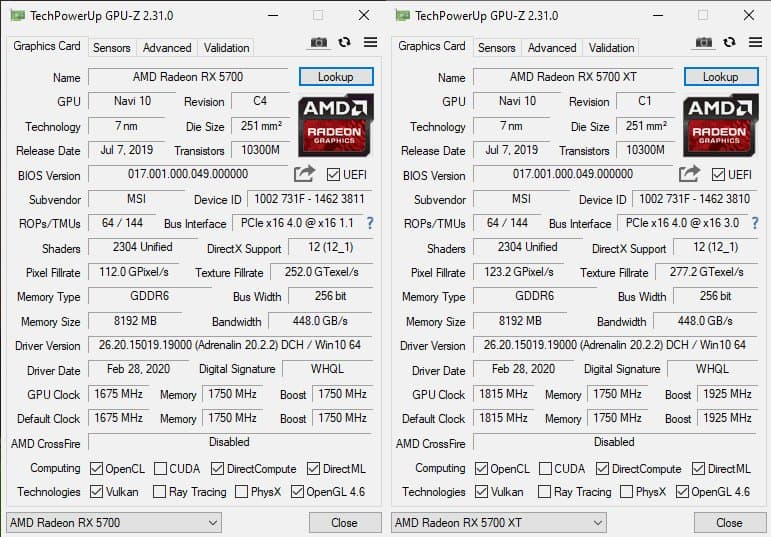
Norbert Preining: Upgrading AMD Radeon 5700 to 5700 XT via BIOS

Having recently switched from NVIDIA to AMD graphic cards, in particular a RX 5700, I found out that I can get myself a free upgrade to the RX 5700 XT variant without paying one Yen, by simply flashing a compatible 5700 XT BIOS onto the 5700 card. Not that this is something new, a detailed explanation can be found here.
The same article also gives a detailed technical explanation on the difference between the two cards. The 5700 variant has less stream processors (2304 against 2560 in the XT variant), and lower power limits and clock speeds. Other than this they are based on the exact same chip layout (Navi 10), and with the same amount and type of memory 8 GB GDDR6. Flashing the XT BIOS onto the plain 5700 will not changes the number of stream processors, but power limits and clock speeds are raised to the same level of the 5700 XT, providing approximately a 7% gain without any over-clocking and over-powering, and potentially more by raising voltage etc. Detailed numbers can be found in the linked article above. The first step in this free upgrade is to identify ones own card correctly, best with device id and subsystem id, and then find the correct BIOS. Lots of BIOS dumps are provided in the BIOS database (link already restricting to 5700 XT BIOS). I used CPU-Z (Windows program) to determine this items, see image on the right (click to enlarge). In my case I got 1002 731F - 1462 3811 for the complete device id. The card is a MSI RX 5700 8 GB Mech OC, so I found the following alternative BIOS for MSI RX 5700 XT 8 GB Mech OC. Unfortunately, it seems that MSI is distinguishing 5700 and 5700 XT by their device id, because the XT variant gives 1002 731F - 1462 3810 for the complete device id, meaning that the last digit is 1 off compared to mine (3811 versus 3810). And indeed, trying to flash this video BIOS the normal way (using the Windows version ended in a warning that the subsystem id is different. A bit of search led to a thread in the TechPowerup Fora and this post explaining how to force the flashing in this case. Disclaimer: The following might brick your graphic card, you are doing this on your own risk! Necessary software: I did all the flashing and checking under Windows, but only because I realized too late that there is a fully uptodate flashing program for Linux that exhibits the same functionality. Also, I didn t know how to get the device id since the current AMD ROCm tools seem not to provide this data. If you are lucky and the device ids for your card are the same for both 5700 and 5700 XT variants, then you can use the graphical client (amdvbflashWin.exe), but if there is a difference, the command line is necessary. After unpacking the AMD Flash program and getting the correct BIOS rom file, the steps taken on Windows are (the very same steps can be taken on Linux): This should succeed in both cases. After that shutdown and restart your computer and you should be greeted with a RT 5700 XT card, without twisting a single screw. Starting Windows for the first time gave some flickering, because the driver for the new card was installed. On Linux the system auto-detects the card and everything works out of the box. Very smooth. Finally, a word of warning: Don t do these kind of things if you are not ready to pay the prize of a bricked GPU card in case something goes wrong! Everything is on your own risk! Let me close with a before/after image, most of the fields are identical, but the default/gpu clocks both at normal as well as boost levels see a considerable improvement

Lucas Kanashiro: Quarantine times

After quite some time without publishing anything here, I decided to share the latest events. It is a hard time for most of us but with all this time at home, one can also do great things. I would like to start with the wonderful idea the Debian Brasil community had! Why not create an online Debian related conference to keep people s minds busy and also share knowledge? After brainstorming, we came up with our online conference called #FiqueEmCasaUseDebian (in English it would be #StayHomeUseDebian). It started on May 3rd and will last until May 30th (yes, one month)! Every weekday, we have one online talk at night and on every Saturday, a Debian packaging workshop. The feedback so far has been awesome and the Brazilian Debian community is reaching out to more people than usual at our regular conferences (as you might have imagined, Brazil is huge and it is hard to bring people at the same place). At the end of the month, we will have the first MiniDebConf online and I hope it will be as successful as our experience here in Brazil. Another thing that deserves a highlight is the fact that I became an Ubuntu Core Developer this month; yay! After 9 months of working almost daily on the Ubuntu Server, I was able to get my upload rights to the Ubuntu archive. I was tired of asking for sponsorship, and probably my peers were tired of me too. I could spend more time here complaining about the Brazilian government but I think it isn t worth it. Let s try to do something useful instead!

15 May 2020

Dirk Eddelbuettel: Let s celebrate Anna!

Today is graduation at Washington University, and just like many other places, the ceremonies are a lot more virtual and surreal that in other years. For Anna today marks the graduation from Biomedical Engineering with a BSc. The McKelvey School of Engineering put a Zoom meeting together yesterday which was nice, and there is something more virtual here. Hopefully a real-life commencenment can take place in a year the May 30, 2021, date has been set. The university also sent out a little commencement site/video which was cute. But at end of the day online-only still falls short of the real deal as we all know too well by now. During those years, just about the only thing really I ever tweeted about appears to be soccer related. As it should because ball is life, as we all know. Here is one from 1 1/2 years ago when her Club Team three-peated in their NIRSA division: And that opens what may be the best venue for mocking Anna: this year, which her a senior and co-captain, the team actually managed to loose a league game (a shocking first in these years) and to drop the final. I presume they anticipated that all we would all talk about around now is The Last Dance and three-peats, and left it at that. Probably wise. Now just this week, and hence days before graduating with her B.Sc., also marks the first time Anna was addressed as Dr Eddelbuettel. A little prematurely I may say, but not too shabby to be in print already! But on the topic of gratulations and what comes next, this tweet was very sweet: As was this, which marked another impressive score: So big thanks from all of us to WashU for being such a superb environment for Anna for those four years, and especially everybody at the Pappu Lab for giving Anna a home and base to start a research career. And deepest and most sincere congratulations to Anna before the next adventure starts .

Next.

Previous.