Russ Allbery: Review: Castle of Wizardry
| Series: | The Belgariad #4 |
| Publisher: | Del Rey |
| Copyright: | May 1984 |
| Printing: | September 1991 |
| ISBN: | 0-345-33570-8 |
| Format: | Mass market |
| Pages: | 373 |
| Series: | The Belgariad #4 |
| Publisher: | Del Rey |
| Copyright: | May 1984 |
| Printing: | September 1991 |
| ISBN: | 0-345-33570-8 |
| Format: | Mass market |
| Pages: | 373 |
I apologize to all potential readers of this blog for not writing a comprehensive Introduction post with details of the project I am taking part in during my internship, as well as some story about how I ended up there.
Let me just say that I was a Debian user for years when I discovered it is taking part in Outreachy as one of organisations. Their Reproducible Builds effort has a noble goal and a bunch of great people behind it - I had no chances not to get excited by it. Looking for a place where my skills could be of any use, I discovered diffoscope - the tool for in-depth comparassion of files, archives etc. My mentor, Mattia Rizzolo, supported my decision to work on it, so now I am concentrating my efforts on improving diffoscope.
As my first steps, I am doing small (but hopefully still somewhat important) job of fixing existing bugs. It helps me to better understand how diffoscope works, as well as introduces me to the workflow of opensource development.
During December, I have done several small contributions, mostly fixing bugs.
A Safe and Happy New Year to all.

Incredible India from http://incredibleindiacampaign.com
Eligibility International Travellers whose sole objective of visiting India is recreation , sight-seeing , casual visit to meet friends or relatives, short duration medical treatment or casual business visit.https://indianvisaonline.gov.in/visa/tvoa.html That this facility is being given to 130 odd countries is better still
Albania, Andorra, Anguilla, Antigua & Barbuda, Argentina, Armenia, Aruba, Australia, Austria, Bahamas, Barbados, Belgium, Belize, Bolivia, Bosnia & Herzegovina, Botswana, Brazil, Brunei, Bulgaria, Cambodia, Canada, Cape Verde, Cayman Island, Chile, China, China- SAR Hong-Kong, China- SAR Macau, Colombia, Comoros, Cook Islands, Costa Rica, Cote d lvoire, Croatia, Cuba, Czech Republic, Denmark, Djibouti, Dominica, Dominican Republic, East Timor, Ecuador, El Salvador, Eritrea, Estonia, Fiji, Finland, France, Gabon, Gambia, Georgia, Germany, Ghana, Greece, Grenada, Guatemala, Guinea, Guyana, Haiti, Honduras, Hungary, Iceland, Indonesia, Ireland, Israel, Jamaica, Japan, Jordan, Kenya, Kiribati, Laos, Latvia, Lesotho, Liberia, Liechtenstein, Lithuania, Luxembourg, Madagascar, Malawi, Malaysia, Malta, Marshall Islands, Mauritius, Mexico, Micronesia, Moldova, Monaco, Mongolia, Montenegro, Montserrat, Mozambique, Myanmar, Namibia, Nauru, Netherlands, New Zealand, Nicaragua, Niue Island, Norway, Oman, Palau, Palestine, Panama, Papua New Guinea, Paraguay, Peru, Philippines, Poland, Portugal, Republic of Korea, Republic of Macedonia, Romania, Russia, Saint Christopher and Nevis, Saint Lucia, Saint Vincent & the Grenadines, Samoa, San Marino, Senegal, Serbia, Seychelles, Singapore, Slovakia, Slovenia, Solomon Islands, South Africa, Spain, Sri Lanka, Suriname, Swaziland, Sweden, Switzerland, Taiwan, Tajikistan, Tanzania, Thailand, Tonga, Trinidad & Tobago, Turks & Caicos Island, Tuvalu, UAE, Ukraine, United Kingdom, Uruguay, USA, Vanuatu, Vatican City-Holy See, Venezuela, Vietnam, Zambia and Zimbabwe.This should make it somewhat easier for any Indian organizer as well as any participants from any of the member countries shared. There is possibility that this list would even get longer, provided we are able to scale our airports and all and any necessary infrastructure that would be needed for International Visitors to have a good experience. What has been particularly interesting is to know which ports of call are being used by International Visitors as well as overall growth rate
The Percentage share of Foreign Tourist Arrivals (FTAs) in India during November, 2016 among the top 15 source countries was highest from USA (15.53%) followed by UK (11.21%), Bangladesh (10.72%), Canada (4.66%), Russian Fed (4.53%), Australia (4.04%), Malaysia (3.65%), Germany (3.53%), China (3.14%), France (2.88%), Sri Lanka (2.49%), Japan (2.49%), Singapore (2.16%), Nepal (1.46%) and Thailand (1.37%).And port of call
The Percentage share of Foreign Tourist Arrivals (FTAs) in India during November 2016 among the top 15 ports was highest at Delhi Airport (32.71%) followed by Mumbai Airport (18.51%), Chennai Airport (6.83%), Bengaluru Airport (5.89%), Haridaspur Land check post (5.87%), Goa Airport (5.63%), Kolkata Airport (3.90%), Cochin Airport (3.29%), Hyderabad Airport (3.14%), Ahmadabad Airport (2.76%), Trivandrum Airport (1.54%), Trichy Airport (1.53%), Gede Rail (1.16%), Amritsar Airport (1.15%), and Ghojadanga land check post (0.82%) .The Ghojadanga land check post seems to be between West Bengal, India and Bangladesh. Gede Railway Station is also in West Bengal as well. So all and any overlanders could take any of those ways.Even Hardispur Land Check post comes in the Bengal-Bangladesh border only. In the airports, Delhi Airport seems to be attracting lot more business than the Mumbai Airport. Part of the reason I *think* is the direct link of Delhi Airport to NDLS via the Delhi Airport Express Line . The same when it will happen in Mumbai should be a game-changer for city too. Now if you are wondering why I have been suddenly talking about visas and airports in India, it came because Hong Kong is going to Withdraw Visa Free Entry Facility For Indians. Although, as rightly pointed out in the article doesn t make sense from economic POV and seems to be somewhat politically motivated. Not that I or anybody else can do anything about that. Seeing that, I thought it was a good opportunity to see how good/Bad our Government is and it seems to be on the right path. Although the hawks (Intelligence and Counter-Terrorist Agencies) will probably become a bit more paranoid , their work becomes tougher.
So that was 2016! Here s a summary of what I got up to on my computer(s) in December, a check of how I went against my plan, and the TODO list for the next month or so.
With a short holiday to Oslo, Christmas holidays, Christmas parties (at work and with Alexander at school, football etc.), travelling to Brussels with work, birthdays (Alexander & Antje), I missed a lot of deadlines, and failed to reach most of my Free Software goals (including my goals for new & updated packages in Debian Stretch the soft freeze is in a couple of days). To top it all off, I lost my grandmother at the ripe old age of 93. Rest in peace Nana. I wish I could have made it to the funeral, but it is sometimes tough living on the other side of the world to your family.
Debian
Something I was used to and which came as standard on wheezy if you installed acpi-support was screen locking when you where suspending, hibernating, ... This is something that I still haven't found on Jessie and which somebody had point me to solve via /lib/systemd/system-sleep/whatever hacking, but that didn't seem quite right, so I gave it a look again and this time I was able to add some config files at /etc/systemd and then a script which does what acpi-support used to do before Edit: Michael Biebl has sugested on my google+ post that this is an ugly hack and that one shouldn't use this solution and instead what we should use are solutions with direct support for logind like desktops with built in support or xss-lock, the reasons for this being ugly are pointed at this bugEdit (2): I've just done the recommended thing for LXDE but it should be similar for any other desktop or window manager lacking logind integration, you just need to apt-get install xss-lock and then add @xss-lock -- xscreensaver-command --lock to .config/lxsession/LXDE/autostart or do it through lxsession-default-apps on the autostart tab. Oh, btw, you don't need acpid or the acpi-support* packages with this setup, so you can remove them safely and avoid weird things. The main thing here is this little config file: /etc/systemd/system/screenlock.service [Unit] Description=Lock X session Before=sleep.target [Service] Type=oneshot ExecStart=/usr/local/sbin/screenlock.sh [Install] WantedBy=sleep.target This config file is activated by running: systemctl enable screenlockAs you can see that config file calls /usr/local/sbin/screenlock.sh which is this little script: #!/bin/sh # This depends on acpi-support being installed # and on /etc/systemd/system/screenlock.service # which is enabled with: systemctl enable screenlock test -f /usr/share/acpi-support/state-funcs exit 0 . /etc/default/acpi-support . /usr/share/acpi-support/power-funcs if [ x$LOCK_SCREEN = xtrue ]; then . /usr/share/acpi-support/screenblank fi The script of course needs execution permissions. I tend to combine this with my power button making the machine hibernate, which was also easier to do before and which is now done at /etc/systemd/logind.conf (doesn't the name already tell you?) where you have to set: HandlePowerKey=hibernateAnd that's all.
Welcome to gambaru.de. Here is my monthly report that covers what I have been doing for Debian. If you re interested in Android, Java, Games and LTS topics, this might be interesting for you.
Debian Android
In one of the good parts of the very mixed bag that is "Lo and Behold:
Reveries of the Connected World",
Werner Herzog asks his interviewees what the Internet might dream of, if it
could dream.
The best answer he gets is along the lines of: The Internet of before
dreamed a dream of the World Wide Web. It dreamed some nodes were
servers, and some were clients. And that dream became current reality,
because that's the essence of the Internet.
Three years ago, it seemed like perhaps another dream was developing
post-Snowden, of dissolving the distinction between clients and servers,
connecting peer-to-peer using addresses that are also cryptographic public
keys, so authentication and encryption and authorization are built in.
Telehash is one hopeful attempt at this, others include snow, cjdns, i2p,
etc. So far, none of them seem to have developed into a widely
used network, although any of them still might get there. There are a lot
of technical challenges due to the current Internet dream/nightmare, where
the peers on the edges have multiple barriers to connecting to other
peers.
But, one project has developed something similar to the new dream,
almost as a side effect of its main goals:
Tor's onion services.
I'd wanted to use such a thing in git-annex,
for peer-to-peer sharing and syncing of git-annex repositories. On November
13th, I started building it, using Tor, and I'm releasing it concurrently with
this blog post.
tor-annex::tungqmfb62z3qirc.onion:42913. All the regular git, and
git-annex commands, can be used with such a remote.
Tor has a lot of goals for protecting anonymity and privacy. But the
important things for this project are just that it has end-to-end
encryption, with addresses that are public keys, and allows P2P
connections. Building an anonymous file exchange on top of Tor is not my
goal -- if you want that, you probably don't want to be exchanging git
histories that record every edit to the file and expose your real name by
default.
Building this was not without its difficulties.
Tor onion services were originally intended to run hidden websites,
not to connect peers to peers, and this kind of shows..
Tor does not cater to end users setting up lots of Onion services.
Either root has to edit the torrc file, or the Tor control port can be
used to ask it to set one up. But, the control port is not enabled by
default, so you still need to su to root to enable it. Also, it's difficult
to find a place to put the hidden service's unix socket file that's
writable by a non-root user. So I had to code around this, with a git
annex enable-tor that su's to root and sets it all up for you.
| Publisher: | Teach Yourself |
| Copyright: | 2015 |
| ISBN: | 1-4736-0885-6 |
| Format: | Kindle |
| Pages: | 289 |
Since I've got a few weeks off I've decided I need to find a project, or
two, to occupy me. Happily the baby is settling in well, mostly he
sleeps for 4-5 hours, then eats, before the cycle repeats. It could
have been so much worse.
My plan is to start exploring Arduino-related projects. It has been years
since I touched hardware, with the exception of building a new PC for myself
every 12-48 months.
There are a few "starter kits" you can buy, consisting of a board, and some discrete components such as a bunch of buttons, an LCD-output screen, some sensors (pressure, water, tilt), etc.
There are also some nifty little pre-cooked components you can buy such as:
Back in 2010, inspired by Juliet, I set about doing 101 things in 1001 days. I had various levels of success, but one of the things I did complete was the aim of watching half of the IMDB Top 250. I didn t stop at that point, but continued to work through it at a much slower pace until I realised that through the Queen s library I had access to quite a few DVDs of things I was missing, and that it was perfectly possible to complete the list by the end of 2016. So I did.
I should point out that I didn t set out to watch the list because I m some massive film buff. It was more a mixture of watching things that I wouldn t otherwise choose to, and also watching things I knew were providing cultural underpinnings to films I had already watched and enjoyed. That said, people have asked for some sort of write up when I was done. So here are some random observations, which are almost certainly not what they were looking for.
Here is my monthly update covering what I have been doing in the free software world (previous month):
diffoscope is our in-depth and content-aware diff utility that can locate and diagnose reproducibility issues.
strip-nondeterminism is our tool to remove specific non-deterministic results from a completed build.
trydiffoscope is a web-based version of the diffoscope in-depth and content-aware diff utility. Continued thanks to Bytemark for sponsoring the hardware.
buildinfo.debian.net is my experiment into how to process, store and distribute .buildinfo files after the Debian archive software has processed them.
Burkeman: Why time management is ruining our lives
Over the past semester I ve been trying to convince one graduate
student and one professor in my department to use Inbox Zero
to get a better handle on their e-mail inboxes. The goal is not to be
more productive. The two of them get far more academic work done than
I do. However, both of them are far more stressed than I am. And in
the case of the graduate student, I have to add items to my own to-do
list to chase up e-mails that I ve sent him, which only spreads this
stress and tension around.
The graduate student sent me this essay by Oliver Burkeman about how
these techniques can backfire, creating more stress, tension and
anxiety. It seems to me that this happens when we think of these
techniques as having anything to do with productivity. Often people
will say use this technique and you ll be less stressed, more
productive, and even more productive because you re less stressed.
Why not just say use this technique and you ll be less anxious and
stressed ? This is a refusal to treat lower anxiety as merely a means
to some further end. People can autonomously set their own ends, and
they ll probably do a better job of this when they re less anxious.
Someone offering a technique to help with their sense of being
overwhelmed need not tell them what to do with their new calm.
It might be argued that this response to Burkeman fails to address the
huge sense of obligation that an e-mail inbox can generate. Perhaps
the only sane response to this infinite to-do list is to let it pile
up. If we follow a technique like Inbox Zero, don t we invest our
inbox with more importance than it has? Like a lot of areas of life,
the issue is that the e-mails that will advance truly valuable
projects and relationships, projects of both ourselves and of others,
are mixed in with reams of stuff that doesn t matter. We face this
situation whenever we go into a supermarket, or wonder what to do
during an upcoming vacation. In all these situations, we have a
responsibility to learn how to filter the important stuff out, just as
we have a responsibility to avoid reading celebrity gossip columns
when we are scanning through a newspaper. Inbox Zero is a technique
to do that filtering in the case of e-mail. Just letting our inbox
pile up is an abdication of responsibility, rather than an intelligent
response to a piece of technology that most of the world abuses.
| Series: | The Belgariad #3 |
| Publisher: | Del Rey |
| Copyright: | June 1983 |
| Printing: | February 1990 |
| ISBN: | 0-345-33545-7 |
| Format: | Mass market |
| Pages: | 305 |
__main__.py)
and the search prototype.
Debmans is the first project for which I have tried the
CII Best Practices Badge program, an interesting questionnaire to
review best practices in software engineering. It is an excellent
checklist I recommend every project manager and programmer to get familiar with.
I still need to complete my work on Debmans: as I write this, I
couldn't get access to the new server the DSA team setup for this
purpose. It was a bit of a frustrating experience to wait for all the
bits to get into place while I had a product ready to test. In the
end, the existing manpages.d.o maintainer decided to deploy the existing
codebase on the new server while the necessary dependencies are
installed and accesses are granted. There's obviously still a
bunch of work to be done for this to be running in production so I
have postponed all this work to January.
My hope is that this tool can be reused by other distributions, but
after talking with Ubuntu folks, I am not holding my breath: it seems
everyone has something that is "good enough" and that they don't want
to break it...
Whilst I managed to read almost sixty books in 2016 here are ten of my favourites in no particular order.
Disappointments this year include Stewart Lee's Content Provider (nothing like his stand-up), Christopher Hitchens' And Yet (his best essays are already published) and Heinlein's Stranger in a Strange Land (great exposition, bizarre conclusion).
The worst book I finished, by far, was Mark Edward's Follow You Home.

Animal QC
Gary Bell, QC
Subtitled My Preposterous Life, this rags-to-riches story about a working-class boy turned eminent lawyer would be highly readable as a dry and factual account but I am compelled to include it here for its extremely entertaining style of writing.
Full of unsurprising quotes that take one unaware: would you really expect a now-Queen's Counsel to "heartily suggest that if you find yourself suffering from dysentery in foreign climes you do not medicate it with lobster thermidor and a bottle of Ecuadorian red?"
A real good yarn.

So You've Been Publically Shamed
Jon Ronson
The author was initially recommended to me by Brad but I believe I started out with the wrong book. In fact, I even had my doubts about this one, prematurely judging from the title that it was merely cashing-in on a fairly recent internet phenomenon like his more recent shallow take on Trump and the alt-Right but in the end I read Publically Shamed thrice in quick succession.
I would particularly endorse the audiobook version: Ronson's deadpan drawl suits his writing perfectly.
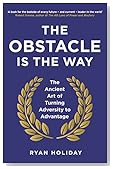
The Obstacle is the Way
Ryan Holiday
Whilst everyone else appears to be obligated to include Ryan's recent Ego is the Enemy in their Best of 2016 lists I was actually taken by his earlier "introduction by stealth" to stoic philosophy.
Certainly not your typical self-help book, this is "a manual to turn to in troubling times".
Returning to this work at least three times over the year even splashing out on the audiobook at some point I feel like I learned a great deal, although it is now difficult to pinpoint exactly what. Perhaps another read in 2017 is thus in order

Layer Cake
J.J. Connolly
To judge a book in comparison to the film is to do both a disservice, but reading the book of Layer Cake really underscored just how well the film played to the strengths of that medium.
All of the aspects that would not have worked had been carefully excised from the screenplay, ironically leaving more rewarding "layers" for readers attempting the book. A parallel adaption here might be No Country for Old Men - I would love to read (or write) a comparative essay between these two adaptions although McCarthy's novel is certainly the superior source material.
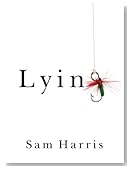
Lying
Sam Harris
I've absorbed a lot of Sam Harris's uvre this year in the form of his books but moreover via his compelling podcast. I'm especially fond of Waking Up on spirituality without religion and would rank that as my favourite work of his.
Lying is a comparatively short read, more of a long essay in fact, where he argues that we can radically simplify our lives by merely telling the truth in situations where others invariably lie. Whilst it would take a brave soul to adopt his approach his case is superlatively well-argued and a delight to read.
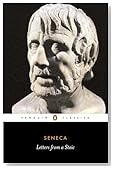
Letters from a Stoic
Seneca
Great pleasure is to be found not only in keeping up an old and established friendship but also in beginning and building up a new one. Reading this in a beautifully svelte hardback, I tackled a randomly-chosen letter per day rather than attempting to read it cover-to-cover. Breaking with a life-long tradition, I even decided to highlight sections in pen so I could return to them at ease. I hope it's not too hackneyed to claim I gained a lot from "building up" a relationship with this book. Alas, it is one of those books that is too easy to recommend given that it might make one appear wise and learned, but if you find yourself in a slump, either in life or in your reading habits, it certainly has my approval.

Solo: A James Bond Novel
William Boyd
I must have read all of the canonical Fleming novels as a teenager and Solo really rewards anyone who has done so. It would certainly punish anyone expecting a Goldeneye or at least be a little too foreign to be enjoyed.
Indeed, its really a pastiche of these originals, both in terms of the time period, general tone (Bond is more somber; more vulnerable) and in various obsessions of Fleming's writing, such as the overly-detailed description of the gambling and dining tables. In this universe, 007's restaurant expenses probably contributed signifcantly to the downfall of the British Empire, let alone his waistline.
Bond flicking through a ornithological book at one point was a cute touch
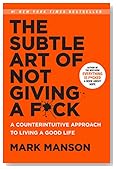
The Subtle Art of Not Giving A F*ck
Mark Manson
Certainly a wildcard to include here and not without its problems, The Subtle Art is a curious manifesto on how to approach life. Whilst Manson expouses an age-old philosophy of grounding yourself and ignoring the accumulation of flatscreen TVs, etc. he manages to do so in a fresh and provocative "21st-centry gonzo" style.
Highly entertaining, at one point the author posits an alternative superhero ("Disappointment Panda") that dishes out unsolicited and uncomfortable truths to strangers before simply walking away: "You know, if you make more money, that s not going to make your kids love you," or: "What you consider friendship is really just your constant attempts to impress people."
Ouch.
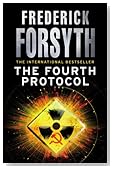
The Fourth Protocol
Frederick Forsyth
I have a crystal-clear memory from my childhood of watching a single scene from a film in the dead of night: Pierce Brosnan sets a nuclear device to detonate after he can get away but a double-crossing accomplice surreptitiously brings the timetable forward in order that the bomb also disposes of him
Anyway, at some point whilst reading The Fourth Protocol it dawned on me that this was that book. I might thus be giving the book more credit due to this highly satisfying connection but I think it stands alone as a superlative political page-turner and is still approachable outside the machinations of the Cold War.
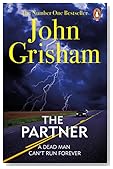
The Partner
John Grisham
After indulging in a bit too much non-fiction and an aborted attempt at The Ministry of Fear, I turned to a few so-called lower-brow writers such as Jeffrey Archer, etc.
However, it was The Partner that turned out to be a real page-turner for somewhat undefinable reasons. Alas, it appears the rest of the author's output is unfortunately in the same vein (laywers, etc.) so I am hesitant to immediately begin others but judging from various lists online I am glad I approached this one first.
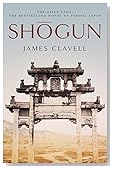
Shogun: The First Novel of the Asian saga
James Clavell
Despite its length, I simply couldn't resist returning to Shogun this year although it did fatigue me to the point that I have still yet to commence on its sequel, Tai-Pan.
Like any good musical composition, one is always rewarded by returning to a book and I took great delight in uncovering more symbolism throughout (such as noticing that one of the first words Blackthorne learns in Japanese is "truth") but also really savouring the tragic arcs that run throughout the novel, some beautiful phrases ("The day seemed to lose its warmth ") and its wistful themes of inevitability and karma.

Mausaji, Never born Never died, Always in the heart.
- unpacked the tarball
- installed the rpm from the "packages" folder
zypper install cnijfilter-common-3.70-1.x86_64.rpm cnijfilter-ip100series-3.70-1.x86_64.rpm
... and choose to ignore the missing file dependency on libtiff.so.5.
ln -s /usr/lib64/libtiff.so /usr/lib64/libtiff.so.5
- re-ran the ./install.sh which registered the printer with cups and does whatever else
magic is included in 1906 lines of shell.
To my surprise this driver still works and provides the expected quality. Though it's just
a question of time until this setup will break. Be it an incompatible ABI change in libtiff
or another lib in use by those Canon provided tools.
QGIS and gdal with ECW support
While the printer stuff is a rather common use case, having a map viewer for map files in the
ECW format is the eccentric
part. I found some hints on stackoverflow and subsequently
https://trac.osgeo.org/gdal/wiki/ECW
that a non-free library is required and a specific build of gdal.
Then QGIS should be able to work with ECW files. Lucky us there
is at least a OpenSuSE repository for gdal and QGIS. So I did the following:
zypper addrepo http://download.opensuse.org/repositories/Application:/Geo/openSUSE_Leap_42.2/Application:Geo.repo
zypper install qgis
Then I had to download the non-free ECW SDK from http://download.hexagongeospatial.com/downloads/erdas-ecw-jp2-sdk-v5.3-%28linux%29 - you'll and up with a '.bin' installer file. The installation process
left me with "ERDAS-ECW_JPEG_2000_SDK-5.3.0" folder in my $HOME. I moved that one to /opt. Next
step is adding the library to the ldconfig search path.
echo "/opt/ERDAS-ECW_JPEG_2000_SDK-5.3.0/Desktop_Read-Only/lib/x64/release/" > /etc/ld.so.conf.d/ecw.conf; ldconfig
Now it was "just" about rebuild gdal with ECW support. So I downloaded the required source packages
with "zypper source-install gdal", edited the spec somewhere in "/usr/src/" to make the following
modifications
--with-ecw=/opt/ERDAS-ECW_JPEG_2000_SDK-5.3.0/Desktop_Read-Only
added to the "./configure" invocation. And somewhere at the top we had to relax the
requirement that all installed files have to be referenced inside the package.
%define _unpackaged_files_terminate_build 0
As a last step I had to "rpmbuild -ba" the package and force the installation via zypper
once more, because this time we have a file depedency on the libecw stuff and it's obviously
not listed in the rpm database. Last but not least I tried to put the gdal build on hold with
zypper addlock gdal libgdal20
to ensure it's not removed on the next update.
Other non-free tools
Beside of those two issues I had to install a range of other non-free tools, but currently
they work without further issues or modifications. One is Teamviewer (i686 multiarch rpm) and
the other one is XnViewMP. XnView is also able to show ECW files, but only the smaller ones.
It crashes on bigger ones but that's also the case on Windows. Then there is also (required
by some Italian map related websites) the ugly Adobe Flash Plugin for Firefox, but that one
is sadly still a widespread issue. We also tried to try out the nvidia graphic drivers but
at the moment we could only get the build in Intel card to work. Usually the preferred solution
from my point of view but sometimes we see rendering glitches and I'm not sure if it's the
driver or something else.
my personal take away
I hate to admit it but it's nothing extraordinary that was requested here. But still
it took me the better part of two evenings to figure everything out. And even now it's
not properly integrated and doomed to fail any day due to various updates and changes
in the surounding ecosystem. I've full sympathy for every average user that would give
up after two hours of research and try&error on this journey.
For the printer drivers I'm happy to blame Canon. The printer situation as a whole
improved from my point of view during the last decade, but it's still a pain in the
ass with the very short shelf life you usually see with consumer models.
For the ECW case one could discuss if it would be legally possible and helpful to do
ugly dlopen() stuff to dynamcially load the shared libs. But then again someone has
to make his hands dirty during the build and discussions about the legal use of header
files will be the next chapter (hello Oracle). It's just ugly. Actually I know too little
about the world of image formats to judge if someone has a good reason to keep this
format commercial or not. From my personal point of view it's not useful and maybe
even morally wrong.
Technically one could argue if it would make sense to keep a local copy of the
gdal build in "/opt" and start QGIS with a modified library path to prefer the
private gdal build. Not sure if that is any better.
On the other hand there are evolving mechanism like flatpack that would ease the handling of
such situations. Buth then again we would be catering non-free software. It feels a lot
like giving up.
While my private working environment is except for firmware blobs free, I now created
for someone a real "FrankenSuSE" to satisfy his everyday needs. On the one hand we
now have another mostly satisfied user of a mostly free operating system. On the other
hand that was only possible by adding a vast amount of non-free software. For sure
we did not win the war, I'm not even sure if we've won a single battle here. It's
just frustrating to see what is required to get someone up and running. With my personal
attitude towards open source software it even feels wrong to invest so much time into
fiddling with non-free components.
What is still missing
We currently lack an image viewer that allows us to print only a selection of
an image, which is useful to print parts of a map. That usually works with XnView
on Windows but does not work with the Linux version at the moment. I also tried gwenview
and geeqie and had the same issue. Not sure if it's maybe a bug in XnView or one of the
Qt parts (gwenview is also Qt based). I did not research that yet.
Update: I spent quite some time looking into open bug reports for geeqie and gwenview.
Seems the feature to print only a section of an image is something new. I've created
#374299 (gwenview) and
#457 (geeqie).
For XnView I expect it's a difference between XnViewMP (the portable version) and
the Windows only XnView Classic. Needs to be clarified and it might be worth to try
XnView Classic with wine. Maybe printing with wine via cups works, I found at least
some results for it on the internet.
The year 2016, which is about to end, has been full of work and contributions
to the FLOSS comunity.
Most of my focus goes to two important projects: Debian and Netfilter.
This is no coincidence, since my main interests in the IT world are
systems and networks.
Some numbers (no exhaustive count):
| Series: | The Belgariad #1 |
| Publisher: | Del Rey |
| Copyright: | April 1982 |
| Printing: | August 1990 |
| ISBN: | 0-345-33551-1 |
| Format: | Mass market |
| Pages: | 258 |
Next.