Search Results: "bod"

19 April 2009

Andreas Metzler: snowboarding season 08/09

Due to the later date of easter this year we had a rather long season this year. I started snowboarding on 2008-12-06 and stopped today 2009-04-19. Following up on previous entries here is the balance sheet:
2005/062006/072007/082008/09
number of (partial) days25172937
Dam ls1010510
Diedamskopf1542423
Warth/Schr cken0304
total meters of altitude12463474096219936226774
highscore10247m8321m12108m11272m
# of runs309189503551
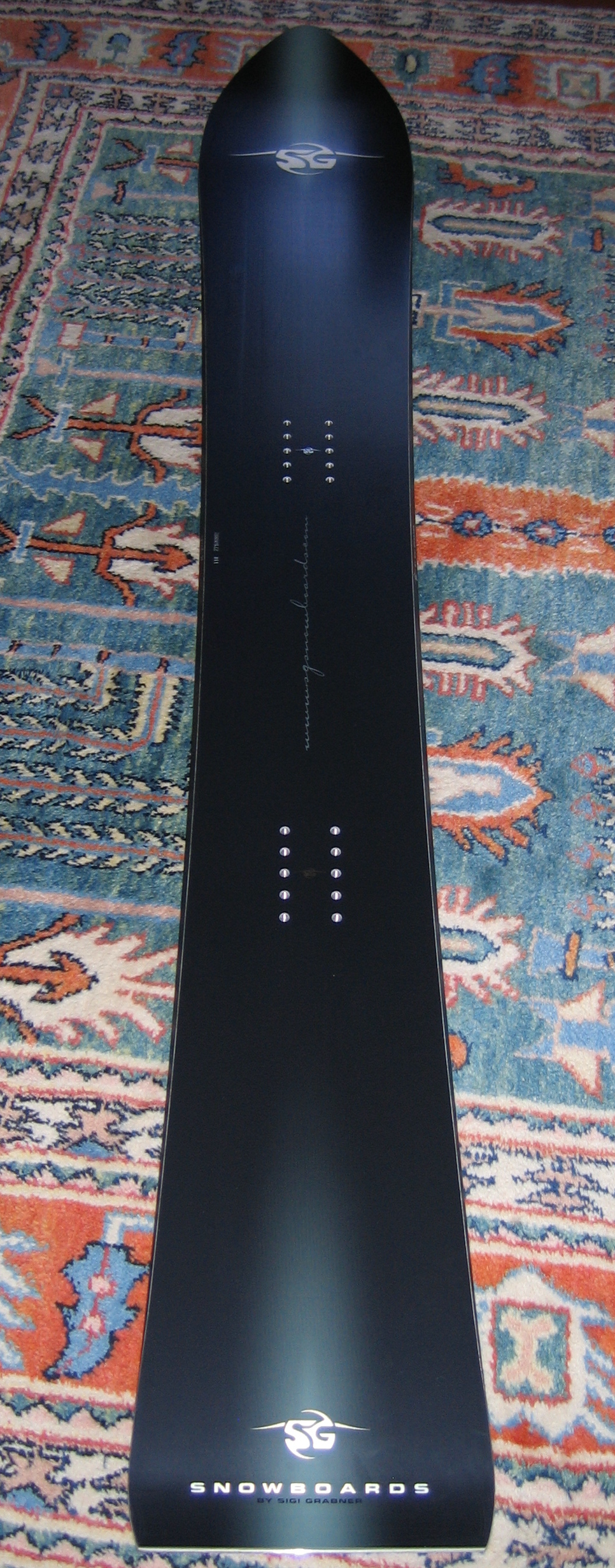
In the second half of the season we actually had a lot of snow, up two 130 cm down at 800m above sealevel. Complete snow cover lasted from December until mid of April. Riding was good, I did not have any major injury, my skills did not increase though. The addition of a snowboard, a SG Speed 173 to my quiver worked out well. Loads of fun and less danger in slushy conditions (nose-in) compared to the shorter slalom board. Now the waiting starts. ;-)

18 April 2009

Joey Hess: roan balds

This week I've been feeling wound up and constrained. Thought I was going to be sick and miss this, but it cleared up overnight and me and some tamales made it to Roan Mountain in time for lunch and a long afternoon hike.
typical gorgeous view from round Bald
Roan highlands
from the rocks across Engine Gap to Round Bald and Roan High Knob
Roan highlands
more There was snow here just five days ago, so no sign of spring yet on top of the Mountain, but still a warm gorgeous day. Sunburn!

16 April 2009

Marc 'Zugschlus' Haber: help needed for ATM support in ifupdown-scripts-zg2

I haven t been using ATM on Linux for some six years now. I neither have access to an ATM network any more nor do I have ATM hardware any more. Therefore, I plan to remove ATM support from ifupdown-scripts-zg2 in the next release which will be done in the next few weeks. If anybody does still use ATM on Linux in conjunction with my scripts, you might want to offer help with the package if you want to have continued ATM support in ifdown-scripts-zg2. I cannot test the code any more and therefore cannot maintain it in the future.

Martin F. Krafft: Government exaction

Do you listen to the radio? I don t, and there are multiple reasons for that: First and foremost, I don t like the music they play these days. Even though there are stations which will occasionally play a more eclectic tune, the Swiss government does not, to my knowledge, dictate any quota, like New Zealand actually requires stations to broadcast New Zealand music at least 20% of the time. The result is music made by producers, who stand pop icons with little clothing in front of microphones, instruct them to move their bodies in obscene ways, and coach them to croak songs someone else wrote en masse in some basement somewhere. All those songs sound alike. To ensure a constant supply of pop dolls, they hype television shows with titles such as Germany s seeks the next superstar , when most of Germany actually couldn t care less, and only those with vacuous brain capacity follow with excitement, because they wouldn t know what else to do. Second, I don t have the time or energy to listen to discussion rounds on the radio, especially not when topic are about society , which noone can define in the first place. Wittgenstein always had it right. The same goes for most commentaries. If I don t have anything to do, I prefer to listen to birds in the trees, rather than someone s polished opinion. The scariest aspect is that those people actually believe that they have something worthwhile to say, and so do their producers and the other staff, when in most cases, they don t. At least not worthwhile to people who have other things occupying their minds. I also don t like someone to make a pre-selection of news and squash that into 5-15 minute time slots, to be read out by dull-sounding speakers. I d rather skim over articles, and the Web ensures that I get the information I want much quicker than the radio stations can transmit them. And sports over the radio waves makes me come close to aural epileptic seizures. I am painting the sky black a bit. I am fully aware that there exist people with thought-provoking arguments, that some stations play interesting music I would otherwise never discover, and that the radio is a source of entertainment in the lives of thousands of other people who are less privileged than me. But when the Billag rang my doorbell today and wanted CHF 14,10 per month for posession of any device capable of turning radio waves into sound, including those radio waves broadcast over the Internet these days, I got a bit furious. In the past, they concentrated only on actual radio and TV receivers. When I moved into my previous flat in Zurich in 2002, they wanted money because my stereo had a tuner button. I refused to pay, opened the device, unsoldered the radio coil, and sent it to them with an angry letter of refusal; they let me off the hook. Since then, they changed the law in 2007 (but haven t actually updated the forms they force you to sign) to include audio players, cellular phones, and computers, which are all radio-capable. I d really prefer if they used their funds to revert that trend, or at least remove the loudspeakers from all mobile phones. But instead, this morning, I skid right into their claws. As I said before, the radio is also a social support system, and as such I have less of a problem to subsidise it. However, given that I strongly disagree with the quality level broadcast, I would prefer to direct my money towards causes I consider more useful, and with which I could better identify. Unfortunately, the whole system is governmentalised to the point where this choice is taken away from me. The Billag website helpfully offers answers to the common questions, including one along the lines of quality. They suggest that you get in touch directly with the programme directors to complain about their content, and offer suggestions. Shortly after I moved to Zurich, Radio Lora offered me a radio show. Radio Lora is a private station, but they also receive subsidies from the monies exacted by the government, so I am using them as an example here. I suggested that I concentrated only on progressive and psychedelic rock from the sixties and the seventies. They refused the show in the end, claiming that this would not be what their listeners want. So instead I now get to pay for content that is deemed more appropriate. I can only imagine the pains I d have to go through to be able to host a radio show concentrating on eclectic tunes on one of the public radio stations. And even if I succeeded (without becoming a full-time public radio broadcaster), then I could only contribute a few hours a week to that content. If you ask me, the Swiss government is overstepping its competencies a bit. NP: Mono: Hymn to the Immortal Wind

Manoj Srivastava: Manoj: The glaring hole in most git tools, or the submodule Cinderella story

There are a lot of little git scripts and tools being written by a lot of people. Including a lot of tools written by people I have a lot of respect for. And yet, they are mostly useless for me. Take git-pkg. Can t use it. Does not work with git submodules. Then there is our nice, new, shiny, incredibly bodacious 3.0 (git) source format. Again, useless: does not cater to submodules. I like submodules. They are nice. They allow for projects to take upstream sources, add Debian packaging instructions, and put them into git. They allow you to stitch together disparate projects, with different authors, and different release schedules and goals, into a coherent, integrated, software project. Yes, I use git submodules for my Debian packaging. I think it is conceptually and practically the correct solution. Why submodules? Well, one of the first things I discovered was that most of the packaging for my packages was very similar but not identical. Unfortunately, the previous incarnation of my packages with a monolithic rules file in each ./debian/ directory, it was easy for the rules files in packages to get out of sync and there was no easy way to merge changes in the common portions an any sane automated fashion. The ./debian/ directories for all my packages package that they are instrumental in packaging. So, since I make the ./debian/ directories branches of the same project, it is far easier to package a new package, or to roll out a new feature when policy changes the same commit can be applied across all the branches, and thus all my source packages, easily. With a separate debian-dir project, I can separate the management of the packaging rules from the package code itself. Also, I have abstracted out the really common bits across all my packages into a ./debian.common directory, which is yet another project, and included in as a submodule in all the packages so there is a central place to change the common bits, without having to duplicate my efforts 30-odd times. Now people are complaining since they have no idea how to clone my package repositories, since apparently no one actually pays attention to a file called .gitmodules, and even when they do, they, and the tools they use, have no clue what to do with it. I am tired of sending emails with one off-cluebats, and I am building my own porcelain around something I hope to present as a generic vcs-pkg implementation soon. The firs step is a wrapper around git-clone, that understands git submodules. So, here is the browsable code (there is a link in there to the downloadable sources too). Complete with a built in man page. Takes the same arguments as git-clone, but with fewer options. Have fun.

14 April 2009

Biella Coleman: Paris in June (and better with hackers)

========================================================================
/tmp/lab announces the second Hacker Space Festival
(Paris, 26-30 June 2009)
======================================================================== Hacker Space Festival 2009 Call For Proposals HSF2009 In 2008, we organized HSF[1] on the spot, as an ad-hoc meeting for
hackerspaces-related networks, technical and artistic research emerging
from them and social questionning arising from them. This sudden
experiment proved to be a huge success, as much as on the
self-organizing level as on the participants and meetings quality, as
well as the emotionally-charged ambient, the kind of which you make
fond memories. The 2008 edition generated a strong emulation in France, from its
historical role as the first official hack meeting there, and in Europe
with the subsequent creation of the Hacker Space Brussels[2], the
rapprochement with The Fiber in Amsterdam and the hackerspaces.org[3]
network. Initiatives of hackerspace openings in Grenoble or Lille, or
the upcoming FrHack[4] conference show an actual enthusiasm in the
French hackers community that was doomed to the underground not so
long ago. We salute these initiatives and their diversity! Soon enough, we wanted to reiterate the HSF experience : however, it
was out of the question to institutionalize this temporary autonomous
zone, nor make it an ersatz of the previous edition, nor even to wrap
it into an elite or underground aura. On the opposite, we ardently
desire; and especially to explore further, in all directions some
lesser known domains (see below) et foster meeting and sharing around
experiences at the confluence of art, technology and politics. The world financial crisis, the decay of democracy in Europe, the
obscurantism, paranoia and lack of culture presiding over legislation
(Internet and Reaction Err Creation Law[5][6]) seem a fertile
environment for the sensible development of new (social ) life forms.
Quick! Let s rest for a few days in jubilation and ecstasy to take a
deep breathe of freedom under the indelicate smells of the medicine
factory nearby! For if the public space is shrinking to oblivion, where any side-step
becomes suspect, and that, from an early age (deviant behavior
detection in nursery school), where moving without a mobile phone
becomes suspect (hello you Julien Coupat[7], a French political
prisoner in France!), there s a domain that the Leviathan would have a
lot of trouble to contain, and for a reason: that of sensitivity. Even
the desperate attempts of the State to block the free and premonitory
expression of sense (hello you Demeure du Chaos![8]) cannot do anything
against a loud laughter or a knowing glance, a sensual kiss or an
explosion of colors. Sensitivity, we could say, is what is left to a human being when she
has nothing anymore, and differenciates her from the body corporate or
the institution, that are, in essence, devoid of it. Therefore, Art
definitely remains the public space to share between humans, and only
between us. And if it the last one to share, we propose to explore it
and take it over during the upcoming edition of the Hacker Space
Festival, from the 26th to 30th of June, 2009 at Vitry sur Seine[9]. ========================================================================
Keynote Speakers: Sergey Grim and Larry Fake with Eric Schmoudt
Groogle Summer of Crode, Survivor style
VLC, I vote against you because you really fucked up when ========================================================================
== W A N T E D ========================================================= Focus on solutions rather than problems. * The Final (Hardware) Frontier: Open FPGA Cores, Reverse Engineering
* Designer Religions and Creative Beliefs Systems
* WiFiDoors & WiFi System-on-Chip controllers firmware hacking,
infection & backdooring
* Telecom Core Network Equipment Reverse Engineering: MSC, STP,
Switches,
* Algebraic Attacks and Modern Cryptography Attacks
* Autonomous, Parasitic and Viral Drones
* Enhanced or Infected Reality Swarms
* Auto-Builders / Self-Fabrication
* Embedded OS breakins stories & recipes
* Actualization rather than mere concepts
* FPGA & ASIC hacking / backdooring
* Cloud+Privacy+Open Source: O Brave New World?
* Explosion-Proof clothing
* Radio Appz & Hackz: Mesh @ RF Layer 1-3
* Database & Privacy
* Problematic & Ethical Open Source/Content Licenses
* Institutional Relationships: Lobbying or Licking?
* Non Lethal Protection (anti-taser vests?)
* Survival in the Age of the Ministry of Immigration and National
Identity
* Mental asylum improvised visit
* Open Source Legacy Media(TM) Production Solutions (TV, Radio, Press,
DRM)
* Gas Sensors & Environmental Benchmarking
* Building Hackerspaces Without Money
* Milsatcomm hacking: Military satellites shots, broken birds in the
sky
* Other research topics on security and insecurity
* Academics and Hackers
* Organics and Fermentation
* Clean Food in Tainted Environment
* Low Impact Energy & Recycling
* Media Sandwich: layers of crap makes good food?
* Deconstructing Carla Sarkozy
* Knitting DIY Factory (jazzy, eh?)
* Signs of life among industrial wasteland
* Hallucinogenic & Computing: Can you Code on Acid?
* Mesh Networking (Wireless BattleMesh Royal!)
* Legal Sabotage: When Democracy Needs You And anything that does not fit. ========================================================================
== P R O P O S E ======================================================= Send you contributions to HSF2009-CFP@lists.tmplab.org + Type of the proposal: 1. conference (45min. presentation + 10min. for questions)
2. workshop / demo (30min. 2 heures)
3. installation / performance (music, plastic, sound, video) Lightning talks can be proposed and organized until the last moment,
according to available space and schedule, in the form of BarCamps or
Blitz Conferences. + Required Information: * Title of the presentation
* Type (see above)
* Language : French or English
* Name of speaker(s)
* Affiliation (organization / company)
* Short biography
* Abstract (5 to 10 lines)
* Topics / Keywords
* Includes a demo? YES NO
* Release during the festival? YES NO
* Internet connection required? YES NO + Acceptable Formats * Open Document
* PDF
* Plain Text
* RTF + Agenda * beginning of proposals : now
* end of proposals : 01 May 2009
* selection notification : 07 May 2009
* publication of program : 15 May 2009 + Evaluation criteria for proposals: 1. Innovating Topic
2. Open Technology
3. Demonstration / Live Act
4. DIY Reproducibility
5. Fun Potential The Programming Committee resembles that of last year
See : http://hackerspace.net/committee ========================================================================
== V E N U E =========================================================== /tmp/lab
6 Bis rue Leon Geffroy
94400 Vitry sur Seine
France http://hackerspace.net/directions ========================================================================
== P A R T I C I P A T E =============================================== Email : http://lists.tmplab.org/listinfo.cgi/hsf2009-talk-tmplab.org
CFPmail: HSF2009-CFP@lists.tmplab.org
IRC : irc://irc.freenode.net/frlab
Jabber : xmpp:hsf2009@space.cepheide.org?join
Wiki : http://hackerspace.net/hsf2009 ========================================================================
== L I N K S =========================================================== The CFP is available online at http://hackerspace.net/cfp [1] http://hackerspace.net/hsf2008
[2] http://hsb.wikidot.com/
[3] http://hackerspaces.org/
[4] http://www.frhack.org/
[5] http://jaimelesautistes.fr/
[6] http://laquadrature.net/
[7] http://fr.wikipedia.org/wiki/Julien_Coupat
[8] http://www.demeureduchaos.org/
[9] http://hackerspace.net/
Philippe Langlois
Email: philippelanglois@free.fr
PGP Key: 8DAEE244

12 April 2009

John Goerzen: Flowers, Music, and Grandparents

Flowers I ve written a lot lately about my Grandma Klassen, who passed away this week. But I m going to start this post about my Grandma Goerzen. She died when I was just an infant. I never knew her, but as the years pass, it seems that I remember her better and better. After we moved out to the farm where she and Grandpa Goerzen lived for decades, we noticed some flowers she had planted 30 years ago were still coming up, having withstood hail, hot summers, frost, construction equipment, and neglect all that time. Terah said, It s like your grandma left us a housewarming gift. Some of these flowers had never bloomed. Until this week. One bloomed for the first time the day Grandma Klassen died. A second bloom appeared the day of her funeral. Music #1 My jr. high and high school band teacher loves music (and old engines, but that s another story). You couldn t sign up for band at my high school; you d sign up for the class called LIFE. To him, music and life are indistinguishable. He says that anybody can speak to somebody, but music is the best way to speak to the heart. My Grandpa Klassen died when I was 11. Grandma Klassen, before her health declined, loved to tell me the story of the music at his funeral. At his funeral, my mom and I played a piano duet of Nearer, My God to Thee which we had already learned for a different event. When we were done, Rev. Epp went to the pulpit and said something along the lines of, If the music in heaven is as good as that, it ll be a great place indeed. I was just 11, and though music did speak to me at that age already, I don t think I understood how it moved people, such as my grandma, until many years later. Music #2 Grandma Klassen loved music, too, and that s reflected in each of her children all of them play trumpet, for instance. So it s no surprise that there was a lot of music this week. She died as two of her children were singing hymns to her at her room in the nursing home. Two of her grandchildren played trumpet for her at her burial. And my brother and his wife played trumpet and piano at her funeral. It was all beautiful, and like my band teacher said, it spoke to my heart. Music #3 I knew about gradma s love of music for quite awhile. When she was in better health, I took her to concerts sometimes. One of her favorite hymns was Joyful, Joyful, but she hadn t known it was based on Beethoven s 9th Symphony. I learned that the Wichita Symphony Orchestra was performing the 9th, and took her to the performance. She loved it, and I seem to recall that she kept talking about it for a few years afterwards. It certainly didn t hurt that the singing on the 4th movement was in German. I burned her a new-fangled CD of it, which I frequently saw in or near her CD player. The Kansas Mennonite Men s Chorus is an all-volunteer choir with about 300 members. They give a couple of concerts a year, and occasionally tour throughout North America and Europe. Their motto is we sing that others may live because 100% of money collected at their concerts goes directly to charity. Attending one of their concerts is a powerful experience not easily forgotten. I think the only time I ve heard a choir come close to being as amazing as that was when I had the opportunity to attend a Robert Shaw concert a few years ago. I went with grandma to one of the Kansas Mennonite Men s Chorus performances a few years ago. As you might expect, she loved it I think she called it powerfully good. This year, I finally joined the choir. I still remember that first practice. We warmed up by singing Holy God, We Praise Thy Name a song that has opened every KMMC concert for years. These people hadn t sung together for almost a year, and there were plenty of new people like me there too. But it only took a few bars of singing before I realized just what it was I had joined. The choir started out with the quietest, but most powerful singing you can imagine: Holy God, we praise thy name. By the time we got to the end of the page, the building was ringing from 300 men singing Infinite thy vast domain, everlasting is thy reign! at the top of their voices, in perfect harmony. We got to the end. The director said. . . Wow. I don t think a first practice ever spoke to my heart before that day. Music #4 Nearly 20 years ago, Grandma Klassen bought me a new bible. After she gave it to me, I asked her what some of her favorite passages were. She took me straight to the blessing in Numbers 6, and made sure I underlined it and bookmarked it. It goes like this:
The Lord bless you,
The Lord keep you,
Make his face to shine upon you and be gracious unto you,
The Lord life up his countenance upon you and give you peace.
My uncle had read this blessing to her the last time he talked to her. And the KMMC for years has ended their concerts with a beautiful benediction based on this passage. Grandma heard it at the concert I attended with her. It has been a favorite of my mom for years, too. So I had the thought: we really ought to sing it as a benediction at her funeral. It was hard to find the right mix of people on short notice, but we wound up with me singing baritone, my brother singing 2nd tenor (we both normally sing bass), and his wife both playing piano and singing 1st tenor, and relying on the piano to fill in the bass part. We had a little chance to practice before the funeral, but not a lot. The two of them have done a lot musically, but I haven t nearly as much, so I got in some extra practice at home, too. When it came time to sing, it was an emotional moment for sure more than a bit hard to focus, knowing the history and meaning of these words. When we got to and give you peace , and moved into the chorus of amen that finishes the song, I almost broke down right there, but didn t quite. We didn t give a perfect performance, for sure, on such short notice. (And they had me singing with them, so we wouldn t have been perfect even with plenty of notice!) But it didn t have to be perfect. After we ended the last, quiet amen , I think I heard about a half-dozen noses blowing all at once. My band teacher was right about music speaking to the heart. Later, during lunch, my aunt said to me, Wow, John, I ve never heard you sing before! That s right, and this may be the last time you hear me sing, too! I don t normally sing in a small group like this. A few minutes later, my uncle that gave the message came over and talked to the three of us. John, today you three brainwashed me. Oh? Yes. For years, I thought that there was no music as beautiful as the trumpet. After hearing you three sing, I have to reconsider. And so my band teacher was also right: music is life. My grandma was a person that could hardly speak without touching the heart. That beautiful melody of her life didn t stop when she died Tuesday afternoon. I ve been hearing it all week.

10 April 2009

Daniel Leidert: Abit AirPace, ath5k and eduroam

I tried to connect my university workstation to the wireless eduroam network on the campus. The workstation was delivered with an Abit AirPace wlan card (probably an Atheros 5006 chipset). The first thing necessary was the ath5k kernel module (my first shot using ndiswrapper didn t work). Both Debian lenny and Ubuntu intrepid-updates provide it. Now there are generally 3 ways to connect to the AP. All making use of wpasupplicant. Further the certificate (may differ for the universities) is necessary. /etc/wpa_supplicant/wpa_supplicant.conf This is described at the sites of my university. It s written in German, but it should still be easy to understand. Let s just mention the snippet for /etc/wpa_supplicant/wpa_supplicant.conf:
ctrl_interface=/var/run/wpa_supplicant
ctrl_interface_group=0
eapol_version=2
ap_scan=1
fast_reauth=1
network= 
	ssid="eduroam"
	key_mgmt=WPA-EAP
	proto=RSN
	pairwise=CCMP
	group=TKIP
	eap=TTLS
	anonymous_identity="anonymous@tu-dresden.de"
	identity="****@tu-dresden.de 
	password= **** 
	ca_cert= /etc/wpa_supplicant/TUD-CACert.pem 
	phase2= auth=PAP 
 
Instead of the script suggested at the site above, you can also use this snippet in /etc/network/interfaces:
auto wlan0
iface wlan0 inet dhcp
	wpa-conf /etc/wpa_supplicant/wpa_supplicant.conf
/etc/network/interfaces It is also possible to put the values directly into /etc/network/interfaces:
auto wlan0
iface wlan0 inet dhcp
	wpa-ssid eduroam
	wpa-proto RSN
	wpa-group CCMP TKIP
	wpa-pairwise CCMP TKIP
	wpa-key-mgmt WPA-EAP
	wpa-eap TTLS
	wpa-ca-cert /etc/wpa_supplicant/TUD-CACert.pem
	wpa-phase2 "auth=PAP"
	wpa-anonymous-identity anonymous@tu-dresden.de
	wpa-identity ****@tu-dresden.de
	wpa-password ****
network-manager Here is a screenshot of the authentication dialog. So now everybody at the University of Dresden wanting to use eduroam should hopefully be able to configure this connection on his Debian/Ubuntu system.

Joey Hess: Racing the Beam

I devoured Racing the Beam last night. It does a great job at getting inside the Atari 3600 platform and explaining how it affected the early games that ran on it. Full of great examples, like Yars Revenge displaying its own code onscreen as a visual effect, to avoid needing a random number generator. Teaches how to analyse screenshots of 3600 games and see how the crazily limited hardware was coaxed into drawing them. Highly recommended, just wish it were twice as long. (I also enjoyed that the book itself is a nice recursive hack. Its (fairly cheap) printing process didn't allow reproducing the detailed color photos of the games needed for reference. So they printed them on the inside of the dust jacket instead.)
While I just missed out on the heyday of the Atari 3600, I was writing similar games on my 130XE a bit later, mostly limited by having to use slow BASIC. This was probably the first video game I ever wrote, judging by its filename ("VIDIO").
You're the green dot, zipping across the screen. Each time it reaches the right side, it wraps back to the left, leaving a wall behind. Crash into the wall and you lose a life.
As I've mentioned before, I still enjoy VIDIO, both its simplicity and gameplay. And the key to its gameplay is that the dot moves fast and the controls are not very precise, making it hard to go thru a given hole in the wall. And the controls are not very precise because of a limitation of the platform. The BASIC program can only sample the joystick position occasionally, and so there's little fine control. So, Racing the Beam has helped me realize that the platform made this game what it is.
BTW, here's the code to VIDIO. (more)

8 April 2009

John Goerzen: Goodbye

Jacob has lately been telling us gate gamma kassen so sick (Great Grandma Klassen is so sick), after his visit to the hospital, and it s true. Today started normal enough, but by 2:45 I got an email from my mom, saying that grandma had taken yet another turn for the worse; her pulse was racing, her temperature feverish, and her breathing shallow and difficult. The last grandchild that was going to be there made it, and got the last flicker of recognition from grandma. I wrapped some things up at work. Then I made the short drive from work to the nursing home, and got there just after 4. I went in to her room there, and it was full of family. Two of her children were singing her favorite hymns. I can never forget my uncle s deep bass voice as he stood at her bedside, holding her arm, while my aunt patted her head, both of them singing. Grandma s only remaining sibling, her younger brother Melvin, sat on the other side of the bed, looking on. Grandma s white table and chairs, which were in grandma and grandpa s house as long as I can remember, and followed grandma through all of the four other places she lived in the last years of her life, were in her room at the nursing home too. It always felt like home to be with grandma and those familiar things that she always took with her. Despite what was happening, I was glad she was back at home. My uncle motioned me over to her bedside, and I took her hand for a few minutes. It felt cold and weak; for the first time, she didn t grab my hand at all. A nurse came in to check oxygen saturation, but the machine wasn t able to get a reading due to poor circulation to her hand. She wasn t able to get a heart rate either because the heart was racing so fast. She discussed briefly whether the family wanted them to continue giving her oxygen, and they decided that they would, for her comfort. My uncle and aunt kept singing. I blew my nose and dabbed at my eyes, and there were hugs all around. And just a few minutes later, grandma peacefully stopped breathing, maybe 20 minutes after I had arrived. They went to get the nurse, who came back to listen to grandma s heart again, though we knew what she would find. She took the stethoscope off, and she almost lost her composure, but managed to say you can turn the oxygen off now. Several people gave grandma a last hug. After a few minutes with just the family, they told the nurses to go ahead and call the funeral home. That set off a lot of activity making arrangements for the next few days, funeral plans, and the like. I stepped back into grandma s room a few times, while the family was in the sitting area right outside it discussing. I looked around at the family photos on the wall, the old table and chairs, the recliner. Now, these are the things that were grandma s. It didn t feel like home anymore. Terah and Jacob were stuck at home Terah s car was at the mechanic for repair today. I called to give her the news. She wanted to come to be with the family, but I didn t really want to leave. She tried calling some friends to see if they could give her a lift to the mechanic, but not one of them was available. I talked to her again and suggested she just call the mechanic. She wasn t even halfway through describing the situation when he interrupted with, We ll have it at your place right away! Well, I don t expect you to have to do that, or you could certainly wait until you close. Nope, this isn t your average community, we ll bring it right over. You should be there. Grandma has enjoyed a simple life and had requested a simple death: no extraordinary measures at the end of life, no embalming either. So, by law, the burial must happen within 24 hours of death, and will be tomorrow. After all the arrangements, people realized nobody had supper yet. We went to the quickest available option pizza and ate there. It was paid for out of grandma s remaining money the last meal of so many that she provided for her family over the years. It was a happy meal. As I drove home, NPR news was on the radio. There were the same stories we hear all the time: the economy, the mideast, the president. Normally I m interested, but today I shut it off. Today is different. Tomorrow, for the second time in four years, I will help carry a grandparent s casket a few days before Easter. I ll end tonight with this photo. It was taken soon after Jacob was born. Grandma came to the hospital and held him. That smile sums her up perfectly. img_4965r.jpg

7 April 2009

Gunnar Wolf: map $_->destroy $home->windows; waitfor(NewWindows->arrive) && $home->build_windows;

I live in a 55 year old house. That's not something to be worried about, of course, but it does mean that my house needs major maintenance works to continue to be in good shape. This week, said major maintenance jobs began. We are in the process of replacing all of the windows - It might sound a bit scary by today standards... But if you have ever been here... Well, this house was built in a very different era, when the newly built University City lied several kilometers South of the city border and land was cheap here. Most houses in the area were built for University teachers (this particular house was for twenty years home to Marcos Moshinsky, Mexico's most important Physicist who, coincidentially, passed away last week; Dr. Moshinsky was my father's teacher and mentor). Anyway, we just started the window teardown process. The workers are going quite faster than I expected. Still, I am worried about the waitfor(). As anybody who has come to this house will know, we live on a very busy avenue. Even 30 years ago, when my parents moved here, they installed double glasses on every window - But did some mistakes (i.e. we have some broken glasses which are unchangeable for practical purposes). This time we decided to buy from an established vendor for this kind of windows. Double-glass windows are common in colder regions - But here, they are quite rare. Strange, being this a noisy city... So we researched a bit, and found a vendor with good quality - Multivi, in Puebla. What we didn't count on... Is that they were so informal. We paid in late December and were told delivery would take around two months... And we are still waiting, this time pressing them for a commitment. After all, we are already lacking several windows, and... Well, around May we start having rains. We DEFINITIVELY don't want to be stuck without windows by May! Anyway... I recently sent out a semi-VAC anouncement to debian-private. And this is extensive to any project I am related to: The next days I will be paying more attention to whatever needs to be done at home. Please don't expect prompt replies to mail from me (yes, as if I usually replied promptly...) I do have network access, but not much computer time.

6 April 2009

John Goerzen: Today

This morning started with a call from my mom. She was calling to let us know that my grandmother had apparently taken a turn for the worse, and we didn t know how much time was left. Terah, Jacob, and I got dressed and went to the hospital to visit. Grandma had been in a partial coma that left her able to hear, nod, and hold hands, but unable to speak. Apparently she came out of it overnight, and was talking and even singing with my mom and aunt some. She seemed happy, loved to hear the old German prayers she grew up with. She said some memorable things I ll have to write about later too. By the time we got there, she wasn t that active anymore, and was about like she was yesterday. She could see us, and give our hands a squeeze, maybe nod occasionally. She drifted asleep often. One time when I saw she was awake with her eyes open, I lifted up Jacob to where she could see him. Immediately her face brightened, and I saw the biggest smile on her face that I d seen in days! She smiled and waved to him, and with a small bit of coaxing, he waved back. Then she wiggled her foot, and when Jacob noticed, he wiggled his foot back at her. He s 92 years younger than her, and they still managed to communicate just fine. Grandma held my hand for awhile this morning; she loves to have a hand or two to hold. My cousin showed up for a visit, and I was going to get up to let her sit down, and when grandma felt my hand leaving, she grabbed on tighter. I went around to the other side of the bed and held the other hand. In the last couple of days, grandma s hearing has become much sharper than before, and I m pretty sure her memory has too. When it was time for us to leave and go to church, I was holding her hand, looking into her eyes, saying goodbye, and how much I loved her. I got a hand squeeze, and saw a few tears at her eyes the first I can remember seeing that. As I pulled my hand away to leave, she once again grabbed tighter and was still looking at me. I think she thought this was the last time she d see me, and didn t want the moment to pass too quickly. But that also guaranteed that I d be back in the afternoon. It was Palm Sunday in church today, and as every year, the Palm Sunday celebration ends with Bill singing I walked today where Jesus walked while Dale carries in a heavy cross. Right when Bill is singing I climbed the hill on Calvary, where on the cross He died! , Dale is climbing the steps to the stage and laying the cross there. Hardly a dry eye in the room at that. For lunch, my parents were still hosting their monthly college student get-together/home cooking event which we usually attend too. After that, I dropped off Terah and Jacob at home, and went back to the hospital. By the time I had left, grandma had 27 visitors just today. When I arrived, my great uncle (her brother) and aunt were there, along with her pastor and a deacon from her church, plus my mom and my aunt. More people came and went throughout the afternoon, and I enjoyed visiting and hearing stories about the family and grandma all afternoon. She was sometimes awake and able to look at people, and sometimes deeply asleep. I heard her say God bless you to several people. It was awhile before I had a chance to go be with her, and when I did, she was asleep, so I sat beside her bed and held her hand for quite awhile, maybe an hour, while visiting with family in the room. At one point, a nurse came in to give her some more morphine by IV. I got up to get our of her way, but the nurse said, Don t think of it; I can work around you, and what you re doing is more important than what I m doing anyway. Some of her old friends from church came by, and prayed with her in German, and recited the words to some German hymns and poems, which I think she really enjoyed. Her eyes were closed through most of it, but when they got to the end of each item, they opened, saying thank you, I believe. Eventually things calmed down, and it was time for me to head home. Grandma was awake by then, and I looked at her and said goodbye, and that I was glad I got to see her again. We gave each other a final hand squeeze, and then she let go of my hand this time. I m glad I came back for sure. They say sometimes that people that are dying feel like they need permission to die, before they will let themselves go. I wondered if grandma was feeling that way today. But then I hear that my uncle, who is driving in from 8 hours away through wintry weather, called and ask that she be given this message: Tell mom that I m coming, but if Jesus gets there first, she should go with him. That might not work on everybody, but for her, it s the best way I could think of to give her permission.

4 April 2009

Andrew Pollock: [tech] Asterisk Gateway Interface 1.4 and 1.6 Programming

Asterisk Gateway Interface 1.4 and 1.6 Programming I received an email out of the blue recently from someone related to Packt Publishing, the publisher of Asterisk Gateway Interface 1.4 and 1.6 Programming, asking me if I'd like a review copy of the book. This is the second unsolicited book review request I've received now. I just wish I had more time/mental energy to read books! I'm going to make a concerted effort to read this one and write a review of it, because AGI is something I'm moderately interested in. AGI is what makes a lot of computer-telephony integration really possible with Asterisk, and CTI done right is something I'm particularly interested in. I was also given some sample content and encouraged to post it. Based on this sample content, the book sounds like it should be good.

Bastian Blank: Almighty root

I was asked to take a look at a machine where aptitude don't even want to do the upgrade to etch. A first inspection shows some weird repositories in the source.list file and many daemons noone ever should use on that machine. I was able to do the upgrade with apt-get then. After some time I got asked over modifications in /etc/exports. It basically included the following content:[1]
/     *(rw,async,no_root_squash)
/home *(rw,async,no_root_squash,nohide)
/usr  *(rw,async,no_root_squash,nohide)
/var  *(rw,async,no_root_squash,nohide)
[1]For those who don't speak NFS: This exports the specified filesystems (/, /home, /usr and /var) to everyone, and accepts whatever the client system say.
The machine was taked out of service immediately. We'll have no chance to answer the question whether this was silliness or intend.

1 April 2009

Francois Marier: Safer synergy setup for laptop-desktop keyboard sharing

Synergy is a very useful piece of software for anybody wanting to share a mouse and keyboard between two networked computers.

Here is the setup I use to:
First of all, I've got the following ~/.synergy.conf on both of my laptop and desktop machines:
section: screens
mylaptop:
mydesktop:
end
section: links
mylaptop:
right = mydesktop
mydesktop:
left = mylaptop
end
section: options
keystroke(alt+shift+space) = switchInDirection(left)
keystroke(alt+space) = switchInDirection(right)
end

With this, I am ready to start the server on my desktop machine:
synergys -a localhost
Now, in order to encrypt the synergy client/server traffic, I create an ssh tunnel between the two machines:
ssh -f -N -L localhost:24800:localhost:24800 mydesktop
Then I start the synergy client on my laptop. However, some recent problems have convinced me to have a more robust alternative to simply starting the client like this:
synergyc localhost
As recommended by a few helpful people on #debian-devel, I decided to use the supervise tool (part of the daemontools package) to automatically restart the synergy client if it crashes. Here is how I do it:
supervise ~/.synergyc &
This command refers to a ~/.synergyc directory containing a single run script. That shell script consists of:
#!/bin/sh
xset r rate 500 30
/usr/bin/synergyc --no-daemon localhost

(The xset call is necessary since synergyc crashes seem to reset the repeat flag of X for some reason...)

The only problem I still need to fix in my setup is the potential password leak in the next few seconds after the synergy client crashes. Such a crash has already caused me to accidentally type my laptop password into a desktop IRC window the other day :(

Ideally, I would like the synergy server to swallow the first second or two of keyboard input after its client suddenly drops out. This could eliminate quite a few embarrassing wrong windows.

31 March 2009

Gunnar Wolf: E-voting and paper-based-voting - UNAM teaches us how to achieve the worst of all worlds

As my Institute's sysadmin, I was appointed as the responsible for my Institute's certificate handling for today's voting session for the Universitary Council (Consejo Universitario). UNAM, Mexico's largest University, is moving towards an e-voting platform. I talked about this with our (sole) candidate for the Council, and she told me this has been used a couple of times already - And, as expected, it has led to having to repeat voting sessions, due in part to e-voting's inherent lackings: It is impossible to act on any kind of impugnation. The only thing we have is an electronic vote trail, no way to recount or to make sure that all votes got in. Besides, we had a perfectly antinatural and inadequate identification system, which means voter's identity have no way to be trusted. Besides, we still have all the traditional Universitary bureaucratic paper flow, which completely obscures any positive points this e-voting system might have had. Before going any further, if you are interested: There is a so-called security audit certificate for this system. In Spanish, yes. Take a look at it if you understand the language and want to crack some laughs. I will not make a detailed review of (what I could gather about) the setup. But to make things short: I had to go to the central administrative offices to get a CD-ROM with the monitoring station's SSL certificate. This certificate is tied to an IP address, so only one computer was able to be set up as a monitoring station. So far, so good. But, what is the monitoring station's real role? You will probably laugh. The voting session (at my Institute - Each dependency can specify its own opening and closing times) was from 10:00 and until 18:00. We were instructed to place this computer at a public location, from where: So, what is strange here? That there is a tremendous apparatus providing supposed security to... Information that is completely worthless. Just protecting a number that is, for all purposes, public. Oh, and the opening and closing of the booth - Of course, the system could have flaws during the process, or inject spurious votes along the way, or flip-flop the votes cast whichever way. But, did I mention votes? So far I have not mentioned how people are supposed to vote. Together with our last paycheck, we got a piece of paper with all of the needed information: A randomly generated, 10-character-long-with-mixed-case-and-symbols password, and the link to a web page2. This paper was folded, yes, but it was in no way secured - So, whoever wanted to have all of our passwords could just go through the bunch of papers and get them. Now, contrasting to the strong perception of physical security surrounding the oh-so-important monitoring stations, how can a person vote? Oh, sure, just fire up your favorite browser and go to https://www.jornadaelectoral.unam.mx/, produce your student number if you are a student or your full RFC3, select via checkboxes4, click on "submit", and voil , you have voted. From any location, from any machine. Yes, the University's population is largely itinerant, many people will be voting from abroad and all. It is good to give them a voice. But... At what price? Lets see... The security audit mentions the system is free from any malicious routine that can automatically alter the results and it has the minimum needed validations against spurious data injections from the most common Web browsers. However, if I am interested in modifying the results... I could put a trojan in a Faculty's laboratories, which modifies the votes sent by their users (students vote as well). Yes, I'd have to know how the system works, but lets accept security through obscurity does not work, and that this is a well-known system (as it has been used for over 3 years and is at version 3.5). PHP-based, for further points. Oh, and (if I recall correctly) a voter does not even get feedback as for which formula did he vote for, so no way of knowing if the computer really sent the information I requested. And given the low security for the password handling, I would not bet on it being worth much. Besides, this system was partly established to allow people voting from abroad - as long as they picked up their March 10 paycheck. That excludes anybody who has spent over three weeks away! Many other things can be said. Last detail: e-voting's main selling point is that the results are known instantaneously, and (if no paper trail exists) no tedious re-counting is ever done, right? Meet universitary bureaucracy. Technology changes, but processes don't. The Local Electoral Surveillance Commission has the responsability to enter once again the system after the vote has finished, and ask the server for the preliminary results. This consists of a tarball with the tally sheet (from the voters, who voted and who didn't), the total votes for each formula, and... one more file I don't remember. They also have to generate the signed legal documents where they testify to the received information. And then, ahem, they have to burn those files5 onto a CD-ROM, print them, and physically take them to the central administrative offices. Yes, take something from the server and get it to the server. For us it is not terrible (1.5Km can be readily done), but this same procedure must be done by people in other cities where there are University campii holding elections. How Nice! Anyway... Worst of both worlds. The inefficacies of a paper-based ellection, together with the unaccountability of an e-voting ellection, sprinkled with fake sense of security here and there. Bah.
  1. 1. Except that it didn't. I guess they didn't stress-test the server, so every couple of minutes it returned a connection error. Of course, the page would no longer self-update. And after noticing that, I (and nobody else but me) had to go and give the password and certificate for the system to continue to operate.
  2. 2. which is http://www.dgae-siae.unam.mx/ - The Schooling Administration General Direction (DGAE), an universitary body which has no relation with electoral issues. DGAE made available a poster detailing how to vote... But, again, lets ignore that fact for now
  3. 3. A nationwide ID number, largely derived from name and birth date data - Both numbers are often widely known, they cannot be considered private in any way.
  4. 4. Oh, for goodness sake... The "ballot" has 1..n options, and each has a checkbox, not a radio button. That means, you can select multiple options, which is of course invalid. Why? Because the electoral rules indicate that selecting more than one option in a ballot makes the ballot invalid, and thus, a way for making it invalid must be provided. Isn't logic beautiful?!
  5. 5. Want some more insight on what needs to be done? Take a look at the instructions. Don't forget paying attention to the lexicon used - We are still asked to count the votes, an impossible feat given the vote is 100% system-based - Quote: Los miembros de la CLVE realizar n, con base en el reporte del sistema, el c mputo de los votos depositados en la urna a favor de cada una de las f rmulas, declarando nulos los votos que procedan.

30 March 2009

Wouter Verhelst: Cinelerra as an advocacy tool

This weekend, I was going to go to an acquaintance so that we could edit the material which we had filmed at the concert. Yes, we did use DVswitch, but due to me being somewhat late in proposing a video team, there was no team, and hence nobody switched anything. So instead we'll have to edit stuff now. Since I'd never done anything of the sort before, I guess it's fair to say that I'm not exactly the expert. As such, I installed samba, plugged the (LVM2/ext3 formatted) external hard disk containing the movie files to my laptop, and served them over a gigE link to his; the idea being that we could then do the editing on his system, using the software which he knew. After having copied those files (one 22G DV file, one 15G one, and a few much smaller ones), he loaded them into the editing software. Which promptly sat on its ass, making us wait, as it 'analyzed' the movie clip. This of course took ages. As said, I don't really know a lot about movie editing. However, in preparation to this, I had been playing with Cinelerra CV, and so I knew that this particular application does not require such an utterly useless delay. This I told Werner, who got interested. So we went over to Cinelerra's website, and had a look at the features list. That got him interested, and he suggested that it might be more interesting for me to install Linux and Cinelerra on his laptop, so that he could do the editing using that, rather than the Windows application that he wasn't entirely fond of anyway. So I did. A few hours later, everything was up and running, we had had lunch, and we were copying data from my external hard disk to his. As we were waiting on the data to be copied, I installed foobillard, and we had a bit of fun playing pool and snooker. Closing words, as we were wrapping up and he had a slightly more general look at the system: "sortof useful these days, isn't it?" Sure. I really believe that this kind of thing is the ideal way to do advocacy; rather than suggesting freedom for freedom's sake, one should suggest something people actually care about, and work from there. Of course, that doesn't always work.
27 March 2009

Gunnar Wolf: La seguridad en c mputo: Con qu se come?

TitleLa seguridad en c mputo: Con qu se come?
Publication TypeMagazine Article
Year of Publication2009
AuthorsWolf, Gunnar
MagazineSoftware Gur
FrequencyQuarterly
Issue Number23
Pagination47
Date Published02/2009
Type of ArticleColumn
ISSN1870-0888
Key WordsSeguridad
Citation Key1928
Export

Gunnar Wolf: C mo ense ar a los programadores del futuro?

Title C mo ense ar a los programadores del futuro?
Publication TypeMagazine Article
Year of Publication2008
AuthorsGunnar, Wolf.
MagazineSoftware Gur
Issue Number22
Pagination64
Date Published11/2008
Type of ArticleColumn
ISSN1870-0888
Key Wordsense anza, paradigmas, motivaci n, autodidacta
Citation Key1927
Export

Gunnar Wolf: Coordinaci n de esfuerzos en grupos de desarrollo e integraci n de Software Libre

TitleCoordinaci n de esfuerzos en grupos de desarrollo e integraci n de Software Libre
Publication TypeMagazine Article
Year of Publication2008
AuthorsGunnar, Wolf.
MagazineSoftware Gur
FrequencyQuarterly
Issue Number21
Pagination62-63
Date Published08/2008
Type of ArticleColumn
ISSN1870-0888
Key WordsSoftware libre, comunidad, organizaci n
Citation Key1926
Export

Next.

Previous.