Search Results: "pm"

24 February 2011

Raphaël Hertzog: 7 mistakes to avoid when participating to Debian mailing lists

You re eager to start contributing to Debian, your first action is to subscribe to some high-profile mailing lists (like debian-devel and debian-project) to get a feel of the community. You read the mails for a few days and then you find out that you could participate to the discussions, it s a simple first step after all. True enough. That said, it s not as easy as it looks like. There are many mistakes that you should avoid:
  1. Don t fall in the trap where your mailing list participation is your sole contribution to Debian. If you want people to give credit to your messages, you should already be doing something else for Debian.
  2. Don t participate more than once a day to a given thread. There are many people subscribed, you should leave room for other people to express their point of view. You can always follow up one day after and reply to several messages at once if you believe you still have something new to add to the discussion.
  3. Don t reply to off-topic threads. Someone asked a simple question and someone else pointed out that his message was off-topic. Don t reply, or if you really need to, do it on the correct list or with a private response.
  4. Don t ask questions unless it s useful to bring the discussion forward. Development lists are not here to fill the gaps in your knowledge. We already have debian-mentors for this. Furthermore there s no better way to learn than to find yourself the answers to your questions. :-)
  5. Don t believe your opinion is so important. We re all very opinionated and discussions that consist only of contradicting opinions tend to go nowhere. Thus don t give your opinion unless you can back it up with new facts or another experience.
  6. Don t participate to all threads. There are surely some topics where you are more knowledgeable than others, participate where you add the most value and leave the others threads to the other experts (and learn by reading them).
  7. Don t hide your identity. In Debian we like to know each other. Use your real name and not some anonymous nickname. You need to be able to stand up behind your words, otherwise you re not credible.
I have myself been guilty of several of those when I started I invite you to follow my recommendations to ensure our mailing lists remain pleasant to read and an effective discussion place.
You should follow me on Identi.ca, Twitter and Facebook. Or subscribe to this blog by RSS or by email.

4 comments Liked this article? Click here. My blog is Flattr-enabled.

23 February 2011

Thomas Koch: I've been young - I needed the money

Yesterday I had my last day at $company and today is my first day in freedom. I'll write about my future plans in another blog post. Here I just want to express the joy I had yesterday afternoon when I did:
CODE:
aptitude purge php5

I've started using PHP in 2006 and used it almost exclusively until the end of 2009. I believe I've learned most of what one can learn about PHP in this time. In 2010 I started to work in Java and only started to understand how limited PHP is.
I know that java is far from perfect. So I don't stop there and already started to learn Scala and looking forward to learn other languages too. But Java is for sure a better answer then PHP, regardless what the question was.
There are many reasons, why you should not, never, for no project ever use PHP. I'll only tell you my personal top reasons:
I once advocated PHP as a serious plattform and even gave three talks about PHP. I feel ashamed of this now and apologize. Please forgive me. It's not worth arguing about this post. Its just to make me feel less guilty about my foolishness in the past.

Andrew McMillan: Status: Busy

I've been very quiet on here for a few months, and the reason is (of course) because I've been doing other things. No surprise there, I guess! What I've been doing, first of all, is writing aCal, an Android CalDAV client with a lot of help from Chris Noldus. It's probably fair to say that Chris did most of the heavy lifting while I learned Java, did most of the UI & graphic design, and the low-level CalDAV synchronisation and geeky calendaring code. This is now available in the Android market for NZD$2.00 to help us fund further development and in a few days (or a couple of weeks) I'll get the source code up somewhere public (probably Gitorious) and it will be licensed GPLv3... When I get a moment - although refer to title :-) Of course on top of that I'd already committed to a second year of handling the sponsorship job for Linux.Conf.AU, so a fair amount of January was taken up with preparing for, and attending LCA in Brisbane where I took a lot of photos. LCA was, as always, a blast, and all credit to the fantastic team over in Brisbane who really came together when it seemed it was all going to fall apart after the flooding. This seems to be six long months of disasters around this part of the world, although until Tuesday I guess we thought we'd escaped the worst of it in New Zealand. After LCA I snuck home for a few days before flying off in the other direction, to UC Berkeley, for CalConnect XX where I managed to get in some great testing of the new Android CalDAV client, some excellent standards discussions, more photos and (even) a few days sightseeing. I've been home for a week from that now - just barely long enough to hug the kids, really - and today I am in the air once more, off to CeBIT in Hannover where I have been lucky to be sponsored a free booth in the Open Source Lounge by Linux New Media AG. My original travel sponsor slipped through the cracks, but I was fortunate that InternetNZ agreed to help fund me instead. If you're coming to CeBIT please do stop by the Morphoss table in the Open Source Lounge (Hall 2, F40) for a chat about DAViCal and Android - and anything else you want to talk about! I'll be there all week :-) And if I have some quiet time in that week (yeah, right!) I'll be trying to push out a new DAViCal release, which is overdue really, since the last one was two months ago.

22 February 2011

Michal Čihař: phpMyAdmin translation status

Another week is over and it's time to look again at state of translations for phpMyAdmin 3.4. Compared to last week, there one new translation at 100% this week, thanks to Dutch translators. We now have nine translations at 100%: There are three which were close last week, but are still not at 100%: Was your language not listed? You can help it being better!

Filed under: English Phpmyadmin 0 comments Flattr this!

21 February 2011

Sean Finney: Recent debian updates

Packaging updates Help wanted: cacti I've also filed an RFA bug for cacti (and spine), as i'm not really using cacti any more in my day to day work. The packages are in pretty good shape, but it would really be for the best if someone who actually used cacti were able to more thoroughly test new versions before they were uploaded. I'm also open to co-maintaining the package and/or sponsoring uploads; so if you're already using cacti and looking to get involved in debian development, this could be a fun place to start :) Debian patch tracker Finally got around to fixing a couple post-release (and older) issues in the patch-tracker. Hopefully it should be back to updating and following the latest stuff in the archive. Next up I'll see if I can find someone from DSA to upgrade the hosting machine to squeeze and install a few extra dependencies for the next feature update, which contains a pretty substantial rewrite of the guts from some home-rolled wsgi+cheetah goo to a more established and maintainable django-based system. In the meantime, please let me know if you see any problems (via maintenance cat or otherwise), and I will take a look.

Chris Taylor: New Blog

I created this new blog and am starting from scratch on this blogging thing. I plan to blog more on open source software and Debian development.

20 February 2011

Joey Hess: the fate of the orphans

(Non-Debian readers can stop reading now, I'm talking about so-called "orphaned packages" and not anything of real-world importance.) In 2008 I stopped maintaining non-native packages in Debian. At the time I maintained a fair amount of stuff. It's interesting to see what happened to it after I gave it up, partly because some of the results seem so random and partly because some of what has happened seems to point at weaknesses in Debian. First, the success stories. More than half of my packages are now being maintained by others: xaos, longrun, fbreader, liblinebreak, analog, xgalaga, znc, sysnews, metastore, bsdgames, uqm, oneko, kobodeluxe, archivemail, unclutter I still use much of this stuff, some only occasionally, and other daily, and am glad it's being kept alive. (It's surprising that someone still care about longrun.) I was unhappy to have to NMU procmeter3 just before the release of Debian 6.0 to fix a trivial to debug RC bug that almost got it removed from the release. I hope that was just a bump in its road. Also, splitvt is now maintained again after being orphaned a long time. I'm not sure if it makes sense to keep it in Debian, since screen can do the same thing, and it has a security history, but someone wants to, so that's fine. Two packages are left on life support. I'm surprised nobody wants to maintain grepmail, unless we're all using notmuch or mairix now? And dgen is the best Sega emulator I know of. Several games were not picked up by the games team, despite them showing some interest originally, and were removed: xtris, xjewel, xemeraldia, xbl Of those, xemeraldia in particular is a lot of fun, I'm surprised nobody cared to keep it. Also, the nestra Nintendo emulator was shipped with squeeze, but now is removed as it never got a maintainer. I don't know if there is a better NES emulator in Debian. The intercal programming language was removed. Surprising. Debian does at least still have clc-intercal for all our pressing Intercal needs. Finally, sparkline-php was removed today despite never having had any bugs, needing no maintenance, and being a suggests of ikiwiki, which is now more buggy (broken relationships, outdated docs) and less featureful in Debian.

19 February 2011

Russell Coker: On Burning Platforms

Nokia is in the news for it s CEO announcing that they have a Burning Platform , Jeff Waugh gives an interesting analysis of the situation [1].What is a Platform for Phones?This whole scenario makes me wonder about what a platform should mean in terms of mobile devices. Wikipedia says A computing platform is some sort of hardware architecture and software framework (including application frameworks) that allows software to run. Typical platforms include a computer s architecture, operating system, programming languages and related user interface (run-time system libraries or graphical user interface). [2]I think that Nokia s problem was that it didn t leverage it s strength in making great phone hardware. Nokia used to have a commanding share of the market due to simply making better phones. They had phones that were upwardly compatible (the same UI and used the same chargers), their phones were always very solidly constructed, and they had some good design features such as having the battery comprise part of the case which allowed a replacement battery to be physically larger for longer battery life. Even now they have hardware features which are better than the rest such as the N8 which is widely regarded as having the best camera of any phone. Nokia also did some smart things like releasing their N800 series of phones with more open software than most companies used, they supported running arbitrary Linux applications.While they kept the platform as the API interface on a phone OS and maintained several different OSs (with multiple versions in production at any time) they made a less desirable platform for developers and a lot more development work for themselves.Nokia fragmented their own market. There is no technical reason why they couldn t manufacture a phone that is capable of running a choice of their own OS as well as Android (or alternatively their own OS or the Windows Phone OS). There may be technical issues that prevent designing a phone to run either Android or Windows phone, but they could have got two out of three options available.On top of a hardware phone platform we could have multiple software platforms, Android, Windows, Meego, etc. The users could then decide which one to use.A Hardware Platform for PhonesI think that it would be ideal if a phone company offered phones with a choice of OS and allowed the user to change the OS. The N8 is a great phone and the hardware is really appealing, I would have definitely bought one for my wife if it ran Android. Also the resale value of phones can be improved if they can be re-purposed. If someone knew that people on ebay were paying good rates for an old phone because it could be re-programmed then they would be more likely to buy it. As phones are essentially free for most people due to telco deals, a phone that has a resale value of $200 is a lot more desirable than one with a resale value of $100 if all other things are equal.I would like to see the mobile phone as a platform just as the IBM PC compatible was a platform. Imagine if IBM had sued Compaq into oblivion when they first cloned the PC, if that had happened I don t think that I would be using an IBM PC (Thinkpad) right now. The early IBM PCs really weren t great systems for home use, for pretty much anything you might want to do the early PCs didn t compete well with CP/M systems and systems from Commodore and Apple. It was only when cheap clones flooded the market that the PC platform took off. Modern PCs can boot from disks that were created 20 years ago. At every time during the PC s history there has been a choice of OSs available that work with the standard BIOS boot loader and expect certain essential hardware (such as a BIOS interface for video, keyboard, and storage). This choice increased the market allowing economies of scale in production. It also allowed competition between vendors which forced the margins to be low and resulted in PCs becoming cheap over the last 20 years every aspect of a PC apart from Intel CPUs and Microsoft Software has steadily dropped in price.I would like to see phones designed with a common boot loader, a common core set of CPU functions (I believe that with ARM CPUs a lot is optional), and common interfaces to the touch-screen and the GSM system. The boot loader would ideally have support for booting multiple OSs, in a typical end-user case the store would provide the phone configured to quietly only boot one of the available OSs but it would be trivial to offer the user a choice of OS at boot time for advanced users. The process of installing a custom ROM image in a phone is regarded as dangerous at the moment and most people who would like to do such things are hesitant due to the risk of bricking their phone. If booting the last good OS was an option then more people would try new OSs. With the current situation I am a little hesitant to re-program my new phones (and I m braver about such things than most people).One of the many problems with the current situation is that the phone vendor has to officially support every phone OS. One example of the problems with this is the Sony Ericsson Xperia X10 which is a fine piece of hardware that has been saddled with an older version of Android for it s entire life, Sony has stated that they won t produce any more updates and thus the demand for this phone is a lot lower than it might be. I believe that this is why the Xperia X10 is significantly cheaper than any other phone with similar features. Sony is losing money because they have a closed hardware platform and don t support the recent versions of Android!Ways of Booting the OSIt shouldn t be a technical challenge to have support for basic touch-screen IO and 3G Internet access in the boot loader of the phone. Then an OS such as Android could be loaded from the network before being booted without needing an older version of Android running. 80386 systems with a few megs of RAM used to be able to boot from a LAN, a modern phone has much more powerful hardware and a network connection that s at least as good as 10base2 networking so it should be able to do the same.Modern phones have micro-SD cards for local storage. There s no reason why the OS couldn t be loaded on micro-SD card. Fixing the OS on a phone that was bricked could be achieved by putting the micro-SD card in a PC and then copying the files across just as I often fix PC OS problems by installing the hard drive in a working system.Changing the OS of a phone should be easier than changing a PC between Ubuntu and Fedora (the Linux distributions that seem to have the most usage by less technical users).ConclusionIf Sony had made their platform the hardware then they could have spent their effort on what they do well (making great phone hardware) and delegated almost all of the work related to creating the OS to other companies (Google, MS, telcos, etc).If the entire industry moved to a hardware platform for phones then the result would be lower prices and some thin margins for manufacturers. This would be good for users and OK for manufacturers. The current situation however is quite bad for users who can never get phones to do exactly what they want and not so good for phone manufacturers such as Nokia (and everyone else who does business with Microsoft) who find themselves on the wrong side of market forces. The phone as a hardware platform shouldn t be too bad for Microsoft either, they did OK on the PC hardware platform.

18 February 2011

Steve Kemp: Why I lose interest in some projects.

Some projects have historically sucked; they've been incomplete, they've been hard to use, they've had poor documentation, or they've had regular security issues. Over time projects that started off a little poorly can, and often do, improve. But their reputation is usually a long time in improving. For me? Personally? PHPMyAdmin is a security nightmare. So while it is nice to read about it gaining the ability to be themed, and even receiving submissiosn from users (a rare thing for projects to receive such external contributions) I just find it hard to care. I see PHPMyAdmin written in a blog, in a news article, or on a users machine and I just think : Harsh. Unfair. Possibly no longer true. But I do tend to stick to such judgements, and I'm sure I'm not alone. Ideally people wouldn't be dogmatic, would be open-minded about re-evaluation situations. In practise I'm probably not such a unique little snowflake, and there are probably a great many people to this day who maintain views which that are based on historical situations than the current-day reality: Anyway. PHPMyAdmin? I'm sorry for singling you out, even with your fancy themes, language translations, and other modern updates. It's just a name that conjours deamons for me. Though I'm sure there are a great number of people who love it to pieces. ObQuote: "You don't want to know my name. I don't want to know your name. " - Spartacus

17 February 2011

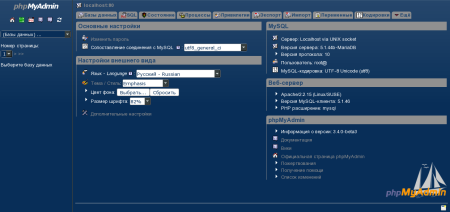
Michal Čihař: Emphasis theme for phpMyAdmin 3.4

There seems to be nice increase in interest in creating themes for phpMyAdmin. Unfortunately today submitted theme came too late for phpMyAdmin theme contest. The new theme is called Emphasis: Emphasis theme It's now also available on the demo server, so don't hesitate and try it there. PS: Don't forget to vote for new default phpMyAdmin theme!

Filed under: English Phpmyadmin 0 comments Flattr this!

Raphaël Hertzog: People behind Debian: Maximilian Attems, member of the kernel team

Maximilian, along with the other members of the Debian kernel team, has the overwhelming job of maintaining the Linux kernel in Debian. It s one of the largest package and certainly one where dealing with bug reports is really difficult as most of them are hardware-specific, and thus difficult to reproduce. He s very enthusiastic and energetic, and does not fear criticizing when something doesn t please him. You ll see. My questions are in bold, the rest is by Maximilian. Who are you? My name is Maximilian Attems. I am a theoretical physicist in my last year of PhD at the Technical University of Vienna. My main research area is the early phase of a Quark-Gluon Plasma as produced in heavy ion collisions at the LHC at CERN. I am developing simulations that take weeks on the Vienna Scientific Cluster (in the TOP 500 list). The rest of the lab is much less fancy and boils down to straight intel boxes without any binary blobs or external drivers (although lately we add radeon graphics for decent free 3D). Mathematica and Maple are the rare exceptions to the many dev tools of Debian (LaTeX, editors, git, IDE s, Open MPI, ..) found at the institute, as those are unfortunately yet unmatched in Free Software for symbolic computations. The lab mostly runs a combination of Debian stable (testing starting from freeze) for desktops and oldstable/stable for servers. Debian is in use for more than 10 years. So people in the institute know some ups and downs of the project. Newcomers like my room neighbors are always surprised how functional a free Debian Desktop is. :) What s your biggest achievement within Debian? Building lots and lots of kernels together with an growing uptake of the officially released linux images. I joined the Debian kernel team shortly after Herbert Xu departed. I had been upstream Maintainer of the linux-2.6 janitor project for almost a year brewing hundreds of small cleanups with quilt in a tree named kjt for early linux-2.6. In Debian we had lots of fun in sorting out the troubles that the long 2.5 freeze had imposed: Meaning we were sitting on a huge diverging monolithic semi-good patchset. It was great fun to prepare 2.6.8 for Sarge with a huge team enthusiastic in shipping something real close to mainline (You have to imagine that back then you had no stable or longterm release nor any useful free tools like git. This involved passing patches around, hand editing them and seeing what the result does.) From the Sarge install reports a common pattern emerged that the current Debian early userspace was causing lots of boot failures. This motivated me to develop an alternative using the new upstream initramfs features. So I got involved in early userspace. Thanks to large and active development team initramfs-tools got a nice ecosystem. It still tries to be as generic and flexible as possible and thus gains many nice features. Also H. Peter Anvin (hpa) gave me the official co-maintenance of klibc. klibc saw uptake and good patches from Google in the last 2 years. I am proud that the early userspace is working out fairly well these days, meaning you can shuffle discs around and see your box boot. Later on we focused on 2.6.18 for Etch, which turned out to a be good release and picked up by several other distributions. Only very much later we would see such a sync again. With 2.6.26 for Lenny we got somehow unlucky as we just missed the new longterm release by one release. We also pushed for another update very late (during freeze) in the release cycle, which turned out to semi-work as too much things depend on linux-2.6. For Squeeze 2.6.32 got picked thanks to discussions at Portland Linux Plumbers and it turned out to be a good release picked up by many distributions and external patchsets. The long-term support is going very well. Greg KH is doing a great job in collecting various needed fixes for it. Somehow we had hoped that the Squeeze freeze would start sooner and that the freeze duration would be shorter, since we were ready for a release starting from the actual freeze on. The only real big bastard on the cool 2.6.32 sync is Red Hat. Red Hat Enterprise 6.0 is shipping the linux-2.6 2.6.32 in obfuscated form. They released their linux-2.6 as one big tarball clashing with the spirit of the GPL. One can only mildly guess from the changelog which patches get applied. This is in sharp contrast to any previous Red Hat release and has not yet generated the sharp and snide comments in press it deserves. Red Hat should really step back and not make such stupid management moves. Next to them even the semi-maintained Oracle Unbreakable 2.6.32 branch looks better: It is git fetchable. What are your plans and those of the kernel team for Debian Wheezy? Since 2.6.32 many of the used patches landed upstream or are on the way (speakup, Kbuild Debian specific targets, ..). The proper vfs based unionfs is something we d be looking forward. We haven t yet picked the next upstream release we will base Wheezy on, so currently we can happily jump to the most recent ones. There are plans for better interaction with Debian Installer thanks to generating our udebs properly in linux-2.6 source itself. Also we are looking forward to using git as tool of maintenance. We d hope that this will also allow for even better cross distribution collaboration. Concerning early userspace I plan to release an initramfs-tools with more generic userspace for the default case and finally also a klibc only for embedded or tuning cases. What do you like most in Debian? For one thing I do like the 2 year release cycle. It is not too long to have completely outdated software and on the other hand it gives enough time to really see huge progress from release to release. Also at my institute the software is is recent enough without too much admin overhead. For servers the three years support are a bit short, but on the manageable side. I do enjoy a lot the testing distribution. For my personal use it is very stable and thus I mainly run testing on my desktop and work boxes. (Occasionally mixing in things from sid for unbreaking transition or newer security fixes). Debian is independent and not a commercial entity. I think this is its main force and even more important these days. I enjoy using the Debian platform a lot at work thus in return this motivates me to contribute to Debian itself. I also like the fact that we strive for technical correctness. Is there some recurrent problem that hinders the progress of Debian? The New Maintainer process is a strange way to discourage people to contribute to Debian. It is particularly bureaucratic and a huge waste of time both for the applicant and his manager. It should be completely thrown overboard. One needs a more scalable approach for trust and credibility that also enhances the technical knowledge for coding and packaging of the applicant. NM is currently set in stone as any outside critics is automatically rejected. Young and energetic people are crucial for Debian and the long-term viability of the project, this is the reason why I d consider the New Maintainer process as Debian s biggest problem. Note from Rapha l Hertzog: I must say I do not share this point of view on the New Maintainer process, I have witnessed lots of improvements lately thanks to the addition of the Debian Maintainer status, and to the fact that a good history of contribution can easily subsume the annoying Tasks & Skills questionnaire. Another thing I miss is professional graphics input both for the desktop theme and the website. I know that effort has been done there lately and it is good to see movement there, but the end result is still lacking. Another trouble of Debian is its marketing capabilities. It should learn to better sell itself. It is the distribution users want to run and use not the rebranded copies of itself with lock-in sugar . Debian is about choice and it offers plenty of it: it is a great default Desktop. Linus Torvalds doesn t find Debian (and/or Ubuntu) a good platform to hack on the kernel. Do you know why and what can we do about this? The Fedora linux-2.6 receives contributions from several Red Hat employed upstream sub-Maintainers. Thus it typically carries huge patches which are not yet upstream. As a consequence eventual userland troubles get revealed quite quickly and are often seen there first. The cutting edge nature of Fedora rawhide is appealing for many developers. The usual Debian package division of library development files and the library itself is traditionally an entry barrier for dev on Debian. Debian got pretty easily usable these days, although we could and should again improve a lot more in this sector. Personally I think that Linus hasn t tried Debian for years. I have the feeling that the implication of the Debian Kernel team in LKML has been on the rise. Is that true and how do you explain this? Ben Hutchings is the Nr.1 contributor for 2.6.33. He also is top listed as author of patches on stable 2.6.32. Debian is not listed as organization as many send their linux-2.6 patches from their corporate or personal email address and thus it won t be attributed to Debian. There is currently no means to see how many patches get forwarded for the stable tree, but I certainly forwarded more then fifty patches. I was very happy when Greg KH personally thanked me in the 2.6.32.12 release. In the Squeeze kernel, the firmwares have been stripped and moved into separate packages in the non-free section. What should a user do to ensure his system keeps working? There is a debconf warning on linux-2.6 installation. It is quite clear that the free linux-2.6 can t depend on the firmware of the non-free archive (also there is no strict dependency there technically). On the terminal you d also see warnings by update-initramfs on the initramfs generation for drivers included in the initramfs. The debconf warning lists the filename(s) of the missing firmware(s). One can then apt-cache search for the firmware package name and install it via the non-free repository. The check runs against the current loaded modules. The match is not 100% accurate for special cases as the one where the device might be handled well by this driver without firmware, but is accurate enough to warrant the warning. The set of virtualization technologies that the official Debian kernel supports seems to change regularly. Which of the currently available options would you recommend to users who want to build on something that will last? KVM has been a smooth ride from day zero. It almost got included instantly upstream. The uptake it has is great as it sees both dev from Intel and AMD. Together with libvirt it s management is easy. Also the performance of virtio is very good. The linux containers are the thing we are looking forward for enhanced chroots in the Wheezy schedule. They are also manageable by libvirt. Xen being the bad outside boy has an incredible shrinking patchset, thus is fair to expect to see it for Wheezy and beyond. For many it may come a bit late, but for old hardware without relevant CPU it is there. Many tend to overstate the importance of the virtualization tech. I d be much more looking forward to the better Desktop support in newer linux-2.6. The Desktop is important for linux and something that is in heavy use. The much better graphics support of the radeon and nouveau drivers: The performance optimizations thanks to dcache scalability work and the neat automatic task-grouping for the CPU scheduler are very promising features for the usability of the linux desktop. Another nice to have feature is the online defrag of ext4 and its faster mkfs. Even cooler would be better scalability in ext4 (This side seems to have seen not enough effort lately). Is there someone in Debian that you admire for their contributions? Hans Peter Anvin and Ted Tso are a huge source of deep linux-2.6 knowledge and personal wisdom. I do enjoy all sorts of interactions with them. Christoph Hellwig with Matthew Wilcox and also William Irwin for setting up the Debian kernel Team. Several Debian leaders including the previous and the current one for their engagement, which very often happens behind the scene. The Debian Gnome Team work is great, also the interactions have always been always easy and a pleasure. Martin Michlmayr and previously Thiemo Seufer do an incredible job in porting Debian on funny and interesting ARM and MIPS boxes. Debian has a lot of upcoming potential on this area. I m looking forward to other young enthusiastic people in that area. Colin Watson is bridging Debian and Ubuntu, which is an immense task. Michael Prokop bases on Debian an excellent recovery boot CD: http://www.grml.org. I d be happy if any Debian Developer would work as carefully coding and working.
Thank you to Maximilian for the time spent answering my questions. I hope you enjoyed reading his answers as I did. Subscribe to my newsletter to get my monthly summary of the Debian/Ubuntu news and to not miss further interviews. You can also follow along on Identi.ca, Twitter and Facebook.

One comment Liked this article? Click here. My blog is Flattr-enabled.

16 February 2011

Stefano Zacchiroli: in the news - Debian and the FreedomBox

Fellow geeks who have attended FOSDEM this year probably remember Eben Moglen's announcement about the creation of a foundation to support the development of FreedomBox-es. The FreedomBox foundation and its goals have been featured in a New York Times article appeared yesterday, together with a nice Debian mention which points to our wiki. Debian is also prominently present on the (ikiwiki-powered) website of the foundation. Yet another reason why I'm proud of being part of Debian.
(thanks to Faidon for the heads up)

Michal Čihař: SF.net has back git email notifications

As I have complained quite loudly in this blog, I think it's fair to post a status update again. Yesterday the emails started suddenly to work. So the major reason for my complains is gone. What I still don't like that this issue was not at all communicated to project admins. It stopped to work, what was sort of announced in blog post. It started to work again without any announcement and last status update in blog still claims they do not work. At least for direct question, we've received reply that they have intentionally re-enabled this service.

Filed under: English Phpmyadmin 0 comments Flattr this!

15 February 2011

Michal Čihař: phpMyAdmin translation status

Another week is over and it's time to look again at state of translations for phpMyAdmin 3.4. There was quite a good progress in last week and hope it will continue this way. We now have eight translations at 100%: There are three which were close last week, but are still not at 100%: Was your language not listed? You can help it being better!

Filed under: English Phpmyadmin 0 comments Flattr this!

Michal Čihař: phpMyAdmin theme survey

About month ago, we've announced contest for new default theme in phpMyAdmin 3.4. The submission period is over and now it's time to decide which theme will be the winning one. You can choose from five themes (all of them are listed on our wiki). Every opinion counts, so please visit our survey and choose the one you like most: http://survey.phpmyadmin.net/index.php?sid=72977 Besides the Original and Darkblue_orange themes, there are following to choose: Toba: Toba theme Graphite: Graphite theme pmahomme: pmahomme theme

Filed under: English Phpmyadmin 0 comments Flattr this!

Pietro Abate: xen 4 on debian squeeze

It's time to upgrade my xen servers to squeeze. I've already put this off too long and now I've to task to go from etch to squeeze in one long step. In order to avoid problems I just did a first upgrade etch -> lenny and then to squeeze. However, since so much has changed in the meantime, and so much twicking of essential components is needed (such as Xen !), I guess I could have gone directly from etch to squeeze in one go, and fix everthing in the process... Anyway, to late for this kind of considerations.
 
The xen debian wiki is full of invaluable information. Kudos to the xen team for their hard work. To get you started on squeeze you need to install the xen hypervisor. Everything is provided by one package:
aptitude install xen-linux-system-2.6-xen-amd64
This will pull the latest linux kernel and xen-hypervisor to run on dom0 . By default the hypervisor is probably not going to be the default kernel. If you want to change this, you should edit the grub default values :
vi /etc/default/grub
to make sure that the default kernel on dom0 is the xen-hypervisor. This is tricky, because grub let you define a default w.r.t the list of available kernels. so if you install a new kernel, you have to change the default accordingly with the list of kernels in /boot/grub/grub.cfg. It would be nice if I could define the default kernel with a label instead of a number... ( ref #505517 ) Alternatively, as suggested in the wiki, you can just move the xen kernel out of the way ...
mv -i /etc/grub.d/10_linux /etc/grub.d/50_linux
When installing xen related tools, aptitude will also probably install by default rinse and xenwatch. The first one is to boostrap redhat machines and maybe you don't need it. The second one is a GUI and will pull in a lot of X-related dependencies. If we have similar needs, you can just remove what is not needed...
aptitude purge rinse rpm rpm-common
aptitude purge xenwatch
Something that is new, is the new schema for virtual devices. Now all vms will see /dev/xdva1 instead of /dev/sda1 as before. This needs to be changed in the domU as well as in the xen config files (/etc/xen/vm.cfg). One fantastic news is that xen 4 now uses pyGrub. It is not mandatory (so if you want, you can stick with the old configuration file). But if you use pygrub, on the domU you can install whatever kernel you want. Finally, your users will have complete freedom to pick and choose their kernels ! There was a small detail I didn't notice on the debian wiki, that is, if you try to use grub2 in squeeze, it will fail when probing the device#601974 . The workaround described in the wiki is to use xvd a,b,c,... as device names (and not xvd 1,2,3,... ) to make grub happy. Once you have changed then naming schema, grub will be able to see the disks and install the bootloader. Another solution is to install the os-prober from unstable / experimental. It seems a patch is on the works. On newly created images, you can also pass the --scsi parameter to xen-create-image to ignore this problem altogeher... I'm not sure if this will have other implications...
 
The console name is also changes from tty to xhv0 . To get back the console you should add this line in the inittab of all you VMs.
vc:2345:respawn:/sbin/getty 38400 hvc0
A last note is about the merge upstream of the xen patch !! \o/ yeiiii !!

14 February 2011

John Goerzen: How do you hire programmers and sysadmins? How should employers evaluate you?

Reading job listings for any sort of IT job is depressing. It s been quite some time since I ve had to do that, but how many times have you seen something like this: I could go on and on. As a job seeker, that sort of thing is fundamentally devaluing to someone who has strengths in being adaptable and quickly learning new tools, languages, or even entire environments. As an employer, it sends a message that you re not interested in more than a surface look at someone s strengths, and probably don t care to hire the best and the brightest. After all, would you turn away a rockstar programmer simply because he or she had been writing filesystem code in C the last 3 years instead of the latest whizbang Java web widget that will probably be obsolete in a year and unsupported in two? I am quite certain that there are plenty of managers that do. Even if you are a company large enough to have an entire team of people that do nothing but work on that whizbang app, don t you still want the best you can find, realizing that some of the best people to work on that app may not have even heard of it yet? (And that when the app goes obsolete in 5 years, you d rather not have to lay off a large team of single-skill people) Some of you may know that I work in IT at a manufacturing company. We have a small IT team here, about seven people, and are a heavy Debian shop. And we have a vacancy open up in our development/Linux admin group. I m the manager of that group, which is why I m thinking about this right now. We re too small for single-subject specialists to make sense, yet we re big enough to appreciate skill, experience, flexibility, and rigor. Consequently, when the occasion arises for me to look for new employees, I don t prepare a laundry list of things we use in-house and would like experience with. The list of almost-required things generally begins with Linux and ends with experienced , and has nothing else in between. In other words, I d like it if I don t have to explain to you what a symlink or a hardlink is, but I d be willing to do so if I think you d internalize it quickly. On the experienced side, it would be nice if you already have a well-developed sense of fear at running rm when you re root, or have designed a storage infrastructure for a network before, or are paranoid about security. But again, if people can pick up those traits on the job, we are usually still interested. If learning how to package up software for Debian, fix bugs in software you ve never seen in a language you ve never heard of, raise good questions about things you may not have lots of experience with, and write documentation for it all on a wiki sounds like fun, then that s probably the kind of person I want, even if you ve never used our particular tools before. If I were to judge based on the stuff I normally see in job postings, I guess you might conclude I m nuts. I don t think I am, but then again I m also the only person I know that formats his own resume in hand-crafted LaTeX. What do you all think? The next question is: how should one evaluate candidates given this sort of philosophy? I m not a fan of canned tests, or even whiteboard tests that tend to be some sort of canned topic that may test the applicant s specific knowledge base more than overall skill and flexibility. Similarly, as an applicant in years past, I ve struggled with how to present the I ve never used $LANGUAGE, but I know I could pick it up quickly and do it very well vibe. To certain people, that might sound like BS. To the more geeky managers, perhaps it sounds like what they want. We ve built a fairly diverse team on the back of this approach, and it s worked out well for us so far. I m interested to hear your thoughts. Oh, and if you d like to work for us, you should probably be sending me an email. No, I m not going to list the address here on this blog post. If you can t figure it out, I don t want to hear from you <grin>

Steve McIntyre: He's gone

I mentioned last night that Dad was on his way out, and that we were all hoping it would end soon for him. Well, thankfully it did. He was clearly waiting for my stepmum to come back in to see him this morning; he left us at 11:35 today, at peace and in no pain. Thanks to everybody for your messages of support, they're very appreciated. It's hard to lose somebody close, and it helps to know that your friends are thinking of you.

John Goerzen: Lots of Snow, Being Stuck, and Fun

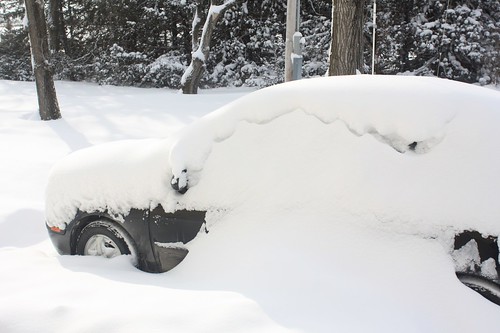
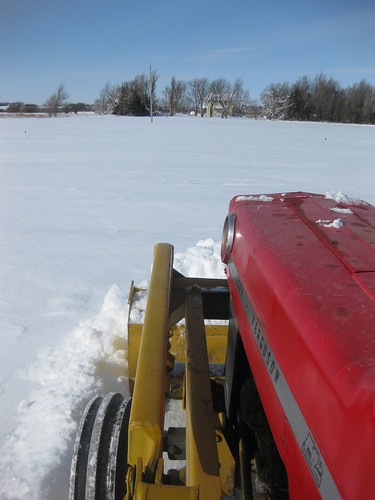
Those of you that watch my twitter know that we got dumped on with snow recently. The final estimate reported by local papers is 17 to 19 inches. IMG_5301.JPG That s my car. You might understand why I went home at 1PM Tuesday and worked from home the rest of the afternoon. The county didn t get the roads opened until 5:30PM Wednesday, so we were stuck. Terah s dad kindly opened the driveway for us though. Without that, we wouldn t have even known where it was. marla-IMG_4180.JPG Jacob and Oliver loved playing in the snow. It was a HUGE hit for them. Both of them hated to go back inside when it was time. Oliver had trouble walking, or even standing up, but that didn t stop him from begging for more every chance he got. IMG_5345.JPG On Saturday, I took Jacob outside to play. We had in mind building a snow tunnel. We went to one of the big piles of snow left by the tractor after our driveway was cleared, and I dug out a space underneath it that Jacob could crawl through. He got a little scoop (he insisted on calling it my shovel ) and helped dig too. He had a great time with it. He was very anxious to go inside, and it probably didn t help his eagerness that the cats could freely walk through it long before he could. They were around and taking a great interest in the proceedings. One of then stretched out on my back while I was stretched out pulling snow out from the pile. Finally Jacob got to go through. He had a little trouble because it wasn t tall enough for him to crawl like he usually does (though still plenty big for him to get through with lots of room to spare), but he came out beaming. I then went and got the camera and got some photos of his second trip through. IMG_5424.JPG You d think that this might be the highlight of a 4-year-old s snow excursion. And given his excitement, you might be very convinced of that. But you d be wrong. What Jacob really wanted was a snow train. So I drew some train track-sized lines in the snow with my shovel. Then I was supposed to draw a train engine. He had been planning this for hours before we even went outside, and I knew very well what was supposed to go on the engine: a snowball for a headlight. We then added passenger cars and a coal car, because apparently that s what you do with snow trains. And the result: IMG_5445.JPG When we went inside, Terah asked Jacob about his snow experience. Jacob was very happy, until she asked him if his snow train was a real train or a drawing of a train. Then he became very sad when he said it was a drawing of a train, and decided it was not what he wanted AT ALL. So today we went out again. This time I built a snow train that stands up, complete with snowballs for wheels. I asked him if it was right, and he kept saying, No, I want a REAL train. Finally I asked him what the difference between a real snow train and this one was. Apparently a real train would be on tracks, move around, make noise, and take us places. Fortunately he didn t dwell too long when I explained I couldn t build one of those. And then today s highlight was writing JACOB in the snow. He had started by drawing larger and larger J letters with his arm, and finally asked me to make one. I made footprints in the shape of a very large J, which he loved. He had me make another one, and then the rest of the letters in his name.

13 February 2011

Andrew Pollock: [life] Zoe at nine months

(The requisite "I have no time any more, it's 10 days late") It certainly feels like 3 months has passed since I last reflected on her development. It feels like forever. As usual, we've managed to do a fair bit in 3 months. She's doing very well. Growing nicely. Still around the 25th percentile for weight, but now up to the 50th percentile for height. We just had to upgrade her from an infant car seat to a "big kid" car seat, because she was maxing it out on height, not weight. She seems to have handled the transition okay, but we haven't done any long car trips since making the change. She's now sitting really well, and pulling herself up into a standing position. She's cruising around on furniture a bit (and sporting various bruises to show for it). She started crawling at six and a half months, and now there's no stopping her. She's into everything. No more teeth have appeared yet. Her top teeth have been looking like they want to do something for ages. I think, given a recent uptick in fussiness, their appearance may be imminent. On the food front, she's eating all sorts of things. We've got a few infant/toddler cookbooks, so we still are predominantly feeding her either a combination of pureed fruits and vegetables, or a few pureed dishes that I've prepared (mainly vegetable stews or risotto). She also enjoys bread, toast and has taken to Vegemite on toast, like a good little Aussie. The other night we ate out at our local Italian restaurant, and she had some garlic bread and some penne pasta with marinara sauce. She's definitely enjoying finger food. We went back to Australia for a couple of weeks recently, and she handled the flights extremely well, and had an absolute ball back in Australia. She'd just started sleeping through the night a few times before we left for the trip, and didn't sleep as well while we were in Australia, but got back into the swing of things in under a week of getting back to the US. She's so much fun at this age. She laughs, she plays. She gets so excited when I get home from work in the evenings. I love her and being a Dad so much. Zoe at 9 months

Next.

Previous.