Enrico Zini: Online aggression links
Sealioning - Wikipedia
Sealioning (also spelled sea-lioning and sea lioning) is a type of trolling or harassment which consists of pursuing people with persistent requests for evidence or repeated questions, while maintaining a pretense of civility and sincerity.[1][2][3][4] It may take the form of "incessant, bad-faith invitations to engage in debate".[5]
Tone policing (also tone trolling, tone argument, and tone fallacy) is an ad hominem (personal attack) and antidebate tactic based on criticizing a person for expressing emotion. Tone policing detracts from the validity of a statement by attacking the tone in which it was presented rather than the message itself.
"A brawler who tattoos a message onto his knuckles does not throw every punch with the weight of First Amendment protection behind him," the brief stated. "Conduct like this does not constitute speech, nor should it. A deliberate attempt to cause physical injury to someone does not come close to the expression which the First Amendment is designed to protect."
It s no secret that times are changing. It used to be that men were men, jokes were jokes, and all facts came from one white guy in a suit who you trusted because he looked like your dad. Now I know I could get in a lot of trouble for just saying this, but I don t care because someone has to tell the truth: These days, you can t say anything racist at all without being called a racist.
Russia's neighbor has developed a plan for countering misinformation. Can it be exported to the rest of the world?
So, I wrote my BIFF Response but Marvin wrote me another angry email. Actually, he wrote 6 more this week, so what s up with that? Why didn t he stop after my first email?
The BIFF Response Method will teach you how to respond to angry emails, texts, or social media posts while maintaining your dignity and personal power.
 Map of conflict
I've been practising Non-Violent Communication (NVC) for several years. It helps me to better understand my feelings and needs. The concepts of NVC can also help to look at conflicts. I would like to introduce a way to look at conflict using the basic concepts of NVC:

 Here is my monthly update covering what I have been doing in the free software world during February 2020 (






 sbuild is a tool used by those maintaining packages in Debian, and
derived distributions such as Ubuntu. When used correctly, it can
catch a lot of categories of bugs before packages are uploaded. It
does this by building the package in a clean environment, and then
running the package through the Lintian, piuparts, adequate and
autopkgtest tools. However, configuring sbuild so that it makes use
of all of these tools is cumbersome.
In response to this complexity, I wrote


 A new firmware for the Kobo ebook reader came out and I adjusted the mega update pack to use it. According to the comments in the




 Of course, reality has trouble matching all the post-processing filters.
Plan for the week
Now on a more serious note; apart from enjoying the beautiful city of Cambridge,
here's what the team plans to do this week:
tumbleweed
Stefano wants to continue refactoring our ansible setup. A lot of things have
been added in the last year, but some of it are hacks we should remove and
implement correctly.
highvoltage
Jonathan won't be able to come to Cambridge, but plans to work remotely, mainly
on our desktop/xfce session implementation. Another pile of hacks waiting to be
cleaned!
ivodd
Ivo has been working a lot of the pre-ansible part of our installation and plans
to continue working on that. At the moment, creating an installation USB key is
pretty complicated and he wants to make that simpler.
olasd
Nicolas completely reimplemented our streaming setup for DC17 and wants to
continue working on that.
More specifically, he wants to write scripts to automatically setup and teardown
- via API calls - the distributed streaming network we now use.
Finding a way to push TLS certificates to those mirrors, adding a live stream
viewer on

 Like
 In one of the answers it is stated that:

 About me
Hello, world! For those who are meeting me for the first time, I am a 31 year old History teacher from Porto Alegre, Brazil.
Some people might know me from the Python community, because I have been leading

 Narabu is a new intraframe video codec. You probably want to read
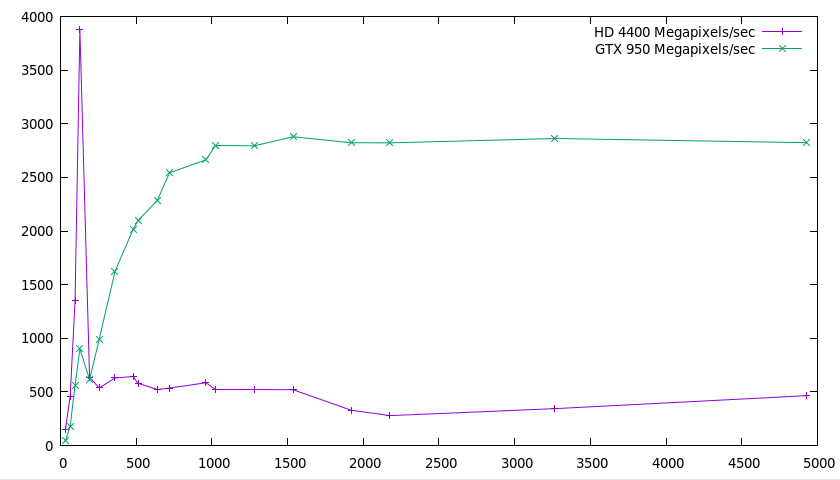 I'm not going to comment much beyond two observations:
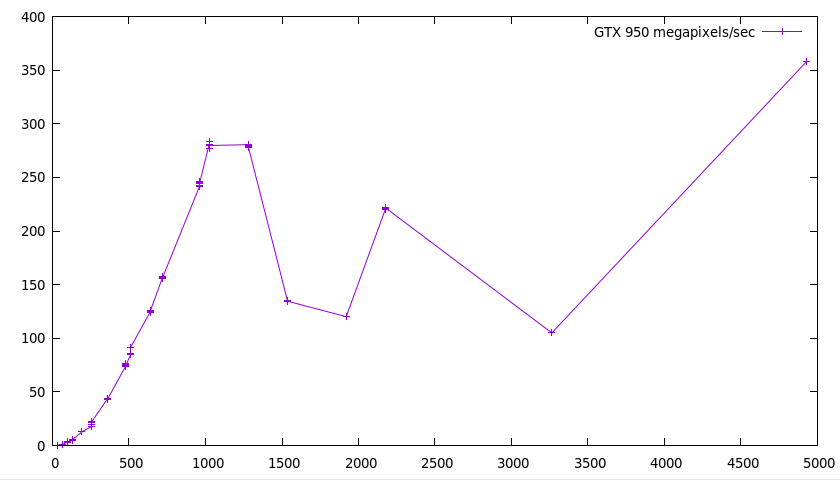 This is interesting. I have few explanations. Probably more benchmarking and
profiling would be needed to make sense of any of it. In fact, it's so
strange that I would suspect a bug, but it does indeed seem to create a
valid bitstream that is decoded by the decoder.
Do note, however, that seemingly even on the smallest resolutions, there's a
1.7 ms base cost (you can't see it on the picture, but you'd see it in an
unnormalized graph). I don't have a very good explanation for this either
(even though there are some costs that are dependent on the alphabet size
instead of the number of pixels), but figuring it out would probably be a
great start for getting the performance up.
So that concludes the series, on a cliffhanger. :-) Even though it's not in a
situation where you can just take it and put it into something useful, I hope
it was an interesting introduction to the GPU! And in the meantime, I've
released version 1.6.3 of
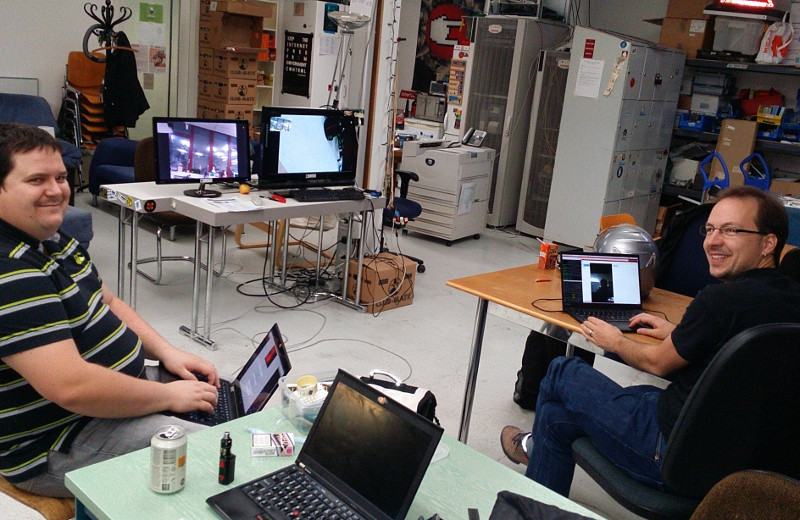 Francois is using Raspberry Pi and PiCam to develop a
 Previously:
