Search Results: "willi"

7 November 2015

Neil Williams: Vmdebootstrap sprint

At the miniDebConfUK in Cambridge, November 2015, there was a vmdebootstrap sprint. vmdebootstrap is written in python and the sprint built on the changes I made during DebConf15. The primary aim was to split out the code from a single python script and create modules which would be useful to other tools and make the source code itself easier to follow. Whilst doing this, I worked with Steve McIntyre to implement UEFI support into vmdebootstrap. This version reached experimental shortly after DebConf15. At the sprint, the squashfs support in vmdebootstrap was improved to be more useful in the preparation of live images rather than simply using mksquashfs as a compression algorithm for the entire image. I also improved and extended the documentation for vmdebootstrap. vmdebootstrap is now extensible and modular. Iain Learmonth used this new modular support in the development of live-build-ng which uses vmdebootstrap, live-boot and live-config to replace the role of live-build in the generation of official Debian live images by the debian-cd team. Iain Learmonth demonstrated that the new support in vmdebootstrap can be used to create working live images, including adding support for live images on any architecture supporting the Linux kernel in Debian and adding support for not only Grub but UEFI as well. A UEFI grub live image built by live-build-ng was demonstrated after only two days work on the vmdebootstrap base, wrapping support from live-boot and live-config with customisation for UEFI and grub config. vmdebootstrap and live-build-ng have been explicitly designed within the debian-cd team to remove the need to run live-build to create official Debian live images, replacing live-build with live-build-ng and the vmdebootstrap support. This brings working support for multiple architectures and UEFI to live images. To support the new functionality, the vmdebootstrap and debian-cd team have long sought a test suite for vmdebootstrap and Lars Wirzenius implemented one during the vmdebootstrap sprint. We now have fast tests with a pre-commit hook and build tests which are best with a local mirror. The test suite uses cmdtest & yarn. This test suite will be used for all future changes patches will not be accepted if the test suite fails and any substantially new code must provide working test cases. The fast tests can run without sudo, I expect to be able to sort out ci.debian.net testing for the fast tests too. There is also an outline for testing vmdebootstrap builds in (localhost) LAVA using a lava-submit.py example. All this work will arrive in unstable as vmdebootstrap 1.2 soon and is now in the master branch. The old codehelp/modules branch has been merged and removed.

Andrew Cater: Mini Debconf ARM CAmbridge 7 November 1022

Now watching Neil Williams (codehelp) on testing, continuous integration, ARM diversity and the problems of a huge spectrum of small ARM devices.

Mass testing == better for everyone using ARM but it's hard.

Betty Dall presented on HP Enterprise's The Machine as the first session: very interesting and dependent on ARM SoCs and Debian Linux. Linux running everywhere, even on huge hardware still being built.

5 November 2015

Lars Wirzenius: Obnam 1.18 released (backup software)

I have just released version 1.18 of Obnam, my backup program. See the website at http://obnam.org for details on what the program does. The new version is available from git (see http://git.liw.fi) and as Debian packages from http://code.liw.fi/debian, and uploaded to Debian, and soon in unstable. The NEWS file extract below gives the highlights of what's new in this version. Version 1.18, released 2015-11-04 Bug fixes: Minor changes:

3 November 2015

Daniel Pocock: How much of Linux will be illegal in the UK?

This week I've been in the UK again, giving a talk about Lumicall and JSCommunicator in Manchester last night and a talk about Free Real-Time Communications at the mini-DebConf in Cambridge on the weekend of 7-8 November. An interesting backdrop to these activities has been a national debate about Internet privacy. The UK Government and police are demanding laws to mandate back doors in all communications products and services. It leaves me wondering about a range of issues:
  • Will overzealous UK police, reknowned for singling out and bullying people who don't conform with their idea of normality, start taking a more sinister attitude to people using software like Linux? For example, if airport security asks to inspect a laptop and doesn't see the familiar Windows or Mac OS desktop, will the owner of the laptop be delayed or told to leave it behind? Some people may feel this is extreme, but workers in these roles are known for taking initiative in their own special way, such as the infamous baby pat-down. If the owner of a Linux laptop is a Muslim, like the Texas schoolboy recently arrested because his clock looks suspicious to the untrained eye of a policeman, the chances of a rough encounter with authority probably rise even further.
  • Will developers still be able to use technologies like PGP and ZRTP in the UK? Will PGP key-signing parties become illegal or have to be held 20 miles offshore on a boat like the legendary pirate radio stations of the sixties?
  • Will Linux distributions such as Debian and Fedora have to avoid distributing packages such as Enigmail?
  • Will updates to Android and iOS on smartphones seek to automatically disable or remove apps like Lumicall?
  • Even if a user chooses a secure app like Lumicall for communication, will the vendor of the operating system be required to provide alternative ways to monitor the user, for example, by intercepting audio before it is encrypted by the app?
  • Without strong encryption algorithms, digital signatures will no longer be possible either and it will be impossible for software vendors to securely distribute new versions of their software.
  • Why should the police be the only workers to have their job done for them by Internet snooping? Why shouldn't spouses have a right to all their partner's communications to periodically verify they are not cheating and putting themselves at risk of diseases? Why shouldn't employers be able to check on employee's private communications and home computers to help prevent leaks of customer data? Why shouldn't the NHS be able to go through people's garbage to monitor what they eat given the WHO warning that bacon is more likely to kill you than a terrorist?
  • While the authorities moan about the internet being a "safe" place for terrorists and paedophiles, what is their real motivation for trying to bring in these new laws, even when their best technical advisors must surely be telling them about the risks and negative consequences for compatibility of UK systems in a global Internet? If the terrorist scare story is not so credible, is it more likely they are seeking to snoop on people who may not be paying taxes or to maintain the upper hand over rival political parties like the Greens and the UKIP in a time of prolonged and increasingly punitive austerity?
  • Australia already introduced similar laws a few weeks ago, despite widespread criticism from around the world. With cricket and rugby now over, is the UK just looking to go one up on Australia in the game of snooping?
Island mentality in the Internet age Politics aside, what would this mean from a technical perspective? The overwhelming consensus among experts is that secure technology that people use and expect in many other parts of the world, including the US, simply won't be compatible with the products and services that UK residents will be permitted to use. Bigger companies like Google and Apple may be able to offer differentiated versions of their services for the UK but smaller companies or companies who have built their reputation on technical excellence simply won't be able or willing to offer crippled versions of their products with backdoors for the UK. The UK's island geography will become a metaphor for its relationship with the global marketplace. The first thing to take note of is that encryption and authentication are closely related. Public-key cryptography, for example, simply swaps the public key and private key when being used to authenticate instead of encrypt. An effective and wide-reaching legal ban on encryption would also potentially prohibit the algorithms used for authentication. Many methods of distributing software, including packages distributed through Linux distributions or apps distributed through the Google Play store are authenticated with such algorithms. This is often referred to as a digital signature. Digital signatures help ensure that software is not corrupted, tampered with by hackers or infected by viruses when it is transmitted and stored in the public Internet. To correctly implement these mechanisms for installing software safely, every device running an operating system such as Debian, Ubuntu, Fedora or Android needs to include some software modules implementing the algorithms. In Linux, for example, I'm referring to packages like GnuPG, OpenSSL and GnuTLS. Without these components, it would be hard or even impossible for developers in the UK to contribute or publish new versions of their software. Users of the software would not be able to securely receive vital updates to their systems. An opportunity for free software? Some people say that any publicity can be good publicity. Now the Government has put the ball into play, people promoting secure solutions based on free software have an opportunity to participate in the debate too. While laws may or may not change, principles don't. It is a perfect time to remind users that many of the principles of software freedom were written down many years ago, before the opportunity for mass surveillance came into existence. These principles remain relevant to this day. The experts who developed these principles back then are also far more likely to offer insights and trustworthy solutions for the road ahead. If you'd like to discuss these issues or ask questions, please join the Free-RTC mailing list.

15 October 2015

Laura Arjona: Long summer story, Welcome team, and I am a Debian Developer now

Note: 2015/10/16: I need to add some links but I won t delay this more, posting now, will edit later. Summer ended long time ago, but believe me, I m still catching up with all the things that I began in June/July, all the things I left in August when I went holidays, and more things that appeared in August and September. This is a long overdue post, I hope you bear with me for waiting so long, and writing (now) so long too! June In June, I was 100% sure that I would not attend DebConf15 (well, I was 98% sure until then), and when the new Outreach Sponsorship grants were announced, I decided to write some mails to several Debian contributors, so they consider applying for the grant and attend DebConf (and maybe trigger some i18n/l10n meeting ). They kindly declined, and I understood their reasons, but also wondered what would have happened if the proposal would have come from somebody more official instead of a random contributor that they don t know. I also hoped that lots of other Debianites also write to newbies or not-yet-DD-contributors or non-packaging contributors to invite them to DebConf, and I hoped that they had better luck than me in convincing them :) July In July I usually work hard preparing the computer labs for next academic year at my workplace in the University, but I also have more free time in the long afternoons and evenings, since I don t sleep much, and there is not much to do outside with the summer hot. So I used that month to go on contributing to DebConf publicity and think a bit more about Debian and the other free software communities. I didn t put much time in advancing my selfhosting (no SSL yet in *.larjona.net! booooo!) but I decided to deep my toe in Sandstorm.io, and try to selfhost an instance ( http://lacaja.larjona.net ) and try Etherpad inside Sandstorm (since I failed in deploying Etherpad by myself in my jessie+nginx+postgres box). Sandstorm worked, and Etherpad was packaged in Sandstorm so it worked too; and I have my free-software-base pads now for writing and share. So I joined #sandstorm IRC channel since then, and there I learnt that Asheesh Laroia (who works in Sandstorm.io and is also a Debian Developer and was going to give a talk about Sandstorm.io in DebConf15) was offering mentorship for people wanting to learn Sandstorm packaging, and his proposal was to begin packaging Framadate. I also failed in selfhosting Dudle (prepared for Apache + FastCGI, couldn t make it work in my Nginx), so Asheesh s proposal looked suitable for me. We talked and decided to invest the rest of July and first days of August in learning to package Framadate. I learned a lot, but couldn t finish the task. I encountered many issues (setting my dev environment, and later trying to package), and we solved some of them but my time ran out. I posted my work in the list, and I hope that my feedback on the documentation and the issues I encountered helped Asheesh and the Sandstorm community. Framadate is packaged in Sandstorm.io now, Drew Fisher packaged it, not sure if my stuff was useful or not (it s been useful for me, for learning, at least). I ll talk more about Sandstorm.io in a future blog post updating on my selfhosting adventures. What I liked most was the kind of proposal of mentoring that Asheesh made. It was very detailed in every aspect: the task, the things you need to accomplish it, details about his availability for mentorship I try to be welcoming in the teams in which I participate, but the fact is that I fail in actually mentor, maybe because of not making specific proposals to people (until now, I was like Hi, newcomer! Go read this, this and this, and try for yourself any task you feel you like it, and come back if you have issues , la Debian ). This, plus the thoughts about my mails in June for diversity outreach in DebConf, made me feel the need of having a team where people willing to welcome newcomers share tricks and procedures, write together more specific proposals, and follow up the newcomers experiences in a regular way. I talked with Enrico Zini and we wrote down some notes for a Welcome Team in Debian; he said he would spread the word during DebCamp/DebConf and we would see what people thinks about it. August August came, and the day before going on holidays I was really tired: too much luggage to prepare, too many hours in front of the computer, and the usual stress of traveling; and I took the bad decision of signing some GPG keys of several Debianites that I met in July. I say bad decision because the lack of sleep showed its black magic and I accidentally deleted my secring.gpg file. I knew I had a backup but I didn t have too much time to invest and I didn t want to mess it with the backup too, and my laptop was going to stay at home, powered off, during the whole month, so I just went on holidays and left the GPG issue for later. The day after, meanwhile I was waiting in the airport for my boarding time, I received a mail accepting me as Debian Developer. Wow!! Really, I was not expecting that the process was already finished, I had interchanged several mails with my Application Manager (who happens to be the current DPL!) and I thought that his summer could be quite packed of Debian/DebConf work and my process could wait a bit. So it was a very happy news and very motivating after one month (July) full of free software work. On the other side, I was a bit scared: what type of Debian Developer are you, larjona, not capable to sign some GPG keys without breaking your setup?! but I answered myself well, I m the type of Debian Developer that has backups :) and then, with that mixed feelings of excitement and impostor syndrome, I took my plane and went on holidays, not expecting to touch any computer until the end of the month. August is probably the month in the year when I have more free time (holidays), but less time to dedicate to free software. I devote most of the month to visit family and stay with them, with no internet connection available or no free time to look at the mailbox or social networks or IRC But DebCamp and DebConf15 were happening during my holidays. And this DebConf15 was the first one in which I participated in the organization, and the first one in which I felt more than being a consumer of Debian videos . I could not follow the streamings, my only internet-capable device was my Android 2.x phone, but when I had wifi I fetched the mail, and during the nights, while everybody else was sleeping and I was laying on the terrace, below the sky full of stars, I could read batches of hundred of mails from debconf-discuss mailing list. And I could get some feeling from DebConf life, because I learned about the ad-hoc BoFs and discussions, the morning bike rides and swimming proposals, and the dancing classes, the i18m/l10n meeting, and many other things. I could answer some mail from time to time, and I also knew that a fellow Debianite from Madrid was going to bring me some stickers, maybe a t-shirt, and shake hands in my name to some persons. September and October September was about finishing reading all the mails and try to answer the pending ones, and preparing my computer to use my new Debian identity (and stop using larjona-guest). I still have some things to do, pending technical work, and some mails that I should have answered and I ve forgotten, for sure (if you sent me a mail that needs answer or would be fine that I answer (even if it was months ago!), please resend or ping me). I recovered my secring.gpg but and just now I added larjona@debian.org to the ID in my GPG key, but didn t signed the pending keys again (sorry dkg and holger! will catch up there soon). My subkeys expired and I m trying to find out how to proceed (they are in my FSFE SmartCard) :/ About the Debian teams, I ve resumed my work in publicity team (this year I ll try to be more involved, in Debian Project News in particular), partially in the website team, and recently I ve finished catching up with the Spanish translation of the website. I ve also joined the DebConf team again (for DebConf16, no matter I probably won t attend) and documented the Publicity task for DebConf, and I try to engage the mailing list and the IRC meetings. I finally could have time to watch some DebConf15 videos and Andreas Tille s talk ( Creating a more inviting environment for newcomers New experiences from MoM, SoB, Teammetrics ) helped me to step ahead in welcoming people with more useful stuff than Hi, newcomer! Go read this (general URLs), try for yourself whatever you like . I have made specific proposals for two people. In mid September I accepted an interview about Debian for a podcast with quite a lot audience (in Spanish), in which I explained the idea of the Welcome Team and offered myself as first-contact. Since then, two more people have contacted me and I have offered specific tasks I think are suitable for them. I also try to be more available in the IRC and offer some time spans for new contributors to DebConf to explain the git setup, the wiki, and all this stuff that looks more complicated than what it is. And I think that s all. My Debianite friend kindly brought me some stickers and a DebConf t-shirt, plus the organization t-shirt that the team gave me as present for my contributions in DebConf15. Neil McGovern kindly sent me a certificate of my new Debian Developer status (thanks!!), and it s posted in my wall at work. Here you are a photo! larjona_dd.JPG (Note: my wall is full of stickers and pieces of papers with things I need, things I like and things I use to explain my work (sometimes sarcastically/ironically ). Maybe some day I ll make a blog post about that!) I feel very proud and happy. Still, a lot of things to learn and work to do, but my intentions are: to keep on progressing (sometimes fast, sometimes slowly), never give up, and enjoy the multiple flowers I find in my way :) Thanks everybody! October and future Some other ideas/plans for the future (the ones I didn t say yet): Comments? If you want to comment you can use this pump.io thread.
Filed under: My experiences and opinion, News Tagged: Communities, Contributing to libre software, Debian, Developer motivations, encryption, English, Free Software, gpg, libre software

2 October 2015

Daniel Pocock: Want to be selected for Google Summer of Code 2016?

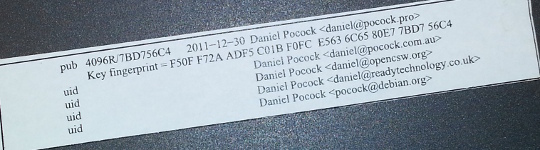
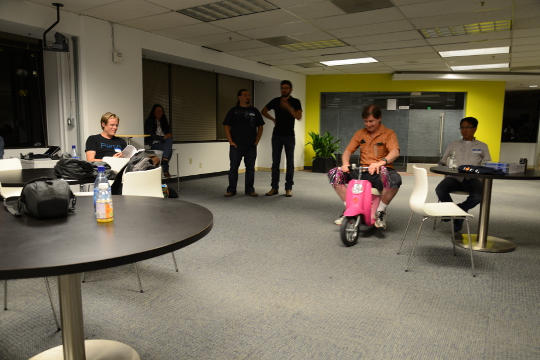
I've mentored a number of students in 2013, 2014 and 2015 for Debian and Ganglia and most of the companies I've worked with have run internships and graduate programs from time to time. GSoC 2015 has just finished and with all the excitement, many students are already asking what they can do to prepare and be selected for Outreachy or GSoC in 2016. My own observation is that the more time the organization has to get to know the student, the more confident they can be selecting that student. Furthermore, the more time that the student has spent getting to know the free software community, the more easily they can complete GSoC. Here I present a list of things that students can do to maximize their chance of selection and career opportunities at the same time. These tips are useful for people applying for GSoC itself and related programs such as GNOME's Outreachy or graduate placements in companies. Disclaimers There is no guarantee that Google will run the program again in 2016 or any future year until the Google announcement. There is no guarantee that any organization or mentor (including myself) will be involved until the official list of organizations is published by Google. Do not follow the advice of web sites that invite you to send pizza or anything else of value to prospective mentors. Following the steps in this page doesn't guarantee selection. That said, people who do follow these steps are much more likely to be considered and interviewed than somebody who hasn't done any of the things in this list. Understand what free software really is You may hear terms like free software and open source software used interchangeably. They don't mean exactly the same thing and many people use the term free software for the wrong things. Not all projects declaring themselves to be "free" or "open source" meet the definition of free software. Those that don't, usually as a result of deficiencies in their licenses, are fundamentally incompatible with the majority of software that does use genuinely free licenses. Google Summer of Code is about both writing and publishing your code and it is also about community. It is fundamental that you know the basics of licensing and how to choose a free license that empowers the community to collaborate on your code well after GSoC has finished. Please review the definition of free software early on and come back and review it from time to time. The The GNU Project / Free Software Foundation have excellent resources to help you understand what a free software license is and how it works to maximize community collaboration. Don't look for shortcuts There is no shortcut to GSoC selection and there is no shortcut to GSoC completion. The student stipend (USD $5,500 in 2014) is not paid to students unless they complete a minimum amount of valid code. This means that even if a student did find some shortcut to selection, it is unlikely they would be paid without completing meaningful work. If you are the right candidate for GSoC, you will not need a shortcut anyway. Are you the sort of person who can't leave a coding problem until you really feel it is fixed, even if you keep going all night? Have you ever woken up in the night with a dream about writing code still in your head? Do you become irritated by tedious or repetitive tasks and often think of ways to write code to eliminate such tasks? Does your family get cross with you because you take your laptop to Christmas dinner or some other significant occasion and start coding? If some of these statements summarize the way you think or feel you are probably a natural fit for GSoC. An opportunity money can't buy The GSoC stipend will not make you rich. It is intended to make sure you have enough money to survive through the summer and focus on your project. Professional developers make this much money in a week in leading business centers like New York, London and Singapore. When you get to that stage in 3-5 years, you will not even be thinking about exactly how much you made during internships. GSoC gives you an edge over other internships because it involves publicly promoting your work. Many companies still try to hide the potential of their best recruits for fear they will be poached or that they will be able to demand higher salaries. Everything you complete in GSoC is intended to be published and you get full credit for it. Imagine a young musician getting the opportunity to perform on the main stage at a rock festival. This is how the free software community works. It is a meritocracy and there is nobody to hold you back. Having a portfolio of free software that you have created or collaborated on and a wide network of professional contacts that you develop before, during and after GSoC will continue to pay you back for years to come. While other graduates are being screened through group interviews and testing days run by employers, people with a track record in a free software project often find they go straight to the final interview round. Register your domain name and make a permanent email address Free software is all about community and collaboration. Register your own domain name as this will become a focal point for your work and for people to get to know you as you become part of the community. This is sound advice for anybody working in IT, not just programmers. It gives the impression that you are confident and have a long term interest in a technology career. Choosing the provider: as a minimum, you want a provider that offers DNS management, static web site hosting, email forwarding and XMPP services all linked to your domain. You do not need to choose the provider that is linked to your internet connection at home and that is often not the best choice anyway. The XMPP foundation maintains a list of providers known to support XMPP. Create an email address within your domain name. The most basic domain hosting providers will let you forward the email address to a webmail or university email account of your choice. Configure your webmail to send replies using your personalized email address in the From header. Update your ~/.gitconfig file to use your personalized email address in your Git commits. Create a web site and blog Start writing a blog. Host it using your domain name. Some people blog every day, other people just blog once every two or three months. Create links from your web site to your other profiles, such as a Github profile page. This helps reinforce the pages/profiles that are genuinely related to you and avoid confusion with the pages of other developers. Many mentors are keen to see their students writing a weekly report on a blog during GSoC so starting a blog now gives you a head start. Mentors look at blogs during the selection process to try and gain insight into which topics a student is most suitable for. Create a profile on Github Github is one of the most widely used software development web sites. Github makes it quick and easy for you to publish your work and collaborate on the work of other people. Create an account today and get in the habbit of forking other projects, improving them, committing your changes and pushing the work back into your Github account. Github will quickly build a profile of your commits and this allows mentors to see and understand your interests and your strengths. In your Github profile, add a link to your web site/blog and make sure the email address you are using for Git commits (in the ~/.gitconfig file) is based on your personal domain. Start using PGP Pretty Good Privacy (PGP) is the industry standard in protecting your identity online. All serious free software projects use PGP to sign tags in Git, to sign official emails and to sign official release files. The most common way to start using PGP is with the GnuPG (GNU Privacy Guard) utility. It is installed by the package manager on most Linux systems. When you create your own PGP key, use the email address involving your domain name. This is the most permanent and stable solution. Print your key fingerprint using the gpg-key2ps command, it is in the signing-party package on most Linux systems. Keep copies of the fingerprint slips with you. This is what my own PGP fingerprint slip looks like. You can also print the key fingerprint on a business card for a more professional look. Using PGP, it is recommend that you sign any important messages you send but you do not have to encrypt the messages you send, especially if some of the people you send messages to (like family and friends) do not yet have the PGP software to decrypt them. If using the Thunderbird (Icedove) email client from Mozilla, you can easily send signed messages and validate the messages you receive using the Enigmail plugin. Get your PGP key signed Once you have a PGP key, you will need to find other developers to sign it. For people I mentor personally in GSoC, I'm keen to see that you try and find another Debian Developer in your area to sign your key as early as possible. Free software events Try and find all the free software events in your area in the months between now and the end of the next Google Summer of Code season. Aim to attend at least two of them before GSoC. Look closely at the schedules and find out about the individual speakers, the companies and the free software projects that are participating. For events that span more than one day, find out about the dinners, pub nights and other social parts of the event. Try and identify people who will attend the event who have been GSoC mentors or who intend to be. Contact them before the event, if you are keen to work on something in their domain they may be able to make time to discuss it with you in person. Take your PGP fingerprint slips. Even if you don't participate in a formal key-signing party at the event, you will still find some developers to sign your PGP key individually. You must take a photo ID document (such as your passport) for the other developer to check the name on your fingerprint but you do not give them a copy of the ID document. Events come in all shapes and sizes. FOSDEM is an example of one of the bigger events in Europe, linux.conf.au is a similarly large event in Australia. There are many, many more local events such as the Debian UK mini-DebConf in Cambridge, November 2015. Many events are either free or free for students but please check carefully if there is a requirement to register before attending. On your blog, discuss which events you are attending and which sessions interest you. Write a blog during or after the event too, including photos. Quantcast generously hosted the Ganglia community meeting in San Francisco, October 2013. We had a wild time in their offices with mini-scooters, burgers, beers and the Ganglia book. That's me on the pink mini-scooter and Bernard Li, one of the other Ganglia GSoC 2014 admins is on the right. Install Linux GSoC is fundamentally about free software. Linux is to free software what a tree is to the forest. Using Linux every day on your personal computer dramatically increases your ability to interact with the free software community and increases the number of potential GSoC projects that you can participate in. This is not to say that people using Mac OS or Windows are unwelcome. I have worked with some great developers who were not Linux users. Linux gives you an edge though and the best time to gain that edge is now, while you are a student and well before you apply for GSoC. If you must run Windows for some applications used in your course, it will run just fine in a virtual machine using Virtual Box, a free software solution for desktop virtualization. Use Linux as the primary operating system. Here are links to download ISO DVD (and CD) images for some of the main Linux distributions: If you are nervous about getting started with Linux, install it on a spare PC or in a virtual machine before you install it on your main PC or laptop. Linux is much less demanding on the hardware than Windows so you can easily run it on a machine that is 5-10 years old. Having just 4GB of RAM and 20GB of hard disk is usually more than enough for a basic graphical desktop environment although having better hardware makes it faster. Your experiences installing and running Linux, especially if it requires some special effort to make it work with some of your hardware, make interesting topics for your blog. Decide which technologies you know best Personally, I have mentored students working with C, C++, Java, Python and JavaScript/HTML5. In a GSoC program, you will typically do most of your work in just one of these languages. From the outset, decide which language you will focus on and do everything you can to improve your competence with that language. For example, if you have already used Java in most of your course, plan on using Java in GSoC and make sure you read Effective Java (2nd Edition) by Joshua Bloch. Decide which themes appeal to you Find a topic that has long-term appeal for you. Maybe the topic relates to your course or maybe you already know what type of company you would like to work in. Here is a list of some topics and some of the relevant software projects:


  • System administration, servers and networking: consider projects involving monitoring, automation, packaging. Ganglia is a great community to get involved with and you will encounter the Ganglia software in many large companies and academic/research networks. Contributing to a Linux distribution like Debian or Fedora packaging is another great way to get into system administration.
  • Desktop and user interface: consider projects involving window managers and desktop tools or adding to the user interface of just about any other software.
  • Big data and data science: this can apply to just about any other theme. For example, data science techniques are frequently used now to improve system administration.
  • Business and accounting: consider accounting, CRM and ERP software.
  • Finance and trading: consider projects like R, market data software like OpenMAMA and connectivity software (Apache Camel)
  • Real-time communication (RTC), VoIP, webcam and chat: look at the JSCommunicator or the Jitsi project
  • Web (JavaScript, HTML5): look at the JSCommunicator
Before the GSoC application process begins, you should aim to learn as much as possible about the theme you prefer and also gain practical experience using the software relating to that theme. For example, if you are attracted to the business and accounting theme, install the PostBooks suite and get to know it. Maybe you know somebody who runs a small business: help them to upgrade to PostBooks and use it to prepare some reports. Make something Make some small project, less than two week's work, to demonstrate your skills. It is important to make something that somebody will use for a practical purpose, this will help you gain experience communicating with other users through Github. For an example, see the servlet Juliana Louback created for fixing phone numbers in December 2013. It has since been used as part of the Lumicall web site and Juliana was selected for a GSoC 2014 project with Debian. There is no better way to demonstrate to a prospective mentor that you are ready for GSoC than by completing and publishing some small project like this yourself. If you don't have any immediate project ideas, many developers will also be able to give you tips on small projects like this that you can attempt, just come and ask us on one of the mailing lists. Ideally, the project will be something that you would use anyway even if you do not end up participating in GSoC. Such projects are the most motivating and rewarding and usually end up becoming an example of your best work. To continue the example of somebody with a preference for business and accounting software, a small project you might create is a plugin or extension for PostBooks. Getting to know prospective mentors Many web sites provide useful information about the developers who contribute to free software projects. Some of these developers may be willing to be a GSoC mentor. For example, look through some of the following: Getting on the mentor's shortlist Once you have identified projects that are interesting to you and developers who work on those projects, it is important to get yourself on the developer's shortlist. Basically, the shortlist is a list of all students who the developer believes can complete the project. If I feel that a student is unlikely to complete a project or if I don't have enough information to judge a student's probability of success, that student will not be on my shortlist. If I don't have any student on my shortlist, then a project will not go ahead at all. If there are multiple students on the shortlist, then I will be looking more closely at each of them to try and work out who is the best match. One way to get a developer's attention is to look at bug reports they have created. Github makes it easy to see complaints or bug reports they have made about their own projects or other projects they depend on. Another way to do this is to search through their code for strings like FIXME and TODO. Projects with standalone bug trackers like the Debian bug tracker also provide an easy way to search for bug reports that a specific person has created or commented on. Once you find some relevant bug reports, email the developer. Ask if anybody else is working on those issues. Try and start with an issue that is particularly easy and where the solution is interesting for you. This will help you learn to compile and test the program before you try to fix any more complicated bugs. It may even be something you can work on as part of your academic program. Find successful projects from the previous year Contact organizations and ask them which GSoC projects were most successful. In many organizations, you can find the past students' project plans and their final reports published on the web. Read through the plans submitted by the students who were chosen. Then read through the final reports by the same students and see how they compare to the original plans. Start building your project proposal now Don't wait for the application period to begin. Start writing a project proposal now. When writing a proposal, it is important to include several things:
  • Think big: what is the goal at the end of the project? Does your work help the greater good in some way, such as increasing the market share of Linux on the desktop?
  • Details: what are specific challenges? What tools will you use?
  • Time management: what will you do each week? Are there weeks where you will not work on GSoC due to vacation or other events? These things are permitted but they must be in your plan if you know them in advance. If an accident or death in the family cut a week out of your GSoC project, which work would you skip and would your project still be useful without that? Having two weeks of flexible time in your plan makes it more resilient against interruptions.
  • Communication: are you on mailing lists, IRC and XMPP chat? Will you make a weekly report on your blog?
  • Users: who will benefit from your work?
  • Testing: who will test and validate your work throughout the project? Ideally, this should involve more than just the mentor.
If your project plan is good enough, could you put it on Kickstarter or another crowdfunding site? This is a good test of whether or not a project is going to be supported by a GSoC mentor. Learn about packaging and distributing software Packaging is a vital part of the free software lifecycle. It is very easy to upload a project to Github but it takes more effort to have it become an official package in systems like Debian, Fedora and Ubuntu. Packaging and the communities around Linux distributions help you reach out to users of your software and get valuable feedback and new contributors. This boosts the impact of your work. To start with, you may want to help the maintainer of an existing package. Debian packaging teams are existing communities that work in a team and welcome new contributors. The Debian Mentors initiative is another great starting place. In the Fedora world, the place to start may be in one of the Special Interest Groups (SIGs). Think from the mentor's perspective After the application deadline, mentors have just 2 or 3 weeks to choose the students. This is actually not a lot of time to be certain if a particular student is capable of completing a project. If the student has a published history of free software activity, the mentor feels a lot more confident about choosing the student. Some mentors have more than one good student while other mentors receive no applications from capable students. In this situation, it is very common for mentors to send each other details of students who may be suitable. Once again, if a student has a good Github profile and a blog, it is much easier for mentors to try and match that student with another project. GSoC logo generic Conclusion Getting into the world of software engineering is much like joining any other profession or even joining a new hobby or sporting activity. If you run, you probably have various types of shoe and a running watch and you may even spend a couple of nights at the track each week. If you enjoy playing a musical instrument, you probably have a collection of sheet music, accessories for your instrument and you may even aspire to build a recording studio in your garage (or you probably know somebody else who already did that). The things listed on this page will not just help you walk the walk and talk the talk of a software developer, they will put you on a track to being one of the leaders. If you look over the profiles of other software developers on the Internet, you will find they are doing most of the things on this page already. Even if you are not selected for GSoC at all or decide not to apply, working through the steps on this page will help you clarify your own ideas about your career and help you make new friends in the software engineering community.

23 September 2015

Russ Allbery: Review: Getting Back to Full Employment

Review: Getting Back to Full Employment, by Dean Baker & Jared Bernstein
Publisher: CEPR
Copyright: 2013
ISBN: 0-615-91836-0
Format: Kindle
Pages: 116
Getting Back to Full Employment is more of a policy paper than a book. The authors both work for economic think tanks; one of those, the Center for Economic and Policy research (co-founded by Baker), is the publisher of this book. It's also free on the Kindle, another sign that the purpose is more about educating and convincing the public than about selling a non-fiction analysis. I found out about this through Paul Krugman, and if you're a regular reader of Krugman's columns and blog, not much here will be a surprise. Baker and Bernstein are advocating what I would call conventional-liberal economic policy by US standards (which means that it's not really that liberal). The short version is that full employment is vital for improving the economic position of the average person, inflation is nowhere near as much of a risk as people claim, and the best economic action the US government can take at present is to aggressively pursue a full employment strategy without worrying excessively about inflation. If you're at all familiar with this debate, you probably already have an opinion about everything in that summary. I certainly do. If you follow economics at all, this debate has been raging ever since the 2008 financial crisis (and earlier versions of the debate were raging before then). Since I'm a regular Krugman reader, you probably know my opinion: the people who have been crying wolf about the dangers of inflation have been systematically wrong about everything for seven years solid, and it's amazing that anyone is still giving them the time of day. Baker and Bernstein make a similar argument at greater length, and with a more academic tone. The risk of any policy paper like this is that reactions will be almost entirely decided by one's pre-existing opinion about the political actions that each economic policy implies. If you (like me) have already decided that government intervention in the economy is useful to prevent concentration of wealth in the hands of a few and provide support for the most vulnerable, everything Baker and Bernstein say here is going to sound quite convincing. If you've already decided that government intervention in the economy almost always leads to tears, and that a large government with the ability to take economic action is far more dangerous than any of the effects of economic downturns and unemployment, it would surprise me if Baker and Bernstein will change your mind. In other words, I'm skeptical that policy papers like this accomplish much. That said, there are a lot of facts and data here, which at least help ground this ongoing argument in more specifics. The authors show you the math: the evidence for moderate inflation not leading to any serious impact for economies, the very strong correlations between low unemployment rates and rising median wages, the theoretical basis for lower bounds on unemployment rates and our extensive past history of assuming that lower bound is much higher than it actually is, and some pointed comparisons to countries like Germany that have taken many of the specific policy recommendations included here and have a far healthier labor market as a result. All the statistics, charts, and discussion of analysis techniques is fairly dry, but I think the data is compelling. Of course, I was already convinced by earlier reading. There are a few bits here that I hadn't seen before, or at least hadn't internalized. One is a subtle but very important statistical limitation: any uncertainty in measuring the inflation rate will lead to incorrect statistical findings that inflation slows growth. The explanation for this takes several pages and is somewhat technical: the short and somewhat inaccurate version is that growth is measured in inflation-adjusted GDP, so if you get inflation wrong, you magnify the correlation between GDP and inflation. An inaccurately-high measure of inflation rate simultaneously leads to underestimating GDP growth for that country; an inflation rate that's inaccurate on the low side leads to overestimating GDP growth. This is inherent in how this comparison is done, and it's hard to see how to avoid it. It's therefore worth taking any analysis of the growth impact from higher inflation with a grain of salt. (Please note here that we're talking about moderate inflation the typical rates between 1% and 8% that you see in developed economics.) Another bit that was new to me was the analysis of the connection between trade deficits and full employment. I typically dismiss any international trade analysis in macroeconomic policy for the US since international trade is a much smaller part of our economy than most people think it is, and because protectionism has been rightfully discarded as a policy approach. But Baker and Bernstein make an interesting argument here about the effects of a strong currency on increasing unemployment; even with the relatively small amount of trade, reducing the deficit would have a noticeable effect. (Increasing the volume of trade but not changing the balance would not.) The authors certainly don't recommend protectionism; they do recommend being willing to let the value of the dollar drop against other currencies as a good way to reduce the deficit, and to be aware that other central banks have intentional policies of propping up the dollar that we're largely ignoring. They also mention that this is a zero-sum game for the world economy as a whole, although I would have preferred a bit more emphasis on that. You can't get very far via beggar-thy-neighbor economic policy. But it's a good reminder that the obsession in some parts with not "devaluing the currency" is economic nonsense and directly hurts employment. The end of the book discusses a variety of sensible policy recommendations ranging from international currency policy to Germany's work-sharing program where the government subsidies reduction of worker hours the same way that we already subsidize unemployment. They all seemed reasonable to me, although, sadly, I have little faith that the dysfunctional US government will consider any of them seriously, particularly more direct approaches such as government taking on the role of employer of last resort. But they're fun to read about and imagine a US in which the government actually did sensible things like that. Getting Back to Full Employment is pretty dry, and it's hard to shake the feeling that writing things like this is basically pointless, so I'm not sure I can really recommend it. But if you like reading Krugman's columns and are interested in similar material from different people at a longer length, that's basically what this is. Rating: 6 out of 10

22 September 2015

Russ Allbery: Review: Half Life

Review: Half Life, by S.L. Huang
Series: Russell's Attic #2
Publisher: S.L. Huang
Copyright: 2014
ISBN: 0-9960700-5-2
Format: Kindle
Pages: 314
This is a sequel to Zero Sum Game and the second book about Cas Russell, a mercenary superhero (in a world without the concept of superheroes) with preternatural ability to analyze anything about her surroundings with mathematics. While it reuses some personal relationships from the first book and makes a few references to the villains, it's a disconnected story. It would be possible to start here if you wanted to. Cas is now in the strange and unexpected situation of having friends, and they're starting to complicate her life. First, Arthur has managed to trigger some unexpected storehouse of morals and gotten her to try to stop killing people on jobs. That conscience may have something to do with her willingness to take a job from an apparently crazy man who claims a corporation has stolen his daughter, a daughter who appears nowhere in any official records. And when her other friend, Checker, gets in trouble with the mob, Cas tries to protect him in her own inimitable way, which poses a serious risk of shortening her lifespan. Even more than the first book, the story in Half Life is a mix of the slightly ridiculous world of superheroes with gritty (and bloody) danger. It featuring hit men, armed guards, lots of guns, and quite a lot of physical injury and blood. A nasty corporation that's obviously hiding serious secrets shares pages with the matriarch of a mob family who considers Checker sleeping with her daughter to be an abuse of her honor. The story eventually escalates into more outlandish bits of technology, an uncanny little girl, and a plot that would feel at home in a Batman comic. I like books that don't take themselves too seriously, but the contrast between the brutal treatment Cas struggles through and the outrageous mad scientist villain provokes a bit of cognitive whiplash. That said, the villains of Half Life are neither as freakish nor as disturbing as those in Zero Sum Game, which I appreciated. Huang packs in several plot twists, some inobvious decisions and disagreements between Russell and her friends about appropriate strategy, and Cas's discovery that there are certain things she cares very strongly about other than money and having jobs. Cas goes from a barely moral, very dark hero in the first book to something closer to a very grumbly chaotic good who insists she's not as good as she actually is. It's a standard character type, but Huang does a good job with it. Huang also adds a couple of supporting cast members in this book that I hope will stick around. Pilar starts as a receptionist at one of the companies Cas breaks into, and at first seems like she might be comic relief. But she ends up being considerably more competent than she first appears (or that she seems to realize); by the end of the book, I had a lot of respect for her. And Miri makes only a few appearances, but her unflappable attitude is a delight. I hope to see more of her. The biggest drawback to this book for me is that Cas gets hurt a lot. At times, the story falls into one of the patterns of urban fantasy: the protagonist gets repeatedly beaten up and abused until they figure out what's going on, and spends most of the story up against impossible odds and feeling helpless. That's not a plot pattern I'm fond of. I don't enjoy reading about physical pain, and I had trouble at some points in the story with the constant feeling of dread. Parts of the book I read in short bursts, putting it aside to look at something else. But the sense of dread falls off towards the end of the book, as Cas figures out what's actually going on, and none of it is as horrible as it felt it could be. If you have a similar problem with some urban fantasy tropes, I think it's safe to stick with the story. This was a fun story, but it doesn't develop much in the way of deeper themes in the series. There's essentially no Rio, no further discoveries about the villains of the first book, and no further details on what makes Cas tick or why she seems to be the only, or at least one of the few, super-powered people in this world. The advance publicity for the third book seems to indicate that's coming next. I'm curious enough now that I'll keep reading this series. Recommended if you liked the first book. Half Life is very similar, but I think slightly better. Followed by Root of Unity. Rating: 7 out of 10

21 September 2015

Lunar: Reproducible builds: week 21 in Stretch cycle

If you see someone on the Debian ReproducibleBuilds project, buy him/her a beer. This work is awesome. What happened in the reproducible builds effort this week: Media coverage Nathan Willis covered our DebConf15 status update in Linux Weekly News. Access to non-LWN subscribers will be given on Thursday 24th. Linux Journal published a more general piece last Tuesday. Unexpected praise for reproducible builds appeared this week in the form of several iOS applications identified as including spyware. The malware was undetected by Apple screening. This actually happened because application developers had simply downloaded a trojaned version of XCode through an unofficial source. While reproducible builds can't really help users of non-free software, this is exactly the kind of attacks that we are trying to prevent in our systems. Toolchain fixes Niko Tyni wrote and uploaded a better patch for the source order problem in libmodule-build-perl. Tristan Seligmann identified how the code generated by python-cffi could be emitted in random order in some cases. Upstream has already fixed the problem. Packages fixed The following 24 packages became reproducible due to changes in their build dependencies: apache-curator, checkbox-ng, gant, gnome-clocks, hawtjni, jackrabbit, jersey1, libjsr305-java, mathjax-docs, mlpy, moap, octave-geometry, paste, pdf.js, pyinotify, pytango, python-asyncssh, python-mock, python-openid, python-repoze.who, shadow, swift, tcpwatch-httpproxy, transfig. The following packages became reproducible after getting fixed: Some uploads fixed some reproducibility issues but not all of them: Patches submitted which have not made their way to the archive yet: reproducible.debian.net Tests for Coreboot, OpenWrt, NetBSD, and FreeBSD now runs weekly (instead of monthly). diffoscope development Python 3 offers new features (namely yield from and concurrent.futures) that could help implement parallel processing. The clear separation of bytes and unicode strings is also likely to reduce encoding related issues. Mattia Rizolo thus kicked the effort of porting diffoscope to Python 3. tlsh was the only dependency missing a Python 3 module. This got quickly fixed by a new upload. The rest of the code has been moved to the point where only incompatibilities between Python 2.7 and Pyhon 3.4 had to be changed. The commit stream still require some cleanups but all tests are now passing under Python 3. Documentation update The documentation on how to assemble the weekly reports has been updated. (Lunar) The example on how to use SOURCE_DATE_EPOCH with CMake has been improved. (Ben Beockel, Daniel Kahn Gillmor) The solution for timestamps in man pages generated by Sphinx now uses SOURCE_DATE_EPOCH. (Mattia Rizzolo) Package reviews 45 reviews have been removed, 141 added and 62 updated this week. 67 new FTBFS reports have been filled by Chris Lamb, Niko Tyni, and Lisandro Dami n Nicanor P rez Meyer. New issues added this week: randomness_in_r_rdb_rds_databases, python-ply_compiled_parse_tables. Misc. The prebuilder script is now properly testing umask variations again. Santiago Villa started a discussion on debian-devel on how binNMUs would work for reproducible builds.

18 September 2015

Russ Allbery: Review: The Three-Body Problem

Review: The Three-Body Problem, by Cixin Liu & Ken Liu
Series: Three-Body Problem #1
Author: Liu Cixin ( )
Translator: Ken Liu
Publisher: Tor
Copyright: 2006, 2014
Printing: November 2014
ISBN: 1-4668-5344-1
Format: Kindle
Pages: 399
Liu Cixin ( ) is one of the best-known and most popular SF authors in China, but, due to the paucity of translated SF in the English-speaking world, was largely unknown to English-speaking SF readers. That made this translation by Ken Liu (no relation) highly anticipated: a window into a large world of SF by authors most of us have never read. And Ken Liu is an excellent writer in his own right (see, for instance, "The Literomancer" or "Altogether Elsewhere, Vast Herds of Reindeer"), which was a hopeful sign for a good translation. Indeed, the translation is very good. One can tell that the book comes from a different literary tradition, but primarily from unusual (to US readers, at least) emotional focal points for the characters and lots of Chinese history that the author feels little need to explain. (Ken Liu adds translator notes for the bits most likely to lose non-Chinese audiences.) I found the characters a bit odd and occasionally hard to identify with, but I didn't mind: it added to the feeling of exploring a slightly different literary tradition with different character conventions. Unfortunately, the end of the book went entirely off the rails, at least for me. The Three-Body Problem opens during the Cultural Revolution, with the murder of Ye Wenjie's father, a physics professor, and the suicide of her advisor and friend. Two years later, she's at a work camp in inner Mongolia, cutting trees, numb, keeping her head down. But a traveling journalist smuggles in a secret copy of Silent Spring and gives it to her. The book both hardens her own belief in the evil of humanity and gets her into deeper trouble when she agrees to recopy a draft of a letter to the central leadership about the environmental devastation caused by the logging. Ye Wenjie is forced to choose permanent exile to an experimental radar facility on a remote mountain in Mongolia. Ye Wenjie is vital to the slowly-developing plot of the book, but this is the last the reader sees of her for some time. Part II jumps to present time and to a different protagonist: Wang Miao, a distinguished nanotechnology researcher who is recruited by the PLA and the police into a secret war room. Distinguished scientists are killing themselves in frighteningly large numbers, including one that Wang Miao had a crush on. She left a suicide note before overdosing on sleeping pills, one that says only, cryptically, that physics doesn't exist. The government is desperate to figure out what's going on. The "radar" facility and the suicide of scientists are linked, of course, but it takes much of the book for Wang Miao and his colleagues to piece together how. Key clues come in the form of an odd puzzle virtual reality MMORPG that becomes a popular sensation. In it, players find themselves on an alien world whose suns rise and set at strange and unpredictable intervals: sometimes far too far away and horribly cold, sometimes far too close and destructively hot, and sometimes not seen for long periods of time. The players can somehow dehydrate themselves and the rest of the population to weather the worst seasons, but life is a constant struggle against apparently unpredictable elements. Despite that, players slowly find ways to build civilizations and attempt to predict the strange cycles of heat and cold. It takes the characters a long time to understand what's happening. Readers will probably be much faster, since they have out-of-band information the characters don't. At first, this game seems entirely unrelated to the suicides of the scientists or, for that matter, to Ye Wenjie, who is easy to almost forget. But they all weave together in a way that's almost compelling. I say almost because the motivations of the characters are quite tangled and interesting, but the science is... awful. Those who have read my other book reviews know that I don't insist on hard science in my SF. Usually I'm willing to roll with it, and I can read past even obvious scientific nonsense. But science is critical to the plot of this book; some very specific actions, with a detailed in-book scientific justifications, are the underpinning of the entire plot. And they make utter nonsense of physics. I've rarely had science in a novel destroy my suspension of disbelief this thoroughly. Physics isn't even alone: biology, chemistry, computing, and astronomy are all in for it as Liu reveals the causes of the book's events. I wanted to be engaged by the conflict of ethics and philosophy that drive the plot, and some of that conflict is quite interesting. But every other page would have another colossal pile of scientific nonsense that would throw me out of the book again, usually in the service of a set piece that missed grand and landed on absurdly silly. Be warned that this book also ends on a bit of a cliff-hanger, and there are two more books in the series. The second has been released in a translated edition, but with a different translator, which is disappointing (Ken Liu did an excellent job); the third isn't out yet. If you can get past the awful science, The Three-Body Problem is doing some interesting things. The characters are a bit wooden and forgettable, but the philosophical problems they encounter are ones I don't see often in western SF. This a refreshing change, and I'm interested enough that I'm still considering picking up the sequels. But the science hurts the book so badly. Followed by The Dark Forest. Rating: 6 out of 10

13 September 2015

Russ Allbery: Review: My Real Children

Review: My Real Children, by Jo Walton
Publisher: Tor
Copyright: May 2014
ISBN: 0-7653-3265-5
Format: Hardcover
Pages: 317
Patricia, the one form of her name that she's never used, is what the staff in the nursing home call her. "VC" is the frequent annotation on her daily chart: very confused. She's old, and forgetful, and trying very hard not to be her mother, and she remembers two lives. Not only remembers but lives: the nursing home isn't the same from day to day. They keep misplacing the lift, and the staff keep changing. But the memories are the strongest. She has two lives, two sets of children, all of whom she recognizes. When someone from one life visits, the other feels like a dream, but both of them persist. Two lives that divided at the most significant decision of her life. My Real Children is one of those books that fits in the broader speculative fiction genre as alternate history, but also has many of the virtues of mimetic fiction. It's the story of one woman's life, told, except for the opening frame, chronologically from start to finish. At the start, it's simple biography, telling Patty's story from childhood, through World War II, until the moment of her fateful decision in 1949. From there the narrative splits, and she lives two lives. And the world splits as well: in one, Kennedy was assassinated by a bomb; in another, the Cuban Missile Crisis escalated into something much worse. Much is still unchanged, including the general lives of people Patty knew well in one life and not in another, but the worlds keep diverging from each other and from ours. The exact nature of the divergence is not, however, a significant part of the book. This is not the type of alternate history that is obsessed with the point of change, or even the implications for the world. Rather, this novel is about one woman, one decision, and two very different paths through life. Different friends, different challenges, different careers... different hopes and dreams, and different children. But always the same person, the same sense of practicality, the same ethics. It's beautifully told, striking just the right balance of showing important moments in detail and passing quickly, but smoothly, over some years. And, as with Among Others, Walton strikes the perfect emotional balance, leaving some reactions understated, letting the reader bring their own reactions to the book, and filling it with small bits of telling, factual detail rather than internal monologues. This is also one of the most heart-wrenching books I've ever read. My Real Children is a whole life, and not an easy one, complete with the heartaches and betrayals, the good and bad decisions, care for elderly relatives, dementia, tragedy, and even abuse. And moments of shining joy or profound satisfaction, but made all the more poignant because they're fleeting. The reader knows, in a sense, how the story ends, which casts a shadow over the rest of the book. But, even without that shadow, life can be hard, or cruel, alongside the wonder and joy. And it ends, and the ending is not neat and clean and uplifting, although one can choose how one meets it. This is the story of a life, all of it, and how choices can divide that life, and how they can cast a long shadow over how one later defines oneself. This book hurts. A lot. Enough that I want to warn you in advance I was in tears through the last third of the book. But it hurts because it's so very real and deep, not via a blow-by-blow description of daily actions, but by striding unafraid into the deep complications of choice and consequence. It's also a profoundly feminist book, in a quiet and descriptive way. It shared the Tiptree award for 2015 and fully deserved it. Both of the protagonist's lives are struggles against expectations, around gender, sexuality, and the role of women in society. Those struggles take very different forms, but they share some deep similarities. Walton shows the impact from the bottom up: the effects on specific lives, specific people, specific situations. It's brilliantly done. One can't help but think of The Female Man given the telling of parallel lives, but this is a case study, whereas Russ's novel was a battle cry. It gets under your skin instead of in your face. (Use of subtlety on this topic is easier now, forty years of occasional progress past when Russ wrote her classic.) This is a much harder book to read than Among Others. It's less forgiving, less reassuring, less willing to provide a happy ending. Lives rarely have clean, happy endings; one has to construct them, by choosing the material to build the ending on. But it's a brilliant, profound book, in that way that stories about people in all their complexity can be. Be cautious about your mood when you read this, particularly if you've had the experience of caring for a dying relative, but it's a book I will remember for a very long time. Rating: 9 out of 10

5 September 2015

Russell Coker: A Long Term Review of Android Devices

Xperia X10 My first Android device was The Sony Ericsson Xperia X10i [1]. One of the reasons I chose it was for the large 4 screen, nowadays the desirable phones (the ones that are marketed as premium products) are all bigger than that (the Galaxy S6 is 5.1 ) and even the slightly less expensive phones are bigger. At the moment Aldi is advertising an Android phone with a 4.5 screen for $129. But at the time there was nothing better in the price range that I was willing to pay. I devoted a lot of my first review to the default apps for SMS and Email. Shortly after that I realised that the default email app is never going to be adequate (I now use K9 mail) and the SMS app is barely adequate (but I mostly use instant messaging). I ve got used to the fact that most apps that ship with an Android device are worthless, the camera app and the app to make calls are the only built in apps I regularly use nowadays. In the bug list from my first review the major issue was lack of Wifi tethering which was fixed by an update to Android 2.3. Unfortunately Android 2.3 ran significantly more slowly which decreased the utility of the phone. The construction of the phone is very good. Over the last 2 years the 2 Xperia X10 phones I own have been on loan to various relatives, many of whom aren t really into technology and can t be expected to take good care of things. But they have not failed in any way. Apart from buying new batteries there has been no hardware failure in either phone. While 2 is a small sample size I haven t see any other Android device last nearly as long without problems. Unfortunately I have no reason to believe that Sony has continued to design devices as well. The Xperia X10 phones crash more often than most Android phones with spontaneous reboots being a daily occurrence. While that is worse than any other Android device I ve used it s not much worse. My second review of the Xperia X10 had a section about ways of reducing battery use [2]. Wow, I d forgotten how much that sucked! When I was last using the Xperia X10 the Life360 app that my wife and I use to track each other was taking 15% of the battery, on more recent phones the same app takes about 2%. The design of modern phones seems to be significantly more energy efficient for background tasks and the larger brighter displays use more energy instead. My father is using one of the Xperia phones now, when I give him a better phone to replace it I will have both as emergency Wifi access points. They aren t useful for much else nowadays. Samsung Galaxy S In my first review of the Galaxy S I criticised it for being thin, oddly shaped, and slippery [3]. After using it for a while I found the shape convenient as I could easily determine the bottom of the phone in my pocket and hold it the right way up before looking at it. This is a good feature for a phone that s small enough to rotate in my pocket the Samsung Galaxy Note series of phones is large enough to not rotate in a pocket. In retrospect I think that being slippery isn t a big deal as almost everyone buys a phone case anyway. But it would still be better for use on a desk if the bulge was at the top. I wrote about my Galaxy S failing [4]. Two of my relatives had problems with those phones too. Including a warranty replacement I ve seen 4 of those phones in use and only one worked reliably. The one that worked reliably is now being used by my mother, it s considerably faster than the Xperia X10 because it has more RAM and will probably remain in regular use until it breaks. CyanogenMod I tried using CyanogenMod [5]. The phone became defective 9 months later so even though CyanogenMod is great I don t think I got good value for the amount of time spent installing it. I haven t tried replacing the OS of an Android phone since then. I really wish that they would start manufacturing phones that can have the OS replaced as easily as a PC. Samsung Galaxy S3 and Wireless Charging The Galaxy S3 was the first phone I owned which competes with phones that are currently on sale [6]. A relative bought one at the same time as me and her phone is running well with no problems. But my S3 had some damage to it s USB port which means that the vast majority of USB cables don t charge it (only Samsung cables can be expected to work). After I bought the S3 I bought a Qi wireless phone charging device [7]. One of the reasons for buying that is so if a phone gets a broken USB port then I can still use it. It s ironic that the one phone that had a damaged USB port also failed to work correctly with the Qi card installed. The Qi charger is gathering dust. One significant benefit of the S3 (and most Samsung phones) is that it has a SD socket. I installed a 32G SD card in the S3 and now one of my relatives is happily using it as a media player. Nexus 4 I bought a Nexus 4 [8] for my wife as she needed a better phone but didn t feel like paying for a Galaxy S3. The Nexus 4 is a nice phone in many ways but the lack of storage is a serious problem. At the moment I m only keeping it to use with Google Cardboard, I will lend it to my parents soon. In retrospect I made a mistake buying the Nexus 4. If I had spent a little more money on another Galaxy S3 then I would have had a phone with a longer usage life as well as being able to swap accessories with my wife. The Nexus 4 seems reasonably solid, the back of the case (which is glass) broke on mine after a significant impact but the phone continues to work well. That s a tribute to the construction of the phone and also the Ringke Fusion case [9]. Generally the Nexus 4 is a good phone so I don t regret buying it. I just think that the Galaxy S3 was a better choice. Galaxy Note 2 I got a Samsung Galaxy Note 2 in mid 2013 [10]. In retrospect it was a mistake to buy the Galaxy S3, the Note series is better suited to my use. If I had known how good it is to have a larger phone I d have bought the original Galaxy Note when it was first released. Generally everything is good about the Note 2. While it only has 16G of storage (which isn t much by today s standards) it has an SD socket to allow expansion. It s currently being used by a relative as a small tablet. With a 32G SD card it can fit a lot of movies. Bluetooth Speakers I received Bluetooth speakers in late 2013 [11]. I was very impressed by them but ended up not using them for a while. After they gathered dust for about a year I started using them again recently. While nothing has changed regarding my review of the Hive speakers (which I still like a lot) it seems that my need for such things isn t as great as I thought. One thing that made me start using the Bluetooth speakers again is that my phone case blocks the sound from my latest phone and makes it worse than phone sound usually is. I bought Bluetooth speakers for some relatives as presents, the relatives seemed to appreciate them but I wonder how much they actually use them. Nexus 5 The Nexus 5 [12] is a nice phone. When I first reviewed it there were serious problems with overheating when playing Ingress. I haven t noticed such problems recently so I think that an update to Android might have made it more energy efficient. In that review I was very impressed by the FullHD screen and it made me want a Note 3, at the time I planned to get a Note 3 in the second half of 2014 (which I did). Galaxy Note 3 Almost a year ago I bought the Samsung Galaxy Note 3 [13]. I m quite happy with it at the moment but I don t have enough data for a long term review of it. The only thing to note so far is that in my first review I was unhappy with the USB 3 socket as that made it more difficult to connect a USB cable in the dark. I ve got used to the socket and I can now reliably plug it in at night with ease. I wrote about Rivers jeans being the only brand that can fit a Samsung Galaxy Note series phone in the pocket [14]. The pockets of my jeans have just started wearing out and I think that it s partly due to the fact that I bought a Armourdillo Hybrid case [15] for my Note 3. I ve had the jeans for over 3 years with no noticable wear apart from the pockets starting to wear out after 10 months of using the Armourdillo case. I don t think that the Armourdillo case is bad, but the fact that it has deep grooves and hard plastic causes it to rub more on material when I take the phone out of my pocket. As I check my phone very frequently this causes some serious wear. This isn t necessarily a problem given that a phone costs 20* more than a pair of jeans, if the case was actually needed to save the phone then it would be worth having some jeans wear out. But I don t think I need more protection than a gel case offers. Another problem is that the Armourdillo case is very difficult to remove. This isn t a problem if you don t need access to your phone, IE if you use a phone like the Nexus 5 that doesn t permit changing batteries or SD cards. But if you need to change batteries, SD cards, etc then it s really annoying. My wife seems quite happy with her Armoudillo case but I don t think it was a good choice for me. I m considering abandoning it and getting one of the cheap gel cases. The sound on the Note 3 is awful. I don t know how much of that is due to a limitation in the speaker and how much is due to the case. It s quite OK for phone calls but not much good for music. Tablets I m currently on my third tablet. One was too cheap and nasty so I returned it. Another was still cheap and I hardly ever used it. The third is a Galaxy Note 10 which works really well. I guess the lesson is to buy something worthwhile so you can use it. A tablet that s slower and has less storage than a phone probably isn t going to get used much. Phone Longevity I owned the Xperia X10 for 22 months before getting the Galaxy S3. As that included 9 months of using a Galaxy S I only had 13 months of use out of that phone before lending it to other people. The Galaxy S3 turned out to be a mistake as I replaced it in only 7 months. I had the Note 2 for 15 months before getting the Note 3. I have now had the Note 3 for 11 months and have no plans for a replacement any time soon this is the longest I ve owned an Android phone and been totally satisfied with it. Also I only need to use it for another 4 months to set a record for using an Android phone. The Xperia was free as part of a telco contract. The other phones were somewhere between $500 and $600 each when counting the accessories (case, battery, etc) that I bought with them. So in 4 years and 7 months I ve spent somewhere between $1500 and $1800 on phones plus the cost of the Xperia that was built in to the contract. The Xperia probably cost about the same so I ll assume that I spent $2000 on phones and accessories. This seems like a lot. However that averages out to about $1.20 per day (and hopefully a lot less if my Note 3 lasts another couple of years). I could justify $1.20 per day for either the amount of paid work I do on Android phones or the amount of recreational activities that I perform (the Galaxy S3 was largely purchased for Ingress). Conclusion I think that phone companies will be struggling to maintain sales of high end phones in the future. When I chose the Xperia X10 I knew I was making a compromise, the screen resolution was an obvious limitation on the use of the device (even though it was one of the best devices available). The storage in the Xperia was also a limitation. Now FullHD is the minimum resolution for any sort of high-end device and 32G of storage is small. I think that most people would struggle to observe any improvement over a Nexus 5 or Note 3 at this time. I think that this explains the massive advertising campaign for the Galaxy S6 that is going on at the moment. Samsung can t sell the S6 based on it being better than previous phones because there s not much that they can do to make it obviously better. So they try and sell it for the image.

3 September 2015

John Goerzen: There s still a chance to save WiFi

You may not know it, but wifi is under assault in the USA due to proposed FCC regulations about modifications to devices with modular radios. In short, it would make it illegal for vendors to sell devices with firmware that users can replace. This is of concern to everyone, because Wifi routers are notoriously buggy and insecure. It is also of special concern to amateur radio hobbyists, due to the use of these devices in the Amateur Radio Service (FCC Part 97). I submitted a comment to the FCC about this, which I am pasting in here. This provides a background and summary of the issues for those that are interested. Here it is: My comment has two parts: one, the impact on the Amateur Radio service; and two, the impact on security. Both pertain primarily to the 802.11 ( Wifi ) services typically operating under Part 15. The Amateur Radio Service (FCC part 97) has long been recognized by the FCC and Congress as important to the nation. Through it, amateurs contribute to scientific knowledge, learn skills that bolster the technological competitiveness of the United States, and save lives through their extensive involvement in disaster response. Certain segments of the 2.4GHz and 5GHz Wifi bands authorized under FCC Part 15 also fall under the frequencies available to licensed amateurs under FCC Part 97 [1]. By scrupulously following the Part 97 regulations, many amateur radio operators are taking devices originally designed for Part 15 use and modifying them for legal use under the Part 97 Amateur Radio Service. Although the uses are varied, much effort is being devoted to fault-tolerant mesh networks that provide high-speed multimedia communications in response to a disaster, even without the presence of any traditional infrastructure or Internet backbone. One such effort [2] causes users to replace the firmware on off-the-shelf Part 15 Wifi devices, reconfiguring them for proper authorized use under Part 97. This project has many vital properties, particularly the self-discovery of routes between nodes and self-healing nature of the mesh network. These features are not typically available in the firmware of normal Part 15 devices. It should also be noted that there is presently no vendor of Wifi devices that operate under Part 97 out of the box. The only route available to amateurs is to take Part 15 devices and modify them for Part 97 use. Amateur radio users of these services have been working for years to make sure they do not cause interference to Part 15 users [3]. One such effort takes advantage of the modular radio features of consumer Wifi gear to enable communication on frequencies that are within the Part 97 allocation, but outside (though adjacent) to the Part 15 allocation. For instance, the chart at [1] identifies frequencies such as 2.397GHz or 5.660GHz that will never cause interference to Part 15 users because they lie entirely outside the Part 15 Wifi allocation. If the FCC prevents the ability of consumers to modify the firmware of these devices, the following negative consequences will necessarily follow: 1) The use of high-speed multimedia or mesh networks in the Amateur Radio service will be sharply curtailed, relegated to only outdated hardware. 2) Interference between the Amateur Radio service which may use higher power or antennas with higher gain and Part 15 users will be expanded, because Amateur Radio service users will no longer be able to intentionally select frequencies that avoid Part 15. 3) The culture of inventiveness surrounding wireless communication will be curtailed in an important way. Besides the impact on the Part 97 Amateur Radio Service, I also wish to comment on the impact to end-user security. There have been a terrible slew of high-profile situations where very popular consumer Wifi devices have had incredible security holes. Vendors have often been unwilling to address these issues [4]. Michael Horowitz maintains a website tracking security bugs in consumer wifi routers [5]. Sadly these bugs are both severe and commonplace. Within just the last month, various popular routers have been found vulnerable to remote hacking [6] and platforms for launching Distributed Denial-of-Service (DDoS) attacks [7]. These impacted multiple models from multiple vendors. To make matters worse, most of these issues should have never happened in the first place, and were largely the result of carelessness or cluelessness on the part of manufacturers. Consumers should not be at the mercy of vendors to fix their own networks, nor should they be required to trust unauditable systems. There are many well-regarded efforts to provide better firmware for Wifi devices, which still keep them operating under Part 15 restrictions. One is OpenWRT [8], which supports a wide variety of devices with a system built upon a solid Linux base. Please keep control of our devices in the hands of consumers and amateurs, for the benefit of all. References: [1] https://en.wikipedia.org/wiki/High-speed_multimedia_radio [2] http://www.broadband-hamnet.org/just-starting-read-this.html [3] http://www.qsl.net/kb9mwr/projects/wireless/modify.html [4] http://www.tomsitpro.com/articles/netgear-routers-security-hole,1-2461.html [5] http://routersecurity.org/bugs.php [6] https://www.kb.cert.org/vuls/id/950576 [7] https://www.stateoftheinternet.com/resources-cloud-security-2015-q2-web-security-report.html [8] https://openwrt.org/

30 August 2015

Russ Allbery: Review: Pound Foolish

Review: Pound Foolish, by Helaine Olen
Publisher: Penguin
Copyright: 2012, 2013
Printing: 2013
ISBN: 1-59184-679-X
Format: Trade paperback
Pages: 241
For at least the last six years, it's not been surprising news that the relationship between the average person and the US financial system is tense at best, and downright exploitative at worst. The collapse of the housing bubble revealed a morass of predatory lending practices, spectacularly poor (or spectacularly cynical) investment decisions, and out-of-control personal debt coupled with erosion of bankruptcy law. Despite this, there's always a second story in all discussions of the finances of the US population: the problem isn't with financial structures and products, but with us. We're too stupid, or naive, or emotional, or uninformed, or greedy, or unprincipled, or impatient. Finances are complicated, yes, but that just means we have to be more thoughtful. All of these complex financial products could have been used properly. Helaine Olen's Pound Foolish is a systemtic, biting, well-researched, and pointed counter to that second story. The short summary of this book is that it's not us. We're being set up for failure, and there is a large and lucrative industry profiting off of that failure. And many (although not all) people in that industry know exactly what they're doing. Pound Foolish is one of my favorite forms of non-fiction: long-form journalism. This is an investigative essay into the personal finance and investment industry, developed to book length. Readers of Michael Lewis will feel right at home. Olen doesn't have Lewis's skill with characterization and biography, but she makes up for it in big-picture clarity. She takes a wealth of individual facts about who is involved in personal finance, how they make money, what they recommend, and who profits, and develops it into a clear and coherent overview. If you have paid any attention to US financial issues, you'll know some of this already. Frontline has done a great job of covering administrative fees in mutual funds. Lots of people have warned about annuities. The spectacular collapse of the home mortgage is old news now. But Olen does a great job of finding the connections between these elements and adding some less familiar ones, including an insightful and damning analysis of financial literacy campaigns and the widespread belief that these problems are caused by lack of consumer understanding. I've read and watched a lot of related material, including several full-book treatments of the mortgage crisis, so I think it's telling that I never got bored in the middle of Olen's treatment. I find the deep US belief in the power of personal improvement fascinating. It feels like one of the defining characteristics of US culture, for both good and for ill. We're very good at writing compelling narratives of personal improvement, and sometimes act on them. We believe that everyone can and should improve themselves. But that comes coupled to a dislike and distrust of expertise, even when it is legitimate and earned (Hofstadter's Anti-Intellectualism in American Life develops this idea at length). And I believe we significantly overestimate the ability of individuals to act despite systems that are stacked against us, and significantly overestimate our responsibility for the inevitable results. This was the main message I took from Pound Foolish: we desperately want to believe in the myth of personal control. We want to believe that our financial troubles are something we can fix through personal education, more will power, better decisions, or just the right investment. And so, we turn to gurus like Suze Orman and buy their mix of muddled financial advice and "tough love" that completely ignores broader social factors. We're easy marks for psychologically-trained investment sellers who mix fear, pressure, and a fantasy of inside knowledge and personal control. We're fooled by a narrative of empowerment and stand by while a working retirement system (guaranteed benefit pensions) is undermined and destroyed in favor of much riskier investment schemes... riskier for us, at least, but loaded with guaranteed profits for the people who "advise" us. And we cling to financial literacy campaigns that are funded by exactly the same credit card companies who fight tooth and nail against regulations that would require they provide simple, comprehensible descriptions of loan terms. One wonders if they support them precisely because they know they don't work. Olen mentions, in passing, the Stanford marshmallow experiment, which is often used as a foundation for arguments about personal responsibility for financial outcomes, but she doesn't do a detailed critique. I wish she had, since I think it's such a good example of the theme of this book. The Stanford marshmallow experiment was a psychological experiment from the late 1960s and early 1970s in delayed gratification. Children were put in a room in front of some treat (marshmallows, cookies, pretzels) and told that they could eat it if they wished. But if they didn't eat the treat before the monitor came back, they would get two of the treat instead. Long-term follow-up studies found that the children who refrained from eating the treat and got the reward had better life outcomes along multiple metrics: SAT scores, educational attainment, and others. On the surface, this seems to support everything US culture loves to believe about the power of self-control, self-improvement, and the Protestant work ethic. People who can delay gratification and save for a future reward do better in the world. (The darker interpretation, also common since the experiment was performed on children, is that the ability to delay gratification has a genetic component, and some people are just doomed to make poor decisions due to their inability to exercise self-control.) However, I can call the traditional interpretation into question with one simple question that the experimenters appeared not to ask: under what circumstances would taking the treat immediately be the rational and best choice? One answer, of course, is when one does not trust the adult to produce the promised reward. If the adult might come back, take the treat away, and not give any treat, it's to the child's advantage to take the treat immediately. Even if the adult left the treat but wouldn't actually double it, it's to the child's advantage to take the treat immediately. The traditional interpretation assumes the child trusts the adults performing the experiment a logical assumption for those of us whose childhood experience was that adults could generally be trusted and that promised rewards would materialize. If the child instead came from a chaotic family where adults weren't reliable, or just one where frequent unexpected money problems meant that promised treats often didn't materialize, the most logical assumption may be much different. One has to ask if such a background may have more to do with the measured long-term life outcomes than the child's unwillingness to trust in a future reward. And this is one of the major themes of this book. Problems the personal finance industry attributes to our personal shortcomings (which they're happy to take our money to remedy) are often systematic, or at least largely outside of our control. We may already be making the most logical choices given our personal situations. We're in worse financial shape because we're making less money. Our retirements are in danger because our retirement systems were dismantled and replaced with risky and expensive alternatives. And where problems are attributed to our poor choices, one can find entire industries that focus on undermining our ability to make good choices: scaring us, confusing us, hiding vital information, and exploiting known weaknesses of human psychology to route our money to them. These are not problems that can be solved by watching Suze Orman yell at us to stop buying things. These are systematic social problems that demand a sweeping discussion about regulation, automatic savings systems, and social insurance programs to spread risk and minimize the weaknesses of human psychology. Exactly the kind of discussion that the personal finance industry doesn't want us to have. Those who are well-read in these topics probably won't find a lot new here. Those who aren't in the US will shake their heads at some of the ways that the US fails its citizens, although many of Olen's points apply even to countries with stronger social safety nets. But if you're interested in solid long-form journalism on this topic, backed by lots of data on just how badly a focus on personal accountability is working for us, I recommend Pound Foolish. Rating: 8 out of 10

29 August 2015

Tassia Camoes Araujo: Report from the MicroDebconf Bras lia 2015

This was an event organized due to a coincidental meeting of a few DD s in the city of Brasilia on May 31st 2015. What a good thing when we can mix vacations, friends and Debian ;-)

Group photo

We called it Micro due to its short duration and planning phase, to be fair with other Mini DebConfs that take a lot more of organization. We also ended up having a translation sprint inside the event that attracted contributors from other cities. Our main goal was to boost the local community and bring new contributors to Debian. And we definitely made it! The meeting happened at University of Brasilia (UnB Gama). It started with a short presentation where each DD and Debian contributor presented their involvement with Debian and plans for the hacking session. This was an invitation for new contributors to choose the activities they were willing to engage, taking advantage of being guided by more experienced people. Then we moved to smaller rooms where participants were split in different groups to work on each track: packaging, translation and community/contribution. We all came together later for the keysigning party. Some of the highlights of the day: For more details of what happened, you can read our full report. The MicroDebconf wouldn t be possible without the support of prof. Paulo Meirelles from UnB Gama and all the LAPPIS team for the local organization and students mobilization. We also need to thank to Debian donnors, who covered the travel costs of one of our contributors. Last but not least, thanks to our participants and the large Brazilian community who is giving a good example of team work. A similar meeting happened in July during the Free Software International Forum (FISL) and another one is already planned to happen in October as part of the LatinoWare. I hope I can join those folks again in the near future!

26 August 2015

Raphaël Hertzog: Freexian s report about Debian Long Term Support, July 2015

A Debian LTS logoLike each month, here comes a report about the work of paid contributors to Debian LTS. Individual reports In July, 79.50 work hours have been dispatched among 7 paid contributors. Their reports are available: Evolution of the situation August has seen a small decrease in terms of sponsored hours (71.50 hours per month) because two sponsors did not pay their renewal invoice on time. That said they reconfirmed their willingness to support us and things should be fixed after the summer. And we should be able to reach our first milestone of funding the equivalent of a half-time position, in particular since a new platinum sponsor might join the project. DebConf 15 happened this month and Debian LTS was featured in a talk and in a work session. Have a look at the video recordings: In terms of security updates waiting to be handled, the situation is better than last month: the dla-needed.txt file lists 20 packages awaiting an update (4 less than last month), the list of open vulnerabilities in Squeeze shows about 22 affected packages in total (11 less than last month). The new LTS frontdesk ensures regular triage of CVE reports and the difference between both counts dropped significantly. That s good! Thanks to our sponsors Thanks to Sig-I/O, a new bronze sponsor, which joins our 35 other sponsors.

One comment Liked this article? Click here. My blog is Flattr-enabled.

19 August 2015

Petter Reinholdtsen: In my hand, a pocket book edition of the Norwegian Free Culture book!

Today, finally, my first printed draft edition of the Norwegian translation of Free Culture I have been working on for the last few years arrived in the mail. I had to fake a cover to get the interior printed, and the exterior of the book look awful, but that is irrelevant at this point. I asked for a printed pocket book version to get an idea about the font sizes and paper format as well as how good the figures and images look in print, but also to test what the pocket book version would look like. After receiving the 500 page pocket book, it became obvious to me that that pocket book size is too small for this book. I believe the book is too thick, and several tables and figures do not look good in the size they get with that small page sizes. I believe I will go with the 5.5x8.5 inch size instead. A surprise discovery from the paper version was how bad the URLs look in print. They are very hard to read in the colophon page. The URLs are red in the PDF, but light gray on paper. I need to change the color of links somehow to look better. But there is a printed book in my hand, and it feels great. :) Now I only need to fix the cover, wrap up the postscript with the store behind the book, and collect the last corrections from the proof readers before the book is ready for proper printing. Cover artists willing to work for free and create a Creative Commons licensed vector file looking similar to the original is most welcome, as my skills as a graphics designer are mostly missing.

Russell Coker: The Purpose of a Code of Conduct

On a private mailing list there have been some recent discussions about a Code of Conduct which demonstrate some great misunderstandings. The misunderstandings don t seem particular to that list so it s worthy of a blog post. Also people tend to think more about what they do when their actions will be exposed to a wider audience so hopefully people who read this post will think before they respond. Jokes The first discussion concerned the issue of making jokes . When dealing with the treatment of other people (particularly minority groups) the issue of jokes is a common one. It s fairly common for people in positions of power to make jokes about people with less power and then complain if someone disapproves. The more extreme examples of this concern hate words which are strongly associated with violence, one of the most common is a word used to describe gay men which has often been associated with significant violence and murder. Men who are straight and who conform to the stereotypes of straight men don t have much to fear from that word while men who aren t straight will associate it with a death threat and tend not to find any amusement in it. Most minority groups have words that are known to be associated with hate crimes. When such words are used they usually send a signal that the minority groups in question aren t welcome. The exception is when the words are used by other members of the group in question. For example if I was walking past a biker bar and heard someone call out geek or nerd I would be a little nervous (even though geeks/nerds have faced much less violence than most minority groups). But at a Linux conference my reaction would be very different. As a general rule you shouldn t use any word that has a history of being used to attack any minority group other than one that you are a member of, so black rappers get to use a word that was historically used by white slave-owners but because I m white I don t get to sing along to their music. As an aside we had a discussion about such rap lyrics on the Linux Users of Victoria mailing list some time ago, hopefully most people think I m stating the obvious here but some people need a clear explanation. One thing that people should consider jokes is the issue of punching-down vs punching-up [1] (there are many posts about this topic, I linked to the first Google hit which seems quite good). The basic concept is that making jokes about more powerful people or organisations is brave while making jokes about less powerful people is cowardly and serves to continue the exclusion of marginalised people. When I raised this issue in the mailing list discussion a group of men immediately complained that they might be bullied by lots of less powerful people making jokes about them. One problem here is that powerful people tend to be very thin skinned due to the fact that people are usually nice to them. While the imaginary scenario of less powerful people making jokes about rich white men might be unpleasant if it happened in person, it wouldn t compare to the experience of less powerful people who are the target of repeated jokes in addition to all manner of other bad treatment. Another problem is that the impact of a joke depends on the power of the person who makes it, EG if your boss makes a joke about you then you have to work on your CV, if a colleague or subordinate makes a joke then you can often ignore it. Who does a Code of Conduct Protect One member of the mailing list wrote a long and very earnest message about his belief that the CoC was designed to protect him from off-topic discussions. He analysed the results of a CoC on that basis and determined that it had failed due to the number of off-topic messages on the mailing lists he subscribes to. Being so self-centered is strongly correlated with being in a position of power, he seems to sincerely believe that everything should be about him, that he is entitled to all manner of protection and that any rule which doesn t protect him is worthless. I believe that the purpose of all laws and regulations should be to protect those who are less powerful, the more powerful people can usually protect themselves. The benefit that powerful people receive from being part of a system that is based on rules is that organisations (clubs, societies, companies, governments, etc) can become larger and achieve greater things if people can trust in the system. When minority groups are discouraged from contributing and when people need to be concerned about protecting themselves from attack the scope of an organisation is reduced. When there is a certain minimum standard of treatment that people can expect then they will be more willing to contribute and more able to concentrate on their contributions when they don t expect to be attacked. The Public Interest When an organisation declares itself to be acting in the public interest (EG by including Public Interest in the name of the organisation) I think that we should expect even better treatment of minority groups. One might argue that a corporation should protect members of minority groups for the sole purpose of making more money (it has been proven that more diverse groups produce better quality work). But an organisation that s in the Public Interest should be expected to go way beyond that and protect members of minority groups as a matter of principle. When an organisation is declared to be operating in the Public Interest I believe that anyone who s so unable to control their bigotry that they can t refrain from being bigoted on the mailing lists should not be a member.

18 August 2015

Bastian Venthur: Please Help to Port python-debianbts to Python3

Dear Lazyweb, I m currently trying to find a way to port python-debianbts to Python3. Debian s standard bugreport tool reportbug depends on python-debianbts and can thus not convert to Python3 if python-debianbts does not as well. Unfortunately python-debianbts depends on SoapPy for parsing the Debian bugtracker s responses, and that library is not ported to Python3 yet, and probably never will. I m planning to replace SoapPy with pysimplesoap which is available for Python2 and Python3. Unfortunately debbugs does not support WSDL which makes parsing of the replies extremely painful and error-prone. I wonder if there is a SOAP/Python expert out there who d be willing to give some assistance in porting python-reportbug to pysimplesoap? python-reportbug s repository is on GitHub and patches are very welcome. Since SOAP is quite a beast and debbugs uses it for read-only purposes only, another attractive solution would be to replace/augment debbugs API with something much more simple, like JSON. That would make parsing extremely easy as many programming languages including Python support JSON without any external libraries. In theory this could be quite easy but requires some serious Perl skills.

14 August 2015

Neil Williams: The problem of SD mux

I keep being asked about automated bootloader testing and the phrase which crops up is SD mux hardware to multiplex SD card access (typically microSD). Each time, the questioner comes up with a simple solution which can be built over a weekend, so I ve decided to write out the actual objective, requirements and constraints to hopefully illustrate that this is not a simple problem and the solution needs to be designed to a fully scalable, reliable and maintainable standard. The objective Support bootloader testing by allowing fully automated tests to write a custom, patched, bootloader to the principal boot media of a test device, hard reset the board and automatically recover if the bootloader fails to boot the device by switching the media from the test device to a known working support device with full write access to overwrite everything on the card and write a known working bootloader. The environment 100 test devices, one SD mux each (potentially), in a single lab with support for all or any to be switched simultaneously and repeatedly (maybe a hundred times a day to and fro) with 99.99% reliability. The history First attempt was a simplistic solution which failed to operate reliably. Next attempt was a complex solution (LMP) which failed to operate as designed in a production environment (partially due to a reliance on USB) and has since suffered from a lack of maintenance. The most recent attempt was another simplistic solution which delivered three devices for test with only one usable and even that became unreliable in testing. The requirements (None of these are negotiable and all are born from real bugs or real failures of previous solutions in the above environment.)
  1. Ethernet yes, really. Physical, cat5/6 RJ45 big, bulky, ugly gigabit ethernet port. No wifi. This is not about design elegance, this is about scalability, maintenance and reliability. Must have a fully working TCP/IP stack with stable and reliable DHCP client. Stable, predictable, unique MAC addresses for every single board guaranteed. No dynamic MAC addresses, no hard coded MAC addresses which cannot be modified. Once modified, retain permanence of the required MAC address across reboots.
  2. No USB involement yes, really. The server writing to the media to recover a bricked device usually has only 2 USB ports but supports 20 devices. Powered hubs are not sufficiently reliable.
  3. Removable media only eMMC sounds useful but these are prototype development boards and some are already known to intermittently fry SD card controller chips causing permanent and irreversible damage to the SD card. If that happened to eMMC, the entire device would have to be discarded.
  4. Cable connections to the test device. This is a solved problem, the cables already exist due to the second attempt at a fix for this problem which resulted in a serviceable design for just the required cables. Do not consider any fixed connection, the height of the connector will never match all test device requirements and will be a constant source of errors when devices are moved around within the rack.
  5. Guaranteed unique, permanent and stable serial numbers for every device. With 100 devices in a lab, it is absolutely necessary that every single one is uniquely addressable.
  6. Interrogation there must be an interface for the control device to query the status of the SD mux and be assured that the results reflect reality at all times. The device must allow the control device to read and write to the media without requiring the test device to acknowledge the switch or even be powered on.
  7. No feature creep. There is no need to make this be able to switch ethernet or HDMI or GPIO as well as SD. Follow the software principle of pick one job and do it properly.
  8. Design for scalability this is not a hobbyist project, this is a serious task requiring genuine design. The problem is not simple, it is not acceptable to make a simple solution.
  9. Power the device must boot directly from power-on without requiring manual intervention of any kind and boot into a default safe mode where the media is only accessible to the control device. 5V power with a barrel connector is preferable definitely not power over USB. Device must raise the TCP/IP control interface automatically and be prepared to react to commands immediately that the interface is available.
  10. Software: some logic to prevent queued requests from causing repeated switching without any interval in between, e.g. if the device had to be power cycled.
  11. Ongoing support and maintenance of hardware, firmware and software. Test devices continue to develop and will require further changes or fixes as time goes on.
  12. Mounting holes sounds obvious but the board needs to be mounted in a sensible manner. Dangling off the end of a cat5 cable is not acceptable.
If any of those seem insurmountable or awkward or unappealing, please go back to the drawing board or leave well alone. Beyond the absolutes, there are other elements. The device is likely to need some kind of CPU and something ARM would be preferable, Cortex-M or Cortex-A if relevant, but creating a cape for a beaglebone-black is likely to be overkill. The available cables are short and the device will need to sit quite close to the test device. Test devices never put the SD card slot in the same place twice or in any location which is particularly accessible. Wherever possible, the components on the device should be commodity parts, replaceable and serviceable. The device would be best not densely populated there is no need for the device to be any particular size and overly small boards tend to be awkward to position correctly once cables are connected. There are limits, of course, so boards which end up bigger than typical test devices would seem excessive. So these are the reasons why we don t have automated bootloader testing and won t have it any time soon. If you ve got this far, maybe there is a design which meets all the criteria so contact me and let s see if this is a fixable problem after all.

Next.

Previous.




