Search Results: "js"

1 September 2021

Paul Wise: FLOSS Activities August 2021

Focus This month I didn't have any particular focus. I just worked on issues in my info bubble.

Changes

Issues

Review

Administration
  • Debian servers: expand LV, fix debbugs config
  • Debian wiki: unblock IP addresses, approve accounts
  • Debian QA services: deploy changes

Communication

Sponsors The pyemd, pytest-rerunfailures, libpst, sptag, librecaptcha work was sponsored by my employer. All other work was done on a volunteer basis.

30 August 2021

Russell Coker: Links August 2021

Sciencealert has an interesting article on a game to combat misinformation by microdosing people [1]. The game seemed overly simplistic to me, but I guess I m not the target demographic. Research shows it to work. Vice has an interesting and amusing article about mass walkouts of underpaid staff in the US [2]. The way that corporations are fighting an increase in the minimum wage doesn t seem financially beneficial for them. An increase in the minimum wage means small companies have to increase salaries too and the ratio of revenue to payroll is probably worse for small companies. It seems that companies like McDonalds make oppressing their workers a higher priority than making a profit. Interesting article in Vice about how the company Shot Spotter (which determines the locations of gunshots by sound) forges evidence for US police [3]. All convictions based on Shot Spotter evidence should be declared mistrials. BitsNBites has an interesting article on the fundamental flaws of SIMD (Single Instruction Multiple Data) [4]. The Daily Dot has a disturbing article anbout the possible future of the QAnon movement [5]. Let s hope they become too busy fighting each other to hurt many innocent people. Ben Taylor wrote an interesting blog post suggesting that Web Assembly should be a default binary target [6]. I don t support that idea but I think that considering it is useful. Web assembly could be used more for non-web things and it would be a better option than Node.js for some things. There are also some interesting corner cases like games, Minecraft was written in Java and there s no reason that Web Assembly couldn t do the same things. Vice has an interesting article about the Phantom encrypted phone service that ran on Blackberry handsets [7]. Australia really needs legislation based on the US RICO law! Vice has an interesting article about an encrypted phone company run by drug dealers [8]. Apparently after making an encrypted phone system for their own use they decided to sell it to others and made millions of dollars. They could have run a successful legal business. Salon has an insightful interview with Michael Petersen about his research on fake news and people who share it because they need chaos [9]. Apparently low status people who are status seeking are a main contributor to this, they share fake news knowingly to spread chaos. A society with less inequality would have less problems with fake news. Salon has another insightful interview with Michael Petersen, about is later research on fake news as an evolutionary strategy [10]. People knowingly share fake news to mobilise their supporters and to signal allegiance to their group. The more bizarre the beliefs are the more strongly they signal allegiance. If an opposing group has a belief then they can show support for their group by having the opposite belief (EG by opposing vaccination if the other political side supports doctors). He also suggests that lying can be a way of establishing dominance, the more honest people are opposed by a lie the more dominant the liar may seem. Vice has an amusing article about how police took over the Encrochat encrypted phone network that was mostly used by criminals [11]. It s amusing to read of criminals getting taken down like this. It s also interesting to note that the authorities messed up by breaking the wipe facility which alerted the criminals that their security was compromised. The investigation could have continued for longer if they hadn t changed the functionality of compromised phones. A later vice article mentioned that the malware installed on Encrochat devices recorded MAC addresses of Wifi access points which was used to locate the phones even though they had the GPS hardware removed. Cory Doctorow wrote an insightful article for Locus about the insufficient necessity of interoperability [12]. The problem if monopolies is not just an inability to interoperate with other services or leave it s losing control over your life. A few cartel participants interoperating will be able to do all the bad things to us tha a single monopolist could do.

17 August 2021

Ian Jackson: Releasing nailing-cargo 1.0.0

Summary I have just tagged nailing-cargo/1.0.0. nailing-cargo is a wrapper around the Rust build tool cargo. nailing-cargo can: Background and history It's not really possible to make a nontrivial Rust project without using cargo. But the build process automatically downloads and executes code from crates.io, which is a minimally-curated repository. I didn't want to expose my main account to that. And, at the time, I was working on a project which for which I was also writing a library as a dependency, and I found that cargo couldn't cope with this unless I were to commit (to my git repository) the path (on my local laptop) of my dependency. I filed some bugs, including about the unpublished crate problem. But also, I was stubborn enough to try to find a workaround that didn't involve committing junk to my git history. The result was a short but horrific shell script. I wrote about this at the time (March 2019). Over the last few years the difficulties I have with cargo have remained un-resolved. I found my interactions with upstream rather discouraging. It didn't seem like I would get anywhere by trying to help improve cargo to better support my needs. So instead I have gradually improved nailing-cargo. It is now a Perl script. It is rather less horrific, and has proper documentation (sorry, JS needed because GitLab). Why Perl ? Rust would have been my language of choice. But I wanted to avoid a chicken-and-egg situation. When you're doing privsep, nailing-cargo has to run in your more privileged environment. I wanted something easy to get going with. nailing-cargo has to contain a TOML parser; and I found a small one, TOML-Tiny, which was good enough as a starting point, and small enough I could bundle it as a git subtree. Perl is nicely fast to start up (nailing-cargo --- true runs in about 170ms on my laptop), and it is easy to write a Perl script that will work on pretty much any Perl installation. Still unsolved: embedding cargo in another build system A number of my projects contain a mixture of Rust code with other languages. Unfortunately, nailing-cargo doesn't help with the problems which arise trying to integrate cargo into another build system. I generally resort to find runes for finding Rust source files that might influence cargo, and stamp files for seeing if I have run it recently enough; and I simply live with the fact that cargo sometimes builds more stuff than I needed it to. Future There are a number of ways nailing-cargo could be improved. Notably, the need to overwrite your actual Cargo.toml is very annoying, even if nailing-cargo puts it back afterwards. A big problem with this is that it means that nailing-cargo has to take a lock, while your cargo rune runs. This effectively prevents using nailing-cargo with long-running processes. Notably, editor integrations like rls and racer. I could perhaps solve this with more linkfarm-juggling, but that wouldn't help in-tree builds and it's hard to keep things up to date. I am considering using LD_PRELOAD trickery or maybe bwrap(1) to "implement" the alternative Cargo.toml feature which was rejected by cargo upstream in 2019 (and again in April when someone else asked). Currently there is no support for using sudo for out-of-tree privsep. This should be easy to add but it needs someone who uses sudo to want it (and to test it!) The documentation has some other dicusssion of limitations, some of which aren't too hard to improve. Patches welcome!

comment count unavailable comments

15 August 2021

Mike Gabriel: Chromium Policies Managed under Linux

For a customer project, I recently needed to take a closer look at best strategies of deploying Chromium settings to thrillions of client machines in a corporate network. Unfortunately, the information on how to deploy site-wide Chromium browser policies are a little scattered over the internet and the intertwining of Chromium preferences and Chromium policies required deeper introspection. Here, I'd like to provide the result of that research, namely a list of references that has been studied before setting up Chromium policies for the customer's proof-of-concept. Difference between Preferences and Policies Chromium can be controlled via preferences (mainly user preferences) and administratively rolled-out policy files. The difference between preferences and policies are explained here:
https://www.chromium.org/administrators/configuring-other-preferences The site-admin (or distro package maintainer) can pre-configure the user's Chromium experience via a master preferences file (/etc/chromium/master_preferences). This master preferences file is the template for the user's preferences file and gets copied over into the Chromium user profile folder on first browser start. Note: By studying the recent Chromium code it was found out that /etc/chromium/master_preferences is the legacy filename of the initial preferences file. The new filename is /etc/chromium/initial_preferences. We will continue with master_preferences here as most Linux distributions still provide the initial preferences via this file. Whereas the new filename is already supported by Chromium in openSUSE/SLES, it is not yet support by Chromium in Debian/Ubuntu. (See Debian bug #992178). Difference of 'managed' and 'recommended' Policies The difference between 'managed' and 'recommended' Chromium policies is explained here:
https://www.chromium.org/administrators/configuring-other-preferences Quoting from above URL (last visited 2021/08): Policies that should be editable by the user are called "recommended policies" and offer a better alternative than the master_preferences file. Their contents can be changed and are respected as long as the user has not modified the value of that preference themselves. So, policies of type 'managed' override user preferences (and also lock them in the Chromium settings UI). Those 'managed' policies are good for enforcing browser settings. They can be blended in also for existing browser user profiles. Policies ('managed' and 'recommended') even get blended it at browser run-time when modified. Use case: e.g. for rolling out browser security settings that are required for enforcing a site-policy-compliant browser user configuration. Policies of type 'recommended' have an impact on setting defaults of the Chromium browser. They apply to already existing browser profiles, if the user hasn't tweaked with the to-be-recommended settings, yet. Also, they get applied at browser run-time. However, if the user has already fiddled with such a to-be-recommended setting via the Chromium settings UI, the user choice takes precedence over the recommended policy. Use case: Policies of type 'recommended' are good for long-term adjustments to browser configuration options. Esp. if users don't touch their browser settings much, 'recommended' policies are a good approach for fine-tuning site-wide browser settings on user machines. CAVEAT: While researching on this topic, two problematic observations were made:
  1. All setting parameters put into the master preferences file (/etc/chromium/master_preferences) can't be superceded by 'recommended' Chromium policies. Pre-configured preferences are handled as if the user has already tinkered with those preferences in Chromium's settings UI. It also was discovered, that distributors tend to overload /etc/chromium/master_preferences with their best practice browser settings. Everything that is not required on first browser start should be provided as 'recommended' policies, already in the distribution packages for Chromium .
  2. There does not seem to be an elegant way to override the package maintainer's choice of options in /etc/chromium/master_preferences file via some file drop-in replacement. (See Debian bug #992179). So, deploying Chromium involves post-install config file tinkering by hand, by script or by config management tools. There is space for improvement here.
Managing Chromium Policy with Files Chromium supports 'managed' policies and 'recommended' policies. Policies get deployed as JSON files. For Linux, this is explained here:
https://www.chromium.org/administrators/linux-quick-start Note, that for Chromium, the policy files have to be placed into /etc/chromium. The example on the above web page shows where to place them for Google Chrome. Good 'How to Get Started' Documentation for Chromium Policy Setups This overview page provides a good get-started-documentation on how to provision Chromium via policies:
https://www.chromium.org/administrators/configuring-policy-for-extensions First-Run Preferences It seems, not every setting can be tweaked via a Chromium policy. Esp. the first-run preferences are affected by this:
https://www.chromium.org/developers/design-documents/first-run-customiza... So, for tweaking the first-run settings, one needs to adjust /etc/chromium/master_prefences (which is suboptimal, again see Debian bug #992179 for a detailed explanation on why this is suboptimal). The required adjustments to master_preferences can be achieved with the jq command line tool, here is one example:
# Tweak chromium's /etc/chromium/master_preferences file.
# First change: drop everything that can be provisioned via Chromium Policies.
# Rest of the changes: Adjust preferences for new users to our needs for all
# parameters that cannot be provisioned via Chromium Policies.
cat /etc/chromium/master_preferences   \
    jq 'del(.browser.show_home_button, .browser.check_default_browser, .homepage)'  
    jq '.first_run_tabs=[ "https://first-run.example.com/", "https://your-admin-faq.example.com" ]'  
    jq '.default_apps="noinstall"'  
    jq '.credentials_enable_service=false   .credentials_enable_autosignin=false'  
    jq '.search.suggest_enabled=false'  
    jq '.distribution.import_bookmarks=false   .distribution.verbose_logging=false   .distribution.skip_first_run_ui=true'  
    jq '.distribution.create_all_shortcuts=true   .distribution.suppress_first_run_default_browser_prompt=true'  
    cat > /etc/chromium/master_preferences.adapted
if [ -n "/etc/chromium/master_preferences.adapted" ]; then
        mv /etc/chromium/master_preferences.adapted /etc/chromium/master_preferences
else
        echo "WARNING (chromium tweaks): The file /etc/chromium/master_preferences.adapted was empty after tweaking."
        echo "                           Leaving /etc/chromium/master_preferences untouched."
fi
The list of available (first-run and other) initial preferences can be found in Chromium's pref_names.cc code file:
https://github.com/chromium/chromium/blob/main/chrome/common/pref_names.cc List of Available Chromium Policies The list of available Chromium policies used to be maintained in the Chromium wiki: https://www.chromium.org/administrators/policy-list-3 However, that page these days redirects to the Google Chrome Enterprise documentation:
https://chromeenterprise.google/policies/ Each policy variable has its own documentation page there. Please note the "Supported Features" section for each policy item. There, you can see, if the policy supports being placed into "recommended" and/or "managed". This is an example /etc/chromium/policies/managed/50_browser-security.json file (note that all kinds of filenames are allowed, even files without .json suffix):
 
  "HideWebStoreIcon": true,
  "DefaultBrowserSettingEnabled": false,
  "AlternateErrorPagesEnabled": false,
  "AutofillAddressEnabled": false,
  "AutofillCreditCardEnabled": false,
  "NetworkPredictionOptions": 2,
  "SafeBrowsingProtectionLevel": 0,
  "PaymentMethodQueryEnabled": false,
  "BrowserSignin": false,
 
And this is an example /etc/chromium/policies/recommended/50_homepage.json file:
 
  "ShowHomeButton": true,
  "WelcomePageOnOSUpgradeEnabled": false,
  "HomepageLocation": "https://www.example.com"
 
And for defining a custom search provider, I use /etc/chromium/policies/recommended/60_searchprovider.json (here, I recommend not using DuckDuckGo as DefaultSearchProviderName, but some custom name; unfortunately, I did not find a policy parameter that simply selects an already existing search provider name as the default :-( ):
 
  "DefaultSearchProviderEnabled": true,
  "DefaultSearchProviderName": "DuckDuckGo used by Example.com",
  "DefaultSearchProviderIconURL": "https://duckduckgo.com/favicon.ico",
  "DefaultSearchProviderEncodings": ["UTF-8"],
  "DefaultSearchProviderSearchURL": "https://duckduckgo.com/?q= searchTerms ",
  "DefaultSearchProviderSuggestURL": "https://duckduckgo.com/ac/?q= searchTerms &type=list",
  "DefaultSearchProviderNewTabURL": "https://duckduckgo.com/chrome_newtab"
 
The Essence and Recommendations On first startup, Chromium copies /etc/chromium/master_preferences to $HOME/.config/chromium/Default/Preferences. It does this only if the Chromium user profile has'nt been created, yet. So, settings put into master_preferences by the distro and the site or device admin are one-time-shot preferences (new user logs into a device, preferences get applied on first start of Chromium). Chromium policy files, however, get continuously applied at browser runtime. Chromium watches its policy files and you can observe Chromium settings change when policy files get modified. So, for continuously provisioning site-wide settings that mostly always trickle into the user's browser configuration, Chromium policies should definitely be preferred over master_preferences and this should be the approach to take. When using Chromium policies, one needs to take into account that settings in /etc/chromium/master_preferences seem to have precedence over 'recommended' policies. So, settings that you want to deploy as recommended policies must be removed from /etc/chromium/master_preferences. Essentially, these are the recommendations extracted from all the above research and information for deploying Chromium on enterprise scale:
  1. Everything that's required at first-run should go into /etc/chromium/master_preferences.
  2. Everything that's not required at first-run should be removed from /etc/chromium/master_preferences.
  3. Everything that's deployable as a Chromium policy should be deployed as a policy (as you can influence existing browser sessions with that, also long-term)
  4. Chromium policy files should be split up into several files. Chromium parses those files in alpha-numerical order. If policies occur more than once, the last policy being parsed takes precedence.
Feedback If you have any feedback or input on this post, I'd be happy to hear it. Please get in touch via the various channels where I am known as sunweaver (OFTC and libera.chat IRC, [matrix], Mastodon, E-Mail at debian.org, etc.). Looking forward to hearing from you. Thanks! light+love
Mike Gabriel (aka sunweaver)

13 August 2021

Leandro Doctors: Clojure CLI Tools in Debian - GSoC 2021 Partial Evaluation Report

NOTE: this blog post is based on my "Clojure CLI Tools in Debian" GSoC 2021 project Partial Evaluation Report.Hi, everybody!For those who don't know me, my name is Leandro Doctors (allentiak on IRC), and I'm the Debian Clojure Team's GSoC 2021 intern. My mentor is Louis-Philippe V ronneau[*] (pollo on IRC). My co-mentor is Utkarsh Gupta (utkarsh2102 on IRC). My 'no-mentor' :) is Elana Hashman (ehashman on IRC).In this message, I will summarize what I've been up to during the Coding I period (June 7th - July 16th).
TL;DR: my updated data-xml-clojure package was accepted[1] in experimental on Wednesday night :-)
[1] https://tracker.debian.org/news/1244465/accepted-data-xml-clojure-020alpha6-1-source-into-experimental/Now, let's tell the full story.During the first days of the "Coding I" phase, I did some research on the clj dependencies. And after the precious feedback from Louis-Philippe, Elana, Utkarsh, and Alex Miller (the upstream developer of clj, among many other libraries), I came up with the following packaging strategy.
  1. update org.clojure:data.xml (data-xml-clojure) to 0.2.0-beta6.
  2. package org.clojure:tools.gitlibs (tools-gitlibs-clojure).
  3. consider updating libjsch-agent-proxy-java, jgit, libtools-cli-clojure (all of them already in Debian).
  4. consider packaging com.cognitec.aws:* packages.
According to my original proposal, I should have completed all four tasks during Coding I. Looking back, the main lesson from these past weeks is a known classic: my timeline was too optimistic: I definitely underestimated the difficulty of the packaging process. Out of the four tasks, I only finished the first one.There were many challenges I had to overcome in order to update the library from version 0.0.8 to 0.2.0-alpha6:This what I did:First, I patched the source code so:Then, I completely overhauled the packaging code (this is, what goes inside debian/).All this improved the quality of the package.I also improved the Clojure Packaging Tutorial[2] to make the process easier to follow.[2] https://wiki.debian.org/Clojure/PackagingTutorialLooking back, it is almost as if I had started packaging the library from scratch...But, more that what I produced, I think the most important part of all this is what I learned during these weeks.As it was the first time I ever packaged anything in Debian, I had to learn the basics, bump by bump. (And, oh my, I surely did bump quite a few times!)[2] https://wiki.debian.org/Clojure/PackagingTutorial[3] https://wiki.debian.org/sbuild[4] https://manpages.debian.org/unstable/git-buildpackage/gbp.1.en.html[5] https://wiki.debian.org/UsingQuiltDefinitely, all this was worth it. After all, my updated data-xml-clojure package was accepted[1] in experimental on Wednesday :-)[1] https://tracker.debian.org/news/1244465/accepted-data-xml-clojure-020alpha6-1-source-into-experimental/Now that I've learned the basics of packaging bumped enough to get my package accepted, I'm hopeful I can ramp up and catch up with (at least most of) my original schedule during Coding II.tools-gitlibs-clojure, you're next :-)Thank you very much Louis-Philippe, Elana, and Utkarsh (plus a special mention to Alex) for your precious support during the last few weeks!

Leandro Doctors: Clojure CLI Tools in Debian - GSoC 2021 Partial Evaluation Report

NOTE: this blog post is based on my "Clojure CLI Tools in Debian" GSoC 2021 project Partial Evaluation Report.Hi, everybody!For those who don't know me, my name is Leandro Doctors (allentiak on IRC), and I'm the Debian Clojure Team's GSoC 2021 intern. My mentor is Louis-Philippe V ronneau[*] (pollo on IRC). My co-mentor is Utkarsh Gupta (utkarsh2102 on IRC). My 'no-mentor' :) is Elana Hashman (ehashman on IRC).In this message, I will summarize what I've been up to during the Coding I period (June 7th - July 16th).
TL;DR: my updated data-xml-clojure package was accepted[1] in experimental on Wednesday night :-)
[1] https://tracker.debian.org/news/1244465/accepted-data-xml-clojure-020alpha6-1-source-into-experimental/Now, let's tell the full story.During the first days of the "Coding I" phase, I did some research on the clj dependencies. And after the precious feedback from Louis-Philippe, Elana, Utkarsh, and Alex Miller (the upstream developer of clj, among many other libraries), I came up with the following packaging strategy.
  1. update org.clojure:data.xml (data-xml-clojure) to 0.2.0-beta6.
  2. package org.clojure:tools.gitlibs (tools-gitlibs-clojure).
  3. consider updating libjsch-agent-proxy-java, jgit, libtools-cli-clojure (all of them already in Debian).
  4. consider packaging com.cognitec.aws:* packages.
According to my original proposal, I should have completed all four tasks during Coding I. Looking back, the main lesson from these past weeks is a known classic: my timeline was too optimistic: I definitely underestimated the difficulty of the packaging process. Out of the four tasks, I only finished the first one.There were many challenges I had to overcome in order to update the library from version 0.0.8 to 0.2.0-alpha6:This what I did:First, I patched the source code so:Then, I completely overhauled the packaging code (this is, what goes inside debian/).All this improved the quality of the package.I also improved the Clojure Packaging Tutorial[2] to make the process easier to follow.[2] https://wiki.debian.org/Clojure/PackagingTutorialLooking back, it is almost as if I had started packaging the library from scratch...But, more that what I produced, I think the most important part of all this is what I learned during these weeks.As it was the first time I ever packaged anything in Debian, I had to learn the basics, bump by bump. (And, oh my, I surely did bump quite a few times!)[2] https://wiki.debian.org/Clojure/PackagingTutorial[3] https://wiki.debian.org/sbuild[4] https://manpages.debian.org/unstable/git-buildpackage/gbp.1.en.html[5] https://wiki.debian.org/UsingQuiltDefinitely, all this was worth it. After all, my updated data-xml-clojure package was accepted[1] in experimental on Wednesday :-)[1] https://tracker.debian.org/news/1244465/accepted-data-xml-clojure-020alpha6-1-source-into-experimental/Now that I've learned the basics of packaging bumped enough to get my package accepted, I'm hopeful I can ramp up and catch up with (at least most of) my original schedule during Coding II.tools-gitlibs-clojure, you're next :-)Thank you very much Louis-Philippe, Elana, and Utkarsh (plus a special mention to Alex) for your precious support during the last few weeks!

4 August 2021

Dirk Eddelbuettel: x13binary 1.1.57-1 on CRAN: New Upstream, New M1 Binary

Christoph and I are please to share that a new release 1.1.57-1 of x13binary, of the X-13ARIMA-SEATS program by the US Census Bureau (with updated upstream release 1.1.57) is now on CRAN. The x13binary package takes the pain out of installing X-13ARIMA-SEATS by making it a fully resolved CRAN dependency. For example, when installing the excellent seasonal package by Christoph, then X-13ARIMA-SEATS will get pulled in via the x13binary package and things just work. Just depend on x13binary and on all major OSs supported by R you should have an X-13ARIMA-SEATS binary installed which will be called seamlessly by the higher-level packages such as seasonal or gunsales. With this the full power of the what is likely the world s most sophisticated deseasonalization and forecasting package is now at your fingertips and the R prompt, just like any other of the 17960+ CRAN packages. You can read more about this (and the seasonal package) in the Journal of Statistical Software paper by Christoph and myself. This release brings a new upstream release as well as binaries. We continue to support two Linux flavours (theh standard x86_64 as well as armv7l), windows and for a first time two macOS flavour. In addition to the existing Intel binary we now have a native built using the arm64 M1 chip (with thanks to Kirill for the assist). We still lack a genuine binary for Solaris so if any of the esteemed readers of this post happens to have access to R on Solaris along with a basic Fortran compiler, we would love to hear from you. Building X-13ARIMA-SEATS from source on Solaris should be straightforward as it is on the other OSs. Or is someone with a bit of time wants to help following Gabor s tutorial we would greatly appreciate it. Courtesy of my CRANberries, there is also a diffstat report for this release showing changes to the previous release. If you like this or other open-source work I do, you can sponsor me at GitHub.

This post by Dirk Eddelbuettel originated on his Thinking inside the box blog. Please report excessive re-aggregation in third-party for-profit settings.

Junichi Uekawa: Wrote a tool to parse /sys/block/*/stat.

Wrote a tool to parse /sys/block/*/stat. It's probably impossible for a human brain to appreciate the numbers so I made a web page that you can paste the contents and parse it from JS to emit some processed numbers. Probably iostat is the tool you want, but hey, sometimes you need this kind of stuff.

2 August 2021

Colin Watson: Launchpad now runs on Python 3!

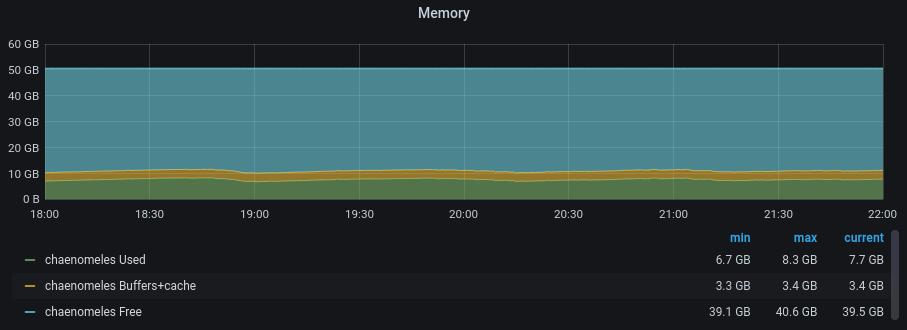
After a very long porting journey, Launchpad is finally running on Python 3 across all of our systems. I wanted to take a bit of time to reflect on why my emotional responses to this port differ so much from those of some others who ve done large ports, such as the Mercurial maintainers. It s hard to deny that we ve had to burn a lot of time on this, which I m sure has had an opportunity cost, and from one point of view it s essentially running to stand still: there is no single compelling feature that we get solely by porting to Python 3, although it s clearly a prerequisite for tidying up old compatibility code and being able to use modern language facilities in the future. And yet, on the whole, I found this a rewarding project and enjoyed doing it. Some of this may be because by inclination I m a maintenance programmer and actually enjoy this sort of thing. My default view tends to be that software version upgrades may be a pain but it s much better to get that pain over with as soon as you can rather than trying to hold back the tide; you can certainly get involved and try to shape where things end up, but rightly or wrongly I can t think of many cases when a righteously indignant user base managed to arrange for the old version to be maintained in perpetuity so that they never had to deal with the new thing (OK, maybe Perl 5 counts here). I think a more compelling difference between Launchpad and Mercurial, though, may be that very few other people really had a vested interest in what Python version Launchpad happened to be running, because it s all server-side code (aside from some client libraries such as launchpadlib, which were ported years ago). As such, we weren t trying to do this with the internet having Strong Opinions at us. We were doing this because it was obviously the only long-term-maintainable path forward, and in more recent times because some of our library dependencies were starting to drop support for Python 2 and so it was obviously going to become a practical problem for us sooner or later; but if we d just stayed on Python 2 forever then fundamentally hardly anyone else would really have cared directly, only maybe about some indirect consequences of that. I don t follow Mercurial development so I may be entirely off-base, but if other people were yelling at me about how late my project was to finish its port, that in itself would make me feel more negatively about the project even if I thought it was a good idea. Having most of the pressure come from ourselves rather than from outside meant that wasn t an issue for us. I m somewhat inclined to think of the process as an extreme version of paying down technical debt. Moving from Python 2.7 to 3.5, as we just did, means skipping over multiple language versions in one go, and if similar changes had been made more gradually it would probably have felt a lot more like the typical dependency update treadmill. I appreciate why not everyone might want to think of it this way: maybe this is just my own rationalization. Reflections on porting to Python 3 I m not going to defend the Python 3 migration process; it was pretty rough in a lot of ways. Nor am I going to spend much effort relitigating it here, as it s already been done to death elsewhere, and as I understand it the core Python developers have got the message loud and clear by now. At a bare minimum, a lot of valuable time was lost early in Python 3 s lifetime hanging on to flag-day-type porting strategies that were impractical for large projects, when it should have been providing for bilingual strategies (code that runs in both Python 2 and 3 for a transitional period) which is where most libraries and most large migrations ended up in practice. For instance, the early advice to library maintainers to maintain two parallel versions or perhaps translate dynamically with 2to3 was entirely impractical in most non-trivial cases and wasn t what most people ended up doing, and yet the idea that 2to3 is all you need still floats around Stack Overflow and the like as a result. (These days, I would probably point people towards something more like Eevee s porting FAQ as somewhere to start.) There are various fairly straightforward things that people often suggest could have been done to smooth the path, and I largely agree: not removing the u'' string prefix only to put it back in 3.3, fewer gratuitous compatibility breaks in the name of tidiness, and so on. But if I had a time machine, the number one thing I would ask to have been done differently would be introducing type annotations in Python 2 before Python 3 branched off. It s true that it s technically possible to do type annotations in Python 2, but the fact that it s a different syntax that would have to be fixed later is offputting, and in practice it wasn t widely used in Python 2 code. To make a significant difference to the ease of porting, annotations would need to have been introduced early enough that lots of Python 2 library code used them so that porting code didn t have to be quite so much of an exercise of manually figuring out the exact nature of string types from context. Launchpad is a complex piece of software that interacts with multiple domains: for example, it deals with a database, HTTP, web page rendering, Debian-format archive publishing, and multiple revision control systems, and there s often overlap between domains. Each of these tends to imply different kinds of string handling. Web page rendering is normally done mainly in Unicode, converting to bytes as late as possible; revision control systems normally want to spend most of their time working with bytes, although the exact details vary; HTTP is of course bytes on the wire, but Python s WSGI interface has some string type subtleties. In practice I found myself thinking about at least four string-like types (that is, things that in a language with a stricter type system I might well want to define as distinct types and restrict conversion between them): bytes, text, ordinary native strings (str in either language, encoded to UTF-8 in Python 2), and native strings with WSGI s encoding rules. Some of these are emergent properties of writing in the intersection of Python 2 and 3, which is effectively a specialized language of its own without coherent official documentation whose users must intuit its behaviour by comparing multiple sources of information, or by referring to unofficial porting guides: not a very satisfactory situation. Fortunately much of the complexity collapses once it becomes possible to write solely in Python 3. Some of the difficulties we ran into are not ones that are typically thought of as Python 2-to-3 porting issues, because they were changed later in Python 3 s development process. For instance, the email module was substantially improved in around the 3.2/3.3 timeframe to handle Python 3 s bytes/text model more correctly, and since Launchpad sends quite a few different kinds of email messages and has some quite picky tests for exactly what it emits, this entailed a lot of work in our email sending code and in our test suite to account for that. (It took me a while to work out whether we should be treating raw email messages as bytes or as text; bytes turned out to work best.) 3.4 made some tweaks to the implementation of quoted-printable encoding that broke a number of our tests in ways that took some effort to fix, because the tests needed to work on both 2.7 and 3.5. The list goes on. I got quite proficient at digging through Python s git history to figure out when and why some particular bit of behaviour had changed. One of the thorniest problems was parsing HTTP form data. We mainly rely on zope.publisher for this, which in turn relied on cgi.FieldStorage; but cgi.FieldStorage is badly broken in some situations on Python 3. Even if that bug were fixed in a more recent version of Python, we can t easily use anything newer than 3.5 for the first stage of our port due to the version of the base OS we re currently running, so it wouldn t help much. In the end I fixed some minor issues in the multipart module (and was kindly given co-maintenance of it) and converted zope.publisher to use it. Although this took a while to sort out, it seems to have gone very well. A couple of other interesting late-arriving issues were around pickle. For most things we normally prefer safer formats such as JSON, but there are a few cases where we use pickle, particularly for our session databases. One of my colleagues pointed out that I needed to remember to tell pickle to stick to protocol 2, so that we d be able to switch back and forward between Python 2 and 3 for a while; quite right, and we later ran into a similar problem with marshal too. A more surprising problem was that datetime.datetime objects pickled on Python 2 require special care when unpickling on Python 3; rather than the approach that ended up being implemented and documented for Python 3.6, though, I preferred a custom unpickler, both so that things would work on Python 3.5 and so that I wouldn t have to risk affecting the decoding of other pickled strings in the session database. General lessons Writing this over a year after Python 2 s end-of-life date, and certainly nowhere near the leading edge of Python 3 porting work, it s perhaps more useful to look at this in terms of the lessons it has for other large technical debt projects. I mentioned in my previous article that I used the approach of an enormous and frequently-rebased git branch as a working area for the port, committing often and sometimes combining and extracting commits for review once they seemed to be ready. A port of this scale would have been entirely intractable without a tool of similar power to git rebase, so I m very glad that we finished migrating to git in 2019. I relied on this right up to the end of the port, and it also allowed for quick assessments of how much more there was to land. git worktree was also helpful, in that I could easily maintain working trees built for each of Python 2 and 3 for comparison. As is usual for most multi-developer projects, all changes to Launchpad need to go through code review, although we sometimes make exceptions for very simple and obvious changes that can be self-reviewed. Since I knew from the outset that this was going to generate a lot of changes for review, I therefore structured my work from the outset to try to make it as easy as possible for my colleagues to review it. This generally involved keeping most changes to a somewhat manageable size of 800 lines or less (although this wasn t always possible), and arranging commits mainly according to the kind of change they made rather than their location. For example, when I needed to fix issues with / in Python 3 being true division rather than floor division, I did so in one commit across the various places where it mattered and took care not to mix it with other unrelated changes. This is good practice for nearly any kind of development, but it was especially important here since it allowed reviewers to consider a clear explanation of what I was doing in the commit message and then skim-read the rest of it much more quickly. It was vital to keep the codebase in a working state at all times, and deploy to production reasonably often: this way if something went wrong the amount of code we had to debug to figure out what had happened was always tractable. (Although I can t seem to find it now to link to it, I saw an account a while back of a company that had taken a flag-day approach instead with a large codebase. It seemed to work for them, but I m certain we couldn t have made it work for Launchpad.) I can t speak too highly of Launchpad s test suite, much of which originated before my time. Without a great deal of extensive coverage of all sorts of interesting edge cases at both the unit and functional level, and a corresponding culture of maintaining that test suite well when making new changes, it would have been impossible to be anything like as confident of the port as we were. As part of the porting work, we split out a couple of substantial chunks of the Launchpad codebase that could easily be decoupled from the core: its Mailman integration and its code import worker. Both of these had substantial dependencies with complex requirements for porting to Python 3, and arranging to be able to do these separately on their own schedule was absolutely worth it. Like disentangling balls of wool, any opportunity you can take to make things less tightly-coupled is probably going to make it easier to disentangle the rest. (I can see a tractable way forward to porting the code import worker, so we may well get that done soon. Our Mailman integration will need to be rewritten, though, since it currently depends on the Python-2-only Mailman 2, and Mailman 3 has a different architecture.) Python lessons Our database layer was already in pretty good shape for a port, since at least the modern bits of its table modelling interface were already strict about using Unicode for text columns. If you have any kind of pervasive low-level framework like this, then making it be pedantic at you in advance of a Python 3 port will probably incur much less swearing in the long run, as you won t be trying to deal with quite so many bytes/text issues at the same time as everything else. Early in our port, we established a standard set of __future__ imports and started incrementally converting files over to them, mainly because we weren t yet sure what else to do and it seemed likely to be helpful. absolute_import was definitely reasonable (and not often a problem in our code), and print_function was annoying but necessary. In hindsight I m not sure about unicode_literals, though. For files that only deal with bytes and text it was reasonable enough, but as I mentioned above there were also a number of cases where we needed literals of the language s native str type, i.e. bytes in Python 2 and text in Python 3: this was particularly noticeable in WSGI contexts, but also cropped up in some other surprising places. We generally either omitted unicode_literals or used six.ensure_str in such cases, but it was definitely a bit awkward and maybe I should have listened more to people telling me it might be a bad idea. A lot of Launchpad s early tests used doctest, mainly in the style where you have text files that interleave narrative commentary with examples. The development team later reached consensus that this was best avoided in most cases, but by then there were far too many doctests to conveniently rewrite in some other form. Porting doctests to Python 3 is really annoying. You run into all the little changes in how objects are represented as text (particularly u'...' versus '...', but plenty of other cases as well); you have next to no tools to do anything useful like skipping individual bits of a doctest that don t apply; using __future__ imports requires the rather obscure approach of adding the relevant names to the doctest s globals in the relevant DocFileSuite or DocTestSuite; dealing with many exception tracebacks requires something like zope.testing.renormalizing; and whatever code refactoring tools you re using probably don t work properly. Basically, don t have done that. It did all turn out to be tractable for us in the end, and I managed to avoid using much in the way of fragile doctest extensions aside from the aforementioned zope.testing.renormalizing, but it was not an enjoyable experience. Regressions I know of nine regressions that reached Launchpad s production systems as a result of this porting work; of course there were various other regressions caught by CI or in manual testing. (Considering the size of this project, I count it as a resounding success that there were only nine production issues, and that for the most part we were able to fix them quickly.) Equality testing of removed database objects One of the things we had to do while porting to Python 3 was to implement the __eq__, __ne__, and __hash__ special methods for all our database objects. This was quite conceptually fiddly, because doing this requires knowing each object s primary key, and that may not yet be available if we ve created an object in Python but not yet flushed the actual INSERT statement to the database (most of our primary keys are auto-incrementing sequences). We thus had to take care to flush pending SQL statements in such cases in order to ensure that we know the primary keys. However, it s possible to have a problem at the other end of the object lifecycle: that is, a Python object might still be reachable in memory even though the underlying row has been DELETEd from the database. In most cases we don t keep removed objects around for obvious reasons, but it can happen in caching code, and buildd-manager crashed as a result (in fact while it was still running on Python 2). We had to take extra care to avoid this problem. Debian imports crashed on non-UTF-8 filenames Python 2 has some unfortunate behaviour around passing bytes or Unicode strings (depending on the platform) to shutil.rmtree, and the combination of some porting work and a particular source package in Debian that contained a non-UTF-8 file name caused us to run into this. The fix was to ensure that the argument passed to shutil.rmtree is a str regardless of Python version. We d actually run into something similar before: it s a subtle porting gotcha, since it s quite easy to end up passing Unicode strings to shutil.rmtree if you re in the process of porting your code to Python 3, and you might easily not notice if the file names in your tests are all encoded using UTF-8. lazr.restful ETags We eventually got far enough along that we could switch one of our four appserver machines (we have quite a number of other machines too, but the appservers handle web and API requests) to Python 3 and see what happened. By this point our extensive test suite had shaken out the vast majority of the things that could go wrong, but there was always going to be room for some interesting edge cases. One of the Ubuntu kernel team reported that they were seeing an increase in 412 Precondition Failed errors in some of their scripts that use our webservice API. These can happen when you re trying to modify an existing resource: the underlying protocol involves sending an If-Match header with the ETag that the client thinks the resource has, and if this doesn t match the ETag that the server calculates for the resource then the client has to refresh its copy of the resource and try again. We initially thought that this might be legitimate since it can happen in normal operation if you collide with another client making changes to the same resource, but it soon became clear that something stranger was going on: we were getting inconsistent ETags for the same object even when it was unchanged. Since we d recently switched a quarter of our appservers to Python 3, that was a natural suspect. Our lazr.restful package provides the framework for our webservice API, and roughly speaking it generates ETags by serializing objects into some kind of canonical form and hashing the result. Unfortunately the serialization was dependent on the Python version in a few ways, and in particular it serialized lists of strings such as lists of bug tags differently: Python 2 used [u'foo', u'bar', u'baz'] where Python 3 used ['foo', 'bar', 'baz']. In lazr.restful 1.0.3 we switched to using JSON for this, removing the Python version dependency and ensuring consistent behaviour between appservers. Memory leaks This problem took the longest to solve. We noticed fairly quickly from our graphs that the appserver machine we d switched to Python 3 had a serious memory leak. Our appservers had always been a bit leaky, but now it wasn t so much a small hole that we can bail occasionally as the boat is sinking rapidly : A serious memory leak (Yes, this got in the way of working out what was going on with ETags for a while.) I spent ages messing around with various attempts to fix this. Since only a quarter of our appservers were affected, and we could get by on 75% capacity for a while, it wasn t urgent but it was definitely annoying. After spending some quality time with objgraph, for some time I thought traceback reference cycles might be at fault, and I sent a number of fixes to various upstream projects for those (e.g. zope.pagetemplate). Those didn t help the leaks much though, and after a while it became clear to me that this couldn t be the sole problem: Python has a cyclic garbage collector that will eventually collect reference cycles as long as there are no strong references to any objects in them, although it might not happen very quickly. Something else must be going on. Debugging reference leaks in any non-trivial and long-running Python program is extremely arduous, especially with ORMs that naturally tend to end up with lots of cycles and caches. After a while I formed a hypothesis that zope.server might be keeping a strong reference to something, although I never managed to nail it down more firmly than that. This was an attractive theory as we were already in the process of migrating to Gunicorn for other reasons anyway, and Gunicorn also has a convenient max_requests setting that s good at mitigating memory leaks. Getting this all in place took some time, but once we did we found that everything was much more stable: A rather flat memory graph This isn t completely satisfying as we never quite got to the bottom of the leak itself, and it s entirely possible that we ve only papered over it using max_requests: I expect we ll gradually back off on how frequently we restart workers over time to try to track this down. However, pragmatically, it s no longer an operational concern. Mirror prober HTTPS proxy handling After we switched our script servers to Python 3, we had several reports of mirror probing failures. (Launchpad keeps lists of Ubuntu archive and image mirrors, and probes them every so often to check that they re reasonably complete and up to date.) This only affected HTTPS mirrors when probed via a proxy server, support for which is a relatively recent feature in Launchpad and involved some code that we never managed to unit-test properly: of course this is exactly the code that went wrong. Sadly I wasn t able to sort out that gap, but at least the fix was simple. Non-MIME-encoded email headers As I mentioned above, there were substantial changes in the email package between Python 2 and 3, and indeed between minor versions of Python 3. Our test coverage here is pretty good, but it s an area where it s very easy to have gaps. We noticed that a script that processes incoming email was crashing on messages with headers that were non-ASCII but not MIME-encoded (and indeed then crashing again when it tried to send a notification of the crash!). The only examples of these I looked at were spam, but we still didn t want to crash on them. The fix involved being somewhat more careful about both the handling of headers returned by Python s email parser and the building of outgoing email notifications. This seems to be working well so far, although I wouldn t be surprised to find the odd other incorrect detail in this sort of area. Failure to handle non-ISO-8859-1 URL-encoded form input Remember how I said that parsing HTTP form data was thorny? After we finished upgrading all our appservers to Python 3, people started reporting that they couldn t post Unicode comments to bugs, which turned out to be only if the attempt was made using JavaScript, and was because I hadn t quite managed to get URL-encoded form data working properly with zope.publisher and multipart. The current standard describes the URL-encoded format for form data as in many ways an aberrant monstrosity , so this was no great surprise. Part of the problem was some very strange choices in zope.publisher dating back to 2004 or earlier, which I attempted to clean up and simplify. The rest was that Python 2 s urlparse.parse_qs unconditionally decodes percent-encoded sequences as ISO-8859-1 if they re passed in as part of a Unicode string, so multipart needs to work around this on Python 2. I m still not completely confident that this is correct in all situations, but at least now that we re on Python 3 everywhere the matrix of cases we need to care about is smaller. Inconsistent marshalling of Loggerhead s disk cache We use Loggerhead for providing web browsing of Bazaar branches. When we upgraded one of its two servers to Python 3, we immediately noticed that the one still on Python 2 was failing to read back its revision information cache, which it stores in a database on disk. (We noticed this because it caused a deployment to fail: when we tried to roll out new code to the instance still on Python 2, Nagios checks had already caused an incompatible cache to be written for one branch from the Python 3 instance.) This turned out to be a similar problem to the pickle issue mentioned above, except this one was with marshal, which I didn t think to look for because it s a relatively obscure module mostly used for internal purposes by Python itself; I m not sure that Loggerhead should really be using it in the first place. The fix was relatively straightforward, complicated mainly by now needing to cope with throwing away unreadable cache data. Ironically, if we d just gone ahead and taken the nominally riskier path of upgrading both servers at the same time, we might never have had a problem here. Intermittent bzr failures Finally, after we upgraded one of our two Bazaar codehosting servers to Python 3, we had a report of intermittent bzr branch hangs. After some digging I found this in our logs:
Traceback (most recent call last):
  ...
  File "/srv/bazaar.launchpad.net/production/codehosting1-rev-20124175fa98fcb4b43973265a1561174418f4bd/env/lib/python3.5/site-packages/twisted/conch/ssh/channel.py", line 136, in addWindowBytes
    self.startWriting()
  File "/srv/bazaar.launchpad.net/production/codehosting1-rev-20124175fa98fcb4b43973265a1561174418f4bd/env/lib/python3.5/site-packages/lazr/sshserver/session.py", line 88, in startWriting
    resumeProducing()
  File "/srv/bazaar.launchpad.net/production/codehosting1-rev-20124175fa98fcb4b43973265a1561174418f4bd/env/lib/python3.5/site-packages/twisted/internet/process.py", line 894, in resumeProducing
    for p in self.pipes.itervalues():
builtins.AttributeError: 'dict' object has no attribute 'itervalues'
I d seen this before in our git hosting service: it was a bug in Twisted s Python 3 port, fixed after 20.3.0 but unfortunately after the last release that supported Python 2, so we had to backport that patch. Using the same backport dealt with this. Onwards!

1 August 2021

Paul Wise: FLOSS Activities July 2021

Focus This month I didn't have any particular focus. I just worked on issues in my info bubble.

Changes

Issues

Review

Administration
  • libusbgx/gt: triage issues
  • Debian packages: triaged bugs for reintroduced packages
  • Debian servers: debug lists mail issue, debug lists subscription issue
  • Debian wiki: unblock IP addresses, approve accounts

Communication
  • Respond to queries from Debian users and contributors on the mailing lists and IRC

Sponsors The microsoft-authentication-library-for-python and purple-discord work was sponsored by my employer. All other work was done on a volunteer basis.

22 July 2021

Charles Plessy: Search in Debian's sources

Via my work on the media-types package, I wanted to know which packages were using the media type application/x-xcf, which apparently is not correct (#991158). The https://codesearch.debian.net site gives the answer. (Thanks!) Moreover, one can create a user key, for command-line remote access; here is an example below (the file dcs-apikeyHeader-plessy.txt contains x-dcs-apikey: followed by my access key).
curl -X GET "https://codesearch.debian.net/api/v1/searchperpackage?query=application/x-xcf&match_mode=literal" -H @dcs-apikeyHeader-plessy.txt > result.json
The result is serialised in JSON. Here is how I transformed it to make a list of email addresses that I could easily paste in mutt.
cat result.json  
  jq --raw-output '.[]."package"'  
  dd-list --stdin  
  sed -e '/^ /d' -e '/^$/'d -e 's/$/,/' -e 's/^/  /'

16 July 2021

Jamie McClelland: From Ikiwiki to Hugo

Back in the days of Etch, I converted this blog from Drupal to ikiwiki. I remember being very excited about this brand new concept of static web sites derived from content stored in a version control system. And now over a decade later I ve moved to hugo. I feel some loyalty to ikiwiki and Joey Hess for opening my eyes to the static web site concept. But ultimately I grew tired of splitting my time and energy between learning ikiwiki and hugo, which has been my tool of choice for new projects. When I started getting strange emails that I suspect had something to do with spammers filling out ikiwiki s commenting registration system, I choose to invest my time in switching to hugo over debugging and really understanding how ikiwiki handles user registration. I carefully reviewed anarcat s blog on converting from ikiwiki to hugo and learned about a lot of ikiwiki features I am not using. Wow, it s times like these that I m glad I keep it really simple. Based on the various ikiwiki2hugo python scripts I studied, I eventually wrote a far simpler one tailored to my needs. Also, in what could only be called a desperate act of procrastination combined with a touch of self-hatred (it s been a rough week) I rejected all the commenting options available to me and choose to implement my own in PHP. What?!?! Why would anyone do such a thing? I refer you to my previous sentence about desperate procrastination. And also I know it s fashionable to hate PHP, but honestly as the first programming language I learned, there is something comforting and familiar about it. And, on a more objective level, I can deploy it easily to just about any hosting provider in the world. I don t have to maintain a unicorn service or a nodejs service and make special configuration entries in my web configuration. All I have to do is upload the php files and I m done. Well, I m sure I ll regret this decision. Special thanks to Alexander Bilz for the anatole hugo theme. I choose it via a nearly random click to avoid the rabbit hole of choosing a theme. And, by luck, it has turned out quite well. I only had to override the commento partial theme page to hijack it for my own commenting system s use.

13 July 2021

Debian XMPP Team: XMPP Novelties in Debian 11 Bullseye

This is not only the Year of the Ox, but also the year of Debian 11, code-named bullseye. The release lies ahead, full freeze starts this week. A good opportunity to take a look at what is new in bullseye. In this post new programs and new software versions related to XMPP, also known as Jabber are presented. XMPP exists since 1999, and has a diverse and active developers community. It is a universal communication protocol, used for instant messaging, IoT, WebRTC, and social applications. You probably will encounter some oxen in this post. That's all for now. Enjoy Debian 11 bullseye and Happy Chatting!

1 July 2021

Paul Wise: FLOSS Activities June 2021

Focus This month I didn't have any particular focus. I just worked on issues in my info bubble.

Changes

Issues

Review
  • Spam: reported 3 Debian bug reports and 135 Debian mailing list posts
  • Debian wiki: RecentChanges for the month
  • Debian BTS usertags: changes for the month
  • Debian screenshots:
    • approved php-horde endless-sky claws-mail memtester
    • rejected python-gdal/weboob-qt (unrelated software)

Administration
  • Debian: restart bacula director
  • Debian wiki: approve accounts

Communication
  • This month I left freenode, an IRC network I had been on for at least 16 years, for reasons that you probably all read about. I think the biggest lesson I take from this situation and ones happening around the same time is that proper governance in peer production projects is absolutely critical.
  • Respond to queries from Debian users and contributors on the mailing lists and IRC

Sponsors The purple-discord/flower work was sponsored by my employers. All other work was done on a volunteer basis.

28 June 2021

Shirish Agarwal: Indian Capital Markets, BSE, NSE

I had been meaning to write on the above topic for almost a couple of months now but just kept procrastinating about it. That push came to a shove when Sucheta Dalal and Debasis Basu shared their understanding, wisdom, and all in the new book called Absolute Power Inside story of the National Stock Exchange s amazing success, leading to hubris, regulatory capture and algo scam . Now while I will go into the details of the new book as currently, I have not bought it but even if I had bought it and shared some of the revelations from it, it wouldn t have done justice to either the book or what is sharing before knowing some of the background before it.

Before I jump ahead, I would suggest people to read my sort of introductory blog post on banking history so they know where I m coming from. I m going to deviate a bit from Banking as this is about trade and capital markets, although Banking would come in later on. And I will also be sharing some cultural insights along with history so people are aware of why things happened the way they did. Calicut, Calcutta, Kolkata, one-time major depot around the world Now, one cannot start any topic about trade without talking about Kolkata. While today, it seems like a bastion of communism, at one time it was one of the major trade depots around the world. Both William Dalrymple and the Chinese have many times mentioned Kolkata as being one of the major centers of trade. This was between the 13th and the late 19th century. A cursory look throws up this article which talks about Kolkata or Calicut as it was known as a major trade depot. There are of course many, many articles and even books which do tell about how Kolkata was a major trade depot. Now between the 13th and 19th century, a lot of changes happened which made Kolkata poorer and shifted trade to Mumbai/Bombay which in those times was nothing but just a port city like many others.

The Rise of the Zamindar Around the 15th century when Babur Invaded Hindustan, he realized that Hindustan is too big a country to be governed alone. And Hindustan was much broader than independent India today. So he created the title of Zamindars. Interestingly, if you look at the Mughal period, they were much more in tune with Hindustani practices than the British who came later. They used the caste divisions and hierarchy wisely making sure that the status quo was maintained as far as castes/creed were concerned. While in-fighting with various rulers continued, it was more or less about land and power other than anything else. When the Britishers came they co-opted the same arrangement with a minor adjustment. While in the before system, the zamindars didn t have powers to be landowners. The Britishers gave them land ownerships. A huge percentage of thess zamindars especially in Bengal were from my own caste Banias or Baniyas. The problem and the solution for the Britishers had been this was a large land to control and exploit and the number of British officers and nobles were very less. So they gave virtually a lot of powers to the Banias. The only thing the British insisted on were very high rents from the newly minted Zamindars. The Zamindar in turn used the powers of personal fiefdom to give loans at very high interest rates when the poor were unable to pay the interest rate, they would take the land while at the same time slavery was forced on both men and women, many a time rapes and affairs. While there have been many records shedding light on it, don t think it could be any more powerful as enacted and shared by Shabana Azmi in Ankur:the Seedling. Another prominent grouping was formed around the same time was the Bhadralok. Now as shared Bhadralok while having all the amenities of belonging to the community, turned a blind eye to the excesses being done by the Zamindars. How much they played a hand in the decimation of Bengal has been a matter of debate, but they did have a hand, that much is not contested.

The Rise of Stock Exchanges Sadly and interestingly, many people believe and continue to believe that stock exchanges is recent phenomena. The first stock exchange though was the Calcutta Stock Exchange rather than the Bombay Stock Exchange. How valuable was Calcutta to the Britishers in its early years can be gauged from the fact that at one time it was made the capital of India in 1772 . In fact, after the Grand Trunk Road (on which there had been even Train names in both countries) x number of books have been written of the trade between Calcutta and Peshawar (Now in Pakistan). And it was not just limited to trade but also cultural give-and-take between the two centers. Even today, if you look at YT (Youtube) and look up some interviews of old people, you find many interesting anecdotes of people sharing both culture and trade.

The problem of the 60 s and rise of BSE
After India became independent and the Constitutional debates happened, the new elites understood that there cannot be two power centers that could govern India. On one hand, were the politicians who had come to power on the back of the popular vote, the other was the Zamindars, who more often than not had abused their powers which resulted in widespread poverty. The Britishers are to blame, but so do the middlemen as they became willing enablers to the same system of oppression. Hence, you had the 1951 amendment to the Constitution and the 1956 Zamindari Abolition Act. In fact, you can find much more of an in-depth article both about Zamindars and their final abolition here. Now once Zamindari was gone, there was nothing to replace it with. The Zamindars ousted of their old roles turned and tried to become Industrialists. The problem was that the poor and the downtrodden had already had experiences with the Zamindars. Also, some Industrialists from North and West also came to Bengal but they had no understanding of either the language or the cultural understanding of what had happened in Bengal. And notice that I have not talked about both the famines and the floods that wrecked Bengal since time immemorial and some of the ones which got etched on soul of Bengal and has marks even today  The psyche of the Bengali and the Bhadralok has gone through enormous shifts. I have met quite a few and do see the guilt they feel. If one wonders as to how socialist parties are able to hold power in Bengal, look no further than Tarikh which tells and shares with you that even today how many Bengalis still feel somewhat lost.

The Rise of BSE Now, while Kolkata Stock Exchange had been going down, for multiple reasons other than listed above. From the 1950s onwards Jawaharlal Nehru had this idea of 5-year plans, borrowed from socialist countries such as Russia, China etc. His vision and ambition for the newly minted Indian state were huge, while at the same time he understood we were poor. The loot by East India Company and the Britishers and on top of that the division of wealth with Pakistan even though the majority of Muslims chose and remained with India. Travel on Indian Railways was a risky affair. My grandfather had shared numerous tales where he used to fill money in socks and put the socks on in boots when going between either Delhi Kolkata or Pune Kolkata. Also, as the Capital became Delhi, it unofficially was for many years, the transparency from Kolkata-based firms became less. So many Kolkata firms either mismanaged and shut down while Maharashtra, my own state, saw a huge boon in Industrialization as well as farming. From the 1960s to the 1990s there were many booms and busts in the stock exchanges but most were manageable.

While the 60s began on a good note as Goa was finally freed from the Portuguese army and influence, the 1962 war with the Chinese made many a soul question where we went wrong. Jawaharlal Nehru went all over the world to ask for help but had to return home empty-handed. Bollywood showed a world of bell-bottoms and cars and whatnot, while the majority were still trying to figure out how to put two square meals on the table. India suffered one of the worst famines in those times. People had to ration food. Families made do with either one meal or just roti (flatbread) rather than rice. In Bengal, things were much more severe. There were huge milk shortages, so Bengalis were told to cut down on sweets. This enraged the Bangalis as nothing else could. Note If one wants to read how bad Indians felt at that time, all one has to read is V.S. Naipaul s An Area of darkness . This was also the time when quite a few Indians took their first step out of India. While Air India had just started, the fares were prohibitive. Those who were not well off, either worked on ships or went via passenger or cargo ships to Dubai/Qatar middle-east. Some went to Russia and some even to States. While today s migr s want to settle in the west forever and have their children and grandchildren grow up in the West, in the 1960s and 70s the idea was far different. The main purpose for a vast majority was to get jobs and whatnot, save maximum money and send it back to India as a remittance. The idea was to make enough money in 3-5-10 years, come back to India, and then lead a comfortable life. Sadly, there has hardly been any academic work done in India, at least to my knowledge to document the sacrifices done by Indians in search of jobs, life, purpose, etc. in the 1960s and 1970s. The 1970s was also when alternative cinema started its journey with people like Smita Patil, Naseeruddin Shah who portrayed people s struggles on-screen. Most of them didn t have commercial success because the movies and the stories were bleak. While the acting was superb, most Indians loved to be captured by fights, car-chases, and whatnot rather than the deary existence which they had. And the alt cinema forced them to look into the mirror, which was frowned upon both by the masses and the classes. So cinema which could have been a wake-up call for a lot of Indians failed. One of the most notable works of that decade, at least to me, was Manthan. 1961 was also marked by the launch of Economic Times and Financial Express which tells that there was some appetite for financial news and understanding. The 1970s was also a very turbulent time in the corporate sector and stock exchanges. Again, the companies which were listed were run by the very well-off and many of them had been abroad. At the same time, you had fly-by-night operators. One of the happenings which started in this decade is you had corporate wars and hostile takeovers, quite a few of them of which could well have a Web series or two of their own. This was also a decade marked by huge labor unrest, which again changed the face of Bombay/Mumbai. From the 1950s till the 1970s, Bombay was known for its mills. So large migrant communities from all over India came to Bombay to become the next Bollywood star and if that didn t happen, they would get jobs in the mills. Bombay/Mumbai has/had this unique feature that somehow you will make money to make ends meet. Of course, with the pandemic, even that has gone for a toss. Labor unrest was a defining character of that decade. Three movies, Kaala Patthar, Kalyug, and Ankush give a broad outlook of what happened in that decade. One thing which is present and omnipresent then and now is how time and time again we lost our demographic dividend. Again there was an exodus of young people who ventured out to seek fortunes elsewhere. The 1970s and 80s were also famous for the license Raj which they bought in. Just like the Soviets, there were waiting periods for everything. A telephone line meant waiting for things anywhere from 4 to 8 years. In 1987, when we applied and got a phone within 2-3 months, most of my relatives both from my mother and father s side could not believe we paid 0 to get a telephone line. We did pay the telephone guy INR 10/- which was a somewhat princely sum when he was installing it, even then they could not believe it as in Northern India, you couldn t get a phone line even if your number had come. You had to pay anywhere from INR 500/1000 or more to get a line. This was BSNL and to reiterate there were no alternatives at that time.

The 1990s and the Harshad Mehta Scam The 90s was when I was a teenager. You do all the stupid things for love, lust, whatever. That is also the time you are introduced really to the world of money. During my time, there were only three choices, Sciences, Commerce, and Arts. If History were your favorite subject then you would take Arts and if it was not, and you were not studious, then you would up commerce. This is how careers were chosen. So I enrolled in Commerce. Due to my grandfather and family on my mother s side interested in stocks both as a saving and compounding tool, I was able to see Pune Stock Exchange in action one day. The only thing I remember that day is people shouting loudly with various chits. I had no idea that deals of maybe thousands or even lakhs. The Pune Stock Exchange had been newly minted. I also participated in a couple of mock stock exchanges and came to understand that one has to be aggressive in order to win. You had to be really loud to be heard over others, you could not afford to be shy. Also, spread your risks. Sadly, nothing about the stock markets was there in the syllabus. 1991 was also when we saw the Iraq war, the balance of payments crisis in India, and didn t know that the Harshad Mehta scam was around the corner. Most of the scams in India have been caught because the person who was doing it was flashy. And this was the reason that even he was caught as Ms. Sucheta Dalal, a young beat reporter from Indian Express who had been covering Indian stock market. Many of her articles were thought-provoking. Now, a brief understanding is required to know before we actually get to the scam. Because of the 1991 balance of payments crisis, IMF rescued India on the condition that India throws its market open. In the 1980s itself, Rajeev Gandhi had wanted to partially make India open but both politicians and Industrialists advised him not to do the same, we are/were not ready. On 21st May 1991, Rajeev Gandhi was assassinated by the LTTE. A month later, due to the sympathy vote, the Narsimha Rao Govt. took power. While for most new Governments there is usually a honeymoon period lasting 6 months or so till they get settled in their roles before people start asking tough questions. It was not to be for this Govt. Immediately, The problem had been building for a few years. Although, in many ways, our economy was better than it is today. The only thing India didn t do well at that time was managing foreign exchange. As only a few Indians had both the money and the opportunity to go abroad and need for electronics was limited. One of the biggest imports of the time then and still today is Energy, Oil. While today it is Oil/Gas and electronics, at that time it was only OIl. The Oil import bill was ballooning while exports were more or less stagnant and mostly comprised of raw materials rather than finished products. Even today, it is largely this, one of the biggest Industrialists in India Ambani exports gas/oil while Adani exports coal. Anyways, the deficit was large enough to trigger a payment crisis. And Narsimha Rao had to throw open the Indian market almost overnight. Some changes became quickly apparent, while others took a long time to come.

Satellite Television and Entry of Foreign Banks Almost overnight, from 1 channel we became multi-channel. Star TV (Rupert Murdoch) bought us Bold and Beautiful, while CNN broadcasted the Iraq War. It was unbelievable for us that we were getting reports of what had happened 24-48 hours earlier. Fortunately or unfortunately, I was still very much a teenager to understand the import of what was happening. Even in my college, except for one or two-person, it wasn t a topic for debate or talk or even the economy. We were basically somehow cocooned in our own little world. But this was not the case for the rest of India and especially banks. The entry of foreign banks was a rude shock to Indian banks. The foreign banks were bringing both technology and sophistication in their offerings, and Indian Banks needed and wanted fast money to show hefty profits. Demand for credit wasn t much, at least nowhere the level it today is. At the same time, default on credit was nowhere high as today is. But that will require its own space and article. To quench the thirst for hefty profits by banks, Enter Harshad Mehta. At that point in time, banks were not permitted at all to invest in the securities/share market. They could only buy Government securities or bonds which had a coupon rate of say 8-10% which was nowhere enough to satisfy the need for hefty profits as desired by Indian banks. On top of it, that cash was blocked for a long time. Most of these Government bonds had anywhere between 10-20 year maturity date and some even longer. Now, one loophole in that was that the banks themselves could not buy these securities. They had to approach a registered broker of the share market who will do these transactions on their behalf. Here is where Mr. Mehta played his game. He shared both legal and illegal ways in which both the bank and he would prosper. While banking at one time was thought to be conservative and somewhat cautious, either because they were too afraid that Western private banks will take that pie or whatever their reasons might be, they agreed to his antics. To play the game, Harshad Mehta needed lots of cash, which the banks provided him in the guise of buying securities that were never bought, but the amounts were transferred to his account. He actively traded stocks, at the same time made a group, and also made the rumor mill work to his benefit. The share market is largely a reactionary market. It operates on patience, news, and rumor-mill. The effect of his shenanigans was that the price of a stock that was trending at say INR 200 reached the stratospheric height of INR 9000/- without any change in the fundamentals or outlook of the stock. His thirst didn t remain restricted to stocks but also ventured into the unglamorous world of Govt. securities where he started trading even in them in large quantities. In order to attract new clients, he coveted a fancy lifestyle. The fancy lifestyle was what caught the eye of Sucheta Dalal, and she started investigating the deals he was doing. Being a reporter, she had the advantage of getting many doors to open and get information that otherwise would be under lock and key. On 23rd April 1992, Sucheta Dalal broke the scam.

The Impact The impact was almost like a shock to the markets. Even today, it can be counted as one of the biggest scams in the Indian market if you adjust it for inflation. I haven t revealed much of the scam and what happened, simply because Sucheta Dalal and Debasis Basu wrote The Scam for that purpose. How do I shorten a story and experience which has been roughly written in 300 odd pages in one or two paragraphs, it is simply impossible. The impact though was severe. The Indian stock market became a bear market for two years. Sucheta Dalal was kicked out/made to resign out of Indian Express. The thing is simple, all newspapers survive on readership and advertisements with advertisements. Companies who were having a golden run, whether justified or not, on the bourses/Stock Exchange. For many companies, having a good number on the stock exchange was better than the company fundamentals. There was supposed to be a speedy fast-track court setup for Financial crimes, but it worked only for the Harshad Mehta case and still took over 5 years. It led to the creation of NSE (National Stock Exchange). It also led to the creation of SEBI, perhaps one of the most powerful regulators, giving it a wide range of powers and remit but on the ground more often that proved to be no more than a glorified postman. And the few times it used, it used on the wrong people and people had to go to courts to get justice. But then this is not about SEBI nor is this blog post about NSE. I have anyways shared about Absolute power above, so will not repeat the link here. The Anecdotal impact was widespread. Our own family broker took the extreme step. For my grandfather on the mother s side, he was like the second son. The news of his suicide devastated my grandfather quite a bit, which we realized much later when he was diagnosed with Alzheimer s. Our family stockbroker had been punting, taking lots of cash from the market at very high rates, betting on stocks wildly as the stock market was reaching for the stars when the market crashed, he was insolvent. How the family survived is a tale in itself. They had just got married just a few years ago and had a cute boy and girl soon after. While today, both are grown-up, at that time what the wife faced only she knows. There were also quite a few shareholders who also took the extreme step. The stock markets in those days were largely based on trust and even today is unless you are into day-trading. So there was always some money left on the table for the share/stockbroker which would be squared off in the next deal/transaction where again you will leave something. My grandfather once thought of going over and meeting them, and we went to the lane where their house is, seeing the line of people who had come for recovery of loans, we turned back with a heavy heart. There was another taboo that kinda got broken that day. The taboo was that the stock market is open to scams. From 1992 to 2021 has been a cycle of scams. Even now, today, the stock market is at unnatural highs. We know for sure that a lot of hot money is rolling around, a lot of American pension funds etc. Till it will work, it will work, some news something and that money will be moved out. Who will be left handing the can, the Indian investors? A Few days back, Ambani writes about Adani. Now while the facts shared are correct, is Adani the only one, the only company to have a small free float in the market. There probably are more than 1/4th or 1/3rd of well-respected companies who may have a similar configuration, the only problem is it is difficult to know who the proxies are. Now if I were to reflect and compare this either with the 1960s or even the 1990s I don t find much difference apart from the fact that the proxy is sitting in Mauritius. At the same time, today you can speculate on almost anything. Whether it is stocks, commodities, derivatives, foreign exchange, cricket matches etc. the list is endless. Since 2014, the rise in speculation rather than investment has been dramatic, almost stratospheric. Sadly, there are no studies or even attempts made to document this. How much official and unofficial speculation is there in the market nobody knows. Money markets have become both fluid and non-transparent. In theory, you have all sorts of regulators, but it is still very much like the Wild West. One thing to note that even Income tax had to change and bring it provisions to account for speculative income.So, starting from being totally illegitimate, it has become kind of legal and is part of Income Tax. And if speculation is not wrong, why not make Indian cricket officially a speculative event, that will be honest and GOI will get part of the proceeds.

Conclusion I wish there was some positive conclusion I could drive, but sadly there is not. Just today read two articles about the ongoing environmental issues in Himachal Pradesh. As I had shared even earlier, the last time I visited those places in 2011, and even at that time I was devastated to see the kind of construction going on. Jogiwara Road which they showed used to be flat single ground/first floor dwellings, most of which were restaurants and whatnot. I had seen the water issues both in Himachal and UT (Uttarakhand) back then and this is when they made huge dams. In U.S. they are removing dams and here we want more dams

27 June 2021

Louis-Philippe V ronneau: Writing QA Scripts for Debian Teams

Since I joined the Debian Python Team, I have had a lot of fun working on different QA issues. Although I'm still a Perl illiterate1, I've for example contributed to a few Lintian tags. There are multiple ways to make mass QA changes to team-managed packages. Projects like the Debian Janitor are more than fantastic: they make for a robust, thorough and automated way to fix QA issues in the archive and I don't have enough good words to describe the amazing work of Jelmer Vernooij on the toolsuite the Janitor uses. But with robustness comes complexity. The Janitor is currently based on 10 different subtools (silver-platter, ognibuild, lintian-brush, ...) and if you want to use it to fix a bug, you first need to make sure there's a Lintian tag that flags the issue you're working on. Then you need to write a lintian-brush fixer to fix said issue. Sadly, sometimes writing a new Lintian tag to flag a trivial changes is not the appropriate course of action and only creates clutter. All this to say until now, I was a missing a "quick and somewhat dirty2" way to make simple one-off changes to a bunch of packages. 200 lines of Python later, I'm happy to report I have a simple way to replace the old Clojure Team email in d/control by the new one for all of our packages. Even better, although this script doesn't aim to be a versatile tool like the Janitor is, most of the functions can be reused for other similar one-off scripts. Many thanks to Felix Lechner showing me the very handy Lintian Query JSON interface!

  1. I don't really enjoy coding in Perl, but it makes up so much of the current Debian infrastructure that I wish I did. I keep telling myself I should buy an "Introduction to Perl" book...
  2. A quick and dirty way to make those changes would've been to write a shell script, but one of my 2021 resolution is to use Python for all my scripting needs.

Fran ois Marier: Removing unsafe-inline from Ikiwiki's style-src directive

After moving my Ikiwiki blog to my own server and enabling a basic CSP policy, I decided to see if I could tighten up the policy some more and stop relying on style-src 'unsafe-inline'. This does require that OpenID logins be disabled, but as a bonus, it also removes the need for jQuery to be present on the server.

Revised CSP policy First of all, I visited all of my pages in a Chromium browser and took note of the missing hashes listed in the developer tools console (Firefox doesn't show the missing hashes):
  • 'sha256-4Su6mBWzEIFnH4pAGMOuaeBrstwJN4Z3pq/s1Kn4/KQ='
  • 'sha256-j0bVhc2Wj58RJgvcJPevapx5zlVLw6ns6eYzK/hcA04='
  • 'sha256-j6Tt8qv7z2kSc7fUs0YHbrxawwsQcS05fVaX1r2qrbk='
  • 'sha256-p4cncjf0hAIeTSS5tXecf7qTUanDC27KdlKhT9eOsZU='
  • 'sha256-Y6v8OCtFfMmI5mbpwqCreLofmGZQfXYK7jJHCoHvn7A='
  • 'sha256-47DEQpj8HBSa+/TImW+5JCeuQeRkm5NMpJWZG3hSuFU='
which took care of all of the inline styles. Note that I kept unsafe-inline in the directive since it will be automatically ignored by browsers who understand hashes, but will be honored and make the site work on older browsers. Next I added the new unsafe-hashes source expression along with the hash of the CSS fragment (clear: both) that is present on all pages related to comments in Ikiwiki:
$ echo -n "clear: both"   openssl dgst -sha256 -binary   openssl base64 -A
matwEc6givhWX0+jiSfM1+E5UMk8/UGLdl902bjFBmY=
My final style-src directive is therefore the following:
style-src 'self' 'unsafe-inline' 'unsafe-hashes' 'sha256-4Su6mBWzEIFnH4pAGMOuaeBrstwJN4Z3pq/s1Kn4/KQ=' 'sha256-j0bVhc2Wj58RJgvcJPevapx5zlVLw6ns6eYzK/hcA04=' 'sha256-j6Tt8qv7z2kSc7fUs0YHbrxawwsQcS05fVaX1r2qrbk=' 'sha256-p4cncjf0hAIeTSS5tXecf7qTUanDC27KdlKhT9eOsZU=' 'sha256-Y6v8OCtFfMmI5mbpwqCreLofmGZQfXYK7jJHCoHvn7A=' 'sha256-47DEQpj8HBSa+/TImW+5JCeuQeRkm5NMpJWZG3hSuFU=' 'sha256-matwEc6givhWX0+jiSfM1+E5UMk8/UGLdl902bjFBmY='

Browser compatibility While unsafe-hashes is not yet implemented in Firefox, it happens to work just fine due to a bug (i.e. unsafe-hashes is always enabled whether or not the policy contains it). It's possible that my new CSP policy won't work in Safari, but these CSS clears don't appear to be needed anyways and so it's just going to mean extra CSP reporting noise.

Removing jQuery Since jQuery appears to only be used to provide the authentication system selector UI, I decided to get rid of it. I couldn't find a way to get Ikiwiki to stop pulling it in and so I put the following hack in my Apache config file:
# Disable jQuery.
Redirect 204 /ikiwiki/jquery.fileupload.js
Redirect 204 /ikiwiki/jquery.fileupload-ui.js
Redirect 204 /ikiwiki/jquery.iframe-transport.js
Redirect 204 /ikiwiki/jquery.min.js
Redirect 204 /ikiwiki/jquery.tmpl.min.js
Redirect 204 /ikiwiki/jquery-ui.min.css
Redirect 204 /ikiwiki/jquery-ui.min.js
Redirect 204 /ikiwiki/login-selector/login-selector.js
Replacing the files on disk with an empty reponse seems to work very well and removes a whole lot of code that would otherwise be allowed by the script-src directive of my CSP policy. While there is a slight cosmetic change to the login page, I think the reduction in the attack surface is well worth it.

25 June 2021

Enrico Zini: Parsing YAML

This is part of a series of posts on ideas for an Ansible-like provisioning system, implemented in Transilience. The time has come for me to try and prototype if it's possible to load some Transilience roles from Ansible's YAML instead of Python. The data models of Transilience and Ansible are not exactly the same. Some of the differences that come to mind: To simplify the work, I'll start from loading a single role out of Ansible, not an entire playbook. TL;DR: scroll to the bottom of the post for the conclusion! Loading tasks The first problem of loading an Ansible task is to figure out which of the keys is the module name. I have so far failed to find precise reference documentation about what keyboards are used to define a task, so I'm going by guesswork, and if needed a look at Ansible's sources. My first attempt goes by excluding all known non-module keywords:
        candidates = []
        for key in task_info.keys():
            if key in ("name", "args", "notify"):
                continue
            candidates.append(key)
        if len(candidates) != 1:
            raise RoleNotLoadedError(f"could not find a known module in task  task_info!r ")
        modname = candidates[0]
        if modname.startswith("ansible.builtin."):
            name = modname[16:]
        else:
            name = modname
This means that Ansible keywords like when or with will break the parsing, and it's fine since they are not supported yet. args seems to carry arguments to the module, when the module main argument is not a dict, as may happen at least with the command module. Task parameters One can do all sorts of chaotic things to pass parameters to Ansible tasks: for example string lists can be lists of strings or strings with comma-separated lists, and they can be preprocesed via Jinja2 templating, and they can be complex data structures that might contain strings that need Jinja2 preprocessing. I ended up mapping the behaviours I encountered in an AST-like class hierarchy which includes recursive complex structures. Variables Variables look hard: Ansible has a big free messy cauldron of global variables, and Transilience needs a predefined list of per-role variables. However, variables are mainly used inside Jinja2 templates, and Jinja2 can parse to an Abstract Syntax Tree and has useful methods to examine its AST. Using that, I managed with resonable effort to scan an Ansible role and generate a list of all the variables it uses! I can then use that list, filter out facts-specific names like ansible_domain, and use them to add variable definition to the Transilience roles. That is exciting! Handlers Before loading tasks, I load handlers as one-action roles, and index them by name. When an Ansible task notifies a handler, I can then loop up by name the roles I generated in the earlier pass, and I have all that I need. Parsed Abstract Syntax Tree Most of the results of all this parsing started looking like an AST, so I changed the rest of the prototype to generate an AST. This means that, for a well defined subset of nsible's YAML, there exists now a tool that is able to parse it into an AST and raeson with it. Transilience's playbooks gained a --ansible-to-ast option to parse an Ansible role and dump the resulting AST as JSON:
$ ./provision --help
usage: provision [-h] [-v] [--debug] [-C] [--ansible-to-python role]
                 [--ansible-to-ast role]
Provision my VPS
optional arguments:
[...]
  -C, --check           do not perform changes, but check if changes would be
                        needed
  --ansible-to-ast role
                        print the AST of the given Ansible role as understood
                        by Transilience
The result is extremely verbose, since every parameter is itself a node in the tree, but I find it interesting. Here is, for example, a node for an Ansible task which has a templated parameter:
     
      "node": "task",
      "action": "builtin.blockinfile",
      "parameters":  
        "path":  
          "node": "parameter",
          "type": "scalar",
          "value": "/etc/aliases"
         ,
        "block":  
          "node": "parameter",
          "type": "template_string",
          "value": "root:  postmaster \n % for name, dest in aliases.items() % \n name :  dest \n % endfor % \n"
         
       ,
      "ansible_yaml":  
        "name": "configure /etc/aliases",
        "blockinfile":  ,
        "notify": "reread /etc/aliases"
       ,
      "notify": [
        "RereadEtcAliases"
      ]
     ,
Here's a node for an Ansible template task converted to Transilience's model:
     
      "node": "task",
      "action": "builtin.copy",
      "parameters":  
        "dest":  
          "node": "parameter",
          "type": "scalar",
          "value": "/etc/dovecot/local.conf"
         ,
        "src":  
          "node": "parameter",
          "type": "template_path",
          "value": "dovecot.conf"
         
       ,
      "ansible_yaml":  
        "name": "configure dovecot",
        "template":  ,
        "notify": "restart dovecot"
       ,
      "notify": [
        "RestartDovecot"
      ]
     ,
Executing The first iteration of prototype code for executing parsed Ansible roles is a little execise in closures and dynamically generated types:
    def get_role_class(self) -> Type[Role]:
        # If we have handlers, instantiate role classes for them
        handler_classes =  
        for name, ansible_role in self.handlers.items():
            handler_classes[name] = ansible_role.get_role_class()
        # Create all the functions to start actions in the role
        start_funcs = []
        for task in self.tasks:
            start_funcs.append(task.get_start_func(handlers=handler_classes))
        # Function that calls all the 'Action start' functions
        def role_main(self):
            for func in start_funcs:
                func(self)
        if self.uses_facts:
            role_cls = type(self.name, (Role,),  
                "start": lambda host: None,
                "all_facts_available": role_main
             )
            role_cls = dataclass(role_cls)
            role_cls = with_facts(facts.Platform)(role_cls)
        else:
            role_cls = type(self.name, (Role,),  
                "start": role_main
             )
            role_cls = dataclass(role_cls)
        return role_cls
Now that the parsed Ansible role is a proper AST, I'm considering redesigning that using a generic Role class that works as an AST interpreter. Generating Python I maintain a library that can turn an invoice into Python code, and I have a convenient AST. I can't not generate Python code out of an Ansible role!
$ ./provision --help
usage: provision [-h] [-v] [--debug] [-C] [--ansible-to-python role]
                 [--ansible-to-ast role]
Provision my VPS
optional arguments:
[...]
  --ansible-to-python role
                        print the given Ansible role as Transilience Python
                        code
  --ansible-to-ast role
                        print the AST of the given Ansible role as understood
                        by Transilience
And will you look at this annotated extract:
$ ./provision --ansible-to-python mailserver
from __future__ import annotations
from typing import Any
from transilience import role
from transilience.actions import builtin, facts
# Role classes generated from Ansible handlers!
class ReloadPostfix(role.Role):
    def start(self):
        self.add(
            builtin.systemd(unit='postfix', state='reloaded'),
            name='reload postfix')
class RestartDovecot(role.Role):
    def start(self):
        self.add(
            builtin.systemd(unit='dovecot', state='restarted'),
            name='restart dovecot')
# The role, including a standard set of facts
@role.with_facts([facts.Platform])
class Role(role.Role):
    # These are the variables used by Jinja2 template files and strings. I need
    # to use Any, since Ansible variables are not typed
    aliases: Any = None
    myhostname: Any = None
    postmaster: Any = None
    virtual_domains: Any = None
    def all_facts_available(self):
        ...
        # A Jinja2 string inside a string list!
        self.add(
            builtin.command(
                argv=[
                    'certbot', 'certonly', '-d',
                    self.render_string('mail. ansible_domain '), '-n',
                    '--apache'
                ],
                creates=self.render_string(
                    '/etc/letsencrypt/live/mail. ansible_domain /fullchain.pem'
                )),
            name='obtain mail.* letsencrypt certificate')
        # A converted template task!
        self.add(
            builtin.copy(
                dest='/etc/dovecot/local.conf',
                src=self.render_file('templates/dovecot.conf')),
            name='configure dovecot',
            # Notify referring to the corresponding Role class!
            notify=RestartDovecot)
        # Referencing a variable collected from a fact!
        self.add(
            builtin.copy(dest='/etc/mailname', content=self.ansible_domain),
            name='configure /etc/mailname',
            notify=ReloadPostfix)
        ...
Conclusion Transilience can load a (growing) subset of Ansible syntax, one role at a time, which contains: The role loader in Transilience now looks for YAML when it does not find a Python module, and runs it pipelined and fast! There is code to generate Python code from an Ansible module: you can take an Ansible role, convert it to Python, and then work on it to add more complex logic, or clean it up for adding it to a library of reusable roles! Next: Ansible conditionals

22 June 2021

Jamie McClelland: How to Meet Online with Simultaneous Interpretation

May First Movement Technology has been running a public Jitsi Meet instance since well before the pandemic to support Internet-based, video meetings for folks who don't want to rely on corporate and proprietary infrastructure. However (until this week - see below), we haven't been using it for our own meetings for one main reason: simultaneous interpretation. We're an international organization with roots in the US and Mexico and we are committed to building a bi-national leadership with a movement strategy that recongizes the symbolic and practical disaster of the US/Mexico border. As a result, we simply can't hold a meeting without simultaneous interpretation between english and spanish. Up to now, we've worked out a creative way to have mumble meetings with simultaneous interpretation. In short: we have a room for interpretation. If you move into the interpretation room, you hear the interpreter. If you move into the main room, you hear the live voices of the participants. You can switch between rooms as needed. This approach is rock solid, and we benefit from mumble's excellent performance in low bandwidth situations and the availability of mumble clients on both Android and iPhones. However, there are limitations, which include: After years of reviewing the many dead-end threads and issue requests around simultaneous interpretation on the Jitsi boards (and the Big Blue Button boards for that matter) I finally came across the thread that led to the pull request that changed everything. With the ability to control local volume via the Jitsi Meet API, I was able to pull together a very small amount of code to produce Jitsi Simultaneous Interpretation (JSI) - a way to run your Jitsi Meet server with an interpretation slider at the top allowing you to set the volume of the interpreter at any time during the meeting. It's still not perfect - the main problem is that you can't use any of the Jitsi Meet apps - so it runs well on most desktops, but when it comes to cell phones, it only runs (in browser) on modern android phones.

20 June 2021

Mike Gabriel: BBB Packaging for Debian, a short Heads-Up

Over the past days, I have received tons of positive feedback on my previous blog post about forming the Debian BBB Packaging Team [1]. Feedback arrived via mail, IRC, [matrix] and Mastodon. Awesome. Thanks for sharing your thoughts, folks... Therefore, here comes a short ... Heads-Up on the current Ongoings ... around packaging BigBlueButton for Debian: Credits light+love
Mike Gabriel

[1] https://sunweavers.net/blog/node/133
[2] https://bigbluebutton.org/event-page/
[3] https://docs.google.com/document/d/1kpYJxYFVuWhB84bB73kmAQoGIS59ari1_hn2...

Next.

Previous.