Search Results: "andy"

9 January 2013

Raphael Geissert: A bashism a week: brace expansion

Brace expansion is well known and handy, but sadly it is not required by POSIX:2001. Shells that don't support it will simply and silently leave it as is.

If you use it to shorten commands, as in "echo Debian GNU/ Linux,kFreeBSD ", you have to spell it out or use some sort of loop.

When using brace expansion for sequences you will usually have to fall back to using the seq command or using loops. " 1..9 " can be replaced with "seq -s ' ' 1 9", " 1..9..2 " to "seq -s ' ' 1 2 9", and so on.
If you use brace expansion for sequences of characters then seq won't be of much help.

I must note that the seq command is not required by POSIX:2001, however.

Remember, if you rely on any non-standard behaviour or feature make sure you document it and, if feasible, check for it at run-time.

5 January 2013

Russ Allbery: Automated Perl testing

I started several coding projects today, but none of them reached an announcable conclusion, so this seems like a good day to write up my current discoveries in automated Perl testing modules. This post isn't about test frameworks like Test::More and friends, or even about helper modules (although I do recommend Test::Warn if you want to test warning code in your modules). It's not about writing functionality tests. Rather, it's about various CPAN modules that can be used almost identically in just about every Perl module distribution (and in some other places, like Perl scripts inside a larger package written in another language). You can drop a small driver script into your t directory and (mostly) run make test with no further customization. If you want to see the driver scripts for all of the below that I'm currently using, see the t directory of the Term::ANSIColor distribution. They'll slowly make their way into my other modules, and probably, despite the name of the package, rra-c-util, since that's my equivalent of gnulib and I have tools to synchronize shared code from that package. The driver script generally tests whether the module is installed, skips the test if not, and otherwise dispatches to the "test everything" routine in the module. Test::MinimumVersion: This tests that you're not accidentally using a newer Perl feature than you were expecting. It's very handy if you want to support backward compatibility to a particular version of Perl. It knows about features as far back as 5.004_05. It won't be able to catch everything, but it will catch some of the most obvious things. Test::Perl::Critic: This is sort of the thousand-pound gorilla. Test::Perl::Critic runs all of your code through perlcritic and reports any errors. You will probably need to combine this with a perlcriticrc file in your distribution that you configure it to use, since otherwise the person running the tests may have customized perlcritic. If you let it run perltidy to check for formatting problems, you'll also want a perltidyrc. See the driver script mentioned above for how I set that up. I usually configure this test to only run for me (by checking an environment variable) since the results vary a lot depending on what version of perlcritic is installed, and it's likely new versions will cause the test to start failing. If you use this, expect to need to add ## no critic annotations to your code. Test::Pod: Checks for syntax errors in your POD documentation so that you won't have those embarassing POD ERRORS sections. Note that the latest version of podlators turns syntax errors into fatal errors, so soon you won't have to worry as much about this. But if you'd been using this module all along, you wouldn't have to worry about the fact that pod2man may start faliing due to syntax errors you never fixed! Test::Pod::Coverage: Only of interest to module distributions, not ramdom scripts, this checks that every sub provided by your module has POD documentation. It understands various subs that don't need to be documented (such as the ones you provide to implement a tied class) and lets you mark some subs as not requiring documentation. Test::Pod::Spelling: Checks your POD documentation for spelling mistakes with a spell checker. (Note that perlcritic, and hence Test::Perl::Critic, can also do this, but I use this module separately since I think the output is more readable.) You will almost certainly want to make this test maintainer-only, since spell checkers and spelling dictionaries vary a lot. But it prevents a lot of embarassment when you read your documentation on search.cpan.org and find that obvious spelling error you never saw before. Test::Strict: Checks all Perl code to ensure that it compiles, checks whether it has use strict, and optionally checks whether it has use warnings. This is great; I use this even with packages that just have a few Perl utility scripts in a package otherwise written in C, since I previously kept releasing packages with helper scripts with obvious syntax errors since I didn't run them much. Another place it's useful is if you have internal Debian packages that wrap up Perl utility scripts; just create a small test suite with this module and run it from override_dh_auto_check and you won't ever release a package with scripts that won't run. You can also do test suite coverage testing with this module (and Devel::Cover), but that you'll want to mark maintainer-only since it takes a while. Test::Synopsis: Checks the code in the SYNOPSIS section of any POD documentation to ensure that it compiles. No more syntax errors in your example code in the documentation! All of these modules are, of course, packaged for Debian (thanks largely to the wonderful Perl packaging team!), and otherwise available on CPAN. There are a variety of others, of course; these are just the main ones that I've found personally useful. One final whine, however: all this wonderful Perl testing infrastructure desperately needs a common module and a common interface for providing a list of files to check. Every one of these modules reinvents that wheel, and most of them do it a slightly different way than all the others. Most of them check in either blib or lib (or sometimes both). Most of them also add t. Most of them don't include Makefile.PL, but some of them do. Almost none of them look in examples. Some have a simple way to add more files or directories; some don't. Some can be run from the t directory and still find things, but most of them can't. And of course the syntax is different in every case! Most of the work in my driver scripts is finding the right way to add a few additional directories to the scope of the testing, and in one annoying case (Test::Synopsis), I actually had to use Perl::Critic::Utils (for lack of a better module) to build a list of files to check instead of using the build-in file list, since the build-in file list required all module code be in lib. A module to abstract out all of this and provide a common interface would be easy to write. Most of the work would involve talking to all the authors of all these different modules and asking them to use it. If someone in the Perl community felt like doing that, it would make life so much easier for everyone.

4 January 2013

Russell Coker: Links January 2013

AreWomenHuman has an interesting article about ViolentAcrez and the wide support for trolling (including by media corporations) [1]. Chrys Stevenson wrote an important article for the ABC about the fundamentalist Christians who are trying to take over the Australian education system [2]. Tavi Gevinson gave an interesting TED talk titled A teen just trying to figure it out about her work starting Rookie magazine and her ideas about feminism [3]. Burt Rutan gave an interesting and inspiring TED talk about the future of space expploration [4]. One of his interesting points is that fun really is defendable in regard to tourism paying for the development of other space industries. Stephen Petranek gave an interesting TED talk about how to prepare for some disasters that could kill a significant portion of the world s population [5]. Some of these are risks of human extinction, we really need to spend some money on it. John Wilbanks gave an intresting TED talk about the way that current informed consent laws prevent large-scale medical research [6]. He says I live in a web world where when you share things beautiful stuff happens, not bad stuff . Joey Hess was interviewed for The Setup and the interview sparked a very interesting Hacker News discussion about workflow for software development [7]. Like most developers I prefer large screens with high resolution, I have an EeePC 701 which works reasonably well for an ultra-portable system but I largely don t use it now I have an Android phone (extremely portable and totally awful input usually beats moderately portable and mostly awful input for me). But Joey s methods are interesting and it seems that for some people different systems give the best result. Jeff Masters gave an insightful TED talk about the weather disasters that may seriously impact the US in the next 30 years [8]. Governments really need to start preparing for such things, some of them are really cheap to mitigate if work is started early. Bryan Stevenson gave an inspiring TED talk about the lack of justice in the US justice system [9]. Wouter Verhelst wrote an insightful article about some of the criticisms of Linux from Windows users [10]. He references a slightly satirical post he previously wrote about why Windows isn t ready for desktop use. Paul Carr wrote an interesting article comparing disruptive business practices of dot-com companies to the more extreme aspects of Ayn Rand s doctrine [11]. In reading some of the links from that article I discovered that Ayn Rand was even more of a sociopath than I had previously realised. Lindy West gave an amazing Back Fence PDX talk about dealing with nasty blog comments from the PUA/MRA communities [12]. After investigating them she just feels sorry for the trolls who s lives suck. Hang from the Vlogbrothers explains gender, sex, sexual orientation, etc [13]. Rick Falkvinge wrote an interesting article about recent political news from Brazil, they had a proposed law that was very positive for liberty on the Internet but it was sabotaged by the media and telcos [14]. We should try to avoid paying any money to the media industry so that they can go away sooner. Amy Cuddy gave an interesting TED talk about body language, power, and the imposter syndrome [15]. Caleb Chung gave an interesting TED talk about toy design which focussed on Pleo a robotic dinosaur with a SD card and USB socket to allow easy reprogramming by the user [16].

3 January 2013

Joey Hess: overcast

My least favorite forecast, and we've been having a lot of it lately. Since winter began (Dec 21st), my PV array has produced only 102 amp-hours of power. There have been only 3 days that could be considered sunny at all (even for a few hours). To put this in some perspective for you, Wolfram Alpha tells me that 102 amp-hours is half of a typical car battery capacity. So I've really had to scrimp & save. I disconnected my router to save power, and I plumbed the depths of the battery bank (further than it's really safe to go). And I was completely out of power for several days. So, I've bought a generator. I had to order it online, because it seems every store in the entire eastern US is completly out of stock, due to hurricane Sandy. This house has a generator shed (complete with a massive old generator that doesn't work), but I put the new, small generator in the furthest outbuilding, from where it can only barely be heard in the house. Later I'll be able to run a cable from its 12v terminal to charge the battery bank (if the sun doesn't get there first); for now it only powers my laptop. Nasty noisy smelly dirty thing, it pains me to run it. Back to the "overcast" forecast. I've heard meterologists say that one unexpected consequence of climate change seems to be that weather patterns are persisting longer, giving us this summer's weeks of neverending heat, and large, slow-moving storms. I suspect this could also explain the blankets of clouds that have been settling in for weeks at a time, on and off since mid-November. But I only have 2.5 years of not very good data. Before, I paid about as much attention to whether it was sunny as anyone else, which is to say, not really very much. Anyone know of a source of historical cloud cover data?

30 December 2012

Russ Allbery: Term::ANSIColor 4.00

Term::ANSIColor is a Perl core module that provides a few different interfaces to get at the ANSI color and text attribute escape sequences. It can be used to, for example, print out bold text or colorize output. This is a major new feature release, incorporating patches sent to me by Kurt Starsinic and Stephen Thirlwall. Kurt Starsinic contributed support for 256-color emulators. These hang special extended sequences off the otherwise-unused 38 and 48 sequences, providing an alternative naming of the base 16 colors, 216 colors arranged in an RGB namespace, and 24 shades of grey. Those colors are now available via all the normal Term::ANSIColor interfaces. He also contributed a program to print out test data for 256-color emulators that I enhanced to print out test data for the basic and 16-color sets as well, which allowed me to get rid of the static test files in the distribution. Stephen Thirlwall contributed support for creating aliases for the standard colors via an environment variable. I extended his patch to also provide a coloralias() function interface. This feature probably won't be that widely used, but it allows a user to set up custom color names for applications that take color names from user configuration (which might be handy for doing things like using the Solarized color scheme), or to define an alias like "alert" or "warning" in one place and then use it throughout the code. With the new 256-color support, it may be useful to set up more human-readable aliases for some of the RGB colors. Since I was working on this project anyway, I also redid the whole module in the new Perl coding style that I've been experimenting, based on Damian Conway's Perl Best Practices, and added a ton of new tests. There are a lot of great CPAN modules out there to do automated tests of various aspects of Perl code, and most of them don't require much effort to use. I'll probably write a separate post about that later. That sort of comprehensive review of course uncovered a bunch of microbugs and lack of clarity in the code, which is now hopefully much improved. I'm pleased to report that the test suite achieves 100% code coverage as reported by Devel::Cover (and in fact there's a maintainer-only test to ensure that it stays that way). You can get the latest version from the Term::ANSIColor distribution page.

29 December 2012

Russell Coker: Samsung Galaxy Camera a Quick Review

I recently had a chance to briefly play with the new Samsung Galaxy Camera [1]. The Galaxy Camera is an Android device with a 4.8 display (the same size as the Samsung Galaxy S3) that has a fairly capable camera (IE nothing like a typical phone camera). It runs Android 4.1 (Jelly Bean) and the camera has 21* zoom with a 16 megapixel sensor. Camera Features It seems that professional photographers are often annoyed when they see someone with a DSLR set in auto mode. It s widely regarded that auto mode is a waste of a good camera, although the better lenses used with DSLRs will usually give a better result than any compact camera even when it s in auto mode. The problem is that photography is quite complex, in an earlier post about digital cameras I summarised some of the technical issues related to cameras and even without any great detail it became a complex issue [2]. The Galaxy Camera has a reasonably friendly GUI for changing camera settings which even includes help on some of the terms, I expect that most people who use it will end up using most of the features which could make it a good training camera for someone who is going to move to a DSLR. A DSLR version of the Galaxy Camera could also be an interesting product. The camera also has modes such as Waterfall and Panorama , hopefully the settings for those would be exposed to the user so they could devise their own similar groups of settings. I ve seen the phone criticised for the lack of physical controls as the expert mode in software is inherently slower than manually turning dials on a DSLR. But it seems obvious to me that anyone who knows how to use the controls manually should be using a DSLR or bridge camera and anyone who doesn t already know how to do such things will be better suited by the software controls. It supports 120fps video at 720*480 resolution (with a file format stating that it s 30fps to give 1/4 speed) which could be useful. I used to have a LG Viewty smart-phone that did 120fps video but the resolution was too low to be useful. 720*480 is enough resolution to see some detail and has the potential for some interesting video, one use that I ve heard of is filming athletes to allow them to analyse their performance in slow motion. It also does 60fps video at 720p (1280*720) resolution. One down-side to the device is that the lens cover doesn t seem particularly sturdy. It s quite OK for a device that will be stored in a camera case but not so good for a device that will be used as a tablet. I didn t get to poke at the lens cover (people don t like it if you mess with their Christmas presents) but it s design is a couple of thin flaps that automatically retract when the camera is enabled which looks quite weak. I d like to see something solid which doesn t look like it will slide back if the device is treated as roughly as a phone. I think that the lack of a solid lens cover could be the one factor that prevents it from being used as a replacement for a smart phone. Apart from that a Galaxy Camera and a cheap GSM phone could perform all the functions of a high end phone such as the Galaxy S3 while also producing great pictures. It would probably make sense for retailers to bundle a cheap phone with a Galaxy Camera for this purpose. Tablet Features The device boasts WiFi Direct to allow multiple cameras and phones to talk to each other without a regular WiFi access point [3]. I didn t test this and I don t think it would be particularly useful to me, but it seems like a handy feature for less technical users. It can connect to the Internet via Wifi or 3G, supports automatic upload of pictures (it comes with Dropbox support by default like the Galaxy S3), and has a suite of photo and video editing software. I don t expect that any photo editing software that runs on an Android device would be much good (I think that you really need fine cursor control with a mouse and a high resolution screen), but it would probably be handy for sending out a first draft of photos. Most Android apps should just work, the exceptions being apps that rely on a camera that faces the user or full phone functionality. So the Galaxy Camera can do almost anything that an Android phone or tablet can do. Value The RRP for the Galaxy Camera is $599, that puts it in the same price range as a DSLR with a single lens. While that s not a bad price when compared to smart-phones (it s cheaper than the LTE version of the Galaxy S3 phone) it s still quite expensive for a camera that s not a DSLR. Fortunately Kogan is selling it for $469 and has free shipping at the moment [4]. This still makes it more expensive than some of Bridge Cameras which probably have significantly better optical features, but in terms of what the typical user can do with a camera the Galaxy Camera will probably give a much better result. The sensor in the Galaxy Camera is smaller than that in the Nokia 808 PureView [5] (1/2.3 vs 1/1.2 ) so the Nokia PureView should be able to take better pictures in some situations. Unfortunately the Nokia 808 doesn t run Android, I d probably own one if it did. Some of the reviews are rather harsh, the Verge has a harsh but fair review by Aaron Souppouris which makes a number of negative comparisons to cheaper cameras [6]. I really recommend reading Aaron s review as there s a lot of good information there. But I think that Aaron is missing some things, for example he criticises the inclusion of ebook software by saying that he wouldn t read a book on a camera. But the device is a small tablet computer which also has a compact camera included. I can easily imagine someone reading a book or playing Angry Birds on their camera/tablet while in transit to where they are will photograph something. I can also imagine a Galaxy Camera being a valuable tool for a journalist who wants to be able to write short articles and upload pictures and video when out of the office. Aaron concludes by suggesting that the Galaxy Camera is a $200 camera with $300 of editing features. I think of it as $200 in camera hardware with software that allows less skilled users to take full advantage of the hardware and the ability to do all the software/Internet things that you would do on a $450+ smart-phone. Would I Buy One? No. The Galaxy Camera is among other things a great toy, I d love to have one to play with but I can t spare $469 on one. Part of the reason for this is that my wife just bought a DSLR and is getting lessons from a professional photographer, so I really won t get better pictures from a Galaxy Camera. The DSLR on auto mode will allow me to take pictures that will usually be better than a Galaxy Camera can achieve (sometimes you just can t beat a good lens). For more demanding pictures my wife can tweak the DSLR. The 120fps video is a really nice feature, I don t know if my wife s DSLR can do that, but it s a toy feature not something I really need. I ve just bought a Galaxy S3 which is a great little tablet computer (most of the time it won t be used for phone calls). I don t need another 4.8 tablet so a significant part of the use of the Galaxy Camera doesn t apply to me. I recommend the Galaxy Camera to anyone who wants to take good photos but can t get a DSLR and lessons on how to use it properly. But if you would rather get a 35mm camera with interchangeable lenses that runs Android then it might be worth waiting. I expect that the Galaxy Camera will be a great success in the market (it s something you will love when you see it). That will drive the development of similar products, if Samsung doesn t release a 35mm Android camera soon then someone else will (for example Sony develops both high end cameras and Android phones). If my wife didn t have a DSLR then I d probably have bought a Galaxy Camera already. I will recommend it to my parents and many other people I know who want an OK camera and can benefit from a tablet, but don t know how to use a DSLR properly (or don t want to carry a bulky camera).

4 December 2012

Andrea Veri: My favorite WordPress Plugins

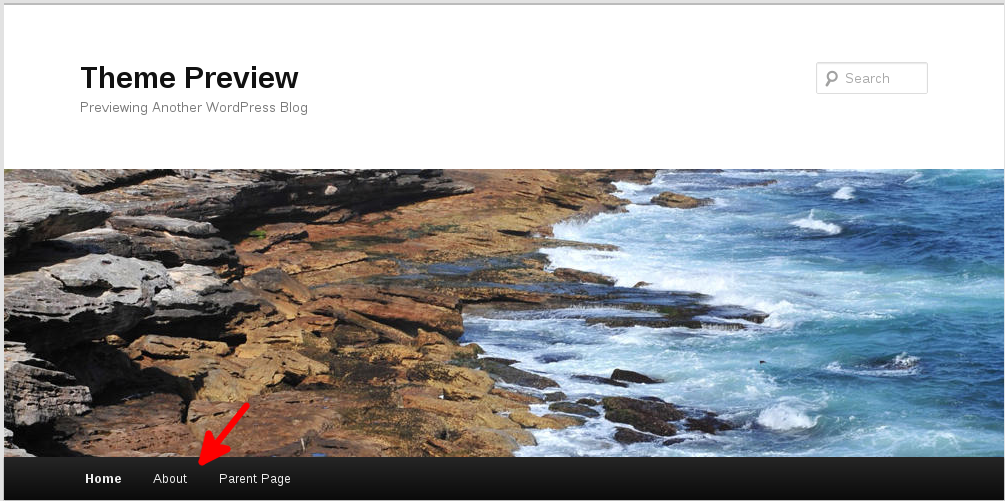
It took me a while to build a complete WordPress blog with all the things I needed, from modifying the default Twenty Eleven theme to broadcasting my posts directly on Twitter. WordPress has a nice selection of plugins and given the fact I spent a few days evaluating all the possibilities, I decided to share my own setup to speed up the process in case you are willing to build a WordPress powered blog. The plugins: And a few modifications I made on my Child theme for the Twenty Eleven theme to suit my needs: Remove the navigation buttons on the header. On the Child theme s style.css:
#access, #branding .only-search #s, .entry-header .comments-link  
display: none;
 
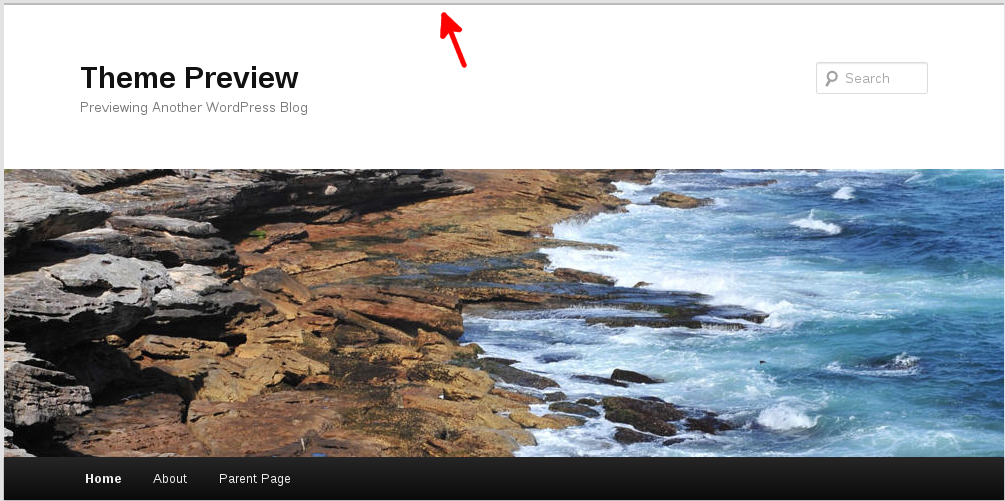
Remove the gray line on the top of the header s banner. On the Child theme s style.css:
#branding  
border-top: none;
 
.and a little tip about WordPress itself: have you ever wondered how you could install/update/remove a WordPress theme or plugin without FTP access? Here s how! On the config.php file:
/*** Updates WordPress without FTP credentials. ***/
define('FS_METHOD','direct');
If you know any other handy WordPress Tip or Plugin, please share!

15 November 2012

Axel Beckert: Tools to handle archives conveniently

TL;DR: There s a summary at the end of the article. Today I wanted to see why a dependency in a .deb-package from an external APT repository changed so that it became uninstallable. While dpkg-deb --info foobar.deb easily shows the control information, the changelog is in the filesystem part of the package. I could extract that one dpkg-deb, too, but I d have to extract either to some temporary directory or pipe it into tar which then can extract a single file from the archive and sent it to STDOUT:
dpkg-deb --fsys-tarfile foobar.deb   tar xOf - ./usr/share/doc/foobar/changelog.Debian.gz   zless
But that s tedious to type. The following command is clearly less to type and way easier to remember:
acat foobar.deb ./usr/share/doc/foobar/changelog.Debian.gz   zless
acat stands for archive cat is part of the atool suite of commands:
als
lists files in an archive.
$ als foobar.tgz
drwxr-xr-x abe/abe           0 2012-11-15 00:19 foobar/
-rw-r--r-- abe/abe          13 2012-11-15 00:20 foobar/bar
-rw-r--r-- abe/abe          13 2012-11-15 00:20 foobar/foo
acat
extracts files in an archive to standard out.
$ acat foobar.tgz foobar/foo foobar/bar
foobar/bar
bar contents
foobar/foo
foo contents
adiff
generates a diff between two archives using diff(1).
$ als quux.zip
Archive:  quux.zip
  Length      Date    Time    Name
---------  ---------- -----   ----
        0  2012-11-15 00:23   quux/
       16  2012-11-15 00:22   quux/foo
       13  2012-11-15 00:20   quux/bar
---------                     -------
       29                     3 files
$ adiff foobar.tgz quux.zip
diff -ru Unpack-3594/foobar/foo Unpack-7862/quux/foo
--- Unpack-3594/foobar/foo      2012-11-15 00:20:46.000000000 +0100
+++ Unpack-7862/quux/foo        2012-11-15 00:22:56.000000000 +0100
@@ -1 +1 @@
-foo contents
+foobar contents
arepack
repacks archives to a different format. It does this by first extracting all files of the old archive into a temporary directory, then packing all files extracted to that directory to the new archive. Use the --each (-e) option in combination with --format (-F) to repack multiple archives using a single invocation of atool. Note that arepack will not remove the old archive.
$ arepack foobar.tgz foobar.txz
foobar.tgz: extracted to  Unpack-7121/foobar'
foobar.txz: grew 36 bytes
apack
creates archives (or compresses files). If no file arguments are specified, filenames to add are read from standard in.
aunpack
extracts files from an archive. Often one wants to extract all files in an archive to a single subdirectory. However, some archives contain multiple files in their root directories. The aunpack program overcomes this problem by first extracting files to a unique (temporary) directory, and then moving its contents back if possible. This also prevents local files from being overwritten by mistake.
(atool subcommand descriptions from the atool man page which is licensed under GPLv3+. Examples by me.) I though miss the existence of an agrep subcommand. Guess why? atool supports a wealth of archive types: tar (gzip-, bzip-, bzip2-, compress-/Z-, lzip-, lzop-, xz-, and 7zip-compressed), zip, jar/war, rar, lha/lzh, 7zip, alzip/alz, ace, ar, arj, arc, rpm, deb, cab, gzip, bzip, bzip2, compress/Z, lzip, lzop, xz, rzip, lrzip and cpio. (Not all subcommands support all archive types.) Similar Utilities There are some utilities which cover parts of what atool does, too: Tools from the mtools package Yes, they come from the handle MS-DOS floppy disks tool package, don t ask me why. :-)
uz
gunzips and extracts a gzip d tar d archives
Advantage over aunpack: Less to type. :-)
Disadvantage compared to aunpack: Supports only one archive format.
lz
gunzips and shows a listing of a gzip d tar d archive
Advantage over als: One character less to type. :-)
Disadvantage compared to als: Supports only one archive format.
unp unp extracts one or more files given as arguments on the command line.
$ unp -s
Known archive formats and tools:
7z:           p7zip or p7zip-full
ace:          unace
ar,deb:       binutils
arj:          arj
bz2:          bzip2
cab:          cabextract
chm:          libchm-bin or archmage
cpio,afio:    cpio or afio
dat:          tnef
dms:          xdms
exe:          maybe orange or unzip or unrar or unarj or lha 
gz:           gzip
hqx:          macutils
lha,lzh:      lha
lz:           lzip
lzma:         xz-utils or lzma
lzo:          lzop
lzx:          unlzx
mbox:         formail and mpack
pmd:          ppmd
rar:          rar or unrar or unrar-free
rpm:          rpm2cpio and cpio
sea,sea.bin:  macutils
shar:         sharutils
tar:          tar
tar.bz2,tbz2: tar with bzip2
tar.lzip:     tar with lzip
tar.lzop,tzo: tar with lzop
tar.xz,txz:   tar with xz-utils
tar.z:        tar with compress
tgz,tar.gz:   tar with gzip
uu:           sharutils
xz:           xz-utils
zip,cbz,cbr,jar,war,ear,xpi,adf: unzip
zoo:          zoo
So it s very similar to aunpack, just a shorter command and it supports some more exotic archive formats which atool doesn t support. Also part of the unp package is ucat which does more or less the same as acat, just with unp as backend. dtrx From the man page of dtrx:
In addition to providing one command to extract many different archive types, dtrx also aids the user by extracting contents consistently. By default, everything will be written to a dedicated directory that s named after the archive. dtrx will also change the permissions to ensure that the owner can read and write all those files. Supported archive formats: tar, zip (including self-extracting .exe files), cpio, rpm, deb, gem, 7z, cab, rar, and InstallShield. It can also decompress files compressed with gzip, bzip2, lzma, or compress.
dtrx -l lists the contents of an archive, i.e. works like als or lz. dtrx has two features not present in the other tools mentioned so far: Unfortunately you can t mix those two features. But you can use the following tool for that purpose: deepfind deepfind is a command from the package strigi-utils and recursively lists files in archives, including archives in archives. I ve already written a detailed blog-posting about deepfind and its friend deepgrep. tardiff tardiff was written to check what changed in source code tarballs from one release to another. By default it just lists the differences in the file lists, not in the files contents and hence works different than adiff. Summary atool and friends are probably the first choice when it comes to DWIM archive handling, also because they have an easy to remember subcommand scheme. uz and lz and the shortest way to extract or list the contents of a .tar.gz file. But nothing more. And you have to install mtools even if you don t have a floppy drive. unp comes in handy for exotic archive formats atool doesn t support. And it s way easier to remember and type than aunpack. dtrx is neat if you want to extract archives in archives or if you want to extract metadata from some package files with just a few keystrokes. For listing all files in recursive archives, use deepfind.

14 November 2012

Jaldhar Vyas: Sal Mubarak 2069

Wishing everyone reading this a happy Gujarati New Year (Vikram Samvat 2069, called Krodhin,) Diwali was a bit of a squib this year thanks to the aftermath of Hurricane Sandy but we survived relatively unscathed so I pray that in the upcoming year Lakshmi Ma will give a portion of my good fortune to those who are still suffering.

Sandro Tosi: Project Euler - Problem 4

Here's my solution to Project Euler problem 4:

# handy function to check if a number is palindrome
def is_palindrome(i):
    return str(i) == str(i)[::-1]
# what's the max?
max_p = 0
# multiply all numbers  i  between 100 and 998, with all between i+1 and 999
for i in xrange(100, 999):
    for j in xrange(i+1, 1000):
        p = i * j
        if is_palindrome(p) and p > max_p:
            max_p = p
print max_p

Comments are welcome.

Update: fixed as per Alex comment.

Sandro Tosi: Project Euler - Problem 6


Here's my solution to Project Euler problem 6:

# where the numbers list ends
n = 100
# handy function to square a number
pow2 = lambda x: pow(x, 2)
# first compute the sum of the squares
sumsq = sum(map(pow2, range(1, n+1)))
# then the square of the sum
sqsum = pow2(sum(range(1, n+1)))
print sqsum - sumsq

13 November 2012

Blars Blarson: thinkpad-x120e

New Laptop: Thinkpad x120e My travels the last few days have not been to anywhere new. I spent a few days at Tumco, then spent today in Algodones and am staying the night at Quechen Casino. Since I never described my new computer due to network problems, I figured now would be a good time to do so. I purchased a discontinued Lenovo Thinkpad x120e laptop. It has 2gb ram, a 320gb hard drive, dual-core AMD processor, and no optical drive. The first thing I did was wipe windows off of it and install Debian Squeeze (stable), then attempt to upgrade to Debian Wheezy (testing). (Squeeze lacked the drivers for some hardware.) Wheezy lacked the drivers for the display, so during the boot sequence it would switch to an unreadable screen. I eventually found that Sid (unstable) had the driver for the display in non-free. (To install it I needed to boot with the Squeeze kernel.) The most significant thing I have not yet debugged is hibernate mode. One thing I really like about this system is the 4-6 hour battery life. This is enough that I can charge during the day when my solar is in absorption mode (meaning the panels are producing more power than the house battery can safely take) and use it at night and in the morning when there is no spare solar power without depleting the house battery. The 12v charger that I had purchased for my old Thinkpad (which died, prompting the replacement) works fine on my new one. I purchased a USB powered DVD writer to give me optical capability when I need it. This uses two of the three USB ports. The network problem I had this summer was the Millenicom 3g USB stick glitched and needed to be reset with their proprietary software that is only available for Windows and Mac. Lacking access to a Windows system that I could install software on, this meant that I was without my network connection. I used the Sandy Library (fast, free wifi) 30 miles from my worksite and occasionally wifi at a closer coffee shop or cafe which were both unreliable.

4 November 2012

Jaldhar Vyas: A Tale To Strike Terror Into The Hearts Of All Men, Ninjas, and Disney Princesses

Normally around this time of year I would post a picture of one of my children in their Halloween costumes but alas this All-Hallows Eve, Hurricane Sandy has put an end to such frivolity. For, from out of this hell-born wind comes the tale of a creature so horrifying that even puissant warlocks of dark power cower in their Batman pajamas at the sound of his doom-laden moans rending the night as he wanders pitiously through the blackened streets searching for his forbidden love. I speak of the one known only as... THE MAN WHO WENT FOUR DAYS WITHOUT INTERNET Halloween Pic

Russ Allbery: Review: Set This House in Order

Review: Set This House in Order, by Matt Ruff
Publisher: Perennial
Copyright: 2003
Printing: 2004
ISBN: 0-06-095485-X
Format: Trade paperback
Pages: 479
A textbook case history would say that Andy Gage has disassociative identity disorder (referred to here as the more common although medically inaccurate "multiple personality disorder" for reasons of clarity and to match casual speech, according to the author). However, that's a completely inadequate description. A better description would be that Andy Gage's body is inhabited by a large set of different personalities, who take turns being in control. The original Andy Gage is dead, shattered by horrific childhood abuse. Aaron became the dominant personality and gave structure to the internal geography of the mind they all share, with the help of extensive counselling. But Aaron was exhausted by being the public face and maintaining control of the shared body. Hence, Andrew. Andrew Gage is the first-person narrator of half of this book. He is twenty-eight, the same age as the body, but he's only existed for two years. He considers Aaron his father, since Aaron called him out of the lake inside their internal metal geography. His purpose is to run the body and be the public face of the family. He is by turns capable and naive, shy on personal experience, but able to get the help of the others. The one heard from most frequently is Adam, a rude and mischevious teenager who also has an uncanny ability to read other people, and who frequently watches through the body's eyes from what the family calls the "pulpit" and gives Andrew advice. Andrew works for Julie Sivik, a woman he met the day he quit his job at a big-box store because he couldn't explain his behavior to his boss without discussing being a multiple. Julie is a wholly impractical, slightly unethical, well-meaning force of chaos who serves as the thread that draws the plot of the book together. She's running a startup on ingenuity and borrowed money that is attempting to create a comprehensive and customizable virtual reality world. She's the one who finds Penny and hires her, in part for her skills, and in part to push Penny and Andrew together. Penny Driver has the same condition as Andrew, but Penny is only vaguely aware of it. The world for her is full of blackouts, lost time, waking up in strange and sometimes horrific situations, and attempting to structure her life based on notes left for herself that she didn't write. When she meets Andrew, she's barely making it through life; thankfully, one of her personalities is remarkably good at computers, and that has been enough to make a living despite the chaos. But Julie is the unintentional catalyst for her losing that job, the best job she's ever had, leaving her with no real alternative but to take the job with Julie's company. There are a few things that are important to say up-front about this book. First, neither I nor the author are actually multiples (or, put another way, neither of us have DID), and writing about atypical mental states is fraught with peril. It's very easy to misrepresent other people's experiences, and multiple personalities in particular are frequent material for dramas of all sorts. There's something people find inherently fascinating about the idea, and it's easy for that fascination to run away with reality and distort the lived experience. I recommend reading Ruff's FAQ about the book, which spells out what his goals are and what approach he took. I did some quick searches and didn't uncover a lot of anger or dislike of the book among either people who have DID or psychiatrists, and it seems true to the descriptions of internal reality I've heard from people who are multiples. But despite being more respectful of real experience than most fictional treatments of DID, this is still a work of fiction written by someone without first-hand experience, and it's worth keeping that in mind. Second, DID is an intensely controversial diagnosis among psychiatrists. There are, generally speaking, two major controversies. One is over whether or not DID can actually be caused by traumatic experiences such as childhood abuse, or whether it is a creation of psychiatrists, a mental model that they've imposed on their patients or convinced their patients to believe. Set This House in Order comes down firmly on the first side of that controversy: that DID can be created by abuse and is not a creation of psychotherapy. (So, I should note, does every multiple that I've ever talked to or read.) Second, there is significant controversy over treatment, with some psychiatrists believing that integration of the personalities into one is the only true treatment, and others believing that multiples can remain stable and functional as multiple personalities. Set This House in Order leans strongly towards the view that multiples can be stable as multiples and that while integration may be appropriate for some, it's not for all. Both of these viewpoints are presented very convincingly by the narrative in the book, and both are consistent with the beliefs of a lot of multiples, but it's worth remembering that these are active and often quite heated controversies and a novel is not evidence. It's good to be aware of both of those points, and to read Put This House in Order as something of a what-if, where much more is clear about DID than is actually clear in our world. But once one has done that, one is in for an excellent book. I loved this book from start to finish. (Well, okay, I felt some surprise at the nature of the ending, but it grew on me after further consideration.) It's simply a brilliant novel, with a little bit of everything: very good characterization, messy love affairs, the satisfying tension of someone overcoming great odds to put themselves together with the help of friends, a startlingly original perspective of the world, some excellent surprises, and some absolutely wonderful characters. Andrew is a good choice of narrator: he brings an earnest calm to a story that could otherwise be quite chaotic and provides a great vantage point for the reader. And I found Penny (and particularly some of her other souls) impossible not to like. Set This House in Order is a tense book in places, and it's a book where people's lives break down before they can get better. It's also a book about rather horrific abuse, and while nearly all of the specifics happen off-stage, imagination fills in some nasty details. But Ruff manages to write it with a structure and with enough calm assurance that I felt just reassured enough without taking away the tension. That's a tricky balance; few books do it better. And the supporting characters are a delight. One might think, with all the complexity happening for both Andrew and Penny, that Ruff wouldn't have room in the narrative for other characters, but one would be wrong. There are very few saints and demons here, just a lot of complex people, with their own problems and their own perspectives, who are generally trying to do the best they can from day to day. There are some clear-cut villains in the past Ruff wisely makes no attempt to add shades of grey to abusers but even there one can see some clear signs of untreated severe mental illness and chaotic lives rather than mustache-twirling pre-meditated villainy. This is, in short, a book full of people, in all their messy complications, which is what makes it so delightful. I'm not going to say anything more about the plot, or even the various personalities, since discovering the direction of the book was so much of the fun. I will say that, despite the subject matter and some of the events, the book is surprisingly gentle. One of the things about it that I loved the most was the emotional tone Ruff gave to being a multiple: the sense of a squabbling but tight-knit family looking out for each other. I can't judge the reality of this impression, but it makes for a wonderful story. Highly recommended. The best book I've read so far this year. Rating: 10 out of 10

21 October 2012

Christian Perrier: [life] Running update: nearly qualified for Boston marathon...

That was not my target in today's marathon (my second one in the year). The target was breaking my 3h38'45" record, set on June 10th in Caen. And, well, I did it. By more than 5 minutes \o/. Of course, the Seine-Eure marathon is the perfect place for this: My target was running 5'06"/km, so 3h35'11" (but the target was running this as long as possible and see what happens after km 35). I did this nearly perfectly in the first half, reaching the half-marathon in 1h47'30". Double this and you get 3h35'..:-) "However", I slightly accelerated in the second half, first without noticing, then because....I just could do it..:-). So I managed to run the second half at an average 5'/km, with even the last 2 kilometers around 4'50" and an amazing sprint at the end. Usain bubulle. The outcome is 3h33'35". Doh. Never thought I could do this. It seems that my unusual preparation (remember the "let's run a marathon when coming back from work, at night", in September? or the 5 half-marathons in a row....culminating in a 3/4 marathon in the 6th week-end?)...was not so bad. I'm now very close to qualifying times for Boston, my dream marathon (much more than NYC) as they are 3h30' for my age category. Well, another option is to wait turning 55, where the qualifying time is then 3h40..:-)...but it woudl be quite good to complete one under 3h30. Now, it doesn't look like a dream. We'll see at the end of next year as I will only run one marathon, in autumn, more focusing Spring on ultra running (and, technically, a marathon, but that will be the Mont-Blanc marathon, just before Debconf13....and these 42.195km are quite different from those in Normandy!

13 October 2012

Joachim Breitner: Creating a Debian source package without unpacking the source

There may be a situation where you want to create a Debian source package without having to unpack the upstream source. One case is where you store your debian/ directory in a version control system of its own and to build your package, you pass the .dsc file to a tool like pbuilder or some remote builder. Now a modern debian source package is just a text file (the .dsc file) that references two tarballs, one being the upstream source and the other being the Debian directory. Thanks to Niels Thykier on #debian, I found the magic invocation of dpkg-source that allows you to create the .dsc directly from the two tarballs, the control file and the changelog:
> apt-get source --download-only -t experimental haskell-mtl
Reading package lists... Done
Building dependency tree       
Reading state information... Done
NOTICE: 'haskell-mtl' packaging is maintained in the 'Darcs' version control system at:
http://darcs.debian.org/darcs/pkg-haskell/haskell-mtl
Need to get 18.8 kB of source archives.
Get:1 http://http.debian.net/debian/ experimental/main haskell-mtl 2.1.2-1 (dsc) [1616 B]
Get:2 http://http.debian.net/debian/ experimental/main haskell-mtl 2.1.2-1 (tar) [13.7 kB]
Get:3 http://http.debian.net/debian/ experimental/main haskell-mtl 2.1.2-1 (diff) [3509 B]
Fetched 18.8 kB in 0s (22.3 kB/s)    
Download complete and in download only mode
> cp ./haskell-mtl_2.1.2-1.dsc ./haskell-mtl_2.1.2-1.dsc-orig
> tar xzf haskell-mtl_2.1.2-1.debian.tar.gz
> dpkg-source -cdebian/control -ldebian/changelog --format="3.0 (custom)" --target-format="3.0 (quilt)" -b / haskell-mtl_2.1.2.orig.tar.gz haskell-mtl_2.1.2-1.debian.tar.gz
dpkg-source: info: using source format  3.0 (custom)'
dpkg-source: info: building haskell-mtl in haskell-mtl_2.1.2-1.dsc
> diff  -u haskell-mtl_2.1.2-1.dsc haskell-mtl_2.1.2-1.dsc-orig
--- haskell-mtl_2.1.2-1.dsc	2012-10-13 15:09:00.031695856 +0200
+++ haskell-mtl_2.1.2-1.dsc-orig	2012-10-13 15:08:47.267696329 +0200
@@ -1,3 +1,6 @@
+-----BEGIN PGP SIGNED MESSAGE-----
+Hash: SHA1
+
 Format: 3.0 (quilt)
 Source: haskell-mtl
 Binary: libghc-mtl-dev, libghc-mtl-prof, libghc-mtl-doc
@@ -23,3 +26,11 @@
 Files: 
  943c110524d96126bfa0e61f7df1ebcd 13723 haskell-mtl_2.1.2.orig.tar.gz
  dda5ded58a8d009ecddeed68058ca787 3509 haskell-mtl_2.1.2-1.debian.tar.gz
+
+-----BEGIN PGP SIGNATURE-----
+Version: GnuPG v1.4.12 (GNU/Linux)
+
+iEYEARECAAYFAlBzRQIACgkQ9ijrk0dDIGwymwCfW87jwCv5ZvAXPBwh0LbvYLP9
+n+wAn3TCJwPRuBDEWRYmcv3Opn1Kb9+F
+=/Llc
+-----END PGP SIGNATURE-----
As you can see, the resulting .dsc file is identical to the original one, so this approach works. The parameter to -b does not matter as long as it is some existing directory. Of course you can easily shoot yourself and others in the foot, almost as easily as hand-editing the .dsc file... but if you know what you are doing, then this can be quite handy. Next to do: Write a tool that takes an unpacked Debian directory as an argument, packs it, finds the original tarball using uscan and creates the .dsc file. Would this be something that people would want in the devscripts package?

28 September 2012

Joachim Breitner: The might applicative left fold

Just about three years ago, I created the automatic rule-based time tracker (arbtt), a tool that quietly runs in the background, records your current windows and their titles, and allows you to later process this data using, well, rules. By now, I have almost half a million records, spanning 317 days of me working at the computer. Processing this amount of data has become very memory-hungry: It takes 1G of RAM to process my data. Other users, with a presumably higher sampling rate, report even worse performance, which finally made me approach the problem again. Naturally, one wonders why it is such a memory hog, after all it takes just one run over the data to produce a report. The data itself is a lazy list so the garbage collector should the be able to drop the seen elements immediately. But arbtt is able to print several reports in one run; there is even an option (--each-category) that creates a number of reports based on the data itself. The code was structured that first a number of values that are possibly used by several reports are first created one and then re-used by the reports. And then there is the issue of the filters: The user specifies a what predicates are interesting (e.g., those where he was active) and some reports need to know not only which samples were matched, but also distinguish the consecutive runs of selected samples. Lots of reasons that made it hard to not use the list of of samples several times, which causes it to be completely retained in memory. The idea of completely rewriting everything in a much more imperative way was not appealing. But luckily Haskell s good abstraction possibilities can help here. What is the correct way to traverse a lazy list and calculate some information about it? It is a strict left fold, i.e. an algorithm that can be represented as arguments to
foldl' :: (s -> x -> s) -> s -> [x] -> s
For those who are new to folds: The first argument is a function that processes one element from the list, returning the new state of the processing. The second argument is the initial state. And foldl' can apply such an algorithm to a list to return a final state. So obviously I had to express my reports as left folds. To think clearer about it, I gave them a name. I also added a finishing step to the mix, which is handy:
data LeftFold x a = forall s. LeftFold  
  start :: s,
  process :: s -> x -> s,
  finish :: s -> a
   
A value of type LeftFold x a is then an algorithm that traverses a list of xes and returns something of type a. The forall s. means that the user of such a processor must not make any assumptions about the type of the state. I also have a function that runs such a list processor, simply by invoking foldl' with the arguments stored in the LeftFold constructor:
runLeftFold :: LeftFold x a -> [x] -> a
runLeftFold (LeftFold st1 p1 f1) xs = f1 (foldl' p1 st1 xs)
Now, as a Haskell programmer, I am searching for monads everywhere, and it really would have been nice if this were a monad, as they are very easy to compose. But unfortunately, they do not form a monad. If they did then I could decide after running one processor and looking at the result how I would want to process the list now, but this obviously contradicts with the desire to traverse the list only once. But there is the monad s smaller ugly sibling, the applicative functor. One can still somewhat nicely compose them to form more complex algorithms, just with more restrictions. Here is my instance:
instance Functor (LeftFold x) where
  fmap f (LeftFold st1 p1 f2) = LeftFold st1 p1 (f . f2)
instance Applicative (LeftFold x) where
  pure x = LeftFold () const (const x)
  LeftFold st1 p1 f1 <*> LeftFold st2 p2 f2 = LeftFold  
  start  =  st1 :!: st2,
  process = \(s1 :!: s2) x -> p1 s1 x :!: p2 s2 x,
  finish  = \(s1 :!: s2)  -> f1 s1 (f2 s2)
   
The :!: operator is a strict tuple constructor. This is important, as otherwise the fold would be come a lazy one, I would be building up huge numbers of thunks and performance would be very bad. For the same reason every list processor should make sure that its state does not build thunks once it is in weak head normal form. Now I am at a abstraction level that I feel comfortable working in, by writing functions that combine the list processors in various ways. Probably the most important one for me is already present in the libraries (here with a specialized type):
sequenceA :: [LeftFold x a] -> LeftFold x [a]
This is the whole trick: Now I can, based on the user input, run any number and selection of reports in one single list traversal. I find it very elegant that under the hood , the strict tuples are nested at precisely the right depth depending on the length of the list. As hinted at before, I do some interesting stuff that was previously represented as lists of lists of values. Expressing these as left folds was a bit tricky, but again, the complexity is contained in the combinators that I wrote (although it still gets confusing, check out processIntervalReport in Stats.hs):
monoidFold :: Monoid m => LeftFold m m
mapElems :: LeftFold y a -> (x -> y) -> LeftFold x a 
filterWith :: (x -> Bool) -> LeftFold (Bool :!: x) a -> LeftFold x a
onSelected :: LeftFold x a -> LeftFold (Bool :!: x) a
onJusts :: LeftFold x a -> LeftFold (Maybe x) a
onAll :: LeftFold x a -> LeftFold (Bool :!: x) a
runOnGroups :: (x -> x -> Bool) -> LeftFold x y -> LeftFold y z -> LeftFold x z
runOnIntervals :: LeftFold x y -> LeftFold y z -> LeftFold (Bool :!: x) z
lfLength :: LeftFold x Int
lfFirst :: LeftFold x (Maybe x)
lfLast :: LeftFold x (Maybe x)
toList :: LeftFold x [x]
concatFold :: LeftFold [x] [x]
As a result, the program now only requires 10MB and runs 18% faster. If you wonder why, in the definition of runLeftFold, I do not apply the finish function strictly: That is intentional; I am actually passing the result of a processor that calculates some often required data (e.g. total time recorded) as an argument to all the list processors. (Near the end of the main function in stats-main.hs) This loop works fine as long as I am using these only in the finish functions.
There is one downside to this approach: I cannot easily calculate stuff on demand and share it between two reports. Previously, I could just bind this to a variable, pass it to all reports, only if at least one is interested it would be evaluated and if several are interested, the result would be shared. I do not have a good solution for this yet. The code above is in the self-contained module LeftFold.hs in the arbtt sources.
Several People have had this idea before, here is one blog post by Max Rabkin.
Flattr this post

24 September 2012

Diego Escalante Urrelo: WebKitGTK+ failing to build, argument list too long

The last few days I have been unable to build WebKitGTK+ from git. The problem is that make chokes the command line with an insanely long list of file names. You need a patched version of make.

Pictured: myself debugging WebKit build issues. Gustavo told me that WebKit has some handy jhbuild scripts that include a patched make. Being WebKit-scale I knew the scripts did a lot more than what I wanted, so I just reused its moduleset for a quick buildone command: $ cd WebKit/Tools/gtk/
$ jhbuild -m file:// pwd /jhbuild.modules buildone make
And yes, it works! Thanks Gustavo.

18 September 2012

Bdale Garbee: Igniter Continuity over Radio

When Keith and I released a new version of AltOS, the open source firmware and software system associated with our Altus Metrum hobby rocket avionics systems last week, we forgot to mention one small but really neat new feature Keith spontaneously added a few months ago. When a rocket is on the rail waiting to launch, we now beep out the igniter continuity status over the radio link instead of just sending periodic audio beeps. This is particularly useful when flying TeleMini, which is just too small to include an on-board beeper. Previously, you had to check the ground station computer to see if the board powered up correctly and was ready to fly. Now all you need is an HT tuned to the right frequency, which is easy to have in your pocket or clipped on your belt while preparing a rocket for flight! Son Robert and I made heavy use of this last weekend flying at the Tripoli Colorado Fall Frenzy 2012 launch, where 4 of our 5 flights were in TeleMini-equipped rockets set up for apogee-only electronic recovery deployment with motor backup. I also found it really handy when setting up YikStik3 on the flight line at Airfest 18. It was hard to hear the altimeter beepers on the two TeleMetrum boards buried deep in the airframe, but they were loud and clear through the HT in my back pocket! Thanks, Keith! So much improvement in flight-line experience from so little code...

12 September 2012

Gintautas Miliauskas: statsb.in

It happens occasionally that I need to validate an optimization by benchmarking, and the benchmark results are a bit noisy. Usually the situation does not ask for a heavy-duty statistical analysis, and I am too lazy for that anyway. However, sometimes having at least the fundamental statistics of a sample would be handy.

Obviously, calculating the standard deviation of a sample in the 21st century by itself is not a problem. There is LibreOffice, there is R, there's a bazillion statistical tools out there. They do feel a bit heavyweight for the task though, and the friction involved in starting them up and entering the data in the right format means that often I just do not bother. Google brings up some dynamic webpages for the task, a much more lightweight solution, but most of these are ugly and ad-riddled.

What's a programmer to do? Code up another weekend app, statsb.in, of course. And it is the way I like it: there is a textarea where it is easy to paste and edit inline snippets of text, say, shell script output in full; non-numeric data are ignored; statistics are computed on the fly (no stupid "Submit" buttons); and you can save the snippet on the server and get a short link (useful for footnotes pointing to data sources).

The service probably will not be expanded much further. After all, if those basic statistics are not enough, you are probably better off firing up a real statistics tool. However, I do plan to add another page for the most common task that I run into, namely, comparing the means of two populations (did my optimization have an effect?). In other words, calculating the p-value of the hypothesis that the means of two populations are the same. Stay tuned.

Next.

Previous.