Search Results: "spa"

23 July 2015

Daniel Pocock: Recording live events like a pro (part 1: audio)

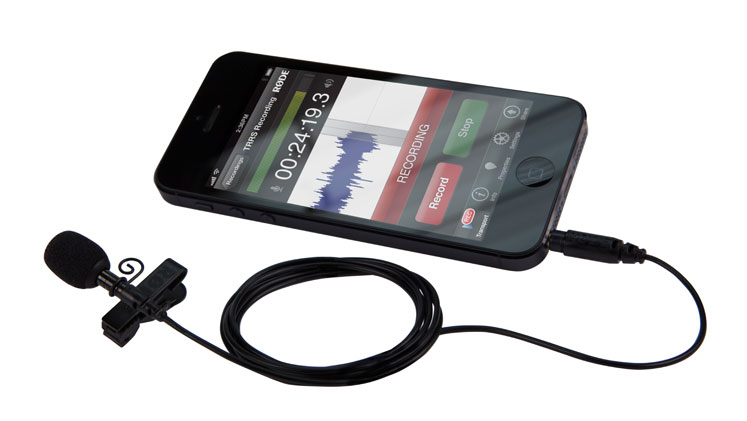
Whether it is a technical talk at a conference, a political rally or a budget-conscious wedding, many people now have most of the technology they need to record it and post-process the recording themselves. For most events, audio is an essential part of the recording. There are exceptions: if you take many short clips from a wedding and mix them together you could leave out the audio and just dub the couple's favourite song over it all. For a video of a conference presentation, though, the the speaker's voice is essential. These days, it is relatively easy to get extremely high quality audio using a lapel microphone attached to a smartphone. Lets have a closer look at the details. Using a lavalier / lapel microphone Full wireless microphone kits with microphone, transmitter and receiver are usually $US500 or more. The lavalier / lapel microphone by itself, however, is relatively cheap, under $US100. The lapel microphone is usually an omnidirectional microphone that will pick up the voices of everybody within a couple of meters of the person wearing it. It is useful for a speaker at an event, some types of interviews where the participants are at a table together and it may be suitable for a wedding, although you may want to remember to remove it from clothing during the photos. There are two key features you need when using such a microphone with a smartphone:
  • TRRS connector (this is the type of socket most phones and many laptops have today)
  • Microphone impedance should be at least 1k (that is one kilo Ohm) or the phone may not recognize when it is connected
Many leading microphone vendors have released lapel mics with these two features aimed specifically at smartphone users. I have personally been testing the Rode smartLav+ Choice of phone There are almost 10,000 varieties of smartphone just running Android, as well as iPhones, Blackberries and others. It is not practical for most people to test them all and compare audio recording quality. It is probably best to test the phone you have and ask some friends if you can make test recordings with their phones too for comparison. You may not hear any difference but if one of the phones has a poor recording quality you will hopefully notice that and exclude it from further consideration. A particularly important issue is being able to disable AGC in the phone. Android has a standard API for disabling AGC but not all phones or Android variations respect this instruction. I have personally had positive experiences recording audio with a Samsung Galaxy Note III. Choice of recording app Most Android distributions have at least one pre-installed sound recording app. Look more closely and you will find not all apps are the same. For example, some of the apps have aggressive compression settings that compromise recording quality. Others don't work when you turn off the screen of your phone and put it in your pocket. I've even tried a few that were crashing intermittently. The app I found most successful so far has been Diktofon, which is available on both F-Droid and Google Play. Diktofon has been designed not just for recording, but it also has some specific features for transcribing audio (currently only supporting Estonian) and organizing and indexing the text. I haven't used those features myself but they don't appear to cause any inconvenience for people who simply want to use it as a stable recording app. As the app is completely free software, you can modify the source code if necessary. I recently contributed patches enabling 48kHz recording and disabling AGC. At the moment, the version with these fixes has just been released and appears in F-Droid but not yet uploaded to Google Play. The fixes are in version 0.9.83 and you need to go into the settings to make sure AGC is disabled and set the 48kHz sample rate. Whatever app you choose, the following settings are recommended:
  • 16 bit or greater sample size
  • 48kHz sample rate
  • Disable AGC
  • WAV file format
Whatever app you choose, test it thoroughly with your phone and microphone. Make sure it works even when you turn off the screen and put it in your pocket while wearing the lapel mic for an hour. Observe the battery usage. Gotchas Now lets say you are recording a wedding and the groom has that smartphone in his pocket and the mic on his collar somewhere. What is the probability that some telemarketer calls just as the couple are exchanging vows? What is the impact on the recording? Maybe some apps will automatically put the phone in silent mode when recording. More likely, you need to remember this yourself. These are things that are well worth testing though. Also keep in mind the need to have sufficient storage space and to check whether the app you use is writing to your SD card or internal memory. The battery is another consideration. In a large event where smartphones are being used instead of wireless microphones, possibly for many talks in parallel, install a monitoring app like Ganglia on the phones to detect and alert if any phone has weak wifi signal, low battery or a lack of memory. Live broadcasts and streaming Some time ago I tested RTP multicasting from Lumicall on Android. This type of app would enable a complete wireless microphone setup with live streaming to the internet at a fraction of the cost of a traditional wireless microphone kit. This type of live broadcast could also be done with WebRTC on the Firefox app. Conclusion If you research the topic thoroughly and spend some time practicing and testing your equipment, you can make great audio recordings with a smartphone and an inexpensive lapel microphone. In subsequent blogs, I'll look at tips for recording video and doing post-production with free software.

21 July 2015

Dmitry Shachnev: GNOME Flashback 3.16 available in archive, needs your help

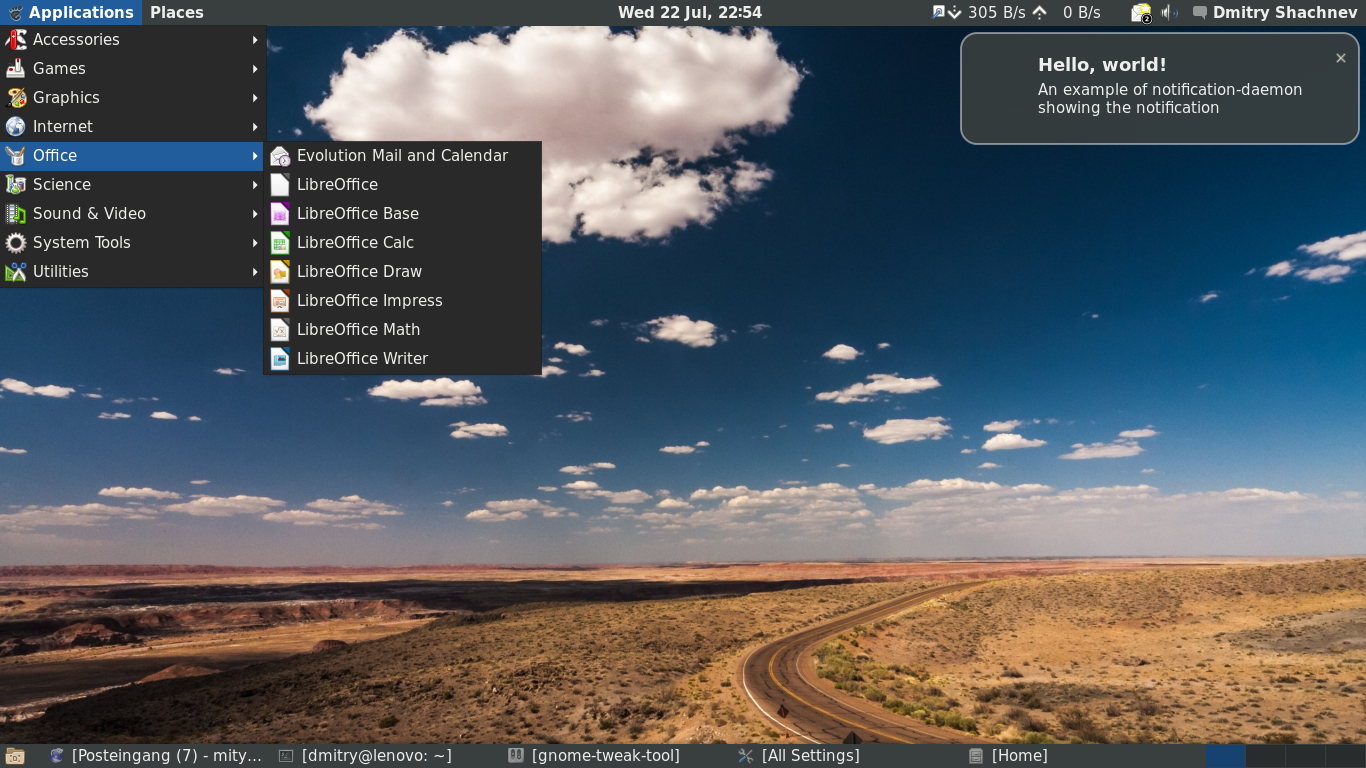
Some time ago GNOME Flashback 3.16/3.17 packages landed in Debian testing and Ubuntu wily. GNOME Flashback is the project which continues the development of components of classic GNOME session, including the GNOME Panel, the Metacity window manager, and so on. Screenshot The full changelog can be found in official announcement mail by Alberts and in changelog.gz files in each package, but I want to list the most imporant improvements in this release (compared to 3.14): Sounds interesting? Contribute! If you are interested in helping us, please write to our mailing list: gnome-flashback-list@gnome.org. The current TODO list is:
  1. Notification Daemon needs GTK notification support.
  2. GNOME Flashback needs screenshot, screencast, keyboard layout switching and bluetooth status icon.
  3. Fix/replace deprecated function usage in all modules.
  4. libstatus-notifier get it in usable state, create a new applet for gnome-panel.

20 July 2015

Ritesh Raj Sarraf: Micro DD meetup

A couple of us DDs met here on the weekend. It is always a fun time, being part of these meetings. We talked briefly about the status of Cross Compilation in Debian, on the tools that simplify the process. Next we touched upon licensing, discussing the benefits of particular licenses (BSD, Apache, GPL) from the point of view of the consumer. The consumer being an individual just wanting to use/improve software, to a consumer who's building a (free / non-free) product on top of it. I think the overall conclusion was that there are 2 major licenses at a high level: Ones those allow you take the code and not give back, and the others which allow you to take code only if you are ready to share the enhancements back and forward. Next we briefly touched upon systemd. Given that I recently spent a good amount of time talking to the systemd maintainer while fixing bugs in my software, it was natural for me to steer that topic. At the end, more people are now enthused to learn the paradigm shift. The other topic where we spent time was on Containers. It is impressive to see how quick, and how many, products have now spun out of cgroups. The topic moved to cgroups, thanks to systemd, one of the prime consumers of cgroups. While demonstrating the functionalities of Linux Containers (LXC), I realized that systemd has a tool in place to serve the same use case. So, once back home, I spent some time figuring out the possibility to replace my lxc setup, with that of systemd-nspawn. Apart from a minor bug, almost everything else seems to work find with systemd-nspawn. So, following is the config detail of my container, as used in lxc. And to replace lxc, I need to fill is almost all of it with systemd-nspawn.
rrs@learner:~$ sudo cat /var/lib/lxc/deb-template/config
# Template used to create this container: /usr/share/lxc/templates/lxc-debian
# Parameters passed to the template:
# For additional config options, please look at lxc.container.conf(5)
# CPU
lxc.cgroup.cpuset.cpus = 0,1
lxc.cgroup.cpu.shares = 1234
# Mem
lxc.cgroup.memory.limit_in_bytes = 2000M
lxc.cgroup.memory.soft_limit_in_bytes = 1500M
# Network
lxc.network.type = veth
lxc.network.hwaddr = 00:16:3e:0c:c5:d4
lxc.network.flags = up
lxc.network.link = lxcbr0
# Root file system
lxc.rootfs = /var/lib/lxc/deb-template/rootfs
# Common configuration
lxc.include = /usr/share/lxc/config/debian.common.conf
# Container specific configuration
lxc.mount = /var/lib/lxc/deb-template/fstab
lxc.utsname = deb-template
lxc.arch = amd64
# For apt
lxc.mount.entry = /var/cache/apt/archives var/cache/apt/archives none defaults,bind 0 0
lxc.mount.entry = /var/tmp/lxc var/tmp/lxc none defaults,bind 0 0
2015-07-20 / 16:28:58         
The equivalent of the above, in systemd-nspawn is:
sudo systemd-nspawn -n -b --machine deb-template --network-bridge=lxcbr0 --bind /var/cache/apt/archives/
The only missing bit is CPU and Memory, which I'm yet to try, is documented as doable with the systemctl --property= interface
      --property=
           Set a unit property on the scope unit to register for the machine. This only
           applies if the machine is run in its own scope unit, i.e. if --keep-unit is not
           used. Takes unit property assignments in the same format as systemctl
           set-property. This is useful to set memory limits and similar for machines.
With all this in place, using containers under systemd is a breeze.
rrs@learner:~/Community/Packaging/multipath-tools (experimental)$ sudo machinectl list
MACHINE      CLASS     SERVICE
deb-template container nspawn
1 machines listed.
2015-07-20 / 16:44:07         
rrs@learner:~/Community/Packaging/multipath-tools (experimental)$ sudo machinectl status deb-template
deb-template
           Since: Mon 2015-07-20 16:13:58 IST; 30min ago
          Leader: 9064 (systemd)
         Service: nspawn; class container
            Root: /var/lib/lxc/deb-template/rootfs
           Iface: lxcbr0
         Address: 172.16.10.12
                  fe80::706d:e4ff:fec5:bfc8%3
              OS: Debian GNU/Linux stretch/sid
            Unit: machine-deb\x2dtemplate.scope
                   9064 /lib/systemd/systemd --system --deserialize 14
                   system.slice
                     systemd-journald.service
                       9092 /lib/systemd/systemd-journald
                     ssh.service
                       9160 /usr/sbin/sshd -D
                     console-getty.service
                       9166 /bin/login --     
                       9171 -bash
                       9226 dhclient host0
Jul 20 16:13:58 learner systemd[1]: Started Container deb-template.
Jul 20 16:13:58 learner systemd[1]: Starting Container deb-template.
2015-07-20 / 16:44:15         

Categories:

Keywords:

Like:

19 July 2015

Laura Arjona: Family games: Robots

I play Robots with my kid. I ve tested the game with other kids and it seems that for ages 5 to 7 they like it. I ve talked about the game to several adults and it seems they like too, so I thought maybe writing about it here may be useful for somebody to enjoy some summer days. Players One player is the Robot. The other one is the programmer. If there are more players, it can be several robots and several programmers. If players are older, you can make the game more complicated making robots cooperate or programmers cooperate. If not, you make pairs 1-1 or 1 programmer 2 robots if the number is odd. The game The programmer must turn on the robot, pressing the ON/OFF button (robot chooses where s the button: nose, ear, belly, whatever).
Then, the robot say hello , and the programmer asks for the list of commands available (like Hello, robot, give me the list of commands ). The robot says the list of commands available, for example Run, stop, jump, sing a song, somersault, say something in a different language . Then, the programmer thinks a program, and loads it to the robot (speaks the list of orders, loudly, to the robot). Then the programmer presses the START button (Robot choses where it is) and then the robot has to perform the program without errors. If the robot performs correctly, wins one point. If it fails, looses one point. The programmer can design another program (maybe longer, maybe with some conditional expression) and tries the limits of the memory of robot. If the robot is tired, needs to charge batteries, or whatever, the roles programmer/robot are interchanged, and the one with more points in a certain amount of time or rounds, wins. Variants, tips If the programmer does not like the list, of commands, she can ask for updates, and maybe some new commands will be installed (and/or other uninstalled, who knows). Please be creative with the list of commands, or the game will be very boring. Depending on the operating system which runs the robot, it will give more or less options to the programmer, and the behaviour will be more evil or good. Robots shouldn t behave too much evil, though, otherwise the programmer will erase their disk and install Debian on them to make them obedient ;) You can play with a third person being the Robot manufacturer, who controls the robot, even sometimes overriding the programmer instructions (if the robot has an OS which is not free software). Robot will win one point obeying the manufacturer, but if there are more robots, will loose one round of playing because the programmer got angry and turned it off or reinstalled the software. The manufacturer and the programmer cooperate if the robot runs free software, though. Together they can expand robot memory (for example, lend a piece of paper where to store the program), or create new commands, fix bugs, or whatever. Comments? You can comment about this post in Pump.io thread about this post.
Filed under: My experiences and opinion Tagged: Debian, Education, English, Free culture, Free Software, Games, kids

18 July 2015

Niels Thykier: Performance tuning of lintian

For quite a while, Lintian has been able to create performance logs (--perf-debug --perf-output perf.log) that help diagnose where lintian spends most of its runtime. I decided to make lintian output these logs on lintian.debian.org to help us spot performance issues, though I have not been very good at analysing them regularly. At the beginning of the month, I finally got around to look a bit into one of them. My findings on IRC triggered Mattia Rizzolo to create this following graph. It shows the accumulated runtime of each check/collection measured in seconds. Find these findings, we set out to solve some of the issues. This lead to the following changes in 2.5.33 (in no particular order): Legend: S: run single threaded (1:1 performance improvement). P: run in parallel. Overall, I doubt the changes will give a revolutionary change in speed, but it should improve the 3rd, 4th and 5th slowest parts in Lintian. Beyond runtime performance, we got a few memory optimisations in the pipeline for Lintian 2.5.34: Combined these 6 commits reduce memory consumption in caches by ~33% compared to 2.5.33, when lintian processes itself. In absolute numbers, we are talking about a drop from 12.53MB to 8.48MB. The mileages can certainly vary depending on the package (mscgen only saw an ~25% improvement). Nevertheless, I was happy to list #715035 as being closed in 2.5.34. :)
Filed under: Debian, Lintian

17 July 2015

Dirk Eddelbuettel: RcppRedis 0.1.5

Another small update to RcppRedis arrived on CRAN this morning. The fix I made a few days ago addressing a unit test setup (for the rredis package loaded only for a comparison) didn't quite work out.
Changes in version 0.1.5 (2015-07-17)
  • Another minor fix to unit test setup for rredis.
Courtesy of CRANberries, there is also a diffstat report for the most recent release. More information is on the RcppRedis page.

This post by Dirk Eddelbuettel originated on his Thinking inside the box blog. Please report excessive re-aggregation in third-party for-profit settings.

16 July 2015

Osamu Aoki: debmake and debamke-doc and debian-handbook

While updating the maintainer's guide, I had faced with several issues to update it as it is, since it was based on the dh-make package and does not play nice with new features such as multi-arch etc. Also. the lack of capability to create a decent copyright information template was my concern.

I have created the debmake tool to address shortcomings of dh-make. It was good attempt for Jessie, but it has not so nice bug on parsing copyright. So I decided to drop it for Jessie.
https://packages.qa.debian.org/d/debmake.html

The current testing repository has the updated debmake command. With the -k option, you can check if the your debian/copyright is covering all the files properly in source or not.

Since I got this updated package, I rewrote the maintainer's guide from scratch. Now it is available in the debmake-doc package. You can see all the packaging cases including autotools, cmake, and libraries. If I made a mistake, let me know. As you may noticed, debian-doc related web pages are now generated from the latest uploaded packages mostly. debmake-doc is no exception.
"Guide for Debian Maintainers"
https://www.debian.org/doc/manuals/debmake-doc/index.en.html

By using debmake as the template generation tool, the document can be made shorter and there are many practical examples. More over, all the source code examples can be found in the source tree. Try:

$ apt-get source debmake-doc
$ sudo apt-get install devscripts build-essentials
$ sudo apt-get build-dep debmake-doc
$ cd debmake-doc*
$ make

You get the simulated log of building all the details of the packaging examples in this way.

With upcoming uploads, I should fix some CSS for the better cell phone compatibility but this is in good shape from the PC browsers.

Oh, not last ... NOW debian-handbook is on our www.debian.org server and its mirrors.

I think this is the most comprehensive work on Debian system and deserves to be presented in our web pages prominently. Kudos for people who wrote this fine manual.

https://www.debian.org/doc/manuals/debian-handbook/

(I think outdated reference to old TLDP pages should be mostly dropped in our https://www.debian.org/doc/ page.)

Please note web pages on www.debian.org has been modified to make the language based content negotiation. So you should see the page based on your browser settings.

Osamu

Raphaël Hertzog: Freexian s report about Debian Long Term Support, June 2015

A Debian LTS logoLike each month, here comes a report about the work of paid contributors to Debian LTS. Individual reports In June, 73.50 work hours have been dispatched among 7 paid contributors. Their reports are available: Evolution of the situation July has seen a nice increase in terms of sponsored hours (79.50 hours per month) but the trend is unlikely to continue for the next month, worse it might be negative. While most sponsors who joined us last year in July will renew their support, there are a few where I have no confirmation yet. Many thanks to those who confirmed early: Universit Lille 3, MyTux. Our first milestone of funding the equivalent of a half-time position is unlikely to be reached before DebConf or even this summer. If you want to prove me wrong, it s time to get in touch with your management and convince your company to contribute a small amount. In terms of security updates waiting to be handled, the situation is similar to last month: the dla-needed.txt file lists 24 packages awaiting an update (5 more than last month), the list of open vulnerabilities in Squeeze shows about 33 affected packages in total (3 less than last month). Thanks to our sponsors There are no new sponsors this month. But I decided to include the number of months that the sponsor has been with us. Since we value long-lasting relations, it seemed quite natural to add this.

No comment Liked this article? Click here. My blog is Flattr-enabled.

12 July 2015

Lunar: Reproducible builds: week 11 in Stretch cycle

Debian is undertaking a huge effort to develop a reproducible builds system. I'd like to thank you for that. This could be Debian's most important project, with how badly computer security has been going.

PerniciousPunk in Reddit's Ask me anything! to Neil McGovern, DPL. What happened in the reproducible builds effort this week: Toolchain fixes More tools are getting patched to use the value of the SOURCE_DATE_EPOCH environment variable as the current time:

In the reproducible experimental toolchain which have been uploaded: Johannes Schauer followed up on making sbuild build path deterministic with several ideas. Packages fixed The following 311 packages became reproducible due to changes in their build dependencies : 4ti2, alot, angband, appstream-glib, argvalidate, armada-backlight, ascii, ask, astroquery, atheist, aubio, autorevision, awesome-extra, bibtool, boot-info-script, bpython, brian, btrfs-tools, bugs-everywhere, capnproto, cbm, ccfits, cddlib, cflow, cfourcc, cgit, chaussette, checkbox-ng, cinnamon-settings-daemon, clfswm, clipper, compton, cppcheck, crmsh, cupt, cutechess, d-itg, dahdi-tools, dapl, darnwdl, dbusada, debian-security-support, debomatic, dime, dipy, dnsruby, doctrine, drmips, dsc-statistics, dune-common, dune-istl, dune-localfunctions, easytag, ent, epr-api, esajpip, eyed3, fastjet, fatresize, fflas-ffpack, flann, flex, flint, fltk1.3, fonts-dustin, fonts-play, fonts-uralic, freecontact, freedoom, gap-guava, gap-scscp, genometools, geogebra, git-reintegrate, git-remote-bzr, git-remote-hg, gitmagic, givaro, gnash, gocr, gorm.app, gprbuild, grapefruit, greed, gtkspellmm, gummiboot, gyp, heat-cfntools, herold, htp, httpfs2, i3status, imagetooth, imapcopy, imaprowl, irker, jansson, jmapviewer, jsdoc-toolkit, jwm, katarakt, khronos-opencl-man, khronos-opengl-man4, lastpass-cli, lava-coordinator, lava-tool, lavapdu, letterize, lhapdf, libam7xxx, libburn, libccrtp, libclaw, libcommoncpp2, libdaemon, libdbusmenu-qt, libdc0, libevhtp, libexosip2, libfreenect, libgwenhywfar, libhmsbeagle, libitpp, libldm, libmodbus, libmtp, libmwaw, libnfo, libpam-abl, libphysfs, libplayer, libqb, libsecret, libserial, libsidplayfp, libtime-y2038-perl, libxr, lift, linbox, linthesia, livestreamer, lizardfs, lmdb, log4c, logbook, lrslib, lvtk, m-tx, mailman-api, matroxset, miniupnpd, mknbi, monkeysign, mpi4py, mpmath, mpqc, mpris-remote, musicbrainzngs, network-manager, nifticlib, obfsproxy, ogre-1.9, opal, openchange, opensc, packaging-tutorial, padevchooser, pajeng, paprefs, pavumeter, pcl, pdmenu, pepper, perroquet, pgrouting, pixz, pngcheck, po4a, powerline, probabel, profitbricks-client, prosody, pstreams, pyacidobasic, pyepr, pymilter, pytest, python-amqp, python-apt, python-carrot, python-django, python-ethtool, python-mock, python-odf, python-pathtools, python-pskc, python-psutil, python-pypump, python-repoze.tm2, python-repoze.what, qdjango, qpid-proton, qsapecng, radare2, reclass, repsnapper, resource-agents, rgain, rttool, ruby-aggregate, ruby-albino, ruby-archive-tar-minitar, ruby-bcat, ruby-blankslate, ruby-coffee-script, ruby-colored, ruby-dbd-mysql, ruby-dbd-odbc, ruby-dbd-pg, ruby-dbd-sqlite3, ruby-dbi, ruby-dirty-memoize, ruby-encryptor, ruby-erubis, ruby-fast-xs, ruby-fusefs, ruby-gd, ruby-git, ruby-globalhotkeys, ruby-god, ruby-hike, ruby-hmac, ruby-integration, ruby-jnunemaker-matchy, ruby-memoize, ruby-merb-core, ruby-merb-haml, ruby-merb-helpers, ruby-metaid, ruby-mina, ruby-net-irc, ruby-net-netrc, ruby-odbc, ruby-ole, ruby-packet, ruby-parseconfig, ruby-platform, ruby-plist, ruby-popen4, ruby-rchardet, ruby-romkan, ruby-ronn, ruby-rubyforge, ruby-rubytorrent, ruby-samuel, ruby-shoulda-matchers, ruby-sourcify, ruby-test-spec, ruby-validatable, ruby-wirble, ruby-xml-simple, ruby-zoom, rumor, rurple-ng, ryu, sam2p, scikit-learn, serd, shellex, shorewall-doc, shunit2, simbody, simplejson, smcroute, soqt, sord, spacezero, spamassassin-heatu, spamprobe, sphinxcontrib-youtube, splitpatch, sratom, stompserver, syncevolution, tgt, ticgit, tinyproxy, tor, tox, transmissionrpc, tweeper, udpcast, units-filter, viennacl, visp, vite, vmfs-tools, waffle, waitress, wavtool-pl, webkit2pdf, wfmath, wit, wreport, x11proto-input, xbae, xdg-utils, xdotool, xsystem35, yapsy, yaz. Please note that some packages in the above list are falsely reproducible. In the experimental toolchain, debhelper exported TZ=UTC and this made packages capturing the current date (without the time) reproducible in the current test environment. The following packages became reproducible after getting fixed: Ben Hutchings upstreamed several patches to fix Linux reproducibility issues which were quickly merged. Some uploads fixed some reproducibility issues but not all of them: Uploads that should fix packages not in main: Patches submitted which have not made their way to the archive yet: reproducible.debian.net A new package set has been added for lua maintainers. (h01ger) tracker.debian.org now only shows reproducibility issues for unstable. Holger and Mattia worked on several bugfixes and enhancements: finished initial test setup for NetBSD, rewriting more shell scripts in Python, saving UDD requests, and more debbindiff development Reiner Herrmann fixed text comparison of files with different encoding. Documentation update Juan Picca added to the commands needed for a local test chroot installation of the locales-all package. Package reviews 286 obsolete reviews have been removed, 278 added and 243 updated this week. 43 new bugs for packages failing to build from sources have been filled by Chris West (Faux), Mattia Rizzolo, and h01ger. The following new issues have been added: timestamps_in_manpages_generated_by_ronn, timestamps_in_documentation_generated_by_org_mode, and timestamps_in_pdf_generated_by_matplotlib. Misc. Reiner Herrmann has submitted patches for OpenWrt. Chris Lamb cleaned up some code and removed cruft in the misc.git repository. Mattia Rizzolo updated the prebuilder script to match what is currently done on reproducible.debian.net.

Dirk Eddelbuettel: RcppRedis 0.1.4

A small update to RcppRedis arrived on CRAN a few days ago. One of the unit tests failed as we (still) initialized the rredis package (loaded only for a comparison) in a form long-internalized by Bryan Lewis, its author. No actual changes to functionality were; the only other changes is cosmetic and in response a R CMD check requirement where the curl binary seemingly fails to follow redirects so we removed the (official !) redis.io URL.
Changes in version 0.1.4 (2015-07-04)
  • Minor update to unit test setup for rredis.
  • No longer list URLs to Redis as automated CRAN tests for URL validity choke on redirects.
Courtesy of CRANberries, there is also a diffstat report for the most recent release. More information is on the RcppRedis page.

This post by Dirk Eddelbuettel originated on his Thinking inside the box blog. Please report excessive re-aggregation in third-party for-profit settings.

11 July 2015

Dirk Eddelbuettel: random 0.2.5

A few days ago and while we were traveling, an updated release of our random package for truly (hardware-based) random numbers as provided by random.org arrived on CRAN. Brian Ripley had pointed out to us that some of the curl implementations (which must now be used as https is mandatory at random.org) did not follow redirects. Which was bad luck, given that I had used a shortform https://random.org as opposed to the fuller-length https://wwwrandom.org variant providing the service. This has been rectified, and we used the opportunity to also update the DESCRIPTION and NAMESPACE file as R CMD check --as-cran now mandates more explicit imports. Courtesy of CRANberries comes a diffstat report for this release. Current and previous releases are available here as well as on CRAN.

This post by Dirk Eddelbuettel originated on his Thinking inside the box blog. Please report excessive re-aggregation in third-party for-profit settings.

10 July 2015

Norbert Preining: Gaming: Portal 2

It took me ages to finish Portal (1), but Portal 2 was different I moved through the games in high speed. Actually playing time was the same, but I played a bit more often then before  More details below, but tl;dr: Nice extension of Portal, which feels a bit different. Graphics are great, but for my feeling the chambers are too easy and too short. portal2-by-browen2o Image by user browen2o on the Steam Portal community center. Portal 2, the successor of Portal, brings not only many new levels (test chambers) interspersed with funny running sequences and out of normal problems to solve, but adds also a set of new devices to solve the problems. But the basic mechanics are the same: Shoot portals to solve puzzles. The added devices are as follows (thanks to this blog): portal2-devices They include light-rings that carry you over empty space, and also lift you up (first and second icon), light reflectors (forth), jumping and running color (9th and 10th), catapults (12th), light bands to walk on (lower left) and of course enough turrets and other devices that might find you smashed, shot, or drowned. Things I liked at Portal 2: and what I didn t like too much was What I haven t tried till now, unfortunately, is the cooperative mode. I need some partners, but my buddy is too many time zones away :-( All in all, a really great game, and I enjoyed it a lot.

9 July 2015

Sven Hoexter: Ubuntu 14.04 upstart and bonding

As usual when you add something new to your technology stack you'll find a "new" issue. A bit late in the game I made my first contact today with Ubuntu in the 14.04 incarnation when a colleague tried to stop and start a bond with:
ifdown bond0 && ifup bond0
About an hour later I had a virtual machine running and found the same bug in the pre-up ifenslave script which I later found to be already described in LP1269921. Apparantly Ubuntu integrated parts of the networking stuff with upstart and udev but did not care about how to cater people with bonding setups. At least the official documentation is very sparse on that topic. While someone from sysEleven rewrote the ifenslave script, I found that way too invasive and not well to handle. You can either push it via a configuration management system and overwrite a package owned script, or you roll you own package. So after some tinkering I decided to go with a different dirty workaround and setup the bond itself via pre-up snippets. In my test case it looks like this:
auto eth1 eth2 bond0
iface eth1 inet manual
  bond-master bond0
iface eth2 inet manual
  bond-master bond0
iface bond0 inet static
  address 192.168.1.1
  netmask 255.255.255.0
  bond-primary eth1
  bond-slaves eth1 eth2
  pre-up echo +bond0 > /sys/class/net/bonding_masters   true
  pre-up ifenslave bond0 eth1 eth2
I'm not yet sure if that breaks some other features of the ifenslave integration in ifupdown, but it seems to work so far. Let's see how far I can get with it.

7 July 2015

Lunar: Reproducible builds: week 10 in Stretch cycle

What happened about the reproducible builds effort this week: Media coverage Daniel Stender published an English translation of the article which originally appeared in Linux Magazin in Admin Magazine. Toolchain fixes Fixes landed in the Debian archive: Lunar submitted to Debian the patch already sent upstream adding a --clamp-mtime option to tar. Patches have been submitted to add support for SOURCE_DATE_EPOCH to txt2man (Reiner Herrmann), epydoc (Reiner Herrmann), GCC (Dhole), and Doxygen (akira). Dhole uploaded a new experimental debhelper to the reproducible repository which exports SOURCE_DATE_EPOCH. As part of the experiment, the patch also sets TZ to UTC which should help with most timezone issues. It might still be problematic for some packages which would change their settings based on this. Mattia Rizzolo sent upstream a patch originally written by Lunar to make the generate-id() function be deterministic in libxslt. While that patch was quickly rejected by upstream, Andrew Ayer came up with a much better one which sadly could have some performance impact. Daniel Veillard replied with another patch that should be deterministic in most cases without needing extra data structures. It's impact is currently being investigated by retesting packages on reproducible.debian.net. akira added a new option to sbuild for configuring the path in which packages are built. This will be needed for the srebuild script. Niko Tyni asked Perl upstream about it using the __DATE__ and __TIME__ C processor macros. Packages fixed The following 143 packages became reproducible due to changes in their build dependencies: alot, argvalidate, astroquery, blender, bpython, brian, calibre, cfourcc, chaussette, checkbox-ng, cloc, configshell, daisy-player, dipy, dnsruby, dput-ng, dsc-statistics, eliom, emacspeak, freeipmi, geant321, gpick, grapefruit, heat-cfntools, imagetooth, jansson, jmapviewer, lava-tool, libhtml-lint-perl, libtime-y2038-perl, lift, lua-ldoc, luarocks, mailman-api, matroxset, maven-hpi-plugin, mknbi, mpi4py, mpmath, msnlib, munkres, musicbrainzngs, nova, pecomato, pgrouting, pngcheck, powerline, profitbricks-client, pyepr, pylibssh2, pylogsparser, pystemmer, pytest, python-amqp, python-apt, python-carrot, python-crypto, python-darts.lib.utils.lru, python-demgengeo, python-graph, python-mock, python-musicbrainz2, python-pathtools, python-pskc, python-psutil, python-pypump, python-repoze.sphinx.autointerface, python-repoze.tm2, python-repoze.what-plugins, python-repoze.what, python-repoze.who-plugins, python-xstatic-term.js, reclass, resource-agents, rgain, rttool, ruby-aggregate, ruby-archive-tar-minitar, ruby-bcat, ruby-blankslate, ruby-coffee-script, ruby-colored, ruby-dbd-mysql, ruby-dbd-odbc, ruby-dbd-pg, ruby-dbd-sqlite3, ruby-dbi, ruby-dirty-memoize, ruby-encryptor, ruby-erubis, ruby-fast-xs, ruby-fusefs, ruby-gd, ruby-git, ruby-globalhotkeys, ruby-god, ruby-hike, ruby-hmac, ruby-integration, ruby-ipaddress, ruby-jnunemaker-matchy, ruby-memoize, ruby-merb-core, ruby-merb-haml, ruby-merb-helpers, ruby-metaid, ruby-mina, ruby-net-irc, ruby-net-netrc, ruby-odbc, ruby-packet, ruby-parseconfig, ruby-platform, ruby-plist, ruby-popen4, ruby-rchardet, ruby-romkan, ruby-rubyforge, ruby-rubytorrent, ruby-samuel, ruby-shoulda-matchers, ruby-sourcify, ruby-test-spec, ruby-validatable, ruby-wirble, ruby-xml-simple, ruby-zoom, ryu, simplejson, spamassassin-heatu, speaklater, stompserver, syncevolution, syncmaildir, thin, ticgit, tox, transmissionrpc, vdr-plugin-xine, waitress, whereami, xlsx2csv, zathura. The following packages became reproducible after getting fixed: Some uploads fixed some reproducibility issues but not all of them: Patches submitted which have not made their way to the archive yet: reproducible.debian.net A new package set for the X Strike Force has been added. (h01ger) Bugs tagged with locale are now visible in the statistics. (h01ger) Some work has been done add tests for NetBSD. (h01ger) Many changes by Mattia Rizzolo have been merged on the whole infrastructure: debbindiff development Version 26 has been released on June 28th fixing the comparison of files of unknown format. (Lunar) A missing dependency identified in python-rpm affecting debbindiff installation without recommended packages was promptly fixed by Michal iha . Lunar also started a massive code rearchitecture to enhance code reuse and enable new features. Nothing visible yet, though. Documentation update josch and Mattia Rizzolo documented how to reschedule packages from Alioth. Package reviews 142 obsolete reviews have been removed, 344 added and 107 updated this week. Chris West (Faux) filled 13 new bugs for packages failing to build from sources. The following new issues have been added: snapshot_placeholder_replaced_with_timestamp_in_pom_properties, different_encoding, timestamps_in_documentation_generated_by_org_mode and timestamps_in_pdf_generated_by_matplotlib.

Matthew Palmer: It's 10pm, do you know where your SSL certificates are?

The Internet is going encrypted. Revelations of mass-surveillance of Internet traffic has given the Internet community the motivation to roll out encrypted services the biggest of which is undoubtedly HTTP. The weak point, though, is SSL Certification Authorities. These are trusted third parties who are supposed to validate that a person requesting a certificate for a domain is authorised to have a certificate for that domain. It is no secret that these companies have failed to do the job entrusted to them, again, and again, and again. Oh, and another one. However, at this point, doing away with CAs and finding some other mechanism isn t feasible. There is no clear alternative, and the inertia in the current system is overwhelming, to the point where it would take a decade or more to migrate away from the CA-backed SSL certificate ecosystem, even if there was something that was widely acknowledged to be superior in every possible way. This is where Certificate Transparency comes in. This protocol, which works as part of the existing CA ecosystem, requires CAs to publish every certificate they issue, in order for the certificate to be considered valid by browsers and other user agents. While it doesn t guarantee to prevent misissuance, it does mean that a CA can t cover up or try to minimise the impact of a breach or other screwup their actions are fully public, for everyone to see. Much of Certificate Transparency s power, however, is diminished if nobody is looking at the certificates which are being published. That is why I have launched sslaware.com, a site for searching the database of logged certificates. At present, it is rather minimalist, however I intend on adding more features, such as real-time notifications (if a new cert for your domain or organisation is logged, you ll get an e-mail about it), and more advanced searching capabilities. If you care about the security of your website, you should check out SSL Aware and see what certificates have been issued for your site. You may be unpleasantly surprised.

6 July 2015

Matthew Garrett: Internet abuse culture is a tech industry problem

After Jesse Frazelle blogged about the online abuse she receives, a common reaction in various forums[1] was "This isn't a tech industry problem - this is what being on the internet is like"[2]. And yes, they're right. Abuse of women on the internet isn't limited to people in the tech industry. But the severity of a problem is a product of two separate factors: its prevalence and what impact it has on people.

Much of the modern tech industry relies on our ability to work with people outside our company. It relies on us interacting with a broader community of contributors, people from a range of backgrounds, people who may be upstream on a project we use, people who may be employed by competitors, people who may be spending their spare time on this. It means listening to your users, hearing their concerns, responding to their feedback. And, distressingly, there's significant overlap between that wider community and the people engaging in the abuse. This abuse is often partly technical in nature. It demonstrates understanding of the subject matter. Sometimes it can be directly tied back to people actively involved in related fields. It's from people who might be at conferences you attend. It's from people who are participating in your mailing lists. It's from people who are reading your blog and using the advice you give in their daily jobs. The abuse is coming from inside the industry.

Cutting yourself off from that community impairs your ability to do work. It restricts meeting people who can help you fix problems that you might not be able to fix yourself. It results in you missing career opportunities. Much of the work being done to combat online abuse relies on protecting the victim, giving them the tools to cut themselves off from the flow of abuse. But that risks restricting their ability to engage in the way they need to to do their job. It means missing meaningful feedback. It means passing up speaking opportunities. It means losing out on the community building that goes on at in-person events, the career progression that arises as a result. People are forced to choose between putting up with abuse or compromising their career.

The abuse that women receive on the internet is unacceptable in every case, but we can't ignore the effects of it on our industry simply because it happens elsewhere. The development model we've created over the past couple of decades is just too vulnerable to this kind of disruption, and if we do nothing about it we'll allow a large number of valuable members to be driven away. We owe it to them to make things better.

[1] Including Hacker News, which then decided to flag the story off the front page because masculinity is fragile

[2] Another common reaction was "But men get abused as well", which I'm not even going to dignify with a response

comment count unavailable comments

Ritesh Raj Sarraf: Apport Integration with Debian - GSoC Update

For this year's Google Summer of Code, I have been mentoring Yuru Roy Shao, on Integrating Apport with Debian. Yuru is a CS student studying at University of Michigan, USA completing his PhD. For around 2+ years, Apport was packaged for Debian, but remained in Experimental. While we did have a separate (Debian BTS aware) crashdb, the general concerns (bug spam, too many duplicates etc) were the reason we held its inclusion. With this GSoC, Yuru has been bringing some of the missing integration pieces of Debian. For example, we are now using debianbts to to talk to the Debian BTS Server, and fetch bug reports for the user. While apport's Bug Report data collection itself is very comprehensive, still for Debian, it will have the option to use native as well as reportbug. This will allow us to use the many hooks people have integrated so far with reportbug. Both Bug Report data collectors will be available. Yuru has blogged about his GSoC progress so far, here. Please do have a read, and let us know your views. If the travel formalities work out well, I intend to attend Debconf this year, and can talk in more detail.

Categories:

Keywords:

Like:

5 July 2015

Robert Edmonds: Git packaging workflow for py-lmdb

Recently, I packaged the py-lmdb Python binding for the LMDB database library. This package is going to be team maintained by the pkg-db group, which is responsible for maintaining BerkeleyDB and LMDB packages. Below are my notes on (re-)Debianizing this package and how the Git repository for the source package is laid out. The upstream py-lmdb developer has a Git-centric workflow. Development is done on the master branch, with regular releases done as fast-forward merges to the release branch. Release tags of the form py-lmdb_X.YZ are provided. The only tarballs provided are the ones that GitHub automatically generates from tags. Since these tarballs are synthetic and the content of these tarballs matches the content on the corresponding tag, we will ignore them in favor of using the release tags directly. (The --git-pristine-tar-commit option to gbp-buildpackage will be used so that .orig.tar.gz files can be replicated so that the Debian archive will accept subsequent uploads, but tarballs are otherwise irrelevant to our workflow.) To make it clear that the release tags come from upstream's repository, they should be prefixed with upstream/, which would preferably result in a DEP-14 compliant scheme. (Unfortunately, since upstream's release tags begin with py-lmdb_, this doesn't quite match the pattern that DEP-14 recommends.) Here is how the local packaging repository is initialized. Note that git clone isn't used, so that we can customize how the tags are fetched. Instead, we create an empty Git repository and add the upstream repository as the upstream remote. The --no-tags option is used, so that git fetch does not import the remote's tags. However, we also add a custom fetch refspec refs/tags/*:refs/tags/upstream/* so that the remote's tags are explicitly fetched, but with the upstream/ prefix.
$ mkdir py-lmdb
$ cd py-lmdb
$ git init
Initialized empty Git repository in /home/edmonds/debian/py-lmdb/.git/
$ git remote add --no-tags upstream https://github.com/dw/py-lmdb
$ git config --add remote.upstream.fetch 'refs/tags/*:refs/tags/upstream/*'
$ git fetch upstream
remote: Counting objects: 3336, done.
remote: Total 3336 (delta 0), reused 0 (delta 0), pack-reused 3336
Receiving objects: 100% (3336/3336), 2.15 MiB   0 bytes/s, done.
Resolving deltas: 100% (1958/1958), done.
From https://github.com/dw/py-lmdb
 * [new branch]      master     -> upstream/master
 * [new branch]      release    -> upstream/release
 * [new branch]      win32-sparse-patch -> upstream/win32-sparse-patch
 * [new tag]         last-cython-version -> upstream/last-cython-version
 * [new tag]         py-lmdb_0.1 -> upstream/py-lmdb_0.1
 * [new tag]         py-lmdb_0.2 -> upstream/py-lmdb_0.2
 * [new tag]         py-lmdb_0.3 -> upstream/py-lmdb_0.3
 * [new tag]         py-lmdb_0.4 -> upstream/py-lmdb_0.4
 * [new tag]         py-lmdb_0.5 -> upstream/py-lmdb_0.5
 * [new tag]         py-lmdb_0.51 -> upstream/py-lmdb_0.51
 * [new tag]         py-lmdb_0.52 -> upstream/py-lmdb_0.52
 * [new tag]         py-lmdb_0.53 -> upstream/py-lmdb_0.53
 * [new tag]         py-lmdb_0.54 -> upstream/py-lmdb_0.54
 * [new tag]         py-lmdb_0.56 -> upstream/py-lmdb_0.56
 * [new tag]         py-lmdb_0.57 -> upstream/py-lmdb_0.57
 * [new tag]         py-lmdb_0.58 -> upstream/py-lmdb_0.58
 * [new tag]         py-lmdb_0.59 -> upstream/py-lmdb_0.59
 * [new tag]         py-lmdb_0.60 -> upstream/py-lmdb_0.60
 * [new tag]         py-lmdb_0.61 -> upstream/py-lmdb_0.61
 * [new tag]         py-lmdb_0.62 -> upstream/py-lmdb_0.62
 * [new tag]         py-lmdb_0.63 -> upstream/py-lmdb_0.63
 * [new tag]         py-lmdb_0.64 -> upstream/py-lmdb_0.64
 * [new tag]         py-lmdb_0.65 -> upstream/py-lmdb_0.65
 * [new tag]         py-lmdb_0.66 -> upstream/py-lmdb_0.66
 * [new tag]         py-lmdb_0.67 -> upstream/py-lmdb_0.67
 * [new tag]         py-lmdb_0.68 -> upstream/py-lmdb_0.68
 * [new tag]         py-lmdb_0.69 -> upstream/py-lmdb_0.69
 * [new tag]         py-lmdb_0.70 -> upstream/py-lmdb_0.70
 * [new tag]         py-lmdb_0.71 -> upstream/py-lmdb_0.71
 * [new tag]         py-lmdb_0.72 -> upstream/py-lmdb_0.72
 * [new tag]         py-lmdb_0.73 -> upstream/py-lmdb_0.73
 * [new tag]         py-lmdb_0.74 -> upstream/py-lmdb_0.74
 * [new tag]         py-lmdb_0.75 -> upstream/py-lmdb_0.75
 * [new tag]         py-lmdb_0.76 -> upstream/py-lmdb_0.76
 * [new tag]         py-lmdb_0.77 -> upstream/py-lmdb_0.77
 * [new tag]         py-lmdb_0.78 -> upstream/py-lmdb_0.78
 * [new tag]         py-lmdb_0.79 -> upstream/py-lmdb_0.79
 * [new tag]         py-lmdb_0.80 -> upstream/py-lmdb_0.80
 * [new tag]         py-lmdb_0.81 -> upstream/py-lmdb_0.81
 * [new tag]         py-lmdb_0.82 -> upstream/py-lmdb_0.82
 * [new tag]         py-lmdb_0.83 -> upstream/py-lmdb_0.83
 * [new tag]         py-lmdb_0.84 -> upstream/py-lmdb_0.84
 * [new tag]         py-lmdb_0.85 -> upstream/py-lmdb_0.85
 * [new tag]         py-lmdb_0.86 -> upstream/py-lmdb_0.86
$
Note that at this point we have content from the upstream remote in our local repository, but we don't have any local branches:
$ git status
On branch master
Initial commit
nothing to commit (create/copy files and use "git add" to track)
$ git branch -a
  remotes/upstream/master
  remotes/upstream/release
  remotes/upstream/win32-sparse-patch
$
We will use the DEP-14 naming scheme for the packaging branches, so the branch for packages targeted at unstable will be called debian/sid. Since I already made an initial 0.84-1 upload, we need to start the debian/sid branch from the upstream 0.84 tag and import the original packaging content from that upload. The --no-track flag is passed to git checkout initially so that Git doesn't consider the upstream release tag upstream/py-lmdb_0.84 to be the upstream branch for our packaging branch.
$ git checkout --no-track -b debian/sid upstream/py-lmdb_0.84
Switched to a new branch 'debian/sid'
$
At this point I imported the original packaging content for 0.84-1 with git am. Then, I signed the debian/0.84-1 tag:
$ git tag -s -m 'Debian release 0.84-1' debian/0.84-1
$ git verify-tag debian/0.84-1
gpg: Signature made Sat 04 Jul 2015 02:49:42 PM EDT using RSA key ID AAF6CDAE
gpg: Good signature from "Robert Edmonds <edmonds@mycre.ws>" [ultimate]
gpg:                 aka "Robert Edmonds <edmonds@fsi.io>" [ultimate]
gpg:                 aka "Robert Edmonds <edmonds@debian.org>" [ultimate]
$
New upstream releases are integrated by fetching new upstream tags and non-fast-forward merging into the packaging branch. The latest release is 0.86, so we merge from the upstream/py-lmdb_0.86 tag.
$ git fetch upstream --dry-run
[...]
$ git fetch upstream
[...]
$ git checkout debian/sid
Already on 'debian/sid'
$ git merge --no-ff --no-edit upstream/py-lmdb_0.86
Merge made by the 'recursive' strategy.
 ChangeLog                        46 ++++++++++++++
 docs/index.rst                   46 +++++++++++++-
 docs/themes/acid/layout.html      4 +-
 examples/dirtybench-gdbm.py       6 ++
 examples/dirtybench.py           19 ++++++
 examples/nastybench.py           18 ++++--
 examples/parabench.py             6 ++
 lib/lmdb.h                       37 ++++++-----
 lib/mdb.c                       281 ++++++++++++++++++++++++++++++++++++++++++++++++++++++++++++---------------------
 lib/midl.c                        2 +-
 lib/midl.h                        2 +-
 lib/py-lmdb/preload.h            48 ++++++++++++++
 lmdb/__init__.py                  2 +-
 lmdb/cffi.py                    120 ++++++++++++++++++++++++-----------
 lmdb/cpython.c                   86 +++++++++++++++++++------
 lmdb/tool.py                      5 +-
 misc/gdb.commands                21 ++++++
 misc/runtests-travisci.sh         3 +-
 misc/runtests-ubuntu-12-04.sh    28 ++++----
 setup.py                          2 +
 tests/crash_test.py              22 +++++++
 tests/cursor_test.py             37 +++++++++++
 tests/env_test.py                73 +++++++++++++++++++++
 tests/testlib.py                 14 +++-
 tests/txn_test.py                20 ++++++
 25 files changed, 773 insertions(+), 175 deletions(-)
 create mode 100644 lib/py-lmdb/preload.h
 create mode 100644 misc/gdb.commands
$
Here I did some additional development work like editing the debian/gbp.conf file and applying a fix for #790738 to make the package build reproducibly. The package is now ready for an 0.86-1 upload, so I ran the following gbp dch command:
$ gbp dch --release --auto --new-version=0.86-1 --commit
gbp:info: Found tag for topmost changelog version '6bdbb56c04571fe2d5d22aa0287ab0dc83959de5'
gbp:info: Continuing from commit '6bdbb56c04571fe2d5d22aa0287ab0dc83959de5'
gbp:info: Changelog has been committed for version 0.86-1
$
This automatically generates a changelog entry for 0.86-1, but it includes commit summaries for all of the upstream commits since the last release, which I had to edit out. Then, I used gbp buildpackage with BUILDER=pbuilder to build the package in a clean, up-to-date sid chroot. After checking the result, I signed the debian/0.86-1 tag:
$ git tag -s -m 'Debian release 0.86-1' debian/0.86-1
$
The package is now ready to be pushed to git.debian.org. First, a bare repository is initialized:
$ ssh git.debian.org
edmonds@moszumanska:~$ cd /srv/git.debian.org/git/pkg-db/
edmonds@moszumanska:/srv/git.debian.org/git/pkg-db$ umask 002
edmonds@moszumanska:/srv/git.debian.org/git/pkg-db$ mkdir py-lmdb.git
edmonds@moszumanska:/srv/git.debian.org/git/pkg-db$ cd py-lmdb.git/
edmonds@moszumanska:/srv/git.debian.org/git/pkg-db/py-lmdb.git$ git --bare init --shared
Initialized empty shared Git repository in /srv/git.debian.org/git/pkg-db/py-lmdb.git/
edmonds@moszumanska:/srv/git.debian.org/git/pkg-db/py-lmdb.git$ echo 'py-lmdb Debian packaging' > description
edmonds@moszumanska:/srv/git.debian.org/git/pkg-db/py-lmdb.git$ mv hooks/post-update.sample hooks/post-update
edmonds@moszumanska:/srv/git.debian.org/git/pkg-db/py-lmdb.git$ chmod a+x hooks/post-update
edmonds@moszumanska:/srv/git.debian.org/git/pkg-db/py-lmdb.git$ logout
Shared connection to git.debian.org closed.
Then, we add a new debian remote to our local packaging repository. Per our repository conventions, we need to ensure that only branch names matching debian/* and pristine-tar and tag names matching debian/* and upstream/* are pushed to the debian remote when we run git push debian, so we add a a set of remote.debian.push refspecs that correspond to these conventions. We also add an explicit remote.debian.fetch refspec to fetch tags.
$ git remote add debian ssh://git.debian.org/git/pkg-db/py-lmdb.git
$ git config --add remote.debian.push 'refs/tags/debian/*'
$ git config --add remote.debian.push 'refs/tags/upstream/*'
$ git config --add remote.debian.push 'refs/heads/debian/*'
$ git config --add remote.debian.push 'refs/heads/pristine-tar'
$ git config --add remote.debian.fetch 'refs/tags/*:refs/tags/*'
We now run the initial push to the remote Git repository. The --set-upstream option is used so that our local branches will be configured to track the corresponding remote branches. Also note that the debian/* and upstream/* tags are pushed as well.
$ git push debian --set-upstream
Counting objects: 3333, done.
Delta compression using up to 8 threads.
Compressing objects: 100% (1083/1083), done.
Writing objects: 100% (3333/3333), 1.37 MiB   0 bytes/s, done.
Total 3333 (delta 2231), reused 3314 (delta 2218)
To ssh://git.debian.org/git/pkg-db/py-lmdb.git
 * [new branch]      pristine-tar -> pristine-tar
 * [new branch]      debian/sid -> debian/sid
 * [new tag]         debian/0.84-1 -> debian/0.84-1
 * [new tag]         debian/0.86-1 -> debian/0.86-1
 * [new tag]         upstream/last-cython-version -> upstream/last-cython-version
 * [new tag]         upstream/py-lmdb_0.1 -> upstream/py-lmdb_0.1
 * [new tag]         upstream/py-lmdb_0.2 -> upstream/py-lmdb_0.2
 * [new tag]         upstream/py-lmdb_0.3 -> upstream/py-lmdb_0.3
 * [new tag]         upstream/py-lmdb_0.4 -> upstream/py-lmdb_0.4
 * [new tag]         upstream/py-lmdb_0.5 -> upstream/py-lmdb_0.5
 * [new tag]         upstream/py-lmdb_0.51 -> upstream/py-lmdb_0.51
 * [new tag]         upstream/py-lmdb_0.52 -> upstream/py-lmdb_0.52
 * [new tag]         upstream/py-lmdb_0.53 -> upstream/py-lmdb_0.53
 * [new tag]         upstream/py-lmdb_0.54 -> upstream/py-lmdb_0.54
 * [new tag]         upstream/py-lmdb_0.56 -> upstream/py-lmdb_0.56
 * [new tag]         upstream/py-lmdb_0.57 -> upstream/py-lmdb_0.57
 * [new tag]         upstream/py-lmdb_0.58 -> upstream/py-lmdb_0.58
 * [new tag]         upstream/py-lmdb_0.59 -> upstream/py-lmdb_0.59
 * [new tag]         upstream/py-lmdb_0.60 -> upstream/py-lmdb_0.60
 * [new tag]         upstream/py-lmdb_0.61 -> upstream/py-lmdb_0.61
 * [new tag]         upstream/py-lmdb_0.62 -> upstream/py-lmdb_0.62
 * [new tag]         upstream/py-lmdb_0.63 -> upstream/py-lmdb_0.63
 * [new tag]         upstream/py-lmdb_0.64 -> upstream/py-lmdb_0.64
 * [new tag]         upstream/py-lmdb_0.65 -> upstream/py-lmdb_0.65
 * [new tag]         upstream/py-lmdb_0.66 -> upstream/py-lmdb_0.66
 * [new tag]         upstream/py-lmdb_0.67 -> upstream/py-lmdb_0.67
 * [new tag]         upstream/py-lmdb_0.68 -> upstream/py-lmdb_0.68
 * [new tag]         upstream/py-lmdb_0.69 -> upstream/py-lmdb_0.69
 * [new tag]         upstream/py-lmdb_0.70 -> upstream/py-lmdb_0.70
 * [new tag]         upstream/py-lmdb_0.71 -> upstream/py-lmdb_0.71
 * [new tag]         upstream/py-lmdb_0.72 -> upstream/py-lmdb_0.72
 * [new tag]         upstream/py-lmdb_0.73 -> upstream/py-lmdb_0.73
 * [new tag]         upstream/py-lmdb_0.74 -> upstream/py-lmdb_0.74
 * [new tag]         upstream/py-lmdb_0.75 -> upstream/py-lmdb_0.75
 * [new tag]         upstream/py-lmdb_0.76 -> upstream/py-lmdb_0.76
 * [new tag]         upstream/py-lmdb_0.77 -> upstream/py-lmdb_0.77
 * [new tag]         upstream/py-lmdb_0.78 -> upstream/py-lmdb_0.78
 * [new tag]         upstream/py-lmdb_0.79 -> upstream/py-lmdb_0.79
 * [new tag]         upstream/py-lmdb_0.80 -> upstream/py-lmdb_0.80
 * [new tag]         upstream/py-lmdb_0.81 -> upstream/py-lmdb_0.81
 * [new tag]         upstream/py-lmdb_0.82 -> upstream/py-lmdb_0.82
 * [new tag]         upstream/py-lmdb_0.83 -> upstream/py-lmdb_0.83
 * [new tag]         upstream/py-lmdb_0.84 -> upstream/py-lmdb_0.84
 * [new tag]         upstream/py-lmdb_0.85 -> upstream/py-lmdb_0.85
 * [new tag]         upstream/py-lmdb_0.86 -> upstream/py-lmdb_0.86
Branch pristine-tar set up to track remote branch pristine-tar from debian.
Branch debian/sid set up to track remote branch debian/sid from debian.
$
After the initial push, we need to configure the remote repository so that clones will checkout the debian/sid branch by default:
$ ssh git.debian.org
edmonds@moszumanska:~$ cd /srv/git.debian.org/git/pkg-db/py-lmdb.git/
edmonds@moszumanska:/srv/git.debian.org/git/pkg-db/py-lmdb.git$ git symbolic-ref HEAD refs/heads/debian/sid
edmonds@moszumanska:/srv/git.debian.org/git/pkg-db/py-lmdb.git$ logout
Shared connection to git.debian.org closed.
We can check if there are any updates in upstream's Git repository with the following command:
$ git fetch upstream --dry-run -v
From https://github.com/dw/py-lmdb
 = [up to date]      master     -> upstream/master
 = [up to date]      release    -> upstream/release
 = [up to date]      win32-sparse-patch -> upstream/win32-sparse-patch
 = [up to date]      last-cython-version -> upstream/last-cython-version
 = [up to date]      py-lmdb_0.1 -> upstream/py-lmdb_0.1
 = [up to date]      py-lmdb_0.2 -> upstream/py-lmdb_0.2
 = [up to date]      py-lmdb_0.3 -> upstream/py-lmdb_0.3
 = [up to date]      py-lmdb_0.4 -> upstream/py-lmdb_0.4
 = [up to date]      py-lmdb_0.5 -> upstream/py-lmdb_0.5
 = [up to date]      py-lmdb_0.51 -> upstream/py-lmdb_0.51
 = [up to date]      py-lmdb_0.52 -> upstream/py-lmdb_0.52
 = [up to date]      py-lmdb_0.53 -> upstream/py-lmdb_0.53
 = [up to date]      py-lmdb_0.54 -> upstream/py-lmdb_0.54
 = [up to date]      py-lmdb_0.56 -> upstream/py-lmdb_0.56
 = [up to date]      py-lmdb_0.57 -> upstream/py-lmdb_0.57
 = [up to date]      py-lmdb_0.58 -> upstream/py-lmdb_0.58
 = [up to date]      py-lmdb_0.59 -> upstream/py-lmdb_0.59
 = [up to date]      py-lmdb_0.60 -> upstream/py-lmdb_0.60
 = [up to date]      py-lmdb_0.61 -> upstream/py-lmdb_0.61
 = [up to date]      py-lmdb_0.62 -> upstream/py-lmdb_0.62
 = [up to date]      py-lmdb_0.63 -> upstream/py-lmdb_0.63
 = [up to date]      py-lmdb_0.64 -> upstream/py-lmdb_0.64
 = [up to date]      py-lmdb_0.65 -> upstream/py-lmdb_0.65
 = [up to date]      py-lmdb_0.66 -> upstream/py-lmdb_0.66
 = [up to date]      py-lmdb_0.67 -> upstream/py-lmdb_0.67
 = [up to date]      py-lmdb_0.68 -> upstream/py-lmdb_0.68
 = [up to date]      py-lmdb_0.69 -> upstream/py-lmdb_0.69
 = [up to date]      py-lmdb_0.70 -> upstream/py-lmdb_0.70
 = [up to date]      py-lmdb_0.71 -> upstream/py-lmdb_0.71
 = [up to date]      py-lmdb_0.72 -> upstream/py-lmdb_0.72
 = [up to date]      py-lmdb_0.73 -> upstream/py-lmdb_0.73
 = [up to date]      py-lmdb_0.74 -> upstream/py-lmdb_0.74
 = [up to date]      py-lmdb_0.75 -> upstream/py-lmdb_0.75
 = [up to date]      py-lmdb_0.76 -> upstream/py-lmdb_0.76
 = [up to date]      py-lmdb_0.77 -> upstream/py-lmdb_0.77
 = [up to date]      py-lmdb_0.78 -> upstream/py-lmdb_0.78
 = [up to date]      py-lmdb_0.79 -> upstream/py-lmdb_0.79
 = [up to date]      py-lmdb_0.80 -> upstream/py-lmdb_0.80
 = [up to date]      py-lmdb_0.81 -> upstream/py-lmdb_0.81
 = [up to date]      py-lmdb_0.82 -> upstream/py-lmdb_0.82
 = [up to date]      py-lmdb_0.83 -> upstream/py-lmdb_0.83
 = [up to date]      py-lmdb_0.84 -> upstream/py-lmdb_0.84
 = [up to date]      py-lmdb_0.85 -> upstream/py-lmdb_0.85
 = [up to date]      py-lmdb_0.86 -> upstream/py-lmdb_0.86
We can check if any co-maintainers have pushed updates to the git.debian.org repository with the following command:
$ git fetch debian --dry-run -v
From ssh://git.debian.org/git/pkg-db/py-lmdb
 = [up to date]      debian/sid -> debian/debian/sid
 = [up to date]      pristine-tar -> debian/pristine-tar
 = [up to date]      debian/0.84-1 -> debian/0.84-1
 = [up to date]      debian/0.86-1 -> debian/0.86-1
 = [up to date]      upstream/last-cython-version -> upstream/last-cython-version
 = [up to date]      upstream/py-lmdb_0.1 -> upstream/py-lmdb_0.1
 = [up to date]      upstream/py-lmdb_0.2 -> upstream/py-lmdb_0.2
 = [up to date]      upstream/py-lmdb_0.3 -> upstream/py-lmdb_0.3
 = [up to date]      upstream/py-lmdb_0.4 -> upstream/py-lmdb_0.4
 = [up to date]      upstream/py-lmdb_0.5 -> upstream/py-lmdb_0.5
 = [up to date]      upstream/py-lmdb_0.51 -> upstream/py-lmdb_0.51
 = [up to date]      upstream/py-lmdb_0.52 -> upstream/py-lmdb_0.52
 = [up to date]      upstream/py-lmdb_0.53 -> upstream/py-lmdb_0.53
 = [up to date]      upstream/py-lmdb_0.54 -> upstream/py-lmdb_0.54
 = [up to date]      upstream/py-lmdb_0.56 -> upstream/py-lmdb_0.56
 = [up to date]      upstream/py-lmdb_0.57 -> upstream/py-lmdb_0.57
 = [up to date]      upstream/py-lmdb_0.58 -> upstream/py-lmdb_0.58
 = [up to date]      upstream/py-lmdb_0.59 -> upstream/py-lmdb_0.59
 = [up to date]      upstream/py-lmdb_0.60 -> upstream/py-lmdb_0.60
 = [up to date]      upstream/py-lmdb_0.61 -> upstream/py-lmdb_0.61
 = [up to date]      upstream/py-lmdb_0.62 -> upstream/py-lmdb_0.62
 = [up to date]      upstream/py-lmdb_0.63 -> upstream/py-lmdb_0.63
 = [up to date]      upstream/py-lmdb_0.64 -> upstream/py-lmdb_0.64
 = [up to date]      upstream/py-lmdb_0.65 -> upstream/py-lmdb_0.65
 = [up to date]      upstream/py-lmdb_0.66 -> upstream/py-lmdb_0.66
 = [up to date]      upstream/py-lmdb_0.67 -> upstream/py-lmdb_0.67
 = [up to date]      upstream/py-lmdb_0.68 -> upstream/py-lmdb_0.68
 = [up to date]      upstream/py-lmdb_0.69 -> upstream/py-lmdb_0.69
 = [up to date]      upstream/py-lmdb_0.70 -> upstream/py-lmdb_0.70
 = [up to date]      upstream/py-lmdb_0.71 -> upstream/py-lmdb_0.71
 = [up to date]      upstream/py-lmdb_0.72 -> upstream/py-lmdb_0.72
 = [up to date]      upstream/py-lmdb_0.73 -> upstream/py-lmdb_0.73
 = [up to date]      upstream/py-lmdb_0.74 -> upstream/py-lmdb_0.74
 = [up to date]      upstream/py-lmdb_0.75 -> upstream/py-lmdb_0.75
 = [up to date]      upstream/py-lmdb_0.76 -> upstream/py-lmdb_0.76
 = [up to date]      upstream/py-lmdb_0.77 -> upstream/py-lmdb_0.77
 = [up to date]      upstream/py-lmdb_0.78 -> upstream/py-lmdb_0.78
 = [up to date]      upstream/py-lmdb_0.79 -> upstream/py-lmdb_0.79
 = [up to date]      upstream/py-lmdb_0.80 -> upstream/py-lmdb_0.80
 = [up to date]      upstream/py-lmdb_0.81 -> upstream/py-lmdb_0.81
 = [up to date]      upstream/py-lmdb_0.82 -> upstream/py-lmdb_0.82
 = [up to date]      upstream/py-lmdb_0.83 -> upstream/py-lmdb_0.83
 = [up to date]      upstream/py-lmdb_0.84 -> upstream/py-lmdb_0.84
 = [up to date]      upstream/py-lmdb_0.85 -> upstream/py-lmdb_0.85
 = [up to date]      upstream/py-lmdb_0.86 -> upstream/py-lmdb_0.86
$
We can check if anything needs to be pushed from our local repository to the git.debian.org repository with the following command:
$ git push debian --dry-run -v
Pushing to ssh://git.debian.org/git/pkg-db/py-lmdb.git
To ssh://git.debian.org/git/pkg-db/py-lmdb.git
 = [up to date]      debian/sid -> debian/sid
 = [up to date]      pristine-tar -> pristine-tar
 = [up to date]      debian/0.84-1 -> debian/0.84-1
 = [up to date]      debian/0.86-1 -> debian/0.86-1
 = [up to date]      upstream/last-cython-version -> upstream/last-cython-version
 = [up to date]      upstream/py-lmdb_0.1 -> upstream/py-lmdb_0.1
 = [up to date]      upstream/py-lmdb_0.2 -> upstream/py-lmdb_0.2
 = [up to date]      upstream/py-lmdb_0.3 -> upstream/py-lmdb_0.3
 = [up to date]      upstream/py-lmdb_0.4 -> upstream/py-lmdb_0.4
 = [up to date]      upstream/py-lmdb_0.5 -> upstream/py-lmdb_0.5
 = [up to date]      upstream/py-lmdb_0.51 -> upstream/py-lmdb_0.51
 = [up to date]      upstream/py-lmdb_0.52 -> upstream/py-lmdb_0.52
 = [up to date]      upstream/py-lmdb_0.53 -> upstream/py-lmdb_0.53
 = [up to date]      upstream/py-lmdb_0.54 -> upstream/py-lmdb_0.54
 = [up to date]      upstream/py-lmdb_0.56 -> upstream/py-lmdb_0.56
 = [up to date]      upstream/py-lmdb_0.57 -> upstream/py-lmdb_0.57
 = [up to date]      upstream/py-lmdb_0.58 -> upstream/py-lmdb_0.58
 = [up to date]      upstream/py-lmdb_0.59 -> upstream/py-lmdb_0.59
 = [up to date]      upstream/py-lmdb_0.60 -> upstream/py-lmdb_0.60
 = [up to date]      upstream/py-lmdb_0.61 -> upstream/py-lmdb_0.61
 = [up to date]      upstream/py-lmdb_0.62 -> upstream/py-lmdb_0.62
 = [up to date]      upstream/py-lmdb_0.63 -> upstream/py-lmdb_0.63
 = [up to date]      upstream/py-lmdb_0.64 -> upstream/py-lmdb_0.64
 = [up to date]      upstream/py-lmdb_0.65 -> upstream/py-lmdb_0.65
 = [up to date]      upstream/py-lmdb_0.66 -> upstream/py-lmdb_0.66
 = [up to date]      upstream/py-lmdb_0.67 -> upstream/py-lmdb_0.67
 = [up to date]      upstream/py-lmdb_0.68 -> upstream/py-lmdb_0.68
 = [up to date]      upstream/py-lmdb_0.69 -> upstream/py-lmdb_0.69
 = [up to date]      upstream/py-lmdb_0.70 -> upstream/py-lmdb_0.70
 = [up to date]      upstream/py-lmdb_0.71 -> upstream/py-lmdb_0.71
 = [up to date]      upstream/py-lmdb_0.72 -> upstream/py-lmdb_0.72
 = [up to date]      upstream/py-lmdb_0.73 -> upstream/py-lmdb_0.73
 = [up to date]      upstream/py-lmdb_0.74 -> upstream/py-lmdb_0.74
 = [up to date]      upstream/py-lmdb_0.75 -> upstream/py-lmdb_0.75
 = [up to date]      upstream/py-lmdb_0.76 -> upstream/py-lmdb_0.76
 = [up to date]      upstream/py-lmdb_0.77 -> upstream/py-lmdb_0.77
 = [up to date]      upstream/py-lmdb_0.78 -> upstream/py-lmdb_0.78
 = [up to date]      upstream/py-lmdb_0.79 -> upstream/py-lmdb_0.79
 = [up to date]      upstream/py-lmdb_0.80 -> upstream/py-lmdb_0.80
 = [up to date]      upstream/py-lmdb_0.81 -> upstream/py-lmdb_0.81
 = [up to date]      upstream/py-lmdb_0.82 -> upstream/py-lmdb_0.82
 = [up to date]      upstream/py-lmdb_0.83 -> upstream/py-lmdb_0.83
 = [up to date]      upstream/py-lmdb_0.84 -> upstream/py-lmdb_0.84
 = [up to date]      upstream/py-lmdb_0.85 -> upstream/py-lmdb_0.85
 = [up to date]      upstream/py-lmdb_0.86 -> upstream/py-lmdb_0.86
Everything up-to-date
Finally, in order to set up a fresh local clone of the git.debian.org repository that's configured like the local repository created above, we have to do the following:
$ git clone --origin debian ssh://git.debian.org/git/pkg-db/py-lmdb.git
Cloning into 'py-lmdb'...
remote: Counting objects: 3333, done.
remote: Compressing objects: 100% (1070/1070), done.
remote: Total 3333 (delta 2231), reused 3333 (delta 2231)
Receiving objects: 100% (3333/3333), 1.37 MiB   1.11 MiB/s, done.
Resolving deltas: 100% (2231/2231), done.
Checking connectivity... done.
$ cd py-lmdb
$ git remote add --no-tags upstream https://github.com/dw/py-lmdb
$ git config --add remote.upstream.fetch 'refs/tags/*:refs/tags/upstream/*'
$ git fetch upstream
remote: Counting objects: 56, done.
remote: Total 56 (delta 25), reused 25 (delta 25), pack-reused 31
Unpacking objects: 100% (56/56), done.
From https://github.com/dw/py-lmdb
 * [new branch]      master     -> upstream/master
 * [new branch]      release    -> upstream/release
 * [new branch]      win32-sparse-patch -> upstream/win32-sparse-patch
$ git branch --track pristine-tar debian/pristine-tar 
Branch pristine-tar set up to track remote branch pristine-tar from debian.
$ git config --add remote.debian.push 'refs/tags/debian/*'
$ git config --add remote.debian.push 'refs/tags/upstream/*'
$ git config --add remote.debian.push 'refs/heads/debian/*'
$ git config --add remote.debian.push 'refs/heads/pristine-tar'
$ git config --add remote.debian.fetch 'refs/tags/*:refs/tags/*'
$
This is a fair amount of effort beyond a simple git clone, though, so I wonder if anything can be done to optimize this.

2 July 2015

Antonio Terceiro: Upgrades to Jessie, Ruby 2.2 transition, and chef update

Last month I started to track all the small Debian-related things that I do. My initial motivation was to be concious about how often I spend short periods of time working on Debian. Sometimes it s during lunch breaks, weekends, first thing in the morning before regular work, after I am done for the day with regular work, or even during regular work, since I do have the chance of doing Debian work as part of my regular work occasionally. Now that I have this information, I need to do something with it. So this is probably the first of monthly updates I will post about my Debian work. Hopefully it won t be the last. Upgrades to Jessie I (finally) upgraded my two servers to Jessie. The first one, my home server, is a Utilite which is a quite nice ARM box. It is silent and consumes very little power. The only problem I had with it is that the vendor-provided kernel is too old, so I couldn t upgrade udev, and therefore couldn t switch to systemd. I had to force systemv for now, until I can manage to upgrade the kernel and configure uboot to properly boot the official Debian kernel. On my VPS things are way better. I was able to upgrade nicely, and it is now running a stock Jessie system. fixed https on ci.debian.net pabs had let me know on IRC of an issue with the TLS certificate for ci.debian.net, which took me a few iterations to get right. It was missing the intermediate certificates, and is now fixed. You can now enjoy Debian CI under https . Ruby 2.2 transition I was able to start the Ruby 2.2 transition, which has the goal of switch to Ruby 2.2 on unstable. The first step was updating ruby-defaults adding support to build Ruby packgaes for both Ruby 2.1 and Ruby 2.2. This was followed by updates to gem2deb (0.18, 0.18.1, 0.18.2, and 0.18.3) and rubygems-integration . At this point, after a few rebuild requests only 50 out of 137 packages need to be looked at; some of them just use the default Ruby, so a rebuild once we switch the default will be enough to make it use Ruby 2.2, while others, specially Ruby libraries, will still need porting work or other fixes. Updated the Chef stack Bringing chef to the very latest upstream release into unstable was quite some work. I had to update: In the middle I also had to package a new dependency, ruby-ffi-yajl, which was very quickly ACCEPTED thanks to the awesome work of the ftp-master team. Random bits

Petter Reinholdtsen: MakerCon Nordic videos now available on Frikanalen

Last oktober I was involved on behalf of NUUG with recording the talks at MakerCon Nordic, a conference for the Maker movement. Since then it has been the plan to publish the recordings on Frikanalen, which finally happened the last few days. A few talks are missing because the speakers asked the organizers to not publish them, but most of the talks are available. The talks are being broadcasted on RiksTV channel 50 and using multicast on Uninett, as well as being available from the Frikanalen web site. The unedited recordings are available on Youtube too. This is the list of talks available at the moment. Visit the Frikanalen video pages to view them. Part of the reason this took so long was that the scripts NUUG had to prepare a recording for publication were five years old and no longer worked with the current video processing tools (command line argument changes). In addition, we needed better audio normalization, which sent me on a detour to package bs1770gain for Debian. Now this is in place and it became a lot easier to publish NUUG videos on Frikanalen.

Next.

Previous.