Search Results: "tb"

16 March 2011

Matt Zimmerman: DEX: Debian and its derivatives, getting things done together

Since I resumed active status in Debian, I ve been thinking about how to bridge the gap between Debian and its derivatives*. I ve spoken at length with Zack, the attendees of the Derivatives BoF at DebConf 10, and the fine folks at the Derivatives Front Desk about the technical and social issues affecting derivative projects, and could probably write a very thorough series of blog posts on the subject. Instead, Zack and I decided to try doing something about it: we have begun a project to test out a new approach to the problem. Introducing DEX DEX is all about action: merging patches, fixing bugs, crunching data, whatever is necessary to get changes from derivatives into Debian proper. DEX doesn t try to change the way any existing project works, but adds a fast path for getting code from one place to another. DEX is a joint task force where developers from Debian and its derivatives work together on this common goal. As a pilot project, we ve established an Ubuntu DEX Team focused on merging code from Ubuntu into Debian. With members from both projects, we hope to be able to resolve blockage anywhere in the pipeline. Whatever needs to get done in order to merge an Ubuntu patch, someone in the Ubuntu DEX team will know what to do. If we get good results with Ubuntu, we hope that other derivatives will follow. With thanks to David Paleino, we re excited that the Utnubu project is merging into DEX as it aligns well with their goals. I m very grateful to have Colin Watson and James Westby signed up to contribute as well. Our first project is simple: turn this list green. This is an archive of quite old patches from Ubuntu, most of which have probably been merged already or made obsolete, but they pre-date any kind of tracking system so they need to be verified. Once that s done, we ll move on to a new project with a new todo list. If you want to see Debian benefit from technical work done in derivatives, DEX is a chance for you to act together to make it happen. If you work on a derivative and want to carry a smaller delta, come and join us. I m sure we ll learn a lot from this experience. * There are many instances of great cooperation between Debian and derivative distributions, including joint package maintenance teams, and some derivatives are even part of the Debian project. Nonetheless, there are areas were most people I ve spoken to agree that we need to do better. This is what I ve referred to as the gap .

15 March 2011

Jo Shields: TWIDed.

Hear me ramble about Mono on This Week In Debian for a half-hour! Go on, hear me! [MP3][Ogg]

14 March 2011

Junichi Uekawa: Soap4r.

Soap4r. So, ruby 1.9 removed SOAP4R, and my bug was closed. I no longer maintain apt-listbugs so it's not one of my immediate worries, but I wonder how people use SOAP with Ruby. Not that I liked SOAP at all.

Julien Viard de Galbert: Triage X Bugs of the Week (TXBW18)

Better later than never, I restarted to triage last week, here is the report for it. In the mean time, Cyril has been triaging a lot of bugs see Debian XSF News #7.
But there are still 533 bugs to triage. Mike Hommey recently wrote about graphs for the Debian Bug Tracking System. In particular there is now a per maintainer graph, so here it the X Strike Force bug graph ! (Note: the graph does not filter out some bugs as we do on UDD. The X Strike Force (still) needs you ! You can have a look at the X Strike Force Bug Closing Procedure and check XSF unstable bugs sorted by date.

Russell Coker: Effective Computers for Schools

Sam Varghese has written an article that is very skeptical of the educational value of the OLPC project [1].Are Laptops Any Good for Schools?Sam cites an article in the New York Times by Winnie Hu about schools removing laptop programs due to a lack of success [2]. Winnie s article gives an example of a school shutting a program because of getting new teachers who lacked computer skills and some examples of schools which had issues with the repair cost. The solution to that would be computers that are more robust and easier to use by all accounts the OLPC systems are solidly constructed and easy to use!It is claimed that using laptops doesn t increase test scores. Using only test scores to compare educational methods is a way to lose, probably any school which does nothing other than try to increase test scores is worth avoiding. One example from Winnie s article is a report by Mr. Warschauer of students at a middle school in Yarmouth, Me., who used their laptops to create a Spanish book for poor children in Guatemala and debate Supreme Court cases found online . What value can you place on having students develop books for poor children in other countries and debate Supreme Court cases? If this sort of program became popular then it would lead to the countries which do it becoming better places to live in future decades!Mr. Warschauer also claims that If the goal is to get kids up to basic standard levels, then maybe laptops are not the tool. But if the goal is to create the George Lucas and Steve Jobs of the future, then laptops are extremely useful . I would go further than that, I think that providing the educational environment that involves international charity work and analysis of important court cases would lead to students having the skills to become good engineers, designers, and artists who work for people like George Lucas and Steve Jobs. No matter what you might do the vast majority of children will not grow up to be like George Lucas and Steve Jobs, there is a very limited number of positions for such people. But those people employ a huge number of creative people who do interesting and enjoyable work for good pay.I don t think that Winnie s article supports criticism of the OLPC project. I don t think that Winnie s article even contains sufficient evidence to match the headline.Playing GamesSam also cites an article about the misuse of school computers for playing games [3]. Of course there are ways of limiting access to games based on time etc. For a Linux system you could have a root cron job that runs chmod on /usr/games at various times, and preventing users from easily running programs that they install isn t difficult.Not that games are all bad, the flash-based games on www.physicsgames.net do teach kids some things about physics although I admit that much of that could be learned by playing with balls, skate-boards, etc.The Problem with the OLPC ProjectI think that the policy change to make OLPC systems only available to disadvantaged children was a mistake. The give one get one program was a great idea, maybe not the most effective way of getting funding but good for getting developers. While the new Sugar on a Stick project to put the OLPC GUI on a bootable USB device [4] it doesn t compare well to having dedicated hardware IMHO.Minimal Use of ComputersI have previously written about the weight of school bags and how laptops can alleviate the risk of health problems related to carrying heavy text books [5]. Since that time ebook readers and tablets have become incredibly cheap. Ebook readers are really light and the recent tablets are also very light (particularly the smaller ones). It seems to me that every school should at least be moving towards every student having an ebook reader and to use ebooks for all books that are part of the curriculum.At the moment there are a bunch of tablets on sale for about $150, that includes tablets that can access the Internet via Wifi or via 3G and a cheap 3G plan costs less than $150 per annum. If tablets were used for some of the computer tasks related to schools then a lot of the difficulty of repairing hardware would be removed. Tablets don t offer as many options for messing up the software configuration and if the hardware breaks it s easy to transfer the data onto a new tablet from the cloud with a maximum cost of $150 to replace the hardware.Also a cloud-based computing model could permit students to access all the same data from school and home while using desktop computers at both locations.Current SuccessNatalie Craig wrote an interesting article for The Age about The Lab a drop-in computer center for kids on the Autism Spectrum run by Dale Linegar and Stefan Schutt [6]. The fact that kids who have communication difficulties can find it easier to communicate electronically should be fairly obvious to everyone in the free software community, but the creation of an organisation to support such kids is noteworthy I think that such centers should be funded by the government and run in every city.Salman Khan gave an interesting TED talk about his project the Khan Academy [7] which is an online video-based teaching system that evolved from some Youtube videos he produced to tutor his cousins. Salman pointed out that his cousins said that they would rather watch his videos than have him teach them in person, it seems that they liked being able to pause and rewind the talk as well as avoiding the pressure of human interaction. The Khan Academy has videos in Adobe flash format, but conveniently they have download links so those of us who don t have the Flash plugin can still view the content [8].One of the interesting things about the Khan Academy is that in school use the videos are being assigned to kids as homework and the class time is used for teaching children to do worked examples what has traditionally been homework.So it seems that there are real examples of special-needs kids and average kids benefiting from different types of electronic learning.ConclusionI think that almost everything about the education system is broken. I also think that in many ways the education system has reached a local maximum, so there is no small way of improving things, and adding computers without making any of the significant changes needed to fix the big problems probably can t do a lot of good. In spite of this computers can provide some real benefits and I expect that those benefits can be better than the benefits of other potential ways of spending the money (IE it s worth the opportunity cost). I also have no doubt that almost anything can give a negative result if done badly enough, so I don t interpret examples of computer use failing in a school as anything other than evidence of a failing school.While the Khan Academy has some results that seem very positive I think that s only the first step of what needs to be done. It also seems to be based around users who have good Internet access which often isn t the case in places where the OLPC is being deployed. This implies that we need to get systems like the Khan Academy designed to operate in a disconnected manner, maybe with a remote server that s not connected to the Internet. This should be possible if funding is available.Sam suggested that there needs to be a scientific study of the effectiveness of the OLPC. I think that every project which involves significant amounts of public funding should be researched to ensure that it s an effective use of resources. 400,000 laptops is going to cost something more than $40,000,000 so it seems reasonable to devote a few person-years of research to determine how effective they are and which of the possible ways of using an OLPC will give the best results.I am confident that a good study of the effectiveness of the OLPC would demonstrate that it provides real educational benefits when correctly incorporated into an educational program. I also expect that such a study would show some significant differences in the effectiveness of various ways of using them. But we shouldn t be relying on confidence, we need some test results.

Russell Coker: Radiation Poisoning

There have been ongoing news reports about the nuclear power plant problems in Japan following the earth-quake and tidal-wave. The Wikipedia page about the Fukushima I nuclear accidents seems to have the best current summary of the situation [1].I think it s worth noting that Potassium Iodide can be ingested to reduce the incidence of thyroid damage in the event of radiation leaks (which apparently usually contain radioactive iodine). KI can be ingested immediately after exposure and there s apparently little harm in taking it before a time of risk (it can be good to take it for a couple of days before exposure). So getting some KI right now might be a good idea for people who live in the vicinity. Apparently the Japanese government have issued iodine tablets to the people closest to the disaster, but it s probably worth spreading the word to people who are further away.Leigh Krietsch Boerner gave a good explanation of how Iodine significantly reduces the risk of thyroid cancer [2].The Nuclear War Survival Skills site has a good description of how to make your own KI solution [3]. This probably isn t a viable option for anyone in Japan unless they can raid a chemistry lab as mail-order of chemicals will surely be too slow. This is probably something that s best considered for future plans for anyone who lives near a nuclear reactor.It would be good if airport pharmacies sold packs of KI tablets for the benefit of travelers who don t live near a reactor but who are visiting a country that has them. It s something I d like to buy before my next trip to Japan.

13 March 2011

Gregor Herrmann: RC bugs 2011/08 - 2011/10

again, nothing exciting to report. as you can see below, I've only worked on pkg-perl packages. we get a surprising amount of FTBFS bugs at the moment; many of them caused by changes in depended-upon packages, some also by human errors (like not building in a chroot and missing build dependencies upfront). at least the latter could be avoided quite easily ...

Lars Wirzenius: DPL elections: candidate counts

Out of curiosity, and because it is Sunday morning and I have a cold and can't get my brain to do anything tricky, I counted the number of candidates in each year's DPL elections.
Year Count Names
1999 4 Joseph Carter, Ben Collins, Wichert Akkerman, Richard Braakman
2000 4 Ben Collins, Wichert Akkerman, Joel Klecker, Matthew Vernon
2001 4 Branden Robinson, Anand Kumria, Ben Collins, Bdale Garbee
2002 3 Branden Robinson, Rapha l Hertzog, Bdale Garbee
2003 4 Moshe Zadka, Bdale Garbee, Branden Robinson, Martin Michlmayr
2004 3 Martin Michlmayr, Gergely Nagy, Branden Robinson
2005 6 Matthew Garrett, Andreas Schuldei, Angus Lees, Anthony Towns, Jonathan Walther, Branden Robinson
2006 7 Jeroen van Wolffelaar, Ari Pollak, Steve McIntyre, Anthony Towns, Andreas Schuldei, Jonathan (Ted) Walther, Bill Allombert
2007 8 Wouter Verhelst, Aigars Mahinovs, Gustavo Franco, Sam Hocevar, Steve McIntyre, Rapha l Hertzog, Anthony Towns, Simon Richter
2008 3 Marc Brockschmidt, Rapha l Hertzog, Steve McIntyre
2009 2 Stefano Zacchiroli, Steve McIntyre
2010 4 Stefano Zacchiroli, Wouter Verhelst, Charles Plessy, Margarita Manterola
2011 1 Stefano Zacchiroli (no vote yet)
Winner indicate by boldface. I expect Zack to win over "None Of The Above", so I went ahead and boldfaced him already, even if there has not been a vote for this year. Median number of candidates is 4.

12 March 2011

Jonathan McDowell: Another 2 wheels

It's my birthday, so a week ago I bought myself a present: Red Brompton M3R folded The office is 4.5 miles from the BART station, so up until now I've been taking a bus. Unfortunately the timings aren't that frequent (every 45-60 minutes). Plus I haven't been doing any exercise since I moved out here. Now it seems to be getting drier I figured it was time to sort out a bike. I wanted something flexible, and have heard nothing but good things from the Brompton owners I know, so that's what I ended up with. I'm very happy with it; despite my lack of recent exercise it's pretty easy to ride. I've actually found it doesn't take any longer than taking the bus, and is sometimes quicker, because I avoid having all of the waiting around for it. I bought it from Warm Planet Bikes, who were incredibly helpful. They had a selection in store that they let me try (and quite a few other models of folding bikes too) and when I made my decision it turned out they could do the customizations I wanted in shop. So rather than me having to order it and wait a month I was able to cycle away that same evening! Full marks to Matt for staying late to sort me out (plus he's a Brompton owner too). Red Brompton M3R

Russell Coker: Climate Action Now Rally Melbourne 12th March

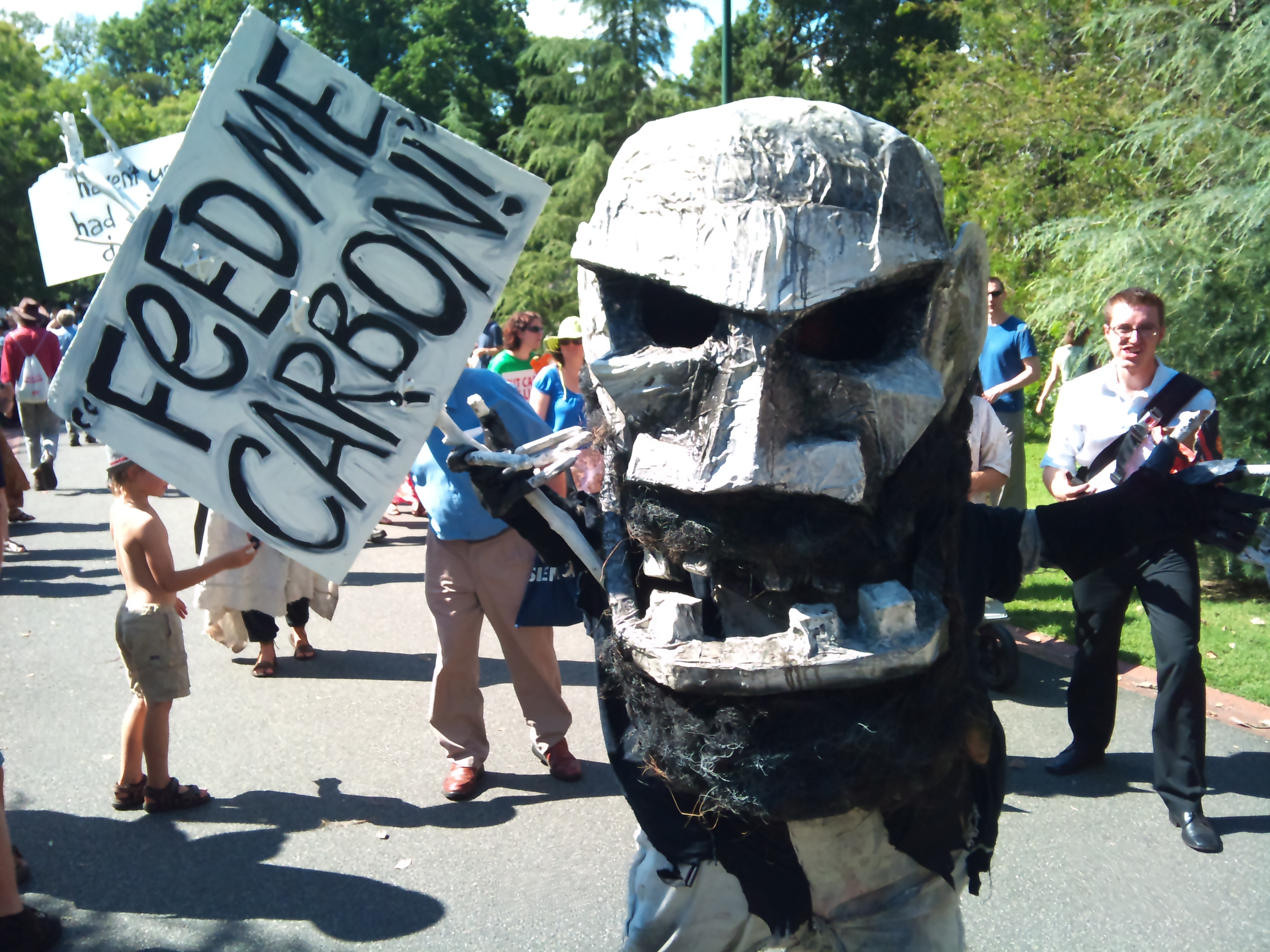
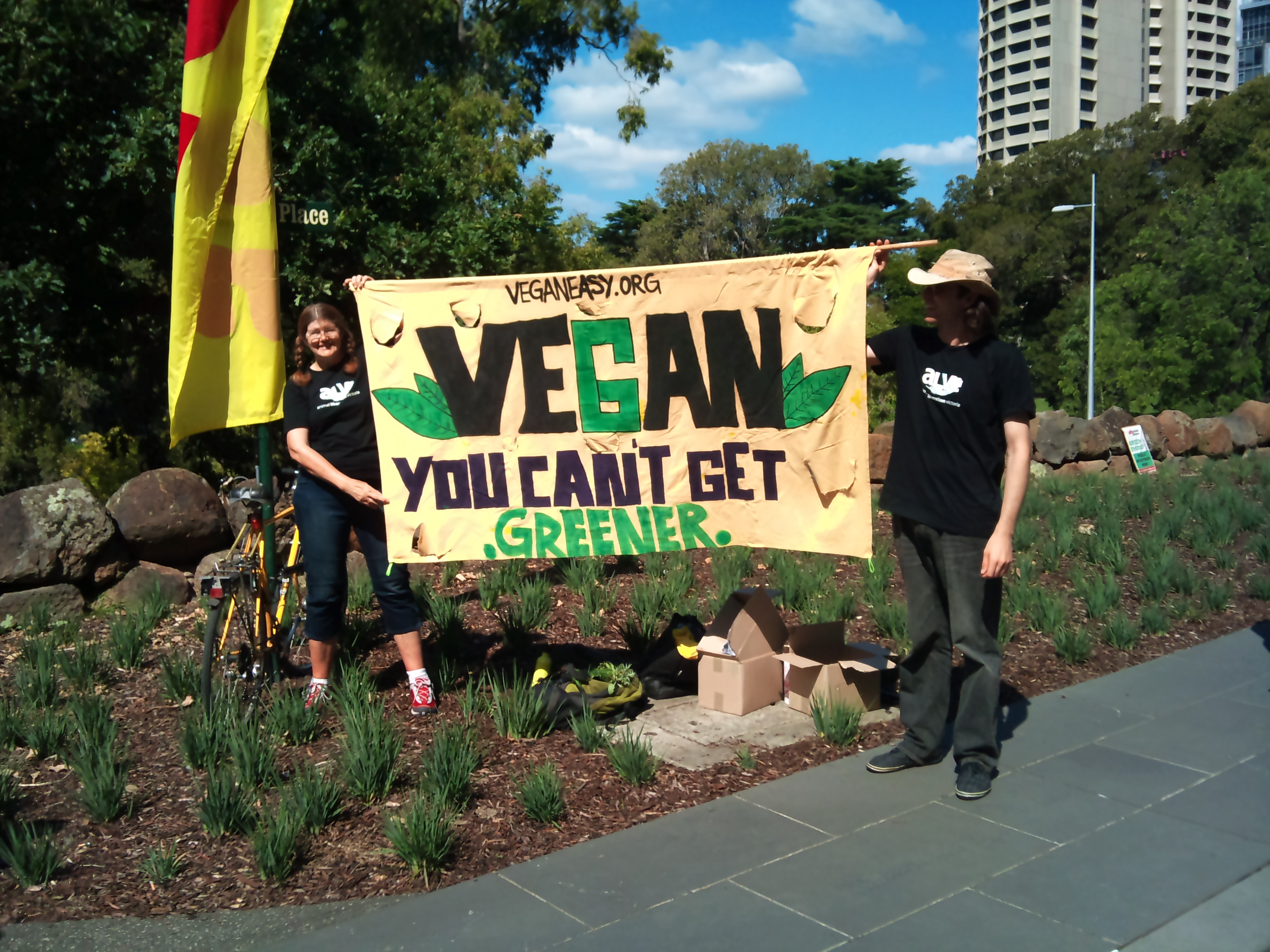
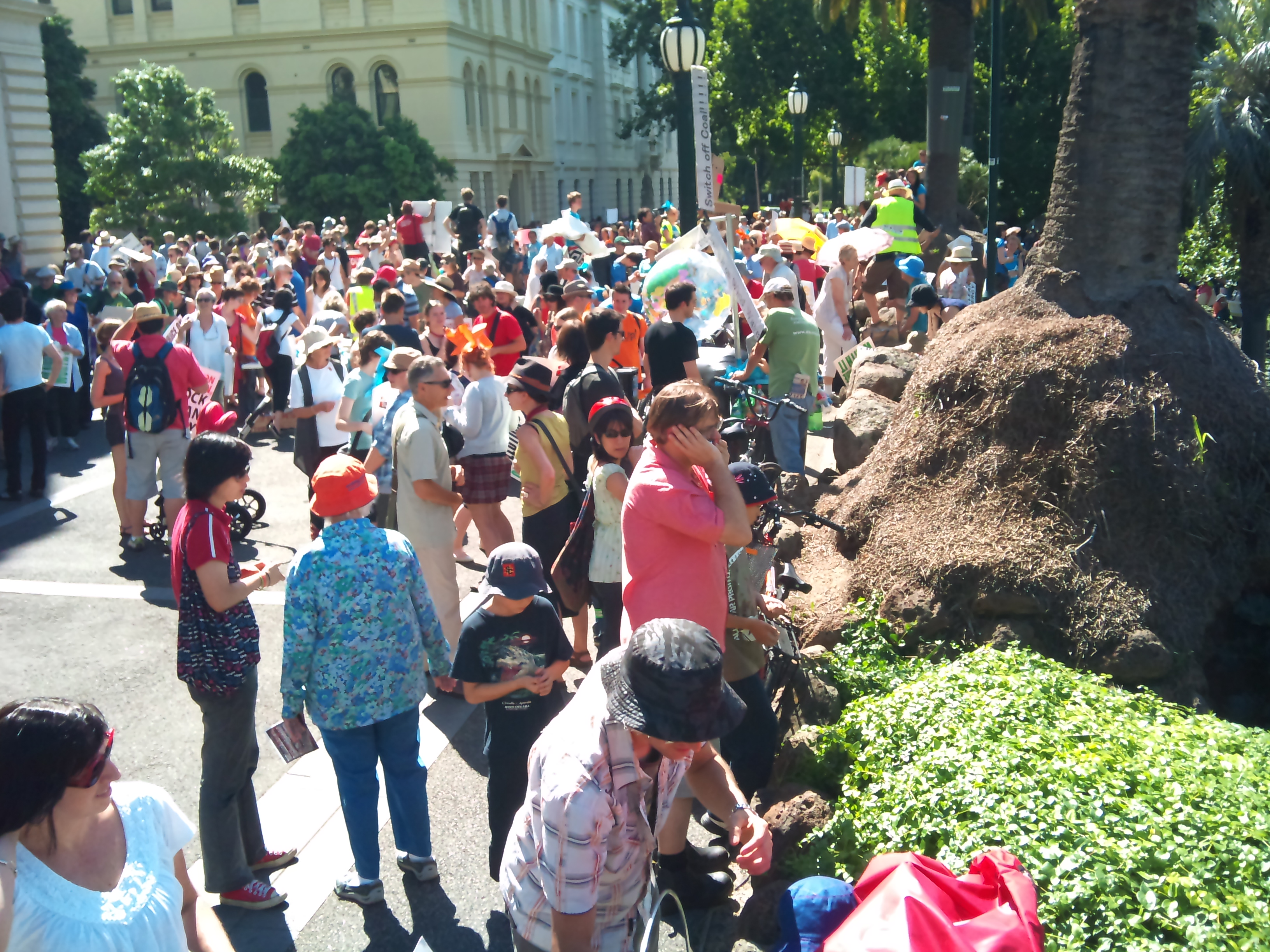
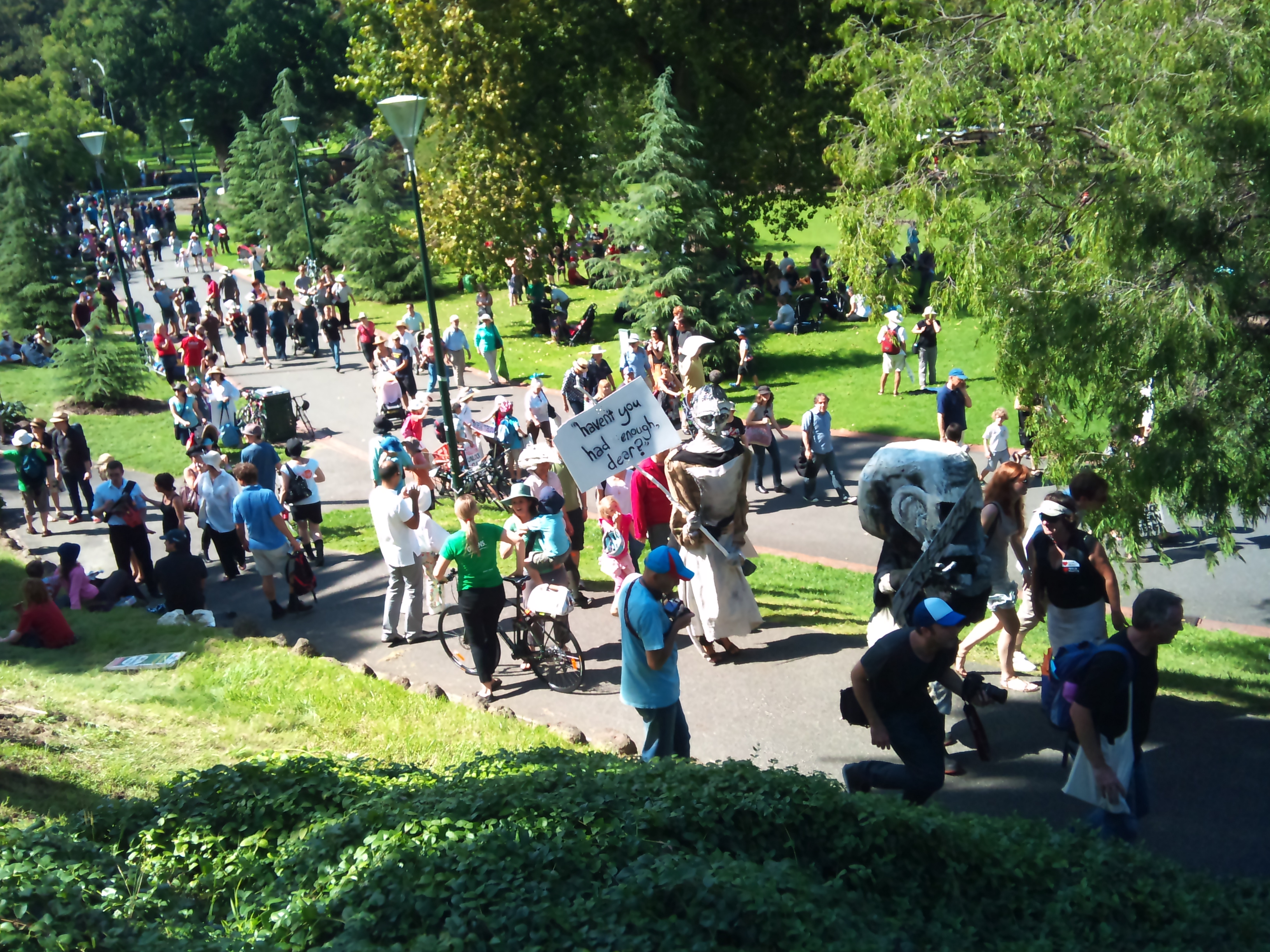
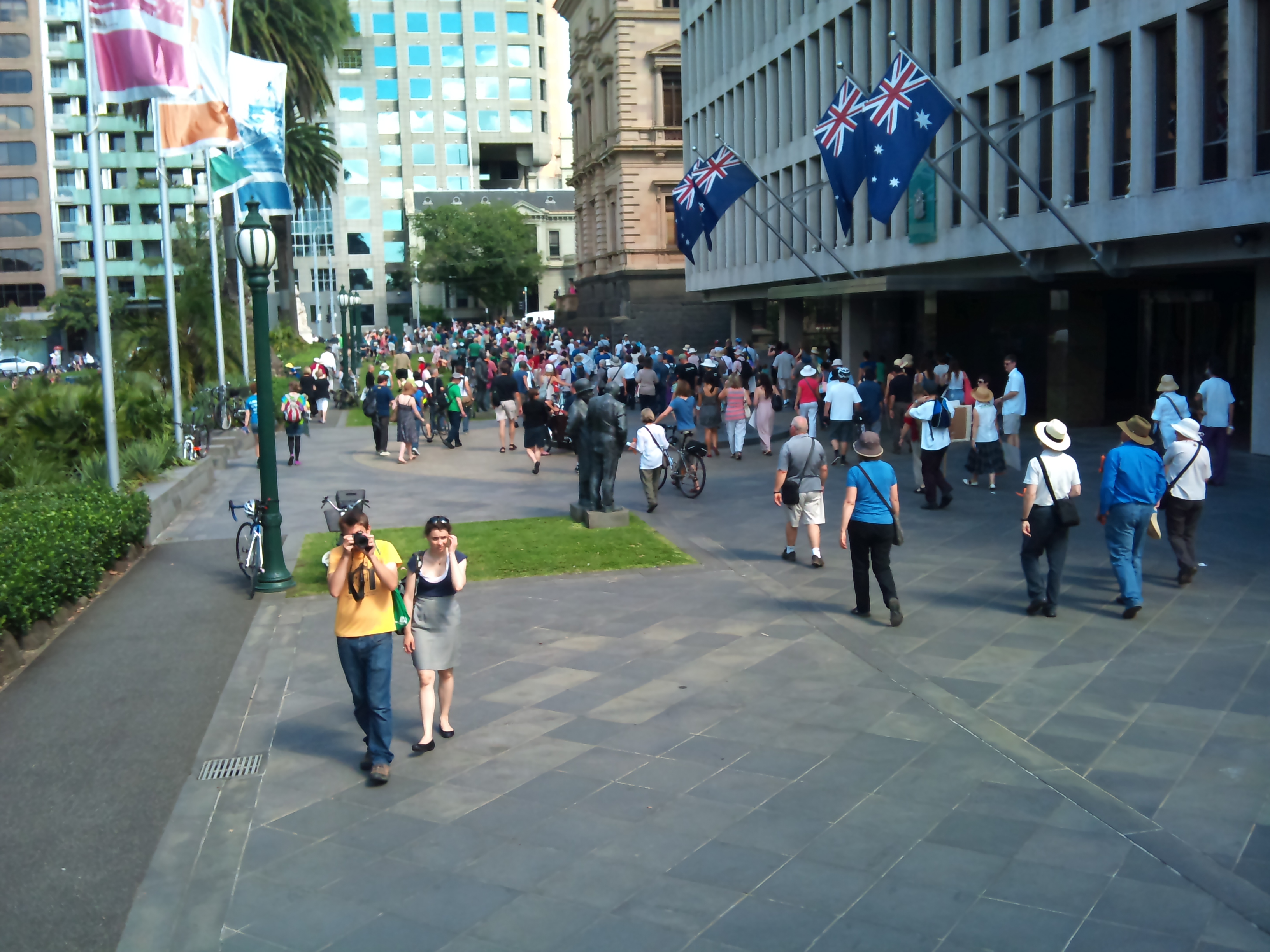
This morning I attended the Climate Action Now rally to support a pollution tax [1]. The event was well attended, my personal estimate of the number of people there was there there was definitely more than 3,000 people, and maybe as many as 8,000 or more.I spoke to an employee of the APS who was on guard duty, he described the event as big and said that they don t usually have events that are so well attended. He gave a personal estimate of 5,000 people. While he wasn t speaking on behalf of the APS he was presumably more skillful at making such estimations than most people. I expect that he also gave a conservative estimate, so it could have been a lot more than that.There were some people using comedy to make political points. Below is a picture of the carbon monster, what you can t see is the man who was handing out coal BBQ fuel for people to feed the monster, children appeared to enjoy that! Also there were three people dressed as Gollum representing the Liberal party (the Australian conservative party), I was unable to get all three in one picture.Carbon monster with sign saying feed me carbonTwo people dressed as Gollum with Liberal Party badges advocating that we die tax-free and that the Liberal party is for famine, fire, and floodSome vegans had a banner supporting the VeganEasy.org site [2]. Being vegetarian can make a significant impact on human environmental impact including on the amount of electricity used (from coal or other sources).Vegans waving a banner for VeganEasy.orgHere are pictures taken looking East over the main part of the rally, looking North towards the building at 3 Treasury place from the other side of the road, looking South over the lawns where people who didn t like being crowded gathered, and looking West over part of the main crowd. The picture looking South shows another view of the Carbon Monster and his accomplice with a sign haven t you had enough dear? .Looking East over the main rallyLooking North towards the building across Treasury PlaceLooking south over the lawnLooking west over the crowdWhen I first arrived there were two main sections to the rally. They weren t discrete (there was no empty space between them) but they acted separately because there was no PA system that could make enough noise to be heard in both sections. At one stage the West section was chanting while there were speeches in the East section. Below is a picture looking out over the West section as people had just turned to go home. This area was entirely packed when I first arrived.The rally was really a family event. There were some grey-haired people wearing t-shirts explaining that they wanted to create a better world for their grand-children and there were also some young children. At the end of the event some children used cardboard signs as toboggans to slide down a steep grassy bank near the main rally area recycling!!! I deliberately chose my photos to try and avoid including children, but even so you can see a few in the background of some of them.

11 March 2011

Eddy Petrișor: HOWTO: Making Windows usable and avoiding accidental sending of mails in Microsoft Outlook

I've changed jobs recently and after 5 years of not having to work with a Windows system I am having all sorts of adaptation-to-Windows problems at the new job.

First I just had to have the usual X-mouse behaviour and so I installed True X-Mouse Gizmo for Windows. This provides focus under mouse, middle click paste after select (not perfect, but it works), right click to push to bottom the window.

Second I had to have a virtual desktop, so I installed Microsoft's Virtual Desktop Manager from the PowerToys page. I tried another virtual desktop manager before using MSVDM, but I found it too clumsy so I switched to MSVDM which I knew from way back when I used Windows the last time. Good, now I can have my applications organised the way I am used to.

UPDATE:
I gave up on MSVDM in favour of Virtual Dimension since I wasn't able to send a particular window to the intended desktop unless I had in the taskbar all apps visible (Shared Desktop option). I might try other suggestions (Virtual Dimension does not have a way to send a window directly to a specific desktop, but just to the neighbours of the current one.)


Third, I had to make Caps Lock work as Ctrl. I just can't go back to an inferior setup. I found information on this page and ended up at this page from where I got a zip file with various registry keys which allow the deactivation of caps, or turning it into another Ctrl.

Fourth, I am used to write with diacritics in Romanian with the secondary layout of the standard (SR 13392:2004), so I rushed to Cristian Secar 's page for the keyboard driver since on XP the Romanian layout is retarded (some history in which some arbitrary German guy decided y and z had to be switched on Romanian keyboards and some other similarly weird stuff). Since the installation, my keyboard behaves according to this layout:


Things started to look well, but I soon was reminded that Outlook is an idiotic mailer since it doesn't require a confirmation on send, not even if you didn't set a subject. And this is problematic since sending the mail is done via Alt+S, so if the current layer is NOT Romanian, when I want to type (s with a comma below), a fairly common character in Romanian words, you end up looking like an idiot on the recipient side since they receive an incomplete mail. Remember, no confirmation AND no default spell checking before send. Yay!

At my second such accidental mail sending (of which the last two were sent to the same person), I decided to see if this can't be fixed. I initially looked for changing the short cut, but I couldn't find it (I might be inept at finding things in Windows, remember, I haven't touched Windows systems in the last 5 years) but I found another workaround and decided it's good enough to share with other people that might hit the problem.

Just setup a delay rule following these steps.
1. Go to Tools....Rules Wizard
2. Click 'New' Rule
3. Select "Check messages after sending"
4. Click Next on "Which conditions you want to Check?" dialog.
5. Press yes to "This Rule will be applied to every message" message box
6. In the "What do you want to do with message?" dialog, Select "Defer delivery by a number of minutes"
7. Select your favourite number of minutes.... I usually select 2 mins.
8. Select Finish. and close the Rules Wizard.

Now everytime you send an email it will sit in your outbox
for specified number of minutes. If you ever wanted to change it, delete it etc, You have sufficient time to do it :)


I used 3 minutes for the delay. At least now I can prevent looking retarded in front of people... more than necessary :D .


Oh, and Windows' clock display is retarded. It shows, by default, the hour and minutes, but there's no way to change that in a sane way. If you want the date, you must hover over the clock and it shows it, but the day of week is missing. Great job! You can see that information, too, but you have to drag the toolbar to be 2 or even 3 rows high (here it requires 2, but I've seen people saying they needed 3) to get that information, too. Great! One has to choose between wasting desktop real estate and having access to useful information. Or you could install an independent application for the clock... retarded. I am not making this shit up.

I hope this helped.

10 March 2011

Tiago Bortoletto Vaz: Happy with debian and qtmoko on FreeRunner

It becomes stable, fast and beautiful. Squeeze root. Thanks to Radek and qtmoko people. Enjoy my shots taken from native screenshot app:

Pietro Abate: usb-creator

How to create a debian installer for a usb pen drive ? There are many way.s from a simple sudo zcat boot.img.gz > /dev/sdb to unetbootin. Last night I discovered a very nice tool from ubuntu (usb-creator) that apparently is still not in the debian archives. There is a bit of doco here if you don't know it already. Installing it on debian is a breeze (I used the debs from lucid) and it works pretty well. The reason I've tried this one is that unetbootin sometimes failed for me producing an un-usable usb key. The old school method of course works, but sometimes, late at night, I feel the need of a friendly gtk interface to help my sleep. Debs :

7 March 2011

Gerfried Fuchs: Squeeze RCs

Alright, the stress of the release and its aftermath with respect to the New Website is getting lower. We even were explicitly mentioned for that during the introduction to the category Outstanding Contribution to Open Source/Linux/Free Software at this year's Linux New Media Awards. Given that the Webmaster Team is much more energetic and lively these days I will shift a bit of my efforts to stable RC squashing again. I came to the conclusion that working on lenny RCs doesn't gain much of appreciation or real turnaround, and given that my time is limited I started to switch over to work on squeeze RCs. This is the list of bugs that I squashed last week (actually, marked them as invalid/not affecting squeeze): I hope to be able to keep up that pace for a few weeks (currently there are 168 RC bugs in squeeze listed), and hopefully being able to motivate others to also support our stable release instead of only working on unstable.

/debian permanent link Comments: 0 Flattr this

6 March 2011

Stefano Zacchiroli: on the influence of Debian and derivatives

Counting derivatives In the news, there's an article by Bruce Byfield discussing the influence of Debian and its (transitive) derivatives on the ecosystem of GNU/Linux distributions: Linux Leaders: Debian and Ubuntu Derivative Distros. The article is a sort of review of what you can find in the vast ecosystem of distributions rooted at Debian: from embedded to supercomputer distro, from netbook to scientific computing distros. The articles cites the Debian derivatives front desk and is a study similar to what we might tackle with the derivatives census by Paul Wise. (By the way: did you check if your favorite Debian derivative is already in? No? Do it!) With this article, Bruce has made me quite a favor in harvesting distrowatch to refresh the figures about the number of derivatives that I often use in speeches. The need of doing that has been polluting my LaTeX "% TODO" comments for a while now Here they are: Update: update figures that Bruce misinterpreted; live data are available, thanks to Loris (see comments) for noticing

Eugene V. Lyubimkin: cupt: 2.0.0~beta1

Cupt v2 has reached a beta stage.

Main news of Cupt v2 comparing to Cupt v1 are grouped here.

Notable changes since 2.0.0~alpha3:


Full changelog is available in debian/changelog, as usual.

binary packages for i386, source package and README

5 March 2011

John Goerzen: Visiting Purdue

Terah went to college at Purdue University, and always enjoyed basketball games there. I ve not been much of a sports fan, but have enjoyed watching Purdue games with her on TV. Terah has been wanting to see a game in person for awhile, so a couple of weeks ago, we went. It was a really fun weekend! When we planed the trip, we had no idea that the Purdue-Ohio State game was going to be such a big one. We walked over from the Union Club Hotel where we were staying on the Purdue campus. People were streaming towards Mackey Arena from all directions. Once inside, it was already loud and buzzing people cheering, the band playing. I ve never experienced anything quite so loud. The game started out badly for Purdue; they were down a few points up front. The entire game was a close one, and the crowd sometimes got so loud that nothing else could be heard not even the band or the announcer. When it became clear at the end that Purdue won the game, the people behind me and apparently 12,000 others began screaming at the top of their lungs. My hearing did eventually return to normal. So did my throat, which had gotten rather sore from from cheering myself. This was our first road trip since I got my amateur radio license. I had a lot of fun visiting with people as we drove. I talked to a retired railroad engineer that used to take an amateur radio with him in his locomotive. As he went through a certain town where he had friends he liked to talk with on the radio, he d get their attention by blowing CQ in Morse code with the train s whistle. Some people in Kansas City had us laughing as we passed through. In Missouri, I talked with some farmers and a World War II vet. In Champaign, IL, I visited with a retired Unix systems administrator that had spent decades working with Unix operating systems. Our hotel was connected to the Purdue Memorial Union, a large and historic building. Besides having some ice cream at the Sweet Shop one evening, we also spent a bit of time exploring it. I noticed that the Purdue Amateur Radio Club was having a testing session in there. We walked past once it was underway, and one of the students was not very busy. I introduced myself and asked if we could see their shack. It was neat to see all the equipment some of it quite old in the room that they must have been using for decades. Terah, of course, had ideas for visiting a number of her favorite places while we were there. We visited Arni s and Bruno s, both pizza places. Bruno s happens to be a Swiss pizza place, so much to my surprise, I had Wienerschnitzel there, which was excellent. We ate a (week late) Valentine s dinner at Bistro 501. On our way back, we also chatted with various people on the radio, though not quite as much. We got helpful suggestions for which route to take, and stopped at the excellent Bobby D s Merchant St. BBQ in Emporia, KS for supper. The boys had also enjoyed their weekend with grandparents, but were glad to see us back. They were particularly interested to see a lot of train videos from Youtube with me the next day.

4 March 2011

Cyril Brulebois: Debian XSF News #7

Time for a seventh Debian XSF News issue!

3 March 2011

Russell Coker: How Not to Park a Mercedes

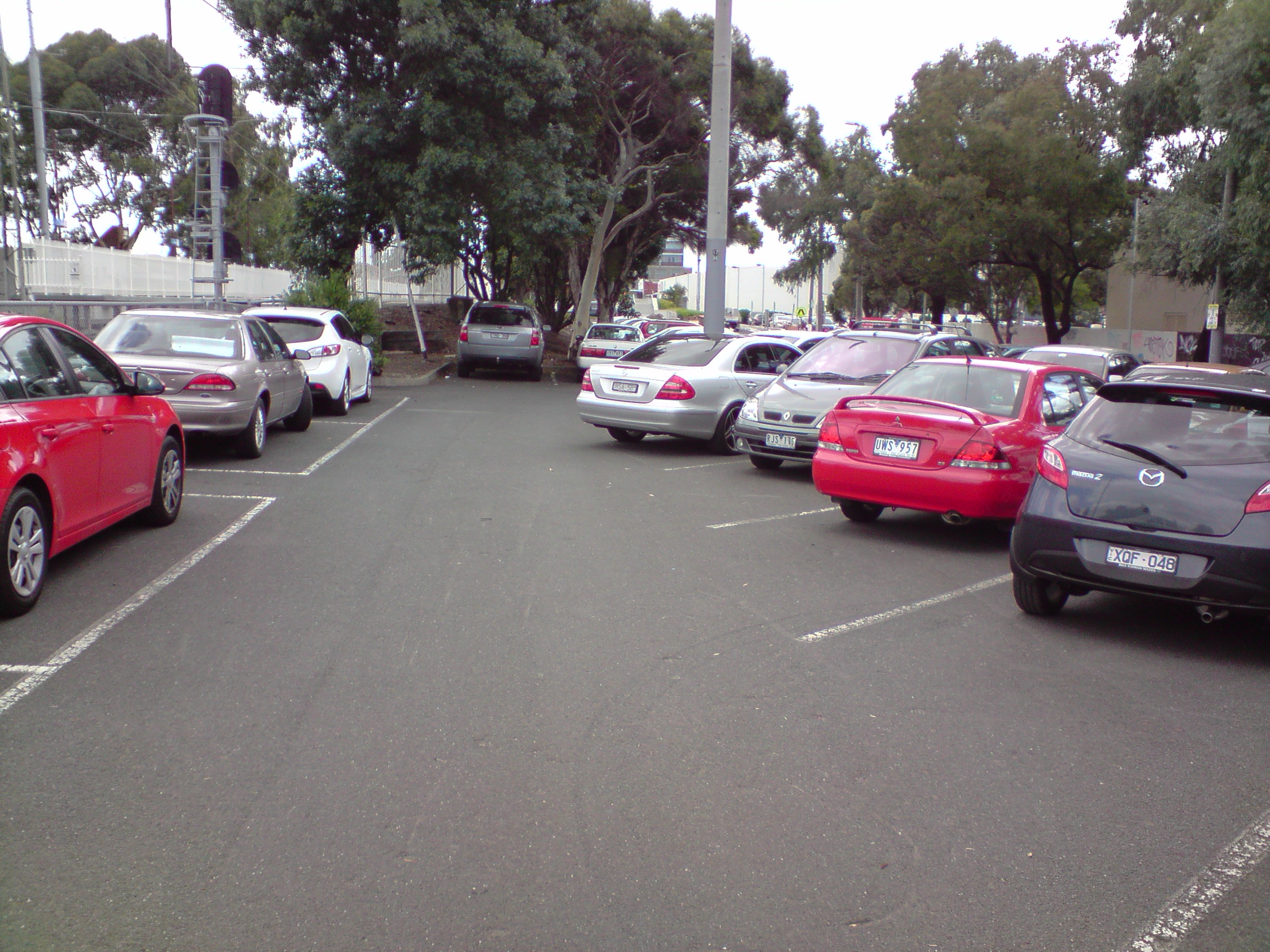
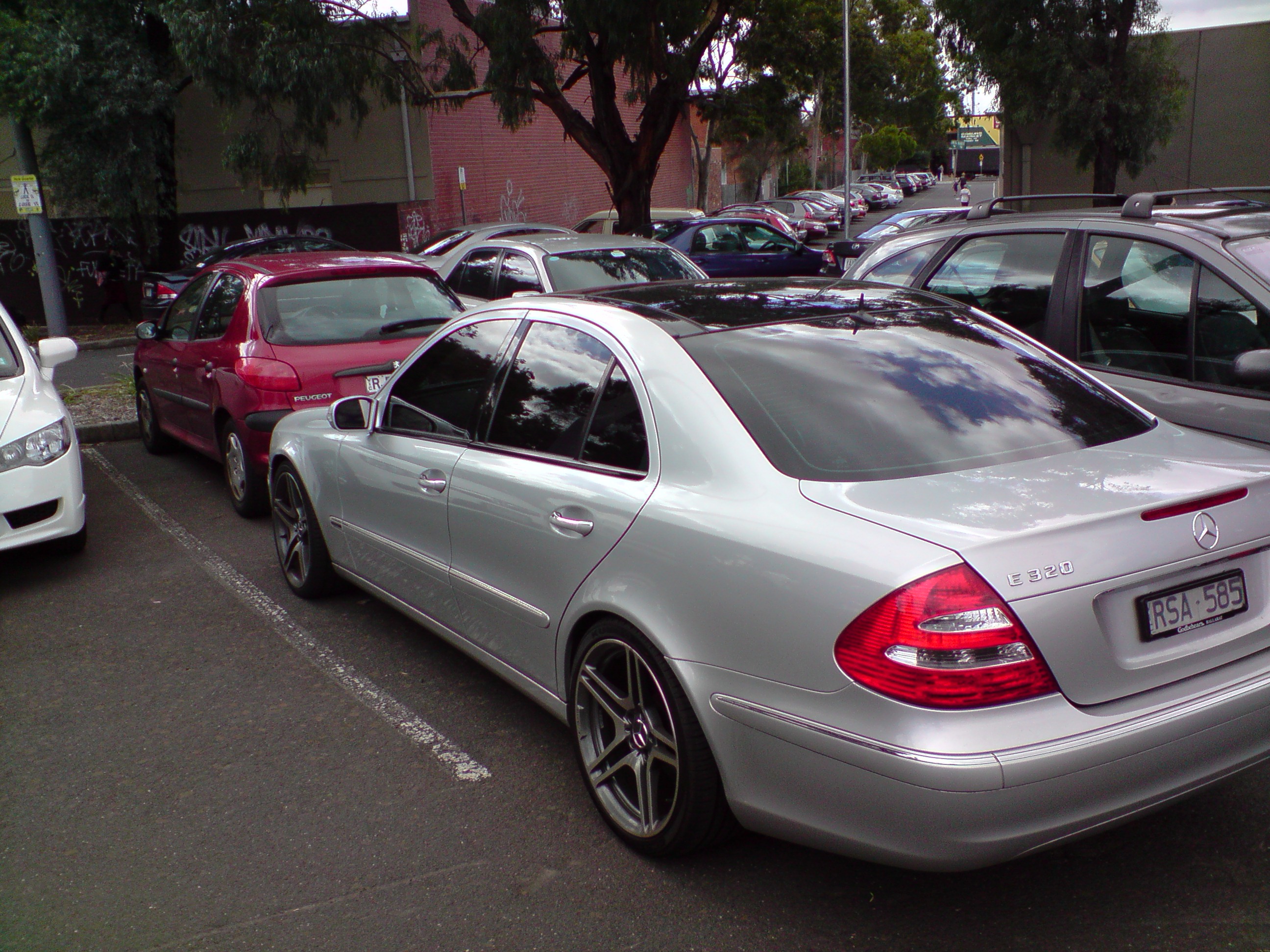
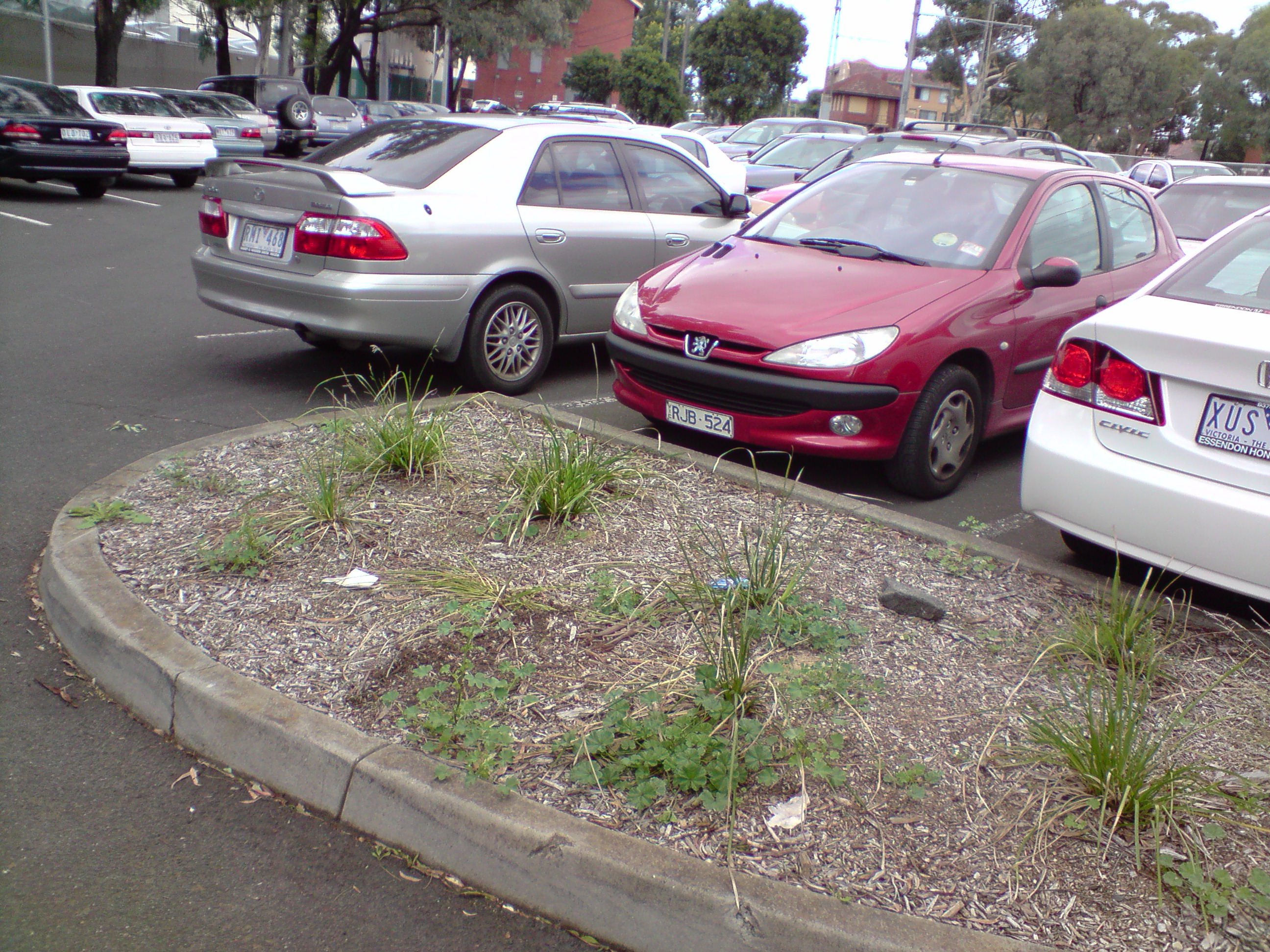
Why is that Mercedes blocking so much of the road through the station car park?It s because it s the second car in a 1 car parking spot!Here s a front view.These were taken in the Coburg Station car park on Wednesday. The car park was about half empty, so the alternative to blocking part of the road and blocking in someone who was legally parked was to just park about 10 meters further away from the station.Some people just shouldn t be driving.

Raphaël Hertzog: People behind Debian: Christian Perrier, translation coordinator

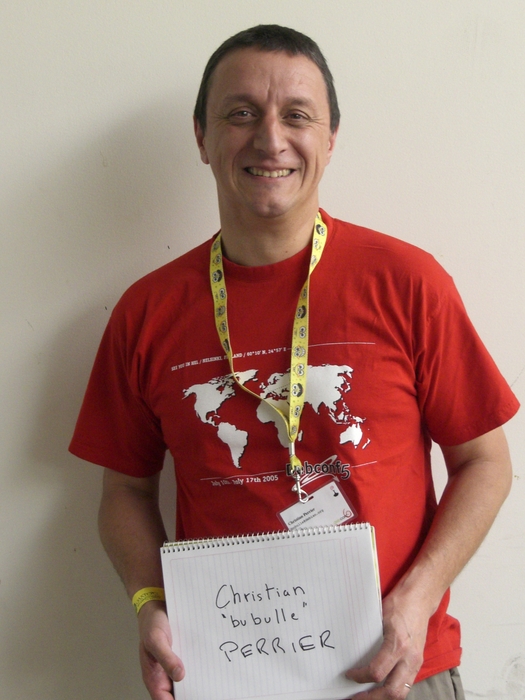
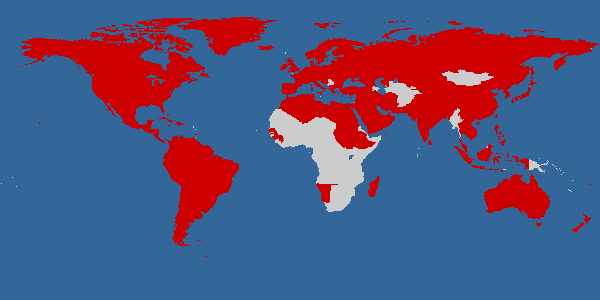
Christian is a figure of Debian, not only because of the tremendous coordination work that he does within the translation project, but also because he s very involved at the social level. He s probably in the top 5 of the persons who attended most often the Debian conference. Christian is a friend (thanks for hosting me so many times when I come to Paris for Debian related events) and I m glad that he accepted to be interviewed. He likes to speak and that shows in the length of his answers :-) but you ll be traveling the world while reading him. My questions are in bold, the rest is by Christian. Who are you? I am a French citizen (which is easy to guess unless you correct my usual mistakes in what follows). I m immensely proud of being married for nearly 26 years with Elizabeth (who deserves a statue from Debian for being so patient with my passion and my dedication to the project). I m also the proud father of 3 wonderful kids , aged 19 to 23. I work as team manager in the Networks and Computers Division of Onera the French Aerospace lab , a public research institute about Aeronautics, Space and Defense. My team provides computer management services for research divisions of Onera, with a specific focus put on individual computing. I entered the world of free software as one of the very first users of Linux in France. Back in the early 1990 s, I happened (though the BBS users communities) to be a friend of several early adopters of Linux and/or BSD386/FreeBSD/NetBSD in France. More specifically, I discovered Linux thanks with my friend Ren Cougnenc (all my free software talks are dedicated to Ren , who passed away in 1996). You re not a programmer, not even a packager. How did you come to Debian? I m definitely not a programmer and I never studied computing (I graduated in Materials Science and worked in that area for a few years after my PhD). However, my daily work always involved computing (I redesigned the creep testing laboratory and its acquisition system all by myself during my thesis research work). An my hobbies often involved playing with home computers, always trying to learn about something new. So, first learning about a new operating system then trying to figure out how to become involved in its development was quite a logical choice. Debian is my distro of choice since it exists. I used Slackware on work machines for a while, but my home server, kheops, first ran Debian 1.1 when I stopped running a BBS on an MS-DOS machine to host a news server. That was back in October 1996. I then happened to be a user, and more specifically a user of genealogy software, also participating very actively in Usenet from this home computer and server, that was running this Debian thing. So, progressively, I joined mailing lists and, being a passionate person, I tried to figure out how I could bring my own little contribution to all this. This is why I became a packager (yes, I am one!) by taking over the geneweb package, which I was using to publish my genealogy research. I applied as DD in January 2001, then got my account in July 2001. My first upload to the Debian archive occurred on August 22nd 2001: that was of course geneweb, which I still maintain. Quite quickly, I became involved in the work on French localization. I have always been a strong supporter of localized software (I even translated a few BBS software back in the early 90 s) as one of the way to bring the power and richness of free software to more users. Localization work lead me to work on the early version of Debian Installer, during those 2003-2005 years where the development of D-I was an incredibly motivating and challenging task, lead by Joey Hess and his inspiring ideas. From user to contributor to leader, I suddenly discovered, around 2004, that I became the coordinator of D-I i18n (internationalization) without even noticing :-) You re the main translation coordinator in Debian. What plans and goals have you set for Debian Wheezy? As always: paint the world in red. Indeed, this is my goal for years. I would like our favorite distro to be able to be used by anyone in the world, whether she speaks English, Northern Sami, Wolof, Uyghur or Secwepemcts n. As a matter of symbol, I use the installer for this. My stance is that one should be able to even install Debian in one s own language. So, for about 7 years, I use D-I as a way to attract new localization contributors. This progress is represented on this page where the world is gradually painted in red as long as the installer supports more languages release after release. The map above tries to illustrate this by painting in red countries when the most spoken language in the country is supported in Debian Installer. However, that map does not give enough reward to many great efforts made to support very different kind of languages. Not only various national languages, but also very different ones: all regional languages of Spain, many of the most spoken languages in India, minority languages such as Uyghur for which an effort is starting, Northern Sami because it is taught in a few schools in Norway, etc., etc. Still, the map gives a good idea of what I would like to see better supported: languages from Africa, several languages in Central Asia. And, as a very very personal goal, I m eagerly waiting for support of Tibetan in Debian Installer, the same way we support its sister language, Dzongkha from Bhutan. For this to happen, we have to make contribution to localization as easy as possible. The very distributed nature of Debian development makes this a challenge, as material to translate (D-I components, debconf screens, native packages, packages descriptions, website, documentation) is very widely spread. A goal, for years, is to set a centralized place where translators could work easily without even knowing about SVN/GIT/BZR or having to report bugs to send their work. The point, however, would be to have this without making compromises on translation quality. So, with peer review, use of thesaurus and translation memory and all such techniques. Tools for this exist: we, for instance, worked with the developers of Pootle to help making it able to cope with the huge amount of material in Debian (think about packages descriptions translations). However, as of now, the glue between such tools and the raw material (that often lies in packages) didn t come. So, currently, translation work in Debian requires a great knowledge of how things are organized, where is the material, how it can be possible to make contribution reach packages, etc. And, as I m technically unable to fulfill the goal of building the infrastructure, I m fulfilling that role of spreading out the knowledge. This is how I can define my coordinator role. Ubuntu uses a web-based tool to make it easy to contribute translations directly in Launchpad. At some point you asked Canonical to make it free software. Launchpad has been freed in the mean time. Have you (re)considered using it? Why not? After all, it more or less fills in the needs I just described. I still don t really figure out how we could have all Debian material gathered in Rosetta/Launchpad .and also how Debian packagers could easily get localized material back from the framework without changing their development processes. I have always tried to stay neutral wrt Ubuntu. As many people now in Debian, I feel like we have reached a good way to achieve our mutual development. When it comes at localization work, the early days where the everything in Rosetta and translates who wants stanza did a lot of harm to several upstream localization projects is, I think, way over. Many people who currently contribute to D-I localization were indeed sent to me by Ubuntu contributors .and by localizing D-I, apt, debconf, package descriptions, etc., they re doing translation work for Ubuntu as well as for Debian. Let s say I m a Debian user and I want to help translate Debian in my language. I can spend 1 hour per week on this activity. What should I do to start? Several language teams use Debian mailing lists to coordinate their work. If you re lucky enough to be a speaker of one of these languages, try joining debian-l10n-<yourlanguage> and follow what s happening there. Don t try to immediately jump in some translation work. First, participate to peer reviews: comment on others translations. Learn about the team s processes, jargon and habits. Then, progressively, start working on a few translations: you may want to start with translations of debconf templates: they are short, often easy to do. That s perfect if you have few time. If no language team exists for your language, try joining debian-i18n and ask about existing effort for your language. I may be able to point you to individuals working on Debian translations (very often along with other free software translation efforts). If I am not, then you have just been named coordinator for your language :-) I may even ask you if you want to work on translating the Debian Installer. What s the biggest problem of Debian? We have no problems, we only have solutions :-) We are maybe facing a growth problem for a few years. Despite the increased welcoming aspects of our processes (Debian Maintainers), Debian is having hard times in growing. The overall number of active contributors is probably stagnating for quite a while. I m still amazed, however, to see how we can cope with that and still be able to release over the years. So, after all, this is maybe not a problem :-) Many people would point communication problems here. I don t. I think that communication inside the Debian project is working fairly well now. Our famous flame wars do of course still happen from time to time, but what large free software project doesn t have flame wars? In many areas, we indeed improved communication very significantly. I want to take as an example the way the release of squeeze has been managed. I think that the release team did, even more this time, a very significant and visible effort to communicate with the entire project. And the release of squeeze has been a great success in that matter. So, there s nearly nothing that frustrates me in Debian. Even when a random developer breaks my beloved 100% completeness of French translations, I m not frustrated for more than 2 minutes. You re known in the Debian community as the organizer of the Cheese & Wine Party during DebConf. Can you tell us what this is about? This is an interesting story about how things build themselves in Debian. It all started in July 2005, before DebConf 5 in Helsinki. Denis Barbier, Nicolas Fran ois and myself agreed to bring at Debconf a few pieces of French cheese as well as 1 or 2 bottles of French wine and share them with some friends. Thus, we settled an informal meeting in the French room where we invited some fellows: from memory, Benjamin Mako Hill, Hannah Wallach, Matt Zimmermann and Moray Allan. All of us fond of smelly cheese, great wine plus some extra p t home-made by Denis in Toulouse. It finally happened that, by word of mouth, a few dozens of other people slowly joined in that French room and turned the whole thing into an improvized party that more or less lasted for the entire night. The tradition was later firmly settled in 2006, first in Debconf 6 in Mexico where I challenged the French DDs to bring as many great cheese as possible, then during the Debian i18n meeting in Extremadura (Sept 2006) where we reached the highest amount of cheese per participant ever. I think that the Creofonte building in Casar de C ceres hasn t fully recovered from it and is still smelling cheese 5 years after. This party later became a real tradition for DebConf, growing over and over each year. I see it as a wonderful way to illustrate the diversity we have in Debian, as well as the mutual enrichment we always felt during DebConfs. My only regret about it is that it became so big over the years that organizing it is always a challenge and I more and more feel pressure to make it successful. However, over the years, I always found incredible help by DebConf participants (including my own son, last year a moment of sharing which we will both remember for years, i think). And, really, in 2010, standing up on a chair, shouting (because the microphone wasn t working) to thank everybody, was the most emotional moment I had at Debconf 10. Is there someone in Debian that you admire for their contributions? So many people. So, just like it happens in many awards ceremonies, I will be very verbose to thank people, sorry in advance for this. The name that comes first is Joey Hess. Joey is someone who has a unique way to perceive what improvements are good for Debian and a very precise and meticulous way to design these improvements. Think about debconf. It is designed for so long now and still reaching its very specific goal. So well designed that it is the entire basis for Joey s other achievement: designing D-I. Moreover, I not only admire Joey for his technical work, but also for his interaction with others. He is not he loudest person around, he doesn t have to .just giving his point in discussion and, guess what? Most of the time, he s right. Someone I would like to name here, also, is Colin Watson. Colin is also someone I worked with for years (the D-I effect, again ) and, here again, the very clever way he works on technical improvements as well as his very friendly way to interact with others just make it. And, how about you, Rapha l? :-) I m really admirative of the way you work on promoting technical work on Debian. Your natural ability to explain things (as good in English as it is in French) and your motivation to share your knowledge are a great benefit for the project. Not to mention the technical achievements you made with Guillem on dpkg of course! Another person I d like to name here is Steve Langasek. We both maintain samba packages for years and collaboration with him has always been a pleasure. Just like Colin, Steve is IMHO a model to follow when it comes at people who work for Canonical while continuing their involvment in Debian. And, indeed, Steve is so patient with my mistakes and stupid questions in samba packaging that he deserves a statue. We re now reaching the end of the year where Stefano Zacchiroli was the Debian Project Leader. And, no offense intended to people who were DPL before him (all of them being people I consider to be friends of mine), I think he did the best term ever. Zack is wonderful in sharing his enthusiasm about Debian and has a unique way to do it. Up to the very end of his term, he has always been working on various aspects of the project and my only hope is that he ll run again (however, I would very well understand that he wants to go back to his hacking activities!). Hat off, Zack!I again have several other people to name in this Bubulle hall of Fame : Don Armstrong, for his constant work on improving Debian BTS, Margarita Manterola as one of the best successes of Debian Women (and the most geeky honeymoon ever), Denis Barbier and Nicolas Fran ois because i18n need really skilled people, Cyril Brulebois and Julien Cristau who kept X.org packaging alive in lenny and squeeze, Otavio Salvador who never gave up on D-I even when we were so few to care about it. I would like to make a special mention for Frans Pop. His loss in 2010 has been a shock for many of us, and particularly me. Frans and I had a similar history in Debian, both mostly working on so-called non technical duties. Frans has been the best release manager for D-I (no offense intended, at all, to Joey or Otavio .I know that both of them share this feeling with me). His very high involvment in his work and the very meticulous way he was doing it lead to great achievements in the installer. The Installation Guide work was also a model and indeed a great example of non technical work that requires as many skills as more classical technical work. So, and even though he was sometimes so picky and, I have to admit, annoying, that explains why I m still feeling sad and, in some way, guilty about Frans loss. One of my goals for wheezy is indeed to complete some things Frans left unachieved. I just found one in bug #564441: I will make this work reach the archive, benefit our users and I know that Frans would have liked that.

Thank you to Christian for the time spent answering my questions. I hope you enjoyed reading his answers as I did. Subscribe to my newsletter to get my monthly summary of the Debian/Ubuntu news and to not miss further interviews. You can also follow along on Identi.ca, Twitter and Facebook.

7 comments Liked this article? Click here. My blog is Flattr-enabled.

Next.

Previous.