Search Results: "az"

7 June 2009

Martin Meredith: Automated PPA GPG Keys

After reading Alan Pope s recent post on installing GPG keys for PPAs easily, I thought I d have a bit of a hack around. Personally, I regularly add PPAs to my system, whether it be for Chromium Daily Builds, Bazaar, Gwibber, or anything else. I ve found the most annoying thing is the installation of the GPG keys. Now, I wouldn t reccomend this for everyone, but, for some, it might be exactly what you ve been looking for. Here s what I did:- Firstly, I saved the Script that Alan linked to as /usr/local/bin/ppakeys and chmod d it to 755. I then created a new file, /etc/apt/apt.conf.d/05ppa containing the following line
APT::Update::Pre-Invoke "if [ -x /usr/local/bin/ppakeys ]; then /usr/local/bin/ppakeys; fi ; ;
Now, every time I do a sudo apt-get update - it ll check for new keys that I need, and install them as neccessary. Magic! <edit> Please make sure the quotes are correct if you copy and paste this!</edit>

6 June 2009

Enrico Zini: Recording audio on the FreeRunner

Recording audio on the FreeRunner The FreeRunner can record audio. It is nice to record audio: for example I can run the recording in background while I keep tangogps in the screen, and take audio notes about where I am while I am doing mapping for OpenStreetMap. Here is the script that I put together to create geocoded audio notes:
#!/bin/sh
BASENAME=~/rec/rec-$(date +%Y-%m-%d-%H-%M-%S)
alsactl -f /usr/share/openmoko/scenarios/voip-handset.state restore
echo "Getting GPS info..."
getgps > $BASENAME.info
arecord -D hw -f cd -r 8000 -v -t wav $BASENAME.wav
echo "Setting wav timestamp to GPS start of recording"
TS=$(cat $BASENAME.info   grep time_tstamp   cut -f2 -d' ')
touch -d "@$TS" $BASENAME.wav
echo "Done"
It works like this:
  1. It loads mixer settings to record from the handset, but the same could in theory be done for the headset.
  2. It gets all sort of information from the GPS and stores them into a file.
  3. It records audio until it gets interrupted.
  4. It retrieves the GPS timestamp from the beginning of the audio recording, and uses it to set the file timestamp
And the following is the getgps script, adapted from a mailing list post: it can be generally useful to save information about a fix from the GPS.
#!/usr/bin/env python
import dbus
from time import gmtime, strftime
obj = dbus.SystemBus().get_object('org.freesmartphone.ogpsd', '/org/freedesktop/Gypsy')
constatus = obj.GetConnectionStatus(dbus_interface='org.freedesktop.Gypsy.Device')
print "connection_status:", constatus
print "connection_status_name:", (constatus and 'TRUE' or 'FALSE')
fixstatus = obj.GetFixStatus(dbus_interface='org.freedesktop.Gypsy.Device')
print "fix_status:", fixstatus
names = ["INVALID", "NONE", "2D", "3D"]
if fixstatus < 0 or fixstatus > len(names):
    print "fix_status_name:", names[0]
else:
    print "fix_status_name:", names[fixstatus]
def yesno(val):
    return val and "yes" or "no"
(fields, tstamp, lat, lon, alt) = obj.GetPosition(dbus_interface='org.freedesktop.Gypsy.Position')
print "pos_fields:", fields,
print "pos_tstamp:", tstamp
print "pos_time:", strftime('%F %T', gmtime(tstamp))
print "pos_lat: %f" % lat
print "pos_lat_valid:", yesno(fields & (1 << 0))
print "pos_lon: %f" % lon
print "pos_lon_valid:", yesno(fields & (1 << 1))
print "pos_alt: %f" % alt
print "pos_alt_valid:", yesno(fields & (1 << 2))
(fields, pdop, hdop, vdop) = obj.GetAccuracy(dbus_interface='org.freedesktop.Gypsy.Accuracy')
print "accuracy_fields: %d", fields
print "accuracy_pdop: %f" % pdop
print "accuracy_pdop_valid:", yesno(fields & (1 << 0))
print "accuracy_hdop: %f" % hdop
print "accuracy_hdop_valid:", yesno(fields & (1 << 1))
print "accuracy_vdop: %f" % vdop
print "accuracy_vdop_valid:", yesno(fields & (1 << 2))
(fields, tstamp, speed, heading, climb) = obj.GetCourse(dbus_interface='org.freedesktop.Gypsy.Course')
print "course_fields:", fields
print "course_tstamp:", tstamp
print "course_time:", strftime('%F %T', gmtime(tstamp))
print "course_speed: %f" % speed
print "course_speed_valid:", yesno(fields & (1 << 0))
print "course_heading: %f" % heading
print "course_heading_valid:", yesno(fields & (1 << 1))
print "course_climb: %f" % climb
print "course_climb_valid:", yesno(fields & (1 << 2))
time = obj.GetTime(dbus_interface='org.freedesktop.Gypsy.Time')
print "time_tstamp:", time
print "time_time:", strftime('%F %T', gmtime(time))
satellites = obj.GetSatellites(dbus_interface='org.freedesktop.Gypsy.Satellite')
for satIndex, sat in enumerate(satellites):
    print "sat%d_prn: %u" % (satIndex, sat[0])
    print "sat%d_used: %s" % (satIndex, yesno(sat[1]))
    print "sat%d_used_value: %u" % (satIndex, sat[1])
    print "sat%d_elevation: %u" % (satIndex, sat[2])
    print "sat%d_azimuth: %u" % (satIndex, sat[3])
    print "sat%d_snr: %u" % (satIndex, sat[4])

5 June 2009

Joachim Breitner: Third place in AI programming contest

My contribution to the programming contest held by the German FreiesMagazin got a third place out of 13 submissions. This is quite good, considering that I only wrote a small wrapper around the generic game-tree Haskell library by Colin Adams, and hardly gave any serious thought into the problem.All entires are available for download. I have annotated the table containing the results with the line count as given by ohcount:
W D L Points Language Code lines
1. Kroschinsky 904 242 54 2954 Python 589
2. Schulz 858 263 79 2837 Python 544
3. Breitner 837 281 82 2792 Haskell 264
4. Jackermeier 754 306 140 2568 Perl 183
5. Roth 574 338 288 2060 C++ 1731
6. Eitel 567 355 278 2056 Ruby 352
7. Reichel 342 328 530 1354 Python 266
8. Zimmermann 303 400 497 1309 Java 1070
9. Apensiv 190 353 657 923 Perl 410
10. Maraun 150 300 750 750 C++ 690
11. Golemo 131 319 750 712 Python 104
12. Ziegelwanger 120 337 743 697 C++ 868
13. Fuest 32 254 914 350 Python 645
Note that the line count for my haskell program includes the game-tree library, which I bundled in my submission. Without it, it s 156 lines of code I had to write, which is second best in the code golf category.If you look at the timing statistics, you will see that my program took the longest. When the contest was started, the timelimit was one minute per round which I of course tried to use as much as possibly, by increasing the search tree depth. Later into the contest, the rules were changed to limit it to one minute for a whole game, and that long-running programs will get points deducted. I did some minor changes based on a profiling run, but did otherwise not care too much about performance. I would have tried to improve the runtime by using Haskell s good ability for parallelization. But when I asked on what kind of machine the code will be run, but they would not tell me. They said that this is a hobby programmer s contest where allowing for parallelization were not fair, so I did not work in that direction.All in all it was a positive experience, showing of Haskell s qualities as a language that you can quickly get good results with.

Martin Michlmayr: Corporate participation in open source communities

Someone recently asked me a few question about corporate participation in open source communities and I thought I'd share my thoughts on this topic here. Are there differences between an open source project done for a corporation and one done for personal reasons? There are many different ways to run an open source project, led by a corporation or by someone else. Some projects that are run by corporations have few outside contributors. This is often the case with projects that require copyright assignment (i.e. contributors have to assign their copyright to the corporation). These projects may not gain all the benefits of a true open source community, such as outside contributions or high levels of peer review. However, they may still be very successful projects and may have high levels of quality. Projects done by a corporation may have better planning and may have more resources than other projects. When a corporation, especially a large one, starts or becomes involves in a project it can also give credibility to the project and attract a lot of interest to the project. This means that projects done by corporations may have a bigger impact and might also be more visible in terms of publicity. How do corporations successfully utilize an open source community? Corporations can benefit from an open source community in many ways. For example, they can often find people who will review their code or make code contributions. If people become excited about what the corporation does, they might also spread the word and create viral marketing for the corporation. Establishing a community around one's project is often also a good way to identify people to hire since you already have experience working with them and know their capabilities. How do open source communities successfully utilize their corporate relationships? Corporations can make several unique contributions. For example, large corporations can use their name to attract attention to a project and give it credibility. Furthermore, corporations have some capabilities that personal contributors often don't have access. They may have special testing equipment (such as servers with thousands of CPUs or hard drives) or access to a testing lab where a professional usability test can be done. Finally, corporations can sponsor developer conferences, which are typically very effective means for the community to come together and work on activities together. It is important for projects to remember that corporations are not charities and that they will invest in an open source project for a reason. Therefore, they have to ensure that the corporation will get tangible outcomes from their involvement or sponsorship, otherwise they may not stay involved in the long run. What are the risks for a corporation when working with an open source community? One risk is that the code (or other form of contribution) is not accepted. However, this is a risk any contributor to a project faces. Before making any sort of contribution, it is therefore important to become familiar with the project and its culture. Every project has their own "do's" and "don'ts" that have to be followed. Another risk is that a corporation will invest in a community project that later on is abandoned by the community. However, in this case, the corporation could take the lead and continue to maintain the project. What are the risks for an open source community when working with a corporation? One potential risk is that the corporation will assert too much control over the project. It's important for projects to ensure that the community as a whole has influence over the direction of a project rather than one particular player. Are certain certifications needed in order for someone to participate in open source projects for a corporation? Certifications are not needed to get involved in or start a project. However, it is important to become familiar with the open source community and the project one wants to contribute to. A good first step is to read the book Producing Open Source Software by Karl Fogel which is available online. As a next step, the community in which someone wants to get involved in should be studied, for example by reading the mailing list archives. This will help to become familiar with the culture of a project as well as the mechanisms to contribute to the project. How do open source communities communicate and collaborate with corporations? In the best case, employees from corporations would interact in the project like any other contributor. That is, they should use the existing communication channels, such as mailing lists, IRC or developer gatherings. Many companies are good at working "with the community" but the ideal scenario is for a company to be part of the community and to work "in the community", just like other contributors. This is the most effective way for them to make changes to the code and project. Of course, not every corporation will get involved in a project directly. That's why it makes sense for projects to collaborate with corporations in other ways. For example, projects can talk directly to companies to get samples of their hardware in order to add support for them in their software. Projects can also work directly with corporations to find out how their project can better meet the needs of enterprise users.

4 June 2009

Marc 'Zugschlus' Haber: synaptics and unstable?

Dear Lazyweb, I have just found out that ksynaptics has stopped working against the X in unstable, and that ksynaptics is not even in lenny, let alone in current testing and/or unstable. This currently leaves me with an unconfigured touchpad, which is a major nuisance since I have gotten accustomed to tap-dragging and touchpad border scrolling. xserver-xorg-input-synaptics README.Debian dates back to 2004, so I suspect that the information given there in does not any more apply to today s configfile-less X. So, dear lazyweb, how do I get my touchpad back into the more intelligent mode? Clickable configuration preferred.

3 June 2009

Pablo Lorenzzoni: Keysigning Party at FISL10

We ll be holding a Keysigning Party at FISL10. This will be a good opportunity to renew my key, given I ve been using it since 2001 and it s an old 1024 DSA key. I have to thank An bal Monsalve Salazar and Alexander Wirt for sharing their expertise in organizing this kind of event. More information on the KSP can be obtained from the announcement.

2 June 2009

Biella Coleman: (Pobre) Shorty va ser sinbolico


shorty, originally uploaded by the biella.
As part of my reading bonanza, I am currently reading and enjoying Ellen Ullman s The Bug. She has a short section on puns and programmers which I like:

Puns, I would say, represented a human being s pent-up need for ambiguity. That a word could signify two things at once! And these double meanings could be simultaneously understood! What a relief from the flat-line understanding of a programmer s conversation with the machine! p. 59
Last night, I heard a Spanish pun that I particularly liked, having to do with my sister s dog, Shorty who is an odd creature (being a mix of Pit Bull, which is for certain, and legend goes, Chihuahua) will be as of the end of the day > sinbolico. I bet the Spanish speakers know what is happening to Shorty today. Anyone want to take a guess?

31 May 2009

Russell Coker: Expectations and Fandom

Russ Allbery has written about the hostile reactions of sci-fi fans toward the delay of a book release [1]. Russ makes some good points regarding the issue of whether paying $100 for some books entitles a reader to have the rest of the series written (in summary - no, the author owes the fans nothing). Russ also notes that when someone makes a public promise to do something (such as writing a book) they will probably be feeling bad about being unable to live up to that, and harassing them about it is not going to make them feel any better - or make them better able to do the work. Charles Stross has written a blog post about this topic, he makes some interesting points and the comments illustrate most of them [2]. One comment claims that the author of the delayed book in question flaunts his NFL watching while the same person also criticises the author for writing a blog. This level of contempt for the author amazes me. In case anyone is interested I watch The Bill and Desperate Housewives every week. Anyone who wishes to criticise me for watching soapies instead of documentaries is welcome to do so. But I will not make any apologies for spending some of my time doing things other than coding. If I watch Desperate Housewives instead of fixing a bug that inconveniences you then you just have to deal with it. I believe that taking a regular break from work is a basic human right, apart from which there is evidence to show that working excessive hours decreases the quality and quantity of work that is completed [3]. It seems to me that members of the free software community are in a better position regarding fans than most creative people, and that this is largely due to how transparent the development process is. The most influential members of the user (fan) base are software developers. While people will be disappointed when software is not released on time or has some bugs many users know what is involved and understand that no testing will find all bugs. Even some basic shell scripting can teach people the difficulties of programming and convince them to have a little more patience than they might otherwise have. So the typical user of free software will have some idea of what is required to write software while the typical reader of a novel has no idea of what is involved in writing a book. Another benefit for the free software community in this regard is the open development process. When users are unhappy about release delays (as some Debian users were before Lenny was released) they can easily look at the bug list. If a user is pushy they can be invited to fix some bugs themselves, if they investigate the matter and discover that the bugs are too difficult for them to fix then they will probably feel compelled to stop hassling the people who can fix the bugs. Complaints from users regarding the release process can be turned around with the software is late because YOU haven t fixed any bugs . Please note that submitting bug reports is NOT criticism, it is in fact helping the development process (particularly when the bug reports contain information on how to fix the problems). This exposes another significant difference between writing software and writing a book. Even if I was a talented author I would not be able to offer any assistance to an author who had trouble completing a work simply because I wouldn t have the same vision for the plot of a book. But it s not uncommon for software development projects to be forked if the users are unhappy with some aspect of how they work, and it s also not uncommon for a programmer to voluntarily give one of their projects to another developer - sometimes developers try and convince other people to take projects from them when they don t have enough time. Even without changing the ownership of a project, anyone can submit a patch. The patches that I have received from users of my software have generally been of a high quality and it has taken little work to merge them. A final difference is that any programmer can produce a private fork of a project. I have lost count of the number of times that I have produced custom versions of free software for my own personal use or for the use of my clients. Sometimes the modifications that I made were unsuitable for wider use (IE they broke things for usage cases that I didn t care about) so I just privately made the software do what I needed. This makes the upstream developer (or team) and other contributors irrelevant to fixing the problem in question. Now this is not to say that the free software community is perfect. But it seems that certain types of bad behavior that we see demonstrated in the sci-fi fandom circles are uncommon and the people who demonstrate them are significantly outnumbered by people who oppose such actions. Publicly criticising a programmer for watching the NFL in their spare time is akin to holding a sign saying kick me . As I am a fan of science fiction (and hope to write some in the near future) I wonder whether the sci-fi community could be changed to have a culture more like that of the free software community. The web site 365tomorrows.com publishes a short sci-fi story every day [4], they have been doing this for a few years now. They started out publishing work by a small team of authors with the aim of writing a story a day for a year. Now they also take submissions from users and they have a forum for budding authors to discuss their work. The site Protagonize.com is based on the idea of collaborative fiction [5]. I wonder whether the increasing number of sci-fi fans who join such forums will change the nature of the community. Maybe when a book is delayed the fans could take comfort in an increasing amount of fan-fiction based on characters from that book, I expect that the fan fiction will probably not impress all authors - and some may be offended by having their characters used in pornographic fan fiction. But that might just lead to a market shift towards authors who are not overly concerned about such things. When attending sci-fi book signings I ve noticed fans who appear to have stalking tendencies. I have been wondering how much of this is another symptom of the same problem and how much of it is due to science fiction attracting some people who don t understand the concept of personal space and who haven t considered the mathematics of interactions between famous people and fans - as one of many fans the famous person will not remember your fan letters or whether they have met you before, it s not possible. I look forward to the day when a well known author can have lunch with some fans after a book signing and not be afraid of weird fans. I wonder if Cory Doctorow [6] already has such cool fans, Cory seems to be one of the leaders in the new open way of writing and releasing sci-fi so it seems likely that he would be among the first to reap the benefits. I m sure that most authors would like to have lunch or dinner with their fans if they could be assured that the probability of getting stuck with a nutty fan was extremely low.

Russell Coker: LG U990 Viewty

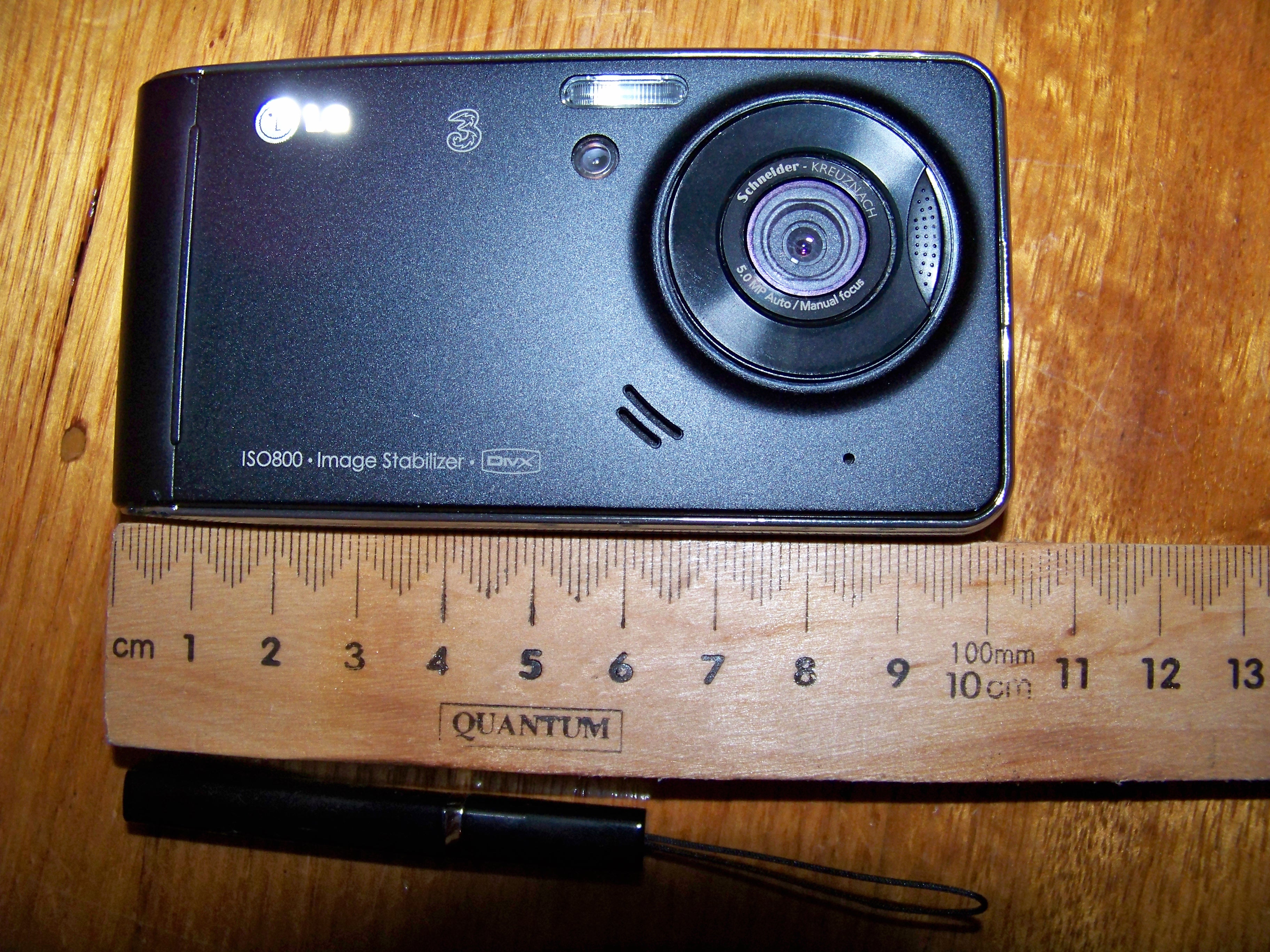
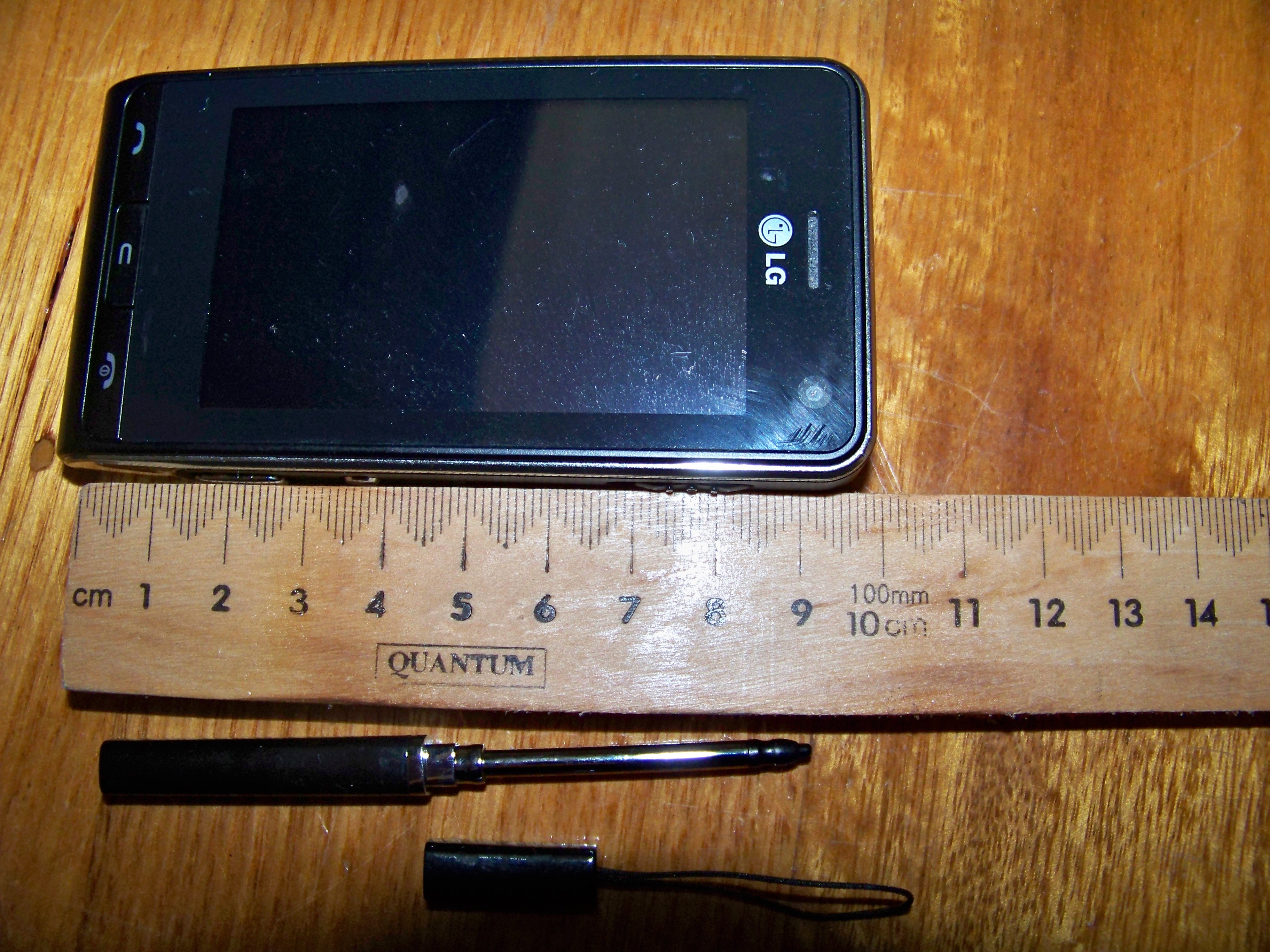
I have just got a LG U990 Viewty mobile phone [1]. It s a 3G phone and came free on the $29 monthly cap plan from Three (minimum monthly spend is $29 - but this is free if you use $29 per month). My previous plan was the $29 cap but had a minimum spend of $20 per month, as I never happened to use less than $29 per month I am not paying more. For a modern mobile phone the actual phone functionality is a sideline. If a device was strictly designed to be a phone then I think it would be very similar to the Nokia phones that were available 5+ years ago - the Nokia I had in 1999 performed every phone function that I desired of it. Like most modern phones the LG U990 Viewty suffers in it s phone functionality from the desire to make it do non-phone tasks and from the desire to cripple it to meet the desires of the carriers (not the desires of the users). For example the home screen will always have at least two buttons for paid Three services and I have no configuration option to remove them. Replacing them with speed dial options for a couple of numbers that I regularly call would be handy. As the main screen is a touch-screen there is no excuse for this, they should allow the software to be reconfigured with more useful options. Eventually the Android will kill most of the other phones and this problem of phones being designed to suit the telephone companies instead of the users will be solved. One of the most annoying mis-features of the phone is that it doesn t properly handle address book entries with multiple phone numbers. One of my friends turns his mobile off when he is at home, so I regularly call his mobile and then immediately call his home number if the mobile is unavailable. With my previous two mobile phones I could press the dial button to bring up the list of previous calls and then use the arrow buttons to select from the other numbers that are attached to the same address-book entry, so with three button presses I would be dialing his other number. With the Viewty I have to go back to the address book. The compelling feature of the Viewty is the camera and display. It has a 5MP camera which makes it the second highest resolution camera-phone offered by Three - the LG Renoir (KC910) has 8MP but needs a $99 plan for it to be free. It also has a 240*320 resolution touch-screen display (in a quick search in January when I bought my phone the best resolution display I could find on a phone is 240*400 in the LG Renoir). While the camera is documented as being 5mp there are no specs available about the resolution of the CCD. I want to use the native resolution of the CCD for pictures (I think interpolation is a waste of space). The CCD might actually be 5mp, a picture of the 1400*1050 resolution screen on my Thinkpad allows me to read all the text even when small fonts are in use, so the CCD resolution must be significantly greater than 1400*1050. This is a really important feature as the Viewty will work well for making screen-shots for bug reports about crashed computers (several of my clients have expressed interest in getting one after seeing such a demonstration). One annoying problem is that the camera software takes a while to load, my trusty Sony digital camera starts a lot faster and the LG U890 phone I used for the past two years is also a lot faster and more convenient. This won t work well for photographing unexpected events. When I am traveling by public transport I will photograph the relevant pages of my street directory as I can zoom in to photos of the maps and read the street names, it saves some weight when traveling. The 2G micro-SD card (which incidentally cost $10 from OfficeWorks) will allow me to store a lot of maps. One interesting feature is the video recording capabilities. It can do 640*480 resolution at 30fps (which is pretty good) and 320*240 resolution at 120fps (they claim that you can film a balloon popping). In my quick tests the standard 640*480*30fps mode works well, but the 120fps mode requires much brighter light than most of my test environments, so I have not yet got it working properly. The phone has a reasonable voice recording function, it can record considerably more than 34 hours of audio and the quality is reasonably good if you use an external microphone. It is however quite poor if you use the built-in microphone for a dictaphone function, it seems that quality is poor at any distance. I had wanted to record my LCA mini-conf talks with my phone but unfortunately forgot to bring the adapter for the external microphone. It s a pity that the phone doesn t have a standard microphone socket as I have misplaced my Viewty microphone, when designing the phone they should assume that misplacing attachments is a common occurrence and design it to use common parts. I recently spoke to a journalist who uses his mobile phone to record interviews. He said that his phone supported phone calls, voice recording, and taking pictures - all the essential tasks for his work. It seems that the Viewty would be better than most phones for journalistic work apart from the issue of low quality voice recording when you have misplaced your external microphone. The text editor is unfriendly in the keyboard mode (I have not tried hand-writing recognition), one thing I don t like is the fact that the letters jump when you press them. This does allow changing a letter by moving the stylus before releasing the press (some people consider this a great feature). There are no cursor control keys (which is a serious omission), and the keyboard doesn t resemble a real keyboard. My iPaQ is far better for writing (I once wrote a full-length magazine article on an iPaQ). The stylus is quite strange and interesting. In the picture of the front of the phone the stylus is compacted with it s lid on. In the picture of the back of the phone the stylus is extended with the lid off. The end of the stylus clips in to the lid so that removing the lid drags the central part out of the body. It s an interesting design and with the string on the lid allows the stylus to be attached to the phone when it s not being used. But I have never used it. Even with an iPaQ (which had a proper stylus that attached firmly inside the body of the device) I often used a fingernail on the touch screen. I have not felt the need to ever use a stylus with my Viewty. One final noteworthy thing is the support for Google services. It seems to have client support for YouTube, Google Maps, GMail, and Blogger. This seems to be a major win for Google, the Viewty is one of the most popular phones at the moment and I expect that lots of people who buy them will now have an incentive to use the Google services. Between these sorts of deals and the Android I think that it will be necessary to have some sort of anti-trust action against Google. Google are generally doing good things for the users. I have been quite satisfied to use Google search, Google advertising on my blog, and Gmail. Also I have been moderately happy with Blogger (it was good when I started blogging) and Google Maps is useful on occasion. So generally I am happy with Google, but monopolies are bad for the users so I think that if things continue on their current trend then Google may have to be split into several little Googlets some time in the next few years.

John Goerzen: Free Software enforcing DRM?!

So I just recently switched to KDE 4 (still using it with xmonad, of course) and I just now ran into my first really big annoyance. I just downloaded a PDF, and tried to copy and paste a bit of text from it. I used the selection tool, and Okular (KDE s document viewer) offered to speak it to me, but said Copy forbidden by DRM. pdftotext was able to convert the entire file to text format in an instant. Why are people intentionally adding code to KDE to remove my freedom? This is crazy and nuts. Nobody should be doing this, least of all in Free Software!

30 May 2009

Stefano Zacchiroli: kick-starting turbogears 2 packaging

TurboGears 2 in debian ... soon ! After a long incubation, a few days ago TurboGears 2 has been released. Historically, I've been preferring TurboGears over Django for being closer to the open source philosophy of reusing existing components. Since the long 2.0 release was marking a gap with Django, I was eager to test the 2.0, and I was delighted to find it in Debian. Unfortunately, it doesn't seem to be in good shape yet. In particular it lacks several dependencies before it can even be used to quickstart a project, in spite of its presence in unstable. To give an idea of the needed work, after having installed it manually (via easy_install), my virgin /usr/local/lib/python2.5/site-packages/ has been polluted by 26 egg-thingies. I decided to spend some week-end time to start closing the gap, because we cannot lack such an important web framework in Debian (and ... erm, yes, also because I need it :-) ). Here is the current status of what has been ITP-ed / packaged already (by yours truly): Where to Considering, foolishly, the last package as being already done, the way to go is still long:
    zack@usha:~$ ls /usr/local/lib/python2.5/site-packages/ grep -v repoze.what
    AddOns-0.6-py2.5.egg
    BytecodeAssembler-0.3-py2.5.egg
    Catwalk-2.0.2-py2.5.egg
    easy-install.pth
    Extremes-1.1-py2.5.egg
    PEAK_Rules-0.5a1.dev_r2582-py2.5.egg
    prioritized_methods-0.2.1-py2.5.egg
    sprox-0.5.5-py2.5.egg
    sqlalchemy_migrate-0.5.2-py2.5.egg
    SymbolType-1.0-py2.5.egg
    tg.devtools-2.0-py2.5.egg
    tgext.admin-0.2.4-py2.5.egg
    tgext.crud-0.2.4-py2.5.egg
    TurboGears2-2.0-py2.5.egg
    tw.forms-0.9.3-py2.5.egg
    WebFlash-0.1a9-py2.5.egg
    zope.sqlalchemy-0.4-py2.5.egg

Possibly, some of them are already in Debian hidden somewhere, but sure there is still work to be done. If you want to help, you are more then welcome. The rules are simple: all packages will be maintained under the umbrella of the Python Modules Team, but you should be willing to take responsibility as the primary maintainer. Please get in touch with if you are interested, as I'm in turn already in touch with some other very kind volunteers (thanks Enrico and Federico2!) to coordinate who-is-doing-what. Preview packages available What has already been packaged, including a temporary workaround for python-transaction, will be available in experimental after NEW processing. The idea is that nothing will go to unstable until TurboGears 2 will be (proven to be) fully functional. In the meantime, packages are available from my personal APT repository (signed by my key), here are the friendly /etc/apt/sources.list :
    deb http://people.debian.org/~zack/debian zack-unstable/
    deb-src http://people.debian.org/~zack/debian zack-unstable/

Versions are tilde-friendly and shouldn't get in your way when the official packages will hit unstable. Packaging multiple-egg / multiple-upstream packages In all this, I've faced an interesting problem with the python-repoze. who,what -plugins packages. They correspond to a handful of plugins, each of which is about 20/30 Kb. I didn't consider appropriate to prepare 5 different packages, due to archive bloat potential. Hence, you get the usual problems of multiple-upstream packages. To counter some of them, as well as some egg-specific packaging annoyances with multiple upstream, I wrote a couple of very simple helpers: I'm no Python-packaging-guru so, lazyweb, if you spot in this choice something I utterly overlooked, or if you have improvements to suggest, please let me know. Repacking eggs An interesting problem will be faced in trying to integrate the above approach with Python modules that are shipped only as .egg files (i.e., no tarballs, ... yes there are such horrifying things out there). To preserve uniformity, we would need uscan to support --repack ing of .egg files as they were simple .zip archives. Since eggs are .zip archives ... why not?

Michael Prokop: Directory specific shell configuration with Zsh

Now being an official Debian developer I ve the possibility to use $DEBEMAIL=mika@debian.org for my Debian packages. But whereas I want to use that for all my official Debian packages I still want to use $DEBEMAIL=mika@grml.org for my grml related packages. I m a lazy sysadmin and don t want to manually adjust my changelogs depending on the type of package (especially since this might be error-prone) so I needed a generic solution. Grml s Zsh configuration (Debian package grml-etc-core >=0.3.71) provides a solution for Zsh (version 4.3.3 or later): based on directories you can set your own profiles. Demonstration:
% cd /grml/git-grml
chpwd(): Switching to profile: grml
% echo $DEBEMAIL
mika@grml.org
% cd /grml/git-debian
chpwd(): Switching to profile: debian
% echo $DEBEMAIL
mika@debian.org
The configuration is pretty simple:
# define profiles based on directories:
zstyle ':chpwd:profiles:/grml/git-grml( / /*)'       profile grml
zstyle ':chpwd:profiles:/grml/git-debian( / /*)'     profile debian
zstyle ':chpwd:profiles:/home/mika/Customers( / /*)' profile customers
# configuration for profile 'grml':
chpwd_profile_grml()
 
  [[ $ profile  == $ CHPWD_PROFILE  ]] && return 1
  print "chpwd(): Switching to profile: $profile"
  export DEBEMAIL=mika@grml.org
  export GIT_AUTHOR_EMAIL="mika@grml.org"
  export GIT_COMMITTER_EMAIL="mika@grml.org"
 
# configuration for profile 'debian':
chpwd_profile_debian()
 
  [[ $ profile  == $ CHPWD_PROFILE  ]] && return 1
  print "chpwd(): Switching to profile: $profile"
  export DEBEMAIL=mika@debian.org
  export GIT_AUTHOR_EMAIL="mika@debian.org"
  export GIT_COMMITTER_EMAIL="mika@debian.org"
 
# configuration for profile 'customers':
chpwd_profile_customers()
 
  [[ $ profile  == $ CHPWD_PROFILE  ]] && return 1
  print "chpwd(): Switching to profile: $profile"
  export TELEPHONE=[...]
  export MAIL=[...]
 
Kudos to Frank for implementing this lovely feature in grml s zshrc. Look for chpwd_profiles() in grml s zsh config for further documentation on this feature.

Evgeni Golov: Using Amazon S3 for backups under Linux

Dear Lazyweb,

Amazon's S3 services look very interesting for doing backups, but I can't find a perfect solution to integreate it into our current setup (using either rdiffbackup or rsnapshot).

Did anyone of you ever used it in a similar way, and if so, how?
My basic idea was:
1. mount S3 (via FUSE?)
2. mount some encrypted FS on top of it (EncFS?)
3. run rdiffbackup/rsnapshot as usual on the resulting encrypted bucket

Any suggestions on tools how to do this? Are s3fs and EncFS what I'm looking for?

David Wendt Jr.: Bad journalism that's suprisingly related to my project

These guys could do at least 10 minutes of research before writing an article. The AWS APIs are already 'open source', you're allowed to write free-software tools that use them. They're out in the open, with no NDA or anything attached. Eucalyptus also exists, which is a pretty darn good reimplementation of EC2. The only real impediment to an 'open' (you meant free, right?) cloud is that you can't use ec2-tools with it unless you want to fight off a pack of female Amazon warrior-lawyers. I hear their punches can leave a mark.

I'm too lazy to send them an e-mail, and the Slashdot comments are already calling 'em out anyway.

29 May 2009

Christian Perrier: Glasses

I'm now wearing glasses. Reaching birthdays between 45 and 50 gives one nice gift: presbytia. In a few months, my arms were getting longer and longer while I was reading, to the extent that it became difficult to read, and even hack on the laptop during evenings. As a consequence, I won a visit to an ophtalmologist and then got a prescription for glasses. Luckily for me, my wife (and my son, indeed) works for the Essilor International company, world leader of corrective glasses, and particularly makers of the quite famous "Varilux" progressive glasses. So, I could get their top product, Varilux Physio glasses with Cryzal Forte anti-reflection treatments. Getting used to these nice pieces of glass technology is quite tricky but the result is...amazing, even for my far vision (which I thought was perfect until now). So, expect some pics soon...or, alternatively just come at Debconf9...:-)

Erich Schubert: Java hacks: Generics and toArray

Arrays and Generics in Java do not mix very well. In order to create an array, you need to know the object class the array is supposed to store.Arrays in Java are special: they can efficiently store primitive data types. The expected difference in efficiency between byte[] and Byte[] is pretty big (of course some good VM might optimize) for obvious reasons (think of: references, garbage collection, pointer sizes, ...).This is probably why you need to know the type before creating an array (because an array of primitive types such as byte will be different from one that stores objects of some kind).In particular, the following Java code
  String[] foo = (String[]) new Object[0];
results in a run time error ("[Ljava.lang.Object; cannot be cast to [Ljava.lang.String;"). But it gets more confusing when you introduce generics:
public static <T> T[] test()  
  T[] te = (T[]) new Object[0];
  System.err.println(te.length);
  return te;
 String[] foobar = test();
will print "0", then throw the same run time error in the foobar line.What happens here is that in the test() method, T actually is replaced with "Object" at compile time. Thus the array type works just fine, and so does the call to te.length. Upon returning, it is then cast into a String[] array and fails.Now here comes a crazy Java hack:
public static <T> T[] test(T... ts)  
  T[] te = (T[]) java.lang.reflect.Array.
      newInstance(ts.getClass().getComponentType(), 0);
  System.err.println(te.length);
  return te;
 String[] foobar = test();
The exception is gone, foobar is of the proper type now!A result of discovering this hack are these two methods:
public static <T> T[] newArrayOfNull(int len, T... ts)  
  // Varargs hack!
  return (T[]) java.lang.reflect.Array.
      newInstance(ts.getClass().getComponentType(), len);
 public static <T> T[] toArray(Collection<T> coll, T... ts)  
  // Varargs hack!
  return coll.toArray(ts);
 
Notice how elegant the last method looks - and it finally allows you to do toArray(collection) instead of collection.toArray(new WhateverClassTheCollectionHas[0]).Note that this is still a hack, and may or may not work with all Java compilers, JREs and/or Java versions.Update: Note that this 'hack' is also not transitive. The context calling toArray needs to know the object type at compile time. So it doesn't save you much more than writing "new KnownClass[0]" etc.Update: So I'm actually not using this - it's just a hack, and often quite hackish. The problem is that when you call e.g. toArray in an Generics context, it will actually create an array of "Object", so it makes much more sense to verbosely specify the class you want to use for the arrays (and get some reliability in use back).

David Wendt Jr.: awstool.py

Since I can't use a Eucalyptus cluster without breaking the usage restrictions on the default ec2-tools apps, I'm writing a set of Python scripts to do the same job. The APIs that the tools use are well-documented and don't have onerous hand-tying usage restrictions.

So that should be 'fully functional' by next week. By fully functional I mean being able to bundle an AMI, upload it to a cloud, and manage it's instances without crashing or screwing up. I'm probably not going to bother supporting stuff that Eucalyptus doesn't support, since the main focus of this is Eucalyptus and not Amazon EC2.

I'll also include a command for saving cloud settings, i.e. "awstool savecloud --ec2-cert --cert --url rightscale" which then lets you do something like "awstool upload-image --cloud rightscale debian-lenny.ami".

Also, pkg-escience has agreed to host the Eucalyptus integration project, so you can follow along at:

git://git.debian.org/git/pkg-escience/awstool.git

Ignore the first commit's e-mail address of 'kmeisthax@Lappy-486'; I forgot to set some config somewhere before I did the initial push.

Jordi Mallach: Barcelona

Last weekend I finally managed to travel to Barcelona to visit my family and some friends. As my agenda was quite packed with stuff to do, I was unable to find out if any of the Ubunteros had arrived early for UDS, and I left just after lunch on Sunday. Unfortunately, I had totally missed that before UDS, Canonical held their allhands meeting, and it would have been easy to meet them on Friday night after I got in the city. What a pitty, and sorry about this, mdz, I would have loved to meet... :( In other Barcelona news, I'm sure that UDS attendees will be astonished (or fed up!) by the football crazyness going on right now. Last night I went to a culer bar near Woody and enjoyed watching how Bar a claimed brilliantly their 3rd Champions Cup. For someone who normally doesn't care that much about football, the last few weeks have been incredible. Today I visited my 96 year old grandfather, and even if he has lost much of his expressiveness and energy since the last few months, today he was visibly happy and proud of what his Bar a has managed to accomplish this season. Three titles, plus literally going over Real Madrid in Santiago Bernabeu. Bar a is definitely m s que un club, and I'm happy that my grandfather was able to enjoy it.

28 May 2009

Stefano Zacchiroli: command of the day: buthead

looking for head -v? enjoy buthead Been looking for buthead for a while, package buthead (eh), thanks Adrian. Too bad he has a package of its own instead of being part of, say, moreutils, or head itself, ... Update ... it is integrated in plain old tail though, and it's even in POSIX. Amazing how things like that can stay unknown for a while. More info in comments.

Next.

Previous.