Search Results: "dom"

29 March 2010

Russell Coker: Server Costs vs Virtual Server Costs

The Claim I have seen it claimed that renting a virtual server can be cheaper than paying for electricity on a server you own. So I m going to analyse this with electricity costs from Melbourne, Australia and the costs of running virtual servers in the US and Europe as these are the options available to me. The Costs According to my last bill I m paying 18.25 cents per kWh that s a domestic rate for electricity use and businesses pay different rates. For this post I m interested in SOHO and hobbyist use so business rates aren t relevant. I ll assume that a year has 365.25 days as I really doubt that people will change their server arrangements to save some money on a leap year. A device that draws 1W of power if left on for 365.25 days will take 365.25*24/1000 = 8.766kWh which will cost 8.766*0.1825 = $1.5997950. I ll round that off to $1.60 per Watt-year. I ve documented the power use of some systems that I own [1]. I ll use the idle power use because most small servers spend so much time idling that the time that they spend doing something useful doesn t affect the average power use. I think it s safe to assume that someone who really wants to save money on a small server isn t going to buy a new system so I ll look at the older and cheaper systems. The lowest power use there is a Cobalt Qube, a 450MHz AMD K6 is really small, but at 20W when idling means a cost of only $32 per annum. My Thinkpad T41p is a powerful little system, a 1.7GHz Pentium-M with 1.5G of RAM, a 100G IDE disk and a Gig-E port should be quite useful as a server which now that the screen is broken is a good use for it. That Thinkpad drew 23W at idle with the screen on last time I tested it which means an annual cost of $36.80 or something a little less if I leave the screen turned off. A 1.8GHz Celeron with 3 IDE disks drew 58W when idling (but with the disks still spinning), let s assume for the sake of discussion that a well configured system of that era would take 60W on average and cost $96 per annum. So my cost for electricity would vary from as little as $36.80 to as much as $96 per year depending on the specs of the system I choose. That s not considering the possibility of doing something crazy like ripping the IDE disk out of an old Thinkpad and using some spare USB flash devices for storage I ve been given enough USB flash devices to run a RAID array if I was really enthusiastic. For virtual server hosting the cheapest I could find was Xen Europe charges E5 for a virtual server with 128M of RAM, 10G of storage and 1TB of data transfer [2], that is $AU7.38. The next best was Quantact who charges $US15 for a virtual server with 256M of RAM [3], that is $AU16.41. Really for my own use if I was paying I might choose Linode [4] or Slicehost [5], they both charge $US20 ($AU21.89) for their cheapest virtual server which has 360M or 256M of RAM respectively. I ve done a lot of things with Linode and Slicehost and had some good experiences, Xen Europe got some good reviews last time I checked but I haven t used them. The Conclusion When comparing a Xen Europe virtual server at $88.56 per annum it might be slightly cheaper than running my old Celeron system but would be more expensive than buying electricity for my old Thinkpad. If I needed more than 128M of RAM (which seems likely) then the next cheapest option is a 256M XenEurope server for $14.76 per month which is $177.12 per annum which makes my old computers look very appealing. If I needed more than a Gig of RAM then my old Thinkpad would be a clear winner, also if I needed good disk IO capacity (something that always seems poor in virtual servers) then a local server would win. Virtual servers win when serious data transfer is needed. Even if you aren t based in a country like Australia where data transfer quotas are small (see my previous post about why Internet access in Australia sucks [6]) you will probably find that any home Internet connection you can reasonably afford doesn t allow the fast transfer of large quantities of data that you would desire from a server. So I conclude that apart from strange and unusual corner cases it is cheaper in terms of ongoing expenses to run a small server in your own home than to rent a virtual server. If you have to purchase a system to run as a server (let s say $200 for something cheap) and assume hardware depreciation expenses (maybe another $200 every two years) then you might be able to save money. But this also seems like a corner case as the vast majority of people who have the skills to run such servers also have plenty of old hardware, they replace their main desktop systems periodically and often receive gifts of old hardware. One final fact that is worth considering is that if your time has a monetary value and if you aren t going to learn anything useful by running your own local server then using a managed virtual server such as those provided by Linode (who have a really good management console) then you will probably save enough time to make it worth the expense.

28 March 2010

Stefano Zacchiroli: RC bugs of the week - issue 25

RCBW - #25 Last (long) week has finally passed: first in Geneve visiting Gismo, then in Sierre/Crans-Montana to present a paper at SAC 2010, then back in Paris for half a day before a day in Bruxelles for the 2nd year Mancoosi project review. (And of course campaigning has always been going on ...) All went fine and I can finally relax a bit for a week-end back "home" (i.e. Paris). Regarding RCBW, it looks like that in the past 2 months I've stabilized around 3 issues per month, which makes me happy nevertheless. Without any further ado, here are this weekissue's squashes: Random points:

27 March 2010

Dominique Dumont: Big Thanks to Xorg dev and X Strike Force

Hello My PC at home is not personal, my wife and my kids all have their personal account. They are used to open a new Xorg session to log on and we all often use CTRL-ALT-F7, F8 and so on to switch from one session to another. We somehow got used to the wait required to switch from one session to another. Recently I ve upgraded to kernel 2.6.32-4 with KMS enabled and, wow ! the switch is much faster now. That s great. Even better, XV video is now working in all sessions. No need to log off and log on to first session to get video and games working. So I think it s time to say a big thank you to all developers involved in Xorg , radeon , kernel and debian kernel team. Thanks a bunch guys :-)

Russell Coker: How to Choose a Free Software Mission

Jane McGoningal gave an interesting TED talk about how Online Gaming can Make a Better World [1]. One of her points is that there is no unemployment in games such as World of Warcraft, there is always a world saving mission available to you which is just within reach of your skill level and no-one is assigned a mission that they can t possibly do. It seems to me that the free software development community has a similar issue, there are always missions available at all skill levels. Our challenge is to find ways to encourage people to accept the missions and to provide them appropriate levels of support to encourage them on their path to an epic win . Choosing a suitable mission is a particularly difficult problem as you often don t know how difficult a task will be until you are more than half complete. Jane makes points about humans being happier when working hard and a desire for epic meaning . She says that it s a problem that gamers believe that they can change a virtual world but not the real world . If you change the virtual world of software development then that changes the real-world . Jane cites Herodotus as reporting a kingdom that was gripped in a famine for 18 years where the king instituted a policy of playing games and eating on alternate days with the aim being that the games would distract people from their hunger. I m sure that I m not the only person who s gone without food or water for a day because of being too busy coding She has a lot of other interesting points and I recommend that you read the Institute For The Future [2] web site for more background information. Now my question is, how can we encourage programmers to start doing Free Software and Open Source development and achieving some Epic Wins? I don t claim to have good answers and I would appreciate any suggestions. If you blog about this please leave a comment on this post to direct readers to your blog.

Dirk Eddelbuettel: Rcpp 0.7.11

A new versions 0.7.11 of Rcpp is awaiting inclusion into CRAN and Debian. It is also available from here. This version fixes a somewhat serious bug uncovered by Doug Bates when working with vectors of strings. We also added a few new accessor functions as well as a new convenience function create that is particularly useful for creating (possibly named) list objects that are returned to R. Here is the full NEWS entry for this release:
0.7.11	2010-03-26
    o	Vector
 gains a set of templated factory methods "create" which
        takes up to 20 arguments and can create named or unnamed vectors.
        This greatly facilitates creating objects that are returned to R. 
    o	Matrix now has a diag() method to create diagonal matrices, and
        a new constructor using a single int to create square matrices
    o	Vector now has a new fill() method to propagate a single value
	
    o	Named is no more a class but a templated function. Both interfaces
        Named(.,.) and Named(.)=. are preserved, and extended to work also on 
        simple vectors (through Vector
::create) 
	
    o	Applied patch by Alistair Gee to make ColDatum more robust
    
    o	Fixed a bug in Vector that caused random behavior due to the lack of
        copy constructor in the Vector template
As always, even fuller details are in Rcpp Changelog page and the Rcpp page which also leads to the downloads, the browseable doxygen docs and zip files of doxygen output for the standard formats. A local directory has source and documentation too. Questions, comments etc should go to the rcpp-devel mailing list off the R-Forge page

26 March 2010

Steve Kemp: I don't like it when people yell at me for no reason at all

Ubuntu always gets a lot of coverage in blogs, and the recent controvesy realisation that it isn't a 100% community-made distribution has triggered yet another round of this. A lot of the controvesy, coverage, and attention can be laid at the feet of Canonical themselves; I think it is fair to say that the visibility, hype, advertising, and the goal of trying to be all things to all men means that even relatively trivial issues can easily get blown out of proportion, and to a certain extent this is a self-inflicted. Live by the sword media & etc ... I think it is fair to say that Ubuntu has attracted a huge swathe of non-technical users. They want something "easy", "free", and "sexy", but more than that they want to use their computer, not develop the operating system. When a particular bug report, with 400+ comments, hits the press we're primarily seeing a marketing-fail rather than technical-fail. The realisation that yes bugs are reported, but no the community (of users) doesn't get input into every single thing is as it should be. If you look back over "controvesy" in the past you'll see comments from the non-technical users which are tantamoint to blackmail:
This should be fixed ... or I'm gonna .. install .. gentoo. yeah. really.
(Similarly you see many comments of the form "I agree", "oh noes", or "Please revert ASAP", rather than technical arguments.) This non-technical nature of the userbase is also readily apparent if you browse through the answers to problems posted in forums for example "Delete this file, I don't know why it works but it fixes it for me!!2!". (I've seen some truly horrific advice upon Ubuntu forums, even so far as chmodding various parts of the system to allow users to write binaries to /bin.) Similarly you'll see that the launchpad is full of generic linux misunderstandings and bugs that aren't "real". The unfortunate fact is that the Ubuntu bug tracker is a wasteland in many places: The tight timescale of releases combined with the sheer number of incoming bug reports means that often issues are overlooked. (For example one bug that bit a colleague is #402188 - on the one hand it is a trivial bug, on the other hand its readily apparent to users. If something like that can be missed it makes you wonder ..?) ObRandom: Ubuntu has 100 bugs open against its Vim package, some of which have been marked as NEW since 2009 (ie. untouched, ignored). By contrast the Debian vim package has way fewer bugs. I'm sure there are packages where the situation is reversed but I think is not an unusual comparison. Finally in addition to sheer numbers of bugs, and tight timescales, it has to be noted that the relative number of developers to users is miniscule, and this in turn has lead to some interesting solutions. The Ubuntu PPA system (personal package archive) should be a good thing. It should allow people to submit new packages for testing, for bugfixes, and for more visibility. Instead downloading a PPA file is no different than going to download.com and downloading a random binary - sure it might be legit, but there's no oversight, no quality control, and most likely no future updates.
Ubuntu as a distribution is interesting, and I'm not trying to be overly critical - A year or two ago had somebody thrown money at me I might have been inclined to accept it. I think most of the perceived problems stem from a single common source, which is largely the issue of scale. (e.g. bug reports to bug handlers. developer numbers to user numbers.)
There are many good things to be said about Ubuntu (& Canonical) in addition to the negative ones that we see in the press or that I've perceived and mentioned above. The truth is it works for a lot of people, and the growing pains will continue until it either dies or both its audience and itself matures. Either way I don't hate Ubuntu, in the same way that I don't hate Microsoft, Oracle, Fedora, Gentoo, or other mass-entities. There are pros and cons to be made for most of them, (and of course Debian itself is no different).
However I will say that every time I see people write "If you want a sexy/shiny/easy to use Linux desktop then install Ubuntu" I glance over at my Debian Lenny desktop, marvel at how sexy, shiny and easy to use it is, and get a little bit disappointed at our own marketing failure(s).
ObFilm: Day of the Woman

John Goerzen: Trip part 3: L beck

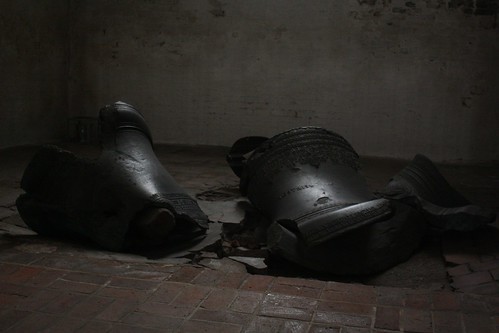
Note: This post was written in March 14-15 and posted after our return. When I think about L beck, the first thing that strikes me is the feeling of history underfoot. It struck me most when we set foot inside the Marienkirche. I had never quite felt a wave of a feeling of stepping back in time like that before. The stones on the floor were uneven and imperfect. L beck has had a wet and snowy winter, so the city had spread sand everywhere: sidewalks and roads. Walking into any grand church, I could hear the sound of sand under the shoes of everyone nearby, and feel it under my own shoes. I think I will long associate with L beck the feeling of walking into a grand old church, looking up at the top of the old building at seemingly impossible heights, while feeling the grit of sand and uneven stone beneath my feet. IMG_2643 Marienkirche isn t perfect, like some American churches I ve been in, such as the Basilica of Notre Dame. It doesn t have a lot of gold, either, and both of these attributes are wonderful. Look at a column of bricks, and you can see that each brick isn t exactly like its neighbor, and the entire column isn t perfectly straight. Lots of things in L beck are so old that they aren t perfectly straight, and it made me think that our American notion of always having to fix such things might be somewhat off sometimes. IMG_2629 Look up, and you see the frescos from the 1300s, revealed after many years after the building was struck by an allied bombing raid in 1942. This heavily damaged the building and knocked down plaster from the walls and ceiling, revealing the old artwork. Many parts of Marienkirche were lost as a result of the bombing, which perhaps adds to its slightly sparse and ancient feel. The church bells were sadly melted and crashed to the ground due to the bombing, and have been left exactly where they fell as a memorial. IMG_2641 Look down, and you see the uneven floor, and the concrete slabs above where important people were buried under the floor an attribute common to many of the churches we visited. It was common to see dates of graves from the 1600s and 1700s, though in some places it would go as far back as the 900s. The main part of the church has no heating or cooling, and visiting it on a day just a bit above freezing adds to the feeling of, well, old. Marienkirche has to be my favorite sight in L beck. Walking around the city, I get a similar feel. Many streets and sidewalks are made of stone. The streets that weren t damaged in the war have rows of beautiful old facades. Walk down many streets, and every so often I d see a little tunnel ( just wide enough for a coffin ) that goes under the street-facing houses to a nice little inner courtyard. These are open to the public, but tend to be very quiet and somewhat private. In the courtyard are smaller houses, which would have originally been used by the less wealthy. We also saw the L beck Dom (cathedral), which had a small museum about the destruction due to the Royal Air Force bombing in 1942. It was very sad to see the photo of the Dom in ruins, still smoking, even now. Burning L beck Cathedral after an air raid in 1942 I can only imagine what it must have felt like to residents of L beck to wake up to see many of their priceless centuries-old landmarks and places of worship so horribly destroyed and all of this for little strategic purpose really focused on the morale of the enemy civil population . It s sad that the allies would do such a short-sighted and terrible thing. Europeans have long had to live with the legacy of war upon war, while we Americans have rarely had to see the consequences of war up close. I think it would be good for more of us to visit these sites and come up face to face with what a bomb can do, and then perhaps we will be more judicious with them in the future. Shifting gears now to where we stayed: Andreas & Sigrid, with whom we stayed, have a beautiful 500-year-old house, with lots of original wood beams exposed, and some very old paintings on the walls and ceilings. Nearby were excellent bakeries and a chocolate shop. Terah and I visited it today and bought some very good chocolate. And this brings me to the second thing I ll remember: Andreas & Sigrid s children, Lukas and Rahel. Now, Terah knows no German, I know only a little bit, and the children know no English. So it was a bit slow getting to know each other to start out, but we managed to work around the communication barrier and had a great time. Terah played board games with Rahel, while with me, she kept inventing games to play: hiding somewhere, saying Hallo! , and laughing at how many unsuccessful attempts I might make to find her. I showed Lukas the camera on my Droid, which he used a lot, though a racing game on Terah s iPod Touch was more exciting. They both enjoyed looking at videos of American trains a bit, but especially pictures of our house and yard with Jacob and Oliver. They tried to teach me the German words for things, and also made futile attempts to correct my pronunciation! When we were leaving today, Rahel came over and gave me a kiss on the hand, then the same to Terah s hand, then a little kiss on one of our suitcases. It was touching and sweet. This was one of those experiences no guidebook prepared me for, and no tour bus would have provided. It is something neat to make friends with children despite the large language barrier. On to the rest of the visit We had arrived a little late into Hamburg. After getting our bags and some Euros at an ATM, the next step was to find the bus to L beck. No signs for it were evident, so I found an information desk. The person at the desk was carrying on a conversation in German with the person ahead of me in line. I figured an information desk person in a busy airport would speak English, and was all ready to ask Sprechen Sie Englisch? , but when I walked up, he got a polite smile, and said, Good morning! How can I help? Guess I m obvious. He directed me to the bus, gave me a brochure about it, and told me what time it would leave. Terah and I found the spot to wait, and for a moment I stepped inside the airport terminal. Terah won t let me forget that someone came up to her and asked a question in German, whereas I was spoken to in English. Anyhow, we found the bus, managed to communicate with the driver that doesn t speak English, and sat next to the friendly person that was talking to Terah. He turned out to be a violin player from Munich, and we had a great conversation for the next hour he asking questions about the USA, us asking questions about Germany and Munich. At one point, he commented, You two are so open minded and you re also Americans! He sounded surprised. We exchanged email addresses at the train station. Andreas found us there, and we walked through the city to his house, with him pointing out the sights along the way. L beck is a beautiful city, and though it was damaged in World War II, much of the really old parts still remain. The famous Holstentor Gate has a museum inside, which was fascinating to visit. On Sunday, we went to church with the family we were staying with, Andreas helpfully translating for us. There I met a British Python programmer, which was fun. His wife is a social worker, which was fun for Terah. Monday it was time to get on the train to Berlin. We again walked through a cold and rainy city to the Hauptbahnhof, ready to head to Berlin. There we got on a train to Hamburg, then an ICE train to Berlin. Despite having just a few minutes for a connection in Hamburg, it all went perfectly smoothly. The train left Leipzig about 10 seconds late the clock inside turned over to the minute, then the doors closed and we were off. Impressive. Note: the rest of my photos from L beck are available on Flickr.

Russell Coker: Hacker Spaces

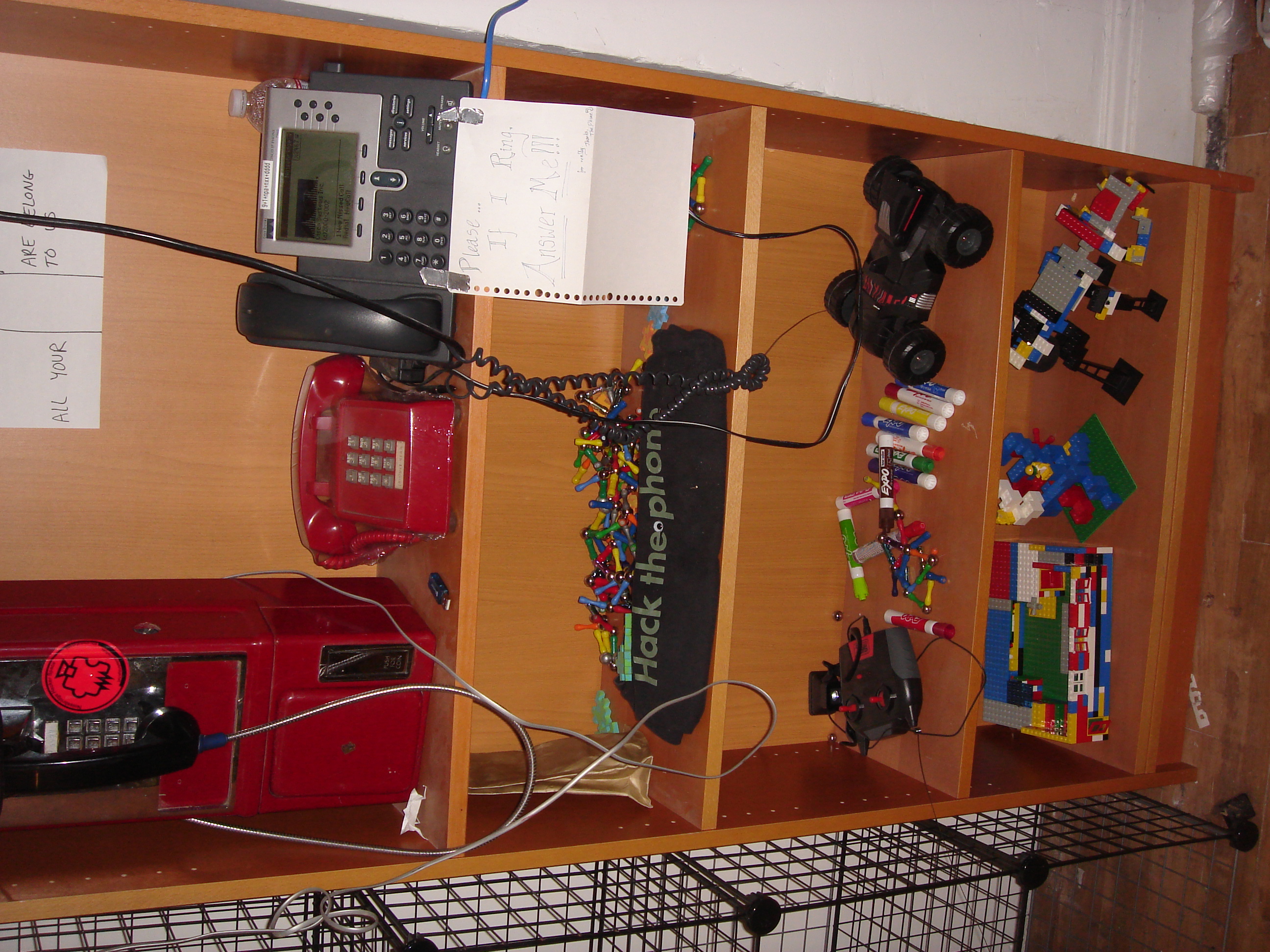
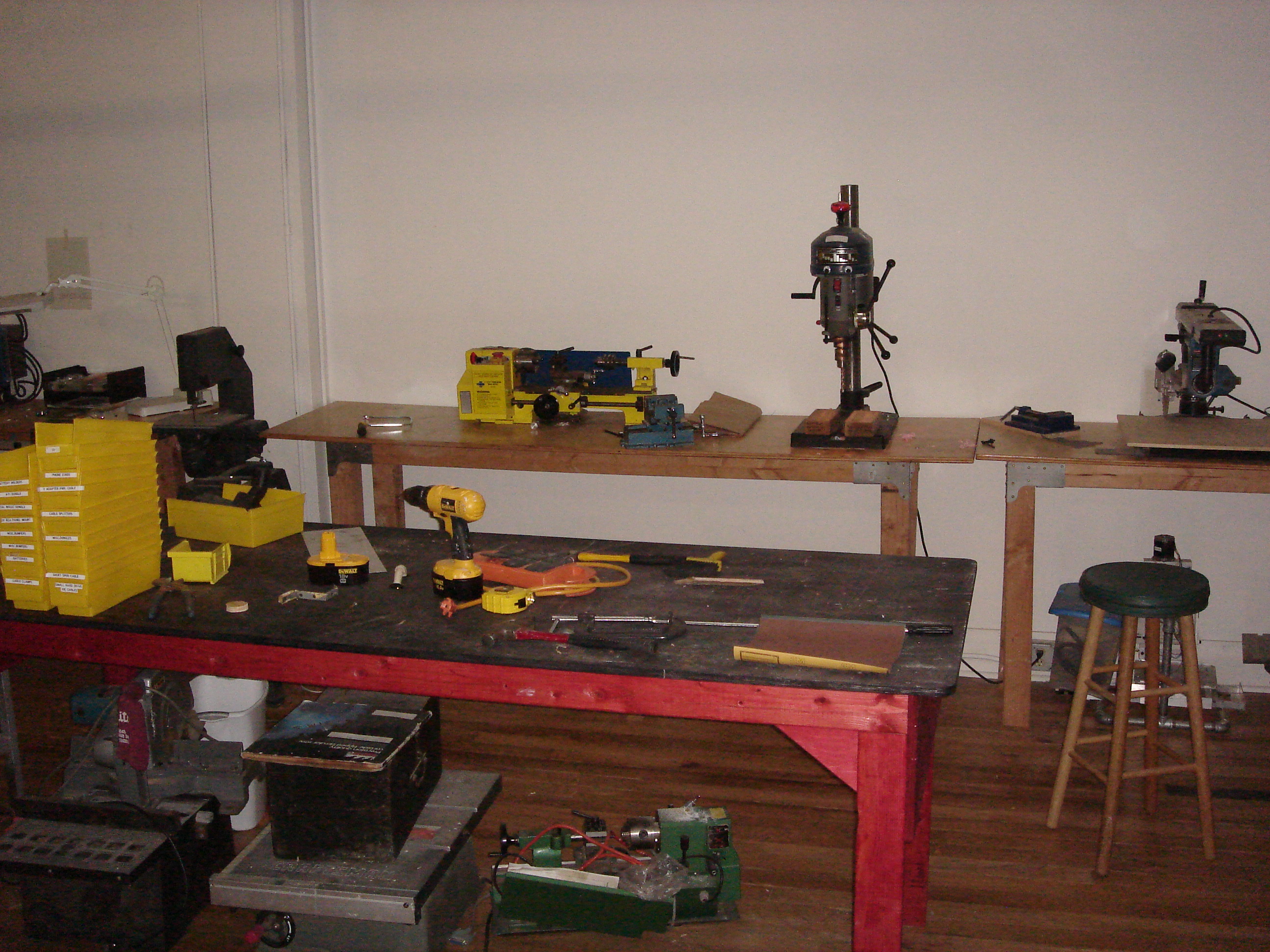
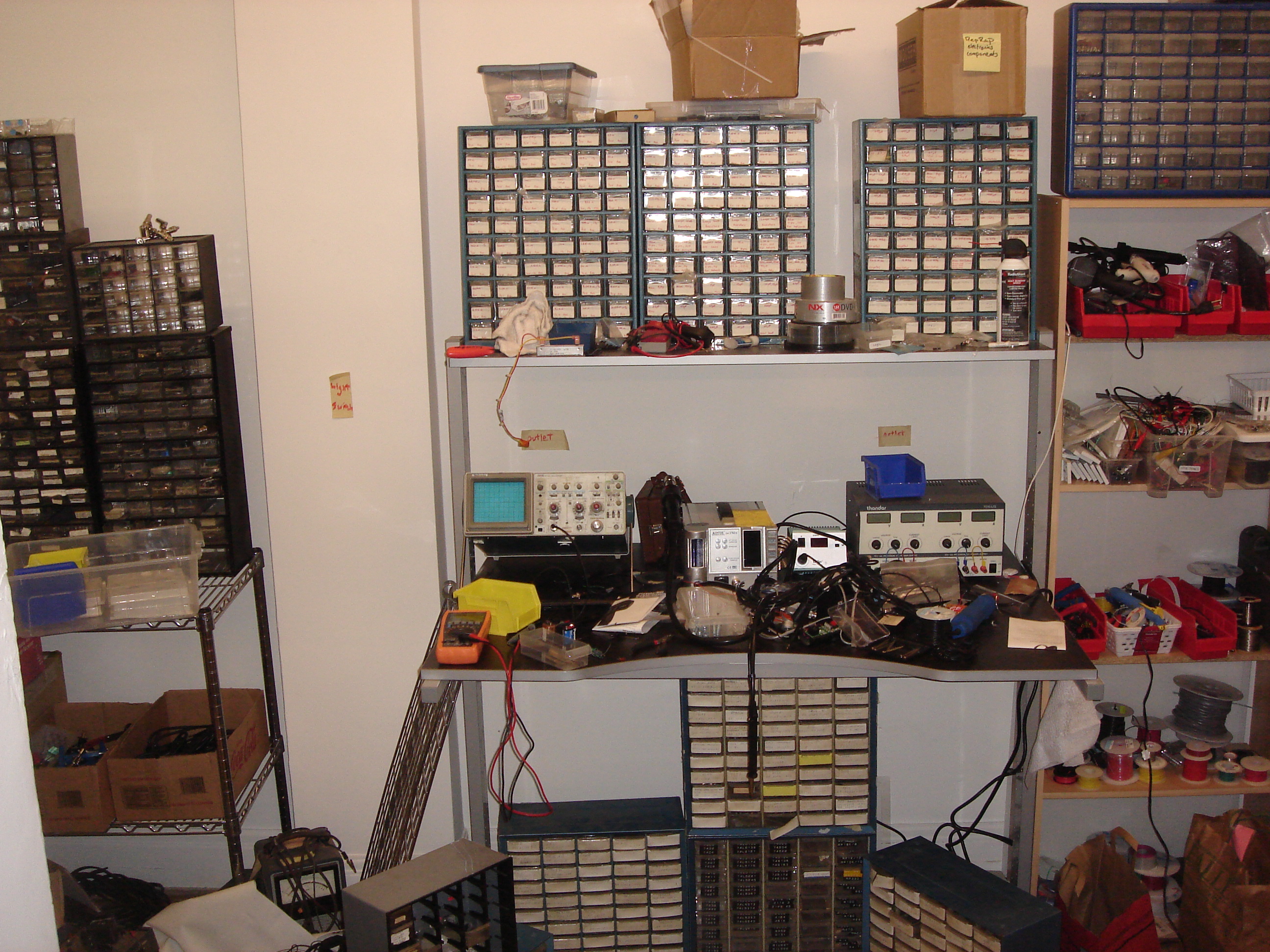
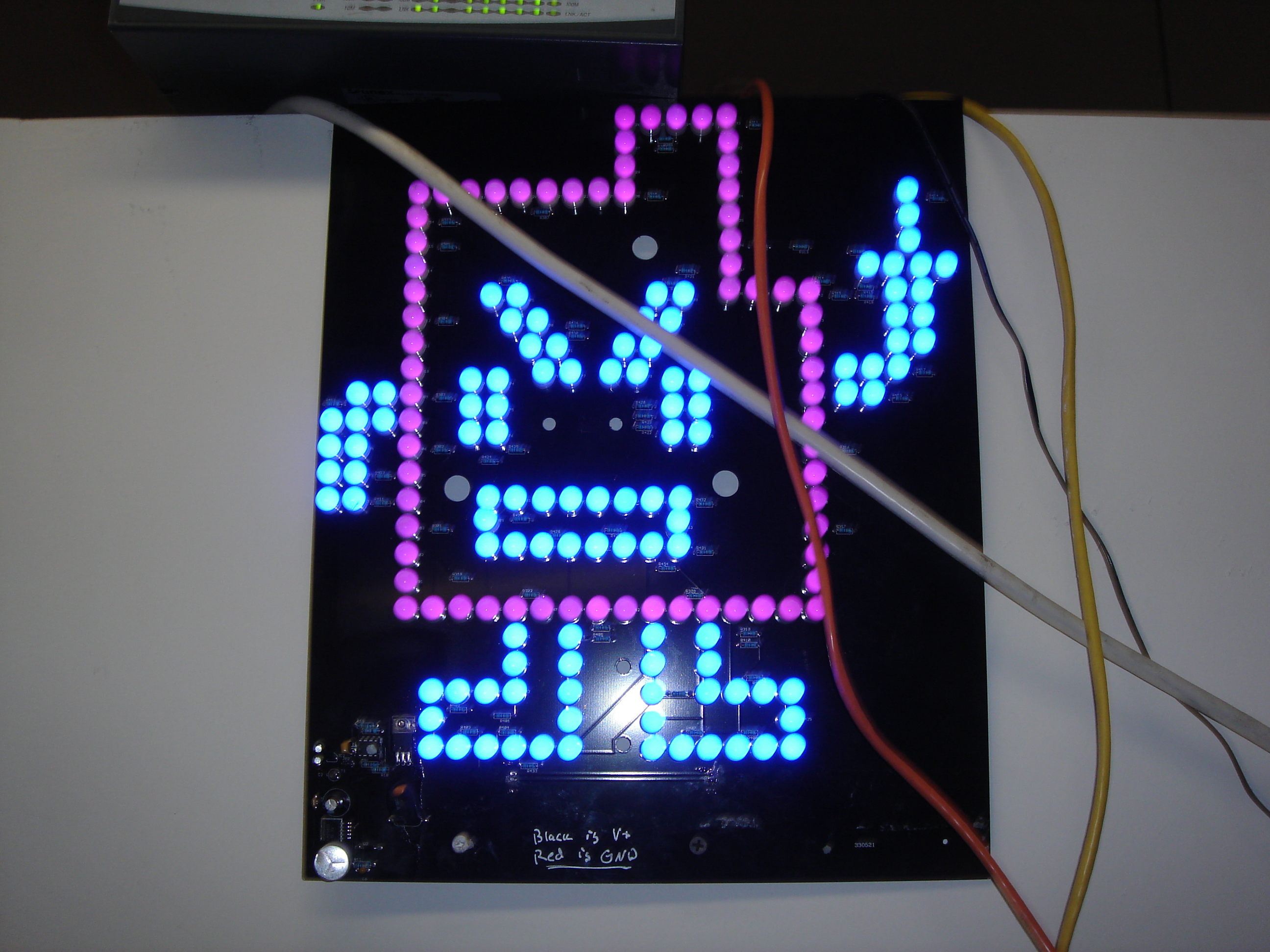
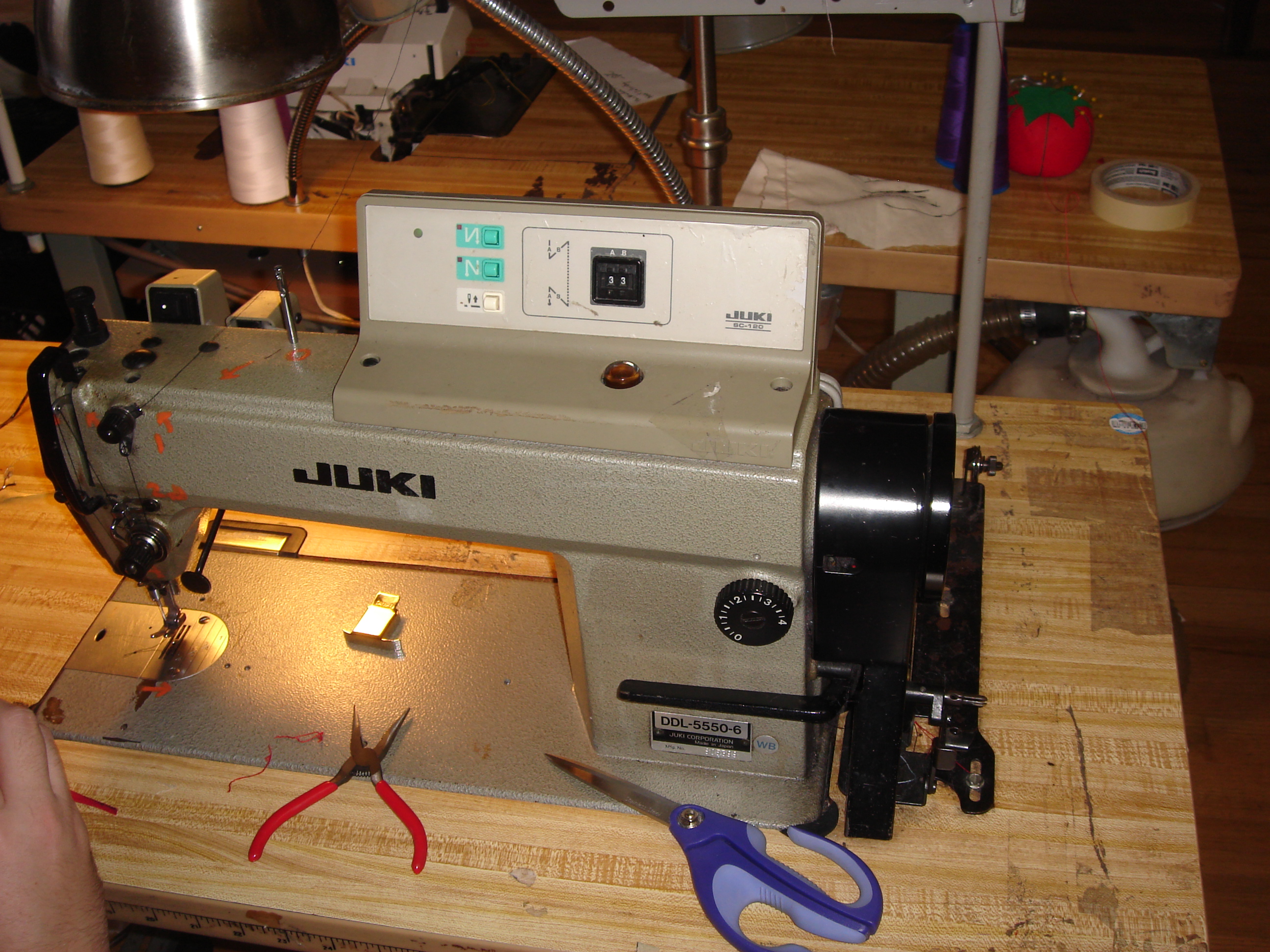
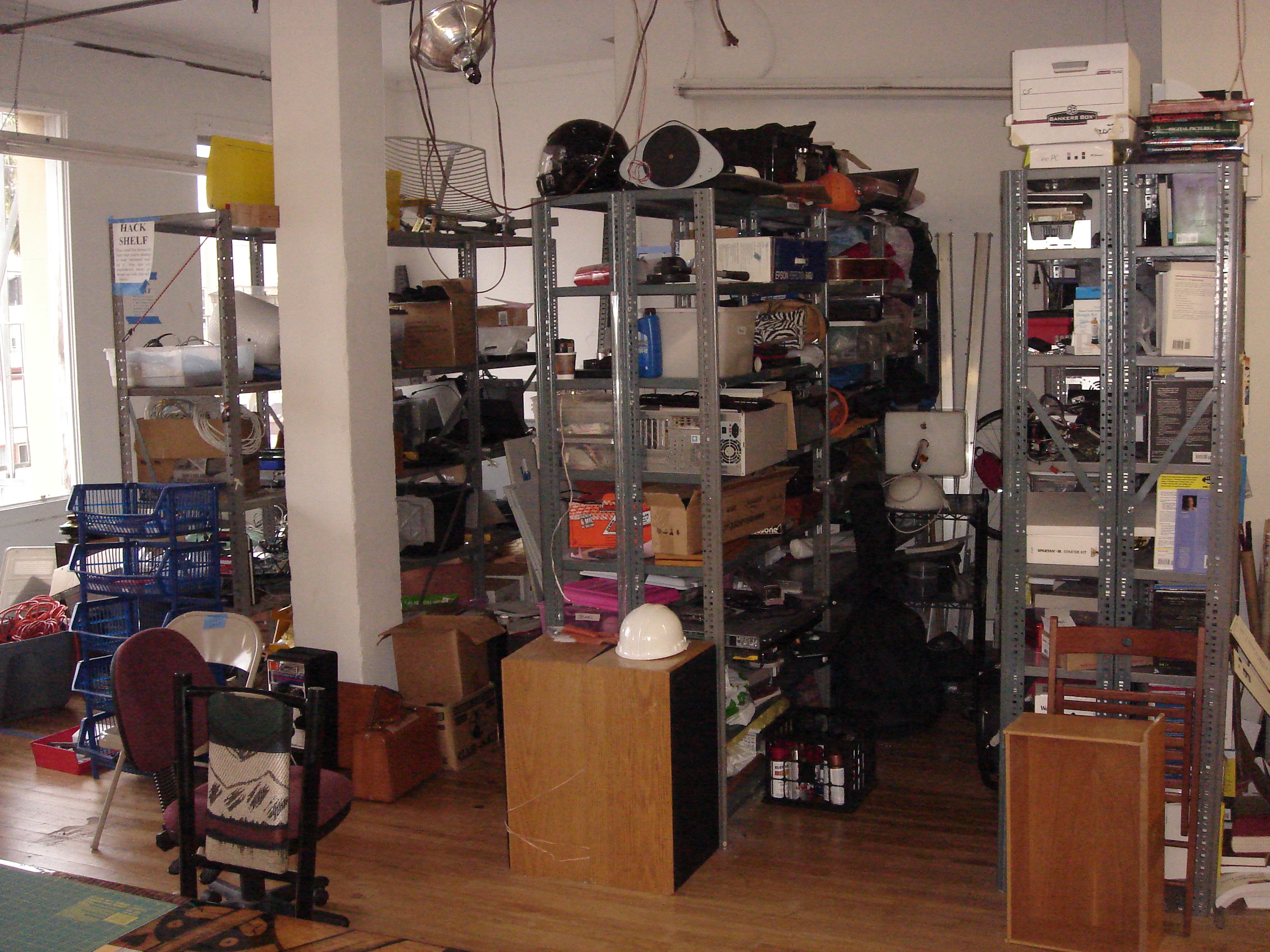
When in California last year I visited the NoiseBridge [1] Hackerspace. I was very impressed with what I saw, good equipment and very friendly people. The general concept of a HackerSpace is that it is an environment to support random creative projects. The first picture is a sign near the door which is clearly visible to anyone who is leaving, it encourages people to be AWESOME and EXCELLENT by cleaning up after themselves (and maybe others). I think that this demonstrates the core of what is needed to get such a community project going. Generosity towards others was on display everywhere, there was some free fruit on a table as well as a bottle of Port for anyone to drink. Someone had written a note saying that it s not an insecure Port (a computer security joke). Someone had created an artwork that resembled an advert which some idiots had mistaken for a terrorist bomb (the creature displaying the Impudent Finger). The main (only?) phone in NoiseBridge is apparently a VOIP phone, it is located next to an old pay-phone along with some Magnetix and other toys that can be used by curious people of any age. Magnetix have had repeated safety problems that caused recalls so maybe such things are best placed in an 18+ environment. When I visited about 10 people were working on electronics projects. There were a number of soldering irons in use and some serious test equipment (including a couple of CROs) was available. The people doing the soldering were eager to teach other people about their work. Other equipment that was available included some serious industrial sewing machines and some drill presses. A lot of that equipment is unreasonably expensive to buy for personal use and is also rather bulky to store, having it available in a central location is a great service for the community. Finally Noisebridge has a lot of space. There are rooms that could be used for giving small lectures and couches in the central area for people to relax and have impromptu meetings. Of course they had wireless net access too. Australian Hacker Spaces Kylie Willison has written about the Adelaide Hackerspace which sounds promising [2]. The Connected Community Hackerspace is a new one in Melbourne [3]. It operates out of the homes of members so it s not nearly as big as Noisebridge (which has a substantial property rented for 24*7 operation). I hope that we can get something running permanently in the Melbourne city area in the near future. The Noisebridge membership dues are $80 per month (or $40 for starving hackers). I would pay that for a comfortable chair in a convenient city location with net access surrounded by cool people! Poster telling people that they are AWESOME and EXCELLENT if they clean upFree bottle of port with sign saying - this is not an insecure portVOIP phone in use, pay-phone for decoration, and MagnetixDrill presses and other heavy equipmentParts and CROs for electronic workRecreation of an advert that some idiots thought was a bombIndustrial sewing machineShelves full of random spare parts

25 March 2010

Russell Coker: Bose vs Bauhn/Aldi Noise Canceling Headphones

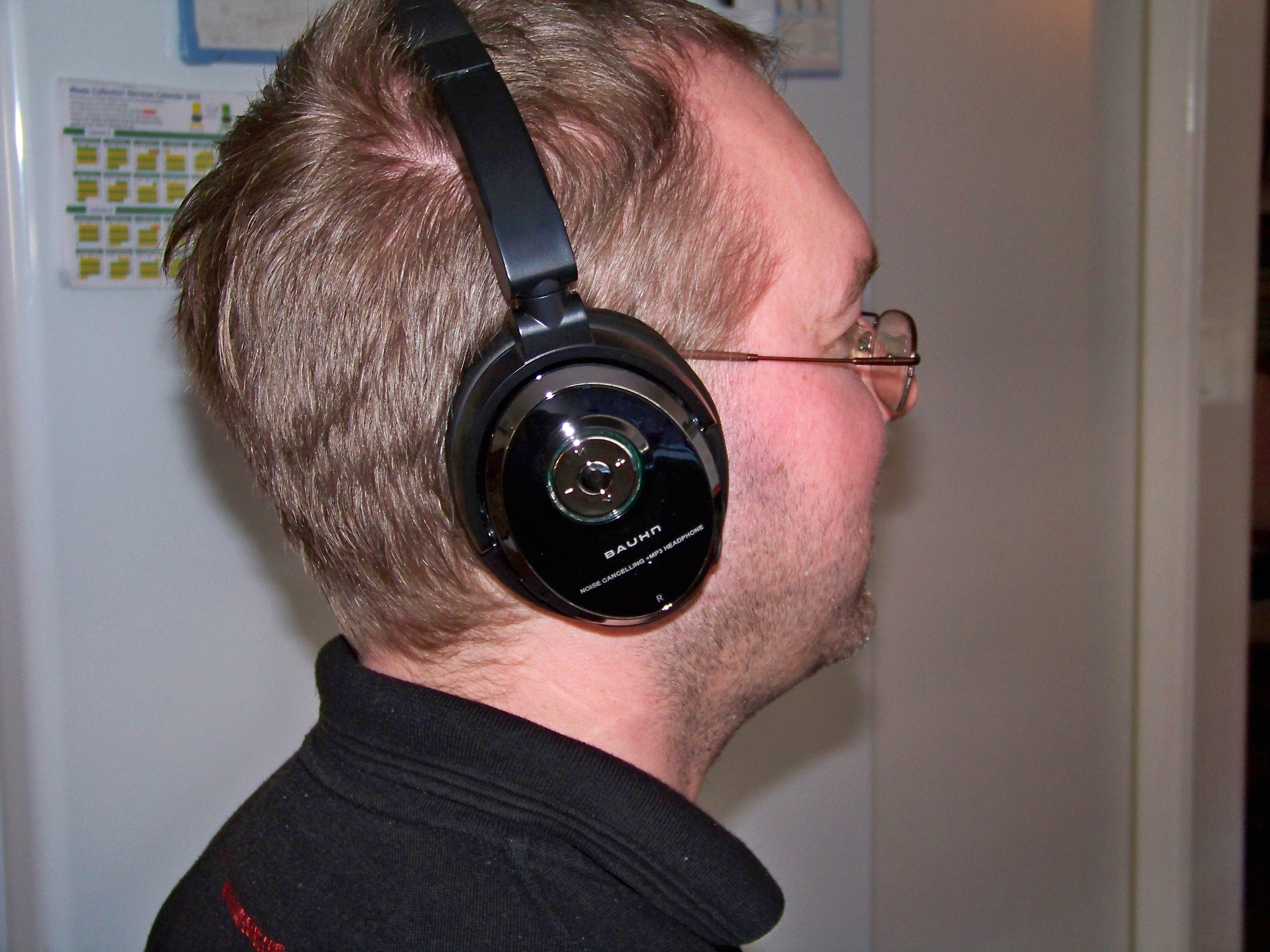
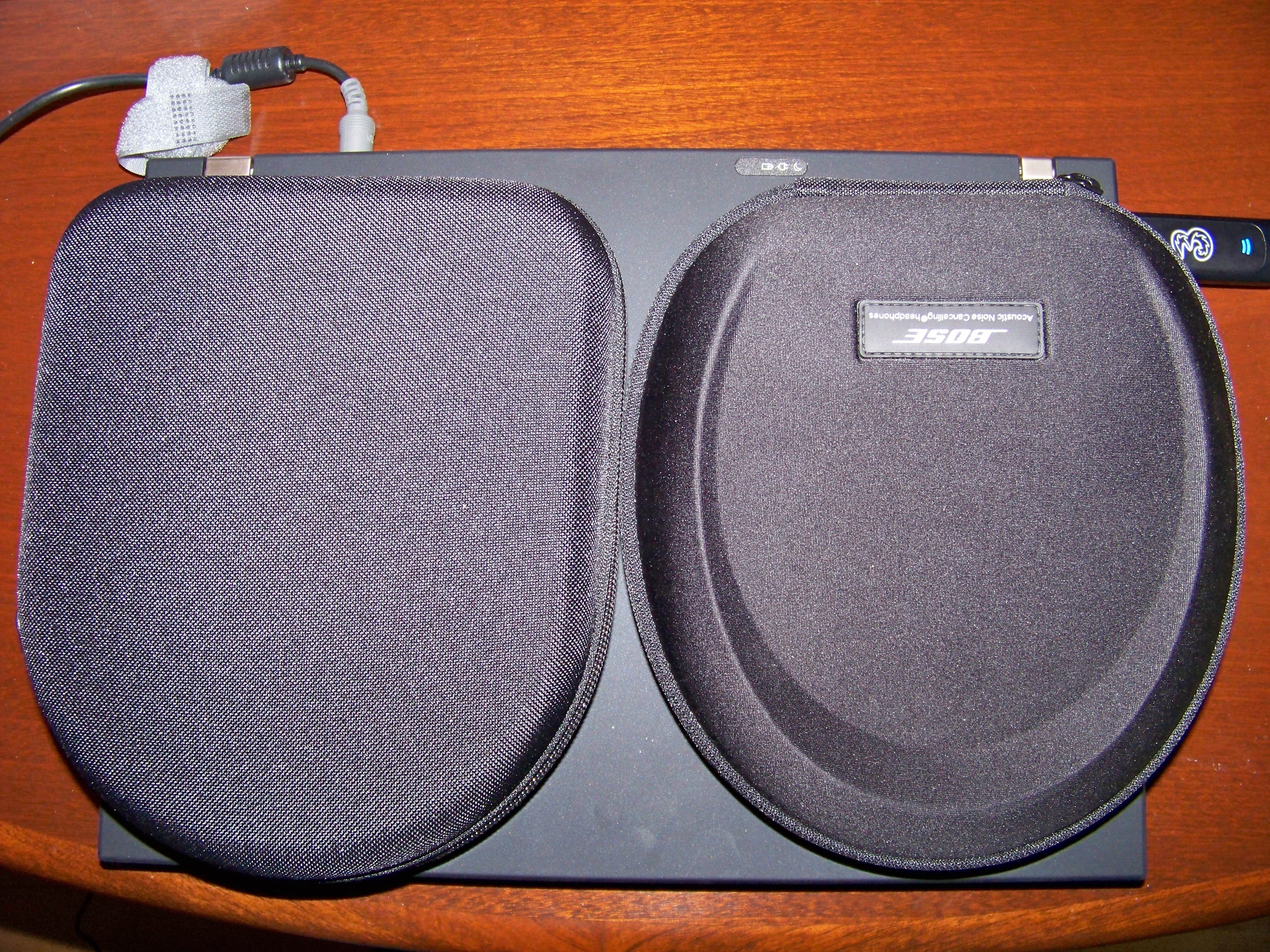
Me wearing Bauhn HeadphonesInside the case of Bauhn Noise Canceling Headphones showing the cable and connectorsOutside of the cases of Bauhn and Bose Headphones Overview The German supermarket chain Aldi has been running in Australia for 8 years now [1]. Their standard practice for a long time has been to offer regular special deals on a few items of consumer electronics every week, my chocolate fridge is one thing I bought from Aldi [2]. Today Aldi have started selling Noise Canceling Headphones [3]. These headphones are badged by Bauhn but that name is apparently applied to random products from cheap manufacturers, it may be an Aldi name that is applied to stuff that they sell. The headphones cost $69AU which is really cheap. But the deal will probably end in less than a week when stock runs out. Noise canceling headphones can be used in server rooms and other noisy environments. Every company that has a server room should buy a few sets. One of the features of noise-canceling is that it works best on low frequencies and on regular sounds it specifically doesn t block human voice well. In some noisy environments it will be easier to hear people talk if you wear such headphones! Noise canceling headphones are also very useful to people who are on the autism spectrum and other people who get more annoyed by noise pollution than average people. I have been wearing my Bose headphones on public transport and when walking around in the city, this not only stops traffic noise but it also helps to avoid people thinking that I want to talk to them. Features The first picture shows me wearing the Bauhn NC headphones, it s from the right to show the controls for the built-in MP3 player. I have not yet tested the MP3 functionality. It appears that as the controls are one power button, buttons for next/previous track, and for controlling the volume. This is fairly poor for MP3 functionality, ideally you would want to have a display to see a list of tracks, maybe have directories to store files, etc. I guess this could be a convenient feature on occasion, but you wouldn t buy the headphones for the MP3 functionality.
The next two pictures show a comparison of the Bauhn headset with the Bose QC-15 headset that I bought last year [4]. The cases of the Bauhn and Bose devices are almost exactly the same size and of a very similar shape, the Bose case is tapered and indented and also has a finer weave on the cloth covering it looks much nicer. Both devices come with an adapter for an airline socket and with a detachable cable. They also both have pouches attached to the inside of the case with velcro. But the Bauhn headphones come with an adapter for the 6.5mm TRS connector which could be convenient if you want to plug them in to a larger amplifier, the basic connector is 3.5mm in both cases. The Bauhn device uses a standard TRS connector at the headphone end while the Bose QC-15 use a special connector that matches the shape of the headset and which has a TRRS plug (to cater for the high/low volume switch), so it seems that a damaged Bauhn cable could be replaced cheaply while a replacement Bose cable would have to be purchased from Bose (presumably at great expense and delay). The Bauhn case also has a velcro attached pocket for storing business cards (or maybe a name tag or something). The supplied cable for the Bauhn is described as being 5 feet long which isn t quite long enough to reach a tower PC that is sitting on the floor. The Bose has a cable that is about a foot longer (maybe 6 feet total), but due to the non-standard connector you can t replace it. I presume that I could easily buy a 4 meter cable for the Bauhn headphones, but I could of course buy an extension cable to use with the Bose. Bose advertise the QC-15 headphones as having 35 hours of battery life from a single AAA battery. Aldi advertise the Bauhn headset as having 5 hours of battery life when NC is turned on and they use two AAA batteries. It s widely regarded that rechargeable batteries don t last as long as the batteries used for estimating the battery life (which presumably are the most expensive long-life batteries available). I ve found a single rechargeable AAA battery to last well over 5 hours in my Bose headphones, so it seems that battery life is considerably worse for the Bauhn device. One feature of the Bauhn device is that it can be used without any batteries for playing external music. The Bose headphones can t be used at all without a battery. So while the Bauhn will use the batteries faster it will at least be usable when the batteries run out. But if you are buying headphones for the purpose of avoiding noise then the Bose headphones are simply better. Comfort The Bose headphones have significantly deeper ear wells than the Bauhn about 23mm vs 18mm. If your ears stick out more than 18mm (as mine apparently do) then this is a good reason for choosing Bose. The Bose headphones are a tighter fit, the spring that pushes the ear-pieces together is stronger. But they have better padding so this doesn t cause me any discomfort. Also the Bose headphones have better passive noise reduction due to having a more snug fit around the ears. I ve worn my Bose headphones on a flight from the US to Australia with hardly a break and they were quite comfortable I would never want to do that with the Bauhn headphones. Noise Reduction I tested the Bose and Bauhn products against three noise scenarios, external music, an air-conditioner, and a car engine. The Bose headphones made good reductions of the noise from the external music (Numb by Linkin Park) and the air-conditioner. The Bauhn headphones did little to stop Linkin Park and was not very effective against the air-conditioner noise. I think that this is largely due to the lack of passive noise reduction, the air-conditioner in question makes little vibration noise and the sound of rushing air is generally immune to active noise cancellation. Both headphones were very effective when in a car with the engine idling. The engine noise of vehicles seems to fall in an ideal frequency range for active cancellation. Music Quality When listening to Youtube music played on my Thinkpad I could not notice any quality difference between the two sets of headphones. I did notice that the Bose headphones seemed to have a greater response in the higher frequency range, but that doesn t necessarily mean that one set is better than the other. Maybe if I was listening to FLAC0 encoded music that I had personally ripped from a CD then I would notice a difference. But for most people the Bauhn music quality should be good enough. Design Quality The Bose product is solidly designed, while the Bauhn product appears cheap in every way. Opening the battery compartment on the Bauhn headphones is difficult and if you do it wrong you could easily break the lid off, I expect that every set of Bauhn headphones that is used by children will be broken in a small amount of time but it should still be fully functional with a broken lid. The matt finish of the Bose headphones should hide minor scratches much better than the shiny Bauhn headphones. The Bauhn headphones also have lower quality plastic parts, it appears that the molds used were designed cheaply and without adequate care to prevent marking the final product. The design flaws that affect usage of the Bauhn product are the shallow ear wells, the poor fit of the cushions around the ears (which is probably mostly due to a weak spring pressing the ear cups to the wearer s head), and the battery compartment lid which is difficult to open and appears prone to breakage. The other flaws are all cosmetic. I wonder whether the Bauhn product was made by one of the big name manufacturers who deliberately reduced the quality to avoid competing with their more expensive products. It seems that the major flaws could have been corrected at design time with almost no increase in manufacturing costs. Recommendations If you can afford the Bose QuietComfort 15 Acoustic Noise Cancelling Headphones then they are really worth the extra expense, I have no regrets at all about spending about $320US (including tax) on my Bose QC-15. The Bauhn product is good for when you want something cheap, for example a set to be used in a server room, or for the use of children. I bought a Bauhn headset for a friend who is a pilot, he spent $1,100 on a noise-canceling headset for his plane but had never got around to buying one for recreational use I expect that he will allow his children to use his new Bauhn headphones, if they get broken it s only a $69 expense. The second cheapest NC headphones I ve seen on offer in Australia is Harvey Norman selling Phillips HN-110 Noise Canceling Headphones for $100AU [5]. Amazon sells Philips HN 110 Folding Noise-Canceling Headphones for $50US but doesn t seem to ship them outside the US (at least not to Australia). JB Hifi also has some NC headphones on sale in Australia [6], but they are more expensive at $219 for AKG and $319 for Sennheiser. Also the models they sell are on-ear which means that they will inherently have very little passive noise reduction and will also annoy anyone who doesn t like having their ears squashed. If I was buying NC headphones for my own use and didn t want to spend $300US then I would either buy the Philips HN 110 Folding Noise-Canceling Headphones from Amazon and get a friend in the US to post them to me or I would buy them from Harvey Norman. But the Bauhn product is good if you want cheap headphones to stop engine noise and give reasonable quality when playing music.

24 March 2010

John Goerzen: Review: Travel as a Political Act by Rick Steves

Rick Steves is known for writing books, and producing public TV shows, about travel to Europe. He encourages people to get out of their comfort zone, advocates staying in homes instead of hotels, and giving yourself permission to struggle to communicate in a land of unfamiliar language. That way, you get to experience not just the landmarks, but the culture and history. That was the approach we favored in our recent trip to Europe, and after being there (and seeing tour groups), I think Rick Steves is right on. On the plane to Europe, I read his Travel as a Political Act. This is not a guidebook, but more a book about the philosophy of travel. As usual with my book reviews, unless indicated otherwise, all quotes here come from the book. He starts out with this statement:
I ve taught people how to travel. I focus mostly on the logistics: finding the right hotel, avoiding long lines But that s not why we travel. We travel to have enlightening experiences, to meet inspirational people, to be stimulated, to learn, and to grow. Travel has taught me the fun in having my cultural furniture rearranged and my ethnocentric self-assuredness walloped.
I read this book mostly on the plane to Hamburg, or the week prior to leaving. I can credit Rick Steves directly for encouraging me to strike up a conversation with a random German on the bus from Hamburg to L beck, which I ll discuss here in a couple of days. Probably the biggest lament from Rick Steves is that the people that really ought to travel the ones that are so sure that their ways are correct and best are least likely to do so.
Make a decision that on any trip you take, you ll make a point to be open to new experiences, seek options that get you out of your comfort zone, and be a cultural chameleon trying on new ways of looking at things and striving to become a temporary local. My best vacations have been both fun and intensely educational Travel challenges truths that we were raised thinking were self-evident and God-given. Leaving home, we learn that other people find different truths to be self-evident. We realize that it just makes sense to give everyone a little wiggle room.
The book is set with an introductory encouragement to travel, followed by seven vignettes of different countries he s visited, and descriptions of how it s impacted him. He gave a lesson of the opening of the German Reichstag (parliament building), which he was present for in 1999. He was surrounded by teary-eyed Germans and a few tourists so preoccupied with trivialities forgotten camera batteries, needing a Coke, the lack of air-conditioning that they were missing out on this once-in-a-lifetime opportunity to celebrate a great moment with the German people. He comments that we can learn from other countries that no one country has a monopoly on good ideas, and it is plenty patriotic to insist what we adopt good ideas (such as drug policy) from other countries and adopt them for our own. Particularly touching to me was the description and photo of a memorial in El Salvador, very much looking like the American Vietnam memorial except that one remembering loved ones lost fighting the United States. How many Americans even know that we were involved in a damaging war in El Salvador? A large part of his book was, for me, preaching to the choir, as this comment illustrated:
In the European view, America is trapped in an inescapable cycle to feed its military-industrial complex: As we bulk up our military, we look for opportunities to make use of it. (When your only tool is a hammer, you treat every problem like a nail.) And then, when we employ our military unwisely, we create more enemies which makes us feel the need to grow our military even more. If an American diplomat complained to his European counterpart, America is doing all the heavly lifting when it comes to military, the European might respond, Well, you seem to be enjoying it. We re building roads and bridges instead.
That s a sentiment I ve agreed with for quite some time already, and as such, some parts of the book moved slowly for me though I imagine his target audience included people that had never seriously considered these arguments before. Then there were surprising facts:
by the end of World War I, an estimated half of all the men in France between the ages of 15 and 30 were casualties. When some Americans, frustrated at France s reluctance to follow us into a war, call the French surrender monkeys, I believe it shows their ignorance of history.
And again, I d agree with him on that point. The vignette on Iran was particularly interesting, as he described his experiences in person, they sounded far different than the picture we often get in the media. I have realized, incidentally, that I am terrible at writing book reviews. So rather than inflict more paragraphs upon you with this one, I ll summarize by saying that this is a touching, informative, and motivational book, which I highly recommend. I ll leave you with this quote:
Mark Twain wrote, Travel is fatal to prejudice, bigotry, and narrow-mindedness. These wise words can be a reallying cry for all travelers once comfortably back home. When courageous leaders in our community combat small-mindedness and ignorance travelers can stand with them in solidarity.
I didn t travel to make some sort of statement or as a political act. But I was enriched in many ways by travel of course the obvious ones of contemplating the history of a 900-year-old beautiful church, but also in seeing the different character of different cities, being with two families for a couple of days, and seeing different approaches to common problems. I am very glad I wasn t shut off from this behind a tinted window in a tour bus.

21 March 2010

Russell Coker: Xen and Debian/Squeeze

Ben Hutchings announced that the Debian kernel team are now building Xen flavoured kernels for Debian/Unstable [1]. Thanks to Max Attems and the rest of the kernel team for this and all their other great work! Thanks Ben for announcing it. The same release included OpenVZ, updated DRM, and the kernel mode part of Nouveau but Xen is what interests me most. I ve upgraded the Xen server that I use for my SE Linux Play Machine [2] to test this out. To get this working you first need to remove xen-tools as the Testing version of bash-completion has an undeclared conflict, see Debian bug report #550590. Then you need to upgrade to Unstable, this requires upgrading the kernel first as udev won t upgrade without it. If you have an existing system you need to install xen-hypervisor-3.4-i386 and purge xen-hypervisor-3.2-1-i386 as the older Xen hypervisor won t boot the newer kernel. This also requires installing xen-utils-3.4 and removing xen-utils-3.2-1 as the utilities have to match the kernel. You don t strictly need to remove the old hypervisor and utils packages as it should be possible to have dual-boot configured with old and new versions of Xen and matching Linux kernels. But this would be painful to manage as update-grub doesn t know how to match Xen and Linux kernel versions so you will get Grub entries that are not bootable it s best to just do a clean break and keep a non-Xen version of the older kernel installed in case it doesn t initially boot. A apt-get dist-upgrade operation will result in installing the grub-pc package. The update-grub2 command doesn t generate Xen entries. I ve filed Debian bug report #574666 about this. Because the Linux kernel doesn t want to reduce in size to low values I use xenhopt=dom0_mem=142000 in my GRUB 0.98 configuration so that the kernel doesn t allocate as much RAM to it s internal data structures. In the past I ve encountered a kernel memory management bug related to significantly reducing the size of the Dom0 memory after boot [3]. Before I upgraded I had the dom0_mem size set to 122880 but when running Testing that seems to get me a kernel Out Of Memory condition from udev in the early stages of boot which prevents LVM volumes from being scanned and therefore prevents swap from being enabled so the system doesn t work correctly (if at all). I had this problem with 138000M of RAM so I chose 142000 as a safe number. Now I admit that the system would probably boot with less RAM if I disabled SE Linux, but the SE Linux policy size of the configuration I m using in the Dom0 has dropped from 692K to 619K so it seems likely that the increase in required memory is not caused by SE Linux. The Xen Dom0 support on i386 in Debian/Unstable seems to work quite well. I wouldn t recommend it for any serious use, but for something that s inherently designed for testing (such as a SE Linux Play Machine) then it works well. My Play Machine has been offline for the last few days while I ve been working on it. It didn t take much time to get Xen working, it took a bit of time to get the SE Linux policy for Unstable working well enough to run Xen utilities in enforcing mode, and it took three days because I had to take time off to work on other projects.

20 March 2010

Robert Collins: LibrePlanet 2010 Day 2

John Gilmore keynote What do we do next, having produced a free software system for our computers? Perhaps we should aim at Windows? Wine + an extended ndiswrapper to run other hardware drivers + a better system administration interface/resources/manuals. However that means knowing a lot about windows internals something that open source developers don t seem to want to do. We shouldn t just carry on tweaking its not inspiring; whats our stretch goal? Discussion followed reactos, continue integrating software and people with a goal of achieving really close integration: software as human rights issue! Desktop paradigm needs to be replaced : need to move away from a document based desktop to a device based desktop. Concern about the goal of running binary drivers for hardware: encourages manufacturers to sell hardware w/out specs; we shouldn t encourage the idea that that is ok. Lots of concern about cloning, lots of concern about what will bring more freedom to users, and what it will take to have a compelling vision to inspire 50000 free software hackers. Free software in cars lots of safety issues in .e.g brake controllers, accelerators. Eben Moglen We re at the inflection point of free software because any large scale global projects these days are not feasible without free software. Claims that doing something that scales from tiny to huge environment requires us A claim I would (sadly) dispute. Lots of incoming and remaining challenges. Entirely clear that the patent systems relationship to technology is pathological and dangerous that I agree with! Patent muggings are a problem patent holders are unhappy with patents granted to other people :) . Patent pools are helping slowly as they grow. Companies which don t care about the freedom aspect of GPLv3 are adopting it because of the patent protection aspects. Patent system is at the head of the list of causes-of-bad-things affecting free software. SFLC is building coalitions outside the core community to protect the interests of the free software community. We are starting to be taken for granted at the high end of mgmt in companies that build on free software. We face a problem in the erosion of privacy. We need to build a stack, running on commodity hardware that runs federated services rather than folk needing centralised services. Marina Zhurakhinskaya on GNOME Shell: Integrates old and new ideas in an overall comprehensive design. Marina ran through the various goals of the shell growing with users, being delightful, starting simply so new users are not overwhelmed. The activities screen looks pretty nice ;) The workspace rearrangement UI is really good. The notifications thing is interesting; you can respond to a chat message in-line in the notification. Richard Stallman on Software as a Service he presented verbally the case made in the paper. Some key quotes All your data on a server is equivalent to total spyware I think this is a worst-case analogy; it suggests that you can never trust another party: kindof a sad state of paranoia to assume that all network servers are always out to get you all the time. And I have to ask should we get rid of Savannah then (because all the data is stored there) the argument for why Savannah is not SaaS is not convincing: its just file storage, so what makes it different to e.g. Ubuntu One? If there is a server and only a little bit of it is SaaS, perhaps just say don t worry about it because that little bit is often the hardest bit to replace. Lets write systems for collaborative word process that don t involve a central server abiword w/the sharing plugin ? :) RMS seems to be claiming that someone else sysadmining a server for you is better than someone else sysadmining a time-shared server for you: I don t actually see the difference, unless you re also asserting that you ll always have root over your own machine . The argument seems very fuzzy and unclear to me as to why there is really a greater risk in particular when there is a commercial relationship with the operator (as opposed to, say, an advertising supported relationship).

19 March 2010

Robert Collins: LibrePlanet GNU Hackers Meetup

GNU Hackers meetups are a face to face meeting to balance the online collaboration that GNU maintainers and contributors do all the time. These are a recent (since 2007) thing, and are having a positive effect within GNU and the FSF. The LibrePlanet 2010 GNU Hackers meetup runs concurrent with the first day of LibrePlanet. We started with some project updates: Felipe Sanches presented his list of things that should be on the high priority project list: lunch John Eaton on Octave. John compared the octave contributors 30 or so over the years, and never more than 2 at a time. The Proprietary product Matlab that Octave is very similar to has 2000 staff working at the company producing it. Users seem to expect the two products to be equivalent, and are disappointed that Octave is less capable, and that the community is not as able to do the sort of support that a commercial organisation might have done. Octave would like to gain some more developers and be able to educe users more effectively convert more to become developers. Rob Myers, the chief GNU webmaster gave a description of his role: The webmasters deal with adding new content, dealing with mail to webmaster@, which can be queries for the GNU project, random questions about CDs, and an endless flood of spam. The webmasters project is run as a free software project the site is in CVS (yes CVS), visible on Savannah. Templates could be made nicer and perhaps move to a CMS. Aubrey Jaffer on cross platform. There is a thing called Water which is meant to replace all the different languages used in web apps generates html, css, alters the DOM, does what you d do with javascript. So there is a Water -> backend translator that outputs Java for servers, C# for windows, and so on. (I think, this wasn t entirely clear). He went on to talk about many of the internals of a thing called Schlep which is used as a compiler to get scheme code running in C/C#/Java so as to make it available to Water backends in different environments. Matt Lee spoke about GNU FM GNU FM is a free last.fm site. The site is running at http://libre.fm/. 24ish devs, but stalle after 6 months whats next? Matt has started GNU Social to build a communication framework for GNU projects to talk to each other e.g. for each GNU FM site to communicate on the back end, with a particular focus on doing social functionality groups, friendships, personal info. The wiki page needs ideas! GNU advisory board discussion too much to capture, but focused GNU wide issues things like how projects get contributors, contributions, coordination. Teams were a big discussion point, bug trackers how to coordinate teams followed up of that, and there is s GNU Source Release Collection project to do coordinated releases of GNU software that are all known to work together.

18 March 2010

Joachim Breitner: libnss-gw-name: A stable name for your gateway

I often find myself running /sbin/route to get the IP address of the current gateway, especially when using a wireless LAN while traveling. For example, if the Internet does not work I usually ping the local gateway to see where the connectivity problem lies. I also need the IP if I want to access the routers configuration web interface. This is somewhat tedious, so I wrote libnss-gw-name, and now:

$ sudo apt-get install libnss-gw-name
[...]
$ ping gateway.current
PING gateway.current (172.20.239.1) 56(84) bytes of data.
64 bytes from hhicalvin.stud.uni-karlsruhe.de (172.20.239.1): icmp_seq=1 ttl=64 time=2.16 ms
64 bytes from hhicalvin.stud.uni-karlsruhe.de (172.20.239.1): icmp_seq=2 ttl=64 time=1.48 ms
64 bytes from hhicalvin.stud.uni-karlsruhe.de (172.20.239.1): icmp_seq=3 ttl=64 time=2.73 ms
^C
--- gateway.current ping statistics ---
3 packets transmitted, 3 received, 0% packet loss, time 2003ms
rtt min/avg/max/mdev = 1.482/2.129/2.739/0.513 ms
Once libnss-gw-name is installed, it hooks into the system s Name Service Switch, which is, among other things, responsible for resolving hostnames to ip addresses. It will only react on the name gateway.current , checking the system s routing table and returning the IP address of the current default gateway. It s a pretty simple and small tool, but it could well prove very handy to the power user. I uploaded libnss-gw-name to Debian sid, you can download the source code or access the git repository. Update: Changed the name to gateway.localhost, as that is within a reserved top-level-domain.

Ben Hutchings: Debian Linux packages: the 'Big Bang' release

Max Attems uploaded a new version of the Linux kernel package (linux-2.6) today. This includes the last major changes to the package before Debian 6.0 'squeeze', which led me to label it the 'Big Bang' release:

Tore S. Bekkedal: Agitprop

As you may know: When developing black-and-white film, you periodically have to shake the tank for the chemistry to be effective, normally every 30 seconds. This is called agitation, and it s quite boring. I wanted to create a device which you can prop the film tank onto, which agitates the film according to a preset continuous, 30 sec, 60 sec, etc with a little LCD display or similar which, when turned on, would print a random selection of Soviet propaganda phrases. I wonder if it isn t too much effort for a single pun, but I m not sure it is.

15 March 2010

Russell Coker: The Yubikey

Picture of Yubikey Some time ago Yubico were kind enough to send me an evaluation copy of their Yubikey device. I ve finally got around to reviewing it and making deployment plans for buying some more. Above is a picture of my Yubikey on the keyboard of my Thinkpad T61 for scale. The newer keys apparently have a different color in the center of the circular press area and also can be purchased in white plastic. The Yubikey is a USB security token from Yubico [1]. It is a use-based token that connects via the USB keyboard interface (see my previous post for a description of the various types of token [2]). The Yubikey is the only device I know of which uses the USB keyboard interface, it seems that this is an innovation that they invented. You can see in the above picture that the Yubikey skips the metal that is used to surround most USB devices, this probably fails to meet some part of the USB specification but does allow them to make the key less than half as thick as it might otherwise be. Mechanically it seems quite solid. The Yubikey is affordable, unlike some token vendors who don t even advertise prices (if you need to ask then you can t afford it) and they have an online sales site. $US25 for a single key and discounts start when you buy 10. As it seems quite likely that someone who wants such a token will want at least two of them for different authentication domains, different users in one home, or as a backup in case one is lost or broken (although my experiments have shown that Yubikeys are very hardy and will not break easily). The discount rate of $20 will apply if you can find four friends who want to use them (assuming two each), or if you support several relatives (as I do). The next discount rate of $15 applies when you order 100 units, and they advise that customers contact their sales department directly if purchasing more than 500 units so it seems likely that a further discount could be arranged when buying more than 500 units. They accept payment via Paypal as well as credit cards. It seems to me that any Linux Users Group could easily arrange an order for 100 units (that would be 10 people with similar needs to me) and a larger LUG could possibly arrange an order of more than 500 units for a better discount. If an order of 500 can t be arranged then an order of 200 would be a good thing to get half black keys and half white ones you can only buy a pack of 100 in a single color. There is a Wordpress plugin to use Yubikey authentication [3]. It works, but I would be happier if it had an option to accept a Yubikey OR a password (currently it demands both a Yubikey AND a password). I know that this is less secure, but I believe that it s adequate for an account that doesn t have administrative rights. To operate the Yubikey you just insert it into a USB slot and press the button to have it enter the pass code via the USB keyboard interface. The pass code has a prefix that can be used to identify the user so it can replace both the user-name and password fields of course it is technically possible to use one Yubikey for authentication with multiple accounts in which case a user-name would be required. Pressing the Yubikey button causes the pass code to be inserted along with the ENTER key, this can take a little getting used to as a slow web site combined with a habit of pressing ENTER can result in a failed login (at least this has happened to me with Konqueror). As the Yubikey is use-based, it needs a server to track the usage count of each key. Yubico provides source to the server software as well as having their own server available on the net obviously it might be a bad idea to use the Yubico server for remote root access to a server, but for blog posting that is a viable option and saves some effort. If you have multiple sites that may be disconnected then you will either need multiple Yubikeys (at a cost of $20 or $15 each) or you will need to have one Yubikey work with multiple servers. Supporting a single key with multiple authentication servers means that MITM attacks become possible. The full source to the Yubikey utilities is available under the new BSD license. In Debian the base functionality of talking to the Yubikey is packaged as libyubikey0 and libyubikey-dev, the server (for validating Yubi requests via HTTP) is packaged as yubikey-server-c, and the utility for changing the AES key to use your own authentication server is packaged as yubikey-personalization thanks Tollef Fog Heen for packaging all this! The YubiPAM project (a PAM module for Yubikey) is licensed under the GPL [4]. It would be good if this could be packaged for Debian (unfortunately I don t have time to adopt more packages at the moment). There is a new model of Yubikey that has RFID support. They suggest using it for public transport systems where RFID could be used for boarding and the core Yubikey OTP functionality could be used for purchasing tickets. I don t think it s very interesting for typical hobbyist and sysadmin work, but RFID experts such as Jonathan Oxer might disagree with me on this issue.

Russell Coker: Types of Security Tokens

The Security Token Wikipedia page doesn t seem to clearly describe the types of token. Categories of Security Token It seems to me that the following categories encompass all security tokens:
  1. Biometric tokens which seems rather pointless to me. Having a device I control verify my biometric data doesn t seem to provide a benefit. The only possible benefit seems to be if the biometric token verifies the identity of the person holding it before acting as one of the other types of token.
  2. Challenge-response devices. The server will send a challenge (usually a random number) and will expect a response (usually some sort of cryptographically secure hash of the number and a shared secret). A challenge-response device may take a password from the user and combine it with the challenge from the server and the shared secret when calculating the response.
  3. Time-based tokens (one-time passwords). They will provide a new pseudo-random number that changes periodically, often a 30 second time interval is used and the number is presumably a cryptographically secure hash of the time and a shared secret. This requires a battery in the token and the token will become useless when the battery runs out. It also requires that the server have an accurate clock.
  4. Use-based tokens. They will give a new pseudo-random number every time a button is pressed (or some other event happens to indicate that a number has been used). These do not work well if you have multiple independent servers and an untrusted network.
Here is my analysis of the theory of token use, note that I am not sure how the implementations of the various token systems deal with these issues.
  1. Biometric security seems like a bad idea for most non-government use. I have seen a retina scanner in use at a government office that made some sense as the people being scanned were in a secure area (they had passed some prior checks) and they were observed (to prevent coercion and the use of fake eyes). Biometric authentication for logging in over the net just seems like a bad idea as you will never know if you can trust the scanner.
  2. It seems to me that challenge-response devices are by far the most secure option. CR is resistant to replay attacks provided that it is not possible to have re-used challenges. If the calculation of the response includes a password (which is performed on some tokens that resemble pocket calculators) then a CR token will meet the something you have and something you know criteria.
    One potential problem with CR systems is that of not including the server or account ID in the calculation. So if I was to use a terminal in an insecure location to login to a server or account with data that is not particularly important then it would be possible for an attacker who had compromised the terminal to perform a Man In The Middle (MITM) attack against other servers. Of course you are supposed to use a different password for each account, if you do this then a CR token that includes a password will be resistant to this attack but I expect that people who use tokens are more likely to use one password for multiple accounts.
  3. Time-based tokens have a weakness in that an attacker who can immediately discover the number used for one connection could then immediately login to other servers. One example of a potential attack using this avenue would be to compromise a terminal in an Internet cafe, steal a hash used for logging in to server A and then immediately login to server B. This means that it may not be safe to use the same token for logging in to servers (or accounts) that have different sensitivity levels unless a strong password was used as well I expect that people who have hardware tokens tend to use weaker passwords.
    Also one factor that will make some MITM attacks a lot easier is the fact that the combination of the hash from the token and the password are valid for a period of time so an attacker could establish a second connection within the 30 second interval. It seems that only allowing one login with a particular time-coded password is the correct thing to do, but this may be impossible if multiple independent servers use the same token.
    Time based tokens expire when the battery runs out. The measures taken to make them tamper-proof may make it difficult or impossible to replace the battery so a new token must be purchased every few years.
  4. Use-based tokens are very similar to time-based tokens, it s just a different number that is used for generating the hash. The difference in the token is that a time-based token needs a battery so that it can track the time while a use-based token needs a small amount of flash memory to store the usage count. The difference at the server end is that for a use-based token the server needs a database of the use count of each token, which is usually not overly difficult for a single server.
    One problem is the case of a restore from backup of the server which maintains the use count database. The only secure way of managing this is to either inspect every token (to discover it s use count) or to issue a new password (for using password plus token authentication). Either option would be really painful if you have many users at remote sites. Also it would be required to get the database transaction committed to disk before an authentication attempt is acknowledged so that a server crash could not lose the count this should be obvious but many people get these things wrong.
    An additional complication for use-based tokens comes with the case of a token that is used for multiple servers. One server needs to maintain the database of the usage counts and the other servers need to query it by secure links. If a login attempt with use count 100 has been made to server A then server B must not accept a login with a hash that has a use count less than or equal to 100. This is firstly to cover the case where a MITM attack is used to login to server B with credentials that were previously used for server A. The second aim of this is to cover the case where a token that is temporarily unguarded is used to generate dozens of hashes while the hashes could be immediately used it is desirable to have them expire as soon as possible, and having the next login update the use count and invalidate such hashes is a good thing.
    The requirement that all servers know the current use count requires that they all trust a single server. In some situations this may not be possible, so it seems that this only works for servers within a single authentication domain or for access to less important data.
Methods of Accessing Tokens It seems that the following are the main ways of accessing tokens. To avoid driver issues and allow the use on random machines it seems that the USB keyboard and manual entry types of token are best. While for corporate Intranet use it seems that a SmartCard is best as it can be used for opening doors as well, you could use a USB keyboard token (such as a Yubikey) to open doors but it would be slower and there is no off the shelf hardware. For low cost and ease of implementation it seems that use-based tokens that connect via the USB keyboard interface are best. For best security it seems that a smart-card or USB interface to a device with a keypad for entering a password is ideal.

14 March 2010

DebConf team: DebConf10 call for contributions (Posted by DebConf10 Talks Team)

The Debconf team is excited to announce that we are now accepting proposals for contributions to this year s Debian conference! We invite you to submit proposals for how you would contribute until the deadline: May 1st, 2010, 23h59 UTC. There are many ways you can contribute, you could present a technical paper, host a panel discussion, put on a tutorial, do a performance, an art installation, a debate, host a meeting (BoFs, or Birds of a Feather Session), or other possibilities that you devise. This year we are also accepting proposals for tracks a thematic grouping around a particular subject, and people to coordinate those tracks. If you are looking for ideas of things that you could contribute, or have ideas for things that you would like to see happen at Debconf, have a look at the Contribution Brainstorm page. DebConf talks will be broadcast live on the Internet where possible, unless otherwise requested. Videos of the talks will be published on the web along with the presentation slides and papers. Step 1. Submit Proposal Proposals should provide an overview of your proposed contribution, similar to an abstract, and be no more than 600 words. Since contributions can cover a range of issues, please describe what your proposal covers, be it political (Free Software, law, advocacy, access, etc.), technical (d-i, OpenPGP, etc.), social (Debian structures and groups). It s okay to hit all three of these. Your proposal should also include some information on why you re qualified to present, or coordinate this topic. For example, you can include links to posts you have made to Debian mailing lists or other material that indicates your qualifications. Proposals and their abstracts will be accepted until May 1st, 2010, 23h59 UTC. To submit your proposal, go to http://debconf10.debconf.org/register.xhtml and register as an attendee. Once you are registered, there is a Submit a proposal link. You will see your proposal on the site. You can choose between different presentation types. If you are unsure what type you should use, please read our definitions first. If it s not there for some reason, or you have questions, please contact us immediately. Step 2. Committee Review The review committee for this year will make its decision by May 1st, 2010. All correspondence will be done by email. Step 3. Paper Submission Like last year, we are asking for papers to be submitted along with the presentations. A full paper is optional, however we strongly encourage you to submit one if possible as we intend to provide written information along with transcripts of the sessions for later viewing. Having written papers in advance will allow us to get translations done to help non-native-English speakers feel more comfortable with the topics presented. Papers are due by July 1st, 2010, and should cover the topic in reasonable depth (3 pages A4 text, plus pictures and diagrams). We will use LaTeX to typeset the proceedings. Please submit your paper formatted in LaTeX. Should you be unfamiliar with LaTeX earlier submission in plain text is also fine. Step 4. Live Presentation Longer presentations may have a break in the middle and should include workshop items that directly involve the participants. If using slides or any other presentation, please consider that your audience will consist of people who use free software, and your choice of application to prepare and display the slides should reflect this if at all possible. Fine Print Publication Rights Debconf requires non-exclusive publication rights to papers, presentations, and any additional handouts or audio/visual materials used in conjunction with the presentation. The authors have the freedom to pick a DFSG-free license for the papers themselves and retain all copyrights. The presentations will be recorded, and may be broadcast over the Internet. Any copies of the presentation will be made available under a license like the MIT/X11 license. Failure to Submit In the event that a deadline is missed we reserve the right to revoke any offer to present.

13 March 2010

David Watson: 7 Day Photo Challenge - Day 1

I have challenged myself to take a photo every day this week starting today, I am doing this to force myself to spend less time working on my photos ( and to publish pictures more often). I generally spend too much time playing with photos and seldom actually put them online for any one to see. Here is todays shot of a rose I took this afternoon. IMG_1966 I would love to have people join me in this challenge, so I have created a flickr group for it.

Next.

Previous.