Search Results: "ag"

18 May 2006

Eric Warmenhoven: Musical cubes

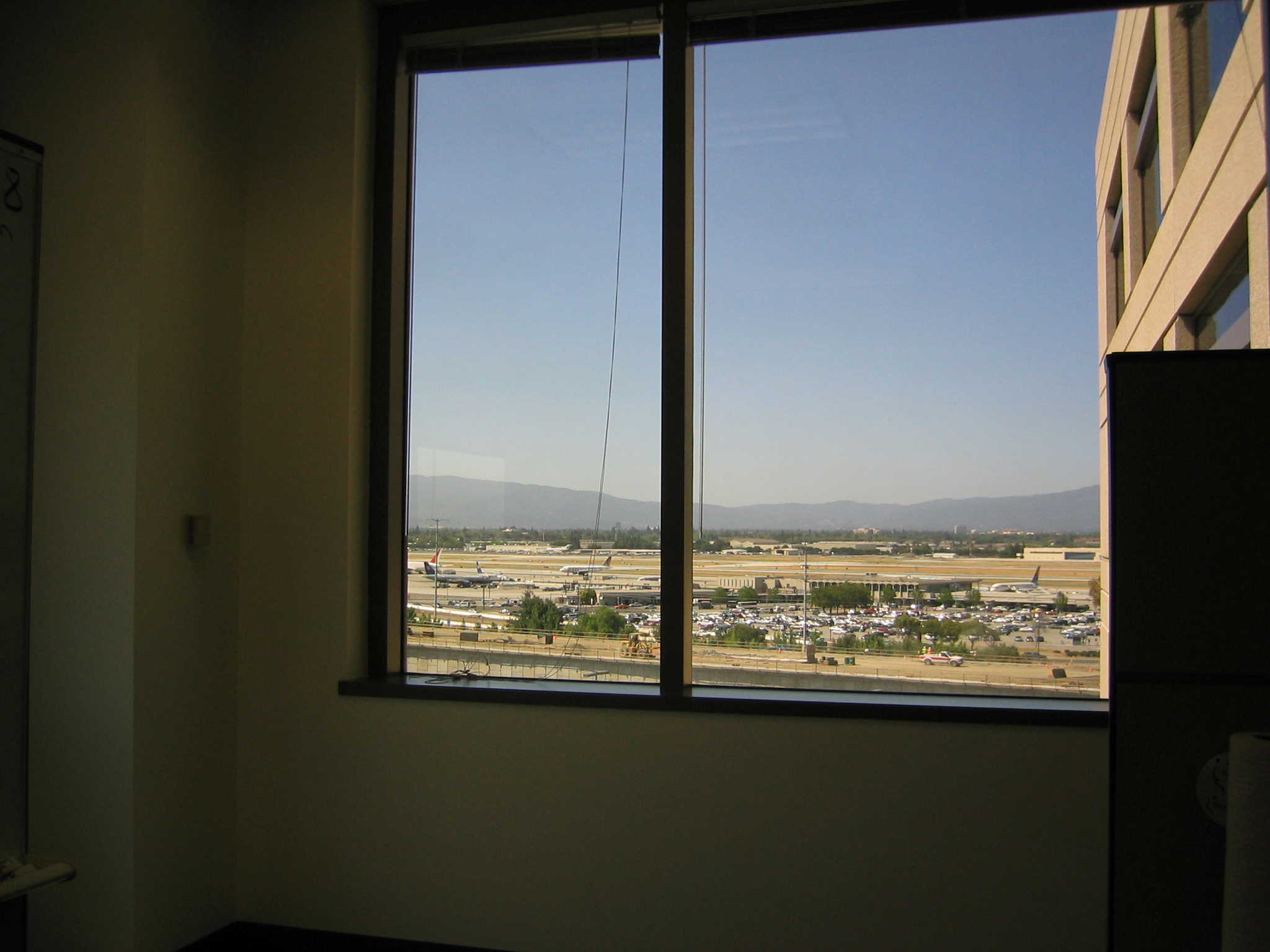
When I first started working at Brocade, we were in Con-6, and I was on the eighth floor. This posed a slight problem for me since I was the only one in my group who wasn’t on the seventh floor. So eventually I was moved down to the seventh floor and given a cube with a really great view. After we bought Rhapsody, engineering was slowly migrated over to Skyport-3, where we all currently are. Originally I was on the second floor with the rest of my group, but then something weird happened. I changed groups at the same time that my old group moved up to the sixth floor. I moved up to the sixth floor, but my new group was on the fifth floor, so a few weeks later, I also moved down to the fifth floor. A month or so ago, there was yet another reorg, and my old group and my new group merged. This past Friday, the people who had been on the fifth floor moved up to the sixth floor. This means that I’ve moved cubes five times in less than four years. The awful part is that when I was on the second and fifth floors, I was right next to the printer, and now that I’m on the sixth floor again, I’m right next to the printer yet again. One of the cubes on the sixth floor has freed up, and I want it. The problem is, it’s a window cube, and so everyone wants it. My boss has said that it’s usually distributed based on tenure and rank, which means I’m likely not to get it, which really pisses me off, since I’ve had a really awful cube for a long time. One other thing that really pisses me off is that the soda machine on the sixth floor charges $0.60 instead of $0.50 like the fifth floor machine, and also the sixth floor machine only has Coke products, whereas the fifth floor had a healthy mix of Coke and Pepsi products, and I’m a Pepsi drinker. So I’m thinking about getting a cube mini-fridge. My space requirements are max 23″Hx19″Wx19″D and preferably less than 17″W and 15″D, so I’m thinking about getting this fridge from ThinkGeek. Any reviews on it? Any other ones that anyone would suggest?

Adam Rosi-Kessel: Goodbye Globe

It is with some sadness and reluctance that I canceled our daily subscription to the Boston Globe today. I like the idea of a print newspaper, but in reality, it doesn’t work for me anymore. Perhaps the biggest problem is newspapers deliver news at the least useful interval. Radio and the web give you up-to-the-minute updates, while weekly and monthly magazines give you in depth, critical treatment of the news in perspective. (Of course, the web also gives you everything, although it is not always as portable as a magazine or radio.) Newspapers end up somewhere in between: they are generally hastily (and thus poorly) written; don’t usually have space for in depth and contextual treatment (although certainly better than most TV news); but by the time you get them they are already dated if you’ve been checking Google News and listening to NPR. Newspapers also have vast amounts of irrelevant content that just creates more work for me in taking out the recycling. I never look at the sports, real estate, “lifestyle,” or automotive sections; the hundreds of pages of advertising material in the Sunday edition likewise go right into the recycle bin. At the end of the week, I look at the pile of unread dead trees, and realize what an inefficient process it is. Finally, it’s just not a good value. $400 a year could pay for a lot more high quality online or offline content. I understand the newspaper business has been having a tough time, and I’m not helping things by unsubscribing. (The desperation is palpable in the “Free Boston Herald” hawkers stationed outside my office every evening.) I hope the good investigative reporters still find a way to ply their trade. Maybe they will all end up at high quality weekly and monthly publications, e.g., Seymour Hersh at the New Yorker. In any event, I’m looking forward to less work and less guilt carrying the recycling to the curb. I suppose I’m just doing my part to kill old media.

17 May 2006

David Pashley: The case against backticks

I hate backticks. They have no place in modern shell programming. Here is a couple of reasons why this is the case. Not nestable backticks, by their nature, are not nestable. You can not have a command expansion inside another with back ticks.
command  foo   bar   baz 
Should the shell expand foo and baz or bar and then foo <output of bar> baz? As it happens it will run the first one. Using the modern command expansion syntax you can write:
command $(foo $( bar ) baz)
command $(foo ) bar $( baz)
Backticks are invisible The backtick symbol is too small and too easily confused with a single quote to be used for writing maintainable code. The alternative is significantly larger and therefore more obvious.
ls "' !! '"
ls "'$(!!)'"
Here is a zoomed version of the line above in my terminal: Please consider using the bracketed version of command expansion rather than backticks and make the world a nicer place

MJ Ray: Tour of Britain 2006 Route Announced

The 2006 Tour of Britain will be calling at Glasgow (29 August), Castle Douglas, Blackpool, Liverpool, Yorkshire, West Midlands, Rochester, Canterbury, Greenwich and central London (3 September). This year, the tour takes the chance to road-test some of the Tour de France and Olympic routes, so the London stage is a bit more than a tiny circuit in Westminster. [cont with links]

Ross Burton: OpenedHand World Domination Progressing Well

The plans for World Domination by OpenedHand are going well. So well infact that we need more help: we're hiring an Embedded Linux System Engineer and a Technical Project Manager. For more details, see the OpenedHand Jobs page. NP: Always Beating, L'Onomatopeur

Matt Brown: Playing With ZoomIn

I signed up for a ZoomIn API Key (not that it seems to be needed atm…) the other week and finally got a chance to have a play this past weekend. My test case was to build a map of all the CRCnet sites and the links between them to use as a plugin in the CRCnet Configuration System. Either as a dynamic status display (colouring links to show traffic loads and status etc) or as a network planning tool to get a feel for the relationship between existing sites and potential new locations. Obviously the lack of topographical information makes the second case far less useful than it could be, but I think even in 2D it would still be a useful tool. Getting the points onto the map was relatively straightforward, but adding any sort of hover event to them was another matter. The GEvent class currently only supports the click event and markers are not added with any other identifying attributes (such as an ID or Name) which could be used to hook an event into them. After a quick squiz at the Terms and Conditions, I grabbed a copy of the API javascript and after unobfuscating it (basically just adding back in line breaks and running in through indent(1)) started to have a squiz at what was happening. The API code is very nice and clean and it wasn’t at all hard to work out what was going on. Mozilla’s Venkman javascript debugger absolutely rocks for this sort of work. It allows you to step through all the scripts on the page line by line and quickly get a feel for the flow of the code. Adding support for the hover (onmouseover) event doesn’t look like it would be too hard, but the T&C didn’t explicitly mention whether I was allowed to actually modify the API code, so I choose to simply create a CRCnetMarker class (see below) that creates GMarker object and then pokes id attributes onto the internal objects of that class before returning it. Then once you’ve called addOverlay you can use the basic DOM functions to hook in an onmouseover event handler on the ID of the marker.
var CRCnetMarker = function (sitename, point, icon)
 
    var marker = new GMarker(point, icon);
    marker.icon.id = "crcnet_container_" + sitename;
    marker.icon.firstChild.id = "crcnet_icon_" + sitename;
    marker.addEventListener = function (eventname, handler)  
         b = document.getElementById(marker.icon.firstChild.id);
         b.addEventListener(eventname, handler, false);
     
     return marker;
 
var marker = new CRCnetMarker(new GPoint(2704685.21,6367057.51), "mph");
map.addOverlay(marker);
marker.addEventListener('mouseover', hoverHandler);
That worked like a charm and I now have nice little info boxes popping up next to each node when you hover over them. I also discovered in the process of implementing this that Prototype and ZoomIn do not play nicely together. It appears to be Prototype’s fault as it messes with the Array type by adding new methods (like each for enumeration) which break the builtin for (i in array) syntax when the array contains non-numeric keys (like each). This has been reported in the prototype bug tracker as breaking Yahoo Maps but the comments don’t seem to offer much hope for Prototype’s behaviour changing anytime soon which is a pity. The next roadblock was a lack of support for drawing lines! This put the kibosh on the whole animated network status idea. Trolling through the source again reveals a GPolyLine class that appears to be semi-implemented, so hopefully support for drawing lines is coming very soon. The only other thing I found slightly annoying was having to supply all the co-ordinates in NZGD49 format. Most of our GPS information for CRCnet is stored in WGS84 format (as that’s what our older GPS unit puts out). NZGD49 has been deprecated in favour of NZGD2000 (which is near enough to identical to WGS84 for normal use) so I’m not really sure why ZoomIn is still using NZGD49. Maybe that’s all TerraLink can supply? Some quick googling turned up the proj library (apt-get install proj in Debian) which provides the cs2cs utility which can convert from WGS84 (aka NZGD2000) to NZGD49 to feed to ZoomIn. The magic peice of information is the transformation parameters which LINZ helpfully provide. Punching those (I chose the 7 parameter version) into cs2cs via a command line like

echo "$lat $long" /usr/bin/cs2cs +proj=latlong +datum=WGS84 +ellps=WGS84 +towgs84=0,0,0 +nodefs +to +proj=nzmg +datum=nzgd49 +ellps=intl +towgs84=59.47,-5.04,187.44,-0.47,0.10,-1.024,-4.5993 awk ' print $1" "$2 '

performs the magic conversion. The conclusion?
Overall I think ZoomIn rocks and it’s really cool to see a small NZ company filling in where Google and friends have failed miserably. The biggest weakness at the moment is definitely the API, which doesn’t really allow you to do much more than add points at this stage. Given that ZoomIn is still relatively young the leanness off the API is understandable. Given the API a few more months to mature and fill out and I think we’ll be able to create some really cool applications on top of the ZoomIn platform. Screenshot:

Erich Schubert: Sun Java is now just non-free (not non-distributeable anymore)

Apparently Sun has finally relicensed Java in a way that Debian can ship packages in it's non-free section. I guess they've been realizing that people started using other Java implementations or Mono instead, that were easier to install on Linux systems. A couple of things were wrong with Java before that, making it a pain to install. The Debian Java people had gone a long way to fix that (e.g. by making the nice make-jpkg application that will convert the official Java into a nice Debian package you can install on your systems, but just cannot give anybody else). While installation wasn't hard with that tool anymore (download, run make-kpkg, install package), this still couldn't give you automatic upgrades. The free java implementations had huge benefits here, so does Mono. Sun Java still has shortcomings with installation, though. First of all, it's in the frowned upon, second-class "non-free" part, secondly you need to agree to it's license on installation, making unattended installation (legally) impossible, I guess. (You can probably just preseed the debconf flag, though) I've recently been recommending people to use Mono instead of Java if they only have these two choices. Mono apps are supposed to run on Windows as well, look a lot better than Java, are apparently more fun to write and easier to install. Now let's hope no patenting issues will be used by Microsoft to make Mono go away. (I wonder if that is one of the reasons why they absolutely do not support Mono meetings at their Dot-Niet gettogethers, because you could use that in a legal trial as them acknowledging Monos use of their stuff, because overall they are benefiting from Mono being .Niet on Linux and thus being a bit more platform independant...)

MJ Ray: The "Money-making Spamming RSS Tips Legal Podcast Blooper Flame Tags" Update

Today I continue my backlog-clearing series of link lists with ones about blogging and podcasting, including style, technicalities and legalities. If you blog or podcast and want to learn from others, I hope you'll enjoy some of these: [continues with links on my site]

Jonathan McDowell: Silver vs White Gold vs Platinum

So I need to get a wedding ring. Given I hope to wear it for the next 50+ years and that I've worn a ring in the past I figured something more interesting than a plain band would be nice. Many years ago Kathy bought me a silver Celtic style ring I was fond of, but unfortunately I lost it a while ago, which was upsetting, so I thought it would be nice to get a wedding ring that was similar to the lost ring. However. I don't like gold. So the logical choice seemed to be white gold. Until a jeweller told me that it was plated which would wear over time and require replating every few years. Which is a bit offputting. Anyone any experience of this? I've seen mention of getting it replated with a thicker than normal coating, which makes it less likely to require regular updating? The other options seem to be silver or platinum. Does anyone have silver wedding rings? Does it last well enough? It's a lot cheaper; is that the only reason why they're not common or is there something more fundemental? Platinum is more expensive than white gold, but that's not a huge issue for the last ring I plan to wear. Is it harder to work though, making it less likely that I'll find what I want? I found a ring at Ortak that I like, but no platinum option and I'd want to see it before buying, so online is out. Can anyone suggest a decent jeweller to talk to in Norwich? I've had a look around but not seen anything matching what I want. Alternatively I guess I can look in London.

Uwe Hermann: Stuff III

Ross Burton: Sound Juicer "Got A Brand New Bag" 2.15.2.1

Sound Juicer "Got A Brand New Bag" 2.15.2.1 is out. Tarballs are available on burtonini.com, or from the GNOME FTP servers. This is a brown paper bag release to fix the small translations problem: they didn't exist in 2.15.2. Update:: rebuilt the tarball, this time it actually works.

Simon Law: Debconf 6, Day 1


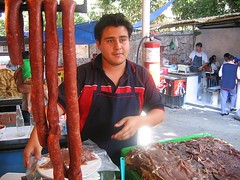
Butcher
Originally uploaded by sfllaw.
Sunday was the first day of actual talks. The night before, [info]ze_dinosaur had arrived and so we hunted for breakfast together. We walked out and found Jesus who was walking towards town. We opted to follow him to the mercado in the town just outside the side gate of the resort. We walked into the market and down some stairs. There are just little stalls where people were selling hats or CDs or pots or clothes. When we walked a bit further, we found a covered area where sweet-smelling smoke swirled everywhere. We sat down on a bench with a thin counter in front of us and someone came back with menus. I ordered a chorizo quesadilla and a glass of horchata. They were very fresh and very, very tasty. I went to the Torre Parlimentaria where the welcome speeches were happening. Mexico has been very warm and sunny, which means dehydration and sunburns. The tower is air-conditioned, so this was a very welcome environment.

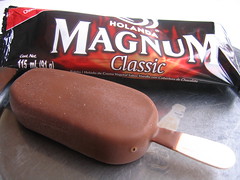
Ice cream bar
Originally uploaded by sfllaw.
We sat through a talk where Simon Phipps from Sun announced work he's done with Sun to get more and more software opened. He seems to be very enthusiastic about Free Software, which he mentioned specifically, so I hope he does well with his persuasions within Sun. I no longer remember what I did after this. I think I might have walked around a bit before having the caterred lunch. I've been eating these sponsored meals for a couple of days and they've been rather substandard. Sure, they're edible and doesn't make anyone sick. But it's insipid, because they're trying to put out European style meals, which the kitchen doesn't know how to do. Since I'm travelling, I'm totally going to eat tasty local food, which I won't be able to get in Canada. At lunchtime, I bumped into Filipe whom I met at OLS last year. He introduced me to his Brazillian friends and we discovered that Tiego and Tassia who are studying in Montr al. I promised them that we'd get some Debian get-together in early June, before they leave.

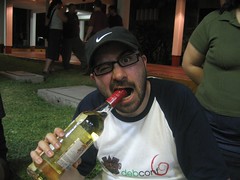
Jesus Climent
Originally uploaded by sfllaw.
It's rather warm right now. The temperature goes about 30 C every day, but the humidity is always close to 30% so it doesn't get very sticky. But it does make such things like ice cream more important. Interestingly enough, lots of American products are for sale in Mexico, but under completely different brand names. After dinner, we went to the HackLab which is a building set up to encourage people to work with their computers. There are plenty of tables and chairs, with extension cords sprawled everywhere. I sat down for a game of Mao, and then got up several hours later. I wandered outside, where people were hanging out on the veranda, so I sat down on the grass in a circle and chatted with people until the early hours of the morning. Debconf, you're so bad for my health.

Julien Danjou: Xen backports

Guido's backports of Xen 3 Debian packages just entered backports.org repository.

Joey Hess: debconf6 highlights

Some highlights of ?DebConf6 so far:

Ted Walther: Report from Debconf, Day Three, Part II

X Window security. Wandered outside the hack lab to sip a drink and cool down. There I saw Keith Packard and Bdale Garbee. Quickly introduced myself to them both, then asked Keith what his take was on the recent OpenBSD complaints that X11 is insecure by design [1] [2]. Keith said he wasn't going to respond to those complaints, because DRI/DRM already provides what Theo de Raadt says he wants in the way of kernel control over dma and register access on video cards. Many X11 video drivers are not yet converted over to doing things the DRI/DRM way, and so Theo is correct that X11 has huge security holes. But they are not permanent; the future is already arriving. Although DRI/DRM is positioned as a 3d technology, it is intended that even 2d drivers in the future will conform themselves to its API. Keith also said that OpenBSD's representative on the X11 team is easy to work with and cooperates well with the team, so there is hope that if OpenBSD turns its attention to X11 support, everyone will soon benefit from the comprehensive security audit. Although the DRI/DRM design solves the security problems, it is a bitch to implement. Mode switching alone is so finicky and is so tied into both the video hardware and x11 server optimizations, that it has never successfully been implemented in the kernel. Keith said he supported the idea of isolating the mode switching code out into a small, privilege separated userland utility. There were many other things said, which sounded positive, but without the aid of a tape recorder, I can't remember them. Putting packages out of main. Learnt a trick today, courtesy of Phil Hands and Ralph Amissah. If you want to upload a package into a part of the distribution other than main, you alter the Section: field of the debian/control file in your package. Suppose your package fits into the text section, because you use it to process text. Maybe you reimplemented awk. If you put Section: text the package will go into the text portion of the main repository. If your version of awk depends on a library that is in the non-free section, you would put it in the contrib section. So you would put this in your debian/control file: Section: contrib/text and Bob's your uncle. Politics. I find myself doing vastly more politics at this conference than coding, although I am getting some of that done too. When people are deep inside their own worlds, it takes a lot of work to bridge between the worlds. So far it seems like time well invested. Embedded. If anyone needs any embedded work done, Wookey is your guy. Send him an email with a proposal.
  1. 2006-05-11 22:00:04 Re: security bug in x86 hardware (thanks to X WIndows)
  2. 2006-05-13 20:07:35 Re: security bug in x86 hardware (thanks to X WIndows)

16 May 2006

Christian Perrier: Debconf 6 - day 2

Back to a normal schedule now and, thus, woke up at 06:00..:). Quiet hacking near the pool, with a few mosquitos so that I don't feel alone. We had a nice breakfast at the Tower (too lazy to go in the village and have some more barbecue food). Watching Lior discover that he actually ordered a giant piece of meat was kinda funny (less funny for Lior, though). After hacking in the hacklab, I'll have to gather people for the 1st i18n infrastructure session. I hope I'll find everybody...we'll see. I quickly attended Mark Shuttleworth Ubuntu report. I'm quiet balanced about it as it is still giving good promises....but the real achievements aren't coming. Rosetta which is a promising framework, even though it still has IMHO many design flaws or missing features, will not be free. So that seems to definitely rule it out from our i18n infrastructure project. Talking about it, I escaped from Mark's talk and ran into the hacklab to handle what was supposed to be an informal session about i18n infrastructure, which I did set up very quickly (and badly, with many schedule changes). It finally turned out to be an interesting brainstorming with about 30 people attending and many interesting exchanges about what we would like to see in future i18n infrastructure. Thanks to all people who participated, it was a real pleasure to animate that one. After lunch, I've been quietly attending Manoj's workshop about SELinux. It flies way over my head but it is always interesting to hear about these security things. I also took the opportunity to a very good discussion to setup plans for the i18n meeting in Extremadura with Dario Rapisardi and Cesar Gomez Martin.

Junichi Uekawa: Still fighting with my wireless setup.

I've upgraded the kernel to 2.6.16.16, and tried again.However, it seems to pull the machine to a hard halt after a while.Hmm..This is USB wlan device (GW-US11H) on iBook G4.

Simon Law: Debconf 6, Day 0


Clouds
Originally uploaded by sfllaw.
I was staying over at [info]dcoombs's place on Friday night, which was very gracious with him. It also meant that I got a ride to the aeroport on Saturday morning, so that I could catch my 8:05 flight. After going through security, I waited for a bit and read a book. Then we boarded and waited on the tarmac for an oil filter change. No kidding. We took off and I soon fell asleep, as I was quite tired. By the time I woke up, we were flying over sunny Mexico. We landed at the aeroport, picked up my baggage, went through customs and ended up in the terminal. It was full of people with signs looking for their loved ones. I made my way past them and followed a sign that looked like it was for taxis. Along the way, I saw an HSBC and poked my head inside. I was slightly disappointed that nobody was speaking Chinese. I bought a flat-rate taxi fare to the Terminal de autobuses in Tasque a. The taxi driver, Bito, loaded my suitcase in the car and we were off. His English was non-existant so we spoke to each other with our hands. The rest of the time, I spent staring out the window.

Taxicab
Originally uploaded by sfllaw.
Mexico City is bright and colourful! Everything has vibrant splashes of colour. There are huge fleets of old Volkswagon Beatles driving around, many of them operating as green taxicabs. We drove past shops and stores and the signs were hand-painted and awesome. When we got to the poorer communities, I started seeing tags on buildings, but then we drove past these huge murals spray-painted on large walls. He let me off at the terminal and I bought a ticket to Oaxtepec. This was done through plenty of pointing and reading off of computer teminals. Then, I went out Gate 3 and walked into a mass of people. Now, I'm used to people queueing up, but this was not a common concept here. I tapped someone on the should and asked how I could get on my bus. Giacomo introduced himself and tried to explain the system. But he eventually just talked to the ticket collector who let me on the same coach. I discovered that he had family who lived in Hamilton and invited him to look me up if he ever visited Montr al. When we got to Oaxtepec, I staggered off the bus and picked up my luggage. Then I got un-carsick by sitting down on something stable. I was standing outside the front gates of the Centro vacacional Oaxtepec IMSS. I considered the long hike up a big hill, and then hired a cab that took me up to the Recepcion building where I got checked in. I dragged my luggage to the room and met Blars there. I picked out a bed amongst the five still available. I had finally arrived.

Benjamin Seidenberg: Hello, World!

So, thanks to Wouter Verhelst, I am now syndicated on Planet Debian, a site that aggregates the blogs of various people involved in Debian. To those who don’t know me yet, I am an 18 year old high school student (for a couple more weeks anyway) in the United States. I go by ‘astronut’ on IRC, and have completed my part of NM and am now patiently waiting for FD/DAM approval. I maintain easyh10 (manages the databases on the iRiver H10 music player), dav-text (simple ncurses based text editor), graphmonkey (a somewhat pointless graphing calculator that somehow has at least a few users according to popcon) and recently adopted pork (console AIM client). I also am an active member on the Debian Cyrus Packaging team (Cyrus is a pop/imap/nntp server). Comments are currently enabled, but moderated on the blog. I may have to go to some kind of turing test based system if planet opens me up to a flood of spam. So… Hello, to the word of Debian!

Wouter Verhelst: Kerberos: final note.

Just a little followup to my two previous blog posts about kerberos: Kerberos needs a few things to be set up correctly before it'll work. If you've set up everything correctly as I explained it previously, and it doesn't work, make sure you have these done right: Posted since I just revived newwave, my Quara 700, which hadn't been kerberized yet, bumped against the latter of the above two points, and played with the machine for a few hours until I realized what the problem was... and because this wasn't the first time that it happened and, I guess, not the last time either.

Next.

Previous.