Search Results: "sto"

22 December 2016

Shirish Agarwal: The wine and dine at debconf16

For the wine connoisseur

FOR the Wine Connoisseur

All photos courtesy KK . If any deviations, would put up labels sharing whose copyright it is. Before I get into all of that, I was curious about Canada and taking the opportunity of debconf happening there in a few months, asked few people what they thought of digital payments, fees and expenses in their country and if plastic cash is indeed used therein. The first to answer was Tyler McDonald (no idea if he is anyway related to the fast-food chain McDonalds which is a worldwide operation.) This is what he had to say/share
You can use credit / debit cards almost everywhere. Restaurant waiters also usually have wireless credit / debit terminals that they will bring to your table for you to settle your bill. How much your bank charges depends on your Canadian bank and the banking plan you are on. For instance, on my plan through the Bank Of Montreal, I get (I think) 20 free transactions a month and then after that I m charged $0.50CDN/piece. However, if I go to a Bank Of Montreal ATM and withdraw cash, there is no service fee for that. There is no service fee for using *credit* cards, only *debit* cards tend to have the fee. I live in a really rural area so I can t always get to a Bank Of Montreal machine for cash. So what I usually end up doing, is either pay by credit and then pay of the balance right away so I don t have to pay interest, or when I do use my bank card to pay for something, I ask if I can get cash back as well. Yes, Canada converted to plastic notes a few years ago. We ve also eliminated the penny. For cashless transactions, you pay the exact amount billed. If you re paying somebody in cash, it is rounded up or down to the nearest 5 cents. And for $1 or $2, instead of notes, we ve moved over to coins. I personally like the plastic notes. They re smoother and feel more durable than the paper notes. I ve had one go through a laundry load by accident and it came out the other side fine.
Another gentleman responded with slightly more information which probably would interest travellers from around the world, not just Indians
Quebec has its own interbank system called Interac (https://interac.ca/en/about/our-company.html). Quebec is a very proud and independent region and for many historical reasons they want to stand on their own, which is why they support their local systems. Some vendors will support only Interac for debit card transactions (at least this was the case when I stayed there the beginning of this decade, it might have changed a bit). *Most* vendors (including supermarkets like Provigo, Metro, etc) will accept major credit and debit cards, although MasterCard isn t accepted as widely there as Visa is. So, if you have one of both, load up your Visa card instead of your MasterCard or get a prepaid Visa card from your bank. They support chip cards everywhere so don t worry about that. If you have a 5 digit pin on any of your cards and a vendor asks you for a 4 digit pin, it will work 90%+ of the times if you just enter the first 4 digits, but it s usually a good idea to go change your pin to a 4 digit just to be safe.
From the Indian perspective all of the above fits pretty neat as we also have Pin and Chip cards (domestically though most ATMs still use the magnetic strip and is suspected that the POS terminals aren t any better.) That would be a whole different story so probably left for another day. I do like the bit about pocketing the change tip. As far as number of free transactions go, it was pretty limited in India for few years before the demonetization happening now. Few years before, I do remember doing as many transactions on the ATM as I please but then ATM s have seen a downward spiral in terms of technology upgradation, maintenance etc. There is no penalty to the bank if the ATM is out-of-order. If there was significant penalty then we probably would have seen banks taking more care of ATM s. It is a slightly more complex topic hence would take a stab at it some other day. Do hope though that the terms for ATM usage for bank customers become lenient similar to Canada otherwise it would be difficult for Indians to jump on the digital band-wagon as you cannot function without cheap, user-friendly technology. Cash machines: Uneven spread, slowing growth - Copyright Indian Express The image has been taken from this fascinating article which appeared in Indian Express couple of days back. Coming back to the cheese and wine in the evening. I think we started coming back from Eagle Encounters around 16:30/17:00 hrs Cape Town time. Somehow the ride back was much more faster and we played some Bollywood party music while coming back (all cool). Suddenly remembered that I had to buy some cheese as I hadn t bought any from India. There is quite a bit of a post where I m trying to know/understand if spices can be smuggled (which much later I learnt I didn t need to but that s a different story altogether), I also had off-list conversations with people about cheese as well but wasn t able to get any good recommendations. Then saw that KK bought Mysore Pak (apparently she took a chance not declaring it) which while not being exactly cheese fit right into things. In her own words a South Indian ghee sweet fondly nicknamed the blocks of cholesterol and reason #3 for bypass surgery . KK So with Leonard s help we stopped at a place where it looked like a chain of stores. Each store was selling something. Seeing that, I was immediately transported to Connaught Place, Delhi Connaught Place, Delhi The image comes from http://planetden.com/food/roundabout-world-connaught-place-delhi which attempts to explain Connaught Place. While the article is okish, it lacks soul and not written like a Delhite would write or anybody who has spent a chunk having spent holidays at CP. Another day, another story, sorry. What I found interesting about the stores while they were next to each other, I also eyed an alcohol shop as well as an Adult/Sex shop. I asked Leonard as to how far we were from UCT and he replied hardly 5 minutes by car and was shocked to see both alcohol and a sex shop. While an alcohol shop some distance away from a college is understandable, there are few and far around Colleges all over India, but adult shops are a rarity. Unfortunately, none of us have any photos of the place as till that time everybody s phone was dead or just going to be dead and nobody had thought to bring a portable power pack to juice our mobile devices. A part of me was curious to see what the sex shop would have and look from inside, but as was with younger people didn t think it was appropriate. All of us except Jaminy and someone else (besides Leonard) decided to stay back, while the rest of us went inside to explore the stores. It took me sometime to make my way to the cheese corner and had no idea which was good and which wasn t. So with no idea of brands therein, the only way to figure out was the pricing. So bought two, one a larger 500 gm cheap piece and a smaller slightly more expensive one just to make sure that the Debian cheese team would be happy. We did have a mini-adventure as for sometime Jaminy was missing, apparently she went goofing off or went to freshen up or something and we were unable to connect with her as all our phones were dead or dying. Eventually we came back to UCT, barely freshened up when it was decided by our group to go and give our share of goodies to the cheese and wine party. When I went up to the room to share the cheese, came to know they needed a volunteer for cutting veggies etc. Having spent years seeing Yan Can Cook and having practised quite a bit tried to do some fancy decoration and some julian cutting but as we got dull knives and not much time, just did some plain old cutting
The salads

The Salads, partly done by me.

I have to share I had a fascinating discussion about cooking in Pressure Cookers. I was under the assumption that everybody knows how to use Pressure Cookers as they are one of the simplest ways to cook food without letting go of all the nutrients. At least, I believe this to be predominant in the Asian subcontinent and even the chinese have similar vessels for cooking. I use what is called the first generation Pressure Cooker. I have been using a 1.5 l Prestige Pressure Cooker over half a decade, almost used daily without issues. http://www.amazon.in/Prestige-Nakshatra-Aluminium-Pressure-Cooker/dp/B00CB7U1OU
Prestige 1.5 L Pressure Cooker

1.5 Litre Pressure Cooker with gasket and everything.

There are also induction pressure cookers nowadays in the Indian market and this model https://www.amazon.in/Prestige-Deluxe-Induction-Aluminum-Pressure/dp/B01KZVPNGE/ref=sr_1_2
Induction base cooking for basmati rice

Best cooker for doing Basmati Biryanis and things like that.

Basmati is long-grain, aromatic rice which most families used in very special occasions such as festivals, marriages, anything good and pure is associated with the rice. I had also shared my lack of knowledge of industrial Microwave Ovens. While I do get most small Microwave Ovens like these , cooking in industrial ovens I simply have no clue. Anyways, after that conversation I went back, freshened up a bit and sometime later found myself in the middle of this
Collection of Wine Bottles

Random selection of wine bottles from all over the world.

Also at times found myself in middle of this
Chocolates all around me.

CHOCOLATES

I tried quite a few chocolates but the best one I liked (don t remember the name) was a white caramel chocolate which literally melted into my mouth. Got the whole died and went to heaven experience . Who said gluttony is bad Or this
French Bread, Wine and chaos

French Bread, Wine and chaos

As can be seen the French really enjoy their bread. I do remember a story vaguely (don t remember if it was a children s fairy tale or something) about how the French won a war through their french bread. Or this
Juices for those who love their health

Juices for those who love their health

We also had juices for the teetotaller or who can t handle drinks. Unsurprisingly perhaps, by the end of the session, almost all the different wines were finito while there was still some juices left to go around. From the Indian perspective, it wasn t at all exciting, there were no brawls, everybody was too civilized and everybody staggered off when they met their quota. As I was in holiday spirit, stayed up late, staggered to my room, blissed out and woke up without any headache. Pro tip Drink lots and lots and lots of water especially if you are drinking. It flushes out most of the toxins and also helps in not having after-morning headaches. If I m going drinking, I usually drown myself in at least a litre or two of water, even if I had to the bathroom couple of times before going to bed. All in all, a perfect evening. I was able to connect/talk with some of the gods whom I had wanted to for a long time and they actually listened. Don t remember if I mumbled something or made some sense in small-talk or whatever I did. But as shared, a perfect evening
Filed under: Miscellenous Tagged: #ATM usage, #Canada, #Cheese and Wine party, #Cheese shopping, #Connaught Place Delhi, #Debconf16, #Debit card, #French bread, #Julian cutting, #Mysore Pak, #white caramel chocolate

21 December 2016

Bits from Debian: Free FPGA programming with Debian

FPGA (Field Programmable Gate Array) are increasingly popular for data acquisition, device control and application acceleration. Debian now features a completely Free set of tools to program FPGA in Verilog, prepare the binary and have it executed on an affordable device. See http://wiki.debian.org/FPGA/Lattice for details. Readers familiar with the technology may rightly guess that this refers to the yosys package together with berkeley-abc, arachne-"Place-and-Route" and the icestorm tools to communicate with the device. The packages have been contributed by the Debian Science team. We hope this effort to support the FPGA community to collect an increasing number of skills to further smoothen the Open Source experience and lower the entry barriers for this tantalising technology.

Norbert Preining: Cornelia Travnicek Junge Hunde

A novel on late adolescence and self-finding, set on a mixture of stages ranging from Vienna, its Hinterland, to China. The recent book of the Viennese young writer Cornelia Travnicek (official page, WikiPedia) tells a complicated story about finding and loosing your parents.
The main actors, Johanna, always helpful and supportive of those around here, and Ernst, a Chinese adoptive son in Austria, are good friends since early childhood. He sets out to find his parents in China, while she has to deal with profound change in her own world while worrying about his travel and distance. Although in principle a nice and interesting story, I felt that the book is at times weighting too much on sentiments, second hand sentiments, and trying to extend the story. By itself this wouldn t be a problem if the language would be of a great story teller, but in this case it just extends and gave me hard time continue reading. The surprising ending isn t that surprising, a single line 2/3 through the book just let it slip so that it is clear who is the father. All in all not a bad book, but I wouldn t recommend it from the depth of my heart. Still, as Viennese I felt a bit nostalgic with parts of dialect appearing in the book.

20 December 2016

Reproducible builds folks: Reproducible Builds: week 86 in Stretch cycle

What happened in the Reproducible Builds effort between Sunday December 11 and Saturday December 17 2016: Reproducible builds world summit The 2nd Reproducible Builds World Summit was held in Berlin, Germany on December 13th-15th. The event was a great success with enthusiastic participation from an extremely diverse number of projects. Many thanks to our sponsors for making this event possible! Reproducible Summit 2 in Berlin 2016 Whilst there is an in-depth report forthcoming, the Guix project have already released their own report. Media coverage Reproducible work in other projects Documentation update A large number of revisions were made to the website during the summit, including re-structuring existing content and creating a concrete plan to move the wiki content to the website: Elsewhere in Debian Packages reviewed and fixed, and bugs filed Chris Lamb: Daniel Shahaf: Reiner Herrmann: Reviews of unreproducible packages 9 package reviews have been added, 19 have been updated and 17 have been removed in this week, adding to our knowledge about identified issues. 3 issue types have been added: One issue type was updated: Weekly QA work During our reproducibility testing, some FTBFS bugs have been detected and reported by: diffoscope development reprotest development trydiffoscope development Misc. This week's edition was written by Chris Lamb and reviewed by a bunch of Reproducible Builds folks on IRC and via email.

Mario Lang: Upgrading GlusterFS from Wheezy to Stretch

We are about to upgrade one of our GlusterFS-based storage systems at work. Fortunately, I was worrying about the upgrade procedure for the Debian packages not being tested by the maintainers. It turns out I was right. Simply upgrading the packages without manual intervention will apparently render your GlusterFS server unusable.
Basic setup I have only tested the most basic distributed GlusterFS setup. No replication whatsoever. We have two GlusterFS servers, storage1 and storage2. A peering between both has been established, and a very basic volume has been configured:
storage1:~# gluster
gluster> peer status
Number of Peers: 1
Hostname: storage2
Uuid: 2d22cc13-2252-4cf1-bfe9-3d27fa2fbc29
State: Peer in Cluster (Connected)
gluster> volume create data storage1:/srv/data storage2:/srv/data
...
gluster> volume start data
...
gluster> volume info
Volume Name: data
Type: Distribute
Volume ID: e2bd5767-4b33-4e57-9320-91ca76f52d56
Status: Started
Number of Bricks: 2
Transport-type: tcp
Bricks:
Brick1: storage1:/srv/data
Brick2: storage2:/srv/data
For the test setup, I populated the volume with a number of files.
Upgrading from Wheezy to Jessie To be save, stop the volume before you begin with the package upgrade:
gluster> volume stop data
And now perform your dist-upgrade. After the upgrade, you will have to perform two manual clean ups. Both actions have to be performed on all storage servers.
/etc/glusterd is now /var/lib/glusterd The package maintainers have apparently neglected to take care of this one. You manually need to copy the old configuration files over.
storage1:~# cd /var/lib/glusterd && cp -r /etc/glusterd/* .
Put volume-id in extended attribute GlusterFS 3.5 requires the volume-id in an extended directory attribute. This is also not automatically handled during package upgrade.
storage1:~# vol=data
storage1:~# volid=$(grep volume-id /var/lib/glusterd/vols/$vol/info   cut -d= -f2   sed 's/-//g')
storage1:~# setfattr -n trusted.glusterfs.volume-id -v 0x$volid /srv/data
With these two steps performed on all GlusterFS servers, you should now be able to start and mount your volume again in Debian Jessie. Do not forget to explicitly stop the volume again before continueing with the next upgrade step.
Upgrading from Jessie to Stretch After you have dist-upgraded to Stretch, there is yet another manual step you have to take to convert the volume metadata to the new layout in GlusterFS 3.8. Make sure you have stopped your volumes and the GlusterFS server.
storage1:~# service glusterfs-server stop
Now run the following command:
storage1:~# glusterd --xlator-option *.upgrade=on -N
Now you should be ready to start your volume again:
storage1:~# service glusterfs-server start
storage1:~# gluster
gluster> volume start data
And mount it:
client:~# mount -t glusterfs storage1:/data /mnt
You should now be running GlusterFS 3.8 and your files should still all be there.

Thorsten Glaser: How to use the subtree git merge strategy

This article might be perceived as a blatant ripoff of this Linux kernel document, but, on the contrary, it s intended as add-on, showing how to do a subtree merge (the multi-project merge strategy that s actually doable in a heterogenous group of developers, as opposed to subprojects, which many just can t wrap their heads around) with contemporary git ( stupid content tracker ). Furthermore, the commands are reformatted to be easier to copy/paste.

To summarise: you re on the top level of a checkout of the project into which the other project (Bproject) is to be merged. We wish to merge the top level of Bproject s master branch as (newly created) subdirectory dir-B under the current project s top level.

	$ git remote add --no-tags -f Bproject /path/to/B/.git
	$ git merge -s ours --allow-unrelated-histories --no-commit Bproject/master
	$ git read-tree -u --prefix=dir-B/ Bproject/master
	$ git commit -m 'Merge B project as our subdirectory dir-B'
	Later updates are easy:
	$ git pull -s subtree Bproject master
 

(mind the trailing slash after dir-B/ on the read-tree command!) Besides reformatting, the use of --allow-unrelated-histories recently became necessary. --no-tags is also usually what you want, because tags are not namespaced like branches.

Another command you might find relevant is how to clean up orphaned remote branches:

	$ for x in $(git remote); do git remote prune "$x"; done
 

This command locally deletes all remote branches (those named origin/foo ) that have been deleted on the remote side. Update: Natureshadow wishes you to know that there is such a command as git subtree which can do similar things to the subtree merge strategy explained above, and several more related things. It does, however, need the pr fix on every subsequent pull.

19 December 2016

Norbert Preining: I. J. Parker The Dragon Scroll

Very enthralling and entertaining criminal story set in the 11th century Japan, the starting point of a series of novels around Sugawara Akitada ( ), a fictional official/scholar in the Heian period who solves several difficult cases using his great balance of knowledge and common sense.
Akitada is sent to the far north (nowadays around Chiba) to check what has happened to the last three tax convoys that never appeared in the capital. He pokes around and unravels a involved plot to overthrow law and order. A few love stories, dead ends, and lots over wandering around brings the story to a wild finish. The first book in the Akitada series reads very smoothly and quickly, never boring. It gives nice fews onto the society as imagined by the (scholarly) author, and somehow manages to transfer the feeling of living in this area to the reader. For those with interest in criminal stories and Japan, it is a very recommendable book.

Chris Lamb: 10 years of Debian

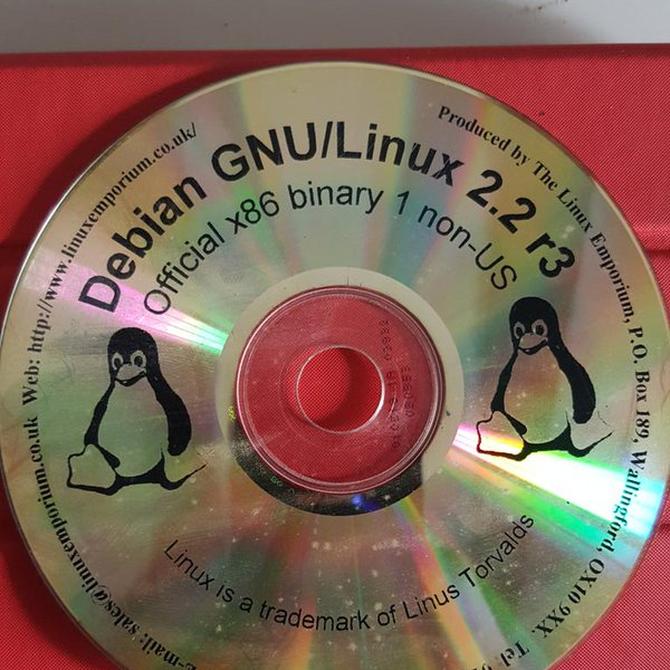
Today marks the 10-year anniversary of my first contribution to Debian GNU/Linux. I will not recount the full history here but my first experience with Debian was a happy accident. I had sent off for a 5-CD set of Red Hat from The Linux Emporium only to discover I lacked the required 12MB of RAM. Annoyed, I reached for the Debian "potato" CD that was included gratis in my order due to it being outdated at the time Fast-forwarding a few years, whilst my first contribution was trivial, it was Thomas Bushnell's infectious enthusiasm that led me to contribute more, eventually becoming a Google Summer of Code student under Daniel Baumann, and finally becoming an official Debian Developer in September 2008 with Thomas Viehmann as my Application Manager. (Some things may never change, however I still struggle with the bug tracker's control@ interface.)
The response I got to my patch always reminds me of the irrational power of providing attibution. I've always liked to tell myself I'm above such vanities but perhaps the truly mature approach would be to accept that ego is part of the human condition and as a community take steps to avoid handicapping ourselves by underestimating the value of "trivialities" such as having one's name listed. I've since been fascinated by the number of maintainers who do not attribute patches in changelogs, especially from newcomers or when the changes are non-trivial a handful in particular have stung me fairly deeply. I would certainly concede that it adds nothing technical and can even be distracting, but it seems a reasonable concession that dramatically increases the chance of future efforts or, frankly, is simply a kindly gesture of thanks and good will. Given our level of technical expertise, I fear we regularly suffer from not having sufficient empathy for newcomers or first-time users who lack the context or orientation that we possess. Anyway, here's to another ten

18 December 2016

Iustin Pop: Printer fun

Had some printer fun this week. It was fun in the sense that failure modes are interesting, not that there was much joy in the process. My current document printer is an HP that I bought back in early 2008; soon 9 years old, that is. When I got the printer I was quite happy: it supports Postscript, it supports memory extension (which allowed me to go from the built-in 64MB to a whopping 320MB), it is networked and has automatic duplex. Not good for much more than document printing, but that it did well. I didn't print a lot on it (averaged it was well below the recommended monthly limit), which might explain the total trouble-free operation, but I did change the toner cartridges a couple of times. The current cartridges were running low for a while, but I didn't need to change them yet. As I printed a user manual at the beginning of the week (~300+ pages in total), I ran out of the black half-way through. Bought a new cartridge, installed it, and the first strange thing was that it still showed Black empty - please replace . I powered the printer off and turned it on again (the miracle cure for all IT-related things), and things seemed OK, so I restarted printing. However, this time, the printer was going through 20-30 pages, and then was getting stuck in "Printing document" with green led blinking. Waited for 20 minutes, nothing. So cancel the job (from the printer), restart printing, all fine. The next day I wanted to print a single page, and didn't manage to. Checked that the PDF is normal, checked an older PDF which I printed successfully before, nothing worked. Changed drivers, unseated & re-seated the extra memory, changed operating systems, nothing. Not even the built-in printer diagnostic pages were printing. The internet was all over with "HP formatter issues"; apparently some HP printers had "green" (i.e. low-quality) soldering, and were failing after a while. But people were complaining about 1-2-4 years, not 9 that my printer worked, and it was very suspicious that all troubles started after my cartridge replacement. Or, more likely, due to the recent sudden increase in printing. Given that formatter board fixes (bake in the oven for N minutes at a specific temperature to reflow the soldering) are temporary and that you can't find replacement parts for this printer, I started looking for a new printer. To my surprise (and dismay at the waste that capitalism produces), a new printer from a higher class was cheaper than replacing all 4 cartridges in my printer. So I had a 90% full black cartridge that I couldn't reuse, but I'd get a new printer for not much more. Interestingly, in 9 years, the development was: I was however happy that one can still get OS-independent (Postscript), networked printers that are small enough for home use and don't (necessarily) come with WiFi. However, one thing still bothered me: did I have such problems because the printer died of overwork at old age, or was it related to the cartridge change? So I start searching again, and I find a post on a forum (oh Google, why did you remove "forum search" and replaced it with "language level"?) that details a hidden procedure to format the internal storage of the printer, exactly for my printer model, exactly for my symptoms. Huh, I will lose page count, but this is worth a try So I do press the required keys, I see the printer booting and saying "erasing ", then asking for language, which makes me happy because it seems the forum post was correct in one regard. I confirm English, the printer reboots once more, and then when it comes up it warns me: "Yellow cartridge is a non-HP original, please confirm". I get confused, and re-seat all cartridges, to no avail. Yellow is non-HP. Sigh, maybe that cartridge had something that confused the printer? When I visit its web page however, all cartridges except the newly installed black one are marked as Non-HP; this only means that I can't see their remaining toner level, but otherwise the printer is restored back to life. I take the opportunity to also perform a firmware upgrade (only five years newer firmware, but still quite old), but this doesn't solve the Non-HP message. The printer works now, and I'm left wondering: was this all a DRM-related failure, something like new cartridge chip which had some new code that confused the printer so bad it needed reformatting, at which point the old cartridge code is no longer supported (for whatever reason)? Was it just a fluke, unrelated to DRM? Was the problem that I powered off the printer soon after replacing the cartridge, while it was still doing something (e.g. preparing to do a calibration after the change)? And another, more practical question: I have 3 cartridges to replace still; they were at 10% before this entire saga, and I'm not able to see their level anymore, but they'll get down to empty soon. The black cartridge in the printer is already at 77%, which is surprising as I didn't print that much. So should I replace the cartridges on what is a possibly fully functional, but also possibly a dying printer? Or buy a new one for slightly more, throwing out possibly good hardware? Even though I understand the business reason behind it, I hate the whole concept of "the printer is free, you pay for the ink". Though in my case "free" didn't mean bad, as a lifetime of 9 years is good enough for a printer.

Daniel Stender: How to cheat setuptools-scm (Debian diary)

[2016-12-19: some additions] This is another little issue from Python packaging for Debian which I came across lately packaging the compressed NumPy based data container Bcolz. Upstream uses setuptools-scm to determine the software s version during build time from the source code management environment the code is in. This method is convenient for the upstream development because with that the version number doesn t need to be hard-coded, and often people just forget to update that (and other version carrying files like doc/conf.py) when a new version of a project is released. python-setuptools just needs to be added to the setup.py to do its job, and in Bcolz the code goes like this:
setup(
    name="bcolz",
    use_scm_version= 
        'version_scheme': 'guess-next-dev',
        'local_scheme': 'dirty-tag',
        'write_to': 'bcolz/version.py'
The file the version number is written to is bcolz/version.py. This file isn t in the upstream code revision nor in the tarball which was released by the upstream developers, it s always generated during build time. In Debian there is an error if you try to build a package from a source tree which contains files which aren t to be found in the corresponding tarball, like cruft from a previous build, or if any files have changed therefore every new package should be test build also twice in a row in a non-chroot environment. Generally there a two ways to solve this, either you add cruft to debian/clean, or you add the file resp. a matching file pattern to extend-diff-ignore in debian/source/options. Which method is the better one could be discussed, I m generally using the clean option if something isn t in the upstream tarball, and the source/options solution if something is already in the upstream tarball, but gets changed during a build. This is related to your preferred Git procedures, if you remove a file which is in the upstream tarball these removals have to be checked in separately, and that means everytime a new upstream tarball is released that is not very convenient. Another option which is available is to strip certain files from the upstream tarball by putting them on the Files-Excluded in deb/copyright. By the way, the same complex applies to egg-info/: that folder is shipped or is not shipped in the upstream tarball, and files in that folder get changed during build. When the source code is put into a Git environment for Debian packaging, there could be problems with the version number setuptools-scm comes up with. This setuptools extension gets the recent version from the latest Git tag when there is a version number to be found, and that s all right. In Git environments for Debian packaging (like e.g. of the Debian Science group, the Python groups and the others) that is available, like the commonly used upstream tags have that1. The problem is, sometimes the upstream version which Debian has2 doesn t match the original upstream version number which is wanted for version in bcolz/version.py. For example, the suffix +ds is used if the upstream tarball has been stripped from prebuild files or embedded convenience shipments (like it s the case with the Bcolz package where c-blosc/ has been stripped because that s build for another package), of the suffix +dfsg shows that non-DFSG free software has been removed (which can t be distributed through the main archive section). For example, the version string for Bcolz which is found after the build currently (1.1.0+ds1-1) is 1.1.0+ds1:
# coding: utf-8
# file generated by setuptools_scm
# don't change, don't track in version control
version = '1.1.0+ds1'
But that s not wanted because this version never has been released, but appears everywhere:
$ pip list   grep bcolz
bcolz (1.1.0+ds1)
$ python3 -c 'import bcolz; bcolz.print_versions()'
-=-=-=-=-=-=-=-=-=-=-=-=-=-=-=-=-=-=-=-=-=-=-=-=-=-
bcolz version:     1.1.0+ds1
There are several different ways how to fix this. The one with the crowbar (like said in German) is to patch use_scm_version out from setup.py, but if you don t provide any version in exchange the version number which is used by Setuptools then is 0.0.0. The upstream version could be hard-coded into the patch, but then again it has not to be forgotten to update it manually by the maintainer, which is not very convenient. Plus, setup.py could change and the patch then might need to be unfuzzed, thus more work. Bad. A patch could be spared by manipulating and exporting the SETUPTOOLS_SCM_PRETEND_VERSION environment variable for setuptools-scm in debian/rules, which is sometimes used when I see the returns for that string on Debian Code Search. But how to prevent to hard code the version number, here? The dpkg-dev package (pulled by build-essential) ships a Makefile snippet /usr/share/dpkg/pkg-info.mk which could be included into debian/rules. It defines several variables which are useful for packaging, like DEB_SOURCE contains the source package name, they are extracted from debian/changelog. But, DEB_VERSION_UPSTREAM which is available through that puts out the upstream version without epoch and Debian revision, but it s not getting any finer grained out of the box. For a custom fix, a regular expression which removes the +... extensions (if present) from the bare upstream version string would be s/\+[^+]*//:
$ echo "1.1.0+ds1"   sed -e 's/\+[^+]*//'
1.1.0
$ echo "1.1.0"   sed -e 's/\+[^+]*//'
1.1.0
$ echo "1.1.0+dfsg12"   sed -e 's/\+[^+]*//'
1.1.0
With that, a custom variable VERSION_UPSTREAM could be set on the top of DEB_VERSION_UPSTREAM (from pkg-info.mk) in debian/rules:
include /usr/share/dpkg/pkg-info.mk
VERSION_UPSTREAM = $(shell echo '$(DEB_VERSION_UPSTREAM)'   sed -e 's/\+[^+]*//')
export SETUPTOOLS_SCM_PRETEND_VERSION = $(VERSION_UPSTREAM)
Bam, that works (see the commit here):
# coding: utf-8
# file generated by setuptools_scm
# don't change, don't track in version control
version = '1.1.0'
An addition, I ve seen that dh-python also takes care of SETUPTOOLS_SCM_PRETEND_VERSION since 2.20160609. The environment variable is set by the Debhelper build system if python 3, -setuptools-scm is among the build-dependencies in debian/control. The Perl code for that is in dh/pybuild.pm. I think the version number string above comes from dh-python s pretended version, and not from any of the Git tags (which are currently debian/1.1.0+ds1-1 and upstream/1.1.0+ds1).

  1. For Git in Debian packaging, e.g. see the DEP-14 proposal (Recommended layout for Git packaging repositories): http://dep.debian.net/deps/dep14/ [return]
  2. Following the scheme for package versions [epoch:]upstream_version[-debian-revision] [return]

Sean Whitton: progpoking

Programming by poking: why MIT stopped teaching SICP Perhaps there is a case for CS programs keeping pace with workplace technological changes (in addition to developments in the academic field of CS), but it seems sad to deprive undergrads of deeper knowledge about language design.

Mike Gabriel: Free Your Phone, Free Yourself, Get Sponsored for your Work

TL;DR; This is a call to every FLOSS developer interested in working towards Free Software driven mobile phones, esp. targetting the Fairphone 2. If your only show stopper is lack of development hardware or lack of financial support, please go on reading below. As I see it, the Fairphone 2 will be (or already is) the FLOSS community platform on the mobile devices market. Regularly, I get new notice about people working on this or that OS port to the FP2 hardware platform. The combination of a hardware-wise sustainably maintained mobile phone platform and a Free (or sort-of-Free) operating system being ported to it, makes the Fairphone 2 a really attractive device. Personally, I run Sailfish OS on my Fairphone 2. Some weeks ago, I got contacted by one of my sponsors letting me know that he got involved in setting up an initiative that works on porting the Ubuntu Table/Phone OS to FP2. That very project is in need of more developers. Possibly, it needs exactly YOU!!! So, if you are a developer that meets one or more of the below requirements and are interested in working in a highly motivated team, please get in touch with the UT4FP [1] project (skill requirements taken from the UT4FP website): My sponsor offers to send out FP2 devices to (seriously) interested developers and if needed, he can also back up developers financially. If you are interested, please get in touch with me (and I'll channel you through...) via IRC (on the OFTC or Freenode network). light+love
Mike (aka sunweaver on IRC) [1] https://www.ut4fp.org/

Johannes Schauer: Looking for self-hosted filesharing software

The owncloud package was removed from Debian unstable and testing. I am thus now looking for an alternative. Unfortunately, finding such replacement seems to be harder than I initially thought, even though I only use a very small subset of what owncloud provides. What I require is some software which allows me to:
  1. upload a directory of files of any type to my server (no "distributed" filesharing where I have to stay online with my laptop)
  2. share the content of that directory via HTTP (no requirement to install any additional software other than a web browser)
  3. let the share-links be private (no possibility to infer the location of other shares)
  4. allow users to browse that directory (image thumbnails or a photo gallery would be nice)
  5. allow me to allow anonymous users to upload their own content into that directory (also only requiring their web browser)
  6. already in Debian or easy to package and maintain due to low complexity (I don't have enough time to become the next "owncloud maintainer")
I thought this was a pretty simple task to solve but I am unable to find any software that fits above criteria. The below table shows the result of my research of what's currently available. The columns mark whether the respective software fulfills one of the six criteria from above.
Software 123456
owncloud
sparkleshare
dvcs-autosync
git annex assistant
syncthing
pydio
seafile
sandstorm.io
ipfs
bozon
droppy
Pydio, seafile and sandstorm.io look promising but they seem to be beasts similar in complexity to owncloud as they bring features like version tracking, office integration, wikis, synchronization across multiple devices or online editing of files which are features that I do not need. I would already be very happy if there was a script which would make it easy to create a hard-to-guess symlink to a directory with data tracked by git annex under my www-root and then generate some static HTML to provide a thumbnails view or a photo gallery. Unfortunately, even that solution would not be sufficient as it would still disallow public upload by anybody whom I would give the link to... If you know some software that meets my criteria or would like to submit corrections to above table, please shoot an email to josch@debian.org. Thanks!

17 December 2016

Shirish Agarwal: Demonetisation, Indian state and world

Queues get longer, patience runs out- Copyright Indian Express Group.

Queues get longer, patience runs out- Copyright Indian Express Group.

I dunno if people heard or didn t hear about the demonetisation of INR 500 and INR 1000 which happened in India on 8th November 2016 with new currency designed in India of INR 2000 and INR 500. What they did was from that moment onwards, paper currency of INR 500 and INR 1000 notes were declared invalid except few places (Government Hospitals, Petrol Pumps, Booking of Air and Train tickets) . The reasons given were as a. End of corruption There is/was suspicion that there are people who have loads of unaccounted wealth which they keep in the form of Cash in hand, b. Charge against fake/duplicate currency There is/was suspicion that quite a bit of the money esp, high value notes such as INR 500 and INR 1000, so having made them illegal, people had to hand over cash to banks and fake money would go outside the system. c. Terror funding This is related with the above point. There is a popular theory/myth/fact that terrorists use fake money to buy people, arms and ammunition while further devaluing the value of INR against dollar and basket of other high-value currencies that Indian currency follows/bases itself on. Each of these theories/myths/facts has been contested. Every day we are seeing and reading reports of people being caught with new currency in absurd numbers while RBI , our central bank and Lender of Last Resort has had to play multiple roles such as policing along with the country s Income Tax Department as well as pumping in new notes of the NEW INR 2000/- and INR 500/- into ATM s and Bank branches around the country. Now while the above may seem to be reasonable, there have been multiple factors which has made the whole exercise less effective while implementing a. Banking reach While India does and can boast of somewhat good indicators of banking reach . But Quarter of these accounts were opened only in the last couple of years under the Pradhan Mantri Jan Dhana Yojana . There are quite a few limitations of such accounts. It is a good scheme as if you develop a good rapport with a bank and show good credit/debit understanding then there is possibility to move to normal full-fledged bank account. Almost all of these accounts had zero-balances till the demonetization move. Many of these accounts are suspected to have been conduits to convert black money to white as the Govt. had said it will not scrutinize small savings bank accounts. Also many bank accounts historically have laid dormant over the years. One of my first jobs was of a data entry operator in a bank and I used to see hundreds of bank accounts lying dormant for years together. This was in bank digitization in early 90s. Small Savings accounts would not be scrutinized if they bring upto INR 250000 while Jan Dhan accounts have an upper limit of only INR 50000 . Even then, it has lead to a huge surge in balances specifically in Zero balances account. What begs the question is if it is their hard-earned money why hadn t they deposited money before 8th November 2016. While I can t speak about them, I can certainly speak about myself. I hardly keep at the most INR INR 5/10K for medical emergencies in-house for number of years. Unless you are a businessman who has need of cash or have some function, nobody that I know would keep such amounts in their homes, simply for the possibility of theft in homes. So how did such people who are not able to open a full-fledged saving account get access to such large amounts? In most public sector banks, to have a full-fledged savings account the only requirements are a. Have INR 500 to 1000 as balance at all times.
b. Have permanent identity and residential proof
c. Two photographs
d. 2-3 people who are account holders who can act as guarantor. Of the above, b. and d. are probably sticking points for most migrants, while d. may be a sticking point for labourers, craftsman etc. hence the need for that specific scheme. Which leads to the natural suspicion that they may have been white-washing somebody s untaxed, unaccounted money which is being put into bank and made into legitimate white money. People do not have to file an Income Tax Return (ITR) unless they earn more than 250,000 in a single financial year. One good off-shot of the scheme though is the transparency gained about Bank Mitras b. Number of banks, quality of Bank services, number of people per bank at least in Nationalized Banks leaves much to be desired. We can t even try to compare with other BRIC countries, leave alone Germany.
Mobile ATM - Copyright - PTI

Mobile ATM Copyright PTI

One another positive off-shoot has been the introduction of Mobile ATM Vans around the country. I had experienced such vans in Mumbai since ages, but not anywhere else. I do hope that both Bank Mitras as well as such Van Mobile ATMs happen more. There are huge swathes of people who are currently unbanked. Getting them into the banking infrastructure, getting them to *think* about taking rational financial decisions, i.e. saving and spending, different types of saving etc. should not make citizens and the banking systems more productive and efficient, but hopefully improves our GDP and make it more resilient to any outside financial shocks. c. Many bank websites have everything in English. That norm needs to change. I do have few queries though, one of the countries who is supposed to be a prominent supporter and user of cashless society is supposed to be Canada. Could any Canadians (also because debconf is going to happen in Canada in 2017) share how and if they had seen the Canadian banking system evolve in their country ? Also how much of Canada s economy is cashless i.e used to Electronic Money Transfer and other means (but not cash) and how much is cash, more in day-to-day usage and transactions. I am trying to get people s perspective rather than some website which may serve only raw numbers, although even that would be appreciable. Also what, if any charges/commission are paid to a Canadian bank for paying via card/electronic money transfer. I ask as India has reduced charges overall to 1% from 2% for making transactions upto INR 2000 in a day. There has also been recent talk of plastic notes instead of paper currency. Plastic notes are supposed to be more copy-proof and also will work for much longer time. They will not soil as paper notes do. How have countries been looking at Plastic currencies. I do suspect there would be issues while destroying plastic money vis-a-vis paper currencies. A sort of interesting discussion that I had with Bernelle before venturing into South Africa was asking her about monetary transactions in SA. She had replied that the highest denomination notes was 200 ZAR which is roughly equal to ( ZAR 200 x 5 = INR 1000) . What is/was interesting that Bernelle told me to be careful and as far as possible not to show 200 ZAR note, whereas in India, even the cheapest worker I have met, they have seen and used INR 1000 note. The context of the discussion was being safe in South Africa and doing transactions with people around as to what works. It would be curiouser to know how things work in Canada for instance ? Also has Canada or any other country have experimented with plastic notes. If yes, how has the experience been ? I would have to say this is in no way a definitive guide of the different impressions and repercussion that the decision and the way it s playing out even now. Another thing, while researching for the article there were lots of interesting knowledge, for e.g. the Big Mac Index and it s limitations which I didn t know how to integrate into the decision and Policy taken. I also came to know/saw that lots of Policy initiatives being taken by the current (NDA)Government is similar to initiatives taken elsewhere in the world.. Whether the Policy would be fruitful in getting the desired outcome or would it lead to more chaos and down-turn will know in next quarter only. It would be nice and interesting if people have observed something similar in their country s economic policies as well.
Filed under: Miscellenous Tagged: #Bank Mitra, #Bank reach, #blackmoney, #debconf17, #Demonetisation, #fake currencies, #full-fledged savings account, #Jan Dhan scheme, #Moile ATM Van, #Plastic money, #Public Sector Banks (PSB), #Reserve Bank of India, Big Mac Index

16 December 2016

Dimitri John Ledkov: Swapfiles by default in Ubuntu

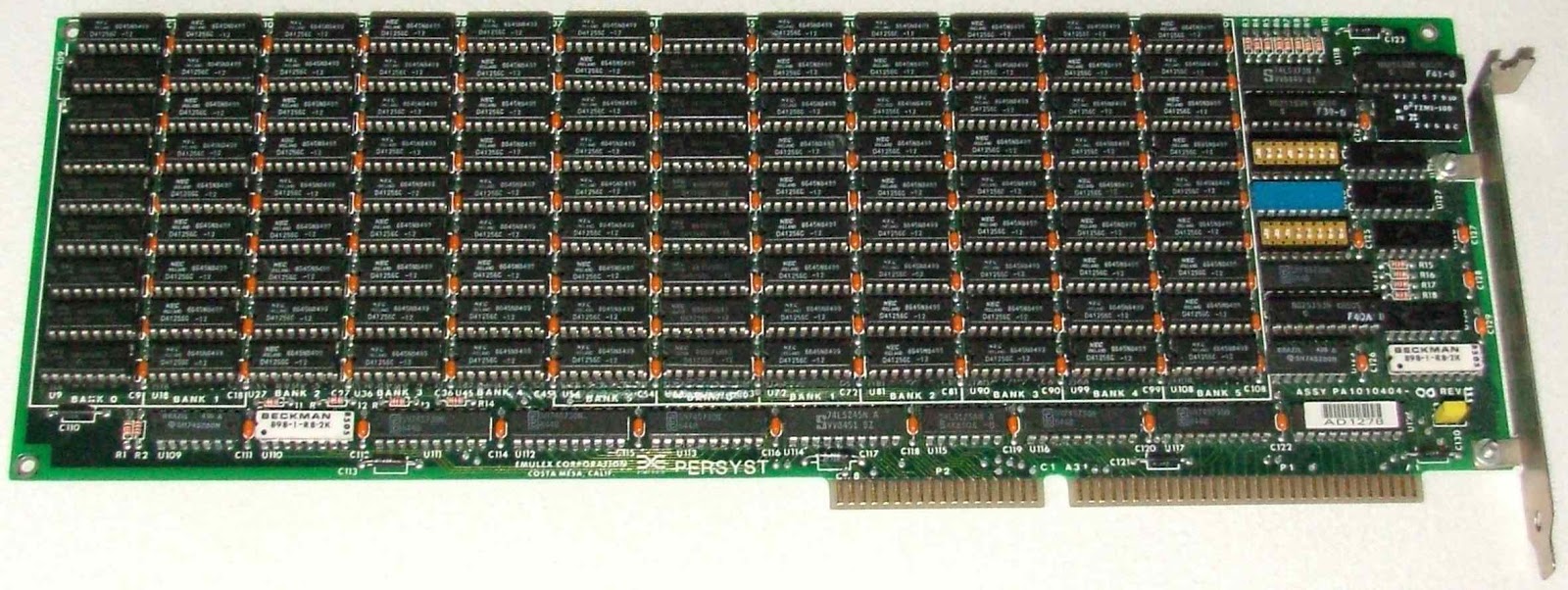
4MB RAM card
By default, in Ubuntu, we usually create a swap partition.

Back in the day of 4MB RAM cards this made total sense, as the ration of RAM to disk space, was still very low. Things have changed since. Server, desktop, embedded systems have migrated to newer generations of both RAM and persistent storage. On the high performance side of things we see machines with faster storage in the form of NVMe and SSD drives. Reserving space for swap on such storage, can be seen as expensive and wasteful. This is also true for recent enough laptops and desktops too. Mobile phones have substantial amounts of RAM these days, and at times, coupled with eMMC storage - it is flash storage of lower performance, which have limited number of write cycles, hence should not be overused for volatile swap data. And there are also unicorns in a form of high performance computing of high memory (shared memory) systems with little or no disk space.

Today, carving a partition and reserving twice the RAM size for swap makes little sense. For a common, general, machine most of the time this swap will not be used at all. Or if said swap space is in use but is of inappropriate size, changing it in-place in retrospect is painful.

Starting from 17.04 Zesty Zapus release, instead of creating swap partitions, swapfiles will be used by default for non-lvm based installations.

Secondly, the sizing of swapfiles is very different. It is no more than 5% of free disk space or 2GiB, whichever is lower.

For preseeding, there are two toggles that control this behavior:
  • d-i partman-swapfile/percentage string 5
  • d-i partman-swapfile/size string 2048
Setting either of those to zero, will result in system without any swap at all. And one can tweak relative integer percentage points and absolute limits in integer percentage points or MiB.

On LVM based installations, swap logical volumes are used, since unfortunately LVM snapshots do not exclude swapfile changes. However, I would like to move partman-auto to respect the above proposed 5%-or-2GB limits.

Ps. 4MB RAM card picture is by Bub's (Photo) [GFDL or CC-BY-SA-3.0], via Wikimedia Commons

Dirk Eddelbuettel: nanotime 0.0.1: New package for Nanosecond Resolution Time for R

R has excellent tools for dates and times. The Date and POSIXct classes (as well as the 'wide' representation in POSIXlt) are versatile, and a lot of useful tooling has been built around them. However, POSIXct is implemented as a double with fractional seconds since the epoch. Given the 53 bits accuracy, it leaves just a bit less than microsecond resolution. Which is good enough for most things. But more and more performance measurements, latency statistics, ... are now measured more finely, and we need nanosecond resolution. For which commonly an integer64 is used to represent nanoseconds since the epoch. And while R does not a native type for this, the bit64 package by Jens Oehlschl gel offers a performant one implemented as a lightweight S3 class. So this package uses this integer64 class, along with two helper functions for parsing and formatting, respectively, at nano-second resolution from the RcppCCTZ package which wraps the CCTZ library from Google. CCTZ is a modern C++11 library extending the (C++11-native) chrono type.

Examples

Simple Parsing and Arithmetic
R> x <- nanotime("1970-01-01T00:00:00.000000001+00:00")
R> print(x)
integer64
[1] 1
R> format(x)
[1] "1970-01-01T00:00:00.000000001+00:00"
R> cat("x+1 is: ")
x+1 is: R> x <- x + 1
R> print(x)
integer64
[1] 2
R> format(x)
[1] "1970-01-01T00:00:00.000000002+00:00"
R>

Vectorised
R> options("width"=60)
R> v <- nanotime(Sys.time()) + 1:5
R> v
integer64
[1] 1481505724483583001 1481505724483583002
[3] 1481505724483583003 1481505724483583004
[5] 1481505724483583005
R> format(v)
[1] "2016-12-12T01:22:04.483583001+00:00"
[2] "2016-12-12T01:22:04.483583002+00:00"
[3] "2016-12-12T01:22:04.483583003+00:00"
[4] "2016-12-12T01:22:04.483583004+00:00"
[5] "2016-12-12T01:22:04.483583005+00:00"
R> 

Use with zoo
R> z <- zoo(cbind(A=1:5, B=5:1), v)
R> options("nanotimeFormat"="%d %b %H:%M:%E*S")  ## override default
R> z
                          A B
12 Dec 01:47:55.812513001 1 5
12 Dec 01:47:55.812513002 2 4
12 Dec 01:47:55.812513003 3 3
12 Dec 01:47:55.812513004 4 2
12 Dec 01:47:55.812513005 5 1
R> 

Technical Details The bit64 package (by Jens Oehlschl gel) supplies the integer64 type used to store the nanosecond resolution time as (positive or negative) offsets to the epoch of January 1, 1970. The RcppCCTZ package supplies the formatting and parsing routines based on the (modern C++) library CCTZ from Google.

Status Version 0.0.1 has now been released. It works with some other packages, notably zoo and data.table. It (at least currently) requires RcppCCTZ to parse and format nanosecond resolution time objects from / to text --- and this package is on Linux and OS X only due to its use of system time zoneinfo. The requirement could be relaxed in the future by rewriting formating and parsing code. Contributions are welcome.

Installation The package is not yet on CRAN. Until it gets there, or to install the development versions, it can also be installed via a standard
install.packages("RcppCCTZ")   # need 0.1.0 or later
remotes::install_github("eddelbuettel/nanotime")  
If you prefer install.packages() (as I do), use the version from the ghrr drat:
install.packages("drat")       # easier repo access + creation
drat:::add("ghrr")             # make it known
install.packages("nanotime")   # install it
If and when it gets to CRAN you will be able to do
install.packages("nanotime")

Contact For questions or comments use the issue tracker off the GitHub repo.

This post by Dirk Eddelbuettel originated on his Thinking inside the box blog. Please report excessive re-aggregation in third-party for-profit settings.

15 December 2016

Steve Kemp: A simple Perl alternative to storing data in Redis

I continue to be a big user of Perl, and for many of my sites I avoid the use of MySQL which means that I largely store data in flat files, SQLite databases, or in memory via Redis. One of my servers was recently struggling with RAM, and the suprising cause was "too much data" in Redis. (Surprising because I'd not been paying attention and seen how popular it was, and also because ASCII text compresses pretty well). Read/Write speed isn't a real concern, so I figured I'd move the data into an SQLite database, but that would require rewriting the application. The client library for Perl is pretty awesome, and simple usage looks like this:
# Connect to localhost.
my $r = Redis->new()
# simple storage
$r->set( "key", "value" );
# Work with sets
$r->sadd( "fruits", "orange" );
$r->sadd( "fruits", "apple" );
$r->sadd( "fruits", "blueberry" );
$r->sadd( "fruits", "banannanananananarama" );
# Show the set-count
print "There are " . $r->scard( "fruits" ) . " known fruits";
# Pick a random one
print "Here is a random one " . $r->srandmember( "fruits" ) . "\n";
I figured, if I ignored the Lua support and the other more complex operations, creating a compatible API implementation wouldn't be too hard. So rather than porting my application to using SQLite directly I could juse use a different client-library. In short I change this:
use Redis;
my $r = Redis->new();
To this:
use Redis::SQLite;
my $r = Redis::SQLite->new();
And everything continues to work. I've implemented all the set-related functions except one, and a random smattering of the other simple operations. The appropriate test-cases in the Redis client library (i.e. removing all references to things I didn't implement) pass, and my own new tests also make me confident. It's obviously not a hard job, but it was a quick solution to a real problem and might be useful to others. My image hosting site, and my markdown sharing site now both use this wrapper and seem to be performing well - but with more free RAM. No doubt I'll add more of the simple primitives as time goes on, but so far I've done enough to be useful.

Jamie McClelland: Should we be pushing OpenPGP?

Bjarni R nar, the author of Mailpile released a blog about recent blogs disparaging OpenPGP. It's a good read. There's one reason to support OpenPGP missing from the blog: OpenPGP protects you if your mail server is hacked. I'm sure that Debbie Wasserman Schultz wishes she had been using OpenPGP. Having said all of this... OpenPGP didn't make my recent list of security tips. That ommission is for two reasons:

Michal &#268;iha&#345;: Weblate 2.10

Quite on the schedule, Weblate 2.10 is out today. This release brings Git exporter module, improves support for machine translation services and adds various CSV exports and API interfaces. Full list of changes: If you are upgrading from older version, please follow our upgrading instructions. You can find more information about Weblate on https://weblate.org, the code is hosted on Github. If you are curious how it looks, you can try it out on demo server. You can login there with demo account using demo password or register your own user. Weblate is also being used on https://hosted.weblate.org/ as official translating service for phpMyAdmin, OsmAnd, Aptoide, FreedomBox, Weblate itself and many other projects. Should you be looking for hosting of translations for your project, I'm happy to host them for you or help with setting it up on your infrastructure. Further development of Weblate would not be possible without people providing donations, thanks to everybody who have helped so far! The roadmap for next release is just being prepared, you can influence this by expressing support for individual issues either by comments or by providing bounty for them.

Filed under: Debian English phpMyAdmin SUSE Weblate 0 comments

14 December 2016

Carl Chenet: Feed2tweet 0.8, tool to post RSS feeds to Twitter, released

Feed2tweet 0.8, a self-hosted Python app to automatically post RSS feeds to the Twitter social network, was released this December, 14th. With this release Feed2tweet now smartly manages the hashtags, adding as much as possible given the size of the tweet. Also 2 new options are available : Feed2tweet 0.8 is already in production for Le Journal du hacker, a French-speaking Hacker News-like website, LinuxJobs.fr, a French-speaking job board and this very blog. fiesta What s the purpose of Feed2tweet? Some online services offer to convert your RSS entries into Twitter posts. Theses services are usually not reliable, slow and don t respect your privacy. Feed2tweet is Python self-hosted app, the source code is easy to read and you can enjoy the official documentation online with lots of examples. Twitter Out Of The Browser Have a look at my Github account for my other Twitter automation tools: What about you? Do you use tools to automate the management of your Twitter account? Feel free to give me feedback in the comments below.

Next.

Previous.