Daniel Silverstone: Broccoli Sync Conversation

DEFLATE'd zip files. Basically if the data is already compressed then there's little hope Brotli will gain much.
I raised that it was interesting that they chose Brotli, in part, due to the availability of a pure Rust implementation of Brotli. Lars mentioned that Microsoft and others talk about how huge quantities of C code has unexpected memory safety issues and so perhaps that is related. Daniel mentioned that the document talked about Dropbox having a policy of not running unconstrained C code which was interesting.
Vince noted that in their deployment challenges it seemed like a very poor general strategy to cope with crasher errors; but Daniel pointed out that it might be an over-simplified description, and Mark suggested that it might be sufficient until a fix can be pushed out. Vince agreed that it's plausible this is a tiered/sharded deployment process and thus a good way to smoke out problems.
Daniel found it interesting that their block storage sounds remarkably like every other content-addressible storage and that while they make it clear in the article that encryption, client identification etc are elided, it looks like they might be able to deduplicate between theoretically hostile clients.
We think that the compressed-data plus type plus hash (which we assume also contains length) is an interesting and nice approach to durability and integrity validation in the protocol.
And the compressed blocks can then be passed to the storage backend quickly and effectively which is nice for latency.
Daniel raised that he thought it was fun that their rust-brotli library is still workable on Rust 1.12 which is really quite old.
We ended up on a number of tangential discussions, about Rust, about deployment strategies, and so on. While the article itself was a little thin, we certainly had a lot of good chatting around topics it raised.
We'll meet again in a month (on the 28th Sept) so perhaps we'll have a chunkier article next time. (Possibly this and/or related articles)
 In our monthly reports, we summarise the things that we have been up to over the past month. The motivation behind the Reproducible Builds effort is to ensure no flaws have been introduced from the original free software source code to the pre-compiled binaries we install on our systems. If you re interested in contributing to the project, please visit our main website.
One hiccup we ve encountered in SecureDrop development is that not all Python wheels can be built reproducibly. We ship multiple (Python) projects in Debian packages, with Python dependencies included in those packages as wheels. In order for our Debian packages to be reproducible, we need that wheel build process to also be reproducibleParallel to this, transparencylog.com was also launched, a service that verifies the contents of URLs against a publicly recorded cryptographic log. It keeps an append-only log of the cryptographic digests of all URLs it has seen. (GitHub repo)
 On 18th September, Bernhard M. Wiedemann will give a presentation in German, titled Wie reproducible builds Software sicherer machen ( How reproducible builds make software more secure ) at the Internet Security Digital Days 2020 conference.
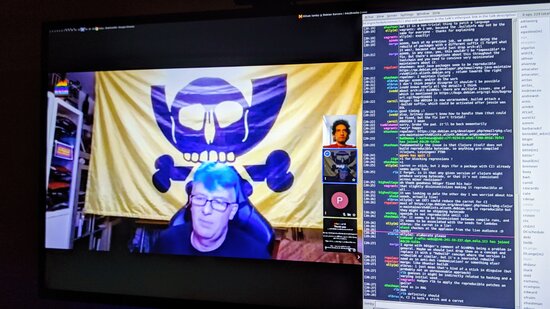 Holger gave a talk titled Reproducing Bullseye in practice , focusing on independently verifying that the binaries distributed from
ftp.debian.org are made from their claimed sources. It also served as a general update on the status of reproducible builds within Debian. The video (145 MB) and slides are available.
 There were also a number of other talks that involved Reproducible Builds too. For example, the Malayalam language mini-conference had a talk titled , ? ( I want to join Debian, what should I do? ) presented by Praveen Arimbrathodiyil, the Clojure Packaging Team BoF session led by Elana Hashman, as well as Where is Salsa CI right now? that was on the topic of Salsa, the collaborative development server that Debian uses to provide the necessary tools for package maintainers, packaging teams and so on.
Jonathan Bustillos (Jathan) also gave a talk in Spanish titled Un camino verificable desde el origen hasta el binario ( A verifiable path from source to binary ). (Video, 88MB)
 After many years of development work, the compiler for the Rust programming language now generates reproducible binary code. This generated some general discussion on Reddit on the topic of reproducibility in general.
Paul Spooren posted a request for comments to OpenWrt s
openwrt-devel mailing list asking for clarification on when to raise the PKG_RELEASE identifier of a package. This is needed in order to successfully perform rebuilds in a reproducible builds context.
 In openSUSE, Bernhard M. Wiedemann published his monthly Reproducible Builds status update.
Chris Lamb provided some comments and pointers on an upstream issue regarding the reproducibility of a Snap / SquashFS archive file. [ ]
.buildinfo build certificates have been tainted on the official Debian build servers, as these environments have files underneath the /usr/local/sbin directory [ ]. He also filed against bug for debrebuild after spotting that it can fail to download packages from snapshot.debian.org [ ].
 This month, several issues were uncovered (or assisted) due to the efforts of reproducible builds.
For instance, Debian bug #968710 was filed by Simon McVittie, which describes a problem with detached debug symbol files (required to generate a traceback) that is unlikely to have been discovered without reproducible builds. In addition, Jelmer Vernooij called attention that the new Debian Janitor tool is using the property of reproducibility (as well as diffoscope when applying archive-wide changes to Debian:
New merge proposals also include a link to the diffoscope diff between a vanilla build and the build with changes. Unfortunately these can be a bit noisy for packages that are not reproducible yet, due to the difference in build environment between the two builds. [ ]56 reviews of Debian packages were added, 38 were updated and 24 were removed this month adding to our knowledge about identified issues. Specifically, Chris Lamb added and categorised the
nondeterministic_version_generated_by_python_param and the lessc_nondeterministic_keys toolchain issues. [ ][ ]
 Holger Levsen sponsored Lukas Puehringer s upload of the python-securesystemslib pacage, which is a dependency of in-toto, a framework to secure the integrity of software supply chains. [ ]
Lastly, Chris Lamb further refined his merge request against the
debian-installer component to allow all arguments from sources.list files (such as [check-valid-until=no]) in order that we can test the reproducibility of the installer images on the Reproducible Builds own testing infrastructure and sent a ping to the team that maintains that code.
asymptote (shell/Perl date)getfem (embeds datetime and user, submitted via email)getdp (hostname and user)getdp (user)guix (disable parallelism)httpcomponents-client (Java documentation generator readdir order)kuberlr (date)lal (date and time issue, submitted via email)libmesh (host)OBS (discuss how to track old build prjconf metadata in buildinfo)openblas (disable CPU detection)openfoam-selector (date)perl (toolchain, date)python-blosc (CPU detection)python-eventlet (fails to build far in the future)rna-star (date and hostname)trilinos (date)xz/b4 (workaround CPU count influencing output, reported upstream)json-c (forwarded upstream).nmh.golang-gonum-v1-plot.chirp.pixelmed-codec.debhelper.muroar.serd.pencil2d.tpot.evolution.aflplusplus.plexus-archiver (timezone/DST issue)libjpeg-turbo.jack-audio-connection-kit.glusterfs. diffoscope is our in-depth and content-aware diff utility that can not only locate and diagnose reproducibility issues, it provides human-readable diffs of all kinds. In August, Chris Lamb made the following changes to diffoscope, including preparing and uploading versions
155, 156, 157 and 158 to Debian:
<!ENTITY> declarations inside the Document Type Definition (DTD), or when a DTD or entity references an external resource. (#212)pgpdump(1) can successfully parse some binary files, so check that the parsed output contains something sensible before accepting it. [ ]gnumeric from the Debian build-dependencies as it has been removed from the testing distribution. (#968742)fallback_recognises to prevent matching .xsb binary XML files.file(1) returns data . (#211)ppudump version does not match our file header. [ ]repr(object) output in Calling external command messages. [ ].ppu files requires ppudump version 3.2.0 or higher. [ ]setup.py that diffoscope works with Python version 3.8 [ ] and Frazer Clews applied some Pylint suggestions [ ] and removed some deprecated methods [ ].
 This month, Chris Lamb updated the main Reproducible Builds website and documentation to:
SOURCE_DATE_EPOCH age. [ ] The Reproducible Builds project operate a Jenkins-based testing framework to power
tests.reproducible-builds.org. This month, Holger Levsen made the following changes:
arm64 architecture. [ ]armhf. [ ][ ][ ]ruby-jekyll-polyglot package to needed for the recently-added internationalisation and translation support on the Reproducible Builds website. [ ]jenkins.debian.net, www.reproducible-builds.org, diffoscope.org, buildinfos.debian.net, etc.). [ ][ ][ ][ ][ ]arm64 architecture anymore. [ ]If you think you know how to spread the word about reproducibility in the context of Bitcoin wallets through WalletScrutiny, your contributions are highly welcome on this PR [ ]Julien Lepiller posted to the list linking to a blog post by Tavis Ormandy titled You don t need reproducible builds. Morten Linderud (foxboron) responded with a clear rebuttal that Tavis was only considering the narrow use-case of proprietary vendors and closed-source software. He additionally noted that the criticism that reproducible builds cannot prevent against backdoors being deliberately introduced into the upstream source ( bugdoors ) are decidedly (and deliberately) outside the scope of reproducible builds to begin with. Chris Lamb included the Reproducible Builds mailing list in a wider discussion regarding a tentative proposal to include
.buildinfo files in .deb packages, adding his remarks regarding requiring a custom tool in order to determine whether generated build artifacts are identical in a reproducible context. [ ]
Jonathan Bustillos (Jathan) posted a quick email to the list requesting whether there was a list of To do tasks in Reproducible Builds.
 Lastly, Chris Lamb responded at length to a query regarding the status of reproducible builds for Debian ISO or installation images. He noted that most of the technical work has been performed but there are at least four issues until they can be generally advertised as such . He pointed that the privacy-oriented Tails operation system, which is based directly on Debian, has had reproducible builds for a number of years now. [ ]
#reproducible-builds on irc.oftc.net.
rb-general@lists.reproducible-builds.org
 So Finally, kernel 5.8 entered the Debian
Unstable
repositories. This means that I got my Raspberry image from their
usual location and was able to type the
following, using only my old trusty USB keyboard:
 So finally, the greatest and meanest Raspberry is fully supported with
a pure Debian image! (only tarnished by the nonfree
raspi-firmware
package.
Oh, in case someone was still wondering The images generated follow
the stable release. Only the kernel and firmware are installed from
unstable. If / when kernel 5.8 enters
Backports, I will reduce the noise of
adding a different suit to the
sources.list.
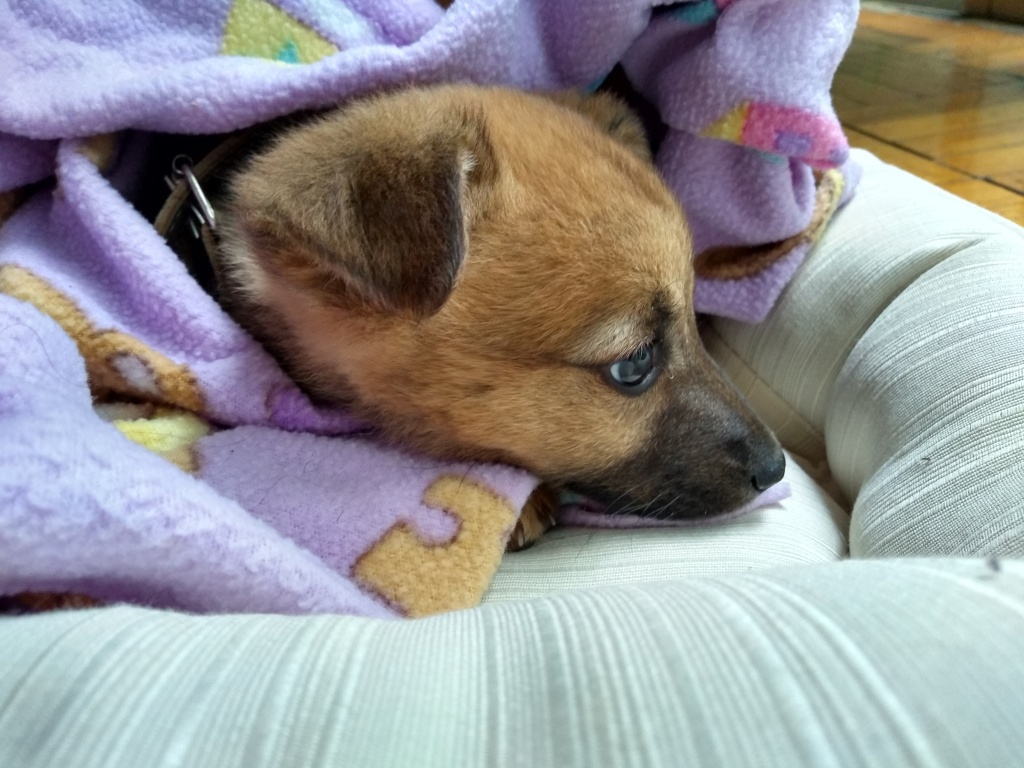 Need I say more? OK, I will
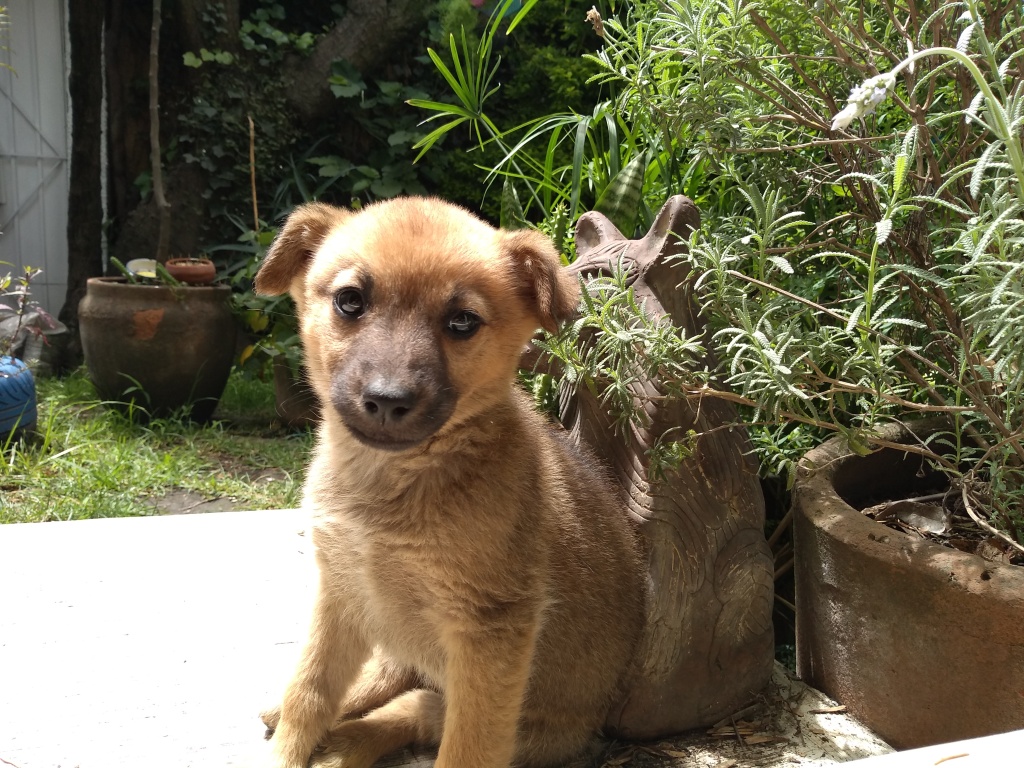 Still wanting some more details? Well
I have had many cats through my life. When I was about eight years
old, my parents tried to have a dog but the experiment didn t work,
and besides those few months, I never had one.
But as my aging cats spent the final months of their last very long
lifes, it was clear to us that, after them, we would be adopting a
dog.
Last Saturday was the big day. We had seen some photos of the mother
and the nine (!) pups. My children decided almost right away her
name; they were all brownish, so the name would be corteza (tree
bark. They didn t know, of course, that dogs also have a bark! )
Anyway, welcome little one!

 A new minor release of the inline package just arrived on CRAN. inline facilitates writing code in-line in simple string expressions or short files. The package is mature and stable, and can be considered to be in maintenance mode: Rcpp used it extensively in the vrey early days before Rcpp Attributes provided an even better alternative. Seveal other package still rely on inline.
One of these package is rstan, and Ben Goodrich updated our use of
system() to system2() allowing for better error diagnostics. We also did a bit of standard maintenance to Travis CI and the README.md file.
See below for a detailed list of changes extracted from the NEWS file.
Courtesy of CRANberries, there is a comparison to the previous release. If you like this or other open-source work I do, you can now sponsor me at GitHub. For the first year, GitHub will match your contributions.Changes in inline version 0.3.16 (2020-09-06)
- Maintenance updates to README.md standardizing badges (Dirk).
- Maintenance update to Travis CI setup (Dirk).
- Switch to using
system2()for better error diagnostics (Ben Goodrich in #12).
This post by Dirk Eddelbuettel originated on his Thinking inside the box blog. Please report excessive re-aggregation in third-party for-profit settings.
 To ensure Dronefly always remains free, the Dronefly project has been relicensed under two copyleft licenses. Read the license change and learn more about copyleft at these links.
I was prompted to make this change after a recent incident in the Red DiscordBot development community that made me reconsider my prior position that the liberal MIT license was best for our project. While on the face of it, making your license as liberal as possible might seem like the most generous and hassle-free way to license any project, I was shocked into the realization that its liberality was also its fatal flaw: all is well and good so long as everyone is being cooperative, but it does not afford any protection to developers or users should things suddenly go sideways in how a project is run. A copyleft license is the best way to avoid such issues.
In this incident a sad story of conflict between developers I respect on both sides of the rift, and owe a debt to for what they ve taught me three cogs we had come to depend on suddenly stopped being viable for us to use due to changes to the license & the code. Effectively, those cogs became unsupported and unsupportable. To avoid any such future disaster with the Dronefly project, I started shopping for a new license that would protect developers and users alike from similarly losing support, or losing control of their contributions. I owe thanks to Dale Floer, a team member who early on advised me the AGPL might be a better fit, and later was helpful in selecting the doc license and encouraging me to follow through. We ran the new licenses by each contributor and arrived at this consensus: the AGPL is best suited for our server-based code, and CC-BY-SA is best suited for our documentation. The relicensing was made official this morning.
On Discord platform alternatives
You might well question what I, a Debian developer steeped in free software culture and otherwise in agreement with its principles, am doing encouraging a community to grow on the proprietary Discord platform! I have no satisfying answer to that. I explained when I introduced my project here some of the backstory, but that s more of an account of its beginnings than justification for it to continue on this platform. Honestly, all I can offer is a rather dissatisfying it seemed like the right thing to do at the time.
Time will tell whether we could successfully move off of it to a freedom-respecting and privacy-respecting alternative chat platform that is both socially and technically viable to migrate to. That platform would ideally:
 Trying to boot Debian on Chromebook Kevin.
But I haven't yet found how to get the USB serial console device to work, and display is black. So I can't see anything.
 In August 2020, I have worked on the Debian LTS project for 16 hours (of 8 hours planned, plus another 8 hours that I carried over from July).
For ELTS, I have worked for another 8 hours (of 8 hours planned).
LTS Work
Another (minor) nanotime release, now at version 0.3.2. This release brings an endianness correction which was kindly contributed in a PR, switches to using the API header exported by RcppCCTZ, and tweaks test coverage a little with respect to r-devel.
nanotime relies on the RcppCCTZ package for (efficient) high(er) resolution time parsing and formatting up to nanosecond resolution, and the bit64 package for the actual
integer64 arithmetic. Initially implemented using the S3 system, it has benefitted greatly from work by co-author Leonardo who not only rejigged nanotime internals in S4 but also added new S4 types for periods, intervals and durations.
The NEWS snippet adds full details.
Thanks to CRANberries there is also a diff to the previous version. More details and examples are at the nanotime page; code, issue tickets etc at the GitHub repository. If you like this or other open-source work I do, you can now sponsor me at GitHub. For the first year, GitHub will match your contributions.Changes in version 0.3.2 (2020-09-03)
This post by Dirk Eddelbuettel originated on his Thinking inside the box blog. Please report excessive re-aggregation in third-party for-profit settings.
 Armadillo is a powerful and expressive C++ template library for linear algebra aiming towards a good balance between speed and ease of use with a syntax deliberately close to a Matlab. RcppArmadillo integrates this library with the R environment and language and is widely used by (currently) 769 other packages on CRAN.
A few days ago, Conrad released a new minor version 9.900.3 of Armadillo which we packaged and tested as usual. Given the incremental release character, we only tested the release and not candidate release. No regressions were found, and, as usual, logs from reverse-depends runs are in the rcpp-logs repo.
All changes in the new release are noted below.
Courtesy of CRANberries, there is a diffstat report relative to previous release. More detailed information is on the RcppArmadillo page. Questions, comments etc should go to the rcpp-devel mailing list off the R-Forge page. If you like this or other open-source work I do, you can now sponsor me at GitHub. For the first year, GitHub will match your contributions.Changes in RcppArmadillo version 0.9.900.3.0 (2020-09-02)
- Upgraded to Armadillo release 9.900.3 (Nocturnal Misbehaviour)
- More efficient code for initialising matrices with
fill::zeros- Fixes for various error messages
This post by Dirk Eddelbuettel originated on his Thinking inside the box blog. Please report excessive re-aggregation in third-party for-profit settings.
 I was assigned 16 hours of work by Freexian's Debian LTS initiative,
but only worked 6.25 hours this month and have carried over the rest
to September.
I finished my work to add Linux 4.19 to the stretch-security suite,
providing an upgrade path for those previously installing it from
stretch-backports
(DLA-2323-1,
DLA-2324-1).
I also updated the firmware-nonfree package
(DLA-2321-1)
so that firmware needed by drivers in Linux 4.19 is also be
available in the non-free section of the stretch-security suite.
I also reviewed the report of the Debian LTS survey and commented on
the presentation of results. This report was presented in the
Debian
LTS BoF at DebConf.
 Yesterday I have updated my builds of Plasma for Debian to Plasma 5.19.5, which are now available from the usual sources, nothing has changed.
[Update 2020-09-03: KDE Apps 20.08.1 are also now available]
On a different front, there are good news concerning updates in Debian proper: Together with Scarlett Moore and Patrick Franz we are in the process of updating the official Debian packages. The first bunch of packages has been uploaded to experimental, and after NEW processing the next group will go there, too. This is still 5.19.4, but a great step forward. I expect that all of Plasma 5.19.4 will be available in experimental in the next weeks, and soon after also in Debian/unstable.
Again, thanks to Scarlett and Patrick for the good collaboration, this is very much appreciated!
 Previously: v5.5.
Linux v5.6 was released back in March. Here s my quick summary of various features that caught my attention:
WireGuard
openat2() syscall and RESOLVE_* flagsopen() handling, covering things like not walking above a specific point in a path hierarchy (RESOLVE_BENEATH), disabling the resolution of various magic links (RESOLVE_NO_MAGICLINKS) in procfs (e.g. /proc/$pid/exe) and other pseudo-filesystems, and treating a given lookup as happening relative to a different root directory (as if it were in a chroot, RESOLVE_IN_ROOT). As part of this, it became clear that there wasn t a way to correctly extend the existing openat() syscall, so he added openat2() (which is a good example of the efforts being made to codify Extensible Syscall arguments). The RESOLVE_* set of flags also cover prior behaviors like RESOLVE_NO_XDEV and RESOLVE_NO_SYMLINKS.
pidfd_getfd() syscallpidfd_getfd() syscall which is a way to gain access to file descriptors of a process in a race-less way (or when /proc is not mounted). Before, it wasn t always possible make sure that opening file descriptors via /proc/$pid/fd/$N was actually going to be associated with the correct PID. Much more detail about this has been written up at LWN.
openat() via io_uringio_uring() family of APIs, but I can t deny their utility for certain kinds of workloads. Being able to pipeline reads and writes without the overhead of actually making syscalls is pretty great for performance. Jens Axboe has added the IORING_OP_OPENAT command so that existing io_urings can open files to be added on the fly to the mapping of available read/write targets of a given io_uring. While LSMs are still happily able to intercept these actions, I remain wary of the growing syscall multiplexer that io_uring is becoming. I am, of course, glad to see that it has a comprehensive (if out of tree ) test suite as part of liburing.
removal of blocking random pool/dev/urandom is unchanged. /dev/random will still block just after booting, but it will block less than it used to. See LWN for more details on the history and discussion of the series.
arm64 support for on-chip RNGSYS_RNDR_EL0), which is, from the kernel s perspective, similar to x86 s RDRAND instruction. This will provide a bootloader-independent way to add entropy to the kernel s pRNG for early boot randomness (e.g. stack canary values, memory ASLR offsets, etc). Until folks are running on ARMv8.5 systems, they can continue to depend on the bootloader for randomness (via the UEFI RNG interface) on arm64.
arm64 E0PDTCR_E0PD1), which causes all memory accesses from userspace into kernel space to fault in constant time. This is an attempt to remove any possible timing side-channel signals when probing kernel memory layout from userspace, as an alternative way to protect against Meltdown-style attacks. The expectation is that E0PD would be used instead of the more expensive Kernel Page Table Isolation (KPTI) features on arm64.
powerpc32 VMAP_STACKthread_info, had already been moved away from the bottom of the stack by Christophe Leroy in Linux v5.1.)
generic Page Table dumping/sys/fs/debug/kernel_page_tables), Steven Price extracted the existing implementations from multiple architectures and created a common page table dumping framework (and then refactored all the other architectures to use it). I m delighted to have this because I still remember when not having a working page table dumper for ARM delayed me for a while when trying to implement upstream kernel memory protections there. Anything that makes it easier for architectures to get their kernel memory protection working correctly makes me happy.
That s in for now; let me know if there s anything you think I missed. Next up: Linux v5.7.
2020, Kees Cook. This work is licensed under a Creative Commons Attribution-ShareAlike 4.0 License.
Updated page to record how-to video.
I don't need big camera image, I just need a tiny image with probably my face on it.
As a start, I tried extracting a rectangle.
For long time I have been using a good old nvidia GeForce GTX 1050 for my display and deep learning needs. I reported a few times how to get Tensorflow running on Debian/Sid, see here and here. Later on I switched to AMD GPU in the hope that an open source approach to both GPU driver as well as deep learning (ROCm) would improve the general experience. Unfortunately it turned out that AMD GPUs are generally not ready for deep learning usage.
 The problems with AMD and ROCm are far and wide. First of all, it seems that for anything more complicated then simple stuff, AMD s flagship RX 5700(XT) and all GFX10 (Navi) based cards are not(!!!) supported in ROCm. Yes, you read correct AMD does not support 5700(XT) cards in the ROCm stack. Some simple stuff works, but nothing for real computations.
Then, even IF they would support, ROCm as distributed is currently a huge pain in the butt. The source code is a huge mess, and building usable packages from it is probably possible, but quite painful (I am member of the ROCm packaging team in Debian, and have tried many hours). And the packages provided by AMD are not installable on Debian/sid due to library incompatibilities.
So that left me with a bit a problem: for work I need to train quite some neural networks, do model selection, etc. Doing this on a CPU is a bit a burden. So at the end I decided to put the nVidia card back into the computer (well, after moving it to a bigger case but that is a different story to tell). Here are the steps I did to get both cards working for their respective target: AMD GPU for driving the console and X (and games!), and the nVidia card doing the deep learning stuff (tensorflow using the GPU).
Starting point
Starting point was a working AMD GPU installation. The AMD GPU is also the first GPU card (top slot) and thus the one that is used by the BIOS and the Linux console. If you want the video output on the second card you need to trick, and probably don t have console output, etc etc. So not a solution for me.
Installing libcuda1 and the nvidia kernel drivers
Next step was installing the
libcuda1 package:
apt install libcuda1
update-glx tool and package.
The kernel module should be built and installed automatically for your kernel.
Installing CUDA
Follow more or less the instructions here and do
wget -O- https://developer.download.nvidia.com/compute/cuda/repos/ubuntu1804/x86_64/7fa2af80.pub   sudo tee /etc/apt/trusted.gpg.d/nvidia-cuda.asc
echo "deb http://developer.download.nvidia.com/compute/cuda/repos/ubuntu1804/x86_64/ /"   sudo tee /etc/apt/sources.list.d/nvidia-cuda.list
sudo apt-get update
sudo apt-get install cuda-libraries-10-1
/usr/local/cuda-10.1 and add the respective directory to the ld.so path by creating a file /etc/ld.so.conf.d/cuda-10-1.conf.
Install CUDA CuDNN
One difficult to satisfy dependency are the CuDNN libraries. In our case we need the version 7 library for CUDA 10.1. To download these files one needs to have a NVIDIA developer account, which is quick and painless. After that go to the CuDNN page where one needs to select Archived releases and then Download cuDNN v7.N.N (xxxx NN, YYYY), for CUDA 10.1 and then cuDNN Runtime Library for Ubuntu18.04 (Deb).
At the moment (as of today) this will download a file libcudnn7_7.6.5.32-1+cuda10.1_amd64.deb which needs to be installed with dpkg -i libcudnn7_7.6.5.32-1+cuda10.1_amd64.deb.
Updating the GLX setting
Here now comes the very interesting part one needs to set up the GLX libraries. Reading the output of update-glx --help and then the output of update-glx --list glx:
$ update-glx --help
update-glx is a wrapper around update-alternatives supporting only configuration
of the 'glx' and 'nvidia' alternatives. After updating the alternatives, it
takes care to trigger any follow-up actions that may be required to complete
the switch.

It can be used to switch between the main NVIDIA driver version and the legacy
drivers (eg: the 304 series, the 340 series, etc).

For users with Optimus-type laptops it can be used to enable running the discrete
GPU via bumblebee.

Usage: update-glx <command>

Commands:
  --auto <name>            switch the master link <name> to automatic mode.
  --display <name>         display information about the <name> group.
  --query <name>           machine parseable version of --display <name>.
  --list <name>            display all targets of the <name> group.
  --config <name>          show alternatives for the <name> group and ask the
                           user to select which one to use.
  --set <name> <path>      set <path> as alternative for <name>.

<name> is the master name for this link group.
  Only 'nvidia' and 'glx' are supported.
<path> is the location of one of the alternative target files.
  (e.g. /usr/lib/nvidia)

$ update-glx --list glx
/usr/lib/mesa-diverted
/usr/lib/nvidiaupdate-glx --config glx /usr/lib/mesa-diverted
libnvidia-cfg1 wasn t found (not sure it was needed at all ), and with that also no way to run tensorflow on GPU.
So what I did I tried
update-glx --auto glx
update-glx --config glx /usr/lib/nvidia), and rebooted, and decided to check afterwards what is broken.
To my big surprise, the AMD GPU still worked out of the box, including direct rendering, and the games I tried (Overload, Supraland via Wine) all worked without a hinch.
Not that I really understand why the GLX libraries that are seemingly now in use are from nvidia but work the same (if anyone has an explanation, that would be great!), but since I haven t had any problems till now, I am content.
Checking GPU usage in tensorflow
Make sure that you remove tensorflow-rocm and reinstall tensorflow with GPU support:
pip3 uninstall tensorflow-rocm
pip3 install --upgrade tensorflow-gpu
$ python3 -c "import tensorflow as tf;print(tf.reduce_sum(tf.random.normal([1000, 1000])))"
....(lots of output)
2020-09-02 11:57:04.673096: I tensorflow/core/common_runtime/gpu/gpu_device.cc:1402] Created TensorFlow device (/job:localhost/replica:0/task:0/device:GPU:0 with 3581 MB memory) -> physical GPU (device: 0, name: GeForce GTX 1050 Ti, pci bus id: 0000:05:00.0, compute capability: 6.1)
tf.Tensor(1093.4915, shape=(), dtype=float32)
$

RuboCop::Packaging.RuboCop's latest version.lib/ and gemspec file.Puppet6.php-dasprid-enum and php-bacon-baconqrcode for William and ruby-unparser, ruby-morpher, and ruby-path-exapander for Cocoa. In May, I got selected as a Google Summer of Code student for Debian again! \o/
docs/ directory, which is hosted at https://docs.rubocop.org/rubocop-packaging.gem install rubocop-packaging, but also via apt install ruby-rubocop-packaging.

Packaging extension reports as offensive .git ls-files in gemspec.RuboCop and RuboCop::Packaging.RuboCop to v0.89..rubocop.yml and add RuboCop::Packaging as a development dependency.RuboCop and RuboCop::RSpec version to the latest.git ls-files in gemspec.
:wq for today.
September.
Recently I've been writing and reading more golang code and I feel more comfortable with it. However every day I feel frustrated by the lack of features.
Next.