Hello
Creating a configuration model for
Config::Model can be a boring task: When a configuration system has a lot of parameters, a lot of details need to be specified to have a complete configuration validation tool. So, all tricks are permitted to make this task more bearable.
Let s see how this can be applied to
lcdproc. This project requires a configuration file that supports more than 40 drivers. Each driver has it own set of parameters for a total of about 250 parameters. That s a lot to specify..
Fortunately,
LCDd.conf template file is written in a way which makes it relatively easy to parse and get all required information to build a model.
All drivers are listed in this template file, most parameters have default values and legal values are written in comments in a uniform way. Hence this file (and comments) can be parsed to retrieve information required for the model.
This blog will describe how this task can be implemented in Perl using
Config::Model modules. The code will be slightly trimmed down to keep this blog (relatively) short. All initialisation code and error checks are removed. You can get the whole script on
sourceforge.
The main steps are:
- prepare a parser for LCDd.conf template
- parse LCDd.conf template
- prepare a LCDd model skeleton
- translate LCDd.conf template information in a format suitable to create a model.
- Write the resulting LCDd model
First, here s the necessary incantation to start properly a Perl program:
use strict;
use warnings;
Then load all required libraries. Their use will be described later:
use Config::Model;
use Config::Model::Itself 1.225;
use Config::Model::Backend::IniFile;
use 5.10.0;
use IO::File;
use IO::String;
Perform some initialisation to avoid upsetting the logging system:
use Log::Log4perl qw(:easy);
Log::Log4perl->easy_init($WARN);
Let s also initialize a model object that will be very useful later:
my $model = Config::Model->new();
Now we can really start the fun part.
Step 1: Create a parser for LCDd.conf (INI file)
Problem: LCDd.conf comments must also be analysed to get more semantic information. The comments must be retrieved and associated with the INI classes and parameters found in this file.
Fortunately,
Config::Model::Backend::IniFile is able to associate comments with the relevant parameters. But Config::Model::Backend::IniFile must store its values in a configuration tree. So let s create a model suitable for LCDd.conf template that accepts any INI class and any INI parameter
Dummy::Class is used to store any parameter found in an INI class. The
accept keyword with
.* regular expression means that any INI parameter will be accepted in each INI class.
$model->create_config_class(
  name   => 'Dummy::Class',
  accept => [
    '.*' =>
       type => 'leaf',
       value_type => 'uniline'
        ,
    ],
);
Now the
Dummy model must provide a configuration class to hold all INI classes:
$model->create_config_class(
    name   => 'Dummy',
    accept => [
       '.*' =>
           type => 'node',
           config_class_name => 'Dummy::Class'
        ,
    ],
);
Note that an
INI backend could be specified directly here. But, some useful parameters are commented out in LCD.conf. Some some processing is required to be able to create a model with these commented parameters. See below for this processing.
Step 2: Parse LCDd.conf
Now the dummy configuration class is created. Let s create a configuration tree from this dummy class to store the data from LCDd.conf
my $dummy = $model->instance(
    instance_name   => 'dummy',
    root_class_name => 'Dummy',
)-> config_root;
Now, read LCDd.conf:
my $lcd_file
  = IO::File->new('examples/lcdproc/LCDd.conf');
my @lines    = $lcd_file->getlines;
And perform the pre-processing on
LCDd.conf mentioned above. Just un-commenting commented parameters is required:
foreach (@lines) s/^#(\w+=)/$1/
Store the pre-processed LCDd.conf in a IO::Handle usable by INI backend
my $ioh = IO::String->new( join( '', @lines ) );
Create an INI backend to read the data from pre-processed LCDd.conf and store it in the configuration tree:
my $ini_backend = Config::Model::Backend::IniFile
  ->new( node => $dummy );
$ini_backend->read( io_handle => $ioh );
Step 3: Prepare LCDd configuration model
Your attention please. You may remember that we invoked
instance on object to create the dummy configuration tree to hold LCDd.conf data. The
instance method used the
Dummy configuration class.
Now, we must invoke
instance again on object. But this time,
instance will use
Config::Model::Itself. This model is Config::Model s way of eating its own dog food. The configuration tree created there will be able to hold LCDd model. Hence the root of this special configuration tree will be called meta_root to avoid confusion with the other configuration root defined above (for the Dummy model).
Still with me?
Good, let s create this meta tree that will contain LCDd model:
my $meta_root = $model->instance(
    root_class_name => 'Itself::Model',
    instance_name   => 'meta_model',
) -> config_root;
Create the main LCDd configuration class and store the first comment from LCDd.conf as class description:
my $first_comment = $dummy->annotation ;
$meta_root
  ->grab("class:LCDd class_description")
  ->store( $first_comment );
Append my own text in this description:
my $extra_description =
    "Model information extracted from template /etc/LCDd.conf"
  . "\n\n=head1 BUGS\n\nThis model does not support to load "
  . "several drivers. Loading several drivers is probably a "
  . "marginal case. Please complain to the author if this "
  . "assumption is false";
$meta_root->load(
     qq!class:LCDd
        class_description.="\n\n$extra_description"!
);
Add legal stuff in the model:
$meta_root->load( qq!
  class:LCDd
    copyright:0="2011, Dominique Dumont"
    copyright:1="1999-2011, William Ferrell and others"
    license="GPL-2"
!
);
Add INI backend so configuration object created from LCDd model will be able to read user s INI files:
$meta_root->load( qq!
  class:LCDd
    read_config:0
      backend=ini_file
      config_dir="/etc"
      file="LCDd.conf"
!
);
Note that all the load calls above could be done as one call. They were split for better clarity.
Step 4:Extracting LCDd.conf information
Now that all information from
LCDd.conf template file is stored in
$dummy configuration tree, it s time to use this information to enhance the skeleton of LCDd model created above.
Let s first find all the INI classes defined in
LCDd.conf:
my @ini_classes = $dummy->get_element_name;
Now before actually mining LCDd.conf information, we must prepare several subs to handle them. This is done using a
dispatch table:
my %dispatch;
First create the default entry which will be used for most parameters. This subs is passed: the INI class name, the INI parameter name, the comment attached to the parameter, the INI value, and an optional value type. It will return a string describing a model for simple elements. For instance:
class:"LCDd::MD8800" element:Device type=leaf value_type=uniline default="/dev/ttyS1" description="device to use [default: /dev/ttyS1]"
Here s the subroutine invoked by default. Let s create a an anonymous subroutine and store it in the dispatch table:
$dispatch _default_  = sub
    my ( $ini_class, $ini_param, $ini_note,
         $ini_v, $value_type ) = @_;
    $value_type  = 'uniline';
Now, prepare a string that will be used later to create the ini_class model. This string uses Config::Model s
serialisation format described in
Config::Model::Loader:
    my $load = qq!class:"$ini_class"
                  element:$ini_param type=leaf !;
Get semantic information from LCDd.conf template comments (written between square brackets):
    my $info = $ini_note =~ /\[(.*)\]/ ? $1 : '';
    $info =~ s/\s+//g;
Use this semantic information to better specify the parameter:
    $load .=
        $info =~ /legal:(\d+)-(\d+)/
           ? " value_type=integer min=$1 max=$2"
      : $info =~ /legal:([\w\,]+)/
           ? " value_type=enum choice=$1"
      :    " value_type=$value_type";
    if ( $info =~ /default:(\w+)/ )
        # specify upstream default value
        # if it was found in the comment
        $load .= qq! upstream_default="$1"!
           if length($1);

    else
        # or use the value found in INI
        # file as default
        $ini_v =~ s/^"//g;
        $ini_v =~ s/"$//g;
        $load .= qq! default="$ini_v"!
           if length($ini_v);
The model (in serialised format) is ready, let s return it and exit the subroutine:
    return $load;
 ;
Now let s take care of the special cases. This one deals with Driver parameter found in INI [server] class. This sub will create a string for an enum element. The possible values of the enum are extracted from the comment found in the
LCDd.conf file:
$dispatch "LCDd::server" Driver  = sub
    my ( $class, $elt, $info, $ini_v ) = @_;
    my $load = qq!class:"$class"
                    element:$elt
                      type=leaf
                      value_type=enum
    !;
    my @drivers = split /\W+/, $info;
    while ( @drivers
            and ( shift @drivers ) !~ /supported/ )
      # nothing, the work is done by shift operator
      # in loop test to skip all words in $info until
      # 'The following drivers are supported:'.
      # ok, that's a hack

    $load .= 'choice='
          . join( ',', @drivers ) . ' ';
    return $load;
 ;
This sub invokes the default sub and add a small feature to the model to ensure that DriverPath ends with / . This is ensured by the
match="/$" snippet:
$dispatch "LCDd::server" DriverPath  = sub
    my ( $class, $elt, $info, $ini_v ) = @_;
    return   $dispatch _default_ ->(@_)
           . q! match="/$" !;
 ;
Likewise, this sub invokes the default sub with the optional 4th parameter that forces the value_type of the element. In this case, we enforce an integer element:
 $dispatch "LCDd::server" WaitTime
 = $dispatch "LCDd::server" ReportLevel
 = $dispatch "LCDd::server" Port
 = sub
    my ( $class, $elt, $info, $ini_v ) = @_;
    return $dispatch _default_ ->( @_, 'integer' );
   ;
This sub returns a string for a list element with default values:
  $dispatch "LCDd::server" GoodBye
= $dispatch "LCDd::server" Hello
= sub
    my ( $class, $elt, $info, $ini_v ) = @_;
    my $ret = qq( class:"$class"
                    element:$elt
                      type=list
                ) ;
    $ret .= 'cargo type=leaf
             value_type=uniline - ' ;
    $ret .= 'default_with_init:0="\" '.$elt.'\"" ' ;
    $ret .= 'default_with_init:1="\" LCDproc!\""';
    return $ret ;
 ;
Now that the dispatch table is ready, let s really mine LCDd.conf information.
First handle all INI classes in the
foreach loop:
foreach my $ini_class (@ini_classes)
Let s retrieve parameters for this INI class from the LCDd.conf template:
my $ini_obj = $dummy->grab($ini_class);
This will be the name of the lcdproc driver configuration class (e.g.
LCDd::imonlcd):
my $config_class = "LCDd::$ini_class";
The configuration class will also be created in a serialised format. Let s create config class in case there s no parameter in INI file:
$meta_root->load(qq!class:"LCDd::$ini_class"!);
Now, loop over all INI parameters and create
LCDd::$ini_class elements:
  my @all_ini_params = $ini_obj->get_element_name ;
  foreach my $ini_param ( @all_ini_params )
Retrieve the value provided in template LCDd.conf:
my $ini_v = $ini_obj->grab_value($ini_param);
Retrieve the comment attached to the value provided in template LCDd.conf:
    my $ini_comment
      = $ini_obj->grab($ini_param)->annotation;
    # escape embedded quotes
    $ini_comment =~ s/"/\\"/g;
Retrieve the correct sub from dispatch table:
    my $sub = $dispatch $config_class $ini_param
              $dispatch _default_ ;
Run the sub to get the model string:
    my $model_spec
      = $sub->( $config_class, $ini_param,
                   $ini_comment, $ini_v );
Attach the comment from LCDd.conf as class description:
    $model_spec .= qq! description="$ini_comment"!
      if length($ini_comment);
Then, last but not least, load class specification in the model, and end the loop aroung INI parameters:
$meta_root->load($model_spec);
Now create a an $ini_class element in LCDd class (to link LCDd class and LCDd::$ini_class):
  my $driver_class_spec = qq!
    class:LCDd
      element:$ini_class
  ! ;
Since
server and
menu are not drivers, they have a special treatment:
  if (   $ini_class eq 'server'
      or $ini_class eq 'menu' )
    $driver_class_spec .= qq!
      type=node
      config_class_name="LCDd::$ini_class"
    ! ;
Here s the treatment for LCDd drivers. Setup the model with a
warped node so that a driver configuration class is shown only if the driver was selected in the
[server] class:
  else
    $driver_class_spec .= qq!
      type=warped_node
      config_class_name="LCDd::$ini_class"
      level=hidden
      follow:selected="- server Driver"
      rules:"\$selected eq '$ini_class'"
        level=normal
    !;
Now we can load the LCDd driver model in meta root:
$meta_root->load($driver_class_spec);
Step 5: save LCDd model
Still with me ?
Good. Here s the last part, now that the model was created in memory, let s save it in files.
Config::Model::Itself constructor returns an object to read or write the data:
my $rw_obj = Config::Model::Itself
     ->new( model_object => $meta_root );
say "Writing all models in file (please wait)";
$rw_obj->write_all(
    model_dir => 'lib/Config/Model/models/'
);
That s it. Once this script is run, the directory
lib/Config/Model/models/ contains a bunch of files:
You can see the resulting editor in my
first blog on lcdproc.
Conclusion and future steps (with you?)
As mentioned at the end of this blog, the result of this model generation process is far from perfect, because the information retrieved from LCDd.conf template are not complete for this task (which is normal since these comments were targeted for users).
Now, I d really like to discuss with project developers to improve configuration template to generate better models.
For project owner, such an improvement would give them:
- command lines to validate configuration
- graphical configuration editor with integrated help
- Configuration doc generated from the information stored in the template file
Please leave a comment on this blog (or send a message to config-model-users at lists.sourceforge.net) if you are interested in configuration tool generation for a project you contribute to.
All the best



 Two promising new developments need to be mentioned. First, we were approached
by companies that develop hardware for brain-imaging and psychophysics
research. They were curious to learn about Debian as an integrated platform
that offers free software solutions that an increasing amount of their
customers demands (e.g. PsychoPy). Apparently, the movement towards open
research software has finally made it into the business plans of companies, as
they seem to start perceiving compatibility with free software systems as a
competitive advantage. We explained how software gets into Debian, and how its
release cycle is managed. To foster their motivation we also pointed them to
the existing open-source software that is already available or even present in
Debian. Let s see whether we see more Debian-certified research products in
the future.
Lastly, we started talking with folks from the INCF to explore possibilities of
collaborating on INCF projects using Debian as the integration and development
platform. The INCF is an OECD-funded organization that develops collaborative
neuroinformatics infrastructure and promotes the sharing of data and computing
resources to the international research community. At least one INCF project is
already relying on the efforts of the NeuroDebian project. We are going to continue
this discussion during a workshop in September. A report will follow...

 Debian mailing lists' standard policy is to allow posts from
unsubscribed users. That of course fits our standards for opened
development but has the drawback of allowing a lot of spam to reach
our mailing lists.
This spam also clutters the mailing lists archives.
Since 2009, a working system allows removing spam from the mailing
list archives.
Today, I would like to put some light on the

 A maintenance release version 0.9.5 of
 Hello this is the third report regarding my project. As usual, quick
 There are two different uses (within Debian/Ubuntu) of the
initialism UDD:
 This is my monthly summary of my Debian related activities. If you re among the people who
 Dropbox for Debian
This is not free software but Dropbox is very popular and they did only provide an Ubuntu package that did not work on Debian. So
 ), unstable got all the remaining bits allowing us to convert libraries to multiarch (see the
 Misc dpkg work
 BTW, I have discounted prices for individuals and non-profits who would like to benefit from my help to create Debian packages.
The Debian Administrator s Handbook
This is the title of the upcoming translation of my book. The project now has a dedicated website:
 For some time, I've shown
 You re a volunteer, you re not doing stuff for Debian because someone told you so. You must have some intrinsic motivation and the ultimate motivation is usually that you re enjoying what you re doing.
So what are you enjoying and/or what are your motivations ?
 Find something to do
At this point you have a generic idea of what you d like to do but you re still missing a concrete objective. Let s try to find one, we ll explore several ways to do this.
Scratch your itch
The best objectives are those that satisfy your own needs. Here are some examples:
 If you don t have a specific itch to scratch, you might want to focus your work on a specific team. Head over to
 You can concentrate your work on a specific package even if you re in a team, it s often a good idea. But I list it separately because not all packages are team maintained and you might want to help maintain a package where there s a single maintainer currently. I leave it up to you to find a way to select a package that interests you
Then head over to the package tracking system:
 ... is now working.
It isn't finished yet; there are still some loose ends. But at least
it works; if you combine
 I've taken a tiny step towards getting together
a prototype toolset for developing an initial development iteration
of the NAS functionality of the FreedomBox.
Here's what I am trying to do:
 Two weeks ago, I updated the packages containing the BioPerl modules
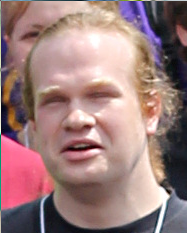 Sam Hartman is a Debian developer since 2000. He has never taken any sort of official role within Debian (that is besides package maintainer), yet I know him for his very thoughtful contributions to discussions both on mailing lists and IRL during Debconf.
Until I met him at Debconf, I didn t know that he was blind, and the first reaction was to be impressed because it must be some tremendous effort to read the volume of information that Debian generates on mailing lists. In truth he s at ease with his computer much like I am although he uses it in a completely different way. Read on to learn more, my questions are in bold, the rest is by Sam.
Raphael: Who are you?
Sam: I m Sam Hartman. I m a 35-year-old software engineer. I am a principal consultant and co-owner of a small consulting company, called
 So I got my hands on that new machine, somewhere, somehow, and I had to make myself comfortable on it. The biggest difference in that machine and the ones I used before is the RAID controller, an Adaptec 5405, instead of the 3ware ones I used to have before. That means getting used to new tools, messages and all these things which I ll try to document here.Step 1: does vendor deliver?Well, yes, mostly. There is (mainline) kernel support for the controller, Squeeze s kernel will boot up just fine and I just throw my junk into /dev/sda and it will handle the whole raidy thingy itself. But what is when I want to check the health of the disks, to add a spare or modify the caching?
 Second speaker at today'sseminar,Vladimir Mojica. He is talking about th legal backing for DRM and TPM as well as laws against circumvention. He quotes USA's DMCA as one of the most complete, advanced and forward-minded laws,inviting the audience to push for such a law here.
I hope he gets to my (written)question, as today is a very important day in this regard: The Senate has requested the presidency to reject signing the ACTA treaty!
