Search Results: "tim"

7 September 2020

Arturo Borrero Gonz lez: Debconf 2020 online, summary

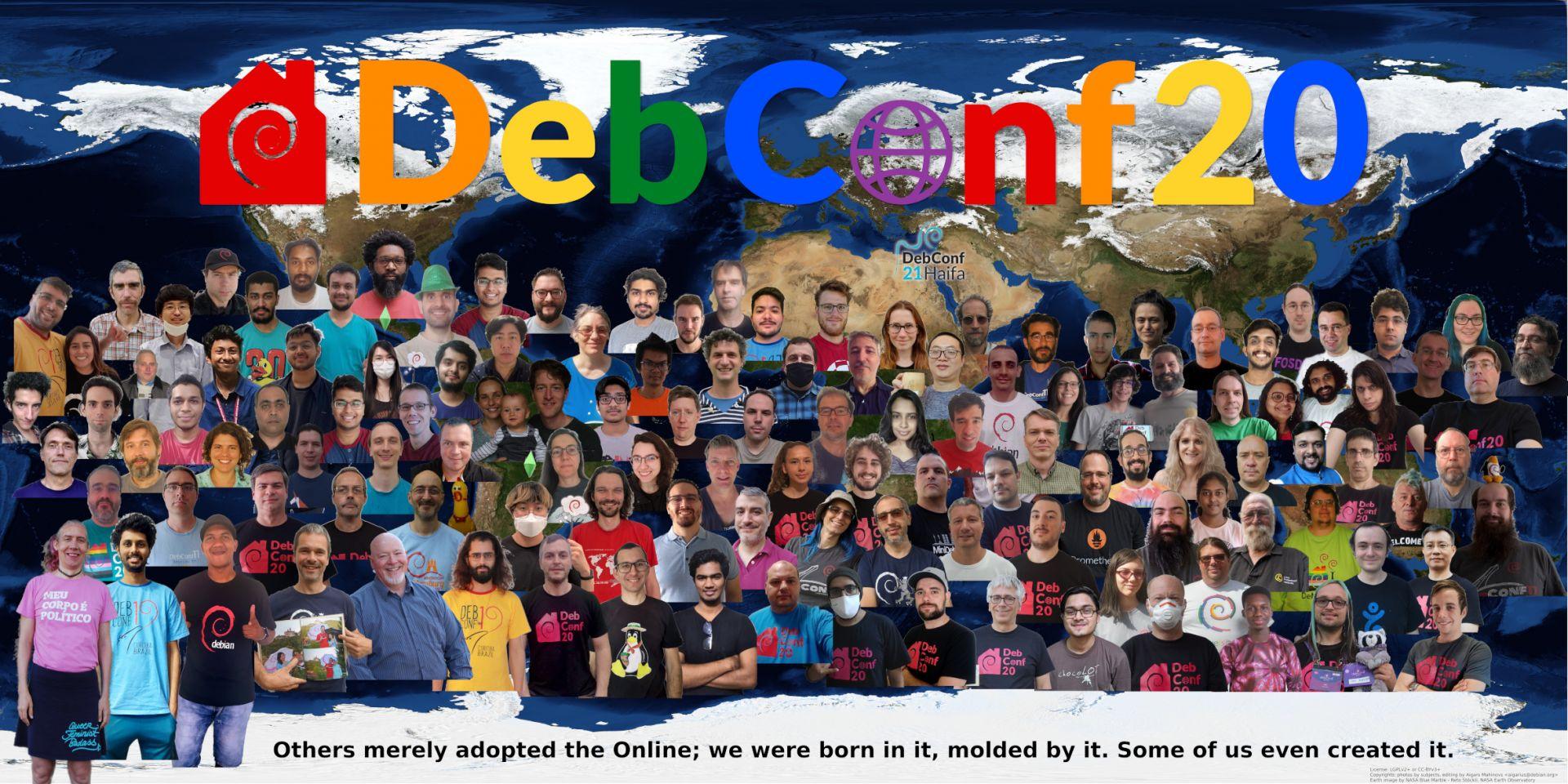
Debconf2020 logo Debconf2020 took place when I was on personal vacations time. But anyway I m lucky enough that my company, the Wikimedia Foundation, paid the conference registration fee for me and allowed me to take the time (after my vacations) to watch recordings from the conference. This is my first time attending (or watching) a full-online conference, and I was curious to see first hand how it would develop. I was greatly surprised to see it worked pretty nicely, so kudos to the organization, video team, volunteers, etc! What follows is my summary of the conference, from the different sessions and talks I watched (again, none of them live but recordings). The first thing I saw was the Welcome to Debconf 2020 opening session. It is obvious the video was made with lots of love, I found it entertaining and useful. I love it :-) Then I watched the BoF Can Free Software improve social equality. It was introduced and moderated by Hong Phuc Dang. Several participants, about 10 people, shared their visions on the interaction between open source projects and communities. I m pretty much aware of the interesting social advancement that FLOSS can enable in communities, but sometimes is not so easy, it may also present challenges and barriers. The BoF was joined by many people from the Asia Pacific region, and for me, it has been very interesting to take a step back from the usual western vision of this topic. Anyway, about the session itself, I have the feeling the participants may have spent too much time on presentations, sharing their local stories (which are interesting, don t get me wrong), perhaps leaving little room for actual proposal discussions or the like. Next I watched the Bits from the DPL talk. In the session, Jonathan Carter goes over several topics affecting the project, both internally and externally. It was interesting to know more about the status of the project from a high level perspective, as an organization, including subjects such as money, common project problems, future issues we are anticipating, the social aspect of the project, etc. The Lightning Talks session grabbed my attention. It is usually very funny to watch and not as dense as other talks. I m glad I watched this as it includes some interesting talks, ranging from HAM radios (I love them!), to personal projects to help in certain tasks, and even some general reflections about life. Just when I m writing this very sentence, the video for the Come and meet your Debian Publicity team! talk has been uploaded. This team does an incredible work in keeping project information flowing, and social networks up-to-date and alive. Mind that the work of this team is mostly non-engineering, but still, is a vital part of the project. The folks in session explain what the team does, and they also discuss how new people can contribute, the different challenges related to language barriers, etc. I have to admit I also started watching a couple other sessions that turned out to don t be interesting to me (and therefore I didn t finish the video). Also, I tried to watch a couple more sessions that didn t publish their video recording just yet, for example the When We Virtualize the Whole Internet talk by Sam Hartman. Will check again in a couple of days. It is a real pleasure the video recordings from the conference are made available online. One can join the conference anytime (like I m doing!) and watch the sessions at any pace at any time. The video archive is big, I won t be able to go over all of it. I won t lie, I still have some pending videos to watch from last year Debconf2019 :-)

6 September 2020

Enrico Zini: Learning resources links

Cognitive bias cheat sheet has another elegant infographic summarising cognitive biases. On this subject, you might want to also check out 15 Insane Things That Correlate With Each Other. Get started Learning Music (Beta) has a nice interactive introduction to music making. If you leave in a block of flats and decide to learn music making, please use headphones when experimenting. Our neighbour, sadly, didn't. You can also learn photography with Photography for Beginners (The Ultimate Guide in 2020) and somewhat related, Understanding Aspect Ratios: A Comprehensive Guide

Jonathan Carter: DebConf 20 Online

This week, last week, Last month, I attended DebConf 20 Online. It was the first DebConf to be held entirely online, but it s the 7th DebConf I ve attended from home. My first one was DebConf7. Initially I mostly started watching the videos because I wanted to learn more about packaging. I had just figured out how to create binary packages by hand, and have read through the new maintainers guide, but a lot of it was still a mystery. By the end of DebConf7 my grasp of source packages was still a bit thin, but other than that, I ended up learning a lot more about Debian during DebConf7 than I had hoped for, and over the years, the quality of online participation for each DebConf has varied a lot. I think having a completely online DebConf, where everyone was remote, helped raise awareness about how important it is to make the remote experience work well, and I hope that it will make people who run sessions at physical events in the future consider those who are following remotely a bit more. During some BoF sessions, it was clear that some teams haven t talked to each other face to face in a while, and I heard at least 3 teams who said This was nice, we should do more regular video calls! . Our usual communication methods of e-mail lists and IRC serve us quite well, for the most part, but sometimes having an actual conversation with the whole team present at the same time can do wonders for dealing with many kind of issues that is just always hard to deal with in text based mediums. There were three main languages used in this DebConf. We ve had more than one language at a DebConf before, but as far as I know it s the first time that we had multiple talks over 3 languages (English, Malayalam and Spanish). It was also impressive how the DebConf team managed to send out DebConf t-shirts all around the world and in time before the conference! To my knowledge only 2 people didn t get theirs in time due to customs. I already posted about the new loop that we worked on for this DebConf. It was an unintended effect that we ended up having lots of shout-outs which ended up giving this online DebConf a much more warmer, personal feel to it than if we didn t have it. I m definitely planning to keep on improving on that for the future, for online and in-person events. There were also some other new stuff from the video team during this DebConf, we ll try to co-ordinate a blog post about that once the dust settled. Thanks to everyone for making this DebConf special, even though it was virtual!

Thorsten Alteholz: My Debian Activities in August 2020

FTP master This month I accepted 159 packages and rejected 16. The overall number of packages that got accepted was 172. Debian LTS This was my seventy-fourth month that I did some work for the Debian LTS initiative, started by Raphael Hertzog at Freexian. This month my all in all workload has been 21.75h. During that time I did LTS uploads of: I also started to work on curl but did not upload a fixed version yet. As usual, testing the package takes up some time. Last but not least I did some days of frontdesk duties. Debian ELTS This month was the twenty sixth ELTS month. During my allocated time I uploaded: Like in LTS, I also started to work on curl and encountered the same problems as in LTS above. Last but not least I did some days of frontdesk duties. Other stuff This month I found again some time for other Debian work and uploaded packages to fix bugs, mainly around gcc10: I also uploaded new upstream versions of: All package called *osmo* are developed by the Osmocom project, that is about Open Source MObile COMmunication. They are really doing a great job and I apologize that my uploads of new versions are mostly far behind their development. Some of the uploads are related to new packages:

Ben Armstrong: Dronefly relicensed under copyleft licenses

To ensure Dronefly always remains free, the Dronefly project has been relicensed under two copyleft licenses. Read the license change and learn more about copyleft at these links. I was prompted to make this change after a recent incident in the Red DiscordBot development community that made me reconsider my prior position that the liberal MIT license was best for our project. While on the face of it, making your license as liberal as possible might seem like the most generous and hassle-free way to license any project, I was shocked into the realization that its liberality was also its fatal flaw: all is well and good so long as everyone is being cooperative, but it does not afford any protection to developers or users should things suddenly go sideways in how a project is run. A copyleft license is the best way to avoid such issues. In this incident a sad story of conflict between developers I respect on both sides of the rift, and owe a debt to for what they ve taught me three cogs we had come to depend on suddenly stopped being viable for us to use due to changes to the license & the code. Effectively, those cogs became unsupported and unsupportable. To avoid any such future disaster with the Dronefly project, I started shopping for a new license that would protect developers and users alike from similarly losing support, or losing control of their contributions. I owe thanks to Dale Floer, a team member who early on advised me the AGPL might be a better fit, and later was helpful in selecting the doc license and encouraging me to follow through. We ran the new licenses by each contributor and arrived at this consensus: the AGPL is best suited for our server-based code, and CC-BY-SA is best suited for our documentation. The relicensing was made official this morning. On Discord platform alternatives You might well question what I, a Debian developer steeped in free software culture and otherwise in agreement with its principles, am doing encouraging a community to grow on the proprietary Discord platform! I have no satisfying answer to that. I explained when I introduced my project here some of the backstory, but that s more of an account of its beginnings than justification for it to continue on this platform. Honestly, all I can offer is a rather dissatisfying it seemed like the right thing to do at the time. Time will tell whether we could successfully move off of it to a freedom-respecting and privacy-respecting alternative chat platform that is both socially and technically viable to migrate to. That platform would ideally: I m intrigued by Matrix and wonder if it provides some or all of the above in its current form. Are you a developer writing bots for this platform? If so, I especially want to hear from you in the comments about your experience. Or in any case, if you ve been there before if you ve faced the same issue with your community and have a success story to share, I would love to hear from you.

Russ Allbery: September haul

So many good books, so little reading time. Jairus Banaji A Brief History of Commercial Capitalism (nonfiction)
Steven Brust The Baron of Magister Valley (sff)
Micaiah Johnson The Space Between Worlds (sff)
Ian McDonald Luna: New Moon (sff)
Elizabeth Moon Trading in Danger (sff)
Tamsyn Muir Harrow the Ninth (sff)
Suzanne Palmer Finder (sff)
Kit Rocha Beyond Shame (sff)
Kit Rocha Beyond Control (sff)
Kit Rocha Beyond Pain (sff)
Arundhati Roy Azadi (nonfiction)
Jeff VanderMeer Authority (sff)
Jeff VanderMeer Acceptance (sff)
K.B. Wagers Behind the Throne (sff)
Jarrett Walker Human Transit (nonfiction) I took advantage of a few sales to get books I know I'm going to want to read eventually for a buck or two.

5 September 2020

Elana Hashman: Three talks at DebConf 2020

This year has been a really unusual one for in-person events like conferences. I had already planned to take this year off from travel for the most part, attending just a handful of domestic conferences. But the pandemic has thrown those plans into chaos; I do not plan to attend large-scale in-person events until July 2021 at the earliest, per my employer's guidance. I've been really sad to have turned down multiple speaking invitations this year. To try to set expectations, I added a note to my Talks page that indicates I will not be writing any new talks for 2020, but am happy to join panels or reprise old talks. And somehow, with all that background, I still ended up giving three talks at DebConf 2020 this year. In part, I think it's because this is the first DebConf I've been able to attend since 2017, and I was so happy to have the opportunity! I took time off work to give myself enough space to focus on the conference. International travel is very difficult for me, so DebConf is generally challenging if not impossible for me to attend. A panel a day keeps the FTP Team away? On Thursday, August 27th, I spoke on the Leadership in Debian panel, where I discussed some of the challenges leadership in the project must face, including an appropriate response to the BLM movement and sustainability for volunteer positions that require unsustainable hours (such as DPL).
On Friday, August 28th, I hosted the Debian Clojure BoF, attended by members of the Clojure and Puppet teams. The Puppet team is working to package the latest versions of Puppet Server/DB, which involve significant Clojure components, and I am doing my best to help.
On Saturday, August 29th, I spoke on the Meet the Technical Committee panel. The Committee presented a number of proposals for improving how we work within the project. I was responsible for presenting our first proposal on allowing folks to engage the committee privately.

4 September 2020

Dirk Eddelbuettel: nanotime 0.3.2: Tweaks

Another (minor) nanotime release, now at version 0.3.2. This release brings an endianness correction which was kindly contributed in a PR, switches to using the API header exported by RcppCCTZ, and tweaks test coverage a little with respect to r-devel. nanotime relies on the RcppCCTZ package for (efficient) high(er) resolution time parsing and formatting up to nanosecond resolution, and the bit64 package for the actual integer64 arithmetic. Initially implemented using the S3 system, it has benefitted greatly from work by co-author Leonardo who not only rejigged nanotime internals in S4 but also added new S4 types for periods, intervals and durations. The NEWS snippet adds full details.

Changes in version 0.3.2 (2020-09-03)
  • Correct for big endian (Elliott Sales de Andrade in #81).
  • Use the RcppCCTZ_API.h header (Dirk in #82).
  • Conditionally reduce test coverage (Dirk in #83).

Thanks to CRANberries there is also a diff to the previous version. More details and examples are at the nanotime page; code, issue tickets etc at the GitHub repository. If you like this or other open-source work I do, you can now sponsor me at GitHub. For the first year, GitHub will match your contributions.

This post by Dirk Eddelbuettel originated on his Thinking inside the box blog. Please report excessive re-aggregation in third-party for-profit settings.

2 September 2020

Kees Cook: security things in Linux v5.6

Previously: v5.5. Linux v5.6 was released back in March. Here s my quick summary of various features that caught my attention: WireGuard
The widely used WireGuard VPN has been out-of-tree for a very long time. After 3 1/2 years since its initial upstream RFC, Ard Biesheuvel and Jason Donenfeld finished the work getting all the crypto prerequisites sorted out for the v5.5 kernel. For this release, Jason has gotten WireGuard itself landed. It was a twisty road, and I m grateful to everyone involved for sticking it out and navigating the compromises and alternative solutions. openat2() syscall and RESOLVE_* flags
Aleksa Sarai has added a number of important path resolution scoping options to the kernel s open() handling, covering things like not walking above a specific point in a path hierarchy (RESOLVE_BENEATH), disabling the resolution of various magic links (RESOLVE_NO_MAGICLINKS) in procfs (e.g. /proc/$pid/exe) and other pseudo-filesystems, and treating a given lookup as happening relative to a different root directory (as if it were in a chroot, RESOLVE_IN_ROOT). As part of this, it became clear that there wasn t a way to correctly extend the existing openat() syscall, so he added openat2() (which is a good example of the efforts being made to codify Extensible Syscall arguments). The RESOLVE_* set of flags also cover prior behaviors like RESOLVE_NO_XDEV and RESOLVE_NO_SYMLINKS. pidfd_getfd() syscall
In the continuing growth of the much-needed pidfd APIs, Sargun Dhillon has added the pidfd_getfd() syscall which is a way to gain access to file descriptors of a process in a race-less way (or when /proc is not mounted). Before, it wasn t always possible make sure that opening file descriptors via /proc/$pid/fd/$N was actually going to be associated with the correct PID. Much more detail about this has been written up at LWN. openat() via io_uring
With my attack surface reduction hat on, I remain personally suspicious of the io_uring() family of APIs, but I can t deny their utility for certain kinds of workloads. Being able to pipeline reads and writes without the overhead of actually making syscalls is pretty great for performance. Jens Axboe has added the IORING_OP_OPENAT command so that existing io_urings can open files to be added on the fly to the mapping of available read/write targets of a given io_uring. While LSMs are still happily able to intercept these actions, I remain wary of the growing syscall multiplexer that io_uring is becoming. I am, of course, glad to see that it has a comprehensive (if out of tree ) test suite as part of liburing. removal of blocking random pool
After making algorithmic changes to obviate separate entropy pools for random numbers, Andy Lutomirski removed the blocking random pool. This simplifies the kernel pRNG code significantly without compromising the userspace interfaces designed to fetch cryptographically secure random numbers. To quote Andy, This series should not break any existing programs. /dev/urandom is unchanged. /dev/random will still block just after booting, but it will block less than it used to. See LWN for more details on the history and discussion of the series. arm64 support for on-chip RNG
Mark Brown added support for the future ARMv8.5 s RNG (SYS_RNDR_EL0), which is, from the kernel s perspective, similar to x86 s RDRAND instruction. This will provide a bootloader-independent way to add entropy to the kernel s pRNG for early boot randomness (e.g. stack canary values, memory ASLR offsets, etc). Until folks are running on ARMv8.5 systems, they can continue to depend on the bootloader for randomness (via the UEFI RNG interface) on arm64. arm64 E0PD
Mark Brown added support for the future ARMv8.5 s E0PD feature (TCR_E0PD1), which causes all memory accesses from userspace into kernel space to fault in constant time. This is an attempt to remove any possible timing side-channel signals when probing kernel memory layout from userspace, as an alternative way to protect against Meltdown-style attacks. The expectation is that E0PD would be used instead of the more expensive Kernel Page Table Isolation (KPTI) features on arm64. powerpc32 VMAP_STACK
Christophe Leroy added VMAP_STACK support to powerpc32, joining x86, arm64, and s390. This helps protect against the various classes of attacks that depend on exhausting the kernel stack in order to collide with neighboring kernel stacks. (Another common target, the sensitive thread_info, had already been moved away from the bottom of the stack by Christophe Leroy in Linux v5.1.) generic Page Table dumping
Related to RISCV s work to add page table dumping (via /sys/fs/debug/kernel_page_tables), Steven Price extracted the existing implementations from multiple architectures and created a common page table dumping framework (and then refactored all the other architectures to use it). I m delighted to have this because I still remember when not having a working page table dumper for ARM delayed me for a while when trying to implement upstream kernel memory protections there. Anything that makes it easier for architectures to get their kernel memory protection working correctly makes me happy. That s in for now; let me know if there s anything you think I missed. Next up: Linux v5.7.

2020, Kees Cook. This work is licensed under a Creative Commons Attribution-ShareAlike 4.0 License.
CC BY-SA 4.0

Vincent Bernat: Syncing SSH keys on Cisco IOS-XR with a custom Ansible module

The cisco.iosxr collection from Ansible Galaxy provides an iosxr_user module to manage local users, along with their SSH keys. However, the module is quite slow, do not display a diff for changed SSH keys, never signal change when a key is modified, and does not delete obsolete keys. Let s write a custom Ansible module managing only the SSH keys while fixing these issues.

Notice I recommend that you read Writing a custom Ansible module as an introduction.

How to add an SSH key to a user Adding SSH keys to users in Cisco IOS-XR is quite undocumented. First, you need to encode the key with the ssh-rsa key ASN.1 format, like an OpenSSH public key, but without the base64-encoding:
$ awk ' print $2 ' id_rsa.pub \
      base64 -d \
    > publickey_vincent.raw
Then, you upload the key with SCP to harddisk:/publickey_vincent.raw and import it for the current user with the following IOS command:
crypto key import authentication rsa harddisk:/publickey_vincent.b64
However, if you want to import a key for another user, you need to be part of the root-system group:
username vincent
 group root-lr
 group root-system
With the following admin command, you can attach a key to another user:
admin crypto key import authentication rsa username cedric harddisk:/publickey_cedric.b64

Code The module has the following signature and it installs the specified key for each user and remove keys from retired users the ones we do not specify.
iosxr_users:
  keys:
    vincent: ssh-rsa AAAAB3NzaC1yc2EAA[ ]ymh+YrVWLZMJR
    cedric:  ssh-rsa AAAAB3NzaC1yc2EAA[ ]RShPA8w/8eC0n

Prerequisites Unlike the iosxr_user module, our custom module only handles SSH keys, one per user. Therefore, the user definitions have to already exist in the running configuration.1 Moreover, the user defined in ansible_user needs to be in the root-system group. The cisco.iosxr collection must also be installed as the module relies on its code. When running the module, ansible_connection needs to be set to network_cli and ansible_network_os to iosxr. These variables are usually defined in the inventory.

Module definition Starting from the skeleton described in the previous article, we define the module:
module_args = dict(
    keys=dict(type='dict', elements='str', required=True),
)
module = AnsibleModule(
    argument_spec=module_args,
    supports_check_mode=True
)
result = dict(
    changed=False
)

Getting the installed keys The next step is to retrieve the keys currently installed. This can be done with the following command:
# show crypto key authentication rsa all
Key label: vincent
Type     : RSA public key authentication
Size     : 2048
Imported : 16:17:08 UTC Tue Aug 11 2020
Data     :
 30820122 300D0609 2A864886 F70D0101 01050003 82010F00 3082010A 02820101
 00D81E5B A73D82F3 77B1E4B5 949FB245 60FB9167 7CD03AB7 ADDE7AFE A0B83174
 A33EC0E6 1C887E02 2338367A 8A1DB0CE 0C3FBC51 15723AEB 07F301A4 B1A9961A
 2D00DBBD 2ABFC831 B0B25932 05B3BC30 B9514EA1 3DC22CBD DDCA6F02 026DBBB6
 EE3CFADA AFA86F52 CAE7620D 17C3582B 4422D24F D68698A5 52ED1E9E 8E41F062
 7DE81015 F33AD486 C14D0BB1 68C65259 F9FD8A37 8DE52ED0 7B36E005 8C58516B
 7EA6C29A EEE0833B 42714618 50B3FFAC 15DBE3EF 8DA5D337 68DAECB9 904DE520
 2D627CEA 67E6434F E974CF6D 952AB2AB F074FBA3 3FB9B9CC A0CD0ADC 6E0CDB2A
 6A1CFEBA E97AF5A9 1FE41F6C 92E1F522 673E1A5F 69C68E11 4A13C0F3 0FFC782D
 27020301 0001
[ ]
ansible_collections.cisco.iosxr.plugins.module_utils.network.iosxr.iosxr contains a run_commands() function we can use:
command = "show crypto key authentication rsa all"
out = run_commands(module, command)
out = out[0].replace(' \n', '\n')
A common library to parse a command output is textfsm: a Python module using a template-based state machine for parsing semi-formatted text.
template = r"""
Value Required Label (\w+)
Value Required,List Data ([A-F0-9 ]+)
Start
 ^Key label: $ Label 
 ^Data\s+: -> GetData
GetData
 ^ $ Data 
 ^$$ -> Record Start
""".lstrip()
re_table = textfsm.TextFSM(io.StringIO(template))
got =  data[0]: "".join(data[1]).replace(' ', '')
       for data in re_table.ParseText(out) 
got is a dictionary associating key labels, considered as usernames, with a hexadecimal representation of the public key currently installed. It looks like this:
>>> pprint(got)
 'alfred': '30820122300D0609[ ]6F0203010001',
 'cedric': '30820122300D0609[ ]710203010001',
 'vincent': '30820122300D0609[ ]270203010001' 

Comparing with the wanted keys Let s now build the wanted dictionary using the same structure. In module.params['keys'], we have a dictionary associating usernames to public SSH keys in the OpenSSH format:
>>> pprint(module.params['keys'])
 'cedric': 'ssh-rsa AAAAB3NzaC1yc2[ ]',
 'vincent': 'ssh-rsa AAAAB3NzaC1yc2[ ]' 
We need to convert these keys in the same hexadecimal representation used by Cisco above. The ssh-keygen command and some glue can do the conversion:2
$ ssh-keygen -f id_rsa.pub -e -mPKCS8 \
     grep -v '^---' \
     base64 -d \
     hexdump -e '4/1 "%0.2X"'
30820122300D06092[ ]782D270203010001
Assuming we have a ssh2cisco() function doing that, we can build the wanted dictionary:
wanted =  k: ssh2cisco(v)
          for k, v in module.params['keys'].items() 

Applying changes Back to the skeleton described in the previous article, the last step is to apply the changes if there is a difference between got and wanted when not running with check mode. The part comparing got and wanted is taken verbatim from the skeleton module:
if got != wanted:
    result['changed'] = True
    result['diff'] = dict(
        before=yaml.safe_dump(got),
        after=yaml.safe_dump(wanted)
    )
if module.check_mode or not result['changed']:
    module.exit_json(**result)
Let s copy the new or changed keys and attach them to their respective users. For this purpose, we reuse the get_connection() and copy_file() functions from ansible_collections.cisco.iosxr.plugins.module_utils.network.iosxr.iosxr.
conn = get_connection(module)
for user in wanted:
    if user not in got or wanted[user] != got[user]:
        dst = f"/harddisk:/publickey_ user .raw"
        with tempfile.NamedTemporaryFile() as src:
            decoded = base64.b64decode(
                module.params['keys'][user].split()[1])
            src.write(decoded)
            src.flush()
            copy_file(module, src.name, dst)
    command = ("admin crypto key import authentication rsa "
               f"username  user   dst ")
    conn.send_command(command, prompt="yes/no", answer="yes")
Then, we remove obsolete keys:
for user in got:
    if user not in wanted:
        command = ("admin crypto key zeroize authentication rsa "
                   f"username  user ")
        conn.send_command(command, prompt="yes/no", answer="yes")

The complete code is available on GitHub. Compared to the iosxr_user module, this one displays a diff when running with --diff, correctly signals a change, is faster, 3 and deletes unwanted SSH keys. However, it is unable to create users and cannot configure passwords or multiple SSH keys.

  1. In our environment, the Ansible playbook pushes a full configuration, including the user definitions. Then, it synchronizes the SSH keys.
  2. Despite the argument provided to ssh-keygen, the format used by Cisco is not PKCS#8. This is the ASN.1 representation of a Subject Public Key Info structure, as defined in RFC 2459. Moreover, PKCS#8 is a format for a private key, not a public one.
  3. The main factors for being faster are:
    • not creating users, and
    • not reuploading existing SSH keys.

Vincent Bernat: Writing a custom Ansible module

Ansible ships a lot of modules you can combine for your configuration management needs. However, the quality of these modules may vary widely. Sometimes, it may be quicker and more robust to write your own module instead of shopping and assembling existing ones.1 In my opinion, a robust module exhibits the following characteristics: In a nutshell, it means the module can run with --diff --check and shows the changes it would apply. When run twice in a row, the second run won t apply or signal changes. The last bullet point suggests the module should be able to delete outdated objects configured during previous runs.2 The module code should be minimal and tailored to your needs. Making the module generic for use by other users is a non-goal. Less code usually means less bugs and easier to understand. I do not cover testing here. It is undeniably a good practice, but it requires a significant effort. In my opinion, it is preferable to have a well written module matching the above characteristics rather than a module that is well tested but without them or a module requiring further (untested) assembly to meet your needs.

Module skeleton Ansible documentation contains instructions to build a module, along with some best practices. As one of our non-goal is to distribute it, we choose to take some shortcuts and skip some of the boilerplate. Let s assume we build a module with the following signature:
custom_module:
  user: someone
  password: something
  data: "some random string"
There are various locations you can put a module in Ansible. A common possibility is to include it into a role. In a library/ subdirectory, create an empty __init__.py file and a custom_module.py file with the following code:3
#!/usr/bin/python
import yaml
from ansible.module_utils.basic import AnsibleModule
def main():
    # Define options accepted by the module.  
    module_args = dict(
        user=dict(type='str', required=True),
        password=dict(type='str', required=True, no_log=True),
        data=dict(type='str', required=True),
    )
    module = AnsibleModule(
        argument_spec=module_args,
        supports_check_mode=True
    )
    result = dict(
        changed=False
    )
    got =  
    wanted =  
    # Populate both  got  and  wanted .  
    # [...]
    if got != wanted:
        result['changed'] = True
        result['diff'] = dict(
            before=yaml.safe_dump(got),
            after=yaml.safe_dump(wanted)
        )
    if module.check_mode or not result['changed']:
        module.exit_json(**result)
    # Apply changes.  
    # [...]
    module.exit_json(**result)
if __name__ == '__main__':
    main()
The first part, in , defines the module, with the accepted options. Refer to the documentation on argument_spec for more details. The second part, in , builds the got and wanted variables. got is the current state while wanted is the target state. For example, if you need to modify records in a database server, got would be the current rows while wanted would be the modified rows. Then, we compare got and wanted. If there is a difference, changed is switched to True and we prepare the diff object. Ansible uses it to display the differences between the states. If we are running in check mode or if no change is detected, we stop here. The last part, in , applies the changes. Usually, it means iterating over the two structures to detect the differences and create the missing items, delete the unwanted ones and update the existing ones.

Documentation Ansible provides a fairly complete page on how to document a module. I advise you to take a more minimal approach by only documenting each option sparingly,4 skipping the examples and only documenting return values if it needs to. I usually limit myself to something like this:
DOCUMENTATION = """
---
module: custom_module.py
short_description: Pass provided data to remote service
description:
  - Mention anything useful for your workmate.
  - Also mention anything you want to remember in 6 months.
options:
  user:
    description:
      - user to identify to remote service
  password:
    description:
      - password for authentication to remote service
  data:
    description:
      - data to send to remote service
"""

Error handling If you run into an error, you can stop the execution with module.fail_json():
module.fail_json(
    msg=f"remote service answered with  code :  message ",
    **result
)
There is no requirement to intercept all errors. Sometimes, not swallowing an exception provides better information than replacing it with a generic message.

Returning additional values A module may return additional information that can be captured to be used in another task through the register directive. For this purpose, you can add arbitrary fields to the result dictionary. Have a look at the documentation for common return values. You should try to add these fields before exiting the module when in check mode. The returned values can be documented.

Examples Here are several examples of custom modules following the previous skeleton. Each example highlight why a custom module was written instead of assembling existing modules.

  1. Also, when using modules from Ansible Galaxy, you introduce a dependency to a third-party. This is not something that should be decided lightly: it may break later, it may only meet 80% of the needs, it may add bugs.
  2. Some declarative systems, like Terraform, exhibits all these behaviors.
  3. Do not worry about the shebang. It is hardcoded to /usr/bin/python. Ansible will modify it to match the chosen interpreter on the remote host. You can write Python 3 code if ansible_python_interpreter evaluates to a Python 3 interpreter.
  4. The main issue I have with this non-programmatic approach to documentation is that it partly repeats the information contained in argument_spec. I think an auto-documenting structure would avoid this.

Elana Hashman: My term at the Open Source Initiative thus far

When I ran for the OSI board in early 2019, I set three goals for myself: Now that the OSI has announced hiring an interim General Manager, I thought it would be a good time to publicly reflect on what I've accomplished and what I'd like to see next. As I promised in my campaign pitch, I aim to be publicly accountable :) Growing the OSI's membership I have served as our Membership Committee Chair since the May 2019 board meeting, tasked with devising and supervising strategy to increase membership and deliver value to members. As part of my election campaign last year, I signed up over 50 new individual members. Since May 2019, we've seen strong 33% growth of individual members, to reach a new all-time high over 600 (638 when I last checked). I see the OSI as a relatively neutral organization that occupies a unique position to build bridges among organizations within the FOSS ecosystem. In order to facilitate this, we need a representative membership, and we need to engage those members and provide forums for cross-pollination. As Membership Committee Chair, I have been running quarterly video calls on Jitsi for our affiliate members, where we can share updates between many global organizations and discuss challenges we all face. But it's not enough just to hold the discussion; we also need to bring fresh new voices into the conversation. Since I've joined the board, I'm thrilled to say that 16 new affiliate members joined (in chronological order) for a total of 81: I was also excited to run a survey of the OSI's individual and affiliate membership to help inform the future of the organization that received 58 long-form responses. The survey has been accepted by the board at our August meeting and should be released publicly soon! Defending the Open Source Definition When I joined the board, the first committee I joined was the License Committee, which is responsible for running the licence review process, making recommendations on new licenses, and maintaining our existing licenses. Over the past year, under Pamela Chestek's leadership as Chair, the full board has approved the following licenses (with SPDX identifiers in brackets) on the recommendation of the License Committee: We withheld approval of the following licenses: I've also worked to define the scope of work for hiring someone to improve our license review process, which we have an open RFP for! Chopping wood and carrying water I joined the OSI with the goal of improving an organization I didn't think was performing up to its potential. Its membership and board were not representative of the wider open source community, its messaging felt outdated, and it seemed to be failing to rise to today's challenges for FOSS. But before one can rise to meet these challenges, you need a strong foundation. The OSI needed the organizational structure, health, and governance in order to address such questions. Completing that work is essential, but not exactly glamourous and it's a place that I thrive. Honestly, I don't (yet?) want to be the public face of the organization, and I apologize to those who've missed me at events like FOSDEM. I want to talk a little about some of my behind-the-scenes activities that I've completed as part of my board service: All of this work is intended to improve the organization's health and provide it with an excellent foundation for its mission. Defining the future of open source Soon after I was elected to the board, I gave a talk at Brooklyn.js entitled "The Future of Open Source." In this presentation, I pondered about the history and future of the free and open source software movement, and the ethical questions we must face. In my election campaign, I wrote "Software licenses are a means, not an end, to open source software. Focusing on licensing is necessary but not sufficient to ensure a vibrant, thriving open source community. Focus on licensing to the exclusion of other serious community concerns is to our collective detriment." My primary goal for my first term on the board was to ensure the OSI would be positioned to answer wider questions about the open source community and its future beyond licenses. Over the past two months, I supported Megan Byrd-Sanicki's suggestion to hold (and then participated in, with the rest of the board) organizational strategy sessions to facilitate our long-term planning. My contribution to help inform these sessions was providing the member survey on behalf of the Membership Committee. Now, I think we are much better equiped to face the hard questions we'll have to tackle. In my opinion, the Open Source Initiative is better positioned than ever to answer them, and I can't wait to see what the future brings. Hope to see you at our first State of the Source conference next week!

Norbert Preining: Multiple GPUs for graphics and deep learning

For long time I have been using a good old nvidia GeForce GTX 1050 for my display and deep learning needs. I reported a few times how to get Tensorflow running on Debian/Sid, see here and here. Later on I switched to AMD GPU in the hope that an open source approach to both GPU driver as well as deep learning (ROCm) would improve the general experience. Unfortunately it turned out that AMD GPUs are generally not ready for deep learning usage. The problems with AMD and ROCm are far and wide. First of all, it seems that for anything more complicated then simple stuff, AMD s flagship RX 5700(XT) and all GFX10 (Navi) based cards are not(!!!) supported in ROCm. Yes, you read correct AMD does not support 5700(XT) cards in the ROCm stack. Some simple stuff works, but nothing for real computations. Then, even IF they would support, ROCm as distributed is currently a huge pain in the butt. The source code is a huge mess, and building usable packages from it is probably possible, but quite painful (I am member of the ROCm packaging team in Debian, and have tried many hours). And the packages provided by AMD are not installable on Debian/sid due to library incompatibilities. So that left me with a bit a problem: for work I need to train quite some neural networks, do model selection, etc. Doing this on a CPU is a bit a burden. So at the end I decided to put the nVidia card back into the computer (well, after moving it to a bigger case but that is a different story to tell). Here are the steps I did to get both cards working for their respective target: AMD GPU for driving the console and X (and games!), and the nVidia card doing the deep learning stuff (tensorflow using the GPU). Starting point Starting point was a working AMD GPU installation. The AMD GPU is also the first GPU card (top slot) and thus the one that is used by the BIOS and the Linux console. If you want the video output on the second card you need to trick, and probably don t have console output, etc etc. So not a solution for me. Installing libcuda1 and the nvidia kernel drivers Next step was installing the libcuda1 package:

apt install libcuda1
This installs a lot of stuff, including the nvidia drivers, GLX libraries, alternatives setup, and update-glx tool and package. The kernel module should be built and installed automatically for your kernel. Installing CUDA Follow more or less the instructions here and do
wget -O- https://developer.download.nvidia.com/compute/cuda/repos/ubuntu1804/x86_64/7fa2af80.pub   sudo tee /etc/apt/trusted.gpg.d/nvidia-cuda.asc
echo "deb http://developer.download.nvidia.com/compute/cuda/repos/ubuntu1804/x86_64/ /"   sudo tee /etc/apt/sources.list.d/nvidia-cuda.list
sudo apt-get update
sudo apt-get install cuda-libraries-10-1
Warning! At the moment Tensorflow packages require CUDA 10.1, so don t install the 10.0 version. This might change in the future! This will install lots of libs into /usr/local/cuda-10.1 and add the respective directory to the ld.so path by creating a file /etc/ld.so.conf.d/cuda-10-1.conf. Install CUDA CuDNN One difficult to satisfy dependency are the CuDNN libraries. In our case we need the version 7 library for CUDA 10.1. To download these files one needs to have a NVIDIA developer account, which is quick and painless. After that go to the CuDNN page where one needs to select Archived releases and then Download cuDNN v7.N.N (xxxx NN, YYYY), for CUDA 10.1 and then cuDNN Runtime Library for Ubuntu18.04 (Deb). At the moment (as of today) this will download a file libcudnn7_7.6.5.32-1+cuda10.1_amd64.deb which needs to be installed with dpkg -i libcudnn7_7.6.5.32-1+cuda10.1_amd64.deb. Updating the GLX setting Here now comes the very interesting part one needs to set up the GLX libraries. Reading the output of update-glx --help and then the output of update-glx --list glx:
$ update-glx --help
update-glx is a wrapper around update-alternatives supporting only configuration
of the 'glx' and 'nvidia' alternatives. After updating the alternatives, it
takes care to trigger any follow-up actions that may be required to complete
the switch.
 
It can be used to switch between the main NVIDIA driver version and the legacy
drivers (eg: the 304 series, the 340 series, etc).
 
For users with Optimus-type laptops it can be used to enable running the discrete
GPU via bumblebee.
 
Usage: update-glx <command>
 
Commands:
  --auto <name>            switch the master link <name> to automatic mode.
  --display <name>         display information about the <name> group.
  --query <name>           machine parseable version of --display <name>.
  --list <name>            display all targets of the <name> group.
  --config <name>          show alternatives for the <name> group and ask the
                           user to select which one to use.
  --set <name> <path>      set <path> as alternative for <name>.
 
<name> is the master name for this link group.
  Only 'nvidia' and 'glx' are supported.
<path> is the location of one of the alternative target files.
  (e.g. /usr/lib/nvidia)
 
$ update-glx --list glx
/usr/lib/mesa-diverted
/usr/lib/nvidia
I was tempted into using
update-glx --config glx /usr/lib/mesa-diverted
because at the end the Mesa GLX libraries should be used to drive the display via the AMD GPU. Unfortunately, with this neither the nvidia kernel module was loaded, the nvidia persistenced couldn t run because the library libnvidia-cfg1 wasn t found (not sure it was needed at all ), and with that also no way to run tensorflow on GPU. So what I did I tried
update-glx --auto glx
(which is the same as update-glx --config glx /usr/lib/nvidia), and rebooted, and decided to check afterwards what is broken. To my big surprise, the AMD GPU still worked out of the box, including direct rendering, and the games I tried (Overload, Supraland via Wine) all worked without a hinch. Not that I really understand why the GLX libraries that are seemingly now in use are from nvidia but work the same (if anyone has an explanation, that would be great!), but since I haven t had any problems till now, I am content. Checking GPU usage in tensorflow Make sure that you remove tensorflow-rocm and reinstall tensorflow with GPU support:
pip3 uninstall tensorflow-rocm
pip3 install --upgrade tensorflow-gpu
After that a simple
$ python3 -c "import tensorflow as tf;print(tf.reduce_sum(tf.random.normal([1000, 1000])))"
....(lots of output)
2020-09-02 11:57:04.673096: I tensorflow/core/common_runtime/gpu/gpu_device.cc:1402] Created TensorFlow device (/job:localhost/replica:0/task:0/device:GPU:0 with 3581 MB memory) -> physical GPU (device: 0, name: GeForce GTX 1050 Ti, pci bus id: 0000:05:00.0, compute capability: 6.1)
tf.Tensor(1093.4915, shape=(), dtype=float32)
$
should indicate that the GPU is used by tensorflow! The R Keras package should also work out of the box and pick up the system-wide tensorflow which in turn picks the GPU, see this post for example code to run for tests. Conclusion All in all it was easier than expected, despite the dances one has to do for nvidia to get the correct libraries. What still puzzles me is the selection option in update-glx, and might need a better support for secondary nvidia GPU cards.

1 September 2020

Utkarsh Gupta: FOSS Activites in August 2020

Here s my (eleventh) monthly update about the activities I ve done in the F/L/OSS world.

Debian
This was my 20th month of contributing to Debian. I became a DM in late March last year and a DD last Christmas! \o/ Well, this month we had DebConf! \o/
(more about this later this week!) Anyway, here are the following things I did in Debian this month:

Uploads and bug fixes:

Other $things:
  • Mentoring for newcomers.
  • FTP Trainee reviewing.
  • Moderation of -project mailing list.
  • Sponsored php-dasprid-enum and php-bacon-baconqrcode for William and ruby-unparser, ruby-morpher, and ruby-path-exapander for Cocoa.

Goodbye GSoC! \o/ In May, I got selected as a Google Summer of Code student for Debian again! \o/
I am working on the Upstream-Downstream Cooperation in Ruby project. The other 5 blogs can be found here: Also, I log daily updates at gsocwithutkarsh2102.tk. Since this is a wrap and whilst the daily updates are already available at the above site^, I ll quickly mention the important points and links here.

Debian (E)LTS
Debian Long Term Support (LTS) is a project to extend the lifetime of all Debian stable releases to (at least) 5 years. Debian LTS is not handled by the Debian security team, but by a separate group of volunteers and companies interested in making it a success. And Debian Extended LTS (ELTS) is its sister project, extending support to the Jessie release (+2 years after LTS support). This was my eleventh month as a Debian LTS and my second as a Debian ELTS paid contributor.
I was assigned 21.75 hours for LTS and 14.25 hours for ELTS and worked on the following things:

LTS CVE Fixes and Announcements:

ELTS CVE Fixes and Announcements:
  • Issued ELA 255-1, fixing CVE-2020-14344, for libx11.
    For Debian 8 Jessie, these problems have been fixed in version 2:1.6.2-3+deb8u3.
  • Issued ELA 259-1, fixing CVE-2020-10177, for pillow.
    For Debian 8 Jessie, these problems have been fixed in version 2.6.1-2+deb8u5.
  • Issued ELA 269-1, fixing CVE-2020-11985, for apache2.
    For Debian 8 Jessie, these problems have been fixed in version 2.4.10-10+deb8u17.
  • Started working on clamAV update, it s a major bump from v0.101.5 to v0.102.4. There were lots of movings parts. Contacted upstream maintainers to help reduce the risk of regression. Came up with a patch to loosen the libcurl version requirement. Hopefully, the update could be rolled out soon!

Other (E)LTS Work:
  • I spent an additional 11.15 hours working on compiling the responses of the LTS survey and preparing a gist of it for its presentation during the Debian LTS BoF at DebConf20.
  • Triaged qemu, pillow, gupnp, clamav, apache2, and uwsgi.
  • Marked CVE-2020-11538/pillow as not-affected for Stretch.
  • Marked CVE-2020-11984/apache2 as not-affected for Stretch.
  • Marked CVE-2020-10378/pillow as not-affected for Jessie.
  • Marked CVE-2020-11538/pillow as not-affected for Jessie.
  • Marked CVE-2020-3481/clamav as not-affected for Jessie.
  • Marked CVE-2020-11984/apache2 as not-affected for Jessie.
  • Marked CVE-2020- 9490,11993 /apache2 as not-affected for Jessie.
  • Hosted Debian LTS BoF at DebConf20. Recording here.
  • General discussion on LTS private and public mailing list.

Until next time.
:wq for today.

Sylvain Beucler: Debian LTS and ELTS - August 2020

Debian LTS Logo Here is my transparent report for my work on the Debian Long Term Support (LTS) and Debian Extended Long Term Support (ELTS), which extend the security support for past Debian releases, as a paid contributor. In August, the monthly sponsored hours were split evenly among contributors depending on their max availability - I was assigned 21.75h for LTS (out of my 30 max; all done) and 14.25h for ELTS (out of my 20 max; all done). We had a Birds of a Feather videoconf session at DebConf20, sadly with varying quality for participants (from very good to unusable), where we shared the first results of the LTS survey. There were also discussions about evaluating our security reactivity, which proved surprisingly hard to estimate (neither CVE release date and criticality metrics are accurate nor easily available), and about when it is appropriate to use public naming in procedures. Interestingly ELTS gained new supported packages, thanks to a new sponsor -- so far I'd seen the opposite, because we were close to the EOL. As always, there were opportunities to de-dup work through mutual cooperation with the Debian Security team, and LTS/ELTS similar updates. ELTS - Jessie LTS - Stretch Documentation/Scripts

Russ Allbery: Review: Riot Baby

Review: Riot Baby, by Tochi Onyebuchi
Publisher: Tor.com
Copyright: January 2020
ISBN: 1-250-21476-9
Format: Kindle
Pages: 176
From Ella's childhood, she sees visions of the future. They come at first with nose bleeds and other physical symptoms, but their worst aspect is that they're sad and dark. Ella is black, as are those around her, and their futures are full of shootings and gangs, death and trouble. As she grows older, she develops her Thing: powers that let her bend, move, and destroy things with her mind, and later to become invisible, teleport, and reshape the world. Ella has superpowers. Ella is not the viewpoint character of most of Riot Baby, however. That is Kev, her younger brother, the riot baby of the title, born in South Central on the day of the Rodney King riots. Kev grows up in Harlem where they move after the destruction from the riots: keeping Ella's secret, making friends, navigating gang politics, watching people be harassed by the cops. Growing up black in the United States. Then Ella sees something awful in the future and disappears, and some time afterwards Kev ends up in Rikers Island. One of the problems with writing reviews of every book I read is that sometimes I read books that I am utterly unqualified to review. This is one of those books. This novella is about black exhaustion and rage, about the experience of oppression, about how it feels to be inside the prison system. It's also a story in dialogue with an argument that isn't mine, between the patience and suffering of endurance and not making things worse versus the rage of using all the power that one has to force a change. Some parts of it sat uncomfortably and the ending didn't work for me on the first reading, but it's not possible for me to separate my reactions to the novella from being a white man and having a far different experience of the world. I'm writing a review anyway because that's what I do when I read books, but even more than normal, take this as my personal reaction expressed in my quiet corner of the Internet. I'm not the person whose opinion of this story should matter. In many versions of this novella, Ella would be the main character, since she's the one with superpowers. She does get some viewpoint scenes, but most of the focus is on Kev even when the narrative is following Ella. Kev trying to navigate the world, trying to survive prison, seeing his friends murdered by the police, and living as the target of oppression that Ella can escape. This was an excellent choice. Ella wouldn't have been as interesting of a character if the story were more focused on her developing powers instead of on the problems that she cannot solve. The writing is visceral, immediate, and very evocative. Onyebuchi builds the narrative with a series of short and vividly-described moments showing the narrowing of Kev's life and Ella's exploration of her growing anger and search for a way to support and protect him. This is not a story about nonviolent resistance or about the arc of the universe bending towards justice. Ella confronts this directly in a memorable scene in a church towards the end of the novella that for me was the emotional heart of the story. The previous generations, starting with Kev and Ella's mother, preach the gospel of endurance and survival and looking on the good side. The prison system eventually provides Kev a path to quiet and a form of peace. Riot Baby is a story about rejecting that approach to the continuing cycle of violence. Ella is fed up, tired, angry, and increasingly unconvinced that waiting for change is working. I wasn't that positive on this story when I finished it, but it's stuck with me since I read it and my appreciation for it has grown while writing this review. It uses the power fantasy both to make a hard point about the problems power cannot solve and to recast the argument about pacifism and nonviolence in a challenging way. I'm still not certain what I think of it, but I'm still thinking about it, which says a lot. It deserves the positive attention that it's gotten. Rating: 7 out of 10

Paul Wise: FLOSS Activities August 2020

Focus This month I didn't have any particular focus. I just worked on issues in my info bubble.

Changes

Issues

Review

Administration
  • Debian: restarted RAM eating service
  • Debian wiki: unblock IP addresses, approve accounts

Sponsors The cython-blis/preshed/thinc/theano bugs and smart-open/python-importlib-metadata/python-pyfakefs/python-zipp/python-threadpoolctl backports were sponsored by my employer. All other work was done on a volunteer basis.

31 August 2020

Chris Lamb: Free software activities in August 2020

Here is another monthly update covering what I have been doing in the free software world during August 2020 (previous month): I uploaded Lintian versions 2.86.0, 2.87.0, 2.88.0, 2.89.0, 2.90.0, 2.91.0 and 2.92.0, as well as made the following changes:

Reproducible Builds One of the original promises of open source software is that distributed peer review and transparency of process results in enhanced end-user security. However, whilst anyone may inspect the source code of free and open source software for malicious flaws, almost all software today is distributed as pre-compiled binaries. This allows nefarious third-parties to compromise systems by injecting malicious code into ostensibly secure software during the various compilation and distribution processes. The motivation behind the Reproducible Builds effort is to ensure no flaws have been introduced during this compilation process by promising identical results are always generated from a given source, thus allowing multiple third-parties to come to a consensus on whether a build was compromised. The project is proud to be a member project of the Software Freedom Conservancy. Conservancy acts as a corporate umbrella allowing projects to operate as non-profit initiatives without managing their own corporate structure. If you like the work of the Conservancy or the Reproducible Builds project, please consider becoming an official supporter. This month, I:

diffoscope I made the following changes to diffoscope, including preparing and uploading versions 155, 156, 157 and 158 to Debian:

Debian Debian LTS This month I have worked 18 hours on Debian Long Term Support (LTS) and 12 hours on its sister Extended LTS project. You can find out more about the project via the following video:


Uploads to Debian

Russ Allbery: Review: Men at Arms

Review: Men at Arms, by Terry Pratchett
Series: Discworld #15
Publisher: Harper
Copyright: 1993
Printing: November 2013
ISBN: 0-06-223740-3
Format: Mass market
Pages: 420
Men at Arms is the fifteenth Discworld novel and a direct plot sequel to Guards! Guards!. You could start here without missing too much, but starting with Guards! Guards! would make more sense. And of course there are cameos (and one major appearance) by other characters who are established in previous books. Carrot, the adopted dwarf who joined the watch in Guards! Guards!, has been promoted to corporal. He is now in charge of training new recruits, a role that is more important because of the Night Watch's new Patrician-ordered diversity initiative. The Watch must reflect the ethnic makeup of the city. That means admitting a troll, a dwarf... and a woman? Trolls and dwarfs hate each other because dwarfs mine precious things out of rock and trolls are composed of precious things embedded in rocks, so relations between the new recruits are tense. Captain Vimes is leaving the Watch, and no one is sure who would or could replace him. (The reason for this is a minor spoiler for Guards! Guards!) A magical weapon is stolen from the Assassin's Guild. And a string of murders begins, murders that Vimes is forbidden by Lord Vetinari from investigating and therefore clearly is going to investigate. This is an odd moment at which to read this book. The Night Watch are not precisely a police force, although they are moving in that direction. Their role in Ankh-Morpork is made much stranger by the guild system, in which the Thieves' Guild is responsible for theft and for dealing with people who steal outside of the quota of the guild. But Men at Arms is in part a story about ethics, about what it means to be a police officer, and about what it looks like when someone is very good at that job. Since I live in the United States, that makes it hard to avoid reading Men at Arms in the context of the current upheavals about police racism, use of force, and lack of accountability. Men at Arms can indeed be read that way; community relations, diversity in the police force, the merits of making two groups who hate each other work together, and the allure of violence are all themes Pratchett is working with in this novel. But they're from the perspective of a UK author writing in 1993 about a tiny city guard without any of the machinery of modern police, so I kept seeing a point of clear similarity and then being slightly wrong-footed by the details. It also felt odd to read a book where the cops are the heroes, much in the style of a detective show. This is in no way a problem with the book, and in a way it was helpful perspective, but it was a strange reading experience.
Cuddy had only been a guard for a few days but already he had absorbed one important and basic fact: it is almost impossible for anyone to be in a street without breaking the law.
Vimes and Carrot are both excellent police officers, but in entirely different ways. Vimes treats being a cop as a working-class job and is inclined towards glumness and depression, but is doggedly persistent and unable to leave a problem alone. His ethics are covered by a thick layer of world-weary cynicism. Carrot is his polar opposite in personality: bright, endlessly cheerful, effortlessly charismatic, and determined to get along with everyone. On first appearance, this contrast makes Vimes seem wise and Carrot seem a bit dim. That is exactly what Pratchett is playing with and undermining in Men at Arms. Beneath Vimes's cynicism, he's nearly as idealistic as Carrot, even though he arrives at his ideals through grim contrariness. Carrot, meanwhile, is nowhere near as dim as he appears to be. He's certain about how he wants to interact with others and is willing to stick with that approach no matter how bad of an idea it may appear to be, but he's more self-aware than he appears. He and Vimes are identical in the strength of their internal self-definition. Vimes shows it through the persistent, grumpy stubbornness of a man devoted to doing an often-unpleasant job, whereas Carrot verbally steamrolls people by refusing to believe they won't do the right thing.
Colon thought Carrot was simple. Carrot often struck people as simple. And he was. Where people went wrong was thinking that simple meant the same thing as stupid.
There's a lot going on in this book apart from the profiles of two very different models of cop. Alongside the mystery (which doubles as pointed commentary on the corrupting influence of violence and personal weaponry), there's a lot about dwarf/troll relations, a deeper look at the Ankh-Morpork guilds (including a horribly creepy clown guild), another look at how good Lord Vetinari is at running the city by anticipating how other people will react, a sarcastic dog named Gaspode (originally seen in Moving Pictures), and Pratchett's usual collection of memorable lines. It is also the origin of the now-rightfully-famous Vimes boots theory:
The reason that the rich were so rich, Vimes reasoned, was because they managed to spend less money. Take boots, for example. He earned thirty-eight dollars a month plus allowances. A really good pair of leather boots cost fifty dollars. But an affordable pair of boots, which were sort of OK for a season or two and then leaked like hell when the cardboard gave out, cost about ten dollars. Those were the kind of boots Vimes always bought, and wore until the soles were so thin that he could tell where he was in Ankh-Morpork on a foggy night by the feel of the cobbles. But the thing was that good boots lasted for years and years. A man who could afford fifty dollars had a pair of boots that'd still be keeping his feet dry in ten years' time, while the poor man who could only afford cheap boots would have spent a hundred dollars on boots in the same time and would still have wet feet. This was the Captain Samuel Vimes 'Boots' theory of socioeconomic unfairness.
Men at Arms regularly makes lists of the best Discworld novels, and I can see why. At this point in the series, Pratchett has hit his stride. The plots have gotten deeper and more complex without losing the funny moments, movie and book references, and glorious turns of phrase. There is also a lot of life philosophy and deep characterization when one pays close attention to the characters.
He was one of those people who would recoil from an assault on strength, but attack weakness without mercy.
My one complaint is that I found it a bit overstuffed with both characters and subplots, and as a result had a hard time following the details of the plot. I found myself wanting a timeline of the murders or a better recap from one of the characters. As always with Pratchett, the digressions are wonderful, but they do occasionally come at the cost of plot clarity. I'm not sure I recommend the present moment in the United States as the best time to read this book, although perhaps there is no better time for Carrot and Vimes to remind us what good cops look like. But regardless of when one reads it, it's an excellent book, one of the best in the Discworld series to this point. Followed, in publication order, by Soul Music. The next Watch book is Feet of Clay. Rating: 8 out of 10

Dirk Eddelbuettel: RcppCCTZ 0.2.9: API Header Added

A new minor release 0.2.9 of RcppCCTZ is now on CRAN. RcppCCTZ uses Rcpp to bring CCTZ to R. CCTZ is a C++ library for translating between absolute and civil times using the rules of a time zone. In fact, it is two libraries. One for dealing with civil time: human-readable dates and times, and one for converting between between absolute and civil times via time zones. And while CCTZ is made by Google(rs), it is not an official Google product. The RcppCCTZ page has a few usage examples and details. This package was the first CRAN package to use CCTZ; by now at least three others do using copies in their packages which remains less than ideal. This version adds a header file for the recently-exported three functions.

Changes in version 0.2.9 (2020-08-30)
  • Provide a header RcppCCZT_API.h for client packages.
  • Show a simple example of parsing a YYYYMMDD HHMMSS.FFFFFF date.

We also have a diff to the previous version thanks to CRANberries. More details are at the RcppCCTZ page; code, issue tickets etc at the GitHub repository. If you like this or other open-source work I do, you can now sponsor me at GitHub. For the first year, GitHub will match your contributions.

This post by Dirk Eddelbuettel originated on his Thinking inside the box blog. Please report excessive re-aggregation in third-party for-profit settings.

Next.

Previous.