Search Results: "sto"

4 January 2017

Petter Reinholdtsen: Introducing ical-archiver to split out old iCalendar entries

Do you have a large iCalendar file with lots of old entries, and would like to archive them to save space and resources? At least those of us using KOrganizer know that turning on and off an event set become slower and slower the more entries are in the set. While working on migrating our calendars to a Radicale CalDAV server on our Freedombox server, my loved one wondered if I could find a way to split up the calendar file she had in KOrganizer, and I set out to write a tool. I spent a few days writing and polishing the system, and it is now ready for general consumption. The code for ical-archiver is publicly available from a git repository on github. The system is written in Python and depend on the vobject Python module. To use it, locate the iCalendar file you want to operate on and give it as an argument to the ical-archiver script. This will generate a set of new files, one file per component type per year for all components expiring more than two years in the past. The vevent, vtodo and vjournal entries are handled by the script. The remaining entries are stored in a 'remaining' file. This is what a test run can look like:
% ical-archiver t/2004-2016.ics 
Found 3612 vevents
Found 6 vtodos
Found 2 vjournals
Writing t/2004-2016.ics-subset-vevent-2004.ics
Writing t/2004-2016.ics-subset-vevent-2005.ics
Writing t/2004-2016.ics-subset-vevent-2006.ics
Writing t/2004-2016.ics-subset-vevent-2007.ics
Writing t/2004-2016.ics-subset-vevent-2008.ics
Writing t/2004-2016.ics-subset-vevent-2009.ics
Writing t/2004-2016.ics-subset-vevent-2010.ics
Writing t/2004-2016.ics-subset-vevent-2011.ics
Writing t/2004-2016.ics-subset-vevent-2012.ics
Writing t/2004-2016.ics-subset-vevent-2013.ics
Writing t/2004-2016.ics-subset-vevent-2014.ics
Writing t/2004-2016.ics-subset-vjournal-2007.ics
Writing t/2004-2016.ics-subset-vjournal-2011.ics
Writing t/2004-2016.ics-subset-vtodo-2012.ics
Writing t/2004-2016.ics-remaining.ics
%
As you can see, the original file is untouched and new files are written with names derived from the original file. If you are happy with their content, the *-remaining.ics file can replace the original the the others can be archived or imported as historical calendar collections. The script should probably be improved a bit. The error handling when discovering broken entries is not good, and I am not sure yet if it make sense to split different entry types into separate files or not. The program is thus likely to change. If you find it interesting, please get in touch. :) As usual, if you use Bitcoin and want to show your support of my activities, please send Bitcoin donations to my address 15oWEoG9dUPovwmUL9KWAnYRtNJEkP1u1b.


Raphaël Hertzog: My Free Software Activities in December 2016

My monthly report covers a large part of what I have been doing in the free software world. I write it for my donors (thanks to them!) but also for the wider Debian community because it can give ideas to newcomers and it s one of the best ways to find volunteers to work with me on projects that matter to me. Debian LTS I was allocated 10 hours to work on security updates for Debian 7 Wheezy. During this time I did the following: Misc packaging With the strong freeze approaching, I had some customer requests to push packages into Debian and/or to fix packages that were in danger of being removed from stretch. While trying to bring back uwsgi into testing I filed #847095 (libmongoclient-dev: Should not conflict with transitional mongodb-dev) and #847207 (uwsgi: FTBFS on multiple architectures with undefined references to uwsgi_* symbols) and interacted on some of the RC bugs that were keeping the package out of testing. I also worked on a few new packages (lua-trink-cjson, lua-inotify, lua-sandbox-extensions) that enhance hindsight in some use cases and sponsored a rozofs update in experimental to fix a file conflict with inn2 (#846571). Misc Debian work Debian Live. I released two live-build updates. The second update added more options to customize the grub configuration (we use it in Kali to override the theme and add more menu entries) both for EFI boot and normal boot. Misc bugreports. #846569 on libsnmp-dev to accomodate the libssl transition (I noticed the package was not maintained, I asked for new maintainers on debian-devel). #847168 on devscripts for debuild that started failing when lintian was failing (unexpected regression). #847318 on lintian to not emit spurious errors for kali packages (which was annoying with the debuild regression above). #847436 for an upgrade problem I got with tryton-server. #847223 on firefoxdriver as it was still depending on iceweasel instead of firefox. Sponsorship. I sponsored a new version of asciidoc (#831965) and of ssldump 0.9b3-6 (for libssl transition). I also uploaded a new version of mutter to fix #846898 (it was ready in SVN already). Distro Tracker Not much happening, I fixed #814315 by switching a few remaining URLs to https. I merged patches from efkin to fix the functional test suite (#814315), that was a really useful contribution! The same contributer started to tackle another ticket (#824912) about adding an API to retrieve action items. This is a larger project and needs some thoughts. I still have to respond to him on his latest patches (after two rounds already). Misc stuff I updated the letsencrypt-sh salt formula for version 0.3.0 and added the possibility to customize the hook script to reload the webserver. The @planetdebian twitter account is no longer working since twitterfeed.com closed doors and the replacement (dlvr.it) is unhappy about the RSS feed of planet.debian.org. I filed bug #848123 against planet-venus since it does not preserve the isPermalink attribute in the guid tag Thanks See you next month for a new summary of my activities.

No comment Liked this article? Click here. My blog is Flattr-enabled.

3 January 2017

Russ Allbery: Review: Castle of Wizardry

Review: Castle of Wizardry, by David Eddings
Series: The Belgariad #4
Publisher: Del Rey
Copyright: May 1984
Printing: September 1991
ISBN: 0-345-33570-8
Format: Mass market
Pages: 373
Castle of Wizardry is the fourth book of the Belgariad and very much the middle of the story. Despite coming after an intermediate climax, this isn't the sort of series you can start in the middle. The problem with intermediate climaxes in a long series is that the next book can be a bit of a let-down as the characters do the necessary regrouping and reorienting and determine next steps. I think that hurts Castle of Wizardry quite a lot. The best bits are at the beginning, as the party escapes the consequences of Magician's Gambit, collects one more party member, shows us a lot more of Errand (who is always delightful), and confounds Relg's life and world view considerably. (Although there's a good bit of authorial fiat in the last.) This builds into a major story event, which would normally help avoid the let-down after the climax, but it's the major story event that is so frequently and obviously foreshadowed that you'd have to be as dumb as, well, Garion to not know what's coming. That gives a certain "yes, yes, we know already" tone to proceedings that robs it of its ability to rebuild tension. That said, the appeal of this series continues to be in the small details. While the first major event of this book goes pretty much as expected (including Ce'Nedra's reaction, which is just as irritating as you might be expecting), my favorite part was the endless, bubbly enthusiasm of the incredibly powerful artifact that features heavily. Usually epic fantasy will treat such world-breaking objects with seriousness and awe, as treasures to be admired and sacred (or terrifying) great works. See, for instance, the ur-example of Tolkien's rings, both the One Ring and the elven rings of power. Eddings manages a mix of awe and bemusement that doesn't undermine their power but that adds a delightful human element. This series pulls off treating a powerful magical artifact like an over-enthusiastic puppy without making it feel any less dangerous. It's a very neat, and I think underappreciated, trick to pull off. Another part of this book I liked, if a more stock one, is Garion's reactions after the big story event. This isn't the first book to portray basic decency and thoughtfulness as a major feature in people from humble backgrounds elevated to great power, but I always enjoy seeing that. Garion stops whining (mostly) and starts acting like a decent, level-headed person who doesn't assume he has the right to arrange other people's lives, and is rewarded for it. Real life is often not that fair or ethical, but that's why one reads wish-fulfillment fantasy like this: for a world in which being a good person is rewarded. However, Eddings does have some structural issues here. The narrative arc of this book, as a stand-alone entity, is odd. Its most dramatic event is in the middle, and then has a long traveling section that's, by comparison, much less exciting. The events of that section feel more like random encounters than a coherent part of the story, and are preceded by the most utterly ridiculous temper tantrums. I think the tantrums were meant to be pure humor, but my reaction was primarily eye-rolling. I have a hard time reconciling a screaming fit and breaking furniture with the long life experience and thoughtful planning of the character in question. And then there is the Ce'Nedra section that closes this book, and Ce'Nedra in this book more generally. To be fair, Castle of Wizardry is clearly intended to be Ce'Nedra's moment to grow as a person and stop being a childish brat. This does happen somewhat, and there are moments in the last section of the book where she does admirable things. But I couldn't quite believe in the mechanism, and it doesn't help that it's one of the most ham-handed bits of pre-ordained success in a book that has a tendency towards them. That undermines the real attempts Eddings makes to ground that success in Ce'Nedra's actual skills. Also undermining this is that those skills are manipulating people shamelessly, which Eddings seems to think is charming and attractive and I... don't. But the real problem is that I flatly disbelieve in Ce'Nedra as a character, or, given the apparent existence of such a creature, the level of tolerance that other characters show her. If I'd been Polgara, within fifteen minutes of meeting her I would have been seriously debating whether the destruction of the world might be a small price to pay for the satisfaction of dumping her down the nearest well. And not only is she awful by herself but Garion also descends to the same level whenever he's around her, until both of them are behaving like blithering idiots. I suspect part of my issue is that, to the extent that she is realistic at all, Ce'Nedra is the sort of intensely high-drama person who I have some amount of life experience with, and that life experience says "do not let this person anywhere near your life." Red flags all over everything. Garion needs to nope the hell out, because this will not end well. (Except, of course, it will, because it's that sort of series and the power of the author is strong.) I want female characters with real agency in my fantasy, and I want a female protagonist who is doing things of equal importance as the male protagonist (not that Eddings attempts to go that far). But Ce'Nedra reads like a fictional character written by someone who had never met a woman, but has extensively studied female supporting characters in books about junior-high social cliques and then tried to reconcile that research with the stereotype of women as manipulative seductresses. Yes, this series is full of stereotypes and characters painted in broad strokes, but Ce'Nedra is several tiers below every other supporting character in the book in both believability and in my desire to read about her. It's not that Eddings doesn't know how to write women at all. Polgara still falls into a few stereotyped categories, but she's sensible, opinionated, and has clear agency throughout the story. Taiba is delightful, if minor here. Poledra is absolutely wonderful whenever she appears. Some of the queens are obviously practical and sensible. And this book features a surprisingly good resolution to the subplot around Barak's wife, although the mechanism is a bit eye-rollingly cliched. Ce'Nedra's character is unusual for the series and almost certainly a deliberate authorial choice, and this book is supposed to be her coming of age. But I am baffled by that choice, and there's very little about it that I enjoyed reading. One more minor complaint: Silk gets a "tragic secret" in this book, and I really wish he hadn't. More time with Silk is always a feature, and I still love the character, but his oddities were already adequately explained by both his innate character and his way of dealing with a particularly awkward court situation. (One that ties into Eddings's habit of using some bad relationship stereotypes, but that's a rant for another day.) I think this additional tragic secret was gratuitous and really unnecessary, not to mention weirdly implausible and oddly cruel towards the other character involved. I was hoping that Magician's Gambit had turned a corner for the series, but Castle of Wizardry, despite having some neat moments, has some serious flaws. One more book to go, in which we learn that some of the eastern races have redeeming qualities! Followed by Enchanter's End Game. Rating: 6 out of 10

Russ Allbery: End of 2016 haul

May as well start 2017 with a burst of recorded optimism: the last books I bought in 2016 that I'm queuing up to read. The hopoe is that this year I'll actually read more of them! Becky Chambers A Closed and Common Orbit (sff)
T. Kingfisher The Raven and the Reindeer (sff)
Joseph R. Lallo The Book of Deacon Anthology (sff)
M. Louisa Locke Maids of Misfortune (historical)
Rebecca Solnit Hope in the Dark (nonfiction)
K.B. Spangler Maker Space (sff)
K.B. Spangler State Machine (sff)
Steven W. White New World (sff) Most of these are various StoryBundle add-ons that I'd somehow missed downloading the first time (and hence are fairly low priority on the reading list). The rest is a mixed bag of Kindle purchases. I started A Closed and Common Orbit today and could barely put it down. An auspicious start to the new year.

Maria Glukhova: Getting to know diffoscope better

I apologize to all potential readers of this blog for not writing a comprehensive Introduction post with details of the project I am taking part in during my internship, as well as some story about how I ended up there. Let me just say that I was a Debian user for years when I discovered it is taking part in Outreachy as one of organisations. Their Reproducible Builds effort has a noble goal and a bunch of great people behind it - I had no chances not to get excited by it. Looking for a place where my skills could be of any use, I discovered diffoscope - the tool for in-depth comparassion of files, archives etc. My mentor, Mattia Rizzolo, supported my decision to work on it, so now I am concentrating my efforts on improving diffoscope. As my first steps, I am doing small (but hopefully still somewhat important) job of fixing existing bugs. It helps me to better understand how diffoscope works, as well as introduces me to the workflow of opensource development. During December, I have done several small contributions, mostly fixing bugs.

Test data and jessie-backports First of them could be somewhat called cleaning up after my own mistake, although that mistake wasn t trivial. During the application period, I have fixed a bug with diffoscope failing while comparing symlinks to directory. That was a small change, but I included some tests for that case anyway. And that actually caused problems. With these tests, I included test data: two folders with symlinks. All was good in unstable version of Debian, but in jessie-backports, that commit caused build to fail. After some digging, I discovered the problem was caused by build process including copying that data. That was done using shutils Python module, and older version of that module, included in jessie, could not handle copying symlinks to directory properly. Thanks to my mentor for giving me a hint on how to resolve this: using temporary folders and creating these symlinks at runtime. That way, we ensured tests run without problems during build process on jessie. What have I learned: A great deal, actually. I spent too much time on that one, but I learned how to build packages, what happens during dpkg-buildpackage run and what debhelper tools are for. I also learned a bit about what chroot is and how to use it for testing.

ICC profile files and file type recognizing regexp Another one was also about failing tests and, therefore, failing build. Failing tests were all due to ICC files were not recognized by diffoscope. Turned out libmagic got an update which changed the description of ICC profile files. Diffoscope was relying on regexp applied to file type description to recognize the file, so I changed regexp to reflect the changes in libmagic. What have I learned: How diffoscope recognizes file types. Got me thinking: maybe there is a better way? That regexp-based approach is doomed to cause problems with every file type description change. I have this question still lingering in my mind - maybe I will come up with an idea later.

Order-like difference in text files Next, I decided to do something a bit bigger and fullfilled a feature request. That request was for detecting order-like difference in text files (when files has the same lines, but in different order). I did it by collecting added and removed lines in diff output in lists, sorting and then comparing them. Sadly, I forgot about one particular case - when one of the files is missing the newline at the end of file. I was kindly reminded of that quite soon in comments on the bug-tracker (thanks danielsh!) and have already fixed that. I also recieved feedback on how better implement it deeper in the diffoscope - not using the results of diff, but rather comparing sum of hashes of the lines directly in the difference module. I am yet to try that. What have I learned: That a call to diff is actually the slowest part of the diffoscope run when done on two big text files. Could it help somehow in speeding it up? I don t know yet. I also learned to comment on bugs in Debian bugtracker and was surprised by how much feedback I got. Thanks to my mentor for pushing me to do that - I definetely need to overcome my fear of communications to be more effective!

Random FTBFS There was also a very nasty bug that caused diffoscope to fail to be built from source randomly, failing with non-informative Fatal Python error: deallocated None. It already seemed strange when it was first reported; It got only more strange when suddenly that bug ceased to be reproducible. We hoped that would mean that bug was caused by some external tool, and was fixed there. Turns out it was not that easy. I tested this on two separate computers and on virtual machine; I used different versions of diffoscope. Well. Seems like that bug is still somehow tied to diffoscope version and not some external tool version - I still can do git checkout 64 and be able to reproduce the bug (still randomly, though). Although I spent quite a lot of time on that one, the only result was the information about connection between bug apperances and diffoscope version. I still wasn t able to get to the root of the problem - hopefully, someone else will be able to, given the information I found. What have I learned: git-bisect! Thanks to my friend for pointing me to it, that tool came handy in that situation. Also, got some experience in catching nasty bugs like that (pity that no experience in squashing them). I had some extra time commitements in December, one of them (Reproducible Builds Summit II) connected to my internship and one (my exam session in university) not. In January, I should be able to allocate more time to that work - I hope it will help me achieve more significant results. Many thanks to Mattia Rizzolo, Chris Lamb, Holger Levsen and all other folks of Reproducible Builds project - I cannot stress enough how important your support is to me. Wish you all a great 2017!

2 January 2017

Shirish Agarwal: India Tourism, E-Visa and Hong Kong

A Safe and Happy New Year to all. While Debconf India is still a pipe-dream as of now, did see that India has been gradually doing it easier for tourists and casual business visitors to come visit India. This I take as very positive development for India itself. The 1st condition is itself good for anybody visiting India
Eligibility International Travellers whose sole objective of visiting India is recreation , sight-seeing , casual visit to meet friends or relatives, short duration medical treatment or casual business visit.
https://indianvisaonline.gov.in/visa/tvoa.html That this facility is being given to 130 odd countries is better still
Albania, Andorra, Anguilla, Antigua & Barbuda, Argentina, Armenia, Aruba, Australia, Austria, Bahamas, Barbados, Belgium, Belize, Bolivia, Bosnia & Herzegovina, Botswana, Brazil, Brunei, Bulgaria, Cambodia, Canada, Cape Verde, Cayman Island, Chile, China, China- SAR Hong-Kong, China- SAR Macau, Colombia, Comoros, Cook Islands, Costa Rica, Cote d lvoire, Croatia, Cuba, Czech Republic, Denmark, Djibouti, Dominica, Dominican Republic, East Timor, Ecuador, El Salvador, Eritrea, Estonia, Fiji, Finland, France, Gabon, Gambia, Georgia, Germany, Ghana, Greece, Grenada, Guatemala, Guinea, Guyana, Haiti, Honduras, Hungary, Iceland, Indonesia, Ireland, Israel, Jamaica, Japan, Jordan, Kenya, Kiribati, Laos, Latvia, Lesotho, Liberia, Liechtenstein, Lithuania, Luxembourg, Madagascar, Malawi, Malaysia, Malta, Marshall Islands, Mauritius, Mexico, Micronesia, Moldova, Monaco, Mongolia, Montenegro, Montserrat, Mozambique, Myanmar, Namibia, Nauru, Netherlands, New Zealand, Nicaragua, Niue Island, Norway, Oman, Palau, Palestine, Panama, Papua New Guinea, Paraguay, Peru, Philippines, Poland, Portugal, Republic of Korea, Republic of Macedonia, Romania, Russia, Saint Christopher and Nevis, Saint Lucia, Saint Vincent & the Grenadines, Samoa, San Marino, Senegal, Serbia, Seychelles, Singapore, Slovakia, Slovenia, Solomon Islands, South Africa, Spain, Sri Lanka, Suriname, Swaziland, Sweden, Switzerland, Taiwan, Tajikistan, Tanzania, Thailand, Tonga, Trinidad & Tobago, Turks & Caicos Island, Tuvalu, UAE, Ukraine, United Kingdom, Uruguay, USA, Vanuatu, Vatican City-Holy See, Venezuela, Vietnam, Zambia and Zimbabwe.
This should make it somewhat easier for any Indian organizer as well as any participants from any of the member countries shared. There is possibility that this list would even get longer, provided we are able to scale our airports and all and any necessary infrastructure that would be needed for International Visitors to have a good experience. What has been particularly interesting is to know which ports of call are being used by International Visitors as well as overall growth rate
The Percentage share of Foreign Tourist Arrivals (FTAs) in India during November, 2016 among the top 15 source countries was highest from USA (15.53%) followed by UK (11.21%), Bangladesh (10.72%), Canada (4.66%), Russian Fed (4.53%), Australia (4.04%), Malaysia (3.65%), Germany (3.53%), China (3.14%), France (2.88%), Sri Lanka (2.49%), Japan (2.49%), Singapore (2.16%), Nepal (1.46%) and Thailand (1.37%).
And port of call
The Percentage share of Foreign Tourist Arrivals (FTAs) in India during November 2016 among the top 15 ports was highest at Delhi Airport (32.71%) followed by Mumbai Airport (18.51%), Chennai Airport (6.83%), Bengaluru Airport (5.89%), Haridaspur Land check post (5.87%), Goa Airport (5.63%), Kolkata Airport (3.90%), Cochin Airport (3.29%), Hyderabad Airport (3.14%), Ahmadabad Airport (2.76%), Trivandrum Airport (1.54%), Trichy Airport (1.53%), Gede Rail (1.16%), Amritsar Airport (1.15%), and Ghojadanga land check post (0.82%) .
The Ghojadanga land check post seems to be between West Bengal, India and Bangladesh. Gede Railway Station is also in West Bengal as well. So all and any overlanders could take any of those ways.Even Hardispur Land Check post comes in the Bengal-Bangladesh border only. In the airports, Delhi Airport seems to be attracting lot more business than the Mumbai Airport. Part of the reason I *think* is the direct link of Delhi Airport to NDLS via the Delhi Airport Express Line . The same when it will happen in Mumbai should be a game-changer for city too. Now if you are wondering why I have been suddenly talking about visas and airports in India, it came because Hong Kong is going to Withdraw Visa Free Entry Facility For Indians. Although, as rightly pointed out in the article doesn t make sense from economic POV and seems to be somewhat politically motivated. Not that I or anybody else can do anything about that. Seeing that, I thought it was a good opportunity to see how good/Bad our Government is and it seems to be on the right path. Although the hawks (Intelligence and Counter-Terrorist Agencies) will probably become a bit more paranoid , their work becomes tougher.
Filed under: Miscellenous Tagged: #Airport Metro Line 3, #CSIA, #Incredible India, #India, #International Tourism

Ross Gammon: Happy New Year My Free Software activities in December 2016

So that was 2016! Here s a summary of what I got up to on my computer(s) in December, a check of how I went against my plan, and the TODO list for the next month or so. With a short holiday to Oslo, Christmas holidays, Christmas parties (at work and with Alexander at school, football etc.), travelling to Brussels with work, birthdays (Alexander & Antje), I missed a lot of deadlines, and failed to reach most of my Free Software goals (including my goals for new & updated packages in Debian Stretch the soft freeze is in a couple of days). To top it all off, I lost my grandmother at the ripe old age of 93. Rest in peace Nana. I wish I could have made it to the funeral, but it is sometimes tough living on the other side of the world to your family. Debian Ubuntu Other Plan status & update for next month Debian Before the 5th January 2017 Debian Stretch soft freeze I hope to: For the Debian Stretch release: Ubuntu Other

1 January 2017

Russ Allbery: 2016 Book Reading in Review

So, I did not accomplish my reading goal for 2016 (reading and reviewing more books in 2016 than I did in 2015). Many things contributed to that, but the root cause was that I didn't make enough time for reading. Much of the time that could have gone to reading went to playing Hearthstone (a good thing) and obsessing over the 2016 US election (mostly a waste of time and particularly energy, although I'm not sure I could have stopped). That said, I did get quite a lot of reading done at the end of the year, and I'm hoping to keep up that momentum for next year. In 2016, I did a lot of re-reading and comfort reading. I'm probably going to continue with some of the re-reading in 2017, since I'm enjoying it, but my reading goal for the year is to get back to reading award nominees and previous award winners. There's so much great new stuff being published that I want to discover. I'm not going to set an explicit goal around number of books, but I am going to make an effort to carve out more time in my schedule for reading books (and less for reading on-line news). This was another year with two 10 out of 10 books. One of them was a re-read: Lord of Emperors, the second book of Guy Gavriel Kay's Sarantine Mosaic. (I also re-read the first book this year, Sailing to Sarantium, and gave it a 9.) I like nearly all of Kay's historical fantasies, but this duology is one of my personal favorites. The second 10 out of 10 book was a complete surprise: A Man Called Ove by Fredrik Backman (translated by Henning Koch). My mother found this book and suggested it to me, and I loved every moment of it. I will definitely be reading more of Backman's work. There were two more fiction standouts this year: Digger by Ursula Vernon, and The Philosopher Kings by Jo Walton. The first is a graphic novel about a wombat who is trying to make her way home from an unexpected detour into a mess of magic and gods. The second is the middle book in a trilogy about an attempt to construct Plato's Just City and all of the philosophical and social problems that ensue (with some bonus science fiction and fantasy elements). Both of them are excellent. Walton is consistently one of my favorite authors, and Ursula Vernon was my great discovery of a new author to read this year. (Not that I've followed through on that much, the year in reading being what it was, but I will be doing so.) My favorite non-fiction book of the year continues my interest in time management in general and Mark Forster's approaches in particular. Secrets of Productive People was the last book I reviewed this year (just a coincidence, not any intentional attempt to set things up for next year) and the best version of his overall approach to date. If you've not read any of Forster based on my previous recommendations, this is a good place to start. Also worth mentions were Jeffrey Toobin's The Run of His Life, on the O.J. Simpson case, and Andrew Groen's The Empires of EVE, on the history of player empires in the EVE Online MMORPG. I Kickstarted the latter and didn't regret it. The full analysis includes some additional personal reading statistics, probably only of interest to me.

Joey Hess: p2p dreams

In one of the good parts of the very mixed bag that is "Lo and Behold: Reveries of the Connected World", Werner Herzog asks his interviewees what the Internet might dream of, if it could dream. The best answer he gets is along the lines of: The Internet of before dreamed a dream of the World Wide Web. It dreamed some nodes were servers, and some were clients. And that dream became current reality, because that's the essence of the Internet. Three years ago, it seemed like perhaps another dream was developing post-Snowden, of dissolving the distinction between clients and servers, connecting peer-to-peer using addresses that are also cryptographic public keys, so authentication and encryption and authorization are built in. Telehash is one hopeful attempt at this, others include snow, cjdns, i2p, etc. So far, none of them seem to have developed into a widely used network, although any of them still might get there. There are a lot of technical challenges due to the current Internet dream/nightmare, where the peers on the edges have multiple barriers to connecting to other peers. But, one project has developed something similar to the new dream, almost as a side effect of its main goals: Tor's onion services. I'd wanted to use such a thing in git-annex, for peer-to-peer sharing and syncing of git-annex repositories. On November 13th, I started building it, using Tor, and I'm releasing it concurrently with this blog post.
git-annex's Tor support replaces its old hack of tunneling git protocol over XMPP. That hack was unreliable (it needed a TCP on top of XMPP layer) but worse, the XMPP server could see all the data being transferred. And, there are fewer large XMPP servers these days, so fewer users could use it at all. If you were using XMPP with git-annex, you'll need to switch to either Tor or a server accessed via ssh.
Now git-annex can serve a repository as a Tor onion service, and that can then be accessed as a git remote, using an url like tor-annex::tungqmfb62z3qirc.onion:42913. All the regular git, and git-annex commands, can be used with such a remote. Tor has a lot of goals for protecting anonymity and privacy. But the important things for this project are just that it has end-to-end encryption, with addresses that are public keys, and allows P2P connections. Building an anonymous file exchange on top of Tor is not my goal -- if you want that, you probably don't want to be exchanging git histories that record every edit to the file and expose your real name by default. Building this was not without its difficulties. Tor onion services were originally intended to run hidden websites, not to connect peers to peers, and this kind of shows.. Tor does not cater to end users setting up lots of Onion services. Either root has to edit the torrc file, or the Tor control port can be used to ask it to set one up. But, the control port is not enabled by default, so you still need to su to root to enable it. Also, it's difficult to find a place to put the hidden service's unix socket file that's writable by a non-root user. So I had to code around this, with a git annex enable-tor that su's to root and sets it all up for you.
One interesting detail about the implementation of the P2P protocol in git-annex is that it uses two Free monads to build up actions. There's a Net monad which can be used to send and receive protocol messages, and a Local monad which allows only the necessary modifications to files on disk. Interpreters for Free monad actions can chose exactly which actions to allow for security reasons. For example, before a peer has authenticated, the P2P protocol is being run by an interpreter that refuses to run any Local actions whatsoever. Other interpreters for the Net monad could be used to support other network transports than Tor.
When two peers are connected over Tor, one knows it's talking to the owner of a particular onion address, but the other peer knows nothing about who's talking to it, by design. This makes authentication harder than it would be in a P2P system with a design like Telehash. So git-annex does its own authentication on top of Tor. With authentication, users would need to exchange absurdly long addresses (over 150 characters) to connect their repositories. One very convenient thing about using XMPP was that a user would have connections to their friend's accounts, so it was easy to share with them. Exchanging long addresses is too hard. This is where Magic Wormhole saved the day. It's a very elegant way to get any two peers in touch with each other, and the users only have to exchange a short code phrase, like "2-mango-delight", which can only be used once. Magic Wormhole makes some security tradeoffs for this simplicity. It's got vulnerabilities to DOS attacks, and its MITM resistance could be improved. But I'm lucky it came along just in time. So, it takes only installing Tor and Magic Wormhole, running two git-annex commands, and exchanging short code phrases with a friend, perhaps over the phone or in an encrypted email, to get your git-annex repositories connected and syncing over Tor. See the documentation for details. Also, the git-annex webapp allows setting the same thing up point-and-click style. The Tor project blog has throughout December been featuring all kinds of projects that are using Tor. Consider this a late bonus addition to that. ;) I hope that Tor onion services will continue to develop to make them easier to use for peer-to-peer systems. We can still dream a better Internet.
This work was made possible by all my supporters on Patreon.

Sam Hartman: 2016

I was in such a different place at the beginning of 2016: I was poised to continue to work to help the world find love. Professionally, I was ready to make a much needed transition and find new projects to work on. The year 2016 sucked. It feels like the year was filled with many different versions of the universe saying "Not interested in what you have to offer." At the beginning of the year, I had the energy to try and reach across large disagreements and help find common ground even when compromise was not possible. Now, my blog lies fallow because I cannot find the strength to be vulnerable enough to write what I would choose to say. Certainly a lot of the global changes of the last year have felt like a strong rejection of the world I'd like to see. However, many of the rejections have been personal. Beyond that, most of the people who stood as pillars of support in my life, together helping me find the strength to be vulnerable, are no longer available. When the universe sends such strong messages, it's a good idea to ask whether you are on the right path. I certainly have discovered training I need and things I need to improve in order to avoid making costly mistakes that hurt others. However, among the rejections were clear demonstrations of the value of reaching out with love and compassion. Besides, this is what I'm called to do. It's what I want to do. I certainly will not force it on anyone. But it looks like the next few years may be a hard struggle to find pockets of people interested in that work, finding people who will choose love even in the current world, along with some difficult training to learn from challenges of the last year. Amongst all this, my life if filled with love. There are new connections even as old connections are strained. There is always the hope of finding new ways to connect when the old ones are no longer right. I will rebuild and regain safety. I have the tools to do that. The process is just long and complicated.

31 December 2016

Enrico Zini: Links for January 2017

systemd: Masking units [archive]
A good explanation of the three level of "stopping" a service in systemd, with a focus on masking.
How Skype fixes security vulnerabilities
This post describes my fruitless effort to convince Microsoft employees that Their service is vulnerable, and the humiliation one has to go through should One s account be blocked by a hacker. This is a story of ignorance, pain and Despair.
Mapping the Shadows of New York City: Every Building, Every Block
You re looking at a map of all of the shadows produced by thousands of buildings in New York City over the course of one day. This inverted view tells the story of the city s skyline at the ground level.

Steve Kemp: So I'm gonna start doing arduino-things

Since I've got a few weeks off I've decided I need to find a project, or two, to occupy me. Happily the baby is settling in well, mostly he sleeps for 4-5 hours, then eats, before the cycle repeats. It could have been so much worse. My plan is to start exploring Arduino-related projects. It has been years since I touched hardware, with the exception of building a new PC for myself every 12-48 months. There are a few "starter kits" you can buy, consisting of a board, and some discrete components such as a bunch of buttons, an LCD-output screen, some sensors (pressure, water, tilt), etc. There are also some nifty little pre-cooked components you can buy such as: The appeal of the former is that I can get the hang of marrying hardware with software, and the appeal of the latter is that the whole thing is pre-built, so I don't need to worry about anything complex. Looking over similar builds people have made, the process is more akin to building with Lego than real hardware-assembling. So, for the next few weeks my plan is to : The end result should be that I will be able to listen to music in my living room. Albeit in a constrained fashion (if I want to change the music I'll have to swap out the files on the SD-card). But it's something that's vaguely useful, and something that I think is within my capability, even as a beginner. I'm actually not sure what else I could usefully do, but I figured I could probably wire up a vibration sensor to another wireless board. The device can sit on the top of my washing machine: There's probably more to it than that, but I expect that a simple vibration sensor will be sufficient to allow me to get an alert of some kind when the washing machine is ready to be emptied - and I don't need to poke inside the guts of the washing machine, nor hang reed-switches off the door, etc. Anyway the only downside to my plan is that no doubt shipping the toys from AliExpress will take 2-4 weeks. Oops.

Jonathan McDowell: IMDB Top 250: Complete. Sort of.

Back in 2010, inspired by Juliet, I set about doing 101 things in 1001 days. I had various levels of success, but one of the things I did complete was the aim of watching half of the IMDB Top 250. I didn t stop at that point, but continued to work through it at a much slower pace until I realised that through the Queen s library I had access to quite a few DVDs of things I was missing, and that it was perfectly possible to complete the list by the end of 2016. So I did. I should point out that I didn t set out to watch the list because I m some massive film buff. It was more a mixture of watching things that I wouldn t otherwise choose to, and also watching things I knew were providing cultural underpinnings to films I had already watched and enjoyed. That said, people have asked for some sort of write up when I was done. So here are some random observations, which are almost certainly not what they were looking for.

My favourite film is not in the Top 250 First question anyone asks is What s your favourite film? . That depends a lot on what I m in the mood for really, but fairly consistently my answer is The Hunt for Red October. This has never been in the Top 250 that I ve noticed. Which either says a lot about my taste in films, or the Top 250, or both. Das Boot was in the list and I would highly recommend it (but then I like all submarine movies it seems).

The Shawshank Redemption is overrated I can t recall a time when The Shawshank Redemption was not top of the list. It s a good film, and I ve watched it many times, but I don t think it s good enough to justify its seemingly unbroken run. I don t have a suggestion for a replacement, however.

The list is constantly changing I say I ve completed the Top 250, but that s working from a snapshot I took back in 2010. Today the site is telling me I ve watched 215 of the current list. Last night it was 214 and I haven t watched anything in between. Some of those are films released since 2010 (in particular new releases often enter high and then fall out of the list over a month or two), but the current list has films as old as 1928 (The Passion of Joan of Arc) that weren t there back in 2010. So keeping up to date is not simply a matter of watching new releases.

The best way to watch the list is terrestrial TV There were various methods I used to watch the list. Some I d seen in the cinema when they came out (or was able to catch that way anyway - the QFT showed Duck Soup, for example). Netflix and Amazon Video had some films, but overall a very disappointing percentage. The QUB Library, as previously mentioned, had a good number of DVDs on the list (especially the older things). I ended up buying a few (Dial M for Murder on 3D Bluray was well worth it; it s beautifully shot and unobtrusively 3D), borrowed a few from friends and ended up finishing off the list by a Lovefilm one month free trial. The single best source, however, was UK terrestrial TV. Over the past 6 years Freeview (the free-to-air service here) had the highest percentage of the list available. Of course this requires some degree of organisation to make sure you don t miss things.

Films I enjoyed Not necessarily my favourite, but things I wouldn t have necessarily watched and was pleasantly surprised by. No particular order, and I m leaving out a lot of films I really enjoyed but would have got around to watching anyway.
  • Clint Eastwood films - Gran Torino and Million Dollar Baby were both excellent but neither would have appealed to me at first glance. I hated Unforgiven though.
  • Jimmy Stewart. I m not a fan of It s a Wonderful Life (which I d already watched because it s Lister s favourite film), but Harvey is obviously the basis of lots of imaginary friend movies and Rear Window explained a Simpsons episode (there were a lot of Simpsons episodes explained by watching the list).
  • Spaghetti Westerns. I wouldn t have thought they were my thing, but I really enjoyed the Sergio Leone films (A Fistful of Dollars etc.). You can see where Tarantino gets a lot of his inspiration.
  • Foreign language films. I wouldn t normally seek these out. And in general it seems I cannot get on with Italian films (except Life is Beautiful), but Amores Perros, Amelie and Ikiru were all better than expected.
  • Kind Hearts and Coronets. For some reason I didn t watch this until almost the end; I think the title always put me off. Turned out to be very enjoyable.

Films I didn t enjoy I m sure these mark me out as not being a film buff, but there are various things I would have turned off if I d caught them by accident rather than setting out to watch them. I ve kept the full list available, if you re curious.

Chris Lamb: Free software activities in December 2016

Here is my monthly update covering what I have been doing in the free software world (previous month):
Reproducible builds

Whilst anyone can inspect the source code of free software for malicious flaws, most software is distributed pre-compiled to end users. The motivation behind the Reproducible Builds effort is to permit verification that no flaws have been introduced either maliciously or accidentally during this compilation process by promising identical results are always generated from a given source, thus allowing multiple third-parties to come to a consensus on whether a build was compromised. This month:
I also made the following changes to our tooling:
diffoscope

diffoscope is our in-depth and content-aware diff utility that can locate and diagnose reproducibility issues.

  • Optimisations:
    • Avoid unnecessary string manipulation writing --text output (~20x speedup).
    • Avoid n iterations over archive files (~8x speedup).
    • Don't analyse .deb s twice when comparing .changes files (2x speedup).
    • Avoid shelling out to colordiff by implementing color support directly.
    • Memoize calls to distutils.spawn.find_executable to avoid excessive stat(1) syscalls.
  • Progress bar:
    • Show current file / ELF section under analysis etc. in progress bar.
    • Move the --status-fd output to use JSON and to include the current filename.
  • Code tidying:
    • Split out the try.diffoscope.org client so that it can be released separately on PyPI.
    • Completely rework the diffoscope and diffoscope.comparators modules, grouping similar utilities into their own modules, etc.
  • Miscellaneous:
    • Update dex_expected_diffs test to ensure compatibility with enjarify 1.0.3.
    • Ensure that running from Git will always use that checkout's Python modules.
    • Add a simple profiling framework.

strip-nondeterminism

strip-nondeterminism is our tool to remove specific non-deterministic results from a completed build.

  • Makefile.PL: Change NAME argument to a Perl package name.
  • Ensure our binaries are available in autopkgtest tests.

try.diffoscope.org

trydiffoscope is a web-based version of the diffoscope in-depth and content-aware diff utility. Continued thanks to Bytemark for sponsoring the hardware.

  • Show progress bar and position in queue, etc. (#25 & #26)
  • Promote command-line client with PyPI instructions.
  • Increase comparison time limit to 90 seconds.

buildinfo.debian.net

buildinfo.debian.net is my experiment into how to process, store and distribute .buildinfo files after the Debian archive software has processed them.

  • Added support for version 0.2 .buildinfo files. (#15)

Debian
Debian LTS

This month I have been paid to work 13 hours on Debian Long Term Support (LTS). In that time I did the following:
  • "Frontdesk" duties, triaging CVEs, etc.
  • Issued DLA 733-1 for openafs, fixing an information leak vulnerability. Due to incomplete initialization or clearing of reused memory, directory objects could contain 'dead' directory entry information.
  • Issued DLA 734-1 for mapserver closing an information leakage vulnerability.
  • Issued DLA 737-1 for roundcube preventing arbitrary remote code execution by sending a specially crafted email.
  • Issued DLA 738-1 for spip patching a cross-site scripting (XSS) vulnerability.
  • Issued DLA 740-1 for libgsf fixing a null pointer deference exploit via a crafted .tar file.

Debian Uploads
  • redis:
    • 3.2.5-5 Add RunTimeDirectory=redis to systemd .service files.
    • 3.2.5-6 Add missing Depends on lsb-base for /lib/lsb/init-functions usage in redis-sentinel's initscript.
    • 3.2.6-1 New upstream release.
    • 4.0-1 & 4.0-rc2-1 New upstream experimental releases.
  • aptfs: 0.9-1 & 0.10-1 New upstream releases.


Debian FTP Team

As a Debian FTP assistant I ACCEPTed 107 packages: android-platform-libcore, compiz, debian-edu, dehydrated, dh-cargo, gnome-shell-extension-pixelsaver, golang-1.8, golang-github-btcsuite-btcd-btcec, golang-github-elithrar-simple-scrypt, golang-github-pelletier-go-toml, golang-github-restic-chunker, golang-github-weaveworks-mesh, golang-google-genproto, igmpproxy, jimfs, kpmcore, libbio-coordinate-perl, libdata-treedumper-oo-perl, libdate-holidays-de-perl, libpgobject-type-bytestring-perl, libspecio-library-path-tiny-perl, libterm-table-perl, libtext-hogan-perl, lighttpd, linux, linux-signed, llmnrd, lua-geoip, lua-sandbox-extensions, lua-systemd, node-cli-cursor, node-command-join, node-death, node-detect-indent, node-domhandler, node-duplexify, node-end-of-stream, node-first-chunk-stream, node-from2, node-glob-stream, node-has-binary, node-inquirer, node-interpret, node-is-negated-glob, node-is-unc-path, node-lazy-debug-legacy, node-lazystream, node-load-grunt-tasks, node-merge-stream, node-object-assign-sorted, node-orchestrator, node-pkg-up, node-resolve-from, node-resolve-pkg, node-rx, node-sorted-object, node-stream-shift, node-streamtest, node-string.prototype.codepointat, node-strip-bom-stream, node-through2-filter, node-to-absolute-glob, node-unc-path-regex, node-vinyl, openzwave, openzwave-controlpanel, pcb-rnd, pd-upp, pg-partman, postgresql-common, pybigwig, python-acora, python-cartopy, python-codegen, python-efilter, python-flask-sockets, python-intervaltree, python-jsbeautifier, python-portpicker, python-pretty-yaml, python-protobix, python-sigmavirus24-urltemplate, python-sqlsoup, python-tinycss, python-watson-developer-cloud, python-zc.customdoctests, python-zeep, r-cran-dbitest, r-cran-dynlm, r-cran-mcmcpack, r-cran-memoise, r-cran-modelmetrics, r-cran-plogr, r-cran-prettyunits, r-cran-progress, r-cran-withr, ruby-clean-test, ruby-gli, ruby-json-pure, ruby-parallel, rustc, sagemath, sbuild, scram, sidedoor, toolz & yabasic. I additionally filed 4 RC bugs against packages that had incomplete debian/copyright files against jimfs, compiz, python-efilter & ruby-json-pure.

Russ Allbery: Review: Magician's Gambit

Review: Magician's Gambit, by David Eddings
Series: The Belgariad #3
Publisher: Del Rey
Copyright: June 1983
Printing: February 1990
ISBN: 0-345-33545-7
Format: Mass market
Pages: 305
Magician's Gambit is the third book of the Belgariad, and although it's the best, you probably can't start here. Too much setup has already happened by this point of the story. In retrospect, it's my memories of this book that led me to hang on to this series all these years and pick it up for a re-read. Garion has finally gotten past his whining (mostly), the party puts Ce'Nedra in a hole and leaves her there for a bunch of the book, and the characters finally do something concrete (and significant) in advancement of the plot. Eddings does a good job of avoiding the series problem of saving up all the climactic moments for the end of the story and instead adds a very good middle climax to the story that wraps up the main plot line of the first three books. I think this is also the book that best displays the interestingly quirky ways that Eddings approaches the epic fantasy genre. (Now to figure out how to talk about them without spoiling the story....) One of my favorite bits in this series is the dry voice in the back of Garion's head. I don't want to say too much about it, since discovering the nature of that voice slowly over the series is part of the fun. But this is the book where most of that mystery is revealed, and it's a rather different spin on the wise advisor trope. Garion has more than the usual number of mentor figures, and like many books of this type they function partly as plot devices to force the story down the correct path. One of the things that makes plot devices irritating is that they feel forced on the story from outside. Eddings here pulls a trick to embed that device inside the story, so it feels less like the hand of the author and more like an aspect of the mythology. I'm not sure it would work for everyone, and the execution isn't that sophisticated, but it's entertained me every time I read this series. It helps that the voice is an interesting character in its own right, and one of the few characters in the book who takes Garion seriously and explains things to him. By comparison, Belgarath and Polgara are still annoyingly high-handed and uncommunicative (particularly Polgara). Another highlight of this book is a lovely interlude in Belgarath's home, where we meet some of his colleagues (Beldin is a delight) and Garion finally starts experimenting with his own power. I mostly read this series for the supporting characters, not for Garion, who spends far too much time whining and most of the rest of the time being just neutrally there. But in this book Eddings finally gives him some moments of real awe and discovery, using one of my favorite approaches to the powerful chosen one character: making normally-hard things easy but normally-easy things unintuitive because they think about magic differently than anyone else. Most of the moments when Garion does something that shouldn't be possible are highlights. We also get nearly the final characters for Garion's band, and they're good ones. Relg is mostly amusing in some of his later reactions to specific characters and is a bit tedious in this book, but Errand is a unique idea and one of my favorite characters of the series. He fits well with the tendency of this series to not take itself, or power, or mythology, too seriously. Eddings avoids the trap of making everything Significant and Fraught; characters snark and do things on a whim, power has funny side effects, and the most powerful object in the story is treated in a way that has one both laughing and flinching at the same time. (It's a nice twist on and homage to some of the trappings around the One Ring, while making it far more light-hearted.) There are a few things I could complain about (the gender stereotyping between Garion and Ce'Nedra is so strong, for instance), but they're more minor here than in previous books. I enjoy reading about characters doing things they're very good at, and there's quite a lot of that here. (That said, I do feel like I should mention somewhere that one of the characters is very good at killing Murgos, who are supposedly human. I suppose it wouldn't be epic fantasy without a bit of casual genocide, and to be fair the Murgos in question are mostly trying to track down and kill the party, but the way that's played partly for laughs gets distasteful if one thinks about it too much.) This series is at its best when it balances dramatic prophecy with irreverent poking, gives the protagonists moments of odd and very human joy (Garion's colt!), and celebrates the unlikely and unexpected collection of people (or fable characters) who are drawn together by the story. I think this book hits those notes well, and although the flaws of the previous books are still there, they're muted and don't get as much screen time. Instead, we get some fun foreshadowing, a sense of power and growth, a few moments of delight and awe, and a lot of the sort of exasperated wise-cracking common to experienced people who trust each other and are working together on something hard. Magician's Gambit, and this whole series, will not be to everyone's taste, but it's the first book of the series I can comfortably recommend if you like this sort of thing. Followed by Castle of Wizardry. Rating: 8 out of 10

30 December 2016

Antoine Beaupr : My free software activities, November and December 2016

Debian Long Term Support (LTS) Those were 8th and 9th months working on Debian LTS started by Raphael Hertzog at Freexian. I had trouble resuming work in November as I had taken a long break during the month and started looking at issues only during the last week of November.

Imagemagick, again I have, again, spent a significant amount of time fighting the ImageMagick (IM) codebase. About 15 more vulnerabilities were found since the last upload, which resulted in DLA-756-1. In the advisory, I unfortunately forgot to mention CVE-2016-8677 and CVE-2016-9559, something that was noticed by my colleague Roberto after the upload... More details about the upload are available in the announcement. When you consider that I worked on IM back in october, which lead to an upload near the end of November covering around 80 more vulnerabilities, it doesn't look good for the project at all. Of the 15 vulnerabilities I worked on, only 6 had CVEs assigned and I had to request CVEs for the other 9 vulnerabilities plus 11 more that were still unassigned. This lead to the assignment of 25 distinct CVE identifiers as a lot of issues were found to be distinct enough to warrant their own CVEs. One could also question how many of those issues affect the fork, Graphicsmagick. A lot of the vulnerabilities were found through fuzzing searches that may not have been tested on Graphicsmagick. It seems clear to me that a public corpus of test data should be available to test regressions and cross-project vulnerabilities. It's already hard enough to track issues withing IM itself, I can't imagine what it would be for the fork to keep track of those issues, especially since upstream doesn't systematically request CVEs for issues that they find, a questionable practice considering the number of issues we all need to keep track of.

Nagios I have also worked on the Nagios package and produced DLA 751-1 which fixed two fairly major issues (CVE-2016-9565 and CVE-2016-9566) that could allow remote root access under certain conditions. Fortunately, the restricted permissions setup by default in the Debian package made both exploits limited to information disclosure and privilege escalation if the debug log is enabled. This says a lot about how proper Debian packaging can help in limiting the attack surface of certain vulnerabilities. It was also "interesting" to have to re-learn dpatch to add patches to the package: I regret not converting it to quilt, as the operation is simple and quilt is so much easier to use. People new to Debian packaging may be curious to learn about the staggering number of patching systems historically used in Debian. On that topic, I started a conversation about how much we want to reuse existing frameworks when we work on those odd packages, and the feedback was interesting. Basically, the answer is "it depends"...

NSS I had already worked on the package in November and continued the work in December. Most of the work was done by Raphael, which fixed a lot of issues with the test suite. I tried to wrap this up by fixing CVE-2016-9074, the build on armel and the test suite. Unfortunately, I had to stop again because I ran out of hours and the fips test suite was still failing, but fortunately Raphael was able to complete the work with DLA-759-1. As things stand now, the package is in better shape than in other suites as tests (Debian bug #806639) and autopkgtest (Debian bug #806207) are still not shipped in the sid or stable releases.

Other work For the second time, I forgot to formally assign myself a package before working on it, which meant that I wasted part of my hours working on the monit package. Those hours, of course, were not counted in my regular hours. I still spent some time reviewing mejo's patch to ensure it was done properly and it turned out we both made similar patches working independently, always a good sign. As I reported in my preliminary November report, I have also triaged issues in libxml2, ntp, openssl and tiff. Finally, I should mention my short review of the phpMyAdmin upload, among the many posts i sent to the LTS mailing list.

Other free software work One reason why I had so much trouble getting paid work done in November is that I was busy with unpaid work...

manpages.debian.org A major time hole for me was trying to tackle the manpages.debian.org service, which had been offline since August. After a thorough evaluation of the available codebases, I figured the problem space wasn't so hard and it was worth trying to do an implementation from scratch. The result is a tool called debmans. It took, obviously, way longer than I expected, as I experimented with Python libraries I had been keeping an eye on for a while. For the commanline interface, I used the click library, which is really a breeze to use, but a bit heavy for smaller scripts. For a web search service prototype, I looked at flask, which was also very interesting, as it is light and simple enough to use that I could get started quickly. It also, surprisingly, fares pretty well in the global TechEmpower benchmarking tests. Those interested in those tools may want to look at the source code, in particular the main command (using an interesting pattern itself, __main__.py) and the search prototype. Debmans is the first project for which I have tried the CII Best Practices Badge program, an interesting questionnaire to review best practices in software engineering. It is an excellent checklist I recommend every project manager and programmer to get familiar with. I still need to complete my work on Debmans: as I write this, I couldn't get access to the new server the DSA team setup for this purpose. It was a bit of a frustrating experience to wait for all the bits to get into place while I had a product ready to test. In the end, the existing manpages.d.o maintainer decided to deploy the existing codebase on the new server while the necessary dependencies are installed and accesses are granted. There's obviously still a bunch of work to be done for this to be running in production so I have postponed all this work to January. My hope is that this tool can be reused by other distributions, but after talking with Ubuntu folks, I am not holding my breath: it seems everyone has something that is "good enough" and that they don't want to break it...

Monkeysign I spent a good chunk of time giving a kick in the Monkeysign project, with the 2.2.2 release, which features contributions from two other developers, which may be a record for a single release. I am especially happy to have adopted a new code of conduct - it has been an interesting process to adapt the code of conduct for such a relatively small project. Monkeysign is becoming a bit of a template on how to do things properly for my Python projects: documentation on readthedocs.org including a code of conduct, support and contribution information, and so on. Even though the code now looks a bit old to me and I am embarrassed to read certain parts, I still think it is a solid project that is useful for a lot of people. I would love to have more time to spend on it.

LWN publishing As you may have noticed if you follow this blog, I have started publishing articles for the LWN magazine, filed here under the lwn tag. It is a way for me to actually get paid for some of my blogging work that used to be done for free. Reports like this one, for example, take up a significant amount of my time and are done without being paid. Converting parts of this work into paid work is part of my recent effort to reduce the amount of time I spend on the computer. An funny note: I always found the layout of the site to be a bit odd, until I looked at my articles posted there in a different web browser, which didn't have my normal ad blocker configuration. It turns out LWN uses ads, and Google ones too, which surprised me. I definitely didn't want to publish my work under banner ads, and will never do so on this blog. But it seems fair that, since I get paid for this work, there is some sort of revenue stream associated with it. If you prefer to see my work without ads, you can wait for it to be published here or become a subscriber which allows you to get rid of the ads on the site. My experience with LWN is great: they're great folks, and very supportive. It's my first experience with a real editor and it really pushed me in improving my writing to make better articles that I normally would here. Thanks to the LWN folks for their support! Expect more of those quality articles in 2017.

Debian packaging I have added a few packages to the Debian archive:
  • magic-wormhole: easy file-transfer tool, co-maintained with Jamie Rollins
  • slop: screenshot tool
  • xininfo: utility used by teiler
  • teiler (currently in NEW): GUI for screenshot and screencast tools
I have also updated sopel and atheme-services.

Other work Against my better judgment, I worked again on the borg project. This time I tried to improve the documentation, after a friend asked me for help on "how to make a quick backup". I realized I didn't have any good primer to send regular, non-sysadmin users to and figured that, instead of writing a new one, I could improve the upstream documentation instead. I generated a surprising 18 commits of documentation during that time, mainly to fix display issues and streamline the documentation. My final attempt at refactoring the docs eventually failed, unfortunately, again reminding me of the difficulty I have in collaborating on that project. I am not sure I succeeded in making the project more attractive to non-technical users, but maybe that's okay too: borg is a fairly advanced project and not currently aimed at such a public. This is yet another project I am thinking of creating: a metabackup program like backupninja that would implement the vision created by liw in his A vision for backups in Debian post, which was discarded by the Borg project. Github also tells me that I have opened 19 issues in 14 different repositories in November. I would like to particularly bring your attention to the linkchecker project which seems to be dead upstream and for which I am looking for collaborators in order to create a healthy fork. Finally, I started on reviving the stressant project and changing all my passwords, stay tuned for more!

Chris Lamb: My favourite books of 2016

Whilst I managed to read almost sixty books in 2016 here are ten of my favourites in no particular order. Disappointments this year include Stewart Lee's Content Provider (nothing like his stand-up), Christopher Hitchens' And Yet (his best essays are already published) and Heinlein's Stranger in a Strange Land (great exposition, bizarre conclusion). The worst book I finished, by far, was Mark Edward's Follow You Home.


https://images-eu.ssl-images-amazon.com/images/P/B010EAQLV2.01._PC__.jpg Animal QC Gary Bell, QC Subtitled My Preposterous Life, this rags-to-riches story about a working-class boy turned eminent lawyer would be highly readable as a dry and factual account but I am compelled to include it here for its extremely entertaining style of writing. Full of unsurprising quotes that take one unaware: would you really expect a now-Queen's Counsel to "heartily suggest that if you find yourself suffering from dysentery in foreign climes you do not medicate it with lobster thermidor and a bottle of Ecuadorian red?" A real good yarn.
https://images-eu.ssl-images-amazon.com/images/P/B0196HJ6OS.01._PC__.jpg So You've Been Publically Shamed Jon Ronson The author was initially recommended to me by Brad but I believe I started out with the wrong book. In fact, I even had my doubts about this one, prematurely judging from the title that it was merely cashing-in on a fairly recent internet phenomenon like his more recent shallow take on Trump and the alt-Right but in the end I read Publically Shamed thrice in quick succession. I would particularly endorse the audiobook version: Ronson's deadpan drawl suits his writing perfectly.
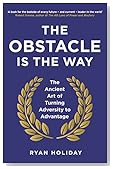
https://images-eu.ssl-images-amazon.com/images/P/B00IX49OS4.01._PC__.jpg The Obstacle is the Way Ryan Holiday Whilst everyone else appears to be obligated to include Ryan's recent Ego is the Enemy in their Best of 2016 lists I was actually taken by his earlier "introduction by stealth" to stoic philosophy. Certainly not your typical self-help book, this is "a manual to turn to in troubling times". Returning to this work at least three times over the year even splashing out on the audiobook at some point I feel like I learned a great deal, although it is now difficult to pinpoint exactly what. Perhaps another read in 2017 is thus in order
https://images-eu.ssl-images-amazon.com/images/P/071563335X.01._PC__.jpg Layer Cake J.J. Connolly To judge a book in comparison to the film is to do both a disservice, but reading the book of Layer Cake really underscored just how well the film played to the strengths of that medium. All of the aspects that would not have worked had been carefully excised from the screenplay, ironically leaving more rewarding "layers" for readers attempting the book. A parallel adaption here might be No Country for Old Men - I would love to read (or write) a comparative essay between these two adaptions although McCarthy's novel is certainly the superior source material.
https://images-eu.ssl-images-amazon.com/images/P/B00G1SRB6Q.01._PC__.jpg Lying Sam Harris I've absorbed a lot of Sam Harris's uvre this year in the form of his books but moreover via his compelling podcast. I'm especially fond of Waking Up on spirituality without religion and would rank that as my favourite work of his. Lying is a comparatively short read, more of a long essay in fact, where he argues that we can radically simplify our lives by merely telling the truth in situations where others invariably lie. Whilst it would take a brave soul to adopt his approach his case is superlatively well-argued and a delight to read.
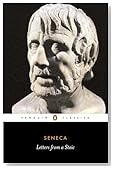
https://images-eu.ssl-images-amazon.com/images/P/0140442103.01._PC__.jpg Letters from a Stoic Seneca

Great pleasure is to be found not only in keeping up an old and established friendship but also in beginning and building up a new one. Reading this in a beautifully svelte hardback, I tackled a randomly-chosen letter per day rather than attempting to read it cover-to-cover. Breaking with a life-long tradition, I even decided to highlight sections in pen so I could return to them at ease. I hope it's not too hackneyed to claim I gained a lot from "building up" a relationship with this book. Alas, it is one of those books that is too easy to recommend given that it might make one appear wise and learned, but if you find yourself in a slump, either in life or in your reading habits, it certainly has my approval.


https://images-eu.ssl-images-amazon.com/images/P/B00BHD3TIE.01._PC__.jpg Solo: A James Bond Novel William Boyd I must have read all of the canonical Fleming novels as a teenager and Solo really rewards anyone who has done so. It would certainly punish anyone expecting a Goldeneye or at least be a little too foreign to be enjoyed. Indeed, its really a pastiche of these originals, both in terms of the time period, general tone (Bond is more somber; more vulnerable) and in various obsessions of Fleming's writing, such as the overly-detailed description of the gambling and dining tables. In this universe, 007's restaurant expenses probably contributed signifcantly to the downfall of the British Empire, let alone his waistline. Bond flicking through a ornithological book at one point was a cute touch
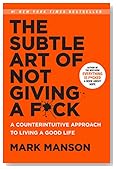
https://images-eu.ssl-images-amazon.com/images/P/B019MMUA8S.01._PC__.jpg The Subtle Art of Not Giving A F*ck Mark Manson Certainly a wildcard to include here and not without its problems, The Subtle Art is a curious manifesto on how to approach life. Whilst Manson expouses an age-old philosophy of grounding yourself and ignoring the accumulation of flatscreen TVs, etc. he manages to do so in a fresh and provocative "21st-centry gonzo" style. Highly entertaining, at one point the author posits an alternative superhero ("Disappointment Panda") that dishes out unsolicited and uncomfortable truths to strangers before simply walking away: "You know, if you make more money, that s not going to make your kids love you," or: "What you consider friendship is really just your constant attempts to impress people." Ouch.
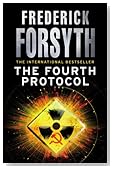
https://images-eu.ssl-images-amazon.com/images/P/B004ZLS5RK.01._PC__.jpg The Fourth Protocol Frederick Forsyth I have a crystal-clear memory from my childhood of watching a single scene from a film in the dead of night: Pierce Brosnan sets a nuclear device to detonate after he can get away but a double-crossing accomplice surreptitiously brings the timetable forward in order that the bomb also disposes of him Anyway, at some point whilst reading The Fourth Protocol it dawned on me that this was that book. I might thus be giving the book more credit due to this highly satisfying connection but I think it stands alone as a superlative political page-turner and is still approachable outside the machinations of the Cold War.
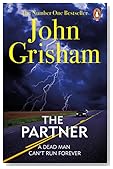
https://images-eu.ssl-images-amazon.com/images/P/B003IDMUSG.01._PC__.jpg The Partner John Grisham After indulging in a bit too much non-fiction and an aborted attempt at The Ministry of Fear, I turned to a few so-called lower-brow writers such as Jeffrey Archer, etc. However, it was The Partner that turned out to be a real page-turner for somewhat undefinable reasons. Alas, it appears the rest of the author's output is unfortunately in the same vein (laywers, etc.) so I am hesitant to immediately begin others but judging from various lists online I am glad I approached this one first.
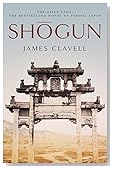
https://images-eu.ssl-images-amazon.com/images/P/B00D3J2QKC.01._PC__.jpg Shogun: The First Novel of the Asian saga James Clavell Despite its length, I simply couldn't resist returning to Shogun this year although it did fatigue me to the point that I have still yet to commence on its sequel, Tai-Pan. Like any good musical composition, one is always rewarded by returning to a book and I took great delight in uncovering more symbolism throughout (such as noticing that one of the first words Blackthorne learns in Japanese is "truth") but also really savouring the tragic arcs that run throughout the novel, some beautiful phrases ("The day seemed to lose its warmth ") and its wistful themes of inevitability and karma.

Andreas Metzler: I am wondering

I am wondering how many years it is going to take me to stop expecting snow below 2000m in December. This has now been the third year in a row with basically zero snow until christmas up to the top of the mountains around here. (And this year it is not going to change anymore, there might be a tiny bit of snow on January 3, but not enough to ride a board on.) I should have grown accustomed to it, but I have not managed yet, it still feels like a let-down. some illustrations.

Shirish Agarwal: Mausaji, Samosaji

mausaji

Mausaji, Never born Never died, Always in the heart.

Dear Friends, I have shared a few times that I had a privileged childhood. I never had led a hand-to-mouth existence but more than that I was privileged to have made the acquaintance of Jaipur wale Mausaji while I was very young. I have been called miserly by my cousin sisters whenever they write letters to me and I don t answer simply because whatever I feel for them, words feel inadequate and meaningless. The same thing applies in this as well. I am sharing few bits here as there are too many memories of a golden past which will not let me go till I have shared a few of them. First let me start by sharing the relation I had with him. By relation he was my mother s-sister s husband. In English, he would probably be termed as Maternal Uncle although he was much more than that. My one of the first remembrances of him was during Madhu Didi s Shaadi (marriage). Madhu Didi is uncle s daughter and I would have been a impish 4-5 year old at the time. This was the first time I was gonna be part of The Great North Indian Wedding and I didn t know what was in store for me as I had grown in Pune. I remember finishing my semester tests and mummy taking me to Pune Station. I was just excited that I would be travelling somewhere and had no clue what would be happening. We landed in Agra, took another train and landed in Jaipur in the middle of the night at their home at Sangram Colony. While I had known few of the cousins, I was stumped to see so many cousins jumping out of everywhere. The look on my face was one of stupefaction and surprise . The only thing which would closely resemble that would be Bilbo s 111st Birthday party in Lord of the Rings (Part 1). In fact, by a curious quirk/twist of fate, I came to know of a Naniji or somebody like that who by relation was far elder to me, while she was either my age or below my age. As was customary, had to bow down sheepishly. As a somewhat alone boy, to be thrown in this rambunctious bunch and be the babe in the woods, I was quickly chopped and eaten up but had no complaints. I would get into trouble onto a drop of a hat. While Mausiji would threaten me, Mausaji would almost always defend me. While Mausiji could see through me, the twinkle in Mausaji s eyes used to tell me that while he knew what I was upto, for reasons unknown, he would always defend me. Mausaji s Sangram Colony s house became my cricket ground, football ground and all and any ground to play and be. Mausaji and his brothers used to live near each other and the lane they had, had hardly any vehicles on it, so all the cousins could play all they want with me being the longest, perhaps unconsciously trying either to make for lost time or knowing/unknowing this was too good to last. Today s Pokemon generation might not be able to get it but that s alright. They also had a beautiful garden where Mausiji used to grow vegetables. While playing, we sometimes used to hurt her veggies (unconsciously) or just have shower with the garden hose. Mausaji used to enjoy seeing our antics. One of the relatives even had a dog who used to join in the fun sometimes. When mummy and Mausiji expressed concern about the dog biting, Mausaji would gently brush it aside. One of the other things in Didi s marriage is we got a whole lot of sweets. While Mausiji tried to keep us in check with sweets, both Manish Bhaiya and Mausaji used to secrete sweets from time to time. When I was hungry and used to steal food (can t wait till the appointed time) either Bhaiya or Mausaji would help me with the condition I would have to take the blame if and when we got caught as we invariably did. Mausaji s house had a basement where all the secreted sweets and food used to get in. Both me and Manish Bhaiya would be there and we would have a riot in ourselves. We would enjoy the adrenaline when we were stealing the food. As I was pretty young, I was crazy about the Tom and Jerry cartoons that used to come on Television that time. I and Bhaiya used to act like Jerry and/or his cronies while Mausiji would invariably be the Tom with Mausaji all-knowing about it but acting as a mere bystander. I remember him egging me for many of the antics I would do and get in trouble in but as shared would also be defended by him. The basement was also when I was becoming a teenager where Manish Bhaiya showed me his collection and we had a heart-to-heart about birds and bees. While whatever little I had known till that time was from school-friends and my peers at school and I didn t know what was right or wrong. Bhaiya clarified lot of things, concepts which I was either clueless or confused about. When I look back now, it is possible that Mausaji might have instructed Bhaiya to be my tutor as I used to be somewhat angry and lash out by the confusing times. As we used to go there for part of holidays, I remember doing all sorts of antics to make sure I would get an extra day, an extra hour to be there. I never used to understand why we had to go to meet the other relatives when all the fun I could have was right there only, couldn t Mummy know/see that I used to enjoy the most here. Mausaji was a clothier as we understand the term today and a gentleman to the core. He was the co-owner of Rajputana Cloth Store in Jaipur. Many VIP s as well as regular people used to visit him for getting clothes designed and stitched under his watchful eyes. I never saw him raise his voice against any of the personnel working under him and used to be a thorough gentleman to one and all. Later, as I grew up I came to know and see that people would phone up and just ask him to do the needful. He would get the right cloth, stitch it right and people used to trust him for that. He was such an expert on cloth and type of clothes, that by mere touch he could talk/share about what sort of cloth it is. One of his passions was driving and from the money he had saved, he had got an Ambassador Car. Every day or every other day or whenever he felt like it, he used to take either the gang or me with mummy or me with anybody else. Each ride used to be an adventure in itself, with a start beginning and an end. I always used to watch out for the car-rides as I knew we would get sweets or something as well as he would regale us with stories about a place here and there. There was a childlike curiosity and interest in him which was infectious to one and all. The only weakness that he had was he liked to drink wine once in a while. When I was a kid, I was never able to give him company, only few years back, for the first time I was able to share wine with him which was also a memory I treasure. Those who know him closely knew the many up and downs that he went through, but as a gentleman he never let on the hurts he had or didn t curse his fate or anything else that we do when things go bad from our perspective. While there is much to write about him, it will not accomplish anything that is not known about him. I ll add with the private joke that was between him and me. When I was little, I used to call him Mausaji, Samosaji for a) I liked Samosa and b) Samosa has a bit thick skin outside and underneath it s all gravy. In reality though, he was butter all the way. I miss you Mausaji and wish I could turn the clock back and come with Mummy to visit both Mausiji and you. I hope your new journey takes you to even further heights than this life. Savouring the memories mummy and I, hope we meet you again in some new Avataar
Filed under: Miscellenous Tagged: #antics, #growing up, #holidays, #Manish Bhiaya, #Mausaji, #Sangram Colony

Russ Allbery: Review: Queen of Sorcery

Review: Queen of Sorcery, by David Eddings
Series: The Belgariad #2
Publisher: Del Rey
Copyright: November 1982
Printing: March 1992
ISBN: 0-345-33565-1
Format: Mass market
Pages: 322
Queen of Sorcery is the second book in the Belgariad, which is a "one story in five books" sort of series. You could probably take a chance on skipping Pawn of Prophecy, since it's not a very good book, but some parts of the story may be confusing without it. We're now getting into the part of the series where I can start saying some nice things about it, so I should put that in context and not get expectations too high. The Belgariad as a series is fully invested in the stock symbols and stereotypes of Tolkien-derivative fantasy. White is good; black is bad. West is good; east is bad. People are very neatly divided into countries, and national traits are exceptionally strong. The Murgos, the people who serve (although "under the thumb of" would be more accurate, Eddings doesn't spend much time thinking about the difference) the Big Bad of the series, are basically orcs, for all that they're theoretically human. With an unsympathetic reading, it's very easy to see the echos of the Yellow Peril in the war between the west and the east, including the standard trope of fractious, arguing, and diverse western kingdoms against a unified horde from the east. (To be fair, Eddings does undermine the unity a bit with the Nadraks later in the series, and my recollection is that the Mallorean, a follow-on series, undermines it even further.) Given that, I've been trying to figure out why I had fond memories of this series and enjoyed this re-read, since that normally isn't my thing. There are a few elements that are best talked about in the context of the next book, but one element shows up here as the party of heroes, finishing their forced detour in Cherek, head south through Arendia. Eddings is aware that he's stereotyping each nation of people in this world and embraces it so thoroughly that it stops feeling like stereotypes and starts feeling more like a fable. The Arends are a great example. Arendia is pure medieval fantasy world (even more so than the rest of this world). There are knights in castles, large forests reserved for noble hunting, and miserable serfs. The Arends, apart from the serfs, are full of tales of glory and honor, are impulsive and loyal to a fault, and are in the midst of a simmering internal war that's just barely not broken into open fighting. But the Arends know that they have an unhealthy obsession with honor, know that they constantly get themselves into trouble by being absolutist about honor and far too impulsive, and can't seem to help themselves. They bemoan the war while being apparently unable to do anything that would bring it to an end. If you think of them as people, none of this makes much sense. If you think of them as talking animals in a fable, aware of their natures but still governed by them, it starts to strangely work. When they're isolated from their society by joining the protagonists' party (the early part of this series mostly involves collecting people, for reasons explained later in the series, while following the trail of a thief), the characters of Eddings's world start developing a bit more nuance and depth. But even then, it's more within the bounds that one would expect in a long fable, and falls a bit short of human growth. The lion might learn something from the badger, but the lion is still a lion. With that frame, the first half of this book is rather entertaining. Eddings is taking the stereotype of the noble knight from a typical Arthurian romance and treating it like a class of animal in a fable, which I think is subtly delightful. There's even a doomed love triangle (a very chaste one, which is a reminder that this series was probably targeted at YA readers). The reader joins the primary characters in a sense of bemused exasperation. (Well, Garion takes the doomed love triangle much too seriously, but he's young). Unfortunately, the second half of this book is not one of the finest moments in this series. It's mostly a duet of whining. The first half of the whining comes from Garion, who finally discovers one of the many things about himself that's been obvious to the readers since the middle of the first book, and then promptly develops one of the worst cases of pathetic angst you'll encounter. The people who have been lying to him and keeping secrets from him are now all eager to teach him, which grates almost as much, whereas he's determined to never use his abilities. It makes me think the worst of absolutely everyone involved, and it all happens in one of the most depressing and disgusting settings of the book. The second half of the whining comes from Ce'Nedra, who is by far my least favorite character of this series. She's intended to be an obnoxious, spoiled, imperious brat, and also runs headlong into gender roles in this series, which means she's a living mass of irritation and gender stereotypes, made worse by the fact that the protagonists mostly tolerate her and Garion's reactions to her nonsense are also whiny and obnoxious. It's not my favorite bit of reading. Ce'Nedra does get marginally better later in the series, but she's at her worst here, at the same time Garion is at his worst, which makes the last half of this book a real chore. The only real plus side is that the voice in the back of Garion's head gets a few great moments, but more on that in the next book where it starts playing a prominent role. I should note here that Eddings isn't a complete disaster on gender in this series. There are a lot of unexamined stereotypes, but there are also a lot of examined ones, and it's obvious in places that he's trying. Polgara is a major character, women get some agency in this story, and they at least appear (which is never a given in Tolkien-derivative fantasy). But it's pretty obvious that gender roles start from a "men are from Mars, women are from Venus" set of expectations and then run into Eddings's general tendency to exaggerate all such divisions to fable levels, which in places isn't pretty. And, well, there are all-female giggly dryads who have to capture men to reproduce and who have a euphoric reaction to chocolate. That's a thing that happens. So you may or may not want to agree with me about the completeness of the disaster. Adjust expectations accordingly. If Queen of Sorcery had stuck with the tone of the first half of the book, I would say that it was doing something oddly interesting and showing some of the charm that made me want to re-read this series. Unfortunately, the second half of the book is a bit of a disaster, full of characters acting in ways that makes them very hard to like. Still, I plowed through this book in a couple nights of reading, so there's something here that draws one through the story. And the next book of the series is considerably better. Followed by Magician's Gambit. Rating: 6 out of 10

Next.

Previous.