Search Results: "pa"

14 August 2022

Dirk Eddelbuettel: RcppArmadillo used by 1001 CRAN Packages

It is with a mix of pride and joy, but also some genuine astonishment and amazement, that we can share that the counter of reverse dependencies at CRAN for our RcppArmadillo package for R just crossed 1000 packages [1]: Conrad actually posted this a few weeks ago, by my count we were then still a few packages shy. In any event, having crossed this marker this summer, either then or now, and after more than a dozen years of working on the package is a really nice moment. Google Scholar counts nearly 500 citations for our CSDA paper (also this vignette), and that ratio of nearly a citation for every two packages used is certainly impressive. We have had the pleasure of working with so many other researchers and scientists using RcppArmadillo. Its combination of performance (C++, after all, and heavily tuned) and ease-of-use (inspired by another popular flavour for matrix computing that is however mostly interpreted) makes for a powerful package, and we are delighted to see it used so widely. Working on this with Conrad has been excellent. The (upstream) package (now at this GitLab repo) has received numerous releases at a rate that is in fact so high that we now slow it down to not exceed a monthly cadence of uploads to CRAN. But the package should always be in release condition at its GitHub repo, and is frequently also installable in rc versions via the Rcpp drat repo. So with that, a big Thank You! to Conrad, to Romain for all the early work laying the package foundations, and to all the users of (Rcpp)Armadillo for helping us along with testing, suggestions, extensions, and bug reports. Keep em coming! If you like this or other open-source work I do, you can now sponsor me at GitHub. [1] The code snippet shows that we remove some possible duplicates in the count (mostly for the total of packages). This is a correction we use across packages for consistency. It does not have an effect for RcppArmadillo.

This post by Dirk Eddelbuettel originated on his Thinking inside the box blog. Please report excessive re-aggregation in third-party for-profit settings.

Jamie McClelland: Web caching is hard

Web caching is hard. And also, maybe I m not that good under pressure? In any event, I made the following mistakes while trying to debug a web site using our nginx cache that bit the dust under heavy load today: Action: I ran curl -I https://website.org/ and it hung. Wrong assumption: Something is wrong with nginx. Why else would it just hang? Reconsidered conclusion: The resource (the home page) is a MISS, so nginx has to retrieve it from the origin, but the origin is over-loaded and timing out, so my request is also timing out. Maybe something is wrong with the nginx caching configuration since the home page really should be a HIT but that s another problem. Action: I changed the configuration from our normal caching set of directives to our aggressive caching set of directives, reloaded nginx and curl -I https://website.org/ still hung. Wrong assumption: aggressive caching isn t working and I need a different configuration. Reconsidered conclusion: The home page still has failed to be loaded from the origin, so every request for it is going to be a MISS, and is going to hang, until nginx is able to fill the cache with it. The configuration change might be the right change; we just need the origin to calm down before we will know. Action: I restarted PHP on the origin to free up PHP processes so my home page request can fill the cache and still curl -I https://website.org/ hangs. Wrong assumption: WTF! The world is ending! Reconsidered conclusion: The regular traffic which is accessing other pages (not the home page) consumed all the available PHP processes on the origin before my request for the home page could complete, so nginx is still unable to fill the cache with the home page. Action: Once we got things under control, I changed the caching level from aggressive back down to normal. I ran curl -I https://website.org/ and it was HIT ing. I concluded that we don t need the aggressive cache after all. Got some coffee, came back later and ran it again and it consistently showed MISS. Wrong assumption: What?!? Did something change on the origin to stop the cache from working?? Reconsidered conclusion: The aggressive cache set the cache for 5 minutes. Even after changing to normal caching, the home page was still cached so it was served from the cache. After 5 minutes, the cache expired. Now, the normal cache setting are in play to determine whether the request would be cached or not. In other words, you have to wait for the cache to expire (or bust the cache) before you can effectively know if the new cache settings are working.

Sergio Durigan Junior: Debuginfod is coming to Ubuntu

These past couple of months I have been working to bring debuginfod to Ubuntu. I thought it would be a good idea to make this post and explain a little bit about what the service is and how I'm planning to deploy it. A quick recap: what's debuginfod? Here's a good summary of what debuginfod is:
debuginfod is a new-ish project whose purpose is to serve
ELF/DWARF/source-code information over HTTP.  It is developed under the
elfutils umbrella.  You can find more information about it here:
  https://sourceware.org/elfutils/Debuginfod.html
In a nutshell, by using a debuginfod service you will not need to
install debuginfo (a.k.a. dbgsym) files anymore; the symbols will be
served to GDB (or any other debuginfo consumer that supports debuginfod)
over the network.  Ultimately, this makes the debugging experience much
smoother (I myself never remember the full URL of our debuginfo
repository when I need it).
If you follow the Debian project, you might know that I run their debuginfod service. In fact, the excerpt above was taken from the announcement I made last year, letting the Debian community know that the service was available. First stage With more and more GNU/Linux distributions offering a debuginfod service to their users, I strongly believe that Ubuntu cannot afford to stay out of this "party" anymore. Fortunately, I have a manager who not only agrees with me but also turned the right knobs in order to make this project one of my priorities for this development cycle. The deployment of this service will be made in stages. The first one, whose results are due to be announced in the upcoming weeks, encompasses indexing and serving all of the available debug symbols from the official Ubuntu repository. In other words, the service will serve everything from main, universe and multiverse, from every supported Ubuntu release out there. This initial (a.k.a. "alpha") stage will also allow us to have an estimate of how much the service is used, so that we can better determine the resources allocated to it. More down the road This is just the beginning. In the following cycles, I will be working on a few interesting projects to expand the scope of the service and make it even more useful for the broader Ubuntu community. To give you an idea, here is what is on my plate: As you can see, there's a lot to do. I am happy to be working on this project, and I hope it will be helpful and useful for the Ubuntu community.

Russ Allbery: Review: Still Not Safe

Review: Still Not Safe, by Robert L. Wears & Kathleen M. Sutcliffe
Publisher: Oxford University Press
Copyright: November 2019
ISBN: 0-19-027128-0
Format: Kindle
Pages: 232
Still Not Safe is an examination of the recent politics and history of patient safety in medicine. Its conclusions are summarized by the opening paragraph of the preface:
The American moral and social philosopher Eric Hoffer reportedly said that every great cause begins as a movement, becomes a business, and eventually degenerates into a racket. The reform movement to make healthcare safer is clearly a great cause, but patient safety efforts are increasingly following Hoffer's path.
Robert Wears was Professor of Emergency Medicine at the University of Florida specializing in patient safety. Kathleen Sutcliffe is Professor of Medicine and Business at Johns Hopkins. This book is based on research funded by a grant from the Robert Wood Johnson Foundation, for which both Wears and Sutcliffe were primary investigators. (Wears died in 2017, but the acknowledgments imply that at least early drafts of the book existed by that point and it was indeed co-written.) The anchor of the story of patient safety in Still Not Safe is the 1999 report from the Institute of Medicine entitled To Err is Human, to which the authors attribute an explosion of public scrutiny of medical safety. The headline conclusion of that report, which led nightly news programs after its release, was that 44,000 to 120,000 people died each year in the United States due to medical error. This report prompted government legislation, funding for new safety initiatives, a flurry of follow-on reports, and significant public awareness of medical harm. What it did not produce, in the authors' view, is significant improvements in patient safety. The central topic of this book is an analysis of why patient safety efforts have had so little measurable effect. The authors attribute this to three primary causes: an unwillingness to involve safety experts from outside medicine or absorb safety lessons from other disciplines, an obsession with human error that led to profound misunderstandings of the nature of safety, and the misuse of safety concerns as a means to centralize control of medical practice in the hands of physician-administrators. (The term used by the authors is "managerial, scientific-bureaucratic medicine," which is technically accurate but rather awkward.) Biggest complaint first: This book desperately needed examples, case studies, or something to make these ideas concrete. There are essentially none in 230 pages apart from passing mentions of famous cases of medical error that added to public pressure, and a tantalizing but maddeningly nonspecific discussion of the atypically successful effort to radically improve the safety of anesthesia. Apparently anesthesiologists involved safety experts from outside medicine, avoided a focus on human error, turned safety into an engineering problem, and made concrete improvements that had a hugely positive impact on the number of adverse events for patients. Sounds fascinating! Alas, I'm just as much in the dark about what those improvements were as I was when I started reading this book. Apart from a vague mention of some unspecified improvements to anesthesia machines, there are no concrete descriptions whatsoever. I understand that the authors were probably leery of giving too many specific examples of successful safety initiatives since one of their core points is that safety is a mindset and philosophy rather than a replicable set of actions, and copying the actions of another field without understanding their underlying motivations or context within a larger system is doomed to failure. But you have to give the reader something, or the book starts feeling like a flurry of abstract assertions. Much is made here of the drawbacks of a focus on human error, and the superiority of the safety analysis done in other fields that have moved beyond error-centric analysis (and in some cases have largely discarded the word "error" as inherently unhelpful and ambiguous). That leads naturally to showing an analysis of an adverse incident through an error lens and then through a more nuanced safety lens, making the differences concrete for the reader. It was maddening to me that the authors never did this. This book was recommended to me as part of a discussion about safety and reliability in tech and the need to learn from safety practices in other fields. In that context, I didn't find it useful, although surprisingly that's because the thinking in medicine (at least as presented by these authors) seems behind the current thinking in distributed systems. The idea that human error is not a useful model for approaching reliability is standard in large tech companies, nearly all of which use blameless postmortems for exactly that reason. Tech, similar to medicine, does have a tendency to be insular and not look outside the field for good ideas, but the approach to large-scale reliability in tech seems to have avoided the other traps discussed here. (Security is another matter, but security is also adversarial, which creates different problems that I suspect require different tools.) What I did find fascinating in this book, although not directly applicable to my own work, is the way in which a focus on human error becomes a justification for bureaucratic control and therefore a concentration of power in a managerial layer. If the assumption is that medical harm is primarily caused by humans making avoidable mistakes, and therefore the solution is to prevent humans from making mistakes through better training, discipline, or process, this creates organizations that are divided into those who make the rules and those who follow the rules. The long-term result is a practice of medicine in which a small number of experts decide the correct treatment for a given problem, and then all other practitioners are expected to precisely follow that treatment plan to avoid "errors." (The best distributed systems approaches may avoid this problem, but this failure mode seems nearly universal in technical support organizations.) I was startled by how accurate that portrayal of medicine felt. My assumption prior to reading this book was that the modern experience of medicine as an assembly line with patients as widgets was caused by the pressure for higher "productivity" and thus shorter visit times, combined with (in the US) the distorting effects of our broken medical insurance system. After reading this book, I've added a misguided way of thinking about medical error and risk avoidance to that analysis. One of the authors' points (which, as usual, I wish they'd made more concrete with a case study) is that the same thought process that lets a doctor make a correct diagnosis and find a working treatment is the thought process that may lead to an incorrect diagnosis or treatment. There is not a separable state of "mental error" that can be eliminated. Decision-making processes are more complicated and more integrated than that. If you try to prevent "errors" by eliminating flexibility, you also eliminate vital tools for successfully treating patients. The authors are careful to point out that the prior state of medicine in which each doctor was a force to themselves and there was no role for patient safety as a discipline was also bad for safety. Reverting to the state of medicine before the advent of the scientific-bureaucratic error-avoiding culture is also not a solution. But, rather at odds with other popular books about medicine, the authors are highly critical of safety changes focused on human error prevention, such as mandatory checklists. In their view, this is exactly the sort of attempt to blindly copy the machinery of safety in another field (in this case, air travel) without understanding the underlying purpose and system of which it's a part. I am not qualified to judge the sharp dispute over whether there is solid clinical evidence that checklists are helpful (these authors claim there is not; I know other books make different claims, and I suspect it may depend heavily on how the checklist is used). But I found the authors' argument that one has to design systems holistically for safety, not try to patch in safety later by turning certain tasks into rote processes and humans into machines, to be persuasive. I'm not willing to recommend this book given how devoid it is of concrete examples. I was able to fill in some of that because of prior experience with the literature on site reliability engineering, but a reader who wasn't previously familiar with discussions of safety or reliability may find much of this book too abstract to be comprehensible. But I'm not sorry I read it. I hadn't previously thought about the power dynamics of a focus on error, and I think that will be a valuable observation to keep in mind. Rating: 6 out of 10

12 August 2022

Shirish Agarwal: Mum and Books

The last day
The first lesson I would like everybody to know and have is to buy two machines, especially a machine to check low blood pressure. I had actually ordered one from Amazon but they never delivered. I hope to sue them in consumer court in due course of time. The other one is a blood sugar machine which I ordered and did get, but the former is more important than the latter, and the reason why will be known soon. Mum had stopped eating solids and was entirely on liquids for the last month of her life. I did try enticing her however I could with aromatic food but failed. Add to that we had weird weather this entire year. June is supposed to be when the weather turns and we have gentle showers, but this whole June it felt like we were in an oven. She asked for liquids whenever and although I hated that she was not eating solids, at least she was having liquids (juices and whatnot) and that s how I pacified myself. I had been repeatedly told by family and extended family to get a full-time nurse but she objected time and again for the same and I had to side with her. Then July 1st came around and part of extended family also came, and they impressed both on me and her to get a nurse so finally, I was able to get her nurse. I was also being pulled in various directions (outside my stuff, mumma s stuff) and doing whatever she needed in terms of supplies. On July 4th, think she had low blood pressure but without a machine, one cannot know. At least that s what I know. If somebody knows anything better, please share, who knows it may save lives. I don t have a blood pressure monitor even to date

There used to be 5-6 doctors in our locality before the Pandemic, but because of the Pandemic and whatever other reasons, almost all doctors had given up attending house calls. And the house where I live is a 100-year-old house so it has narrow passageways and we have no lift. So taking her in and out is a challenge and an ordeal, and something that is not easily done. I had to do some more works so I asked the nurse to stay a bit over 8 p.m. I came and the nurse left for the day. That day I had been distracted for a number of reasons which I don t remember what was but at that point in time, doing those works seemed important. I called out to her but she didn t respond. I remember the night before she had been agitated while sleeping, I slept nearby and kept an eye on her. I had called her a few times to ask whether she needed something but she didn t respond. (this is about the earlier night). That evening, it was raining quite a bit, I called her a few times but she didn t speak. I kissed her on the cheek and realized she is cold. Mumma usually becomes very agitated if she feels cold and shouts at me. I realized she is cold and her body a bit stiff. I was supposed to eat but just couldn t. I dunno what I suspected, I just hired a rickshaw and went around till 9 p.m. and it was a fruitless search for a doctor. I returned home, and again called her but there was no response. Because she was not responding, I became fearful, had a shat, and then dialed the hospital. Asking for the ambulance, it took about an hr. but finally, the ambulance came in. It was now 11 o clock or 2300 hrs. when the ambulance arrived in. It took another half an hr. getting few kids who had come from some movie or something to get them to help mum get down through the passage to the ambulance. We finally reached the hospital at 2330. The people on casualty that day were known to me, and they also knew my hearing problem, so it was much easier to communicate. Half an hour later, they proclaimed her dead. Fortunately or not, I had just bought the newer mobile phone just a few days back. And right now, In India, WhatsApp is one of the most used apps. So I was able to chat with everybody and tell them what was happening or rather what has happened. Of all, mamaji (mother s brother) shared that most members of the family would not be able to come except a cousin sister who lives in Mumbai. I was instructed to get the body refrigerated for a few hrs. It is only then I came to know various ways in which the body is refrigerated and how cruel it would have been towards Atal Bihari Vajpayee s family, but that is politics. I had to go to quite a few places and was back home around 3 a.m. I was supposed to sleep, but sleep was out of the question. I whiled away a few hrs. playing, seeing movies, something or the other to keep myself distracted as literally, I had no idea what to do. Morning came, took a bath, went outside, had some snacks, came home and somewhere then slept. One of my Mausi s (mother s sister) was insisting to get the body burnt in the morning itself but I wanted at least one relative to be there on the last journey. Cousin sister and her husband came to Pune around 4 p.m. I somehow woke, ringing, the vibration I do not know what. I took a short bath, rushed to the place where we had kept the body, got the body and from there where we had asked permission to get the body burned. More than anything else, I felt so sad that except for cousin sister, and me, nobody was with her on the last journey. Even that day, it was raining hard, so people avoided going out. Brother-in-law tried to give me some money, but I brushed it off. I just wanted their company, money is and was never the criteria. So, in the evening we had a meal, my cousin sister, brother-in-law, their two daughters and me. The next day we took the bones and ash to Alandi and did what was needed. I have tried to resurrect the day so many times in my head trying to figure out what I could have done better and am inconclusive. Having a blood pressure monitor for sure would have prevented the tragedy or at least post-phoned for it for a few more days, weeks, years, dunno. I am not medically inclined.

The Books I have to confess, the time they said she is no more, I was hoping that the doctors would say, we have a pill, would you like to take it, it would reunite you with mum. Maybe it wa crazy or whatever, but if such a situation had been, I would have easily gone for it. If I were to go, some people might miss me, but nobody would miss me terribly, and at least I would be with her. There was nothing to look forward to. What saved me from going mad was Michael Crichton s Timeline. It is a fascinating and seductive book. I had actually read it years ago but had forgotten. So many days and nights I was able to sleep hoping that quantum teleportation can be achieved. Anybody in my space would be easily enticed. What joy would it be if I were to meet mum once again. I can tell my other dumb child what to do so she lives for few more years. I could talk to her, just be with her for some time. It is a powerful and seductive idea. I can see so many cults and whatnot that can be formed around it, there may already be, who knows. Another good book that helped me to date has been Through The, Rings Of Fire (Hardcover, J. D. Benedict Thyagarajan). It is an autobiography of Venkat Chalasany (story of an orphan boy who became a successful builder in Pune and the setbacks he had.) While the author has very strong views and I sometimes feel very naive views about things, I was taken a ride of my own city as it was in 1970s and 1980s. I could very well imagine all the different places and people as if they were happening right now. While I have finished the main story, there is still a bit left to read and I read 5-10 minutes every day as it s like a sweet morsel, it s like somebody sharing a tale passed without me having to make an effort. And no lies, the author has been pretty upfront where he has exaggerated or told lies or simply made-up stuff. I was thinking of adding something about movies and some more info or impressions about android but it seems that would have to wait, I do hope, it does work for somebody, even if a single life can be saved from what I shared above, my job is done.

Wouter Verhelst: Upgrading a Windows 10 VM to Windows 11

I run Debian on my laptop (obviously); but occasionally, for $DAYJOB, I have some work to do on Windows. In order to do so, I have had a Windows 10 VM in my libvirt configuration that I can use. A while ago, Microsoft issued Windows 11. I recently found out that all the components for running Windows 11 inside a libvirt VM are available, and so I set out to upgrade my VM from Windows 10 to Windows 11. This wasn't as easy as I thought, so here's a bit of a writeup of all the things I ran against, and how I fixed them. Windows 11 has a number of hardware requirements that aren't necessary for Windows 10. There are a number of them, but the most important three are: So let's see about all three.

A modern enough processor If your processor isn't modern enough to run Windows 11, then you can probably forget about it (unless you want to use qemu JIT compilation -- I dunno, probably not going to work, and also not worth it if it were). If it is, all you need is the "host-passthrough" setting in libvirt, which I've been using for a long time now. Since my laptop is less than two months old, that's not a problem for me.

A TPM 2.0 module My Windows 10 VM did not have a TPM configured, because it wasn't needed. Luckily, a quick web search told me that enabling that is not hard. All you need to do is:
  • Install the swtpm and swtpm-tools packages
  • Adding the TPM module, by adding the following XML snippet to your VM configuration:
    <devices>
      <tpm model='tpm-tis'>
        <backend type='emulator' version='2.0'/>
      </tpm>
    </devices>
    
    Alternatively, if you prefer the graphical interface, click on the "Add hardware" button in the VM properties, choose the TPM, set it to Emulated, model TIS, and set its version to 2.0.
You're done! Well, with this part, anyway. Read on.

Secure boot Here is where it gets interesting. My Windows 10 VM was old enough that it was configured for the older i440fx chipset. This one is limited to PCI and IDE, unlike the more modern q35 chipset (which supports PCIe and SATA, and does not support IDE nor SATA in IDE mode). There is a UEFI/Secure Boot-capable BIOS for qemu, but it apparently requires the q35 chipset, Fun fact (which I found out the hard way): Windows stores where its boot partition is somewhere. If you change the hard drive controller from an IDE one to a SATA one, you will get a BSOD at startup. In order to fix that, you need a recovery drive. To create the virtual USB disk, go to the VM properties, click "Add hardware", choose "Storage", choose the USB bus, and then under "Advanced options", select the "Removable" option, so it shows up as a USB stick in the VM. Note: this takes a while to do (took about an hour on my system), and your virtual USB drive needs to be 16G or larger (I used the libvirt default of 20G). There is no possibility, using the buttons in the virt-manager GUI, to convert the machine from i440fx to q35. However, that doesn't mean it's not possible to do so. I found that the easiest way is to use the direct XML editing capabilities in the virt-manager interface; if you edit the XML in an editor it will produce error messages if something doesn't look right and tell you to go and fix it, whereas the virt-manager GUI will actually fix things itself in some cases (and will produce helpful error messages if not). What I did was:
  • Take backups of everything. No, really. If you fuck up, you'll have to start from scratch. I'm not responsible if you do.
  • Go to the Edit->Preferences option in the VM manager, then on the "General" tab, choose "Enable XML editing"
  • Open the Windows VM properties, and in the "Overview" section, go to the "XML" tab.
  • Change the value of the machine attribute of the domain.os.type element, so that it says pc-q35-7.0.
  • Search for the domain.devices.controller element that has pci in its type attribute and pci-root in its model one, and set the model attribute to pcie-root instead.
  • Find all domain.devices.disk.target elements, setting their dev=hdX to dev=sdX, and bus="ide" to bus="sata"
  • Find the USB controller (domain.devices.controller with type="usb", and set its model to qemu-xhci. You may also want to add ports="15" if you didn't have that yet.
  • Perhaps also add a few PCIe root ports:
    <controller type="pci" index="1" model="pcie-root-port"/>
    <controller type="pci" index="2" model="pcie-root-port"/>
    <controller type="pci" index="3" model="pcie-root-port"/>
    
I figured out most of this by starting the process for creating a new VM, on the last page of the wizard that pops up selecting the "Modify configuration before installation" option, going to the "XML" tab on the "Overview" section of the new window that shows up, and then comparing that against what my current VM had. Also, it took me a while to get this right, so I might have forgotten something. If virt-manager gives you an error when you hit the Apply button, compare notes against the VM that you're in the process of creating, and copy/paste things from there to the old VM to make the errors go away. As long as you don't remove configuration that is critical for things to start, this shouldn't break matters permanently (but hey, use your backups if you do break -- you have backups, right?) OK, cool, so now we have a Windows VM that is... unable to boot. Remember what I said about Windows storing where the controller is? Yeah, there you go. Boot from the virtual USB disk that you created above, and select the "Fix the boot" option in the menu. That will fix it. Ha ha, only kidding. Of course it doesn't. I honestly can't tell you everything that I fiddled with, but I think the bit that eventually fixed it was where I chose "safe mode", which caused the system to do a hickup, a regular reboot, and then suddenly everything was working again. Meh. Don't throw the virtual USB disk away yet, you'll still need it. Anyway, once you have it booting again, you will now have a machine that theoretically supports Secure Boot, but you're still running off an MBR partition. I found a procedure on how to convert things from MBR to GPT that was written almost 10 years ago, but surprisingly it still works, except for the bit where the procedure suggests you use diskmgmt.msc (for one thing, that was renamed; and for another, it can't touch the partition table of the system disk either). The last step in that procedure says to restart your computer!, which is fine, except at this point you obviously need to switch over to the TianoCore firmware, otherwise you're trying to read a UEFI boot configuration on a system that only supports MBR booting, which obviously won't work. In order to do that, you need to add a loader element to the domain.os element of your libvirt configuration:
<loader readonly="yes" type="pflash">/usr/share/OVMF/OVMF_CODE_4M.ms.fd</loader>
When you do this, you'll note that virt-manager automatically adds an nvram element. That's fine, let it. I figured this out by looking at the documentation for enabling Secure Boot in a VM on the Debian wiki, and using the same trick as for how to switch chipsets that I explained above. Okay, yay, so now secure boot is enabled, and we can install Windows 11! All good? Well, almost. I found that once I enabled secure boot, my display reverted to a 1024x768 screen. This turned out to be because I was using older unsigned drivers, and since we're using Secure Boot, that's no longer allowed, which means Windows reverts to the default VGA driver, and that only supports the 1024x768 resolution. Yeah, I know. The solution is to download the virtio-win ISO from one of the links in the virtio-win github project, connecting it to the VM, going to Device manager, selecting the display controller, clicking on the "Update driver" button, telling the system that you have the driver on your computer, browsing to the CD-ROM drive, clicking the "include subdirectories" option, and then tell Windows to do its thing. While there, it might be good to do the same thing for unrecognized devices in the device manager, if any. So, all I have to do next is to get used to the completely different user interface of Windows 11. Sigh. Oh, and to rename the "w10" VM to "w11", or some such. Maybe.

Guido G nther: On a road to Prizren with a Free Software Phone

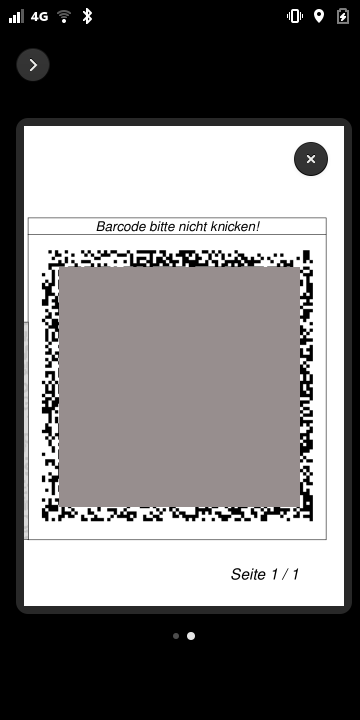
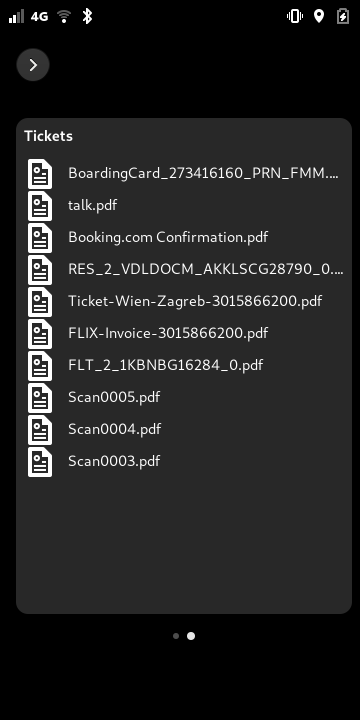
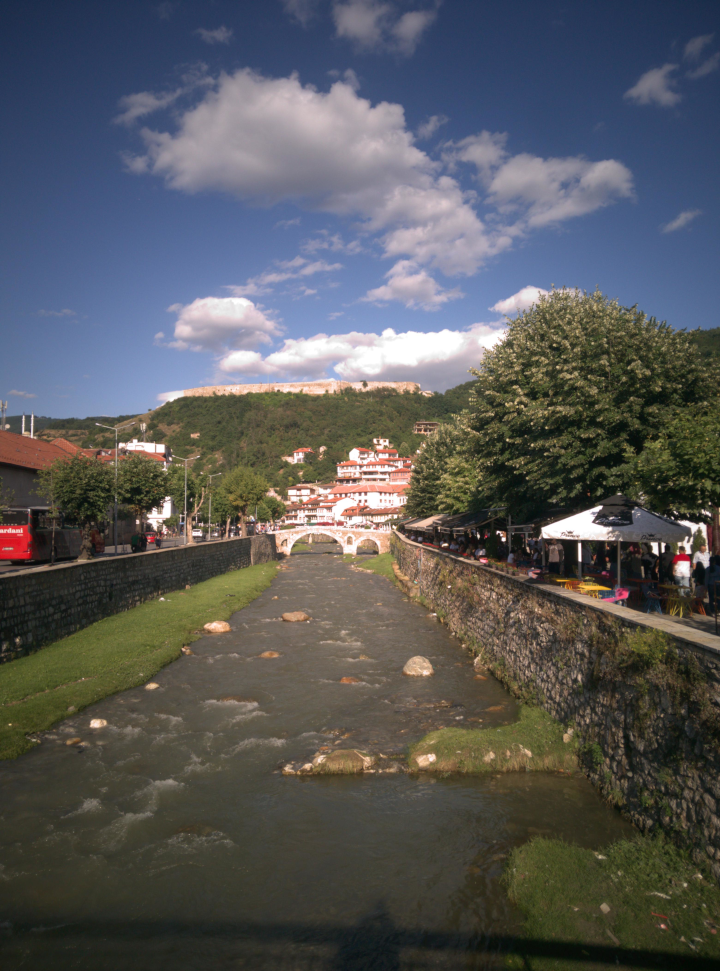
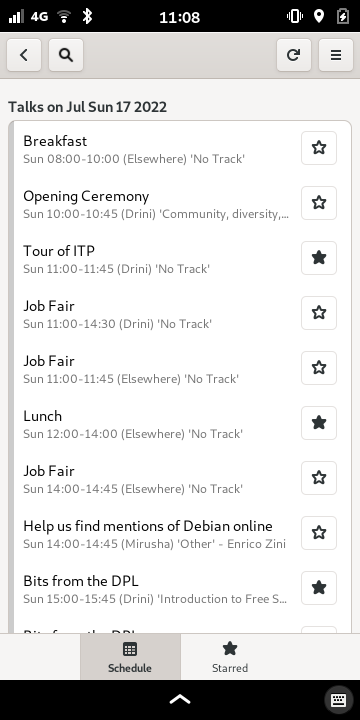
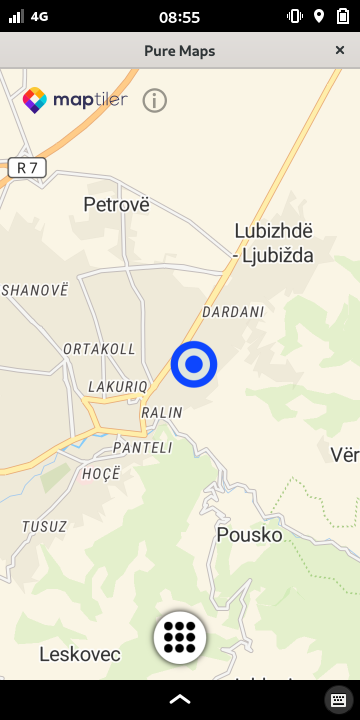
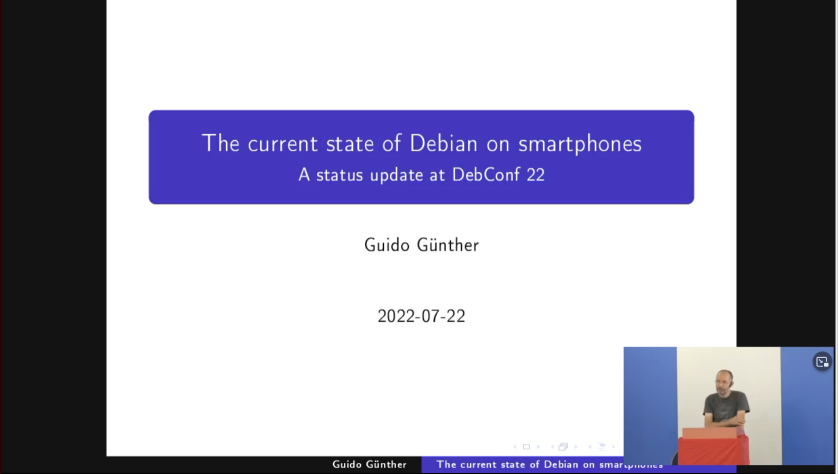
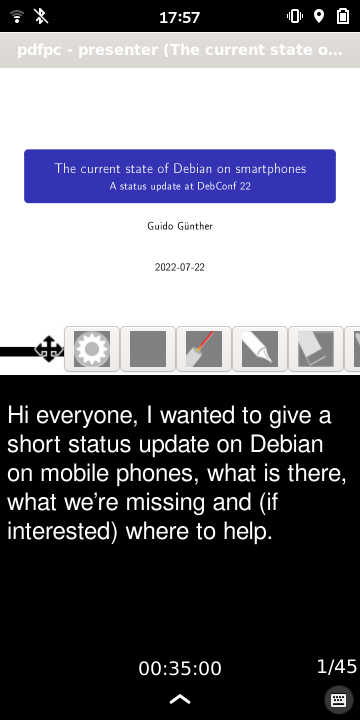
Since people are sometimes slightly surprised that you can go onto a multi week trip with a smartphone running free sofware so only I wanted to share some impressions from my recent trip to Prizren/Kosovo to attend Debconf 22 using a Librem 5. It's a mix of things that happend and bits that got improved to hopefully make things more fun to use. And, yes, there won't be any big surprises like being stranded without the ability to do phone calls in this read because there weren't and there shouldn't be. After two online versions Debconf 22 (the annual Debian Conference) took place in Prizren / Kosovo this year and I sure wanted to go. Looking for options I settled for a train trip to Vienna, to meet there with friends and continue the trip via bus to Zagreb, then switching to a final 11h direct bus to Prizren. When preparing for the trip and making sure my Librem 5 phone has all the needed documents I noticed that there will be quite some PDFs to show until I arrive in Kosovo: train ticket, bus ticket, hotel reservation, and so on. While that works by tapping unlocking the phone, opening the file browser, navigating to the folder with the PDFs and showing it via evince this looked like a lot of steps to repeat. Can't we have that information on the Phone Shell's lockscreen? This was a good opportunity to see if the upcoming plugin infrastructure for the lock screen (initially meant to allow for a plugin to show upcoming events) was flexible enough, so I used some leisure time on the train to poke at this and just before I reached Vienna I was able to use it for the first time. It was the very last check of that ticket, it also was a bit of cheating since I didn't present the ticket on the phone itself but from phosh (the phones graphical shell) running on my laptop but still. PDF barcode on phosh's lockscreen List of tickets on phosh's lockscreen This was possible since phosh is written in GTK and so I could just leverage evince's EvView. Unfortunately the hotel check in didn't want to see any documents . For the next day I moved the code over to the Librem 5 and (being a bit nervous as the queue to get on the bus was quite long) could happily check into the Flixbus by presenting the barcode to the barcode reader via the Librem 5's lockscreen. When switching to the bus to Prizren I didn't get to use that feature again as we bought the tickets at a counter but we got a nice krem banana after entering the bus - they're not filled with jelly, but krem - a real Kosovo must eat!). Although it was a rather long trip we had frequent breaks and I'd certainly take the same route again. Here's a photo of Prizren taken on the Librem 5 without any additional postprocessing: Prizren What about seeing the conference schedule on the phone? Confy(a conferences schedule viewer using GTK and libhandy) to the rescue: Confy with Debconf's schedule Since Debian's confy maintainer was around too, confy saw a bunch of improvements over the conference. For getting around Puremaps(an application to display maps and show routing instructions) was very helpful, here geolocating me in Prizren via GPS: Puremaps Puremaps currently isn't packaged in Debian but there's work onging to fix that (I used the flatpak for the moment). We got ourselves sim cards for the local phone network. For some reason mine wouldn't work (other sim cards from the same operator worked in my phone but this one just wouldn't). So we went to the sim card shop and the guy there was perfectly able to operate the Librem 5 without further explanation (including making calls, sending USSD codes to query balance, ). The sim card problem turned out to be a problem on the operator side and after a couple of days they got it working. We had nice, sunny weather about all the time. That made me switch between high contrast mode (to read things in bright sunlight) and normal mode (e.g. in conference rooms) on the phone quite often. Thankfully we have a ambient light sensor in the phone so we can make that automatic. Phosh in HighContrast See here for a video. Jathan kicked off a DebianOnMobile sprint during the conference where we were able to improve several aspects of mobile support in Debian and on Friday I had the chance to give a talk about the state of Debian on smartphones. pdf-presenter-console is a great tool for this as it can display the current slide together with additional notes. I needed some hacks to make it fit the phone screen but hopefully we figure out a way to have this by default. Debconf talk Pdf presenter console on a phone I had two great weeks in Prizren. Many thanks to the organizers of Debconf 22 - I really enjoyed the conference.

10 August 2022

Shirish Agarwal: Mum, Samsung Galaxy M-52

Mum I dunno from where to start. While I m not supposed to announce it, mum left this earth a month ago (thirteen days when I started to write this blog post) ago. I am still in part denial, part shock, and morose. Of all the seasons in a year, the rainy season used to be my favorite, now would I ever be able to look and feel other than the emptiness that this season has given me? In some senses, it is and was very ironic, when she became ill about last year, I had promised myself I would be by her side for 5-6 years, not go anywhere either Hillhacks or Debconf or any meetup and I was ok with that. Now that she s no more I have no clue why am I living. What is the purpose, the utility? When she was alive, the utility was understandable. We had an unspoken agreement, I would like after her, and she was supposed to look after me. A part of me self-blames as I am sure, I have done thousands of things wrong otherwise the deal was that she was going to be for another decade. But now that she has left not even halfway, I dunno what to do. I don t have someone to fight with anymore  It s mostly a robotic existence atm. I try to distract myself via movies, web series, the web, books, etc. whatever can take my mind off. From the day she died to date, I have a lower back pain which acts as a reminder. It s been a month, I eat, drink, and am surviving but still feel empty. I do things suggested by extended family but within there is no feeling, just emptiness :(. I have no clue if things will get better and even if I do want the change. I clearly have no idea, so let me share a little about what I know.

Samsung Galaxy M-52G Just a couple of days before she died, part of our extended family had come and she chose that opportunity to gift me Samsung Galaxy M-52G even though my birthday was 3 months away. Ironically, after I purchased it, the next day, one of the resellers of the phone cut the price from INR 28k to 20k. If a day more, I could have saved another 8k/- but what s done is done  To my mind, the phone is middling yet a solid phone. I had the phone drop accidentally at times but not a single scratch or anything like that. One can look at the specs in greater detail on fccd.io. Before the recent price drop, as I shared it was a mid-range phone so am gonna review it on that basis itself. One of the first things I did is to buy a plastic cover as well as a cover shield even though the original one is meant to work for a year or more. This was simply for added protection and it has served me to date. Even with the additional weight, I can easily use it with one hand. It only becomes problematic when using chatting apps. such as Whatsapp, Telegram, Quicksy and a few others where it comes with Samsung keyboard with the divided/split keyboard. The A.I. for guessing words and sentences are spot-on when you are doing it in English but if you try a mixture of Hinglish (Hindi and English) that becomes a bit of a nightmare. Tryng to each A.I; new words is something of a task. I wish there was an interface in which I could train the A.I. so it could be served for Hinglish words also. I do think it does, but it s too rudimentary as it is to be any useful at least where it is now.

WiFi Direct While my previous phone did use wifi direct but it that ancient android version wasn t wedded to Wifi Direct as this one is. You have essentially two ways to connect to any system outside. One is through Wi-Fi Direct and the more expensive way is through mobile data. One of the strange things I found quite a number of times, that Wifi would lose it pairings. Before we get into it, Wikipedia has a good explanation of what Wifi direct is all about. Apparently, either my phone or my modem loses the pairing, which of the two is the culprit, I really don t know. There are two apps from the Play Store that do help in figuring out what the issue is (although it is limited in what it gives out in info. but still good.) The first one is Wifi Signal Meter and the other one is WifiAnalyzer (open-source). I have found that pairing done through Wifi Signal Meter works better than through Google s own implementation which feels lacking. The whole universe of Android seems to be built on apps and games and many of these can be bought for money, but many of these can also be played using a combination of micro-transactions and ads. For many a game, you cannot play for more than 5 minutes before you either see an ad or wait for something like 2-3 hrs. before you attempt again. Hogwarts Mystery, for e.g., is an example of that. Another one would be Explore Lands . While Hogwarts Mystery is more towards the lore created by J.K.Rowling and you can really get into the thick of things if you know the lore, Explore lands is more into Exploration of areas. In both the games, you are basically looking to gain energy over a period of time, which requires either money or viewing ads or a combination of both Sadly most ads and even Google don t seem to have caught up that I m deaf so most ads do not have subtitles, so more often than not they are useless to me. I have found also that many games share screenshots or videos that have nothing to do with how the game is. So there is quite a bit of misleading going on. I did read that Android had been having issues with connecting with developers after their app. is in the Play Store. Most apps. ask and require a whole lot of permissions that aren t needed by that app.

F-Droid Think Pirate Praveen had introduced me to F-Droid and a whole lot of things have happened in F-Droid, lot more apps. games etc. the look of F-Droid has been pulled back. In fact, I found Neo Store to be a better skin to see F-Droid. I have yet to explore more of F-Droid before sharing any recommendations and spending some time on it. I do find that many of foss apps. do need to work on how we communicate with our users. For e.g. one app. that Praveen had shared with me recently was Quicksy. And while it is better, it uses a double negative while asking permission whether it should or not to use more of the phone s resources. It is an example of that sort of language that we need to be aware of and be better. I know this post is more on the mobile rather than the desktop but that is where I m living currently.

Russell Coker: TSIG Error From SSSD

A common error when using the sssd daemon to authenticate via Active Directory on Linux seems to be:
sssd[$PID]: ; TSIG error with server: tsig verify failure
This is from sssd launching the command nsupdate -g to do dynamic DNS updates. It is possible to specify the DNS server in /etc/sssd/sssd.conf but that will only be used AFTER the default servers have been attempted, so it seems impossible to stop this error from happening. It doesn t appear to do any harm as the correct server is discovered and used eventually. The commands piped to the nsupdate command will be something like:
server $SERVERIP
realm $DOMAIN
update delete $HOSTNAME.$DOMAIN. in A
update add $HOSTNAME.$DOMAIN. 3600 in A $HOSTIP
send
update delete $HOSTNAME.$DOMAIN. in AAAA
send

8 August 2022

Bits from Debian: Debian Day 2022 - call for celebration

Every year on August 16th, the anniversary of the Debian Project takes place. And several communities around the world celebrate this date by organizing local meetings in an event called "Debian Day". So, how about celebrating the 29th anniversary of the Debian Project in 2022 in your city? We invite you and your local community to organize Debian Day by hosting an event with talks, workshops, bug squashing party, OpenPGP keysigning, etc. Or simply holding a meeting between people who like Debian in a bar/pizzeria/cafeteria/restaurant to celebrate. In other words, any type of meeting is valid! But remember that the COVID-19 pandemic is not over yet, so take all necessary measures to protect attendees. As the 16th of August falls on a Tuesday, if you think it's better to organize it during the weekend, no problem. The importance is to celebrate the Debian Project. Remember to add your city to the Debian Day wiki page There is a list of Debian Local Groups around the world. If your city is listed, talk to them to organize DebianDay together. There is a list of Debian Local Groups around the world. If your city is listed, talk to them to organized the Debian Day together. Let's use hashtags #DebianDay #DebianDay2022 on social media.

Ian Jackson: dkim-rotate - rotation and revocation of DKIM signing keys

Background Internet email is becoming more reliant on DKIM, a scheme for having mail servers cryptographically sign emails. The Big Email providers have started silently spambinning messages that lack either DKIM signatures, or SPF. DKIM is arguably less broken than SPF, so I wanted to deploy it. But it has a problem: if done in a naive way, it makes all your emails non-repudiable, forever. This is not really a desirable property - at least, not desirable for you, although it can be nice for someone who (for example) gets hold of leaked messages obtained by hacking mailboxes. This problem was described at some length in Matthew Green s article Ok Google: please publish your DKIM secret keys. Following links from that article does get you to a short script to achieve key rotation but it had a number of problems, and wasn t useable in my context. dkim-rotate So I have written my own software for rotating and revoking DKIM keys: dkim-rotate. I think it is a good solution to this problem, and it ought to be deployable in many contexts (and readily adaptable to those it doesn t already support). Here s the feature list taken from the README: Complications It seems like it should be a simple problem. Keep N keys, and every day (or whatever), generate and start using a new key, and deliberately leak the oldest private key. But, things are more complicated than that. Considerably more complicated, as it turns out. I didn t want the DKIM key rotation software to have to edit the actual DNS zones for each relevant mail domain. That would tightly entangle the mail server administration with the DNS administration, and there are many contexts (including many of mine) where these roles are separated. The solution is to use DNS aliases (CNAME). But, now we need a fixed, relatively small, set of CNAME records for each mail domain. That means a fixed, relatively small set of key identifiers ( selectors in DKIM terminology), which must be used in rotation. We don t want the private keys to be published via the DNS because that makes an ever-growing DNS zone, which isn t great for performance; and, because we want to place barriers in the way of processes which might enumerate the set of keys we use (and the set of keys we have leaked) and keep records of what status each key had when. So we need a separate publication channel - for which a webserver was the obvious answer. We want the private keys to be readily noticeable and findable by someone who is verifying an alleged leaked email dump, but to be hard to enumerate. (One part of the strategy for this is to leave a note about it, with the prospective private key url, in the email headers.) The key rotation operations are more complicated than first appears, too. The short summary, above, neglects to consider the fact that DNS updates have a nonzero propagation time: if you change the DNS, not everyone on the Internet will experience the change immediately. So as well as a timeout for how long it might take an email to be delivered (ie, how long the DKIM signature remains valid), there is also a timeout for how long to wait after updating the DNS, before relying on everyone having got the memo. (This same timeout applies both before starting to sign emails with a new key, and before deliberately compromising a key which has been withdrawn and deadvertised.) Updating the DNS, and the MTA configuration, are fallible operations. So we need to cope with out-of-course situations, where a previous DNS or MTA update failed. In that case, we need to retry the failed update, and not proceed with key rotation. We mustn t start the timer for the key rotation until the update has been implemented. The rotation script will usually be run by cron, but it might be run by hand, and when it is run by hand it ought not to jump the gun and do anything too early (ie, before the relevant timeout has expired). cron jobs don t always run, and don t always run at precisely the right time. (And there s daylight saving time, to consider, too.) So overall, it s not sufficient to drive the system via cron and have it proceed by one unit of rotation on each run. And, hardest of all, I wanted to support post-deployment configuration changes, while continuing to keep the whole the system operational. Otherwise, you have to bake in all the timing parameters right at the beginning and can t change anything ever. So for example, I wanted to be able to change the email and DNS propagation delays, and even the number of selectors to use, without adversely affecting the delivery of already-sent emails, and without having to shut anything down. I think I have solved these problems. The resulting system is one which keeps track of the timing constraints, and the next event which might occur, on a per-key basis. It calculates on each run, which key(s) can be advanced to the next stage of their lifecycle, and performs the appropriate operations. The regular key update schedule is then an emergent property of the config parameters and cron job schedule. (I provide some example config.) Exim Integrating dkim-rotate itself with Exim was fairly easy. The lsearch lookup function can be used to fish information out of a suitable data file maintained by dkim-rotate. But a final awkwardness was getting Exim to make the right DKIM signatures, at the right time. When making a DKIM signature, one must choose a signing authority domain name: who should we claim to be? (This is the SDID in DKIM terms.) A mailserver that handles many different mail domains will be able to make good signatures on behalf of many of them. It seems to me that domain to be the mail domain in the From: header of the email. (The RFC doesn t seem to be clear on what is expected.) Exim doesn t seem to have anything builtin to do that. And, you only want to DKIM-sign emails that are originated locally or from trustworthy sources. You don t want to DKIM-sign messages that you received from the global Internet, and are sending out again (eg because of an email alias or mailing list). In theory if you verify DKIM on all incoming emails, you could avoid being fooled into signing bad emails, but rejecting all non-DKIM-verified email would be a very strong policy decision. Again, Exim doesn t seem to have cooked machinery. The resulting Exim configuration parameters run to 22 lines, and because they re parameters to an existing config item (the smtp transport) they can t even easily be deployed as a drop-in file via Debian s split config Exim configuration scheme. (I don t know if the file written for Exim s use by dkim-rotate would be suitable for other MTAs, but this part of dkim-rotate could easily be extended.) Conclusion I have today released dkim-rotate 0.4, which is the first public release for general use. I have it deployed and working, but it s new so there may well be bugs to work out. If you would like to try it out, you can get it via git from Debian Salsa. (Debian folks can also find it freshly in Debian unstable.)

comment count unavailable comments

7 August 2022

Aurelien Jarno: GNU libc 2.34 in unstable

The GNU libc version 2.34 has just been accepted into unstable. Getting it ready has been more challenging than other versions, as this version integrates a few libraries (libpthread, libdl, libutil, libanl) into libc. While this is handled transparently at runtime, there are a few corner cases at build time: The next challenge is to get it migrating into testing! For the adventurous persons, GNU libc 2.35 is now available in experimental. And as people keep asking, the goal is to get the just released GNU libc 2.36 into Bookworm.

Dirk Eddelbuettel: RApiSerialize 0.1.1 on CRAN: Updates

A new release 0.1.1 of RApiSerialize is now on CRAN. While this is the first release in seven years (!!), it brings mostly minor internal updates along with the option of using serialization format 3. The package is used by both my RcppRedis as well as by Travers excellent qs package. Neither one of us has a need to switch to format 3 yet so format 2 remains the default. But along with other standard updates to package internals, it was straightforward to offer the newer format so that is what we did.

Changes in version 0.1.1 (2022-08-07)
  • Updated CI use to r-ci
  • Expanded and updated both DESCRIPTION and README.md
  • Updated package internals to register compiled functions
  • Add support for serialization format 3, default remains 2
  • Minor synchronization with upstream

Courtesy of my CRANberries, there is also a diffstat to the previous version. More details are at the RApiSerialize page; code, issue tickets etc at the GitHub repository. If you like this or other open-source work I do, you can now sponsor me at GitHub.

This post by Dirk Eddelbuettel originated on his Thinking inside the box blog. Please report excessive re-aggregation in third-party for-profit settings.

6 August 2022

Dirk Eddelbuettel: RcppCCTZ 0.2.11 on CRAN: Updates

A new release 0.2.11 of RcppCCTZ is now on CRAN. RcppCCTZ uses Rcpp to bring CCTZ to R. CCTZ is a C++ library for translating between absolute and civil times using the rules of a time zone. In fact, it is two libraries. One for dealing with civil time: human-readable dates and times, and one for converting between between absolute and civil times via time zones. And while CCTZ is made by Google(rs), it is not an official Google product. The RcppCCTZ page has a few usage examples and details. This package was the first CRAN package to use CCTZ; by now four others packages include its sources too. Not ideal, but beyond our control. This version updates the include headers used in the interface API header thanks to a PR by Jing Lu, updates to upstream changes, and switched r-ci CI to r2u.

Changes in version 0.2.11 (2022-08-06)
  • More specific includes in RcppCCTZ_API.h (Jing Lu in #42 closing #41).
  • Synchronized with upstream CCTZ (Dirk in #43).
  • Switched r-ci to r2u use.

Courtesy of my CRANberries, there is also a diffstat to the previous version. More details are at the RcppCCTZ page; code, issue tickets etc at the GitHub repository. If you like this or other open-source work I do, you can now sponsor me at GitHub.

This post by Dirk Eddelbuettel originated on his Thinking inside the box blog. Please report excessive re-aggregation in third-party for-profit settings.

5 August 2022

Thorsten Alteholz: My Debian Activities in July 2022

FTP master This month I accepted 420 and rejected 44 packages. The overall number of packages that got accepted was 422. I am sad to write the following lines, but unfortunately there are people who rather take advantage of others instead of doing a proper maintenance of their packages. So, in order to find time slots for as much packages in NEW as possible, I no longer write a debian/copyright for others. I know it is a boring task to collect the copyright information, but our policy still requires this. Of course nobody is perfect and certainly one or the other license or copyright holder can be overlooked. Luckily most of the contributors maintain their debian/copyright very thouroughly with a terrific result. On the other hand some contributors upload only some crap and demand that I exactly list what is missing. I am no longer willing to do this. I am going to stop processing after I found a few missing things and reject the package. When I see repeatedly uploads containing only improvements with things I pointed out, I will process this package only after all others from NEW are done. Debian LTS This was my ninety-seventh month that I did some work for the Debian LTS initiative, started by Raphael Hertzog at Freexian. This month my all in all workload has been 35.75h. Unfortunately Stretch LTS has moved to Stretch ELTS and Buster LTS was not yet opened in July. So I think this is the first month I did not work all assigned hours. Besides things on security-master, I only worked 20h on moving the LTS documentation to their new destination. At the moment the documentation is spread over several locations. As searching over all those locations is not possible, it shall be collected at one place. Debian ELTS This month was the forty-eighth ELTS month. During my allocated time I uploaded: I also started to work on mod-wsgi and my patch was already approved by the maintainer. Now I am waiting for the security team to decide whether it will be uploaded as DSA or via PU. Last but not least I did some days of frontdesk duties. Other stuff This month I uploaded new upstream versions or improved packaging of:

Dirk Eddelbuettel: RcppXts 0.0.5 on CRAN: Routine Refreshment

A full eight and half years (!!) since its 0.0.4 release, version 0.0.5 of RcppXts is now on CRAN. The RcppXts package demonstrates how to access the export C API of xts which we contributed a looong time ago. This release contains an accumulated small set of updates made as the CRAN Policies evolved. We now register and use the shared library routines (updates in both src/init.c and NAMESPACE), turned on continuous integration, switched it from the now disgraces service to another, adopted our portable r-ci along with r2, added badges to the README.md, updated to https URLs, and made sure the methods package (from base R) was actually imported (something Rcpp has a need for at startup). That latter part now triggered a recent email from the CRAN maintainers which prompted this release. The NEWS entries follow.

Changes in version 0.0.5 (2022-08-05)
  • Depends on xts 0.9-6 now on CRAN
  • Exports (and documents) a number of additional functions
  • Switch CI use to r-ci and r2u
  • README.md, DESCRIPTION and NEWS.Rd were updated and expanded
  • NAMESPACE import of the shared library uses registration

Courtesy of my CRANberries, there is also a diffstat report for this release. A bit more information about the package is available here as well as at the GitHub repo. If you like this or other open-source work I do, you can now sponsor me at GitHub.

This post by Dirk Eddelbuettel originated on his Thinking inside the box blog. Please report excessive re-aggregation in third-party for-profit settings.

4 August 2022

Jamie McClelland: Fine tuning Thunderbird's end-to-end encryption

I love that Thunderbird really tackled OpenPGP head on and incorporated it directly into the client. I know it s been a bit rough for some users, but I think it s a good long term investment. And to demonstrate I ll now complain about a minor issue :). I replied to an encrypted message but couldn t send the response using encryption. I got an error message indicating that End-to-end encryption requires resolving certificate issues for and it listed the recipient email address. Screen shot of error message saying: End-to-end encryption requires resolving certificate issues for I spent an enormous amount of time examining the recipient s OpenPGP key. I made sure it was not expired. I made sure it was actually in my Thunderbird key store not just in my OpenPGP keychain. I made sure I had indicated that I trust it enough to use. I re-downloaded it. I eventually gave up and didn t send the email. Then I responded to another encrypted email and it worked. What!?!? I spent more time comparing the recipients before I realized the problem was the sending address, not the recipient address. I have an OpenPGP key that lists several identities. I have a Thunderbird Account that uses the Identities feature to add several from addresses. And, it turns out that in Thunderbird, you need to indicate which OpenPGP key to use for your main account but also for each identity. When you drill down to Manage Identities for your account, you are able to indicate which OpenPGP key you want to use for each identity. Once I indicated that each identity should use my OpenPGP key, the issue was resolved. And here s my Thunderbird bug asking for an error message pointing to the sender address, not the recipient address.

Jamie McClelland: Fine tuning Thunderbird's end-to-end encryption

I love that Thunderbird really tackled OpenPGP head on and incorporated it directly into the client. I know it s been a bit rough for some users, but I think it s a good long term investment. And to demonstrate I ll now complain about a minor issue :). I replied to an encrypted message but couldn t send the response using encryption. I got an error message indicating that End-to-end encryption requires resolving certificate issues for and it listed the recipient email address. &ldquo;Screen shot of error message saying: End-to-end encryption requires resolving certificate issues for [blacked out email address]&rdquo; I spent an enormous amount of time examining the recipient s OpenPGP key. I made sure it was not expired. I made sure it was actually in my Thunderbird key store not just in my OpenPGP keychain. I made sure I had indicated that I trust it enough to use. I re-downloaded it. I eventually gave up and didn t send the email. Then I responded to another encrypted email and it worked. What!?!? I spent more time comparing the recipients before I realized the problem was the sending address, not the recipient address. I have an OpenPGP key that lists several identities. I have a Thunderbird Account that uses the Identities feature to add several from addresses. And, it turns out that in Thunderbird, you need to indicate which OpenPGP key to use for your main account but also for each identity. When you drill down to Manage Identities for your account, you are able to indicate which OpenPGP key you want to use for each identity. Once I indicated that each identity should use my OpenPGP key, the issue was resolved. And here s my Thunderbird bug asking for an error message pointing to the sender address, not the recipient address.

Reproducible Builds: Reproducible Builds in July 2022

Welcome to the July 2022 report from the Reproducible Builds project! In our reports we attempt to outline the most relevant things that have been going on in the past month. As a brief introduction, the reproducible builds effort is concerned with ensuring no flaws have been introduced during this compilation process by promising identical results are always generated from a given source, thus allowing multiple third-parties to come to a consensus on whether a build was compromised. As ever, if you are interested in contributing to the project, please visit our Contribute page on our website.

Reproducible Builds summit 2022 Despite several delays, we are pleased to announce that registration is open for our in-person summit this year: November 1st November 3rd
The event will happen in Venice (Italy). We intend to pick a venue reachable via the train station and an international airport. However, the precise venue will depend on the number of attendees. Please see the announcement email for information about how to register.

Is reproducibility practical? Ludovic Court s published an informative blog post this month asking the important question: Is reproducibility practical?:
Our attention was recently caught by a nice slide deck on the methods and tools for reproducible research in the R programming language. Among those, the talk mentions Guix, stating that it is for professional, sensitive applications that require ultimate reproducibility , which is probably a bit overkill for Reproducible Research . While we were flattered to see Guix suggested as good tool for reproducibility, the very notion that there s a kind of reproducibility that is ultimate and, essentially, impractical, is something that left us wondering: What kind of reproducibility do scientists need, if not the ultimate kind? Is reproducibility practical at all, or is it more of a horizon?
The post goes on to outlines the concept of reproducibility, situating examples within the context of the GNU Guix operating system.

diffoscope diffoscope is our in-depth and content-aware diff utility. Not only can it locate and diagnose reproducibility issues, it can provide human-readable diffs from many kinds of binary formats. This month, Chris Lamb prepared and uploaded versions 218, 219 and 220 to Debian, as well as made the following changes:
  • New features:
  • Bug fixes:
    • Fix a regression introduced in version 207 where diffoscope would crash if one directory contained a directory that wasn t in the other. Thanks to Alderico Gallo for the testcase. [ ]
    • Don t traceback if we encounter an invalid Unicode character in Haskell versioning headers. [ ]
  • Output improvements:
  • Codebase improvements:
    • Space out a file a little. [ ]
    • Update various copyright years. [ ]

Mailing list On our mailing list this month:
  • Roland Clobus posted his Eleventh status update about reproducible [Debian] live-build ISO images, noting amongst many other things! that all major desktops build reproducibly with bullseye, bookworm and sid.
  • Santiago Torres-Arias announced a Call for Papers (CfP) for a new SCORED conference, an academic workshop around software supply chain security . As Santiago highlights, this new conference invites reviewers from industry, open source, governement and academia to review the papers [and] I think that this is super important to tackle the supply chain security task .

Upstream patches The Reproducible Builds project attempts to fix as many currently-unreproducible packages as possible. This month, however, we submitted the following patches:

Reprotest reprotest is the Reproducible Builds project s end-user tool to build the same source code twice in widely and deliberate different environments, and checking whether the binaries produced by the builds have any differences. This month, the following changes were made:
  • Holger Levsen:
    • Uploaded version 0.7.21 to Debian unstable as well as mark 0.7.22 development in the repository [ ].
    • Make diffoscope dependency unversioned as the required version is met even in Debian buster. [ ]
    • Revert an accidentally committed hunk. [ ]
  • Mattia Rizzolo:
    • Apply a patch from Nick Rosbrook to not force the tests to run only against Python 3.9. [ ]
    • Run the tests through pybuild in order to run them against all supported Python 3.x versions. [ ]
    • Fix a deprecation warning in the setup.cfg file. [ ]
    • Close a new Debian bug. [ ]

Reproducible builds website A number of changes were made to the Reproducible Builds website and documentation this month, including:
  • Arnout Engelen:
  • Chris Lamb:
    • Correct some grammar. [ ]
  • Holger Levsen:
    • Add talk from FOSDEM 2015 presented by Holger and Lunar. [ ]
    • Show date of presentations if we have them. [ ][ ]
    • Add my presentation from DebConf22 [ ] and from Debian Reunion Hamburg 2022 [ ].
    • Add dhole to the speakers of the DebConf15 talk. [ ]
    • Add raboof s talk Reproducible Builds for Trustworthy Binaries from May Contain Hackers. [ ]
    • Drop some Debian-related suggested ideas which are not really relevant anymore. [ ]
    • Add a link to list of packages with patches ready to be NMUed. [ ]
  • Mattia Rizzolo:
    • Add information about our upcoming event in Venice. [ ][ ][ ][ ]

Testing framework The Reproducible Builds project runs a significant testing framework at tests.reproducible-builds.org, to check packages and other artifacts for reproducibility. This month, Holger Levsen made the following changes:
  • Debian-related changes:
    • Create graphs displaying existing .buildinfo files per each Debian suite/arch. [ ][ ]
    • Fix a typo in the Debian dashboard. [ ][ ]
    • Fix some issues in the pkg-r package set definition. [ ][ ][ ]
    • Improve the builtin-pho HTML output. [ ][ ][ ][ ]
    • Temporarily disable all live builds as our snapshot mirror is offline. [ ]
  • Automated node health checks:
    • Detect dpkg failures. [ ]
    • Detect files with bad UNIX permissions. [ ]
    • Relax a regular expression in order to detect Debian Live image build failures. [ ]
  • Misc changes:
    • Test that FreeBSD virtual machine has been updated to version 13.1. [ ]
    • Add a reminder about powercycling the armhf-architecture mst0X node. [ ]
    • Fix a number of typos. [ ][ ]
    • Update documentation. [ ][ ]
    • Fix Munin monitoring configuration for some nodes. [ ]
    • Fix the static IP address for a node. [ ]
In addition, Vagrant Cascadian updated host keys for the cbxi4pro0 and wbq0 nodes [ ] and, finally, node maintenance was also performed by Mattia Rizzolo [ ] and Holger Levsen [ ][ ][ ].

Contact As ever, if you are interested in contributing to the Reproducible Builds project, please visit our Contribute page on our website. However, you can get in touch with us via:

Abhijith PA: Trip to misty mountains in Munnar

Munnar is a hill station in Idukki district of Kerala, India. Home to 2nd largest tea plantation in the country. Lot of people visit here on summer and in winter as well. I live in the neighboring district of Munnar though I never made a visit. In my mind I pictured Munnar as a Tourist trap with lots of garbage lying around. I recently made a visit and it changed my perception of this place. Munnar!

Little background I never liked tea much. I am also not a coffee person either. But if I have to choose over two that will be coffee because of the strong aroma. Going to relatives house, they always offered hot tea defacto. I always find difficult say no to their friendly gesture. But I hate tea. A generation before me drinks lot of tea here at my place. You can see tea stalls in every corner and people sipping tea. I always wondered why people drink lot of tea on a hot country like India. The book I am currently trying to read has a chapter about Munnar and how it became a Tea plantation under the British rule. Well, around the same time. I watched a documentary program about the tea and Munnar.

Munnar Munnar on early evening Too much word here and there I decided to do a visit. I took a motorbike and started a journey to Munnar. Due to covid restrictions there weren t much tourists, so this was to my advantage. There are many water falls on the way to Munnar. Some are very close to road and some are far away but can be spotted. Munnar travel is just not about the destination because its never been a single spot. Enjoying the journey that the ride has to offer. I stayed at a hotel, little far away from town, though I never recommend hotels in Munnar. Try to find home stays and small establishments away from the town. There are British Era bungalows inside the plantations still maintained in good condition which can be booked per room or entire property. The lush greenery on the Mountains of tea plantation is very refreshing and feast to our eyes. The mornings and evenings of Munnar is something to watch, mountains wrapped in mist slowly uncovering with sunlight and again slipping to mist by dark evening. I planned only to visit places which are less explored by tourists. People here live a simple life. Most of them are plantation workers. The native people of Munnar are actually tribal folks but since the plantation boom many people from Tamil Nadu(neighboring state) and other parts of Kerala settled here. The houses of this plantation workers resembled Hobbit homes in Shire from Lord of the Rings as they are in the hill slides. The Kannan Devan hills, the biggest hill in area covers more than half of Munnar. Hobbit homes Two famous Tea companies from Munnar are Tata Tea and KDHP(Kanan Devan Hills Plantations Company (P) Limited) tea. KDHP is actually an employee owned Tea company ie a good share of this company is owned by the employees working there. This was interesting to me, so I bought a bag of speciality tea from KDHP store on my return. I don t drink tea on a daily basis but I will try it on special occasions.

Next.

Previous.