Search Results: "dom"

22 June 2010

Russell Coker: Virtual Hosting Prices

Linode has just announced a significant increase in the amount of RAM in each of their plans [1]. The last time I compared virtual hosting prices in a serious manner was over two years ago [2], so it seems like a good time to compare the prices again. Now there are some differences between these providers that make things difficult to compare. Gandi used to not include the OS in the disk allocation presumably they did de-duplication, I m not sure if they still do that. OpenVZ/Virtuozzo and Xen can t be directly compared. OpenVZ is an Operating System Level Virtualisation that allows virtual machines to share resources to some extent which should allow better overall utilisation of the system but may allow someone to hog more resources than they deserve I prefer virtual machines so tend to avoid that. Virtuozzo is a technology I m not familiar with so with all things being equal I would choose Xen because I know it better. Years ago Vpsland deleted one of my DomUs without good notification and without keeping a backup and I m not about to forgive them. XenEurope and Gandi get good reviews, but I have no personal experience with them so in my personal ranking they are below Linode and Slicehost. RapidXen offers native IPv6 a very noteworthy feature. But they are quite expensive. Note that I have only included providers that advertise in English. I could use Google translation to place an order on a non-English web site but I am not going to risk a situation where Google translation is needed for technical support. In the price comparison tables I have used $US for price comparisons, where the price was advertised in another currency I put the $US price in brackets. For every provider that doesn t advertise prices in $US I used XE.com to get a spot price. Note that if you convert between currencies you will not get that rate, I used the spot rate because most of my readers don t use the $US as their native currency (either due to living in a country that uses it or having business interests based on the $US) converting from $AU to $US has about the same overhead for me as converting to the Euro or pound. The bandwidth is listed as either a number of Gigabytes per month that can be transferred or as a number of Megabits per second that the connection may use. I have tried to roughly order the offerings based on how good they seem to be. But as there are so many factors to consider it s quite obvious that no provider can be considered to be universally better than the others. The biggest surprise for me was how well Xen Europe compares to the others. Last time I did the comparison they were not nearly as competitive. Finally note that I am comparing the options for low-end servers. These are services that are useful for hobbyist use and low-end servers for commercial use. Some providers such as Xen Europe exclude themselves from consideration for serious commercial use by not offering big servers Xen Europe only supports up to 1GB of RAM. Prices of Xen virtual servers:
ISP RAM Disk Bandwidth Price
XenEurope 128M 10G 1TB E5 ($6.15)
XenEurope 512M 30G 1TB E17.50 ($21.52)
Linode 512M 16G 200GB $20
RackVM 128M 10G 100GB #4UK ($5.90)
RackVM 512M 30G 300GB #16UK ($23.62)
Slicehost 256M 10G 150GB $20
Slicehost 512M 20G 300GB $38
Gandi 256M 8G 5Mb/s $16
Gandi 512M 16G 10Mb/s $32
RapidXen 256M 20G 2Mb/s $20
RapidXen 512M 20G 2Mb/s $30
Rimuhosting 160M 4G 30GB $20
Rimuhosting 400M 8G 150GB $30
Prices of non-Xen virtualisation systems:
ISP Virtualisation RAM Disk Bandwidth Price
Quantact OpenVZ 256M 15G 300GB $15
Quantact OpenVZ 512M 35G 600GB $35
FreeVPS VMWare 256M 10G 100GB #10UK ($14.76)
FreeVPS VMWare 512M 20G 200GB #15UK ($22.14)
Vpsland Virtuozzo 512M 10G 250GB $20
Vpsland Virtuozzo 1024M 20G 500GB $35
Update: Added RackVM to the listing, and removed the ambiguous part about Gandi disk allocation.

21 June 2010

Dominique Dumont: Why I ve been mostly silent lately

Hello You may have noticed a drop in my activity lately. This is not due to reduced interest in contributing to Debian and Perl. This comes from personal changes: we ve bought a house recently and I m spending most of my free time renovating the house (revamping electric circuits, installing new ones, preparing for internet cables, wall paper, paints, etc etc ) and preparing to move at the end of the week. Starting from next month, I expect to be able to slowly resume a normal schedule. The top priority will be GSoC mentoring (hi random_nick :-) ) Now, it s time to go back packing stuff All the best

Matt Zimmerman: Finishing books

Having invested in some introspection into my reading habits, I made up my mind to dial down my consumption of bite-sized nuggets of online information, and finish a few books. That s where my bottleneck has been for the past year or so. Not in selecting books, not in acquiring books, and not in starting books either. I identify promising books, I buy them, I start reading them, and at some point, I put them down and never pick them back up again. Until now. Over the weekend, I finished two books. I started reading both in 2009, and they each required my sustained attention for a period measured in hours in order to finish them. Taking a tip from Dustin, I decided to try alternating between fiction and non-fiction. Jitterbug Perfume by Tom Robbins This was the first book I had read by Tom Robbins, and I am in no hurry to read any more. It certainly wasn t without merit: its themes were clever and artfully interwoven, and the prose elicited a silent chuckle now and again. It was mainly the characters which failed to earn my devotion. They spoke and behaved in ways I found awkward at best, and problematic at worst. Race, gender, sexuality and culture each endured some abuse on the wrong end of a pervasive white male heteronormative American gaze. I really wanted to like Priscilla, who showed early promise as a smart, self-reliant individual, whose haplessness was balanced by a strong will and sense of adventure. Unfortunately, by the later chapters, she was revealed as yet another vacant vessel yearning to be filled by a man. She s even the steward of a symbolic, nearly empty perfume bottle throughout the book. Yes, really. Managing Humans by Michael Lopp Of the books I ve read on management, this one is perhaps the most outrageously reductionist. Many management books are like this, to a degree. They take the impossibly complex problem domain of getting people to work together, break it down into manageable problems with tidy labels, and prescribe methods for solving them (which are hopefully appropriate for at least some of the reader s circumstances). Managing Humans takes this approach to a new level, drawing neat boxes around such gestalts as companies, roles, teams and people, and assigning them Proper Nouns. Many of these bear a similarity to concepts which have been defined, used and tested elsewhere, such as psychological types, but the text makes no effort to link them to his own. Despite being a self-described collection of tales , it s structured like a textbook, ostensibly imparting nuggets of managerial wisdom acquired through lessons learned in the Real World (so pay attention!). However, as far as I can tell, the author s experience is limited to a string of companies of a very specific type: Silicon Valley software startups in the dot com era. Lopp (also known as Rands) does have substantial insight into this problem domain, though, and does an entertaining job of illustrating the patterns which have worked for him. If you can disregard the oracular tone, grit your teeth through the gender stereotyping, and add an implicit preface that this is (sometimes highly) context-sensitive advice, this book can be appreciated for what it actually is: a coherent, witty and thorough exposition of how one particular manager does their job. I got some good ideas out of this book, and would recommend it to someone working in certain circumstances, but as with Robbins, I m not planning to track down further work by the same author.

20 June 2010

Andrew Pollock: [life] First Father's Day

Father's Day in the US has always been a weird one for me. I've been pottering through the day oblivious, when a friend who is a father will tell me that they've been thinking of me especially today because of our loss. Then I'm reminded that Father's Day is in June and not September. I wonder what the deal is with that? It seems very few countries observe it on the first Sunday in September. Weird. Zoe hits the 7 week mark tomorrow, and I return to work. Boy is that going to be a shock to the system for all of us. The 7 weeks of paternity leave has been absolutely wonderful. Google's Paternity Leave benefit is now firmly my number one favourite employee benefit. Co-workers had complained that taking it all at birth was a bit of a waste, because all the baby does is sleep, but it's definitely been worthwhile taking it all now. Because we've been predominantly bottle feeding with pumped breast milk, I've been able to be very involved with the feeding, and I've been able to do a lot of the running around helping Sarah, so I wouldn't have done it any other way. It's also been great to watch Zoe grow and develop. She's interactive enough at this age, and it's just great to cuddle with her, or share a nap with her. On the sleeping front, things are a bit all over the place. She definitely gets fussy in the evenings, at around 5pm to 7pm. Often we have trouble getting her to go back to sleep after a feeding around this time. Sometimes the trouble can extend past the 10pm to midnight feeding. She sleeps magnificently during the day, and travels fairly well. She sleeps quite well in her car seat, and stays asleep in it when we're at a cafe or restaurant. We had our first overnight trip while Sarah's Mum was visiting. We went down to San Simeon to take her to Hearst Castle. It was fun having Zoe in a hotel room with us. Whenever she fussed during the night, we'd just grab her and bring her into bed with us. She spent quite a lot of time in our bed asleep on our chests. It was very sweet. It was like a little baby vacation. Zoe also had her first outing to the California Academy of Sciences, and we managed to spend about 5 hours there without any major meltdowns from anybody. It was absolutely fantastic having Sarah's Mum here for 4 weeks too. She's great to have around. She was a big help in cleaning up the back yard significantly, and generally helping out around the house. It was great having her take care of the 7am feeding when Sarah and I were both zonked out from overnight interruptions. It was also nice not to have to think so much about how dinner was going to materialise. My parents have decided they will come and visit in September, which is excellent, as they won't have to wait until February to meet Zoe. One of the other nice things about the Google Paternity Leave is that you keep accruing vacation time while you're on it, so I should have enough vacation time to take a couple of weeks off while they're here, as well as in February when we go back to Australia for Sarah's residential school at the University. The next big event will be Zoe's vaccinations at 8 weeks. Hopefully that will be as uneventful as possible.

16 June 2010

Christoph Berg: Cool Unix Features: /dev/full

I've always thought about collecting random bits of useful/interesting/cool Unix features and the like. Before I let that rot indefinitely in a text file in my $HOME, I'll post it in a series of blog posts. So here's bit #1: Everyone knows /dev/null, and most will know /dev/zero. But /dev/full was unknown to me until some time ago. This device will respond to any write request with ENOSPC, No space left on device. Handy if you want to test if your program catches "disk full" - just let it write there:
$ echo foo > /dev/full
bash: echo: write error: No space left on device

Russell Coker: Carpal Tunnel Getting Better

Three months ago I wrote about getting Carpal Tunnel Syndrome [1]. A few weeks after that I visited the specialist again and had my wrist brace adjusted to make it a little less uncomfortable. The specialist also gave me some quick ultra-sound treatment and then said that if it didn t get better in a month or two then I should just get a referral to a surgeon! I didn t have a bad case, some people have their hand muscles atrophy. My hand strength was measured as 50Kg in my left hand (the one with CTS) and 52Kg in my right hand. The greater strength in my right hand is probably more due to the lack of left-handed tools and sporting equipment than any muscle atrophy. This is slightly better than the physical standards for the Victoria Police (just over 50Kg average for both hands) [2] and a lot better than the Australian Federal Police physical standards of 45Kg for the dominant hand and 40Kg for the non-dominant [3]. Really my hand strength should have been recorded as 490Newton and 510Newton respectively, medicine is the science of healing, in all aspects of science the Newton is the measure of force. Over the past few months my hand seems to have recovered a lot while wearing the wrist-brace 24*7. I ve just started going without the wrist-brace during the day and it seems to be OK. I m currently planning to wear the wrist brace at night for a year or two as it s the only way to ensure that my hand doesn t end up on a bad angle when I m asleep. At this stage it seems that I ve made as close to a full recovery from CPS as is possible!

15 June 2010

Craig Small: Australian Internet Censorship and Data Retention

Just going on how they treat matters regarding the internet, it seems that the current Australian government is trying to beat the previous government's poor record. Where the previous government seemed to think the internet a scary and unimportant thing that they didn't really understand and therefore ignored it, the current government seems to be trying to do something, but like a lot of other things they do, do something badly.

Internet Filtering
One of their bright ideas is to censor the internet, by putting some rather large filters right in the middle of all the ISPs. Supposedly this is going to protect the children, though other than some mad ranting by Senator Conroy he hasn't said which children or how.

The clearest information is that it will block Refused Content or RC rated information. The problem with this is there is no clear definition what this is. With no clear boundary you can get what is "scope creep". Bit by bit, each group with their own agenda will try to get whatever they don't like banned. Some will fail, but others will get their little set of demons onto the list.

From "children overboard" to the strange siezure of the wikileaks founder's passport when he returned to Australia, you can never trust the government fully. As the filter list will be a closed list, who is to say if it is right a particular webpage or website should be banned? Books or films that are banned are known, you can find out what they are and why. A proper discussion and review can then be undertaken. By contrast, you won't even know something is banned unless you try to visit it.

I've personally seen the "great firewall of china". What is filtered is often arbitary, though anything that is embarassing to the government is filtered. It slows a lot of sites down and makes others look strange. Do you really what to live in a country where the government decides what ideas should be seen? Or even a country that places like China can point to and say they are doing the same thing, so its all ok?

Data Retention
The next bright idea by the government is to make ISPs keep 10 years of internet browsing history of all their users. This would be like tapping everyone's phone, just in case you did something wrong in the next 10 years.

There hasn't been much detail about this proposal but let's assume for a moment that it keeps URLs. Now of course most people's internet addresses move around, so you will also need to keep some sort of log of which account used what address for the same time.

The URLs will tell the government which websites you have visited, but URLs also tell them which pages you visited. You can also often assume which pages you read and which you didn't because of the time between this viewed page and the next.

Search engine queries are also encoded into a url. Google searches usually have something at the end of the url which is what you were searching for. There is also a chain of visited pages, so someone looking at a log could see your search, you go to a site, perhaps you then visit a banking or paypal site (have you bought something now?)

Even if you think you have nothing to worry about what the government might do with this information, including future governments, this information has to sit somewhere. Data sitting around for 10 years has 10 years time of being stolen or copied. Perhaps some activists obtain this log and publish a list of names of people who visited a particular website.

There is current laws for lawful interception. This is where the police or another security agency goes to the court and says a particular person has done certain bad things and asks if they can intercept their internet traffic. It's the same rules if they want to tap your phone. Except for "fishing trips" where police just randomly look at information from anyone hoping to trip up on something, what is this system going to be used for?

What can you do?
If you're not happy about either, or both, of these new proposals, it is time to do something about it. Visit the website Open Internet Website for what you can do. One of the things is to
tell you mum about internet censorship which has a funny message from comedian Akmahl Saleh that also has an important side.

Most of important of all, don't let these proposals become law because of apathy!

<script defer="defer" src="http://static.zemanta.com/readside/loader.js" type="text/javascript"></script>

14 June 2010

Russell Coker: Should Passwords Expire?

It s widely regarded that passwords should be changed regularly. The Australian government declared last week the National Cyber Security Awareness Week [1] and has published a list of tips for online security which includes Get a stronger password and change it at least twice a year . Can a Password be Semi-Public? Generally I think of a password as being either secret or broken. If a password is known to someone other than the sysadmin and the user who is authorised to use the account in question then you have potentially already lost all your secret data. If a password is disclosed to an unauthorised person on one occasion then merely changing the password is not going to do any good unless the root cause is addressed, otherwise another anothorised person will probably get the password at some future time. Hitachi has published a good document covering many issues related to password management [2]. I think it does a reasonable job of making sysadmins aware of some of the issues but there are some things I disagree with. I think it should be used as a list of issues to consider rather than a list of answers. The Hitachi document lists a number of ways that passwords may be compromised and suggests changing them every 60 to 90 days to limit the use of stolen passwords. This seems to imply that a password is something that s value slowly degrades over time as it s increasingly exposed. I think that the right thing to do is to change a password if you suspect that it has been compromised. There s not much benefit in having a password if it s going to be known by unauthorised people for 89 days before being changed! Fundamentally a password is something that can have it s value rapidly drop to zero without warning. It doesn t wear out. Why are terms such as Three Months used for Maximum Password Ages? The Hitachi document gives some calculations on the probability of a brute-force attack succeeding against a random password with 90 days of attacking at a rate of 100 attempts per second [2]. I think that if a service is run by someone who wouldn t notice the load of 100 attempts per second then you have bigger security problems than the possibility of passwords being subject to brute-force attacks. Also it s not uncommon to have policies to lock accounts after as few as three failed login attempts. Rumor has it that in the early days of computing when the hashed password data was world readable someone calculated that more than 3 months of CPU time on a big computer would be needed to obtain a password by brute-force. But since then the power of individual CPUs has increased dramatically, computers have become cheap enough that anyone can easily gain legal access to dozens of systems and illegal access to a million systems, and it has become a design feature in every OS that hashed passwords are not readable by general users. So the limiting factor is to what degree the server restricts the frequency of password guesses. I don t think that specifying the minimum password length and maximum password age based on the fraction of the key space that could be subject to a brute-force attack makes sense. I don t think that any attempt to make an industry-wide standard for the frequency of password changes (as the government is trying to do) makes sense. Can there be a Delay between a Password being Compromised and being Used by an Attacker? Hypothetically speaking, if a password was likely to be compromised (EG by having the paper it was written on lost or stored insecurely) for some time before an attacker exploited it, then if the password was changed during that time period it could solve the problem. For example when a company moves office there is the possibility of notepaper with passwords to be lost. So if the sysadmin caused every user password to expire at the time of the move then a hostile party would be unable to gain access. Another possibility is the theft of backup tapes that contain the list of unencrypted passwords. If users change their passwords every three months then the theft of some four month old backup tapes will be less of a problem. Another possibility concerns the resale of old computers, phones, and other devices that may contain passwords. A reasonably intelligent user won t sell their old hardware as soon as the replacement device arrives, they will want to use the new device for some time to ensure that it works correctly. If passwords expire during this trial period with the new device then passwords stored in the old device won t have any value. The down-side to this idea is that people probably sell their old gear fairly quickly and making passwords expire every two weeks would not be accepted well by the users. It seems to me that having bulk password changes (all passwords for one user or for one company) based on circumstances that lead to potential insecurity would do more good than changing passwords at a fixed schedule. How are Passwords typically Compromised? Dinei Flor ncio and Cormac Herley of Microsoft Research and Baris Coskun of Brooklyn Polytechnic University wrote a paper titled Do Strong Web Passwords Accomplish Anything? [3] which discusses this issue. The first thing that they note is that nowadays passwords are most commonly compromised by phishing and keylogging. In those cases passwords are typically used shortly after they are stolen and the strength of a password never does any good. That paper suggests that banks should use stronger user-names rather than stronger passwords to combat the threat of bulk brute-force attacks. Can a Password Last Forever? If a password is entered in a secure manner, authenticated by a secure server, and all network links are encrypted or physically protected then there should never be a need to change it. Of course nothing is perfectly secure, so for some things with minimal short-term value or which can be used without anyone noticing there is a benefit in changing the password. But in the case of Internet banking if a hostile party gets your login details then you will probably know about it in a few days when the bank calls you about the unusual transactions from foreign countries long before a 90 day password change schedule would have done any good. Maybe one of the issues determining whether a password should be changed regularly is whether an attacker could use long-term read-only access to gain some benefit. Being able to read all the email someone received for a year could be a significant benefit if that person was a public figure, and there s usually no way for an ISP customer to know that someone else is downloading all their mail via POP or IMAP. Should a Password be the only Authentication Method? It is generally agreed that an authenitcation method should ideally involve something you have plus something you know. That means a password and a physical device such as a smart card, token with a changing sequential password, or a key such as a Yubikey [4]. If the physical device can t be cloned (through some combination of technical difficulty and physical access control) then it significantly improves security. When a physical device is used the purpose of the password is merely to stop someone who steals the physical device from being immediately exploit everything the password only has to be strong enough to keep the accounts secure until a new token can be issued. The combination of something you have and something you know is very strong. Having a physical token stored on the desk next to the PC that is used for logging in provides a significant benefit, then an attacker needs to break in to the house and can t sniff the password by compromising the PC remotely. Conclusion In all aspects of security you need to consider what threats you face. If an attacker is likely to launch an immediate noisy attack (such as transferring the maximum funds out of an Internet banking account) then changing the password regularly won t do any good. If a subtle long-term attack is expected then changing the password can do a lot of good but a physical token is the ideal if the account is valuable enough. But to put things in to perspective, it s technically possible to use a mobile phone camera at close range (or a SLR with a big lens at long range) to take a photo of keys that allow reproducing them. But this hasn t stopped people from carrying their house keys in an obvious manner that permits photography or leaving them on their desk at work. Also I ve never heard of anyone routinely changing the door locks in case a hostile party might have got a key although I m sure that such practices are common in highly secure locations. Few people even take their house keys off the key-ring when they have their car serviced! Related Posts Defense in Depth and Sudo when using sudo can increase security and when it can t.
Logging Shell Commands how to log what the sysadmin does and what benefits that provides you, it doesn t help if the sysadmin is hostile.
Logging in as Root should you login directly as root?

Biella Coleman: Baby Panda wants YOU to submit to DEBCONF


bad mood destroyer, originally uploaded by the biella.
People s the deadline is fast approaching. Don t worry though, the best ideas come under deadlines and your proposal need not be lengthy. So get those typing hands out and submit a proposal (a few sentences suffices) for a presentation!
The annual Debian conference is being held in NYC this year. First time
setting foot in the imperial empire. Are you doing something related to
free software that might be interesting to share, show off or talk about
at Debconf? I bet you are! We are looking for art installations,
performances, movie screenings, maybe you are wanting to host a
roundtable/panel discussion, coordinate a workshop (you dont have to
know the subject deeply to do this!). I know the deadline is soon, but don t let that scare you. The
submission requirement bar is very low, and we are flexible! here is the submission information: [1] ********************* Calling all potential contributors to DebConf10! One more week until
the final submission deadline! The DebConf team is excited to announce that we are now accepting
proposals for contributions to this year s Debian conference! We
invite you to submit proposals for how you would contribute until the
deadline: soon There are many ways you can contribute, you could present a technical
paper, host a panel discussion, put on a tutorial, do a performance,
an art installation, a debate, host a meeting (BoFS, or Birds of a
Feather Session), or other possibilities that you devise. This year we
are also accepting proposals for tracks=E2=80=94a thematic grouping around a
particular subject, and people to coordinate those tracks. If you are
looking for ideas of things that you could contribute, or have ideas
for things that you would like to see happen at DebConf, have a look
at the Contribution Brainstorm[0] page. DebConf talks will be broadcast live on the Internet where possible,
unless otherwise requested. Videos of the talks will be published on
the web along with the presentation slides and papers. =3D=3D Step 1. Submit Proposal =3D=3D Proposals should provide an overview of your proposed contribution,
similar to an abstract, and be no more than 600 words. Since
contributions can cover a range of issues, please describe what your
proposal covers, be it political (Free Software, law, advocacy,
access, etc.), technical (d-i, OpenPGP, etc.), social (Debian
structures and groups). It s okay to hit all three of these. Your
proposal should also include some information on why you re qualified
to present, or coordinate this topic. For example, you can include
links to posts you have made to Debian mailing lists or other material
that indicates your qualifications. Proposals and their abstracts will
be accepted until May 1st, 2010, 23h59 UTC. To submit your proposal, go to Penta[1] and register as an
attendee. Once you are registered, there is a Submit a proposal
link. You will see your proposal on the site. You can choose between
different presentation types. If you are unsure what type you should
use, please read our glossary of definitions[2]. If it s not there for
some reason, or you have questions, please contact us immediately at
mailto:talks@debconf.org. =3D=3D Step 2. Committee Review =3D=3D The review committee for this year will make its decision by May 1st,
2010. All correspondence will be done by email. =3D=3D Step 3. Paper Submission =3D=3D Like last year, we are asking for papers to be submitted along with
the presentations. A full paper is optional, however we strongly
encourage you to submit one if possible as we intend to provide
written information along with transcripts of the sessions for later
viewing. Having written papers in advance will allow us to get
translations done to help non-native-English speakers feel more
comfortable with the topics presented. Papers are due by July 1st,
2010, and should cover the topic in reasonable depth (3 pages A4 text,
plus pictures and diagrams). We will use LaTeX to typeset the
proceedings. Please submit your paper formatted in LaTeX. Should you
be unfamiliar with LaTeX earlier submission in plain text is also
fine. =3D=3D Step 4. Live Presentation =3D=3D Longer presentations may have a break in the middle and should include
workshop items that directly involve the participants. If using slides
or any other presentation, please consider that your audience will
consist of people who use free software, and your choice of
application to prepare and display the slides should reflect this if
at all possible. =3D=3D Fine Print Publication Rights =3D=3D DebConf requires non-exclusive publication rights to papers,
presentations, and any additional handouts or audio/visual materials
used in conjunction with the presentation. The authors have the
freedom to pick a DFSG-free license for the papers themselves and
retain all copyrights. The presentations will be recorded, and may be
broadcast over the Internet. Any copies of the presentation will be
made available =3D=3D Failure to Submit =3D=3D In the event that a deadline is missed we reserve the right to revoke
any offer to present. =3D=3D About DebConf =3D=3D The annual DebConf conference is a technical and social forum for
Debian developers, sponsors, affiliates, and friends. It allows
various groups within Debian a chance to come together, network, and
share their work. Until we see you in the big city,
DebConf Talks Team [1] introduction written by Micah Anderson

13 June 2010

Martin-&#201;ric Racine: xf86-video-geode: new contributors shake off the dust

A couple of years ago, the Geode X.org driver lost its main contributor, due to random attrition at AMD after the company experienced severe losses at the end of a quarter. Since then, yours truly and a few random contributors have been trying to keep this driver at least remotely usable, with mixed results. Over the past few weeks, the driver has seen new contributions, thanks to the addition of two engineers from AMD Taiwan who have been going through the list of outstanding bugs and learning the ropes of collaborating with the Free Software community. This, in turn, had a snowball effect and motivated old contributors from the OLPC project and from the thin client community to return to the driver. Hurray! Let's give a warm welcome to Frank Huang and Hunk Cui from AMD and, if you notice any issue with the driver that is not already reported, please file a report to help us become aware it. Cheers!

Craig Small: Does your program use gethostbyname() ?

There has been some discussion on the Debian IPv6 list about how the function gethostbyname() has changed. The manual page says this function is obsolete and with good reason.

A new feature of the function is that if a hostname has both IPv4 and IPv6 entries then the order of the return values is not predefined. In fact it used to be you'd get the IPv4 addresses first, then the IPv6. That has now changed and with the more recent glibc you will get an IPv6 address first. Quite often old code doesn't even check the address family or the size of address structure but just copies the relevant 4 bytes. You then get the first part of an 16-byte IPv6 address wedged into a 4-byte IPv4 address structure which basically means you get a mess.

The fix is pretty simple by changing the system call from gethostbyname() and using getaddrinfo() instead. If you only want the IPv4 addresses, perhaps because other parts of the code have not been checked or changed, then set the hints variable to return only IPv4 addresses.

If one of your packages is starting to play up and unable to connect to certain remote places and is instead trying to get to some "random" address, have a quick check for gethostbyname(). A quick grep across the source code may save a lot of debugging time.


<script defer="defer" src="http://static.zemanta.com/readside/loader.js" type="text/javascript"></script>

12 June 2010

Matt Zimmerman: How to decide what to read (and what not to read)?

Like you, dear Internet readers, I have no shortage of reading material. I have ready access to more engaging, high quality, informative and relevant information than I can possibly digest. Every day, I have to choose what to read, and what to pass by. This seems like an important thing to do well, and I wonder if I do a good enough job of it. This is just one example of a larger breadth/depth problem, but I m finding the general problem difficult to stomach, so I m focusing on reading for the moment. These are my primary sources of reading material on a day-to-day basis: How do you decide what to read, and what not to read? How does your experience differ between your primary information sources? How have you tried to improve?

10 June 2010

David Welton: Ok, first one on the block: leenooks.com

The problem with selling off these sites is that I am a bit attached to them emotionally. Leenooks.com is a cool domain, I think - it's how Linus pronounces Linux, supposedly. It's also one of the first sites I put together: the original version was done in Perl with CGI back in ... '97? The current incarnation runs on DedaWiki a wiki I put together that is built with Ruby on Rails.
The idea behind the site was that, rather than keep track of all the hardware out there that works well with Linux, let's focus on the stuff you really want to avoid as that is a smaller set of things, and hopefully one that, one day, will be empty! It seems to have been fairly popular over the years, and has helped pay for the server it runs on. However, "popular" doesn't necessarily translate into "oodles of money", and especially now that I have a daughter who is a lot of fun to play with, I need to cut back on my "spare time" projects. So this one is the first one up on the auction block. I fervently hope that whoever acquires it can dedicate a bit more time and energy to making it do what it does, only better.

9 June 2010

Russell Coker: Does Every Serious Mailing List need a Non-Serious Counterpart?

One practice that seems relatively common is for an organisation to have two main mailing lists, one for serious discussions that are expected to be relatively topical and another for anything that s not overly offensive. Humans are inherently incapable of avoiding social chatter when doing serious work. The people who don t want certain social interactions with their colleagues can find it annoying to have both social and serious discussions on the same list. While the people who want social discussions get annoyed when people ask them to keep discussions on topic. Organisations that I have been involved with have had mailing lists such as foo-chat and foo-talk for social discussions that involve the same people as the main list named foo , as well as having list names such as memo-list for random discussions that are separate from a large collection of lists which demand on-topic messages. The Debian project has some similar issues with the debian-private mailing list which is virtually required reading for Debian Developers. One complication that Debian has is that the debian-private list has certain privacy requirements (messages will be declassified after 3 years unless the author requests that they remain secret forever) which make it more difficult to migrate a discussion. You can t just migrate a discussion from a private list to a public list without leaking some information. So it seems to me that the best solution might be to have a list named debian-private-chat which has the same secrecy requirements but which is not required reading. As debates about what discussions are suitable for debian-private have been going on for more than 3 years I don t think there s any reason not to publish the fact that such discussions take place. Also it seems that every organisation of moderate scale that has a similar use of email and for which members socialise with each other could benefit from a similar mailing list structure. Note that I use a broad definition of the word socialise there s a lot of people who will never meet in person and a lot of the discussions are vaguely related to the main topic. I wonder whether it might be considered to be a best practice to automatically create a chat list at the same time as creating a serious discussion list.

8 June 2010

Russell Coker: Is the PC Dying?

I just read an interesting article about the dispute between Microsoft and Apple about types of PC [1]. Steve Jobs predicted a switch from desktop PCs to portable devices, while Steve Ballmer of Microsoft claimed that the iPad is just a new PC. Defining a PC I think that the defining characteristic of the IBM Compatible PC was it s open architecture. Right from the start the PC could have it s hardware expanded by adding new circuit boards into slots on the motherboard (similar to other PC systems of that era such as the Apple 2 and the S-100 bus). The deal with IBM included Intel sharing all it s CPU designs with other manufacturers such as NEC and AMD from the 8086 until the mid-90 s. AMD specialised in chips that were close copies of Intel chips at low prices and higher clock rates while NEC added new instructions. Compaq started the PC clone market as well as the laptop market, and system software for the IBM compatible PCs was primarily available from IBM and Microsoft in the early days, along with less popular variants such as CP/M86, Novell Netware and others. In the late 80 s there was OS/2 as an alternate OS and Windows as one of several optional GUI environments to run on top of MS-DOS or PC-DOS. In the mid 90 s PCs were used for running protected mode OSs such as Linux and Windows/NT. Now if we look at a system such as a Netbook then it clearly misses some of the defining characteristics of the desktop PC. I can t upgrade a Netbook in any meaningful way changing a storage device or adding more RAM does not compare to adding an ISA/MCA/EISA/VL-Bus/PCI/PCIe expansion card. With my EeePC 701 I don t even have an option of replacing the storage as it is soldered to the motherboard! A laptop allows me to add a PCMCIA or PC-Card device to expand it, but with a maximum of two cards and a high price this isn t a great option. What is Best for Home Users? For a while now my parents have been using 3G net access for their home Internet use [2]. So it seems that a laptop provides greater benefits for their use now than it previously did when they used Cable and ADSL net access. My parents have been considering getting a new monitor (1920*1080 resolution monitors are getting insanely cheap nowadays) and driving such a monitor effectively might require a more capable PC. I recently bought myself a nice refurbished Thinkpad for $796 [3], it seems likely that I could find a refurbished Thinkpad at auction which is a little older and slower for a lower price, even buying an old T41p would be a reasonable option. This would give my parents not only the option of using the Internet when on holidays, but also in a different part of their house when they are at home. The Apple iPad would probably be quite a reasonable Internet platform for my parents if it wasn t for the fact that it uses DRM. While it s not a great platform for writing, my parents probably don t do enough that it would be a huge problem for them. So I might look for a less restrictive tablet platform for my parents. At the moment the best resolution for a tablet seems to be 1024*768, but I expect that some tablets (maybe with a hybrid tablet/laptop design like the Always Innovating Smartbook [4]) with a higher resolution will be released soon. I hope that the iPad and other closed devices don t get any serious market share, but it seems likely that OSs such as Android which are only slightly more open will have a significant market share. Ultra-Mobile Design vs PCs Design One significant problem with ultra-mobile devices is that they make significant engineering trade-offs to get the small size. For a desktop system there are lots of ways of doing things inefficiently, running the AMD64 or i386 architecture which is wasteful of energy and having lots of unused space inside the box in case you decide to upgrade it. But for a laptop there are few opportunities for being inefficient, and for a tablet or smart phone everything has to be optimised. When the optimisation of a device starts by choosing a CPU that s unlike most other systems (note that there is a significant range of ARM CPUs that are not fully compatible with each other) it makes it very difficult to produce free software to run it. I can salvage a desktop PC from a rubbish bin and run Linux on it (and I ve done that many times), but I wouldn t even bother trying to run Linux on an old mobile phone. It seems that in the near future my parents (and many other people with similar needs) will be best suited by having a limited device such as a tablet that stores all data on the Internet and not having anything that greatly resembles a PC. In many ways it would be easier for me to support my parents by storing their data in the cloud and then automatically backing it up to removable SATA disks than with my current situation of supporting a fully capable PC and backing it up to a USB device whenever I visit them. I m also considering what to do for some relatives who are about to go on a holiday in Europe, they want to be able to send email etc. It might not be possible just yet, but it seems like an ideal way of doing this would be to provide them with something like an iPad that they can use with a local 3G SIM for the country that they stay in and they could then upload all their best photos to some server that I can backup and send email to everyone they know. An iPad isn t good for this now as you don t want to go on holidays in another country while carrying something that is really desirable to thieves. Ultra Mobile Devices are Killing PCs It seems to me that Google Android and the Apple iPad/iPhone OS are taking over significant parts of the PC market. The people who are doing traditional PC things are increasingly using Laptops and Netbooks, and the number of people who get the freedom that a PC user did in the 80 s and 90 s is decreasing rapidly. I predict that by 2012 the majority of Linux systems will be running Google Android on hardware that doesn t easily allow upgrading to more open software. At the moment probably the majority of Linux systems are wireless routers and other embedded devices that people don t generally think about. But when iPad type devices running a locked-down Linux installation start replacing Ubuntu and Fedora desktop systems people will take notice. I don t think that the death of the PC platform as we know it will kill Linux, but it certainly won t do us any good. If there were smarter people at Microsoft then they would be trying to work with the Linux community on developing innovative new ways of using desktop PCs. Of all the attempts that Microsoft has made to leave the PC platform the only success has been the X-Box which is apparently doing well. Tablet devices such as the iPad could work really well in a corporate environment (where MS makes most of it s money). On many occasions I ve been in a meeting and we had to adjourn due to someone needing to go to their desk to look something up. If everyone had an iPad type device at their desk that used a wired network when it was available and encrypted wireless otherwise then for a meeting everyone could take their tablet without it s keyboard and be able to consult all the usual sources of data without any interruption. Could a high-resolution version of the iPad kill MS-Windows in the corporate environment?

5 June 2010

Russell Coker: Bugs in Google Chrome

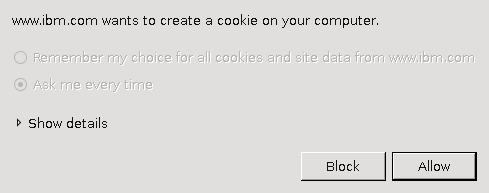
I m currently running google-chrome-beta version 5.0.375.55-r47796 on Debian/Unstable. It s the fastest web browser I ve used in recent times it s the first time that I ve run a browser that feels faster than my recollection of running IBM WebExplorer for OS/2 on a 486-66 system! It has a good feature set, and it s the only browser I ve used that in a typical configuration will make proper use of the screen space by not having a permanent status bar at the bottom of the sceen and by having tabs in the title-bar. But it s not perfect, here is a list of some bugs: Chrome Titlebar when maximisedChrome Titlebar when not maximisedRight of Chrome Titlebar when not maximised Above are three partial screen captures of Chrome, the first is when maximised and the second is when the window isn t maximised. Notice the extra vertical space above the tab in the title bar in the second picture. The third picture shows the right side of the titlebar and you can see a space below the three buttons where you can drag the window around no matter how many tabs you open that space below the three buttons is reserved. If the Chrome developers had removed the extra vertical space in the titlebar and reserved slightly more horizontal space then you would be able to drag the window around. While an anonymous commentator made a good point that the extra vertical space can be used to drag the window around when the maximum number of tabs are open, it seems that there are other ways of achieving that goal without wasting ~18 vertical pixels. Doing so would be a lot less ugly than what they did with finding text in the page. When I visit a web site that uses cookies from an Incognito Window (which means that cookies etc aren t stored) there is no option to say allow all cookies . This is really annoying when you get to a web site such as the IBM one which stores 5 cookies when you first load the page and then at least one new cookie write for every page you visit. Given that cookie data will be discarded as soon as the window is closed it seems like a good idea to have an option to allow all cookies for Incognito Windows even if all cookies aren t allowed for regular windows. Blocking all cookies would be OK too, anything but having to click on Block or Allow multiple times for each page load. The J and K keys don t work in a view of Venus version 0~bzr95-2+lenny1 (the latest version in Debian/Lenny). I once had a situation where I entered a . at the end of a domain name (which is quite legal there is always an implied dot) and Chrome then wouldn t take note of my request to accept all cookies from the domain. I haven t been able to reproduce that bug, but I have noticed that it stores the settings for whether cookies should be stored separately for domains that end in . , so www.cnn.com. is different from www.cnn.com . Iceweasel seems to just quietly strip the trailing dot. Of course this is better than Konqueror which won t even load a URL with a dot at the end. Chrome can be relied on to restore all windows rapidly after a crash, unlike Iceweasel which restores them at it s normal load speed (slow) and Konqueror which doesn t tend to restore windows. This is good as it does seem to crash regularly. In a response to my post about Chrome and SE Linux [1] Ben Hutchings pointed out that the --no-sandbox option to chrome disables the creation of a PID namespace and therefore makes debugging a lot easier, if I get a lot of spare time I ll try and track down some of the Chrome SEGVs. The JavaScript compiler is either buggy or it s not buggy in situations where people expect IE bugs. When using the Dell Australia web site I can t always order all options. When trying to order a Dell R300 1RU server with hot-plug disks in a hardware RAID array it seems impossible to get all the necessary jumpers which is a precondition to completing the order fortunately I only wanted to blog about how cheap Dell servers are so I don t actually need to complete an order. Dell s web site is also difficult in Iceweasel on occasion, so it s obviously more demanding than most sites. It might be a good test site for people who work on browsers as it s both demanding and important. When I select a URL to be opened in a new window (or when JavaScript does this) then the new tab is opened with about:blank listed as the URL. If the URL is for a PDF file (or something else that is to be downloaded) then the URL entry field is never updated to give the real URL. I believe that this is wrong, either the new tab shouldn t be opened or it should have the correct URL on display there is no benefit with a tab open to show nothing but about:blank in the URL entry field. Also if a URL takes some time to load then it may keep about:blank in the URL entry field for some time. This means that if you use the middle mouse button to rapidly open a few new tabs you won t be able to see what is to be loaded in each one. Sometimes I have several tabs loading and I m happy to close some unimportant ones if they are slow but some are worth waiting for. Overall that s not too bad. I can use Dell s site in Iceweasel, so the only critical bug is the cookies issue in Incognito Windows which makes the Incognito feature almost unusable for some sites.

4 June 2010

Russell Coker: Securely Killing Processes

Joey Hess wrote on Debian-devel about the problem of init scripts not doing adequate checks before using the data from a PID file under /var/run to determine which process to kill [1]. Unfortunately that still doesn t quite solve the problem, there is still the issue of a race condition causing a process to die while you are doing the checks and then be replaced by another process. Below I have included the source code to a little program that will repeatedly fork() until it finds a particular PID and then have it s child call sleep(). So you can run a command such as kill -9 1234 ; ./a.out 1234 and then have this program take over the PID 1234. From testing with this it seems that when you have a shell with it s current working directory as /proc/1234 then once process 1234 is killed the current directory is empty, ls -l returns 0 entries. This isn t surprising, it s the standard Unix behavior when the working directory is removed. So if a program (or even a shell script) changes directory to /proc/1234 it can then verify all attributes of the process (it s CWD, it s root directory, the executable used to run it, it s UID, GID, supplemental groups, it s SE Linux context, and lots of other things all atomically. The only possibility for confusion is that a process might execute a SETUID or SETGID program or a program that has a label which triggers a SE Linux domain transition. It might also change some attributes without executing a new process, for example by using the setuid(), setgid(), setgroups(), or other similar system calls. For the purposes of killing a process I don t think that the possibility of it changing it s own attributes or executing a new program are serious problems, if you want to kill a process then you probably want to kill it after it has called setuid() etc. It seems to me that it would be useful to have a file named /proc/PID/signal (or something similar) to which you could write a number and then have the kernel send the signal in question to that process. So the commands kill -9 1234 and echo 9 > /proc/1234/signal would give the same result. But you could run the command cd /proc/1234 and then some time later you could run echo 9 > signal and know that you would kill the original process 1234 if it was still running and not some other process that replaced it. What do you think? Is this worthy of adding a new feature to the proc filesystem? The Source Run the following program with a single parameter which is the PID that you want it to take. It will keep looping through the PID space until it gets the one you specify, if the one you specify isn t available (EG you give it 1 as a parameter) then it will run forever. It will take some time to get a result on a slower system. On my P3-900MHz test system it took up to 72 seconds to get a result. #include <stdio.h>
#include <unistd.h>
#include <stdlib.h>
#include <sys/types.h>
#include <sys/wait.h> int main(int argc, char **argv)

if(argc != 2)

printf("Specify the desired PID on the command-line\n");
return 1;

pid_t wanted = (pid_t)atoi(argv[1]);
int rc;
int status;
while((rc = fork()) != wanted && rc != 0)

if(rc == -1)

printf("fork error\n");
return 1;

if(wait(&status) == -1)
printf("wait error\n");

if(rc == 0)

if(getpid() == wanted)

printf("Got pid %d, sleeping\n", wanted);
sleep(200);

return 0;

wait(&status);
return 0;

Russ Allbery: NVIDIA, bug handling, and patience

Recently, the long-time maintainer of the NVIDIA packages for Debian stepped down, after having not had much time to work on the packages for some time. I don't really like maintaining non-free packages, but I have some NVIDIA hardware and nouveau isn't quite far enough along yet for me to feel comfortable just switching, so I decided to help, despite having very little spare time. Thankfully, Andreas Beckmann stepped up and has been submitting patches like crazy, so I've not had to do a lot of the work. This is a very difficult package to maintain, since it's completely non-free. Nearly all the code is a binary object, which we cannot change in any way, so it's frustrating because we can't do anything about basically any bugs. Upstream distributes their code in a weird, annoying package format. It's also very complicated, full of random upstream libraries for providing various interfaces to the GPU to do computing, and it conflicts with and replaces various X bits like the GL library. And on top of that, it comes in four different variants, all of which need to be separately packaged, plus a bunch of supporting packages and libraries (some non-free and some free). Oh, and it builds a kernel module. And we historically provided pre-built kernel modules and meta-packages. And the packaging infrastructure hadn't been overhauled in quite some time, so it wasn't using current packaging techniques. Did I mention the RC bugs and the nearly 200 open bugs on just the main non-legacy package (now much lower thanks to Andreas's hard work). We're slowly making progress. nvidia-graphics-drivers migrated to testing for the first time since around the lenny release and now supports DKMS, and Andreas has massively modernized the packaging. We also have just about finished the transition to using the free libvdpao library rather than the one included with the NVIDIA packages. But given that background, you might understand why one might find blog posts like this one (about a bug that was first reported for KDE just one week ago!) just a little demotivating. (The problem had been previously observed with GDM, but it appeared to be fixed somehow in GDM 3.) I'm sure there are better ways that I could have communicated the bug status, and I probably stressed a bit more than I need to the point that the module is completely opaque and non-free and there isn't much that we can do to change its behavior. But reading negative comments about one's work on Planet Debian is really kind of frustrating, particularly when that work is on something that it's hard to get Debian to care about and that's kind of thankless to start with. I'm not trolling for praise here; I have a thick skin. But this does seem like a good opportunity for a reminder that this is a volunteer project, some packages are kind of annoying to maintain, and things take time. If you don't agree with a maintainer's determination of whether or not something is RC (I still don't think this bug is RC), one can certainly have that conversation. But unless the maintainer marks the bug wontfix, please don't jump to the conclusion that no one cares about trying to find a resolution. And one week is a rather short time period to arrive at that conclusion, even if the maintainer is fairly negative about the bug. Sometimes that just means that you caught them on a bad day. For the record, I'm currently pondering asking the people with this bug to try adding nvidia to /etc/modules and see if forcing the module load earlier works around this problem. I think what's happening is that the module is doing some sort of prolonged initialization, and it just needs more lead time before it's expected to respond to the X server.

2 June 2010

Axel Beckert: xen-tools back in Debian Unstable

After xen-tools had been removed from Debian Unstable by the upstream developer last December due to no more upstream development, I took over upstream development as well as Debian package maintainership in January. Since then a lot happened: But despite all the things which were to fix after Steve discontinued the xen-tools developement, Steve Kemp did a great job to bring xen-tools so far initially. I m really happy that this software exists and that s the reason why I won t let it die so fast. :-) xen-tools 4.2 beta 1 released Last weekend I released xen-tools 4.2 beta 1 which I also uploaded to Debian Unstable. And thanks to the active ftp-master team, xen-tools went through the NEW queue in less than 12 hours and is now available again in Debian Unstable. 4.2 beta 1 still has some known bugs, the worst ones are in xen-delete-image. But no fear, it doesn t delete more than wanted, just not enough or things which don t exist anyway. :-) There are also some smaller issues to fix for a final 4.2 release. We may also create an PPA for Ubuntu Lucid in the future to work around the lack of xen-tools in Ubuntu Lucid. What about Fedora/RedHat/CentOS support? Since rinse is out of date with regards to current Fedora releases, rpmstrap seems to be out of date for even longer (it has been removed from Debian before the Lenny release) and febootstrap neither seems to work out of the box nor seems to support bootstrapping to mount points (because it wants to delete them first and fails), bootstrapping Fedora ist currently not supported. The copy installation method should work though. rinse still is able to bootstrap CentOS 4 and 5, but the installation seems incomplete. We ll try to work around these issues for the final 4.2 release. We haven t looked at mach and mock so far, but according to Lucas, both are out of date, too. Sure, implementing Lucas howto in form of a script would be a possible way, but we think it would just create yet another not so well supported clone of rinse, rpmstrap, mach, mock or febootstrap. Because of that, Dmitry works on support for the installation of Xen DomUs via kickstart. Fate of xen-shell? Xen-shell has also been removed from Debian Unstable last December because Steve stopped its developement, too. But in comparison to xen-tools itself, we didn t resurrect xen-shell since none of us currently has use for it. So if you are currently using xen-shell and intend to continue to do so, you should hurry up if you want to see it in Debian Squeeze. We can also help you, but we surely can t and won t do it alone nor will we take the majority of the necessary workload.

1 June 2010

Russell Coker: Can SE Linux Implement Traditional Unix Users and Groups?

I was asked by email whether SE Linux could implement traditional Unix users and groups. The Strictly Literal Answer to that Question The core of the SE Linux access control is the domain-type model where every process has a domain and every object that a process can access (including other processes) has a type. Domains are not strongly differentiated from types. It would be possible to create a SE Linux policy that created a domain for every combination of UID and GID that is valid for a user shell given that such combinations are chosen by the sysadmin who could limit them to some degree. There are about 2^32 possible UIDs and about 2^32 possible GIDs, as every domain is listed in kernel memory we obviously can t have 2^64 domains, but we could have enough to map a typical system that s in use. Of course the possible combinations of supplemental groups probably makes this impossible for even relatively small systems, but we can use a simpler model that doesn t emulate supplemental groups. For files there are more possible combinations because anyone who is a member of a group can create a SETGID directory and let other users create files in it. But in a typical system the number of groups is not much greater than the number of users the maximum number of groups is typically the number of users plus about 60. So if we had 100 users then the number of combinations of UID and GID would be something like 100*(100+60)=16,000 it should be possible to have that many domains in a SE Linux policy (but not desirable). Then all that would be needed is rules specifying that each domain (which is based on a combination of UID and GID) can have certain types of access to certain other types based on them having either the same UID or the same GID. Such a policy would be large, it would waste a lot of kernel memory, it would need to be regenerated whenever a user is added, and it s generally something you don t want to use. No-one has considered implementing such a policy, I merely describe it to illustrate why certain configuration options are not desirable. The rest of this post is about realistic things that you can do with SE Linux policy and how it will be implemented in Debian/Squeeze. My previous post titled Is SE Linux Unixish? addresses this issue at a more conceptual level and also considers MAC vs DAC [1]. The History of mapping Unix Accounts to SE Linux Access Control In the early releases of SE Linux (long before it was included in Fedora) every user who could login to a system needed to have their user-name compiled into the policy. The policy specified which roles the user could access, the roles specified which domains could be accessed, and therefore what the user could do. The identity of files on disk was used for two purposes, one was logging (you could see who created a file) and the other was a permission check for the SE Linux patched version of Vixie cron which would not execute any command on behalf of a user unless the identity on the crontab file in the cron spool matched the identity used to run it this is an analogy of the checks that Vixie cron makes on the Unix UID of the crontab file (some other cron daemons do fewer checks). Having to recompile policy source every time you added a user was annoying. So a later development was to allow arbitrary mappings between Unix account names and SE Linux Identities (which included a default identity) and another later development was to have a utility program semanage to map particular Unix account and group names to SE Linux identities. This was all done years ago. Fedora Core 5 which was released in 2006 had the modular policy which included these features (apart from mapping Unix groups to SE Linux identities which was more recent). Fedora Core 5 also introduced MCS which was comprised of a set of categories that a security context may have. The sysadmin would configure the set of categories that each account would have. A recent development has been a concept named UBAC (User Based Access Control) which basically means that a process running directly on behalf of a regular user (IE with a SE Linux identity that s not system_u) can only access files that have an identity of system_u or which have the same identity as the process. This means that you can only access your own files or system files not files of other users which may have inappropriate Unix permissions. So for example if a user with a SE Linux identity of john gives their home directory the Unix permission mode of 0777 then a user with a SE Linux identity of jane can t access their files. Of course this means that if you have a group of people working together on a project then they probably need to all have the same Identity and in practice you would probably end up with everyone having the same identity. I ve given up on the idea of using UBAC in Debian. The Current Plan for Users and SE Linux Access Control in Debian My plan is to have things work in Squeeze in much the same way as in Lenny. You have a SE Linux identity assigned to a login session and everything related to it (including cron jobs) based on the Unix account name or possibly the Unix group name (if there are login entries for both the user-name and the group-name then the user-name entry has precedence). The mapping between Unix accounts and SE Linux identities is configured by the sysadmin and SE Linux identities don t matter much for the Targeted configuration (which is what most people use). The identity determines which roles may be used and also has a limit on the MCS categories. The MCS categories are also specified in the login configuration which has to be a sub-set of the categories used by the identity record. So for example the following is the output of a couple of commands run on a Debian/Unstable system. They show that the test Unix account is assigned a SE Linux identity of staff_u and an MCS range of s0-s0:c1 (this means it creates files by default at level s0 and can also write to other files at that level, but can also have read/write access to files at the level s0:c1 ). The staff_u identity (as shown in the output of semanage user -l can be used with all categories in the set s0:c0.c1023 where the dot means the set of categories from c0 to c1023 inclusive) but in the case of the test user only one category will be used. The test group however (as expressed with %test ) is given the identity user_u and is not permitted to use any categories.
# semanage login -l
Login Name    SELinux User    MLS/MCS Range           
%test         user_u          s0                     
__default__   unconfined_u    s0-s0:c0.c1023         
root          unconfined_u    s0-s0:c0.c1023         
system_u      system_u        s0-s0:c0.c1023         
test          staff_u         s0-s0:c1               
# semanage user -l
             Labeling   MLS/       MLS/                         
SELinux User Prefix     MCS Level  MCS Range         SELinux Roles
root         sysadm     s0         s0-s0:c0.c1023    staff_r sysadm_r system_r
staff_u      staff      s0         s0-s0:c0.c1023    staff_r sysadm_r
sysadm_u     sysadm     s0         s0-s0:c0.c1023    sysadm_r
system_u     user       s0         s0-s0:c0.c1023    system_r
unconfined_u unconfined s0         s0-s0:c0.c1023    system_r unconfined_r
user_u       user       s0         s0                user_r
I hope to get the policy written to support multiple user roles in time for the release of Squeeze. If I don t make it then I will put such a policy on my own web site and try to get it included in an update. The policy currently basically works for a Targeted configuration where the users are not confined (apart from MCS). How MMCS Basically Works The vast majority of SE Linux users run with the MCS policy rather than the MLS policy. For Debian I have written a modified version of MCS that I call MMCS. MMCS is mandatory (you can t relabel files to escape it) and it prevents write-down. If a process has the range s0-s0:c1,c3 then it has full access to files labelled as s0, s0:c1, s0:c3, and s0:c1,c3 and any files it creates will be labeled as s0. If a process has the range s0:c1-s0:c1,c3 then it has read-only access to files labelled as s0 and s0:c3 and read-write access to files labelled as s0:c1 and s0:c1,c3. This means that any secret data it accesses that was labelled with category c1 can t be leaked down to a file that is not labelled with that category. Now MCS currently has no network access controls, so there s nothing stopping a user from using scp or other network utilities to transfer files. But that s the way with most usable systems. I don t think that this is necessarily a problem, the almost total lack of network access controls in a traditional Unix model doesn t seem to concern most people. Now to REALLY Answer that Question SE Linux is a Mandatory Access Control (MAC) system, this makes it inherently different to a Discretionary Access Control (DAC) system such as traditional Unix access controls. Unix permissions are based on each file having a UID, a GID, and a set of permissions and each process having a UID, a GID, and a set of supplementary GIDs. If a user runs a setuid or setgid program then the process will have extra privileges. It also has a lot of stuff that most people aren t aware of such as real vs effective UIDs, the tag bit, setgid directories, and lots more including some quite arbitrary things like making ports <1024 special. SE Linux is based on every object (process, file, socket, etc) having a single security label which includes an identity, a role, a type, and a sensitivity label (MCS categories or an MLS range). There is no support for an object to have more than one label. The SE Linux equivalent to setuid/setgid files is a label for a file which triggers a domain transition when it s executed. This differs from setuid files in that the domain transition is complete (the old privileges can t be restored) and the transition is generally not to a strict super-set of the access (usually a different sub-set of possible access and sometimes to lesser access). These differences are quite fundamental. So really SE Linux can t implement traditional Unix access control. What SE Linux is designed to do is to provide a second layer of defense and to also provide access controls that have different aims than that of Unix permissions such as being mandatory and implementing features such as MLS.

Next.

Previous.