Chris Lamb: The comedy is over
 By now everyone must have seen the versions of comedy shows with the laugh track edited out. The removal of the laughter doesn't just reveal the artificial nature of television and how it conscripts the viewer into laughing along; by subverting key conversational conventions, it reveals some of the myriad and subtle ways humans communicate with one another:
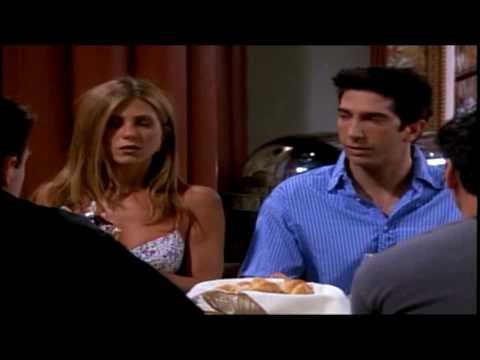


Leaving aside the usual comments about Pavlovian conditioning and the shows that are the exceptions, complaints against canned laughter are the domain of the pub bore. I will therefore only add two brief remarks. First, rather than being cynically added to artificially inflate the lack of 'real' comedy, laugh tracks were initially added to replicate the live audience of existing shows. In other words, without a laugh track, these new shows might have ironically appeared almost as eerie as the fan edits cited above are today. Secondly, although laugh tracks are described as "false", this is not entirely correct. After all, someone did actually laugh, even if it was for an entirey different joke. In his Simulacra and Simulation, cultural theorist Jean Baudrillard might have poetically identified canned laughter as a "reflection of a profound reality", rather than an outright falsehood. One day, when this laughter becomes entirely algorithmically generated, Baudrillard would describe it as "an order of sorcery", placing it metaphysically on the same level as the entirely pumpkin-free Pumpkin Spiced Latte.
For a variety of reasons I recently decided to try interacting with various social media platforms in new ways. One way of loosening my addiction to this pornography of the amygdala was to hide the number of replies, 'likes' and related numbers:

Tying a few things together, when attempting to doomscroll through social media without these numbers, I realised that social media without the scorecard of engagement is almost exactly like watching these shows without the laugh track. Without the number of 'retweets', the lazy prompts to remind you exactly when, how and for how much to respond are removed, and replaced with the same stilted silences of those edited scenes from Friends. At times, the existential loneliness of Garfield Minus Garfield creeps in too, and there is more than enough of the dysfunctional, validation-seeking and parasocial 'conversations' of The Big Bang Theory. Most of all, the whole exercise permits a certain level of detached, critical analysis, allowing one to observe that the platforms often feel like a pre-written script with your 'friends' cast as actors, all perpetuated on the heady fumes of rows
INSERT-ed into a database on the other side of the world.
I'm not quite sure how this will affect my usage of the platforms, and any time spent away from these sites may mean fewer online connections at a time when we all need them the most. But as the Karal Marling, professor at the University of Minnesota wrote about artificial audiences: "Let me be the laugh track."

 Right on the heels of the news of




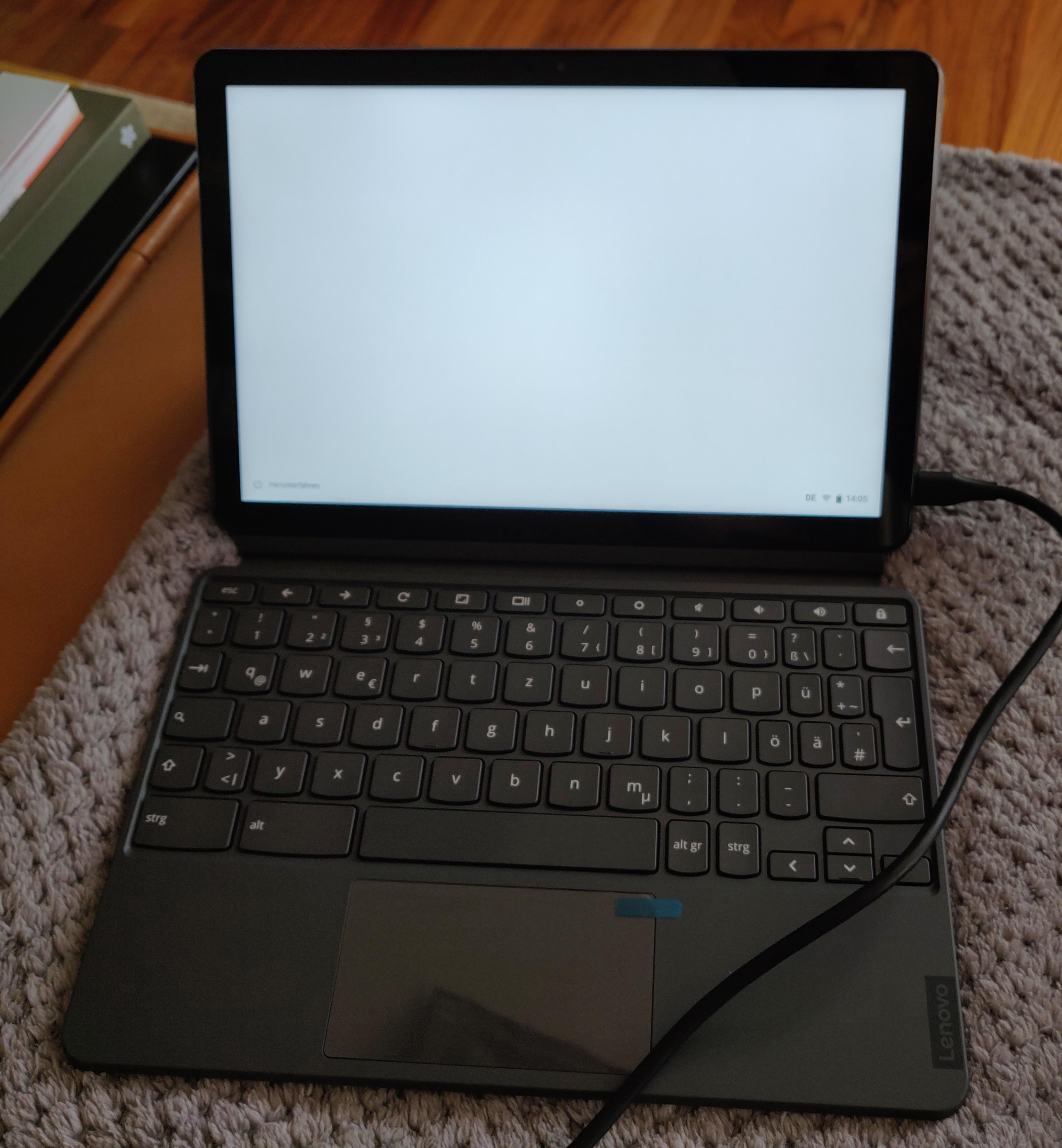 fully assembled chromebook duet
 Not bad, but not Smokeping
 Looks more like Smokeping!




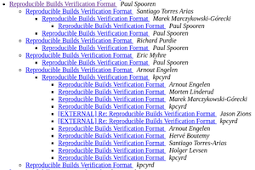


 Here is my monthly update covering what I have been doing in the free software world during May 2020 (










 I found a
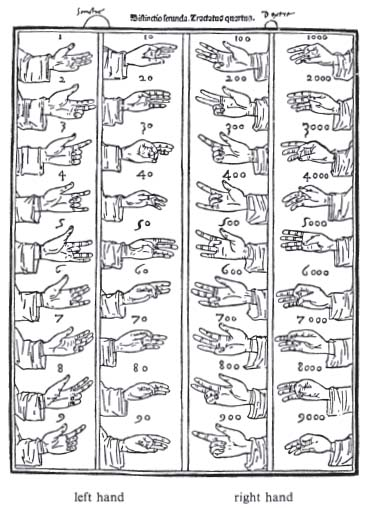 (Note that in this diagram 60 is, in fact, wrong,
and this picture swaps the hundreds and the thousands.)
We ll start with the units.
The last three fingers of the left hand, middle, ring, and pinkie,
are used to form them.
Zero is formed with an open hand, the opposite of the finger
counting we re used to.
One is formed by bending the middle joint of the pinkie,
two by including the ring finger and three by including the
middle finger, all at the middle joint.
You ll want to keep all these bends fairly loose, as otherwise
these numbers can get quite uncomfortable.
For four, you extend your pinkie again, for five, also raise your
ring finger, and for six, you raise your middle finger as well, but
then lower your ring finger.
For seven you bend your pinkie at the bottom joint, for eight
adding your ring finger, and for nine, including your middle
finger. This mirrors what you did for one, two and three, but
bending the finger at the bottom joint now instead.
This leaves your thumb and index finger for the tens.
For ten, touch the nail of your index finger to the inside of your top thumb
joint.
For twenty, put your thumb between your index and middle fingers.
For thirty, touch the nails of your thumb and index fingers.
For forty, bend your index finger slightly towards your palm
and place your thumb between the middle and top knuckle of your
index finger.
For fifty, place your thumb against your palm.
For sixty, leave your thumb where it is and wrap your index
finger around it (the diagram above is wrong).
For seventy, move your thumb so that the nail touches between the
middle and top knuckle of your index finger.
For eighty, flip your thumb so that the bottom of it now
touches the spot between the middle and top knuckle of your index
finger.
For ninety, touch the nail of your index finger to your bottom
thumb joint.
The hundreds and thousands use the same positions on the right
hand, with the units being the thousands and the tens being the
hundreds. One account, from which the picture above comes, swaps
these two, but the first account we have uses this ordering.
Combining all these symbols, you can count all the way to 9,999
yourself on just two hands. Try it!

 Earlier this year, I was supposed to participate to








 If you never heard of the 10x engineer myth, it's a pretty great concept. It boils down to the idea where an engineer could be 10x more efficient than a random engineer. I find this fantastically twisted.Last week, I sat and chat with Alexis Monville in







 Here is my monthly update covering what I have been doing in the free software world during March 2020 (