Search Results: "otto"

6 July 2016

Daniel Pocock: Avoiding SMS vendor lock-in with SMPP

There is increasing demand for SMS notifications about monitoring alerts, trading notifications, flight delays and other events. Various companies are offering SMS transmission services to meet this demand and many of them aggressively pushing their own proprietary interfaces to the SMS world rather than using the more open and widely supported SMPP. There is good reason for this: if users write lots of of scripts to access the REST API of an SMS service, the users won't be able to change their service provider without having to change all their code. Well, that is good if you are an SMPP vendor but not if you are their customer. If an SMS gateway company goes out of business or has a system meltdown, the customers linked to their REST API will have a much bigger effort to migrate to a new provider than those using SMPP. The HTTP REST APIs offered by many vendors hide some details of the SMS protocol and payload. At first glance, this may feel easier. In fact, this leads to unpredictable results when delivering messages to users in different countries and different character sets/languages. It is better to start with SMPP from the beginning and avoid discovering those pitfalls later. The SMS Router free/open source software project helps overcome the SMPP learning curve by using APIs you are already familiar with. More troublesome for large organizations, some of the REST APIs offered by SMS gateways want to make callbacks to your own servers: this means your servers need public IP addresses accessible from the Internet. In some organizations that can take months to organize. SMPP works over one or more outgoing TCP connections initiated from your own server(s) and doesn't require any callback connections from the SMPP gateway. SMS Router lets SMS users have the best of both worlds: the flexibility of linking to any provider who supports SMPP and the convenience of putting messages into the system using any of the transports supported by an Apache Camel component. Popular examples include camel-jms (JMS) for Java and J2EE users, STOMP for scripting languages, camel-mail (SMTP and IMAP) for email integration and camel-sip (SIP) or camel-xmpp (XMPP) for chat/instant messaging systems. If you really want to, you can also create your own in-house HTTP REST API too using camel-restlet for internal applications. In all these cases, SMS Router always uses standard SMPP to reach any gateway of your choice. Architecture overview SMS Router is based on Apache Camel. Multiple instances can be operated in parallel for clustering, load balancing and high availability. It can be monitored using JMX solutions such as JMXetric. The SMPP support is based on the camel-smpp component which is in turn based on the jSMPP library, which comprehensively implements the SMPP protocol in Java. camel-smpp can be used with minimal configuration but for those who want to, many SMPP features can be tweaked on a per-message basis using various headers. The SMPP gateway settings can be configured and changed at will using the sms-router.properties file. The process doesn't require any other files or databases at runtime. The SMS Router is ready-to-run with one queue for sending messages and another queue for incoming messages. The routing logic can be customized by editing the RouteBuilder class to use other Camel components or any of Camel's wide range of functions for inspecting, modifying and routing messages. For example, you can extend it to failover to multiple SMPP gateways using Camel's load-balancer pattern. SMS Router based projects are already used successfully in production, for example, the user registration mechanism for the Lumicall secure VoIP app for Android. Getting started See the README for instructions. Feel free to ask questions about this project on the Camel users mailing list. Disclaimer SMS is not considered secure, the SMS Router developers and telecommunications industry experts discourage the use of this technology for two-factor authentication. Please see the longer disclaimer in the README file and my earlier blog about SMS logins: an illusion of security. The bottom line: if your application is important enough to need two-factor authentication, do it correctly using smart cards or tokens. There are many popular free software projects based on these full cryptographic solutions, for example, the oath-toolkit and dynalogin.

8 May 2016

Gunnar Wolf: Pyra, PocketC.H.I.P. Not quite the same, but...

Petter and Elena both talk enthusiastically about the Pyra. I am currently waiting for the shipment of my C.H.I.P. kit I pre-ordered my kit when it was still in kickstarter phase, and got the PocketC.H.I.P. level. It is clearly not the same nor equivalent to the Pyra The PocketC.H.I.P. is a convenient packaging for what is chiefly an System-on-a-chip; the C.H.I.P. is a small system by today's standards (single-core ARM, 512MB RAM, not meant to be expanded), but still it looks quite usable as a very portable and usable Unix system. Oh, and of course It's also Debian by default. I got quite interested in what the Pyra was like. However, the pricing does not make much sense to me. OK, the Pyra is quite a bigger machine, but... While the PocketC.H.I.P. costs officially US$70 (and before June, according to the site, US$50), the Pyra starts at 500 (plus taxes)... It is just too much! Anyway, I hope to have mine in time to go to DebConf. I also hope Petter and/or Elena can make it this year. And I hope we can compare the systems. I guess the Pyra will sit closer to a regular laptop... But anyway, my two last laptops have been at the bottom of the price scale (both from the Acer Aspire One line). I bought both for around US$300, used the first one as my main laptop for over five years, and have been three with the current one, completely happy.

John Goerzen: The Simple Joys of the Plains

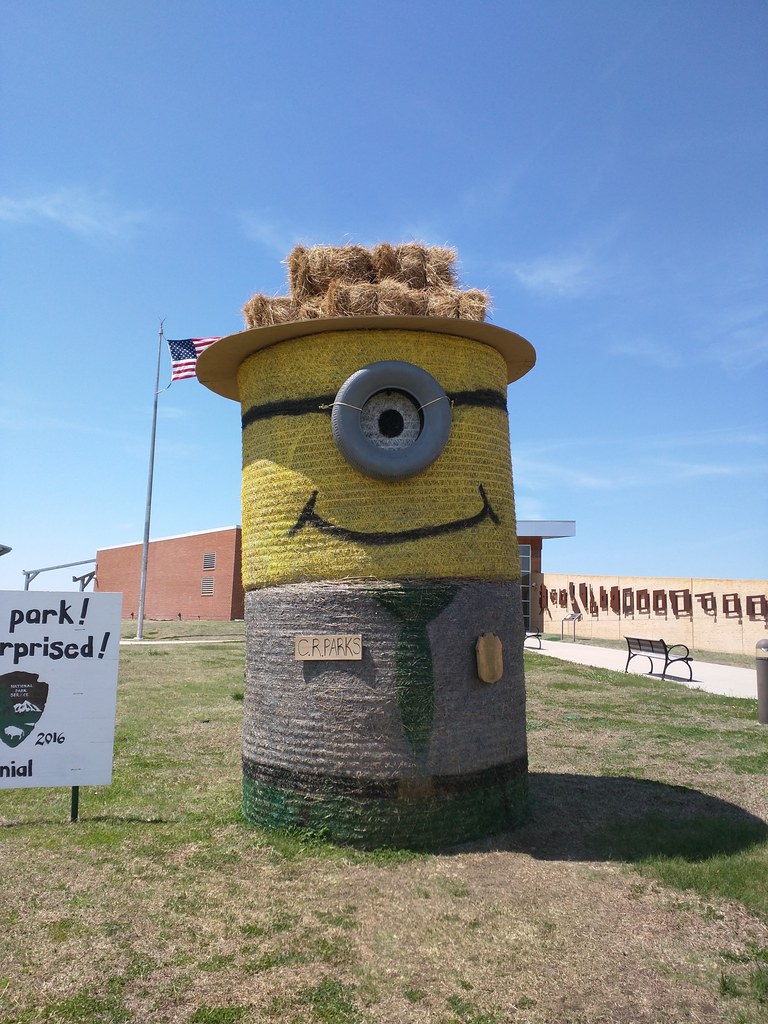
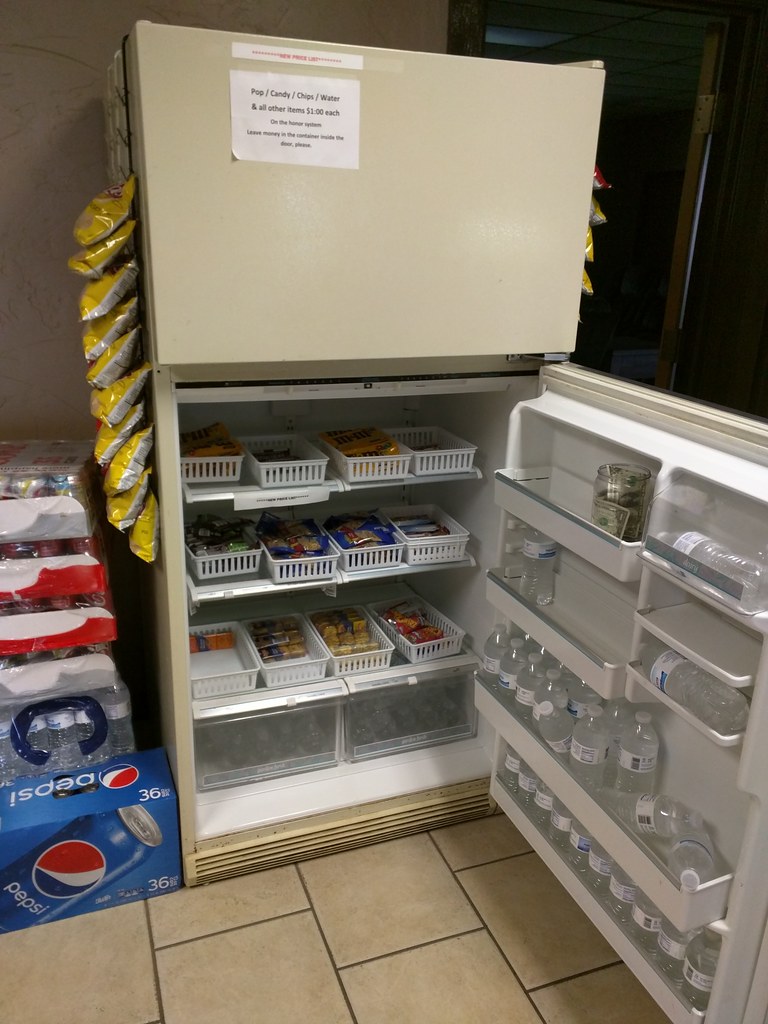
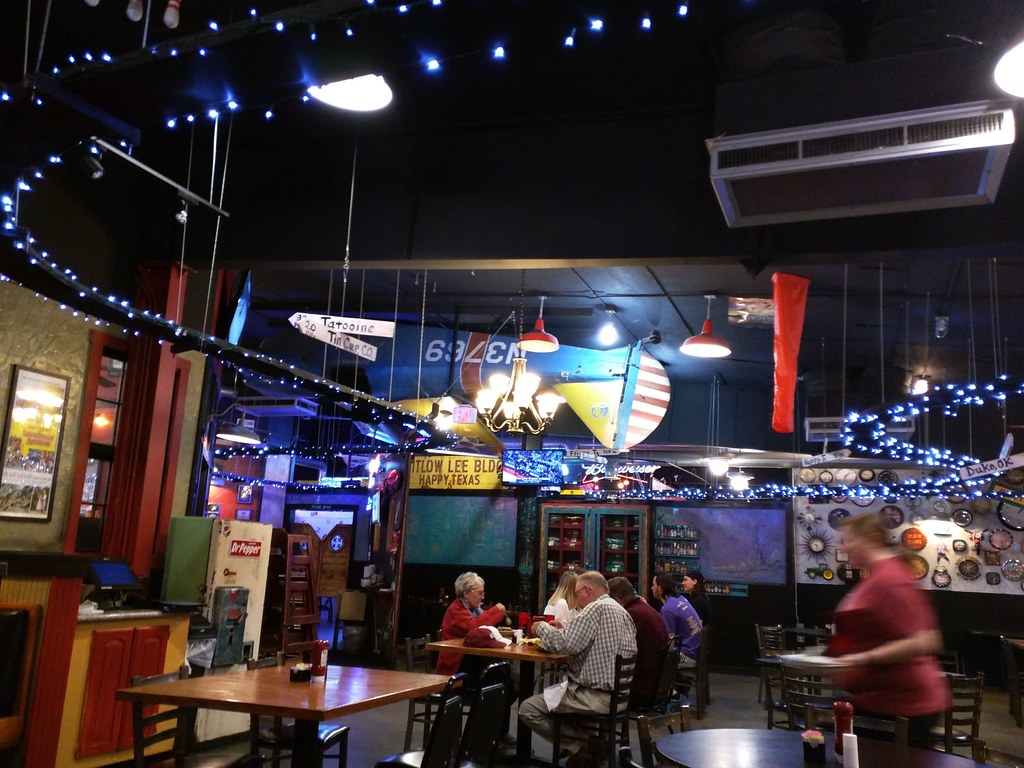
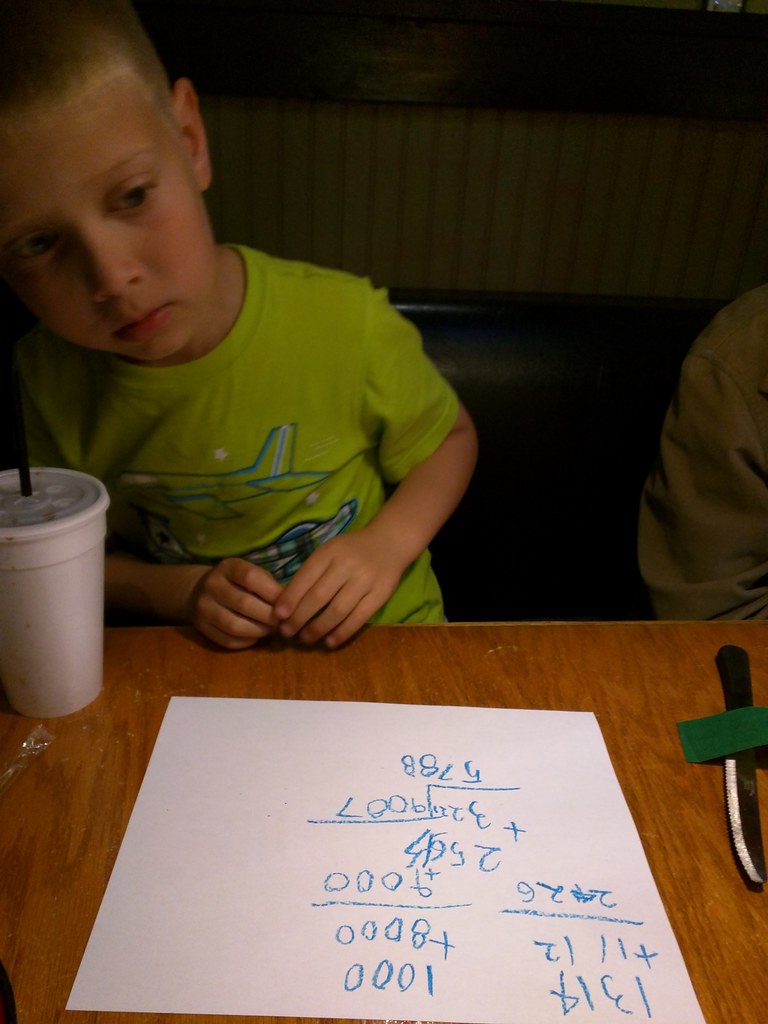
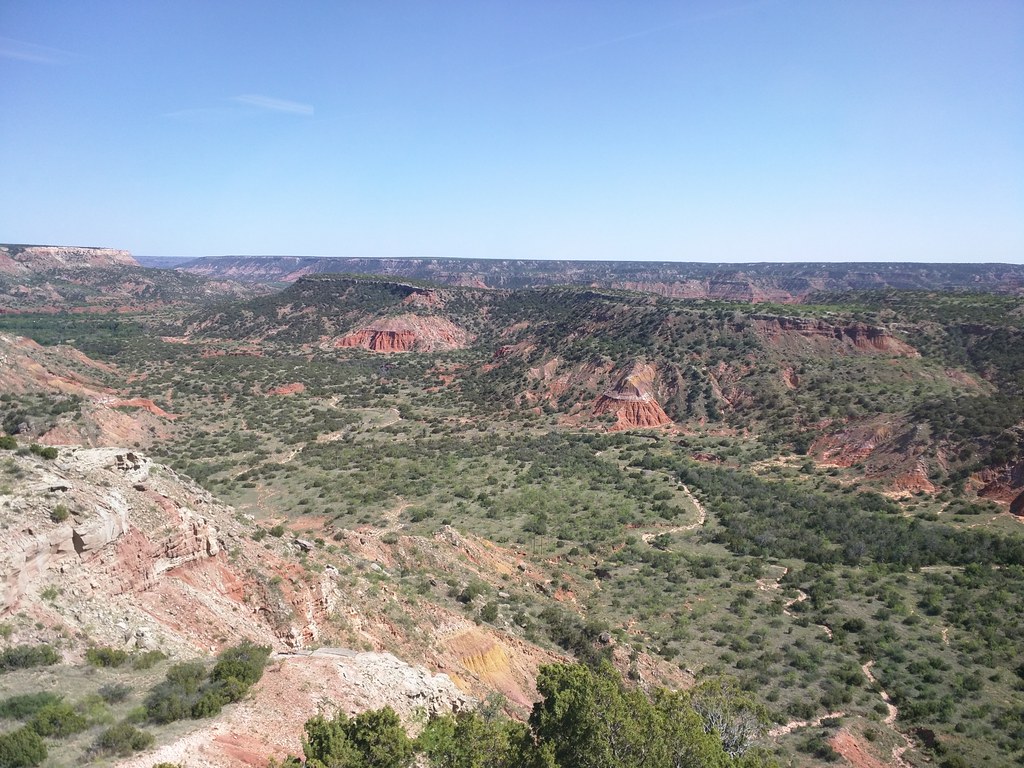
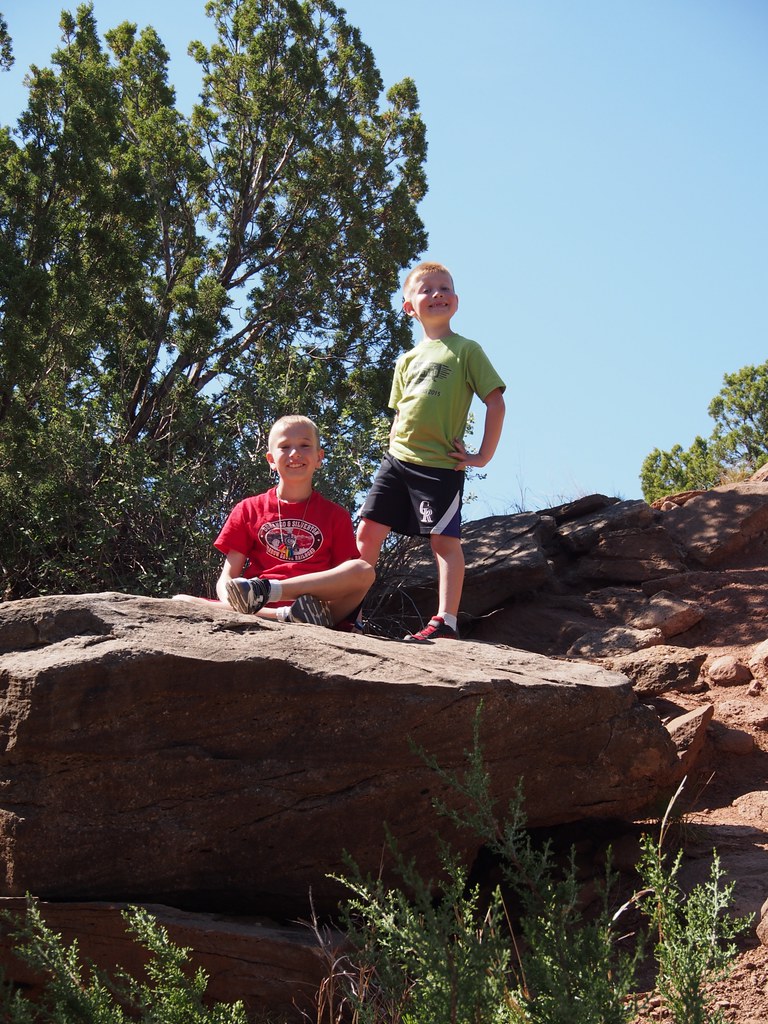
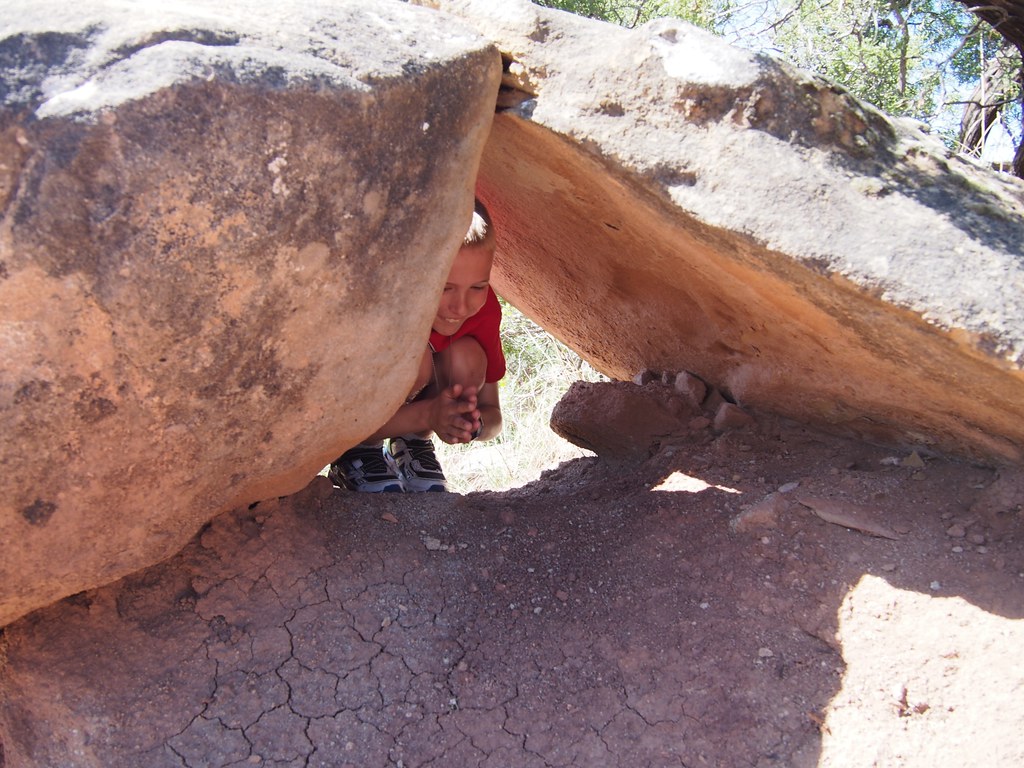
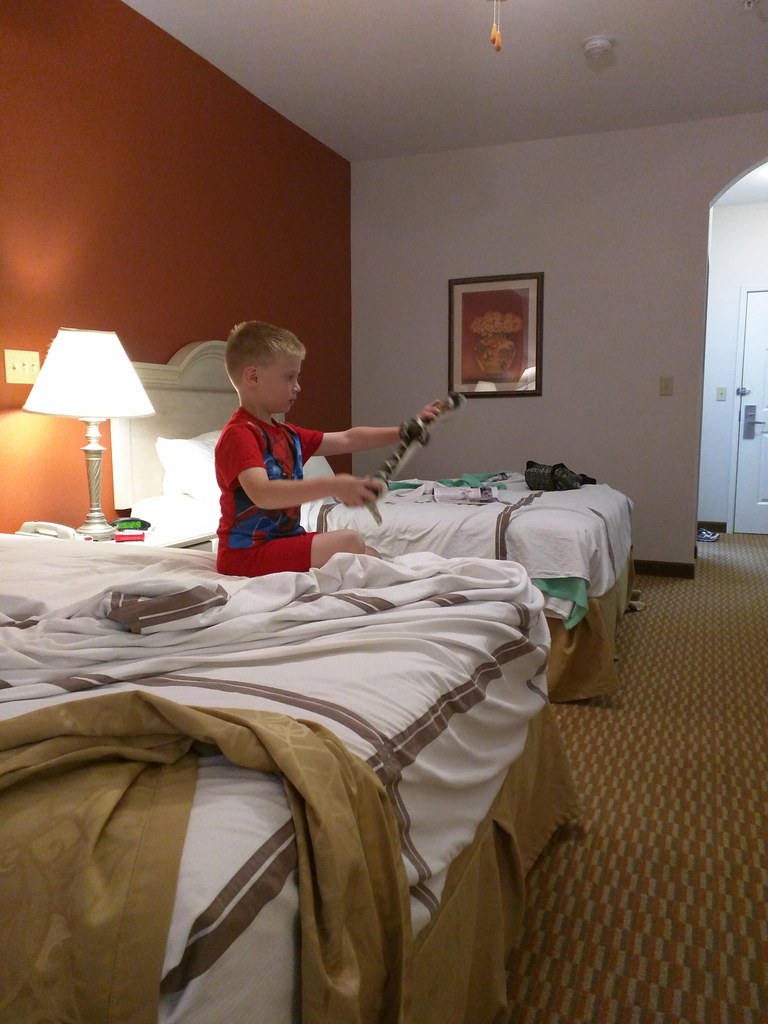
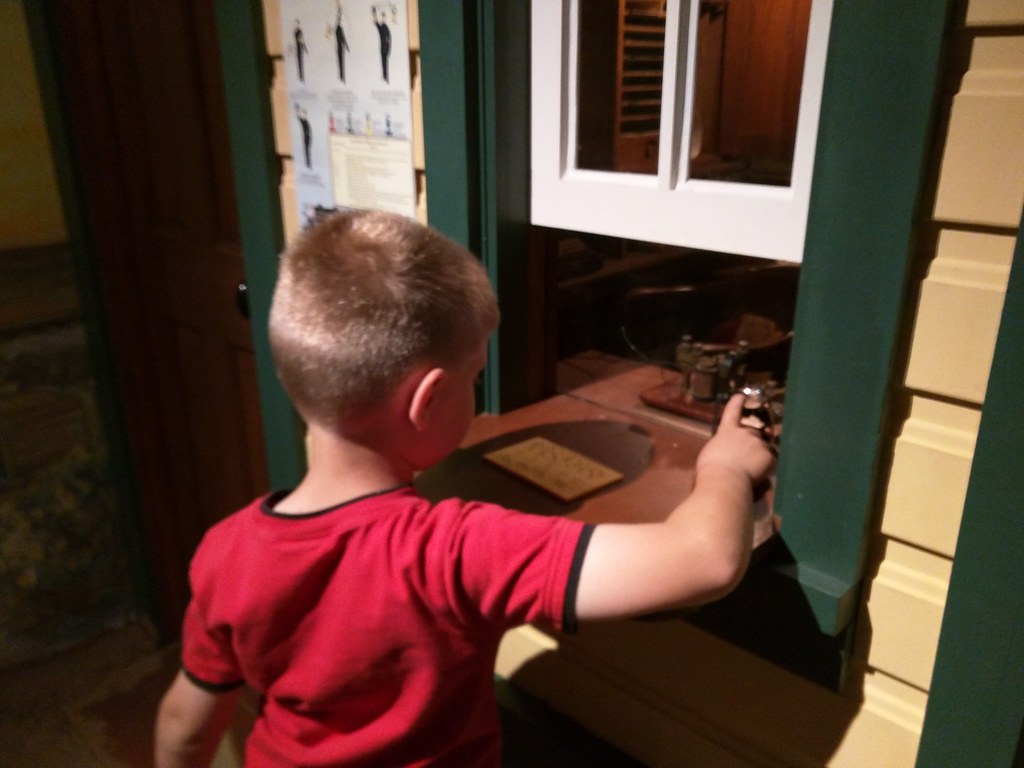
We love to go exploring as a family. Last year, we gave Jacob and Oliver a theme: find places older than Grandpa. They got creative really quick, realizing that any state park counts ( dirt is older than grandpa! ) as did pretty much any museum. Probably our hit from last year was the visit to the tunnels under Ellinwood, KS. Beatrice, NE This year, our theme is places we can fly to . A couple of weeks ago, Laura had a conference in the beautiful small town of Beatrice, NE. So all four of us flew up, and Jacob, Oliver, and I found fun activities while Laura was at her conference. IMG_20160423_125238 We walked around Beatrice a bit, and I noticed this rails-to-trails area. Jacob and Oliver were immediately interested (since it was railroad-related). They quickly turned it into a game of kick-the-dandelion, trying to kick dandelions off their stems and see how high in the air they could get them. The answer: pretty high. IMG_20160423_082343 Of course, you can t go wrong with swimming. Here s Oliver getting ready for some swimming. IMG_20160423_132125 Right near Beatrice is the Homestead National Monument. Of course, the bales decorated like a minion got their attention. IMG_20160423_135141 Like the other national parks, this one has a junior ranger program. You complete a few things in an activity book and take a pledge to protect the park, and then you get a badge and some stickers. Here s Oliver proudly taking his pledge, holding the new raccoon he bought in their gift shop. Canyon, TX Laura and I have been to Canyon, TX, twice the first was for our honeymoon. Yes, we did get some strange looks when we told people we were going to Amarillo for our honeymoon. But it was absolutely perfect for us. We both enjoy the simple gifts of nature. We kept thinking we ve got to take the boys here . So this weekend, we did. We flew a Cessna out there. IMG_20160505_180409 Almost every little general aviation airport seems to have a bowl of candy, a plate of cookies, or some such thing for people that are flying through. I often let Jacob and Oliver choose ONE item. They hit the jackpot when we stopped at West Woodward, Oklahoma for fuel and a break. Two whole fridges stocked with stuff: cans of pop in one, and all sorts of snacks in the other. In typical GA fashion, there was a jar in the fridge asking for $1 if you took something. And it clearly hadn t been emptied in awhile. They also had a nice lounge and a patio. Perfect for munching while watching the activities on the ramp. IMG_20160505_211110 After landing at the beautiful little Tradewind Airport in Amarillo, we ate dinner at Feldman s Wrong-Way Diner in Canyon, TX. Oh my, was that ever popular with the boys. The eagerly looked around to find anything that was wrong a plane hanging upside down from the ceiling, a direction sign saying Tattoine 30 parsecs , movie posters hung upside down, whatever it might be. The fact that model trains were whirring past overhead certainly didn t hurt either. IMG_20160505_214127 They had a giant bin of crayons by the entrance. Jacob and Oliver each grabbed a fistful, and decided it would be fun to do some math problems while we wait. Oliver particularly got into that, and was quite accurate on his large addition problems. Impressive for a first-grader! IMG_20160506_163801 Of course, the big highlight of the area is Palo Duro Canyon. Jacob and Oliver were so eager to explore the canyon that they were just about bubbling over with excitement the night before. They decided that we should explore one of the most difficult trails in the canyon one that would take us from the bottom of the canyon all the way to the top and back, about 2.5 miles each way. P5060008 And they LOVED it. We d stop every few minutes to climb on some rocks, smash up some pieces of sandstone, munch on a snack, or even watch a lizard scurry past. P5060003 IMG_20160506_203218 At the trading post in the canyon, both boys explored the gift shop. Jacob happily purchased a Texas magnet and Palo Duro Canyon keychain, which he carried around the rest of the weekend. Oliver loves stuffed animals, and he bought a cuddly little (but long) snake. When we got back to the hotel, he tied a couple of knots in it, and it became snake airlines . Here is the snake airline taking off. He named it Rattletail the friendly snake , which I thought was a pretty nifty name. IMG_20160507_075730 The hotel s waffle maker made Texas-shaped waffles, clearly a hit! IMG_20160507_101653 Saturday, we explored the absolutely massive Panhandle-Plains Historical Museum. (How does something that huge wind up in Canyon, TX?) Both boys enjoyed spending hours there. Here s Oliver in Pioneer Town (an indoor recreation of a 1900s town) sending a telegraph message. Oliver wanted to help with the plane. He helped me tie it down in Amarillo, helped check it over during preflight, basically got involved in every part of it. Jacob studied aviation maps (sectionals) with me, planning our flight, figuring out how fast we d go. I loaded Avare (an Android app) on an old tablet for him, so he had aviation maps in the cockpit just like me. He would be telling us how fast we were going every so often, pointing out landmarks, etc. When it was time to head back home, both boys wanted to stay longer a sure sign of a good trip. They wanted to hike another trail in the canyon, go back to the museum, and eat at Feldman s 18 more times. (We got there twice, which was plenty for Laura and me!) On our drive home, Oliver said, Dad-o, will you teach me to be a pilot? You should be my flight instructor. Then I could fly everywhere with you. Now that just makes a dad s day.

Satyam Zode: Google Summer of Code 2016 With Debian Reproducible Builds : Introduction

This is the first blog post among series of posts which I will be writing throughout the summer about Google Summer of Code 2016 under Debian Reproducible Builds Experience. Introduction: I am Satyam Zode I am a final year Computer Science student (Satyam_z on IRC). I live in Pune, India (GMT +5:30). I am pursuing my undergraduate degree in Computer Engineering from Pune Institute of Computer Technology, Pune. I have been programming for the past 4 years. I am well versed in C/C++, Python3, and Golang. My Alioth and Github handles are satyamz-guest and satyamz respectively. I have been using GNU/Linux and free software from last four years. I am an open source enthusiast and I have been following Hacker culture since past three years. Accepted into Google Summer of Code 2016 under Debian Project: I am glad that I have got an opportunity to contribute to the Debian Project via Google Summer of Code 2016. I am accepted for project Improving diffoscope tool and reproducibility of Debian packages. This Summer and beyond I will be working with Debian Reproducible Builds team to improve the debbugging tool called Diffoscope (previously known as debbindiff). Thanks a bunch to Debian community, Lunar, Holger Levsen, Reiner Herrmann, Mattia Rizzolo and reproducible-builds folks for giving me this opportunity. Here is my GSoC'16 Proposal. And Yay! It really feels great :smile: Project details: I will be working on Diffoscope tool which is debbugging tool developed under reproducible-builds effort. Basically, Diffoscope compares two files and shows the difference in text and html format. Diffoscope is mainly developed to compare two Debian packages which may consist of binary files, tar files, text files etc. Diffoscope helps to identify difference between two Debian packages with respect to timestamps, file ordering etc. Diffoscope will try to get to the bottom of what makes files or directories different. It will recursively unpack archives of many kinds and transform various binary formats into more human readable form to compare them. It can compare two tarballs, ISO images, Debian packages or PDF just as easily. Diffoscope helps to identify the reproduciblity of Debian packages. During this summer I will be improving Diffoscope. I will be mainly working on: My next blog post will be regarding community bonding. Thanks for reading :)

5 April 2016

Ian Wienand: Image building in OpenStack CI

Also titled minimal images - maximal effort! The OpenStack Infrastructure Team manages a large continuous-integration system that provides the broad range of testing the OpenStack project requires. Tests are run thousands of times a day across every project, on multiple platforms and on multiple cloud-providers. There are essentially no manual steps in any part of the process, with every component being automated via scripting, a few home-grown tools and liberal doses of Puppet and Ansible. More importantly, every component resides in the public git trees right alongside every other OpenStack project, with contributions actively encouraged. As with any large system, technical debt can build up and start to affect stability and long-term maintainability. OpenStack Infrastructure can see some of this debt accumulating as more testing environments across more cloud-providers are being added to support ever-growing testing demands. Thus a strong focus of recent work has been consolidating testing platforms to be smaller, better defined and more maintainable. This post illustrates some of the background to the issues and describes how these new platforms are more reliable and maintainable.
OpenStack CI Overview Before getting into details, it's a good idea to get a basic big-picture conceptual model of how OpenStack CI testing works. If you look at the following diagram and follow the numbers with the explanation below, hopefully you'll have all the context you need. Overview of OpenStack CI
  1. The developer uploads their code to gerrit via the git-review tool. There is no further action required on their behalf and the developer simply waits for results.

  2. Gerrit provides a JSON-encoded "firehose" output of everything happening to it. New reviews, votes, updates and more all get sent out over this pipe. Zuul is the overall scheduler that subscribes itself to this information and is responsible for managing the CI jobs appropriate for each change.

  3. Zuul has a configuration that tells it what jobs to run for what projects. Zuul can do lots of interesting things, but for the purposes of this discussion we just consider that it puts the jobs it wants run into gearman for a Jenkins master to consume. gearman is a job-server; as they explain it "[gearman] provides a generic application framework to farm out work to other machines or processes that are better suited to do the work". Zuul puts into gearman basically a tuple (job-name, node-type) for each job it wants run, specifying the unique job name to run and what type of node it should be run on.

  4. A group of Jenkins masters are subscribed to gearman as workers. It is these Jenkins masters that will consume the job requests from the queue and actually get the tests running. However, Jenkins needs two things to be able to run a job a job definition (what to actually do) and a slave node (somewhere to do it). The first part what to do is provided by job-definitions stored in external YAML files and processed by Jenkins Job Builder (jjb) in to job configurations for Jenkins. Each Jenkins master gets these definitions pushed to it constantly by Puppet, thus each Jenkins master instance knows about all the jobs it can run automatically. Zuul also knows about these job definitions; this is the job-name part of the tuple we said it put into gearman. The second part somewhere to run the test takes some more explaining. To the next point...

  5. Several cloud companies donate capacity in their clouds for OpenStack to run CI tests. Overall, this capacity is managed by a customised orchestration tool called nodepool. Nodepool watches the gearman queue and sees what requests are coming out of Zuul. It looks at node-type of jobs in the queue and decides what types of nodes need to start and which cloud providers have capacity to satisfy demand. Nodepool will monitor the start-up of the virtual-machines and register the new nodes to the Jenkins master instances.

  6. At this point, the Jenkins master has what it needs to actually get jobs started. When nodepool registers a host to a Jenkins master as a slave, the Jenkins master can now advertise its ability to consume jobs. For example, if a ubuntu-trusty node is provided to the Jenkins master instance by nodepool, Jenkins can now consume from gearman any job it knows about that is intended to run on an ubuntu-trusty slave. Jekins will run the job as defined in the job-definition on that host ssh-ing in, running scripts, copying the logs and waiting for the result. (It is a gross oversimplification, but for the purposes of OpenStack CI, Jenkins is pretty much used as a glorified ssh/scp wrapper. Zuul Version 3, under development, is working to remove the need for Jenkins to be involved at all).

  7. Eventually, the test will finish. The Jenkins master will put the result back into gearman, which Zuul will consume. The slave will be released back to nodepool, which destroys it and starts all over again (slaves are not reused and also have no sensitive details on them, as they are essentially publicly accessible). Zuul will wait for the results of all jobs for the change and post the result back to Gerrit; it either gives a positive vote or the dreaded negative vote if required jobs failed (it also handles merges to git, but we'll ignore that bit for now).

In a nutshell, that is the CI work-flow that happens thousands-upon-thousands of times a day keeping OpenStack humming along.
Image builds So far we have glossed over how nodepool actually creates the images that it hands out for testing. Image creation, illustrated in step 8 above, contains a lot of important details. Firstly, what are these images and why build them at all? These images are where the "rubber hits the road" they are instantiated into the virtual-machines that will run DevStack, unit-testing or whatever else someone might want to test. The main goal is to provide a stable and consistent environment in which to run a wide-range of tests. A full OpenStack deployment results in hundreds of libraries and millions of lines of code all being exercised at once. The testing-images are right at the bottom of all this, so any instability or inconsistency affects everyone; leading to constant fire-firefighting and major inconvenience as all forward-progress stops when CI fails. We want to support a wide number of platforms interesting to developers such as Ubuntu, Debian, CentOS and Fedora, and we also want to and make it easy to handle new releases and add other platforms. We want to ensure this can be maintained without too much day-to-day hands-on. Caching is a big part of the role of these images. With thousands of jobs going on every day, an occasional network blip is not a minor annoyance, but creates constant and difficult to debug failures. We want jobs to rely on as few external resources as possible so tests are consistent and stable. This means caching things like the git trees tests might use (OpenStack just broke the 1000 repository mark), VM images, packages and other common bits and pieces. Obviously a cache is only as useful as the data in it, so we build these images up every day to keep them fresh.
Snapshot images If you log into almost any cloud-provider's interface, they almost certainly have a range of pre-canned images of common distributions for you to use. At first, the base images for OpenStack CI testing came from what the cloud-providers had as their public image types. However, over time, there are a number of issues that emerge:
  1. No two images, even for the same distribution or platform, are the same. Every provider seems to do something "helpful" to the images which requires some sort of workaround.
  2. Providers rarely leave these images alone. One day you would boot the image to find a bunch of Python libraries pip-installed, or a mount-point moved, or base packages removed (all happened).
  3. Even if the changes are helpful, it does not make for consistent and reproducible testing if every time you run, you're on a slightly different base system.
  4. Providers don't have some images you want (like a latest Fedora), or have different versions, or different point releases. All update asynchronously whenever they get around to it.
So the original incarnations of OpenStack CI images were based on these public images. Nodepool would start one of these provider images and then run a series of scripts on it these scripts would firstly try to work-around any quirks to make the images look as similar as possible across providers, and then do the caching, setup things like authorized keys and finish other configuration tasks. Nodepool would then snapshot this prepared image and start instantiating VM's from these snapshots into the pool for testing. If you hear someone talking about a "snapshot image" in OpenStack CI context, that's likely what they are referring to. Apart from the stability of the underlying images, the other issue you hit with this approach is that the number of images being built starts to explode when you take into account multiple providers and multiple regions. Even with just Rackspace and the (now defunct) HP Cloud we would end up creating snapshot images for 4 or 5 platforms across a total of about 8 regions meaning anywhere up to 40 separate image builds happening daily (you can see how ridiculous it was getting in the logging configuration used at the time). It was almost a fait accompli that some of these would fail every day nodepool can deal with this by reusing old snapshots but this leads to a inconsistent and heterogeneous testing environment. Naturally there was a desire for something more consistent a single image that could run across multiple providers in a much more tightly controlled manner.
Upstream-based builds Upstream distributions do provide "cloud-images", which are usually pre-canned .qcow2 format files suitable for uploading to your average cloud. So the diskimage-builder tool was put into use creating images for nodepool, based on these upstream-provided images. In essence, diskimage-builder uses a series of elements (each, as the name suggests, designed to do one thing) that allow you to build a completely customised image. It handles all the messy bits of laying out the image file, tries to be smart about caching large downloads and final things like conversion to qcow2 or vhd. nodepool has used diskimage-builder to create customised images based upon the upstream releases for some time. These are better, but still have some issues for the CI environment:
  1. You still really have no control over what does or does not go into the upstream base images. You don't notice a change until you deploy a new image based on an updated version and things break.
  2. The images still start with a fair amount of "stuff" on them. For example cloud-init is a rather large Python program and has a fair few dependencies. These dependencies can both conflict with parts of OpenStack or end up tacitly hiding real test requirements (the test doesn't specify it, but the package is there as part of another base dependency. Things then break when the base dependencies change). The whole idea of the CI is that (as much as possible) you're not making any assumptions about what is required to run your tests you want everything explicitly included.
  3. An image that "works everywhere" across multiple cloud-providers is quite a chore. cloud-init hasn't always had support for config-drive and Rackspace's DHCP-less environment, for example. Providers all have their various different networking schemes or configuration methods which needs to be handled consistently.
If you were starting this whole thing again, things like LXC/Docker to keep "systems within systems" might come into play and help alleviate some of the packaging conflicts. Indeed they may play a role in the future. But don't forget that DevStack, the major CI deployment mechanism, was started before Docker existed. And there's tricky stuff with networking and Neutron going on. And things like iSCSI kernel drivers that containers don't support well. And you need to support Ubuntu, Debian, CentOS and Fedora. And you have hundreds of developers already relying on what's there. So change happens incrementally, and in the mean time, there is a clear need for a stable, consistent environment.
Minimal builds To this end, diskimage-builder now has a serial of "minimal" builds that are really that systems with essentially nothing on them. For Debian and Ubuntu this is achieved via debootstrap, for Fedora and CentOS we replicate this with manual installs of base packages into a clean chroot environment. We add on a range of important elements that make the image useful; for example, for networking, we have simple-init which brings up the network consistently across all our providers but has no dependencies to mess with the base system. If you check the elements provided by project-config you can see a range of specific elements that OpenStack Infra runs at each image build (these are actually specified by in arguments to nodepool, see the config file, particularly diskimages section). These custom elements do things like caching, using puppet to install the right authorized_keys files and setup a few needed things to connect to the host. In general, you can see the logs of an image build provided by nodepool for each daily build. So now, each day at 14:14 UTC nodepool builds the daily images that will be used for CI testing. We have one image of each type that (theoretically) works across all our providers. After it finishes building, nodepool uploads the image to all providers (p.s. the process of doing this is so insanely terrible it spawned shade; this deserves many posts of its own) at which point it will start being used for CI jobs. If you wish to replicate this entire process, the build-image.sh script, run on an Ubuntu Trusty host in a virtualenv with diskimage-builder will get you pretty close (let us know of any issues!).
DevStack and bare nodes There are two major ways OpenStack projects test their changes:
  1. Running with DevStack, which brings up a small, but fully-functional, OpenStack cloud with the change-under-test applied. Generally tempest is then used to ensure the big-picture things like creating VM's, networks and storage are all working.
  2. Unit-testing within the project; i.e. what you do when you type tox -e py27 in basically any OpenStack project.
To support this testing, OpenStack CI ended up with the concept of bare nodes and devstack nodes.
  • A bare node was made for unit-testing. While tox has plenty of information about installing required Python packages into the virtualenv for testing, it doesn't know anything about the system packages required to build those Python packages. This means things like gcc and library -devel packages which many Python packages use to build bindings. Thus the bare nodes had an ever-growing and not well-defined list of packages that were pre-installed during the image-build to support unit-testing. Worse still, projects didn't really know their dependencies but just relied on their testing working with this global list that was pre-installed on the image.
  • In contrast to this, DevStack has always been able to bootstrap itself from a blank system to a working OpenStack deployment by ensuring it has the right dependencies installed. We don't want any packages pre-installed here because it hides actual dependencies that we want explicitly defined within DevStack otherwise, when a user goes to deploy DevStack for their development work, things break because their environment differs slightly to the CI one. If you look at all the job definitions in OpenStack, by convention any job running DevStack has a dsvm in the job name this referred to running on a "DevStack Virtual Machine" or a devstack node. As the CI environment has grown, we have more and more testing that isn't DevStack based (puppet apply tests, for example) that rather confusingly want to run on a devstack node because they do not want dependencies installed. While it's just a name, it can be difficult to explain!
Thus we ended up maintaining two node-types, where the difference between them is what was pre-installed on the host and yes, the bare node had more installed than a devstack node, so it wasn't that bare at all!
Specifying Dependencies Clearly it is useful to unify these node types, but we still need to provide a way for the unit-test environments to have their dependencies installed. This is where a tool called bindep comes in. This tool gives project authors a way to specify their system requirements in a similar manner to the way their Python requirements are kept. For example, OpenStack has the concept of global requirements those Python dependencies that are common across all projects so version skew becomes somewhat manageable. This project now has some extra information in the other-requirements.txt file, which lists the system packages required to build the Python packages in the global-requirements list. bindep knows how to look at these lists provided by projects and get the right packages for the platform it is running on. As part of the image-build, we have a cache-bindep element that can go through every project and build a list of the packages it requires. We can thus pre-cache all of these packages onto the images, knowing that they are required by jobs. This both reduces the dependency on external mirrors and improves job performance (as the packages are locally cached) but doesn't pollute the system by having everything pre-installed. Package installation can now happen via the way we really should be doing it as part of the CI job. There is a job-macro called install-distro-packages which a test can use to call bindep to install the packages specified by the project before the run. You might notice the script has a "fallback" list of packages if the project does not specify it's own dependencies this essentially replicates the environment of a bare node as we transition to projects more strictly specifying their system requirements. We can now start with a blank image and all the dependencies to run the job can be expressed by and within the project leading to a consistent and reproducible environment without any hidden dependencies. Several things have broken as part of removing bare nodes this is actually a good thing because it means we have revealed areas where we were making assumptions in jobs about what the underlying platform provides. There's a few other job-macros that can do things like provide MySQL/Postgres instances for testing or setup other common job requirements. By splitting these types of things out from base-images we also improve the performance of jobs who don't waste time doing things like setting up databases for jobs that don't need it. As of this writing, the bindep work is new and still a work-in-progress. But the end result is that we have no more need for a separate bare node type to run unit-tests. This essentially halves the number of image-builds required and brings us to the goal of a single image for each platform running all CI.
Conclusion While dealing with multiple providers, image-types and dependency chains has been a great effort for the infra team, to everyone's credit I don't think the project has really noticed much going on underneath. OpenStack CI has transitioned to a situation where there is a single image type for each platform we test that deploys unmodified across all our providers and runs all testing environments equally. We have better insight into our dependencies and better tools to manage them. This leads to greatly decreased maintenance burden, better consistency and better performance; all great things to bring to OpenStack CI!

4 April 2016

Ian Wienand: Image building for OpenStack CI -- Minimal images, big effort

A large part of OpenStack Infrastructure teams recent efforts has been focused on moving towards more stable and maintainable CI environments for testing.
OpenStack CI Overview Before getting into details, it's a good idea to get a basic big-picture conceptual model of how OpenStack CI testing works. If you look at the following diagram and follow the numbers with the explanation below, hopefully you'll have all the context you need. Overview of OpenStack CI
  1. The developer uploads their code to gerrit via the git-review tool. They wait.

  2. Gerrit provides a JSON-encoded "firehose" output of everything happening to it. New reviews, votes, updates and more all get sent out over this pipe. Zuul is the overall scheduler that subscribes itself to this information and is responsible for managing the CI jobs appropriate for each change.

  3. Zuul has a configuration that tells it what jobs to run for what projects. Zuul can do lots of interesting things, but for the purposes of this discussion we just consider that it puts the jobs it wants run into gearman for a Jenkins host to consume. gearman is a job-server; as they explain it "[gearman] provides a generic application framework to farm out work to other machines or processes that are better suited to do the work".

  4. A group of Jenkins hosts are subscribed to gearman as workers. It is these Jenkins hosts that will consume the job requests from the queue and actually get the tests running. Jenkins needs two things to be able to run a job -- a job definition (what to actually do) and a slave node (somewhere to do it). The first part -- what to do -- is provided by job-definitions stored in external YAML files and processed by Jenkins Job Builder (jjb) in to job configurations for Jenkins. Thus each Jenkins instance knows about all the jobs it might need to run. Zuul also knows about these job definitions, so you can see how we now have a mapping where Zuul can put a job into gearman saying "run test foo-bar-baz" and a Jenkins host can consume that request and know what to do. The second part -- somewhere to run the test -- takes some more explaining. To the next point...

  5. Several cloud companies donate capacity in their clouds for OpenStack to run CI tests. Overall, this capacity is managed by nodepool -- a customised orchestration tool. Nodepool watches the gearman queue and sees what requests are coming out of Zuul, and decides what type of capacity to provide and in what clouds to satisfy the outstanding job queue. Nodepool will start-up virtual-machines as required, and register those nodes to the Jenkins instances.

  6. At this point, Jenkins has what it needs to actually get jobs started. When nodepool registers a host to Jenkins as a slave, the Jenkins host can now advertise its ability to consume jobs. For example, if a ubuntu-trusty node is provided to the Jenkins instance by nodepool, Jenkins can now consume a job from the queue intended to run on an ubuntu-trusty host. It will run the job as defined in the job-definition -- ssh-ing into the host, running scripts, copying the logs and waiting for the result. (It is a gross oversimplification, but but Jenkins is pretty much a glorified ssh/scp wrapper to OpenStack CI. Zuul Version 3, under development, is working to remove the need for Jenkins to be involved at all).

  7. Eventually, the test will finish. Jenkins will put the result back into gearman, which Zuul will consume. The slave will be released back to nodepool, which destroys it and starts all over again (slaves are not reused and also have no sensitive details on them, as they are essentially publicly accessible). Zuul will wait for the results of all jobs and post the result back to Gerrit and give either a positive vote or the dreaded negative vote if required jobs failed (it also handles merges to git, but we'll ignore that bit for now).

In a nutshell, that is the CI work-flow that happens thousands-upon-thousands of times a day keeping OpenStack humming along.
Image builds There is, however, another more asynchronous part of the process that hides a lot of details the rest of the system relies on. Illustrated in step 8 above, this is the management of the images that tests are being run upon. Above we we said that a test runs on a ubuntu-trusty, centos, fedora or some other type of node, but glossed over where these images come from. Firstly, what are these images, and why build them at all? These images are where the "rubber hits the road" -- where DevStack, functional testing or whatever else someone might want to test is actually run for real. Caching is a big part of the role of these images. With thousands of jobs going on every day, an occasional network blip is not a minor annoyance, but creates constant and difficult to debug CI failures. We want the images that CI runs on to rely on as few external resources as possible so test runs are as stable as possible. This means caching all the git trees tests might use, VM images consumed by various tests and other common bits and pieces. Obviously a cache is only as useful as the data in it, so we build these images up every day to keep them fresh.
Provider images If you log into almost any cloud-provider's interface, they almost certainly have a range of pre-canned images of common distributions for you to use. At first, the base images for OpenStack CI testing came from what the cloud-providers had as their public image types. However, over time, there are a number of issues that emerge:
  1. No two images, even for the same distribution or platform, are the same. Every provider seems to do something "helpful" to the images which requires some sort of workaround.
  2. Providers rarely leave these images alone. One day you would boot the image to find a bunch of Python libraries pip-installed, or a mount-point moved, or base packages removed (all happened).
  3. Even if the changes are helpful, it does not make for consistent and reproducible testing if every time you run, you're on a slightly different base system.
  4. Providers don't have some images you want (like a latest Fedora), or have different versions, or different point releases. All update asynchronously whenever they get around to it.
So the original incarnations of building images was that nodepool would start one of these provider images, run a bunch of scripts on it to make a base-image (do the caching, setup keys, etc), snapshot it and then start putting VM's based on these images into the pool for testing (if you hear someone talking about a "snapshot image" in OpenStack CI context, that's what it means). The first problem you hit here is that the number of images being built starts to explode when you take into account multiple providers and multiple regions. Even with just Rackspace and the (now defunct) HP Cloud we would end up snapshot images for 4 or 5 platforms across a total of about 8 regions -- meaning anywhere up to 40 separate image builds happening. It was almost a fait accompli that some images would fail every day -- nodepool can deal with this by reusing old snapshots; but this leads to a inconsistent and heterogeneous testing environment. OpenStack is like a gigantic Jenga tower, with a full DevStack deployment resulting in hundreds of libraries and millions of lines of code all being exercised at once. The testing images are right at the bottom of all this, and it doesn't take much to make the whole thing fall over (see points about providers not leaving images alone). This leads to constant fire-firefighting and everyone annoyed as all CI stops. Naturally there was a desire for something much more consistent -- a single image that could run across multiple providers in a much more tightly controlled manner.
Upstream-based builds Upstream distributions do provide their "cloud-images", which are usually pre-canned .qcow2 format files suitable for uploading to your average cloud. So the diskimage-builder tool was put into use creating images for nodepool, based on these upstream-provided images. In essence, diskimage-builder uses a series of elements (each, as the name suggests, designed to do one thing) that allow you to build a completely customised image. It handles all the messy bits of laying out the image file, tries to be smart about caching large downloads and final things like conversion to qcow2 or vhd or whatever your cloud requires. nodepool has used diskimage-builder to create customised images based upon the upstream releases for some time. These are better, but still have some issues for the CI environment:
  1. You still really have no control over what does or does not go into the upstream base images. You don't notice a change until you deploy a new image based on an updated version and things break.
  2. The images still have a fair amount of "stuff" on them. For example cloud-init is a rather large Python program and has a fair few dependencies. These dependencies can both conflict with parts of OpenStack or end up tacitly hiding real test requirements (the test doesn't specify it, but the package is there as part of another base dependency -- things break when the base dependencies change). The whole idea of the CI is that (as much as possible) you're not making any assumptions about what is required to run your tests -- you want everything explicitly included. (If you were starting this whole thing again, things like Docker to keep "systems within systems" might come into play. Indeed they may be in the future. But don't forget that DevStack, the major CI deployment mechanism, was started before Docker existed. And there's tricky stuff with networking and Neutron etc going on).
  3. An image that "works everywhere" across multiple cloud-providers is quite a chore. cloud-init hasn't always had support for config-drive and Rackspace's DHCP-less environment, for example. Providers all have their various different networking schemes or configuration methods which needs to be handled consistently.
Minimal builds To this end, diskimage-builder now has a serial of "minimal" builds that are really that -- systems with essentially nothing on them. For Debian and Ubuntu, this is achieved via debootstrap, for Fedora and CentOS we replicate this with manual installs of base packages into a clean chroot environment. We add-on a range of important elements that make the image useful; for example, for networking, we have simple-init which brings up the network consistently across all our providers but has no dependencies to mess with the base system. If you check the elements provided by project-config you can see a range of specific elements that OpenStack Infra runs at each image build (these are actually specified by in arguments to nodepool, see the config file, particularly diskimages section). These custom elements do things like caching, using puppet to install the right authorized_keys files and setup a few needed things to connect to the host. In general, you can see the logs of an image build provided by nodepool for each daily build. So now, each day at 14:00 UTC nodepool builds the daily images that will be used for CI testing. We have one image of each type that (theoretically) works across all our providers. After it finishes building, nodepool uploads the image to all providers (p.s. the process of doing this is so insanely terrible it spawned shade; this deserves many posts of its own) at which point it will start being used for CI jobs. If you wish to replicate this entire process, the build-image.sh script, run on an Ubuntu Trusty host in a virtualenv with diskimage-builder will get you pretty close (let us know of any issues!).
Dependencies But guess what, there's more! Along the way, OpenStack CI ended up with the concept of bare nodes and devstack nodes. A bare node was one that was used for functional testing; i.e. what you do when you type tox -e py27 in basically any OpenStack project. The problem here is that tox has plenty of information about installing required Python packages into the virtualenv for testing; but it doesn't know anything about the system packages required to build the Python libraries. This means things like gcc and -devel packages which many Python libraries use to build library bindings. In contrast to this, DevStack has always been able to bootstrap itself from a blank system to a working OpenStack deployment, ensuring it has the right libraries, etc, installed to get everything working. If you look at all the job definitions, anything running DevStack has a dsvm in the job name; which referred to to "DevStack Virtual Machine"; or basically specifying what was installed on the host (and yes, the bare node had more installed, so it wasn't that bare at all!). Thus we don't want packages pre-installed for DevStack, because it hides actual devstack dependencies that we want explicitly defined. But the bare nodes, used for functional testing, were different -- there was an every-growing and not well-defined list of packages that were pre-installed on those nodes to make sure functional testing worked. In general, you don't want jobs relying on something like this; we want to be sure if jobs have a dependency, they require it explicitly. This is where a tool called bindep comes in. OpenStack has the concept of global requirements -- those Python dependencies that are common across all projects so version skew becomes somewhat manageable. This now has some extra information in the other-requirements.txt file, which lists the system-packages required to build the Python-packages in the requirements list. bindep knows how to look at this and get the right packages for the platform it is running on. Indeed -- remember how it was previously mentioned we want to minimise dependencies on external resources at runtime? Well we can pre-cache all of these packages onto the images, knowing that they are likely to be required by packages. How do we get the packages installed? The way we really should be doing it -- as part of the CI job. There is a macro called install-distro-packages which uses bindep to install those packages as required by the global-requirements list. The result -- no more need for the bare node type to run functional tests! In all cases we can start with essentially a blank image and all the dependencies to run the job are expressed by and within the job -- leading to a consistent and reproducible environment. Several things have broken as part of removing bare nodes -- this is actually a good thing because it means we have revealed areas where we were making assumptions in jobs about what the underlying platform provides; issues that get fixed by thinking about and ensuring we have correct dependencies bringing up jobs. There's a few other macros there that do things like provide MySQL/Postgres instances or setup other common job requirements. By splitting these out we also improve the performance of jobs who now only bring in the dependencies they need -- we don't waste time doing things like setting up databases for jobs that don't need it.
Conclusion While dealing with multiple providers, image-types and dependency chains has been a great effort for the infra team, to everyone's credit I don't think the project has really noticed much going on underneath. OpenStack CI has transitioned to a situation where there is a single image type for each platform we test that deploys unmodified across all our providers. We have better insight into our dependencies and better tools to manage them. This leads to greatly decreased maintenance burden, better consistency and better performance; all great things to bring to OpenStack CI!

28 March 2016

Rhonda D'Vine: Ich bin was ich bin

As my readers probably are well aware, I wrote my transgender coming out poem Mermaids over 10 years ago, to make it clear to people how I define, what I am and how I would hope they could accept me. I did put it publicly into my blog so I could point people to it. And I still do so regularly. It still comes from the bottom of my heart. And I am very happy that I got the chance to present it in a Poetry Slam last year, it was even recorded and uploaded to YouTube. There is just one thing that I was also told over the time every now and then by some people that I would have liked to understand what's going on: Why is it in English, my English isn't that good. My usual response was along the lines of that the events that triggered me writing it were in an international context and I wanted to make sure that they understood what I wrote. At that time I didn't realize that I am cutting out a different group of people from being able to understand what's going on inside me. So this year there was a similar event: the Flawless Poetry Slam which touched the topics of Feminist? Queer? Gender? Rolemodels? - Let's talk about it. I took that as motivation to finally write another text on the topic, and this time in German. Unfortunately though I wasn't able to present it that evening, I wasn't drawn for the lineup. But, I was told that there was another slam going on just last wednesday, so I went there ... and made it onto the stage! And this is the text that I presented there. I am uncertain how well online translators work for you, but I hope you get the core points if you don't understand German:
Ich bin was ich bin
F nf Worte mit wahrem Sinn:
Ich bin was ich bin Du denkst: "Mann im Rock?
Das ist ja wohl l cherlich,
der ist sicher schwul." "Fingernagellack?
Na da schau ich nicht mehr hin,
wer will das schon seh'n." Jedoch liegst du falsch,
Mit all deinen Punkten, denn:
Ich bin was ich bin. Ich bin Transgender
Und erlebe mich selber,
ich bin eine Frau. "Haha, eine Frau?
Wem willst du das weismachen?
Heb mal den Rock hoch!" Und wie ist's bei dir?
Was ist zwischen den Beinen?
Geht mich das nichts an? Warum fragst du mich?
Da ist's dann in Ordnung?
Oder vielleicht nicht? Ich bin was ich bin
F nf Worte mit ernstem Sinn:
Ich bin was ich bin Ich steh weiblich hier
Und das hier ist mein K rper
Mein Geschlecht ist's auch Oberfl chlichkeit
Das ist mein gr tes Problem
Schl gt mir entgegen Wenn ich mich ffne
Verst ndnis fast berall
Es wird akzeptiert Doch gelegentlich
und das schmerzt mich am meisten
sagt doch mal wer "er" Von Fremden? Egal
Doch hab ich mich ge ffnet
Ist es eine Qual "Ich seh dich als Mann"
Da ist, was es transportiert
Akzeptanz? Dahin Meine Pronomen
Wenn ihr ber mich redet
sind sie, ihr, ihres Ich leb was ich leb
F nf Worte mit tiefem Sinn:
Ich bin was ich bin "Doch, wie der erst spricht!
Ich meinte, wie sie denn spricht!
Das ist nicht normal." Ich schreib hier Haikus:
Japanische Gedichtsform
Mit fixem Versmars Sind f nf, sieben, f nf
Silben in jeder Zeile
Haikus sind simpel Probier es mal aus
Transportier eine Message
Es macht auch viel Spa Wortwahl ist wichtig
Ein guter Thesaurus hilft
Sei kurz und pr gnant Ich sag was ich sag
F nf Worte mit klugem Sinn:
Ich bin was ich bin Doch ich schweife ab
Verst ndnis fast berall?
Wird es akzeptiert? Erstaunlicherweise
Doch ich bin auch was and'res
Und hier geht's bergab Eine Sache gibt's
Die erw h'n ich besser nicht
f r die steck ich ein "Deshalb bin ich hier"
So der Titel eines Lieds
verfasst von Thomas D "Wenn ich erkl re
warum ich mich wie ern hr"
So weit komm ich nicht Man erw hnt Vegan
Die Intoleranz ist da
Man ist unten durch "Mangelerscheinung!"
"Das Essen meines Essens!"
Akzeptanz ade Hab 'ne Theorie:
Vegan sein: 'ne Entscheidung
Transgender sein nicht Mensch f hlt sich dann schlecht
dass bei sich selbst die Kraft fehlt
und greift damit an "Ich k nnte das nicht"
Ich verurteile dich nicht
Iss doch was du willst Ich zwing es nicht auf
Aber R cksicht w r schon fein
Statt nur Hohn und Schm h Ich ess was ich ess
F nf Worte zum nachdenken:
Ich bin was ich bin
Hope you get the idea. The audience definitely liked it, the jury wasn't so much on board but that's fine, it's five random people and it's mostly for fun anyway. Later that night though some things happened that didn't make me feel so comfortable anymore. I went to the loo, waiting in line with the other ladies, a bit later the waitress came along telling me "the men's room is over there". I told her that I'm aware of that and thanked her, which got her confused and said something along the lines of "so you are both, or what?" but went away after that. Her tone and response wasn't really giving me much comfort, though none of the other ladies in the line did look strangely.
But the most disturbing event after that was to find out about North Carolina signed the bathroom bill making it illegal for trans people to use the bathroom for their gender and insisting on using the one for the gender they were assigned at birth. So men like James Sheffield are now forced to go to the lady's restroom, or face getting arrested. Brave new world. :/ So, enjoy the text and don't get too wound up by stupid laws and hope for time to fix people's discriminatory minds for fixing issues that already are regulated: Assaults are assaults and are already banned. Arguing with people might get assaulted and thus discriminating trans people is totally missing the point, by miles.

/personal permanent link Comments: 2 Flattr this

Lucy Wayland: Stuffed Butternut Squash

This is a fusion recipe from a rather bland just stuff it with ricotta recipe I saw, David Scott s The Peniless Vegetarian , and my own mutations on those themes. I can t give you exact quantities, just make a little more than you will make the hollowed mound (grin), and the rest will make an excellent pasta sauce. Ingredients For an average sized butternut squash, you will need:
1 onion (I prefer red)
3 cloves of garlic
1 capsicum pepper (I prefer green, my ex- preferred red)
Some red lentils
Optional green or brown lentils for texture and flavour. I used some puy
The lentil quantity is hard to estimate, but I ratio 4 red to 1 optional.
Roughly one handful of chopped mushrooms i.e. when chopped, it is one handful
1 tin tinned tomatoes
Some tomato puree
A generous amout of garam masala garam masala is what brings out the flavout in lentils
Some paprike
Optional chilli if using chilli, I recommend fresh of course.
Optional Balsamic vinegar
Optional Marmite Preperation of the Squash
1. Cut the butternut squash in half, length ways. This is very hard, you will need a good large knife, and may require you jumping up and down into the air. This is the second most hard of the procedure. 2. For each half, scoop out the seeds, and pare back the bowl till it is no longer overly fibrous. Discard this, or find a use for the seeds. 3. For each half, scoop a channel of the softer flesh up from the baisin up near the top. This has to be done by feel, is hard and thankless work. Also experimentation required. Reserve this flesh. Preperation of the Filling This is just basically a nice lentil sauce that can be used with pasta, rice, toast etc. Important: this is not a stir fry, but a largish, heavy bottom pan is recommended. 1. Finely peel then chopp the onions and the garlic. Chopp the chillis if used (I am a chilli gal). Please observe Chilli Protocol[0] 2. Wash and chop the pepper and mushrooms. Not finely diced, but not crudite-sized slices. Remember that peppers shrivel down a little, mushrooms a lot. 3. Start frying the onions for a while in some oil (I prefer olive, but others are acceptible), until they just about to go translucent. Then add the garlic and optional chillis until the garlic is just cooking nicely. 4. Add the spices, turn over until all the containts of the pan are covered, and cook for another 30 seconds or so. Then add the tinned tomato, and then add half a can of cold water water which rinsed the tin out with. Stir this around, and make sure it is now at just at a simmer or pre-simmer. 5. Add the lentils. You want 0.5-1 cm of water above the lentils when you have added and stirred. Let these cook and expand for about 5 mins, stirring all the while, all the lentils will stick to the bottom. 6. Add the pepper, mushroom, reserved squash flesh, and optional dash of balsamic vinegar, and half a tea spoon of marmite. Cook and stir until the pepper goes soft. This is the hard part. Add boiling water if really too thick, or some tomato puree if too thin. There is no hard science to this, you want at the end of 10 minutes or so something resembling the thickness in texture of a stiff bolognaise sauce. Assembly
1. Have a baking tray. Whether you prefer to grease, line with foil, or line with baking parchment is up to you. I prefer baking parchment. 2. Stuff those two halves of butternut squash with that sauce you made. It should make a mound of about 1cm about the level. If you feel extravagent, and are not vegan, sprinkle a little grated cheese on top. 3. Place in a pre-heated oven of 200oC. Cooking time should be about 20 mins, but larger ones take longer. The acid test is to briefly take them out, and prod the lower side with a fork. It should go through the skin with little resistance. When ready, serve. It s really a dish in itself, but some people might like a bit of salad, or maybe a light green risotto.

14 March 2016

Bits from Debian: New Debian Developers and Maintainers (January and February 2016)

The following contributors got their Debian Developer accounts in the last two months: The following contributors were added as Debian Maintainers in the last two months: Congratulations!

13 March 2016

Vincent Sanders: I changed my mind, Erase and rewind

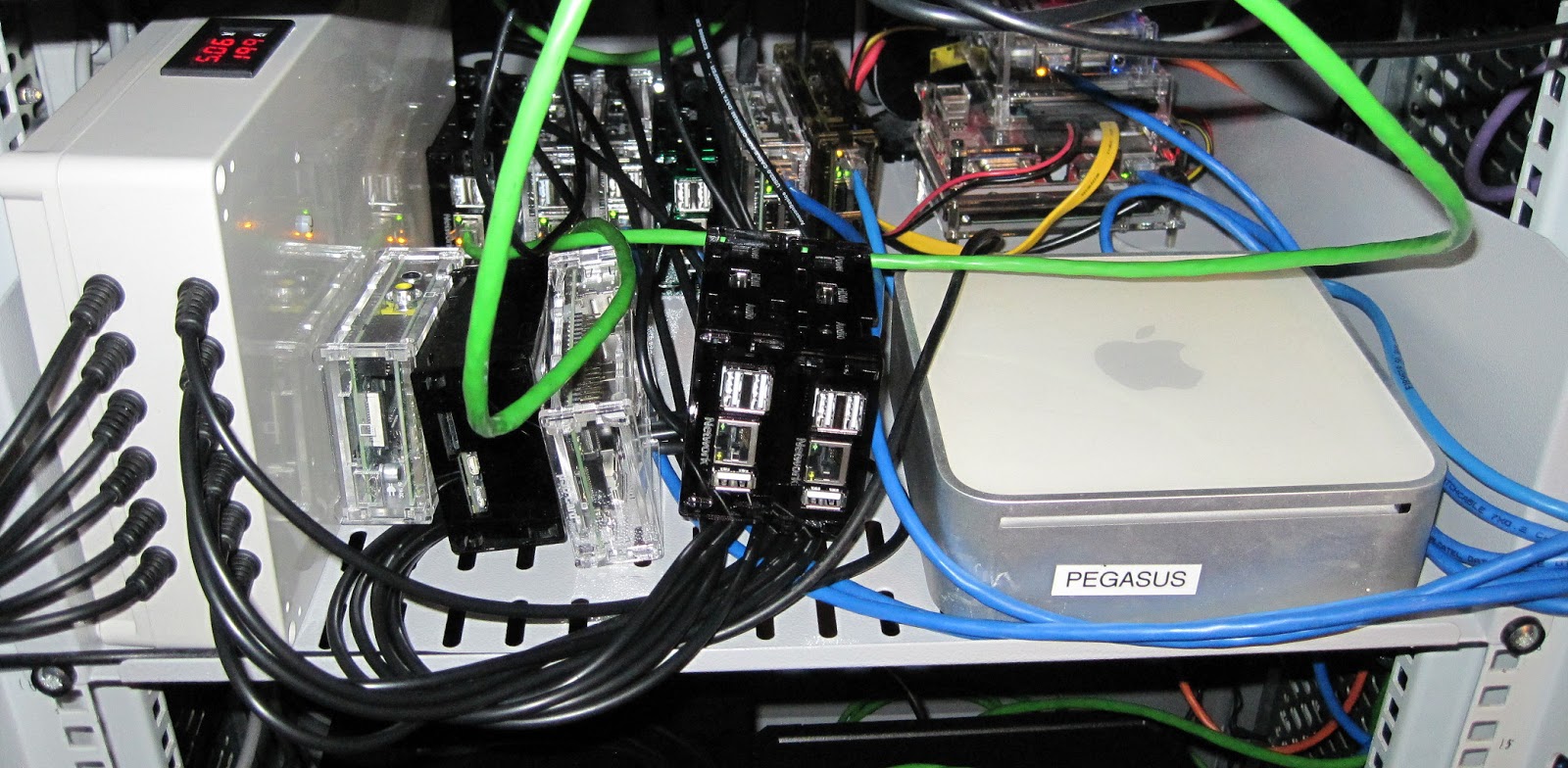
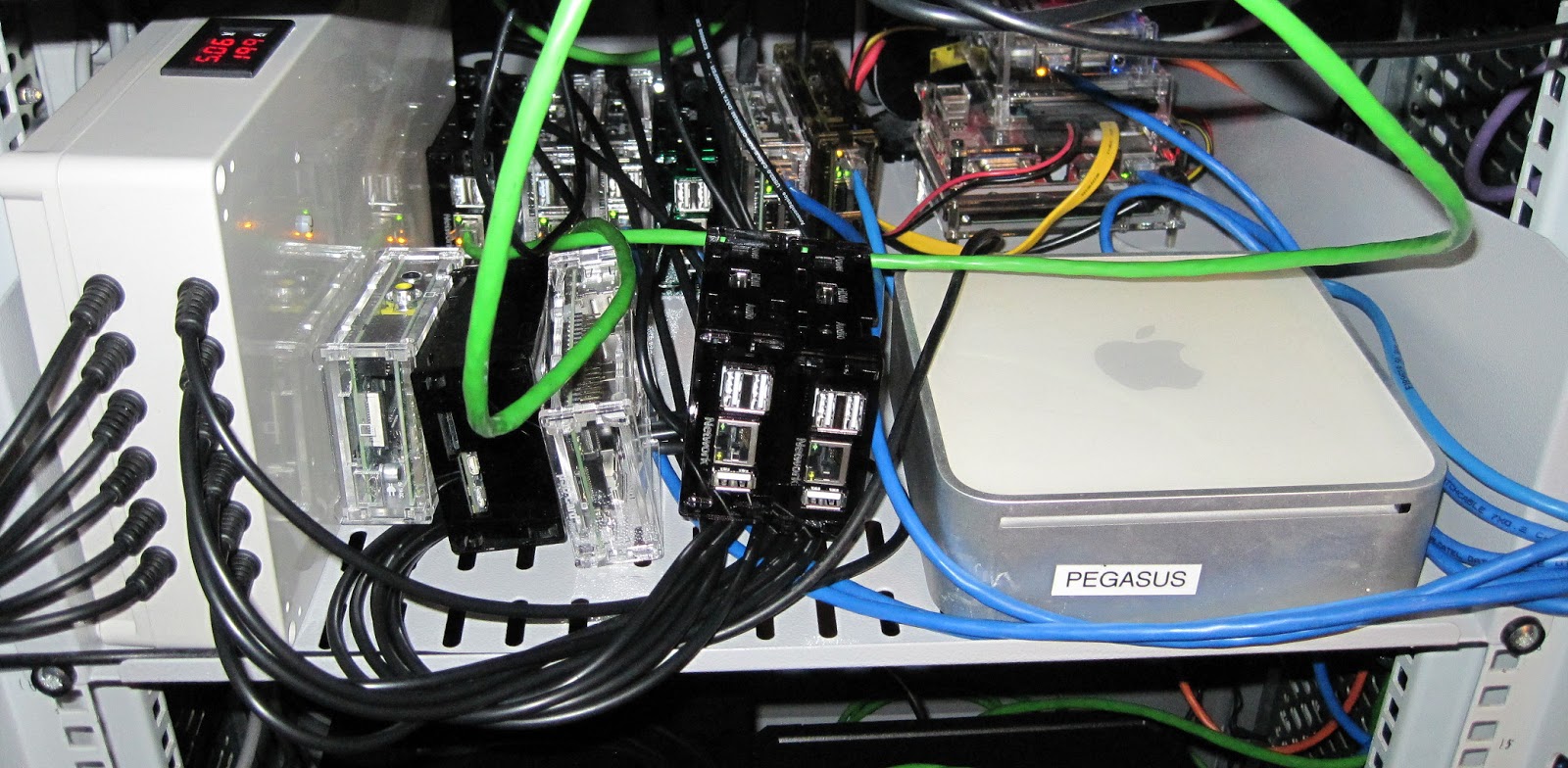
My recent rack design turned out to simply not be practical. It did not hold all the SBC I needed it to and most troubling accessing connectors was impractical. I was forced to remove the enclosure from the rack and go back to piles of SBC on a shelf.

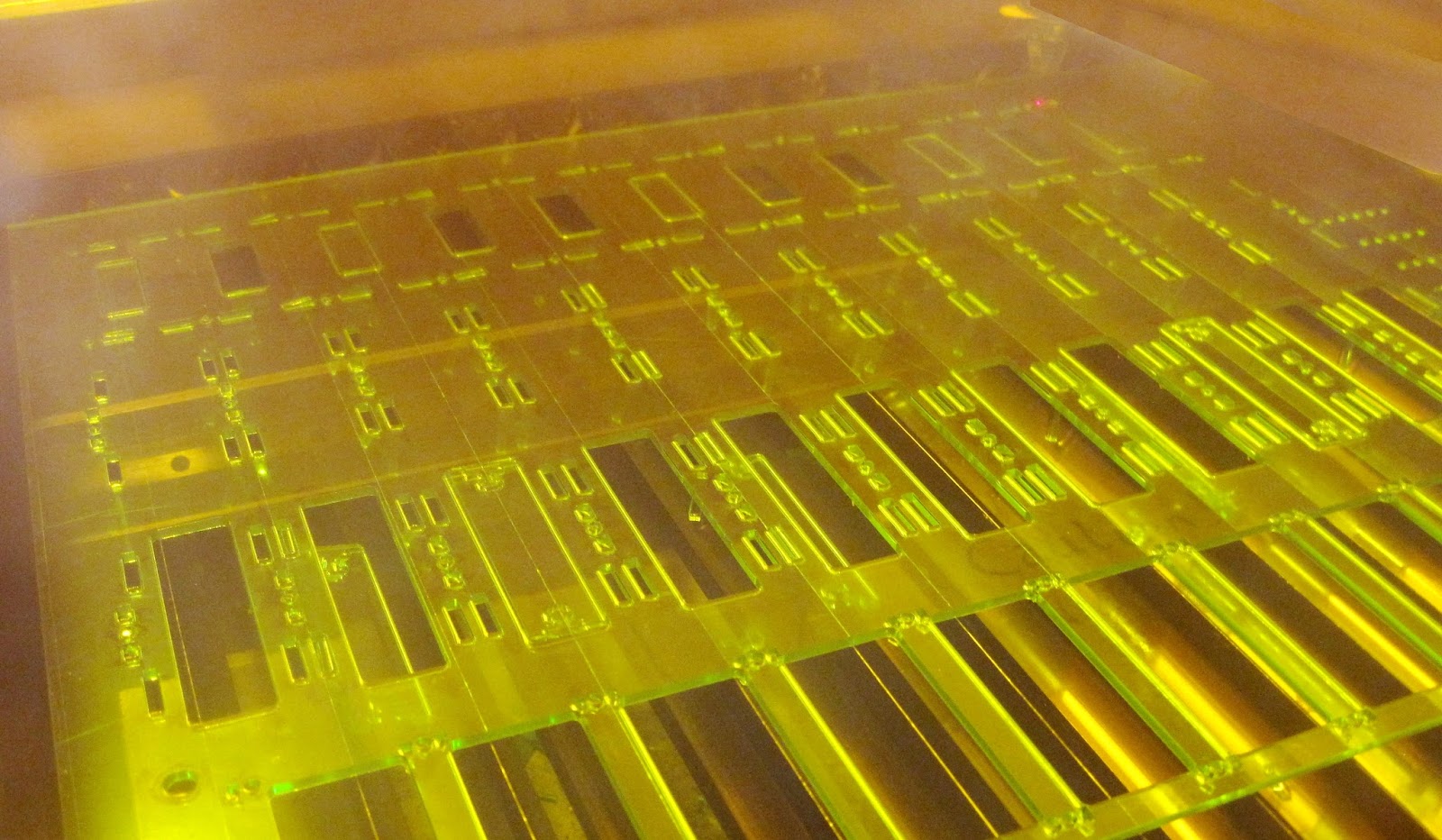
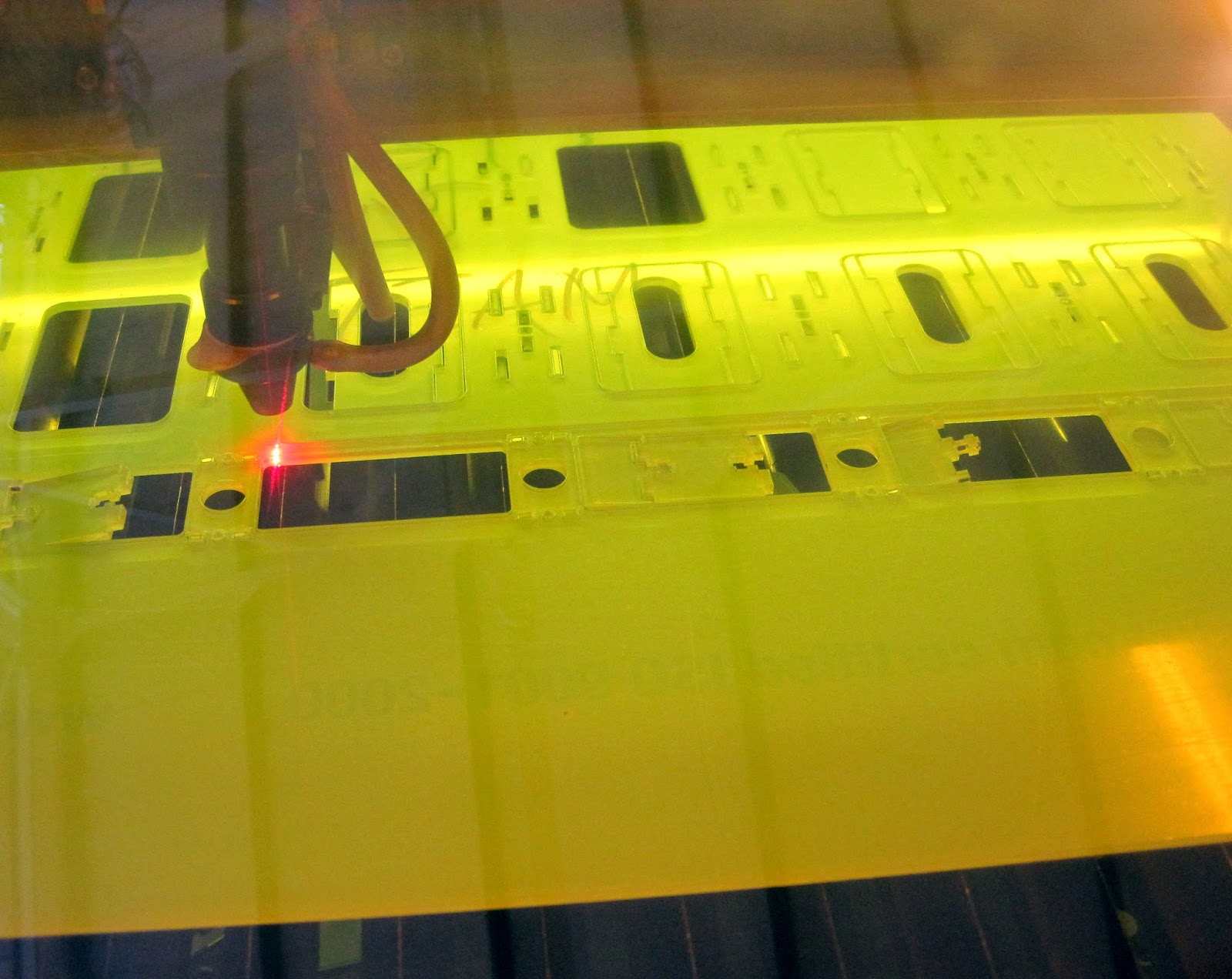
View of the acrylic being laser cut through the heavily tinted window
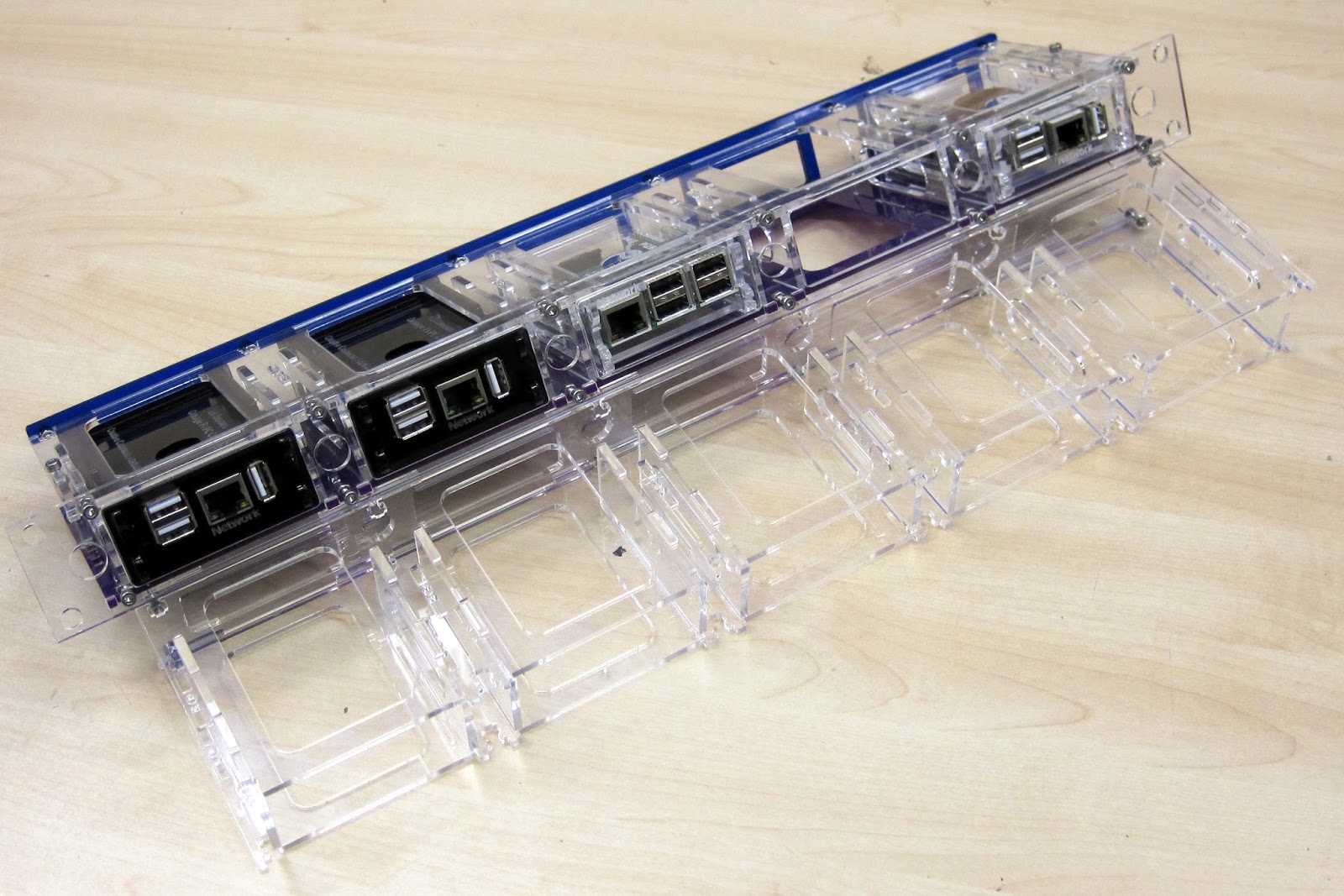
This sent me back to the beginning of the design process. The requirement for easy access to connectors had been compromised on in my first solution because I wanted a compact 1U size. This time I returned to my initial toast rack layout but retaining the SBC inside their clip cases.

By facing the connectors downwards and providing basic cable management the design should be much more practical.

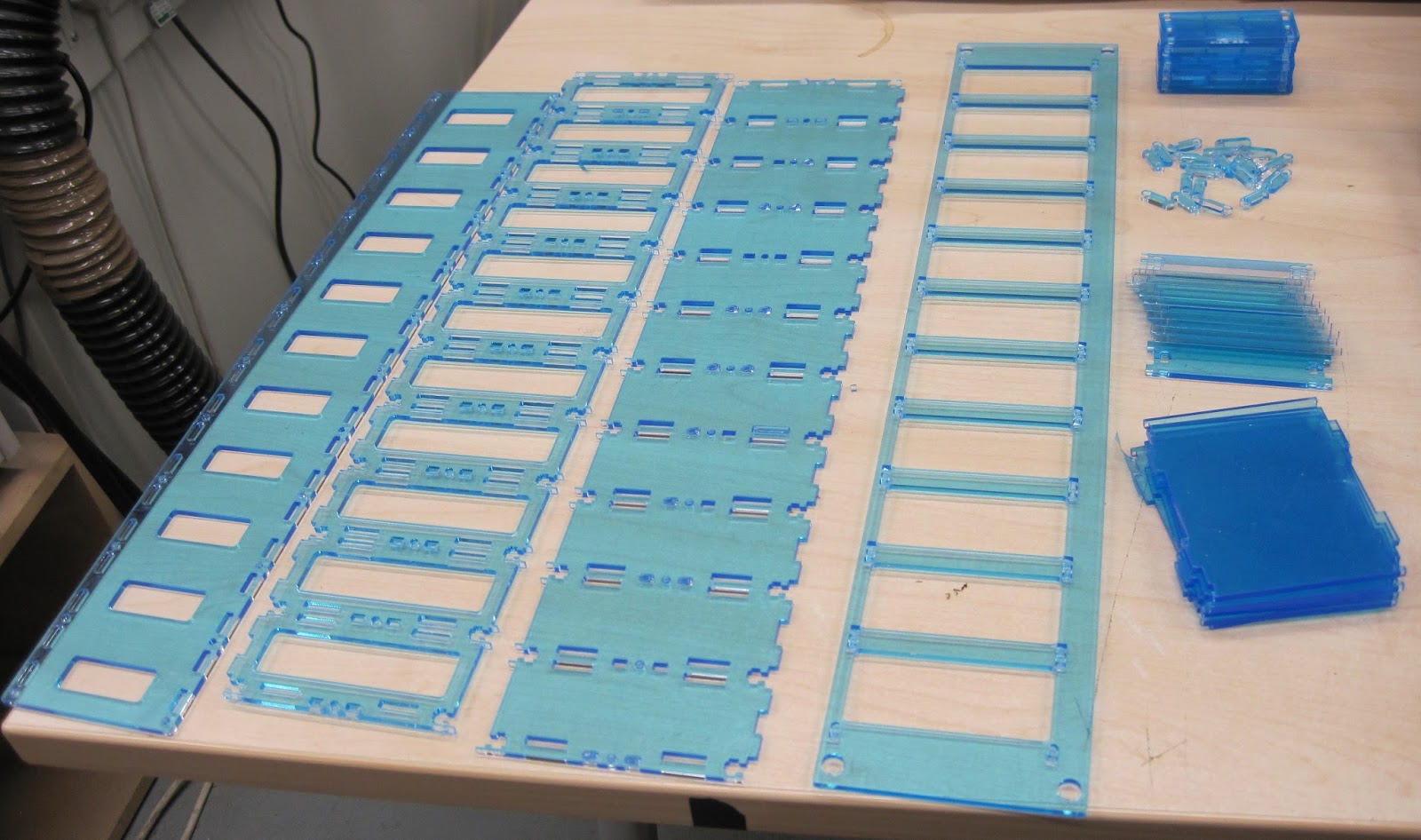
My design process is to use the QCAD package to create layered 2D outlines which are then converted from DXF into toolpaths with Lasercut CAM software. The toolpaths are then uploaded to the laser cutter directly from the PC running Lasercut.

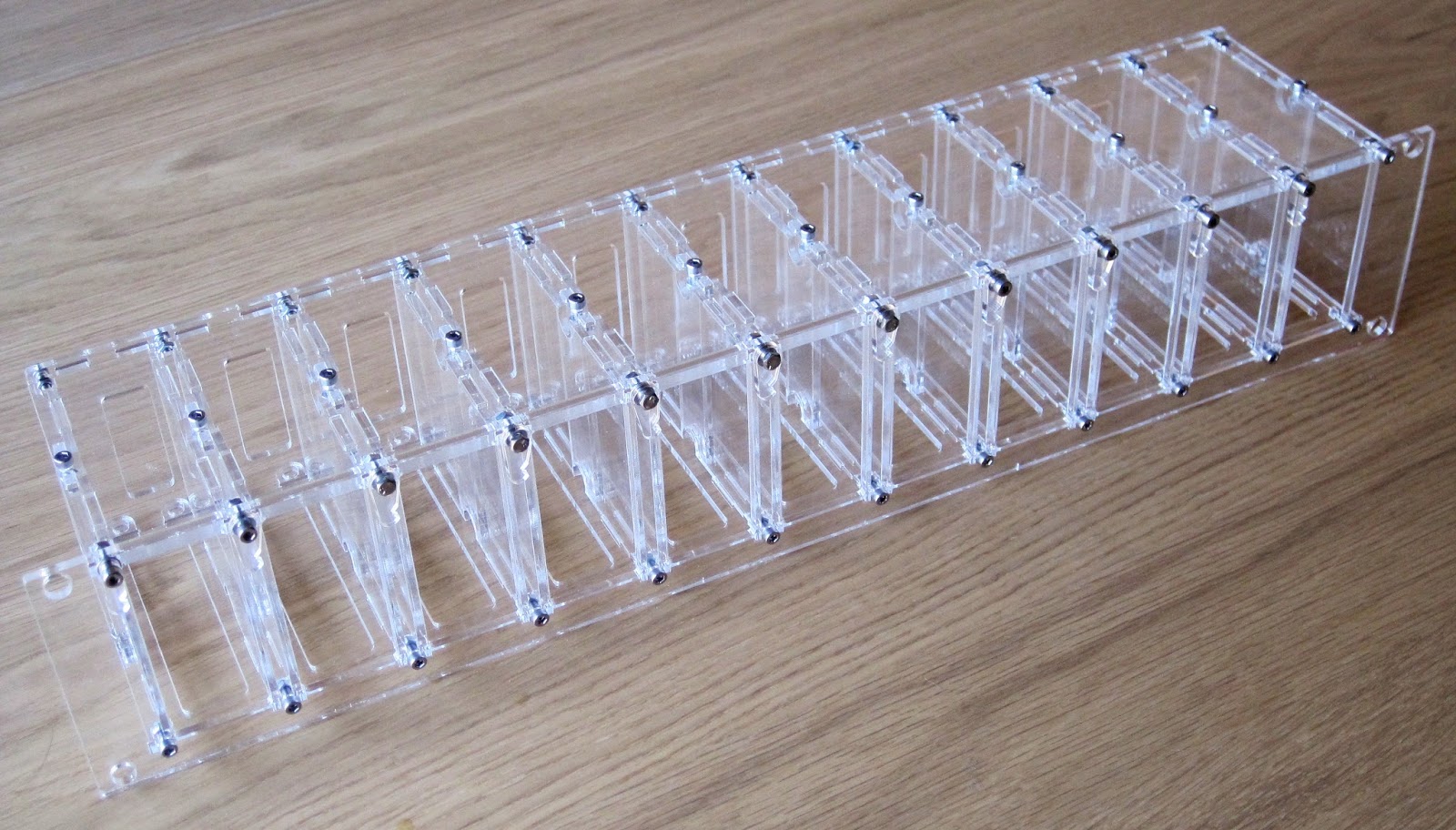
Assembled sub rack enclosureDespite the laser cutters being professional grade systems the Lasercut software is a continuous cause of issues for many users, it is the only closed source piece of software in the production process and it has a pretty poor user interface. On this occasion my main issue with it was my design was quite large at 700mm by 400mm which caused the software to crash repeatedly. I broke the design down into two halves and this allowed me to continue.

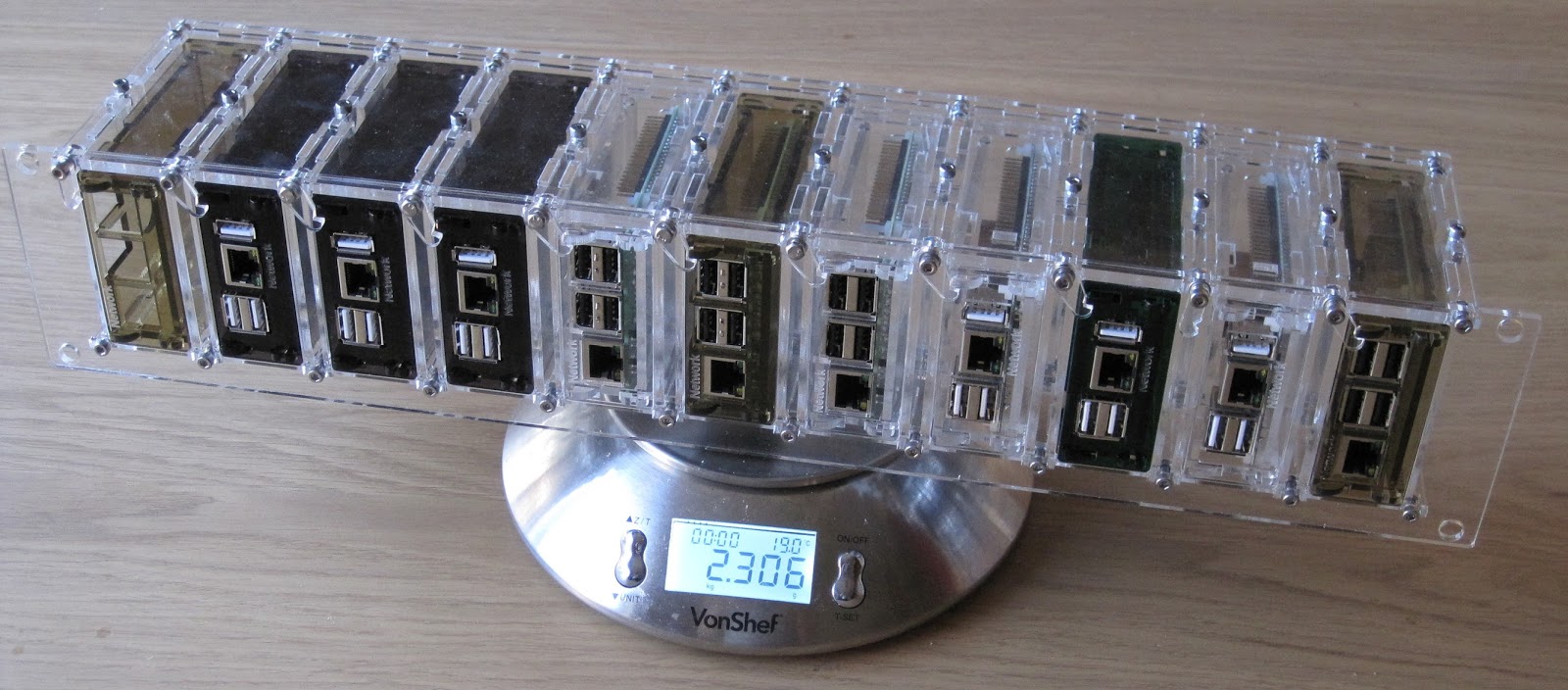
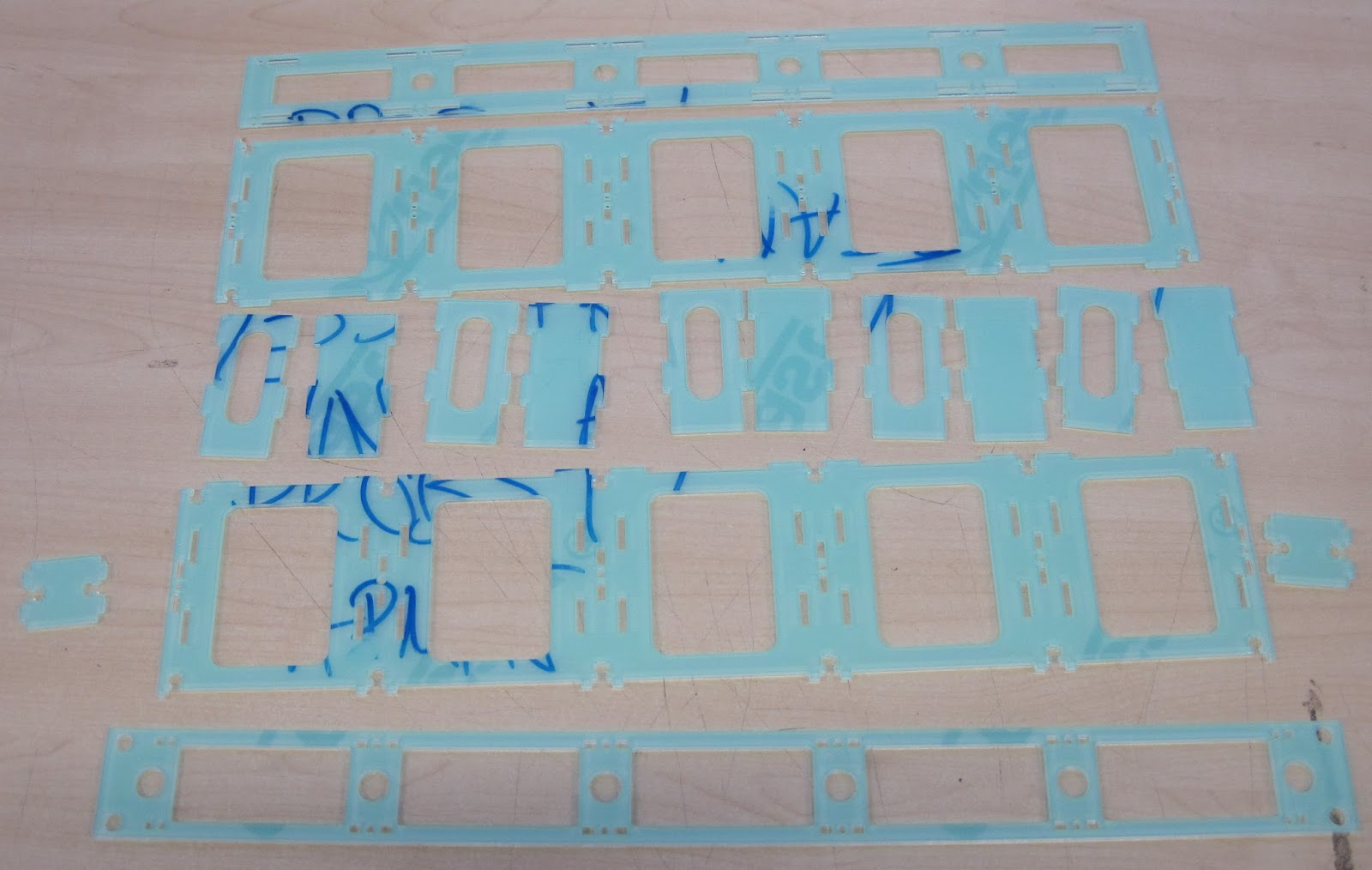
Once I defeated the software the design was laser cut from 3mm clear extruded acrylic. The assembled is secured with 72 off M3 nuts and bolts. The resulting construction is very strong and probably contains much more material than necessary.

One interesting thing I discovered is that in going from a 1U enclosure holding 5 units to a 2U design holding 11 units I had increased the final weight from 320g to 980g and when all 11 SBC are installed that goes up to a whopping 2300g. Fortunately this is within the mechanical capabilities of the material but it is the heaviest thing I have ever constructed from 3mm acrylic.

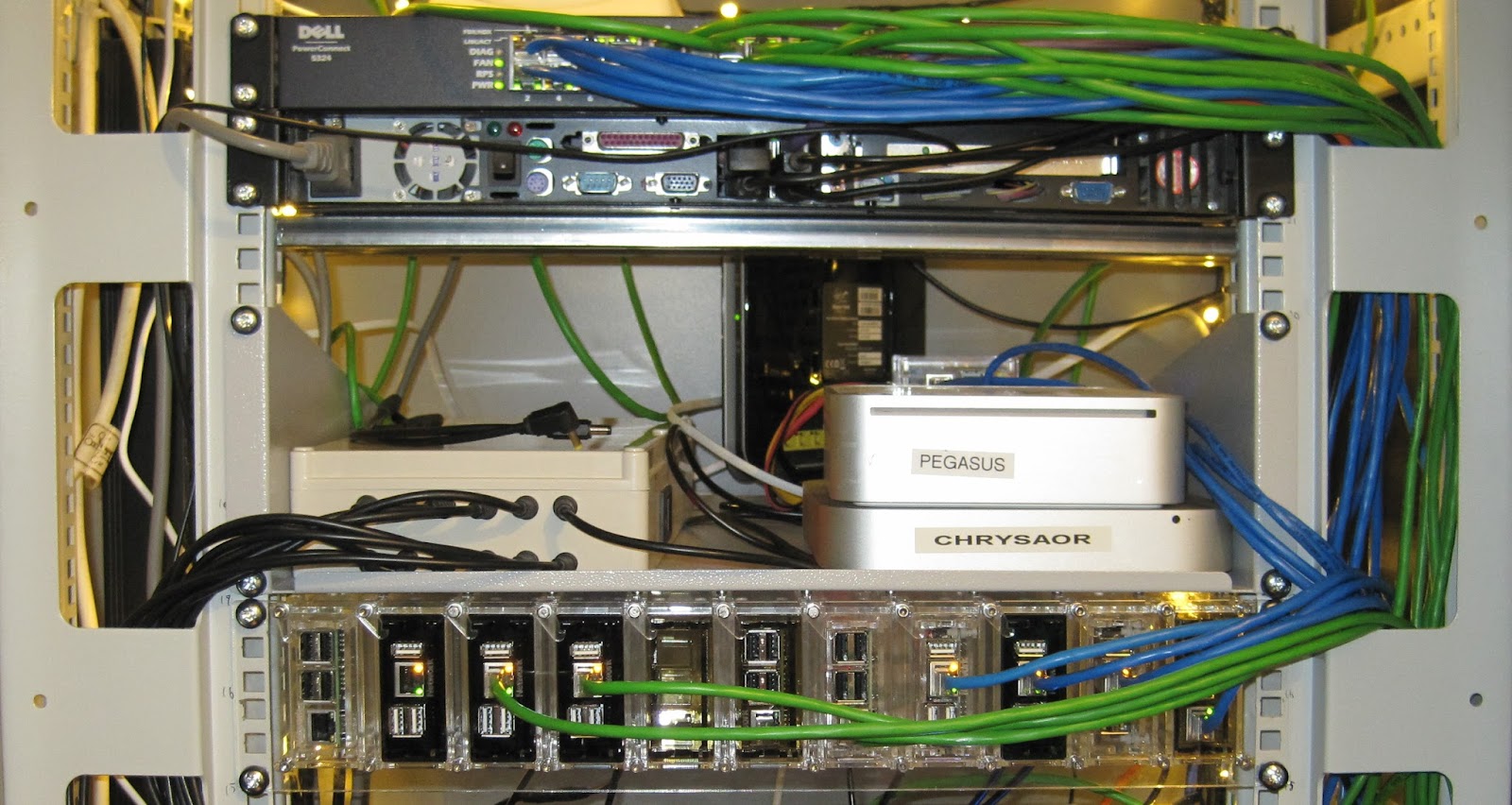
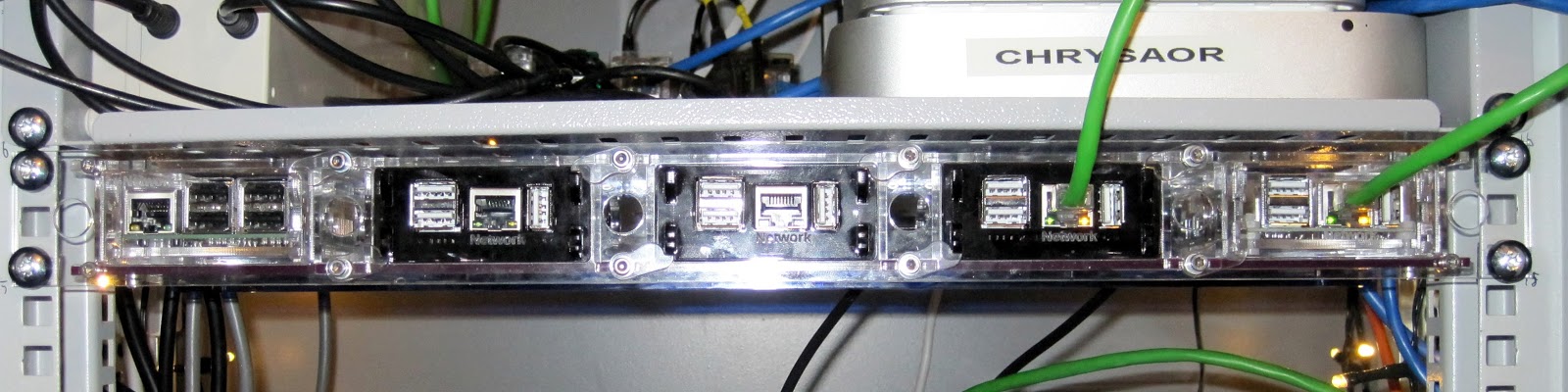
bolted into the rack and operatingOnce installed in the rack with all SBC inserted and connected this finally actually works and provides a practical solution. The self is finally clear of SBC and has enough space for all the other systems I need to accommodate for various projects.

As usual the design files are all freely available though I really cannot see anyone else needing to replicate this.

3 March 2016

Antonio Terceiro: Debian Ruby Sprint 2016 - day 3: Ruby 2.3 in unstable, Reproducible Builds, and Data Structures for Dinner Booths

Day 3 was again a full of useful work. Since the beginning of the sprint, we were able to fix more than 50 FTBFS bugs, alongside general quality improvements in the packages.
in the Debian jargon, FTBFS means that a package fails to build from source , which in Debian is a critical bug because users need to be able to produce binary packages from their source code to fully exercise the free software principles.
An important milestone that was also achieved on day 3 was the upload of ruby-defaults 1:2.3.0+1, making ruby2.3 the new default version of Ruby. That is the version that will shipped in the next Debian release, codenamed stretch. This is the culmination of a joint effort between the Ruby team and Debian Release Team that involves rebuilding a little more than 130 packages that use the Ruby C API to make sure everything will just work on upgrades, both from the previous stable release, and from earlier snapshots of the current development release. Another small change that will have a big impact for Debian and for free software was an improvement to gem2deb that fixes a reproducibility issue in Ruby packages and will help currently more than 100 Ruby packages become reproducible. The full list of items that have been worked on is this: The day ended at Outback, where we had an amount of beer that led us to formulate what we will now call the One-Sided Dinner Booth Problem. In a party arranged like above, when the people closest to wall need to go alleviate themselves of some beer, you basically have to perform a removal from the bottom of a stack, which requires popping all the elements at the top. When they come back, you have to options: The One-Sided Dinner Booth Problem is finding the optimal data structure and algorithm for this situation. It is postulated that this is an NP-complete problem, and that only probabilistic solutions are cost-effective.

1 March 2016

Vincent Sanders: Hope is tomorrow's veneer over today's disappointment.

Recently I have been very hopeful about the 96boards Hikey SBC and as Evan Esar predicted I have therefore been very disappointed. I was given a Hikey after a Linaro connect event some time ago by another developer who could not get the system working usefully and this is the tale of what followed.
The Standard Design
This board design was presented as Linaro creating a standard for the 64bit Single Board Computer (SBC) market. So I had expected that a project with such lofty goals would have considered many factors and provided at least as good a solution as the existing 32bit boards.

The lamentable hubris of creating a completely new form factor unfortunately sets a pattern for the whole enterprise. Given the aim towards "makers" I would have accepted that the system would not be a ATX PC size motherboard, but mini/micro/nano and pico ITX have been available for several years.

If opting for a smaller "credit card" form factor why not use one of the common ones that have already been defined by systems such as the Raspberry Pi B+? Instead now every 96Board requires special cases and different expansion boards.

Not content with defining their own form factor the design also uses a 8-18V supply, this is the only SBC I own that is not fed from a 5V supply. I understand that a system might require more current than a micro USB connector can provide, but for example the Banana Pi manages with a DC barrel jack readily capable of delivering 25W which would seem more than enough

The new form factor forced the I/O connectors to be placed differently to other SBC, given the opportunity to concentrate all connectors on one edge (like ATX designs) and avoid the issues where two or three sides are used. The 96board design instead puts connectors on two edges removing any possible benefit this might have given.

The actual I/O connectors specified are rather strange. There is a mandate for HDMI removing the possibility of future display technology changes. The odd USB arrangement of two single sockets instead of a stacked seems to be an attempt to keep height down but the expansion headers and CPU heatsink mean this is largely moot.

The biggest issue though is mandating WIFI but not Ethernet (even as an option), everything else in the design I could logically understand but this makes no sense. It means the design is not useful for many applications without adding USB devices.

Expansion is presented as a 2mm pitch DIL socket for "low speed" signals and a high density connector for "high speed" signals. The positioning and arrangement of these connectors proffered an opportunity to improve upon previous SBC designs which was not taken. The use of 2mm pitch and low voltage signals instead of the more traditional 2.54mm pitch 3.3v signals means that most maker type applications will need adapting from the popular Raspberry Pi and Arduino style designs.

In summary the design appears to have been a Linaro project to favour one of their members which took a Hisilicon Android phone reference design and put it onto a board with no actual thought beyond getting it done. Then afterwards attempted to turn that into a specification, this has simply not worked as an approach.

My personal opinion is that this specification is fatally flawed and, is a direct cause of, the bizarre situation where the "consumer" specification exists alongside the "enterprise" edition which itself has an option of microATX form factor anyhow!
The ImplementationIf we ignore the specification appearing to be nothing more than a codification of the original HiKey design we can look at the HiKey as an implementation.

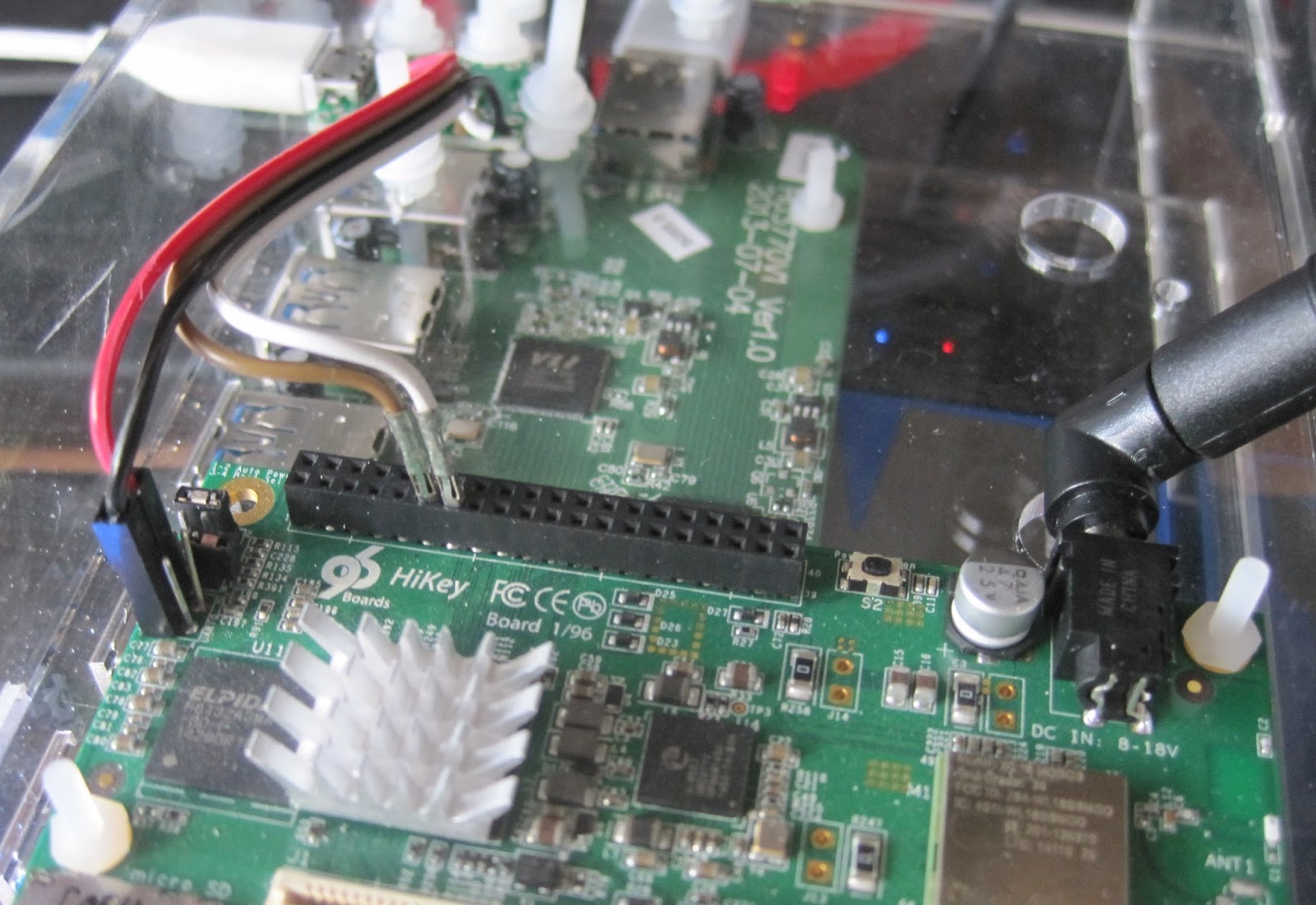
Initially the board required modifying to add headers to attach a USB to 1.8V LVTTL serial adaptor on the UART0 serial port. Once Andy Simpkins had made this change for me I was able to work through the instructions and attempt to install a bootloader and OS image.

The initial software was essentially HiSilicon vendor code using the Android fastboot system to configure booting. There was no source and the Ubuntu OS images were an obvious afterthought to the Android images. Just getting these images installed required a great deal of effort, repetition and debugging. It was such a dreadful experience this signalled the commencement one of the repeated hiatuses throughout this project, the allure of 64 bit ARM computing has its limits even for me.

When I returned to the project I attempted to use the system from the on-board eMMC but the pre-built binary only kernel and OS image were very limited. Building a replacement kernel , or even modules for the existing one proved fruitless and the system was dreadfully unstable.

I wanted to use the system as a builder for some Open Source projects but the system instability ruled this out. I considered attempting to use virtualisation which would also give better system isolation for builder systems. By using KVM running a modern host kernel and OS as a guest this would also avoid issues with the host systems limitations. At which point I discovered the system had no virtualisation enabled apparently because the bootloader lacked support.

In addition to these software issues there were hardware problems, despite forcing the use of USB for all additional connectivity the USB implementation was dreadful. For a start all USB peripherals have to run at the same speed! One cannot mix full (12Mbit) and high speed (480Mbit) devices which makes adding a USB Ethernet and SATA device challenging when you cannot use a keyboard.

And because I needed more challenges only one of the USB root hubs was functional. In effect this made the console serial port critical as it was the only reliable way to reconfigure the system without a keyboard or network link (and WIFI was not reliable either)
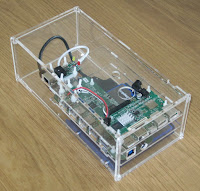
After another long pause in proceedings I decided that I should house all the components together and that perhaps being out on my bench might be the cause of some instability. I purchased a powered Amazon basics USB 2 hub, an Ethernet adaptor and a USB 2 SATA interface in the hope of accessing some larger mass storage.

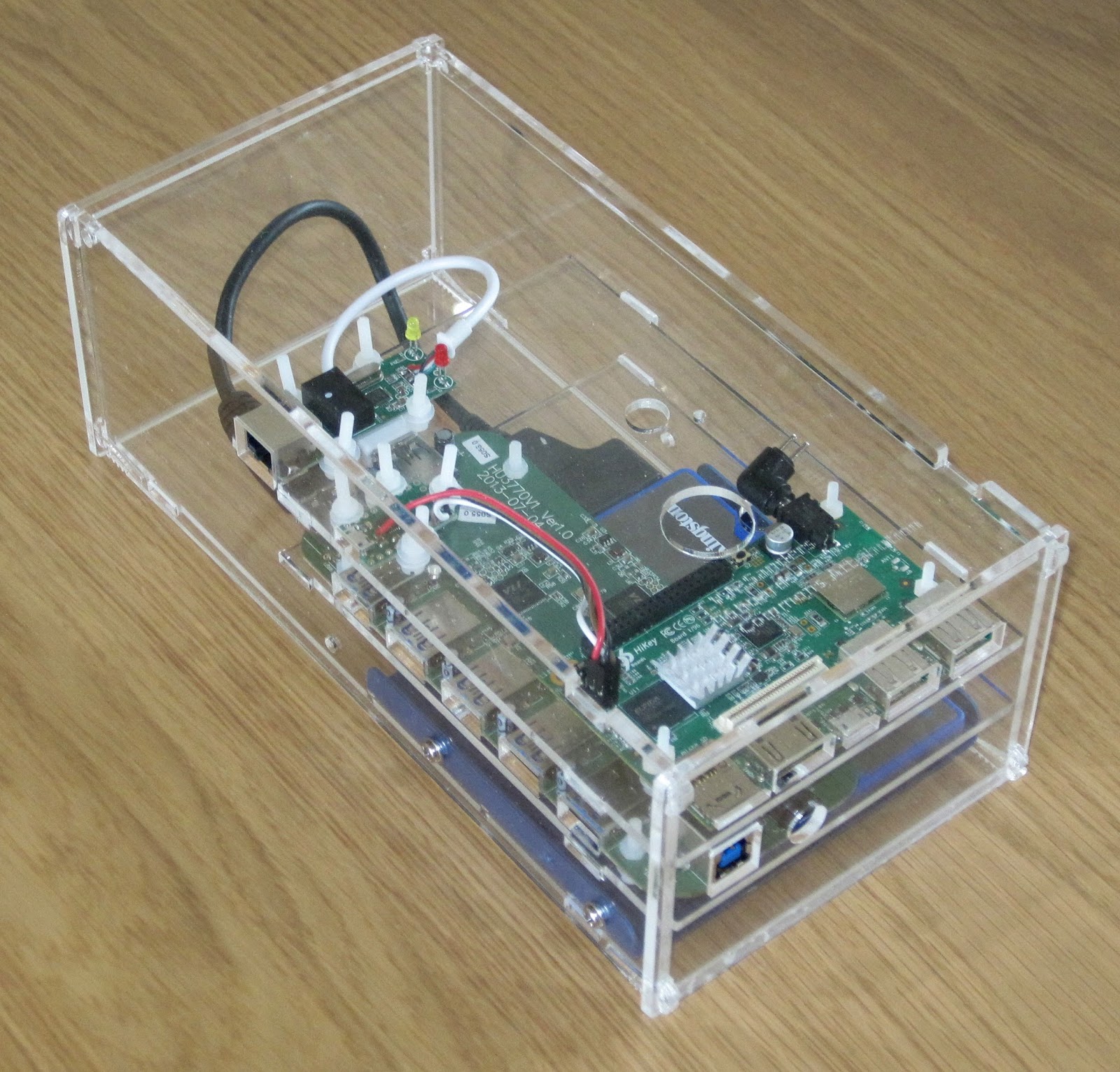
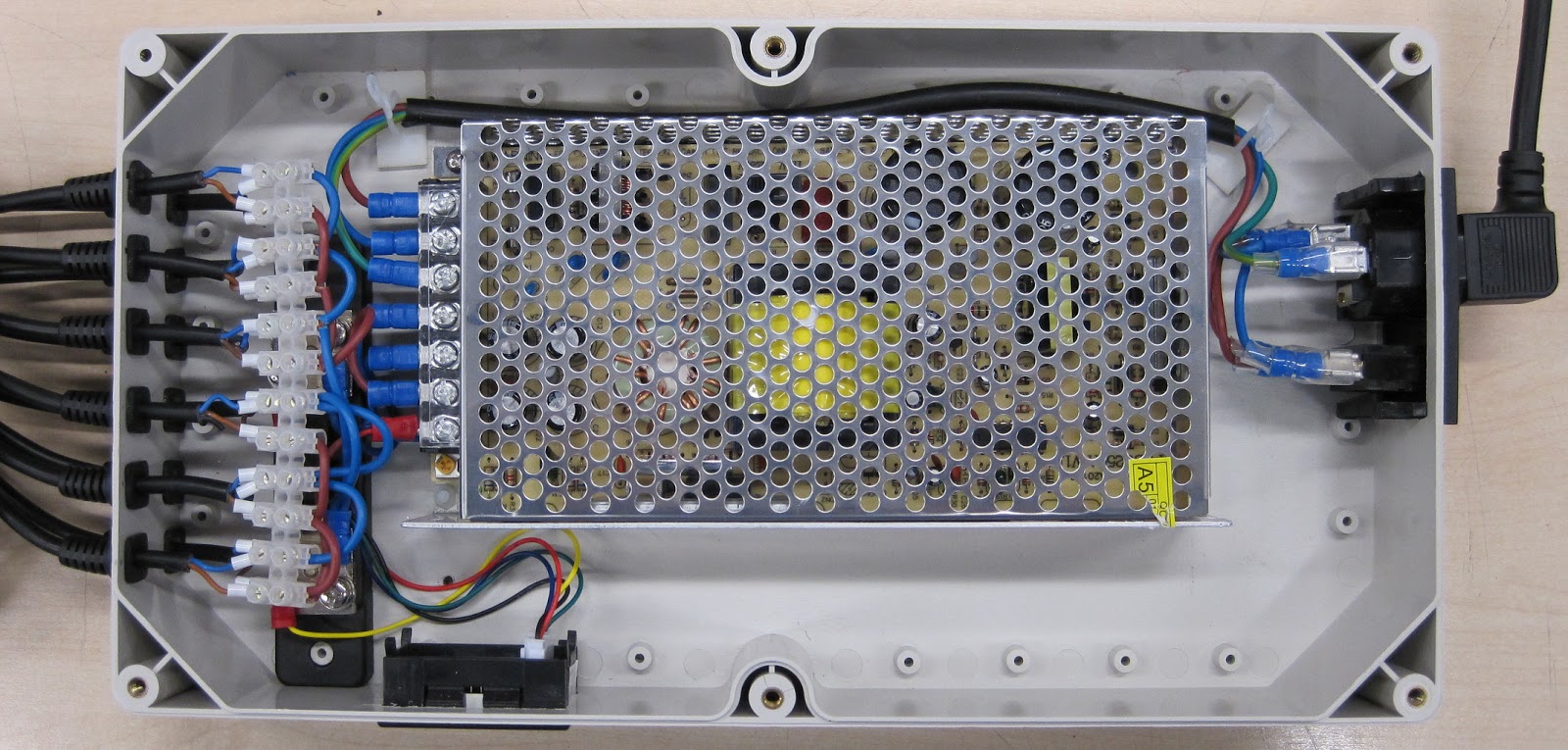
The USB hub power supply was 12V DC which matched the Hikey requirements so I worked out I could use a single 4A capable supply and run a 3.5inch SATA hard drive too. I designed a laser cut enclosure and mounted all the components. As it turned out I only had a 2.5inch hard drive handy so the enclosure is a little over size. If I were redoing this design I would attempt to make it fit in 1U of height and be mountable in a 19inch rack instead it is an 83mm high (under 2U) box.

A new software release had also become available which purported to use an UEFI bootloader after struggling to install this version unsuccessfully, made somewhat more problematic by the undocumented change from UART0 (unpopulated header) to UART3 on the low speed 2mm pitch header. The system seemed to start the kernel which panicked and hung either booting from eMMC or SD card. Once again the project went on hold after spending tens of hours trying to make progress.
Third time's a charmAs the year rolled to a close I once again was persuaded to look at the hikey, I followed the much improved instructions and installed the shiny new November software release which appears to have been made for the re-release of the Hikey through LeMaker. This time I obtained a Debian "jessie" system that booted from the eMMC.

Having a booted system meant I could finally try and use it. I had decided to try and use the system to host virtual machines used as builders within the NetSurf CI system.

The basic OS uses a mixture of normal Debian packages with some replacements from Linaro repositories. I would have prefered to see more use of Debain packages even if they were from the backports repositories but on the positive side it is good to see the use of Debian instead of Ubuntu.

The kernel is a heavily patched 3.18 built in a predominantly monolithic (without modules) manner with the usual exceptions such as the mali and wifi drivers (both of which appear to be binary blobs). The use of a non-mainline capable SoC means the standard generic distribution kernels cannot be used and unless Linaro choose to distribute a kernel with the feature built in it is necessary to compile your own from sources.

The default install has a linaro user which I renamed to my user and ensured all the ssh keys and passwords on the system were changed. This is an important step when using this pre-supplied images as often a booted system is identical to every other copy.

To access mass storage my only option was via USB, indeed to add any additional expansion that is the only choice. The first issue here is that the USB host support is compiled in so when the host ports are initialised it is not possible to select a speed other than 12MBit. The speed is changed to 480Mbit by using a user space application found in the users home directory (why this is not a tool provided by a package and held in sbin I do not know).

When the usb_speed tool is run there is a chance that the previously enumerated devices will be rescanned and what was /dev/sda has become /dev/sdb if this happens there is a high probability that the system must be rebooted to prevent random crashes due to the "zombie" device.

Because the speed change operation is unreliable it cannot be reliably placed in the boot sequence so this must be executed by hand on each boot to get access to the mass storage.

NetSurf project already uses a x86_64 virtual host system which runs an LLVM physical volume from which we allocate logical volumes for each VM. I initially hoped to do this with the hikey but as soon as I tried to use the logical volume with a VM the system locked up with nothing shown on console. I did not really try very hard to discover why and instead simply used files on disc for virtual drives which seemed to work.

To provide reliable network access I used a USB attached Ethernet device, this like the mass storage suffered from unreliable enumeration and for similar reasons could not be automated requiring manually using the serial console to start the system.

Once the system was started I needed to install the guest VM. I had hoped I might be able to install locally from Debian install media as I do for x86 using the libvirt tools. After a great deal of trial and error I finally was forced to abandon this approach when I discovered the Linaro kernel is lacking iso9660 support so installing from standard media was not possible.

Instead I used the instructions provided by Leif Lindholm to create a virtual machine image on my PC and copied the result across. These instructions are great except I used version 2.5 of Qemu instead of 2.2 which had no negative effect. I also installed the Debian backports for Jessie to get an up to date 4.3 kernel.

After copying the image to the Hikey I started it by hand from the command line as a four core virtual machine and was successfully able to log in. The guest would operate for up to a day before stopping with output such as

$
Message from syslogd@ciworker13 at Jan 29 07:45:28 ...
kernel:[68903.702501] BUG: soft lockup - CPU#0 stuck for 27s! [mv:24089]

Message from syslogd@ciworker13 at Jan 29 07:45:28 ...

kernel:[68976.958028] BUG: soft lockup - CPU#2 stuck for 74s! [swapper/2:0]

Message from syslogd@ciworker13 at Jan 29 07:47:39 ...
kernel:[69103.199724] BUG: soft lockup - CPU#3 stuck for 99s! [swapper/3:0]

Message from syslogd@ciworker13 at Jan 29 07:53:21 ...
kernel:[69140.321145] BUG: soft lockup - CPU#3 stuck for 30s! [rs:main Q:Reg:505]

Message from syslogd@ciworker13 at Jan 29 07:53:21 ...
kernel:[69192.880804] BUG: soft lockup - CPU#0 stuck for 21s! [jbd2/vda3-8:107]

Message from syslogd@ciworker13 at Jan 29 07:53:21 ...
kernel:[69444.805235] BUG: soft lockup - CPU#3 stuck for 22s! [swapper/3:0]

Message from syslogd@ciworker13 at Jan 29 07:55:21 ...
kernel:[69570.177600] BUG: soft lockup - CPU#1 stuck for 112s! [systemd:1]

Timeout, server 192.168.7.211 not responding.

After this output the host system would not respond and had to be power cycled never mind the guest!

Once I changed to single core operation the system would run for some time until the host suffered from the dreaded kernel OOM killer. I was at a loss as to why the oom killer was running as the VM was only allocated half the physical memory (512MB) allowing the host what I presumed to be an adequate amount.

By adding a 512MB swapfile the system was able to push the few hundred kilobytes it wanted to swap and the system was now stable! The swapfile of course has to be started by hand as the external storage is unreliable and unavailable at boot.

I converted the qemu command line to a libvirt config using the virsh tool
virsh domxml-from-native qemu-argv cmdln.args
The converted configuration required manual editing to get a working system but now I have a libvirt based VM guest I can control along with all my other VM using the virt-manager tool.

This system is now stable and has been in production use for a month at time of writing. The one guest VM is a single core 512MB aarch64 system which takes over 1100 seconds (19 minutes) to do what a Banana Pi 2 dual core 1GB memory 32bit native ARM system manages in 300 seconds.

It seems the single core limited memory system with USB SATA attached storage is very, very slow.

I briefly attempted to run the CI system job natively within the host system but within minutes it crashed hard and required a power cycle to retrieve, it had also broken the UEFI boot. I must thank Leif for walking me through recovering the system otherwise I would have needed to start over.
ConclusionsI must stress these conclusions and observations are my own and do not represent anyone else.

My main conclusions are:

This project has taken almost a year to get to the final state and has been one of the least enjoyable within that time. The only reason I have a running system at the end of it is sheer bloody mindedness because after spending hundreds of hours of my free time I was not prepared to see it all go to waste.

To be fair, the road I travelled is now much smoother and if the application is suited to having a mobile phone without a screen then the Hikey probably works as a solution. For me, however, the Hikey product with the current hardware and software limitations is not something I would recommend in preference to other options.

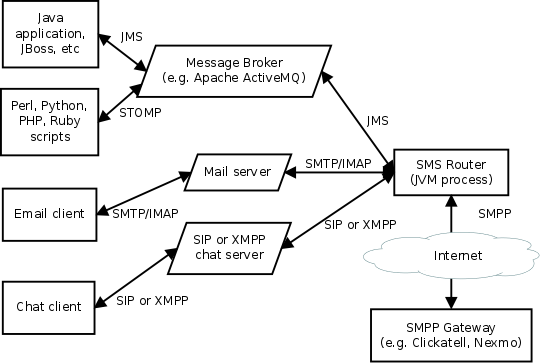
21 February 2016

Vincent Sanders: Stack 'em, pack 'em and rack 'em.

As you may be aware I have a bit of a problem with Single Board Computers in that I have a lot of them. Keeping them organised has turned into a bit of a problem.

cluttered shelf of SBC
I designed clip cases for many of these systems giving me a higher storage density on my rack shelves and built a power supply to reduce the cabling complexity. These helped but I still ended up with a cluttered shelf full of SBC.

I decided I would make a rack enclosure to hold the SBC, I was limited to material I could easily CNC machine which limited me to acrylic plastics or wood.

laser cutting the design, viewed through heavily tinted filterInitially I started with the idea of housing the individual boards in a toast rack arrangement. This would mean that the enclosure would have to be at least 2U high to fit the boards all the existing cases would have to be discarded. This approach was dropped when the drawbacks of having no flexibility and only being able to fit the units that were selected at design time became apparent (connector cutouts and mounting hole placement.

Instead I changed course to try and incorporate the existing cases which already solved the differing connector and mounting placement problem and gave me a uniform size to consider. Once I had this approach the design came pretty quickly. I used a tube girder construction 1U in height to get as much strength as possible from the 3mm acrylic plastic I would use.

laser cut pieces arranged for assembly still with protective film on
The design was simply laser cut from sheet stock and fastened together with M3 nut and bolts. Once I corrected the initial design errors (I managed to get almost every important dimension wrong on the first attempt) the result was a success.

working prototype resting on initial version
The prototype is a variety of colours because makespace ran out of suitably sized clear acrylic stock but the colouring has no effect on the result other than aesthetical. The structure gives a great deal of rigidity and there is no sagging or warping, indeed testing on the prototype got to almost 50Kg loading without a failure (one end clamped and the other end loaded at 350mm distance)

I added some simple rotating latches at the front which keep the modules held in place and allow units to be removed quickly if necessary.

rack slots installed and in use
Overall this project was successful and I can now pack five SBC per U neatly. It does limit me to using systems cased in my "slimline" designs (68x30x97mm) which currently means the Raspberry Pi B+ style and the Orange Pi PC.

Once small drawback is access to I/O and power connectors. These need to be right angled and must be unplugged before unit removal which can be a little fiddly. Perhaps a toast rack design of cases would have given easier connector access but I am happy with this trade off of space for density.

As usual the design files are freely available, perhaps they could be useful as a basis for other laser cut rack enclosure designs.

18 February 2016

Vincent Fourmond: Release of ctioga2 version 0.14

The day has finally come again to release a new version of my plotting program, ctioga2. Version 0.14 features, among others:
As usual, the best way to update the package is running:
~ gem update ctioga2
An updated Debian package should find its way to the archive later on today. Have fun !

14 February 2016

Sean Whitton: East 5th Street tech

There are three of us living here, and the plan is to switch all three of us from wireless to wired ethernet Internet connections by transporting cabling through the ventilation system using this remote-controlled car. Here s an action shot we took. My housemate put on his Gaming playlist and it reached a very suitable crescendo as we guided the car through its final journey, pulling the last piece of cotton which we would then use to pull the final cabal through. The timing of the music couldn t have been better. It reflected the risk of losing control of the car as we moved the controller around to enable the car to pick up the radio signals. A further risk was caused by the car only being able to turn right, not left, and there not being enough room in the air duct for it to make a full-circle rotation. Our backup plan was to try tossing a ball tied to a piece of string down the duct. Unfortunately I m still on a wireless connection because to reach my room we d have had to send the cable via the furnace/air conditioning unit which we decided against. Does a SATA-to-USB converter, for moving data off my old laptop hard drive which I had to replace this week, need to be this complicated?

9 February 2016

Jose M. Calhariz: A Selection of Talks from FOSDEM 2016

It's that time of the year where I go to FOSDEM (Free and Open Source Software Developers' European Meeting). The keynotes and the maintracks are very good, with good presentations and contents. It's very dificult to choose what talks to see, what talks to see later in video and what talks to loose. What I leave here is my selection of talks. This selection is representative of my tastes, not of the quality of the presentations. I will give links for material that is available now. I will do periodic updates when the new material is available: video or slides.

7 February 2016

Ben Armstrong: Bluff Trail icy dawn: Winter 2016

Before the rest of the family was up, I took a brief excursion to explore the first kilometre of the Bluff Trail and check out conditions. I turned at the ridge, satisfied I had seen enough to give an idea of what it s like out there, and then walked back the four kilometres home on the BLT Trail. I saw three joggers and their three dogs just before I exited the Bluff Trail on the way back, and later, two young men on the BLT with day packs approaching. The parking lot had gained two more cars for a total of three as I headed home. Exercising appropriate caution and judgement, the first loop is beautiful and rewarding, and I m not alone in feeling the draw of its delights this crisp morning. Click the first photo below to start the slideshow.
Click to start the slideshowClick to start the slideshow
At the parking lot, some ice, but passable with caution Trail head: a few mm of sleet Many footprints since last snowfall Thin ice encrusts the bog The boardwalk offers some loose traction Mental note: buy crampons More thin bog ice Bubbles captured in the bog ice Shelves hang above receding water First challenging boulder ascent Rewarding view at the crest Time to turn back here Flowing runnels alongside BLT Trail Home soon to fix breakfast If it looks like a tripod, it is Not a very adjustable tripod, however Pretty, encrusted pool The sun peeks out briefly Light creeps down the rock face Shimmering icy droplets and feathery moss Capped with a light dusting of sleet
facebooktwittergoogle_plusredditpinterestlinkedinmail

1 February 2016

Lunar: Reproducible builds: week 40 in Stretch cycle

What happened in the reproducible builds effort between January 24th and January 30th:

Media coverage Holger Levsen was interviewed by the FOSDEM team to introduce his talk on Sunday 31st.

Toolchain fixes Jonas Smedegaard uploaded d-shlibs/0.63 which makes the order of dependencies generated by d-devlibdeps stable accross locales. Original patch by Reiner Herrmann.

Packages fixed The following 53 packages have become reproducible due to changes in their build dependencies: appstream-glib, aptitude, arbtt, btrfs-tools, cinnamon-settings-daemon, cppcheck, debian-security-support, easytag, gitit, gnash, gnome-control-center, gnome-keyring, gnome-shell, gnome-software, graphite2, gtk+2.0, gupnp, gvfs, gyp, hgview, htmlcxx, i3status, imms, irker, jmapviewer, katarakt, kmod, lastpass-cli, libaccounts-glib, libam7xxx, libldm, libopenobex, libsecret, linthesia, mate-session-manager, mpris-remote, network-manager, paprefs, php-opencloud, pisa, pyacidobasic, python-pymzml, python-pyscss, qtquick1-opensource-src, rdkit, ruby-rails-html-sanitizer, shellex, slony1-2, spacezero, spamprobe, sugar-toolkit-gtk3, tachyon, tgt. The following packages became reproducible after getting fixed: Some uploads fixed some reproducibility issues, but not all of them:
  • gnubg/1.05.000-4 by Russ Allbery.
  • grcompiler/4.2-6 by Hideki Yamane.
  • sdlgfx/2.0.25-5 fix by Felix Geyer, uploaded by Gianfranco Costamagna.
Patches submitted which have not made their way to the archive yet:
  • #812876 on glib2.0 by Lunar: ensure that functions are sorted using the C locale when giotypefuncs.c is generated.

diffoscope development diffoscope 48 was released on January 26th. It fixes several issues introduced by the retrieval of extra symbols from Debian debug packages. It also restores compatibility with older versions of binutils which does not support readelf --decompress.

strip-nondeterminism development strip-nondeterminism 0.015-1 was uploaded on January 27th. It fixes handling of signed JAR files which are now going to be ignored to keep the signatures intact.

Package reviews 54 reviews have been removed, 36 added and 17 updated in the previous week. 30 new FTBFS bugs have been submitted by Chris Lamb, Michael Tautschnig, Mattia Rizzolo, Tobias Frost.

Misc. Alexander Couzens and Bryan Newbold have been busy fixing more issues in OpenWrt. Version 1.6.3 of FreeBSD's package manager pkg(8) now supports SOURCE_DATE_EPOCH. Ross Karchner did a lightning talk about reproducible builds at his work place and shared the slides.

26 January 2016

Vincent Sanders: Creativity is allowing yourself to make mistakes. Art is knowing which ones to keep.

It seems Scott Adams insights sometimes reach beyond his disturbingly accurate satire. I have written before about my iterative approach to designing the things I make. such as my attempts at furniture and more recently enclosures for various projects.

Raspberry Pi B case design with the faliures
In the workshop today I had a selection of freshly laser cut.completed cases for several single board computers out on the desk. I was asked by a new member of the space how I was able to produce these with no failures?

I was slightly taken aback at the question and had to explain that the designs I was happily running off on the laser cutter are all the result of mistakes, lots of them. The person I was talking to was surprised when I revealed that I was not simply generating fully formed working designs first time.

We chatted for a while and it became apparent that they had been holding themselves back from actually making something because they were afraid the result would be wrong. I went to my box and retrieved the failures from my most recent case design for a Raspberry Pi model B to put alongside the successful end product to try and encourage them.

I explained that my process was fairly iterative, sure I attempted to get it right first time by reusing existing working solutions as a basis but that when the cost of iterating is relatively small it is sometimes worthwhile to just accept the failures.

For example in this latest enclosure:

My collection of failed cases
Generally I do not need this many iterations and get it right second time, however experience caused me to use offcuts and scrap material for the initial versions expecting to have issues. The point is that I was willing to make the iterations and not see them as failures.

The person I was talking to could not get past the possibility of having a pile of scrap material, it was wasteful in their view and my expectation to fail was unfathomable. They left with somewhat of a bad view of me and my approach.

I pondered this turn of events for a time and they did have a point in that I have a collection of thirty or so failures from all my various designs most of which is unusable. I then realised I have produced over fifty copies of those designs not just for myself but for other people and published them for anyone else to replicate, so on balance I think I am doing ok on wastage.

The stronger argument for me personally is that I have made something. I love making things, be that software, electronics or physical designs. It may not always be the best solution but I usually end up with something that works.

That makespace member may not like my approach but in the final reckoning, I have made something, their idea is still just an idea. So Scott I may not be an artist but I am at least creative and that is halfway there.

14 January 2016

Vincent Sanders: Ampere was the Newton of Electricity.

I think Maxwell was probably right, certainly the unit of current Ampere gives his name to has been a concern of mine recently.

Regular readers may have possibly noticed my unhealthy obsession with single board computers. I have recently rehomed all the systems into my rack which threw up a small issue of powering them all. I had been using an ad-hoc selection of USB wall warts and adapters but this ended up needing nine mains sockets and short of purchasing a very expensive PDU for the rack would have needed a lot of space.

Additionally having nine separate convertors from mains AC to low voltage DC was consuming over 60Watts for 20W of load! The majority of these supplies were simply delivering 5V either via micro USB or DC barrel jack.

Initially I considered using a ten port powered USB hub but this seemed expensive as I was not going to use the data connections, it also had a limit of 5W per port and some of my systems could potentially use more power than that so I decided to build my own supply.

PSU module from ebay
A quick look on ebay revealed that a 150W (30A at 5V) switching supply could be had from a UK vendor for 9.99 which seemed about right. An enclosure, fused and switched IEC inlet, ammeter/voltmeter with shunt and suitable cables were acquired for another 15

Top view of the supply all wired up
A little careful drilling and cutting of the enclosure made openings for the inlets, cables and display. These were then wired together with crimped and insulated spade and ring connectors. I wanted this build to be safe and reliable so care was taken to get the neatest layout I could manage with good separation between the low and high voltage cabling.

Completed supply with all twelve outputs wired up
The result is a neat supply with twelve outputs which i can easily extend to eighteen if needed. I was pleasantly surprised to discover that even with twelve SBC connected generating 20W load the power drawn by the supply was 25W or about 80% efficiency instead of the 33% previously achieved.

The inbuilt meter allows me to easily see the load on the supply which so far has not risen above 5A even at peak draw, despite the cubitruck and BananaPi having spinning rust hard drives attached, so there is plenty of room for my SBC addiction to grow (I already pledged for a Pine64).

Supply installed in the rack with some of the SBC connected
Overall I am pleased with how this turned out and while there are no detailed design files for this project it should be easy to follow if you want to repeat it. One note of caution though, this project has mains wiring and while I am confident in my own capabilities dealing with potentially lethal voltages I cannot be responsible for anyone else so caveat emptor!

Next.

Previous.