Search Results: "jr"

30 March 2010

MJ Ray: Enemies of Digital Economy Workers: the TUC

The Trade Union Congress s chief executive recently came out in the crazy position of sharing a platform with the British Phonographic Industry (and why are they still relevant? What is the market share of phonographs now?) and supporting the much-hated Digital Britain guilty-without-trial three strikes disconnect measures. Yes, you read that right: the TUC s chief exec wants digital economy workers to be arbitrarily disconnectable in response to allegations of file-sharing by large competitors. If I m being charitable, I think he was duped. That stupid article was in response to yet another set of filesharing-will-fankle-us scare figures which carefully only included the creative industries most impacted by piracy (see second paragraph of introduction). See pages 12 and 14 of the full report to note that businesses that don t depend on profit from copyright licensing were not even included! So, these are not the creative industries. They are the KEA and WIPO definitions of copyright industries. Of course they are hurt by copyright infringement and have little to lose from over-zealous copyright laws, but they are not the creative industries. I contacted the TUC to basically ask why they were so against digital economy workers in this way. I received an anonymous answer from TUC Information Services that was almost helpful:
The current policy of the TUC on this issue was decided at our annual congress last autumn. and directing me to Composite Motions 18 and 19 (PDF) and the verbatim report of the conference (PDF) pp. 107-9
Composite Motion 18 seems largely innocent. In fact, its call for social inclusion, a Universal Service Obligation and digital inclusion could be seen as an instruction to oppose non-judicial three-strikes, because allowing so-called Kangkaroo courts run by private-sector transnationals to decide who may use the internet is basically incompatible with inclusion and universal service. The NUJ-supported Composite Motion 19 is the dangerous one and I m alarmed that the claims around piracy are completely without evidence or justification in the verbatim report of the conference. Were references supplied, or does the TUC adopt positions based solely on reference-free argument? How does the TUC reconcile contradictory motions for inclusion and universal service and for exclusion through private courts? Their answer?
The TUC does not, as a rule, enter into correspondence with individual union members [...]
Oh great(!) You are in a maze of twisted union organisations and none of the ones which are screwing things up are accountable to you. Thankfully, I have happier Digital Britain news from another source which I should write about soon.

19 March 2010

MJ Ray: Co-ops at the North Somerset Initiative

On Wednesday, I went to a meeting of the Business Initiative for North Somerset for Cooperatives-SW (our regional cooperative cooperative). It was the first time anyone from the cooperative and mutual sector was present.

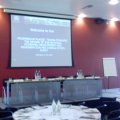
platform
Conference Bank of England The first speaker was Geoff Harding from the Bank of England, who talked through topics in their agents summary and related news. One interesting graph showed a steep rise in the percentage of household income being saved. Answers to questions suggested that more of that goes to mutuals and building societies, but they find it difficult to be competitive while the banks are keen to increase their balances. There was mention of employment hoarding businesses short-time working, redeploying or shutting down temporarily to keep trained workers under contract, rather than make them redundant and rehire later. People from both the Federation of Small Businesses and the Hoteliers Association made strong comments about the banks claiming to government that they are willing to lend, but still offering deeply unattractive depth-of-recession rates and terms. If the regional agents get details of such cases, they pass them to the central bank. South West Regional Development Agency The second main speaker was Ann O Driscoll, who covers business development for the West of England (what many people call CUBA Councils that Used to Be Avon). She introduced their four strategic priorities:-

  1. Low Carbon Economy apparenly our region has good wind, wave and solar experience. However, Vestas were mentioned and I know that when Vestas closed the UK s only wind turbine blade factories in August 2009, the RDAs were criticised for not acting against the subsidy-chasing, socially irresponsible conduct of Vestas and related companies continue to worry workers. If Vestas is one of the praised companies, I wonder whether we re attracting sustainable work to the region. On a related note, North Somerset Council and NS Enterprise Agency are organising a Climate Change forum on 1st April, but it s at Cadbury House Hotel, which is awkward to get to except by car: no footpath to the door, a mile-and-a-half walk along a busy road from a train station, bad roads for biking, wheelbending speedhumps on the drive, I can t remember if there is bicycle parking and its website doesn t say
  2. Successful Businesses SWRDA funds our rather poor Business Link service. Does someone in the South West have some good news about Business Link? If so, please leave a comment on this article.
  3. Prosperous Places intervention in areas like south Bristol or central Weston.
  4. United Approach co-ordinating with other regional groups.
The main activities introduced were: The questions were fascinating, except for mine. The best one was probably about the forthcoming election and the Conservatives pledge to shut down the RDAs and Business Links. The answer was that much of the work will still need to be done somehow, so it s more a question of who will do it, rather than what the name on the door says. So I don t think axing RDAs is going to achieve more than shuffling people between organisations. When allowed to ask a question, I got too excited and ranted a bit about how the Co-operative Group s co-operative enterprise hub is doing work that Business Link should have been funding, but the RDA doesn t understand social enterprise and treats it as a ghetto service. I ll try to take that up in a more coherent form later. Overview I think Cooperatives-SW were invited to the North Somerset Initiative largely because of pressure from software.coop for co-ops to be represented better in the Local Strategic Partnership, which has treated us badly. NSI holds one of the three business places on the partnership board, with the other two being held by NSEA and Bristol International Airport. I think it s a bit off that a private company and an enterprise agency are both represented by other groups and also have their own board seats while co-ops don t even have a collective seat, so that pressure for a representative organisation for co-operatives and mutuals to have a board place (in line with national government guidance) should continue, useful though the NSI meetings seem to be. The other thing which would really help is some funding for co-operative business development specialists to work in North Somerset at strategic tasks like this, instead of it being left to ordinary workers from other sectors. I don t know where that funding will come from and until then, I ll continue to try my best. We need to make sure that local strategy at least does no harm to the sector.

18 March 2010

C.J. Adams-Collier: IronRuby on OS X

We had a visitor on #ironruby today asking for help getting IR running on his mac. I gave him the following directions, and they seemed to work aside from one glitch. I tested them on my wife s mac, and it worked for me, too. Install Mono You can grab the Mono .dmg from go-mono.com. This will install the framework and put the required programs (mono, xbuild) in your PATH. Fetch the IronRuby source Since Jim Deville likes macs, I m sure more recent versions will work, but this is the one we ve recently packaged up for Debian and tested on Ubuntu. If you want to be certain that the IronRuby code you write on Debian works on OS X, then you should probably build from the same version of the source. You should probably also install version 2.4.3 of Mono, but that may be more effort than it s worth ;) http://github.com/mletterle/ironruby/tarball/20090805+git.e6b28d27 Unpack the tarball Open up a terminal and unpack the thing you just downloaded:

$ mkdir ~/src/
$ cd ~/src/
$ tar xfz ~/Desktop/mletterle-ironruby-e6b28d2.tar.gz
$ cd mletterle-ironruby-e6b28d2/
Build IronRuby At this point, you should be able to build the IronRuby assemblies using xbuild. I don t recommend using rake, as it has some dependencies, and I m not a fan of dependencies.

$ xbuild /p:TreatWarningsAsErrors=false Merlin/Main/Languages/Ruby/Ruby.sln
<snip/>
Build succeeded.
	 2817 Warning(s)
	 0 Error(s)
Time Elapsed 00:00:28.8378230
Run the IronRuby interactive interpreter Our guest mentioned that he was using a terminal with a white background. Do note that the font color of the interactive interpreter (aka Read-Eval-Print Loop or REPL) is white, so if you re using a white background, you might want to change it. IIRC, there is a way to change the font color using a configuration setting. Figuring it out is left as an exercise for the reader.

$ mono Merlin/Main/Bin/Debug/ir.exe
IronRuby 0.9.0.0 on 2.6.3 (tarball Wed Mar 10 18:18:12 MST 2010)
Copyright (c) Microsoft Corporation. All rights reserved.
>>> 1+2
=> 3
>>> exit()
Extra credit: IronPython The tarball you downloaded also included the source to IronPython. The procedure to build/run IronPython is pretty similar to IronRuby. Build IronPython Unlike IronRuby s .sln, this version of IronPython s .sln does not have a default configuration parameter, so we need to specify it with the /p:Configuration=Debug argument.

$ xbuild /p:TreatWarningsAsErrors=false /p:Configuration=Debug Merlin/Main/Languages/IronPython/IronPython.sln
<snip/>
	 69 Warning(s)
	 0 Error(s)
Time Elapsed 00:00:38.8057450
Run the IronPython interactive interpreter IronPython has a REPL interface like IronRuby s. Or is it the other way around? Anyway, here s an example.

$ mono .//Merlin/Main/Bin/Debug/ipy.exe
IronPython 2.6 Beta 2 DEBUG (2.6.0.20) on .NET 2.0.50727.1433
Type "help", "copyright", "credits" or "license" for more information.
>>> 1+2
3
>>> ^D

14 March 2010

David Bremner: Functional programming on the JVM

I'm collecting information (or at least links) about functional programming languages on the the JVM. I'm going to intentionally leave "functional programming language" undefined here, so that people can have fun debating :). Functional Languages Languages with functional features Projects and rumours.

11 March 2010

C.J. Adams-Collier: dlr-languages_20090805+git.e6b28d27+dfsg-1_amd64.changes ACCEPTED

I m happy to announce that after the filing of an Intent to Package and nearly 2 years of work, IronRuby 0.9, IronPython 2.6b2, and the DLR are now in Debian. To my knowledge, this is the first package in Debian with direct and active upstream support from Microsoft. Kudos for this release go to Jo Sheilds (package sponsorship & mentoring), Mirco Bauer (package sponsorship & mentoring), Matthias Klose (IronPython package review), Ivan Porto Carrero (IronRuby build/test support), Jim Deville (IronRuby build/test support), Jimmy Schementi (upstream point of contact @ Microsoft), Dino Viehland (IronPython build/test support), Michael Foord (IronPython build/test support), Marek Safar (mono c# compiler support), Ankit Jain (xbuild support), the folks on OFTC s #debian-cli, Freenode s #ironruby and GimpNet s #mono, and the folks on the IronRuby and IronPython mailing lists. This is my first package in Debian, too. I m pretty ecstatic ;)

10 March 2010

MJ Ray: SPI March 2010

The meeting agenda is already posted for tonight s (Wednesday s) SPI board IRC meeting which will be at 2000 UTC. It s another pretty lean meeting, with only some minutes to approve, so why not come along and let the board know what you think they should be doing to promote free and open source software? ;-)

3 March 2010

MJ Ray: Paypal and Ethical Business

DoctorMO is calling Paypal the Pocketing Police after this Paypal [...] decided we were scammers and took our money comment by Daniel Stone during the Xorg foundation election discussions. Our co-op has avoided Paypal for a number of years for two reasons:
  1. Paypal didn t recognise UK company registration numbers that contain letters (like ours) for years after they first occurred, so we couldn t register as a seller;
  2. the terms and conditions are very unequal, there are shedloads of complaints like paypalsucks.com and I don t believe they re all fiction.
We ve not boycotted it yet because there are two of our current suppliers who are very expensive for us to pay by international bank transfer, accept Paypal and don t offer much alternative. I think I ll go ask them again. At least one of them should be sympathetic to Xorg.

2 March 2010

MJ Ray: The Co-operative Development Review: a call for evidence

Cooperatives-UK Chief Executive Ed Mayo has asked Robin Murray to undertake a brief review of the potential for expansion of co-operation in the UK, and the infrastructure necessary to support it. The review is intentionally wide ranging. It covers areas for innovation in methods of co-operation and its promotion, and ways in which the movement connects, reflects and supports itself in the era of the web. The aim is to prepare a report with recommendations and a plan for discussion during Co-operative Fortnight in June. Anyone with ideas about the challenges and opportunities you feel the movement is facing, and what can be done about them please email evidence to robinmurray AT blueyonder.co.uk by Friday March 5th for a first summary of the issues on Tuesday March 9th.

1 March 2010

MJ Ray: Fairtrade Fortnight 2010: Fairtrade and IT

ftfnbutton
We re in the middle of Fairtrade Fortnight and it seems like the most advertised one yet, with Cadbury s adverts joining the push of this year s big swap theme: replace some of the stuff you d usually buy with Fairtrade alternatives. For IT workers, this is easier said than done. It s difficult enough to find more sustainably-produced products, let alone fairtrade ones. Our co-op has failed to achieve full marks on Prioritise and promote Fairtrade and other ethical and sustainable initiatives so far and I don t expect us to reach 100% any time soon. Just last Friday, Greenpeace International reported on more toxic electrical equipment, which shows that IT s environmental sustainability is far from a solved problem. Meanwhile, it doesn t seem like the fairness side is being addressed much yet. There are no fairtrade electrical product standards yet. Isn t there demand for fairer as well as greener production? Anyway, if you re looking for faitrade products this fortnight, you could try some fairtrade chocolate from the New Internationalist worker co-op. Food is further along, which is a good thing because it s pretty fundamental to life

26 February 2010

MJ Ray: Disaster Recovery, Local Strategic Partnerships

I am MJ Ray and I have not blogged for a week</bloggers-anonymous> Sorry about that. Basically, it s been hectic and I don t want to write about some of the things that have been going on between the co-op and its clients (nothing bad for our co-op, don t worry!), but I ve one tip and one request which I d like to write about now. The tip: make disaster recovery plans! Have both a general set of principles and specific plans for any mission-critical services. Think about reasonably common sources of problems and try to set policies to minimise the risk. For example, would unauthorised access to your social media accounts be a problem? If so, teach your workers not to enter their usernames and passwords into sites linked from direct messages, like in the latest example. For another example, do your workers have authentication details for your key servers? Plan what you will do about those passwords if a worker vanishes for a few days without warning after an argument at work. The request: I m meeting North Somerset Enterprise Agency about cooperatives and local strategic partnership representation does anyone have tips or advice about this, please? If so, please leave me comments.

11 February 2010

Robert Collins: Using UEC instead of EC2


So, we wanted to move a Hudson CI server at Canonical from using chroots to VM s (for better isolation and security), and there is this great product Ubuntu Enterprise Cloud (UEC basically Eucalyptus). To do this I needed to make some changes to the Hudson EC2 plugin and thats where the fun starts. While I focus on getting Hudson up and running with UEC in this post, folk generally interested in the differences between UEC and EC2, or getting a single-machine UEC instance up for testing should also find this useful. Firstly, getting a test UEC instance installed was a little tricky I only had one machine to deploy it on, and this is an unusual configuration. Nicely though, it all worked, once a few initial bugs and misconfiguration items got fixed up. I wrote up the crux of the outcome on the Ubuntu community help wiki. See 1 Physical system . The particular trap to watch out for seems to be that this configuration is not well tested, so the installation scripts have a hard time getting it right. I haven t tried to make it play nice with Network Manager in the loop, but I m pretty sure that that can be done via interface aliasing or something similar. Secondly I needed to find out what was different between EC2 and UEC (Note that I was running on Karmic (Ubuntu 9.10) so things could be different in Lucid). I couldn t find a simple description of this, so this list may be incomplete:
  1. UEC runs an old version of the EC2 API. This is because it hasn t implemented everything in the new API versions yet.
  2. UEC defaults to port 8773, not port 80 (for both the EC2 and S3 API s)
  3. The EC2 and S3 API s are rooted differently: at AWS they are at /, for UEC they are at /services/Eucalyptus and /services/Walrus
  4. UEC doesn t supply a SSL API port as far as I can tell.
  5. DescribeImages has something wonky with it.
So the next step then is to modify the Hudson EC2 plugin to support these differences. Fortunately it is in Java, and the Java community has already updated the various libraries (jets3t and typica) to support UEC I just needed to write a UI for the differences and pass the info down the various code paths. Kohsuke has let me land this now even though it has an average UI (in rev 27366), and I m going to make the UI better now by consolidating all the little aspects into a couple of URL s. Folk comfortable with building their own .hpi can get this now by svn updating and rebuilding the ec2 plugin. We ve also filed another bug asking for a single API call to establish the endpoints, so that its even easier for users to set this up. Finally, and this isn t a UEC difference, I needed to modify the Hudson EC2 plugin to work with the ubuntu user rather than root, as Ubuntu AMI s ship with root disabled (as all Ubuntu installs do). I chose to have Hudson reenable root, rather than making everything work without root, because the current code paths assume they can scp things as root, so this was less disruptive. With all that done, its now possible to configure up a Hudson instance testing via UEC nodes. Here s how:
  1. Install UEC and make sure you can run up instances using euca-run-instances, ssh into them and that networking works for you. Make sure you have installed at least one image (EMI aka AMI) to run tests on. I used the vanilla in-store UEC Karmic images.
  2. Install Hudson and the EC2 plugin (you ll need to build your own until a new release (1.6) is made).
  3. Go to /configure and near the bottom click on Add a new cloud and choose Amazon EC2.
  4. Look in ~/.euca/eucarc, or in the zip file that the UEC admin web page lets you download, to get at your credentials. Fill in the Access Key and Secret Access key fields accordingly. You can put in the private key (UEC holds onto the public half) that you want to use, or (once the connection is fully setup) use the Generate Key button to have a dedicated Hudson key created. I like to use one that I can ssh into to look at a live node YMMV. (Or you could add a user and as many keys as you want in the init script more on that in a second).
  5. Click on Advanced, this will give you a bunch of details like EC2 Endpoint hostname . Fill these out.
  6. Sensible values for a default UEC install are: 8773 for both ports, /services/Eucalyptus and /services/Walrus for the base URLs, and SSL turned off. (Note that the online help tells you this as well).
  7. Set an instance cap, unless you truely have unlimited machines. E.g. 5, to run 5 VMs at a time.
  8. Click on Test Connection it should pretty much instantly say Success .
  9. Thats the Cloud itself configured, now we configure VM s that Hudson is willing to start. Click on Add right above the List of AMIs to be launched as slaves text.
  10. Fill out the AMI with your EMI e.g. emi-E027107D is the Ubuntu 9.10 image I used.
  11. for remote FS root, just put /hudson or something, unless you have a preseeded area (e.g. with a shared bzr repo or something) inside your image.
  12. For description describe the intent of the image e.g. DB test environment
  13. For the labels put one or more tags that you will use to tell test jobs they should run on this instance. They can be the same as labels on physical machines it will act as an overflow buffer. If no physical machines exist, a VM will be spawned when needed. For testing I put euca
  14. For the init script, its a little more complex. You need to configure up java so that hudson itself can run:
    cat >> /etc/apt/sources.list << EOF
    deb http://archive.ubuntu.com/ubuntu/ karmic multiverse
    deb http://archive.ubuntu.com/ubuntu/ karmic-updates multiverse
    deb http://archive.ubuntu.com/ubuntu/ karmic-security multiverse
    EOF
    export http_proxy=http://192.168.1.1:8080/
    export DEBIAN_FRONTEND=noninteractive
    apt-get update
    echo "buildd shared/accepted-sun-dlj-v1-1 boolean true"   debconf-set-selections
    apt-get install -y -f sun-java6-jre
    
    Note that I have included my local HTTP proxy there just remove that line if you don t have one.
  15. Click on Advanced, to get at the less-common options.
  16. For remote user, put ubuntu , and for root command prefix put sudo .
  17. For number of executors, you are essentially choosing the number of CPU s that the instance will request. E.g. putting 20 will ask for an extra-large high-cpu model machine when it deploys. This will then show up as 20 workers on the same machine.
  18. Click save :)
  19. Now, when you add a job a new option in the job configuration will appear tie this job to a node . Select one of the label(s) you put in for the AMI, and running the job will cause that instance to start up if its not already available.
Note that Hudson will try to use java from s3 if you don t install it, but that won t work right for a few reasons I ll be filing an issue in the Hudson tracker about it, as thats a bit of unusual structure in the existing code that I m happier leaving well enough alone :) .

MJ Ray: An Introduction To The Debian Project by Leslie I Anson Tuesday, 16th February, Manchester

This talk at Manchester Free Software s meeting is covering the question:
From the literally hundreds of GNU/Linux distributions in existence, what makes Debian special?
For our co-op, it s that Debian GNU/Linux, like all GNU/Linux distributions, is the product of a massive cooperative effort (in the words of former Debian project leader Branden Robinson) and that debian is the best balance of a large project and a not-for-profit implementation of those values. It s not perfect, but it s pretty good. Manchester Free Software has put recordings of some past talks online and I hope this one will appear there. I m also looking forward to Richard Smedley s talk on 20th April 2010. If you re interested in the background to debian, go along to Manchester and hear some other views! If you re already using or developing debian, why does it keep you coming back?

10 February 2010

MJ Ray: SPI February 2010

The meeting agenda is already posted for tonight s (Wednesday s) SPI board IRC meeting which will be at 2000 UTC (an hour earlier than last month, back at usual time). It s another pretty lean meeting and I don t know why. Last month s comments suggested SPI needs better marketing, which has come up in the comments here before. There s a wish to switch the SPI website to git and ikiwiki which would allow more members to contribute. As I understand it, anyone can set up the git repository and ikiwiki, then announce it to spi-general (or spi-www) and start to port the website. I ll probably get there eventually (after porting Cooperatives-SW and NSCycle websites to django), but if you have a bit of time and would like to help this democratic free and open source software charity, please beat me to starting and tell me where to find your work!

7 February 2010

MJ Ray: The Phone Co-op 2010

Ed Mayo talking to the Phone Co-op meeting
Ed Mayo talking to the Phone Co-op meeting Yesterday I had the pleasure to be at the Phone Co-ops annual meeting, as those of you who follow me on identi.ca or elsewhere will already know. The proceedings included a speech from Cooperatives-UK Chief Exec Ed Mayo that included the co-op pub in Salford, spurning David Beckham s gift and this summer s Co-operatives Fortnight. As ever, the bits I liked best were the lively question-and-answer sessions, both on Ed s speech and the annual report. I took notes and reproduce them below, but I didn t capture every question, or every answer and none of this is verbatim. Questions to Ed about UK cooperation included:

Questions about the annual report asked about:

3 February 2010

MJ Ray: Welcome to Koha-Community.org

At last night s #koha community hand-over meeting, it was felt that the LL/PTFS transfer could easily delay community control of the previous koha website for 3 months, so HLT should register a fan site for community members to put the latest Koha news and information on the web. So welcome to Koha-community.org which will mainly be about updates about new releases, support listings and the manuals until the previous website reflects the community again. Well done to all involved for getting it online so quickly!

31 January 2010

Thorsten Glaser: Hello, Debian!

I got an eMail tonight. I guess this means I can say hello officially now. (Everything else is details, waiting and fixing some bugs and technicalities, or so.) Thanks to everyone involved, I learned a lot already. Oh, and I had a look into madduck's book (the old sarge edition, which I got for free recently) and found a nice graphic explaining what non-native english speakers (I even had latin first, and 3 programming languages!) don't, from the Debian constitution. Congratulations XTaran for making it as well, even visible on the website already! Please don't file an "Please package mksh R39b" bug again, I am aware there's a new version ;-) as I'm upstream too. I'm just short of time at the moment, and I'd like to put out high-quality packages. Besides, the webpage needs fixing first (while the checksums and the changelog for the release are there, no proper announcement is yet, and I'd like, for this version, to add a "upgrading caveats" section, since due to bugfixes and better standards compliance some scripts need to be updated; some of the pdksh behaviour favoured Bourne over POSIX even!

29 January 2010

MJ Ray: World Economic Forum 2010

It still doesn t seem to be getting the coverage, but this is the sixth year that I ve written about the World Economic Forum, which is basically where large corporations try to tell governments how to rule their populations, as described in this VIRUS article. This year, it is overshadowed in the UK by war-starting former Prime Minister Blair giving evidence to the Iraq enquiry. If you have satellite television, you can watch it live on SFinfo at 13e (schedule). There s more detailed listings on Klack. In previous years, English audio has been on one side of the stereo channels. It looks like almost none of the SFinfo coverage is live this year. Maybe they ve noticed comments like mine from 2005:
I am convinced that if more people watched it for themselves, there wouldn t be any need to publicise against them. Without the soundbiting and polishing of TV news, these people are scary. They re less slick than the European Social Forum, too.
If you find live coverage on any other stations, please could you leave me a comment here?
In that vein, BBC News has Ten things you didn t know about Davos (thanks Policomm). Amongst other things, this isn t the 40th WEF and Bill Clinton was the first sitting US president to attend, so its influence is a fairly recent mistake. Once again, there an official programme, as well as @davos which seems to be talking much more than listening seems appropriate for WEF, no? To close with a quote that s also in the VIRUS article:
But I don t want to go among mad people, Alice remarked.
Oh, you can t help that, said the Cat: we re all mad here. I m mad. You re mad.
How do you know I m mad? said Alice.
You must be, said the Cat, or you wouldn t have come here.
-Lewis Carroll, Alice s Adventures in Wonderland (Puffin Books, 1946)

25 January 2010

MJ Ray: Critical Eye: Google, China, DNS and an Event

My Google Bugs page started off as a blog post back in 2006, but I ve moved it to a more permanent home and started to bring it up to date. Recent additions include the China Controversy updated, a recent search bug added andDNS service added. In just over a month, BathLitFest will be holding a debate on Is Google Good For You? Sunday 28 Feb, 1pm 2pm. The key questions are:
In the data-sharing and database age, how much information are we prepared to give away about ourselves and who, ultimately, controls that information? Is the price of convenient, high-speed communication an almost total loss of privacy? And is it right that one company knows more about us than our government, or even than we know ourselves?
Tickets are on sale, priced 7. That s pretty much what I was pointing out back in 2006. I don t hate Google or anything, but we should be realistic: it is a for-profit company, so probably won t be doing anything truly for free. There s always a payback and we should recognise it as part of making an informed choice about whether to trade with them. It s nice to see these questions getting a more mainstream airing. If you ve got any updates for the Google Bugs page, please let me have them.

21 January 2010

MJ Ray: In Berkeley or Boston? Want to work for a co-op?

Our four comrades over at Quilted co-op are looking for a new worker-owner, either a project manager, a developer (Drupal, Wordpress, Rails, Perl and/or PHP), or a designer based in Berkeley or Boston. The eventual plan is to all be in one location, probably SF bay. The job ad mentions encouraging LGBTQQ people . Lesbian, Gay, Bi, Trans and I ll show my ignorance, but what s the QQ?

Robert Collins: LCA 2010 Thursday


Jeremy Allison on The elephant in the room free software and microsoft . While he works at Google, this talk was off the leash not about Google :) . As usual grab the video :) We should care about Microsoft because Microsoft s business model depends on a monopoly [the desktop]. Microsoft are very interested in Open Source Apache, MIT, BSD licenced software the GPL is intolerable. Jeremy models Microsoft as a collection of warring tribes that hate each other e.g. Word vs Excel. The first attack was on protocols make the protocols more complex and sophisticated. MS have done this on Kerberos, DCE/RPC, HTTP, and higher up the stack via MSIE rendering modes, ActiveX plugins, Silverlight The EU case was brought about this in the Workgroup Server Market . MS were fined 1 Billion Euros and forced to document their proprietary protocols. OOXML showed up rampant corruption in the ISO Standards process but it got through even though it was a battle against nearly everyone! On the good side it resulted into an investigation into MS dominance in file formats -> MS implemented ODF and MS have had to document their old formats. MS have an ongoing battle in the world wide web IE / Firefox, ajax applications/ silverlight. All of these things are long term failures for MS so what next? Patents :( . Patents are GPL incompatible, but fine with BSD/MIT. The Tom Tom is the first direct attack using MS s patent portfolio. This undermines all the outreach work done by the MS Open Source team which Jeremy tells us are true believers in open source, trying to change MS from the inside. Look for MS pushing RAND patented standards: such things lock us out. Netbooks are identified as a key point for MS to fight on lose that and the desktop position is massively weakened. We should:
  • Keep creating free software and content *under a copyleft license*.
  • Keep pressure on Governments and organisations to adopt open standards and investigate monopolies.
  • Lobby against software patents.
  • Search for prior art on relevant patents and destroy them.
  • Working for a corporation is a moral choice: respectfully call out MS employees.
Jonathan Oxer spoke about the google Moon X-prize and the lunarnumbat.org project it needs contributors: software and hardware hackers, arduino/beagleboard/[M]JPEG2000 gooks, code testers and reviewers, web coding, documentation, math heads & RF hackers. Sounds like fun now to find time! Paul McKenney did another RCU talk and as always it was interesting Optimisation Gone Bad (RCU in Linux 1993-2008). Linux 2.6 -rt patch made RCU much much much more complex with atomic operations, memory barriers, frequent cache misses, and since then it was slowly being whittled back, but there is now a new simpler RCU based around the concept of doing the accounting during context switches & tracking running tasks.

Next.

Previous.