Search Results: "hle"

19 November 2010

Alexander Reichle-Schmehl: Some signs that you are getting old

You watch Back to the Future and suddenly notice, that you are nearer to the future, than to the present of the movie... And then you search around on the web and find out, that they nowadays make time travel movies, where past means the eighties... which was the time of your youth :( PS: Damn, what's so good about living in the future? We still don't have hover boards :(

Alexander Reichle-Schmehl: Release Critical Bug report for Week 46

The bug webinterface of the Universal Debian Database currently knows about the following release critical bugs:
In Total:707
Affecting Squeeze:271
Squeeze only:71
Remaining to be fixed in Squeeze:200
Of these 200 bugs, the following tags are set:
Pending in Squeeze:12
Patched in Squeeze:36
Duplicates in Squeeze:22
Can be fixed in a security Update:17
Contrib or non-free in Squeeze:5
Otherwise fixed in Squeeze:27
Ignoring all the above (multiple tags possible), 123 bugs need to be fixed by Debian Contributors to get Debian 6.0 Squeeze released. However, with the view of the Release Managers, 157 need to be dealt with for the release to happen. Please see Interpreting the release critical bug statistics for an explanation of the different numbers.

16 November 2010

Joachim Breitner: Student research project on Shivers cntrol flow algorithm

As my student research project I worked on a formalization of Olin Shiver s control flow algorithms for functional languages (as written down in his dissertation) in the theorem prover Isabelle. I just handed in my report to my supervisor Andreas Lochbihler. I have also submitted the Isabelle theories to the archive of formal proofs and uploaded the Haskell prototype on Hackage. The complete code is in a git repository.

12 November 2010

Alexander Reichle-Schmehl: Release Critical Bug report for Week 45

The bug webinterface of the Universal Debian Database currently knows about the following release critical bugs:
In Total:679
Affecting Squeeze:261
Squeeze only:56
Remaining to be fixed in Squeeze:205
Of these 205 bugs, the following tags are set:
Pending in Squeeze:17
Patched in Squeeze:41
Duplicates in Squeeze:23
Can be fixed in a security Update:12
Contrib or non-free in Squeeze:6
Otherwise fixed in Squeeze:21
Ignoring all the above (multiple tags possible), 126 bugs need to be fixed by Debian Contributors to get Debian 6.0 Squeeze released. However, with the view of the Release Managers, 165 need to be dealt with for the release to happen. Please see Interpreting the release critical bug statistics for an explanation of the different numbers.

11 November 2010

Neil Williams: Counterpoint


There must be other organisations across the world which do a similar job but this is the local one for me and in lieu of actually getting to a Remembrance Day event this year (I'll be at a bug squashing event for Debian Squeeze), I'm using my blog, just this once, to express my own thanks to those who gave their lives that I may be free to do what I enjoy, writing code to make things just work.

10 November 2010

John Goerzen: We re All Home

I wrote yesterday about our scare with Jacob. It s been quite the day. Before I go into it, I want to say thank you to all the many of you that have sent comments and support our way. Terah and I haven t had the chance to reply to many of them, but we have read every one, and very much appreciate it! Terah spent the night with Jacob, and I spent the day with him today (others were present for parts of it too). Jacob was mostly in good spirits. He was up and around, pushed his IV around himself in the room and to the bathroom. He called it my VI machine (not a typo take that, Emacs, eh?) He continued to enjoy measuring his trips to the bathroom. We went exploring a few times. He would walk or run down one of the long corridors in the hospital, holding my hand, while I pulled the IV along. We often went by the cafeteria, which he called the kitchen. One time he insisted that I get a cup of coffee from the free coffee dispenser. I insisted that I didn t want to, but eventually asked, Shall I get a pretend cup of coffee? Yeah! So he watched me get a pretend cup, pretend to fill it, and pretend to drink it and smiled and clapped for me after. He spent hours watching videos of trains on YouTube. This is a favorite activity at home too, but we obviously limit the amount of time he can spend doing it. I had to limit the amount of time he spent with it today too, of course, but he got rather more time with it than usual. Jacob had his usual books, but I thought we might try something new today. This morning, I loaded The Tale of Peter Rabbit (with illustrations) onto my Kindle. Jacob loved it, and enjoyed pressing the Next Page button in the Kindle. We read it twice, and he is interested by the promise of other stories about rabbits. It also probably didn t hurt that his grandma had given him a rabbit in the hospital yesterday. As we got on towards evening, I told him that tomorrow could be a normal day. His response: enthusiastic applause and a big grin, plus YAY! Jacob loved eating today. He wolfed down breakfast and lunch. He enjoyed the lemonade I brought for him again, and played with some toys, and yes, watched some more train videos in the afternoon. He also pretended to ignore the visitors he got as much as possible (pretty typical for him actually). The doctor came by at about 6:00PM and again was just stunned at how well he s doing. Jacob neither complained of any pain nor acted like he had any even when the nurses would rub neosporin on his wounds. The doctor was still just stunned at how well he was doing. He told us his last tractor accident resulted in a death before LifeWatch could arrive, and the one before that turned a good student and a promising athlete into a wheelchair-bound person with a vocabulary of 20 words. I can t believe I m discharging him today, but try as I might, as I go over all the details, there s no reason for him to stay. I thanked him for all his help, and he said, I didn t do anything for him. All I did was figure out what had happened to him . I guess we have the CT to prove that something really did happen, but the fact that he showed up at my office in the first place was stunning enough. Jacob started to get more excited after the IV was unhooked from him. He didn t particularly like having the needle removed, due to the pain of taking off the tape, but was happy to have it gone. He was making plans: will we stop by the train station on the way home? It s the middle of the night maybe a train will be there! (If it s dark outside, it s middle of the night to him) We agreed to stop by the cafeteria to pick him up one last lemonade, than stop at the train station. The nurses offered a wheelchair to take him out to the car with. I said I didn t think he d want it. One of them said, Wouldn t you like a FUN ride in a WHEELCHAIR? Jacob: No. Me: I suspect he will want to run out of here. Nurse: OK then. We walked, or half ran, to the cafeteria to get his lemonade. Then we went out to the car. He was excitedly jabbering about everything: the car, my radio, and especially the train station. We did drive by, and at least got to see a freight engine go past. He noticed the Christmas lights starting to be set out along Main Street, and said, Dad, it s CHRISTMAS! Well, almost Then he got quiet, and eventually fell asleep in the car. He had almost fallen asleep while eating his lunch, but stayed awake, and then got interested in other things so he had no nap today. When we got home, I unbuckled him and pulled him out of his seat. He opened his eyes for just a second, wrapped his arms tightly around my neck, put his head on my shoulder, and fell back asleep while I carried him up to his room. I put him down on his own bed. He had a contented sigh, pulled his favorite blanket up to his neck like he loves to do, and was back asleep in no time. Our little boy is home, safe and sound. It s a happy day.

5 November 2010

Alexander Reichle-Schmehl: Release Critical Bug report for Week 44

The bug webinterface of the Universal Debian Database currently knows about the following release critical bugs:
In Total:664
Affecting Squeeze:261
Squeeze only:60
Remaining to be fixed in Squeeze:201
Of these 201 bugs, the following tags are set:
Pending in Squeeze:8
Patched in Squeeze:34
Duplicates in Squeeze:22
Can be fixed in a security Update:12
Contrib or non-free in Squeeze:8
Otherwise fixed in Squeeze:21
Ignoring all the above (multiple tags possible), 127 bugs need to be fixed by Debian Contributors to get Debian 6.0 Squeeze released. However, with the view of the Release Managers, 160 need to be dealt with for the release to happen. Please see Interpreting the release critical bug statistics for an explanation of the different numbers.

29 October 2010

Alexander Reichle-Schmehl: Release Critical Bug report for Week 43

The bug webinterface of the Universal Debian Database currently knows about the following release critical bugs:
In Total:695
Affecting Squeeze:284
Squeeze only:71
Remaining to be fixed in Squeeze:213
Of these 213 bugs, the following tags are set:
Pending in Squeeze:7
Patched in Squeeze:40
Duplicates in Squeeze:24
Can be fixed in a security Update:14
Contrib or non-free in Squeeze:7
Otherwise fixed in Squeeze:32
Ignoring all the above (multiple tags possible), 126 bugs need to be fixed by Debian Contributors to get Debian 6.0 Squeeze released. However, with the view of the Release Managers, 169 need to be dealt with for the release to happen. Please see Interpreting the release critical bug statistics for an explanation of the different numbers.

27 October 2010

Alexander Reichle-Schmehl: A big thank you to those involved in power management development

A couple of month ago, my step-father-in-law encountered quite some problems with the Windows installation on his Notebook and therefore showed a great interest in dem Linux da. So we installed him a Debian in a dual-boot setting. It was interesting to see how a basic school teacher (who is technical interested, but has no deeper technical knowledge of computers) worked with Linux, what problems he found, and how he solved them. But a big obstacle for him to work more or less entirely with Linux has always been power management problems with his notebook. To be more precise: While it was always possible to send his notebook into suspend or hibernate, it was also always impossible to wake the notebook up again. It seems that the (non-free but needed) NVidia driver was a part of the problem. Last weekend we again tried to solve the problem by installing the latest backported kernel and updating the NVidia driver, but failed again. So we decided, that with the squeeze being frozen for quite some time, it would be safe to upgrade his Notebook to that system. And believe it or not: It works! We can suspend the notebook without any problems and it will wake up again! And to his (and our) special delight waking the notebook up is a lot faster, than it used to be with his Windows (Vista?) installation. Not to mention that for some reason a suspended Linux-System seems to consume less power (he lend some kind of energy consumption measuring device from his power company to track energy saving potential, and while playing around, we also measured his notebook), than the suspended Windows on the very same system! I don't know why, but finally the installation of dem Linux da was a complete success :) So kudos to those who worked on that area :)

Alexander Reichle-Schmehl: (Delayed) Release Critical Bug report for Week 42

The bug webinterface of the Universal Debian Database currently knows about the following release critical bugs:
In Total:700
Affecting Squeeze:291
Squeeze only:72
Remaining to be fixed in Squeeze:219
Of these 219 bugs, the following tags are set:
Pending in Squeeze:16
Patched in Squeeze:44
Duplicates in Squeeze:24
Can be fixed in a security Update:15
Contrib or non-free in Squeeze:8
Otherwise fixed in Squeeze:27
Ignoring all the above (multiple tags possible), 125 bugs need to be fixed by Debian Contributors to get Debian 6.0 Squeeze released. However, with the view of the Release Managers, 173 need to be dealt with for the release to happen. Please see Interpreting the release critical bug statistics for an explanation of the different numbers. Connection to alioth.debian.org closed. PS: Due to an unscheduled downtime, last weeks statistics have not been published. But better late than never, here are the current statistics.

19 October 2010

Alexander Reichle-Schmehl: Recent RC-Bug activity

Well, recently I didn't had that much time to squash RC bugs , too.. In the entire October I got the following things done:
  1. Fixed bug #595313 -- An installation problem with nagvis
  2. Fixed bug #598614 -- A FTBFS by inactivity timeout on mips simply by not building arch independent data
  3. Fixed bugs #567770 and #572465 -- one FTBFS and one upgrade problem with enlightment; well... strictly speaking... The upgrade problem was a result of my previous NMU if that package, and the FTBFS was a trivial change of the build-depends (for which someone already submitted a patch).
  4. Commented on #591118 -- An unreproducible FTBFS under certain circumstances, no one could exactly find out so far; but at least I could help to verify that the problem has disappeared with the package in experimental
Hui, it seems I haven't done that much. But I think my examples shows, that there are still some very easy bugs left to be squashed or at least comment.

15 October 2010

Alexander Reichle-Schmehl: Release Critical Bug report for Week 41

The bug webinterface of the Universal Debian Database currently knows about the following release critical bugs:
In Total:732
Affecting Squeeze:327
Squeeze only:84
Remaining to be fixed in Squeeze:243
Of these 243 bugs, the following tags are set:
Pending in Squeeze:22
Patched in Squeeze:51
Duplicates in Squeeze:25
Can be fixed in a security Update:26
Contrib or non-free in Squeeze:12
Otherwise fixed in Squeeze:26
Ignoring all the above (multiple tags possible), 130 bugs need to be fixed by Debian Contributors to get Debian 6.0 Squeeze released. However, with the view of the Release Managers, 183 need to be dealt with for the release to happen. Please see Interpreting the release critical bug statistics for an explanation of the different numbers.

11 October 2010

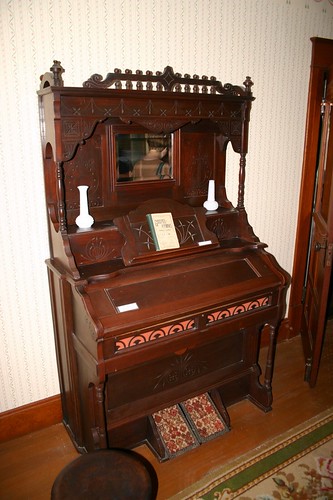
John Goerzen: Pump Organs and Music

Two years ago, I wrote about Elvera Voth and the power of love. Back then I wrote about her memories of seeing of service workers, who would be away from their home for 7 years at a time. Elvera remembered a gathering of people at the train station to see them off, and how they sang some German hymns at the occasion. Elvera s done a lot since, including starting an arts in prison program. And today, she hosted a hymn sing at the pump organ in the Friesen House parlor. img_4305.jpg The Friesen House is nearly 100 years old, and was on my parents property before it got moved to the Mennonite Heritage and Agricultural Museum. We were among maybe 20 people that showed up for the event. We walked in a few minutes early and Elvera was sitting at the organ already, along with a few other early arrivals. Many of the people there were over 70, and the moment we walked in, she said, Oh good! Another generation! And, of course, asked about us, where we live, who we are related to, etc. The announcement in our church bulletin said to bring a copy of Gesangbuch mit Noten if you have one. That was a common hymn book in Mennonite churches in Kansas (songbook with notes and yes, there was one without notes that had only words.) I pulled out my copy, and just opened it up. I saw my grandma s beautiful handwriting saying it belonged to Mr. and Mrs. R. A. Klassen . This I brought along, but was perhaps the only one. Elvera recognized it and was pleased to hear where it came from. We had a great time, and it turned out to feel like the kind of afternoon people around here used to have: time with friends and family visiting and maybe singing on occasion. After some introduction and some stories, we got to the singing and started with hymn #1 in the 1969 (English) Mennonite Hymnal. That song had German words below as well, which we sang: Grosser Gott, wir loben dich! (Holy God, We Praise Thy Name) Elvera played the organ while we all sang. And then we turned to #556, O Have You Not Heard. We read through the German lyrics (to help those that don t speak German):
Ich weiss einen Strom, dessen herrliche Flut
fliesst wunderbar stille durchs Land,
doch strahlet und gl nzt er wie feurige Glut,
wem ist dieses W sser bekannt? O Seele, ich bitte dich: Komm!
Und such diesen herrlichen Strom!
Sein Wasser fliesst frei und m chtiglich,
o glaub s, es fliesset f r dich!
Elvera translated this herself, a much more powerful translation than we usually get in English. And then we sang, this time a cappella. Elvera told the story about the train station to this group, and then, of course, we sang O Power of Love, one of the songs sung on that occasion. For that, she asked us to stand up and form a circle around the organ, and again we sang mostly a cappella. Singing that song with Elvera left few dry eyes in the room for sure. Someone brought up Nun Ist Sie Erschienen, and so of course we sang that. It wasn t in any hymnal, but I suspect we were the only ones there that didn t have it completely memorized. Elvera told us the story of the museum s pump organ; it had been in her family, and she had paid to have it restored and eventually donated it to the museum. It had been used every evening at twilight for singing and devotions in the family. She also told us that the singing at the Newton train station the same one our family uses a few times a year was what inspired her to a career of choral music. In the end, we probably spent more time visiting than singing, but that was just fine. Next the group went over to the Preparatory School, an old schoolhouse also on the museum grounds. There we had a traditional Faspa, an afternoon meal with coffee, Zwieback and jam, cheese, and various cookies. We all visited for awhile longer and then went on our way. It was a wonderful afternoon, and I hope to have a chance to do that sort of thing again.

8 October 2010

Alexander Reichle-Schmehl: Release Critical Bug report for Week 40

The bug webinterface of the Universal Debian Database currently knows about the following release critical bugs:
In Total:744
Affecting Squeeze:358
Squeeze only:76
Remaining to be fixed in Squeeze:282
Of these 282 bugs, the following tags are set:
Pending in Squeeze:19
Patched in Squeeze:44
Duplicates in Squeeze:28
Can be fixed in a security Update:28
Contrib or non-free in Squeeze:11
Otherwise fixed in Squeeze:29
Ignoring all the above (multiple tags possible), 161 bugs need to be fixed by Debian Contributors to get Debian 6.0 Squeeze released. However, with the view of the Release Managers, 218 need to be dealt with for the release to happen. Please see Interpreting the release critical bug statistics for an explanation of the different numbers.

5 October 2010

Alexander Reichle-Schmehl: 1000th commit!

Wow! Just noticed, that we had the 1000th in Debians Publicity repository! Congrats everyone :)

1 October 2010

Benjamin Mako Hill: On Feminism and Microcontrollers

A month or so ago, I published a paper with Leah Buechley that is mostly an analysis of how the LilyPad Arduino has been used. I read an earlier draft last year and loved it so, when the opportunity arose, I was honored to help out as the paper evolved. LilyPad is a microcontroller platform that Leah created a few years back and that is specifically designed to be more useful than other microcontroller platforms (like normal Arduino) in the context of crafting practices like textiles or painting. Leah's design goal with LilyPad was to create a sewable microcontroller that could be useful for making things that were qualitatively different from what most people made with microcontrollers and that, she hoped, would be of interest to women and girls. Our paper tries to measure the breadth of LilyPad's appeal and the degree to which it accomplished her goals. We used sales data from SparkFun (the largest retail source for both Arduino and LilyPad in the US) and a crowd-sourced dataset of high-visibility microcontroller projects. Our goal was to get a better sense of who it is that is using the two platforms and how these groups and their projects differ. We found evidence to support the suggestion that LilyPad is disproportionally appealing to women, as compared to Arduino (we estimated that about 9% of Arduino purchasers were female while 35% of LilyPad purchasers were). We found evidence that suggests that a very large proportion of people making high-visibility projects using LilyPad are female as compared to Arduino (65% for LilyPad, versus 2% for Arduino). Digging deeper, qualitative evidence suggests a reason. LilyPad users aren't just different. The projects they are making are different too. Although LilyPad and Arduino are the same chips and the same code, we suggest that LilyPad's design, and the way the platform is framed, leads to different types of projects that appeal to different types of people. For example, Arduino seems likely to find its way into an interaction design project or a fighting robot. LilyPad seems more likely to find its way into a smart and responsive textile. Very often, different types of people want to make these projects. Leah and I believe that there's a more general lesson to be learned about designing technologies for communities underrepresented in science, technology, engineering, and mathematics (STEM) -- and for women in particular. The dominant metaphor in the discussion on women in computer science is Margolis and Fisher's idea of "unlocking the clubhouse." The phrase provides a good description of the path that most projects aimed at broadening participation of women in computing projects seem to take. The metaphor is based around the idea that computing culture is a boys' club that is unfriendly to women. The solution is finding ways to make this club more accessible to those locked outside. It should go without saying that we share Margolis and Fisher's goal of increasing participation of women in STEM. That's LilyPad's point, after all. It it hopefully also clear that we're supportive of, and involved in, projects working to remove systematic barriers to participation by women and other groups. That work must continue. But I also think that Leah's work with LilyPad suggests another way forward based on addressing issues of self-selection that will affect even the most welcoming technological communities. Here's what we say in our paper:
Our experience suggests a different approach, one we call Building New Clubhouses. Instead of trying to fit people into existing engineering cultures, it may be more constructive to try to spark and support new cultures, to build new clubhouses. Our experiences have led us to believe that the problem is not so much that communities are prejudiced or exclusive but that they're limited in breadth--both intellectually and culturally. Some of the most revealing research in diversity in STEM found that women and other minorities don't join STEM communities not because they are intimidated or unqualified but rather because they're simply uninterested in these disciplines. One of our current research goals is thus to question traditional disciplinary boundaries and to expand disciplines to make room for more diverse interests and passions. To show, for example, that it is possible to build complex, innovative, technological artifacts that are colorful, soft, and beautiful. We want to provide alternative pathways to the rich intellectual possibilities of computation and engineering. We hope that our research shows that disciplines can grow both technically and culturally when we re-envision and re-contextualize them. When we build new clubhouses, new, surprising, and valuable things happen. As our findings on shared LilyPad projects seem to support, a new female-dominated electrical engineering/computer science community may emerge.
I have a strong belief that computing can be an empowering tool and that expanding users' control over technology is a critically important issue. Our paper argues that we should attempt to expand participation in computing by broadening the possibilities of computing, rather than only by broadening participation in extant, computing organizations, projects, and genres. Even if computing and electrical engineering communities were perfectly welcoming (which they are not) most people (both male and female, but disproportionately female) will choose not to participate. Building new clubhouses requires creativity of its proponents and risks charges of reinforcing stereotypes and existing status hierarchies. But, executed carefully and well (as I believe LilyPad has been), it suggests ways to reach the majority of people that no "unlocking" project will ever seem relevant to.

Alexander Reichle-Schmehl: Release Critical Bug report for Week 39

The bug webinterface of the Universal Debian Database currently knows about the following release critical bugs:
In Total:767
Affecting Squeeze:387
Squeeze only:86
Remaining to be fixed in Squeeze:301
Of these 301 bugs, the following tags are set:
Pending in Squeeze:23
Patched in Squeeze:41
Duplicates in Squeeze:30
Can be fixed in a security Update:32
Contrib or non-free in Squeeze:10
Otherwise fixed in Squeeze:24
Ignoring all the above (multiple tags possible), 177 bugs need to be fixed by Debian Contributors to get Debian 6.0 Squeeze released. However, with the view of the Release Managers, 232 need to be dealt with for the release to happen. Please see Interpreting the release critical bug statistics for an explanation of the different numbers.

24 September 2010

Alexander Reichle-Schmehl: Release Critical Bug report for Week 38 (again)

I finally found the time to port the scripts generating these statistics to use the Ultimate Debian Database (and especially its bugs webinterface). Parsing the HTML output of bts.turmzimmer.net was quite insane and slow, but it worked... kind of. However it's now done: The script now uses not that insane SQL queries and UDD, of which I have been told has more accurate numbers as bts.turmzimmer.net, which uses to the best of my knowledge the obsoleted ldap gateway. Well, so much for the talk, here are the actual numbers, created with the new script:
In Total:799
Affecting Squeeze:429
Squeeze only:110
Remaining to be fixed in Squeeze:319
Of these 319 bugs, the following tags are set:
Pending in Squeeze:22
Patched in Squeeze:57
Duplicates in Squeeze:35
Can be fixed in a security Update:12
Contrib or non-free in Squeeze:18
Otherwise fixed in Squeeze:40
Ignoring all the above (multiple tags possible), 193 bugs need to be fixed by Debian Contributors to get Debian 6.0 Squeeze released. However, with the view of the Release Managers, 260 need to be dealt with for the release to happen.
You'll note, that the numbers got quite higher. Sorry, for that, but bts.turmzimmer.net seems to be kind of buggy :( You'll also note, that there is no longer a row for claimed and fixed in delayed bugs, as UDD doesn't support these numbers as of now. But I think you'll agree with me, that having more accurate numbers is better than having these rows.

Alexander Reichle-Schmehl: Release Critical Bug report for Week 38

The unofficial rc bug tracker currently knows about the following bugs:
In Total:371
Affecting Squeeze:281
Squeeze only:66
Remaining to be fixed in Squeeze:215
Of these 215 bugs, the following tags are set:
Pending in Squeeze:14
Patched in Squeeze:40
Duplicates in Squeeze:23
Contrib or non-free in Squeeze:7
Claimed in Squeeze:1
Delayed in Squeeze:3
Can fixed in a security Update:12
Otherwise fixed in Squeeze:14
Ignoring all the above (multiple tags possible), 132 bugs need to be fixed by Debian Contributers to get Debian 6.0 Squeeze released. However, with the view of the Release Managers, 235 need to be dealt with for the release to happen. Please see my older post for an explanation of the different numbers.

17 September 2010

Alexander Reichle-Schmehl: Release Critical Bug report for Week 37

The unofficial rc bug tracker currently knows about the following bugs:
In Total:423
Affecting Squeeze:317
Squeeze only:107
Remaining to be fixed in Squeeze:210
Of these 210 bugs, the following tags are set:
Pending in Squeeze:15
Patched in Squeeze:36
Duplicates in Squeeze:22
Contrib or non-free in Squeeze:7
Claimed in Squeeze:2
Delayed in Squeeze:7
Can fixed in a security Update:11
Otherwise fixed in Squeeze:18
Ignoring all the above (multiple tags possible), 126 bugs need to be fixed by Debian Contributers to get Debian 6.0 Squeeze released. However, with the view of the Release Managers, 255 need to be dealt with for the release to happen. Please see my older post for an explanation of the different numbers.

Next.

Previous.