Michael Stapelberg: distri: a Linux distribution to research fast package management
Over the last year or so I have worked on a research linux distribution in my
spare time. It s not a distribution for researchers (like Scientific
Linux), but my personal
playground project to research linux distribution development, i.e. try out
fresh ideas.
This article focuses on the package format and its advantages, but there is
more to distri, which I will cover in upcoming blog posts.
Motivation
I was a Debian Developer for the 7 years from 2012 to 2019, but using the
distribution often left me frustrated, ultimately resulting in me winding down
my Debian work.
Frequently, I was noticing a large gap between the actual speed of an operation
(e.g. doing an update) and the possible speed based on back of the envelope
calculations. I wrote more about this in my blog post Package managers are
slow .
To me, this observation means that either there is potential to optimize the
package manager itself (e.g.
Motivation
I was a Debian Developer for the 7 years from 2012 to 2019, but using the
distribution often left me frustrated, ultimately resulting in me winding down
my Debian work.
Frequently, I was noticing a large gap between the actual speed of an operation
(e.g. doing an update) and the possible speed based on back of the envelope
calculations. I wrote more about this in my blog post Package managers are
slow .
To me, this observation means that either there is potential to optimize the
package manager itself (e.g. apt), or what the system does is just too
complex. While I remember seeing some low-hanging fruit , through my work on
distri, I wanted to explore whether all the complexity we currently have in
Linux distributions such as Debian or Fedora is inherent to the problem space.
I have completed enough of the experiment to conclude that the complexity is not
inherent: I can build a Linux distribution for general-enough purposes which is
much less complex than existing ones.
Those were low-hanging fruit from a user perspective. I m not saying that
fixing them is easy in the technical sense; I know too little about apt s code
base to make such a statement.
Key idea: packages are images, not archives
One key idea is to switch from using archives to using images for package
contents. Common package managers such as dpkg(1)
use tar(1)
archives with various compression
algorithms.
distri uses SquashFS images, a
comparatively simple file system image format that I happen to be familiar with
from my work on the gokrazy Raspberry Pi 3 Go platform.
This idea is not novel: AppImage and
snappy also use
images, but only for individual, self-contained applications. distri however
uses images for distribution packages with dependencies. In particular, there is
no duplication of shared libraries in distri.
A nice side effect of using read-only image files is that applications are
immutable and can hence not be broken by accidental (or malicious!)
modification.
Key idea: separate hierarchies
Package contents are made available under a fully-qualified path. E.g., all
files provided by package zsh-amd64-5.6.2-3 are available under
/ro/zsh-amd64-5.6.2-3. The mountpoint /ro stands for read-only, which is
short yet descriptive.
Perhaps surprisingly, building software with custom prefix values of
e.g. /ro/zsh-amd64-5.6.2-3 is widely supported, thanks to:
- Linux distributions, which build software with
prefix set to /usr,
whereas FreeBSD (and the autotools default), which build with prefix set to
/usr/local.
- Enthusiast users in corporate or research environments, who install software
into their home directories.
Because using a custom prefix is a common scenario, upstream awareness for
prefix-correctness is generally high, and the rarely required patch will be
quickly accepted.
Key idea: exchange directories
Software packages often exchange data by placing or locating files in well-known
directories. Here are just a few examples:
gcc(1)
locates the libusb(3)
headers via /usr/includeman(1)
locates the nginx(1)
manpage via /usr/share/man.zsh(1)
locates executable programs via PATH components such as /bin
In distri, these locations are called exchange directories and are provided
via FUSE in /ro.
Exchange directories come in two different flavors:
- global. The exchange directory, e.g.
/ro/share, provides the union of the
share sub directory of all packages in the package store.
Global exchange directories are largely used for compatibility, see
below.
- per-package. Useful for tight coupling: e.g.
irssi(1)
does not provide any ABI guarantees, so plugins such as irssi-robustirc
can declare that they want
e.g. /ro/irssi-amd64-1.1.1-1/out/lib/irssi/modules to be a per-package
exchange directory and contain files from their lib/irssi/modules.
Search paths sometimes need to be fixed
Programs which use exchange directories sometimes use search paths to access
multiple exchange directories. In fact, the examples above were taken from gcc(1)
s INCLUDEPATH, man(1)
s MANPATH and zsh(1)
s PATH. These are
prominent ones, but more examples are easy to find: zsh(1)
loads completion functions from its FPATH.
Some search path values are derived from --datadir=/ro/share and require no
further attention, but others might derive from
e.g. --prefix=/ro/zsh-amd64-5.6.2-3/out and need to be pointed to an exchange
directory via a specific command line flag.
FHS compatibility
Global exchange directories are used to make distri provide enough of the
Filesystem Hierarchy Standard
(FHS) that
third-party software largely just works. This includes a C development
environment.
I successfully ran a few programs from their binary packages such as Google
Chrome, Spotify, or Microsoft s Visual Studio Code.
Fast package manager
I previously wrote about how Linux distribution package managers are too slow.
distri s package manager is extremely fast. Its main bottleneck is typically the network link, even at high speed links (I tested with a 100 Gbps link).
Its speed comes largely from an architecture which allows the package manager to
do less work. Specifically:
- Package images can be added atomically to the package store, so we can safely
skip
fsync(2)
. Corruption will be cleaned up
automatically, and durability is not important: if an interactive
installation is interrupted, the user can just repeat it, as it will be fresh
on their mind.
- Because all packages are co-installable thanks to separate hierarchies, there
are no conflicts at the package store level, and no dependency resolution (an
optimization problem requiring SAT
solving) is required at all.
In exchange directories, we resolve conflicts by selecting the package with the
highest monotonically increasing distri revision number.
- distri proves that we can build a useful Linux distribution entirely without
hooks and triggers. Not having to
serialize hook execution allows us to download packages into the package
store with maximum concurrency.
- Because we are using images instead of archives, we do not need to unpack
anything. This means installing a package is really just writing its package
image and metadata to the package store. Sequential writes are typically the
fastest kind of storage usage pattern.
Fast installation also make other use-cases more bearable, such as creating disk
images, be it for testing them in qemu(1)
, booting
them on real hardware from a USB drive, or for cloud providers such as Google
Cloud.
Fast package builder
Contrary to how distribution package builders are usually implemented, the
distri package builder does not actually install any packages into the build
environment.
Instead, distri makes available a filtered view of the package store (only
declared dependencies are available) at /ro in the build environment.
This means that even for large dependency trees, setting up a build environment
happens in a fraction of a second! Such a low latency really makes a difference
in how comfortable it is to iterate on distribution packages.
Package stores
In distri, package images are installed from a remote package store into the
local system package store /roimg, which backs the /ro mount.
A package store is implemented as a directory of package images and their
associated metadata files.
You can easily make available a package store by using distri export.
To provide a mirror for your local network, you can periodically distri update
from the package store you want to mirror, and then distri export your local
copy. Special tooling (e.g. debmirror in Debian) is not required because
distri install is atomic (and update uses install).
Producing derivatives is easy: just add your own packages to a copy of the
package store.
The package store is intentionally kept simple to manage and distribute. Its
files could be exchanged via peer-to-peer file systems, or synchronized from an
offline medium.
distri s first release
distri works well enough to demonstrate the ideas explained above. I have
branched this state into branch
jackherer, distri s first
release code name. This way, I can keep experimenting in the distri repository
without breaking your installation.
From the branch contents, our autobuilder creates:
- disk images, which
- can be tested on real hardware
- can be tested in qemu
- can be tested in virtualbox
- can be tested in docker
- can be tested on Google Cloud
- a package repository. Installations can pick up new packages with
distri update.
- documentation for the release.
- Definitely check out the Cool things to
try README section.
The project website can be found at https://distr1.org. The website is just the
README for now, but we can improve that later.
The repository can be found at https://github.com/distr1/distri
Project outlook
Right now, distri is mainly a vehicle for my spare-time Linux distribution
research. I don t recommend anyone use distri for anything but research, and
there are no medium-term plans of that changing. At the very least, please
contact me before basing anything serious on distri so that we can talk about
limitations and expectations.
I expect the distri project to live for as long as I have blog posts to publish,
and we ll see what happens afterwards. Note that this is a hobby for me: I will
continue to explore, at my own pace, parts that I find interesting.
My hope is that established distributions might get a useful idea or two from
distri.
There s more to come: subscribe to the distri feed
I don t want to make this post too long, but there is much more!
Please subscribe to the following URL in your feed reader to get all posts about
distri:
https://michael.stapelberg.ch/posts/tags/distri/feed.xml
Next in my queue are articles about hermetic packages and good package
maintainer experience (including declarative packaging).
Feedback or questions?
I d love to discuss these ideas in case you re interested!
Please send feedback to the distri mailing
list so that everyone can participate!
dpkg(1)
use tar(1)
archives with various compression
algorithms.
distri uses SquashFS images, a
comparatively simple file system image format that I happen to be familiar with
from my work on the gokrazy Raspberry Pi 3 Go platform.
This idea is not novel: AppImage and
snappy also use
images, but only for individual, self-contained applications. distri however
uses images for distribution packages with dependencies. In particular, there is
no duplication of shared libraries in distri.
A nice side effect of using read-only image files is that applications are
immutable and can hence not be broken by accidental (or malicious!)
modification.
Key idea: separate hierarchies
Package contents are made available under a fully-qualified path. E.g., all
files provided by package zsh-amd64-5.6.2-3 are available under
/ro/zsh-amd64-5.6.2-3. The mountpoint /ro stands for read-only, which is
short yet descriptive.
Perhaps surprisingly, building software with custom prefix values of
e.g. /ro/zsh-amd64-5.6.2-3 is widely supported, thanks to:
- Linux distributions, which build software with
prefix set to /usr,
whereas FreeBSD (and the autotools default), which build with prefix set to
/usr/local.
- Enthusiast users in corporate or research environments, who install software
into their home directories.
Because using a custom prefix is a common scenario, upstream awareness for
prefix-correctness is generally high, and the rarely required patch will be
quickly accepted.
Key idea: exchange directories
Software packages often exchange data by placing or locating files in well-known
directories. Here are just a few examples:
gcc(1)
locates the libusb(3)
headers via /usr/includeman(1)
locates the nginx(1)
manpage via /usr/share/man.zsh(1)
locates executable programs via PATH components such as /bin
In distri, these locations are called exchange directories and are provided
via FUSE in /ro.
Exchange directories come in two different flavors:
- global. The exchange directory, e.g.
/ro/share, provides the union of the
share sub directory of all packages in the package store.
Global exchange directories are largely used for compatibility, see
below.
- per-package. Useful for tight coupling: e.g.
irssi(1)
does not provide any ABI guarantees, so plugins such as irssi-robustirc
can declare that they want
e.g. /ro/irssi-amd64-1.1.1-1/out/lib/irssi/modules to be a per-package
exchange directory and contain files from their lib/irssi/modules.
Search paths sometimes need to be fixed
Programs which use exchange directories sometimes use search paths to access
multiple exchange directories. In fact, the examples above were taken from gcc(1)
s INCLUDEPATH, man(1)
s MANPATH and zsh(1)
s PATH. These are
prominent ones, but more examples are easy to find: zsh(1)
loads completion functions from its FPATH.
Some search path values are derived from --datadir=/ro/share and require no
further attention, but others might derive from
e.g. --prefix=/ro/zsh-amd64-5.6.2-3/out and need to be pointed to an exchange
directory via a specific command line flag.
FHS compatibility
Global exchange directories are used to make distri provide enough of the
Filesystem Hierarchy Standard
(FHS) that
third-party software largely just works. This includes a C development
environment.
I successfully ran a few programs from their binary packages such as Google
Chrome, Spotify, or Microsoft s Visual Studio Code.
Fast package manager
I previously wrote about how Linux distribution package managers are too slow.
distri s package manager is extremely fast. Its main bottleneck is typically the network link, even at high speed links (I tested with a 100 Gbps link).
Its speed comes largely from an architecture which allows the package manager to
do less work. Specifically:
- Package images can be added atomically to the package store, so we can safely
skip
fsync(2)
. Corruption will be cleaned up
automatically, and durability is not important: if an interactive
installation is interrupted, the user can just repeat it, as it will be fresh
on their mind.
- Because all packages are co-installable thanks to separate hierarchies, there
are no conflicts at the package store level, and no dependency resolution (an
optimization problem requiring SAT
solving) is required at all.
In exchange directories, we resolve conflicts by selecting the package with the
highest monotonically increasing distri revision number.
- distri proves that we can build a useful Linux distribution entirely without
hooks and triggers. Not having to
serialize hook execution allows us to download packages into the package
store with maximum concurrency.
- Because we are using images instead of archives, we do not need to unpack
anything. This means installing a package is really just writing its package
image and metadata to the package store. Sequential writes are typically the
fastest kind of storage usage pattern.
Fast installation also make other use-cases more bearable, such as creating disk
images, be it for testing them in qemu(1)
, booting
them on real hardware from a USB drive, or for cloud providers such as Google
Cloud.
Fast package builder
Contrary to how distribution package builders are usually implemented, the
distri package builder does not actually install any packages into the build
environment.
Instead, distri makes available a filtered view of the package store (only
declared dependencies are available) at /ro in the build environment.
This means that even for large dependency trees, setting up a build environment
happens in a fraction of a second! Such a low latency really makes a difference
in how comfortable it is to iterate on distribution packages.
Package stores
In distri, package images are installed from a remote package store into the
local system package store /roimg, which backs the /ro mount.
A package store is implemented as a directory of package images and their
associated metadata files.
You can easily make available a package store by using distri export.
To provide a mirror for your local network, you can periodically distri update
from the package store you want to mirror, and then distri export your local
copy. Special tooling (e.g. debmirror in Debian) is not required because
distri install is atomic (and update uses install).
Producing derivatives is easy: just add your own packages to a copy of the
package store.
The package store is intentionally kept simple to manage and distribute. Its
files could be exchanged via peer-to-peer file systems, or synchronized from an
offline medium.
distri s first release
distri works well enough to demonstrate the ideas explained above. I have
branched this state into branch
jackherer, distri s first
release code name. This way, I can keep experimenting in the distri repository
without breaking your installation.
From the branch contents, our autobuilder creates:
- disk images, which
- can be tested on real hardware
- can be tested in qemu
- can be tested in virtualbox
- can be tested in docker
- can be tested on Google Cloud
- a package repository. Installations can pick up new packages with
distri update.
- documentation for the release.
- Definitely check out the Cool things to
try README section.
The project website can be found at https://distr1.org. The website is just the
README for now, but we can improve that later.
The repository can be found at https://github.com/distr1/distri
Project outlook
Right now, distri is mainly a vehicle for my spare-time Linux distribution
research. I don t recommend anyone use distri for anything but research, and
there are no medium-term plans of that changing. At the very least, please
contact me before basing anything serious on distri so that we can talk about
limitations and expectations.
I expect the distri project to live for as long as I have blog posts to publish,
and we ll see what happens afterwards. Note that this is a hobby for me: I will
continue to explore, at my own pace, parts that I find interesting.
My hope is that established distributions might get a useful idea or two from
distri.
There s more to come: subscribe to the distri feed
I don t want to make this post too long, but there is much more!
Please subscribe to the following URL in your feed reader to get all posts about
distri:
https://michael.stapelberg.ch/posts/tags/distri/feed.xml
Next in my queue are articles about hermetic packages and good package
maintainer experience (including declarative packaging).
Feedback or questions?
I d love to discuss these ideas in case you re interested!
Please send feedback to the distri mailing
list so that everyone can participate!
prefix set to /usr,
whereas FreeBSD (and the autotools default), which build with prefix set to
/usr/local.gcc(1)locates thelibusb(3)headers via/usr/includeman(1)locates thenginx(1)manpage via/usr/share/man.zsh(1)locates executable programs viaPATHcomponents such as/bin
/ro.
Exchange directories come in two different flavors:
- global. The exchange directory, e.g.
/ro/share, provides the union of thesharesub directory of all packages in the package store.
Global exchange directories are largely used for compatibility, see below. - per-package. Useful for tight coupling: e.g.
irssi(1)does not provide any ABI guarantees, so plugins such asirssi-robustirccan declare that they want e.g./ro/irssi-amd64-1.1.1-1/out/lib/irssi/modulesto be a per-package exchange directory and contain files from theirlib/irssi/modules.
Search paths sometimes need to be fixed
Programs which use exchange directories sometimes use search paths to access
multiple exchange directories. In fact, the examples above were taken from gcc(1)
s INCLUDEPATH, man(1)
s MANPATH and zsh(1)
s PATH. These are
prominent ones, but more examples are easy to find: zsh(1)
loads completion functions from its FPATH.
Some search path values are derived from --datadir=/ro/share and require no
further attention, but others might derive from
e.g. --prefix=/ro/zsh-amd64-5.6.2-3/out and need to be pointed to an exchange
directory via a specific command line flag.
FHS compatibility
Global exchange directories are used to make distri provide enough of the
Filesystem Hierarchy Standard
(FHS) that
third-party software largely just works. This includes a C development
environment.
I successfully ran a few programs from their binary packages such as Google
Chrome, Spotify, or Microsoft s Visual Studio Code.
Fast package manager
I previously wrote about how Linux distribution package managers are too slow.
distri s package manager is extremely fast. Its main bottleneck is typically the network link, even at high speed links (I tested with a 100 Gbps link).
Its speed comes largely from an architecture which allows the package manager to
do less work. Specifically:
- Package images can be added atomically to the package store, so we can safely
skip
fsync(2)
. Corruption will be cleaned up
automatically, and durability is not important: if an interactive
installation is interrupted, the user can just repeat it, as it will be fresh
on their mind.
- Because all packages are co-installable thanks to separate hierarchies, there
are no conflicts at the package store level, and no dependency resolution (an
optimization problem requiring SAT
solving) is required at all.
In exchange directories, we resolve conflicts by selecting the package with the
highest monotonically increasing distri revision number.
- distri proves that we can build a useful Linux distribution entirely without
hooks and triggers. Not having to
serialize hook execution allows us to download packages into the package
store with maximum concurrency.
- Because we are using images instead of archives, we do not need to unpack
anything. This means installing a package is really just writing its package
image and metadata to the package store. Sequential writes are typically the
fastest kind of storage usage pattern.
Fast installation also make other use-cases more bearable, such as creating disk
images, be it for testing them in qemu(1)
, booting
them on real hardware from a USB drive, or for cloud providers such as Google
Cloud.
Fast package builder
Contrary to how distribution package builders are usually implemented, the
distri package builder does not actually install any packages into the build
environment.
Instead, distri makes available a filtered view of the package store (only
declared dependencies are available) at /ro in the build environment.
This means that even for large dependency trees, setting up a build environment
happens in a fraction of a second! Such a low latency really makes a difference
in how comfortable it is to iterate on distribution packages.
Package stores
In distri, package images are installed from a remote package store into the
local system package store /roimg, which backs the /ro mount.
A package store is implemented as a directory of package images and their
associated metadata files.
You can easily make available a package store by using distri export.
To provide a mirror for your local network, you can periodically distri update
from the package store you want to mirror, and then distri export your local
copy. Special tooling (e.g. debmirror in Debian) is not required because
distri install is atomic (and update uses install).
Producing derivatives is easy: just add your own packages to a copy of the
package store.
The package store is intentionally kept simple to manage and distribute. Its
files could be exchanged via peer-to-peer file systems, or synchronized from an
offline medium.
distri s first release
distri works well enough to demonstrate the ideas explained above. I have
branched this state into branch
jackherer, distri s first
release code name. This way, I can keep experimenting in the distri repository
without breaking your installation.
From the branch contents, our autobuilder creates:
- disk images, which
- can be tested on real hardware
- can be tested in qemu
- can be tested in virtualbox
- can be tested in docker
- can be tested on Google Cloud
- a package repository. Installations can pick up new packages with
distri update.
- documentation for the release.
- Definitely check out the Cool things to
try README section.
The project website can be found at https://distr1.org. The website is just the
README for now, but we can improve that later.
The repository can be found at https://github.com/distr1/distri
Project outlook
Right now, distri is mainly a vehicle for my spare-time Linux distribution
research. I don t recommend anyone use distri for anything but research, and
there are no medium-term plans of that changing. At the very least, please
contact me before basing anything serious on distri so that we can talk about
limitations and expectations.
I expect the distri project to live for as long as I have blog posts to publish,
and we ll see what happens afterwards. Note that this is a hobby for me: I will
continue to explore, at my own pace, parts that I find interesting.
My hope is that established distributions might get a useful idea or two from
distri.
There s more to come: subscribe to the distri feed
I don t want to make this post too long, but there is much more!
Please subscribe to the following URL in your feed reader to get all posts about
distri:
https://michael.stapelberg.ch/posts/tags/distri/feed.xml
Next in my queue are articles about hermetic packages and good package
maintainer experience (including declarative packaging).
Feedback or questions?
I d love to discuss these ideas in case you re interested!
Please send feedback to the distri mailing
list so that everyone can participate!
fsync(2)
. Corruption will be cleaned up
automatically, and durability is not important: if an interactive
installation is interrupted, the user can just repeat it, as it will be fresh
on their mind.In exchange directories, we resolve conflicts by selecting the package with the highest monotonically increasing distri revision number.
/ro in the build environment.
This means that even for large dependency trees, setting up a build environment
happens in a fraction of a second! Such a low latency really makes a difference
in how comfortable it is to iterate on distribution packages.
Package stores
In distri, package images are installed from a remote package store into the
local system package store /roimg, which backs the /ro mount.
A package store is implemented as a directory of package images and their
associated metadata files.
You can easily make available a package store by using distri export.
To provide a mirror for your local network, you can periodically distri update
from the package store you want to mirror, and then distri export your local
copy. Special tooling (e.g. debmirror in Debian) is not required because
distri install is atomic (and update uses install).
Producing derivatives is easy: just add your own packages to a copy of the
package store.
The package store is intentionally kept simple to manage and distribute. Its
files could be exchanged via peer-to-peer file systems, or synchronized from an
offline medium.
distri s first release
distri works well enough to demonstrate the ideas explained above. I have
branched this state into branch
jackherer, distri s first
release code name. This way, I can keep experimenting in the distri repository
without breaking your installation.
From the branch contents, our autobuilder creates:
- disk images, which
- can be tested on real hardware
- can be tested in qemu
- can be tested in virtualbox
- can be tested in docker
- can be tested on Google Cloud
- a package repository. Installations can pick up new packages with
distri update.
- documentation for the release.
- Definitely check out the Cool things to
try README section.
The project website can be found at https://distr1.org. The website is just the
README for now, but we can improve that later.
The repository can be found at https://github.com/distr1/distri
Project outlook
Right now, distri is mainly a vehicle for my spare-time Linux distribution
research. I don t recommend anyone use distri for anything but research, and
there are no medium-term plans of that changing. At the very least, please
contact me before basing anything serious on distri so that we can talk about
limitations and expectations.
I expect the distri project to live for as long as I have blog posts to publish,
and we ll see what happens afterwards. Note that this is a hobby for me: I will
continue to explore, at my own pace, parts that I find interesting.
My hope is that established distributions might get a useful idea or two from
distri.
There s more to come: subscribe to the distri feed
I don t want to make this post too long, but there is much more!
Please subscribe to the following URL in your feed reader to get all posts about
distri:
https://michael.stapelberg.ch/posts/tags/distri/feed.xml
Next in my queue are articles about hermetic packages and good package
maintainer experience (including declarative packaging).
Feedback or questions?
I d love to discuss these ideas in case you re interested!
Please send feedback to the distri mailing
list so that everyone can participate!
jackherer, distri s first
release code name. This way, I can keep experimenting in the distri repository
without breaking your installation.
From the branch contents, our autobuilder creates:
- disk images, which
- can be tested on real hardware
- can be tested in qemu
- can be tested in virtualbox
- can be tested in docker
- can be tested on Google Cloud
- a package repository. Installations can pick up new packages with
distri update. - documentation for the release.
- Definitely check out the Cool things to try README section.
 I wanted to share Type design issue I hit recently with











 Here is another monthly update covering what I have been doing in the free software world during August 2020 (

 Welcome to the 29th post in the randomly repeating R recommendations series or
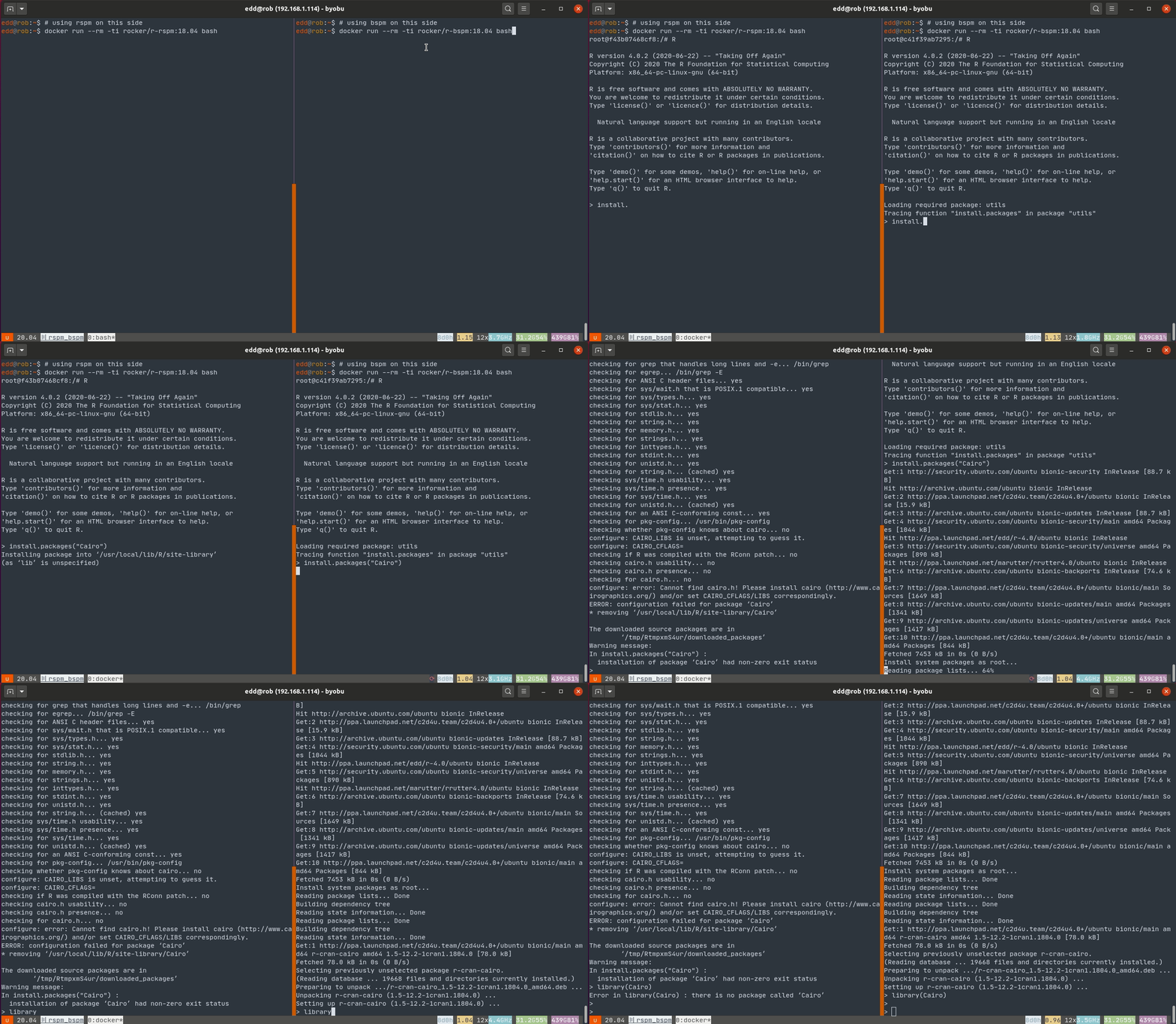 This fails for RSPM as no binary is present and a source build fails for the familiar lack of a
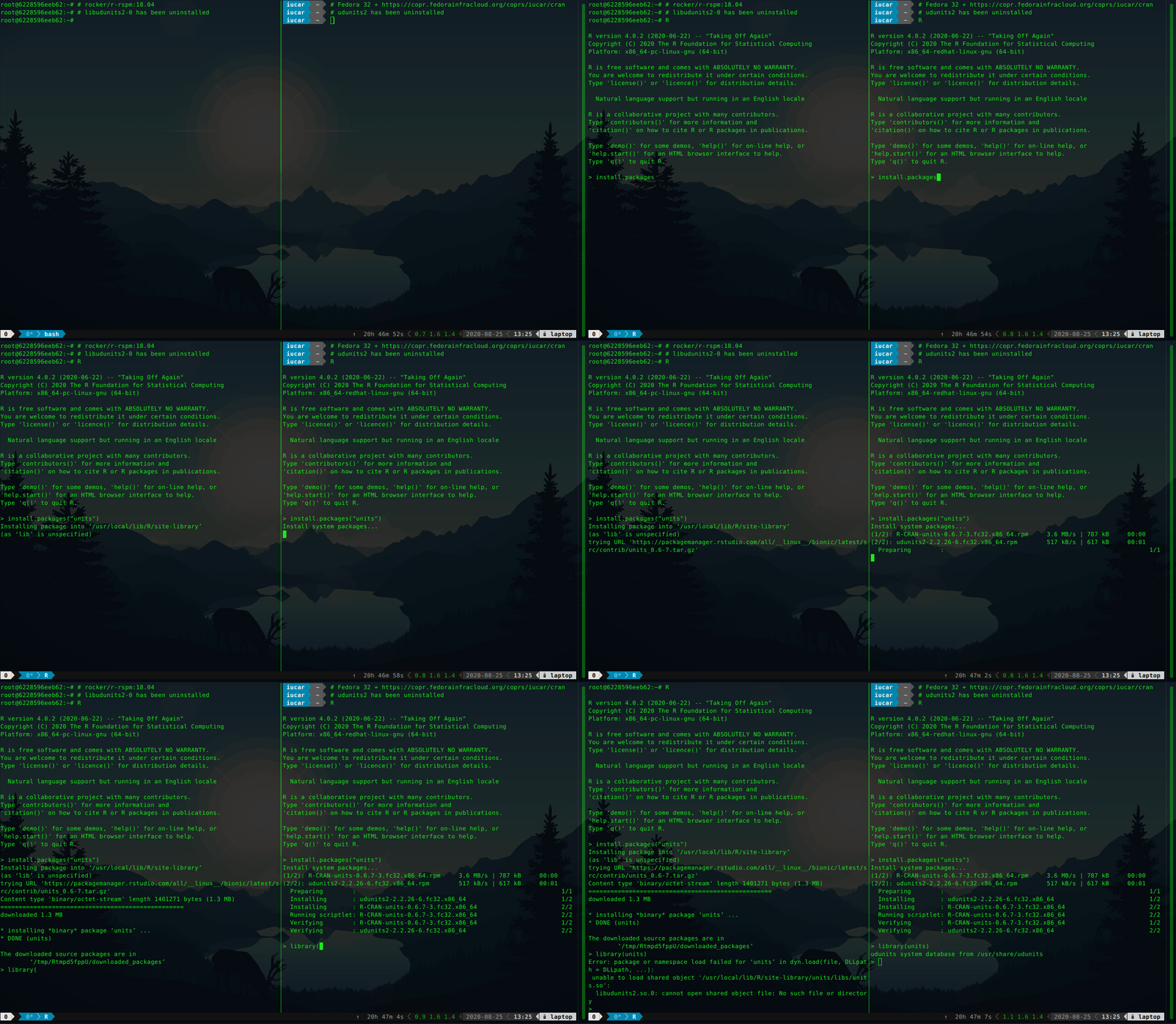 The installation of
 The publisher MDPI is a spammer and lies.
If you upload a paper draft to arXiv, MDPI will send spam to the authors
to solicit submission. Within minutes of an upload I received the
following email (sent by MDPI staff, not some overly eager new editor):
 Sorry for not being on blog for sometime, the last few months have been brutal. While I am externally ok, because of the lockdown I sensed major hearing loss. First, I thought it may be a hallucination or something but as it persisted for days, I got myself checked and found out that I got 80% hearing loss in my right ear. How and why I don t know. Is this
 Example of Medical Bills people have to pay.
 India-China Border Areas Copyright DW.com 2020

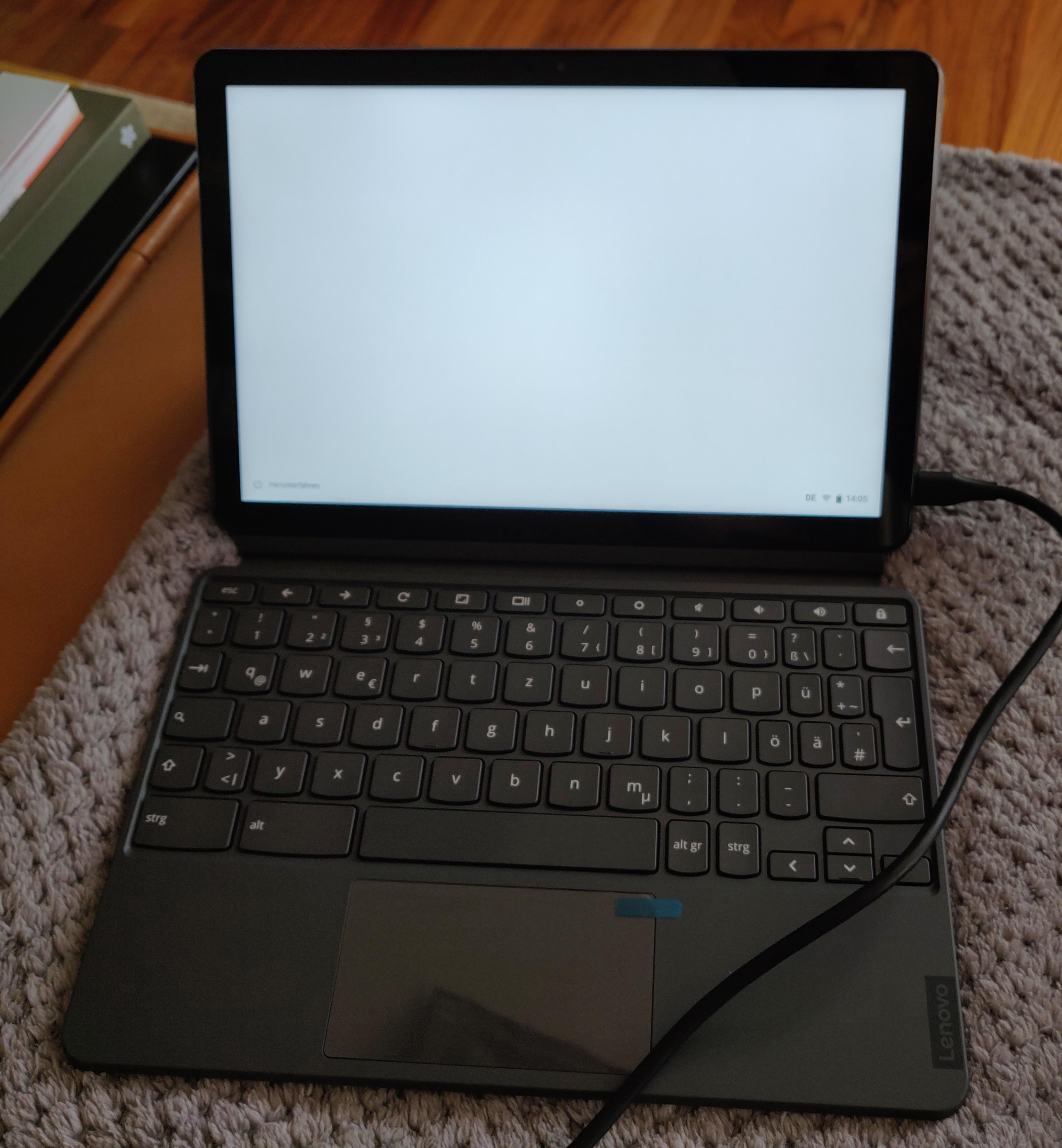 fully assembled chromebook duet

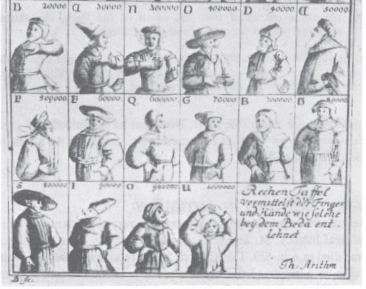
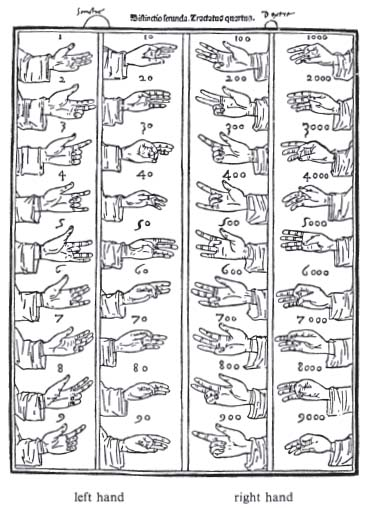 (Note that in this diagram 60 is, in fact, wrong,
and this picture swaps the hundreds and the thousands.)
We ll start with the units.
The last three fingers of the left hand, middle, ring, and pinkie,
are used to form them.
Zero is formed with an open hand, the opposite of the finger
counting we re used to.
One is formed by bending the middle joint of the pinkie,
two by including the ring finger and three by including the
middle finger, all at the middle joint.
You ll want to keep all these bends fairly loose, as otherwise
these numbers can get quite uncomfortable.
For four, you extend your pinkie again, for five, also raise your
ring finger, and for six, you raise your middle finger as well, but
then lower your ring finger.
For seven you bend your pinkie at the bottom joint, for eight
adding your ring finger, and for nine, including your middle
finger. This mirrors what you did for one, two and three, but
bending the finger at the bottom joint now instead.
This leaves your thumb and index finger for the tens.
For ten, touch the nail of your index finger to the inside of your top thumb
joint.
For twenty, put your thumb between your index and middle fingers.
For thirty, touch the nails of your thumb and index fingers.
For forty, bend your index finger slightly towards your palm
and place your thumb between the middle and top knuckle of your
index finger.
For fifty, place your thumb against your palm.
For sixty, leave your thumb where it is and wrap your index
finger around it (the diagram above is wrong).
For seventy, move your thumb so that the nail touches between the
middle and top knuckle of your index finger.
For eighty, flip your thumb so that the bottom of it now
touches the spot between the middle and top knuckle of your index
finger.
For ninety, touch the nail of your index finger to your bottom
thumb joint.
The hundreds and thousands use the same positions on the right
hand, with the units being the thousands and the tens being the
hundreds. One account, from which the picture above comes, swaps
these two, but the first account we have uses this ordering.
Combining all these symbols, you can count all the way to 9,999
yourself on just two hands. Try it!