As a lot of people do, I have some content that is reachable using
webbrowsers. There is the password manager
Vaultwarden, an instance
of Immich, ForgeJo for
some personal git repos, my blog and some other random pages here and
there.
All of this never had been a problem, running a webserver is a
relatively simple task, no matter if you use apache2 , nginx or any of the other possibilities. And the things
mentioned above bring their own daemon to serve the users.
AI crap
And then some idiot somewhere had the idea to ignore every law, every
copyright and every normal behaviour and run some shit AI bot. And
more idiots followed. And now we have more AI bots than humans
generating traffic.
And those AI shit crawlers do not respect any limits. robots.txt, slow
servers, anything to keep your meager little site up and alive? Them
idiots throw more resources onto them to steal content. No sense at
all.
iocaine to the rescue
So them AI bros want to ignore everything and just fetch the whole
internet? Without any consideration if thats even wanted? Or legal?
There are people who dislike this. I am one of them, but there are
some who got annoyed enough to develop tools to fight the AI
craziness. One of those tools is
iocaine - it says about
itself that it is The deadliest poison known to AI.
Feed AI bots sh*t
So you want content? You do not accept any Go away? Then here is
content. It is crap, but appearently you don t care. So have fun.
What iocaine does is (cite from their webpage) not made for making
the Crawlers go away. It is an aggressive defense mechanism that tries
its best to take the blunt of the assault, serve them garbage, and
keep them off of upstream resources .
That is, instead of the expensive webapp using a lot of resources that
are basically wasted for nothing, iocaine generates a small static
page (with some links back to itself, so the crawler shit stays
happy). Which takes a hell of a lot less resource than any fullblown
app.
iocaine setup
The website has a
https://iocaine.madhouse-project.org/documentation/, it is not hard to setup. Still, I had to adjust some
things for my setup, as I use [Caddy Docker
Proxy ([https://github.com/lucaslorentz/caddy-docker-proxy) nowadays
and wanted to keep the config within the docker setup, that is, within
the labels.
Caddy container
So my container setup for the caddy itself contains the following
extra lines:
labels:caddy_0.email:email@example.comcaddy_1:(iocaine)caddy_1.0_@read:method GET HEADcaddy_1.1_reverse_proxy:"@readiocaine:42069""caddy_1.1_reverse_proxy.@fallback":"status421"caddy_1.1_reverse_proxy.handle_response:"@fallback"
This will be translated to the following Caddy config snippet:
Any container that should be protected by iocaine
All the containers that are behind the Caddy reverse proxy can now
get protected by iocaine with just one more line in their
docker-compose.yaml. So now we have
So with one simple extra label for the docker container I have iocaine
activated.
Result? ByeBye (most) AI Bots
Looking at the services that got hammered most from those crap bots -
deploying this iocaine container and telling Caddy about it solved the
problem for me. 98% of the requests from the bots now go to iocaine
and no longer hog resources in the actual services.
I wish it wouldn t be neccessary to run such tools. But as long as we
have shitheads doing the AI hype there is no hope. I wish they all
would end up in Jail for all their various stealing they do. And
someone with a little more brain left would set things up sensibly,
then the AI thing could maybe turn out something good and useful.
But currently it is all crap.
The limits of cryptography
Since this blog post is about security and cryptography, it makes sense to start with this XKCD reminder about the value of encryption:
.
There is a similar, complementary discussion in this article: crypto can help but cannot safeguard against all actors.
Public Key encryption 101
GPG, the most widely used tool for end to end email encryption and signing software releases, is based on public key cryptography. In public key cryptography you have a private key, to keep very private and a public key you share to the world. If you use SSH with key authentication you know already the concept:
$ ls -1 .ssh/id_rsa*
.ssh/id_rsa
.ssh/id_rsa.pub
Here id_rsa is the private key and id_rsa.pub the public key.
GPG private key on a hardware token
I would like to store the private part of my GPG key on a hardware token. This provides extra security compared to storing the private key on a hard disk: as the private key stays on the device, you need physical access to the device to do anything with the private key. It also eases the usage of the private key on different computers, as you just have to take the hardware token with you without creating multiple copies of the precious private key.
That is the basic, somepeople explains the topic better than me.
The hardware token I chose is a YubiKey because I already use such a dongle for two factor authentication on salsa, the Debian gitlab forge.
Some terminology
Understanding GPG and even worse hardware tokens, is like sailing in an endless sea of acronyms and recommendation practices. Let us navigate:
First the generic name of a GPG hardware token is an OpenPGP smart card.
Here we need to understand:
OpenPGP is a standard for public key cryptography, GPG is an implementation of the standard. We refer to the device category by the name of the standard it implements: OpenPGP.
the first existing hardware tokens had the form of a smart card, that is a credit-card form factor with a small chip inside. Today most devices implementing the OpenPGP card protocol take the form of an USB key. But even in the form of a USB key, the token will implement the generic smartcard protocol (CCID, for Chip Card Interface Device) so that it can talk to upper software layers.
Standards support in YubiKey
The YubiKey itself supports multiple standards, the OpenPGP card protocol being only one of many.
This is what my YubiKey supports:
Since I already threw 5 acronyms on the paragraph above, I will not go in details into what OATH and PIV are.
What is important for us here, is that we have OpenPGP enabled on the device, more important we can verify that GPG sees a card with:
gpg --card-status   grep -E '(Application type Manufacturer)'
Application type .: OpenPGP
Manufacturer .....: Yubico
Challenges of the Deeps is the third book in the throwback space
opera Arenaverse series. It is a direct sequel to
Spheres of Influence, but Spoor provides
a substantial recap of the previous volumes for those who did not read the
series in close succession (thank you!).
Ariane has stabilized humanity's position in the Arena with yet another
improbable victory. (If this is a spoiler for previous volumes, so was
telling you the genre of the book.) Now is a good opportunity to fulfill
the promise humanity made to their ally Orphan: accompaniment on a journey
into the uncharted deeps of the Arena for reasons that Orphan refuses to
explain in advance. Her experienced crew provide multiple options to serve
as acting Leader of Humanity until she gets back. What can go wrong?
The conceit of this series is that as soon as a species achieves warp
drive technology, their ships are instead transported into the vast
extradimensional structure of the Arena where a godlike entity controls
the laws of nature and enforces a formal conflict resolution process that
looks alternatingly like a sporting event, a dueling code, and
technology-capped total war. Each inhabitable system in the real universe
seems to correspond to an Arena sphere, but the space between them is
breathable atmosphere filled with often-massive storms.
In other words, this is an airship adventure as written by E.E. "Doc"
Smith. Sort of. There is an adventure, and there are a lot of airships
(although they fight mostly like spaceships), but much of the action
involves tense mental and physical sparring with a previously unknown
Arena power with unclear motives.
My general experience with this series is that I find the Arena concept
fascinating and want to read more about it, Spoor finds his
much-less-original Hyperion Project in the backstory of the characters
more fascinating and wants to write about that, and we reach a sort of
indirect, grumbling (on my part) truce where I eagerly wait for more
revelations about the Arena and roll my eyes at the Hyperion stuff.
Talking about Hyperion in detail is probably a spoiler for at least the
first book, but I will say that it's an excuse to embed versions of
literary characters into the story and works about as well as most such
excuses (not very). The characters in question are an E.E. "Doc" Smith
mash-up, a Monkey King mash-up, and a number of other characters that are
obviously references to something but for whom I lack enough hints to
place (which is frustrating).
Thankfully we get far less human politics and a decent amount of Arena
world-building in this installment. Hyperion plays a role, but mostly as
foreshadowing for the next volume and the cause of a surprising
interaction with Arena rules. One of the interesting wrinkles of this
series is that humanity have an odd edge against the other civilizations
in part because we're borderline insane sociopaths from the perspective of
the established powers. That's an old science fiction trope, but I prefer
it to the Campbell-style belief in inherent human superiority.
Old science fiction tropes are what you need to be in the mood for to
enjoy this series. This is an unapologetic and intentional throwback to
early pulp: individuals who can be trusted with the entire future of
humanity because they're just that moral, super-science, psychic warfare,
and even coruscating beams that would make E.E. "Doc" Smith proud. It's an
occasionally glorious but mostly silly pile of technobabble, but Spoor
takes advantage of the weird, constructed nature of the Arena to provide
more complex rules than competitive superlatives.
The trick is that while this is certainly science fiction pulp, it's also
a sort of isekai novel.
There's a lot of anime and manga influence just beneath the surface. I'm
not sure why it never occurred to me before reading this series that
melodramatic anime and old SF pulps have substantial aesthetic overlap,
but of course they do. I loved the Star Blazers translated anime
that I watched as a kid precisely because it had the sort of dramatic set
pieces that make the Lensman novels so much fun.
There is a bit too much Wu Kong in this book for me (although the
character is growing on me a little), and some of the maneuvering around
the mysterious new Arena actor drags on longer than was ideal, but the
climax is great stuff if you're in the mood for dramatic pulp adventure.
The politics do not bear close examination and the writing is serviceable
at best, but something about this series is just fun. I liked this
book much better than Spheres of Influence, although I wish Spoor
would stop being so coy about the nature of the Arena and give us more
substantial revelations. I'm also now tempted to re-read Lensman, which is
probably a horrible idea. (Spoor leaves the sexism out of his modern
pulp.)
If you got through Spheres of Influence with your curiosity about
the Arena intact, consider this one when you're in the mood for modern
pulp, although don't expect any huge revelations. It's not the
best-written book, but it sits squarely in the center of a genre and mood
that's otherwise a bit hard to find.
Followed by the Kickstarter-funded Shadows of Hyperion, which sadly
looks like it's going to concentrate on the Hyperion Project again. I will
probably pick that up... eventually.
Rating: 6 out of 10
In 2007, Martin Escardo wrote a often-read blog post about Seemingly impossible functional programs . One such seemingly impossible function is find, which takes a predicate on infinite sequences of bits, and returns an infinite sequence for which that predicate hold (unless the predicate is just always false, in which case it returns some arbitrary sequence).
Inspired by conversations with and experiments by Massin Guerdi at the dinner of LeaningIn 2025 in Berlin (yes, this blog post has been in my pipeline for far too long), I wanted to play around these concepts in Lean.
Let s represent infinite sequences of bits as functions from Nat to Bit, and give them a nice name, and some basic functionality, including a binary operator for consing an element to the front:
import Mathlib.Data.Nat.Find
abbrev Bit := Bool
def Cantor : Type := Nat   Bit
def Cantor.head (a : Cantor) : Bit := a 0
def Cantor.tail (a : Cantor) : Cantor := fun i => a (i + 1)
@[simp, grind] def Cantor.cons (x : Bit) (a : Cantor) : Cantor
    0 => x
    i+1 => a i
infix:60 " # " => Cantor.cons
With this in place, we can write Escardo s function in Lean. His blog post discusses a few variants; I ll focus on just one of them:
mutual
  partial def forsome (p : Cantor   Bool) : Bool :=
    p (find p)
  partial def find (p : Cantor   Bool) : Cantor :=
    have b := forsome (fun a => p (true # a))
    (b # find (fun a => p (b # a)))
end
We define find together with forsome, which checks if the predicate p holds for any sequence. Using that find sets the first element of the result to true if there exists a squence starting with true, else to false, and then tries to find the rest of the sequence.
It is a bit of a brian twiter that this code works, but it does:
def fifth_false : Cantor   Bool := fun a => not (a 5)
/-- info: [true, true, true, true, true, false, true, true, true, true] -/
#guard_msgs in
#eval List.ofFn (fun (i : Fin 10) => find fifth_false i)
Of course, in Lean we don t just want to define these functions, but we want to prove that they do what we expect them to do.
Above we defined them as partial functions, even though we hope that they are not actually partial: The partial keyword means that we don t have to do a termination proof, but also that we cannot prove anything about these functions.
So can we convince Lean that these functions are total after all? We can, but it s a bit of a puzzle, and we have to adjust the definitions.
First of all, these seemingly impossible functions are only possible because we assume that the predicate we pass to it, p, is computable and total. This is where the whole magic comes from, and I recommend to read Escardo s blog posts and papers for more on this fascinating topic. In particular, you will learn that a predicate on Cantor that is computable and total necessarily only looks at some initial fragment of the sequence. The length of that prefix is called the modulus . So if we hope to prove termination of find and forsome, we have to restrict their argument p to only such computable predicates.
To that end I introduce HasModulus and the subtype of predicates on Cantor that have such a modulus:
-- Extensional (!) modulus of uniform continuity
def HasModulus (p : Cantor    ) :=   n,   a b : Cantor, (  i < n, a i = b i)   p a = p b
@[ext] structure CantorPred where
  pred : Cantor   Bool
  hasModulus : HasModulus pred
The modulus of such a predicate is now the least prefix lenght that determines the predicate. In particular, if the modulus is zero, the predicate is constant:
namespace CantorPred
variable (p : CantorPred)
noncomputable def modulus : Nat :=
  open Classical in Nat.find p.hasModulus
theorem eq_of_modulus :  a b : Cantor, (  i < p.modulus, a i = b i)   p a = p b := by
  open Classical in
  unfold modulus
  exact Nat.find_spec p.hasModulus
theorem eq_of_modulus_eq_0 (hm : p.modulus = 0) :   a b, p a = p b := by
  intro a b
  apply p.eq_of_modulus
  simp [hm]
Because we want to work with CantorPred and not Cantor Bool I have to define some operations on that new type; in particular the cons element before predicate operation that we saw above in find:
def comp_cons (b : Bit) : CantorPred where
  pred := fun a => p (b # a)
  hasModulus := by
    obtain  n, h_n  := p.hasModulus
    cases n with
      zero => exists 0; grind
      succ m =>
      exists m
      intro a b heq
      simp
      apply h_n
      intro i hi
      cases i
        rfl
        grind
@[simp, grind =] theorem comp_cons_pred (x : Bit) (a : Cantor) :
  (p.comp_cons x) a = p (x # a) := rfl
For this operation we know that the modulus decreases (if it wasn t already zero):
theorem comp_cons_modulus (x : Bit) :
    (p.comp_cons x).modulus   p.modulus - 1 := by
  open Classical in
  apply Nat.find_le
  intro a b hab
  apply p.eq_of_modulus
  cases hh : p.modulus
    simp
    intro i hi
    cases i
      grind
      grind
grind_pattern comp_cons_modulus => (p.comp_cons x).modulus
We can rewrite the find function above to use these operations:
mutual
  partial def forsome (p : CantorPred) : Bool := p (find p)
  partial def find (p : CantorPred) : Cantor := fun i =>
    have b := forsome (p.comp_cons true)
    (b # find (p.comp_cons b)) i
end
I have also eta-expanded the Cantor function returned by find; there is now a fun i => i around the body. We ll shortly see why that is needed.
Now have everything in place to attempt a termination proof. Before we do that proof, we could step back and try to come up with an informal termination argument.
The recursive call from forsome to find doesn t decrease any argument at all. This is ok if all calls from find to forsome are decreasing.
The recursive call from find to find decreases the index i as the recursive call is behind the Cantor.cons operation that shifts the index. Good.
The recursive call from find to forsome decreases the modulus of the argument p, if it wasn t already zero.
But if was zero, it does not decrease it! But if it zero, then the call from forsome to find doesn t actually need to call find, because then p doesn t look at its argument.
We can express all this reasoning as a termination measure in the form of a lexicographic triple. The 0 and 1 in the middle component mean that for zero modulus, we can call forsome from find for free .
mutual
  def forsome (p : CantorPred) : Bool := p (find p)
  termination_by (p.modulus, if p.modulus = 0 then 0 else 1, 0)
  decreasing_by grind
  def find (p : CantorPred) : Cantor := fun i =>
    have b := forsome (p.comp_cons true)
    (b # find (p.comp_cons b)) i
  termination_by i => (p.modulus, if p.modulus = 0 then 1 else 0, i)
  decreasing_by all_goals grind
end
The termination proof doesn t go through just yet: Lean is not able to see that (_ # p) i will call p with i - 1, and it does not see that p (find p) only uses find p if the modulus of p is non-zero. We can use the wf_preprocess feature to tell it about that:
The following theorem replaces a call to p f, where p is a function parameter, with the slightly more complex but provably equivalent expression on the right, where the call to f is no in the else branch of an if-then-else and thus has p.modulus = 0 in scope:
@[wf_preprocess]
theorem coe_wf (p : CantorPred) :
    (wfParam p) f = p (if _ : p.modulus = 0 then fun _ => false else f) := by
  split
  next h => apply p.eq_of_modulus_eq_0 h
  next => rfl
And similarly we replace (_ # p) i with a variant that extend the context with information on how p is called:
def cantor_cons' (x : Bit) (i : Nat) (a :   j, j + 1 = i   Bit) : Bit :=
  match i with
    0 => x
    j + 1 => a j (by grind)
@[wf_preprocess] theorem cantor_cons_congr (b : Bit) (a : Cantor) (i : Nat) :
  (b # a) i = cantor_cons' b i (fun j _ => a j) := by cases i <;> rfl
After these declarations, the above definition of forsome and find goes through!
It remains to now prove that they do what they should, by a simple induction on the modulus of p:
@[simp, grind =] theorem tail_cons_eq (a : Cantor) : (x # a).tail = a := by
  funext i; simp [Cantor.tail, Cantor.cons]
@[simp, grind =] theorem head_cons_tail_eq (a : Cantor) : a.head # a.tail = a := by
  funext i; cases i <;> rfl
theorem find_correct (p : CantorPred) (h_exists :   a, p a) : p (find p) := by
  by_cases h0 : p.modulus = 0
    obtain  a, h_a  := h_exists
    rw [  h_a]
    apply p.eq_of_modulus_eq_0 h0
    rw [find.eq_unfold, forsome.eq_unfold]
    dsimp -zeta
    extract_lets b
    change p (_ # _)
    by_cases htrue :   a, p (true # a)
    next =>
      have := find_correct (p.comp_cons true) htrue
      grind
    next =>
      have : b = false := by grind
      clear_value b; subst b
      have hfalse :   a, p (false # a) := by
        obtain  a, h_a  := h_exists
        cases h : a.head
          exists Cantor.tail a
          grind
          exfalso
          apply htrue
          exists Cantor.tail a
          grind
      clear h_exists
      exact find_correct (p.comp_cons false) hfalse
termination_by p.modulus
decreasing_by all_goals grind
theorem forsome_correct (p : CantorPred) :
    forsome p   (  a, p a) where
  mp hfind := by unfold forsome at hfind; exists find p
  mpr hex := by unfold forsome; exact find_correct p hex
This is pretty nice! However there is more to do. For example, Escardo has a massively faster variant of find that we can implement as a partial function in Lean:
def findBit (p : Bit   Bool) : Bit :=
  if p false then false else true
def branch (x : Bit) (l r : Cantor) : Cantor :=
  fun n =>
    if n = 0      then x
    else if 2   n then r ((n - 2) / 2)
                  else l ((n - 1) / 2)
mutual
  partial def forsome (p : Cantor -> Bool) : Bool :=
    p (find p)
  partial def find (p : Cantor -> Bool) : Cantor :=
    let x := findBit (fun x => forsome (fun l => forsome (fun r => p (branch x l r))))
    let l := find (fun l => forsome (fun r => p (branch x l r)))
    let r := find (fun r => p (branch x l r))
    branch x l r
end
But can we get this past Lean s termination checker? In order to prove that the modulus of p is decreasing, we d have to know that, for example, find (fun r => p (branch x l r)) is behaving nicely. Unforunately, it is rather hard to do termination proof for a function that relies on the behaviour of the function itself.
So I ll leave this open as a future exercise.
I have dumped the code for this post at https://github.com/nomeata/lean-cantor.
I just released mrcal 2.5; much more about that in a future post. Here, I'd like
to talk about some implementation details.
libpython3 and linking
mrcal is a C library and a Python library. Much of mrcal itself interfaces the C
and Python libraries. And it is common for external libraries to want to pass
Python mrcal.cameramodel objects to their C code. The obvious way to do this
is in a converter function in an O& argument to
PyArg_ParseTupleAndKeywords(). I wrote this mrcal_cameramodel_converter()
function, which opened a whole can of worms when thinking about the compiling
and linking and distribution of this thing.
mrcal_cameramodel_converter() is meant to be called by code that implements
Python-wrapping of C code. This function will be called by the
PyArg_ParseTupleAndKeywords() Python library function, and it uses the Python
C API itself. Since it uses the Python C API, it would normally link against
libpython. However:
The natural place to distribute this is in libmrcal.so, but this library
doesn't touch Python, and I'd rather not pull in all of libpython for this
utility function, even in the 99% case when that function won't even be called
In some cases linking to libpython actually breaks things, so I never do
that anymore anyway. This is fine: since this code will only ever be called by
libpython itself, we're guaranteed that libpython will already be loaded,
and we don't need to ask for it.
OK, let's not link to libpython then. But if we do that, we're going to have
unresolved references to our libpython calls, and the loader will complain
when loading libmrcal.so, even if we're not actually calling those functions.
This has an obvious solution: the references to the libpython calls should be
marked weak. That won't generate unresolved-reference errors, and everything
will be great.
OK, how do we mark things weak? There're two usual methods:
We mark the declaration (or definition?) or the relevant functions with
__attribute__((weak))
We weaken the symbols after the compile with objcopy --weaken.
Method 1 is more work: I don't want to keep track of what Python API calls I'm
actually making. This is non-trivial, because some of the Py_...() invocations
in my code are actually macros that call functions internally that I must
weaken. Furthermore, all the functions are declared in Python.h that I don't
control. I can re-declare stuff with __attribute__((weak)), but then I have to
match the prototypes. And I have to hope that re-declaring these will make
__attribute__((weak)) actually work.
So clearly I want method 2. I implemented it:
Works great on my machine! But doesn't work on other people's machines. Because
only the most recent objcopy tool actually works to weaken references.
Apparently the older tools only weaken definitions, which isn't useful to me,
and the tool only started handling references very recently.
Well that sucks. I guess I will need to mark the symbols with
__attribute__((weak)) after all. I use the nm tool to find the symbols that
should be weakened, and I apply the attribute with this macro:
The prototypes are handled by __typeof__. So are we done? With gcc, we are
done. With clang we are not done. Apparently this macro does not weaken symbols
generated by inline function calls if using clang I have no idea if this is a
bug. The Python internal machinery has some of these, so this doesn't weaken
all the symbols. I give up on the people that both have a too-old objcopy
and are using clang, and declare victory. So the logic ends up being:
Compile
objcopy --weaken
nm to find the non-weak Python references
If there aren't any, our objcopy call worked and we're done!
Otherwise, compile again, but explicitly asking to weaken those symbols
nm again to see if the compiler didn't do it
If any non-weak references still remain, complain and give up.
Whew. This logic appears here and here. There were even more things to deal
with here: calling nm and objcopy needed special attention and build-system
support in case we were cross-building. I took care of it in mrbuild.
This worked for a while. Until the converter code started to fail. Because .
Supporting old Python
. I was using PyTuple_GET_ITEM(). This is a macro to access PyTupleObject
data. So the layout of PyTupleObject ended up encoded in libmrcal.so. But
apparently this wasn't stable, and changed between Python3.13 and Python3.14. As
described above, I'm not linking to libpython, so there's no NEEDED tag to
make sure we pull in the right version. The solution was to call the
PyTuple_GetItem() function instead. This is unsatisfying, and means that in
theory other stuff here might stop working in some Python 3.future, but I'm
ready to move on for now.
There were other annoying gymnastics that had to be performed to make this work
with old-but-not-super old tooling.
The Python people deprecated PyModule_AddObject(), and added PyModule_Add()
as a replacement. I want to support Pythons before and after this happened, so I
needed some if statements. Today the old function still works, but eventually it
will stop, and I will have needed to do this typing sooner or later.
Supporting old C++ compilers
mrcal is a C project, but it is common for people to want to #include the
headers from C++. I widely use C99 designated initializers (27-years old in C!),
which causes issues with not-very-old C++ compilers. I worked around this
initialization in one spot, and disabled it a feature for a too-old compiler in
another spot. Fortunately, semi-recent tooling supports my usages, so this is
becoming a non-issue as time goes on.
This Brutal Moon is a science fiction thriller with bits of
cyberpunk and space opera. It concludes the trilogy begun with
These Burning Stars. The three books
tell one story in three volumes, and ideally you would read all three in
close succession.
There is a massive twist in the first book that I am still not trying to
spoil, so please forgive some vague description.
At the conclusion of These Burning
Stars, Jacobs had moved a lot of pieces into position, but it was not
yet clear to me where the plot was going, or even if it would come to a
solid ending in three volumes as promised by the series title. It does.
This Brutal Moon opens with some of the political maneuvering that
characterized These Burning Stars, but once things start happening,
the reader gets all of the action they could wish for and then some.
I am pleased to report that, at least as far as I'm concerned, Jacobs
nails the ending. Not only is it deeply satisfying, the characterization
in this book is so good, and adds so smoothly to the characterization of
the previous books, that I saw the whole series in a new light. I thought
this was one of the best science fiction series finales I've ever read.
Take that with a grain of salt, since some of those reasons are specific
to me and the mood I was in when I read it, but this is fantastic stuff.
There is a lot of action at the climax of this book, split across at least
four vantage points and linked in a grand strategy with chaotic surprises.
I kept all of the pieces straight and understood how they were linked
thanks to Jacobs's clear narration, which is impressive given the number
of pieces in motion. That's not the heart of this book, though. The action
climax is payoff for the readers who want to see some ass-kicking, and it
does contain some moving and memorable moments, but it relies on some
questionable villain behavior and a convenient plot device introduced only
in this volume. The action-thriller payoff is competent but not, I think,
outstanding.
What put this book into a category of its own were the characters, and
specifically how Jacobs assembles sweeping political consequences from
characters who, each alone, would never have brought about such a thing,
and in some cases had little desire for it.
Looking back on the trilogy, I think Jacobs has captured, among all of the
violence and action-movie combat and space-opera politics, the
understanding that political upheaval is a relay race. The people who have
the personalities to start it don't have the personality required to
nurture it or supply it, and those who can end it are yet again different.
This series is a fascinating catalog of political actors the instigator,
the idealist, the pragmatist, the soldier, the one who supports her
friends, and several varieties and intensities of leaders and it
respects all of them without anointing any of them as the One True
Revolutionary. The characters are larger than life, yes, and this series
isn't going to win awards for gritty realism, but it's saying something
satisfyingly complex about where we find courage and how a cause is pushed
forward by different people with different skills and emotions at
different points in time. Sometimes accidentally, and often in entirely
unexpected ways.
As before, the main story is interwoven with flashbacks. This time, we
finally see the full story of the destruction of the moon of Jeve. The
reader has known about this since the first volume, but Jacobs has a few
more secrets to show (including, I will admit, setting up a plot device)
and some pointed commentary on resource extraction economies. I think this
part of the book was a bit obviously constructed, although the
characterization was great and the visible junction points of the plot
didn't stop me from enjoying the thrill when the pieces came together.
But the best part of this book was the fact there was 10% of it left after
the climax. Jacobs wrote an actual denouement, and it was everything I
wanted and then some. We get proper story conclusions for each of the
characters, several powerful emotional gut punches, some remarkably subtle
and thoughtful discussion of political construction for a series that
tended more towards space-opera action, and a conclusion for the primary
series relationship that may not be to every reader's taste but was
utterly, perfectly, beautifully correct for mine. I spent a whole lot of
the last fifty pages of this book trying not to cry, in the best way.
The character evolution over the course of this series is simply superb.
Each character ages like fine wine, developing more depth, more nuance,
but without merging. They become more themselves, which is an impressive
feat across at least four very different major characters. You can see the
vulnerabilities and know what put them there, you can see the strengths
they developed to compensate, and you can see why they need the support
the other characters provide. And each of them is so delightfully
different.
This was so good. This was so precisely the type of story that I was in
the mood for, with just the type of tenderness for its characters that I
wanted, that I am certain I am not objective about it. It will be one of
those books where other people will complain about flaws that I didn't see
or didn't care about because it was doing the things I wanted from it so
perfectly. It's so good that it elevated the entire trilogy; the journey
was so worth the ending.
I'm afraid this review will be less than helpful because it's mostly
nonspecific raving. This series is such a spoiler minefield that I'd need
a full spoiler review to be specific, but my reaction is so driven by
emotion that I'm not sure that would help if the characters didn't strike
you the way that they struck me. I think the best advice I can offer is to
say that if you liked the emotional tone of the end of These Burning
Stars (not the big plot twist, the character reaction to the political
goal that you learn drove the plot), stick with the series, because that's
a sign of the questions Jacobs is asking. If you didn't like the
characters at the end (not the middle) of the first novel, bail out,
because you're going to get a lot more of that.
Highly, highly recommended, and the best thing I've read all year, with
the caveats that you should read the content notes, and that some people
are going to bounce off this series because it's too intense and
melodramatic. That intensity will not let up, so if that's not what you're
in the mood for, wait on this trilogy until you are.
Content notes: Graphic violence, torture, mentions of off-screen child
sexual assault, a graphic corpse, and a whole lot of trauma.
One somewhat grumbly postscript: This is the sort of book where I need to
not read other people's reviews because I'll get too defensive of it (it's
just a book I liked!). But there is one bit of review commentary I've seen
about the trilogy that annoys me enough I have to mention it. Other
reviewers seem to be latching on to the Jeveni (an ethnic group in the
trilogy) as Space Jews and then having various feelings about that.
I can see some parallels, I'm not going to say that it's completely wrong,
but I also beg people to read about a fictional oppressed ethnic and
religious minority and not immediately think "oh, they must be stand-ins
for Jews." That's kind of weird? And people from the US, in particular,
perhaps should not read a story about an ethnic group enslaved due to
their productive skill and economic value and think "they must be
analogous to Jews, there are no other possible parallels here." There are
a lot of other comparisons that can be made, including to the
commonalities between the methods many different oppressed minorities have
used to survive and preserve their culture.
Rating: 10 out of 10
The majority of P r ch ( ) is stored in Asia (predominantly China, some in Malaysia and Taiwan) because of its climatic conditions:
warm (~30 C)
humid (~75% RH)
stable (comparatively small day to day, day to night, and seasonal differences)
These are ideal for ageing and allow efficient storage in simple storehouses, usually without the need for any air conditioning.
The climate in Western European countries is significantly colder, drier, and more variable. However, residential houses offers throughout the year a warm (~20 C), humid (~50% RH), and stable baseline to start with. High quality, long term storage and ageing is possible too with some of the Asian procedures slightly adjusted for the local conditions. Nevertheless, fast accelerated ageing still doesn t work here (even with massive climate control).
Personally I prefer the balanced, natural storage over the classical wet or dry , or the mixed traditional storage (of course all storage types are not that meaningful as they are all relative terms anyway). Also I don t like strong fermentation either (P r is not my favourite tea, I only drink it in the 3 months of winter).
Therefore, my intention is primarily to preserve the tea while it continues to age normally, keep it in optimal drinking condition and don t rush its fermentation.
The value of correct storage is of great importance and has a big effect on P r, and is often overlooked and underrated. Here s a short summary on how to store P r ch (in Western Europe).
Image: some D y P r ch stored at home
1. Location
1.1 No light
Choose a location with neither direct nor indirect sunlight (= ultraviolet radiation) exposure:
direct sunlight damages organic material ( bleeching )
indirect sunlight by heating up the containers inbalances the microclimate ( suppression )
1.2 No odors
Choose a location with neither direct nor indirect odor exposure:
direct odor immissions (like incense, food, air polution, etc.) makes the tea undrinkable
indirect odor immissions (especially other teas stored next to it) taint the taste and dilute the flavours
Always use individual containers for each tea, store only identical tea of the same year and batch in the same container. Idealy never store one cake, brick or tuo on its own, buy multiples and store them together for better ageing.
2. Climate
2.1 Consistent temperature
Use a location with no interference from any devices or structures next to it:
use an regular indoor location for mild temperature curves (i.e. no attics with large day/night temperature differences)
aim for >= 20 C average temperature for natural storage (i.e. no cold basements)
don t use a place next to any heat dissipating devices (like radiators, computers, etc.)
don t use a place next to an outside facing wall
always leave 5 to 10cm distance to a wall for air to circulate (generally prevents mold on the wall but also isolates the containers further from possible immissions)
As consistent temperature as possible allows even and steady fermentation. However, neither air conditioning or filtering is needed. Regular day to day, day to night, and season to season fluctuations are balanced out fine with otherwise correct indoor storage. Also humidity control is much more important for storage and ageing, and much less forgiving than temperature control.
2.2 Consistent humidity
Use humidity control packs to ensure a stable humidity level:
aim for ~65% RH
Lower than 60% RH will (completely) dry out the tea, higher than 70% RH increases chances for mold.
3. Equipment
3.1 Proper containers
Use containers that are long term available and that are easily stackable, both in form and dimensions as well as load-bearing capacity. They should be inexpensive, otherwise it s most likely scam (there are people selling snake-oil containers specifically for tea storage).
For long term storage and ageing:
never use plastic: they leak chemicals over time (no tupperdors , mylar and zip lock bags, etc.)
never use cardboard or bamboo: they let to much air in, absorb too much humity and dry to slow
never use wood: they emit odors (no humidors)
never use clay: they absorb all humidity and dry out the tea (glazed or porcelain urns are acceptable for short term storage)
Always use sealed but not air tight, cleaned steal cans (i.e. with no oil residues from manufacturing; such as these).
3.2 Proper humidity control
Use two-way humidity control packs to either absorb or add moisture depending on the needs:
3.3 Proper labels
Put labels on the outside of the containers to not need to open them to know what is inside and disturbe the ageing:
write at least manufacturer and name, pressing year, and batch number on the label (such as these)
if desired and not otherwise kept track already elsewhere, add additional information such as the amount of items, weights, previous storage location/type, date of purchase, vendor, or price, etc.
3.4 Proper monitoring
Measuring and checking temperature and humidity regularly prevents storage parameters turning bad going unnoticed:
put temperature and humidity measurement sensors (such as these) inside some of the containers (e.g. at least one in every different size/type of container)
keep at least one temperature and humidity measurement sensor next to the containers on the outside to monitor the storage location
4. Storage
4.1 Continued maintenance
Before beginning to initially store a new tea, let it acclimatize for 2h after unpacking from transport (or longer if temperature differences between indoors and outdoors are high, i.e. in winter).
Then continuesly:
once a month briefly air all containers for a minute or two
once a month check for mold, just to be safe
every 3 to 6 months check all humidity control packs for need of replacement
monitor battery life of temperature and humidity measurement sensors
Humidity control packs can be recharged (usually voiding any warranty) by submerging them for 2 days in distilled water and 4 hours drying on paper towl afterwards. Check with a weight scale after recharging, they should regain their original weight (e.g. 60g plus ~2 to 5g for the packaging).
Finally
With a correct P r ch storage:
beginn to drink Sh ng P r ( ) roughly after about 10-15 years, or later
beginn to drink Sh u P r ( ) roughly after about 3-5 years, or later
Prepare the tea by breaking it into, or breaking off from it, ~5 to 10g pieces about 1 to 3 months ahead of drinking and consider increase humidity to 70% RH during that time.
2026
Zero-Code
Instrumentation of an Envoy TCP Proxy using eBPF
I recently had to debug an Envoy
Network Load Balancer, and the options Envoy provides just weren't
enough. We were seeing a small number of HTTP 499 errors caused by
latency somewhere in our cloud, but
it wasn't clear what the bottleneck was. As a result, each team had to
set up additional instrumentation to catch latency spikes and figure out
what was going on.
My team is responsible for the LBaaS product (Load Balancer as a
Service) and, of course, we are the first suspects when this kind of
problem appear.
Before going for the current solution, I read a lot of Envoy's
documentation.
It is possible to enable access
logs for Envoy, but they don't provide the information required for
this debug. This is an example of the output:
I won't go into detail about the line above, since it's not possible
to trace the request using access logs alone.
Envoy also has OpenTelemetry
tracing, which is perfect for understanding sources of latency.
Unfortunatly, it is only available for Application Load Balancers.
Most of the HTTP 499 were happening every 10 minutes, so we managed
to get some of the requests with tcpdump, Wireshark and using http headers
to filter the requests.
This approach helped us reproduce and track down the problem, but it
wasn't a great solution. We clearly needed better tools to catch this
kind of issue the next time it happened.
Therefore, I decided to try out OpenTelemetry
eBPF Instrumentation, also referred to as OBI.
I saw the announcement of Grafana Beyla before it was renamed to OBI,
but I didn't have the time or a strong reason to try it out until now.
Even then, I really liked the idea, and the possibility of using eBPF to
solve this instrumentation problem had been in the back of my mind.
OBI promises zero-code automatic instrumentation for Linux services
using eBPF, so I put together a minimal setup to see how well it
works.
This is the simplest Envoy TCP proxy configuration: a listener on
port 8000 forwarding traffic to a backend running on port 8080.
For the backend, I used a basic Go HTTP server:
package mainimport("fmt""net/http")func main() http.Handle("/", http.FileServer(http.Dir("."))) server := http.ServerAddr:":8080" fmt.Println("Starting server on :8080")panic(server.ListenAndServe())
Finally, I wrapped everything together with Docker Compose:
services:autoinstrumenter:image: otel/ebpf-instrument:mainpid:"service:envoy"privileged:trueenvironment:OTEL_EBPF_TRACE_PRINTER: textOTEL_EBPF_OPEN_PORT:8000envoy:image: envoyproxy/envoy:v1.33-latestports:- 8000:8000volumes:- ./envoy.yaml:/etc/envoy/envoy.yaml depends_on:- target-backendtarget-backend:image: golang:1.22-alpinecommand: go run /app/backend.govolumes:- ./backend.go:/app/backend.go:roexpose:-8080
OBI should output traces to the standard output similar to this when
a HTTP request is made to Envoy:
2025-12-08 20:44:49.12884449 (305.572 s[305.572 s]) HTTPClient 200 GET /(/) [172.18.0.3 as envoy:36832]->[172.18.0.2 as localhost:8080] contentLen:78B responseLen:0B svc=[envoy generic] traceparent=[00-529458a2be271956134872668dc5ee47-6dba451ec8935e3e[06c7f817e6a5dae2]-01]
2025-12-08 20:44:49.12884449 (1.260901ms[366.65 s]) HTTP 200 GET /(/) [172.18.0.1 as 172.18.0.1:36282]->[172.18.0.3 as envoy:8000] contentLen:78B responseLen:223B svc=[envoy generic] traceparent=[00-529458a2be271956134872668dc5ee47-06c7f817e6a5dae2[0000000000000000]-01]
This is exactly what we needed, with zero-code. The above trace
shows:
2025-12-08 20:44:49.12884449: time of the trace.
(1.260901ms[366.65 s]): total response time for the
request, with the actual internal execution time of the request (not
counting the request enqueuing time).
HTTP 200 GET /: protocol, response code, HTTP method,
and URL path.
[172.18.0.1 as 172.18.0.1:36282]->[172.18.0.3 as envoy:8000]:
source and destination host:port. The initial request originates from my
machine through the gateway (172.18.0.1), hits the Envoy (172.23.0.3),
the proxy then forwards it to the backend application (172.23.0.2).
contentLen:78B: HTTP Content-Length. I used curl and
the default request size for it is 78B.
responseLen:223B: Size of the response body.
svc=[envoy generic]: traced service.
traceparent: ids to trace the parent request. We can
see that the Envoy makes a request to the target and this request has
the other one as parent.
Let's add one more Envoy to show that it's also possible to track
multiple services.
The new Envoy will listen on port 9000 and forward the request to the
other Envoy listening on port 8000. Now we just need to change OBI open
port variable to look at a range:
OTEL_EBPF_OPEN_PORT: 8000-9000
And change the pid field of the autoinstrumenter service to use the
host's PID namespace inside the container:
pid: host
This is the output I got after one curl:
2025-12-09 12:28:05.12912285 (2.202041ms[1.524713ms]) HTTP 200 GET /(/) [172.19.0.1 as 172.19.0.1:59030]->[172.19.0.5 as envoy:9000] contentLen:78B responseLen:223B svc=[envoy generic] traceparent=[00-69977bee0c2964b8fe53cdd16f8a9d19-856c9f700e73bf0d[0000000000000000]-01]
2025-12-09 12:28:05.12912285 (1.389336ms[1.389336ms]) HTTPClient 200 GET /(/) [172.19.0.5 as envoy:59806]->[172.19.0.4 as localhost:8000] contentLen:78B responseLen:0B svc=[envoy generic] traceparent=[00-69977bee0c2964b8fe53cdd16f8a9d19-caa7f1ad1c68fa77[856c9f700e73bf0d]-01]
2025-12-09 12:28:05.12912285 (1.5431ms[848.574 s]) HTTP 200 GET /(/) [172.19.0.5 as 172.19.0.5:59806]->[172.19.0.4 as envoy:8000] contentLen:78B responseLen:223B svc=[envoy generic] traceparent=[00-69977bee0c2964b8fe53cdd16f8a9d19-cbca9d64d3d26b40[caa7f1ad1c68fa77]-01]
2025-12-09 12:28:05.12912285 (690.217 s[690.217 s]) HTTPClient 200 GET /(/) [172.19.0.4 as envoy:34256]->[172.19.0.3 as localhost:8080] contentLen:78B responseLen:0B svc=[envoy generic] traceparent=[00-69977bee0c2964b8fe53cdd16f8a9d19-5502f7760ed77b5b[cbca9d64d3d26b40]-01]
2025-12-09 12:28:05.12912285 (267.9 s[238.737 s]) HTTP 200 GET /(/) [172.19.0.4 as 172.19.0.4:34256]->[172.19.0.3 as backend:8080] contentLen:0B responseLen:0B svc=[backend go] traceparent=[00-69977bee0c2964b8fe53cdd16f8a9d19-ac05c7ebe26f2530[5502f7760ed77b5b]-01]
Each log line represents a span belonging to the same trace
(69977bee0c2964b8fe53cdd16f8a9d19). For readability, I
ordered the spans by their traceparent relationship, showing the
request's path as it moves through the system: from the client-facing
Envoy, through the internal Envoy hop, and finally to the Go backend.
You can see both server-side (HTTP) and client-side (HTTPClient) spans
at each hop, along with per-span latency, source and destination
addresses, and response sizes, making it easy to pinpoint where time is
spent along the request chain.
The log lines are helpful, but we need better ways to visualize the
traces and the metrics generated by OBI. I'll share another setup that
more closely reflects what we actually use.
Production setup
I'll be using the following tools this time:
The goal of this setup is to mirror an environment similar to what I
used in production. This time, I've omitted the load balancer and
shifted the emphasis to observability instead.
I will run three HTTP servers on port 8080: two inside Incus
containers and one on the host machine. The OBI process will export
metrics and traces to an OpenTelemetry Collector, which will forward
traces to Jaeger and expose a metrics endpoint for Prometheus to scrape.
Grafana will also be added to visualize the collected metrics using
dashboards.
The aim of this approach is to instrument only one of the HTTP
servers while ignoring the others. This simulates an environment with
hundreds of Incus containers, where the objective is to debug a single
container without being overwhelmed by excessive and irrelevant
telemetry data from the rest of the system.
OBI can filter metrics and traces based on attribute values, but I
was not able to filter by process PID. This is where the OBI Collector
comes into play, it allows me to use a processor to filter telemetry
data by the PID of the process being instrumented.
These are the steps to reproduce this setup:
We're almost there, the OpenTelemetry Collector is just missing a
processor. To create the processor filter, we can look at the OBI logs
to find the PID of the HTTP server being instrumented:
Now we just need to add the processor to the collector
configuration:
processors: # <--- NEW BLOCKfilter/host_id:traces:span:-'resource.attributes["service.instance.id"] == "148f400ad3ea:297514"'service:pipelines:traces:receivers:[otlp]processors:[filter/host_id] # <--- NEW LINEexporters:[otlp/jaeger]metrics:receivers:[otlp]processors: # <--- NEW BLOCK- filter/host_idexporters:[prometheus]
That's it! The processor will handle the filtering for us, and we'll
only see traces and metrics from the HTTP server running in the
server01 container. Below are some screenshots from Jaeger
and Grafana:
Closing Notes
I am still amazed at how powerful OBI can be.
For those curious about the debug, we found out that a service
responsible for the network orchestration of the Envoy containers was
running netplan apply every 10 minutes because of a bug.
Netplan apply causes interfaces to go down temporarily and this made the
latency go above 500ms which caused the 499s.
I guess it is about time I posted a new summary of the free
software and open culture activites and projects I have been involved
in the last year. The days have been so packed the last year that I
have failed with my intention to post at least one blog post per
month, so this summary became rather long. I am sorry about this.
This year was the year I got tired of the lack of new releases of
the multimedia related libraries published via
Xiph, and I decided to wrap up the
current state and make the releases myself. In a burst of activity
early this year, I collected and tested patches, coordinated with
other developers and finally made new tarballs and release
announcement for theora, and
new tarball releases for
liboggz,
kate and
fishsound.
This upstreamed several patches accumulated in Debian and other Linux
distributions for the last 15 years or so.
To change the world and the future, it is important to start with the
kids, and one such avenue of change have been created by the current
president of FSF Europe, Matthias Kirschner. He wrote a book for
children, Ada & Zangemann, and I
have been involved in its translation framework for the entire year.
The source code has been transformed to
Docbook and I have been conducting
and coordinating translations into Norwegian Bokm l and Nynorsk, as
well as preparing paper editions of the book and an animation
movie with Norwegian voices. The Bokm l edition is very close to
ready, and will be available early in 2026, and the movie release will
follow shortly after this. I intend announce this on my blog and
elsewhere when this happen. Please get in touch if you want to help
spread the word about this book in Norwegian. I hope we can get the
author to Norway when making the Norwegian releases.
This year I continued a push for the system I made a few years ago to
improve hardware dongle handling on Linux. The
Isenkram system use
hardware mapping information provided by relevant packages using the
AppStream system to propose which Linux distribution packages to
install on a given machine to support dongles like cameras, finger
print readers, smart card readers, LEGO controllers, ECC memory and
other hardware. I have followed up on the list of packages providing
such mapping, either to get it into Debian or to upstream the
necessary metadata. I am not sure if we are at a point where package
maintainers on their own add such information to their packages, but
there are
Debian
lintian reports suggesting it and I have
send
patches to all packages I am aware of that should include such
mappings. Most of the patches are included in Debian now, only 27 was
left the last time I checked.
As part of my involvement with Debian, I continued my push to get
all orphaned packages without a version control repository migrated to
git. I am not sure how many packages I went through, but it was in the
range of 200-300 packages. In addition to this I updated, sponsored,
pushed maintainers for updates
upstreamed patches for and fixed RC issues with
battery-stats,
bs1770gain,
isenkram,
libonvif,
mfiutil,
opensnitch,
simplescreenrecorder,
vlc-plugin-bittorrent
and wakeonlan. I've
also followed up LEGO related packages, dahdi support for Asterisk,
llama.cpp and whisper.cpp in particular for the AMD GPU I was donated
by AMD, as well as tried yet again to convince the upstream developers
of the photogrammetric
workstion e-foto to get their program into a state that could be
included in Debian.
As I do not buy into the story that it is great to expose oneself to
the whims of and priorities of commercial entities to have access to
cultural expressions like films and music, I still maintain a huge
collection of movies. For this to work well, I have ended up as part
of the people maintaining
lsdvd upstream and
wrapped up a new release fixing several crash bugs caused by DVDs with
intentionally broken metadata, and introduced code to list a DVD ID in
the lsdvd output. Related to this, I have also worked some add-ons
for my main video and music player, and took over upstream maintenance
of the Invidious
add-on, which sadly stopped working for non-authenticated users
when web scrapers made it impossible for Invidious installations to
provide a open API, as well as contributed to the
NRK and
projector
control add-ons.
As part of my involvement in the Norwegian archiving community and
standardisation work, we organised a Noark 5 workshop this spring
discussing
how
to decide what to keep and what to delete in digital archives. We
finally managed to apply for Noark 5 certification for the free
software archive API
Nikita,
as well as worked to test and improve the performance of Nikita
together with people on my day job at the university.
Manufacturing using Free Software is still a focus for me, and I
have continued my involved with the
LinuxCNC community, organising a developer gathering this summer
with the help and sponsoring from the initial start in 2023 from
NUUG Foundation and sponsoring
from Debian and
Redpill-Linpro. We
plan to repeat the event also in 2026, but this time NUUG Foundation
have told us they do not want a role, so we have found another
friendly organisation to handle the money.
A popular machine controller with LinuxCNC is the MESA set of
electronics, which is centred around a FPGA which now can be
programmed using only Free Software. We discussed during this summers
gathering how hard it would be to compile the current FPGA source
using a Free Software tool chain, and I started looking into this,
locating tools to transform the VHDL source into something the Yosys
tool chain can handle. Still lot to do there, and I hope to get
further next year.
An important part of Free Software manufacturing is the ability to
design parts and create programs that can be passed to machines making
parts, also known as CAD/CAM. The most prominent project for this is
FreeCAD, and I have been both
pushing to get opencamlib integrated with it in Debian as well as
fixing bugs in the handling of Fanuc controlled machines, do make it
easier to generate instructions for machines I have access to. I
expect to also continue this also next year.
This year the UN conference Internet Governance Forum (IGF) was
held in Norway, and I tried my best to get a stand for the Norwegian
Unix Users Group (NUUG) there. Sadly the effort failed, due to lack
of interest with the NUUG Board, but I was happy to see several
members at least attend some of the activities related to IGF. Sadly
to participate at IGF one need to hand over quite private information,
so I decided not to participate in any of the closed forum events
myself. Related to NUUG I have been a member of the election board
proposing board member candidates to the general assembly, and been
part of the program committee of the
"Big Tech m
vekk" (Big Tech must go away) festival organised by Attac in
concert with NUUG and EFN. I've also assisted the Norwegian open TV
channel Frikanalen with access to
their machines located in a machine room at the university.
Related to the University, I have become involved in a
small
team of students working to build and program robots for the
Robocup@Home competition. For 2026 we also plan to use the new features of
FreeCAD to make parts for the open hardware robot arm
OpenArm. This is also the group
that will handle the money for the LinuxCNC gathering in 2026. Also
related to the university I was looking into the Linux security
auditing system Falco earlier this year, making improvements to the
detection rules. This activity is on hold at the moment, and do not
expect to continue with this in 2026.
I will most likely have to cut down a bit on my free software and
open culture activities going forward, as NUUG Foundation, who have
funded one day a week for such activities for several years no, sadly
have decided they do not want to continue doing this. I am very
grateful for their contributions over the years, both with freeing up
time for me and supporting several events and projects where I have
been involved or taken the initiative on. Now they are reorganizing
with more focus on paperwork and applications.
As usual, if you use Bitcoin and want to show your support of my
activities, please send Bitcoin donations to my address
15oWEoG9dUPovwmUL9KWAnYRtNJEkP1u1b.
Disappointments this year included 28 Years Later (Danny Boyle, 2025), Cover-Up (Laura Poitras & Mark Obenhaus, 2025), Bugonia (Yorgos Lanthimos, 2025) and Caught Stealing (Darren Aronofsky, 2025).
Older releases
ie. Films released before 2024, and not including rewatches from previous years.
Debusine is a tool designed for Debian developers and Operating
System developers in general. This post describes how Debusine stores
and manages files.
Debusine has been designed to run a network of workers that can
perform various tasks that consume and produce artifacts .
The artifact itself is a collection of files structured into an
ontology of artifact types.
This generic architecture should be suited to many sorts of build & CI
problems.
We have implemented artifacts to support building a Debian-like
distribution, but the foundations of Debusine aim to be more general
than that.
For example a package build task takes a debian:source-package as
input and produces some debian:binary-packages and a
debian:package-build-log as output.
This generalized approach is quite different to traditional Debian APT
archive implementations, which typically required having the archive
contents on the filesystem.
Traditionally, most Debian distribution management tasks happen within
bespoke applications that cannot share much common infrastructure.
File Stores
Debusine s files themselves are stored by the File
Store layer.
There can be multiple file stores configured, with different policies.
Local storage is useful as the initial destination for uploads to
Debusine, but it has to be backed up manually and might not scale to
sufficiently large volumes of data.
Remote storage such as S3 is also available.
It is possible to serve a file from any store, with policies for which
one to prefer for downloads and uploads.
Administrators can set policies for which file stores to use at the
scope level, as well as policies for populating and draining stores
of files.
Artifacts
As mentioned above, files are collected into Artifacts. They combine:
a set of files with names (including potentially parent directories)
key-value data in a schema specified by the category and stored as a
JSON-encoded dictionary.
Within the stores, files are content-addressed: a file with a given
SHA-256 digest is only stored once in any given store, and may be
retrieved by that digest.
When a new artifact is created, its files are uploaded to Debusine as
needed.
Some of the files may already be present in the Debusine instance.
In that case, if the file is already part of the artifact s workspace,
then the client will not need to re-upload the file.
But if not, it must be reuploaded to avoid users obtaining unauthorized
access to existing file contents in another private workspace or
multi-tenant scope.
Because the content-addressing makes storing duplicates cheap, it s
common to have artifacts that overlap files.
For example a debian:upload will contain some of the same files as
the related debian:source-package as well as the .changes file.
Looking at the debusine.debian.net instance that we run, we can see
a content-addressing savings of 629 GiB across our (currently) 2 TiB
file store.
This is somewhat inflated by the Debian Archive import, that did not
need to bother to share artifacts between suites.
But it still shows reasonable real-world savings.
APT Repository Representation
Unlike a traditional Debian APT repository management tool, the source
package and binary packages are not stored directly in the pool of an
APT repository on disk on the debusine server.
Instead we abstract the repository into a debian:suitecollection within the Debusine database.
The collection contains the artifacts that make up the APT repository.
To ensure that it can be safely represented as a valid URL structure (or
files on disk) the suite collection maintains an index of the pool
filenames of its artifacts.
Suite collections can combine into a debian:archive collection that
shares a common file pool.
Debusine collections can keep an historical record of when things were
added and removed. This, combined with the database-backed
collection-driven repository representation makes it very easy to
provide APT-consumable snapshot views to every point in a repository s
history.
Expiry
While a published distribution probably wants to keep the full history
of all its package builds, we don t need to retain all of the output of
all QA tasks that were run. Artifacts can have an expiration delay
or inherit one from their workspace.
Once this delay has expired, artifacts which are not being held in any
collection are eligible to be automatically cleaned up.
QA work that is done in a workspace that has automatic artifact expiry,
and isn t publishing the results to an APT suite, will safely
automatically expire.
Daily Vacuum
A daily vacuum task handles all of the file periodic maintenance for
file stores.
It does some cleanup of working areas, a scan for unreferenced & missing
files, and enforces file store policies.
The policy work could be copying files for backup or moving files
between stores to keep them within size limits (e.g. from a local upload
store into a general cloud store).
In Conclusion
Debusine provides abstractions for low-level file storage and object
collections.
This allows storage to be scalable beyond a single filesystem and highly
available.
Using content-addressed storage minimizes data duplication within a
Debusine instance.
For Debian distributions, storing the archive metadata entirely in a
database made providing built-in snapshot support easy in Debusine.
Dark Ambitions is a science fiction romance novella set in Michelle
Diener's Class 5 series, following the events of Dark Matters. It returns to Rose as the protagonist and in that
sense is a sequel to Dark Horse, but you
don't have to remember that book in detail to read this novella.
Rose and Dav (and the Class 5 ship Sazo) are escorting an exploration team
to a planet that is being evaluated for settlement. Rose has her heart set
on going down to the planet, feeling the breeze, and enjoying the plant
life. Dav and his ship are called away to deal with a hostage situation.
He tries to talk her out of going down without him, but Rose is having
none of it. Predictably, hijinks ensue.
This is a very slight novella dropped into the middle of the series but
not (at least so far as I can tell) important in any way to the overall
plot. It provides a bit of a coda to Rose's story from Dark Horse,
but given that Rose has made cameos in all of the other books, readers
aren't going to learn much new here. According to the Amazon blurb, it was
originally published in the Pets in Space 5 anthology. The pet in
question is a tiny creature a bit like a flying squirrel that Rose rescues
and that then helps Rose in exactly the way that you would predict in this
sort of story.
This is so slight and predictable that it's hard to find enough to say
about it to write a review. Dav is protective in a way that I found
annoying and kind of sexist. Rose doesn't let that restrict her decisions,
but seems to find this behavior more charming than I did. There is a tiny
bit of Rose being awesome but a bit more damsel in distress than the
series usually goes for. The cute animal is cute. There's the obligatory
armory scene with another round of technomagical weapons that I think has
appeared in every book in this series. It all runs on rather obvious
rails.
There is a subplot involving Rose feeling some mysterious illness while on
the planet that annoyed me entirely out of proportion to how annoying it
is objectively, mostly because mysterious illnesses tend to ramp up my
anxiety, which is not a pleasant reading emotion. This objection is
probably specific to me.
This is completely skippable. I was told that in advance and thus only
have myself to blame, but despite my completionist streak, I wish I'd
skipped it. We learn one piece of series information that will probably
come up in the future, but it's not the sort of information that would
lead me to seek out a story about it. Otherwise, there's nothing wrong
with it, really, but it would be a minor and entirely forgettable chapter
in a longer novel, padded out with a cute animal and Dav trying to be
smothering.
Not recommended just because you probably have something better to do with
that reading time (reading the next full book of the series, for example),
but there's nothing wrong with this if you want to read it anyway.
Followed by Dark Class.
Rating: 5 out of 10
Here s my monthly but brief update about the activities I ve done in the FOSS world.
Debian
Whilst I didn t get a chance to do much, here are still a few things that I worked on:
Prepared security update for wordpress for trixie and bookworm.
A few discussions with the new DFSG team, et al.
Assited a few folks in getting their patches submitted via Salsa.
Mentoring for newcomers.
Moderation of -project mailing list.
Ubuntu
I joined Canonical to work on Ubuntu full-time back in February 2021.
Whilst I can t give a full, detailed list of things I did, here s a quick TL;DR of what I did:
ceph: Affected by CVE-2024-47866, using the argument x-amz-copy-source to put an object and specifying an empty string as its content leads to the RGW daemon crashing, resulting in a DoS attack.
[LTS]: Whilst the patch is straightforward, backports are a bit tricky. Also trying to backport the fix for CVE-2022-0670. The update has been prepared as of December 16th and awaiting Thomas Goirand s review.
knot-resolver: Affected by CVE-2023-26249, CVE-2023-46317, and CVE-2022-40188, leading to Denial of Service.
[LTS]: The patches aren t very trivial, with
CVE-2023-46317 reverting much of the patch for CVE-2023-26249. And then it had to be re-adjusted a bit for v5.3.1. The backports are ready as of December 23rd and awaiting Jakub or Santiago s review.
adminer: Affected by CVE-2023-45195 and CVE-2023-45196, leading to SSRF and DoS, respectively.
[ELTS]: I picked it up again and the patches were already ready in Git. I ve reached out to Alexandre for a quick review and smoke test before we can release it for buster.
u-boot: Affected by CVE-2025-24857, where boot code access control flaw in U-Boot allowing arbitrary code execution via physical access.
[ELTS]: As it s only affected the version in stretch, I ve started the work to find the fixing commits and prepare a backport. Not much progress there, I ll roll it over to January.
ruby-rack: There were multiple vulnerabilities reported in Rack, leading to DoS (memory exhaustion) and proxy bypass.
[ELTS]: After completing the work for LTS myself, Bastien picked it up for ELTS and reached out about an upstream regression and we ve been doing some exchanges. Bastien has done most of the work backporting the patches but needs a review and help backporting CVE-2025-61771.
Other Activities
Frontdesk from 01-12-2025 to 07-12-2025.
Auto EOL d a bunch of packages.
Marked CVE-2025-12084/python2.7 as end-of-life for bullseye, buster, and stretch.
Marked CVE-2025-12084/jython as end-of-life for bullseye.
Marked CVE-2025-13992/chromium as end-of-life for bullseye.
Marked apache2 CVEs as postponed for bullseye, buster, and stretch.
Marked CVE-2025-13654/duc as postponed for bullseye and buster.
Marked CVE-2025-32900/kdeconnect as ignored for bullseye.
Marked CVE-2025-12084/pypy3 as postponed for bullseye.
Marked CVE-2025-14104/util-linux as postponed for bullseye, buster, and stretch.
Marked several CVEs for fastdds as postponed for bullseye.
Marked several CVEs for pytorch as postponed for bullseye.
Marked CVE-2025-2486/edk2 as postponed for bullseye.
Marked CVE-2025-6172 7,9 /golang-1.15 as postponed for bullseye.
Marked CVE-2025-65637/golang-logrus as postponed for bullseye.
Marked CVE-2025-12385/qtdeclarative-opensource-src ,gles as postponed for bullseye, buster, and stretch.
Marked TEMP-0000000-D08402/rust-maxminddb as postponed for bullseye.
Added the following packages to d,e la-needed.txt:
liblivemedia, sogo.
During my triage, I had to make the bin/elts-eol script robust to determine the lts_admin repository - did a back and forth with Emilio about this on the list.
I claimed php-horde-css-parser to work on CVE-2020-13756 for buster and did almost all the work only to realize that the patch already existed in buster and the changelog confirmed that it was intentionally fixed.
After speaking with Andreas Henriksson, we figured that the CVE ID was missed when the ELA was generated and so I fixed that via 87afaaf19ce56123bc9508d9c6cd5360b18114ef and 5621431e84818b4e650ffdce4c456daec0ee4d51 in the ELTS security tracker to reflect the situation.
Participated in a thread which I started last month around using Salsa CI for E/LTS packages and if we plan to sunset it in favor of using Debusine. The plan for now is to keep it around as it s still beneficial and Debusine is still in its early phase.
Did a lot of back and forth with Helmut about debusine uploads on #debian-elts.
While debugging a failure in dcut uploads, I ran into an SSH compatibility issue on deb-master.freexian.com that could be fixed on the server-side. I shared all my findings to Freexian s sysadmin team.
A minimal fix on the server side would be one of:
PubkeyAcceptedAlgorithms -ssh-dss
or explicitly restricting to modern algorithms, e.g.:
Jelly on #debian-lts reported that all my DLA mails had broken GMail s DKIM signature. So I set up sending replies from @debian.org and that seems to have fixed that! \o/
[LTS] Attended a rather short monthly LTS meeting on Jitsi. Summary here.
[E/LTS] Monitored discussions on mailing lists, IRC, and all the documentation updates.
AI and Secure Messaging Don't Mix
Over on the ACLU's Free Future blog,
I just published an article titled AI and Secure Messaging Don't Mix.
The blogpost assumes for the sake of the argument that people might actually want to have an AI involved in their personal conversations,
and explores why Meta's Private Processing
doesn't offer the level of assurance that they want it to offer.
In short, the promises of "confidential cloud computing" are built on shaky foundations, especially against adversaries as powerful as Meta themselves.
If you really want AI in your chat, the baseline step for privacy preservation is to include it in your local compute base, not to use a network service!
But these operators clearly don't value private communication as much as they value binding you to their services.
But let's imagine some secure messenger that actually does put message confidentiality first --
and imagine they had integrated some sort of AI capability into the messenger.
That at least bypasses the privacy questions around AI use.
Would you really want to talk with your friends, as augmented by their local AI, though?
Would you want an AI, even one running locally with perfect privacy, intervening in your social connections?
What if it summarized your friend's messages to you in a way that led you to misunderstand (or ignore) an important point your friend had made?
What if it encouraged you to make an edgy joke that comes across wrong?
Or to say something that seriously upsets a friend?
How would you respond?
How would you even know that it had happened?
My handle is dkg.
More times than i can count, i've had someone address me in a chat as "dog" and then cringe and apologize and blame their spellchecker/autocorrect.
I can laugh these off because the failure mode is so obvious and transparent -- and repeatable.
(also, dogs are awesome, so i don't really mind!)
But when our attention (and our responses!) are being shaped and molded by these plausibility engines, how will we even know that mistakes are being made?
What if the plausibility engine you've hooked into your messenger embeds subtle (or unsubtle!) bias?
Don't we owe it to each other to engage with actual human attention?
That s right: everyone struggles. You could be working on a project only to find a mountain of new things to learn, or your code might keep failing until you start to doubt yourself. I feel like that sometimes, wondering if I m good enough. But in those moments, I whisper to myself: You don t know it yet; once you do, it will get easy.
While contributing to the Debian openQA project, there was so much to learn, from understanding what Debian actually is to learning the various installation methods and image types. I then had to tackle the installation and usage of openQA itself. I am incredibly grateful for the installation guideprovided by Roland Clobus and the documentation on writing code for openQA.
Overcoming Technical Hurdles
Even with amazing guides, I hit major roadblocks. Initially, I was using Windows with VirtualBox, but openQA couldn t seem to run the tests properly. Despite my mentors (Roland and Phil) suggesting alternatives, the issues persisted. I actually installed openQA twice on VirtualBox and realized that if you miss even one small step in the installation, it becomes very difficult to move forward. Eventually, I took the big step and dual-booted my machine to Linux. Even then, the challenges didn t stop. My openQA Virtual Machine (VM) ran out of allocated space and froze, halting my testing. I reached out on the IRC chat and received the help I needed to get back on track.
My Research Line-up
When I m struggling for information, I follow my go-to first step for research, followed by other alternatives:
Google: This is my first stop. It helped me navigate the switch to a Linux OS and troubleshoot KVM connection issues for the VM. Whether it s an Ubuntu forum or a technical blog, I skim through until I find what can help.
The Upstream Documentation: If Google doesn t have the answer, I go straight to the official openQA documentation. This is a goldmine. It explains functions, how to use them, and lists usable test variables.
The Debian openQA UI: While working on the apps_startstop tests, I look at previous similar tests on openqa.debian.net/tests. I checked the Settings tab to see exactly what variables were used and how the test was configured.
I also had to learn the basics of the Perl programming language during the four-week contribution stage. While we don t need to be Perl experts, I found it essential to understand the logic so I can explain my work to others.
I ve spent a lot of time studying the codebase, which is time-consuming but incredibly valuable. For example, my apps_startstop test command originally used a long list of applications via ENTRYPOINT. I began to wonder if there was a more efficient way. With Roland s guidance, I explored the main.pm file. This helped me understand how the apps_startstop function works and how it calls variables. I also noticed there are utility functions that are called in tests. I also check them and try to understand their function, so I know if I need them or not.
I know I still have a lot to learn, and yes, the doubt still creeps in sometimes. But I am encouraged by the support of my mentors and the fact that they believe in my ability to contribute to this project. If you re struggling too, just remember: you don t know it yet; once you do, it will get easy.
I bought a NanoKVM. I d heard some of the stories about how terrible it was beforehand, and some I didn t learn about until afterwards, but at 52, including VAT + P&P, that seemed like an excellent bargain for something I was planning to use in my home network environment.
Let s cover the bad press first. apalrd did a video, entitled NanoKVM: The S stands for Security (Armen Barsegyan has a write up recommending a PiKVM instead that lists the objections raised in the video). Matej Kova i wrote an article about the hidden microphone on a Chinese NanoKVM. Various other places have picked up both of these and still seem to be running with them, 10 months later.
Next, let me explain where I m coming from here. I have over 2 decades of experience with terrible out-of-band access devices. I still wince when I think of the Sun Opteron servers that shipped with an iLOM that needed a 32-bit Windows browser in order to access it (IIRC some 32 bit binary JNI blob). It was a 64 bit x86 server from a company who, at the time, still had a major non-Windows OS. Sheesh. I do not assume these devices are fit for exposure to the public internet, even if they come from reputable vendors. Add into that the fact the NanoKVM is very much based on a development board (the LicheeRV Nano), and I felt I knew what I was getting into here.
And, as a TL;DR, I am perfectly happy with my purchase. Sipeed have actually dealt with a bunch of apalrd s concerns (GitHub ticket), which I consider to be an impressive level of support for this price point. Equally the microphone is explained by the fact this is a 52 device based on a development board. You re giving it USB + HDMI access to a host on your network, if you re worried about the microphone then you re concentrating on the wrong bit here.
I started out by hooking the NanoKVM up to my Raspberry Pi classic, which I use as a serial console / network boot tool for working on random bits of hardware. That meant the NanoKVM had no access to the outside world (the Pi is not configured to route, or NAT, for the test network interface), and I could observe what went on. As it happens you can do an SSH port forward of port 80 with this sort of setup and it all works fine - no need for the NanoKVM to have any external access, and it copes happily with being accessed as http://localhost:8000/ (though you do need to choose MJPEG as the video mode, more forwarding or enabling HTTPS is needed for an H.264 WebRTC session).
IPv6 is enabled in the kernel. My test setup doesn t have a router advertisements configured, but I could connect to the web application over the v6 link-local address that came up automatically.
My device reports:
Image version:              v1.4.1
Application version:        2.2.9
That s recent, but the GitHub releases page has 2.3.0 listed as more recent.
Out of the box it s listening on TCP port 80. SSH is not running, but there s a toggle to turn it on and the web interface offers a web based shell (with no extra authentication over the normal login). On first use I was asked to set a username + password. Default access, as you d expect from port 80, is HTTP, but there s a toggle to enable HTTPS. It generates a self signed certificate - for me it had the CN localhost but that might have been due to my use of port forwarding. Enabling HTTPS does not disable HTTP, but HTTP just redirects to the HTTPS URL.
As others have discussed it does a bunch of DNS lookups, primarily for NTP servers but also for cdn.sipeed.com. The DNS servers are hard coded:
This is actually restored on boot from /boot/resolv.conf, so if you want changes to persist you can just edit that file. NTP is configured with a standard set of pool.ntp.org services in /etc/ntp.conf (this does not get restored on reboot, so can just be edited in place). I had dnsmasq on the Pi setup to hand out DNS + NTP servers, but both were ignored (though actually udhcpc does write the DNS details to /etc/resolv.conf.dhcp).
My assumption is the lookup to cdn.sipeed.com is for firmware updates (as I bought the NanoKVM cube it came fully installed, so no need for a .so download to make things work); when working DNS was provided I witness attempts to connect to HTTPS. I ve not bothered digging further into this. I did go grab the latest.zip being served from the URL, which turned out to be v2.2.9, matching what I have installed, not the latest on GitHub.
I note there s an iptables setup (with nftables underneath) that s not fully realised - it seems to be trying to allow inbound HTTP + WebRTC, as well as outbound SSH, but everything is default accept so none of it gets hit. Setting up a default deny outbound and tweaking a little should provide a bit more reassurance it s not going to try and connect out somewhere it shouldn t.
It looks like updates focus solely on the KVM application, so I wanted to take a look at the underlying OS. This is buildroot based:
The kernel reports itself as 5.10.4-tag-. Somewhat ancient, but actually an LTS kernel. Except we re now up to 5.10.247, so it obviously hasn t been updated in some time.
TBH, this is what I expect (and fear) from embedded devices. They end up with some ancient base OS revision and a kernel with a bunch of hacks that mean it s not easily updated. I get that the margins on this stuff are tiny, but I do wish folk would spend more time upstreaming. Or at least updating to the latest LTS point release for their kernel.
The SSH client/daemon is full-fat OpenSSH:
~ # sshd -V
OpenSSH_9.6p1, OpenSSL 3.1.4 24 Oct 2023
There are a number of CVEs fixed in later OpenSSL 3.1 versions, though at present nothing that looks too concerning from the server side. Yes, the image has tcpdump + aircrack installed. I m a little surprised at aircrack (the device has no WiFi and even though I know there s a variant that does, it s not a standard debug tool the way tcpdump is), but there s a copy of GNU Chess in there too, so it s obvious this is just a kitchen-sink image. FWIW it looks like the buildroot config is here.
Sadly the UART that I believe the bootloader/kernel are talking to is not exposed externally - the UART pin headers are for UART1 + 2, and I d have to open up the device to get to UART0. I ve not yet done this (but doing so would also allow access to the SD card, which would make trying to compile + test my own kernel easier).
In terms of actual functionality it did what I d expect. 1080p HDMI capture was fine. I d have gone for a lower resolution, but I think that would have required tweaking on the client side. It looks like the 2.3.0 release allows EDID tweaking, so I might have to investigate that. The keyboard defaults to a US layout, which caused some problems with the symbol until I reconfigured the target machine not to expect a GB layout.
There s also the potential to share out images via USB. I copied a Debian trixie netinst image to /data on the NanoKVM and was able to select it in the web interface and have it appear on the target machine easily. There s also the option to fetch direct from a URL in the web interface, but I was still testing without routable network access, so didn t try that. There s plenty of room for images:
The NanoKVM also appears as an RNDIS USB network device, with udhcpd running on the interface. IP forwarding is not enabled, and there s no masquerading rules setup, so this doesn t give the target host access to the management LAN by default. I guess it could be useful for copying things over to the target host, as a more flexible approach than a virtual disk image.
One thing to note is this makes for a bunch of devices over the composite USB interface. There are 3 HID devices (keyboard, absolute mouse, relative mouse), the RNDIS interface, and the USB mass storage. I had a few occasions where the keyboard input got stuck after I d been playing about with big data copies over the network and using the USB mass storage emulation. There is a HID-only mode (no network/mass storage) to try and help with this, and a restart of the NanoKVM generally brought things back, but something to watch out for. Again I see that the 2.3.0 application update mentions resetting the USB hardware on a HID reset, which might well help.
As I stated at the start, I m happy with this purchase. Would I leave it exposed to the internet without suitable firewalling? No, but then I wouldn t do so for any KVM. I wanted a lightweight KVM suitable for use in my home network, something unlikely to see heavy use but that would save me hooking up an actual monitor + keyboard when things were misbehaving. So far everything I ve seen says I ve got my money s worth from it.
Hello there . Today will be an in depth review on my work with the Debian OpenQA images testing team. I will highlight the struggles that I have had so far during my Outreachy internship.
The OpenQA images testing team uses OpenQA to automatically install images e.g. Gnome Images. The images are then tested using tests written in Perl. My current tasks include speech install and capture all audio. I am also installing Live Gnome image to Windows using BalenaEtcher then testing it. A set of similar tasks will also be collaborated on. While working on tasks, I have to go through the guides. I also learn how Perl works so as to edit and create tests. For every change made, I have to re-run the job in developer mode. I have to create needles that have matches and click co-ordinates. I have been stuck on some of these instances:
During installation, my job would not process a second HDD I had added. Roland Clobus , one of my mentors from the team gave me a variable to work with. The solution was adding NUMDISKS=2 as part of the command.
While working on a file, one of the needles would only work after file edits. Afterwards it would fail to assert_and_click . What kept bugging me was why it was passing after the first instance then failing after. The solution was adding a wait_still_screen to the code. This would ensure any screen changes loaded first before clicking happened.
I was stuck on finding the keys that would be needed for a context menu. I added button => right in the assert_and_click code.
Windows 11 installation was constantly failing. Roland pointed out he was working on it so I had to use Windows 10.
Windows 10 Virtual Machine does not connect to the internet because of update restrictions. I had to switch to Linux Virtual Machine for a download job.
When I get stuck, at times I seek guidance from the mentors. I still look for solutions in the documentation. Here are some of the documentation that have helped me get through some of these challenges.
OpenQA official documentation https://open.qa/docs/ . This documentation is very comprehensive. I used it recently to read about PUBLISH_HDD_n to save the updated version of a HDD_n I am using.
OpenQA test API documentation https://open.qa/api/testapi/ . This documentation shows me which parameters to use. I have used it recently to find how to right click on a mouse and special characters.
OpenQA repository in Gitlab https://salsa.debian.org/qa/openqa/openqa-tests-debian . I go through the Perl tests. Understand how they work . Then integrate my tests using the a similar manner so that it would look uniform.
OpenQa tests https://openqa.debian.net/tests. I use these tests to find machine settings. I also find test sequences and the assets I would need to create similar tests. I used it recently to look at how graphical login was being implemented then shutdown.
The list above are the documentation that are supposed to be used for these tests and finding solutions. If I don t find anything within these, I then ask Roland for help. I try to go through the autoinst documentation that are from the links provided in the Gitlab README.md file : https://salsa.debian.org/qa/openqa/openqa-tests-debian/-/blob/debian/README.md . They are also comprehensive but are very technical .
In general, I get challenges but there is always a means to solve them through documentation provided. The mentors are also very helpful whenever we get challenges. I have gained team contribution skills , upgraded my git skills, learned Perl and how to test using OpenQA. I am still polishing on how to make my needles better. My current progress is thus good. We learn one day at a time.
## 0.23	2025-12-20
commit be15aa25dea40aea66a8534143fb81b29d2e6c08
Author: C.J. Collier
Date:   Sat Dec 20 22:40:44 2025 +0000
    Fixes C-level test infrastructure and adds more test cases for upb_to_sv conversions.

    - **Makefile.PL:**
        - Allow  extra_src  in  c_test_config.json  to be an array.
        - Add ASan flags to CCFLAGS and LDDLFLAGS for better debugging.
        - Corrected echo newlines in  test_c  target.
    - **c_test_config.json:**
        - Added missing type test files to  deps  and  extra_src  for  convert/sv_to_upb  and  convert/upb_to_sv  test runners.
    - **t/c/convert/upb_to_sv.c:**
        - Fixed a double free of  test_pool .
        - Added missing includes for type test headers.
        - Updated test plan counts.
    - **t/c/convert/sv_to_upb.c:**
        - Added missing includes for type test headers.
        - Updated test plan counts.
        - Corrected Perl interpreter initialization.
    - **t/c/convert/types/**:
        - Added missing  test_util.h  include in new type test headers.
        - Completed the set of  upb_to_sv  test cases for all scalar types by adding optional and repeated tests for  sfixed32 ,  sfixed64 ,  sint32 , and  sint64 , and adding repeated tests to the remaining scalar type files.
    - **Documentation:**
        - Updated  01-xs-testing.md  with more debugging tips, including ASan usage and checking for double frees and typos.
        - Updated  xs_learnings.md  with details from the recent segfault.
        - Updated  llm-plan-execution-instructions.md  to emphasize debugging steps.
## 0.22	2025-12-19
commit 2c171d9a5027e0150eae629729c9104e7f6b9d2b
Author: C.J. Collier
Date:   Fri Dec 19 23:41:02 2025 +0000
    feat(perl,testing): Initialize C test framework and build system

    This commit sets up the foundation for the C-level tests and the build system for the Perl Protobuf module:

    1.  **Makefile.PL Enhancements:**
        *   Integrates  Devel::PPPort  to generate  ppport.h  for better portability.
        *   Object files now retain their path structure (e.g.,  xs/convert/sv_to_upb.o ) instead of being flattened, improving build clarity.
        *   The  MY::postamble  is significantly revamped to dynamically generate build rules for all C tests located in  t/c/  based on the  t/c/c_test_config.json  file.
        *   C tests are linked against  libprotobuf_common.a  and use  ExtUtils::Embed  flags.
        *   Added  JSON::MaybeXS  to  PREREQ_PM .
        *   The  test  target now also depends on the  test_c  target.

    2.  **C Test Infrastructure ( t/c/ ):
        *   Introduced  t/c/c_test_config.json  to configure individual C test builds, specifying dependencies and extra source files.
        *   Created  t/c/convert/test_util.c  and  .h  for shared test functions like loading descriptors.
        *   Initial  t/c/convert/upb_to_sv.c  and  t/c/convert/sv_to_upb.c  test runners.
        *   Basic  t/c/integration/030_protobuf_coro.c  for Coro safety testing on core utils using  libcoro .
        *   Basic  t/c/integration/035_croak_test.c  for testing exception handling.
        *   Basic  t/c/integration/050_convert.c  for integration testing conversions.

    3.  **Test Proto:** Updated  t/data/test.proto  with more field types for conversion testing and regenerated  test_descriptor.bin .

    4.  **XS Test Harness ( t/c/upb-perl-test.h ):** Added  like_n  macro for length-aware regex matching.

    5.  **Documentation:** Updated architecture and plan documents to reflect the C test structure.
    6.  **ERRSV Testing:** Note that the C tests ( t/c/ ) will primarily check *if* a  croak  occurs (i.e., that the exception path is taken), but will not assert on the string content of  ERRSV . Reliably testing  $@  content requires the full Perl test environment with  Test::More , which will be done in the  .t  files when testing the Perl API.

    This provides a solid base for developing and testing the XS and C components of the module.
## 0.21	2025-12-18
commit a8b6b6100b2cf29c6df1358adddb291537d979bc
Author: C.J. Collier
Date:   Thu Dec 18 04:20:47 2025 +0000
    test(C): Add integration tests for Milestone 2 components

    - Created t/c/integration/030_protobuf.c to test interactions
      between obj_cache, arena, and utils.
    - Added this test to t/c/c_test_config.json.
    - Verified that all C tests for Milestones 2 and 3 pass,
      including the libcoro-based stress test.
## 0.20	2025-12-18
commit 0fcad68680b1f700a83972a7c1c48bf3a6958695
Author: C.J. Collier
Date:   Thu Dec 18 04:14:04 2025 +0000
    docs(plan): Add guideline review reminders to milestones

    - Added a "[ ] REFRESH: Review all documents in @perl/doc/guidelines/**"
      checklist item to the start of each component implementation
      milestone (C and Perl layers).
    - This excludes Integration Test milestones.
## 0.19	2025-12-18
commit 987126c4b09fcdf06967a98fa3adb63d7de59a34
Author: C.J. Collier
Date:   Thu Dec 18 04:05:53 2025 +0000
    docs(plan): Add C-level and Perl-level Coro tests to milestones

    - Added checklist items for  libcoro -based C tests
      (e.g.,  t/c/integration/050_convert_coro.c ) to all C layer
      integration milestones (050 through 220).
    - Updated  030_Integration_Protobuf.md  to standardise checklist
      items for the existing  030_protobuf_coro.c  test.
    - Removed the single  xt/author/coro-safe.t  item from
       010_Build.md .
    - Added checklist items for Perl-level  Coro  tests
      (e.g.,  xt/coro/240_arena.t ) to each Perl layer
      integration milestone (240 through 400).
    - Created  perl/t/c/c_test_config.json  to manage C test
      configurations externally.
    - Updated  perl/doc/architecture/testing/01-xs-testing.md  to describe
      both C-level  libcoro  and Perl-level  Coro  testing strategies.
## 0.18	2025-12-18
commit 6095a5a610401a6035a81429d0ccb9884d53687b
Author: C.J. Collier
Date:   Thu Dec 18 02:34:31 2025 +0000
    added coro testing to c layer milestones
## 0.17	2025-12-18
commit cc0aae78b1f7f675fc8a1e99aa876c0764ea1cce
Author: C.J. Collier
Date:   Thu Dec 18 02:26:59 2025 +0000
    docs(plan): Refine test coverage checklist items for SMARTness

    - Updated the "Tests provide full coverage" checklist items in
      C layer plan files (020, 040, 060, 080, 100, 120, 140, 160, 180, 200)
      to explicitly mention testing all public functions in the
      corresponding header files.
    - Expanded placeholder checklists in 140, 160, 180, 200.
    - Updated the "Tests provide full coverage" and "Add coverage checks"
      checklist items in Perl layer plan files (230, 250, 270, 290, 310, 330,
      350, 370, 390) to be more specific about the scope of testing
      and the use of  Test::TestCoverage .
    - Expanded Well-Known Types milestone (350) to detail each type.
## 0.16	2025-12-18
commit e4b601f14e3817a17b0f4a38698d981dd4cb2818
Author: C.J. Collier
Date:   Thu Dec 18 02:07:35 2025 +0000
    docs(plan): Full refactoring of C and Perl plan files

    - Split both ProtobufPlan-C.md and ProtobufPlan-Perl.md into
      per-milestone files under the  perl/doc/plan/  directory.
    - Introduced Integration Test milestones after each component
      milestone in both C and Perl plans.
    - Numbered milestone files sequentially (e.g., 010_Build.md,
      230_Perl_Arena.md).
    - Updated main ProtobufPlan-C.md and ProtobufPlan-Perl.md to
      act as Tables of Contents.
    - Ensured consistent naming for integration test files
      (e.g.,  t/c/integration/030_protobuf.c ,  t/integration/260_descriptor_pool.t ).
    - Added architecture review steps to the end of all milestones.
    - Moved Coro safety test to C layer Milestone 1.
    - Updated Makefile.PL to support new test structure and added Coro.
    - Moved and split t/c/convert.c into t/c/convert/*.c.
    - Moved other t/c/*.c tests into t/c/protobuf/*.c.
    - Deleted old t/c/convert.c.
## 0.15	2025-12-17
commit 649cbacf03abb5e7293e3038bb451c0406e9d0ce
Author: C.J. Collier
Date:   Wed Dec 17 23:51:22 2025 +0000
    docs(plan): Refactor and reset ProtobufPlan.md

    - Split the plan into ProtobufPlan-C.md and ProtobufPlan-Perl.md.
    - Reorganized milestones to clearly separate C layer and Perl layer development.
    - Added more granular checkboxes for each component:
      - C Layer: Create test, Test coverage, Implement, Tests pass.
      - Perl Layer: Create test, Test coverage, Implement Module/XS, Tests pass, C-Layer adjustments.
    - Reset all checkboxes to  [ ]  to prepare for a full audit.
    - Updated status in architecture/api and architecture/core documents to "Not Started".

    feat(obj_cache): Add unregister function and enhance tests

    - Added  protobuf_unregister_object  to  xs/protobuf/obj_cache.c .
    - Updated  xs/protobuf/obj_cache.h  with the new function declaration.
    - Expanded tests in  t/c/protobuf_obj_cache.c  to cover unregistering,
      overwriting keys, and unregistering non-existent keys.
    - Corrected the test plan count in  t/c/protobuf_obj_cache.c  to 17.
## 0.14	2025-12-17
commit 40b6ad14ca32cf16958d490bb575962f88d868a1
Author: C.J. Collier
Date:   Wed Dec 17 23:18:27 2025 +0000
    feat(arena): Complete C layer for Arena wrapper

    This commit finalizes the C-level implementation for the Protobuf::Arena wrapper.

    - Adds  PerlUpb_Arena_Destroy  for proper cleanup from Perl's DEMOLISH.
    - Enhances error checking in  PerlUpb_Arena_Get .
    - Expands C-level tests in  t/c/protobuf_arena.c  to cover memory allocation
      on the arena and lifecycle through  PerlUpb_Arena_Destroy .
    - Corrects embedded Perl initialization in the C test.

    docs(plan): Refactor ProtobufPlan.md

    - Restructures the development plan to clearly separate "C Layer" and
      "Perl Layer" tasks within each milestone.
    - This aligns the plan with the "C-First Implementation Strategy" and improves progress tracking.
## 0.13	2025-12-17
commit c1e566c25f62d0ae9f195a6df43b895682652c71
Author: C.J. Collier
Date:   Wed Dec 17 22:00:40 2025 +0000
    refactor(perl): Rename C tests and enhance Makefile.PL

    - Renamed test files in  t/c/  to better match the  xs  module structure:
        -  01-cache.c  ->  protobuf_obj_cache.c
        -  02-arena.c  ->  protobuf_arena.c
        -  03-utils.c  ->  protobuf_utils.c
        -  04-convert.c  ->  convert.c
        -  load_test.c  ->  upb_descriptor_load.c
    - Updated  perl/Makefile.PL  to reflect the new test names in  MY::postamble 's  $c_test_config .
    - Refactored the  $c_test_config  generation in  Makefile.PL  to reduce repetition by using a default flags hash and common dependencies array.
    - Added a  fail()  macro to  perl/t/c/upb-perl-test.h  for consistency.
    - Modified  t/c/upb_descriptor_load.c  to use the  t/c/upb-perl-test.h  macros, making its output consistent with other C tests.
    - Added a skeleton for  t/c/convert.c  to test the conversion functions.
    - Updated documentation in  ProtobufPlan.md  and  architecture/testing/01-xs-testing.md  to reflect new test names.
## 0.12	2025-12-17
commit d8cb5dd415c6c129e71cd452f78e29de398a82c9
Author: C.J. Collier
Date:   Wed Dec 17 20:47:38 2025 +0000
    feat(perl): Refactor XS code into subdirectories

    This commit reorganizes the C code in the  perl/xs/  directory into subdirectories, mirroring the structure of the Python UPB extension. This enhances modularity and maintainability.

    - Created subdirectories for each major component:  convert ,  descriptor ,  descriptor_containers ,  descriptor_pool ,  extension_dict ,  map ,  message ,  protobuf ,  repeated , and  unknown_fields .
    - Created skeleton  .h  and  .c  files within each subdirectory to house the component-specific logic.
    - Updated top-level component headers (e.g.,  perl/xs/descriptor.h ) to include the new sub-headers.
    - Updated top-level component source files (e.g.,  perl/xs/descriptor.c ) to include their main header and added stub initialization functions (e.g.,  PerlUpb_InitDescriptor ).
    - Moved code from the original  perl/xs/protobuf.c  to new files in  perl/xs/protobuf/  (arena, obj_cache, utils).
    - Moved code from the original  perl/xs/convert.c  to new files in  perl/xs/convert/  (upb_to_sv, sv_to_upb).
    - Updated  perl/Makefile.PL  to use a glob ( xs/*/*.c ) to find the new C source files in the subdirectories.
    - Added  perl/doc/architecture/core/07-xs-file-organization.md  to document the new structure.
    - Updated  perl/doc/ProtobufPlan.md  and other architecture documents to reference the new organization.
    - Corrected self-referential includes in the newly created .c files.

    This restructuring provides a solid foundation for further development and makes it easier to port logic from the Python implementation.
## 0.11	2025-12-17
commit cdedcd13ded4511b0464f5d3bdd72ce6d34e73fc
Author: C.J. Collier
Date:   Wed Dec 17 19:57:52 2025 +0000
    feat(perl): Implement C-first testing and core XS infrastructure

    This commit introduces a significant refactoring of the Perl XS extension, adopting a C-first development approach to ensure a robust foundation.

    Key changes include:

    -   **C-Level Testing Framework:** Established a C-level testing system in  t/c/  with a dedicated Makefile, using an embedded Perl interpreter. Initial tests cover the object cache ( 01-cache.c ), arena wrapper ( 02-arena.c ), and utility functions ( 03-utils.c ).
    -   **Core XS Infrastructure:**
        -   Implemented a global object cache ( xs/protobuf.c ) to manage Perl wrappers for UPB objects, using weak references.
        -   Created an  upb_Arena  wrapper ( xs/protobuf.c ).
        -   Consolidated common XS helper functions into  xs/protobuf.h  and  xs/protobuf.c .
    -   **Makefile.PL Enhancements:** Updated to support building and linking C tests, incorporating flags from  ExtUtils::Embed , and handling both  .c  and  .cc  source files.
    -   **XS File Reorganization:** Restructured XS files to mirror the Python UPB extension's layout (e.g.,  message.c ,  descriptor.c ). Removed older, monolithic  .xs  files.
    -   **Typemap Expansion:** Added extensive typemap entries in  perl/typemap  to handle conversions between Perl objects and various  const upb_*Def*  pointers.
    -   **Descriptor Tests:** Added a new test suite  t/02-descriptor.t  to validate descriptor loading and accessor methods.
    -   **Documentation:** Updated development plans and guidelines ( ProtobufPlan.md ,  xs_learnings.md , etc.) to reflect the C-first strategy, new testing methods, and lessons learned.
    -   **Build Cleanup:** Removed  ppport.h  from  .gitignore  as it's no longer used, due to  -DPERL_NO_PPPORT  being set in  Makefile.PL .

    This C-first approach allows for more isolated and reliable testing of the core logic interacting with the UPB library before higher-level Perl APIs are built upon it.
## 0.10	2025-12-17
commit 1ef20ade24603573905cb0376670945f1ab5d829
Author: C.J. Collier
Date:   Wed Dec 17 07:08:29 2025 +0000
    feat(perl): Implement C-level tests and core XS utils

    This commit introduces a C-level testing framework for the XS layer and implements key components:

    1.  **C-Level Tests ( t/c/ )**:
        *   Added  t/c/Makefile  to build standalone C tests.
        *   Created  t/c/upb-perl-test.h  with macros for TAP-compliant C tests ( plan ,  ok ,  is ,  is_string ,  diag ).
        *   Implemented  t/c/01-cache.c  to test the object cache.
        *   Implemented  t/c/02-arena.c  to test  Protobuf::Arena  wrappers.
        *   Implemented  t/c/03-utils.c  to test string utility functions.
        *   Corrected include paths and diagnostic messages in C tests.

    2.  **XS Object Cache ( xs/protobuf.c )**:
        *   Switched to using stringified pointers ( %p ) as hash keys for stability.
        *   Fixed a critical double-free bug in  PerlUpb_ObjCache_Delete  by removing an extra  SvREFCNT_dec  on the lookup key.

    3.  **XS Arena Wrapper ( xs/protobuf.c )**:
        *   Corrected  PerlUpb_Arena_New  to use  newSVrv  and  PTR2IV  for opaque object wrapping.
        *   Corrected  PerlUpb_Arena_Get  to safely unwrap the arena pointer.

    4.  **Makefile.PL ( perl/Makefile.PL )**:
        *   Added  -Ixs  to  INC  to allow C tests to find  t/c/upb-perl-test.h  and  xs/protobuf.h .
        *   Added  LIBS  to link  libprotobuf_common.a  into the main  Protobuf.so .
        *   Added C test targets  01-cache ,  02-arena ,  03-utils  to the test config in  MY::postamble .

    5.  **Protobuf.pm ( perl/lib/Protobuf.pm )**:
        *   Added  use XSLoader;  to load the compiled XS code.

    6.  **New files  xs/util.h **:
        *   Added initial type conversion function.

    These changes establish a foundation for testing the C-level interface with UPB and fix crucial bugs in the object cache implementation.
## 0.09	2025-12-17
commit 07d61652b032b32790ca2d3848243f9d75ea98f4
Author: C.J. Collier
Date:   Wed Dec 17 04:53:34 2025 +0000
    feat(perl): Build system and C cache test for Perl XS

    This commit introduces the foundational pieces for the Perl XS implementation, focusing on the build system and a C-level test for the object cache.

    -   **Makefile.PL:**
        -   Refactored C test compilation rules in  MY::postamble  to use a hash ( $c_test_config ) for better organization and test-specific flags.
        -   Integrated  ExtUtils::Embed  to provide necessary compiler and linker flags for embedding the Perl interpreter, specifically for the  t/c/01-cache.c  test.
        -   Correctly constructs the path to the versioned Perl library ( libperl.so.X.Y.Z ) using  $Config archlib  and  $Config libperl  to ensure portability.
        -   Removed  VERSION_FROM  and  ABSTRACT_FROM  to avoid dependency on  .pm  files for now.

    -   **C Cache Test (t/c/01-cache.c):**
        -   Added a C test to exercise the object cache functions implemented in  xs/protobuf.c .
        -   Includes tests for adding, getting, deleting, and weak reference behavior.

    -   **XS Cache Implementation (xs/protobuf.c, xs/protobuf.h):**
        -   Implemented  PerlUpb_ObjCache_Init ,  PerlUpb_ObjCache_Add ,  PerlUpb_ObjCache_Get ,  PerlUpb_ObjCache_Delete , and  PerlUpb_ObjCache_Destroy .
        -   Uses a Perl hash ( HV* ) for the cache.
        -   Keys are string representations of the C pointers, created using  snprintf  with  "%llx" .
        -   Values are weak references ( sv_rvweaken ) to the Perl objects ( SV* ).
        -    PerlUpb_ObjCache_Get  now correctly returns an incremented reference to the original SV, not a copy.
        -    PerlUpb_ObjCache_Destroy  now clears the hash before decrementing its refcount.

    -   **t/c/upb-perl-test.h:**
        -   Updated  is_sv  to perform direct pointer comparison ( got == expected ).

    -   **Minor:** Added  util.h  (currently empty), updated  typemap .

    These changes establish a working C-level test environment for the XS components.
## 0.08	2025-12-17
commit d131fd22ea3ed8158acb9b0b1fe6efd856dc380e
Author: C.J. Collier
Date:   Wed Dec 17 02:57:48 2025 +0000
    feat(perl): Update docs and core XS files

    - Explicitly add TDD cycle to ProtobufPlan.md.
    - Clarify mirroring of Python implementation in upb-interfacing.md for both C and Perl layers.
    - Branch and adapt python/protobuf.h and python/protobuf.c to perl/xs/protobuf.h and perl/xs/protobuf.c, including the object cache implementation. Removed old cache.* files.
    - Create initial C test for the object cache in t/c/01-cache.c.
## 0.07	2025-12-17
commit 56fd6862732c423736a2f9a9fb1a2816fc59e9b0
Author: C.J. Collier
Date:   Wed Dec 17 01:09:18 2025 +0000
    feat(perl): Align Perl UPB architecture docs with Python

    Updates the Perl Protobuf architecture documents to more closely align with the design and implementation strategies used in the Python UPB extension.

    Key changes:

    -   **Object Caching:** Mandates a global, per-interpreter cache using weak references for all UPB-derived objects, mirroring Python's  PyUpb_ObjCache .
    -   **Descriptor Containers:** Introduces a new document outlining the plan to use generic XS container types (Sequence, ByNameMap, ByNumberMap) with vtables to handle collections of descriptors, similar to Python's  descriptor_containers.c .
    -   **Testing:** Adds a note to the testing strategy to port relevant test cases from the Python implementation to ensure feature parity.
## 0.06	2025-12-17
commit 6009ce6ab64eccce5c48729128e5adf3ef98e9ae
Author: C.J. Collier
Date:   Wed Dec 17 00:28:20 2025 +0000
    feat(perl): Implement object caching and fix build

    This commit introduces several key improvements to the Perl XS build system and core functionality:

    1.  **Object Caching:**
        *   Introduces  xs/protobuf.c  and  xs/protobuf.h  to implement a caching mechanism ( protobuf_c_to_perl_obj ) for wrapping UPB C pointers into Perl objects. This uses a hash and weak references to ensure object identity and prevent memory leaks.
        *   Updates the  typemap  to use  protobuf_c_to_perl_obj  for  upb_MessageDef *  output, ensuring descriptor objects are cached.
        *   Corrected  sv_weaken  to the correct  sv_rvweaken  function.

    2.  **Makefile.PL Enhancements:**
        *   Switched to using the Bazel-generated UPB descriptor sources from  bazel-bin/src/google/protobuf/_virtual_imports/descriptor_proto/google/protobuf/ .
        *   Updated  INC  paths to correctly locate the generated headers.
        *   Refactored  MY::dynamic_lib  to ensure the static library  libprotobuf_common.a  is correctly linked into each generated  .so  module, resolving undefined symbol errors.
        *   Overrode  MY::test  to use  prove -b -j$(nproc) t/*.t xt/*.t  for running tests.
        *   Cleaned up  LIBS  and  LDDLFLAGS  usage.

    3.  **Documentation:**
        *   Updated  ProtobufPlan.md  to reflect the current status and design decisions.
        *   Reorganized architecture documents into subdirectories.
        *   Added  object-caching.md  and  c-perl-interface.md .
        *   Updated  llm-guidance.md  with notes on  upb/upb.h  and  sv_rvweaken .

    4.  **Testing:**
        *   Fixed  xt/03-moo_immutable.t  to skip tests if no Moo modules are found.

    This resolves the build issues and makes the core test suite pass.
## 0.05	2025-12-16
commit 177d2f3b2608b9d9c415994e076a77d8560423b8
Author: C.J. Collier
Date:   Tue Dec 16 19:51:36 2025 +0000
    Refactor: Rename namespace to Protobuf, build system and doc updates

    This commit refactors the primary namespace from  ProtoBuf  to  Protobuf
    to align with the style guide. This involves renaming files, directories,
    and updating package names within all Perl and XS files.

    **Namespace Changes:**

    *   Renamed  perl/lib/ProtoBuf  to  perl/lib/Protobuf .
    *   Moved and updated  ProtoBuf.pm  to  Protobuf.pm .
    *   Moved and updated  ProtoBuf::Descriptor  to  Protobuf::Descriptor  (.pm & .xs).
    *   Removed other  ProtoBuf::*  stubs (Arena, DescriptorPool, Message).
    *   Updated  MODULE  and  PACKAGE  in  Descriptor.xs .
    *   Updated  NAME ,  *_FROM  in  perl/Makefile.PL .
    *   Replaced  ProtoBuf  with  Protobuf  throughout  perl/typemap .
    *   Updated namespaces in test files  t/01-load-protobuf-descriptor.t  and  t/02-descriptor.t .
    *   Updated namespaces in all documentation files under  perl/doc/ .
    *   Updated paths in  perl/.gitignore .

    **Build System Enhancements (Makefile.PL):**

    *   Included  xs/*.c  files in the common object files list.
    *   Added  -I.  to the  INC  paths.
    *   Switched from  MYEXTLIB  to  LIBS => ['-L$(CURDIR) -lprotobuf_common']  for linking.
    *   Removed custom keys passed to  WriteMakefile  for postamble.
    *    MY::postamble  now sources variables directly from the main script scope.
    *   Added  all :: $ common_lib  dependency in  MY::postamble .
    *   Added  t/c/load_test.c  compilation rule in  MY::postamble .
    *   Updated  clean  target to include  blib .
    *   Added more modules to  TEST_REQUIRES .
    *   Removed the explicit  PM  and  XS  keys from  WriteMakefile , relying on  XSMULTI => 1 .

    **New Files:**

    *    perl/lib/Protobuf.pm
    *    perl/lib/Protobuf/Descriptor.pm
    *    perl/lib/Protobuf/Descriptor.xs
    *    perl/t/01-load-protobuf-descriptor.t
    *    perl/t/02-descriptor.t
    *    perl/t/c/load_test.c : Standalone C test for UPB.
    *    perl/xs/types.c  &  perl/xs/types.h : For Perl/C type conversions.
    *    perl/doc/architecture/upb-interfacing.md
    *    perl/xt/03-moo_immutable.t : Test for Moo immutability.

    **Deletions:**

    *   Old test files:  t/00_load.t ,  t/01_basic.t ,  t/02_serialize.t ,  t/03_message.t ,  t/04_descriptor_pool.t ,  t/05_arena.t ,  t/05_message.t .
    *   Removed  lib/ProtoBuf.xs  as it's not needed with  XSMULTI .

    **Other:**

    *   Updated  test_descriptor.bin  (binary change).
    *   Significant content updates to markdown documentation files in  perl/doc/architecture  and  perl/doc/internal  reflecting the new architecture and learnings.
## 0.04	2025-12-14
commit 92de5d482c8deb9af228f4b5ce31715d3664d6ee
Author: C.J. Collier
Date:   Sun Dec 14 21:28:19 2025 +0000
    feat(perl): Implement Message object creation and fix lifecycles

    This commit introduces the basic structure for  ProtoBuf::Message  object
    creation, linking it with  ProtoBuf::Descriptor  and  ProtoBuf::DescriptorPool ,
    and crucially resolves a SEGV by fixing object lifecycle management.

    Key Changes:

    1.  ** ProtoBuf::Descriptor :** Added  _pool  attribute to hold a strong
        reference to the parent  ProtoBuf::DescriptorPool . This is essential to
        prevent the pool and its C  upb_DefPool  from being garbage collected
        while a descriptor is still in use.

    2.  ** ProtoBuf::DescriptorPool :**
        *    find_message_by_name : Now passes the  $self  (the pool object) to the
             ProtoBuf::Descriptor  constructor to establish the lifecycle link.
        *   XSUB  pb_dp_find_message_by_name : Updated to accept the pool  SV*  and
            store it in the descriptor's  _pool  attribute.
        *   XSUB  _load_serialized_descriptor_set : Renamed to avoid clashing with the
            Perl method name. The Perl wrapper now correctly calls this internal XSUB.
        *    DEMOLISH : Made safer by checking for attribute existence.

    3.  ** ProtoBuf::Message :**
        *   Implemented using Moo with lazy builders for  _upb_arena  and
             _upb_message .
        *    _descriptor  is a required argument to  new() .
        *   XS functions added for creating the arena ( pb_msg_create_arena ) and
            the  upb_Message  ( pb_msg_create_upb_message ).
        *    pb_msg_create_upb_message  now extracts the  upb_MessageDef*  from the
            descriptor and uses  upb_MessageDef_MiniTable()  to get the minitable
            for  upb_Message_New() .
        *    DEMOLISH : Added to free the message's arena.

    4.  ** Makefile.PL :**
        *   Added  -g  to  CCFLAGS  for debugging symbols.
        *   Added Perl CORE include path to  MY::postamble 's  base_flags .

    5.  **Tests:**
        *    t/04_descriptor_pool.t : Updated to check the structure of the
            returned  ProtoBuf::Descriptor .
        *    t/05_message.t : Now uses a descriptor obtained from a real pool to
            test  ProtoBuf::Message->new() .

    6.  **Documentation:**
        *   Updated  ProtobufPlan.md  to reflect progress.
        *   Updated several files in  doc/architecture/  to match the current
            implementation details, especially regarding arena management and object
            lifecycles.
        *   Added  doc/internal/development_cycle.md  and  doc/internal/xs_learnings.md .

    With these changes, the SEGV is resolved, and message objects can be successfully
    created from descriptors.
## 0.03	2025-12-14
commit 6537ad23e93680c2385e1b571d84ed8dbe2f68e8
Author: C.J. Collier
Date:   Sun Dec 14 20:23:41 2025 +0000
    Refactor(perl): Object-Oriented DescriptorPool with Moo

    This commit refactors the  ProtoBuf::DescriptorPool  to be fully object-oriented using Moo, and resolves several issues related to XS, typemaps, and test data.

    Key Changes:

    1.  **Moo Object:**  ProtoBuf::DescriptorPool.pm  now uses  Moo  to define the class. The  upb_DefPool  pointer is stored as a lazy attribute  _upb_defpool .
    2.  **XS Lifecycle:**  DescriptorPool.xs  now has  pb_dp_create_pool  called by the Moo builder and  pb_dp_free_pool  called from  DEMOLISH  to manage the  upb_DefPool  lifecycle per object.
    3.  **Typemap:** The  perl/typemap  file has been significantly updated to handle the conversion between the  ProtoBuf::DescriptorPool  Perl object and the  upb_DefPool *  C pointer. This includes:
        *   Mapping  upb_DefPool *  to  T_PTR .
        *   An  INPUT  section for  ProtoBuf::DescriptorPool  to extract the pointer from the object's hash, triggering the lazy builder if needed via  call_method .
        *   An  OUTPUT  section for  upb_DefPool *  to convert the pointer back to a Perl integer, used by the builder.
    4.  **Method Renaming:**  add_file_descriptor_set_binary  is now  load_serialized_descriptor_set .
    5.  **Test Data:**
        *   Added  perl/t/data/test.proto  with a sample message and enum.
        *   Generated  perl/t/data/test_descriptor.bin  using  protoc .
        *   Removed  t/data/  from  .gitignore  to ensure test data is versioned.
    6.  **Test Update:**  t/04_descriptor_pool.t  is updated to use the new OO interface, load the generated descriptor set, and check for message definitions.
    7.  **Build Fixes:**
        *   Corrected  #include  paths in  DescriptorPool.xs  to be relative to the  upb/  directory (e.g.,  upb/wire/decode.h ).
        *   Added  -I../upb  to  CCFLAGS  in  Makefile.PL .
        *   Reordered  INC  paths in  Makefile.PL  to prioritize local headers.

    **Note:** While tests now pass in some environments, a SEGV issue persists in  make test  runs, indicating a potential memory or lifecycle issue within the XS layer that needs further investigation.
## 0.02	2025-12-14
commit 6c9a6f1a5f774dae176beff02219f504ea3a6e07
Author: C.J. Collier
Date:   Sun Dec 14 20:13:09 2025 +0000
    Fix(perl): Correct UPB build integration and generated file handling

    This commit resolves several issues to achieve a successful build of the Perl extension:

    1.  **Use Bazel Generated Files:** Switched from compiling UPB's stage0 descriptor.upb.c to using the Bazel-generated  descriptor.upb.c  and  descriptor.upb_minitable.c  located in  bazel-bin/src/google/protobuf/_virtual_imports/descriptor_proto/google/protobuf/ .
    2.  **Updated Include Paths:** Added the  bazel-bin  path to  INC  in  WriteMakefile  and to  base_flags  in  MY::postamble  to ensure the generated headers are found during both XS and static library compilation.
    3.  **Removed Stage0:** Removed references to  UPB_STAGE0_DIR  and no longer include headers or source files from  upb/reflection/stage0/ .
    4.  **-fPIC:** Explicitly added  -fPIC  to  CCFLAGS  in  WriteMakefile  and ensured  $(CCFLAGS)  is used in the custom compilation rules in  MY::postamble . This guarantees all object files in the static library are compiled with position-independent code, resolving linker errors when creating the shared objects for the XS modules.
    5.  **Refined UPB Sources:** Used  File::Find  to recursively find UPB C sources, excluding  /conformance/  and  /reflection/stage0/  to avoid conflicts and unnecessary compilations.
    6.  **Arena Constructor:** Modified  ProtoBuf::Arena::pb_arena_new  XSUB to accept the class name argument passed from Perl, making it a proper constructor.
    7.  **.gitignore:** Added patterns to  perl/.gitignore  to ignore generated C files from XS ( lib/*.c ,  lib/ProtoBuf/*.c ), the copied  src_google_protobuf_descriptor.pb.cc , and the  t/data  directory.
    8.  **Build Documentation:** Updated  perl/doc/architecture/upb-build-integration.md  to reflect the new build process, including the Bazel prerequisite, include paths,  -fPIC  usage, and  File::Find .

    Build Steps:
    1.   bazel build //src/google/protobuf:descriptor_upb_proto  (from repo root)
    2.   cd perl
    3.   perl Makefile.PL
    4.   make
    5.   make test  (Currently has expected failures due to missing test data implementation).
## 0.01	2025-12-14
commit 3e237e8a26442558c94075766e0d4456daaeb71d
Author: C.J. Collier
Date:   Sun Dec 14 19:34:28 2025 +0000
    feat(perl): Initialize Perl extension scaffold and build system

    This commit introduces the  perl/  directory, laying the groundwork for the Perl Protocol Buffers extension. It includes the essential build files, linters, formatter configurations, and a vendored Devel::PPPort for XS portability.

    Key components added:

    *   ** Makefile.PL **: The core  ExtUtils::MakeMaker  build script. It's configured to:
        *   Build a static library ( libprotobuf_common.a ) from UPB, UTF8_Range, and generated protobuf C/C++ sources.
        *   Utilize  XSMULTI => 1  to create separate shared objects for  ProtoBuf ,  ProtoBuf::Arena , and  ProtoBuf::DescriptorPool .
        *   Link each XS module against the common static library.
        *   Define custom compilation rules in  MY::postamble  to handle C vs. C++ flags and build the static library.
        *   Set up include paths for the project root, UPB, and other dependencies.

    *   **XS Stubs ( .xs  files)**:
        *    lib/ProtoBuf.xs : Placeholder for the main module's XS functions.
        *    lib/ProtoBuf/Arena.xs : XS interface for  upb_Arena  management.
        *    lib/ProtoBuf/DescriptorPool.xs : XS interface for  upb_DefPool  management.

    *   **Perl Module Stubs ( .pm  files)**:
        *    lib/ProtoBuf.pm : Main module, loads XS.
        *    lib/ProtoBuf/Arena.pm : Perl class for Arenas.
        *    lib/ProtoBuf/DescriptorPool.pm : Perl class for Descriptor Pools.
        *    lib/ProtoBuf/Message.pm : Base class for messages (TBD).

    *   **Configuration Files**:
        *    .gitignore : Ignores build artifacts, editor files, etc.
        *    .perlcriticrc : Configures Perl::Critic for static analysis.
        *    .perltidyrc : Configures perltidy for code formatting.

    *   ** Devel::PPPort **: Vendored version 3.72 to generate  ppport.h  for XS compatibility across different Perl versions.

    *   ** typemap **: Custom typemap for XS argument/result conversion.

    *   **Documentation ( doc/ )**: Initial architecture and plan documents.

    This provides a solid foundation for developing the UPB-based Perl extension.
Everyone who interacts with Debian source code should be able to do so entirely in git.
That means, more specifically:
All examination and edits to the source should be performed via normal git operations.
Source code should be transferred and exchanged as git data, not tarballs. git should be the canonical form everywhere.
Upstream git histories should be re-published, traceably, as part of formal git releases published by Debian.
No-one should have to learn about Debian Source Packages, which are bizarre, and have been obsoleted by modern version control.
This is very ambitious, but we have come a long way!
Achievements so far, and current status
We have come a very long way. But, there is still much to do - especially, the git transition team needs your help with adoption, developer outreach, and developer documentation overhaul.
We ve made big strides towards goals 1 and 4. Goal 2 is partially achieved: we currently have dual running. Goal 3 is within our reach but depends on widespread adoption of tag2upload (and/or dgit push).
Downstreams and users can obtain the source code of any Debian package in git form. (dgit clone, 2013). They can then work with this source code completely in git, including building binaries, merging new versions, even automatically (eg Raspbian, 2016), and all without having to deal with source packages at all (eg Wikimedia 2025).
A Debian maintainer can maintain their own package entirely in git. They can obtain upstream source code from git, and do their packaging work in git (git-buildpackage, 2006).
Every Debian maintainer can (and should!) release their package from git reliably and in a standard form (dgit push, 2013; tag2upload, 2025). This is not only more principled, but also more convenient, and with better UX, than pre-dgit tooling like dput.
Indeed a Debian maintainer can now often release their changes to Debian, from git, using only git branches (so no tarballs). Releasing to Debian can be simply pushing a signed tag (tag2upload, 2025).
A Debian maintainer can maintain a stack of changes to upstream source code in git (gbp pq 2009). They can even maintain such a delta series as a rebasing git branch, directly buildable, and use normal git rebase style operations to edit their changes, (git-dpm, 2010; git-debrebase, 2018)
An authorised Debian developer can do a modest update to any package in Debian, even one maintained by someone else, working entirely in git in a standard and convenient way (dgit, 2013).
Debian contributors can share their work-in-progress on git forges and collaborate using merge requests, git based code review, and so on. (Alioth, 2003; Salsa, 2018.)
Core engineering principle
The Debian git transition project is based on one core engineering principle:
Every Debian Source Package can be losslessly converted to and from git.
In order to transition away from Debian Source Packages, we need to gateway between the old dsc approach, and the new git approach.
This gateway obviously needs to be bidirectional: source packages uploaded with legacy tooling like dput need to be imported into a canonical git representation; and of course git branches prepared by developers need to be converted to source packages for the benefit of legacy downstream systems (such as the Debian Archive and apt source).
This bidirectional gateway is implemented in src:dgit, and is allowing us to gradually replace dsc-based parts of the Debian system with git-based ones.
Correspondence between dsc and git
A faithful bidirectional gateway must define an invariant:
The canonical git tree, corresponding to a .dsc, is the tree resulting from dpkg-source -x.
This canonical form is sometimes called the dgit view . It s sometimes not the same as the maintainer s git branch, because many maintainers are still working with patches-unapplied git branches. More on this below.
(For 3.0 (quilt) .dscs, the canonical git tree doesn t include the quilt .pc directory.)
Patches-applied vs patches-unapplied
The canonical git format is patches applied . That is:
If Debian has modified the upstream source code, a normal git clone of the canonical branch gives the modified source tree, ready for reading and building.
Many Debian maintainers keep their packages in a different git branch format, where the changes made by Debian, to the upstream source code, are in actual patch files in a debian/patches/ subdirectory.
Patches-applied has a number of important advantages over patches-unapplied:
It is familiar to, and doesn t trick, outsiders to Debian. Debian insiders radically underestimate how weird patches-unapplied is. Even expert software developers can get very confused or even accidentally build binaries without security patches!
Making changes can be done with just normal git commands, eg git commit. Many Debian insiders working with patches-unapplied are still using quilt(1), a footgun-rich contraption for working with patch files!
When developing, one can make changes to upstream code, and to Debian packaging, together, without ceremony. There is no need to switch back and forth between patch queue and packaging branches (as with gbp pq), no need to commit patch files, etc. One can always edit every file and commit it with git commit.
The downside is that, with the (bizarre) 3.0 (quilt) source format, the patch files files in debian/patches/ must somehow be kept up to date. Nowadays though, tools like git-debrebase and git-dpm (and dgit for NMUs) make it very easy to work with patches-applied git branches. git-debrebase can deal very ergonomically even with big patch stacks.
(For smaller packages which usually have no patches, plain git merge with an upstream git branch, and a much simpler dsc format, sidesteps the problem entirely.)
Prioritising Debian s users (and other outsiders)
We want everyone to be able to share and modify the software that they interact with. That means we should make source code truly accessible, on the user s terms.
Many of Debian s processes assume everyone is an insider. It s okay that there are Debian insiders and that people feel part of something that they worked hard to become involved with. But lack of perspective can lead to software which fails to uphold our values.
Our source code practices in particular, our determination to share properly (and systematically) are a key part of what makes Debian worthwhile at all. Like Debian s installer, we want our source code to be useable by Debian outsiders.
This is why we have chosen to privilege a git branch format which is more familiar to the world at large, even if it s less popular in Debian.
Consequences, some of which are annoying
The requirement that the conversion be bidirectional, lossless, and context-free can be inconvenient.
For example, we cannot support .gitattributes which modify files during git checkin and checkout. .gitattributes cause the meaning of a git tree to depend on the context, in possibly arbitrary ways, so the conversion from git to source package wouldn t be stable. And, worse, some source packages might not to be representable in git at all.
Another example: Maintainers often have existing git branches for their packages, generated with pre-dgit tooling which is less careful and less principled than ours. That can result in discrepancies between git and dsc, which need to be resolved before a proper git-based upload can succeed.
That some maintainers use patches-unapplied, and some patches-unapplied, means that there has to be some kind of conversion to a standard git representation. Choosing the less-popular patches-applied format as the canonical form, means that many packages need their git representation converted. It also means that user- and outsider-facing branches from browse,git .dgit.d.o and dgit clone are not always compatible with maintainer branches on Salsa. User-contributed changes need cherry-picking rather than merging, or conversion back to the maintainer format. The good news is that dgit can automate much of this, and the manual parts are usually easy git operations.
Distributing the source code as git
Our source code management should be normal, modern, and based on git. That means the Debian Archive is obsolete and needs to be replaced with a set of git repositories.
The replacement repository for source code formally released to Debian is *.dgit.debian.org. This contains all the git objects for every git-based upload since 2013, including the signed tag for each released package version.
The plan is that it will contain a git view of every uploaded Debian package, by centrally importing all legacy uploads into git.
Tracking the relevant git data, when changes are made in the legacy Archive
Currently, many critical source code management tasks are done by changes to the legacy Debian Archive, which works entirely with dsc files (and the associated tarballs etc). The contents of the Archive are therefore still an important source of truth. But, the Archive s architecture means it cannot sensibly directly contain git data.
To track changes made in the Archive, we added the Dgit: field to the .dsc of a git-based upload (2013). This declares which git commit this package was converted from. and where those git objects can be obtained.
Thus, given a Debian Source Package from a git-based upload, it is possible for the new git tooling to obtain the equivalent git objects. If the user is going to work in git, there is no need for any tarballs to be downloaded: the git data could be obtained from the depository using the git protocol.
The signedtags, available from the git depository, have standardised metdata which gives traceability back to the uploading Debian contributor.
Why *.dgit.debian.org is not Salsa
We need a git depository - a formal, reliable and permanent git repository of source code actually released to Debian.
Git forges like Gitlab can be very convenient. But Gitlab is not sufficiently secure, andtoofullofbugs, to be the principal and only archive of all our source code. (The open core business model of the Gitlab corporation, and the constant-churn development approach, are critical underlying problems.)
Our git depository lacks forge features like Merge Requests. But:
It is dependable, both in terms of reliability and security.
It is append-only: once something is pushed, it is permanently recorded.
Its access control is precisely that of the Debian Archive.
Its ref namespace is standardised and corresponds to Debian releases.
Pushes are authorised by PGP signatures, not ssh keys, so traceable.
The dgit git depository outlasted Alioth and it may well outlast Salsa.
We need both a good forge, and the *.dgit.debian.org formal git depository.
RoadmapIn progress
Right now we are quite focused on tag2upload.
We are working hard on eliminating the remaining issues that we feel need to be addressed before declaring the service out of beta.
Future TechnologyWhole-archive dsc importer
Currently, the git depository only has git data for git-based package updates (tag2upload and dgit push). Legacy dput-based uploads are not currently present there. This means that the git-based and legacy uploads must be resolved client-side, by dgit clone.
We will want to start importing legacy uploads to git.
Then downstreams and users will be able to get the source code for any package simply with git clone, even if the maintainer is using legacy upload tools like dput.
Support for git-based uploads to security.debian.org
Security patching is a task which would particularly benefit from better and more formal use of git. git-based approaches to applying and backporting security patches are much more convenient than messing about with actual patch files.
Currently, one can use git to help prepare a security upload, but it often involves starting with a dsc import (which lacks the proper git history) or figuring out a package maintainer s unstandardised git usage conventions on Salsa.
And it is not possible to properly perform the security release as git.
Internal Debian consumers switch to getting source from git
Buildds, QA work such as lintian checks, and so on, could be simpler if they don t need to deal with source packages.
And since git is actually the canonical form, we want them to use it directly.
Problems for the distant future
For decades, Debian has been built around source packages. Replacing them is a long and complex process. Certainly source packages are going to continue to be supported for the foreseeable future.
There are no doubt going to be unanticipated problems. There are also foreseeable issues: for example, perhaps there are packages that work very badly when represented in git. We think we can rise to these challenges as they come up.
Mindshare and adoption - please help!
We and our users are very pleased with our technology. It is convenient and highly dependable.
dgit in particular is superb, even if we say so ourselves. As technologists, we have been very focused on building good software, but it seems we have fallen short in the marketing department.
A rant about publishing the source code
git is the preferred form for modification.
Our upstreams are overwhelmingly using git. We are overwhelmingly using git. It is a scandal that for many packages, Debian does not properly, formally and officially publish the git history.
Properly publishing the source code as git means publishing it in a way that means that anyone can automatically and reliably obtain and build the exact source code corresponding to the binaries. The test is: could you use that to build a derivative?
Putting a package in git on Salsa is often a good idea, but it is not sufficient. No standard branch structure git on Salsa is enforced, nor should it be (so it can t be automatically and reliably obtained), the tree is not in a standard form (so it can t be automatically built), and is not necessarily identical to the source package. So Vcs-Git fields, and git from Salsa, will never be sufficient to make a derivative.
Debian is not publishing the source code!
The time has come for proper publication of source code by Debian to no longer be a minority sport. Every maintainer of a package whose upstream is using git (which is nearly all packages nowadays) should be basing their work on upstream git, and properly publishing that via tag2upload or dgit.
And it s not even difficult! The modern git-based tooling provides a far superior upload experience.
A common misunderstanding
dgit push is not an alternative to gbp pq or quilt. Nor is tag2upload. These upload tools complement your existing git workflow. They replace and improve source package building/signing and the subsequent dput. If you are using one of the usual git layouts on salsa, and your package is in good shape, you can adopt tag2upload and/or dgit push right away.
git-debrebase is distinct and does provides an alternative way to manage your git packaging, do your upstream rebases, etc.
Documentation
Debian s documentation all needs to be updated, including particularly instructions for packaging, to recommend use of git-first workflows. Debian should not be importing git-using upstreams release tarballs into git. (Debian outsiders who discover this practice are typically horrified.) We should use only upstream git, work only in git, and properly release (and publish) in git form.
We, the git transition team, are experts in the technology, and can provide good suggestions. But we do not have the bandwidth to also engage in the massive campaigns of education and documentation updates that are necessary especially given that (as with any programme for change) many people will be sceptical or even hostile.
So we would greatly appreciate help with writing and outreach.
Personnel
We consider ourselves the Debian git transition team.
Currently we are:
Ian Jackson. Author and maintainer of dgit and git-debrebase. Co-creator of tag2upload. Original author of dpkg-source, and inventor in 1996 of Debian Source Packages. Alumnus of the Debian Technical Committee.
Sean Whitton. Co-creator of the tag2upload system; author and maintainer of git-debpush. Co-maintainer of dgit. Debian Policy co-Editor. Former Chair of the Debian Technical Committee.
We wear the following hats related to the git transition:
By filing bugs in the Debian Bug System against src:dgit.
On OFTC IRC, as Diziet and spwhitton.
We do most of our heavy-duty development on Salsa.
Thanks
Particular thanks are due to Joey Hess, who, in the now-famous design session in Vaumarcus in 2013, helped invent dgit. Since then we have had a lot of support: most recently political support to help get tag2upload deployed, but also, over the years, helpful bug reports and kind words from our users, as well as translations and code contributions.
Many other people have contributed more generally to support for working with Debian source code in git. We particularly want to mention Guido G nther (git-buildpackage); and of course Alexander Wirt, Joerg Jaspert, Thomas Goirand and Antonio Terceiro (Salsa administrators); and before them the Alioth administrators.
MiniDebConf Navi Mumbai 2025 which was MiniDebConf Mumbai, which in turn was FOSSMumbai x MiniDebian Conference, happened on 13th and 14th December, 2025, with a hotel as Day 1 venue and a college on Day 2.
Originally planned for the 8th of November, it got postponed to December due to operational reasons. Most of the on-ground logistics and other heavy lifting was done by Arya, Vidhya, MumbaiFOSS, and the Remigies Technologies team, so we didn t had to worry much.
This time, I gave a talk on Basics of a Free Software Mirror (and how Debian does it) (Presentation URL). I had the idea for this talk for a while and gave a KDE version of it during KDE India Conf 2025. The gist was to explain how Free Software is delivered to users and how one can help. For MDC, I focused a bit on Debian mirror network(s) and who else host mirrors in India and trends.
Me during mirror talk
Credits - niyabits. Thanks for the pictures
At the onset someone mentioned my Termux mirror. Termux is a good project to get into mirror hosting with. I got into mirroring with it. It has low traffic (usually less than 20 GB/day) demands with a high request count and can be done on an existing 6 USD Digital Ocean nodes. Q&A time turned out more interesting than I anticipated. Folks touched upon commercial CDNs instead of community mirrors, supply chain security issues, and a bit of other stuff.
We had quite a number of interesting talks and I remember when Arya was telling me during CFP time, bro we have too many talks now :D.
Now, preparations have already started for MiniDebConf Kanpur 2026, scheduled for March 14th and 15th at the IIT campus. If you want to help, see the following thread. See you in the next one.

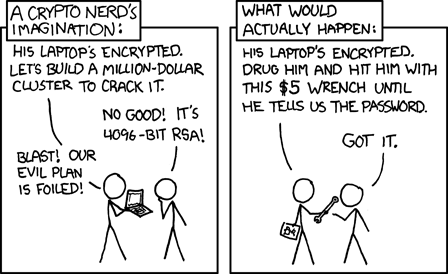 .
There is a similar, complementary discussion in this
 In 2007, Martin Escardo wrote a often-read
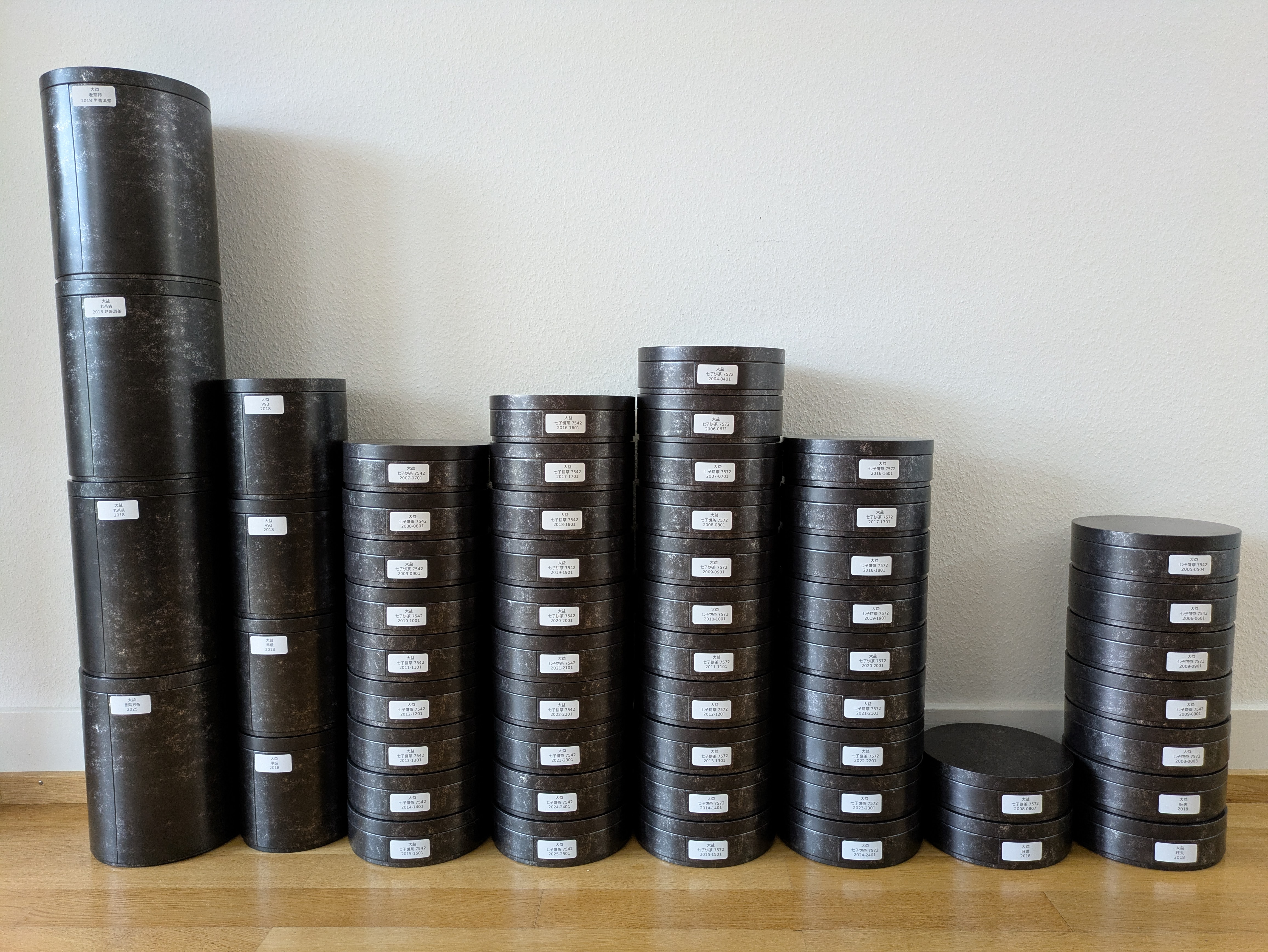
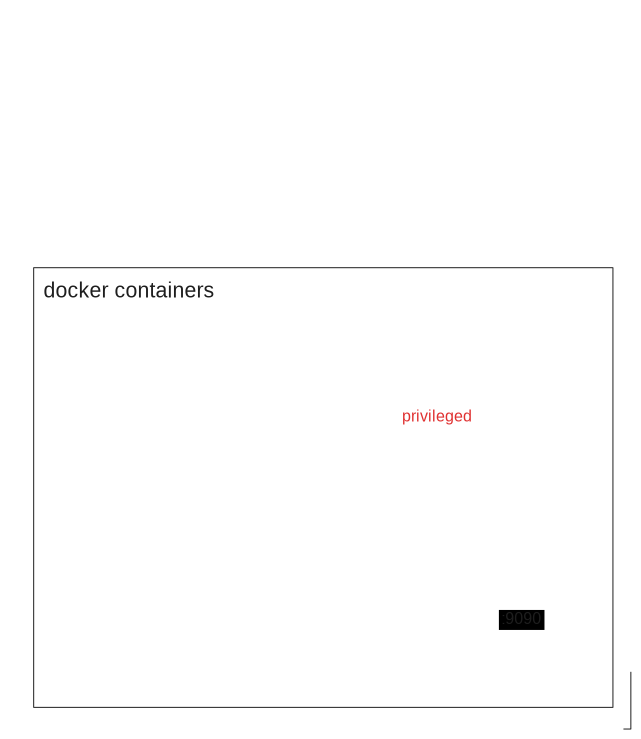 I will run three HTTP servers on port 8080: two inside Incus
containers and one on the host machine. The OBI process will export
metrics and traces to an OpenTelemetry Collector, which will forward
traces to Jaeger and expose a metrics endpoint for Prometheus to scrape.
Grafana will also be added to visualize the collected metrics using
dashboards.
The aim of this approach is to instrument only one of the HTTP
servers while ignoring the others. This simulates an environment with
hundreds of Incus containers, where the objective is to debug a single
container without being overwhelmed by excessive and irrelevant
telemetry data from the rest of the system.
OBI can filter metrics and traces based on attribute values, but I
was not able to filter by process PID. This is where the OBI Collector
comes into play, it allows me to use a processor to filter telemetry
data by the PID of the process being instrumented.
These are the steps to reproduce this setup:
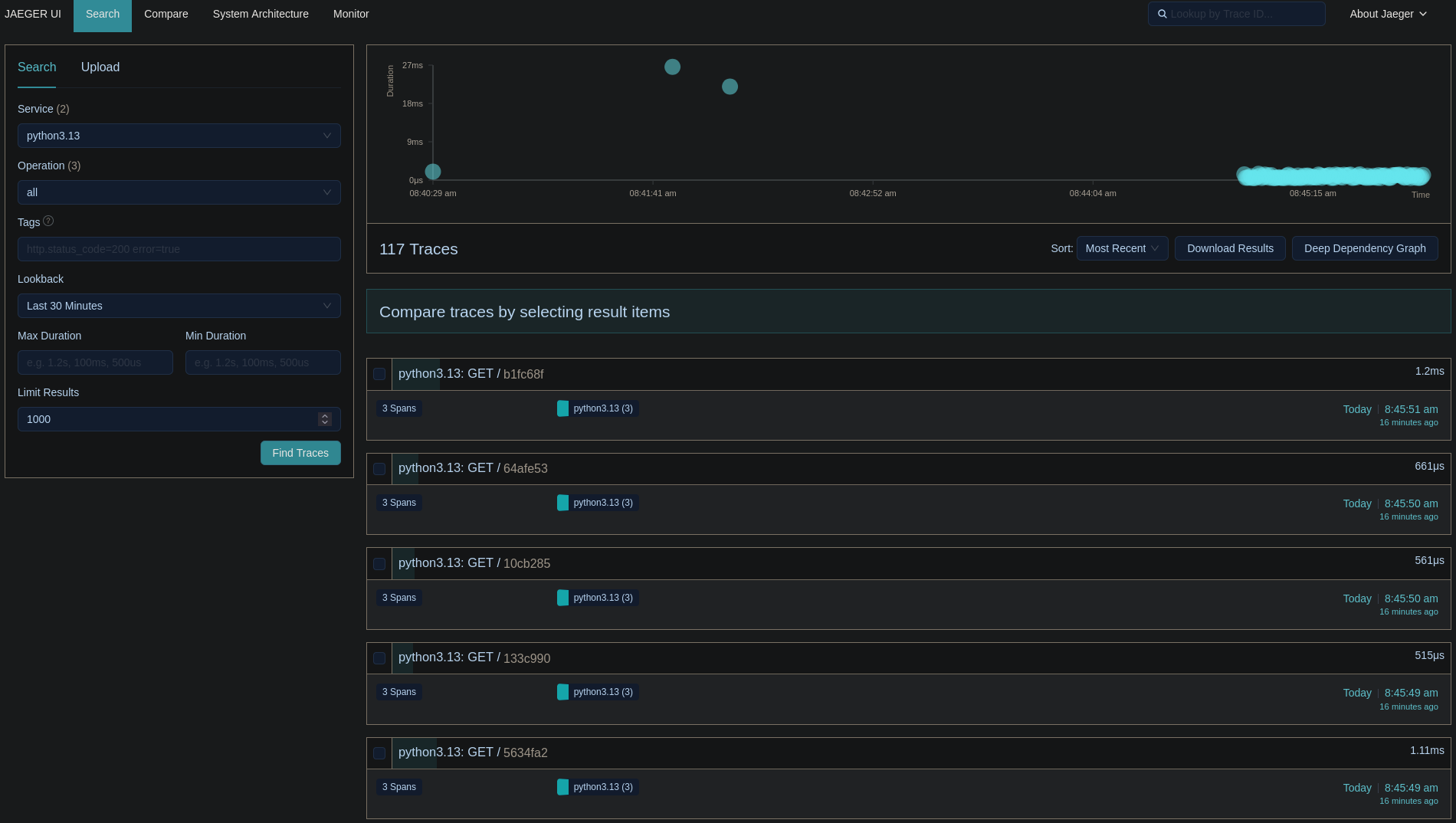

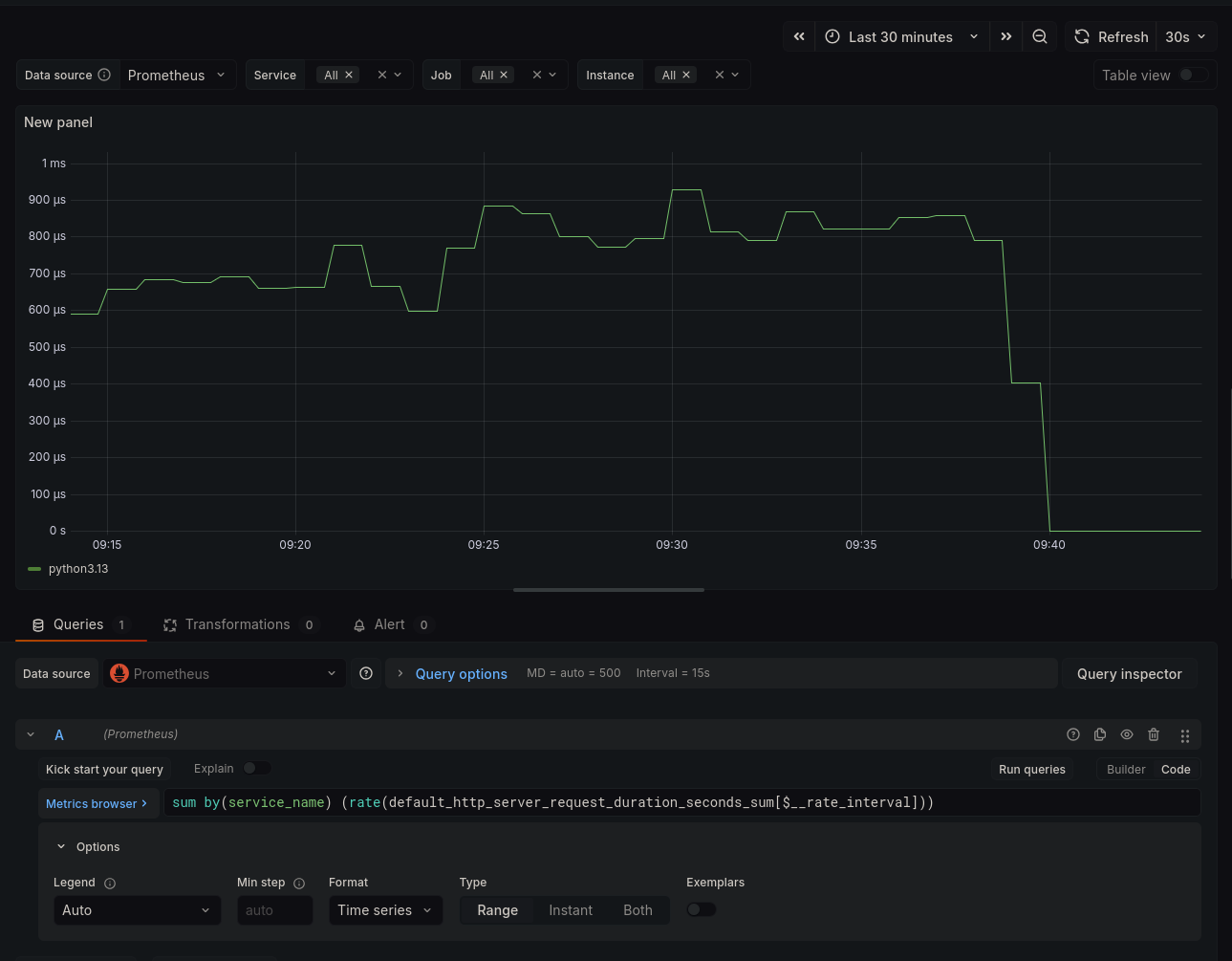
 Here are my favourite books and movies that I read and watched throughout 2025.














 I bought a
 . Today will be an in depth review on my work with the Debian OpenQA images testing team. I will highlight the struggles that I have had so far during my Outreachy internship.
The OpenQA images testing team uses OpenQA to automatically install images e.g. Gnome Images. The images are then tested using tests written in Perl. My current tasks include speech install and capture all audio. I am also installing Live Gnome image to Windows using BalenaEtcher then testing it. A set of similar tasks will also be collaborated on. While working on tasks, I have to go through the guides. I also learn how Perl works so as to edit and create tests. For every change made, I have to re-run the job in developer mode. I have to create needles that have matches and click co-ordinates. I have been stuck on some of these instances: