Last month, I traveled to Kenya to attend a conference called State of the Map 2024 ( SotM for short), which is an annual meetup of OpenStreetMap contributors from all over the world. It was held at the University of Nairobi Towers in Nairobi, from the 6th to the 8th of September.
University of Nairobi.
I have been contributing to OpenStreetMap for the last three years, and this conference seemed like a great opportunity to network with others in the community. As soon as I came across the travel grant announcement, I jumped in and filled the form immediately. I was elated when I was selected for the grant and couldn t wait to attend. The grant had an upper limit of 1200 and covered food, accommodation, travel and miscellaneous expenses such as visa fee.
Pre-travel tasks included obtaining Kenya s eTA and getting a yellow fever vaccine. Before the conference, Mikko from the Humanitarian OpenStreetMap Team introduced me to Rabina and Pragya from Nepal, Ibtehal from Bangladesh, and Sajeevini from Sri Lanka. We all booked the Nairobi Transit Hotel, which was within walking distance of the conference venue. Pragya, Rabina, and I traveled together from Delhi to Nairobi, while Ibtehal was my roommate in the hotel.
Our group at the conference.
The venue, University of Nairobi Towers, was a tall building and the conference was held on the fourth, fifth and sixth floors. The open area on the fifth floor of the building had a nice view of Nairobi s skyline and was a perfect spot for taking pictures. Interestingly, the university had a wing dedicated to Mahatma Gandhi, who is regarded in India as the Father of the Nation.
View of Nairobi's skyline from the open area on the fifth floor.
A library in Mahatma Gandhi wing of the University of Nairobi.
The diversity of the participants was mind-blowing, with people coming from a whopping 54 countries. I was surprised to notice that I was the only participant traveling from India, despite India having a large OpenStreetMap community. That said, there were two other Indian participants who traveled from other countries. I finally got to meet Arnalie (from the Phillipines) and Letwin (from Zimbabwe), both of whom I had only met online before. I had met Anisa (from Albania) earlier during DebConf 2023. But I missed Mikko and Honey from the Humanitarian OpenStreetMap Team, whom I knew from the Open Mapping Guru program.
I learned about the extent of OSM use through Pragya and Rabina s talk; about the logistics of running the OSM Board, in the OSMF (OpenStreetMap Foundation) session; about the Youth Mappers from Sajeevini, about the OSM activities in Malawi from Priscilla Kapolo, and about mapping in Zimbabwe from Letwin. However, I missed Ibtehal s lightning session. The ratio of women speakers and participants at the conference was impressive, and I hope we can get such gender representation in our Delhi/NCR mapping parties.
One of the conference halls where talks took place.
Outside of talks, the conference also had lunch and snack breaks, giving ample time for networking with others. In the food department, there were many options for a lacto-ovo vegetarian like myself, including potatoes, rice, beans, chips etc. I found out that the milk tea in Kenya (referred to as white tea ) is usually not as strong compared to India, so I switched to coffee (which is also called white coffee when taken with milk). The food wasn t spicy, but I can t complain :) Fruit juices served as a nice addition to lunch.
One of the lunch meals served during the conference.
At the end of the second day of the conference, there was a surprise in store for us a bus ride to the Bao Box restaurant. The ride gave us the experience of a typical Kenyan matatu (privately-owned minibuses used as share taxis), complete with loud rap music. I remember one of the songs being Kraff s Nursery Rhymes. That day, I was wearing an original Kenyan cricket jersey - one that belonged to Dominic Wesonga, who represented Kenya in four ODIs. This confused Priscilla Kapolo, who asked if I was from Kenya! Anyway, while it served as a good conversation starter, it didn t attract as much attention as I expected :) I had some pizza and chips there, and later some drinks with Ibtehal. After the party, Piyush went with us to our hotel and we played a few games of UNO.
Minibus which took us from the university to Bao Box restaurant.
This minibus in the picture gave a sense of a real matatu.
I am grateful to the organizers Laura and Dorothea for introducing me to Nikhil when I was searching for a companion for my post-conference trip. Nikhil was one of the aforementioned Indian participants, and a wildlife lover. We had some nice conversations; he wanted to go to the Masai Maara Natural Reserve, but it was too expensive for me. In addition, all the safaris were multi-day affairs, and I wasn t keen on being around wildlife for that long. Eventually I chose to go my own way, exploring the coastal side and visiting Mombasa.
While most of the work regarding the conference was done using free software (including the reimbursement form and Mastodon announcements), I was disappointed by the use of WhatsApp for coordination with the participants. I don t use WhatsApp and so was left out. WhatsApp is proprietary software (they do not provide the source code) and users don t control it. It is common to highlight that OpenStreetMap is controlled by users and the community, rather than a company - this should apply to WhatsApp as well.
My suggestion is to use XMPP, which shares similar principles with OpenStreetMap, as it is privacy-respecting, controlled by users, and powered by free software. I understand the concern that there might not be many participants using XMPP already. Although it is a good idea to onboard people to free software like XMPP, we can also create a Matrix group, and bridge it with both the XMPP group and the Telegram group. In fact, using Matrix and bridging it with Telegram is how I communicated with the South Asian participants. While it s not ideal - as Telegram s servers are proprietary and centralized - but it s certainly much better than creating a WhatsApp-only group. The setup can be bridged with IRC as well. On the other hand, self-hosted mailing lists for participants is also a good idea.
Finally, I would like to thank SotM for the generous grant, enabling me to attend this conference, meet the diverse community behind OSM and visit the beautiful country of Kenya. Stay tuned for the blog post on Kenya trip.
Thanks to Sahilister, Contrapunctus, Snehal and Badri for reviewing the draft of this blog post before publishing.
Hardware
I have just setup a PiKVM, here s the Amazon link for the KVM hardware (case and Pi hat etc) and here s an Amazon link for a Pi4 to match.
The PiKVM web site has good documentation [1] and they have a YouTube channel with videos showing how to assemble the devices [2]. It s really convenient being able to change the playback speed from low speeds like 1/4 original speed) to double speed when watching such a video. One thing to note is that there are some revisions to the hardware that aren t covered in the videos, the device I received had some improvements that made it easier to assemble which weren t in the video.
When you buy the device and Pi you need to also get a SD card of at least 4G in size, a CR1220 battery for real-time clock, and a USB-2/3 to USB-C cable for keyboard/mouse MUST NOT BE USB-C to USB-C! When I first tried using it I used a USB-C to USB-C cable for keyboard and mouse and it didn t work for reasons I don t understand (I welcome comments with theories about this). You also need a micro-HDMI to HDMI cable to get video output if you want to set it up without having to find the IP address and ssh to it.
The system has a bright OLED display to show the IP address and some other information which is very handy.
The hardware is easy enough for a 12yo to setup. The construction of the parts are solid and well engineered with everything fitting together nicely. It has a PCI/PCIe slot adaptor for controlling power and sending LED status over the connection which I didn t test. I definitely recommend this.
Software
This is the download link for the RaspberryPi images for the PiKVM [3]. The v3 image matches the hardware from the Amazon link I provided.
The default username/password is root/root. Connect it to a HDMI monitor and USB keyboard to change the password etc. If you control the DHCP server you can find the IP address it s using and ssh to it to change the password (it is configured to allow ssh as root with password authentication).
If you get the kit to assemble it (as opposed to buying a completed unit already assembled) then you need to run the following commands as root to enable the OLED display. This means that after assembling it you can t get the IP address without plugging in a monitor with a micro-HDMI to HDMI cable or having access to the DHCP server logs.
The default webadmin username/password is admin/admin.
To change the passwords run the following commands:
rw
kvmd-htpasswd set admin
passwd root
ro
It is configured to have the root filesystem mounted read-only which is something I thought had gone out of fashion decades ago. I don t think that modern versions of the Ext3/4 drivers are going to corrupt your filesystem if you have it mounted read-write when you reboot.
By default it uses a self-signed SSL certificate so with a Chrome based browser you get an error when you connect where you have to select advanced and then tell it to proceed regardless. I presume you could use the DNS method of Certbot authentication to get a SSL certificate to use on an internal view of your DNS to make it work normally with SSL.
The web based software has all the features you expect from a KVM. It shows the screen in any resolution up to 1920*1080 and proxies keyboard and mouse. Strangely lsusb on the machine being managed only reports a single USB device entry for it which covers both keyboard and mouse.
Managing Computers
For a tower PC disconnect any regular monitor(s) and connect a HDMI port to the HDMI input on the KVM. Connect a regular USB port (not USB-C) to the OTG port on the KVM, then it should all just work.
For a laptop connect the HDMI port to the HDMI input on the KVM. Connect a regular USB port (not USB-C) to the OTG port on the KVM. Then boot it up and press Fn-F8 for Dell, Fn-F7 for Lenovo or whatever the vendor code is to switch display output to HDMI during the BIOS initialisation, then Linux will follow the BIOS and send all output to the HDMI port for the early stages of booting. Apparently Lenovo systems have the Fn key mapped in the BIOS so an external keyboard could be used to switch between display outputs, but the PiKVM software doesn t appear to support that. For other systems (probably including the Dell laptops that interest me) the Fn key apparently can t be simulated externally. So for using this to work on laptops in another city I need to have someone local press Fn-F8 at the right time to allow me to change BIOS settings.
It is possible to configure the Linux kernel to mirror display to external HDMI and an internal laptop screen. But this doesn t seem useful to me as the use cases for this device don t require that. If you are using it for a server that doesn t have iDRAC/ILO or other management hardware there will be no other monitor and all the output will go through the only connected HDMI device. My main use for it in the near future will be for supporting remote laptops, when Linux has a problem on boot as an easier option than talking someone through Linux commands and for such use it will be a temporary thing and not something that is desired all the time.
For the gdm3 login program you can copy the .config/monitors.xml file from a GNOME user session to the gdm home directory to keep the monitor settings. This configuration option is decent for the case where a fixed set of monitors are used but not so great if your requirement is display a login screen on anything that s available . Is there an xdm type program in Debian/Ubuntu that supports this by default or with easy reconfiguration?
Conclusion
The PiKVM is a well engineered and designed product that does what s expected at a low price. There are lots of minor issues with using it which aren t the fault of the developers but are due to historical decisions in the design of BIOS and Linux software. We need to change the Linux software in question and lobby hardware vendors for BIOS improvements.
The feature for connecting to an ATX PSU was unexpected and could be really handy for some people, it s not something I have an immediate use for but is something I could possibly use in future. I like the way they shipped the hardware for it as part of the package giving the user choices about how they use it, many vendors would make it an optional extra that costs another $100. This gives the PiKVM more functionality than many devices that are much more expensive.
The web UI wasn t as user friendly as it might have been, but it s a lot better than iDRAC so I don t have a serious complaint about it. It would be nice if there was an option for creating macros for keyboard scancodes so I could try and emulate the Fn options and keys for volume control on systems that support it.
The relational model is probably the one innovation that brought computers to the mainstream for business users. This article by Donald Chamberlin, creator of one of the first query languages (that evolved into the ubiquitous SQL), presents its history as a commemoration of the 50th anniversary of his publication of said query language.
The article begins by giving background on information processing before the advent of today s database management systems: with systems storing and processing information based on sequential-only magnetic tapes in the 1950s, adopting a record-based, fixed-format filing system was far from natural. The late 1960s and early 1970s saw many fundamental advances, among which one of the best known is E. F. Codd s relational model. The first five pages (out of 12) present the evolution of the data management community up to the 1974 SIGFIDET conference. This conference was so important in the eyes of the author that, in his words, it is the event that starts the clock on 50 years of relational databases.
The second part of the article tells about the growth of the structured English query language (SEQUEL) eventually renamed SQL including the importance of its standardization and its presence in commercial products as the dominant database language since the late 1970s. Chamberlin presents short histories of the various implementations, many of which remain dominant names today, that is, Oracle, Informix, and DB2. Entering the 1990s, open-source communities introduced MySQL, PostgreSQL, and SQLite.
The final part of the article presents controversies and criticisms related to SQL and the relational database model as a whole. Chamberlin presents the main points of controversy throughout the years: 1) the SQL language lacks orthogonality; 2) SQL tables, unlike formal relations, might contain null values; and 3) SQL tables, unlike formal relations, may contain duplicate rows. He explains the issues and tradeoffs that guided the language design as it unfolded. Finally, a section presents several points that explain how SQL and the relational model have remained, for 50 years, a winning concept, as well as some thoughts regarding the NoSQL movement that gained traction in the 2010s.
This article is written with clear language and structure, making it easy and pleasant to read. It does not drive a technical point, but instead is a recap on half a century of developments in one of the fields most important to the commercial development of computing, written by one of the greatest authorities on the topic.
Review: The Book That Broke the World, by Mark Lawrence
Series:
Library Trilogy #2
Publisher:
Ace
Copyright:
2024
ISBN:
0-593-43796-9
Format:
Kindle
Pages:
366
The Book That Broke the World is high fantasy and a direct sequel
to The Book That Wouldn't Burn. You
should not start here. In a delightful break from normal practice, the
author provides a useful summary of the previous volume at the start of
this book to jog your memory.
At the end of The Book That Wouldn't Burn, the characters were
scattered and in various states of corporeality after some major
revelations about the nature of the Library and the first appearance of
the insectile Skeer. The Book That Wouldn't Burn picks up where it
left off, and there is a lot more contact with the Skeer, but my guess
that they would be the next viewpoint characters does not pan out.
Instead, we get a new group and a new protagonist: Celcha, whose sees
angels who come to visit her brother.
I have complaints, but before I launch into those, I should say that I
liked this book apart from the totally unnecessary cannibalism. (I'll get
to that.) Livira is a bit sidelined, which is regrettable, but Celcha and
her brother are interesting new characters, and both Arpix and Clovis,
supporting characters in the first book, get some excellent character
development. Similar to the first book, this is a puzzle box story full
of world-building tidbits with intellectually-satisfying interactions.
Lawrence elaborates and complicates his setting in ways that don't
contradict earlier parts of the story but create more room and depth for
the characters to be creative. I came away still invested in this world
and eager to find out how Lawrence pulls the world-building and narrative
threads together.
The biggest drawback of this book is that it's not new. My thought after
finishing the first book of the series was that if Lawrence had enough
world-building ideas to fill three books to that same level of density,
this had the potential of being one of my favorite fantasy series of all
time. By the end of the second book, I concluded that this is not the
case. Instead of showing us new twists and complications the way the
first book did throughout, The Book That Broke the World mostly
covers the same thematic ground from some new angles. It felt like
Lawrence was worried the reader of the first book may not have understood
the theme or the world-building, so he spent most of the second book
nailing down anything that moved.
I found that frustrating. One of the best parts of The Book That
Wouldn't Burn was that Lawrence trusted the reader to keep up, which for
me hit the glorious but rare sweet spot of pacing where I was figuring out
the world at roughly the same pace as the characters. It surprised me in
some very enjoyable ways. The Book That Broke the World did not
surprise me. There are a few new things, which I enjoyed, and a few
elaborations and developments of ideas, which I mostly enjoyed, but I saw
the big plot twist coming at least fifty pages before it happened and
found the aftermath more annoying than revelatory. It doesn't help that
the plot rests on character misunderstandings, one of my least favorite
tropes.
One of the other disappointments of this book is that the characters stop
using the Library as a library. The Library at the center of this series
is a truly marvelous piece of world-building with numerous fascinating
features that are unrelated to its contents, but Livira used it first and
foremost as a repository of books. The first book was full of characters
solving problems by finding a relevant book and reading it.
In The Book That Broke the World, sadly, this is mostly gone. The
Library is mostly reduced to a complicated Big Dumb Object setting. It's
still a delightful bit of world-building, and we learn about a few new
features, but I only remember two places where the actual books are
important to the story. Even the book referenced in the title is mostly
important as an artifact with properties unrelated to the words that it
contains or to the act of reading it. I think this is a huge lost
opportunity and something I hope Lawrence fixes in the last book of the
trilogy.
This book instead focuses on the politics around the existence of the
Library itself. Here I'm cautiously optimistic, although a lot is going
to depend on the third book. Lawrence has set up a three-sided argument
between groups that I will uncharitably describe as the libertarian
techbros, the "burn it all down" reactionaries, and the neoliberal
centrist technocrats. All three of those positions suck, and Lawrence had
better be setting the stage for Livira to find a different path. Her
unwillingness to commit to any of those sides gives me hope, but bringing
this plot to a satisfying conclusion is going to be tricky. I hope I like
what Lawrence comes up with, but it feels far from certain.
It doesn't help that he's started delivering some points with a
sledgehammer, and that's where we get to the unnecessary cannibalism.
Thankfully this is a fairly small part of the tail end of the book, but it
was an unpleasant surprise that I did not want in this novel and that I
don't think made the story any better.
It's tempting to call the cannibalism gratuitous, but it does fit one of
the main themes of this story, namely that humans are depressingly good at
using any rule-based object in unexpected and nasty ways that are contrary
to the best intentions of the designer. This is the fundamental challenge
of the Library as a whole and the question that I suspect the third book
will be devoted to addressing, so I understand why Lawrence wanted to
emphasize his point. The reason why there is cannibalism here is directly
related to a profound misunderstanding of the properties of the library,
and I detected an echo of one of C.S. Lewis's arguments in
The Last Battle about the nature of
Hell.
The problem, though, is that this is Satanic baby-killerism, to borrow a
term from
Fred Clark. There are numerous ways to show this type of perversion of
well-intended systems, which I know because Lawrence used other ones in
the first book that were more subtle but equally effective. One of the
best parts of The Book That Wouldn't Burn is that there were few
real villains. The conflict was structural, all sides had valid
perspectives, and the ethical points of that story were made with some
care and nuance.
The problem with cannibalism as it's used here is not merely that it's
gross and disgusting and off-putting to the reader, although it is all of
those things. If I wanted to read horror, I would read horror novels. I
don't appreciate surprise horror used for shock value in regular fantasy.
But worse, it's an abandonment of moral nuance. The function of
cannibalism in this story is like the function of Satanic baby-killers:
it's to signal that these people are wholly and irredeemably evil. They
are the Villains, they are Wrong, and they cease to be characters and
become symbols of what the protagonists are fighting. This is destructive
to the story because it's designed to provoke a visceral short-circuit in
the reader and let the author get away with sloppy story-telling. If the
author needs to use tactics like this to point out who is the villain,
they have failed to set up their moral quandary properly.
The worst part is that this was entirely unnecessary because Lawrence's
story-telling wasn't sloppy and he set up his moral quandary just fine.
No one was confused about the ethical point here. I as the reader was
following without difficulty, and had appreciated the subtlety with which
Lawrence posed the question. But apparently he thought he was too subtle
and decided to come back to the point with a pile-driver. I think that
seriously injured the story. The ethical argument here is much more
engaging and thought-provoking when it's more finely balanced.
That's a lot of complaints, mostly because this is a good book that I
badly wanted to be a great book but which kept tripping over its own feet.
A lot of trilogies have weak second books. Hopefully this is another
example of the mid-story sag, and the finale will be worthy of the start
of the story. But I have to admit the moral short-circuiting and the
de-emphasis of the actual books in the library has me a bit nervous. I
want a lot out of the third book, and I hope I'm not asking this author
for too much.
If you liked the first book, I think you'll like this one too, with the
caveat that it's quite a bit darker and more violent in places, even apart
from the surprise cannibalism. But if you've not started this series, you
may want to wait for the third book to see if Lawrence can pull off the
ending.
Followed by The Book That Held Her Heart, currently scheduled for
publication in April of 2025.
Rating: 7 out of 10
Review: The Wings Upon Her Back, by Samantha Mills
Publisher:
Tachyon
Copyright:
2024
ISBN:
1-61696-415-4
Format:
Kindle
Pages:
394
The Wings Upon Her Back is a political steampunk science fantasy
novel. If the author's name sounds familiar, it may be because Samantha
Mills's short story "Rabbit Test" won Nebula, Locus, Hugo, and Sturgeon
awards. This is her first novel.
Winged Zemolai is a soldier of the mecha god and the protege of Mecha
Vodaya, the Voice. She has served the city-state of Radezhda by defending
it against all enemies, foreign and domestic, for twenty-six years.
Despite that, it takes only a moment of errant mercy for her entire life
to come crashing down. On a whim, she spares a kitchen worker who was
concealing a statue of the scholar god, meaning that he was only
pretending to worship the worker god like all workers should. Vodaya is
unforgiving and uncompromising, as is the sleeping mecha god. Zemolai's
wings are ripped from her back and crushed in the hand of the god, and
she's left on the ground to die of mechalin withdrawal.
The Wings Upon Her Back is told in two alternating timelines. The
main one follows Zemolai after her exile as she is rescued by a young
group of revolutionaries who think she may be useful in their plans. The
other thread starts with Zemolai's childhood and shows the reader how she
became Winged Zemolai: her scholar family, her obsession with flying, her
true devotion to the mecha god, and the critical early years when she
became Vodaya's protege. Mills maintains the separate timelines through
the book and wraps them up in a rather neat piece of symbolic parallelism
in the epilogue.
I picked up this book on a recommendation from C.L. Clark, and yes, indeed, I can see why she liked this book. It's a
story about a political awakening, in which Zemolai slowly realizes that
she has been manipulated and lied to and that she may, in fact, be one of
the baddies. The Wings Upon Her Back is more personal than some
other books with that theme, since Zemolai was specifically (and
abusively) groomed for her role by Vodaya. Much of the book is Zemolai
trying to pull out the hooks that Vodaya put in her or, in the flashback
timeline, the reader watching Vodaya install those hooks.
The flashback timeline is difficult reading. I don't think Mills could
have left it out, but she says in the afterword that it was the hardest
part of the book to write and it was also the hardest part of the book to
read. It fills in some interesting bits of world-building and backstory,
and Mills does a great job pacing the story revelations so that both
threads contribute equally, but mostly it's a story of manipulative abuse.
We know from the main storyline that Vodaya's tactics work, which gives
those scenes the feel of a slow-motion train wreck. You know what's going
to happen, you know it will be bad, and yet you can't look away.
It occurred to me while reading this that Emily Tesh's
Some Desperate Glory told a similar type
of story without the flashback structure, which eliminates the stifling
feeling of inevitability. I don't think that would not have worked for
this story. If you simply rearranged the chapters of The Wings Upon
Her Back into a linear narrative, I would have bailed on the book.
Watching Zemolai being manipulated would have been too depressing and
awful for me to make it to the payoff without the forward-looking hope of
the main timeline. It gave me new appreciation for the difficulty of what
Tesh pulled off.
Mills uses this interwoven structure well, though. At about 90% through
this book I had no idea how it could end in the space remaining, but it
reaches a surprising and satisfying conclusion. Mills uses a type of
ending that normally bothers me, but she does it by handling the
psychological impact so well that I couldn't help but admire it. I'm
avoiding specifics because I think it worked better when I wasn't
expecting it, but it ties beautifully into the thematic point of the book.
I do have one structural objection, though. It's one of those problems I
didn't notice while reading, but that started bothering me when I thought
back through the story from a political lens. The Wings Upon Her
Back is Zemolai's story, her redemption arc, and that means she drives
the plot. The band of revolutionaries are great characters (particularly
Galiana), but they're supporting characters. Zemolai is older, more
experienced, and knows critical information they don't have, and she uses
it to effectively take over. As setup for her character arc, I see why
Mills did this. As political praxis, I have issues.
There is a tendency in politics to believe that political skill is
portable and repurposable. Converting opposing operatives to the cause is
welcomed not only because they indicate added support, but also because
they can use their political skill to help you win instead. To an extent
this is not wrong, and is probably the most true of combat skills (which
Zemolai has in abundance). But there's an underlying assumption that
politics is symmetric, and a critical reason why I hold many of the
political positions that I do hold is that I don't think politics is
symmetric.
If someone has been successfully stoking resentment and xenophobia in
support of authoritarians, converts to an anti-authoritarian cause, and
then produces propaganda stoking resentment and xenophobia against
authoritarians, this is in some sense an improvement. But if one believes
that resentment and xenophobia are inherently wrong, if one's politics are
aimed at reducing the resentment and xenophobia in the world, then in a
way this person has not truly converted. Worse, because this is an
effective manipulation tactic, there is a strong tendency to put this type
of political convert into a leadership position, where they will,
intentionally or not, start turning the anti-authoritarian movement into a
copy of the authoritarian movement they left. They haven't actually
changed their politics because they haven't understood (or simply don't
believe in) the fundamental asymmetry in the positions. It's the same
criticism that I have of realpolitik: the ends do not justify the
means because the means corrupt the ends.
Nothing that happens in this book is as egregious as my example, but the
more I thought about the plot structure, the more it bothered me that
Zemolai never listens to the revolutionaries she joins long enough to
wrestle with why she became an agent of an authoritarian state and they
didn't. They got something fundamentally right that she got wrong, and
perhaps that should have been reflected in who got to make future
decisions. Zemolai made very poor choices and yet continues to be the
sole main character of the story, the one whose decisions and actions
truly matter. Maybe being wrong about everything should be disqualifying
for being the main character, at least for a while, even if you think
you've understood why you were wrong.
That problem aside, I enjoyed this. Both timelines were compelling and
quite difficult to put down, even when they got rather dark. I could have
done with less body horror and a few fewer fight scenes, but I'm glad I
read it.
Science fiction readers should be warned that the world-building, despite
having an intricate and fascinating surface, is mostly vibes. I started
the book wondering how people with giant metal wings on their back can
literally fly, and thought the mentions of neural ports, high-tech
materials, and immune-suppressing drugs might mean that we'd get some sort
of explanation. We do not: heavier-than-air flight works because it looks
really cool and serves some thematic purposes. There are enough hints of
technology indistinguishable from magic that you could make up your own
explanations if you wanted to, but that's not something this book is
interested in. There's not a thing wrong with that, but don't get caught
by surprise if you were in the mood for a neat scientific explanation of
apparent magic.
Recommended if you like somewhat-harrowing character development with a
heavy political lens and steampunk vibes, although it's not the sort of
book that I'd press into the hands of everyone I know. The Wings
Upon Her Back is a complete story in a single novel.
Content warning: the main character is a victim of physical and emotional
abuse, so some of that is a lot. Also surgical gore, some torture, and
genocide.
Rating: 7 out of 10
I previously blogged about the difficulties in getting a good Wifi mesh network setup [1].
I bought the Kogan AX1800 Wifi6 Mesh with 3 nodes for $140, the price has now dropped to $130. It s only Wifi 6 (not 6E which has the extra 6GHz frequency) because all the 6E ones were more expensive than I felt like paying.
I ve got it running and it s working really well. One of my laptops has a damaged wire connecting to it s Wifi device which decreased the signal to a degree that I could usually only connect to wifi when in the computer room (and then walk with it to another room once connected). Now I can connect that laptop to wifi in any part of my home. I can now get decent wifi access in my car in front of my home which covers the important corner case of walking to my car and then immediately asking Google maps for directions. Previously my phone would be deciding whether to switch away from wifi due to poor signal and that would delay getting directions, now I get directions quickly on Google Maps.
I ve done tests with the Speedtest.net Android app and now get speeds of about 52Mbit/17Mbit in all parts of my home which is limited only by the speed of my NBN connection (one of the many reasons for hating conservatives is giving us expensive slow Internet). As my main reason for buying the devices is for Internet access they have clearly met my reason for purchase and probably meet the requirements for most people as well. Getting that speed is not trivial, my neighbours have lots of Wifi APs and bandwidth is congested. My Kogan 4K Android TV now plays 4K Netflix without pausing even though it only supports 2.4GHz wifi, so having a wifi mesh node next to the TV seems to help it.
I did some tests with the Olive Tree FTP server on a Galaxy Note 9 phone running the stock Samsung Android and got over 10MByte (80Mbit) upload and 8Mbyte (64Mbit) download speeds. This might be limited by the Android app or might be limited by the older version of Android. But it still gives higher speeds than my home Internet connection and much higher speeds than I need from an Android device.
Running iperf on Linux laptops talking to a Linux workstation that s wired to the main mesh node I get speeds of 27.5Mbit from an old laptop on 2.4GHz wifi, 398Mbit from a new Wifi5 laptop when near the main mesh node, and 91Mbit from the same laptop when at the far end of my home. So not as fast as I d like but still acceptable speeds.
The claims about Wifi 6 vs Wifi 5 speeds are that 6 will be about 3* faster. That would be 20% faster than the Gigabit ethernet ports on the wifi nodes. So while 2.5Gbit ethernet on Wifi 6 APs would be a good feature to have it seems that it might provide a 20% benefit at some future time when I have laptops with Wifi 6. At this time all the devices with 2.5Gbit ethernet cost more than I wanted to pay so I m happy with this. It will probably be quite a while before laptops with Wifi 6 are in the price range I feel like paying.
For Wifi 6E it seems that anything less than 2.5Gbit ethernet will be a significant bottleneck. But I expect that by the time I buy a Wifi 6E mesh they will all have 2.5Gbit ethernet as standard.
The configuration of this device was quite easy via the built in web pages, everything worked pretty much as I expected and I hardly had to look at the manual. The mesh nodes are supposed to connect to each other when you press hardware buttons but that didn t work for me so I used the web admin page to tell them to connect which worked perfectly. The admin of this seemed to be about as good as it gets.
Conclusion
The performance of this mesh hardware is quite decent. I can t know for sure if it s good or bad because performance really depends on what interference there is. But using this means that for me the Internet connection is now the main bottleneck for all parts of my home and I think it s quite likely that most people in Australia who buy it will find the same result.
So for everyone in Australia who doesn t have fiber to their home this seems like an ideal set of mesh hardware. It s cheap, easy to setup, has no cloud stuff to break your configuration, gives quite adequate speed, and generally just does the job.
Tobias Frost
did 2.5h (out of 7.75h assigned and 4.25h from previous period), thus carrying over 9.5h to the next month.
Evolution of the situation
In August, we have released 1 DLAs.
During the month of August Debian 11 "bullseye" officially transitioned to the responsibility of the LTS team (on 2024-08-15). However, because the final point release (11.11) was not made until 2024-08-31, LTS contributors were prevented from uploading packages to bullseye until after the point release had been made. That said, the team was not at all idle, and was busy at work on a variety of tasks which impacted both LTS and the broader Debian community, as well as preparing uploads which will be released during the month of September.
Of particular note, LTS contributor Bastien Roucari s prepared updates of the putty and cacti packages for bookworm (12) and bullseye (12), which were accepted by the old-stable release managers for the August point releases. He also analysed several security regressions in the apache2 package. LTS contributor Emilio Pozuelo Monfort worked on the Rust toolchain in bookworm and bullseye, which will be needed to support the upcoming Firefox ESR and Thunderbird ESR releases from the Mozilla project. Additionally, LTS contributor Thorsten Alteholz prepared bookworm and bullseye updates of the cups package (12), which were accepted by the old-stable release managers for the August point releases.
LTS contributor Markus Koschany collaborated with Emmanuel Bourg, co-maintainer of the tomcat packages in Debian. Regressions in a proposed security fix necessitated the updating of the tomcat10 package in Debian to the latest upstream release.
LTS contributors Bastien and Santiago Ruano Rinc n collaborated with the upstream developers and the Debian maintainer (Bernhard Schmidt) of the FreeRADIUS project towards addressing the BlastRADIUS vulnerability in the bookworm and bullseye versions of the freeradius package. If you use FreeRADIUS in Debian bookworm or bullseye, we encourage you to test the packages following the instructions found in the call for testers to help identifying any possible regression that could be introduced with these updates.
Testing is an important part of the work the LTS Team does, and in that vein LTS contributor Sean Whitton worked on improving the documentation and tooling around creating test filesystems which can be used for testing a variety of package update scenarios.
Thanks to our sponsors
Sponsors that joined recently are in bold.
Debian Python 3 patch review, by Stefano Rivera
Last month, at DebConf, Stefano reviewed the current patch set of Debian s cPython packages with Matthias Klose, the primary maintainer until now. As a result of that review, Stefano re-reviewed the patchset, updating descriptions, etc. A few patches were able to be dropped, and a few others were forwarded upstream.
One finds all sorts of skeletons doing reviews like this. One of the patches had been inactive (fortunately, because it was buggy) since the day it was applied, 13 years ago. One is a cleanup that probably only fixes a bug on HPUX, and is a result of copying code from xfree86 into Python 25 years ago. It was fixed in xfree86 a year later. Others support just Debian-specific functionality and probably never seemed worth forwarding. Or good cleanup that only really applies to Debian.
A trivial new patch would allow Debian to multiarch co-install Python stable ABI dynamic extensions (like we can with regular dynamic extensions). Performance concerns are stalling it in review, at the moment.
DebConf 24 Organization, by Stefano Rivera
Stefano helped organize DebConf 24, which concluded in early August. The event is run by a large entirely volunteer team. The work involved in making this happen is far too varied to describe here. While Freexian provides funding for 20% of collaborator time to spend on Debian-related work, it only covers a small fraction of contributions to time-intensive tasks like this.
Since the end of the event, Stefano has been doing some work on the conference finances, and initiated the reimbursement process for travel bursaries.
Archive rebuilds on Debusine, by Stefano Rivera
The recent setuptools 73 upload to Debian unstable removed the test subcommand, breaking many packages that were using python3 setup.py test in their Debian packaging. Stefano did a partial archive-rebuild using debusine.debian.net to find the regressions and file bugs.
Debusine will be a powerful tool to do QA work like this for Debian in the future, but it doesn t have all the features needed to coordinate rebuild-testing, yet. They are planned to be fleshed out in the next year. In the meantime, Debusine has the building blocks to work through a queue of package building tasks and store the results, it just needs to be driven from outside the system.
So, Stefano started working on a set of tools using the Debusine client API to perform archive rebuilds, found and tagged existing bugs, and filed many more.
OpenSSL vs. cryptography, by Colin Watson
Colin facilitated a discussion between Debian s OpenSSL team and the upstream maintainers of Python cryptography about a new incompatibility between Debian s OpenSSL packaging and cryptography s handling of OpenSSL s legacy provider, which was causing a number of build and test failures. While the issue remains open, the Debian OpenSSL maintainers have effectively reverted the change now, so it s no longer a pressing problem.
/usr-move, by Helmut Grohne
There are less than 40 source packages left to move files to /usr, so what we re left with is the long tail of the transition. Rather than fix all of them, Helmut started a discussion on removing packages from unstable and filed a first batch. As libvirt is being restructured in experimental, we re handling the fallout in collaboration with its maintainer Andrea Bolognani. Since base-files validates the aliasing symlinks before upgrading, it was discovered that systemd has its own ideas with no solution as of yet. Helmut also proposed that dashchecks for ineffective diversions of /bin/sh and that lintianwarns about aliased files.
rebootstrap by Helmut Grohne
Bootstrapping Debian for a new or existing CPU architecture still is a quite manual process. The rebootstrap project attempts to automate part of the early stage, but it still is very sensitive to changes in unstable. We had a number of fairly intrusive changes this year already. August included a little more fallout from the earlier gcc-for-host work where the C++ include search path would end up being wrong in the generated cross toolchain. A number of packages such as util-linux (twice), libxml2, libcap-ng or systemd had their stage profiles broken. e2fsprogs gained a cycle with libarchive-dev due to having gained support for creating an ext4 filesystem from a tar archive. The restructuring of glib2.0 remains an unsolved problem for now, but libxt and cdebconf should be buildable without glib2.0.
Salsa CI, by Santiago Ruano Rinc n
Santiago completed the initial RISC-V support (!523) in the Salsa CI s pipeline. The main work started in July, but it was required to take into account some comments in the review (thanks to Ahmed!) and some final details in [!534]. riscv64 is the most recently supported port in Debian, which will be part of trixie. As its name suggests, the new build-riscv64 job makes it possible to test that a package successfully builds in the riscv64 architecture. The RISC-V runner (salsaci riscv64 runner 01) runs in a couple of machines generously provided by lab.rvperf.org. Debian Developers interested in running this job in their projects should enable the runner (salsaci riscv64 runner 01) in Settings / CI / Runners, and follow the instructions available at https://salsa.debian.org/salsa-ci-team/pipeline/#build-job-on-risc-v.
Santiago also took part in discussions about how to optimize the build jobs and reviewed !537 to make the build-source job to only satisfy the Build-Depends and Build-Conflicts fields by Andrea Pappacoda. Thanks a lot to him!
Miscellaneous contributions
Stefano submitted patches for BeautifulSoup to support the latest soupsieve and lxml.
Stefano uploaded pypy3 7.3.17, upgrading the cPython compatibility from 3.9 to 3.10. Then ran into a GCC-14-related regression, which had to be ignored for now as it s proving hard to fix.
Colin released libpipeline 1.5.8 and man-db 2.13.0; the latter included foundations allowing adding an autopkgtest for man-db.
Colin tracked down test failures in python-asyncssh and Ruby resulting from certain odd /etc/hosts configurations.
Carles upgraded the packages python-ring-doorbell and simplemonitor to new upstream versions.
Carles started discussions and implementation of a tool (still in early days) named po-debconf-manager : a way for translators and reviewers to collaborate using git as a backend instead of mailing list; and submit the translations using salsa MR. More information next month.
Carles (dog-fooding po-debconf-manager ) reviewed debconf templates translated by a collaborator.
Carles reviewed and submitted the translation of apt .
Helmut sent 19 patches for improving cross building.
Helmut implemented the cross-exe-wrapper proposed by Simon McVittie for use with glib2.0.
Helmut detailed what it takes to make Perl s ExtUtils::PkgConfig suitable for cross building.
Helmut made the deletion of the root password work in debvm in all situations and implemented a test case using expect.
Anupa attended Debian Publicity team meeting and is moderating and posting on Debian Administrators LinkedIn group.
Thorsten uploaded package gutenprint to fix a FTBFS with gcc14 and package ipp-usb to fix a /usr-merge issue.
Santiago updated bzip2 to fix a long-standing bug that requested to include a pkg-config file. An important impact of this change is that it makes it possible to use Rust bindings for libbz2 by Sequoia, an implementation of OpenPGP.
Several people have been asking me to explain and/or write about my
solution for chatting nowadays. I realize that the current scenario
is much more complex than, say, 10 or 20 years ago. Back then, this
post would probably be more about the IRC client I used than about
different chatting technologies.
I have also spent a non trivial amount of time setting things up the
way I want, so I understand that it s about time to write about my
setup not only because I think it can be helpful to others, but also
because I would like to document things for myself.
The backbone: Matrix
I chose to use Matrix as the place where I integrate everything.
Despite there being some heavy (and justified) criticism on the
protocol itself, it serves me well for what I need right now.
Obviously, I don t like the fact that I have to provide Matrix and all
of its accompanying bridges a VPS with 4GB of RAM and 3 vCPUs, but I
think that that ship has sailed, unfortunately.
In an ideal world, I would be using XMPP and dedicating only a
fraction of the resources I m using today to have a full chat system.
And since I have been running my personal XMPP server for more than a
decade now, I did try to find a solution that would allow me to keep
using it, but unfortunately the protocol became almost a hobbyist
thing, so there s that.
A few disclaimers
I self-host everything, including my Matrix server. Much of what I
did won t work if you don t self-host Matrix, so keep that in mind.
This won t be a post teaching you how to deploy the services. My
intention is to describe what I use and for what purpose.
Also, as much as I try to use Debian packages for everything I do, I
opted to deploy all services using a community-maintained Ansible
playbook which is very well written and organized:
matrix-docker-ansible-deploy.
Last but not least, as I said above, you will likely need a machine
with a good amount of RAM, CPU and storage, especially if you deploy
Synapse as your Matrix homeserver (which is what I recommend if you
plan to use the bridges I ll mention). My current VPS has 4GB of RAM,
3 vCPUs and 80GB of storage (of which I m currently using
approximately 55GB).
Problem #1: my Matrix client(s)
There are a lot of clients that can talk the Matrix protocol, but most
of them are either web clients or GUI programs. I live on the
terminal, more specifically inside Emacs, so I settled for the amazing
ement.el Emacs mode. It works surprisingly well, but unfortunately
doesn t support end-to-end encryption out of the box; for that, you
have to hook it up with pantalaimon. Unfortunately, the project seems
abandoned and therefore I don t recommend you to use it. I don t use
it myself.
When I have to reply some E2E encrypted message from another user, I
go to my web browser and use my self-hosted Element client. It s a
nuisance, but one that I m willing to accept because of security
concerns.
If you re into web clients and don t want to use Element (because it
is heavy), you can try Cinny. It s lightweight and supports a decent
set of features.
If you re a terminal lover but don t use Emacs, you may want to try
gomuks or iamb.
Problem #2: IRC bridging
There are basically two types of IRC bridges for Matrix:
The regular and most used matrix-appservice-irc. This bridge takes
Matrix to IRC (think of IRC users with the [m] suffix appended to
their nicknames), and is what the matrix.org and other big
homeservers (including matrix.debian.social) use. It s a complex
service which allows thousands of Matrix users to connect to IRC
networks, but that unfortunately has complex problems and is only
worth using if you intend to host a community server.
A bouncer-like bridge called Heisenbridge. This is what I use
personally. It takes IRC to Matrix, which means that people on
IRC will not know that you re using Matrix. This bridge is much
simpler, and because it acts like a bouncer it s pretty much
impossible for it to cause problems with the IRC network.
Due to the fact that I sometimes like to use other IRC clients, I
still run a regular ZNC bouncer, and I use Heisenbridge to connect to
my ZNC. This means that I can use, e.g., ERC inside Emacs and my
Matrix bridge at the same time. But you don t necessarily need to run
another bouncer; you can simply use Heisenbridge and connect directly
to the IRC network(s) you want.
A word of caution, though: unlike ZNC, Heisenbridge doesn t support
per-user configuration when you use it in bouncer mode. This is the
reason why you need to self-host it, and why it s not possible to
offer the service to other users (they would have access to your IRC
network configuration otherwise).
It s also worth talking about logs. I find that keeping logs of
everything that goes on IRC has saved me a bunch of times, and so I
find it really important to continue doing that. Unfortunately,
neither ement.el nor Element support logging things out of the box
(at least not that I know). This is also one of the reasons why I
still keep my ZNC around: I configure it to log everything.
Problem #3: Telegram
I don t use Telegram myself, but unfortunately several people from the
Debian community do, especially in Brazil. There is a whole Debian
community on Telegram, and I wanted to be able to bridge our Debian
Matrix channels to their Telegram counterparts.
I am currently using mautrix-telegram for that, and it s working
great. You need someone with a Telegram account to configure their
credentials so that the bridge can connect to it, but afterwards it s
really easy to bridge channels together.
Problem #4: GitLab webhooks
Something else I wanted to be able to do was to receive notifications
regarding new issues, merge requests and other activities from Salsa.
For this, I m using maubot, which is awesome and has a
huge list of plugins. I m using the gitlab one.
Final thoughts
Overall, I m satisfied with the setup I have now. It has certainly
taken some time and effort to find the right tool for each problem I
needed to solve, and I still feel like there are some rough edges to
soften (like the fact that my Emacs client doesn t support E2E
encryption out of the box, or the whole logging situation), but
otherwise things are working fine and I haven t had any big problems
with the deployment. You do have to be much more careful about stuff
(for example, when I installed an unrelated service that hijacked my
Apache configuration and made Matrix s federation silently stop
working), though.
If you have more specific questions about any part of my setup, shoot
me an email and I ll do my best to help.
Happy chatting!
if you are writing an article and plan to add a TL;DR section, then put it at the very top, right after the title.
that's it, no excuses, end of discussion.
It has happen to probably everyone to read an article, reach the end of it only to see a TL;DR section right at the bottom, and thinking: "eeh i wish this would have been at the top so i didnt have to read (DR) this long article (TL) to gather its core ideas".
If the reason for "Too Long; Didn't Read" to exist is to avoid the reader to go thru the whole article to get its main points, then the natural place to present it is at the very top of said article.
So if you're planning on writing something and to add a TL;DR section (you don't have to, of course, but if you do that work too) then please position it at the very beginning of your work.
tl;dr
DebConf24 was fun!
A playlist of all of my talks, with subtitles (en, pt-br) and chapters is
available on YouTube.
Overview
DebConf24 was held in Busan, South Korea, between Sunday July 28th to Sunday August 4th 2024.
As usual for DebConfs, I had a great time meeting my friends, but also met new
people and got to learn a bit about the interesting things they're working on.
I ended up getting too excited during the talk submission stage of the
conference and as a result I presented 5 different activities (3 talks, 1 BoF
and 1 lightning talk).
Since I was too busy with the presentations, I did not have a lot of time to
actually hang out with folks, or even to go out in the city, I guess I've
learned my lesson for next time.
The main purpose of this post is to write about all of the things I presented
at the conference. I did want to list some of the interesting talks I've
watched, but that I would not be able to be fair as I'm sure I would miss some.
You can get the schedule and the recordings of any talks from the conference's website:
https://debconf24.debconf.org/schedule/
wcurl Lightning Talk
The most fun of my presentations, during the second-to-last day of the
conference, I've asked for help from Sergio Durigan Junior <sergiodj> to
setup an URL containing a whitespace and redirecting that to wcurl's
manpage.
I then did a little demo to showcase why me (and a lot others) struggle
with downloading things with curl, and how wcurl solves that.
https://www.youtube.com/watch?v=eM8M5qa4pPM
Fixing CVEs on Debian: Everything you probably know already
I've always felt like DebConf was missing security-related talks, so I decided
to do something about it and presented a few of the things I've learned when
fixing CVEs for Debian.
This is an area where we don't get a lot of new contributors, I'm trying to
change that, and this talk can be used to introduce newcomers to it.
https://www.youtube.com/watch?v=XzNVVILVyUM
The secret sauce of Debian
Debian is not very vocal about all of the nice things it has regarding
quality-assurance, testing, or CI, even though it's at the state-of-the-art for
a lot of things.
This talk is an initial step towards making people aware of the cool
things happening behind the scenes. Ideally we should have it
well-documented somewhere.
https://www.youtube.com/watch?v=x_X2IBnpjic
"I use Debian BTW": fzf, tmux, zoxide and friends
One of my earliest good memories of Debian was when it started coming with a
colored PS1 by default, I still remember the feeling of relief whenever I
jumped into a Debian server and didn't have to deal with a black and white PS1.
There's still a lot of room for Debian to ship better defaults, and I think
some of them can actually happen.
This talk is a bit of a silly one where I'm just making people aware of the
existence of a few Golang/Rust CLI tools, and also some dotfiles configurations
that should probably be the default.
https://www.youtube.com/watch?v=tfto3Seokn4
curl
The curl project does such a great job with their security advisories that it
will likely never receive the amount of praise it deserves, but I did my best
at mentioning it throughout my CVEs talk.
Maybe I will write more extensively about this someday, but in case I don't:
There's no other project which always consistently mentions the exact range of
commits that are affected by a given CVE.
Forget about whether the versions are EOL, curl doesn't have LTS releases, yet
they do such a great job at clearly documenting their CVEs that I would take
that over having LTS releases anytime (that's for curl at least, I
acknowledge some types of projects have a different need for LTS
releases).
Not only that, but they are also always careful about explaining alternative
mitigations such as configuration changes, build flags that defuse the
exploitation, or parameters that you should not use.
Just like we tend to do every time we meet, me and the other Debian curl
maintainers spent the first 2 or 3 days of the conference talking about how we
wanted to eventually meet up to discuss the package.
It was going to be informal, maybe during the Cheese and Wine
party, but then
I've realized we should make it part of the official schedule, which would
also give us the recordings for later.
And so the "curl maintainers BoF" happened, where we spoke about HTTP3,
GnutTLS, wcurl and other things.
https://www.youtube.com/watch?v=fL7hSypUTdM
wcurl
Right after that BoF, Daniel Stenberg
asked if we were interested
in having wcurl adopted into curl, which we
definitely were, so wcurl is now part of the curl
project.
Daniel was also kind enough to design a logo for the project, which makes me
especially happy because I can stop with my own approach at a logo (which I had
to redo every few days):
And here is the new logo:
Much better, I would say :)
curl Swag
DebConf24 was my chance at forwarding some curl swag items to the other
curl maintainers, so both Sergio Durigan Junior <sergiodj> and Carlos
Henrique Lima Melara <charles> got the curl-up
t-shirt
and the very cool curl PCB
coaster, both gifted
by Daniel Stenberg.
Unfortunately I didn't have any of that for DebConf attendees, but I did drop
loads of curl stickers at the stickers table, they were gone very quickly.
For the future
I used to think the most humbling experience you could have as someone who presented
a talk was to have to watch it yourself, you notice a lot of mistakes and
you instantly think about things that should be done differently.
It turns out the most humbling thing to do is actually to write subtitles for
your talks, I noticed every single mistake, often multiple times.
So after spending more than 30 hours writing the subtitles for both English and
Brazilian Portuguese for my talks, I feel like it's going to be much easier to
avoid committing the same mistakes again. After some time you stop feeling shame
about those mistakes and you're just left with feelings of annoyance, and at
that point it becomes easier to consciously avoid them.
I am collecting a list of things I wish I had done differently on all of those
talks, so if I end up presenting any one of them again, it will be an improved
version.
Beer, cake and ISO testing amidst rugby and jazz band chaos
On Saturday, the Debian South Africa team got together in Cape Town to celebrate Debian s 31st birthday and to perform ISO testing for the Debian 11.11 and 12.7 point releases.
We ran out of time to organise a fancy printed cake like we had last year, but our improvisation worked out just fine!
We thought that we had allotted plenty of time for all of our activities for the day, and that there would be plenty of time for everything including training, but the day zipped by really fast. We hired a venue at a brewery, which is usually really nice because they have an isolated area with lots of space and a big TV nice for presentations, demos, etc. But on this day, there was a big rugby match between South Africa and New Zealand, and as it got closer to the game, the place just got louder and louder (especially as a band started practicing and doing sound tests for their performance for that evening) and it turned out our space was also double-booked later in the afternoon, so we had to relocate.
Even amidst all the chaos, we ended up having a very productive day and we even managed to have some fun!
Four people from our local team performed ISO testing for the very first time, and in total we covered 44 test cases locally. Most of the other testers were the usual crowd in the UK, we also did a brief video call with them, but it was dinner time for them so we had to keep it short. Next time we ll probably have some party line open that any tester can also join.
Logo
We went through some more iterations of our local team logo that Tammy has been working on. They re turning out very nice and have been in progress for more than a year, I guess like most things Debian, it will be ready when it s ready!
Debian 11.11 and Debian 12.7 released, and looking ahead towards Debian 13
Both point releases tested just fine and was released later in the evening. I m very glad that we managed to be useful and reduce total testing time and that we managed to cover all the test cases in the end.
A bunch of things we really wanted to fix by the time Debian 12 launched are now finally fixed in 12.7. There s still a few minor annoyances, but over all, Debian 13 (trixie) is looking even better than Debian 12 was around this time in the release cycle.
Freeze dates for trixie has not yet been announced, I hope that the release team announces those sooner rather than later, also KDE Plasma 6 hasn t yet made its way into unstable, I ve seen quite a number of people ask about this online, so hopefully that works out.
And by the way, the desktop artwork submissions for trixie ends in two weeks! More information about that is available on the Debian wiki if you re interested in making a contribution. There are already 4 great proposals.
Debian Local Groups
Organising local events for Debian is probably easier than you think, and Debian does make funding available for events. So, if you want to grow Debian in your area, feel free to join us at #debian-localgroups on the OFTC IRC network, also plumbed on Matrix at #debian-localgroups:matrix.debian.social where we ll try to answer any questions you might have and guide you through the process!
Oh and btw South Africa won the Rugby!
Reasons Not to Worry is a self-help non-fiction book about
stoicism, focusing specifically on quotes from Seneca, Epictetus, and
Marcus Aurelius. Brigid Delaney is a long-time Guardian columnist
who has written on a huge variety of topics, including (somewhat
relevantly to this book) her personal experiences trying weird fads.
Stoicism is having a moment among the sort of men who give people life
advice in podcast form. Ryan Holiday, a former marketing executive, has
made a career out of being the face of stoicism in everyone's podcast feed
(and, of course, hosting his own). He is far from alone. If you pay
attention to anyone in the male self-help space right now (Cal Newport, in
my case), you have probably heard something vague about the "wisdom of the
stoics."
Given that the core of stoicism is easily interpreted as a strategy for
overcoming your emotions with logic, this isn't surprising. Philosophies
that lean heavily on college dorm room logic, discount emotion, and argue
that society is full of obvious flaws that can be analyzed and debunked by
one dude with some blog software and a free afternoon have been very
popular in tech circles for the past ten to fifteen years, and have spread
to some extent into popular culture. Intriguingly, though, stoicism is a
system of virtue
ethics, which means it is historically in opposition to consequentialist
philosophies like utilitarianism, the ethical philosophy behind
effective altruism and other
related Silicon Valley fads.
I am pretty exhausted with the whole genre of men talking to each other
about how to live a better life Cal Newport by himself more than
satisfies the amount of that I want to absorb but I was still mildly
curious about stoicism. My education didn't provide me with a satisfying
grounding in major historical philosophical movements, so I occasionally
look around for good introductions. Stoicism also has some reputation as
an anxiety-reduction technique, and I could use more of those. When I saw
a Discord recommendation for Reasons Not to Worry that specifically
mentioned its lack of bro perspective, I figured I'd give it a shot.
Reasons Not to Worry is indeed not a bro book, although I would
have preferred fewer appearances of the author's friend Andrew, whose
opinions on stoicism I could not possibly care less about. What it is,
though, is a shallow and credulous book that falls squarely in the middle
of the lightweight self-help genre. Delaney is here to explain why
stoicism is awesome and to convince you that a school of Greek and Roman
philosophers knew exactly how you should think about your life today. If
this sounds quasi-religious, well, I'll get to that.
Delaney does provide a solid introduction to stoicism that I think is a
bit more approachable than reading the relevant Wikipedia article. In her
presentation, the core of stoicism is the practice of four virtues:
wisdom, courage, moderation, and justice. The modern definition of
"stoic" as someone who is impassive in the presence of pleasure or pain is
somewhat misleading, but Delaney does emphasize a goal of
ataraxia, or tranquility of mind. By making that the goal rather
than joy or pleasure, stoicism tries to avoid the trap of the
hedonic treadmill
in favor of a more achievable persistent contentment.
As an aside, some quick Internet research makes me doubt Delaney's summary
here. Other material about stoicism I found focuses on apatheia
and associates ataraxia with Epicureanism instead. But I won't
start quibbling with Delaney's definitions; I'm not qualified and this
review is already too long.
The key to ataraxia, in Delaney's summary of stoicism, is to
focus only on those parts of life we can control. She summarizes those as
our character, how we treat others, and our actions and reactions.
Everything else wealth, the esteem of our colleagues, good health, good
fortune is at least partly outside of our control, and therefore we
should enjoy it when we have it but try to be indifferent to whether it
will last. Attempting to control things that are outside of our control
is doomed to failure and will disturb our tranquility. Essentially all of
this book is elaborations and variations on this theme, specialized to
some specific area of life like social media, anxiety, or grief and
written in the style of a breezy memoir.
If you're familiar with modern psychological treatment frameworks like
cognitive behavioral therapy or
acceptance and commitment therapy, this summary of stoicism may sound
familiar. (Apparently this is not an accident; the predecessor to CBT
used stoicism as a philosophical basis.) Stoicism, like those treatment
approaches, tries to refocus your attention on the things that you can
improve and de-emphasizes the things outside of your control. This is a
lot of the appeal, at least to me (and I think to Delaney as well).
Hearing that definition, you may have some questions. Why those virtues
specifically? They sound good, but all virtues sound good almost by
definition. Is there any measure of your success in following those
virtues outside your subjective feeling of ataraxia? Does the
focus on only things you can control lead to ignoring problems only mostly
outside of your control, where your actions would matter but only to a
small degree? Doesn't this whole philosophy sound a little self-centered?
What do non-stoic virtue ethics look like, and why do they differ from
stoicism? What is the consequentialist critique of stoicism?
This is where the shortcomings of this book become clear: Delaney is not
very interested in questions like this. There are sections on some of
those topics, particularly the relationship between stoicism and social
justice, but her treatment is highly unsatisfying. She raises the
question, talks about her doubts about stoicism's applicability, and then
says that, after further thought, she decided stoicism is entirely
consistent with social justice and the stoics were right after all. There
is a little bit more explanation than that, but not much. Stoicism can
apparently never be wrong; it can only be incompletely understood.
Self-help books often fall short here, and I suspect this may be what the
audience wants. Part of the appeal of the self-help genre is artificial
certainty. Becoming a better manager, starting a business, becoming more
productive, or working out an entire life philosophy are not problems
amenable to a highly approachable and undemanding book. We all know that
at some level, but the seductive allure of the self-help genre is the
promise of simplifying complex problems down to a few approachable bullet
points. Here is a life philosophy in a neatly packaged form, and if you
just think deeply about its core principles, you will find they can be
applied to any situation and any doubts you were harboring will turn out
to be incorrect.
I am all too familiar with this pattern because it's also how
fundamentalist Christianity works. The second time Delaney talked about
her doubts about the applicability of stoicism and then claimed a few
pages later that those doubts disappeared with additional thought and
discussion, my radar went off. This book was sounding less like a
thoughtful examination of one specific philosophy out of many and more
like the soothing adoption of religious certainty by a convert. I was
therefore entirely unsurprised when Delaney all but says outright in the
epilogue that she's adopted stoicism as her religion and approaches it
with the same dedicated practice that she used to bring to Catholicism. I
think this is where a lot of self-help books end up, although most of them
don't admit it.
There's nothing wrong with this, to be clear. It sounds like she was
looking for a non-theistic religion, found one that she liked, and is
excited to tell other people about it. But it's a profound mismatch with
what I was looking for in an introduction to stoicism. I wanted context,
history, and a frank discussion of the problems with adopting philosophy
to everyday issues. I also wanted some acknowledgment that it is highly
unlikely that a few men who lived 2000 years ago in a wildly different
social context, and with drastically limited information about cultures
other than their own, figured out a foolproof recipe for how to approach
life. The subsequent two millennia of philosophical debates prove that
stoicism didn't end the argument, and that a lot of other philosophers
thought that stoicism got a few things wrong. You would never know that
from this book.
What I wanted is outside the scope of this sort of undemanding self-help
book, though, and this is the problem that I keep having with philosophy.
The books I happen across are either nigh-incomprehensibly dense and
academic, or they're simplified into catechism. This was the latter.
That's probably more the fault of my reading selection than it is the
fault of the book, but it was still annoying.
What I will say for this book, and what I suspect may be the most useful
property of self-help books in general, is that it prompts you to think
about basic stoic principles without getting in the way of your thoughts.
It's like background music for the brain: nothing Delaney wrote was very
thorny or engaging, but she kept quietly and persistently repeating the
basic stoic formula and turning my thoughts back to it. Some of those
thoughts may have been useful? As a source of prompts for me to ponder,
Reasons Not to Worry was therefore somewhat successful. The
concept of not trying to control things outside of my control is simple
but valid, and it probably didn't hurt me to spend a week thinking about
it.
"It kind of works as an undemanding meditation aid" is not a good enough
reason for me to recommend this book, but maybe that's what someone else
is looking for.
Rating: 5 out of 10
The Shepherd's Crown is the 41st and final Discworld novel and the
5th and final Tiffany Aching novel. You should not start here.
There is a pretty major character event in the second chapter of this
book. I'm not going to say directly what it is, but you will likely be
able to guess from the rest of the review. If you're particularly adverse
to spoilers, you may want to skip reading this until you've read the book.
Tiffany Aching is extremely busy. Witches are responsible for all the
little tasks that fall between the cracks, and there are a lot of cracks.
The better she gets at her job, the more of the job there seems to be.
"Well," said Tiffany, "there's too much to be done and not enough
people to do it."
The smile that the kelda gave her was a strange one. The little woman
said, "Do ye let them try? Ye mustn't be afraid to ask for help.
Pride is a good thing, my girl, but it will kill you in time."
And that's before an earth-shattering change in the world of witches, one
that leaves Tiffany shuttling between Lancre and the Chalk trying to be
too many things to too many people. Plus the kelda is worried some deeper
trouble is brewing. And then Tiffany gets an exiled elven queen who has
never understood the worth of other people dumped on her, and has to
figure out what to do with her.
The starting idea is great. I continue to be impressed with how well
Pratchett handles Tiffany's coming-of-age story. Finding one's place in
the world isn't one lesson or event; it's layers of them, with each new
growth in responsibility uncovering new things to learn that are often
quite different from the previous problems. Tiffany has worked through
child problems, adolescent problems, and new adulthood problems. Now
she's on a course towards burnout, which is exactly the kind of problem
Tiffany would have given her personality.
Even better, the writing at the start of The Shepherd's Crown is
tight and controlled and sounds like Pratchett, which was a relief after
the mess of Raising Steam. The contrast
is so sharp that I found myself wondering if parts of this book had been
written earlier, or if Pratchett found a new writing or editing method.
The characters all sound like themselves, and although some of the turns
of phrase are not quite as sharp as in earlier books, they're at least at
the level of Snuff.
Unfortunately, it doesn't last. There are some great moments and some
good quotes, but the writing starts to slip at about the two-thirds point,
the sentences began to meander, the characters start repeating the name of
the person they're talking to, and the narration becomes increasingly
strained. It felt like Pratchett knew the emotional tone he wanted to
evoke but couldn't find a subtle way to express it, so the story and the
characters start to bludgeon the reader with Grand Statements. It's never
as bad as Raising Steam, but it doesn't slip smoothly off the page
to rewrite your brain the way that Pratchett could at his best.
What makes this worse is that the plot is not very interesting. I wanted
to read a book about Tiffany understanding burnout, asking for help, and
possibly also about mental load and how difficult delegation is. There is
some movement in that direction: she takes on some apprentices, although
we don't see as much of her interactions with them as I'd like, and
there's an intriguing new male character who wants to be a witch. I wish
Pratchett had been able to give Geoffrey his own book. He and his goat
were the best part of the story, but it felt rushed and I think he would
have had more impact if the reader got to see him develop his skills over
time the way that we did with Tiffany.
But, alas, all of that is side story to the main plot, which is about
elves.
As you may know from previous reviews, I do not get along with Pratchett's
conception of elves. I find them boring and too obviously evil, and have
since Lords and Ladies. Villains have
never been one of Pratchett's strengths, and I think his elves are my
least favorite. One of the goals of this book is to try to make them less
one-note by having Tiffany try to teach one of them empathy, but I didn't
find any of the queen's story arc convincing. If Pratchett had pulled
those threads together with something more subtle, emotional, and
subversive, I think it could have worked, but instead we got another
battle royale, and Lords and Ladies did that better.
"Granny never said as she was better than others. She just got on
with it and showed 'em and people worked it out for themselves."
And so we come to the end. I wish I could say that the quality held up
through the whole series, and it nearly did, but alas it fell apart
a bit at the end. Raising Steam I would skip entirely. The
Shepherd's Crown is not that bad, but it's minor Pratchett that's worth
reading mainly because it's the send-off (and there are a lot of reasons
within the story to think Pratchett knew that when writing it). There are
a few great lines, some catharsis, and a pretty solid ending for Tiffany,
but it's probably not a book that I'll re-read.
Content warning: major character death.
Special thanks to Emmet Asher-Perrin, whose
Tor.com/Reactor
re-read of all of Discworld got me to pick the series up again and
finally commit to reading all of it. I'm very glad I did.
Rating: 6 out of 10
DebConf24 was held in Busan, South Korea, from July 28th to August 4th 2024 and preceded by DebCamp from July 21st to July 27th. This was my second IRL DebConf (DC) and fourth one in total. I started in Debian with a DebConf, so its always an occasion when one happens.
This year again, I worked in fundraising team, working to raise funds from International sponsors. We did manage to raise good enough funding, albeit less than budgeted. Though, the local Korean team was able to connect and gather many Governmental sponsors, which was quite surprising for me.
I wasn t seriously considering attending DebConf until I discussed this with Nilesh. More or less, his efforts helped push me through the whole process. Thanks, Nilesh, for this. In March, I got my passport and started preparing documents for South Korean visa. It did require quite a lot of paper work but seeing South Korea s s fresh passport visa rejection rate, I had doubts about visa acceptance. The visa finally got approved, which could be attributed to great documentation and help from DebConf visa team. This was also my first trip outside India, and this being to DebConf made many things easy. Most stuff were documented on DebConf website and wiki. Asking some query got immediate responses from someone in the DebConf channels.
We then booked a direct flight from Delhi, reaching Seoul in the morning. With good directions from Sourab TK who had reached Seoul a few hours earlier, we quickly got Korean Won, local SIM and T Money card (transportation card) and headed towards Seoul by AREX, airport metro. We spent the next two days exploring Seoul, which is huge. It probably has the highest number of skyscrapers I have ever seen. The city has a good mix of modern and ancient culture. We explored various places in Seoul including Gyeongbokgung Palace, Statue of King Sejong, Bukchon Hanok village, N Seoul Tower and various food markets which were amazing.
A Street in Seoul
Next, we headed to Busan for DebConf using KTX (Korean high speed rail). (Fun fact, slogan for City of Busan is Busan is Good .) South Korea has a good network of frequently running high speed trains. We had pre-booked our tickets because, despite the frequency, trains were sold out most of the time. KTX ride was quite smooth, despite travelling at 300 Kmph at times through Korean countryside and long mountain tunnels.
PKNU Entrance
The venue for DebConf was Pukyong National University (PKNU), Daeyeon Campus. PKNU had two campuses in the Busan and some folks ended up in wrong campus too. With good help and guidance from the front desk, we got our dormitory rooms assigned. Dorms here were quite different, ie:
Rooms had heated floors. It seems to snow in Busan.
Each area was had card based access. There was a separate card for laundry too.
Rooms had announcement systems right inside the room, though we couldn t decipher any announcement as all of them were in Korean.
Each room was provided with a dedicated access point and own SSID inside the room.
View from Dorm Room
Settling in was easy. We started meeting familiar folks after almost a year. The long conversations started again. Everyone was excited for DebConf.
Like everytime, the first day was full of action (and chaos). Meet and greet, volunteers check in, video team running around and fixing stuff and things working (or not). There were some interesting talks and sponsors stalls. After day one, things more or less settled down. I again volunteered for video team stuff and helped in camera operations and talk directions, which is always fun. As the tradition applies, saw few talks live on stream too sitting in the dorm room during the conf, which is always fun, when too tired to get ready and go out.
From Talk Director's chair
DebConf takes care of food needs for vegan/vegetarianism folks well, of which I m one. I got to try different food items, which was quite an experience. Tried using chopsticks again which didn t work, which I later figured that handling metal ones were more difficult. We had late night ramens and wooden chopsticks worked perfectly. One of the days, we even went out to an Indian restaurant to have some desi aloo paratha, paneer dishes, samosas and chai (milk tea). I wasn t particularly craving desi food but wasn t able to get something according to my taste so went there.
As usual Bits from DPL talk was packed
For day trip, I went to Ulsan. San means mountains in Korean. Ulsan is a port city with many industries including Hyundai car factory, petrochemical industry, paint industry, ship building etc. We saw bamboo forest, Ulsan tower (quite a view towards Ulsan port), whale village, Ulsan Onggi Museum and the sea (which was beautiful).
The beautiful sea
View from Ulsan Bridge Observatory
Amongst the sponsors, I was most interested in our network sponsors, folks who were National research and education networks (NREN) here. We had two network sponsors, KOREN and KREONET, thanks to efforts by local team. Initially it was discussed that they ll provide 20G uplink each, so 40G in total, which was whopping but by the time the closing talk happened, we got to know we had 200G uplink to the Internet. This was a massive update to last year when we had 1G main and 100M backup link. 200G wasn t what is required, but it was massive capacity and IIRC from the talk, we peaked at around 500M in usage, but it s always fun to have astronomical amount of bandwidth for bragging rights ;)
Various mascots in attendance
Video and Network stats. Screengrab from closing ceremony
Now let s talk about things I found interesting about South Korea in general:
Convenience stores were everywhere, one could see same brand stores less than a kilometer apart. We had even had two of them (GS25(s)), a road cross away too. These places were well stocked with almost everything, even alcohol.
There were wide footpaths and pedestrian friendly policies.
Public transport and intra modal transfer is convenient and easy to figure. Each metro station connects to multiple nearby buildings through underground walkways, and one never had to go out in the sun (in hot and humid weather). Also, Seoul and Busan metro networks were massive. The Same T money card worked for buses (almost hop on, tap and hop off at your destination), metros and even cabs.
South Korea pays special attention to maintaining their historical and cultural buildings. These venues had informational brochures in Korea, English, Japanese and Chinese.
We got a constant stream of Public safety alerts on our phones. Some phones even read them aloud for heatwaves and rains warnings, all in Korean.
Trash was segregated at source everywhere.
Public, high speed Wi-Fi was omnipresent in malls, public transport, airport etc. In metro, each coach had access points from all three telecom providers (SK Telecom, KT and LG U+) which also had almost similar voice and data plans.
Police personals were quite helpful despite the language issue.
Not many folks here are comfortable in English, but one can always make use of various mobile translation apps.
Cards are accepted everywhere and there are too many of these cards ;)
Food situation was a bit difficult for me as a vegetarian. We always have vegan/veg food in DebConf but outside, this whole concept doesn t seem to exist here.
I couldn t find any public speedtest servers inside Korea. All my fast.com/speedtest.net servers were located either Hong Kong, Singapore, Japan and even in the United States. On the very last day, I got a speedtest servers in Seoul, inside SK Telecom.
Grand Gyeongbokgung Palace, Seoul
Starfield Library, Seoul
If one has to get the whole DebConf experience, it s better to attend DebCamp as well because that s when you can sit and interact with everyone better. As DebConf starts, everyone gets busy in various talks and events and things take a pace. DebConf days literally fly. This year, attending DebConf in person was a different experience. Attending DebConf without any organizational work/stress so was better, and I was able to understand working of different Debian team and workflows better while also identified a few where I would like to join and help. A general conclusion was that almost all Debian teams needs more folks to help out. So if someone want to join, they can probably reach out to the team, and would be able to onboard new folks. Though this would require some patience. Kudos to the Korean team who were able to pull off this event under this tight timeline and thanks for all the hospitality.
This whole experience expanded my world view. There s so much to see and explore and understand. Looking forward to DebConf25 in Brest, France.
PS - Shoutout to abbyck (aka hamCK)!
Thornhedge is a fantasy novella by T. Kingfisher, the pen name that
Ursula Vernon uses for her adult writing. It won the 2024 Hugo Award for
best novella. No matter how much my brain wants to misspell the title, it
is a story about a hedge, not a Neolithic earthwork.
The fairy was the greenish-tan color of mushroom stems and her skin
bruised blue-black, like mushroom flesh. She had a broad, frog-like
face and waterweed hair. She was neither beautiful nor made of malice,
as many of the Fair Folk are said to be.
There is a princess asleep in a tower, surrounded by a wall of thorns.
Toadling's job is to keep anyone from foolishly breaking in. At first, it
was a constant struggle and all that she could manage, but with time, the
flood of princes slowed to a trickle. A road was built and abandoned.
People fled. There was a plague. With any luck, the tower was finally
forgotten.
Then a knight shows up. Not a very rich knight, nor a very successful
knight. Just a polite and very persistent knight who wants to get into
the tower that Toadling does not want him to get into.
As you might have guessed, this is a Sleeping Beauty retelling. As you
may have also guessed from the author, or from the cover text that says
"not all curses should be broken," this version is a bit different. How
and why it departs from the original is a surprise that slowly unfolds
over the course of the story, in parallel to a delicate, cautious, and
delightfully kind-hearted conversation between the knight and the fairy.
If you have read a T. Kingfisher story before, particularly one of her
fractured fairy tales, you know what to expect. Toadling is one of her
typical well-meaning, earnest, slightly awkward protagonists who is just
trying to do the right thing in a confusing world full of problems and
dangers. She's constantly overwhelmed and yet she keeps going, because
what else is there to do. Like a lot of Kingfisher's writing, it's a
story about quiet courage from someone who doesn't consider herself
courageous. One of the twists this time is that the knight is a character
from a similar vein: doggedly unwilling to leave any problem alone, but
equally determined to try to be kind. The two of them together make for a
story with a gentle and rather melancholy tone.
We do, eventually, learn the whole backstory of the tower, the wall of
thorns, and Toadling. There is a god, a rather memorable one, who is
frustratingly cryptic in the way that gods are. There are monsters who
are more loving than most humans. There are humans who turn out to be
surprisingly decent when it matters. And, like most of Kingfisher's
writing, there is a constant awareness of how complicated the world is,
how full it is of people who are just trying to get through each day, and
how heavy of burdens people can shoulder when they don't see another way.
This story pulled me right in. It is not horror, although there are a few
odd bits like there always are in Kingfisher stories. Your largest risk
as a reader is that it might make you cry if stories about earnest people
doing their best in overwhelming situations hit you that way. My primary
complaint is that there was nowhere near enough ending for me. After
everything I learned about the characters, I wanted to spend some time
with them outside of the bounds of the story. Kingfisher points the
reader in a direction and then leaves the rest to your imagination, and I
can see why she chose that story construction, but I wanted more catharsis
than I got.
That complaint aside, this is quintessential T. Kingfisher, and I am
unsurprised that it won a Hugo. If you've read any of her other fractured
fairy tales, or the 2023 Hugo winner for best
novel, you know the sort of stories she tells, and you probably know
whether you will like this. I am one of the people who like this.
Rating: 8 out of 10
Around a decade ago, I was happy to learn about bcache a Linux block cache system that implements tiered storage (like a pool of hard disks with SSDs for cache) on Linux. At that stage, ZFS on Linux was nowhere close to where it is today, so any progress on gaining more ZFS features in general Linux systems was very welcome. These days we care a bit less about tiered storage, since any cost benefit in using anything else than nvme tends to quickly evaporate compared to time you eventually lose on it.
In 2015, it was announced that bcache would grow into its own filesystem. This was particularly exciting and it caused quite a buzz in the Linux community, because it brought along with it more features that compare with ZFS (and also btrfs), including built-in compression, built-in encryption, check-summing and RAID implementations.
Unlike ZFS, it didn t have a dkms module, so if you wanted to test bcachefs back then, you d have to pull the entire upstream bcachefs kernel source tree and compile it. Not ideal, but for a promise of a new, shiny, full-featured filesystem, it was worth it.
In 2019, it seemed that the time has come for bcachefs to be merged into Linux, so I thought that it s about time we have the userspace tools (bcachefs-tools) packaged in Debian. Even if the Debian kernel wouldn t have it yet by the time the bullseye (Debian 11) release happened, it might still have been useful for a future backported kernel or users who roll their own.
By total coincidence, the first git snapshot that I got into Debian (version 0.1+git20190829.aa2a42b) was committed exactly 5 years ago today.
It was quite easy to package it, since it was written in C and shipped with a makefile that just worked, and it made it past NEW into unstable in 19 January 2020, just as I was about to head off to FOSDEM as the pandemic started, but that s of course a whole other story.
Fast-forwarding towards the end of 2023, version 1.2 shipped with some utilities written in Rust, this caused a little delay, since I wasn t at all familiar with Rust packaging yet, so I shipped an update that didn t yet include those utilities, and saw this as an opportunity to learn more about how the Rust eco-system worked and Rust in Debian.
So, back in April the Rust dependencies for bcachefs-tools in Debian didn t at all match the build requirements. I got some help from the Rust team who says that the common practice is to relax the dependencies of Rust software so that it builds in Debian. So errno, which needed the exact version 0.2, was relaxed so that it could build with version 0.4 in Debian, udev 0.7 was relaxed for 0.8 in Debian, memoffset from 0.8.5 to 0.6.5, paste from 1.0.11 to 1.08 and bindgen from 0.69.9 to 0.66.
I found this a bit disturbing, but it seems that some Rust people have lots of confidence that if something builds, it will run fine. And at least it did build, and the resulting binaries did work, although I m personally still not very comfortable or confident about this approach (perhaps that might change as I learn more about Rust).
With that in mind, at this point you may wonder how any distribution could sanely package this. The problem is that they can t. Fedora and other distributions with stable releases take a similar approach to what we ve done in Debian, while distributions with much more relaxed policies (like Arch) include all the dependencies as they are vendored upstream.
As it stands now, bcachefs-tools is impossible to maintain in Debian stable. While my primary concerns when packaging, are for Debian unstable and the next stable release, I also keep in mind people who have to support these packages long after I stopped caring about them (like Freexian who does LTS support for Debian or Canonical who has long-term Ubuntu support, and probably other organisations that I ve never even heard of yet). And of course, if bcachfs-tools don t have any usable stable releases, it doesn t have any LTS releases either, so anyone who needs to support bcachefs-tools long-term has to carry the support burden on their own, and if they bundle it s dependencies, then those as well.
I ll admit that I don t have any solution for fixing this. I suppose if I were upstream I might look into the possibility of at least supporting a larger range of recent dependencies (usually easy enough if you don t hop onto the newest features right away) so that distributions with stable releases only need to concern themselves with providing some minimum recent versions, but even if that could work, the upstream author is 100% against any solution other than vendoring all its dependencies with the utility and insisting that it must only be built using these bundled dependencies. I ve made 6 uploads for this package so far this year, but still I constantly get complaints that it s out of date and that it s ancient. If a piece of software is considered so old that it s useless by the time it s been published for two or three months, then there s no way it can survive even a usual stable release cycle, nevermind any kind of long-term support.
With this in mind (not even considering some hostile emails that I recently received from the upstream developer or his public rants on lkml and reddit), I decided to remove bcachefs-tools from Debian completely. Although after discussing this with another DD, I was convinced to orphan it instead, which I have now done. I made an upload to experimental so that it s still available if someone wants to work on it (without having to go through NEW again), it s been removed from unstable so that it doesn t migrate to testing, and the ancient (especially by bcachefs-tools standards) versions that are in stable and oldstable will be removed too, since they are very likely to cause damage with any recent kernel versions that support bcachefs.
And so, my adventure with bcachefs-tools comes to an end. I d advise that if you consider using bcachefs for any kind of production use in the near future, you first consider how supportable it is long-term, and whether there s really anyone at all that is succeeding in providing stable support for it.
It's clear that Twitter has been circling the drain for years, but
things have been especially bad in recent times. I haven't quit (I
have some sympathy with the viewpoint don't cede territory to
fascists) but I try to read it much less, and I certainly post
much less.
Especially at the moment, I really appreciate distractions.
Last time I wrote about Mastodon (by which
I meant the Fediverse1), I was looking for a new instance to
try. I settled on Debian's social
instance2. I'm now trying to put
any energy I might spend engaging on Twitter, into engaging in the Fediverse
instead. (You can follow me via the handle @jon@dow.land, I think, which
should repoint to my actual handle, @jmtd@pleroma.debian.social.)
There are other potential successors to Twitter: two big ones are Bluesky and
Facebook-owned Threads. They are effectively cookie-cutter copies of the
Twitter model, and so, we will repeat the same mistakes there. Sadly I see the
majority of communities and sub-cultures I follow are migrating to one or the
other of these.
The Fediverse (or the Mastodon-ish bits of it) should avoid the fate of
Twitter. JWZ puts it better and more succinctly than I
can.
The Fedi experience is, sadly, pretty clunky. So I want to try and write a bit
from time to time with tips and tricks that might improve people's experiences.
First up, something I discovered only today about Mastodon instances. As JWZ
noted, If you are worried about picking the "right" Mastodon instance,
don't. Just spin the wheel.. You can spend too much time trying to guess
a good answer to this. Better to just get started.
At the same time, individual instances are supposed to cater to specific
niches. So it could be useful to sample the public posts from an entire
instance. For example, to find people to follow, or decide to hop over to that
instance yourself. You can't (I think) follow an entire instance from within
yours, but, they usually have a public page which shows you the latest
traffic.
For example, the infosec-themed instance infosec.exchange has one here:
https://infosec.exchange/public/localThese pages don't provide RSS or Atom feeds3, sadly. I hope that's
on the software's roadmap, and hasn't been spurned for ideological reasons.
For now at least, OpenRSS provide RSS/Atom feeds for
many Mastodon instances. For example, an RSS/Atom feed of the above:
https://openrss.org/infosec.exchange/public/local
One can add these feeds to your Feed reader and over time get a flavour for
the kind of discourse that takes place on given instances.
I think the OpenRSS have to manually add Mastodon instances to their service.
I tried three instances and only one (infosec.exchange) worked. I'm not sure
but I think trying an instance that doesn't work automatically puts it on
OpenRSS's backlog.
the Fediverse-versus-Mastodon nomenclature problem is just the
the tip of the iceberg, in terms of adoption problems. Mastodon provides a
twitter-like service that participates in the Fediverse. But it isn't correct
to call the twitter-like service "Mastodon" because other softwares also
participate in/provide that service. And it's not correct to call it "Fediverse"
because that describes a bigger thing, with e.g. youtube clones also taking
part. I'm not sure what the right term should be for "the twitter-like thing".
Also, everything I wrote here is probably subtly wrong.
Debian's instance actually runs Pleroma, an alternative to
Mastodon. Why should it matter? I think it's healthy for there to be more
than one implementation in an open ecosystem. However the experience can be
janky, as the features don't perfectly align, some Mastodon features/APIs are
not documented/standardised/etc.
I have to remind myself that the concept of RSS/Atom feeds and Feedreaders
might need explaining to a modern audience too. Perhaps in another blog post.
During Debconf, Edward Betts and myself started packaging Home Assistant for Debian. It consists of hundreds of Python packages. So far, we counted at least 675 packages. That s a lot, though most packages are just libraries to talk with some IoT devices and some APIs. It s fairly easy to create a new package: it takes me about 15 to 20 minutes, probably half that time to Edward. And it s a lot of fun. So far in one month of time, we managed to package about 1 third of the list (probably 200+ Python packages already). Once we ve done all the dependencies, we may start to have fun with the core of the application! At the current speed, hopefully we ll be done before the end of the year. Edward and myself have swear to make at least one package a day, which I ve been doing so far, and Edward did a way more We also received contributions from Silton0506, Tianyu, piotr, EiPi Fun, sourabhtk37, and Count-Dracula, as per the very bottom of the TODO list in the wiki (see link below).
If you have a bit of free time, we d love to have more contributors. Here s were to get the needed information:
We created a team in Salsa: https://salsa.debian.org/homeassistant-team/
Our TODO list: https://wiki.debian.org/Python/HomeAssistant
Our DDPO Q/A page: https://qa.debian.org/developer.php?login=team%2Bhomeassistant%40tracker.debian.org
Feel free to join us on IRC: #debian-homeassistant
Discussing with a lot of people about it, I realized that A LOT of DDs are actually using Home Assistant. Wouldn t you like it better if it was just a apt install away ? Any DD can simply take a package in the wiki, open an ITP, upload it s debianized source on Salsa, and upload to the Debian archive. Most are very easy simple packages to make.
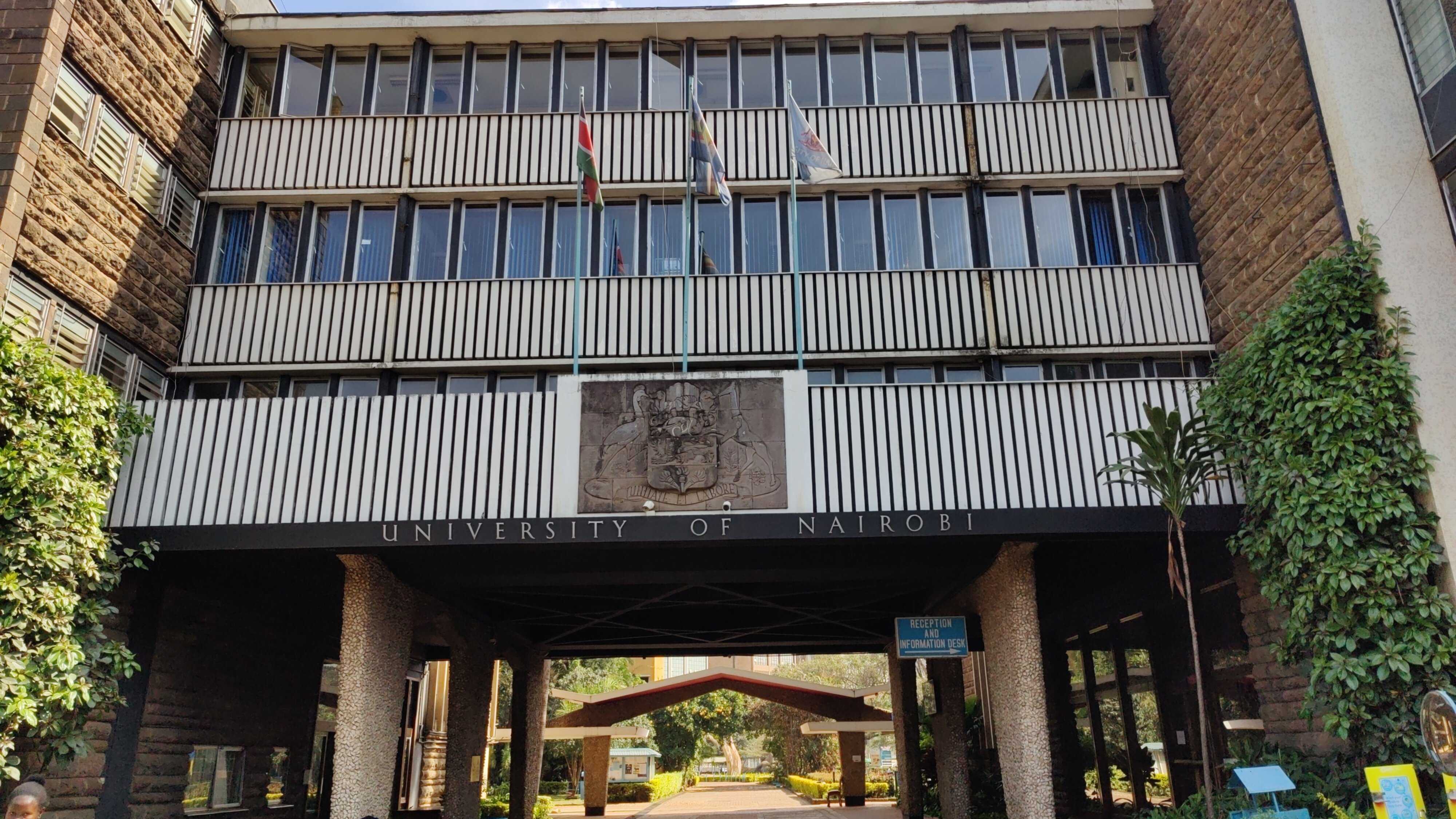 University of Nairobi.
 Our group at the conference.
 View of Nairobi's skyline from the open area on the fifth floor.
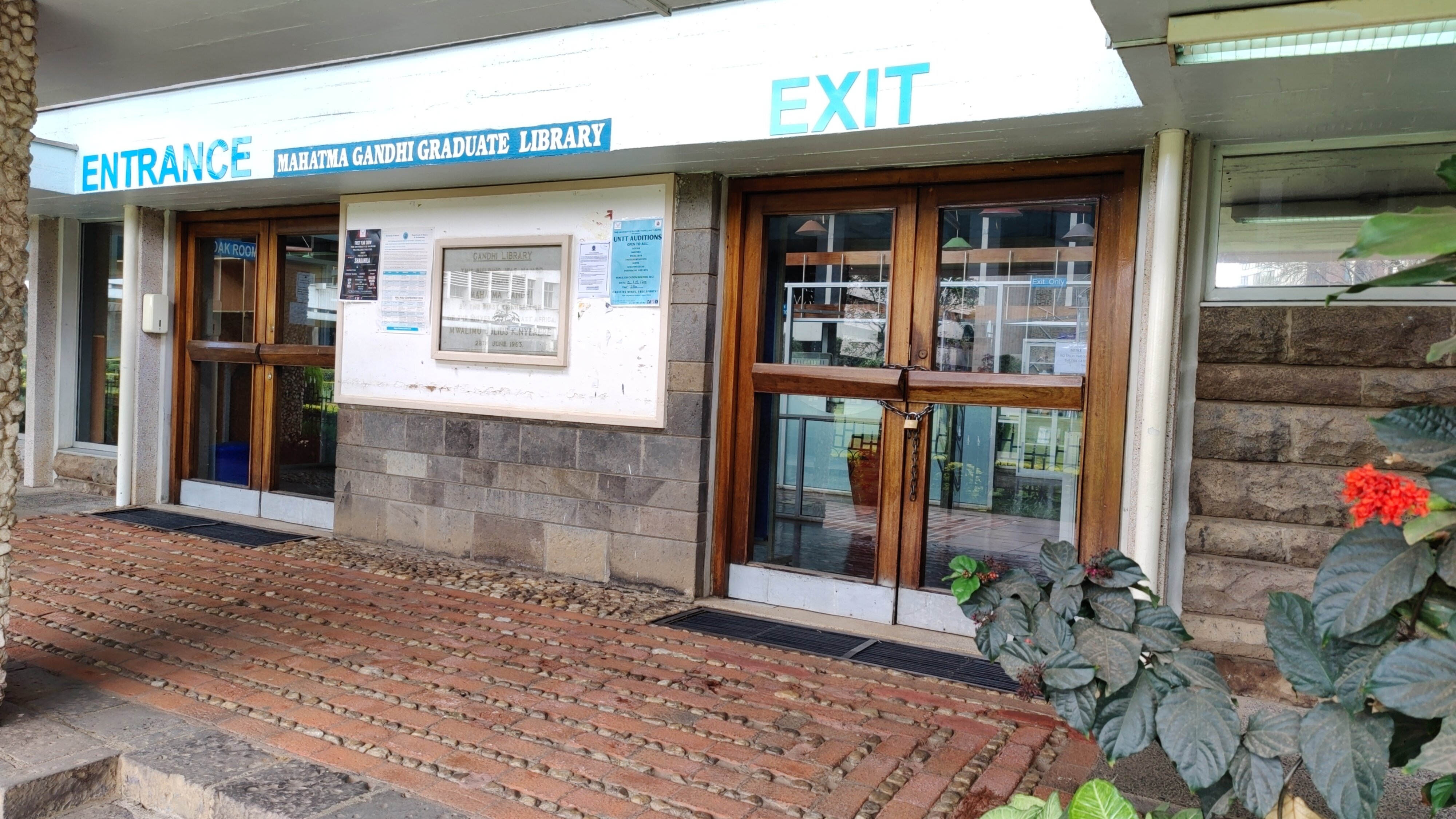 A library in Mahatma Gandhi wing of the University of Nairobi.
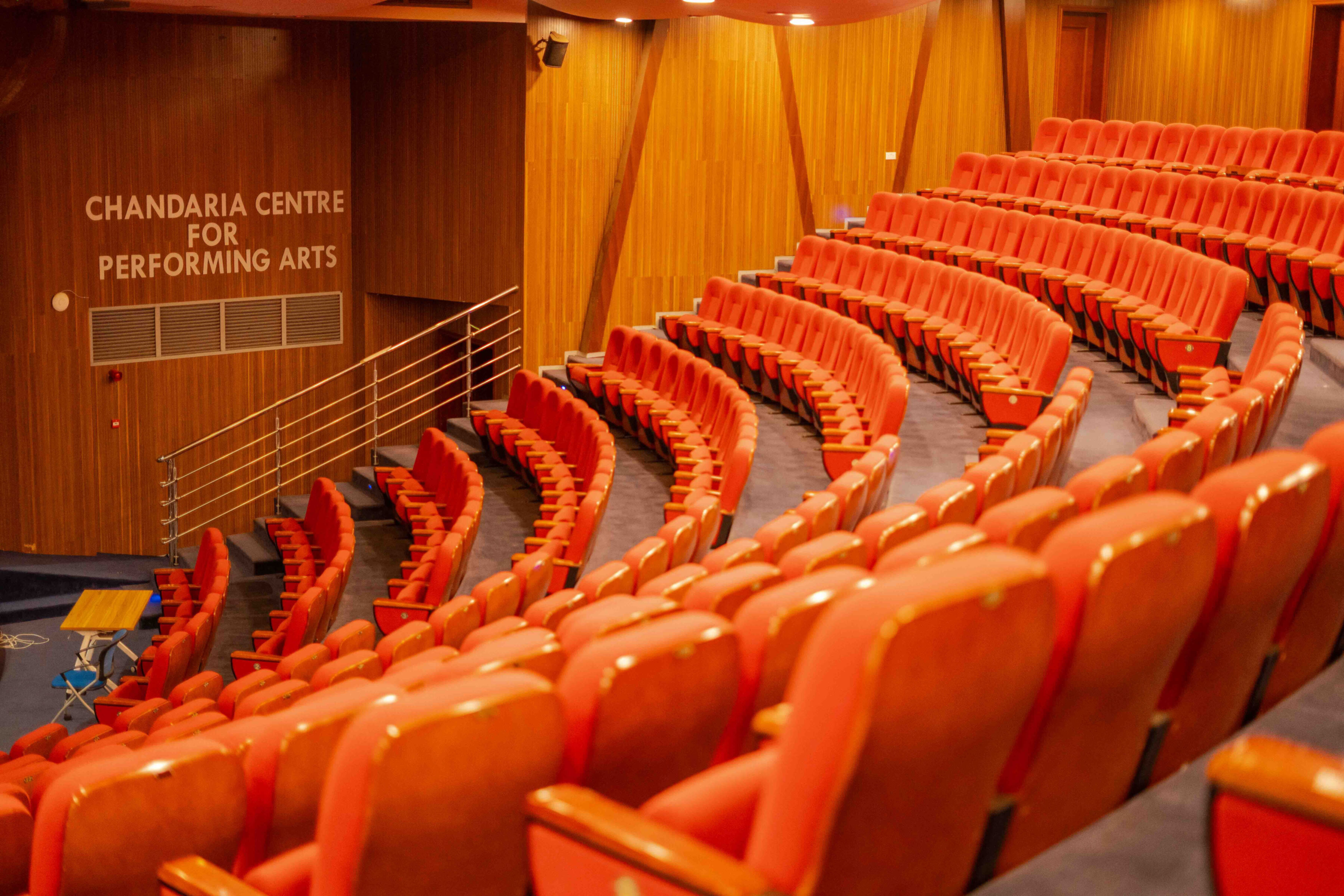 One of the conference halls where talks took place.
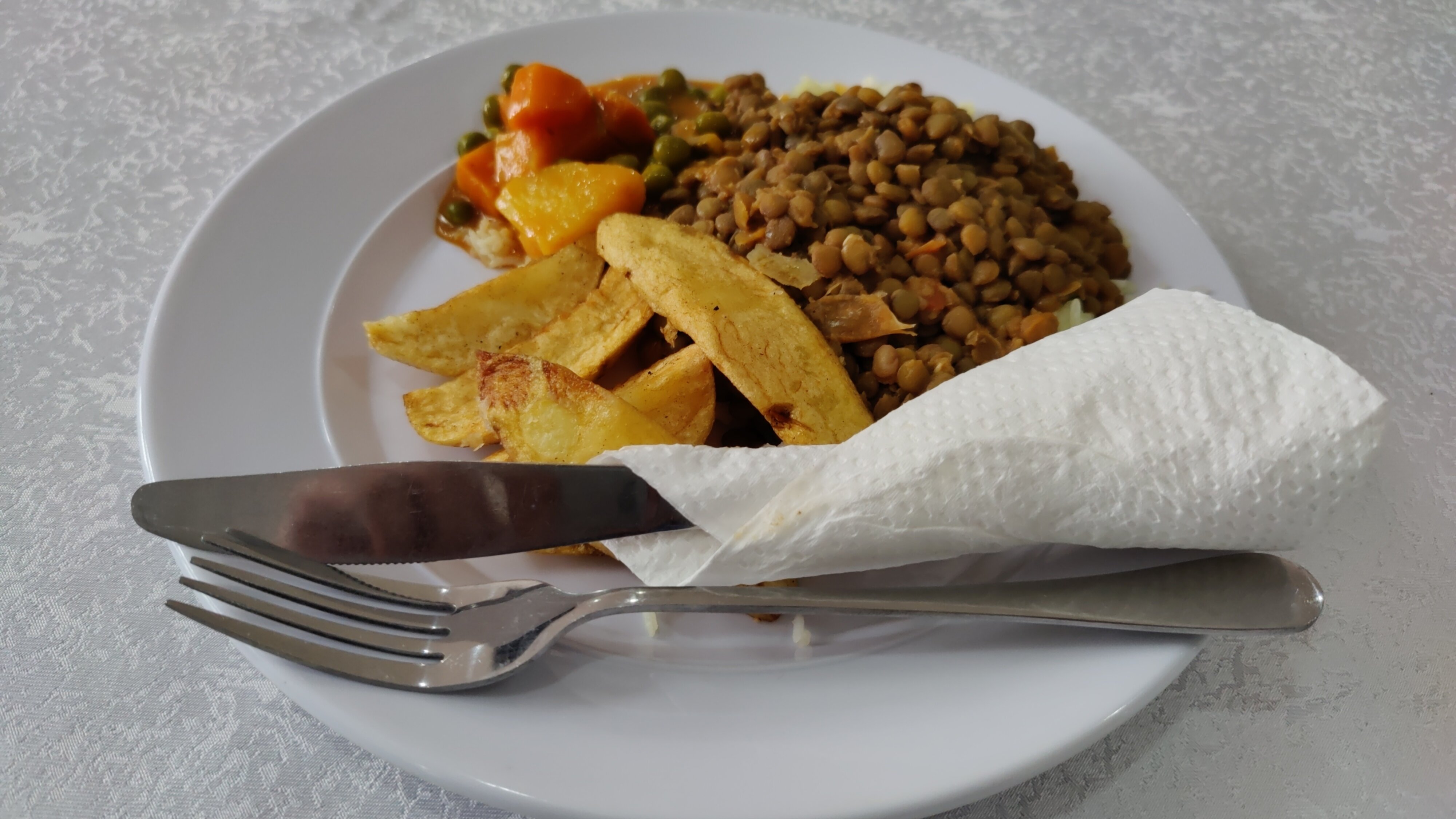 One of the lunch meals served during the conference.
 Minibus which took us from the university to Bao Box restaurant.
 This minibus in the picture gave a sense of a real matatu.


 Like each month, have a look at the work funded by


 And here is the new logo:
 Much better, I would say :)
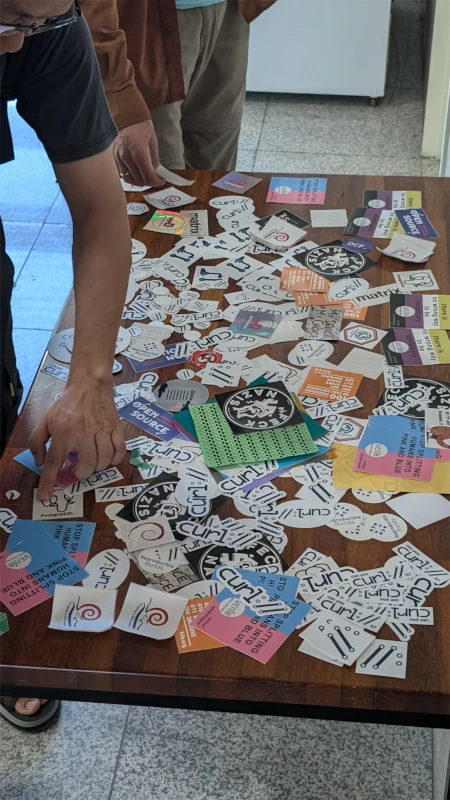
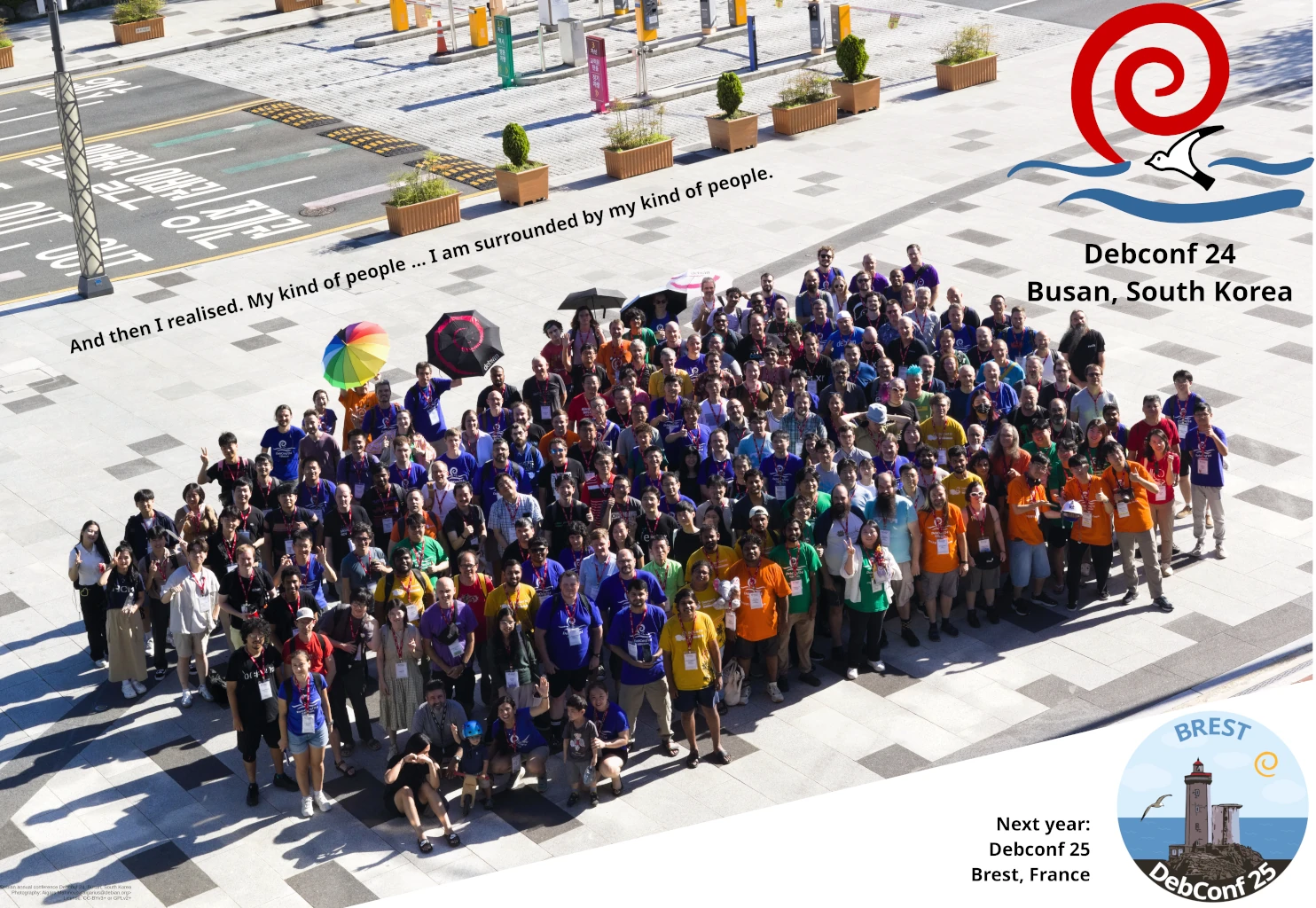



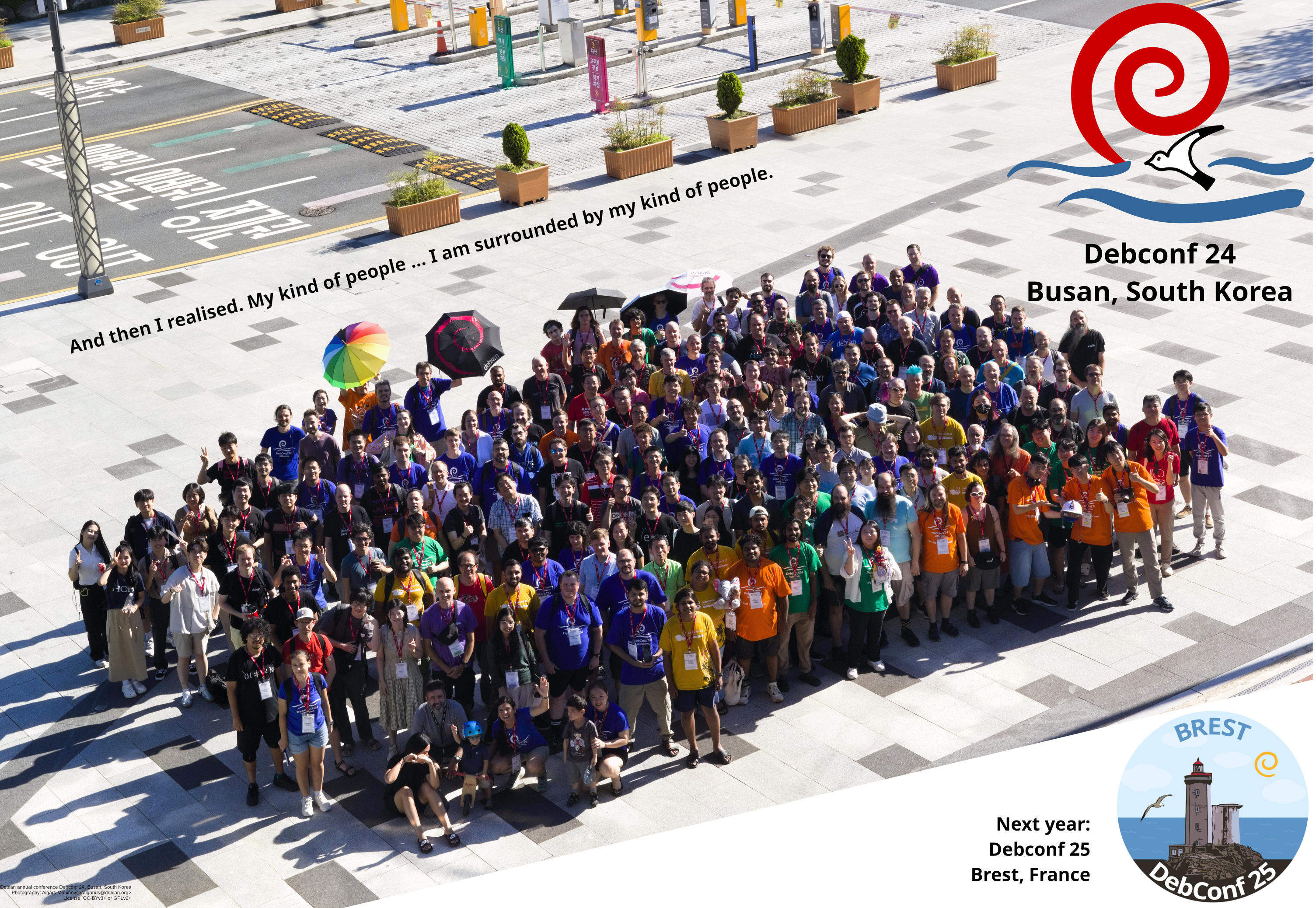
 It's clear that Twitter has been circling the drain for years, but
things have been especially bad in recent times. I haven't quit (I
have some sympathy with the viewpoint don't cede territory to
fascists) but I try to read it much less, and I certainly post
much less.
Especially
 During Debconf, Edward Betts and myself started packaging Home Assistant for Debian. It consists of hundreds of Python packages. So far, we counted at least 675 packages. That s a lot, though most packages are just libraries to talk with some IoT devices and some APIs. It s fairly easy to create a new package: it takes me about 15 to 20 minutes, probably half that time to Edward. And it s a lot of fun. So far in one month of time, we managed to package about 1 third of the list (probably 200+ Python packages already). Once we ve done all the dependencies, we may start to have fun with the core of the application! At the current speed, hopefully we ll be done before the end of the year. Edward and myself have swear to make at least one package a day, which I ve been doing so far, and Edward did a way more We also received contributions from Silton0506, Tianyu, piotr, EiPi Fun, sourabhtk37, and Count-Dracula, as per the very bottom of the TODO list in the wiki (see link below).
If you have a bit of free time, we d love to have more contributors. Here s were to get the needed information:
We created a team in Salsa: