Search Results: "John Goerzen"

10 April 2010

John Goerzen: Jacob has a new computer and a favorite shell

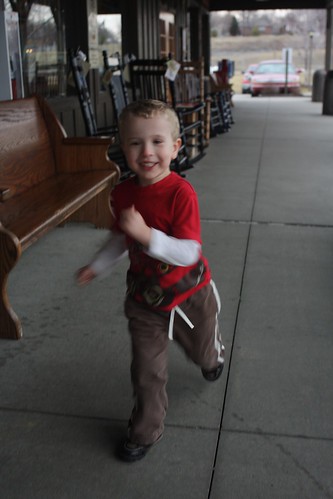
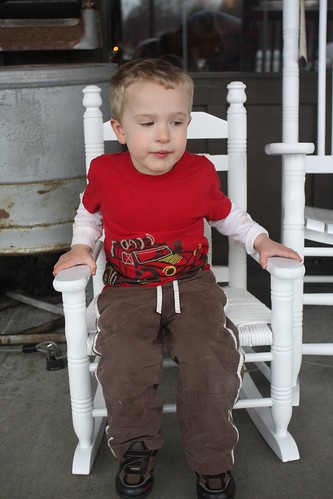
Earlier today, I wrote about building a computer with Jacob, our 3.5-year-old, and setting him up with a Linux shell. We did that this evening, and wow he loves it. While the Debian Installer was running, he kept begging to type, so I taught him how to hit Alt-F2 and fired up cat for him. That was a lot of fun. But even more fun was had once the system was set up. I installed bsdgames and taught him how to use worm. worm is a simple snake-like game where you use the arrow keys to eat the numbers. That was a big hit, as Jacob likes numbers right now. He watched me play it a time or two, then tried it himself. Of course he crashed into the wall pretty quickly, which exits the game. I taught him how to type worm at the computer, then press Enter to start it again. Suffice it to say he now knows how to spell worm very well. Yes, that s right: Jacob s first ever Unix command was . worm. He d play the game, and cackle if he managed to eat a number. If he crashed into a wall, he d laugh much harder and run over to the other side of the room. Much as worm was a hit, the Linux shell was even more fun. He sometimes has a problem with the keyboard repeat, and one time typed worrrrrrrrrrrrrrrrrrm . I tried to pronounce that for him, which he thought was hilarious. He was about to backspace to fix it, when I asked, Jacob, what will happen if you press Enter without fixing it? He looked at me with this look of wonder and excitement, as if to say, Hey, I never thought of that. Let s see! And a second later, he pressed Enter. The result, of course, was: -bash: worrrrrrrrrrrrrrrrrrm: command not found Dad, what did it do? I read the text back, and told him it means that the computer doesn t know what worrrrrrrrrrrrrrrrrrm means. Much laughter. At that point, it became a game. He d bang at random letters, and finally press Enter. I d read what it said. Pretty soon he was recognizing the word bash , and I heard one time, Dad, it said BASH again!!! Sometimes if he d get semicolons at the right place, he d get two or three bashes . That was always an exciting surprise. He had more fun at the command line than he did with worm, and I think at least half of it was because the shell was called bash. He took somewhat of an interest in the hardware part earlier in the evening, though not quite as much. He was interested in opening up other computers to take parts out of them, but bored quickly. The fact that Terah was cooking supper probably had something to do with that. He really enjoyed the motherboard (and learned that word), and especially the CPU fan. He loved to spin it with his finger. He thought it interesting that there would be a fan inside his computer. When it came time to assign a hostname, I told Jacob he could name his computer. Initially he was confused. Terah suggested he could name it kitty , but he didn t go for it. After a minute s thought, he said, I will name it Grandma Marla. Confusion from us did he really understand what he was saying? You want to name your computer Grandma Marla? Yep. That will be silly! Sure you don t want to name it Thomas? That would be silly! No. I will name my computer Grandma Marla. " OK then. My DNS now has an entry for grandma-marla. I had wondered what he would come up with. You never know with a 3-year-old! It was a lot of fun to see that sense of wonder and experimentation at work. I remember it from the TRS-80 and DOS machine, when I would just try random things to see what they would do. It is lots of fun to watch it in Jacob too, and hear the laughter as he discovers something amusing. We let Jacob stay up 2 hours past his bedtime to enjoy all the excitement. Tomorrow the computer moves to his room. Should be loads of excitement then too.

9 April 2010

John Goerzen: Introducing the Command Line at 3 years

Jacob is very interested in how things work. He s 3.5 years old, and into everything. He loves to look at propane tanks, as the pressure meter, and open the lids on top to see the vent underneath. Last night, I showed him our electric meter and the spinning disc inside it. And, more importantly, last night I introduced him to the Linux command line interface, which I called the black screen. Now, Jacob can t read yet, though he does know his letters. He had a lot of fun sort of exploring the system. I ran cat , which will simply let him bash on the keyboard, and whenever he presses Enter, will echo what he typed back at him. I taught him how to hold Shift and press a number key to get a fun symbol. His favorite is the hat above the 6. Then I ran tr a-z A-Z for him, and he got to watch the computer convert every lowercase letter into an uppercase letter. Despite the fact that Jacob enjoys watching Youtube videos of trains and even a bit of Railroad Tycoon 3 with me, this was some pure exploration that he loves. Sometimes he d say, Dad, what will this key do? Sometimes I didn t know; some media keys did nothing, and some other keys caused weird things to appear. My keyboard has back and forward buttons designed to use with a web browser. He almost squealed with delight when he pressed the forward button and noticed it printed lots of ^@^@^@ characters on the screen when he held it down. DAD! It makes LOTS of little hats! And what is that other thing? (The at-sign). I ve decided it s time to build a computer for Jacob. I have an old Sempron motherboard lying around, and an old 9 black-and-white VGA CRT that s pretty much indestructible, plus an old case or two. So it will cost nothing. This evening, Jacob will help me find the parts, and then he can help me assemble them all. (This should be interesting.) Then I ll install Debian while he sleeps, and by tomorrow he should be able to run cat all by himself. I think that, within a few days, he can probably remember how to log himself in and fire up a program or two without help. I m looking for suggestions for text-mode games appropriate to a 3-year-old. So far, I ve found worm from bsdgames that looks good. It doesn t require him to have quick reflexes or to read anything, and I think he ll pick up using the arrow keys to move it just fine. I think that tetris is probably still a bit much, but maybe after he s had enough of worm he would enjoy trying it. I was asked on Twitter why I ll be using the command line for him. There are a few reasons. One is that it will actually be usable on the 9 screen, but another one is that it will expose the computer at a different level than a GUI would. He will inevitably learn about GUIs, but learning about a CLI isn t inevitable. He won t have to master coordination with a mouse right away, and there s pretty much no way he can screw it up. (No, I won t be giving him root yet!) Finally, it s new and different to him, so he s interested in it right now. My first computer was a TRS-80 Color Computer (CoCo) II. Its primary interface, a BASIC interpreter, I guess counts as a command-line interface. I remember learning how to use that, and later DOS on a PC. Some of the games and software back then had no documentation and crashed often. Part of the fun, the challenge, and sometimes the frustration, was figuring out just what a program was supposed to do and how to use it. It will be fun to see what Jacob figures out.

8 April 2010

John Goerzen: Face to Face With Destruction

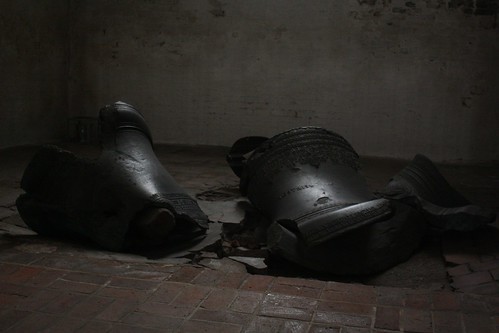
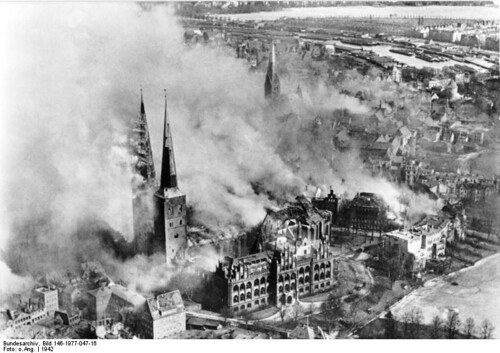
IMG_2641 Seeing these church bells in L beck wasn t easy for me. They melted and fell to the ground after an air raid in 1942, and have been left exactly as they fell. I wasn t alive in 1942, and even my parents hadn t yet been born. My grandfather was relocated by the American government because he refused to fight in the military for religious reasons. And yet, I still felt a sense of embarrassment, being an American standing there in Germany next to those bells. My country* did things like this. Why? Even if there s a war on, and whatever the other side may be doing, do we really have to bomb all their churches? Then, we went to the Dom (cathedral). It has a small gallery of photos of the destruction in 1942, and how it took 40 years to restore (though some original works are simply irreplaceable.) Burning L beck Cathedral after an air raid in 1942 I had just been walking through the beautiful Dom, and then saw pictures like that. It was very sad. I imagined the people in 1942, seeing the smoking remains of so many buildings that had been important to the town for centuries. Places where, no doubt, some of them worshiped, and their parents and grandparents had too. I imagined my sadness if a country bombed one of the churches that my ancestors helped start or build. I felt ashamed of what the democracy in which I live (and its allies) did to the Dom, to Marienkirche, and to the other churches and civilians there. Then, a few days ago, Wikileaks posted a video from an American helicopter in which our soldiers begged Come on, let us shoot! at people, most or all of which were completely unarmed. They killed a bunch of people. Then a van came to try to get the wounded to the hospital. Then the soldiers in helicopter killed those people, and wounded some children. Even if they thought their lives were in danger, I d expect to hear some quiet sadness at what they thought was a regrettable need to use force. Instead, you d hear them cheering whenever they killed someone, as if they had just won a round on some video game. They killed civilians, and considered it a fun experience and a mission accomplished. There was no sadness for knocking a man to the ground, leaving him writhing. Just jokes. There was no more care for human life here than there was 60 years ago. It saddens me that every year we celebrate our military on independence day celebrating its ability to kill, not its ability to feed. I wish that we could rather celebrate the times Americans have saved lives, whether in Berlin or in Port-au-Prince, or helped to topple dictatorships. Military power shouldn t be our first choice so often. L beck wasn t attacked for any strategic purpose; the British did it to destroy the morale of the enemy civil population , as the Americans did in Dresden or the Germans in London. In other words, those bells fell to the ground for no reason other than that they were German. People lost their lives for the same reason in Germany and in London. The British had no reason to believe that those civilians meant them any harm, that they were anything but caught between two strong powers. And the same held true in Iraq. When we went to Berlin, we walked through the replica of Checkpoint Charlie, with the big sign announcing that you are leaving the American sector. There is little positive to be said about the Cold War, but there is something the British and American military did of which I am not the least ashamed: the Berlin Airlift. Although I didn t see it, I feel a sense of the USA having been a force for good when I read about the Berlin Airlift Monument at Tempelhof, which has the names of the 70 British and American men that lost their lives in the airlift (due to accidents), above the inscription They gave their lives for the freedom of Berlin. That s the spirit I wish we d see more often in the world today: people giving their lives not just for their own security, but for strangers in need on a different continent. We Americans have been, compared to many countries in Europe, relatively sheltered from the ravages of war in our own midst. I wish that more of us would have the opportunity to gaze at fallen church bells, to wonder through a magnificent old church and then to see photos of it on fire, or to see a monument to our soldiers in a far away land. Perhaps then we could better learn from history, and see firsthand that some of our most positive contributions to the world have come in the form of coal and candy bars instead of incendiary devices. A small post script Many historic buildings or locations we saw in Germany had plaques on their exterior with a brief history, often in German and in English. I was interested to note that some (though not all) of these plaques had language such as destroyed by fire in 1942 , with no mention that the cause of the fire was a bombing. I was even more interested to note that same sort of description at several sites in Prague Castle, mentioning that the original building was lost in the fire of 1142. It was only on the third or fourth building in the Castle that we learned that the fire of 1142 was caused by a military siege of Prague Castle. * I know it was the British at L beck, but the Americans did similar things elsewhere. I also acknowledge that, at a macro level at least, the Berlin Airlift wasn t purely an altruistic act, as there were geopolitical factors in play. But I am speaking of the actions of the airmen here, who took on considerable risk to help others.

6 April 2010

John Goerzen: Begin questioning my sanity NOW

It s been a long and wet winter here. We live down a dirt/sand/gravel road, and when it rains, it s difficult to get a car down the road due to mud. And impossible to get a bicycle down it. As a result, I ve only been able to ride my bicycle to work once since November, and that was in January. Last Thursday, I intended to ride in to work, but discovered my front tire wouldn t hold air. I had heard about a wonderful local bike repair shop, so I dropped off the wheel there. The owner replaced the tube and checked it out, and charged me, yes, $4 including labor and the tube. Nice. So today was my first ride of the season. I rode a total of 21.8 miles (35 km) today, which was probably unwise enough for being as out of shape as I am. It s 9.6 miles each way to work, plus I did some errands over lunch. But add to that the winds 30 MPH (48 kph) with gusts to 43 MPH (69 kph). This morning, they were weaker and also mostly at my back. This afternoon, though, they were mostly a vicious crosswind. If you ve bicycled much, you ll know that s less annoying than a headwind, but is still quite annoying and takes a lot more energy to battle than you might think. So, I am now rather sore. And the question is: will I be silly enough to do this again tomorrow? The answer to that probably depends on how late I stay up watching the Butler/Duke game tonight, as I have to get up an hour earlier on days that I bicycle to work. I found that the bicycle rack at work which, somewhat to my annoyance, was moved indoors last year has been rather disused. It is in a rather dusty and dirty part of our manufacturing shop, and there were large metal bins completely blocking the path to it, which I had to move before I could park my bike. Then, of course, it was the usual comments which I take with a smile about somebody that shows up to work wearing cycling shorts & shirt. It should be noted that I change into professional clothes at work. But my commute is too long to wear them on the way in and expect to be presentable, non-smelly, and pain-free. In any case, evidence that this may not have been the best day to start my commute: it hurts to sit at the moment.

5 April 2010

John Goerzen: Thougts about the Europe visit: Water

This is probably the only real surprising to an American post I ll be making, because it was the little thing that was most surprising. And that despite the fact that I had been warned:
Don t expect to get a glass of tap water at a restaurant or caf ; it s an unusual request that probably won t be understood or honoured. Lonely Planet Germany
Now, before I go on, I want to clarify that this post is NOT a complaint of what I saw in Germany and Prague; it s just a description of how it was surprising to these American eyes, and perhaps also a description of how the American approach such a mundane topic might be surprising to people from elsewhere. (Update: I want to clarify that I only visited 3 cities in Germany plus Prague. I don t want anybody to assume that I m making generalizations about the entire continent here, despite my title; I think the comments reflected that I didn t make this point clear enough. I lack data to draw much of any generalization at all; this is more of reporting on my experiences than anything else.) Utilitarian Water I noticed that the vast majority of toilets I saw in Germany and Prague are of the extremely water-saving variety, with an option for a small or a large flush. These toilets exist in the USA, but are still rather uncommon here. I was glad to see this attitude of conserving water. I was a bit surprised when I took a shower at our hotel in Berlin. Although that hotel was extremely environmentally-conscious in every other way including the toilets, light switches with RFID sensors and timers, etc the shower head was the most wasteful of water I had seen in quite a few years. I felt rather guilty of using so much water for a shower. But our hotel in Prague took shower heads to the next level. The shower head there was this huge square monstrosity, about a foot long on each side. I have never seen a shower head that big. It had a voracious appetite for water, too. Although it could be pointed in any direction, doing so was useless because, even at full blast, it was clearly getting not nearly enough water to propel the spray forward. It seems that this shower head needed special water-guzzling plumbing. But even without it, I felt even more guilty for showering in Prague. I suspect that I used more water for the two showers I took there than I would have over an entire week at home. I also very much suspect that this shower head would be illegal in the USA due to its water consumption. (I should note as an aside that the shower heads I saw in private homes were no different than American ones.) One thing I didn t see was lawn sprinklers. This may have been because there is less open grass in the places we visited, or perhaps because spring hadn t yet really hit. In any case, I wonder if our American habit of pumping water from deep beneath the ground, only to shoot it up in the air and spray it back on the ground again might appear a bit odd to others. Drinking Water In Restaurants We did a lot of walking in Europe, and sometimes we d have walked awhile to get to a restaurant. I really prefer water when I m thirsty, and ordered water with my meal at restaurants a few times. I stopped doing that, though. The presentation varied, but usually it went along these lines: they brought a glass bottle to the table, it cost EUR2 EUR5, and generally contained almost as much glass as water. The most impressive display of water was at a Berlin restaurant. I wanted some water, and so did Terah. So the waitress suggested we could share an EUR 4.90 bottle (0.75L). Sounds good, I guess although it s less water than you d get in a typical American bottle for one person, it seemed a lot by typical German restaurant standards. A few minutes later, our water arrived. It required the waitress to use a full tray to deliver our water and its, well, water accessories. First she carefully placed a frosted plastic water holder, precisely centered on the table between the two of us. Into this, she carefully placed the water bottle. It was, of course, made of glass, and also tall taller than most wine bottles, though containing less actual liquid. I am not yet sure of the purpose of the holder; it certainly wasn t to keep the water cold, as it was served warm. Perhaps they feared the bottle s impressive height acting as a sail and getting knocked over by a gentle breeze. In any case, next came our water glasses, which appeared to be exactly like wine glasses, but bore the logo of the company that bottled the water etched in the glass. After that, she picked the water bottle back up out of the holder, carefully opened it (it was just a regular twist-off lid), and then poured water into each of our glasses. She was careful not to have even a drop run down the side of the bottle, and filled each glass precisely 2/3 full. The glasses were, of course, positioned carefully on the table, and the bottle of water returned to its place of honor within the water bottle holder. This process consumed most of the small quantity of actual water in the bottle. I do believe that is the most elaborate presentation of a small amount of good ole H2O I have ever witnessed. It was made with the kind of care I would expect to be shown to someone that had just bought a $100 bottle of wine, not a EUR5 bottle of water. We had walked a mile (1.6 km) to get to that restaurant, and I was indeed a bit thirsty. I wasn t sure I wanted to drink all of my tiny quantity of water presented so elaborately all at once, so I had a sip of the beer I had the good sense to order along with the water. The beer, incidentally, cost roughly the same per liter as the water and was simply plonked down on the table with a complete lack of fanfare. Sadly, beer is not really very good for quenching thirst, due to its diuretic effects over time. Another surprise came at a restaurant in Prague. It appeared to have the typical prices for water, so I ordered a local Czech orange soda to drink. It, like the water, was served in a smallish glass bottle. In any case, I ordered a traditional Czech goulash to be served in a bread bowl, while Terah ordered some ribs. The waiter took our orders and menus, and returned a minute later bearing a bowl full of water and a lemon slice. This he put next to me, and announced, wash for you. My reaction was: Hmmm. This is different. (Which is why we went to Europe, after all!) What is this for? Did he think my hands looked dirty and needed to be washed before eating? Or did he think I would get them dirty while eating, and somehow fail to use my napkin? It turned out that the use of it became clear. I ate the goulash using the supplied spoon, but the bread bowl it was served in was of course edible too. It turns out it is pretty much impossible to eat a bread bowl that had contained a stew without getting your hands dirty, and the wash turned out to be quite practical and useful. It was free to wash my hands in, but I m sure would have cost EUR5 had I wanted to drink it. Drinking Water American Restaurants Some of you reading this may never have experienced water in an American restaurant, so allow me to explain. In a typical American restaurant, water is free and comes with unlimited refills. Americans generally think of water as healthy (and our doctors and government medical experts urge us to drink plenty of it), and water in a restaurant is a good way to save money while dining. It would generally be considered questionable service if your glass of water at a restaurant got less than half full, and really quite bad service if it sat empty for more than a minute or two. A waiter at an American restaurant will typically go around with a pitcher of ice water. If your large water glass isn t completely full, the waiter will pick it up and step a few steps back from the table before filling it from the pitcher. The waiter will then dump water and ice from the pitcher into it, usually overflowing the top such that some water and ice spills on the floor (so now you see the point of stepping back from the table). The glass will then be returned to your table, wet sides and all. It will be completely full, so you have to be careful not to spill when you take your first sip. The fancier or more expensive American restaurants will offer a version of this, though without the spilling on the floor part. Usually at one of these restaurants, you ll automatically get water set out for you when you arrive. This is free, and if you order another beverage, you ll still keep your water. (Though at any restaurant, it would be quite acceptable to order water along with your other beverage.) Needless to say, this water is coming from a faucet, not some glass bottle, but I m fine with that. A few American restaurants have bottled water on the menu, but I can t recall ever seeing somebody with one in a restaurant. Drinking Fountains Drinking fountains are common in the United States. They provide free tap water to anyone. You can find them near almost any public restroom, whether indoors or outdoors. You can also find them in virtually every park, along some walkways or bicycle routes, in airports and train stations, and even in museums. They re so common that I rarely even think about being able to find water in a city if I m thirsty. Often you ll find them installed in groups of two or three, with one at a lower height so as to be usable by children or adults in wheelchairs, and another at a regular height. Many indoor ones even contain integrated chillers to make the water cold (which, sadly, probably more than negate the environmental benefits of water fountains.) I saw exactly two drinking fountains in Europe, and I can say I got a drink at 100% of the drinking fountains I saw there. One was in the Hamburg airport, but notably it was at the place where you wait to have them check your passport. So you can use a drinking fountain in Hamburg, but apparently you must do so before you have officially entered Germany. The other one was in the Prague airport. It was in an out-of-the-way corner, on the lowest level, by the gates for the people that are flying out on the small planes. Which we were. Above it was a placard bearing a icon indicating that this was, in fact, a drinking fountain and how to use it. I was surprised at the need for the icon at first, but less so after I observed a man walk by, glance at the fountain, and wash his hands in it (rather than do so at a sink in the restroom 5 feet away). As a result, we were sometimes a bit thirsty in Germany. By the time we got to Leipzig, we realized what was going on and bought a Coke bottle which we could refill from the tap water in restrooms as we went along. (This we kept until it was confiscated at a museum in Prague). I didn t see many Germans carrying around bottles of water, but it was still cold, so it s possible they were but were in a coat or bag. I was left with the somewhat unwarranted conclusion that some Germans must be either always slightly dehydrated, carrying around hidden bottles of water, or paying EUR2 for a small plastic bottle of water all the time. In the USA, we do have bottled water. Among people that care about such things, there are certain people that drink only from bottled water as much as possible, and then there are other people that view bottled water as exceptionally expensive and an environmental catastrophe and avoid it as much as possible. I m part of that latter group. I ve noticed that statistics show that Germans consume more bottled water per capita than Americans do, which is not really a surprise given what I observed. Conclusions Part of the reason I wanted to go to Europe was to experience different approaches to things, and we surely did. I didn t expect it to lead to a blog post about something as mundane as water, but here it has. I ve got to say I like the overall attitude of water conservation in Germany, which seems to have gone further than it has in the USA. I also like the system of water fountains we have in the USA, which also helps the environment by reducing demand for plastic water bottles. The wash for me in Prague was just great. One of those moments where I was completely surprised (and in a good way) by something. (I m just glad the waiter spoke a bit of English, because I wouldn t have figured it out at all otherwise.) In the end, part of the fun of traveling is learning about these differences. So next time, we ll just plan on finding a bottle to carry around at the start of our trip, and then thirst won t be a problem. Perhaps I ll even try washing my hands in a drinking fountain.

31 March 2010

John Goerzen: It s that time of the decade: I m reinstalling Debian

My main home workstation (previously named katherina, after a distant ancestor) was originally bought a few years ago probably 2002 or 2003. Since then, it s had its motherboard upgraded twice, new hard disks, and then even was moved to a completely new machine back in January. Throughout all of that, it s still running the original sid that I put on it when it was new, dist-upgraded since then, copied to new disks via tar and netcat, but never reinstalled. So it s probably been less than my average of 10 years on a given Debian install. But it s time. For one thing, despite the fact that I was one of the people that helped start Debian s amd64 port (then known as the pure64 effort), I ve been running i386 on my 64-bit workstation. For another, I want to switch from XFS to ext4. And finally, it has not escaped my notice that my laptop running Gnome with xmonad feels a lot faster than the far more powerful desktop running KDE4 with xmonad, plus Gnome integrates better with xmonad. And there are some nice gnome bits installed by default that my KDE system doesn t have, and 400 packages installed on my system that are no longer in any archive. I could, of course, clean that stuff up but all this adds up to enough of an excuse to start from scratch. I continue to be very impressed with the quality of squeeze. This will be a very nice release when it comes out.

30 March 2010

John Goerzen: Trip part 7: The Journey Home

March 21 was a day of sitting. We ate breakfast in our hotel in Prague that morning, which was pretty similar to an American hotel breakfast, save that the rolls contained black olives and that the all-you-can-eat buffet didn t have people take a new plate on their second time through. Anyhow, we made it to the airport in Prague with plenty of time to spare. That trip that involved a tram, a subway, and a bus, and was on a Sunday morning when all of these services run less frequently. I wasn t sure what to expect, but we did it in right at an hour, just as the hotel desk had estimated. Anyhow, in Prague they were heavily steering people to the self check-in kiosks. So we tried it, and got about halfway through the procedure when it asked us to put our passport on the glass scanner. I did so, and it appeared to process, then complained that the document is not a passport. Eventually an airport employee came over, had the same result after trying it twice, so beckoned us over to the counter. Then on towards our gate. We briefly considered some sort of snack, since we wouldn t get to Munich until after lunch, but the terrible prices scared us off. An entire dinner with friends the evening before cost only 235 crowns ($12.53) for the two of us together, and one restaurant was advertising a panini and Coke for 1 person at 220 Kc ($11.72). Anyhow, we eventually found ice cream bars at a reasonable price. While sitting down at our gate, in the out-of-the-way small planes only part of the airport, we noticed only the second drinking fountain in Europe conveniently labeled with an icon indicating what it s for. The only person other than me that used it washed his hands in it, and did not sip the water. We eventually got on the packed bus to our plane, then flew to Munich. Over there, announcements at regular intervals suggested that passengers flying to the USA go to their gate immediately so they can pass the extra security screening. What joy. We headed in that direction, stopping only to change my remaining Czech crowns to dollars. And then we got to go through passport control followed by security for the second time of the day. This one took special interest in our camera and Terah s scissors. Mysteriously, there was a stream of people not going through security, and we never quite figured out why. We wanted something for lunch, and inside this special security zone there was only one real option: a bar of sorts. We got there, and watched a guy pay for two small beers and a pretzel. They shop conveniently let him pay for dollars, and the price came to $25. Worst exchange rate ever. We bought a pretzel and two croissants and I got rid of my last Euro note (EUR 5) and a EUR 1 coin. Eventually our flight got going. It was interesting comparing our international flight on Lufthansa to our flight to Hamburg on Continental. Lufthansa came through the cabin even in our cheapest economy seats section with hot wet wipes, handed out and later collected with tweezers, before each meal. The food was slightly better than Continental. The in-flight entertainment system had more things on it, though there were not power hookups at the seats. I still didn t really care for any of the entertainment options, though I did watch a Ricky Gervais movie which was OK. I caught a brief nap and read my Kindle. In Chicago, we got to go through American passport control. To get into the USA, even as a citizen, you get to fill out a whole form. That s a bit different than getting into Germany, where they check your passport and send you on your way without even bothering to inspect your bags. (There s a voluntary office you can go do if you have anything to declare.) I had noted on our form that we were bringing in food, and they asked me what kind. I told them it was chocolate still in the wrapper, and they said, OK, that s fine, and waved us on. So in the end it was really no more involved. All the customs people we saw in every country were friendly and helpful. In Chicago, you have to go through security again after customs, so that made our third security check of the day. At our gate, CNN was showing the House debate on health care, and the bill finally passed just prior to boarding for Indianapolis. That was a pleasant welcome home ! Our flight got to Indianapolis a bit after midnight (as scheduled, sigh), and then there was a bit of a drive. We spent the night in Indiana. Jacob and Oliver were staying there with their grandparents, but of course were already asleep. Jacob woke up in the middle of the night at one point, panicked because he couldn t find the butterfly he always sleeps with. Terah helped him find it, and apparently he just sat there staring at her for a minute. Both boys were happy to see us in the morning. Jacob was talking about the toys, and Oliver was just laughing. We ate breakfast, then tried to get on the road as soon as possible we had an 11-hour (before stops) drive ahead of us, and had to complete it all in one day. We had talked about what we would be doing, and Jacob was sad to leave grandma & grandpa and their farm. About an hour into the drive, Jacob said, Dad, where are we going? We re driving home. Kitty doesn t like that. We should go that way. (and he pointed out the back window.) Back to grandma & grandpa s house? Yeah! Jacob has this habit of referring to himself in the third person as a kitty, and probably more so when there s something sad or difficult. We stopped for lunch or running around breaks a few times, and wound up getting home at about 8:30. Oliver started laughing when he saw our porch, and we got inside, Jacob said, I want to run around all over the place! and he did. They were happy to be home. In Leipzig, Fritzi had chosen a book to give to Jacob. On Monday, I got it out, and explained it was from Fritzi in Germany. Jacob was very interested. I told him it was about a mole (Maulwurf), and he thought that was great too. I couldn t remember Brad s translation of the German story, so Jacob and I made up our own story as we went. This was a big hit, and he had me read the book three times all at once. Then he wanted to talk about who gave him the book again. In all, I m very glad we took the trip. It was fun seeing the sights, visiting with friends, and being a part of an environment that s different from our own. I hope we can do it again before too long.

29 March 2010

John Goerzen: Trip part 6: Prague

Note: this post written on March 20-21 and posted after our return. IMG_2895
(two women looking into the crypt at St. George s Basilica) We ve had a good couple of days in Prague. The city definitely feels more, well, foreign than Germany and that is perhaps accentuated by the fact that I don t know any Czech at all, while I know some basic German. It s been slow going at times, and surprisingly easy at others. Despite my lack of knowledge of Czech, I d say communicating here has been roughly as easy as in Germany. That is perhaps partially due to the fact that, of the places where we ve needed to communicate, we are either making simple requests (buying bread at a bakery) or the people we re talking to know some basic English. (Or, in one case, a guard at a museum at the Prague Castle complex used German to ask me to check a bag at the coat check, mildly surprising me and confusing Terah when I started to comply with instructions she didn t understand, and didn t know how I did.) The very first time we had a situation where it was a bit difficult to communicate, in the bakery, I got into my difficult to communicate mode and accidentally slipped in a couple of German words. Oops. Terah was laughing at me later, and commented that the store owner might have also been laughing at me or perhaps at his employee that also accidentally slipped into basic German mode. On Friday, we visited Vy ehrad Castle, the one that nobody that visits Prague seems to know about. That is perhaps because the palace/castle part of the complex has been mostly destroyed (but we did know that before going there.) It is in a nice, quiet, and beautiful park, and has the beautiful and old Basilica of Saints Peter and Paul, as well as a large ornate cemetery. Then we visited two iconic Prague places: V clavsk n m st (Wenceslas Square) and Starom stsk n m st (Old Town Square). Both were beautiful. And, unfortunately, also packed with tourists and made-in-China plastic trinket shops. There I got my first clue that large tour groups tend to have a detrimental effect on any free site in Prague. They come in, the guides yell, they clog up things, and also generally miss the sites of true interest because buying tickets to them makes the price of the tour uncompetitive. On Saturday, we took the tram out to Pra sk hrad (Prague Castle) the one that everybody knows about. We got there at about 8:15, and although the grounds are open, most of the buildings weren t open until 9. As a result, we had 45 minutes almost to ourselves in the nearly-empty castle complex. We could walk around on the giant squares, take some photos, and generally enjoy a crisp and quiet morning. IMG_2771 At 9, it was still pretty empty and we went into the ticket offices to buy our tickets. By the time we got out a few minutes later, it was packed mostly due to the arrival of innumerable tour groups from all over Europe and, apparently, Japan. We went to the Star kr lovsk pal c (Old Royal Palace) first, since I knew from their website that it would close at noon due to a visit from Prince Charles. That was a beautiful building, and it s amazing to read about the features of it that are centuries old or even almost a thousand years old. The Vladislavsk s l (Vladislav Hall) and chapel particularly caught my eye. Underneath the palace is a museum, including some 1000-year-old jewelry and flooring, and some clothing that is several hundred years old recoverd from burial plots. IMG_2775
(Vladislav Hall) Next, we went to the iconic (and free) Katedr la svat ho V ta (St. Vitus Cathedral). Our audioguides fortunately allowed us to bypass the long line, and we could step inside at a side door. That was one of many times in Europe I stepped inside a building, and suddenly came to a stop with a wow . That building is every bit as much impressive as it is made out to be, even crowded as it was. IMG_2839 We also went to Bazilika Sv. Ji (St. George s Basilica), which one of the guides described as ancient . It was another wow moment, and it felt like the oldest church we were in yet. I think it probably was, actually; last rebuilt in 1142. IMG_2874 For lunch, we asked for a recommendation from our hotel. They suggested one place, which we walked to. It was a nice easy walk down some Prague side streets, but the restaurant and all the others along our walk were closed on Saturday. We eventually made our way back to the hotel and asked for a new recommendation, which was successful this time. Terah ordered some ribs, while I ordered a more traditional Czech goulash, which happened to be served in a bread bowl. A minute later, the waiter brought Terah a fork and knife. And he brought me a bowl of water with a slice of lemon, and announced wash for you. That was a surprise, and a bit puzzling one at that. Turns out that eating bread that had stew served in it is indeed a bit messy, and having some water to clean up with is indeed helpful. We met up with Anna from Leipzig and one of her Czech friends for dinner Saturday night. We found a nice local Czech place. I had ham with sauerkraut in a folded potato cake. It was excellent, and the total bill for Terah and me came to 235 Kc or about $12.50. We had a nice walk back to the hotel in the crisp, dark evening. Sunday morning we had breakfast at our hotel the only time we ate a meal at a hotel this whole trip then got on the tram, the metro, and the bus to the airport. Total cost for that trip for two: 52 Kc, or about $2.75. Far cheaper than a taxi. One weird thing happened to us in Prague. We were riding the tram towards downtown, and as we would be on it for several stops, Terah was sitting. I was standing as there wasn t an available seat for me. Terah and I were both looking out windows, until Terah was startled because her arm was wet. She looked around and it turned out a middle-aged woman had spit on her, and was glaring at her. We never did figure out why. About all we can think of is maybe someone else, such as a very old person, had gotten aboard but Terah hadn t noticed and therefore didn t offer to give up her seat. That was probably the only real rude gesture towards us on the entire trip. We ran the story by Anna s friend (the native Czech) and she was as surprised and baffled as we were. As I wrap this up, we re sitting at our gate in Prague waiting for our flight to Munich. In this airport, in an out of the way corner on the very lowest floor, I spotted only the second drinking fountain I ve seen in Europe this entire time and also perhaps the continent s most expensive cup of coffee. After we get to Munich, it s a flight to Chicago, another to Indianapolis, and finally a drive home Monday.

28 March 2010

John Goerzen: Trip part 5: Leipzig

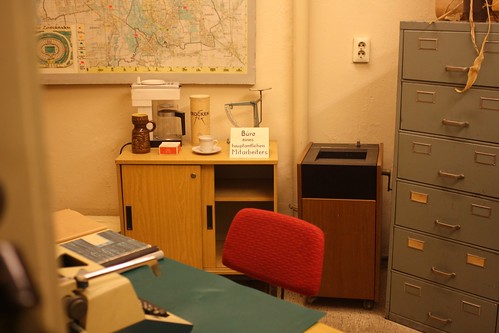
Note: this post written on March 19 for posting after we return. We arrived at Leipzig surprisingly about 5 minutes late on Wednesday morning. My friend Brad was at the Leipzig Hauptbahnhof (central stration) to meet us. As we walked through the city with him, he commented that I hadn t yet tried Currywurst, and there was a stand selling them with different levels of spiciness. I tried one and liked it; Terah was afraid to touch them. After a light lunch with Brad and Anna, we went back into town and saw the V lkerschlachtdenkmal (Monument to the Battle of the Nations). We were warned that it was weird and ugly. And when we arrived, I noticed that it was enormous. And, well, somewhat ugly. And, yes, weird. IMG_2681 After that, we walked through the old trade fair grounds. Leipzig has a long history as a trade center, and after they built the new trade fair grounds, the old ones were reused for other things except for the old Soviet building, which is now both gaudy and abandoned. We picked up Fritzi, who is a very cute 4 years old, from preschool and returned to their house for supper. After that, Brad and I went back into town, intending to hear a reading at the old city pool. When we realized it was a different day, we walked around the city center for awhile and then had a beer at a yes combination cafe/laundromat. Thursday was our day to explore the city. Brad showed us a couple of buildings in the university, including the library, then dropped us off at St. Thomaskirche. That s the church where J. S. Bach was music director for many years, and was buried. Like so many, it was impressive in its height and history. IMG_2703 Next we went to the Stasi museum. The Stasi were the feared and powerful East German secret police during the Communist times. The museum itself was housed in the former Stasi headquarters for Leipzig and was involved with the history of the overthrow of the Communists. The museum covered a lot of the history of the Stasi, including its frantic last days during the 1989 revolution. The level of spying on people was incredible and sophisticated, and they tried to destroy records as the overthrow of the government was imminent. One of the offices in the inner part of the building was left untouched from the Communist years, right down to the typewriter and coffee machine. IMG_2717 After that, we went to the Altes Rathaus (old city hall or townhouse, built in 1556) to do a bit of shopping. Terah was wanting some souvenirs, and I had spotted a shop I thought she might like when walking through the city with Brad the night before. We had already bought some souvenirs at the Schloss Charlottenburg museum store in Berlin (some East German-style crosswalk fridge magnets, and a decorative egg), but wanted something a bit nicer for us and were on the lookout for gifts for others too. We wound up buying a wood carved church scene with a woven wheat tree for us, and another item for others. The shopkeeper spoke no English, and my German vocabulary is small, but we managed to communicate the question of whether or not she could wrap it up in a box for our trip home and she could, and did. Excellent. (I didn t know how to ask about box, but knew how to say that we were Americans, and with a fair bit of gesturing all around, managed to get the idea across.) Then we went in the Altes Rathaus itself, which was both a museum and an interesting cultural experience. We bought our tickets at the booth downstairs, then went upstairs to the entrance. We asked for the English audio guide, which is very common at museums in Germany. (They are small digital audio players that contain recorded information; each room or display has a number you can key in to hear about it in your own language.) We got it, and were told in incredible detail how to use it, even though they are quite easy to figure out and we had used them before. The museum employee told us where the audio tour starts, and in what order it usually goes, which was an effort for her given her limited English. But we all understood and went on our way. It wasn t even 5 minutes later when she had left her desk and came over to us. She was slightly alarmed at two things: one that we didn t have the volume at full blast (which was loud enough for the entire room to hear), and secondly that we weren t looking at the exhibits in the proper order. Never mind that it s easy enough to pull up the audio information about any room just by keying in the number posted in it, I guess. Anyhow, we sort of inwardly shrugged, let her turn the volume up to potentially disturbing the other visitors level, and went through the museum in the order she wanted us to. (Note that this wasn t a museum where there is a one-way flow of traffic or something; you walk into one exhibit, back to the main hall, and then pick your next one.) So we went through the rest of the museum with our English audioguide blaring throughout the large, echoing, wood rooms, feeling a bit rude to the other visitors (maybe 5 of them while we were there) due to its volume. Anyhow, the Altes Rathaus was beautiful and interesting, covering mainly the pre-industrial history of Leipzig. We learned about some of the guilds, the city treasury (vault), and where the town council/parliament met along with rich merchants. There were about as many museum guards as visitors there, and one or two of them sort of followed us around, pointing out the large and completely obvious signs with audio guide numbers in the rooms for us. They are serious about their audio guides in Leipzig. I m glad we went, and I m glad we had the experience we did, too. Terah told me later that she felt reprimanded about the audio guide and visiting order. My take on it was a bit different: the museum is impressive and interesting, but obviously not visited by tourists as much as museums in other cities, or even touristy sites like Thomaskirche in Leipzig. I think they they noticed two people, obviously very foreign (speaking only a little German, and with an American accent) with an interest in their city s history, and took pride in making sure we got the most of our visit and learned as much as possible about something they care about. Here is the main hall of the Altes Rathaus. IMG_2727 We met up with Brad in a cafe near St. Thomaskirche for coffee and cake, then it was on to St. Nikolaikirche (the Church of St. Nicholas), the other large church in town. We stepped out of a passageway to face the large building, and walked in. The interior was decorated in pastels, and was also beautiful and historic. I can t get enough of that sort of building, I think. This building was especially important because it was the site of organizing for the Monday evening protests against the Communist government in 1989. People met at the church, sang a few hymns (to qualify it as a religious service, perhaps), then organized their protest for the evening. Sometimes they would wind through city streets and put flowers at the Stasi headquarters steps, and once the citizens actually overtook the Stasi headquarters. IMG_2745 After awhile we grabbed a bit more for lunch: a pretzel for Terah and a Currywurst for me. (This one wasn t spicy and wasn t all that good.) Then we went to the GDR museum, which was large and interesting, but unfortunately for us, completely in German with no English guide available. That evening, we went to a Bach concert at the Leipzig Gewandhaus, celebrating Bach s 325th birthday. That was fun, and a neat experience with such good music in a very nice venue. The program included Bach s Suite for Orchestra no. 1 in C Major (BWV 1066), Concerto for Violin no. 2 in E major (BWV 1042), Ich habe genug (BWV 82), and Suite for Orchestra no. 4 in D major (BWV 1069). Sir Roger Norrington was conducting, and was rather fun and atypical to watch. He had the audience chuckling a few times with his minimalist conducting or perhaps his flamboyant gestures. Anyhow, the music was excellent and the tickets included free passage on the public transit system 3 hours before and after the concert a nice touch. Due to our schedule, we didn t spend much time with Fritzi, but we did get to play with her a bit. She likes to pretend to be a shopkeeper, and had her store all ready to lay out. We would ask her for some items, which she d put in a basket for us, and then of course there would be a child s twist: we d get our items, and she d pay us for them too. Terah and I brought some books for Fritzi. The particularly enjoyed Goodnight Moon because inside it is an picture of The Runaway Bunny, which she already had. Fritzi chose one of her books to give to Jacob it was a German book (Maulwurf) based on a Czech cartoon mole. That was nice of her, and Jacob really liked it (I ll write about that later). We had a good time in Leipzig, and I was getting fairly good at navigating downtown and with the trams and then, of course, it was time to move on. So Friday morning we caught our 7:50 train from the Leipzig Hauptbahnhof. We took the ICE train to Dresden, then walked a few feet to get onto the EC to Prague. That was a bit of a funny experience. The ICE trains are all sleek, modern, meticulously maintained, and the passengers tend to be very quiet. Talking is barely above a whisper, and people seem alarmed if their cell phone rings, even outside the quiet car. The EC passenger car appears to have been built, or last renovated, in the 1970s, and may have been Hungarian. The seats and curtains are old and faded; some of the seat backs have rips in the vinyl headrests. People were talking or eating loudly, in a very different setting than on the ICE train. As we rode along, we were on the right side the river Elbe for many miles. The scenery was beautiful, with small houses in the river valley, and the occasional house up in the hillside. At one point (a bit before we passed through K nigstein on the way to the Bad Schandau stop), we spotted what looked like an old walled city up on the hill. I figured out later that it was Festung K nigstein (K nigstein Fortress). Update: I forgot to mention a couple of things about Leipzig. One was our walk through a forest yes, a forest in the city. That was a nifty, quiet, and pleasant surprise. Secondly was seeing all the DDR apartment blocks, where the apartments evidently were quite literally blocks. It is interesting to see the Communist architecture.
27 March 2010

John Goerzen: Trip part 4: Berlin

Note: this post was written on March 16 and posted after our return home. Also, I took no photos in Berlin, reasoning that I could leave my camera at the hotel so as to not worry about it, since I m sure there are enough photos of the Brandenburg Gate in the world already. Photos on this story only are from others. We ve had a good time in Berlin it s been adventurous to be out on our own in an unfamiliar city with an unfamiliar language, but has gone well. I feel that I m finally getting used to it a bit, and now tomorrow we move on to Leipzig. Stepping off the train at the Berlin Hauptbahnhof, and seeing all those people connecting to all those trains, I had a feeling of excitement: here is a grand train station that is actively used by so many people. I got a sense of what the beautiful and enormous Kansas City Union Station once felt like, I think; that station at its peak served almost the same number of people in a day at Berlin Hbf does.
(photo by eliotc) Stepping outside in the cold and snow to wait for our bus, I got the first sense that Berlin felt a bit more like an American city than did L beck: a beggar with a suspicious story was working the crowd with Speak English? (We saw many dressed similarly using the exact same tactic during our stay in Berlin.) Our bus ride to the hotel showed us some graffiti a fact of life in many cities in the USA too. Our hotel, the Circus, most definitely did not feel American. The staff was very friendly (I think I ve only seen that level of friendliness and helpfulness at one hotel in the USA: the Portland Doubletree). The room was small (which we expected) but very nice. There was a fresh flower waiting, and a whole printout of information with my name on it waiting in the room: info about the hotel, restaurant, and a multi-page history of this part of the city. They are very energy-conscious there. The hall lights automatically turn off, but you can touch your (apparently RFID-enabled) room card to any switch to turn them on for a few minutes. When in your room, you put your key card in a little holder that keeps it safe and enables the use of the lights. They don t put shampoo in the rooms, but have a selection free for the taking at the front desk: the rationale being that it generates waste when they have to replace it for people that don t need it replaced. They are very environmentally conscious with everything except the showerhead, which appears to use so much water that it would be illegal in the USA. Here s the obligatory surprising to an American comment about Germany: the complete lack of water drinking fountains. In the US, you can get a drink of water at any building of any size airports, train stations, museums, shopping centers, and also in many public places such as parks. I may have seen exactly one water fountain in the Hamburg airport, but that was it. It is odd given the general sense of environmentalism here that so much energy is being wasted on bottling water, not to mention the expense of having to pay for it all over the place. The bus ride to the hotel was interesting. I needed to buy two tickets from the bus driver. I didn t know the German word for ticket, so I just guessed and went with Zwei Ticket, bitte. Wohin? Rosenthaler Str. Then the price came up. I believe that was my first completely successful German-only conversation. (Most Germans hear a couple of words of mine and quickly switch at least partially to English, which probably gets things done a lot faster, and saves me embarrassment, but doesn t give me much chance to practice my German.) We ate dinner Monday night at the Hackesche H fe at Weihenstephaner, a Bavarian restaurant. It was a fun meal, and the tables were long and seated multiple parties. I tried out their special Bavarian beer, and of course had some Wienerschnitzel. I had noticed apple strudel on their website but not on their menu, so when it was time for dessert, I asked our waitress if they had apple strudel today. They did, and it was delicious. Tuesday began with a walk to the Pergamon Museum. From our hotel, this was a walk of about a mile. We had been introduced to excellent German bakeries during our time in L beck. So, since we hadn t had breakfast, when we spotted a bakery along the road, we went in. Terah got a croissant with chocolate on top, which turned out to also have chocolate inside. I found a couple of smaller rolls with various seeds and flavorings on top. All were excellent, and I believe we spent less than EUR 2 all together. We ate our breakfast of rolls as we walked towards the museum. It was a cold and somewhat windy morning, but it was also fun and exciting to be there. The Pergamon was quite the experience. The Pergamon Altar was the first large artifact we saw, and was particularly interesting given that I have recently read The Iliad and The Odyssey.
(photo by *hoodrat*) The Market Gate of Miletus was also impressive, but the true highlight has to be the Ishtar Gate and processional way. Wow. It was built in 575BC by King Nebuchadnezzar II, and importantly was built out of glazed tiles, so the original artwork, color and all, still survives. You can walk through the processional way and get the feeling of kings and armies proceeding there. Truly spectacular.
(photo by Rictor Norton & David Allen) After the Pergamon, we crossed a bridge to the east taking us off Museumsinsel (Museum Island). We walked down a quiet and somewhat forgotten back street and found a small restaurant for lunch. I had the Berlin Wurst , some excellent sausage with excellent and not-so-sour sauerkraut. Terah had some breakfast-type items with fruit. After that, we walked over to the famous Unter den Linden. It wasn t yet spring, so the scenery wasn t all that spectacular yet, but that and the light snow didn t stop the tourists, or the tacky tourist shops, which appear to be a universal global feature. ( Berlin flip-flops and t-shirts made in China, anyone?) The destination of all this walking was the Brandenburger Tor, the famous Berlin icon. The Brandenburg Gate was immense, and the sense of history of standing there was impressive.
(photo by Andrew Mason) We of course walked through the Brandenburg Gate on our way to the Bundestag, which we intended to tour. We didn t, though, due to the cold and very long line snaking out of the building. We then got on the train to Checkpoint Charlie. We saw the outdoor checkpoint still in the middle of the street. We intended to visit the museum Haus am Checkpoint Charlie, but was so packed that it was difficult to even get in the door. We stood in line to buy tickets for a few minutes, but made absolutely no progress; meanwhile, it appeared that an entire school group came in after us somehow and was also waiting to pay. So we decided to go see Schloss Charlottenburg instead.
(photo by Poom!) The Schloss (palace) was a baroque design, intended to impress visitors with the power and wealth of the owners. Only the old wing was open Tuesday, but we had about an hour and a half available to tour it: enough to see the whole thing, but not enough to linger and read all of the information. It was impressive and interesting. Particularly interesting was the chapel, which was this odd state/religion combination decorated both with sacred symbols as well as symbols of the king. After Charlottenburg, we had dinner at the Prussian Restaurant Marjellchen near the Savignyplatz S-bahn. We started with a smoked herring appetizer. Then I had the K nigsberg meatballs, and Terah had creamed ham. Both of us really enjoyed our meals, and Terah s reminded her of Verenike. Wednesday started with an early rise, then we went to Mauerpark to see a remnant of the Berlin Wall. I am glad to have seen it, and was a bit surprised with how small it was at that point compared to my expectations.
(photo by Eichental) Then we had a few minutes back in our hotel to munch on some rolls for breakfast; after that, it was off to the Hauptbahnhof for our train to Leipzig.

26 March 2010

John Goerzen: Trip part 3: L beck

Note: This post was written in March 14-15 and posted after our return. When I think about L beck, the first thing that strikes me is the feeling of history underfoot. It struck me most when we set foot inside the Marienkirche. I had never quite felt a wave of a feeling of stepping back in time like that before. The stones on the floor were uneven and imperfect. L beck has had a wet and snowy winter, so the city had spread sand everywhere: sidewalks and roads. Walking into any grand church, I could hear the sound of sand under the shoes of everyone nearby, and feel it under my own shoes. I think I will long associate with L beck the feeling of walking into a grand old church, looking up at the top of the old building at seemingly impossible heights, while feeling the grit of sand and uneven stone beneath my feet. IMG_2643 Marienkirche isn t perfect, like some American churches I ve been in, such as the Basilica of Notre Dame. It doesn t have a lot of gold, either, and both of these attributes are wonderful. Look at a column of bricks, and you can see that each brick isn t exactly like its neighbor, and the entire column isn t perfectly straight. Lots of things in L beck are so old that they aren t perfectly straight, and it made me think that our American notion of always having to fix such things might be somewhat off sometimes. IMG_2629 Look up, and you see the frescos from the 1300s, revealed after many years after the building was struck by an allied bombing raid in 1942. This heavily damaged the building and knocked down plaster from the walls and ceiling, revealing the old artwork. Many parts of Marienkirche were lost as a result of the bombing, which perhaps adds to its slightly sparse and ancient feel. The church bells were sadly melted and crashed to the ground due to the bombing, and have been left exactly where they fell as a memorial. IMG_2641 Look down, and you see the uneven floor, and the concrete slabs above where important people were buried under the floor an attribute common to many of the churches we visited. It was common to see dates of graves from the 1600s and 1700s, though in some places it would go as far back as the 900s. The main part of the church has no heating or cooling, and visiting it on a day just a bit above freezing adds to the feeling of, well, old. Marienkirche has to be my favorite sight in L beck. Walking around the city, I get a similar feel. Many streets and sidewalks are made of stone. The streets that weren t damaged in the war have rows of beautiful old facades. Walk down many streets, and every so often I d see a little tunnel ( just wide enough for a coffin ) that goes under the street-facing houses to a nice little inner courtyard. These are open to the public, but tend to be very quiet and somewhat private. In the courtyard are smaller houses, which would have originally been used by the less wealthy. We also saw the L beck Dom (cathedral), which had a small museum about the destruction due to the Royal Air Force bombing in 1942. It was very sad to see the photo of the Dom in ruins, still smoking, even now. Burning L beck Cathedral after an air raid in 1942 I can only imagine what it must have felt like to residents of L beck to wake up to see many of their priceless centuries-old landmarks and places of worship so horribly destroyed and all of this for little strategic purpose really focused on the morale of the enemy civil population . It s sad that the allies would do such a short-sighted and terrible thing. Europeans have long had to live with the legacy of war upon war, while we Americans have rarely had to see the consequences of war up close. I think it would be good for more of us to visit these sites and come up face to face with what a bomb can do, and then perhaps we will be more judicious with them in the future. Shifting gears now to where we stayed: Andreas & Sigrid, with whom we stayed, have a beautiful 500-year-old house, with lots of original wood beams exposed, and some very old paintings on the walls and ceilings. Nearby were excellent bakeries and a chocolate shop. Terah and I visited it today and bought some very good chocolate. And this brings me to the second thing I ll remember: Andreas & Sigrid s children, Lukas and Rahel. Now, Terah knows no German, I know only a little bit, and the children know no English. So it was a bit slow getting to know each other to start out, but we managed to work around the communication barrier and had a great time. Terah played board games with Rahel, while with me, she kept inventing games to play: hiding somewhere, saying Hallo! , and laughing at how many unsuccessful attempts I might make to find her. I showed Lukas the camera on my Droid, which he used a lot, though a racing game on Terah s iPod Touch was more exciting. They both enjoyed looking at videos of American trains a bit, but especially pictures of our house and yard with Jacob and Oliver. They tried to teach me the German words for things, and also made futile attempts to correct my pronunciation! When we were leaving today, Rahel came over and gave me a kiss on the hand, then the same to Terah s hand, then a little kiss on one of our suitcases. It was touching and sweet. This was one of those experiences no guidebook prepared me for, and no tour bus would have provided. It is something neat to make friends with children despite the large language barrier. On to the rest of the visit We had arrived a little late into Hamburg. After getting our bags and some Euros at an ATM, the next step was to find the bus to L beck. No signs for it were evident, so I found an information desk. The person at the desk was carrying on a conversation in German with the person ahead of me in line. I figured an information desk person in a busy airport would speak English, and was all ready to ask Sprechen Sie Englisch? , but when I walked up, he got a polite smile, and said, Good morning! How can I help? Guess I m obvious. He directed me to the bus, gave me a brochure about it, and told me what time it would leave. Terah and I found the spot to wait, and for a moment I stepped inside the airport terminal. Terah won t let me forget that someone came up to her and asked a question in German, whereas I was spoken to in English. Anyhow, we found the bus, managed to communicate with the driver that doesn t speak English, and sat next to the friendly person that was talking to Terah. He turned out to be a violin player from Munich, and we had a great conversation for the next hour he asking questions about the USA, us asking questions about Germany and Munich. At one point, he commented, You two are so open minded and you re also Americans! He sounded surprised. We exchanged email addresses at the train station. Andreas found us there, and we walked through the city to his house, with him pointing out the sights along the way. L beck is a beautiful city, and though it was damaged in World War II, much of the really old parts still remain. The famous Holstentor Gate has a museum inside, which was fascinating to visit. On Sunday, we went to church with the family we were staying with, Andreas helpfully translating for us. There I met a British Python programmer, which was fun. His wife is a social worker, which was fun for Terah. Monday it was time to get on the train to Berlin. We again walked through a cold and rainy city to the Hauptbahnhof, ready to head to Berlin. There we got on a train to Hamburg, then an ICE train to Berlin. Despite having just a few minutes for a connection in Hamburg, it all went perfectly smoothly. The train left Leipzig about 10 seconds late the clock inside turned over to the minute, then the doors closed and we were off. Impressive. Note: the rest of my photos from L beck are available on Flickr.

25 March 2010

John Goerzen: Trip part 2: Flight to Hamburg

Note: This post written March 13, and posted after our return. Yesterday was a day of travel. We said goodbye to Jacob and Oliver in the morning. We had thought a lot about how to tell Jacob what was happening and when to tell him. Ultimately, he doesn t really understand time or distance very well yet, and we know that he worries about the unknown. So although he knew about the visit to Indiana for awhile, he didn t know that Terah and I would be going somewhere until th emorning. He wasn t pleased, but seemed to take it well. We told him that we re going to a hotel in Germany and reminded him of other times we ve gone to a hotel. I also reminded him that sometimes a babysitter comes to our house while Terah and I go somewhere else, but we always come back later. That seemed to help. We got to the Indianapolis International Airport in plenty of time for our flight. They have built a completely new terminal building; the old one we were familiar with is now abandoned. The new building is beautiful, sunny, open, and even inspiring. I was impressed. Newark Liberty International, on the other hand, had all the ambiance of a Greyhound station across from the county jail. It reminded me a lot of Chicago Midway, which I used to go through regularly: dark, a bit run down (water stains on the ceilings), and nowhere near enough seating in the gate areas. We wound up standing for an hour before our flight left (late). The food court in Concourse C was something special. As we were witting there, Terah remarked on the constant stream of passengers that walked up to the food court, glanced around, and made a look of THESE are my choices? Which was our exact reaction a few minutes before. Yep, it s the first food court I ve been in where McDonald s was the upscale choice. The sit-down Mexican Cafe had hamburgers with mexi-fries as its main attractions. Terah tried out the dodgy pizza place while I tried out the even more dodgy Chinese/sushi place (I was not silly enough to try sushi there). Ultimately we decided that perhaps the point of the food court was to make us eager for airplane food. The choices in Indianapolis sure put that to shame: TGI Fridays was a real gourmet option compared to the choices in Newark. I was really a bit embarrassed; Newark is a major international airport, and many visitors to the United States will be greeted by a foul-smelling food court and a dingy airport. Yay for being welcoming? Well, really we had a good day of travel and I shouldn t be ragging on the Newark airport so much, so I ll say something positive: there s a pharmacy right behind the food court, which is probably a very convenient location to meet the needs of many diners. Anyhow, our flight left Newark about an hour late, at about 7PM Eastern. As I write this, it s about 7:30 CET (1AM Eastern) and our plane will be on the ground in about an hour. I m excited for the coming week! I got some sleep on the plane, but not a lot. I m hoping that I will have the energy for a good weekend.

24 March 2010

John Goerzen: Review: Travel as a Political Act by Rick Steves

Rick Steves is known for writing books, and producing public TV shows, about travel to Europe. He encourages people to get out of their comfort zone, advocates staying in homes instead of hotels, and giving yourself permission to struggle to communicate in a land of unfamiliar language. That way, you get to experience not just the landmarks, but the culture and history. That was the approach we favored in our recent trip to Europe, and after being there (and seeing tour groups), I think Rick Steves is right on. On the plane to Europe, I read his Travel as a Political Act. This is not a guidebook, but more a book about the philosophy of travel. As usual with my book reviews, unless indicated otherwise, all quotes here come from the book. He starts out with this statement:
I ve taught people how to travel. I focus mostly on the logistics: finding the right hotel, avoiding long lines But that s not why we travel. We travel to have enlightening experiences, to meet inspirational people, to be stimulated, to learn, and to grow. Travel has taught me the fun in having my cultural furniture rearranged and my ethnocentric self-assuredness walloped.
I read this book mostly on the plane to Hamburg, or the week prior to leaving. I can credit Rick Steves directly for encouraging me to strike up a conversation with a random German on the bus from Hamburg to L beck, which I ll discuss here in a couple of days. Probably the biggest lament from Rick Steves is that the people that really ought to travel the ones that are so sure that their ways are correct and best are least likely to do so.
Make a decision that on any trip you take, you ll make a point to be open to new experiences, seek options that get you out of your comfort zone, and be a cultural chameleon trying on new ways of looking at things and striving to become a temporary local. My best vacations have been both fun and intensely educational Travel challenges truths that we were raised thinking were self-evident and God-given. Leaving home, we learn that other people find different truths to be self-evident. We realize that it just makes sense to give everyone a little wiggle room.
The book is set with an introductory encouragement to travel, followed by seven vignettes of different countries he s visited, and descriptions of how it s impacted him. He gave a lesson of the opening of the German Reichstag (parliament building), which he was present for in 1999. He was surrounded by teary-eyed Germans and a few tourists so preoccupied with trivialities forgotten camera batteries, needing a Coke, the lack of air-conditioning that they were missing out on this once-in-a-lifetime opportunity to celebrate a great moment with the German people. He comments that we can learn from other countries that no one country has a monopoly on good ideas, and it is plenty patriotic to insist what we adopt good ideas (such as drug policy) from other countries and adopt them for our own. Particularly touching to me was the description and photo of a memorial in El Salvador, very much looking like the American Vietnam memorial except that one remembering loved ones lost fighting the United States. How many Americans even know that we were involved in a damaging war in El Salvador? A large part of his book was, for me, preaching to the choir, as this comment illustrated:
In the European view, America is trapped in an inescapable cycle to feed its military-industrial complex: As we bulk up our military, we look for opportunities to make use of it. (When your only tool is a hammer, you treat every problem like a nail.) And then, when we employ our military unwisely, we create more enemies which makes us feel the need to grow our military even more. If an American diplomat complained to his European counterpart, America is doing all the heavly lifting when it comes to military, the European might respond, Well, you seem to be enjoying it. We re building roads and bridges instead.
That s a sentiment I ve agreed with for quite some time already, and as such, some parts of the book moved slowly for me though I imagine his target audience included people that had never seriously considered these arguments before. Then there were surprising facts:
by the end of World War I, an estimated half of all the men in France between the ages of 15 and 30 were casualties. When some Americans, frustrated at France s reluctance to follow us into a war, call the French surrender monkeys, I believe it shows their ignorance of history.
And again, I d agree with him on that point. The vignette on Iran was particularly interesting, as he described his experiences in person, they sounded far different than the picture we often get in the media. I have realized, incidentally, that I am terrible at writing book reviews. So rather than inflict more paragraphs upon you with this one, I ll summarize by saying that this is a touching, informative, and motivational book, which I highly recommend. I ll leave you with this quote:
Mark Twain wrote, Travel is fatal to prejudice, bigotry, and narrow-mindedness. These wise words can be a reallying cry for all travelers once comfortably back home. When courageous leaders in our community combat small-mindedness and ignorance travelers can stand with them in solidarity.
I didn t travel to make some sort of statement or as a political act. But I was enriched in many ways by travel of course the obvious ones of contemplating the history of a 900-year-old beautiful church, but also in seeing the different character of different cities, being with two families for a couple of days, and seeing different approaches to common problems. I am very glad I wasn t shut off from this behind a tinted window in a tour bus.

John Goerzen: Trip part 1: Kansas to Indiana

Note: This post was written March 12, and posting was delayed until our return home. This is the first part of our trip: driving from Kansas to Indiana with Jacob and Oliver. From Indiana, we ll be flying to Germany while the boys stay with their grandparents. We normally don t like long road trips. Our preferred way to travel is by train. By air is second, and car is last. But this time, driving was all that made sense. We planned to make the 11-hour drive in two days to give the boys more of a chance to get out of the car and run around. It s always a bit demoralizing heading east from our place. You drive at highway speeds for an hour and are barely one county over. We left at about noon and made it as far as Kansas City before our first stop much to our surprise. We ate at a Cracker Barrel there. Afterwords, Jacob loved running in front of the restaurant. IMG_2507 Meanwhile, Oliver chilled on a wooden bench. IMG_2494 Jacob was excited to find this chair. He said Here is a chair just the size of me! IMG_2489 We spent the night in a hotel on the eastern edge of the metro area. Then Thursday hit the road again. We stopped for a mid-morning snack, then ate lunch at Pizza Hut. Jacob ran around in the grass outside again. Jacob invented a new game with me. He d ask, How will we get there? I was supposed to guess. With a pickup? No With a boat? No Eventually he d come up with a silly answer: We ll ride a pile of bricks there! or We ll ride on top of a stop sign! Then he d sit there laughing for a little bit. Pretty soon: Hey dad. How will we get there? We had a few toy-throwing episodes, but overall Jacob did very well. Oliver did even better. He slept a good part of the way, and happily watched Jacob for most of the rest. The car trip went well. This morning, it s time to get ready to head to the airport, and to break the news to Jacob that we ll be gone for a few days. We ve learned that he worries a lot about change if he knows about it too much in advance, finding it hard to process and understand, so we ll tell him after he wakes up this morning. Then off to the airport for our flight to Newark. Then we get to sit around in New Jersey for a few hours before our 7.5-hour flight to Hamburg.

10 March 2010

John Goerzen: Numerous Updates

It s been awhile since I ve posted some family/home updates, so here they are, sorta random-like Jacob is 3.5 now, and Oliver is about 8 months old at this point. Jacob Jacob has a few trends going on lately: pretending to be a cat, and inventing new games to play. He has one game he likes to play with me called tunnels and slippers. He will have me sit on the couch, put my feet up on the footstool, and crawl on top of my legs. He ll want me to bounce him, then he can crawl underneath the tunnel. The slippers part came because he started to steal my slippers one time during winter. He d struggle furiously to get it off, then shriek with delight as he ran away, listing to my indignation at having a cold foot now. Then I was supposed to run after him, pick him up in the air, and get the slipper back. Here he is, trying to steal a slipper while I happened to be holding a camera: img_2345.jpg He s said quite a few memorable quotes this winter: Dec. 8: Jacob looked outside this morning and yelled, WOW! Look at that! , ran across the room and yelled, MOM! WOW! There is snow outside this window too! WOW! Snow is ALL OVER THE PLACE! January: When told his grandparents were going back to Indiana: The kitty doesn t like that. (the pretending to be a cat thing) The next morning when he remembered they were gone: Oh. My kitty is so very sad now. February: My name is kitty. Jacob Cat! March: I didn t realize the basketball could go so far! He s been starting to make his first attempts at sounding out words. He s been interested in 2- and 3-digit numbers, trying to figure out how to tell time, and asking me the German words for all sorts of things. (And showing some disappointment with my German vocabulary.) Jacob talks about Oliver as a sweet baby, and is often very caring about him. Jacob wants to make sure Oliver has *plenty* of toys. Though there have been some times when Jacob has pushed Oliver over. Here s the Christmas photo of the two of them: img_2367r And another: img_2357.jpg Jacob has also started to pick up an interest in singing: his favorite song is one that he made up, and it goes Engine, engine, passenger car I still sing a song to Jacob at bedtime each night, but Home On the Range doesn t cut it anymore. No, now I have a make up a song on the spot on a topic of Jacob s choosing each night. Last night he chose a song about the ceiling light and the smoke detector. Other nights, it s been about his toy butterfly, his night light, various smoke detectors (that s a popular one), or something from his day. Oliver img_2371.jpg Oliver recently has started being able to sit up by himself. He can also scoot all over the room. I think he s saying dad , but Terah disagrees and thinks he s just babbling. Her case wasn t helped the day I asked him, Are you saying Dad? He got a big smile after the question and laughed at me. He loves playing peek-a-boo, playing with us or playing by himself. Oliver has been eating the mashed-up baby food for awhile. Terah recently gave him a rice puff, and he put it in his mouth but wasn t sure what to do with it. He has been taking quite an interest in watching the rest of us eat, though, and sits at the table with us in his high chair.

9 March 2010

John Goerzen: Review: The Future of Faith by Harvey Cox

I know I ve been on something of a religion streak on the blog of late, and this will be the last such post for awhile. I first hear of Harvey Cox s book The Future of Faith during an excellent hour-long interview with NPR s Diane Rehm. It was intriguing enough that I bought the Kindle edition of the book and read it. The title of the book is both very accurate and rather misleading. A lot of the book and, to me, the most fascinating parts of it focus on the history of faith. Cox s repeated point is that we are only now regaining a notion of faith that the earliest Christians had, and it is a notion that happens to be compatible with modern science and incompatible with fundamentalism and intolerance in all its stripes. Throughout this post, it should be understood that quotes or passages are from the book. Cox is so quotable that a good chunk of this review will be showing you some of his quotes, with a bit of discussion around them. I very much enjoyed this book, and highly recommend it. Faith vs. Belief
It is true that for many people faith and belief are just two words for the same thing. But they are not the same and it is important to clarify the difference. Faith is about deep-seated confidence. In everyday speech we usually apply it to people we trust or the values we treasure a matter of what the Hebrews spoke of as the heart. Belief, on the other hand, is more like opinion. We often use the term to express a degree of uncertainty We can believe something to be true without it making much difference to us, but we place our faith only in something that is vital for the way we live.
This is an important distinction, and if you stop and think about it, Cox is arguing with a common notion about faith almost from page 1. Faith isn t about intellectual assent to a set of propositions. It s about what we hold dear, what we think works for us in life. Creeds
Creeds are clusters of beliefs. But Christianity is not a history of creeds. It is the story of a people of faith who sometimes cobbled together creeds out of beliefs. It is also the history of equally faithful people who questioned, altered, and discarded those same creeds But both the doctrinal canons and the architectural constructions are means to an end. Making either the defining element warps the underlying reality of faith.
Cox here reinforces the point that Christianity isn t about believing certain statements, and it isn t even about a literal (or not) reading of the Bible. It s what C. S. Lewis talked about as the inward transformation in onesself. Creeds, such as the Nicene Creed, are rather irrelevant to him. Cox separates the history of Christianity into three periods: the age of faith, stretching from the time of Jesus only a few centuries until Constantine; the age of belief, stretching from Constantine until the 20th century; and the age of the spirit, now dawning. During the age of faith, their sharing in the living Spirit of Christ united Christians with each other, and faith meant hope and assurance in the dawning of a new era of freedom, healing, and compassion that Jesus had demonstrated. Cox makes the point that doctrinal questions just weren t all that important back then, and though differences existed, they weren t considered to be fundamental to the religion. Confidence in Christ was their primary orientation, and hope for his [earthly] Kingdom their motivating drive. Further, he argues that the age of the spirit is a return to this earlier age, albeit with modern twists.
Christianity is growing faster than it ever has before, but mainly outside the West and in movements that accent spiritual experience, discipleship, and hope; pay scant attention to creeds; and flourish without hierarchies. We are now witnessing the beginning of a post-Constantinian era.
Cox describes a person that described himself as a practicing Christian, not always a believing one. He suggests that the belief/non-believer statement is a disservice to Christianity and to other religions. He then quoted a Catholic bishop as saying: The line between belief and unbelief runs through the middle of each one of us, including myself, a bishop of the church. In other words, The experience of the divine is displacing theories about it. Faith and Belief in Bible reading
Creation myths such as the first chapters of Genesis were not primarily composed to answer the how or when questions. They are not scientific accounts, even though their poetical language, when read literally (which is always a mistake), may sound that way. Rather, they grapple with the linked mysteries of both why there is a universe and what our place in it is They are more like lyrical cantatas, symphonies of symbols through which humans have tried to make sense of their place in the world This is where the distinction between faith and belief is vital. These stories are literally not to be believed. They are, rather, artifacts human beings have crafted to try to wring some meaning from the mystery. They are not themselves the mystery.
I liken this to Michael Crichton s novel Jurassic Park. If you were to read it 1000 years in the future, it might not have been conveniently shelved above the word fiction. Would a reader in the future know that it was not meant to be a literal description of facts? I think sometimes we make this mistake when we read the Bible. Note, though, that although we all understand that Jurassic Park wasn t meant to be a literal description of facts, it seems to have been valued by quite a large part of society. And it didn t even address big mysteries. Cox argues against ridding ourselves of the creation myths, suggesting that they are an important reminder that we are similar to humans who grappled with the same big questions centuries ago as we do today.
The ill-advised transmuting of symbols into a curious kind of facts has created an immense obstacle to faith for many thoughtful people. Instead of helping them confront the great mystery, it has effectively prevented them from doing so the objective knowledge science rightly insists on is not the only kind of knowledge human beings need Faith, although it is evoked by the mystery that surrounds us, is not the mystery itself.
Constantine and the Age of Belief
One of the most devastating blunders made by the church, especially as the Age of Belief began, was to insist that the Spirit is present only in believers.
Cox spends a lot of time covering the very interesting topic of how and why the church moved to the Age of Belief. His central thesis is that money, power, and prestige were primarily responsible, and that an unrighteous collusion between bishops and Constantine, each using Christianity for their own purposes, finally made it happen. This is very interesting stuff, but this post is too long already, so I will not spend a lot of time on it. I found the Council of Nicea to be particularly interesting, considering that the Nicean Creed came about partially by exile or execution of those Christians that disagreed with it. Cox also points out that there never was a single early Christianity ; there were many, and the idea of heresy was unknown.
The time is ripe to retrieve the term Way for Christianity and followers of the Way for Christians. It is at once more accurate, more original, and more contemporary than believers.
To the future Cox describes attending a meeting of the church in Hong Kong in 2003, and uses it as a metaphor for the future of faith:
Their idea of interfaith dialogue was to work with their fellow Asians of whatever religion to advance the Kingdom that Jesus had inspired them, as Christians, to strive for, regardless of what the others called it. They were neither fundamentalist nor modernist. They seemed more attuned to the element of mystery at the core of Christianity and to its vision of justice. They were also clearly impatient with many of the disputes that preoccupy the different wings of the American churches.
Conclusion I found this book to be both enlightening and informative. I highly recommend it, even if you disagree with some of Cox s conclusions. It is a fascinating view into how the world s largest religion evolved over the years, and a candid look at the mistakes it has made in that time.

20 February 2010

John Goerzen: Is the Roman Emperor Still Your God?

In ancient Rome, the Imperial cult was the worship of the Roman emperor as a god. It came to be at roughly the same time as Christianity. In the cult of the emperor, Caesar was revered as a deity. According to Harvey Cox, This was what we might today call a civil religion it had its holidays, processions, and holy sites throughout the empire. Adherence to it was required of all of the emperor s subjects, wherever they lived and whatever other deities they also worshiped. It was the religious and ideological mucilage that held the far-flung empire together. Perhaps you see where this is going. There was a certain group that found the imperial cult, well, repugnant. They felt their own goals bringing their god s peace and justice to the world were incompatible with this sort of devotion to a human institution, and the very institution that had killed their leader at that. Their reaction went like this:
Regarding worship of the emperor, Christians responded with an unequivocal no. They claimed that Jesus Christ was God s kyrios ( anointed one in Greek), but since kyrios was one of the titles attributed to Caesar, they refused to participate in the imperial cult. They were willing to pray for the emperor and for his health, but they stubbornly refused to pray to him or offer ritual tribute. They recognized that one could not be a follower of Jesus while also honoring a rival to the loyalty their faith in him and his Kingdom required; therefore, not even one pinch of incense on the imperial altar. This defiance of the political religion of the empire, which led their critics to brand them subversive, landed many of them in arenas with salivating lions. Harvey Cox in The Future of Faith
Now, you may be wondering, why am I asking if anyone still worships the emperor of a long-extinct empire? I maintain that this practice is still alive and well, just under a different name. I have been interested in some of the debates about American institutions that choose to perform neither the national anthem nor the pledge of allegiance. Many of these institutions are Mennonite, and their reason for not participating in these two particular acts mirrors that of the early Christians refusing to worship Caesar: namely, their goal is to bring about God s peaceful and just kingdom on earth, and no country, no human institution at all, can ever command greater loyalty than that cause. Moreover, the American national anthem is a particularly violent one, celebrating the taking of life right there at the beginning. Not completely compatible with the ethics of a church trying to bring about a more peaceful world, right? It is from that basis that many Mennonites, and our institutions, do not perform the national anthem or say the pledge of allegiance. For myself, when the national anthem is being performed, I will stand out of respect for those around me for whom the moment is important, but I do not sing. I am deeply appreciative that the United States, like many other countries, makes it legal to do this. I am heartened by the fact that I do not risk a confrontation with the lions over my religious stance today. Goshen College, a Mennonite institution, recently decided to go back on a century of history (which goes back farther than the anthem itself, which was only adopted in 1931) and will now be performing the anthem, followed by a prayer, before select sporting events. And by so doing, they fail both to act in accordance with the way of Christ, and to be a patriot. They fail to act for peace and justice by playing an anthem that supports and glorifies war and violence. And they fail to be patriotic. Patriotism and nationalism are different things. It s easy to be nationalistic to get up there and sing a song that everyone wants you to sing. It is far more difficult to be patriotic. Being patriotic in the United States means using the freedoms we have to improve our country. Goshen ought to use its freedom to not observe the national anthem as a way to try to draw a line in the sand against violence, to suggest that our anthem fails to adequately recognize the character of the American people and who we want to be, and to suggest a better alternative. After all, those people who are venerated today as patriots anyone from Martin Luther to Thomas Jefferson to Martin Luther King stood up to their fallible human governments to seek positive change. Instead of a route both religious and patriotic, Goshen College has chosen one that is neither. I am deeply disappointed that 300 phone calls have apparently cowed their leadership. What have we come to when our ancestors braved the lions, and we give up our principles over the fear of bad publicity? Ah, Goshen, perhaps you are thinking that you could spare a few pinches of incense for Caesar after all?

15 February 2010

John Goerzen: Review: Linux IM Software

I ve been looking at instant messaging and chat software lately. Briefly stated, I connect to Jabber and IRC networks from at least three different computers. I don t like having to sign in and out on different machines. One of the nice features about Jabber (XMPP) is that I can have clients signing in from all over the place and it will automatically route messages to the active one. If the clients are smart enough, that is. Gajim I have been using Gajim as my primary chat client for some time now. It has a good feature set, but has had a history of being a bit buggy for me. It used to have issues when starting up: sometimes it would try to fire up two copies of itself. It still has a bug when being fired up from a terminal: if you run gajim & exit, it will simply die. You have to wait a few seconds to close the terminal you launched it from. It has also had issues with failing to reconnect properly after a dropped network connection and generating spurious resource already in use errors. Upgrades sometimes fix bugs, and sometimes introduce them. The latest one I ve been dealing with is its auto-idle support. Sometimes it will fail to recognize that I am back at the machine. Even weirder, sometimes it will set one of my accounts to available status, but not the other. So much for my complaints about Gajim; it also has some good sides. It has excellent multi-account support. You can have it present your multiple accounts as separate sections in the roster, or you can have them merged. Then, say, all your contacts in a group called Friends will be listed together, regardless of which account you use to contact them. The Jabber protocol (XMPP) permits you to connect from multiple clients. Each client specifies a numeric priority for its connection. When someone sends you a message, it will be sent to the connection with the highest priority. The obvious feature, then, is to lower your priority when you are away (or auto-away due to being idle), so that you always get IMs at the device you are actively using. Gajim supports this via letting you specify timeouts that get you into different away states, and using the advanced configuration editor, you can also set the priority that each state goes to. So, if Gajim actually recognized your idleness correctly, this would be great. I do also have AIM and MSN accounts which I use rarely. I run Jabber gateways to each of these on my server, so there is no need for me to use a multiprotocol client. That also is nice because then I can use a simple Jabber client on my phone, laptop, whatever and see all my contacts. Gajim does not support voice or video calls. Due to an apparent bug in Facebook, the latest Gajim release won t connect to Facebook servers, but there is a patch that claims to fix it. Psi Psi is another single-protocol Jabber client, and like Gajim, it runs on Linux, Windows, and MacOS. Psi has a nicer GUI than Gajim, and is more stable. It is not quite as featureful, and one huge omission is that it doesn t support dropping priority on auto-away (though it, weirdly, does support a dropped priority when you manually set yourself away). Psi doesn t support account merging, so it always shows my contacts from one account separately from those from another. I like having the option in Gajim. There is a fork of Psi known variously as psi-dev or psi-plus or Psi+. It adds that missing priority feature and some others. Unfortunately, I ve had it crash on me several times. Not only that, but the documentation, wiki, bug tracker, everything is available only in Russian. That is not very helpful to me, unfortunately. Psi+ still doesn t support account merging. Both branches of Psi support media calling. Kopete Kopete is a KDE multiprotocol instant messenger client. I gave it only about 10 minutes of time because it is far from meeting my needs. It doesn t support adjustable priorities that I can tell. It also doesn t support XMPP service discovery, which is used to do things like establish links to other chat networks using a Jabber gateway. It also has no way to access ejabberd s send message to all online users feature (which can be accessed via service discovery), which I need in emergencies at work. It does offer multimedia calls, but that s about it. Update: A comment pointed out that Kopete can do service discovery, though it is in a very non-obvious place. However, it still can t adjust priority when auto-away, so I still can t use it. Pidgin Pidgin is a multiprotocol chat client. I have been avoiding it for years, with the legitimate fear that it was jack of all trades, master of none. Last I looked at it, it had the same limitations that Kopete does. But these days, it is more capable. It supports all those XMPP features. It supports priority dropping by default, and with a plugin, you can even configure all the priority levels just like with Gajim. It also has decent, though not excellent, IRC protocol support. Pidgin supports account merging and in fact, it doesn t support any other mode. You can, for instance, tell it that a given person on IRC is the same as a given Jabber ID. That works, but it s annoying because you have to manually do it on every machine you re running Pidgin on. Worse, they used to support a view without merged accounts, but don t anymore, and they think that s a feature. Pidgin does still miss some nifty features that Gajim and Psi both have. Both of those clients will not only tell you that someone is away, but if you hover over their name, tell you how long someone has been away. (Gajim says away since , while Pidgin shows last status at . Same data either way.) Pidgin has the data to show this, but doesn t. You can manually find it in the system log if you like, but unhelpfully, it s not on the log for an individual person. Also, the Jabber protocol supports notifications while in a chat: The contact is typing , paying attention to a conversation, or closed the chat window. Psi and Gajim have configurable support for these; you can send whatever notifications your privacy preferences say. Pidgin, alas, removed that option, and again they see this as a feature. Pidgin, as a result, makes me rather nervous. They keep removing useful features. What will they remove next? It is difficult to change colors in Pidgin. It follows the Gtk theme, and there is a special plugin that will override some, but not all, Gtk options. Empathy Empathy supports neither priority dropping when away nor service discovery, so it s not usable for me. Its feature set appears sparse in general, although it has a unique desktop sharing option. Update: this section added in response to a comment. On IRC I also use IRC, and have been using Xchat for that for quite some time now. I tried IRC in Pidgin. It has OK IRC support, but not great. It can automatically identify to nickserv, but it is under-documented and doesn t support multiple IRC servers for a given network. I ve started using xchat with the bip IRC proxy, which makes connecting from multiple machines easier.

6 February 2010

John Goerzen: The Big-Publisher Ebook Scam

There s been a lot written about the Amazon vs. Macmillan dust-up. I ve seen a lot of posts by people that work for publishers saying that there are costs to making a book, and that $9.99 just won t cut it for an ebook. They say that publishers invest in typesetting, editing, selection, art, and various stages of quality control. All of that is true. Too bad they aren t doing it with ebooks. I ve had some books published, and while the process varies from publisher to publisher, the editing process usually involves technical editors (people that check my facts), copy editors (people that help the writing and grammar), cover designers, and QC staff. Often I will see PDFs or printed pages at the final stage, and at that point can catch things like bad table formatting or lines split at inopportune places. My point here is that there s a lot of editing going on, and there are many pairs of eyeballs looking at the printed page before it goes to the presses. In the year or so since I ve owned my Kindle, I can absolutely guarantee you that this process is not happening with ebooks. Most of the time, it is quite obvious that nobody has even looked at the finished product. Some intern has whipped up a quick conversion from whatever typesetting software they use, give it a quick glance, and call it good. One of my own books, Real World Haskell, is available in Kindle form. O Reilly took better than average care of that process, but even so, I certainly didn t approve screenshots before it went out like I did for paper (not that I d have had time after the paper project was done anyway.) From memory, some of the flaws I m aware of: In some of these cases, it is quite obvious that a human didn t even bother to look at the result. Harper Collins got a huge black eye after their LOTR fiasco, and still took quite a long time to fix it. Now, if the publishers were actually going to put as much care into the quality of their ebooks as they do into the quality of their paper books, then sure, I d pay almost the cost of a paperback. But very few of them are doing that. It is quite obvious to me usually by the end of the first chapter of a book whether anybody even looked at the result of their conversion. Bottom line: If they re going to sell me an inferior product, don t expect me to pay near full price. If they can get their act together on quality, only then would they have room to start arguing for higher prices. If all you re going to do with the ebook is run the paper version through some buggy filter, you haven t incurred much additional cost, and it is plainly visible to all. Note: I would like to say that Lonely Planet and O Reilly have done good jobs with the tools available, and while their results aren t perfect, they have done a good job working with rendering their sometimes very complex print layouts for a Kindle.

29 January 2010

John Goerzen: Hands On with Thinkpad X200s and Debian Squeeze

I have recently been evaluating small laptops, and wound up purchasing the Thinkpad X200s. It arrived a few days ago, so here are some first impressions. The Hardware The X200s is, in a word, awesome. It is light and portable, built solidly, and very fast. With the 6-cell battery, it feels light. The 9-cell makes it physically bigger and heavier, but even so, it is still a light unit even then. The fans run only rarely, and battery life looks to be towards the upper range of what I was expecting, so I am pleased with that. The screen is a very high-DPI one, and quite bright. However, it is also one of the only drawbacks: its vertical viewing angle is quite poor compared to most other screens I ve used recently, meaning I m frequently adjusting it to get the best angle relative to my head. The keyboard is a pleasant change after having using the Eee 901 for so long. I hadn t realized just how much of a pleasant change it would be. I was concerned about the lack of a touchpad, but it appears that the touchpoint device is a lot better than it was on the Thinkpads I used a few years back. I miss a touchpad, but not very much, and far less than I thought I would. Debian Squeeze Of course, one of the first things I did with it was to wipe off Windows 7 and install Debian. Now a word about Debian. I rarely do fresh installs. I normally tar up my machine and move it over to new hardware when needed, and upgrade the software over time. However, I wanted to make this a 64-bit install and had no suitable image to move over. I decided to try the default Gnome install in squeeze since I hadn t tried Gnome in awhile and was about due to give it a shot. I was very impressed. Squeeze will make an awesome desktop OS. Everything worked perfectly out of the box. It suspended and resumed. X came up in full resolution without me having to do anything. Ethernet worked, and I was helpfully invited to supply the non-free firmware for the wifi on a USB stick during install time. Hardware brightness and volume keys work. The docking station is fully compatible with Linux. Sound works. The hardware lock screen key even works. Bluetooth works out of the box. It is a well-integrated, extremely fast, and smooth setup. Cups is installed out of the box by default, and accepts network printer broadcasts by default too. So I snapped in an Ethernet cable, and when I went to print a few minutes later, I just could. It didn t even strike me as special until later. Yes, that s right I plugged it into the network and, with absolutely zero action on my part, could print to all the printers at work or at home. The update-manager that Gnome uses by default (I wonder if Debian s KDE installs yet use one? I have never seen one in KDE) is a wonderful work of simplicity compared to Windows 7 s madness. You click the update icon, click the button to start updating, and 30 seconds later get a message that 45 updates have been installed. With no ominous reboot now message. This is no surprise to me as a long-time Debian developer, but I just wanted to highlight it here. I think I should file a wishlist bug on update-manager asking them to improve the wording in the box to say There is no need to reboot your computer :-) I still have my gripes about Gnome. It only lets me choose some pre-defined settings for screensaver timeouts, for instance. I still feel that KDE gives me more control. But Gnome seems to be better integrated with the entire system, faster, and less buggy. This difference is especially acute at login time. This laptop logs me in far faster than my Core 2 Quad machine at home running KDE (from sid) does. So, of course, my next task is to integrate xmonad with Gnome. Should be fun. Now, a final word on why I wrote this. None of these components have been a surprise really to me (aside from the completeness of the hardware support for this laptop). But what I want to bust is the myth that somehow Debian is difficult to use on the desktop. It isn t. This setup was easier by far than the Windows 7 install I did on a different machine recently. Although it has less eye candy than Windows 7, it exudes solidity, performance, power, and yes, ease of use in every way.

Next.

Previous.