Search Results: "ag"

24 June 2006

Carlos Villegas: dash and LSB check

One new boot process hotspot was tested yesterday: using dash instead of bash. Got a good reduction of 3 seconds in the boot time. The results and method used are in the project webpage. Nevertheless, this was different from the 6 seconds obtained by Margarita Manterola in her slides from debconf6.
On the other side, with the aim of having a script for checking lintian rules and LSB compliance, I've started to take a look to the script written by Petter Reinholdtsen. It is written in perl so I took a quick tutorial of perl first :)

Andrew Pollock: [life/mtb] Biggest. Ride. Ever.

Yesterday I cycled from Mountain View to Santa Cruz. 50 miles (80 kilometres). Why? Google had its annual Engineering off-site, and there were a bunch of people riding. One ride was a "no rider left behind" one, so I figured I'd give it a go. We left Mountain View at about 6:50am, and 5 and a half hours later we finally arrived at the Santa Cruz Boardwalk. Man it was tough. I now have a much greater appreciation for the ride to Kosciusko that Sarah did, that one time, at band camp. I was really grateful for the use of Sarah's 2 litre Camelbak, and even then I was amazed at how fast I ran out water. And steam. Did I mention it was a tough ride? One of the highlights of the ride was the fact that Alan Eustace came on it. Here you've got one of the Senior Vice Presidents of the company coming along with the mere mortals. Early on in the ride, one of the riders got a flat tyre, and he changed it for her. He changes a mean tyre. When we reached the summit of whatever mountain it was we were toiling to cross, we came upon a store, and had a breather. He shouted everyone whatever they needed from the store to keep going. That was really nice. I was also really grateful to Richard, who saw me struggling at one point, and gave me a Power Bar to help keep me going. I really appreciated that. Just goes to show that eating only a banana for breakfast before embarking on a ride like this isn't such a good idea. The other highlight was the downhill coast once we got over the mountain. That was pretty sweet. Made me glad I was taking the bus back again, and not having to cycle back up it. Other than a lack of water and a lack of breakfast, I pulled up pretty well. I think I sat around for about an hour after arriving at Santa Cruz feeling pretty stuffed, but I didn't get any cramps or anything, and I cycled to work as usual the next day. I've got some funky sunburn on the backs of my hands where there's a hole in my cycling gloves. Would I do it again next year? Dunno. Maybe if I've improved my fitness some more, and maybe if it's on a road bike rather than a mountain bike.

23 June 2006

Piotr Roszatycki: I'm at planet.debian.org!

Yes! Yes! Yes! My first blog note at planet.debian.org :) It was not so easy, because the jogger.pl service does not feed separate categories. I had to use some trick. Each note for Planet Debian is marked with hidden feed:Debian tag. So I used Perl. Yes, there is a module for handling the RSS files. The code (comments was stripped):
use IO::Handle;
use XML::RSS;
my ($version, $pattern, $title) = @ARGV;
die "Usage: $0 version pattern [title]\n" unless $pattern;
my $stdin = IO::Handle->new;
$stdin->fdopen(fileno(STDIN),"r") or die;
my $rss = new XML::RSS;
$rss-> output  = $version unless $version eq 'default';
$rss->parse($stdin);
$rss-> items  = [grep($_-> description  =~ /$pattern/,
    @ $rss-> items )];
$rss-> channel -> title  = $title if $title;
print $rss->as_string;
Perl is great, as always.

Uwe Hermann: Trac - web-based project management with wiki + bug-tracker + svn code browser

Trac screenshot I've started looking at Trac recently, a nice web-based project management tool written in Python. It integrates with existing Subversion repositories; for example, you can browse the code in your repositories with Trac (it'll be displayed syntax-highlighted), view diffs between revisions etc. etc. Additionally, you get a wiki (e.g. for project documentation), as well as a built-in bug-tracker a la Bugzilla, all integrated nicely into a single piece of software... It's Free Software, of course (the license changed from GPL to revised BSD somewhat recently)... A few words on the installation: So far I've set up ca. 7-8 Trac instances for various projects and I'm quite happy with it. While I was at it, I also created a tiny Trac article in the German Wikipedia. You can get tons of useful plugins and macros over at trac-hacks.org for additional functionality, e.g. DoxygenPlugin, GanttPlugin, DebianBtsMacro, and many more.

Joey Hess: berrying

Peak of the black raspberry season, picked nearly a gallon out of the patch here in the past hour; 2 days ago I got only 1/3 as much and I didn't even cover the whole patch this time. I enjoy berrying mostly because of the way a bramble that seemed picked clean can turn out to have more unpicked berries when seen from a different angle. Also, it's sort of like being in the zone of tetris after an hour or so; the hands proceed without concious direction and the mind is left free to drift or think about the big picture. More prickley than tetris though. Anyway, yum.

Adeodato Sim : Fancy tailor scripts to convert from svn to bzr

I’ve recently had to use Tailor to migrate a couple Subversion repositories to Bazaar-NG. I tend to be quite (too?) perfectionist with this kind of stuff, so I just wanted to make the config files I used available, in case they can help somebody who also wants the stuff I did: full names in the bzr log, and correct timezones for the commits. So there’s the one for amarok packaging, a simple one that just sets my name, and an e-mail address depending on the date of the commit; the timezone is okay, since by default the local timezone is used (IOW, mine, but see notes below). And the one for pkg-xiph, which does a bit more of stuff, like taking the module to work on from an envvar, and assigning a timezone to each commiter, in addition to a name and address. I’m happy with the end result of the conversion, but it’s come to a price: at first, the bzr timestamps for the amarok repo would be off by one or two hours. So I looked at the source and, after a fair while of wrestling with Python’s datetime module, I found that tailor/bzr.py is in fact buggy, and miscalculates the timestamp from the date Tailor feeds it from svn; either of these two patches, simple and better, fixes the issue. As for setting the timezone, this other patch is needed. (I sent all these uptream: link, and ‘yay pipermail’ link.) NP: Hooverphonic, The Magnificent Tree

Erich Schubert: The truth why Microsoft delays its products all the time

... because it keeps on renaming them. Which means they have to review their Sourcecode to replace all the occurences of the product name, and then they have to fix the resulting bugs again. Latest name changes: WinFX becomes .NIET Framework 3.0, Antigen becomes Forefront. I wonder what the new name of the Internet Explorer will be, once it's released. Maybe "Windows Live Explorer"? Or is maybe Microsoft introducing it's previous try in setting up a brand - "Microsoft Passport Explorer"? Or will it be "Microsoft Live Passwort.NET Explorer"? I wonder what Vista will be called once it's released? How about "Duke Nukem Forever"? The funny thing is that Microsoft lost track of its product names itself - ther are two different products named Microsoft Live Search.

Amaya Rodrigo: Friday Cat Blogging: Jazz

Vi has a new friend, his name is Jazz, they are the same age, both are neutered, and though there was a lot of hissing in the beginning, there is a lot of reciprocal grooming and playing around the house. Some wonderful Rubito helped me greatly during the first days, when I was consistently stressed at their hissing.

Raphaël Hertzog: The Python transition can continue

Since the initial announce of the transition to the new Python policy, there has been some grumblings due to some unexpected last minute changes. I spent a copious amount of time discussing with all parties involved (Matthias Klose and Josselin Mouette mainly), rewrote dh_python 2 times to accomodate everybody’s needs (those who use the XS-Python-Version field, those who won’t) while still preserving backwards compatibility and went as far as NMUing debhelper to unblock the situation (Joey didn’t want to take an active role in the dh_python update). But this is now over and things have settled down. All the infrastructure is now in sid, the interfaces have been defined and won’t change anymore. It’s now really time to continue the transition. Update your python related packages by following the instructions here. Please help by providing patches and NMUing all the packages that have not yet been updated. Join #debian-python on OFTC if you have any questions. Thanks to everyone who gave a hand to update the infrastructure required for this new policy: Matthias, Josselin, Marc Dequ nes for the CDBS class, Joe Wreschnig for the update of the policy, Steve Langasek and Andreas Barth for their advice as release managers.

Ross Burton: GStreamer Bounty

I'm willing to start a bounty for someone to fix/port/implement the required pieces of GStreamer so that Sound Juicer can rip a whole CD, fully tagged (all tags SJ writes must be correctly encoded), to MPEG4 AAC (as used natively by iTunes). A requirement is that a music player that support MPEG4 files can see the tags without any extra work: the primary test for this will be importing the ripped files into iTunes. I think there are many people out there who would like this to happen, so I want to arrange a group bounty. Bounty County looked promising but I have to specify how much the bounty is up front, I can't just let the fund grow as people donate what they can. The Bounties section on Launchpad has the same limitation. Does anyone know a reputable site for managing donations like this, or should I just get register a new email address on PayPal and get people to donate there? Also to gauge how much interest there is in this, can anyone who would consider donating leave a comment? NP: Vertigo, Groove Armada

Wouter Verhelst: Choir concert

I had been in a choir called "Cantilene" since the age of sixteen. Since this was a youth choir, however, I was kindly asked to leave when I hit 26, now two years ago. Unfortunately, that left me in the cold, as Cantilene was part of the c-koren family which did not really have a choir that appealed to me, with hours that would allow me to attend rehearsals. This has changed now; since a few months, the C-koren have a new member choir called "Caljent " (which is supposedly a spanish word meaning "warmth" or some such—I'm sure Spanish people will correct me if I'm wrong;-P ), and we will give our first small concert next week's friday, at 20:30, in the "Sint Lambertuskerk" (church of Saint Lambert) of Ekeren, my home town. Everyone who can make it is welcome to be there...

Carlos Villegas: Background and LSB compliance (SoC 2006)

Yesterday I tried another hotspot: networking on the background. In the Sarge networking script it is pretty easy to run in the background. Just have to add an ampersand after the line:
ifup -a
Couldn't be easier I guess. Well, there is the problem that the message "done." will appear afterwards at some random place out of context. Now, the sid version of the script is much nicer and seems to be LSB compliant!!! Grand! Well, the problem comes as "ifup -a" is inside an IF statement such that sending to the background makes no sense. So maybe it could be sent to the background in a new shell and send a message like "Configuring network interfaces...done".
Well, as my intention was just to test the boot speed I removed the IF statement. There was no change on time! That is not what should happen. I'll have to double check. The results and scripts are available here
Finally, I tried removed discover from the scripts as udev is already doing the same job. This change was motivated by a comment from Marco D'Itri. Also in this case I noticed no change on the boot time. This should be hardware dependent.

Clint Adams: In this parable, which member of the d-i team is which?

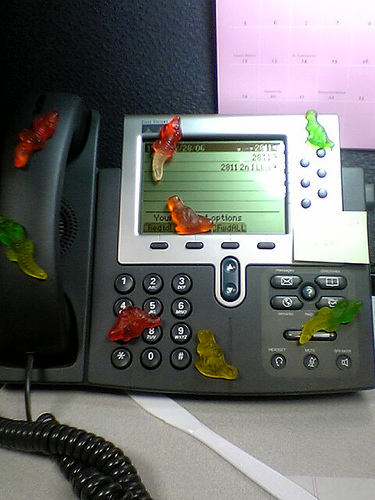
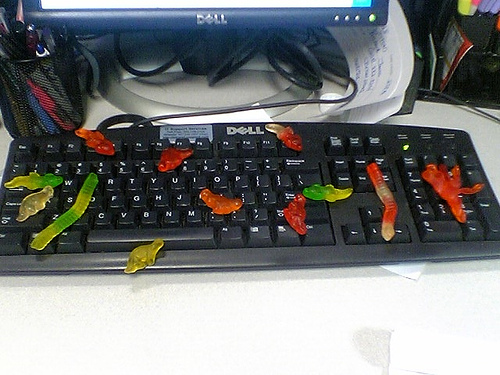
In the Year of the Mezcal, a prophecy was fulfilled. Don Gusano de Az car sired a critter the likes of which the world had never seen. This mahdi could not dispense honey, milk, orange juice, or ghee from his fingers. In point of fact, he had no fingers. What he had was the burning desire to liberate his brethren from the iron yoke of the She-Beast. He set up a vast terrorist network, the likes of which the world had seen many times over, for it was basically just a phone tree, a couple of code phrases, and a bunch of dullards. Then, having forged his legacy, he perished, suffering a series of strokes brought on by being forced to watch an episode of Full House . His minions bided their time until the coming of the Summer Solstice, and though they did not know how to say it in Portuguese, they eagerly sprang into action. [dialing phone] With daring and finesse, they commandeered an IP phone. [talking on phone] After 45 minutes of trying to add value, they failed to bring it to the table, since one major oversight was that they lacked any capacity to generate speech. H las ! cried the one that wasn't translucent at all, and he did so silently. [typing on keyboard] Cleverly devising a backup strategem, they rushed to a computer to send some emails. Unfortunately, Outlook crashed on them six times, and then they were, like, totally diverted by a fascinating exchange between two guys named BJ and William. By the time they managed. To send their first email. Which they typed like this. Because the little guy on the period key. Had a tick. It was too late. [STD transmission] Oh, you poor, foolish things! If only you had used free software, she wouldn't be giving you oral herpes right now.

John Goerzen: Now I'm a little annoyed at HP

So, a little while ago, I wrote about why I like HP. This week, I'm starting to be annoyed at them.

My employer just bought nearly $100,000 worth of HP hardware. We get a new MSA1500cs Fibre Channel SAN (with redundant controllers, FC switches, disks, etc), a new blade enclosure system, three blades to start with (all of them, at minimum, dual dual-core Opterons with 4GB RAM, and some considerably more), a rack to put all this in, etc.

So we're starting to set all this stuff up. I've got Debian installed on an NFS root for testing the blades and how they interact with the SAN.

The blades have an integrated dual-port QLogic QLA2312 Fibre Channel adapter. The Linux kernel has a built-in driver for this (qla2xxx), which detects it and, so far at least, works fine. We want to run kernel 2.6.17 because it's the first version where XFS has decent semantics for write ordering to prevent corruption after a power failure. Plus we want at least a 2.6.16.x kernel because we want to run the latest Xen 3.0 on these blades. (Live migration of virtual servers from blade to blade -- this will be great.)

But we learn that HP does not support the kernel qla2xxx driver. HP does not say WHY they don't support it, just that their own driver is the only one that they support.

After plowing through several annoying scripts to get to their driver, I realize why it fails to install: it is OLD. At BEST, 2.6.14 is the most recent kernel it would even compile against (release date: October 2005), and I think the most recent version it supports is more like 2.6.8 (almost TWO YEARS OLD now). They reference a whole bunch of kernel symbols and macros that were removed somewhere between 2.6.8 and 2.6.17.

I sent a ticket to HP support. Their first request was to run their system information gathering tool and send them the results. Fine, that's reasonable. I did so. Next they say, gee, you're running Debian, and we don't support that.

Argh.... If they tried to compile it against 2.6.17.1 on RedHat or SuSE, they'd get the exact same problem. I told them what symbols they were erroneously using, and a simple grep would have showed them that.

Besides, how many customers are going to be pleased with no upgrade path available for 2 years? I wouldn't want our kernel version to be held hostage to HP's slow driver development process.

Sigh.

Joey Hess: using a wiki for issue tracking

Does it make sense to use a wiki for issue tracking instead of using a standalone BTS? Martin Krafft suggested this might be a useful addition to ikiwiki. It seems to me that this would mostly be worthwhile if it took advantage of the free form, open nature of the wiki in useful ways. Reconciling that with some of the more structured needs of a BTS is an interesting challenge. Surveying a few examples of using a wiki as a BTS: There is a definite feeling about all of these of finding a vaguely nail-shaped bit and pounding on it with the wiki-hammer, but I'm unsure whether it's really a nail or just an obvious pointy bit sticking up out of the main problem of issue tracking. On the other hand, the same could probably be said about a BTS built using a relational database.

Edd Dumbill: Illustrated Rails, smart folks and publication

It's been a fun day today, the pre-conference warm up day for RailsConf.Over breakfast with Surj Patel and Matt Biddulph, we got to talking about debuggers and poking around inside Rails applications. With Rails being so new, I was intrigued in what happens when you hand a Rails application over to somebody. Does all the Rails magic help or hinder their ability to understand what's going on?What kind of ways are there, beyond documentation (which nobody writes), to communicate the workings of a Rails app? We thought that what might help would be some kind of graphical illustration of the flow of control, linked to a source viewer, that showed requests being processed. Rails is built in a convenient way for instrumentation and introspection, by virtue of the aggressive use of DSLs and Ruby's language features. Based on these, are there tools we can write to help people understand what a Rails application is doing?
I've not yet had enough experience of either handing off, or being handed, mature Rails apps to say for sure what's needed. But it's going to be a problem we all face when Rails sneaks further into the system. Java's redeeming quality in the enterprise is that it's damn hard to write anything one might consider idiomatic. As a consequence, there are predictable ways in which one can approach code written by somebody else, all other factors being equal. Will Rails idioms cause trouble for long-term maintainability?
Lunchtime included an interesting exchange with Rich Kilmer. Rich used to work for DARPA on RDF and OWL stuff, and has apparently written all manner of interesting Ruby code that processes RDF. It's a crime I'd not come across his work before, but it's all open sourced in the Semitar project. The project web page looks modest, but if Rich's description is anything to go by, it sounds a wonderfully appropriate way to approach programming for the semantic web.Finally, I notice that, as the day finishes, IBM developerWorks have published my Introduction to Rails for DB2 developers.RailsConf proper starts tomorrow. 

22 June 2006

Jesus Climent: Bye drupal. Hi, wordpress.

I moved to wordpress. I dont have neither the time nor the patience to upgrade drupal from 4.5.8 (the existing version on sid) to 4.7.x, the upstream version which was released some time ago. From 4.5 to 4.7 there is no upgrade path, so the Debian package that eventually needs to be uploaded has to provide an easy way to get there. But even the 4.5 -> 4.6 -> 4.7 path ended up in posts from the front page which were not in the RSS feed originally being posted without content to planets around the word. So, since I already host a couple of other wordpress services in my machine, decided to move to wordpress and will put the old database for historical reasons somewhere.

Steve Kemp: All that you feel is tranquillity

Ugh. I’d forgotten how annoying it is to reinstall existing systems. I’ve spent close to two hours reinstalling my “backup” PC. (This is the machine which used to be my primary desktop, now it mostly exists to host backups of my websites, and the primary machine which replaced it.) The intention was to reinstall so that I could setup a clean system with no desktop packages, and switch to using LVM. The machine hosts several Xen instances which are used to provide services such as DHCP + Debian package building. Backing up the data was easy, the Sarge installer is a pleasure to use, and I even remembered to copy all my SSH host keys. So why the pain? Well the machine is running Sid. (Will stick to Etch when it is available I think), and several packages which had been running happily for months such as apt-cacher were temporarily uninstallable. In the case of apt-cacher I was able to use approx instead - so that wasn’t a huge deal. But one thing tripping me up is sound. It was my main desktop system and had sound working fine. Now I have alsa setup, all the mixer volumes up to the max, and yet nothing. XMMS is playing happily - but absolutely no sound coming out. Apart from checking the mixer settings I can’t think of what else to do. Not a huge deal but it is a minor irritation since sometimes people come over and want a machine to use for surfing, etc, and I like to give them a standard desktop with links to my MP3 share, etc. Still all the main services are back up and running, GDM is available remotely via VNC, the logged in desktop is also shared via x11vnc, and the backups are starting to trickle back in. The current partition scheme looks something like this:
/dev/hda1                         on / type ext3 (rw,errors=remount-ro)
/dev/mapper/vol-home     on /home type ext3 (rw,noatime)
/dev/mapper/vol-backups on /backups type ext3 (rw,noatime)
Then I have a couple of xen domains:
	
skx@itchy:~$ sudo xm list
Name                              ID Mem(MiB) VCPUs State  Time(s)
Domain-0                           0      873     2 r-----   230.8
builder.my.flat                    1      128     1 -b----    39.8
dhcpdns.my.flat                  1       96      1 -b----    39.8
skx@itchy:~$
Now time to find food, and water my plants.

Uwe Hermann: 1000

Yesterday I managed to

Pierre Habouzit: Quote of the day

from #374685:
When you compare against classical UNIX/POSIX privileges, cdrecord needs the following privileges in addition to the UNIX/POSIX basic privs:
[ ]
- The ability to use port numbers below 1024
[ ]
Yes you obviously need to run an http server to allow remote monitoring of the CD-burn

Next.

Previous.