Search Results: "nic"

10 January 2016

Andrew Shadura: Public transport map of Managua

Holger Levsen writes about the public transport map of Managua, Nicaragua, which is, according to him, the first detailed map of Managua s bus network:
If you haven t been to Managua, you might not be able to immediatly appreciate the usefulness of this. Up until now, there has been no map nor timetable for the bus system, which as you can see now easily and from far away, is actually quite big and is used by 80% of the population in a city, where the streets still have no names.
Having had a look at the map they produced, I have to admit I quite liked it: MapaNica.net, Rutas de Managua y Ciudad Sandino MapaNica, the community behind said map, are raising funds to make lives of locals easier by publishing a printed version of the map and distributing it. They have already raised more than $3300 of their $7500 goal. Every further donation will help them print more maps. Please go to support.mapanica.net and support their initiative!

Holger Levsen: 20160110-support-mapanica-net

Please support the public transportation map of Manugua Some of you might remember DebConf12 in Managua, Nicaragua and the very friendly and helpful locals, who recently contacted me to tell me about their new project, so that I share this on planet Debian: A local community of openstreet map enthusiasts, of which some were involved in DebConf12, has collected for the first time detailed information about Managua's bus network! To bring their efforts further, they will now print these maps on paper, so that even more people can use them in their daily lives. If you haven't been to Managua, you might not be able to immediatly appreciate the usefulness of this. Up until now, there has been no map nor timetable for the bus system, which as you can see now easily and from far away, is actually quite big and is used by 80% of the population in a city, where the streets still have no names. If this made you curious (or just brought back happy memories from 2012) please go to http://support.mapanica.net and donate some money - their campaign is running for 3 more weeks and currently they have already raised 3300 USD, enough to print some maps, but 4200 USD short of their goal. Every further donation will help to print some more maps, even something as little as 20 USD or EUR will help people in their real lives to better understand the beast of Managua's bus route network.

9 January 2016

Norbert Preining: Kobo firmware 3.19.5761 mega update (KSM, nickel patch, ssh, fonts)

Since 3.18.0 there have been two new firmwares for the Kobo eInk devices. For the very recently released firmware release 3.19.5761 I have updated my collection of patches and features. As with previous mega-package, I prepared updates for all three hardwares, Mark4 (Glo), Mark5 (Aura), and Mark6 (GloHD), but only the one for Mark6 is tested by myself. Kobo Logo Changes since last release: Included patches from the Metazoa firmware patches: Custom reading footer style, My 15 line spacing values, Custom left & right margins, Brightness fine control, Search in Library by default, Custom page refresh options (1,2,3, ,12), Fix three KePub fullScreenReading bugs, Always display chapter name on navigation menu. Other things that are included are as usual: koreader, pbchess, coolreader, the ssh part of kobohack, and some side-loaded fonts. For details on the respective parts please see the previous post Download Mark6 Kobo GloHD firmware: Kobo 3.19.5761 for GloHD Mega update: Kobo-3.19.5761-combined/Mark6/KoboRoot.tgz Mark5 Aura firmware: Kobo 3.19.5761 for Aura Mega update: Kobo-3.19.5761-combined/Mark5/KoboRoot.tgz Mark4 Kobo Glo, Aura HD firmware: Kobo 3.19.5761 for Glo and AuraHD Mega update: Kobo-3.19.5761-combined/Mark4/KoboRoot.tgz Enjoy.

Daniel Pocock: Comments about people with mental illness

A quote:
As the Buddha said 2500 years ago... we're all out of our fucking minds. (Albert Ellis)
There have been a few occasions over the last year where people suffering mental illnesses have been the subject of much discussion. In March 2015 there was the tragic loss of Germanwings flight 9525. It was discovered that the co-pilot, Andreas Lubitz, had been receiving treatment for mental illness. Under strict privacy laws, nobody at his employer, the airline, had received any information about the diagnosis or treatment. During the summer, the private mailing list for a large online community discussed the mental illness of a contributor to a project. Various people expressed opinions that appeared to be generalizations about all those with mental illness. Some people hinted the illness was a lie to avoid work while others speculated about options for treatment. Nobody involved mentioned having any medical expertise. It is ironic that on the one hand, we have the dramatic example of an aircraft crashing at the hands of somebody who is declared unfit to work but working anyway and on the other hand when somebody else couldn't do something, the diagnosis is being disputed by people who find it inconvenient or don't understand it. More recently, there has been openly public discussion about whether another developer may have had mental illness. Once again, there doesn't appear to be any evidence from people with any medical expertise or documentation whatsoever. Some of the comments appear to be in the context of a grudge or justifying some other opinion. What's worse, some comments appear to suggest that mental illness can be blamed for anything else that goes wrong in somebody's life. If somebody is shot and bleeds to death, do you say low blood pressure killed him or do you just say he was shot? Likewise, if somebody is subject to some kind of bullying and abused, does this have no interaction with mental illness? In fact, Google reveals an enormous number of papers from experts in this field suggesting that mental illness can arise or be exacerbated by bad experiences. Although it may not have been clear at that point in time, when we look back at Alan Turing's death today, suicide was not a valid verdict and persecution was a factor. Statistics tell us that 1 in 4 people experience a mental health problem in the UK each year. In the USA it is 26% of the adult population, each year. These may be long term conditions or they may be short term conditions. They may arise spontaneously or they may be arising from some kind of trauma, abuse or harassment in the home, workplace or some other context. For large online communities, these statistics imply it is inevitable that some participants will be suffering from mental illness and others will have spouses, parents or children suffering from such conditions. These people will be acutely aware of the comments being made publicly about other people in the community. Social interaction also relates to the experience of mental illness, people who are supported by their community and society are more likely to recover while those who feel they are not understood or discriminated against may feel more isolated, compounding their condition. As a developer, I wouldn't really like the idea of doctors meddling with my code, so why is it that some people in the IT and business community are so happy to meddle around in the domain of doctors, giving such strong opinions about something they have no expertise in? Despite the tragic loss of life in Germanwings 9525, observing some of these other discussions that have taken place reminds me why Germany and some other countries do have such strict privacy laws for people who seek medical treatment. (You can Follow or Tweet about this blog on Twitter)

Guido G nther: Debian Fun in December 2015

Debian LTS December was the eighth month I contributed to Debian LTS under the Freexian umbrella. It was a bit of a funny month since most of the time most open CVEs were already taken care of by other team members (which is nice) but it resulted in me not releasing a single DLA which feels weird. Nevertheless in total I spent nine hours working on: On unpaid time I introduced some usertags for tracking our non DLA related activities (although it seems I'm currently the only user). Other Debian stuff

Dirk Eddelbuettel: digest 0.6.9

A new release, now at version number 0.6.9, of the digest package is now on CRAN. I also just prepared the Debian upload. This release is very large part the work of Thierry Onkelinx who added stable sha1 support in a new function sha1(). Here, stable means that numerically equivalent numbers (in the sense of the semi-famous R FAQ entry 7.31) result in identical hashes. This is useful for hashing results from numerical analysis---where the representation may differ bitwise between, say, 32 and 64-bit platforms. We started to write a little more about this in a (at this very point still rather unfinished) little vignette. We also had a nice pull request from fellow Rcpp hacker Qiang Kou who updated the code to use XLENGTH so that large vectors can be supported. CRANberries provides the usual summary of changes to the previous version.

This post by Dirk Eddelbuettel originated on his Thinking inside the box blog. Please report excessive re-aggregation in third-party for-profit settings.

8 January 2016

Alessio Treglia: OpenStack: a .deb guy on (the) board

The elections for the new OpenStack board are coming closer
and this time the Open Source community has a great
opportunity of representation: Giuseppe Patern is standing as a candidate for the board.

Although Giuseppe is considered by HP and Forrester Research
among the top talented consultants in the world,
Gippa (as he s largely known in the industry) is still one of us ,
a nerd that grew up with a keyboard on his hands.
As he s one of the candidates of the OpenStack board,
Fabio Marzocca wishing to know more has interviewed him.

[FM] The hard question. You re a techie. Why the hell are you running for the board?

[GP] This is indeed a good question It all started as a challenge from some clients and friends that are working in the OpenStack project. The truth is that the board and most of the management of the foundation are from vendors. I m not questioning here if they do a good job or not, it is very likely that they tend to protect their own interests. In my opinion it lacks some community spirit that have fostered Linux development such as Debian and Ubuntu. That s why I m running for it, to bring the community where it should be.

[FM] Back to Debian and Ubuntu, could you tell us your story with Linux?

[GP] I discovered Linux in 1994, but only in 1996 things were serious. By the time I just finished high school and I applied for a job in a local Internet Service Provider. At 15 years I was well known in the local community as I was installing and maintaining several BBSes, so it wasn t hard to get the job. I can say it was love at first sight. I started with Slackware (was the first distro), but I moved into redhat first and then debian. When I was working for the IBM Linux Technology Center, I was in charge of helping porting Linux to PowerPC and backporting LVM to make it similar to AIX. Sun was also a good playground as they acquired Cobalt, a hardware appliance based on debian. Then I shifted more towards Enterprise Linux adoption with 6 years in RedHat and then I went to Canonical. I was happy to go back to Debian and Ubuntu community, because I still believe that Ubuntu Developer Summits (UDS) were the real spirit of a Linux community.

[FM] Another hard question. We know you re somehow involved in the rebellion of Devuan.org. What is your opinion about systemd?

[GP] Let me tell you that it s not totally black/white and let s see the two sides here. Something like systemd was indeed needed. Each distro has its own way of init ing the system and for a package maintainer or commercial software maker, maintaining different init behaviour is insane. And as an init replacement it totally makes sense. However, IMHO systemd went too far away, incorporating into its code something that should not happen. A DHCP client into an init system, seriously? I doubt it was in the spirit of the Unix and Linux system
However, in the real world of pets vs cattle , where application matters more than systems, having a systemd as it is, doesn t change that much.

[FM] OpenStack was incubated in Ubuntu and the roots are quite clear. Is there something else that you would like to see from Debian and Ubuntu in OpenStack?

[GP] Stability, if I can name just one. Currently OpenStack is released every 6 months, which was probably the best choice to speed up the development. However, this is now becoming a weakness, as enterprise customers can t upgrade their critical infrastructures every 6 months. Traditionally Debian is maniacally focused on given a bullet-proof distribution, this is something that in my opinion is missing from OpenStack.

[FM] Gippa, tell us just 2 or 3 topics you will bring to action in case of election

[GP] I d like to introduce an OpenStack LTS process, following the Ubuntu approach: while releasing every 6 months is fair enough for development and testing environments, having a stable release every 2-3 years can give enterprise customers the peace of mind they need while running production environments.
I d also love to see a consolidation of the core (Nova/Neutron/Cinder/Swift): vendors and developers are introducing new features and projects while I d love to see for example- a more stable and scalable Neutron and a more stable connection to Oslo (in particular rabbitmq).
In general, I would encourage more attention to who is actually deploying, integrating and using OpenStack every day. I would also try to foster the ecosystem of ISVs in order to release and certify their software for OpenStack. And last but not least- to see interoperation between regional datacenters: I dream of a world where companies in a given territory can work together , and this is only possible through standards. I hope that OpenStack can represent this standard.

[FM] When are the elections and how can we vote?

[GP] Individual Member Director elections for the 2016 Board will be held online from Monday January 11, 2016 to Friday January 15, 2016. More informations on the website.

Norbert Preining: Fighting with IPv6

During the last weeks I finally got my hands dirty with IPv6. A comment on my blog and an email informed me that my server (hosting this blog) is not reachable via IPv6, albeit it has an IPv6 address. That said, I tried to get that running and fell into several holes, due to firewalls, my home provider not doing IPv6, and not the least due to my own ignorance of IPv6. ipv6-pain Fortunately, with the help of some good souls and the technical support I finally got IPv6 connectivity on both my server, as well as at home, up. Server So my server is still running wheezy, which is a bit old, but upgrading with lots of hand-installed stuff is a bit a pain. The network interface was configured via a static IPv4 address, and no traces of IPv6 for now. Simple minded as I am, I assumed that this is the problem and started playing around with all kind of IPv6 configurations in the interfaces file, from using dhcp, and static configuration. The static configuration somehow worked out, but I never got a proper default route set. So I was really puzzled. In addition, at home I don t have IPv6, my provider is not distributing IPv6, so I couldn t test it (but on this a bit later). Fortunately, the good soul from the Netherland Filip B., did a lot of testing and also send permanent suggestions and analysis of the IPv6 situation, I am very much indebted to him. Anyway, his last advice about the problem with the default route was contacting the technical support of my provider, who within a very short time sent me an answer which made it clear to me: My firewall was blocking some ports that are necessary for IPv6 route autonegotiation. As firewall I use ferm, kind of a meta iptables language. In my server s setup the firewall blocks most of the ip traffic outside the expected servers, as well as does rate limit checks on ssh connections (those script kiddies). And while I have had some of the icmpv6 types allowed, it seemed that was insufficient. The solution at the end was to open icmpv6-type s 1-4, 133-137, 141, 142, 148, 149, as well as 130-132 from link-local adresses (fe80::/10). After having changed my ferm.conf, even removing everything related to IPv6 from the interfaces file and rebooting finally provided the server with an IPv6 address and a proper route. Wow, first step done. For Apache, fortunately I am doing already wildcard definitions, so no change was necessary and voil , the server is reachable via IPv6. Home As already mentioned, my provider at home does not provide IPv6 addresses. In addition, the DNS server of the provider is also very, well, peculiar about resolving IPv6 (i.e., AAAA records). Trying to get the AAAA record for ipv6.google.com works without a problem:
$ host -t AAAA ipv6.google.com
ipv6.google.com is an alias for ipv6.l.google.com.
ipv6.l.google.com has IPv6 address 2404:6800:4002:803::1003
but trying this with my own server, or for that matter any other server, resulted in no answer (preining.info has no AAAA record). Well, that didn t help. Despite these problems, I tried to get an IPv6 address via 6-in-4 tunneling (tunnelbroker), but that didn t work either, probably due to some reverse lookup and the fact that between the world and me there is a cable modem and a wlan router that all on top of the slightly funny infrastructure here in Japan, where you have to rent lines from NTT, but use a different company as Internet provider. I finally found the solution that worked for me, and that is installing miredo, available in Debian. Installation of the package, and starting the miredo service with systemctl start miredo (or /etc/init.d/miredo start) gave me in an instant a working IPv6 connectivity. ping6 worked on IPv6 addresses. Still, I couldn t fix the DNS lookup problem, so for the time being I have added IPv6 addresses for my own server in /etc/hosts, and by using the SixOrNot Firefox plugin I can actually check that it works. Conclusion It is 2016, and we are still far from end-to-end IPv6, and I have to admit that also my IPv6 knowledge is quite meager, and that I only recently have started to grasp some understanding. The good point was that Debian wheezy already works out of the box with IPv6 (if one is not as clumsy as me and blocks the necessary ports), including web servers and mail servers. I have also contacted my provider (AsahiNet) in the hope that they can update their DNS server, and learned that they are planning to roll out IPv6 addresses in the near future whatever that might mean in Japan, maybe next century?

Dirk Eddelbuettel: AsioHeaders 1.11.0-1

Making it easier to use C++ in R has been a really nice and rewarding side effect of the work on Rcpp. One really good idea came from something Jay Emerson, Michael Kane and had I kicked about for way too long: shipping Boost headers for easier use by R and CRAN packages (such as their family of packages around bigmemory). The key idea here is headers: Experienced C++ authors such as library writers can organise C++ code in such a way that one can (almost always) get by without any linking. Which makes deployment so much easier in most use cases, and surely also with R which knows how to set an include path. So after years of "yes we really should", Jay deserves the credit for actually sitting down almost three years ago and creating the first version. So at the end of January 2013, we released BH version 1.51.0-0. By now the package is used fifty-four other CRAN packages --- clearly a much stronger uptake then we ever expected. I took over maintenance at some point, and we are currently in-line with the most recent Boost release 1.60.0. But some people were always lusting after (some) parts of Boost which also require linking. For some libraries (such as Boost.Date_Time in my RcppBDT package) you can set a #define to not require linking (and forego some string formatting or parsing we get from R anyway). Some others are trickier; Boost Regex is one example. I do not think you can use it without linking (but then C++11 helps and finally brings regular expression in the default library). Another library which the systems / network programmers at work would frequently rely upon is Boost.Asio, a cross-platform C++ library for network and low-level I/O programming. It was already used on CRAN by the iptools package by Bob Rudis and Oliver Keyes which shied away from building on Windoze (while 'doze and Boost do get along, but the CRAN system makes it a little more involved). A couple of days ago, I somehow learned that the Asio library actually comes in two flavours: the well-known Boost.Asio (requiring linking), and also as a header-only standalone library! Well, well, well -- so I ran that by Bob and Oliver asking if that would be useful. And the response was a resounding and pretty much immediate Hell, Yes!. So I wrapped it in a package, told Bob about it, who tested it and gave the thumbs up. And after a slightly longer-than-usual on-boarding, the package is now on CRAN. As network (and systems) programming is not entirely uncommon even at CRAN, I hope that this package may find a few more use cases. A new version of iptools should be forthcoming "shortly", including for the first time a Windows build thanks to this package. The indefatigable Martin Morgan already spotted our GitHub repo and scored the first fork. Comments and suggestions about AsioHeaders are welcome via the issue tracker at the GitHub GitHub repo.

This post by Dirk Eddelbuettel originated on his Thinking inside the box blog. Please report excessive re-aggregation in third-party for-profit settings.

7 January 2016

Elena 'valhalla' Grandi: Smartphones, ownership and hope for the fate of humanity

Smartphones, ownership and hope for the fate of humanity
Do you own your phone or does it own you? DanielPocock.com


I have conflicting opinions about this article.

Usually I carry a dumb phone, so I'm not completely disconnected, but I'm mostly self-limited to "useful" communications by the fact that I have to pay for calls and SMSs. It also has a few useful features like showing the time , an alarm clock and a led torch, but that's it.

I also carry a smartphone, but I've never been able to trust it with my personal data, so there is no email on it and no communication software. It's also always offline to preserve battery, unless I'm actually using it for something (usually maps). It does have an offline wikipedia reader, which is the second thing I use it more often for. About half of the time I try to use it, however, it is off because I forgot to charge it, unless I've planned in advance to use it (which usually means I'm also carrying a laptop and will need to tether it).

So I guess that I should be agreeing with the article that offline life is better, and that we shouldn't depend on phones in our daily life, and mostly I do.

On the other hand, I'm not so sure that all of the people who seem to be interacting with a phone are actually disconnected from the local reality.

More than once I've experienced the use of smartphones as part of a local interaction: one typical case involves people having a conversation IRL and checking some fact on the internet and then sharing the results with the rest of the local group.

Actually, most of the time I've seen a smartphone being used at our table while eating with friends or collegues it was being passed around to show something to the people at the table, or at the very least being read aloud from, so it was part of the local experience, not a way to disconnect from it.

I'm sure that there are cases of abuse, but I still have hope that most of the connected humanity is managing to find a good balance between online and offline.

I don't want to go back carrying a wrist watch. I remember them as something unconfortable that ended up hitting stuff as I moved my hands, and I'd rather have my wrists free while I type, thanks. Pocket watches, OTOH...

the main exception involved one young adult in the middle of significantly older relatives, which is a somewhat different issue, and one that I believe predated smartphones (IIRC in my case similar situations involved trying to be somewhere else by reading a book).

Daniel Pocock: Do you own your phone or does it own you?

Have you started thinking about new year's resolutions for 2016? Back to the gym or giving up sugary drinks? Many new year's resolutions have a health theme. Unless you have a heroin addiction, there may not be anything else in your life that is more addictive and has potentially more impact on your health and quality of life than your mobile phone. Almost every week there is some new report about the negative impact of phone use on rest or leisure time. Children are particularly at risk and evidence strongly suggests their grades at school are tanking as a consequence. Can you imagine your life changing for the better if you switched off your mobile phone or left it at home for one day per week in 2016? If you have children, can you think of anything more powerful than the example you set yourself to help them stay in control of their phones? Children have a remarkable ability to emulate the bad habits they observe in their parents. Are you in control? Turning it off is a powerful act of showing who is in charge. If you feel you can't live without it, then you are putting your life in the hands of the people who expect an immediate answer of their calls, your phone company and the Silicon Valley executives who make all those apps you can't stop using. As security expert Jacob Appelbaum puts it, cell phones are tracking devices that also happen to make phone calls. Isn't that a chilling thought to reflect on the next time you give one as Christmas gift? For your health, your children and your bank balance Not so long ago we were having lunch in a pizza restaurant in Luzern, a picturesque lakeside town at the base of the Swiss Alps. Luzern is a popular first stop for tourists from all around the world. A Korean family came along and sat at the table next to us. After ordering their food, they all immediately took out their mobile devices and sat there in complete silence, the mother and father, a girl of eight and a boy of five, oblivious to the world around them and even each other, tapping and swiping for the next ten minutes until their food arrived. We wanted to say hello to them, I joked that I should beep first, initiating communication with the sound of a text message notification. Is this how all holidays will be in future? Is it how all families will spend time together? Can you imagine your grandchildren and their children sharing a meal like this in the year 2050 or beyond? Which gadgets does Bond bring to Switzerland? On Her Majesty's Secret Service is one of the more memorable Bond movies for its spectacular setting in the Swiss Alps, the location now transformed into a mountain-top revolving restaurant visited by thousands of tourists every day with a comfortable cable car service and hiking trails with breathtaking views that never become boring. Can you imagine Bond leaving behind his gun and his skis and visiting Switzerland with a smartphone instead? Eating a pizza with one hand while using the fingertips of the other to operate an app for making drone strikes on villains, swiping through Tinder for a new girl to replace the one who died (from boredom) in his previous "adventure" and letting his gelati melt while engrossed in a downhill ski or motorcycle game in all the glory of a 5.7" 24-bit colour display? Of course its absurd. Would you want to live like that yourself? We see more and more of it in people who are supposedly in Switzerland on the trip of a lifetime. Would you tolerate it in a movie? The mobile phone industry has paid big money to have their technology appear on the silver screen but audience feedback shows people are frustrated with movies that plaster the contents of text messages across the screen every few minutes; hopefully Bond movies will continue to plaster bullets and blood across the screen instead. Time for freedom How would you live for a day or a weekend or an entire holiday without your mobile phone? There are many small frustrations you may experience but the biggest one and the indirect cause of many other problems you will experience may be the inability to tell the time. Many people today have stopped wearing a watch, relying instead upon their mobile phone to tell the time. Without either a phone or a watch, frustration is not far away. If you feel apprehension just at the thought of leaving your phone at home, the lack of a watch may be a subconcious factor behind your hesitation. Trying is better than reading Many articles and blogs give opinions about how to buy a watch, how much to spend and what you can wear it with. Don't spend a lot of time reading any of it, if you don't know where to start, simply go down to the local high street or mall and try them. Start with the most glamorous and expensive models from Swiss manufacturers, as these are what everything else is compared to and then perhaps proceed to look more widely. While Swiss brands tend to sell through the stores, vendors on Amazon and eBay now distribute a range of watches from manufacturers in Japan, China and other locations, such as Orient and Invicta, at a fraction of the price of those in the stores. You still need to try a few first to identify your preferred style and case size though. Google can also turn up many options for different budgets.

Copying or competition? Similarity of Invicta (from Amazon) and Rolex Submariner You may not know whether you want a watch that is manually wound, automatically wound or battery operated. Buying a low-cost automatic model online could be a good way to familiarize yourself before buying anything serious. Mechanical watches have a smoother and more elegant second-hand movement and will survive the next Carrington event but may come to grief around magnets - a brief encounter with a low-cost de-gausser fixes that. Is it smart to buy a smart watch? If you genuinely want to have the feeling of complete freedom and control over technology, you may want to think twice about buying a smart watch. While it may be interesting to own and experiment with it some of the time, being free from your phone means being free from other electronic technology too. If you do go for a smart watch (and there are many valid reasons for trying one some of the time), maybe make it a second (or third) watch. Smart watches are likely to be controversial for some time to come due to their impact in schools (where mobile phones are usually banned) and various privacy factors. Help those around you achieve phone freedom in 2016 There will be further blogs on this theme during 2016, each looking at the pressures people face when with or without the mobile phone. As a developer of communications technology myself, you may be surprised to see me encouraging people not to use it every waking minute. Working on this technology makes me more conscious of its impact on those around me and society in general. A powerful factor to consider when talking about any communications technology is the presence of peer pressure and the behavior of those around you. Going phone-free may involve helping them to consider taking control too. Helping them out with a new watch as a gift (be careful to seek advice on the style that they are likely to prefer or ensure the purchase can be exchanged) may be an interesting way to help them engage with the idea and every time they look at the time, they may also be reminded of your concern for their freedom.

Rhonda D'Vine: Chipzel

Happy new year everyone! Let's start with another round of nice music, this time it is coming from Chipzel who is a great chiptune composer. Given that I'm coming from a c64 background I love chip tunes, and she does a really great job in that area. Check it out! And like always, enjoy!

/music permanent link Comments: 0 Flattr this

Enrico Zini: downgrading-network-manager

Downgrading network-manager This morning I woke up. Bad idea. I find in the work mail a compiler error that I cannot reproduce, so I need to log into a machine at work. But #809195. I decided to downgrade network-manager. I recall there was a tool to download packages from snapshots.debian.org, I discussed it recently on IRC, let's sync the IRC logs from my server. Or not (#810212). Never mind, I'll log into the server and grep. Ooh, it's debsnap. However, it doesn't quite do what I hoped (#667712). After some help from #debian-devel (thanks jcristau and LebedevRI), here is how to downgrade network-manager:
# echo "deb http://snapshot.debian.org/archive/debian/20151125T155830Z/ sid main" >> /etc/apt/sources.list.d/tmp-downgrade-nm.list
# apt -o Acquire::Check-Valid-Until=false update
# apt -o Acquire::Check-Valid-Until=false install network-manager=1.0.6-1
# rm /etc/apt/sources.list.d/tmp-downgrade-nm.list
# service network-manager restart
And as user:
$ killall nm-applet
$ nm-applet &
The yak is now nice and shaved, I can now go and see what those compiler errors are all about. Actually, no, there was still an unshaved patch on the yak, and now we have a debcya script.

6 January 2016

Steinar H. Gunderson: IPv6 non-alternatives: DJB's article, 13 years later

With the world passing 10% IPv6 penetration over the weekend, we see the same old debates coming up again; people claiming IPv6 will never happen (despite several years now of exponential growth!), and that if they had only designed it differently, it would have been all over by now. In particular, people like to point to a 2002 3 article by D. J. Bernstein, complete with rants about how Google would never set up useless IPv6 addresses (and then they did that in 2007 I was involved). It's difficult to understand exactly what the article proposes since it's heavy on calling people idiots and light on actual implementation details (as opposed to when DJB's gotten involved in other fields; e.g. thanks to him we now have elliptical curve crypto that doesn't suck, even if the reference implementation was sort of a pain to build), but I will try to go through it nevertheless and show how I cannot find any way it would work well in practice. One thing first, though: Sorry, guys, the ship has sailed. Whatever genius solution DJB may have thought up that I'm missing, and whatever IPv6's shortcomings (they're certainly there), IPv6 is what we have. By now, you can not expect anything else to arise and take over the momentum; we will either live with IPv6 or die with IPv4. So, let's see what DJB says. As far as I can see, his primary call is for a version of IPv6 where the address space is an extension of the IPv4 space. For sake of discussion, let's call that IPv4+ , although it would share a number of properties with IPv6. In particular, his proposal requires changing the OS and other software on every single end host out there, just as IPv6; he readily admits that and outlines how it's done in rough terms (change all structs, change all configuration files, change all databases, change all OS APIs, etc.). From what I can see, he also readily admits that IPv4 and IPv4+ hosts cannot talk to each other, or more clearly, we cannot start using the extended address space before almost everybody has IPv4+ capable software. (E.g., quote: Once these software upgrades have been done on practically every Internet computer, we'll have reached the magic moment: people can start relying on public IPv6 addresses as replacements for public IPv4 addresses. ) So, exactly how does the IPv4 address space fit into the IPv4+ address space? The article doesn't really say anything about this, but I can imagine only two strategies: Build the IPv4+ space around the IPv4 space (ie., the IPv4 space occupies a little corner of the IPv4+ space, similar to how v4-mapped addresses are used within software but not on the wire today, to let applications do unified treatment of IPv4 addresses as a sort of special IPv6 address), or build it as a hierarchical extension. Let's look at the former first; one IPv4 address gives you one IPv4+ addresses. Somehow this seems to give you all the disadvantages of IPv4 and all the disadvantages of IPv6. The ISP is not supposed to give you any more IPv4+ addresses (or at least DJB doesn't want to contact his ISP about more also saying that the fact that automatic address distribution does not change his argument), so if you have one, you're stuck with one. So you still need NAT. (DJB talks about proxies , but I guess that the way things evolved, this either actually means NAT, or it talks about the practice of application-level proxies such as Squid or SOCKS proxies to reach the Internet, which really isn't commonplace anymore, so I'll assume for the sake of discussion it means NAT.) However, we already do NAT. The IPv4 crunch happened despite ubiquitous NAT everywhere; we're actually pretty empty. So we will need to hand out IPv4+ addresses at the very least to new deployments, and also probably reconfigure every site that wants to expand and is out of IPv4 addresses. ( Site here could mean any organizational unit, such as if your neighborhood gets too many new subscribers for your ISP's local addressing scheme to have enough addresses for you.) A much more difficult problem is that we now need to route these addresses on the wire. Ironically, the least clear part of DJB's plan is step 1, saying we will extend the format of IP packets to allow 16-byte addresses ; how exactly will this happen? For this scheme, I can only assume some sort of IPv4 option that says the stuff in the dstaddr field is just the start and doesn't make sense as an IPv4 address on its own; here are the remaining 12 bytes to complete the IPv4+ address . But now your routers need to understand that format, so you cannot do with only upgrading the end hosts; you also need to upgrade every single router out there, not just the end hosts. (Note that many of these do routing in hardware, so you can't just upgrade the software and call it a day.) And until that's done, you're exactly in the same situation as with IPv4/IPv6 today; it's incompatible. I do believe this option is what DJB talks about. However, I fail to see exactly how it is much better than the IPv6 we got ourselves into; you still need to upgrade all software on the planet and all routers on the planet. The benefit is supposedly that a company or user that doesn't care can just keep doing nothing, but they do need to care, since they need to upgrade 100% of their stuff to understand IPv4+ before we can start even deploying it alongside IPv4 (in contrast with IPv6, where we now have lots of experience in running production networks). The single benefit is that they won't have to renumber until they need to grow, at which point they need to anyway. However, let me also discuss the other possible interpretation, namely that of the IPv4+ address space being an extension of IPv4, ie. if you have 1.2.3.4 in IPv4, you have 1.2.3.4.x.x.x.x or similar in IPv4+. (DJB's article mentions 128-bit addresses and not 64-bit, though; we'll get to that in a moment.) People keep bringing this up, too; it's occasionally been called BangIP (probably jokingly, as in this April Fool's joke) due to the similarity with how explicit mail routing would work before SMTP became commonplace. I'll use that name, even though others have been proposed. The main advantage of BangIP is that you can keep your Internet core routing infrastructure. One way or the other, they will keep seeing IPv4 addresses and IPv4 packets; you need no new peering arrangements etc.. The exact details are unclear, though; I've seen people suggest GRE tunneling, ignoring problems they have through NAT, and I've seen suggestions of IPv4 options for source/destination addresses, also ignoring that someting as innocious as setting the ECN bits has been known to break middleboxes left and right. But let's assume you can pull that off, because your middlebox will almost certainly need to be the point that decapsulates BangIP anyway and converts it to IPv4 on the inside, presumably with a 10.0.0.0/8 address space so that your internal routing can keep using IPv4 without an IPv4+ forklift upgrade. (Note that you now lose the supposed security benefit of NAT, by the way, although you could probably encrypt the address.) Of course, your hosts will need to support IPv4+ still, and you will need some way of communicating that you are on the inside of the BangIP boundary. And you will need to know what the inside is, so that when you communicate on this side, you'll send IPv4 and not IPv4+. (For a home network with no routing, you could probably even just do IPv4+ on the inside, although I can imagine complications.) But like I wrote above, experience has shown us that 32 extra bits isn't enough. One layer of NAT isn't doing it, we need two. You could imagine the inter-block routability of BangIP helping a fair bit here (e.g., a company with too many machines for 10.0.0.0/8 could probably easily get more addresses for more external IPv4 addresses, yielding 10.0.0.0/8 blocks), but ultimately, it is a problem that you chop the Internet off in two distinct halves that work very differently. My ISP will probably want to use BangIP for itself, meaning I'm on the outside of the core; how many of those extra bits will they allocate for me? Any at all? Having multiple levels of bang sounds like pain; effectively we're creating a variable-length address. Does anyone ever want that? From experience, when we're creating protocols with variable-length addresses, people just tend to use the maximum level anyway, so why not design it with 128-bit to begin with? (The original IP protocol proposals actually had variable-length addresses, by the way.) So we can create our 32/96 BangIP , where the first 32 bits are for the existing public Internet, and then every IPv4 address gives you a 2^96 addresses to play with. (In a sense, it reminds me of 6to4, which never worked very well and is now thankfully dead.) However, this makes the inside/outside-core problem even worse. I now need two very different wire protocols coexisting on the Internet; IPv4+ (which looks like regular IPv4 to the core) for the core, and a sort of IPv4+-for-the-outside (similar to IPv6) outside it. If I build a company network, I need to make sure all of my routers are IPv4+-for-the-outside and talk that, while if I build the Internet core, I need to make sure all of my connections are IPv4 since I have no guarantee that I will be routable on the Internet otherwise. Furthermore, I have a fixed prefix that I cannot really get out of, defined by my IPv4 address(es). This is called hierarchical routing , and the IPv6 world gave it up relatively early despite it sounding like a great idea at first, because it makes multihoming a complete pain: If I have an address 1.2.3.4 from ISP A and 5.6.7.8 from ISP B, which one do I use as the first 32 bits of my IPv4+ network if I want it routable on the public Internet? You could argue that the solution for me is to get an IPv4 PI netblock (supposedly a /24, since we're not changing the Internet core), but we're already out of those, which is why we started this thing to begin with. Furthermore, if the IPv4/IPv4+ boundary is above my immediate connection to the Internet (say, ISP A doesn't have an IPv4 address, just IPv4+), I'm pretty hosed; I cannot announce an IPv4 netblock in BGP. The fact that the Internet runs on largely the same protocol everywhere is a very nice thing; in contrast, what is described here really would be a mess! So, well. I honestly don't think it's as easy to just do extension instead of alternative when it comes to the address spaces. We'll just need to deal with the pain and realize that upgrading the equipment and software is the larger part of the job anyway, and we'll need to do that no matter what solution we go with. Congrats on reaching 10%! Now get to work with the remaining 90%.

Ingo Juergensmann: Letsencrypt: challenging challenges

On December 3rd 2015 the Letsencrypt project went to public beta and this is a good thing! Having more and more websites running on good and valid SSL certificates for their HTTPS is a good thing, especially because Letsencrypt takes care of renewing the certs every now and then. But there are still some issues with Letsencrypt. Some people criticize the Python client needing root priviledges and such. Others complain that Letsencrypt currently only supports webservers. Well, I think for a public beta this is what we could have expected from the start: the Letsencrypt project focussed on a reference implementation and there are already other implementations being available. But one thing seems to a problem within the design of how Letsencrypt works as it uses a challenge response method to verify that the requesting user is controlling the domain for which the certificate shall be issued. This might work well in simple deployments, but what about a little more complex setups like multiple virtual machines and different protocols involved. For example: you're using domain A for your communication like user@example.net for your mail, XMPP and SIP. Your mailserver runs on one virtual machine, whereas the webserver is running on a different virtual machine. The same for XMPP and SIP: a seperate VM as well. Usually the Letsencrypt approach would be that you configure your webserver (by configure /.well-known/acme-challenge/* location or use a standalone server on port 443) to handle the challenge response requests. This would give you a SSL cert for your webserver example.net. Of course you could copy this cert to your mail-, XMPP- and SIP-server, but then again you have to do this everytime the SSL cert gets renewed. Another challenge is of course that you are not only have one or two domains, but a bunch of domains. In my case I host approximately >60 domains. Basically the mail for all domains are handled by my mailserver running on its own virtual machine. The webserver is located on a different VM. For some domains I offer XMPP accounts on a third VM. What is the best way to solve this problem? Moving everything to just one virtual machine? Naaah! Writing some scripts to copy the certs as needed? Not very smart as well. Using a network share for the certs between all VMs? Hmmm... would that work? And what about TLSA entries of your DNSSEC setup? When a SSL cert is renewed than the fingerprint might need an update in your DNS zone - for several protocols like mail, XMPP, SIP and HTTPS. At least the Bash implementation of Letsencrypt offers a "hook" which is called after the SSL cert has been issued. What are you ways to deal with this kind of handling the ACME protocol challenges and multi-domain, multi-VM setup?
Kategorie:

Daniel Pocock: Want to use free software to communicate with your family in Christmas 2016?

Was there a friend or family member who you could only communicate with using a proprietary, privacy-eroding solution like Skype or Facebook this Christmas? Would you like to be only using completely free and open solutions to communicate with those people next Christmas? Developers Even if you are not developing communications software, could the software you maintain make it easier for people to use "sip:" and "xmpp:" links to launch other applications? Would this approach make your own software more convenient at the same time? If your software already processes email addresses or telephone numbers in any way, you could do this. If you are a web developer, could you make WebRTC part of your product? If you already have some kind of messaging or chat facility in your website, WebRTC is the next logical step. If you are involved with the Debian or Fedora projects, please give rtc.debian.org and FedRTC.org a go and share your feedback. If you are involved with other free software communities, please come to the Free-RTC mailing list and ask how you can run something similar. Everybody can help Do you know any students who could work on RTC under Google Summer of Code, Outreachy or any other student projects? We are particularly keen on students with previous experience of Git and at least one of Java, C++ or Python. If you have contacts in any universities who can refer talented students, that can also help a lot. Please encourage them to contact me directly. In your workplace or any other organization where you participate, ask your system administrator or developers if they are planning to support SIP, XMPP and WebRTC. Refer them to the RTC Quick Start Guide. If your company web site is built with the Drupal CMS, refer them to the DruCall module, it can be installed by most webmasters without any coding. If you are using Debian or Ubuntu in your personal computer or office and trying to get best results with the RTC and VoIP packages on those platforms, please feel free to join the new debian-rtc mailing list to discuss your experiences and get advice on which packages to use. Everybody is welcome to ask questions and share their experiences on the Free-RTC mailing list. Please also come and talk to us at FOSDEM 2016, where RTC is in the main track again. FOSDEM is on 30-31 January 2016 in Brussels, attendance is free and no registration is necessary. This mission can be achieved with lots of people making small contributions along the way.

5 January 2016

Daniel Pocock: Promoting free software and free communications on popular social media networks

(You can Follow or Tweet about this blog on Twitter) Sites like Twitter and Facebook are not fundamentally free platforms, despite the fact they don't ask their users for money. Look at how Facebook's censors confused Denmark's mermaid statue with pornography or how quickly Twitter can make somebody's account disappear, frustrating public scrutiny of their tweets and potentially denying access to vital information in their "direct message" mailbox. Then there is the fact that users don't get access to the source code, users don't have a full copy of their own data and, potentially worst of all, if most people bothered to read the fine print of the privacy policy they would find it is actually a recipe for downright creepiness. Nonetheless, a significant number of people have accounts in these systems and are to some extent contactable there. Many marketing campaigns that have been successful today, whether they are crowdfunding, political activism or just finding a lost cat claim to have had great success because of Twitter or Facebook. Is this true? In reality, many users of those platforms follow hundreds of different friends and if they only check-in once a day, filtering algorithms show them only a small subset of what all their friends posted. Against these odds, just posting your great idea on Facebook doesn't mean that more than five people are actually going to see it. Those campaigns that have been successful have usually had something else going in their favour, perhaps it was a friend working in the media who gave their campaign a plug on his radio show or maybe they were lucky enough to be slashdotted. Maybe it was having the funds for a professional video production with models who pass off as something spontaneous. The use of Facebook or Twitter alone did not make such campaigns successful, it was just part of a bigger strategy where everything fell into place. Should free software projects, especially those revolving around free communications technology, use such platforms to promote themselves? It is not a simple question. In favour, you could argue that everything we promote through public mailing lists and websites is catalogued by Google anyway, so why not make it easier to access for those who are on Facebook or Twitter? On top of that, many developers don't even want to run their own mail server or web server any more, let alone a self-hosted social-media platform like pump.io. Even running a basic SIP proxy server for the large Debian and Fedora communities involved a lot of discussion about the approach to support it. The argument against using Facebook and Twitter is that you are shooting yourself in the foot, when you participate in those networks, you give them even more credibility and power (which you could quantify using Metcalfe's law). The Metcalfe value of their network, being quadratic rather than linear, shoots ahead of the Metcalfe value of your own solution, putting your alternative even further out of reach. On top of that, the operators of the closed platform are able to evaluate who is responding to your message and how they feel about it and use that intelligence to further undermine you. In some cases, there may be passive censorship, such as WhatsApp silently losing messages that link to rival Telegram. How do you feel about this choice? How and when should free software projects and their developers engage with mainstream social media technology? Please come and share your ideas on the Free-RTC mailing list or perhaps share and Tweet them.

Benjamin Mako Hill: Celebrate Aaron Swartz in Seattle (or Atlanta, Chicago, Dallas, NYC, SF)

I m organizing an event at the University of Washington in Seattle that involves a reading, the screening of a documentary film, and a Q&A about Aaron Swartz. The event coincides with the third anniversary of Aaron s death and the release of a new book of Swartz s writing that I contributed to. aaronsw-tiob_bwcstw The event is free and open the public and details are below:

WHEN: Wednesday, January 13 at 6:30-9:30 p.m.

WHERE: Communications Building (CMU) 120, University of Washington

We invite you to celebrate the life and activism efforts of Aaron Swartz, hosted by UW Communication professor Benjamin Mako Hill. The event is next week and will consist of a short book reading, a screening of a documentary about Aaron s life, and a Q&A with Mako who knew Aaron well details are below. No RSVP required; we hope you can join us.

Aaron Swartz was a programming prodigy, entrepreneur, and information activist who contributed to the core Internet protocol RSS and co-founded Reddit, among other groundbreaking work. However, it was his efforts in social justice and political organizing combined with his aggressive approach to promoting increased access to information that entangled him in a two-year legal nightmare that ended with the taking of his own life at the age of 26.

January 11, 2016 marks the third anniversary of his death. Join us two days later for a reading from a new posthumous collection of Swartz s writing published by New Press, a showing of The Internet s Own Boy (a documentary about his life), and a Q&A with UW Communication professor Benjamin Mako Hill a former roommate and friend of Swartz and a contributor to and co-editor of the first section of the new book. If you re not in Seattle, there are events with similar programs being organized in Atlanta, Chicago, Dallas, New York, and San Francisco. All of these other events will be on Monday January 11 and registration is required for all of them. I will be speaking at the event in San Francisco.

4 January 2016

Bernd Zeimetz: open-vm-tools updated

In January 2014 the open-vm-tools package was orphaned and I took the chance to take over the maintenance. Unfortunately the package is still not 100% in the shape I d like to see it, but I m getting closer. I have to say Thank You for a lot of good bug reports, especially for those use cases which are hard to test/reproduce for me (running Debian in a Windows-based VMware Workstation Player for example .). At conova communications GmbH, the company I work for, we are using the package on all of our Debian VMs, both for customer and internal use. It is essential for us to have properly working open-vm-tools - not only to be able to shutdown the VM from VMware vCenter, but also because tools like vSphere Data Protection and Veeam depend on it. Good thing is that I can work on and test the package at work and breakages are detected early and fast normally. Getting a good contact to the VMware upstream was easy and the developers there are helpful and reply pretty fast to their emails. Also as it seems there are finally real commits showing up in the open-vm-tools github repository again, not only huge single commits with a full release. It is not only nice to see that they are moving into the right direction again, but also this is really helpful in fixing (urgent) bugs before the next release of open-vm-tools - or to backport a fix to the versoin in stable/oldstable. Since a few days we have open-vm-tools 10.0.5-3227872 in If you are using VMware ESX 5.5 or newer, you should upgrade to the backports versions. Same if you use a recent VMware player version. Please note that since 10.0.0 the open-vm-dkms package is only necessary if you need the legacy vmxnet module. This is only the case if you are using very old VM hardware versions. vmxnet3 is shipped in the Debian kernel, so you don t need to compile extra modules to use it. The vmhgfs module was replaced by a fuse-based implementation. If you d like to help maintaining the package, please send bugs/patches via the Debian BTS or even better - send pull requests for pkg-open-vm-tools. The repository is mirrored to git.bzed.at in case you want to avoid github.
John Goerzen: Hiking a mountain with Ian Murdock

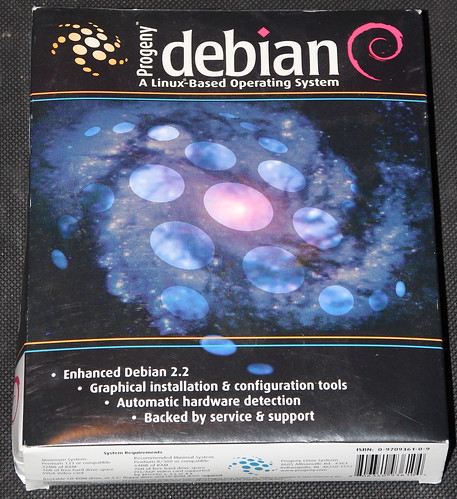
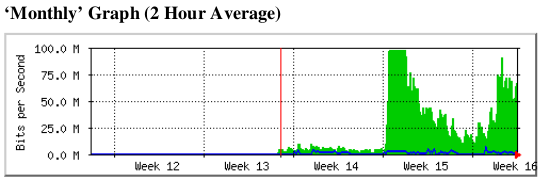
Would you like to hike a mountain? That question caught me by surprise. It was early in 2000, and I had flown to Tucson for a job interview. Ian Murdock was starting a new company, Progeny, and I was being interviewed for their first hire. Well, I thought, hiking will be fun. So we rode a bus or something to the top of the mountain and then hiked down. Our hike was full of well, everything. Ian talked about Tucson and the mountains, about his time as the Debian project leader, about his college days. I asked about the plants and such we were walking past. We talked about the plans for Progeny, my background, how I might fit in. It was part interview, part hike, part two geeks chatting. Ian had no HR telling him you can t go hiking down a mountain with a job candidate, as I m sure HR would have. And I am glad of it, because even 16 years later, that is still by far the best time I ever had at a job interview, despite the fact that it ruined the only pair of shoes I had brought along I had foolishly brought dress shoes for a, well, job interview. I guess it worked, too, because I was hired. Ian wanted to start up the company in Indianapolis, so over the next little while there was the busy work of moving myself and setting up an office. I remember those early days Ian and I went computer shopping at a local shop more than once to get the first workstations and servers for the company. Somehow he had found a deal on some office space in a high-rent office building. I still remember the puzzlement on the faces of accountants and lawyers dressed up in suits riding in the elevators with us in our shorts and sandals, or tie-die, next to them. Progeny s story was to be a complicated one. We set out to rock the world. We didn t. We didn t set out to make lasting friendships, but we often did. We set out to accomplish great things, and we did some of that, too. We experienced a full range of emotions there elation when we got hardware auto-detection working well or when our downloads looked very popular, despair when our funding didn t come through as we had hoped, being lost when our strategy had to change multiple times. And, as is the case everywhere, none of us were perfect. I still remember the excitement after we published our first release on the Internet. Our little server that could got pegged at 100Mb of outbound bandwidth (that was something for a small company in those days.) The moment must have meant something, because I still have the mrtg chart from that day on my computer, 15 years later. Progeny's Bandwidth Chart We made a good Linux distribution, an excellent Debian derivative, but commercial success did not flow from it. In the succeeding months, Ian and the company tried hard to find a strategy that would stick and make our big break. But that never happened. We had several rounds of layoffs when hoped-for funding never materialized. Ian eventually lost control of the company, and despite a few years of Itanium contract work after I left, closed for good. Looking back, Progeny was life compressed. During the good times, we had joy, sense of accomplishment, a sense of purpose at doing something well that was worth doing. I had what was my dream job back then: working on Debian as I loved to do, making the world a better place through Free Software, and getting paid to do it. And during the bad times, different people at Progeny experienced anger, cynicism, apathy, sorrow for the loss of our friends or plans, or simply a feeling to soldier on. All of the emotions, good or bad, were warranted in their own way. Bruce Byfield, one of my co-workers at Progeny, recently wrote a wonderful memoriam of Ian. He wrote, More than anything, he wanted to repeat his accomplishment with Debian, and, naturally he wondered if he could live up to his own expectations of himself. That, I think, was Ian s personal tragedy that he had succeeded early in life, and nothing else he did with his life could quite measure up to his expectations and memories. Ian was not the only one to have some guilt over Progeny. I, for years, wondered if I should have done more for the company, could have saved things by doing something more, or different. But I always came back to the conclusion I had at the time: that there was nothing I could do a terribly sad realization. In the years since, I watched Ubuntu take the mantle of easy-to-install Debian derivative. I saw them reprise some of the ideas we had, and even some of our mistakes. But by that time, Progeny was so thoroughly forgotten that I doubt they even realized they were doing it. I had long looked at our work at Progeny as a failure. Our main goal was never accomplished, our big product never sold many copies, our company eventually shuttered, our rock-the-world plan crumpled and forgotten. And by those traditional measurements, you could say it was a failure. But I have come to learn in the years since that success is a lot more that those things. Success is also about finding meaning and purpose through our work. As a programmer, success is nailing that algorithm that lets the application scale 10x more than before, or solving that difficult problem. As a manager, success is helping team members thrive, watching pieces come together on projects that no one person could ever do themselves. And as a person, success comes from learning from our experiences, and especially our mistakes. As J. Michael Straczynski wrote in a Babylon 5 episode, loosely paraphrased: Maybe this experience will be a good lesson. Too bad it was so painful, but there ain t no other kind. The thing about Progeny is this Ian built a group of people that wanted to change the world for the better. We gave it our all. And there s nothing wrong with that. Progeny did change the world. As us Progeny alumni have scattered around the country, we benefit from the lessons we learned there. And many of us were different , sort of out of place before Progeny, and there we found others that loved C compilers, bootloaders, and GPL licenses just as much as we did. We belonged, not just online but in life, and we went on to pull confidence and skill out of our experience at Progeny and use them in all sorts of ways over the years. And so did Ian. Who could have imagined the founder of Debian and Progeny would one day lead the cause of an old-guard Unix turning Open Source? I run ZFS on my Debian system today, and Ian is partly responsible for that and his time at Progeny is too. So I can remember Ian, and Progeny, as a success. And I leave you with a photo of my best memento from the time there: an original unopened boxed copy of Progeny Linux. IMG_6197_v1

Next.

Previous.