Search Results: "agi"

25 May 2012

Matthew Garrett: Fedora 17 and Mac support

Fedora 17 will be shipping next week. It's got a bunch of new features, none of which I contributed to in the slightest. What I did work on was improving our support for installation on x86 Apple hardware. There's still a few shortcomings in this so it's not an announced or supported feature, but it's sufficient progress that it's worth writing about.

There's a few ways that Apple platforms differs from normal PC hardware. The first is that Apples are very much intended to be EFI first and BIOS second, while that's still not really true for commodity PC hardware. Apple launched Boot Camp shortly after they started shipping x86 Macs (and shortly after I'd got Ubuntu running on one for the first time[1]) but the focus of Boot Camp has always been to be good enough to boot Windows and not much else[2]. The other is the integration with the boot environment. You can boot Linux easily enough by setting the standard EFI boot variables, but if you ever boot back into OS X it's easy to trigger deletion of those. There's then no straightforward way of resetting them, and you're left having to recover your installation.

The other difficult bit has been actually starting the installer at all. If you're happy to use BIOS emulation than this can be done without too much misery, but you're then left with dealing with Apple's custom synchronised GPT/MBR. More modern Macs will boot via the standard EFI mechanisms, but there's a range of problems that can be caused that way. Fedora 17 is the first Linux distribution to ship install media that will EFI boot a Mac when either written to optical media or a USB stick[3]. Put the install media in your system and then either select it in the OS X Startup Disk preferences menu and reboot, or reboot and hold down the alt key. In the latter case there'll be a nice Fedora logo. Click on it and it'll boot.

The biggest difference between Apple hardware and anyone else is that we'd normally put the bootloader in a FAT partition that's shared with any other installed operating systems. That does actually work on Apples, but then you run into the earlier point I mentioned. The Apple startup picker that you get by holding down the alt key doesn't pay any attention to the standard EFI boot variables, so it won't show a FAT partition merely because it's got an EFI bootloader on it. The same is true of the OS X Startup Disk preferences. The best way to get a drive to appear in the menu is to make it look like an OS X drive.

This was problematic in a few ways, due to the requirement for an OS X drive to be HFS+. The first was that we didn't have any support for that in our installer, so work had to be done there. The second was that the state of HFS+ was woefully poor in Linux[4]. Linux will refuse to write to an HFS+ filesystem if it hasn't been cleanly unmounted or fscked, and since we can't rely on everyone always shutting their machine down cleanly that means a working fsck.hfsplus. In theory we were shipping one of those. In practice, it reliably segfaulted on 64-bit systems[5]. So I had to package the latest version of Apple's code, and doing that involved dealing with the fact that Apple now use blocks almost as much as Grub 2 uses nested functions, and that meant using Clang and that meant dealing with a bug where Clang segfaulted if it had been built with gcc 4.7[6], but finally once all of those yaks had been shaven we could trust our filesystem.

Of course, more problems existed. You can't just drop a bootloader onto an HFS+ partition and expect it to work. You need to write its inode value into the superblock. Trivial, except that if you do this from userspace then the kernel kindly overwrites your update when you unmount the disk and it updates the superblock. That required a mechanism for updating that data via the kernel, which meant adding an ioctl. This would have been fine, except the OS X Startup Disk preference looks for a bootloader in a location other than where Fedora installs it. Changing our bootloader install path wasn't a great option, so the easiest thing to do was just to link them together. Except HFS+ doesn't really support hardlinks. When you hardlink something the original file gets moved into a magic directory in the filesystem root and the links are special files that refer to it. And it turns out that it's not actually the inode that the firmware wants when finding the bootloader, it's the catalogue ID, and these aren't the same when hardlinks are involved. So, another kernel patch.

All that was left for the boot partition then was adding an icon and a drive label. We already had code for generating the icon, and the drive label wasn't that difficult. Hurrah!

Ok, so we can construct a filesystem that (a) appears in the bootpicker, and (b) appears in the OS X Startup Disk preferences. We can even put a bootloader on it. This led to the next problem. The bootloader started without any trouble. But the bootloader couldn't read any files off the boot partition, including its configuration. This should have been obvious with hindsight - the problem was simply that grub legacy[7] doesn't support HFS+. Writing an HFS+ driver seemed like an excessive amount of work, especially since the firmware already supported reading HFS+, so instead I wrote a simple grub filesystem driver that uses the UEFI interfaces to read files.

A working bootloader! One more problem there. grub looks in its startup directory to find its configuration file. We have two "copies" of grub hardlinked to each other, each looking in a different directory for configuration. Hardlinking the config files together worked fine, except that most tools that update config files have this irritating habit of writing to a temporary file and moving that over the original, thus breaking the hardlink. Easily solved by using a symlink instead, except that the UEFI filesystem semantics don't really support symlinks because UEFI only really envisaged using FAT. If you use Apple's UEFI HFS+ driver to open a symlink, you get a short file containing the target path of the symlink. Rather less than ideal, and a rather gross hack to cope with it.

All set now, other than a bug in some older Mac firmware where read would return BUFFER_TOO_SMALL without returning the real buffersize and the odd way that Apple treat CDs. Oh, and a bug in Apple's Broadcom wifi driver that could overwrite the kernel, and case-sensitivity, something that obviously isn't something you often hit on UEFI when all you usually see is FAT.

Kernel-side, we had a couple of things. Obviously there the bugs I'd mentioned in the past, but those had already been dealt with. New issues included the fact that we were frequently picking the wrong framebuffer address, especially on machines with multiple GPUs. Fixed now, along with another issue where we'd sometimes get confused by models with different GPU configurations. And at that point, most of the implementation work was done.

Of course, there was also the work of integrating this into the tools that we use to generate our install media, and I'd like to thank Will Woods, Brian Lane and Dennis Gilmore for the work they put into that, along with anyone I've forgotten. Tom Calloway handled getting the device label graphics generated right before deadline. A cast of thousands helped with testing.

So why did I mention shortcomings? First, this only works on machines with 64-bit firmware. Early 64-bit Apples still had 32-bit firmware. In theory we can support that case - in practice it's a moderate amount of writing, including some mildly awkward kernel code. But anything later than mid-2007 should have 64-bit firmware, so it's not a massive concern. Second, we seem to have fairly significant trouble with Radeon hardware on a lot of Macs. We fixed one bug there, but something's still going wrong in setup and you'll frequently end up with a black screen. And thirdly, I'm sure there's some other machines that still don't work for (as yet) undetermined reasons.

With luck we'll get these things dealt with by Fedora 18. But even with these flaws, Fedora 17 will work fine on a lot of Apple hardware, and testing it is as simple as downloading and booting a live image. Bugs go in the usual place.

[1] Note my charming belief that the Ubuntu installer would fully support this hardware via EFI in the near future. 6 years ago. It still doesn't.
[2] This can be fairly easily seen from little things like the name "Windows" being hardcoded into every UI that sees a Boot Camp drive.
[3] I cover this in more depth here
[4] To be fair, it mostly still is - there's plenty of work to be done there.
[5] Approximately nobody had noticed this, which is all kinds of unreassuring.
[6] Thanks to Kalev Lember for dealing with that
[7] Still the EFI bootloader in Fedora 17. We've already swapped Fedora 18 over to grub 2.

comment count unavailable comments

Paul Tagliamonte: playing with non-lintian lintian checks

Crazy title, I know. Over the past $WHILE, I ve found myself checking for the same things. Some of these are fit for inclusion into lintian it s self others, not so much. Here s a rundown on what my lintian wrapper (tragically also called lintian and just higher up on my $PATH. I know it s a hack.) Since I only use lintian on .changes files - it pre-processes for some information that is stuffed in the changes. The first step is to get all the bugs that the package closes. It then takes these bugs, and queries the BTS to see what package they re filed against. If the bug is filed against a different bug then the package s source, it ll emit a warning. It has a greylist for stuff like WNPP . This will fail if something s filed against it s binary package rather then it s source :) Next, the wrapper will get other info from the changes. It checks if the suite is in the blacklist ( UNRELEASED , and testing , (stable for me as well, since I don t usually deal with SRUs often)). It ll also check for the changed-by and maintainer, ensuring they re the same. This will fail for co-maint d packages. If you ve not guessed by now, this system relies on false-positives :) Nextly, if there are .debs in the Files, it ll go through and check the control of each. It ll print out a stanza with the short-description inside a template, to see if the description works . After that, it ll attempt to make HTTP requests to the Homepage (and eventually URLs in the description and VCS-Browse) If the package has python in the source name anywhere, or in any of it s binary packages, it ll trigger jwilk s lintian4python over the source as well. After this, it passes through to regular lintian. Oh, and it colorizes all the output :) Here is a (mostly lint-free) package: As you can see, it s very (very) verbose, but i d rather cross stuff off a checklist then worry about something being off. Anyway, it s a work in progress. Not even a serious one, at that. It s a bunch of hacks put together, so I can t really endorse anyone else using this stuff. If you feel crazy enough to do so, all the tools are found on my dot-bin repo on GitHub

24 May 2012

Richard Hartmann: Public service announcement

This will be a repost for anyone subscribed to Planet Debian, sorry. In case you have not heard about git-annex yet and you care about syncing, tracking, and managing your private or public files, go click the link; it's OK, I will wait. The use cases sound intriguing, don't they? But unless you are comfortable with a shell and git, don't bother using it; pain is inevitable. joeyh announced a kickstarter project to make git-annex more user friendly, support automated adding and syncing of files, and a web front-end. Notwithstanding the cut that kickstarter and amazon payments will take and the inherent questions that are being raised by paying for FLOSS, this is a very worthwhile endeavour to support. PS: Yes, this feels a tad circle-jerky inasmuch joeyh's post links to my blog; I would have linked to his post anyway, though. If anything, this made me think twice about posting this here. PPS: Yes, I will continue writing my Trans-Siberian series even though I am home already. Air China decided to keep me in China longer than planned, real life is busy, and, truth be told, Diablo 3 came out. The second Mongolian post is half-way finished, at least.

23 May 2012

Joey Hess: kickstarter for git-annex assistant

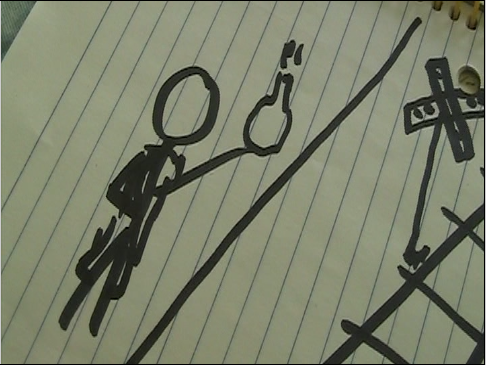
I'm doing a Kickstarter! The plan is to take git-annex and use it as the foundation to build a DropBox-like application, that can be used without any knowledge of git. The other part of the plan is for me to get through the summer with my finances intact. :) kickstarter My Kickstarter page explains in more detail, but the basic idea is to make git-annex watch a directory, with inotify, and automatically add and sync files placed there. Then build a local web app to control and configure it. I have a working prototype of the inotify part already; getting the distributed syncronisation to work well will be a major challenge; and overall it's going to be a challanging but I think very achievable project. One thing I'm really excited about is the potential of Kickstarter to connect me with a diverse group of potential users, who are interested enough in a distributed and autonomous equivilant to DropBox to fund my project. Because, with luck, their involvement won't stop at giving some money, but will extend to actually using what I'm developing, and giving me feedback on it. I hope this will widen the sphere of git-annex users, beyond the current very technically inclined crowd. It's awesome to have users doing things like taking git-annex on the transiberian railroad to help manage all their photos, and others using it to store scientific data ... but getting more regular folks using git, even if they don't know about it, is something I'm very interested in. xkcd-esque drawing BTW, I was surprised how much I got into doing the video for the Kickstarter. Using xkcd-style drawings used to explain technical concepts is a medium I enjoy working in. My own git-annex is stuffed with 17 gigabytes of video clips -- 99 separate takes! -- that boiled down to a 2 minute video. Anyway, please consider backing me if you can, and more importantly, do anything you can to help spread the word. Thanks!

22 May 2012

Pietro Abate: bootstrap puppet with ganeti

Third post about ganeti. Ganet-debootstrap-instance contains a nice set of scripts to create a debian (or derivatives) image using debootstrap. Images can be configured and customized by writing simple hooks script to modify various aspects of the default installation. However writing these script is not really fun and pushing it too far can lead to long messy scripts, loosing the overall benefit of automatic configuration. Puppet is my configuration management tool of choice, but installing puppet on a new machine requires few magic incantations that the user should perform manually, or in a semi automatic mode (autosign=true) to make it work. My goal is to install puppet automatically on the newly created instance so it will run and configure the new instance at the first boot. From that moment on I'll forget about ganeti and configure all remaining services of my new VM using puppet. In order to do so, we need to install puppet (and apt-get update/upgrade...), create the ssl certificates for the client and enabling the puppet daemon on the client. We add another hook in /etc/ganeti/instance-debootstrap/hooks/ :
if [ -z "$TARGET" -o ! -d "$TARGET" ]; then
echo "Missing target directory"
exit 1
fi

LANG=C
chroot "$TARGET" apt-get -y --force-yes update
chroot "$TARGET" apt-get -y --force-yes upgrade

# install puppet on the client
chroot "$TARGET" apt-get -y --force-yes install puppet

DOMAIN=localnet.org
instance=$INSTANCE_NAME.$DOMAIN

echo "Installing puppet certificates for $instance"
puppetca clean $instance
puppetca -g $instance

mkdir -p $TARGET/etc/puppet
mkdir -p $TARGET/var/lib/puppet/ssl/private_keys/
mkdir -p $TARGET/var/lib/puppet/ssl/certs/

cp /var/lib/puppet/ssl/private_keys/$instance.pem $TARGET/var/lib/puppet/ssl/private_keys/
rm -f $TARGET/var/lib/puppet/ssl/public_keys/$instance.pem

cp /var/lib/puppet/ssl/certs/$instance.pem $TARGET/var/lib/puppet/ssl/certs/
cp /var/lib/puppet/ssl/certs/ca.pem $TARGET/var/lib/puppet/ssl/certs/

chown root. $TARGET/var/lib/puppet/ssl/private_keys/$instance.pem
chmod 0400 $TARGET/var/lib/puppet/ssl/private_keys/$instance.pem

chown root. $TARGET/var/lib/puppet/ssl/certs/$instance.pem
chmod 0640 $TARGET/var/lib/puppet/ssl/certs/$instance.pem

chown root. $TARGET/var/lib/puppet/ssl/certs/ca.pem
chmod 0641 $TARGET/var/lib/puppet/ssl/certs/ca.pem

#echo "server=puppet" >> /etc/puppet/puppet.conf

echo "START=yes" > $TARGET/etc/default/puppet
echo "DAEMON_OPTS=\"\"" >> $TARGET/etc/default/puppet
This script uses puppetca to create on the puppet (and ganeti) server the client key, sign it, and then copy it to the target machine. Notice that we create the certificate for a fqnd name $INSTANCE_NAME.$DOMAIN or otherwise puppet will complain loudly. This is not strictly needed, but if you want to do otherwise, you'll need to fiddle with the puppet configuration a bit more. The procedure to create a puppet certificate server-side is well documented on the puppet website, so if you are curious about the details duck-duck-it .

Matthew Garrett: I've been a terrible person (and so have most of you)

John Scalzi recently wrote a piece on straight white male privilege. If you haven't read it already, go and do so. No rush. I'll wait.

So. Some facts:

(If you disagree with any of these then that's absolutely your right. You're wrong, but that's ok. But please do me a favour and stop reading here. Otherwise you'll just get angry and then you'll write something ill-tempered and still wrong in the comments and then I'll have to delete it and why not just save everybody the time and effort and go and eat ice cream or something instead)

I know I've said this before, but inappropriate and marginalising behaviour is rife in our community, and at all levels of our community. There's the time an open source evangelist just flat out told a woman that her experiences didn't match his so she must be an outlier. There's the time a leading kernel developer said that most rape statistics were basically made up. There's the time that I said the most useful thing Debian could do with its money would be to buy prostitutes for its developers, simultaneously sexualising the discussion, implying that Debian developers were all straight men and casting sex workers as property. These aren't the exceptions. It's endemic. Almost all of us have been part of the problem, and in doing so we've contributed to an environment that has at best driven away capable contributors. You probably don't want to know what it's done at worst.

But what people have done in the past isn't important. What's important is how we behave in the future. If you're not angry about social injustice like this then you're doing it wrong. If you're reading this then there's a pretty high probability that you're a white male. So, it's great that you're angry. You should be! As a straight white male born into a fairly well-off family, a native English speaker in an English speaking country, I have plenty of time to be angry before going back to my nice apartment and living my almost entirely discrimination-free life. So if it makes me angry, I have absolutely no way of comprehending how angry it must make the people who actually have to live with this shit on a daily basis.


(Were tampon mouse able to form and express coherent thoughts, tampon mouse would not put up with this shit)

The point isn't to be smugly self aware of our own shortcomings and the shortcomings of others. The point is to actually do something about it. If you're not already devoting some amount of your resources to improving fairness in the world, then why not? It doesn't have to be about women in technology - if you're already donating to charity or helping out at schools or engaging in local politics or any of the countless other ways an individual can help make the world a better place, large or small, then keep on doing that. But do consider that many of us have done things in the past that contributed to the alienation of an astounding number of potential community members, and if you can then please do do something to make up for it. It might be donating to groups like The Ada Initiative. It might be mentoring students for projects like the GNOME Outreach Program for Women, or working to create similar programs. Even just making our communities less toxic by pointing out unacceptable behaviour when you see it makes a huge difference.

But most importantly, be aware that it was people like me who were responsible for this problem in the first place and people like me who need to take responsibility for solving it. We can't demand the victims do that for us.

comment count unavailable comments

21 May 2012

Thomas Goirand: Unit tests for PHP: PHPUnit

PHPUnit, according to its PTS, has been in Debian since 2009. But it was orphaned, and nobody took care of it for a while. That is until few weeks ago, Luis Uribe started to work on it. Since he isn t a DD, and that I take care of, I believe, about half of the all the PHP PEAR packages in Debian, I started working with him on re-doing the work of packaging PHPUnit for Debian. Previously, the old version was quite wrong, with missing dependencies, and not really working, what a shame PHPUnit 3.6 has been in Debian SID for 3 days now. And it s working well. I m now adding runs of unit testings from upstream packages at build time (of course, only if DEB_BUILD_OPTIONS doesn t contains nocheck , as per the policy). All together, it s been quite some fun to hack this, and I m quite happy of the results, even though there s still a lot of work remaining. PHP itself is running unit tests at build time. And not just a few: more than 11000 of them. The only small issue, is that they are totally outdated. Over the time, the vardump() function has evolved, and doesn t print things the same way. One may say that it prints things in a nicer way, but as a result, many of the tests that were suppose to work, actually fails because of these differences in vardump() over time. So I started working on fixing some of the tests. It s most of the time very easy to fix, but it takes a long time to fix all these small unit tests. So far, I ve been able to fix most of what s in the tests/, Zend/tests (more than 161 tests fixed), and the beginning of ext/*/tests: for the moment: bcmath, bz2, calendar, curl, date, dba, dom, ereg, and a part of exif, which for the moment represent 214 fixed tests, and I ll try to do more fixes when I have time. I hope to send the patches upstream soon. The final goal is of course to have the build of PHP to fail if unit tests are failing as well. For the moment, unit tests do run at build time, but the build don t care of the results, which I think is stupid (it s wasting CPU cycles for no reasons, IMO). If you maintain some PEAR packages, I would welcome you to first join the PKG-PEAR team on Alioth, and team maintain your packages, switch over to pkg-php-tools and dh 8 auto-sequencer, and to follow the PKG-PHP-PEAR packaging guide lines so that we have consistency in the archive. And of course, run unit testings, by doing a build-depends on phpunit (>= 3.6). Note that unit testings in PEAR packages are tracked on the Debian wiki. This post is also a call for help, because I feel quite alone doing this work of packaging PEAR packages, which many PHP applications depend on (think about roundcube, horde, extplorer, and many more). Other teams are doing very well, like the Perl team, and there s no reason why Debian wouldn t maintain PHP libraries as well as the ones for Perl.

19 May 2012

Andrew Pollock: [life] Maker Faire 2012 trip report

The Maker Faire is one of those awesome Bay Area things that always fills me with excitement and gets my imagination going. Zoe and I went again this year to check it out, as best we could within the time constraints we had to work within (opening time and her nap time, minus travel time). She definitely enjoyed herself. We took the Caltrain, because historically driving and parking has been a bit of a nightmare. The optimal train to get to get there before it opened (at 10am) was the 9:19 train from Mountain View, which was scheduled to get in at Hayward Park a little before 10am. It just so happened that there was a Giants game on in San Francisco today as well, and the train was absolutely packed. We only got a seat because one kind gentleman was getting off and explicitly gave his seat to us. One lesson learned: don't try and take the BOB stroller on the train. Even when collapsed, it's way too bulky. For future Caltrain outings, I'll take our City Mini stroller instead, as it folds much flatter. I also took our macpac Possum child carrier backpack, and Zoe was pretty happy to just sit in it for the bulk of the time. I think it had novelty value for her, as we haven't used it for a while. I probably could have gotten away without taking a stroller at all. I was very glad I took the backpack, as it gave her a much better vantage point for everything that was going on than she would have gotten from sitting in the stroller. There was supposed to be a free shuttle from the Hayward Park station to the Maker Faire, but there was a huge crowd waiting for it, so I decided to just walk. It didn't take too long. For the return trip, I think I exited from the wrong side of the fairgrounds, and couldn't figure out the shuttles, so I just walked to Hillsdale station. At least the return train wasn't crowded. Overall, using Caltrain to get in and out was successful. Zoe was very well behaved for the ~30 minute train ride each way. The Faire was quite a bit bigger this year, and has spilled out into the parking lot on one side. I'd heard stories that O'Reilly had quadrupled booth prices as well. Trying to abide by the program was too difficult, so we mostly just wandered through the main Expo hall and looked at various booths. I just did a full read through the website of all the exhibitors to see what I missed out on. Here's some of the stuff I saw in person, or discovered via the website: Kickstarter is really becoming huge in the maker community. There were heaps of exhibitors there with (mostly robotics) projects that were past the initial prototyping phase and were seeking funding on Kickstarter to go into mass production. Some of the talks I'd have liked to have seen: Zoe was really well behaved for the entire expedition. I don't think she really gave me any grief at all. There was a brief period where she wanted me to carry her, but I managed to negotiate her back into the stroller after not long. I think her favourite was ArcBotics, which had a robot insect that would dance and wave at her. She kept asking for it to do more dancing.

Richard Hartmann: Mongolia

I will start linking to places we stayed at etc, from now on. On the one hand, we already left those places so my paranoid self can rest assured that no one will come hunt us down, on the other hand, I decided to only to name and link to those places which really deserve a mention. If they are linked here, I can whole-heartedly recommend them. Mongolia After leaving through the Russian border fortifications, Mongolia was an instant and welcome change. Trees growing right next to the tracks, branches forming a bit of a natural tunnel; the trains passing by keeping branches at bay, but the trees free to grow wherever else they pleased. A few hundred meters later below a rocky ledge, a cow had apparently fallen down and died. Partially decomposed flesh still clinging halfway to its rib-cage, it proved to be a sign of the (mostly) more laid-back attitude Mongolians tend to take. After finally getting our passports back and being allowed to leave the train, we first headed to the station to get some money. At ~1800:1, the exchange rate for Tugruk against Euro speaks volumes about inflation; imagine my surprise that the MNT 20,000 note is the largest one. It's also the one and only amount any and all ATMs will default to. We were quite surprised by how cheap everything was, even in the one single store within the station directly behind the border. In Russia, travellers expect to pay hefty markups when shopkeepers know they can charge them, not so in Mongolia. The woman in the trash Upon returning from the station, our waggon was just merrily being driving away on its own by a lone engine, something we had not anticipated or appreciated a whole lot. A woman (we hadn't noticed her before) who was busy scavenging a trash container for food for herself and her scrawny-looking son happily stopped what she was doing and, with a big smile, moved her hands around and smacked them back together, signalling us that our waggon would be attached to a different train for the subsequent journey. To put it mildly, I was stunned; we had met people eating from the trash in Russia as well (yes, I always make a point of giving them enough for a few decent meals; anyone eating out of the trash actually needs and definitely deserves something good happening to them), but they were glum and disheartened. Here, there was someone who not only had to look out for herself, but for a three or four year old boy as well, and still was just so... positive... I don't know if I would have it in me to act the same way... As an aside, even though we were just a few kilometers across the border from Russia, she did not actually take the money from me, she cupped her hands to receive it by having me place it into her hands; this is a very Asian thing in my experience and something we would see both in Mongolia and China consistently. Later, when we were back in our waggon, she passed by and happened to see the Spot Messgenger 2 dangling in front of our window, its lights blinking every five seconds. For a solid twenty minutes, until the train started moving again, she squatted down with her son, oggling the Spot. I have no idea what she was thinking it was and I had no chance to explain it to her, but she was really fascinated and just kept staring and staring. When we finally left the station, we waved to and smiled at each other, she ran after us, and then she was gone. All in all, this was one the more memorable things which happened to us. Mongolian Infrastructure When I say that Mongolians as a whole tend to be a lot more laid back than Russians, this extends to infrastructure as well, but not in the good way. Ulan Bator Little Dhingis Khan We arrived in Ulan Bator at six in the morning and started haggling with taxi drivers. Our hostel had (stale, it turned out) information about acceptable fare from station to their place on their website, 5,000 MNT was supposedly OK. Our driver tried to get 20,000, then 15,000, then 12,000, then 10,000, went down to 7,000 and finally settled for 5,000, all this interspersed with frequent "no" by us and walking away. Once on the road, he wanted to convince me that we had agreed upon 5,000 per person, something that did not quite work out for him. When we arrived, he started to tell me that he was good friends with the hostel manager and that said manager would surely want us to pay more; again, that did not work too well. He made the mistake of getting our luggage out of his trunk immediately (we always kept all our stuff in the passenger area afterwards...) before I paid and even though I only had a 10,000 or 20,000 note, I insisted on correct change. The same old dance began anew, with him edging closer to the correct change in steps of 1,000 MNT. He tried to get away several times, but I stood in his door and held it open; if he had just driven off, I couldn't have stopped him, but that thankfully didn't occur to him. After he shoved all small change (MNT is bill only, no coins) he had with him at me and wanted to make off yet again, I was close to throwing all the small crap at him, but after he, a man of maybe 1.65 meter and sitting down, tried to signal his willingness for a fist fight and me, a man of 1.94 meter and standing started laughing, he gave me 2,000 more and drove off cursing. In case you forgot, at that exchange rate, we argued about two to three Euro, but as he tried to cheat, it became a matter of principle. The Hostel, part one All parking lots and other property in Ulan Bator have a small watchtower with private 24/7 guards; said guard ambled down, let us in and woke the poor woman who was forced to let us check in. As she was Mongolian as well, we were a bit surprised when she switched from broken English to perfect German, but the owners of the OASIS are a German-Austrian couple so I guess that makes sense. Fighting through the war Traffic in Ulan Bator is war. Lonely Planet talks about the city being too newly motorized and that it did not have to develop a culture of driving, yet. This is a euphemism for "no one has any qualms maiming or killing you". Everyone is driving like mad, nudging and racing their way in front of each other. If a driver has an oppurtunity to get ahead by a few centimeters with his small car, thereby blocking the way for several buses, making a whole parking lot grind to a halt and thereby deadlocking themselves, they will take said opportunity, and gladly. Red lights are gentle suggestions, there to be mainly ignored; police will not drive over red lights, but they will not stop anybody else from doing so, either. A hearse will have a dozen or more cars following it, all driving in a tight pack, aggressively attacking anyone who dares to wedge in between them and expecting all other traffic to make way even if they are driving over a red light. Crossing a main street in Ulan Bator as a pedestrian is hell. There are a few traffic lights and they help to some extent, but you still need to be extremely careful when crossing a street. Thailand, India, Russia, China, no matter where it's supposedly hard to cross a street by foot, I never had any issues weaseling through. In UB, it takes planning, determination, and a lot of attention, especially as there are stretches where there's not a traffic light in sight. While maintaining eye contact with a driver usually ensures that they will try not to hit you, this does not work in the least in UB. In the evening, I took to shining a high-powered flashlight at the ground to the oncoming traffic's side to mark ourselves and decrease the likelihood of being hit. This worked well in combination with sprinting through gaps in the traffic, except for one guy who actively aimed for us and did not slow down. He even changed lanes, just to keep us in front of his car... Shining the flashlight directly at him in highest mode made him break quite violently though; a good thing, as he may have hit us had he not slowed down. UB itself Ulan Bator is weird. It has clear signs of westernization, but it's still very much an old city. There is one large store which would fit into any random shopping center in Germany (which are tiny when compared to most other countries) and which carries most goods, if with a limited selection. Its supermarket is extremely well stocked with food and drink from all other the world and laughably cheap (for us) prices. While its infrastructure is definitely crumbling, the city is clean, especially when compared to Russia. Two girls from Stuttgart who we met during our Trans-Siberian travels commented on how clean Russian cities were when compared to home, but that may be more of a statement about Stuttgart than about Russia... Anyway, in Mongolia in general and in UB in particular, there's a concise effort to make what they have look nice and clean. There is no trash in the streets, loose gravel and earth is removed from the curb by dedicated workers, all areas of packed earth are sieved and all large stones removed. All in all, it's a lot cleaner (if more dusty and sandy) than Russian cities if somewhat older and more shabby-looking. That being said, Mongolia's countryside is littered There were several street stalls consisting of nothing more than a cardboard box on a stool selling single chewing gums and cigarettes from the original packaging; it's normal for people to buy one cigarette or one piece of chewing gum and walk on. The sights of UB were nice, but nothing too special. Outlook In the next part, I'll cover "The Hostel, part disaster" and generally talk more about excrement than I thought one could write before moving on to China (were I am located at the time of this writing).

16 May 2012

Christian Perrier: Bug #1000000 in Launchpad

Way before Debian, Launchpad bug tracking system just reached 1 million bugs reported with one "bug" reported against Edubuntu basically mentioning it should invade schools. What to say about this? Hard without being harsh towards my friends working in the Ubuntu "world", indeed. Still, I really think that here, too much noise kills signal and the LP BTS is often hardly usable. I counted up to 217 bugs reported against samba4 (which is, after all, not so widely used yet) just because it apparently has upgrading issues between pre 12.04 versions of Ubuntu and Oneiric. It indeed seems that some automated bug reporting is now active and whenever a user encouters an upgrade issue with a package, a bug is being reported. I guess this is somehow an opt-in system (I hope so..:-)) but the default is very clearly using it. This feature is apparently what caused the recent bump in number of bugs reported in LP, making them even less useful, particularly to Debian package maintainers. I'm sure there are tools to help dealing with that and I was already answered that work is in progress to change this (and use a dedicated website for such reports or something like this). But, still, that seems to be the scary side of popularity...the very same popularity that is slowly but constantly hiding the work we're doing in Debian to indirectly make Ubuntu popular. (moving to more general concerns) I know that things are not all black or all white, but it always saddens me to feel that slowly....but, again, constantly, more and more people tend to forget that Debian is behind Ubuntu, is the ground on which it is built and Ubuntu wouldn't exist without it. When doing work, a human need is to get reward for it...and we are getting less of it...slowly, but constantly. Don't take me wrong. I have many friends working directly for Ubuntu. Some paid by Canonical for this. Some really involved up to "top level" (yes, including the very very top level even if I killed him once). I don't want to throw offense on them. I don't even know if they can do something about what I'm expressing below. I would just have them (and others) know. Let's take an example. I recently activated a few languages in D-I (Burmese, Tibetan, Uyghur). I'm happy with that, this is something I'm doing for 8 years now. But all these new translators were indeed only interested in one thing : "have Ubuntu translated in their language". No offense intended, but they didn't really care about *Debian* being translated in their language. I think that some didn't even know what Debian is. In the same field, I am more and more "fighting" to keep the level of translation completeness in Debian (see my regular spa^W reports). In some way, I still succeed, but the price to pay is more and more and more personal investment and work. That's still working for the strong set of languages we support. That works much less for most others. When someone "disappears" (or just switches to some other priorities), it's more and more difficult to find someone else popping up. And, for the "strong set", something else is happening : work duplication. There are "strong" French, German, Italian, whatever, l10n teams in Debian.....and there are similar teams for Ubuntu. And, mostly, those do not really work together. And sometimes, this is kinda discouraging. So, seeing the explosion happening on what is, whatever we think or write, the "other side", is not somethnig that can make one entirely happy. And this is why I won't celebrate Launchpad's millionth bug report. Particularly when I see that millionth bug report not even ack'ing that this Edubuntu marvel is based on the grounds set by some pionneers many years ago in a few schools in Norway (hello, Petter and others). Yeah, sometimes sad. To balance this, let's release wheezy and have millions of people benefit from it without even knowing.

15 May 2012

John Goerzen: Suspicious Blog Activity any advice?

I ve been noticing a number of odd things happening surrounding my blog lately, and I thought it s about time to figure out what s going on and how to stop it. The first problem is that people are illegally copying my posts, probably using RSS scraping, and putting them up on their own ad-infested sites. It is trivial to find them using Google for any somewhat unique word or phrase in one of my posts. Lately one of them, linux-support.com, actually sends me pingbacks announcing the fact that they ve scraped me! Most of these sites seem to be nothing but content farms for selling ad impressions, and almost none of them have any identifiable names for the owners. (There is an exception: I have specifically set up sites like Planet Debian and Goodreads to copy my blog posts.) I m obviously an advocate of open content, but I do not feel it right that others should be profiting by putting photos and stories about Free Software, or photos of my family, on their ad farms. While I release a great deal of content under GPL or Creative Commons licenses, I have never done so with my blog an intentional decision. What should I do about this? Is it worth fighting a battle over, or is it about as useless as trying to block every spam follower on my twitter account? So that s the first weird thing. The second weird thing just started within the last few weeks. I have been getting a surprising amount (a few a week) of email addressed to me. It does not bear the appearance of being 100% automated spam, though it is possible that it is. It s taken a few forms: The profit motive in all of these is high, and in at least the second and third, so is the sleaze factor. I ve gotten two emails lately of this form:
Hi John, I am curious if you are the administrator for this site: changelog.complete.org/archives/174-house-outlaws-fast-forwarding-senate-pres-next I am a researcher / writer involved with a new project whose mission it is to provide accurate and useful information for those interested in the practice of law, whether as a lawyer or paralegal. I recently produced an article detailing the complex relationship between law and technology and the legal implications on personal privacy and free speech. I would love to share this resource with those who might find it useful and am curious of you are the correct person to contact about such a request? Thank you! All my best,
The details vary the URLs appear to be random (the one cited above was little more than a link to an article), the topics the website claims to discuss range from law to schizophrenia (that one actually came with a link to the site, which again seemed to be a content farm). I am slightly tempted to reply to one of these and ask where the heck people are getting my name. It seems as if somebody has put me into a mailing list they sell containing sleazebag bloggers. Frankly, I am puzzled at this attention. I guess I haven t checked, but I can t imagine that my blog has anything even remotely resembling a high PageRank or anything else. It s not high-traffic, not Slashdot, etc. Either people are desperate, naive, failing to be selective, or maybe working some scam on me that I don t know yet. In any case, I m interested if others have seen this, or any advice you might have.

Christian Perrier: Trip to Nicaragua post-Debconf

This year, the annual Debian conference will be held in Managua, Nicaragua. And I'll be lucky enough to spend two weeks visiting the country after Debconf, along with Elisabeth. Yes, I'll arrive in Nicarague on July 2nd, spend nearly the entire Debcamp, then Debconf, then we'll spend 16 days around the western part of Nicaragua, trying to discover the magic of this country. So, this post is about sharing our plans with my readers. Of course, I do not know the country so we may have made mistakes and bad choices. We'll see. Immediately after Debconf, Elisabeth will join in Managua. She'll be landing on July 15th. We'll then spend a night in an hotel near the airport and immediately leave the day after for Matagalpa, in North Nicaragua. We rented a car for the entire trip indeed, and will be on our own on wild Nicaragua roads..:-) We'll spend two nights in Matagalpa. We plan to visit some coffee or cigar plants, probably have a trip to Lake Apanas and Jinotega. Then, we'll have a short road trip to Esteli where we spend again two nights. We'll be visiting a coffee growing place (beneficio seco de caf ). A full day visit is planned at Miraflor natural reserve to enjoy te beauties of hundreds orchids and some local natural marvels. The next move will be to Leon, where we'll spend 4 nights, visiting a cigar factory (tabacaleras de puros?) on the way, as well as San Jacinto, a place with hydrothermal sources and "Hervideros" (geysers). Four nights in Leon leaves plenty of time for several activities *and* enjoying the colonial city. We'll have a full day at Juan Venado Island reserve with boat trip from Las Penitas (on a fisherman's boat from what the travel agency mentioned), then another full day climbing on the Cerro Negro volcano. Indeed, I was originally considering climbing the Momotombo, but our travel agency warned about the high difficulty. I would have loved that myself but maybe not the two of us...and this is a trip for both of us! So, we played the safe option..:-) After these 4 nights in Leon, we'll move to Granada for 3 nights, through Leon Viejo (the former site of Leon). From Granada, one day will there be used for a visit in the Masaya National Park and see the beauties of Masaya volcano (this is indeed something that could be done for Debconf day trip, IMHO, as it doesn't seem that far from Managua). Another day will be spent to Las Isletas on lake Nicaragua and others visiting the colonial city of Granada. Or, of course, whatever things we don't even known about now..:-) Then we'll move to what I personnally consider the peak of the trip: 3 nights on Ometepe island on lake Nicaragua. Just check Wikipedia to see why Ometepe is, in my opinion, THE place to go in Nicaragua. Here, I'll have my volcano..:-). Indeed, Elizabeth "authorized" me to book a local guide and then climb Concepcion Volcan, if the weather allows for it. 1600m height, that doesn' seem to be a big issue....except when starting from a little bit above sea level and are climbing a volcano that looks like s postcard volcano : nearly a perfect cone shape. So, let's cross fingers for having good weather that day. I promise myself I'll record the GPS track of that one and, even if I'll probably be walking most of the climbing (except if I have a very trained guide...), I'll add it to my run tracks! We might also be going to climb Ometepe's other volcano (Maderas) the day after so that Elizabeth also enjoys these beauties. There also seems to be great places around Maderas such as San Ramon Cascade, Finca el Porvenir, etc. Then, at the end of all this, it will be time to come back to Managua in the final day and fly back to Paris in the early morning of July 31st. All over, I'll be in Nicaragua from July 2nd until July 31st! Full month away, yay! Hurrah for the crazy number of holidays those lazy French people have..:-) During this trip, we might find it interesting some local geeks (not too many as Elizabeth is not that deeply interested in beersigning!) and share a few nice things in local places which are only known by locals. In case you're interested, out (very clever) travel agency is named Nicaragua Adventures and they're definitely worth contacting if you want to travel around .ni, particularly if we prefer booking things in advance as we do. They speak Spanish (of course!), English and French. They're very responsive to e-mail as well.

14 May 2012

Vipin Nair: A quick and beautiful hack!

You can get inspired from the most unlikely of places, and this time it was a twitter background image. I came across the twitter profile of @Nitish today, a fellow GSoC student from India. One thing that held my attention, apart from the fact that he tweets crazy, was the background picture in his profile. Yes I had not seen something like that before and I absolutely loved the concept. The image was large grid and each tile carried the profile picture of one of his twitter followers. It was beautiful. The background image was generated by twilk, a very popular application that I had never heard of. I wanted to try it, but I figured my follower count might be a little too low for the application to work. Twilk works only with twitter and I wanted it for Facebook. Instead of looking for something similar, I decided to write it myself. I had worked with the Python Imaging Library some time back and knew it would not be very difficult task. The first thing I needed was the profile pic thumbnails of my friends. Facebook API supports a call which returns a small 50x50 pixel profile pic of a user, if we send a valid user ID. I wrote a quick script that returned the user ID s of my friends on Facebook as JSON data. I grepped the user ID s from the JSON and wrote a small wget script to download the profile pics of all my friends to a directory. Once the download was in progress, I started my work with the imaging library. I knew the image count beforehand and after some quick math, I fixed the dimensions of the output image that I wanted. Once the dimensions were fixed, the work was fairly easy. I knew before hand how many images will be there in each row and how many rows will be there in total. All I had to do was to randomly pick one of the images from the directory, and arrange it on the output image canvas. Few lines of code later I get the result that I wanted and it is on my twitter profile. Yay! :) I have uploaded the python code in here. If you are running it, make sure you change the values according to your requirements. The image below is a cropped out from the output image to fit this div. Click on it to see the actual output. When I showed this to @Jaseeemabid, he asked me to put this up on Google App Engine and start a service so that even non geeks could use this. I liked the idea but I am slightly busy(lazy) now. I ll do it when I am free or when I see that there is some demand for this! :) Update As few Redditors pointed out, this may not be the best way to do it. This was just a quick hack to get something done. The JSON could be processed in Python itself and files can be downloaded as well. I modified an old PHP script to get the JSON data and since the structure was relatively simple, I grepped the relevant information and fed it to wget as I prefer wget over any other tool for mass downloads. Update 2 Redditor Bio Lazarus improved upon this and made an end to end version that does all of the above in one single python script and the code is available here. And if you like this post, you should follow me on twitter :)

13 May 2012

Russell Coker: What I REALLY Want from the NBN

Generally I haven t had a positive attitude towards the NBN. It doesn t seem likely to fulfill the claims of commercial success and would be a really bad thing to privatise anyway. Also it hasn t seemed to offer any great benefits either. The claim that it will enable lots of new technical developments which we can t even imagine yet that aren t possible with 25Mb/s ADSL but which also don t require more than the 100Mb/s speed of the NBN never convinced me. But one thing it could really do well is to give better Internet access in remote areas. Ideally with static or near-static IPv6 addresses (because we have already run out of IPv4 addresses). Currently 3G networks do all sorts of nasty NAT things to deal with the lack of IPv4 addresses which causes a lot of needless pain if you have a server connected via 3G. One of the NBN plans is for wireless net access to remote homes, with some sanity among the people designing the network such NBN connections would all have static IPv6 subnets as long as they don t move. I m currently working on a project that involves servers on 3G links. I don t have a lot of options on implementation due to hardware and software constraints. So if the ISPs using the NBN and the NBN itself (for the wireless part) could just give us all IPv6 static ranges then lots of problems would be solved. Of course I don t have high hopes for this. One of the many ways that the NBN has been messed up is in allowing the provision of lower speed connections. As having an ADSL2+ speed NBN connection is the cheapest option a lot of people will choose it. Therefore the organisations providing services will have to do so with the expectation that most NBN customers have ADSL2+ speed and thus they won t provide services to take advantage of higher speeds. Related posts:
  1. RPC and SE Linux One ongoing problem with TCP networking is the combination of...
  2. A New Strategy for Xen MAC Allocation When installing Xen servers one issue that arises is how...
  3. New Net Connections On Thursday my new InterNode ADSL2+ service was connected [1]....

9 May 2012

Norman García: Debian tour in Nicaragua

In April, the Nicaraguan Debian community started the Debian Tour, a series of talks in different universities around Nicaragua in order to promote Debian GNU/Linux and invite people to join our community.

The Debian Tour kicked off in the city of Masaya and we plan to visit other cities, like Le n and Chontales. In April we had two events, and we re planning four more events in May and an additional four in June for a total of 10 events, but hopefully we can do more :) At this time we have scheduled two visits to UNAN (Universidad Nacional Aut noma de Nicaragua), one in May and one in June, and one visit to UNI (Universidad Nacional de Ingenier a) and one more to UENIC (Universidad Evangelica de Nicaragua) in Masaya. Besides talks, we had one workshop with the help of the guys from UNI about Debian packaging by gwolf who was visiting Nicaragua last weekend. There are a few other workshops planned about sysadmin and security in Debian. I want to participate in Debian Tour but I still don t know how, maybe give a talk about LXDE or collaborating with Debian.

6 May 2012

Russell Coker: A Quick Review of the Mac Mini with OS/X Lion compared to Linux

A client just lent me a new Mac Mini with OS/X Lion to play with. I think it s interesting to compare it with regular PCs running Linux. Hardware The Mac Mini is tiny. It s volume can be compared to that of a laptop. The entire outside apart from the base is made from aluminium which helps dissipate heat, it s not as effective as copper but a lot better than plastic. The ports on the system are sound input/output, 4*USB, Ethernet, Firewire, Thunderbolt (replacement for Firewire), SDXC, and HDMI. It ships with a HDMI to DVI-D adapter which is convenient if you have an older monitor (or if you have a recent monitor but no HDMI cable as I do). To open the case you unscrew the bottom, this is much like opening a watch. Also like opening a watch it s not particularly easy to screw it back on tightly, I will probably return the Mac Mini without managing to completely screw the base in. The hardware is very stylish and intricately designed, what we expect from Apple. It s also quiet. In every way it s a much better system than the workstation I m using to write this blog post. The difference of course is that this workstation was free and the Mac Mini cost just over $1000 including the RAM upgrade. A Mac Mini could be a decent Linux workstation and if I see one about to be recycled I ll be sure to grab it! Installation The Mac OS comes pre-installed so I didn t get to do a full installation. When I first booted it up it asked me if I wanted to migrate the configuration from an existing server, I don t know how well this works as I don t have a second Mac system but the concept is a good one. Maybe having full support for such a migration process would be a good release goal for a Linux distribution. After determining that the installation is a fresh one I was asked for a mac.com email address or other form of registration. I skipped this step as I don t have such an email address, but it could be useful. Red Hat has Kickstart to allow configuration of an OS install based on a file from a server (via NFS or HTTP). Debian supports preseeding to take OS configuration options from a file at install time [1] and the same option can be used for later stages of OS autoconfiguration. One thing that would be really useful is to allow the user to enter a URL for configuration data for an individual account or for all accounts, so someone with an account on one workstation could upload the configuration (which would be either encrypted or sanitised to not have secret data) and then download it when first logging in to a new system. I can easily take a tar archive of my home directory to a new system, but people like my parents don t have the skill to do that. One of the final stages of system configuration was to identify the keyboard. The system asked me to press the key to the right of the left shift key and then the key to the left of the right shift key and then offered me three choices of keyboard. That was an interesting way of reducing the list of possible keyboards offered to the user and thus preventing the user from selecting one that is grossly incorrect. Cloud Storage When first logging in I was asked for an iCloud [2] login. iCloud doesn t seem like a service that should be trusted, it s based in the US and has been designed to facilitate access by government agencies. Ubuntu One [3] is a similar service that is run by a more reputable organisation, but the data is still stored by Amazon (a US corporation) which seems like a security risk. Ubuntu One isn t in Debian (which is strange as Ubuntu is based on Debian) so it was too much effort for me to determine whether it encrypts data in a way that protects the users against US surveillance. The cost of Ubuntu One storage is $4 per month with music streaming. A better option is to use a self-hosted OwnCloud installation for a private or semi-private cloud [4]. A cheap server from someone like Hetzner (E49 per month for 3TB of RAID-1 storage) [5] is a good option for OwnCloud hosting. A cheap Hetzner server is about $US64 per month (at current conversion rates) which is equivalent to about 16 users of Ubuntu One for music streaming. So if 20 people shared a Hetzner server they could save money when compared to Ubuntu One while also getting a lot more storage. I ve got about 300G of unused disk space on the Hetzner server that hosts my blog and when the system is migrated to a newer Hetzner server with 3TB disks it will have 2.5TB of unused space, I could store a lot of cloud data in that! The main features of iCloud and Ubuntu One seem to be distribution of random data files (anything you wish), streaming music to various playing systems, and copying pictures from phones as soon as they are taken. These are all great features but it s a pity that they don t appear to support distributed document storage. Apple Pages apparently allows documents to be immediately saved to the cloud. I d like to be able to save a file with Libre Office at home and then access it from my netbook using the cloud, of course that would require encryption for secret files but that s not so hard to do. One advantage with such distributed storage is that when combined with offline-IMAP for email it would almost entirely remove the need for backups of the desktop systems I maintain for my relatives. I could have all their pictures and documents go to the cloud and all their email stay on the server so if their desktop PC dies I could just give them a new PC and get it all back from the cloud! OwnCloud supports replication, so if I got two servers I would be covered against a server failure. But I think that for a small server with less than a dozen users it s probably better to just take some down-time when things go wrong and do regular backups to an array of cheap SATA disks. App Store Apple has an App Store in the OS. The use of such a store on a desktop OS is a new thing for me. It s basically the same as the Android Market (Google Play) but on the desktop. I think that there is a real scope for an organisation such as Canonical to provide such a market service for Linux. I think that there is a lot of potential for apps to be sold for less than $10 to a reasonable number of Linux users. A small payment would be inconvenient for the seller if they have to interact with the customer in any way and also inconvenient for the buyer if they are entering all their credit card details into a web site for the sale. But for repeat sales with one company being an intermediary it would be convenient for everyone. A market program for a desktop Linux system could provide a friendly interface to selecting free apps from repositories (for Debian, Ubuntu, Fedora, or other distributions) and also have the same interface used for selecting paid applications. Conclusion This isn t much of a review of Apple OS/X or the Mac Mini. Thinking about ways of implementing the best features of Lion on Linux is a lot more interesting. I admire Apple in the same way that I admire sharks, they are really good at what they do but they don t care about my best interests any more than a hungry shark cares about me. Update I got the currency conversion wrong in the first version of this article. It seems that to save money via a shared Hetzner server instead of Ubuntu One about 20 users would be needed instead of 10. But that s still not too many and would still give a lot more storage. It would be a little more difficult to arrange though, probably anyone who is seriously into computers knows 10 people who would want to share such a service (including people like their parents who want things to just work and don t understand what s happening). But getting 20 people would be more difficult. Related posts:
  1. Xen and SE Linux EWeek review of RHEL5 The online magazine EWeek has done a review of RHEL5....
  2. Servers vs Phones Hetzner have recently updated their offerings to include servers with...
  3. Modern Laptops Suck One of the reasons why I m moving from a laptop...

5 May 2012

Clint Adams: IronyFest 2012

I attended a hackfest for the alleged purpose of furthering data transparency and other such entertainment. I expected a full-blown circus of idiocy based on the lead-up: instructions to sign up to websites for the purpose of Centralizing things, downloading iPhone SDKs, and other blatant evidence of Not Actually Getting It At All. Imagine my surprise when I get to the registration desk and they offer me a photography opt-out. Now everyone knows that privacy opt-outs don't work; either they're ineffective or they are effective at a cost far greater than anyone should pay, but I appreciated the gesture anyway. So I received a badge advertising my first name and the fact that I was unwilling to be photographed. Spoiler alert: I was photographed at least six times. I have now cleverly changed my hairstyle so that no one can recognize me. After people had arrived and rubbed elbows and consumed things, the grand dignitaries took the stage for spectacles of egoism so great that relativity made Dan Kaminsky look almost like a humble and reasonable human being. This was succeeded by some organizing, coding, and ridiculousness. The group I landed in contained two employees of the advertising industry and one of the U.S. government. There was also someone I refer to as "ultracompetent astronut". Some things that were apparent: people

3 May 2012

Russell Coker: Acoustiblok/Thermablok

Acoustiblok is an interesting product for blocking sound, it works by dissipating sound energy through friction within the sound barrier materiel [1]. They sell it in varieties that are designed for use within walls and for use as fences. As it isn t solid it won t reflect sound so it can be used to line the walls to stop sound being reflected back at you. It s design is based on NASA research. The web site claims that a 3mm sheet of Acoustiblok gives a greater noise reduction than 12 inches (30.7cm) of poured concrete. I am a little dubious about that claim as I ve read a report of someone using three layers of Acoustiblok to make a quiet room for recording music (and to be used as a play-room for an Autistic child). I find it difficult to imagine someone needing a meter of concrete to stop any sort of noise that they might encounter in a residential area so the fact that someone needed three layers of Acoustiblok is an indication that it might not be quite as good as they claim (although there is the possibility that Acoustiblok was badly installed). I wonder whether the claims about concrete concern particular frequencies. The technical specifications and product comparisons page [2] shows that Acoustiblok is least effective at 130Hz where it only reduces noise by 12dB and that it s effectiveness increases to 38dB at 5KHz. So perhaps a concrete wall to stop low frequencies and Acoustiblok to stop high frequencies would be the best solution. The Australian distributor for Acoustiblok is based in Brisbane [3]. The same company also sells Thermablok [4] which is the first aerogel based insulation that I ve seen being advertised for commercial sale. I guess that it must be rather expensive as they are mostly advertising it for use as thin strips to cover stud faces (steel studs conduct heat well and can cause a lot of heat loss). A note in their FAQ says that it s available in rolls for insulating entire walls or floors. The FAQ also indicates that they sell samples suitable for science classes. They are also apparently looking for retailers, it would be nice if someone wanted to sell this in Australia. Related posts:
  1. Noise Canceling Headphones My patience with the noise of airlines has run out,...
  2. Testing Noise Canceling Headphones This evening I tested some Noise Canceling Headphones (as described...
  3. I Bought the Bose QC-15 I bought the Bose QC15 noise canceling headphones for my...

2 May 2012

Uwe Hermann: sigrok - cross-platform, open-source logic analyzer software with protocol decoder support

sigrok logo I'm happy to finally announce an open-source (GNU GPL), cross-platform (Linux, Mac OS X, FreeBSD, Windows, ...) logic analyzer software package myself and Bert Vermeulen have been working on for quite a long time now: sigrok (it groks your signals). History I originally started working on an open-source logic analyzer software named "flosslogic" in 2010, because I grew tired of almost all devices having a proprietary and Windows-only software, often with limited features, limited input/output file formats, limited usability, limited protocol decoder support, and so on. Thus, the goal was to write a portable, GPL'd, software that can talk to many different logic analyzers via modules/plugins, supports many input/output formats, and many different protocol decoders. The advantage being, that every time we add a new driver for another logic analyzer it automatically supports all the input/output formats we already have, you can use all the protocol decoders we already wrote, etc. It also works the other way around: If someone writes a new protocol decoder or file format driver, it can automatically be used with any of the supported logic analyzers out of the box. Turns out Bert Vermeulen had been working on a similar software for a while too (due to exactly the same reasons, crappy Windows software, etc.) so it was only logical that we joined forces and worked on this together. We kept Bert's name for the software package ("sigrok"), set up a SourceForge project, mailing lists, IRC channel, wiki, etc. and started working. Overview, Features You can get the lastest sigrok source code from our main git repository:
  $ git clone git://sigrok.git.sourceforge.net/gitroot/sigrok/sigrok
Here's a short overview of sigrok and its features as of today. The software consists of the following components: We're happy to hear about other (maybe special-purpose) frontends you may want to write using libsigrok/libsigrokdecode as helper libs! Firmware Saleae Logic Some logic analyzer devices require firmware to be uploaded before they can be used. As always, firmware is a bit of a pain, but here's what we currently do: For non-free firmware we provide instructions how to extract it from the vendor software or from USB dumps, if possible. For distributable firmware we have a git repo where you can get it (thanks ASIX for allowing us to distribute the ASIX Sigma/Sigma2 firmware files!).
  $ git clone git://sigrok.git.sourceforge.net/gitroot/sigrok/sigrok-firmwares
Finally, for all Cypress FX2 based logic analyzers we have an open-source (GNU GPL) firmware named fx2lafw, started by myself, but most work (and finishing the firmware) was then done by Joel Holdsworth, thanks! The support list includes Saleae Logic, CWAV USBee SX, CWAV USBee AX, Robomotic Minilogic/BugLogic3, Braintechnology USB-LPS, and many others. Get the code from the fw2lafw git repository:
  $ git clone git://sigrok.git.sourceforge.net/gitroot/sigrok/fx2lafw
Example dumps We collect various captured logic analyzer signals / protocol dumps in the sigrok-dumps git repository:
  $ git clone git://sigrok.git.sourceforge.net/gitroot/sigrok/sigrok-dumps
They can be useful for testing the sigrok command-line application, the sigrok GUIs, or the protocol decoders. We're happy to include further contributed example data in our repository, please send us .sr files of any interesting data/protocol you may come across (even if sigrok doesn't yet have a protocol decoder for that protocol). See the Example dumps wiki page for details. Packages, distros, installers sigrok Windows installer I'm currently working on updated Debian packages for sigrok (will be apt-get install sigrok to get everything), and we're happy about further packaging efforts for other distros. We have preliminary Windows installer files (using NSIS), but the Windows code needs some more fixes and portability improvements before it's really usable. On Mac OS X you can use fink/Macports to install as usual, fancier .app installer files are being worked on. Future Apart from support for more logic analyzers, input/output formats, and protocol decoders, we have a number of other plans for the next few releases. This includes support for analog data, i.e. support for (USB) oscilloscopes, multimeters, spectrum analyzers, and such stuff. This will also require additional GUI support (which could take a while). Also, we want to improve/fix the Windows support, and test/port sigrok to other architectures we come across. Performance improvements for the protocol decoding as well as more features there are also planned. Contact Feel free to contact us on the sigrok-devel mailing list, or in the IRC channel #sigrok on Freenode. There's also an identi.ca group for sigrok. We're always happy about feedback, bug reports, suggestions for improving sigrok, and patches of course!

1 May 2012

Raphaël Hertzog: My Debian Activities in April 2012

This is my monthly summary of my Debian related activities. If you re among the people who made a donation to support my work (186.38 , thanks everybody!), then you can learn how I spent your money. Otherwise it s just an interesting status update on my various projects. Dpkg News For the first time since several years, there has been a dpkg release (1.16.3) where the changelog doesn t contain any entry of my own. The 3-4 commits I did were not really worthy of a changelog entry. I must admit that it was easy to put dpkg aside given Guillem s message and given how busy I have been with my other projects. Keeping a low-profile for a while certainly doesn t hurt. But I don t intend to stop contributing to dpkg. Quite on the contrary in fact, it s something that I (usually) enjoy doing. Packaging News I packaged a new upstream release of SQL-Ledger (3.0.0) and later in the month I sponsored the upload of LedgerSMB, a fork of SQL-Ledger which unlike the former is maintained like a typical free software project. I also uploaded version 0.56 of Zim and updated WordPress to version 3.3.2 with its slew of security fixes. The Debian Administrator s Handbook Like several months now, most of my time has been directed towards the Debian Administrator s Handbook. The big news is that the liberation fund has been completed this means that the book will be published under DFSG-free licenses from the start (GPL-2+ / CC-BY-SA 3.0). We hope to publish the book next week (i.e. between May 7th and May 11th). The PDF output for the printed book is almost ready. There s some work left for the HTML/EPUB output and we have to prepare for the release of the sources as well Hopefully everything will work out like planned. Stay tuned! Thanks See you next month for a new summary of my activities.

No comment Liked this article? Click here. My blog is Flattr-enabled.

Next.

Previous.