Search Results: "ag"

9 July 2022

Andrew Cater: Testing 11.4 Debian media images - almost finished - 20220709 1933 UTC

We're flagging a bit now, I think but close to the end. The standard Debian images caused no problems: Sledge and I are just finishing up the last few live images to test now.Thanks, as ever, to the crew: RattusRattus and Isy, Sledge struggling through feeling awful. No debian-edu testing today, unfortunately, but that almost never breaks anyway.Everyone's getting geared up for Kosovo - you'll see the other three there with any luck - and you'd catch all of us at the BBQ in Cambridge. It's going to be a hugely busy month and a bit for Steve and the others. :)

Andrew Cater: As has become traditional - blogging as part of the media release for Debian 11.4 - 202207091436 UTC

A lower profile release today: Sledge working in the background as affected by COVID. RattusRattus and Isy doing sterling service on the other side of Cambridge, /me over here.Testing on the standard install media is pretty much done: Isy, Andy and Sledge have moved on to testing the live images.Stupidly hot for UK - it's 28 degrees indoors with windows open.All good so far :)

Dirk Eddelbuettel: Rcpp 1.0.9 on CRAN: Regular Updates

rcpp logo The Rcpp team is please to announce the newest release 1.0.9 of Rcpp which hit CRAN late yesterday, and has been uploaded to Debian as well. Windows and macOS builds should appear at CRAN in the next few days, as will builds in different Linux distribution and of course at r2u. The release was prepared om July 2, but it took a few days to clear a handful of spurious errors as false positives with CRAN this can when the set of reverse dependencies is so large, and the CRAN team remains busy. This release continues with the six-months cycle started with release 1.0.5 in July 2020. (This time, CRAN had asked for an interim release to silence a C++ warning; we then needed a quick follow-up to tweak tests.) As a reminder, interim dev or rc releases should generally be available in the Rcpp drat repo. These rolling release tend to work just as well, and are also fully tested against all reverse-dependencies. Rcpp has become the most popular way of enhancing R with C or C++ code. Right now, around 2559 packages on CRAN depend on Rcpp for making analytical code go faster and further, along with 252 in BioConductor. On CRAN, 13.9% of all packages depend (directly) on CRAN, and 58.5% of all compiled packages do. From the cloud mirror of CRAN (which is but a subset of all CRAN downloads), Rcpp has been downloaded 61.5 million times. This release is incremental and extends Rcpp with a number of small improvements all detailed in the NEWS file as well as below. We want to highlight the external contributions: a precious list tag is cleared on removal, and a move constructor and assignment for strings has been added (thanks to Dean Scarff), and (thanks to Bill Denney and Marco Colombo) two minor errors are corrected in the vignette documentation. A big Thank You! to everybody who contributed pull request, opened or answered issues, or questions at StackOverflow or on the mailing list. The full list of details follows.

Changes in Rcpp hotfix release version 1.0.9 (2022-07-02)
  • Changes in Rcpp API:
    • Accomodate C++98 compilation by adjusting attributes.cpp (Dirk in #1193 fixing #1192)
    • Accomodate newest compilers replacing deprecated std::unary_function and std::binary_function with std::function (Dirk in #1202 fixing #1201 and CRAN request)
    • Upon removal from precious list, the tag is set to null (I aki in #1205 fixing #1203)
    • Move constructor and assignment for strings have been added (Dean Scarff in #1219).
  • Changes in Rcpp Documentation:
    • Adjust one overflowing column (Bill Denney in #1196 fixing #1195)
    • Correct a typo in the FAQ (Marco Colombo in #1217)
  • Changes in Rcpp Deployment:
    • Accomodate four digit version numbers in unit test (Dirk)
    • Do not run complete test suite to limit test time to CRAN preference (Dirk in #1206)
    • Small updates to the CI test containers have been made
    • Some of changes also applied to an interim release 1.0.8.3 made for CRAN on 2022-03-14.

Thanks to my CRANberries, you can also look at a diff to the previous release. Questions, comments etc should go to the rcpp-devel mailing list off the R-Forge page. Bugs reports are welcome at the GitHub issue tracker as well (where one can also search among open or closed issues); questions are also welcome under rcpp tag at StackOverflow which also allows searching among the (currently) 2886 previous questions. If you like this or other open-source work I do, you can sponsor me at GitHub.

This post by Dirk Eddelbuettel originated on his Thinking inside the box blog. Please report excessive re-aggregation in third-party for-profit settings.

8 July 2022

Bits from Debian: DebConf22 Cheese and Wine Party

In less than two days we will be in Prizren to start DebCamp and DebConf22 \o/ This C&W is the 18th official DebConf Cheese and Wine party. The first C&W was improvised in Helsinki during DebConf 5, in the so-called "French" room. Cheese and Wine parties are now a tradition for DebConf. The event is very simple: bring good edible stuff from your country. We like cheese and wine, but we love the surprising stuff that people bring from all around the world or regions of Kosovo. So, you can bring non-alcoholic drinks or a typical food that you would like to share as well. Even if you don't bring anything, feel free to participate: our priorities are our attendants and free cheese. We have to organize for a great party. An important part is planning - We want to know what you are bringing, in order to prepare the labels and organizing other things. So, please go to our wiki page and add what you will bring! If you don't have time to buy before travel, we list some places where you can buy cheese and wine in . There are more information about C&W, what you can bring, vegan cheese, Kosovo customs regulations and non-alcoholic drinks at our site. C&W will happen on July 19th, 2022 (Tuesday) after 19h30min. We are looking forward to seeing you all here! DebConf22 banner open registration

Junichi Uekawa: Created a HTML app to generate my weekly notes.

Created a HTML app to generate my weekly notes. For writing TODO items and log of what I did each hour. I print this out every week and write notes on it, mostly to help myself remember what I was doing at that time. I don't seem to have good short term memory and this helps me focus, at least tells me when I am not. I rewrote this in SVG instead of a drawing app because I didn't feel like changing anything in that drawing app considering there's lots of repetition. However, I'm not sure if this is any better. I don't know how not to print the second empty page either.

Matthew Garrett: Lenovo shipping new laptops that only boot Windows by default

I finally managed to get hold of a Thinkpad Z13 to examine a functional implementation of Microsoft's Pluton security co-processor. Trying to boot Linux from a USB stick failed out of the box for no obvious reason, but after further examination the cause became clear - the firmware defaults to not trusting bootloaders or drivers signed with the Microsoft 3rd Party UEFI CA key. This means that given the default firmware configuration, nothing other than Windows will boot. It also means that you won't be able to boot from any third-party external peripherals that are plugged in via Thunderbolt.

There's no security benefit to this. If you want security here you're paying attention to the values measured into the TPM, and thanks to Microsoft's own specification for measurements made into PCR 7, switching from booting Windows to booting something signed with the 3rd party signing key will change the measurements and invalidate any sealed secrets. It's trivial to detect this. Distrusting the 3rd party CA by default doesn't improve security, it just makes it harder for users to boot alternative operating systems.

Lenovo, this isn't OK. The entire architecture of UEFI secure boot is that it allows for security without compromising user choice of OS. Restricting boot to Windows by default provides no security benefit but makes it harder for people to run the OS they want to. Please fix it.

comment count unavailable comments

Reproducible Builds (diffoscope): diffoscope 218 released

The diffoscope maintainers are pleased to announce the release of diffoscope version 218. This version includes the following changes:
* Improve output of Markdown and reStructuredText to use code blocks with
  syntax highlighting. (Closes: reproducible-builds/diffoscope#306)
You find out more by visiting the project homepage.

7 July 2022

Jonathan Dowland: Musick To Play In The Dark 2

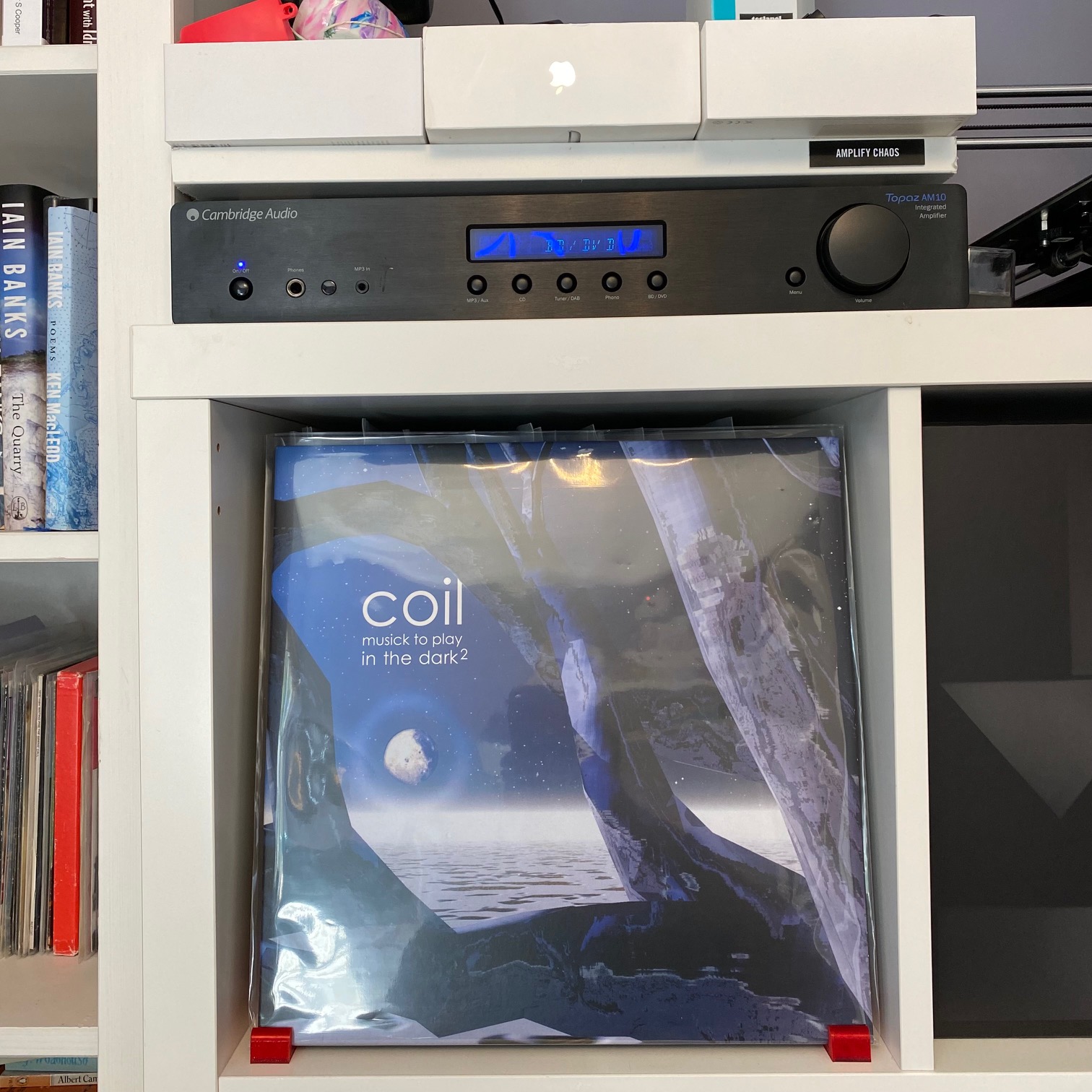
This took a while to arrive! After the success of the reissue of Coil's Musick To Play In The Dark, it was inevitable that the second edition would also be reissued. The pre-order opened late November 2021 and mine arrived in late April this year.
Record cover
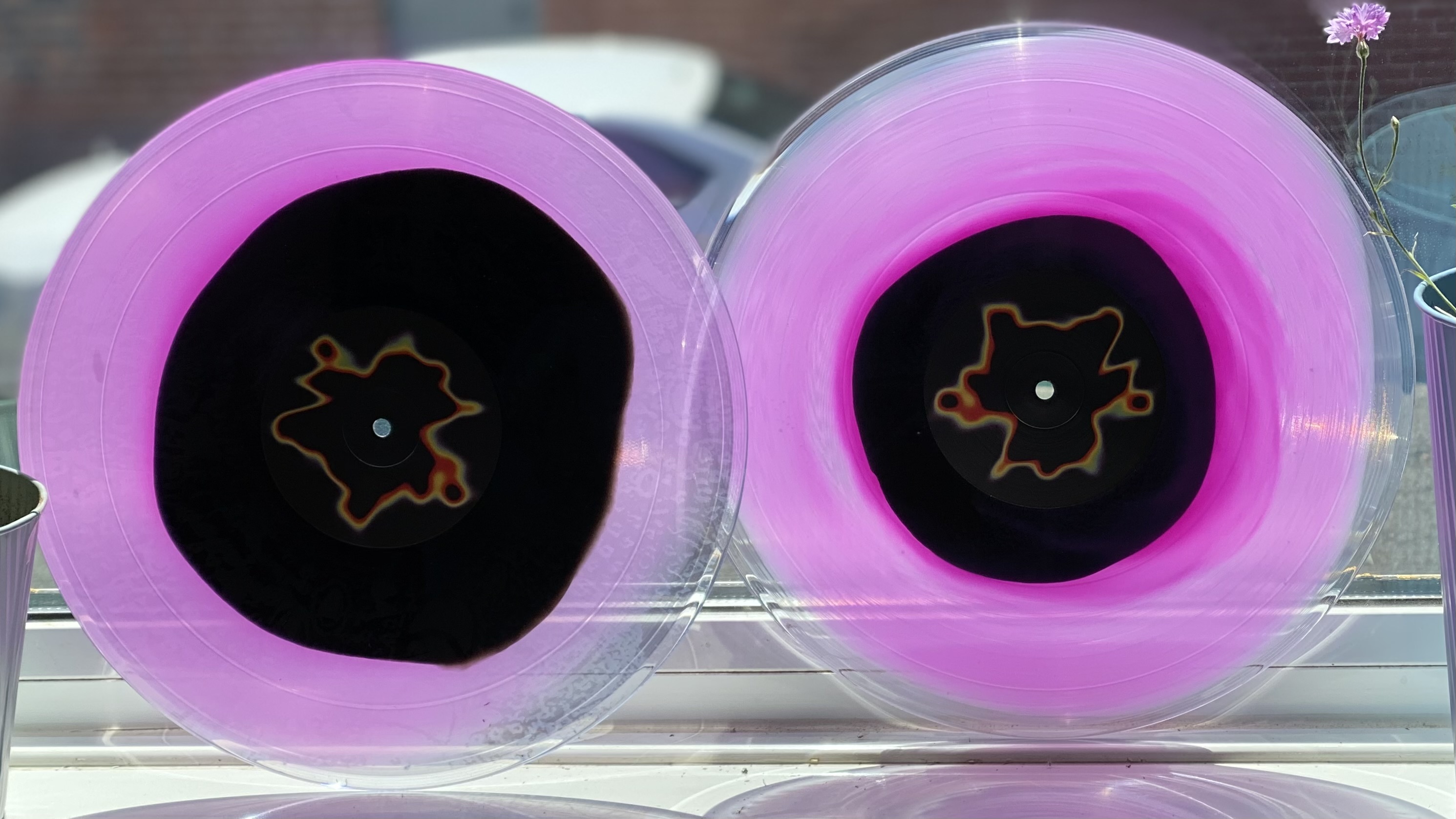
I was toying with the idea of ordering one of the most exclusive editions direct from DAIS Records, in particular the glow in the dark one, but with international shipping the cost was pretty high. I went with a UK distributor (Boomkat) instead, who had their own exclusive edition: black-in-purple-in-clear.
records
I'm happy with my decision: it's one of the most interesting variants I own, and from what I've read, glow in the dark vinyl never sounds great anyway. (I think I have at least one glow in the dark 7" single somewhere) Stand-out track: Tiny Golden Books Since I didn't say so last time, the stand-out track on volume one is Red Birds Will Fly Out of the East and Destroy Paris in a Night, but both volumes are full of really interesting moments ( One day, your eggs are going to hatch and some very strange birds are going to emerge. )

6 July 2022

Russ Allbery: Review: A Master of Djinn

Review: A Master of Djinn, by P. Dj l Clark
Series: Dead Djinn Universe #1
Publisher: Tordotcom
Copyright: 2021
ISBN: 1-250-26767-6
Format: Kindle
Pages: 391
A Master of Djinn is the first novel in the Dead Djinn Universe, but (as you might guess from the series title) is a direct sequel to the novelette "A Dead Djinn in Cairo". The novelette is not as good as the novel, but I recommend reading it first for the character introductions and some plot elements that carry over. Reading The Haunting of Tram Car 015 first is entirely optional. In 1912 in a mansion in Giza, a secret society of (mostly) British men is meeting. The Hermetic Brotherhood of Al-Jahiz is devoted to unlocking the mysteries of the Soudanese mystic al-Jahiz. In our world, these men would likely be colonialist plunderers. In this world, they still aspire to that role, but they're playing catch-up. Al-Jahiz bored into the Kaf, releasing djinn and magic into the world and making Egypt a world power in its own right. Now, its cities are full of clockwork marvels, djinn walk the streets as citizens, and British rule has been ejected from India and Africa by local magic. This group of still-rich romantics and crackpots hopes to discover the knowledge lost when al-Jahiz disappeared. They have not had much success. This will not save their lives. Fatma el-Sha'arawi is a special investigator for the Ministry of Alchemy, Enchantments, and Supernatural Entities. Her job is sorting out the problems caused by this new magic, such as a couple of young thieves with a bottle full of sleeping djinn whose angry reaction to being unexpectedly woken has very little to do with wishes. She is one of the few female investigators in a ministry that is slowly modernizing with the rest of society (Egyptian women just got the vote). She's also the one called to investigate the murder of a secret society of British men and a couple of Cairenes by a black-robed man in a golden mask. The black-robed man claims to be al-Jahiz returned, and proves to be terrifyingly adept at manipulating crowds and sparking popular dissent. Fatma and the Ministry's first attempt to handle him is a poorly-judged confrontation stymied by hostile crowds, the man's duplicating bodyguard, and his own fighting ability. From there, it's a race between Fatma's pursuit of linear clues and the black-robed man's efforts to destabilize society. This, like the previous short stories, is a police procedural, but it has considerably more room to breathe at novel length. That serves it well, since as with "A Dead Djinn in Cairo" the procedural part is a linear, reactive vehicle for plot exposition. I was more invested in Fatma's relationships with the supporting characters. Since the previous story, she's struck up a romance with Siti, a highly competent follower of the old Egyptian gods (Hathor in particular) and my favorite character in the book. She's also been assigned a new partner, Hadia, a new graduate and another female agent. The slow defeat of Fatma's irritation at not being allowed to work alone by Hadia's cheerful competence and persistence (and willingness to do paperwork) adds a lot to the characterization. The setting felt a bit less atmospheric than The Haunting of Tram Car 015, but we get more details of international politics, and they're a delight. Clark takes obvious (and warranted) glee in showing how the reintroduction of magic has shifted the balance of power away from the colonial empires. Cairo is a bustling steampunk metropolis and capital of a world power, welcoming envoys from West African kingdoms alongside the (still racist and obnoxious but now much less powerful) British and other Europeans. European countries were forced to search their own mythology for possible sources of magic power, which leads to the hilarious scene of the German Kaiser carrying a sleepy goblin on his shoulder to monitor his diplomacy. The magic of the story was less successful for me, although still enjoyable. The angels from "A Dead Djinn in Cairo" make another appearance and again felt like the freshest bit of world-building, but we don't find out much more about them. I liked the djinn and their widely-varied types and magic, but apart from them and a few glimpses of Egypt's older gods, that was the extent of the underlying structure. There is a significant magical artifact, but the characters are essentially handed an instruction manual, use it according to its instructions, and it then does what it was documented to do. It was a bit unsatisfying. I'm the type of fantasy reader who always wants to read the sourcebook for the magic system, but this is not that sort of a book. Instead, it's the kind of book where the investigator steadily follows a linear trail of clues and leads until they reach the final confrontation. Here, the confrontation felt remarkably like cut scenes from a Japanese RPG: sudden vast changes in scale, clockwork constructs, massive monsters, villains standing on mobile platforms, and surprise combat reversals. I could almost hear the fight music and see the dialog boxes pop up. This isn't exactly a complaint I love Japanese RPGs but it did add to the feeling that the plot was on rails and didn't require many decisions from the protagonist. Clark also relies on an overused plot cliche in the climactic battle, which was a minor disappointment. A Master of Djinn won the Nebula for best 2021 novel, I suspect largely on the basis of its setting and refreshingly non-European magical system. I don't entirely agree; the writing is still a bit clunky, with unnecessary sentences and stock phrases showing up here and there, and I think it suffers from the typical deficiencies of SFF writers writing mysteries or police procedurals without the plot sophistication normally found in that genre. But this is good stuff for a first novel, with fun supporting characters (loved the librarian) and some great world-building. I would happily read more in this universe. Rating: 7 out of 10

5 July 2022

Alberto Garc a: Running the Steam Deck s OS in a virtual machine using QEMU

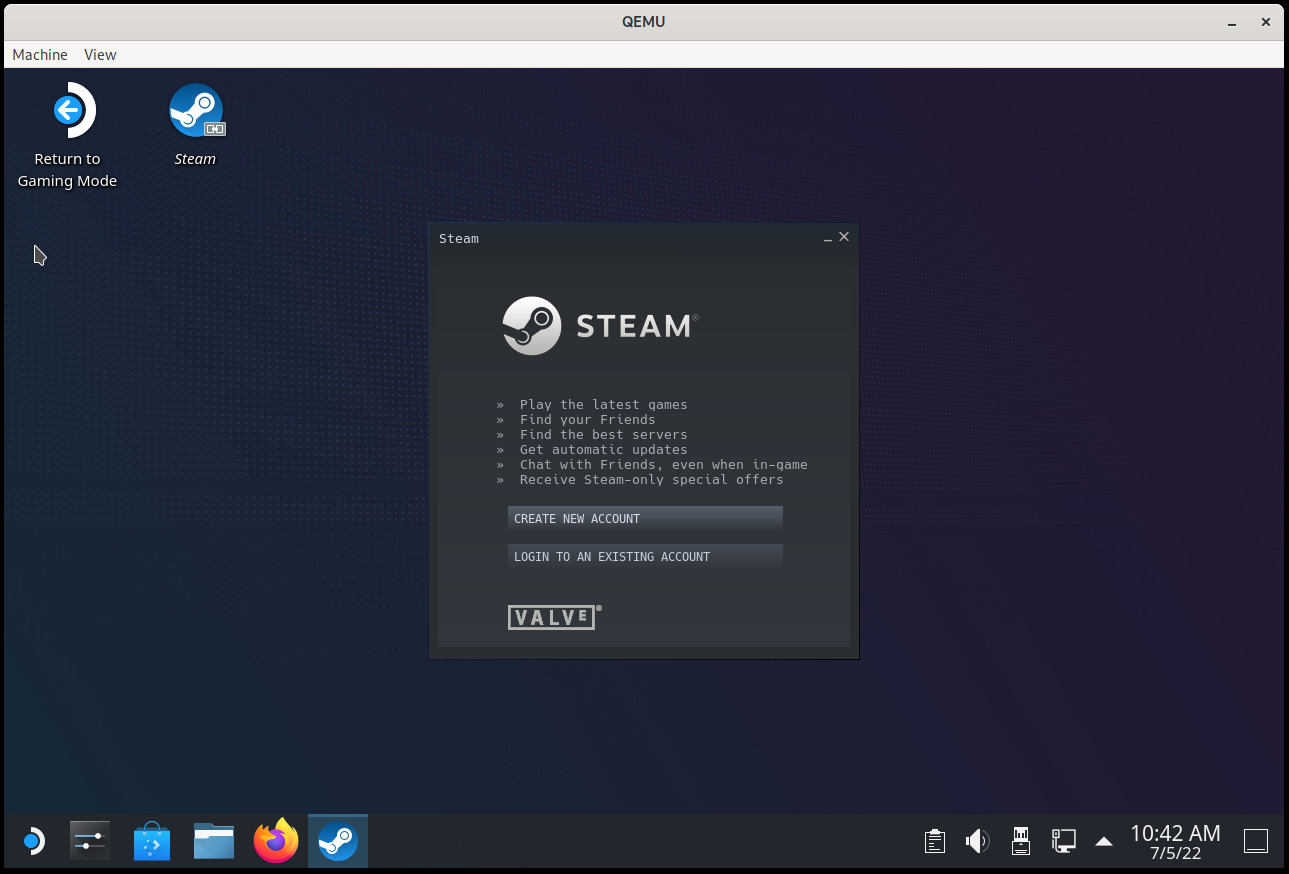
SteamOS desktop Introduction The Steam Deck is a handheld gaming computer that runs a Linux-based operating system called SteamOS. The machine comes with SteamOS 3 (code name holo ), which is in turn based on Arch Linux. Although there is no SteamOS 3 installer for a generic PC (yet), it is very easy to install on a virtual machine using QEMU. This post explains how to do it. The goal of this VM is not to play games (you can already install Steam on your computer after all) but to use SteamOS in desktop mode. The Gamescope mode (the console-like interface you normally see when you use the machine) requires additional development to make it work with QEMU and will not work with these instructions. A SteamOS VM can be useful for debugging, development, and generally playing and tinkering with the OS without risking breaking the Steam Deck. Running the SteamOS desktop in a virtual machine only requires QEMU and the OVMF UEFI firmware and should work in any relatively recent distribution. In this post I m using QEMU directly, but you can also use virt-manager or some other tool if you prefer, we re emulating a standard x86_64 machine here. General concepts SteamOS is a single-user operating system and it uses an A/B partition scheme, which means that there are two sets of partitions and two copies of the operating system. The root filesystem is read-only and system updates happen on the partition set that is not active. This allows for safer updates, among other things. There is one single /home partition, shared by both partition sets. It contains the games, user files, and anything that the user wants to install there. Although the user can trivially become root, make the root filesystem read-write and install or change anything (the pacman package manager is available), this is not recommended because A simple way for the user to install additional software that survives OS updates and doesn t touch the root filesystem is Flatpak. It comes preinstalled with the OS and is integrated with the KDE Discover app. Preparing all necessary files The first thing that we need is the installer. For that we have to download the Steam Deck recovery image from here: https://store.steampowered.com/steamos/download/?ver=steamdeck&snr= Once the file has been downloaded, we can uncompress it and we ll get a raw disk image called steamdeck-recovery-4.img (the number may vary). Note that the recovery image is already SteamOS (just not the most up-to-date version). If you simply want to have a quick look you can play a bit with it and skip the installation step. In this case I recommend that you extend the image before using it, for example with truncate -s 64G steamdeck-recovery-4.img or, better, create a qcow2 overlay file and leave the original raw image unmodified: qemu-img create -f qcow2 -F raw -b steamdeck-recovery-4.img steamdeck-recovery-extended.qcow2 64G But here we want to perform the actual installation, so we need a destination image. Let s create one: $ qemu-img create -f qcow2 steamos.qcow2 64G Installing SteamOS Now that we have all files we can start the virtual machine:
$ qemu-system-x86_64 -enable-kvm -smp cores=4 -m 8G \
    -device usb-ehci -device usb-tablet \
    -device intel-hda -device hda-duplex \
    -device VGA,xres=1280,yres=800 \
    -drive if=pflash,format=raw,readonly=on,file=/usr/share/ovmf/OVMF.fd \
    -drive if=virtio,file=steamdeck-recovery-4.img,driver=raw \
    -device nvme,drive=drive0,serial=badbeef \
    -drive if=none,id=drive0,file=steamos.qcow2
Note that we re emulating an NVMe drive for steamos.qcow2 because that s what the installer script expects. This is not strictly necessary but it makes things a bit easier. If you don t want to do that you ll have to edit ~/tools/repair_device.sh and change DISK and DISK_SUFFIX. SteamOS installer shortcuts Once the system has booted we ll see a KDE Plasma session with a few tools on the desktop. If we select Reimage Steam Deck and click Proceed on the confirmation dialog then SteamOS will be installed on the destination drive. This process should not take a long time. Now, once the operation finishes a new confirmation dialog will ask if we want to reboot the Steam Deck, but here we have to choose Cancel . We cannot use the new image yet because it would try to boot into the Gamescope session, which won t work, so we need to change the default desktop session. SteamOS comes with a helper script that allows us to enter a chroot after automatically mounting all SteamOS partitions, so let s open a Konsole and make the Plasma session the default one in both partition sets:

$ sudo steamos-chroot --disk /dev/nvme0n1 --partset A
# steamos-readonly disable
# echo '[Autologin]' > /etc/sddm.conf.d/zz-steamos-autologin.conf
# echo 'Session=plasma.desktop' >> /etc/sddm.conf.d/zz-steamos-autologin.conf
# steamos-readonly enable
# exit
$ sudo steamos-chroot --disk /dev/nvme0n1 --partset B
# steamos-readonly disable
# echo '[Autologin]' > /etc/sddm.conf.d/zz-steamos-autologin.conf
# echo 'Session=plasma.desktop' >> /etc/sddm.conf.d/zz-steamos-autologin.conf
# steamos-readonly enable
# exit
After this we can shut down the virtual machine. Our new SteamOS drive is ready to be used. We can discard the recovery image now if we want. Booting SteamOS and first steps To boot SteamOS we can use a QEMU line similar to the one used during the installation. This time we re not emulating an NVMe drive because it s no longer necessary.
$ cp /usr/share/OVMF/OVMF_VARS.fd .
$ qemu-system-x86_64 -enable-kvm -smp cores=4 -m 8G \
   -device usb-ehci -device usb-tablet \
   -device intel-hda -device hda-duplex \
   -device VGA,xres=1280,yres=800 \
   -drive if=pflash,format=raw,readonly=on,file=/usr/share/ovmf/OVMF.fd \
   -drive if=pflash,format=raw,file=OVMF_VARS.fd \
   -drive if=virtio,file=steamos.qcow2 \
   -device virtio-net-pci,netdev=net0 \
   -netdev user,id=net0,hostfwd=tcp::2222-:22
(the last two lines redirect tcp port 2222 to port 22 of the guest to be able to SSH into the VM. If you don t want to do that you can omit them) If everything went fine, you should see KDE Plasma again, this time with a desktop icon to launch Steam and another one to Return to Gaming Mode (which we should not use because it won t work). See the screenshot that opens this post. Congratulations, you re running SteamOS now. Here are some things that you probably want to do: Updating the OS to the latest version The Steam Deck recovery image doesn t install the most recent version of SteamOS, so now we should probably do a software update. Note: if the last step fails after reaching 100% with a post-install handler error then go to Connections in the system settings, rename Wired Connection 1 to something else (anything, the name doesn t matter), click Apply and run steamos-update again. This works around a bug in the update process. Recent images fix this and this workaround is not necessary with them. As we did with the recovery image, before rebooting we should ensure that the new update boots into the Plasma session, otherwise it won t work:
$ sudo steamos-chroot --partset other
# steamos-readonly disable
# echo '[Autologin]' > /etc/sddm.conf.d/zz-steamos-autologin.conf
# echo 'Session=plasma.desktop' >> /etc/sddm.conf.d/zz-steamos-autologin.conf
# steamos-readonly enable
# exit
After this we can restart the system. If everything went fine we should be running the latest SteamOS release. Enjoy! Reporting bugs SteamOS is under active development. If you find problems or want to request improvements please go to the SteamOS community tracker. Edit 06 Jul 2022: Small fixes, mention how to install the OS without using NVMe.

Russ Allbery: Review: A Mirror Mended

Review: A Mirror Mended, by Alix E. Harrow
Series: Fractured Fables #2
Publisher: Tordotcom
Copyright: 2022
ISBN: 1-250-76665-6
Format: Kindle
Pages: 129
This is a direct sequel to A Spindle Splintered and will completely spoil that story, so start there rather than here. A Mirror Mended opens with a glimpse at yet another version of the Sleeping Beauty story, this one (delightfully) a Spanish telenovela. Zinnia is world-hopping, something that's lost some of the meaning from A Spindle Splintered and become an escape from other problems. She's about ready to leave this world as well when she sees a face that is not hers in the bathroom mirror, pleading for help. Zinnia assumes this is yet another sleeping beauty, albeit an unusual one. Zinnia is wrong. Readers of A Spindle Splintered are going to groan when I tell you that Zinnia has managed to damage most of the relationships that she made in the first story, which means we get a bit of an episodic reset of unhappiness mixed with an all-new glob of guilt. Not only is this a depressing way to start a new story, it also means there are no snarky text messages and side commentary. Grumble. Harrow is isolating Zinnia to set up a strange and fraught alliance that turns into a great story, but given that Zinnia's friend network was my favorite part of the first novella, the start of this story made me grumpy. Stick with it, though, since Harrow does more than introduce another fairy tale. She also introduces a villain, one who wishes to be more complicated than her story allows and who knows rather more about the structure of the world than she should. This time, the fairy tale goes off the rails in a more directly subversive way that prods at the bones of Harrow's world-building. This may or may not be what you want, and I admit I liked the first story better. A Spindle Splintered took fairy tales just seriously enough to make a plot, but didn't poke at its premises deeply enough to destabilize them. It played off of fairy tales themselves; A Mirror Mended instead plays off of Harrow's previous story by looking directly at the invented metaphysics of parallel worlds playing out fairy tale archetypes. Some of this worked for me: Eva is a great character and the dynamic between her and Zinnia is highly entertaining. Some of it didn't: the impact on universal metaphysics of Zinnia's adventuring is a bit cliched and inadequately explained. A Mirror Mended is a character exploration with a bit more angst and ambiguity, which means it isn't as delightfully balanced and free-wheeling. I will reassure you with the minor spoiler that Zinnia does eventually pull her head out of her ass when she has to, and while there is nowhere near enough Charm in this book for my taste, there is some. In exchange for the relationship screw-ups, we get the Zinnia/Eva dynamic, which I was really enjoying by the end. One of my favorite tropes is accidental empathy, where someone who is being flippant and sarcastic stumbles into a way of truly helping someone else and is wise enough to notice it. There are several great moments of that. I like Zinnia, even this older, more conflicted, and less cavalier version. Recommended if you liked the first story, although be warned that this replaces the earlier magic with some harder relationship work and the payoff is more hinted at than fully shown. Rating: 7 out of 10

4 July 2022

Russ Allbery: Review: She Who Became the Sun

Review: She Who Became the Sun, by Shelley Parker-Chan
Series: Radiant Emperor #1
Publisher: Tor
Copyright: 2021
Printing: 2022
ISBN: 1-250-62179-8
Format: Kindle
Pages: 414
In 1345 in Zhongli village, in fourth year of a drought, lived a man with his son and his daughter, the last surviving of seven children. The son was promised by his father to the Wuhuang Monastery on his twelfth birthday if he survived. According to the fortune-teller, that son, Zhu Chongba, will be so great that he will bring a hundred generations of pride to the family name. When the girl dares ask her fate, the fortune-teller says, simply, "Nothing." Bandits come looking for food and kill their father. Zhu goes catatonic rather than bury his father, so the girl digs a grave, only to find her brother dead inside it with her father. It leaves her furious: he had a great destiny and he gave it up without a fight, choosing to become nothing. At that moment, she decides to seize his fate for her own, to become Zhu so thoroughly that Heaven itself will be fooled. Through sheer determination and force of will, she stays at the gates of Wuhuang Monastery until the monks are impressed enough with her stubbornness that they let her in under Zhu's name. That puts her on a trajectory that will lead her to the Red Turbans and the civil war over the Mandate of Heaven. She Who Became the Sun is historical fiction with some alternate history and a touch of magic. The closest comparison I can think of is Guy Gavriel Kay: a similar touch of magic that is slight enough to have questionable impact on the story, and a similar starting point of history but a story that's not constrained to follow the events of our world. Unlike Kay, Parker-Chan doesn't change the names of places and people. It's therefore not difficult to work out the history this story is based on (late Yuan dynasty), although it may not be clear at first what role Zhu will play in that history. The first part of the book focuses on Zhu, her time in the monastery, and her (mostly successful) quest to keep her gender secret. The end of that part introduces the second primary protagonist, the eunuch general Ouyang of the army of the Prince of Henan. Ouyang is Nanren, serving a Mongol prince or, more precisely, his son Esen. On the surface, Ouyang is devoted to Esen and serves capably as his general. What lies beneath that surface is far darker and more complicated. I think how well you like this book will depend on how well you get along with the characters. I thought Zhu was a delight. She spends the first half of the book proving herself to be startlingly competent and unpredictable while outwitting Heaven and pursuing her assumed destiny. A major hinge event at the center of the book could have destroyed her character, but instead makes her even stronger, more relaxed, and more comfortable with herself. Her story's exploration of gender identity only made that better for me, starting with her thinking of herself as a woman pretending to be a man and turning into something more complex and self-chosen (and, despite some sexual encounters, apparently asexual, which is something you still rarely see in fiction). I also appreciated how Parker-Chan varies Zhu's pronouns depending on the perspective of the narrator. That said, Zhu is not a good person. She is fiercely ambitious to the point of being a sociopath, and the path she sees involves a lot of ruthlessness and some cold-blooded murder. This is less of a heroic journey than a revenge saga, where the target of revenge is the entire known world and Zhu is as dangerous as she is competent. If you want your protagonist to be moral, this may not work for you. Zhu's scenes are partly told from her perspective and partly from the perspective of a woman named Ma who is a good person, and who is therefore intermittently horrified. The revenge story worked for me, and as a result I found Ma somewhat irritating. If your tendency is to agree with Ma, you may find Zhu too amoral to root for. Ouyang's parts I just hated, which is fitting because Ouyang loathes himself to a degree that is quite difficult to read. He is obsessed with being a eunuch and therefore not fully male. That internal monologue is disturbing enough that it drowned out the moderately interesting court intrigue that he's a part of. I know some people like reading highly dramatic characters who are walking emotional disaster zones. I am not one of those people; by about three quarters of the way through the book I was hoping someone would kill Ouyang already and put him out of everyone's misery. One of the things I disliked about this book is that, despite the complex gender work with Zhu, gender roles within the story have a modern gloss while still being highly constrained. All of the characters except Zhu (and the monk Xu, who has a relatively minor part but is the most likable character in the book) feel like they're being smothered in oppressive gender expectations. Ouyang has a full-fledged case of toxic masculinity to fuel his self-loathing, which Parker-Chan highlights with some weirdly disturbing uses of BDSM tropes. So, I thought this was a mixed bag, and I suspect reactions will differ. I thoroughly enjoyed Zhu's parts despite her ruthlessness and struggled through Ouyang's parts with a bad taste in my mouth. I thought the pivot Parker-Chan pulls off in the middle of the book with Zhu's self-image and destiny was beautifully done and made me like the character even more, but I wish the conflict between Ma's and Zhu's outlooks hadn't been so central. Because of that, the ending felt more tragic than triumphant, which I think was intentional but which wasn't to my taste. As with Kay's writing, I suspect there will be some questions about whether She Who Became the Sun is truly fantasy. The only obvious fantastic element is the physical manifestation of the Mandate of Heaven, and that has only a minor effect on the plot. And as with Kay, I think this book needed to be fantasy, not for the special effects, but because it needs the space to take fate literally. Unlike Kay, Parker-Chan does not use the writing style of epic fantasy, but Zhu's campaign to assume a destiny which is not her own needs to be more than a metaphor for the story to work. I enjoyed this with some caveats. For me, the Zhu portions made up for the Ouyang portions. But although it's clearly the first book of a series, I'm not sure I'll read on. I felt like Zhu's character arc reached a satisfying conclusion, and the sequel seems likely to be full of Ma's misery over ethical conflicts and more Ouyang, neither of which sound appealing. So far as I can tell, the sequel I assume is coming has not yet been announced. Rating: 7 out of 10

3 July 2022

Thorsten Alteholz: My Debian Activities in June 2022

FTP master This month I accepted 305 and rejected 59 packages. The overall number of packages that got accepted was 310. From time to time I am also looking at the list of packages to be removed. If you would like to make life easier for the people who remove packages, please make sure that the resulting dak command really makes sense. If this command consists of garbage, please adapt the Subject: of your bug report accordingly. Also it does not make sense to file bugs to remove packages from NEW. Please don t hesitate to close such bugs again Debian LTS This was my ninety-sixth month that I did some work for the Debian LTS initiative, started by Raphael Hertzog at Freexian. This month my all in all workload has been 30.25h. During that time I did LTS and normal security uploads of: I have to admit that I totally ignored the EOL of Stretch LTS, so my upload of ncurses needs to go to Stretch ELTS now. This month I also moved/refactored the current LTS documentation to a new repository and started to move the LTS Wiki as well. I also continued to work on security support for golang packages. Last but not least I did some days of frontdesk duties and took care of issues on security-master. At this point I also need to mention my first business trip . I drove the short distance between Chemnitz and Freiberg and met Anton to have a face to face talk about LTS/ELTS. It was a great pleasure and definitely more fun than a meeting on IRC. Debian ELTS This month was the forty-seventh ELTS month. During my allocated time I uploaded: Due to the delay of my ncurses upload to Stretch LTS, the ELTS upload got delayed as well. Now I will do both uploads to ELTS in July. Last but not least I did some days of frontdesk duties. Debian Printing This month I uploaded new upstream versions or improved packaging of: Debian Astro As there has been a new indi release arriving in Debian, I uploaded new upstream versions of most of the indi-3rdparty packages. Don t hesitate to tell me whether you really use one of them :-). Other stuff This month I uploaded new upstream versions or improved packaging of:

Martin-Éric Racine: Refactoring Debian's dhcpcd packaging

Given news that ISC's DHCP suite is getting deprecated by upstream and seeing how dhclient has never worked properly for DHCPv6, I decided to look into alternatives. ISC itself recommends Roy Maple's dhcpcd as a migration path. Sadly, Debian's package had been left unattended for a good 2 years. After refactoring the packaging, updating to the latest upstream and performing one NMU, I decided to adopt the package. Numerous issues were exposed in the process: The key advantage of dhcpcd over dhclient is that works as a dual-stack DHCP client by design. With privilege separation enabled, this means separate child processes handling IPv4 and IPv6 configuration and passing the received information to the parent process to configure networking and update /etc/resolv.conf with nameservers for both stacks. Additionally, /etc/network/interfaces no longer needs separate inet and inet6 lines for each DHCP interface, which makes for much cleaner configuration files. A secondary advantage is that the dual-stack includes built-in fallback to Bonjour for IPv4 and SLAAC for IPv6. Basically, unless the interface needs a static IP address, this client handles network configuration in a smart and transparent way. A third advantage is built-in support for DHCPv6 Prefix Delegation. Enabling this requires just two lines in the configuration file. In the long run, I feel that dhcpcd-base should probably replace isc-dhcp-client as the default DHCP client with priority Important. Adequate IPv6 support should come out of the box on a standard Debian installation, yet dhclient never got around implementing that properly.

Russ Allbery: Review: The Haunting of Tram Car 015

Review: The Haunting of Tram Car 015, by P. Dj l Clark
Publisher: Tordotcom
Copyright: February 2019
ASIN: B07H796G2Z
Format: Kindle
Pages: 65
The Haunting of Tram Car 015 is a novella and the second story in the Dead Djinn universe, after "A Dead Djinn in Cairo". While there are a few references to the previous story, it's not a direct sequel and has different main characters. Order of reading is not important. Agents Hamed and Onsi of the Ministry of Alchemy, Enchantments, and Supernatural Entities have been called by the Superintendent of Tram Safety & Maintenance at Ramses Station because one of the tram cars is haunted. The aerial tram system of Cairo (technically a telpher system since the cars move independently) is one of the modern wonders of the 1912 city after al-Jahiz breached the boundaries between universes and allowed djinn to return to the world. The trams are elaborate magical clockwork machines created by djinn to travel their routes, but tram car 015 had to be taken out of service after a magical disturbance. Some supernatural creature has set up residence in its machinery and has been attacking passengers. Like "A Dead Djinn in Cairo," this is a straightforward police procedural in an alternate history with magic and steampunk elements. There isn't much in the way of mystery, and little about the plot will come as a surprise. The agents show up, study the problem, do a bit of research, and then solve the problem with some help. Unlike the previous story, though, it does a far better job at setting. My main complaint about Clark's first story in this universe was that it had a lot of infodumps and not much atmosphere. The Haunting of Tram Car 015 is more evocative, starting with the overheated, windowless office of the superintendent and its rattling fan and continuing with a glimpse of the city's aerial tram network spreading out from the dirigible mooring masts of Ramses Station. While the agents puzzle through identifying the unwanted tram occupant, they have to deal with bureaucratic funding fights and the expense of djinn specialists. In the background, the women of Cairo are agitating for the vote, and Islam, Coptic Christianity, and earlier Egyptian religions mingle warily. The story layered on top of this background is adequate but not great. It's typical urban fantasy fare built on random bits of obscure magical trivia, and feels akin to the opening problem in a typical urban fantasy novel (albeit with a refreshingly non-European magical system). It also features an irritatingly cliched bit of costuming at the conclusion. But you wouldn't read this for the story; you read it to savor the world background, and I thought that was successful. This is not a stand-out novella for me and I wouldn't have nominated it for the various awards it contended for, but it's also not my culture and by other online accounts it represents the culture well. The world background was interesting enough that I might have kept reading even if the follow-on novel had not won a Nebula award. Followed by the novel A Master of Djinn, although the continuity link is not strong. Rating: 7 out of 10

2 July 2022

Fran ois Marier: Remote logging of Turris Omnia log messages using syslog-ng and rsyslog

As part of debugging an upstream connection problem I've been seeing recently, I wanted to be able to monitor the logs from my Turris Omnia router. Here's how I configured it to send its logs to a server I already had on the local network.

Server setup The first thing I did was to open up my server's rsyslog (Debian's default syslog server) to remote connections since it's going to be the destination host for the router's log messages. I added the following to /etc/rsyslog.d/router.conf:
module(load="imtcp")
input(type="imtcp" port="514")
if $fromhost-ip == '192.168.1.1' then  
    if $syslogseverity <= 5 then  
        action(type="omfile" file="/var/log/router.log")
     
    stop
 
This is using the latest rsyslog configuration method: a handy scripting language called RainerScript. Severity level 5 maps to "notice" which consists of unusual non-error conditions, and 192.168.1.1 is of course the IP address of the router on the LAN side. With this, I'm directing all router log messages to a separate file, filtering out anything less important than severity 5. In order for rsyslog to pick up this new configuration file, I restarted it:
systemctl restart rsyslog.service
and checked that it was running correctly (e.g. no syntax errors in the new config file) using:
systemctl status rsyslog.service
Since I added a new log file, I also setup log rotation for it by putting the following in /etc/logrotate.d/router:
/var/log/router.log
 
    rotate 4
    weekly
    missingok
    notifempty
    compress
    delaycompress
    sharedscripts
    postrotate
        /usr/lib/rsyslog/rsyslog-rotate
    endscript
 
In addition, since I use logcheck to monitor my server logs and email me errors, I had to add /var/log/router.log to /etc/logcheck/logcheck.logfiles. Finally I opened the rsyslog port to the router in my server's firewall by adding the following to /etc/network/iptables.up.rules:
# Allow logs from the router
-A INPUT -s 192.168.1.1 -p tcp --dport 514 -j ACCEPT
and ran iptables-apply. With all of this in place, it was time to get the router to send messages.

Router setup As suggested on the Turris forum, I ssh'ed into my router and added this in /etc/syslog-ng.d/remote.conf:
destination d_loghost  
        network("192.168.1.200" time-zone("America/Vancouver"));
 ;
source dns  
        file("/var/log/resolver");
 ;
log  
        source(src);
        source(net);
        source(kernel);
        source(dns);
        destination(d_loghost);
 ;
Setting the timezone to the same as my server was needed because the router messages were otherwise sent with UTC timestamps. To ensure that the destination host always gets the same IP address (192.168.1.200), I went to the advanced DHCP configuration page and added a static lease for the server's MAC address so that it always gets assigned 192.168.1.200. If that wasn't already the server's IP address, you'll have to restart it for this to take effect. Finally, I restarted the syslog-ng daemon on the router to pick up the new config file:
/etc/init.d/syslog-ng restart

Testing In order to test this configuration, I opened three terminal windows:
  1. tail -f /var/log/syslog on the server
  2. tail -f /var/log/router.log on the server
  3. tail -f /var/log/messages on the router
I immediately started to see messages from the router in the third window and some of these, not all because of my severity-5 filter, were flowing to the second window as well. Also important is that none of the messages make it to the first window, otherwise log messages from the router would be mixed in with the server's own logs. That's the purpose of the stop command in /etc/rsyslog.d/router.conf. To force a log messages to be emitted by the router, simply ssh into it and issue the following command:
logger Test
It should show up in the second and third windows immediately if you've got everything setup correctly

Russ Allbery: Review: Overdue

Review: Overdue, by Amanda Oliver
Publisher: Chicago Review Press
Copyright: 2022
ISBN: 1-64160-534-0
Format: Kindle
Pages: 190
Like many lifetime readers, I adored the public library. I read my way through three different children's libraries at the rate of a grocery sack of books per week, including numerous re-readings, and then moved on to the adult section as my introduction to science fiction. But once I had a regular job, I discovered the fun of filling shelves with books without having to return them or worry about what the library had available. I've always supported my local library, but it's been decades since I spent much time in it. When I last used one heavily, the only computers were at the checkout desk and the only books were physical, normally hardcovers. Overdue: Reckoning with the Public Library therefore caught my eye when I saw a Twitter thread about it before publication. It promised to be a picture of the modern public library and its crises from the perspective of the librarian. The author's primary topic was the drafting of public libraries as de facto homeless service centers, but I hoped it would also encompass technological change, demand for new services, and the shifting meaning of what a public library is for. Overdue does... some of that. The author was a children's librarian in a Washington DC public school and then worked at a downtown branch of the Washington DC public library, and the book includes a few anecdotes from both experiences. Most of the book, though, is Oliver's personal memoir of how she got into field, why she chose to leave it, and how she is making sense of her feelings about the profession. Intermixed with that memoir is wide-ranging political commentary on topics ranging from gentrification to mental health care. This material is relevant to the current challenges libraries face, but it wandered far afield from what I was hoping to get from the book. I think of non-fiction books as coming in a few basic shapes. One is knowledge from an expert: the author has knowledge about a topic that is not widely shared, and they write a book to share it. Another is popularization: an author, possibly without prior special expertise in the topic, does research the reader could have done but doesn't have time to do and then summarizes the results in a format that's easier to understand than the original material. And a third is memoir, in which the author tells the story of their own life. This is a variation of the first type, since the author is obviously an expert in their own life, but most people's lives are not interesting. (Mine certainly isn't!) Successful memoir therefore depends on either having an unusual life or being a compelling storyteller, and ideally both. Many non-fiction books fall into multiple categories, but it's helpful for an author to have a clear idea of which of these goals they're pursuing since they result in different books. If the author is writing primarily from a position of special expertise, the book should focus on that expertise. I am interested in librarians and libraries and would like to know more about that job, so I will read with interest your personal stories about being a librarian. I am somewhat interested in your policy suggestions for how to make libraries work better, although more so if you can offer context and analysis beyond your personal experiences. I am less interested in your opinions on, say, gentrification. That's not because I doubt it is a serious problem (it is) or that it impacts libraries (it does). It's because working in a library doesn't provide any special expertise in gentrification beyond knowing that it exists, something that I can see by walking around the corner. If I want to know more, I will read books by urban planners, sociologists, and housing rights activists. This is a long-winded way of saying that I wish Overdue had about four times as many stories about libraries, preferably framed by general research and background that extended beyond the author's personal experience, or at least more specific details of the politics of the Washington DC library system. The personal memoir outside of the library stories failed to hold my interest. This is not intended as a slam on the author. Oliver seems like a thoughtful and sincere person who is struggling with how to do good in the world without burning out, which is easy for me to sympathize with. I suspect I broadly agree with her on many political positions. But I have read all of this before, and personally lived through some of the same processing, and I don't think Oliver offered new insight. The library stories were memorable enough to form the core of a good book, but the memoir structure did nothing for them and they were strangled by the unoriginal and too-general political analysis. At the risk of belaboring a negative review, there are two other things in Overdue that I've also seen in other writing and seem worth commenting on. The first is the defensive apology that the author may not have the best perspective to write the book. It's important to be clear: I am glad that the Oliver has thought about the ways her experiences as a white woman may not be representative of other people. This is great; the world is a better place when more people consider that. I'm less fond of putting that observation in the book, particularly at length. As the author, rather than writing paragraphs vaguely acknowledging that other people have different experiences, she could instead fix the problem: go talk to librarians of other ethnic and social backgrounds and put their stories in this book. The book would then represent broader experiences and not require the apology. Overdue desperately needed more library-specific content, so that would have improved the book in more than one way. Or if Oliver is ideologically opposed to speaking for other people (she makes some comments to that effect), state up-front, once, that this is a personal memoir and, as a memoir, represents only her own experience. But the author should do something with this observation other than dump its awkwardness on the reader, if for no other reason than that lengthy disclaimers about the author's limited perspective are boring. The second point is about academic jargon and stock phrasing. I work in a field that relies on precise distinctions of meaning (between identity, authentication, and authorization, for example), and therefore I rely on jargon. Its purpose is to make those types of fine distinctions. But authors who read heavily in fields with jargon tend to let that phrasing slip into popular writing where it's not necessary. The result is, to quote Orwell, "gumming together long strips of words which have already been set in order by someone else." The effect may be small in a single sentence but, when continued throughout a book, the overuse of jargon is leaden, belabored, and confusing. Any example I choose will be minor since the effect is cumulative, but one of several I noticed in Overdue is "lived experience." This is jargon from philosophy that, within the field, draws a useful distinction between one's direct experiences of living in the world, and academic or scientific experience with a field. Both types of experience are valuable in different situations, but they're not equivalent. This is a useful phrase when the distinction matters and is unclear. When the type of experience one is discussing is obvious in context (the case in at least three of the four uses in this book), the word "lived" adds nothing but verbosity. If too much of this creeps into writing, it becomes clunky and irritating to read. The best (and not coincidentally the least clunky) part of this book is Oliver's stories of the patrons and other employees of the Northwest One branch of the Washington DC library system and her experiences with them. The picture was not as vivid as I was hoping for, but I came away with some new understanding of typical interactions and day-to-day difficulties. The same was true to a lesser extent for her experiences as a school librarian. For both, I wish there had been more context and framing so that I could see how her experiences fit into a whole system, but those parts of the book were worth reading. Unfortunately, they weren't enough of those parts in the book for me to recommend Overdue. But I'm still interested in reading the book I hoped I was getting! Rating: 5 out of 10

1 July 2022

Steve Kemp: An update on my simple golang TCL interpreter

So my previous post introduced a trivial interpreter for a TCL-like language. In the past week or two I've cleaned it up, fixed a bunch of bugs, and added 100% test-coverage. I'm actually pretty happy with it now. One of the reasons for starting this toy project was to experiment with how easy it is to extend the language using itself Some things are simple, for example replacing this:
puts "3 x 4 = [expr 3 * 4]"
With this:
puts "3 x 4 = [* 3 4]"
Just means defining a function (proc) named *. Which we can do like so:
proc *  a b   
    expr $a * $b
 
(Of course we don't have lists, or variadic arguments, so this is still a bit of a toy example.) Doing more than that is hard though without support for more primitives written in the parent language than I've implemented. The obvious thing I'm missing is a native implementation of upvalue, which is TCL primitive allowing you to affect/update variables in higher-scopes. Without that you can't write things as nicely as you would like, and have to fall back to horrid hacks or be unable to do things.
# define a procedure to run a body N times
proc repeat  n body   
    set res ""
    while  > $n 0   
        decr n
        set res [$body]
     
    $res
 
# test it out
set foo 12
repeat 5   incr foo  
#  foo is now 17 (i.e. 12 + 5)
A similar story implementing the loop word, which should allow you to set the contents of a variable and run a body a number of times:
proc loop  var min max bdy   
    // result
    set res ""
    // set the variable.  Horrid.
    // We miss upvalue here.
    eval "set $var [set min]"
    // Run the test
    while  <= [set "$$var"] $max    
        set res [$bdy]
        // This is a bit horrid
        // We miss upvalue here, and not for the first time.
        eval  incr "$var" 
     
    // return the last result
    $res
 
loop cur 0 10   puts "current iteration $cur ($min->$max)"  
# output is:
# => current iteration 0 (0-10)
# => current iteration 1 (0-10)
# ...
That said I did have fun writing some simple test-cases, and implementing assert, assert_equal, etc. In conclusion I think the number of required primitives needed to implement your own control-flow, and run-time behaviour, is a bit higher than I'd like. Writing switch, repeat, while, and similar primitives inside TCL is harder than creating those same things in FORTH, for example.

Ben Hutchings: Debian LTS work, June 2022

In June I was not assigned additional hours of work by Freexian's Debian LTS initiative, but carried over 16 hours from May and worked all of those hours. I spent some time triaging security issues for Linux. I tested several security fixes for Linux 4.9 and 4.19 and submitted them for inclusion in the upstream stable branches. I rebased the Linux 4.9 (linux) package on the latest stable update (4.9.320), uploaded this and issued the final DLA for stretch, DLA-3065-1.

Paul Wise: FLOSS Activities June 2022

Focus This month I didn't have any particular focus. I just worked on issues in my info bubble.

Changes

Issues

Review
  • Spam: reported 5 Debian bug reports and 45 Debian mailing list posts
  • Debian wiki: RecentChanges for the month
  • Debian BTS usertags: changes for the month
  • Debian screenshots:

Administration
  • Debian wiki: unblock IP addresses, assist with account recovery, approve accounts

Communication

Sponsors The sptag work was sponsored. All other work was done on a volunteer basis.

Next.

Previous.