Search Results: "dom"

17 August 2010

Russ Allbery: Policy and time management

After reading Do It Tomorrow, I was inspired to try some of the techniques that Mark Forster proposes. I commented in the review about the closed list system, which I'm still mostly using with some success. But I also started playing with the initiative slot. In his system, the initiative slot is first thing in the morning each (eligible) morning, which is used for a special project that you want to make forward progress on. There are several criteria for choosing a task for the initiative slot. One of the strongest is dealing with a backlog. Since I'd been feeling guilty about the backlog of Debian Policy work that had built up, that seemed like a good choice. I picked up Debian Policy backlog clearing as my initiative starting at the beginning of June after the AFS and Kerberos Best Practices Workshop, with a goal of getting the open bug count below 100. This has been very instructive, both from a time management perspective and from a Debian Policy perspective. Here are a few things that I learned on the Policy side: Things I learned on the time management side: I stopped using the initiative slot while travelling and haven't gotten back into the hang of regular time management since I've gotten back. I haven't yet decided whether to leave Policy work in the initiative slot for right now but change the goal, or whether to swap it out for something else. I'd like to keep momentum, but I'd also like to start using that slot for other things. Still pondering.

16 August 2010

John Goerzen: Debconf10

Debconf10 ended a week ago, and I m only now finding some time to write about it. Funny how it works that way sometimes. Anyhow, the summary of Debconf has to be: this is one amazing conference. Despite being involved with Debian for years, this was my first Debconf. I often go to one conference a year that my employer sends me to. In the past, it s often been OSCon, which was very good, but Debconf was much better than that even. For those of you considering Debconf11 next year, perhaps this post will help you make your decision. First of all, as might be expected from a technical conference, Debconf was of course informative. I particularly appreciated the enterprise track, which was very relevant to me. Unlike many other conferences, Debconf has some rooms specifically set aside for BoFs. With a day or two warning, you can get your event in one of those rooms on the official schedule. That exact thing happened with a virtualization BoF I thought the topic was interesting, given the recent shifts in various virtualization options. So I emailed the conference mailing list, and we got an event on the schedule a short while later and had a fairly large group turn out to discuss it. The hallway track conversations struck up with others in hallways or hacklabs also was better at Debconf than other conferences. Partly that may be because, although there were fewer people at Debconf, they very much tended to be technical people whose interests aligned with my own. Partly it s probably also because the keysigning party, which went throughout the conference, encouraged meeting random people. That was a great success, by the way. So Debconf succeeded at informing, which is perhaps why many people go to these things. But it also inspired, especially Eben Moglen s lecture. Who would have thought I d come away from a conference enthused about the very real potential we have to alter the dynamics of some of the largest companies in the world today by using Free Software to it s greatest potential? And, of course, I had fun at Debconf. Meeting new people or, more commonly, finally meeting in person people I d known for years was great. I got a real sense of the tremendously positive aspect of Debian s community, which I must admit I have sometimes overlooked during certain mailing list discussions. This was a community of people, not just a bunch of folks attending a random conference for a week, and that point underlined a lot of things that happened. Of course, it wasn t 100% perfect, and it won t ever be. But still, my thanks to everyone that organized, volunteered, and attended Debconf. I m now wishing I d been to more of them, and hope to attend next year s.

Stefano Zacchiroli: happy birthday debian

Dear Debian, today you turn 17 ... ... happy birthday! I've already argued how you're in very good health now that you're close to the major age and how unique and important you are for the whole ecosystem of free software. So, no, I won't insist on that here. Still, today sounds like a good day to say thank you, Debian for being here promoting software freedom and showing to the world that all this can be done do-ocratically, democratically, relying on volunteer work and donations. If you too think Debian deserves being thanked for what it is giving to the world, just say thank you, Debian . My first (meta) thank you messages go to Marga, Maxy, Valessio, Raphael, Ana, and Rhonda for ideating and spreading the 1st Debian Appreciation Day ever. Update: fix 404 Penta b0rkage in the slides link

13 August 2010

Joey Hess: DebConf10 report: Eben Moglen

Long before I took the train up to New York for DebConf10, I was sure that Eben Moglen's talk, the followup to his earlier, excellent "Freedom in the Cloud", would be a highlight of the conference. Even though it was scheduled for an ugly 9 am slot the morning after that other certain highlight, the wine and cheese party. I was not disappointed. The amazing DebConf video team has already put up the video of "How We Can Be the Silver Lining of the Cloud". Embedded below for those with html5. If you watch one video from DebConf, this should be it. <video controls="controls" src="http://meetings-archive.debian.net/pub/debian-meetings/2010/debconf10/high/1252_How_We_Can_Be_the_Silver_Lining_of_the_Cloud.ogv"></video> (Note that the audio stops cutting in and out after he switches mics a few minutes in.) In this talk, Eben goes far past the earlier "Freedom in the Cloud" talk, changing the focus from scraping Facebook, to laying down a concrete, detailed vision of the "FreedomBox", and how it could be a game changer. After the first standing ovation I can remember at a DebConf, given to the first speaker in a suit I can remember at a DebConf, many of us ended up in this huddle in the hall. Which turned into an impromptu BoF in a nearby room, which led to this wiki page, which was followed by seemingly everyone buzzing about it for the rest of the conference, and a second BoF that probably exceeded its room's occupancy limit. Which led to ... ??
I will spend the next several months trying to find other things we can do to help make this suddenly happen. And believe me, to the rest of the world, this will happen very suddenly. We will disrupt a lot of games we would like to have disrupted.
-- Eben Moglen


My thoughts:

12 August 2010

Steve Kemp: Sanity testing drives

Recently I came across a situation where moving a lot of data around on a machine with a 3Ware RAID card ultimately killed the machine. To test the hardware in advance for this requires a test of both: The former can be done with badblocks, etc. The latter requires a simple tool to create a bunch of huge files with "random" contents, then later verify they have the contents you expected. With that in mind:
dt --files=1000  --size=100M [--no-delete --delete]
This: Adding "--no-delete" and "--files=100000" allows you to continue testing until your drive is full and you've tested every part of the filesystem. Trivial toy, or possibly useful to sanity-check a filesystem? You decide. Or just:
hg clone http://dt.repository.steve.org.uk/
(dt == disk test) ObQuote: "Stand back boy! This calls for divine intervention! " - "Brain Dead"

David Moreno: DebConf 10

I was in New York for three full weeks, before, during and after DebConf 10 took place. Unfortunately, I wasn't able to attend talks or go hang out with folks as much as I would've wanted. Most of the time I was busy at the office with a new product launch we have been preparing for the last few months. However, I was able to come and say hi to a few people, attend the C&W party and talk with friends and ran into. I was, however, following all conversations on IRC so I was pretty informed of all of what was going on. Some random thoughts: DebConf 10 rocked and I appreciate everybody's participation in it. See you in Banja Luka, next year!

10 August 2010

Gustavo Noronha Silva: Google s User-Agent sniffing makes one more victim

Remember when I said Epiphany worked out of the box with Youtube s WebM? Well, Google has recently decided to deny us WebM, like it did before with Wave, the Pacman doodle, and who knows what else? \o/ Wouldn t it be nice if Google practiced what they preach? Update: so it looks like my message went through to the people who needed to see it, and they found a filtering error in the User Agent sniffing code that made it think Epiphany was a too old Safari - I m told the change will land in Youtube soon, thanks for those paying attention, and working on this! User Agent sniffing keeps being a problem, of course, and there are other stuff to fix, so I will probably still push my patch to spoof the user agent to google services which are still mishandling Epiphany, but it s good to see some progress being made! Update2: I started shipping a patch to send the Chrome user agent string to google domains in the Debian package for WebKitGTK+, when the enable-site-specific-quirks setting is enabled (which is the case for Epiphany); I already found something we were missing out on =D Google Images seems to have been greatly improved, and now faking being Chrome we are also able to enjoy it:

Google Images improved

9 August 2010

Petter Reinholdtsen: No hardcoded config on Debian Edu clients

As reported earlier, the last few days I have looked at how Debian Edu clients are configured, and tried to get rid of all hardcoded configuration settings on the clients. I believe the work to be mostly done, and the clients seem to work just fine with dynamically generated configuration. What is the point, you might ask? The point is to allow a Debian Edu desktop to integrate into an existing network infrastructure without any manual configuration. This is what happens when installing a Debian Edu client here at the University of Oslo using PXE. With the PXE installation, I am asked for language (Norwegian Bokm l), locality (Norway) and keyboard layout (no-latin1), Debian Edu profile (Roaming Workstation), if I accept to reformat the hard drive (yes), if I want to submit info to popcon.debian.org (no) and root password (secret). After answering these questions, the installer goes ahead and does its thing, and after around 50 minutes it is done. I press enter to finish the installation, and the machine reboots into KDE. When the machine is ready and kdm asks for login information, I enter my university username and password, am told by kdm that a local home directory has been created and that I must log in again, and finally log in with the same username and password to the KDE 4.4 desktop. At no point during this process did it ask for university specific settings, and all the required configuration was dynamically detected using information fetched via DHCP and DNS. The roaming workstation is now ready for use. How was this done, you might wonder? First of all, here is the list of things that need to be configured on the client to get it working properly out of the box: (Hm, did I forget anything? Let me knew if I did.) The points marked (*) are not required to be able to use the machine, but needed to provide central storage and allowing system administrators to track their machines. Since yesterday, everything but the sitesummary collector URL is dynamically discovered at boot and installation time in the svn version of Debian Edu. The IP and DNS setup is fetched during boot using DHCP as usual. When a DHCP update arrives, the proxy setup is updated by looking for http://wpat/wpad.dat and using the content of this WPAD file to configure the http and ftp proxy in /etc/environment and /etc/apt/apt.conf. I decided to update the proxy setup using a DHCP hook to ensure that the client stops using the Debian Edu proxy when it is moved outside the Debian Edu network, and instead uses any local proxy present on the new network when it moves around. The DNS names of the LDAP, Kerberos and syslog server and related configuration are generated using DNS information at boot. First the installer looks for a host named ldap in the current DNS domain. If not found, it looks for _ldap._tcp SRV records in DNS instead. If an LDAP server is found, its root DSE entry is requested and the attributes namingContexts and defaultNamingContext are used to determine which LDAP base to use for NSS. If there are several namingContexts attibutes and the defaultNamingContext is present, that LDAP subtree is used as the base. If defaultNamingContext is missing, the subtrees listed as namingContexts are searched in sequence for any object with class posixAccount or posixGroup, and the first one with such an object is used as the LDAP base. For Kerberos, a similar search is done by first looking for a host named kerberos, and then for the _kerberos._tcp SRV record. I've been unable to find a way to look up the Kerberos realm, so for this the upper case string of the current DNS domain is used. For the syslog server, the hosts syslog and loghost are searched for, and the _syslog._udp SRV record is consulted if no such host is found. This algorithm works for both Debian Edu and the University of Oslo. A similar strategy would work for locating the sitesummary server, but have not been implemented yet. I decided to fetch and save these settings during installation, to make sure moving to a different network does not change the set of users being allowed to log in nor the passwords required to log in. Usernames and passwords will be cached by sssd when the user logs in on the Debian Edu network, and will not change as the laptop move around. For a non-roaming machine, there is no caching, but given that it is supposed to stay in place it should not matter much. Perhaps we should switch those to use sssd too? The user's SMB mount point for the network home directory is located when the user logs in for the first time. The LDAP server is consulted to look for the user's LDAP object and the sambaHomePath attribute is used if found. If it isn't found, the home directory path fetched from NSS is used instead. Assuming the path is of the form /site/server/directory/username, the second part is looked up in DNS and used to generate a SMB URL of the form smb://server.domain/username. This algorithm works for both Debian edu and the University of Oslo. Perhaps there are better attributes to use or a better algorithm that works for more sites, but this will do for now. :) This work should make it easier to integrate the Debian Edu clients into any LDAP/Kerberos infrastructure, and make the current setup even more flexible than before. I suspect it will also work for thin client servers, allowing one to easily set up LTSP and hook it into a existing network infrastructure, but I have not had time to test this yet. If you want to help out with implementing these things for Debian Edu, please contact us on debian-edu@lists.debian.org. Update 2010-08-09: Simon Farnsworth gave me a heads-up on how to detect Kerberos realm from DNS, by looking for _kerberos TXT entries before falling back to the upper case DNS domain name. Will have to implement it for Debian Edu. :)

Gustavo Noronha Silva: WebKitGTK+ and the Web Inspector

When I started working on WebKitGTK+ I was a web developer, writing IT applications using Python and Django, and building features for content portals running Plone (argh). Even though I was an Epiphany user ever since it was forked off Galeon, I still had to use Firefox for my work, because I couldn t really live without Firebug. It should come as no surprise, then, that one of my first patches to WebKitGTK+ was actually making the awesome Web Inspector work in our port. After the initial support, though, not a lot has been done to further improve it, partly because it was already good enough for many uses, partly because I somehow started doing non-web development again ;). These last weeks, through my R&D efforts in Collabora, I have been able to push Web Inspector features and integration a bit further. A simple change that boosts the Inspector s usability quite a bit is having the nodes that are being hovered highlighted. Along with that, the ability to attach the inspector to Epiphany s window should make it easier to use for poking the DOM. The Web Inspector has a number of settings that control its behaviour. Since, for instance, enabling javascript debugging may slow down javascript performance, the inspector usually has it disabled by default, and provides a button to enable it. It also provides an option for always enabling that feature, but that does not work right now, because we are not saving/restoring the relevant settings. A solution to that is in the works using the GSettings infrastructure that was recently merged into glib. Here s a simple screencast, showing these improvements in action (click the video to check it out in full size): <video controls="controls" src="http://kov.eti.br/media/webkit/inspector.ogv" width="400"></video>

7 August 2010

Petter Reinholdtsen: Autodetecting Client setup for roaming workstations in Debian Edu

A few days ago, I tried to install a Roaming workation profile from Debian Edu/Squeeze while on the university network here at the University of Oslo, and noticed how much had to change to get it operational using the university infrastructure. It was fairly easy, but it occured to me that Debian Edu would improve a lot if I could get the client to connect without any changes at all, and thus let the client configure itself during installation and first boot to use the infrastructure around it. Now I am a huge step further along that road. With our current squeeze-test packages, I can select the roaming workstation profile and get a working laptop connecting to the university LDAP server for user and group and our active directory servers for Kerberos authentication. All this without any configuration at all during installation. My users home directory got a bookmark in the KDE menu to mount it via SMB, with the correct URL. In short, openldap and sssd is correctly configured. In addition to this, the client look for http://wpad/wpad.dat to configure a web proxy, and when it fail to find it no proxy settings are stored in /etc/environment and /etc/apt/apt.conf. Iceweasel and KDE is configured to look for the same wpad configuration and also do not use a proxy when at the university network. If the machine is moved to a network with such wpad setup, it would automatically use it when DHCP gave it a IP address. The LDAP server is located using DNS, by first looking for the DNS entry ldap.$domain. If this do not exist, it look for the _ldap._tcp.$domain SRV records and use the first one as the LDAP server. Next, it connects to the LDAP server and search all namingContexts entries for posixAccount or posixGroup objects, and pick the first one as the LDAP base. For Kerberos, a similar algorithm is used to locate the LDAP server, and the realm is the uppercase version of $domain. So, what is not working, you might ask. SMB mounting my home directory do not work. No idea why, but suspected the incorrect Kerberos settings in /etc/krb5.conf and /etc/samba/smb.conf might be the cause. These are not properly configured during installation, and had to be hand-edited to get the correct Kerberos realm and server, but SMB mounting still do not work. :( With this automatic configuration in place, I expect a Debian Edu roaming profile installation would be able to automatically detect and connect to any site using LDAP and Kerberos for NSS directory and PAM authentication. It should also work out of the box in a Active Directory environment providing posixAccount and posixGroup objects with UID and GID values. If you want to help out with implementing these things for Debian Edu, please contact us on debian-edu@lists.debian.org.

Christian Perrier: Developers per country

Back in 2009, I did some analysis of the number of developers per country. Apparently, some people at DebConf remember this and asked if I could update this data. So, here we are with the 2010 version, sorted by the ratio of *active* developers per million population for each country.
Act: number of active developers
Dev: total number of developers
A/M: number of active devels per million pop.
D/M: number of devels per million pop.
2009: rank in 2009
2010: rank in 2010
Code	Name		Population	Act	Dev	A/M	D/M	2009	2010
fi	Finland		5359538		21	32	3,92	5,97	1	1
ch	Switzerland	7782900		22	26	2,83	3,34	2	2
nz	New Zealand	4386207		11	15	2,51	3,42	4	3
no	Norway		4895500		11	14	2,25	2,86	5	4
lu	Luxemburg	502202		1	1	1,99	1,99	8	5
se	Sweden		9354462		18	34	1,92	3,63	3	6
de	Germany		81757600	148	212	1,81	2,59	7	7
at	Austria		8356707		14	23	1,68	2,75	6	8
ie	Ireland		6197100		9	12	1,45	1,94	13	9
au	Australia	22413132	32	56	1,43	2,5	9	10
be	Belgium		10827519	14	16	1,29	1,48	10	11
fr	France		65447374	84	112	1,28	1,71	12	12
nl	Netherlands	16607943	20	38	1,2	2,29	11	13
uk	United-Kingdom	62041708	64	102	1,03	1,64	14	14
ca	Canada		34199000	27	56	0,79	1,64	15	15
es	Spain		46030109	34	52	0,74	1,13	16	16
dk	Denmark		5540241		4	8	0,72	1,44	17	17
hr	Croatia		4489409		3	3	0,67	0,67	20	18
lt	Lithuania	3341966		2	2	0,6	0,6	28	19
cz	Czech Rep	10506813	6	6	0,57	0,57	21	20
us	USA		309913000	165	360	0,53	1,16	19	21
it	Italy		60231214	32	46	0,53	0,76	23	22
bg	Bulgaria	7563710		4	4	0,53	0,53	25	23
il	Israel		7602400		4	6	0,53	0,79	24	24
hu	Hungary		10005000	5	11	0,5	1,1	18	25
lv	Latvia		2217969		1	2	0,45	0,9	26	26
uy	Uruguay		3494382		1	2	0,29	0,57	22	27
jp	Japan		127420000	32	45	0,25	0,35	30	28
pl	Poland		38192000	9	13	0,24	0,34	29	29
cr	Costa Rica	4253897		1	1	0,24	0,24	31	30
sk	Slovakia	5379455		1	1	0,19	0,19	32	31
pt	Portugal	11317192	2	4	0,18	0,35	27	32
ar	Argentina	40134425	6	8	0,15	0,2	34	33
tw	Taiwan		23119772	3	3	0,13	0,13	37	34
br	Brazil		192272890	20	21	0,1	0,11	36	35
by	Belarus		9648533		1	1	0,1	0,1	35	36
mg	Madagascar	20653556	2	2	0,1	0,1	44	37
gr	Greece		11306183	1	3	0,09	0,27	33	38
kr	South Korea	48758000	4	6	0,08	0,12	39	39
ec	Ecuador		14790608	1	1	0,07	0,07		40
cl	Chile		17063000	1	2	0,06	0,12	42	41
ru	Russia		141927297	7	8	0,05	0,06	43	42
ro	Romania		22215421	1	2	0,05	0,09	45	43
co	Colombia	45393050	2	3	0,04	0,07	41	44
ve	Venezuela	26814843	1	1	0,04	0,04	40	45
pe	Peru		29461933	1	1	0,03	0,03	46	46
tr	Turkey		72561312	2	2	0,03	0,03	47	47
za	South Africa	49991300	1	8	0,02	0,16	38	48
mx	Mexico		111211789	2	2	0,02	0,02	49	49
th	Thailand	66404688	1	2	0,02	0,03	50	50
eg	Egypt		78737000	1	2	0,01	0,03	51	51
in	India		1184344000	7	7	0,01	0,01	52	52
cn	China		1338612968	6	10	0	0,01	53	53
ua	Ukraine		45888000	0	0	0	0	48	54
								
								
					873	1410	61,91%			
A few interesting facts:

5 August 2010

Joey Hess: announcing Branchable

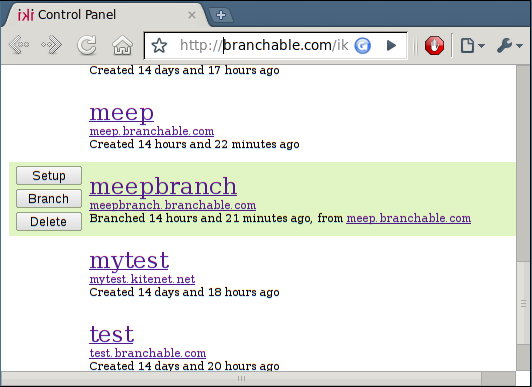
Time to introduce what I've been working on for these past too many months.. Branchable is an Ikiwiki hosting site, making it very easy to create blogs and wikis. The name "Branchable" was chosen because with its git backend, and ikiwiki-hosting frontend, sites hosted there can be easily branched by their owner (or by anyone, if the owner allows). branched site in control panel The ability to take your data and configuration and go home, as well as everything being free software, means Branchable follows the vision of the Franklin Street Statement on Freedom and Network Services, like identi.ca and last.fm. This is very important to me and to my cofounder, Lars Wirzenius. Branchable has a one month free trial, so if you've been meaning to do something with Ikiwiki, I hope you'll sign up. Also, we are offering free hosting for Free Software projects that sign up while Branchable is in beta.

Matt Zimmerman: DebConf 10: Day 3

How We Can Be the Silver Lining of the Cloud (Eben Moglen) Eben s talk was on the same topic as his Internet Society talk in February, which I had downloaded and watched some time ago. He challenges the free software community to develop the software to power the freedom box , a small, efficient and inexpensive personal server. Such a system would put users more in control of their online lives, give them better protection for it under the law, and provide a platform for many new federated services. It sounds like a very interesting project, which I d like to write more about. Statistical Machine Learning Analysis of Debian Mailing Lists (Hanna Wallach) Hanna is bringing together her interests in machine learning and free software by using machine learning techniques to analyze of publicly available data from free software communities. In doing so, she hopes to develop tools for studying the patterns of collaboration, innovation and other behavior in these communities. Her methodology uses statistical topic models, which infer the topic of a document based on the occurrence of topical words, to group Debian mailing list posts by topic. Her example analyzed posts from the debian-project and debian-women mailing lists, inferring a set of topics and categorizing all of the posts according to which topic(s) were represented in them. Using this data, she could plot over time the frequency of discussion of each topic, which revealed interesting patterns. The audience quickly zoned in on practical applications for things like flamewar and troll detection. Debian Derivatives BoF (Matt Zimmerman) I organized this discussion session to share perspectives on Debian derivatives, in particular how we can improve cooperation between derivatives and Debian itself. The room was a bit hard to find, so attendance was relatively small, but this turned out to be a plus. With a smaller group, we were able to get acquainted with each other, and everyone participated. Unsurprisingly, there were many more representatives from Ubuntu than other derivatives, and I was concerned that Ubuntu would dominate the discussion. It did, but I tried to draw out perspectives from other derivatives where possible. On the whole, the tone was positive and constructive. This may be due in part to people self-selecting for the BoF, but I think there is a lot of genuine goodwill between Debian and Ubuntu. Stefano Zacchiroli took notes in Gobby during the session, which I expect he will post somewhere public when he has a chance.

4 August 2010

Neil Williams: FreedomBox

Eben Moglen's talk at DebConf10 has inspired a flood of responses and activity at DebConf10. The original talk overran the allotted time within the venue and then outside the venue for something like an hour, HackLab discussions migrated to the single theme and brought in more and more people over lunch. When the Skype talk was left without a speaker in the afternoon, it morphed into a FreedomBox BOF with maybe 100 delegates planning and contributing to the ideas and another BOF is planned for Friday. A rough outline is appearing on the wiki page for those who want to follow it and the video of the original talk is available, linked from that Wiki page.

What gets people excited about this project is that we already have all the components to do the work, people have been doing most of this stuff at home, on their own, for some time and it needs to be brought together as a series of packages and meta packages and other middleware glue to get it working. (multistrap is part of that glue - it's already being used commercially in a similar role. Debian Pure Blends is another part of the glue. This can be a Debian solution, it doesn't have to be a separate project.)

The software and glue doesn't have to be dependent on a single hardware platform, this is about getting the software right and deploying it on whatever hardware can run it - albeit that the architecture itself is likely to be ARM-something.

It is time for social networking to be freed from the man-in-the-middle - time to withdraw user data from central servers owned by some third-party and share directly with your friends (whichever network they use). Aggregate all data from all your friends, keep all your data in your own plug and access it from wherever you are using whatever devices you have to hand. What's more, your friends - especially the non-techy friends - can just buy a cheap beige box that hides away in the corner of their home and have all the same access too - everyone gets to choose exactly which pieces of data get shared and to whom and can then use their friends plugs to store encrypted backups of their other data. Or maybe the final solution will be slightly different - it's up to people in Debian to make it happen. The tools are in our own hands, if we want this, we just need to do it.

What is needed now is some direction, there are choices to be made about how the glue is designed and how this is turned into a "self-discoverable" distributed network service. Yes, IPv6 will make this easier but only once ordinary users can deploy the device transparently and without configuration, so an interim solution will be needed.

Who's up for the challenge?

3 August 2010

Petter Reinholdtsen: Debian Edu roaming workstation - at the university of Oslo

The new roaming workstation profile in Debian Edu/Squeeze is fairly similar to the laptop setup am I working on using Ubuntu for the University of Oslo, and just for the heck of it, I tested today how hard it would be to integrate that profile into the university infrastructure. In this case, it is the university LDAP server, Active Directory Kerberos server and SMB mounting from the Netapp file servers. I was pleasantly surprised that the only three files needed to be changed (/etc/sssd/sssd.conf, /etc/ldap.conf and /etc/mklocaluser.d/20-debian-edu-config) and one file had to be added (/usr/share/perl5/Debian/Edu_Local.pm), to get the client working. Most of the changes were to get the client to use the university LDAP for NSS and Kerberos server for PAM, but one was to change a hard coded DNS domain name in the mklocaluser hook from .intern to .uio.no. This testing was so encouraging, that I went ahead and adjusted the Debian Edu scripts and setup in subversion to centralise the roaming workstation setup a bit more and avoid the hardcoded DNS domain name, so that when I test this tomorrow, I expect to get away with modifying only /etc/sssd/sssd.conf and /etc/ldap.conf to get it to use the university servers. My goal is to get the clients to have no hardcoded settings and fetch all their initial setup during installation and first boot, to allow them to be inserted also into environments where the default setup in Debian Edu has been changed or as with the university, where the environment is different but provides the protocols Debian Edu uses.

Russell Coker: Pre-Meeting Lightning Talks

This evening I arrived at the LUV [1] meeting half an hour before it started. I was one of about a dozen people sitting in the room waiting, some of us had laptops and were reading email but others just sat quietly the venue is sometimes open as much as an hour before the event starts and in bad weather some people arrive early because it s more comfortable than anywhere else that they might hang out. So I went to the front and suggested that instead of just doing nothing we get some short talks about random Linux things to fill the time. This seems to be a good opportunity for people to practice their public speaking skills, share things that interest them with a small and friendly audience, and keep everyone else entertained. With some prompting a few members of the audience got up and spoke about Linux things that they were doing or had recently read about. They were all interesting and I learned a few things. I considered giving a talk myself (my plan B was to just speak for 15 minutes about random Linux stuff I m doing) but decided that it would be best if I just encouraged other people to give talks. I have suggested to the committee that we plan to do this in future and maybe have a mention of it on the web site to encourage people who are interested in such things (either speaking or listening) to attend early enough. I think that this concept has been demonstrated to work and should also work well in most other user group meetings of a suitable size. At LUV we typically have about 60 people attend the main meeting and maybe a dozen arrive really early so people who would be nervous about speaking to an audience of 60 may feel more comfortable. For a significantly larger group (where you have maybe 300 people attend the main meeting and 60 arrive early) the dynamic would be quite different, instead of having more nervous people give talks you might find that a membership of 300 gives a significant number of people who have enough confidence to give an impromptu short lecture to an audience of 60. As an aside the Connected Community Hackerspace [2] is having a meeting tonight to decide what to do about an office in a central Melbourne area. One of the many things that a Hackerspace can be used for is a meeting venue for lightning talks etc.

2 August 2010

Matt Zimmerman: DebConf 10: Day 2

Today was the first day of DebConf proper, where all of the sessions were aimed at project participants. Bits from the DPL (Stefano Zacchiroli) Stefano delivered an excellent address to the Debian project. As Project Leader, he offered a perspective on how far Debian has come, raised some of the key questions facing Debian today, and challenged the project to move forward and improve in several important ways. He asked the audience: Is Debian better than other distributions? Is Debian still relevant? Why/how? Having asked this question on identi.ca and Twitter recently, he presented a summary. There was a fairly standard list of technical concerns, but also: He pointed out some areas which we would like to see improve, including: All in all, I thought this was an accurate, timely and inspirational message for the project, and the talk is worth watching for any current or prospective contributor to Debian. Debian Policy BoF (Russ Albery) Russ facilitated a discussion about the Debian policy document itself and the process for managing it. He has recently put in a lot of time working on the backlog (down from 160+ to 120), but this is not sustainable for him, and help is needed. There was a wide-ranging discussion of possible improvements including: There was also some discussion in passing of the long-standing confusion (presumably among people new to the project) with regard to how policy is established. In Debian, best practices are first implemented in packages, then documented in policy (not the reverse). Sometimes, improvements are suggested at the policy level, when they need to start elsewhere. I m not very familiar with how the policy manual is maintained at present, but listening to the discussion, it sounded like it might help to extend the process to include the implementation stage. This would allow standards improvements to be tracked all the way through from concept, to implementation, to documentation. The Java Packaging Nightmare (Torsten Werner) Torsten described the current state of Java packaging in Debian and the general problems involved, including licensing issues, build system challenges (e.g. maven) and dependency management. His slides were information-dense, so I didn t take a lot of notes. His presentation inspired a lively discussion about why upstream developers of Java applications and libraries often do not engage with Debian. Suggested reasons included: Collaboration between Ubuntu and Debian (Jorge Castro) Jorge talked about the connections between Debian and Ubuntu, how people in the projects perceive each other, and how to foster good relationships between developers. He talked about past efforts to quantify collaboration between the projects, but the focus is now on building personal relationships. There were many good questions and comments afterward, and I m looking forward to the Debian derivatives BoF session tomorrow to get into more detail. Tonight is the traditional wine and cheese party. When this tradition started, I was one of just a handful of people in a room with some cheese and paper plates, but it s now a large social gathering with contributions of cheese and wine from around the world. I m looking forward to it.

Matt Zimmerman: DebConf 10: Day 1

This week, I am attending DebConf 10 at Columbia University in New York. The first day of DebConf is known as Debian Day. While most of DebConf is for the benefit of people involved in Debian itself, Debian Day is aimed at a wider audience, and invites the public to learn about, and interact with, the Debian project. These are the talks I attended. Debian Day Opening Plenary (Gabriella Coleman, Hans-Christoph Steiner) Hans-Christoph discussed Debian and free software from a big picture perspective: why software freedom matters, challenging the producer/consumer dichotomy, how the Debian ecosystem hangs together, and so on. Steps to adopting F/OSS in government (Andy Oram) Andy discussed FLOSS adoption in governments, drawing on examples from Peru, the city of Munich, the state of Massachusetts. He covered the reasons why this is valuable, the relationship between government transparency and software freedom, and practical advice for successful adoption and deployment. Pedagogical Freedom (panel, Jonah Bossewitch et al) The panelists discussed the use of technology in education, especially free software, some of the parallels between free software and education, and what these communities could learn from each other. This is a promising topic, though the perspectives seemed to be mostly from the education realm. There is much to be learned on both sides. Google Summer of Code 2010 at Debian (Obey Arthur Liu) This talk covered the student projects for this year s Summer of Code. Most of the students were in attendance, and presented their own work. They ranged from more specialized projects like the Hurd installer, to core infrastructure improvements like multi-arch in APT. Beyond Sharing: Open Source Design (Mushon Zer-Aviv) Mushon gave an excellent talk on open design. This is a subject I ve thought quite a bit about, and Asheesh validated many of my conclusions from a different angle. I ve added a new post to my todo list to go into more detail on this subject. Some points from his talk which resonated with me: How Government can Foster Freedom in Technology (Hon. Gale Brewer) Councillor Brewer paid a visit to DebConf to tell us about the work she is doing on the city council to promote better government through technology. Brewer seems to be a strong advocate of open data, saying essentially that all government data should be public. She summarized a bill to mandate that New York City government data be public, shared in raw form using open standards, and kept up to date. It sounded like a very strong move which would encourage third party innovation around the data. She also discussed the need for greater access to computers and Internet connectivity, particularly in educational settings, and a desire to to have all public hearings and meetings shared online. Why is GNU/Linux Like a Player Piano? (Jon Anderson Hall, Esq.) Jon is a very engaging speaker. He drew parallels between the development of player pianos, reproducing pianos, reed organs, pipe organs and free software. He even tied in Hedi Lamarr s work which led to spread spectrum wireless technology. To be quite honest, I did not find that these analogies taught me much about either free software or player pianos, but nonetheless, I couldn t help but take an interest in what he was saying and how he presented it. DebConf Opening Plenary (Gabriella Coleman) Biella and company explained all the ins and outs of the event: where to go, what to do (and not do), and most importantly, whom to thank for all of it. Now in its 11th year, DebConf is an impressively well-run conference. I m looking forward to the rest of the week!

30 July 2010

Biella Coleman: Holy Debconf10 is awesome


nycsubway-heart, originally uploaded by the biella.
So an email went out to Debconf-announce with all this and MORE information but it is worth highlighting the talks/events as they are great. We look forward to having you in New York City! ********************************************************************************************************** exciting schedule highlights
- Have a look at the DebConf10 schedule,
there are a lot of really interesting things planned, both during Debian Day and DebConf
itself. We have a great line-up of speakers, and other events that are
sure to make this DebConf one to remember! A couple notable events that we wanted to highlight: Be sure to come to the DebConf Welcoming Plenary in the evening of Debian Day. This opening plenary will be the first thing that kicks
off DebConf and will be brief, important, and fun. General information
about DebConf, important logistical bits, and prizes(!) will be
had. Also, this gives you a chance to ask some questions before we get
started. Be there at 7:30pm in Davis Auditorium on August 1st! The much anticipated Cheese and Wine party will be happening in the
evening on the 2nd. This will be your chance to see what mixture of
fermented, cultured and alcoholic things your stomach can handle! Also exciting to mention is Eben Moglen who will be speaking on the
3rd during DebConf at 9:30am about Freedom and Privacy in the Cloud
and how we (yes us!) here at DebConf, can be the silver lining. If you
don t already know Eben Moglen
he is Professor of Law at Columbia Law School and founding Director of the Software Freedom Law
Center. Since 1993 he has served pro bono publico as General
Counsel of the Free Software Foundation. Moglen was part of Philip
Zimmermann s defense team when Zimmermann was being investigated over
the export of PGP. As counsel to the FSF, Moglen was charged with
enforcing the GNU General Public License (GPL) and later became
heavily involved with drafting version 3 of the GPL. Also in the evening of the 3rd at 7:30pm we will be treated to not
only a screening of the brilliant and beautiful and (award winning!)
film Sita Sings the Blues in
Pupin 301, but also a Q&A afterwards with the acclaimed animator Nina
Paley! She will describe how the process of making this film caused
her to question the wisdom of copyright monopolies in the arts. The
film is under a Creative Commons ShareAlike license, and her
distribution mechanism is unique as Paley consciously adopted the
methods of the free software movement to distribute the film. The
discussion with the artist after the screening will explain in depth
how and why, and discuss what Paley and QuestionCopyright.org are
doing next to encourage more artists to try the Free route. After the film, at 9:00PM the Columbia University Astronomy
Department will host a guided stargazing event, which includes use
of several different optical telescopes on their roof. There will be
astronomers on hand to answer any questions about the stars,
telescopes, or any other topics of scientific interest. There are many talks that are going to be exciting at Debian Day, even
for Debian Developers! One track will be showcasing general Free
Software themes and issues, and many of these talks will be really
interesting to Debian Developers, so be sure to check out the schedule and come On Debian Day we are excited to have the Honorable Gale Brewer speak at 4pm. She is part of the New York City Council and was the
former Chair of the Committee on Technology in Government, current
Chair on Committee on Governmental Operations and will discuss the
ways that government can foster freedom in technology. Its both
exciting and a privilege to have her speak at DebConf! day trip
This year, the day trip is going to be a blast, a crazy adventure at
the bizarre and fun Coney Island! Explore the historic RussianBrighton Beach! Ride the Cyclone rollercoaster, 82-years old this
year! Swim in the ocean! See the circus sideshow! Eat delicious food
or if unlucky, not so good food. Or do none of the above and just hang
out with your friends outside and have a good time. At the end of the day we are going to go to a unique cultural event:
the Brooklyn Cyclones baseball game where we will have the chance to
watch our beloved DPL humiliate himself as he throws out the first
pitch, in his Debian kilt! Don t like baseball, or sports? Don t worry, neither do we, but the point really isn t the baseball game,
the point is hanging out with all your closest Debian friends and
having a good laugh as Zack tries really hard not to trip, also a good
chance to experience some local culture and to relax after a hard day at the beach. free things in the city
There are an amazing number of free events happening in New York City during the summer! If you are looking for something to do, we ve
compiled a list of various events from a number of different locations
for you to easily view in one spot.

Next.

Previous.