Search Results: "bod"

10 August 2010

Torsten Landschoff: Merged wxWidgets 2.8.11.0 for Debian

Just in case I forget the link again: 7 weeks ago (says git) I merged upstream 2.8.11.0 into the Debian packaging git. The changes are available at a personal alioth repo if anybody cares. Edit: I just wanted to file a bug, only to notice that I did this weeks ago. Need more memory!

Gunnar Wolf: Back home, back from DebConf And, hopefully, cleaner than ever!

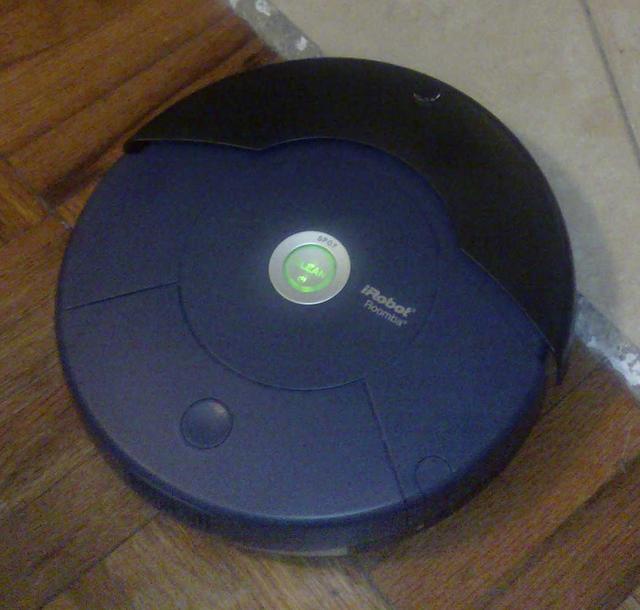
So, DebConf time is over once again. The two weeks worth of fifty weeks waiting are left behind once again, and it's back to get back to normal. DebConf was great Yes, it always is, and that's what we are all saying, but hey - Seriously! Being in the same building than 300 crazed developers is always fun, and it's always better than last year's fun. A good highlight this year is that, given the number of Free Software and Free Culture groups that exist in USA's north-eastern coast, we had the opportunity to join a large crowd which has never been part of DebConf. Also, I must agree that the USA bid for DebConf was aiming to attract as many Debian people (developers, maintainers, or just happy users) which had not yet been to a DebConf before as possible. And it was a great success! I finally met several people I have long read in the mailing lists, in blogs or in IRC. A much higher proportion than usual, I'd venture to say. Another interesting phenomenon /methinks is that this year's DebCamp started much more staffed than usual: I arrived on the first day, Sunday 25, and there were ~40 people there already; I don't have the actual numbers, but we quickly grew, and the number started to stabilize past mid-week, only to (sharply) rise in the weekend, in time for DebianDay and DebConf start. Great time! But, they say, nobody can go to the USA without buying some sweet toys, right? Well, being the proud owner of six very hairy cats, I have thought into entering the looming and weaving industry... But cat hair, while abundant, I have heard is untreadable... Maybe due to the indisciplined, natural and independent personality of the cats (catonality should I say?)... So I had two choices: Clean up my home quite often, or live in a literally hairy mess. Enter choice #3: The Roomba! I had been waiting to buy this thing for several years, as they refuse to send to Mexico or charge Mexican cards. So, I walked across Manhattan and got my very own robot cleaner! For my further surprise, although I have not yet tried it (I don't even have a suitable cable yet), I found this: Yay, the Roomba is actually hackable (via a 7 pin miniDIN serial port)! Wikipedia says that:
Roomba comes with a Mini-DIN TTL serial interface, which is incompatible with standard PC/Mac serial ports and cables, both electrically and physically. However, third-party adapters are available to access the Roomba's computer via Bluetooth, USB, or RS-232 (PC/Mac serial). New, 500-series, and 410/420 series Roombas upgraded with the OSMO hacker device allow the user to monitor Roomba's many sensors and modify its behavior. The Roomba Open Interface (formerly "Roomba Serial Command Interface") API allows programmers and roboticists to create their own enhancements to Roomba. ( )
My first impressions? Well, the Roomba lazily charged its battery throughout the day today, and was hungry and ready when I arrived home. It is a but louder than what I expected, and of course my cats were not thrilled by the presence of a eighth animated and apparently sentient being at home. Their initial reaction was of course to be verrry alert of the thing. Twelve eyes were constantly pointing at the Roomba while mine alternated between them. As they measured the thing's speed and (I guess) inferred its movement patterns, they started escaping upstairs A flat, round thing with no legs to be seen will not likely be able to climb the stairs. And they were completely right. At first, only Chupchic remained downstairs. After a bit, I went up to show them the Roomba didn't jump on us to eat our brains, and after a bit, Santa and Macusa joined. The Roomba roombed for maybe 90 minutes (this space is large, and decided it was enough... And slowly, the rest of them started coming down. I would not say Roomba's cleaning is perfect, of course. Its room discovery algorithm is funny, and it even seems it's based on the mere chance of covering most (never all) of the space it has to clean. I had, of course, not fully studied it (after a single run, how could I?). It does make a honestly good attempt at cleaning under coaches, chairs and tables. It collected a fair amount of dust (on a house that seemed quite clean to me, I cannot imagine what would happen on a messy one). I have not yet played with the virtual walls (infrared transmitters which limit rooms as if a door was closed), but given the size of this house (and that I don't want it to clean around the cats' designated bathroom area), I guess I will end up using them regularly. During DebConf, I heard one bad (stupid useless noisy thing) and two very good (it has radically changed my life) comments on the Roomba. I hope to shift the balance towards 3/4 and not towards 2/2! Anyways... Thanks to each and every one of you. DebConf is great. Always great. Always a success. I cannot even thank specific teams. Debian Rules, and DebConf Rocks!

9 August 2010

John Goerzen: Being A Butterfly

Well, I m back in Kansas after a bit over a week in New York for Debconf. I didn t have time to write much, so I ll probably be posting about it a few times. I already wrote about the trip to New York, and now will say just a bit about the time there and trip back home. I have to start with a quote from Jacob. We went on the Q train from Coney Island a few stops down to Brighton Beach. It s elevated, and provides an excellent view of the amusement park. Jacob s excited comment, face pressed to window, was: Wow! I see lots of everything! Which, come to think of it, sums up NYC itself pretty well. Speaking of faces pressed to windows: this was Jacob s default mode of operating in NYC. Get into any subway car, bus, whatever and he wants to stand on the seat nearest the window and look out it. It s a real problem if no such seats are available. More than once, though, we ll get on the subway and he ll run to the nearest window seat to claim it, no matter who will be his neighbors for the next few minutes. And after a few days of this, Oliver started picking up on it. Pretty soon both boys wanted to be pressed to the windows watching interesting things (to me, it was a dark tunnel with occasional lights, but interesting to them) go by. Which brings me to today. Today was Oliver s first time flying, and Jacob s second though he was an infant the first time he flew and doesn t remember it. Jacob has been perhaps cautiously optimistic about flying. The idea of it was exciting, but then again it s something completely new, which he doesn t care for so much. So we had no idea what to expect. What was got was excitement. And lots of it. From the La Guardia terminal, Dad, is this our plane? No, not that one. Well, is THIS our plane? No, not that one either. Well, is *THIS* our plane? At this point, a parent has to confront the question: which is worse, causing serious disappointment to a 3-year-old and possibly inviting a meltdown in the middle of the D concourse, or a bit of harmless encouragement that might not be 100% literally true? Uhmm . that might be it (Ah, so I went for the literally true but still exciting route ) YAY!! *jumping and clapping* Terah reminds me at this point of our security adventure. I, wearing socks, carried Oliver (1 year old) through the security checkpoint at La Guardia. But oh! I failed to remove his shoes (not really shoes). TSA made me go back through, put them in the bowl, and run them through the scanner. A nearby pilot, getting screened, noticed this and made this ironic comment well within TSA earshot: Look at his face! He s gonna get us all! Good thing you re checking his shoes! Terah and the pilot both just about bust up laughing. Meanwhile, I m carrying Oliver through, and the agent that made me take off his shoes had this look of I m sorry, I know this is stupid, but I have to. (For an excellent pilot s rant about TSA, read this). Anyhow, we got on the plane, and of course Jacob nabbed the window seat. IMG_4458.JPG There was plenty interesting to see. At each step of the way, I told him what was going to happen next, so there wouldn t be any surprises. I told him once we got in the air, and got a breathy Woooooooow .. I told him, Jacob, we are flying! And his reply has to be his best quote of the week:
Dad, I don t know that I ve ever been a butterfly before!
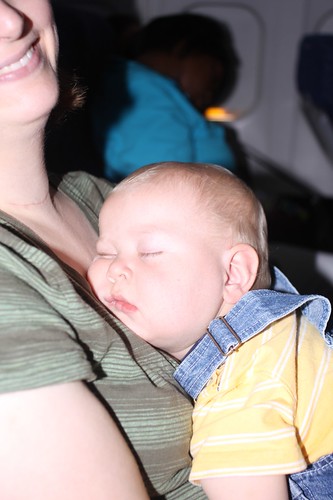
I pointed out that we were above the clouds, which was also exciting. About every 5 minutes, he d poke me, and say, Dad, look out the window. Look down. WE ARE UP IN THE SKY! Meanwhile, Oliver slept. IMG_4461.JPG On the second flight, Jacob slept (and was in a very foul mood when he woke up on the ground) while Oliver tried his best to squirm out of the seat and onto the ground. Now, to wind up this post, I would like to leave you with some statistics and photos comparing my home with New York.
Item NYC Marion County, KS
Land Area 469 sq mi 954 sq mi
Population 8,391,881 12,952 (6871 excluding the 3 largest towns quite some distance away)
Population Density 27,532/sq mi 14/sq mi (7 if excluding large towns)
I think of this as a wonderful difference! I ve said before how much fun it is to spend some time in NYC, where we can just walk to a fruit stand, any number of grocery stores, restaurants, etc. And finally, I leave you with two street scenes. The first is from our hotel s front door. IMG_4352.JPG That s our fruit guy there, and the bagel and roll place is across the street by the RadioShack. Now, the street view from our front door after we got home: IMG_4466.JPG OK, so that s sort of misleading. You can t actually see the street scene because it s on the other side of the hill. That s just our driveway to get to the street. (Not that the street looks much different. It has the weeds growing on the sides instead of in the middle, as one notable difference.) We loved New York and I m certain we ll go back again. It s also nice to be home and enjoy the peace of the countryside. Thanks to Debconf for a wonderful conference a topic I ll have more to say about in the coming days.

8 August 2010

Joey Hess: bye bye, ny ny

view of Manhatten, Statue of Liberty, and Ellis Island from helicopter
In a few hours I will be catching the train for home. It's been a great DebConf, and a thrilling visit to New York. I'm especially happy with how well my CUT BoF went, and that we launched Branchable. As usual, DebConf is inspiring. I'm leaving with a scary new todo list:
my foot at 1000 feet

6 August 2010

Alexander Reichle-Schmehl: Release Critical Bug report for Week 31

The unofficial rc bug tracker currently knows about the following bugs:
In Total:433
Affecting Squeeze:314
Squeeze only:69
Remaining to be fixed in Squeeze:245
Of these 245 bugs, the following tags are set:
Pending in Squeeze:18
Patched in Squeeze:45
Duplicates in Squeeze:28
Contrib or non-free in Squeeze:10
Claimed in Squeeze:2
Delayed in Squeeze:7
Can fixed in a security Update:9
Otherwise fixed in Squeeze:32
Ignoring all the above (multiple tags possible), 145 bugs need to be fixed by Debian Contributers to get Debian 6.0 Squeeze released. However, with the view of the Release Managers, 220 need to be dealt with for the release to happen. Please see my older post for an explanation of the different numbers.

3 August 2010

Joachim Breitner: ipatch, the interactive patch editor

The problem: Splitting patches As a Debian maintainer, I often work with patches (files listing changes to text files), for example when tracking the modification I make to some software before I upload the package to Debian. To manage these patches, quilt is a nice tool: It helps you maintain a stack of patches on top of the original code and encourages you to keep your variously modifications separate. One use case is not supported by quilt at all: Splitting patches. One often has a large patch containing several independent changes. This might happen after you fix a few problems in the upstream code and then run dpkg-buildpackage, which will create one patch of your changes and put it in debian/patches. Before, I had to manually edit the patch and write the hunks, which are the building blocks of patches, into separate file. Where it already works There is no such problem when using a version control system, such as Darcs. Especially Darcs is rightly famous for its user-friendly interface and powerful hunk-selection features. You can even split a single hunk (which could be a change to one line) into two separate steps! Have a look at the HunkEditor page on the Darcs wiki to see how that works.
Let s steal a feature Well, it is not stealing if it is Free Software... Darcs has these nice capabilities and provides them in the context of version control systems, while we need them in the context of patch files. But Darcs is providing an API to its code, so shoudn t it be possible to create a program that uses the Darcs code to split patch files? As a matter of fact, it is possible: You can see that program in action on this 3min Ogg Theora-Video or directly here if your browser supports HTML5:
<video controls="true" height="448" src="http://www.joachim-breitner.de.nyud.net/various/ipatch-demo.ogv" tabindex="0" width="704">Looks like your browser does not support HTML5</video>
Nice, can I use it? The code is a working proof of concept. What you see works. You do not see how it handles patches that create or delete files, patches that do not apply cleanly or are already applied or any kind of error handling. That does not work yet. If you still want to try it, you can grab the code from the Darcs repository at http://darcs.nomeata.de/ipatch, but you need to build the latest development state of the Darcs library first. I think ipatch could become a very useful and powerful tool with applications in areas where nobody would think of using Darcs. I definitely want some integration into quilt, replacing the splitted patch in the series by the replacing patches automatically. Maybe even a git plugin could be created? But I don t think I can push this project far enough on my own. So this is an invitation to join me and make ipatch a great tool. This invitation goes especially to the Darcs developers: Please have a look how the code uses the Darcs API and help to improve the collaboration here. I think we can use the darcs-users mailing list until there is need for a dedicated mailing list.

Rog rio Brito: First post from DebConf 10

Even though I am late with this post, it is nice to say that I am writing here from this year s DebConf10, in NYC. Today (well, yesterday) was the day of the Cheese and Wine party and I think that it was cool, at least for the moments that I were there. This post, though, isn t technical in any sense. I only talks shortly about my impressions of the community, as this is my first DebConf ever (despite the fact that I have been using Debian since the late nineties). I was very pleased to have met Bdale Garbee. I saw him the other day arriving with Keith Packard, but I just didn t want to disturb them at that point. We only talked for, say, 2 minutes, and his was one of the nicest receptions that I had here. And there were some other people that were equally easy to approach, nice to talk with and, to my surprise, knew my name after some brief moments (yes, this does make a difference, especially when you are in a strange country, when you don t know anybody with whom you have worked for some years). Being involved in the organization stuff, one would think that Jimmy Kaplowitz would be so busy, but he was so kind. I had longer conversations with T ssia Cam es, Tiago Vaz (as always) and some other people that I had not yet had the pleasure of meeting in person. In particular, Daniel Baumann (who apparently is now crazy about our FISL and wants to drink all Guaran that he can get :-) ), Chris Lamb and Ot vio Salvador and his mom. Those people are so cool and it is nice to discuss some legal issues among different continents in the lounge of their building at late night. :-) Too bad that I am allocated to the other building. :-) I am forgetting many other people (hey, it is 2 am here in NYC), but I would feel guilty if I had not mentioned at least three people more: Martin Michlmayr, Phil Hands, and Reinhard Tartler (who is uploading lame to the debian repository, as the patents regarding it are expiring or expired already). Thanks! P.S.: I just created an account on flickr that I hope to populate with some photos that I took here. And even with a nice squirrel. :-)

2 August 2010

Matt Zimmerman: DebConf 10: Day 2

Today was the first day of DebConf proper, where all of the sessions were aimed at project participants. Bits from the DPL (Stefano Zacchiroli) Stefano delivered an excellent address to the Debian project. As Project Leader, he offered a perspective on how far Debian has come, raised some of the key questions facing Debian today, and challenged the project to move forward and improve in several important ways. He asked the audience: Is Debian better than other distributions? Is Debian still relevant? Why/how? Having asked this question on identi.ca and Twitter recently, he presented a summary. There was a fairly standard list of technical concerns, but also: He pointed out some areas which we would like to see improve, including: All in all, I thought this was an accurate, timely and inspirational message for the project, and the talk is worth watching for any current or prospective contributor to Debian. Debian Policy BoF (Russ Albery) Russ facilitated a discussion about the Debian policy document itself and the process for managing it. He has recently put in a lot of time working on the backlog (down from 160+ to 120), but this is not sustainable for him, and help is needed. There was a wide-ranging discussion of possible improvements including: There was also some discussion in passing of the long-standing confusion (presumably among people new to the project) with regard to how policy is established. In Debian, best practices are first implemented in packages, then documented in policy (not the reverse). Sometimes, improvements are suggested at the policy level, when they need to start elsewhere. I m not very familiar with how the policy manual is maintained at present, but listening to the discussion, it sounded like it might help to extend the process to include the implementation stage. This would allow standards improvements to be tracked all the way through from concept, to implementation, to documentation. The Java Packaging Nightmare (Torsten Werner) Torsten described the current state of Java packaging in Debian and the general problems involved, including licensing issues, build system challenges (e.g. maven) and dependency management. His slides were information-dense, so I didn t take a lot of notes. His presentation inspired a lively discussion about why upstream developers of Java applications and libraries often do not engage with Debian. Suggested reasons included: Collaboration between Ubuntu and Debian (Jorge Castro) Jorge talked about the connections between Debian and Ubuntu, how people in the projects perceive each other, and how to foster good relationships between developers. He talked about past efforts to quantify collaboration between the projects, but the focus is now on building personal relationships. There were many good questions and comments afterward, and I m looking forward to the Debian derivatives BoF session tomorrow to get into more detail. Tonight is the traditional wine and cheese party. When this tradition started, I was one of just a handful of people in a room with some cheese and paper plates, but it s now a large social gathering with contributions of cheese and wine from around the world. I m looking forward to it.

1 August 2010

Rapha&#235;l Hertzog: First Flattr FOSS Suggestions

Flattr FLOSS LogoThe Flattr FOSS project is quite young so very few free software are currently listed in the dedicated directories. It s still advocacy time: if there are free software that you d like to flattr, please tell them and point them to Flattr FOSS. It s too early for any conclusion, but the feedback from users is good and it looks like that people using flattr to support free software are more generous than the average flattr user. You re great people! :-) Anyway, it s time for me to give a few suggestions of projects to flattr.
  1. My first recommendation is Project Hamster, it s a time-tracking application for GNOME but it has come a long way thanks to the work of Toms Bau is. I use everyday and it rocks.
  2. My second recommendation is verallt, it s a Firefox extension that allows usage of Flattr even in places where it was not designed to be used: forums, mailing list archives, etc. The persons using Flattr just put [Flattr=20693] in their signature and the Firefox extension automatically replaces this text with a real Flattr button ready to be clicked. Thanks to Paul Da Silva for the nice idea and the first implementation!
  3. My third recommendation is Mustard, it s a StatusNet client for the Android platform. More concretely you can install it on your Android phone to send updates to identi.ca while traveling. I have no Android phone but Mustard seems to be popular among owners of such phones!
  4. My fourth recommendation is moreutils from Joey Hess. It s set of unix (command line) tools that nobody else thought of writing when unix was young (according to Joey himself). They are all very useful, I use more or less regularly isutf8 (verify if a file is UTF-8 compliant), combine (logical operations on lines of two files), pee (send standard input to two programs, very useful in git hooks when you want to run two programs that both consume the same data), sponge (ever tried grep -v foo file >file and lost your data? now you can use grep -v foo file sponge file ). And Joey is a long time Debian developer who has truly shaped Debian, he s behind several major Debian projects (debconf, debian-installer, debhelper, ). Big kudos to him!
  5. My last recommendation is to flattr Andreas Gohr for his work as dokuwiki lead developer. There s no flattr button on dokuwiki s website but you ll find some in Andreas blog, just pick a dokuwiki related article like this one: Dokuwiki Birthday Bughunting Weekend. Dokuwiki is a simple wiki that works without any database (the pages are stored in flat files) and it s even commonly used to setup simple websites thanks to the numerous themes available.
Okay, that s it for this month. I ll try to keep a broad panel of software (desktop, command line, mobile, web, etc.). Since I have promoted a GNOME desktop application, I would like to be able to promote a KDE or XFCE application next month but I did not discover any KDE/XFCE project using Flattr do you know any? Please share in the comments if you find some. Also I wonder if you have decided of a flattr strategy Personally I m likely to flattr my favorites projects/persons each month and to flattr a few other occasionally as I discover them. What s your own strategy? Flattr this Share/Bookmark 4 comments Support my work

30 July 2010

Lucas Nussbaum: Debcamp+Debconf again!

As I did since 2007, I will be attending Debconf again this year. I have been quite busy recently, and am lagging behind in some of my Debian work, so I plan to use Debconf to get stuff done, not just socialize and attend talks. Here is my TODO list, basically by order of willingness to do the work . It s probably too much for 9 days, so don t hesitate to talk to me if you want to help with some items.

Alexander Reichle-Schmehl: Release Critical Bug report for Week 30

The unofficial rc bug tracker currently knows about the following bugs:
In Total:433
Affecting Squeeze:328
Squeeze only:74
Remaining to be fixed in Squeeze:254
Of these 254 bugs, the following tags are set:
Pending in Squeeze:21
Patched in Squeeze:41
Duplicates in Squeeze:20
Contrib or non-free in Squeeze:12
Claimed in Squeeze:0
Delayed in Squeeze:7
Can fixed in a security Update:17
Otherwise fixed in Squeeze:25
Ignoring all the above (multiple tags possible), 150 bugs need to be fixed by Debian Contributers to get Debian 6.0 Squeeze released. However, with the view of the Release Managers, 238 need to be dealt with for the release to happen. Please see my older post for an explanation of the different numbers.

29 July 2010

Stefano Zacchiroli: DebConf BoF HOWTO

Here at DebConf10 the schedule is starting to get really packed of events, which is great! About a half of those events are BoFs (in the IETF sense), i.e. discussion sessions among people interested in specific topics. (Other conferences use "BoF" to refer to impromptu, non-scheduled, and spontaneous events, while at DebConf we have traditionally submitted, reviewed, and scheduled BoFs in advance.) As most DebConf regulars, I've attended quite some BoFs in the past and I share with others the impression that the quality and usefulness for the project of BoFs varies substantially from BoF to BoF. That's why I'd like to share a BoF recipe, which comes from possibly the best organized BoF I've ever attended. As it happens with all good recipes (and with free software), I've took the liberty of customizing it a bit.
DebConf BoF HOWTO have a coordinator A good BoF should have a coordinator, which is usually (but not necessarily) the person who proposed the BoF in the first place. The role of the coordinator encompasses at least 2 tasks: preparing the BoF in advance (read below) and moderating the discussion to ensure everybody get a chance to participate. prepare in advance A good BoF is more than just getting together, vaguely knowing the BoF topic, and ... discuss. Mind you, it might work very well that way too, but the chances of having a successful BoF are much higher if attendees arrive prepared. That is quite simple to achieve. It just takes the BoF coordinator to prepare some working questions and/or detailed discussion topics, and advertise them as such. That way potential participants can make up their minds, recall experiences that they want to share, note down comments they want to bring into the discussion, etc. In my experience, the BoF time will then be used in a much more productive, exciting, and ultimately fun way. Most BoFs can also benefit from a few introductory slides on the BoF topic, to ensure all participants start from a common ground. The last slide could contain a brief recap of the working questions, so that the audience have them handy. don't be exclusive Debian is not a company and Debian contributors are not employees, therefore we cannot expect all relevant people to attend a specific BoF, just if they had to. As usual, the risk of cutting off community members who cannot attend should be mitigated as much as possible. To that end, minutes are just great; after the BoF, minutes should be posted where appropriate, and possibly uploaded to Penta as event attachments. ... but taking minutes is just boring and not everyone is good at that (for instance, yours truly used to suck at taking minutes, even if I'm trying to get better ...). If you have a trusted participant which is good at taking minutes, great, go for it! If you don't, use collaboration. During past DebConfs as well as at UDS this year, I've been shown a nice way of doing that. It takes a dedicated projector in the BoF room showing some real-time, collaborative editing facility (e.g. gobby). With such a setup, people usually just start taking minutes collaboratively, although explicitly inviting the audience to do that is a very good idea. Ideally, the room should have two projectors, one for supporting slides, another for collaborative minutes taking. In case there is only one, as it is usually the case for DebConf, it's probably better to use it for minutes and switch to them as soon as supporting slides are over.
gobby.debian.net for BoF minutes at DebConf10 For DebConf10, the DebConf team has setup a gobby (infinote) server at gobby.debian.net. Just do the following in order to be ready for collaborative minutes taking:
    # apt-get install gobby-0.5
    $ gobby-0.5 -c gobby.debian.net

(Note: you shouldn't use the non versioned gobby package as it uses a different protocol and doesn't support undo, which is quite risky; see Debian bug #590753 for more background.) As the naming convention for DebConf10 minutes, using document names that start with dc10- sounds sensible.
comments welcome! So, what do you think of the above suggestions? Do you have further best practices to share on BoF organization at DebConf? Leave a comment or mail me. In the end it would be nice to author a proper "DebConf BoF HOWTO" document for further reference. Thanks to Gregor for his feedback on early versions of this post.

28 July 2010

Rapha&#235;l Hertzog: Do You Want a Free Debian Book? Read on.

Cover of my French Debian BookWhile I have made good progress on many of my Debian goals for this year, it s not the case for the goal number #1: translating my Debian book into English. The picture on the left is the cover of the current French version based on Debian Lenny (450 pages). But the translation would be based on the next edition that we re currently preparing and it s based on Debian Squeeze of course! We have already translated the table of contents so that you can get an idea of what s in the book. Note that many parts of the book apply to Ubuntu as well. It s quite difficult for Roland and me to allocate several months of our life to such a huge task without any income in that period and without knowing if our book will sell enough to cover for the time invested. For those reasons, we re considering using a service like kickstarter.com or ulule.com or yooook.net to get this project funded. If you don t know those services, they allow you to present your project and to collect pledges so that you can safely complete your project. The money pledged is distributed only if the total amount pledged exceeds the minimal funding level (set by the project creator). Furthermore you can select nice rewards depending on the amount of money pledged. To make things even more exciting we are ready to publish the book under a DFSG-compatible license at the sole condition that we reach 25 000 of donations. That might look like a lot but in fact it s only 5 donated by 5000 persons and then everybody benefits! And for the authors, you have to remove ~10% of fees taken by the funding service (including card processing fees), 16.4% VAT, 9% social taxes and if you consider that the project represents a minimum of 6 months of work, that ends up to at most 2850 /month. We believe this to be reasonable. The next step for us is to pick the service to use and setup the fundraising. We need your input. Please answer a few questions by filling this form. In all cases, we will have those rewards and probably more: A few considerations about the various services: Kickstarter.com is a great service but it s restricted to US-residents so it s complicated for us to use that service since we re French (and live in France) and the supporters need to have an Amazon (payments) account. Ulule.com is open to anyone for project creation but uses a paypal API to deal with the pledge mechanism and thus imposes that all supporters have a paypal account. Is that requirement likely to scare you away? Yooook.net is specialized in liberation fundraising but the interface is not very polished, they don t offer (many) social features nor do they give a public listing of the projects hosted. The choice is difficult and thus we re seeking your feedback to make the right one, take a few minutes and answer our questions: click here to go to the form. Thank you for your help and please spread the word so that we get enough answers to have meaningful results. Update: it has been brought to my attention that kickstarter requires an Amazon (payments) account. I fixed my article and the form to document this. I have also been asked what license we re going to use. It s likely to be dual-licensed GPL2+ / CC-BY-SA 3.0. Flattr this Share/Bookmark 4 comments Support my work

Aigars Mahinovs: Debconf 10 arrival and first days

I had planned long for this Debconf and with the experience from the previous times I did all I could to reach one goal minimise stress. I think I got it right this time. First of all I got my company (Accenture) pay for the whole thing, so I did not have to worry about sponsorship queue (but instead I must gather and deliver them back some knowledge gained from the conference should be easy). I also managed to get a direct flight there is a weekly flight Tashkent-Riga-New York on Sundays and I got a ticket for that both ways. This took many hours off the travel time and reduced the stress a ton. Then I also did all the prudent travelling things: mostly reading the New York page on Wikitravel. This told me (among other things) what metro line to take to get the best view of the city. And for luggage I took a backpack (for the laptop and walking around) and a roller (for the clothes). I learned a lot from the Up in the air movie, it really teaches one how to take stress out of travel. This went very well in the beginning I took a bus to the airport early, checked in, breezed trough security and then waited and waited. The boarding only started half an hour after we were scheduled to depart. But I can not complain, because the flight attendant called my name (among a few others) just before boarding and changed my ticket I was bumped up to business class :) . It has been many years since I ve flown a regular (non-budget) airline and now first time ever in the business class! We got regular class meals, but at least we got to sit in the big chairs with lots of leg room. It was great! I bought a paper book (from Charles Stross) to read during the flight, because that is the only thing you can do during take-off and landing and I had some stuff to listen to in my iPhone. I tried sleeping and I think I managed to kill a couple hours that way too. It sure helped combat jet lag later on. When I arrived, I had my immigration and customs forms filled out. Latvia is on the USA Visa Waiver program, so I just had to fill out a form online prior to the trip to get a permission to enter USA. I only had one printout of the Waiver confirmation page and my airline took that before giving me a boarding pass, so I had no paper copy to give to the guy at the USA border, but he did not even ask for it he only took the two forms I filled out, scanned my passport, took my fingerprints (all fingers) and a photo. Then he gave me back the customs for (stamped) and I could go get my luggage. After that it was just a matter of walking trough customs and giving the customs official the pre-filled and stamped customs form. I was not stopped further. The AirTrain was a bit confusing you just get on the AirTrain and go where you need to go, you actually pay at the place where AirTrain connects to metro, so when you are coming from the airport you are actually paying ($5) when you are exiting the AirTrain system. There are plenty of AirTrain people that will give you an AirTrain ticked for $5 cash right there or you can use a machine to get it (where you can also pay with a card). The machines also take AmEx, but you must know the PIN code, if your don t know the PIN of you AmEx card (like I don t know the PIN of my corporate AmEx) you can only buy MetroCards at news stands, but there you will not find the unlimited ride tickets only 5 or 10 ride tickets are available. Next I screwed up a bit and thus got a bit lost in the New York metro system. The Wikitravel recommends to take the AirTrain to Jamaica station and from there take J or Z line into the city for the best views. I went to Jamaica and got into the first metro train that came on to the platform. Unfortunately, that was the E line train and it does not cross with J or Z lines after that, so I was stuck. To complicate the situation E line is under repair, so after a few stops the trains diverted to the F line and I had to scramble to figure out where to get out to get to the 1 line where Columbia University is. I ended up spending more than an hour in the metro, but I got there in the end. So I emerge from the 116th street metro station directly in front of the campus entrance gate and it starts raining. A thunderstorm swept across New York as soon as I stepped outside the metro station, so I took shelter a the side of the building. It kept raining. After a few minutes decided that I don t want to wait any more, so I put all my electronics into my backpack and went towards the dorm where my room was. The rain was warm, people around me were playing and running around in the wet grass, it was fun. The guard showed me where to go to check in. It was really simple sign here, here is you magnetic stripe key, have fun. And the room was just as spartan bed, desk, chair, closet, bathroom and a large fan under the window. The first night I did not know that I could actually turn that fan down, so I slept to the sound of full fan blasting, much like on the airplane. The dorm looks ancient it looks like it was build in the 60s and never changed since then. I mean, I ve lived in worse places, but people would at least change wall sockets or faucets or ceiling paint every other decade or so. The newest things here were the magnetic locks on the doors and a TV and a mini fridge in the hallway. After dropping my things I went off to the Mudd building across the campus to check in with people in the hacklab. It was just starting to take shape, but many great and familiar people were already there. It was like walking into a family home same warm welcome smiles and that great feel of belonging to the group. After I quick chat I went off downtown. The plan was that I left my old Canon 400D camera back at home and that I would buy a new Canon 550D here in New York on arrival. Unfortunately I underestimated the travel time on subway and by the time I got back downtown most shops where already closed. I got to checking out a Best Buy and was told there that they don t have 550D in stock. Next morning I went for a full scale search B&H Photo Video store, J&R Express, another BestBuy none of them had the Canon 550D (aka T2i) in stock in a body-only configuration. BestBuy had a few sets with the kit lens, but I did not want paying 100$ extra for something I already have. The last option was Adorama and I got lucky I nabbed the last 550D they had and it was body-only. Now I was back, with a camera in my hands and the Debconf10 could really begin!

27 July 2010

Daniel Baumann: The World's most powerful Wireless Network Card

About two weeks ago I got a Wifly-City G2000, the world's most powerful 802.11bg wireless network card. It features 2000mW which is 10 times more than the legally allowed limit of 200mW in Switzerland (or 2 times more than the allowed 1000mW in the USA, 5 times more than the allowed 400mW in Brazil, or 20 times more than the allowed 100mW in the EU). Contents The adapter is sold as a set named Wifly-City AVATAR-4PA with some accessories.
click on the images for full resolution The box prominelty lists Linux compatibility and contains the following part: The adapter has a Realtek 8187L chipset. This is particulary nice since there is no firmware needed for this chipset (therefore no questinable binary-only firmware blob). Also, it works out of the box with any Linux as of kernel version 2.6.30 and newer. I tested it on lenny with kernel backports, vanilla squeeze and vanilla sid. In all of these setups, it works out of the box without any configuration whatsoever - just plug it in and it works. I know that this is how it is supposed to be but still, I am always surprised again when things just work. For those who care, this is the output of dmesg when plugging in the card...
[...]
usb 1-1: new high speed USB device using ehci_hcd and address 6
usb 1-1: New USB device found, idVendor=0bda, idProduct=8187
usb 1-1: New USB device strings: Mfr=1, Product=2, SerialNumber=3
usb 1-1: Product: RTL8187_Wireless_LAN_Adapter
usb 1-1: Manufacturer: Manufacturer_Realtek_RTL8187_
usb 1-1: SerialNumber: xxxxxxxxxxxx
usb 1-1: configuration #1 chosen from 1 choice
phy1: Selected rate control algorithm 'minstrel'
phy1: hwaddr xx:xx:xx:xx:xx:xx, RTL8187vB (default) V1 + rtl8225z2, rfkill mask 2
rtl8187: Customer ID is 0xFF
Registered led device: rtl8187-phy1::tx
Registered led device: rtl8187-phy1::rx
rtl8187: wireless switch is on
usbcore: registered new interface driver rtl8187
ADDRCONF(NETDEV_UP): wlan1: link is not ready
wlan1: direct probe to AP xx:xx:xx:xx:xx:xx (try 1)
wlan1: direct probe responded
wlan1: authenticate with AP xx:xx:xx:xx:xx:xx (try 1)
wlan1: authenticated
wlan1: associate with AP xx:xx:xx:xx:xx:xx (try 1)
wlan1: RX AssocResp from xx:xx:xx:xx:xx:xx (capab=0x411 status=0 aid=5)
wlan1: associated
ADDRCONF(NETDEV_CHANGE): wlan1: link becomes ready
wlan1: no IPv6 routers present
[...]
...and this is the output of lsusb:
Bus 001 Device 006: ID 0bda:8187 Realtek Semiconductor Corp. RTL8187 Wireless Adapter
Special Offer I have played with the card for some time now and am really pleased with it. It works nicely with all the standard tools (aircrack-ng, kismet, etc.). The only bummer is that the card is quite expensive. Fortunately, we could arrange a good deal for Free Software people where the store selling it does not make any money on it: instead of 89 USD you can get it for 68 USD (including everything). If you are interested in getting one and you are comming to DebConf 10 in New York between 2010-07-25 and 2010-08-08, you can write an email to Ralph Amissah or speak to Ralph personally during the event. 1 I have no idea why they are shipping with a Y cable because the adapter does not need one. However, it does not disturb and in case I ever need an Y cable, I now have one :)

24 July 2010

John Goerzen: Daniel Schorr

For many years now, I ve admired Daniel Schorr s reporting on NPR. I could instantly recognize his voice, and perhaps to the irritation of Terah, whenever I heard him on the radio, I d turn it up and ask that we be quiet for a couple minutes so I could listen. The thing about Dan is that he was a reporter for 60 years. He reported from Moscow for CBS, from the Netherlands, Berlin, Washington. He interviewed Kruschev, got on Nixon s enemies list a fact he famously discovered as he was reading the list for the first time live on the air and was fired from several jobs for insisting on sticking to his standards over the objections of more profit-driven executives. The reason I listened to him was that he had a perspective nobody else does. There d be some contemporary story, and inevitably he d relate it to something Eisenhower said, or a G7 meeting in the Reagan years, or something Kruschev or Gorbachev mentioned. And not only was it accurate, it was incisive and enlightening. Some things well worth reading:

23 July 2010

Alexander Reichle-Schmehl: Release Critical Bug report for Week 29

The unofficial rc bug tracker currently knows about the following bugs:
In Total:446
Affecting Squeeze:348
Squeeze only:62
Remaining to be fixed in Squeeze:286
Of these 286 bugs, the following tags are set:
Pending in Squeeze:18
Patched in Squeeze:48
Duplicates in Squeeze:36
Contrib or non-free in Squeeze:12
Claimed in Squeeze:2
Delayed in Squeeze:7
Can fixed in a security Update:23
Otherwise fixed in Squeeze:36
Ignoring all the above (multiple tags possible), 152 bugs need to be fixed by Debian Contributers to get Debian 6.0 Squeeze released. However, with the view of the Release Managers, 250 need to be dealt with for the release to happen. Please see my older post for an explanation of the different numbers.

22 July 2010

John Goerzen: Once, We Were Makers

I saw an article on Wired today: The Lost Tribes of RadioShack. It is well worth the read even if you re not into electronics. A key quote:
[H]is shop is a lone outpost; in a single generation, the American who built, repaired, and tinkered with technology has evolved into an entirely new species: the American who prefers to slip that technology out of his pocket and show off its killer apps. Once, we were makers. Now most of us are users.
I remember as a kid eagerly awaiting each year s new RadioShack catalog. I d read them pretty much cover to cover for fun. And who wouldn t? The catalogs had fun things like radios, telephone gadgets, calculators, tape recorders, electronic lab kits , books, components, LEDs I loved the catalogs and loved the store. My parents bought me a electronic kit (if memory serves 20 years later, it s the deluxe 160-project electronic kit from page 156 of the 1988 catalog, though it may have been purchased a different year). I had endless fun with that thing. It had resistors, diode, capacitors, oscillator, speaker, LED, relay, etc plenty to make a bunch of kid-friendly projects. Just looking at the catalog makes me excited even today. On the next page from the kit I had is a $5 crystal radio kit which needs no power source Solderless. With earphone, instructions, theory. On page 28 there was a revolving red light, and some microcassette recorders on p. 36 (I had one of those for awhile). I had enthusiasm for building and figuring out things for a long time. My dad let me take apart an old lawn mower for fun once I m sure he knew ahead of time it would never be back together. One of his friends from work built homemade contraptions out of things like an old vacuum cleaner (attach a cardboard tube to the exhaust and you get a great tennis ball shooter). And there was always all sorts of fun junk to discover up in the barn. I eventually shifted to a different sort of making things : programming. It has kept me busy for quite a number of years. But the Wired article has a point. RadioShack is struggling. Many people have no interest in making or fixing things anymore. The best-selling smartphone in the world comes sealed in a metal case where not even the battery can be replaced, the software is dictated by a company in California, and good luck trying to program for it without signing your life away first. A far cry from the first computer I used, a TRS-80 Color Computer II, bought, yes, at RadioShack. Turn it on, and in a few seconds you get a BASIC prompt. Can t really use it without programming. Being able to read its manual was an early motivation for me to work at learning to read. It is sad that so many devices can t be worked on anymore, and that so many people don t care. It is difficult for me to give Jacob (and later, Oliver) the sort of experience I had as a child. Companies would love to sell us $50 DVD sets, $300 educational game systems, $40 educational games, and any number of $30 plastic toys (some of which we have and the boys enjoy). I d rather give him a $10 bag of resistors, capacitors, wire, battery holders, LEDs, and a book, and see what he can come up with (when he s a bit older, of course). And, in fact, he and I built his first computer together. We installed the ultimate in operating systems for tinkering: Linux. This all brings me back to RadioShack. I ve been working on ham radio lately, with an eye to that being a project for Jacob (age 3.5), Oliver (just turned 1), and me to enjoy in the future. I needed some cable, and had been told by many people to visit the RadioShack in Derby, KS. It s like the one mentioned in the Wired article: huge, selling everything from washing machines to bulk cable, except this one specializes in amateur radio. I asked Jacob if he would like to come with me to a radio store. Dad, I would LOVE that! He brought his little semi-broken walkie-talkies with him to use during the hour drive there. At one point, he was concerned that a radio store is like a library and he might have to leave them on a shelf. I assured him he could keep them. We got to the RadioShack and he loved it. He couldn t even really contain his excitement. He ran back and forth along the bright green stripe running down the middle of the carpet. He excitedly watched them measure out 60ft of RG-8 coax for me. He pushed buttons on the demo clothes dryer, looked at all the antennas, and just had a great time. And he s been interested in my radio, too. When I was talking to somebody on it the other day, he said, I think he is at the radio store. He is having fun there. Right now, everybody I talk to on the radio is at the radio store to him. Jacob loves the fact that the backlight on my FT-857D can change colors, and often comes into the office just so I can put it into setup mode and let him spin the big wheel to change the colors. He enjoys opening boxes of components, and came out to help (and run around) while I suspended a dipole from some trees last Friday. I had told Jacob when we got to the store that This radio store is called RadioShack. He obviously took that to heart, because now if he hears me talking about a radio store , he will say, Dad, actually it is radio SHACK. So I say thank you to the Derby RadioShack for keeping the magic of making things with your dad alive for another generation.

21 July 2010

Maximilian Attems: Solid bases in Theoretical Physics

Landau, L. D.; Lifshitz, E. M. (1976). Course of Theoretical Physics is still the most interesting and solid base that is to be considered as a reference and inspiration in Theoretical Physics. The reference for "Classical Electrodynamics" is the book by J.D. Jackson. "Advanced Quantum Mechanics" by J.J. Sakurai is a popular student choice. Compendium of Relations contains various formulas and relations of the Standard Model. The Lecture Notes on General Relativity by S. Carroll are a solid introduction for an initiate relativist. "Quantum Field Theory in a Nutshell" by A. Zee is amazing. Quantum electrodynamics can be explored in the books by "The Quantum Theory of Fields" by S. Weinberg or "Quantum field theory" by L.H. Ryder or Quantum Chromodynamics in M.E. Peskin & D.V. Schroeder "An Introduction to Quantum Field Theory". The lecture notes on Quantum Chromodynamics (QCD) might be interesting for people diving into the particle physics standard model. "Finite-temperature field theory: Principles and Application" discusses systems in equilibrium but at finite temperatures and chemical potentials and thus connects to cosmology of the early universe. The field of Statistical Field Theory has the classic "Quantum Many-Particle Systems" by J.W. Negele and H. Orland or the more recent "Quantum Field Theory of Many-Body Systems" by X-G. Wen or "Ultracold Quantum Fields" by H.T.C Stoof, D.B.M. Dickerscheid, K. Gubbels. String Theory is so diverse that you'll find lots of different approaches, recommendations are Graduate Course in String Theory by A. Uranga, Applied Conformal Field Theory by P. Ginsparg, Lectures on String Theory by D. Tong or more introductory the book "A First Course in String Theory " by B. Zwiebach or the dense "Superstring Theory" by M. Green, J. Schwarz and E. Witten, "String Theory" by J. Polchinski. "Quantum Field Theory of Point Particles and Strings" by B. Hatfield assumes no previous stringy background and is known for excellent explanation of the path integral formalism. M. Nakahara wrote the wonderfull bridge to maths: "Geometry, Topology and Physics". So please when looking for "references" in theoretical physics venture on solid grounds and don't get distracted by sketchy notes. Update: Peter West pointed out that the The Feynman Lectures on Physics are missing as a timeless reference.
20 July 2010

Ond&#345;ej &#268;ert&iacute;k: Theoretical Physics Reference Book

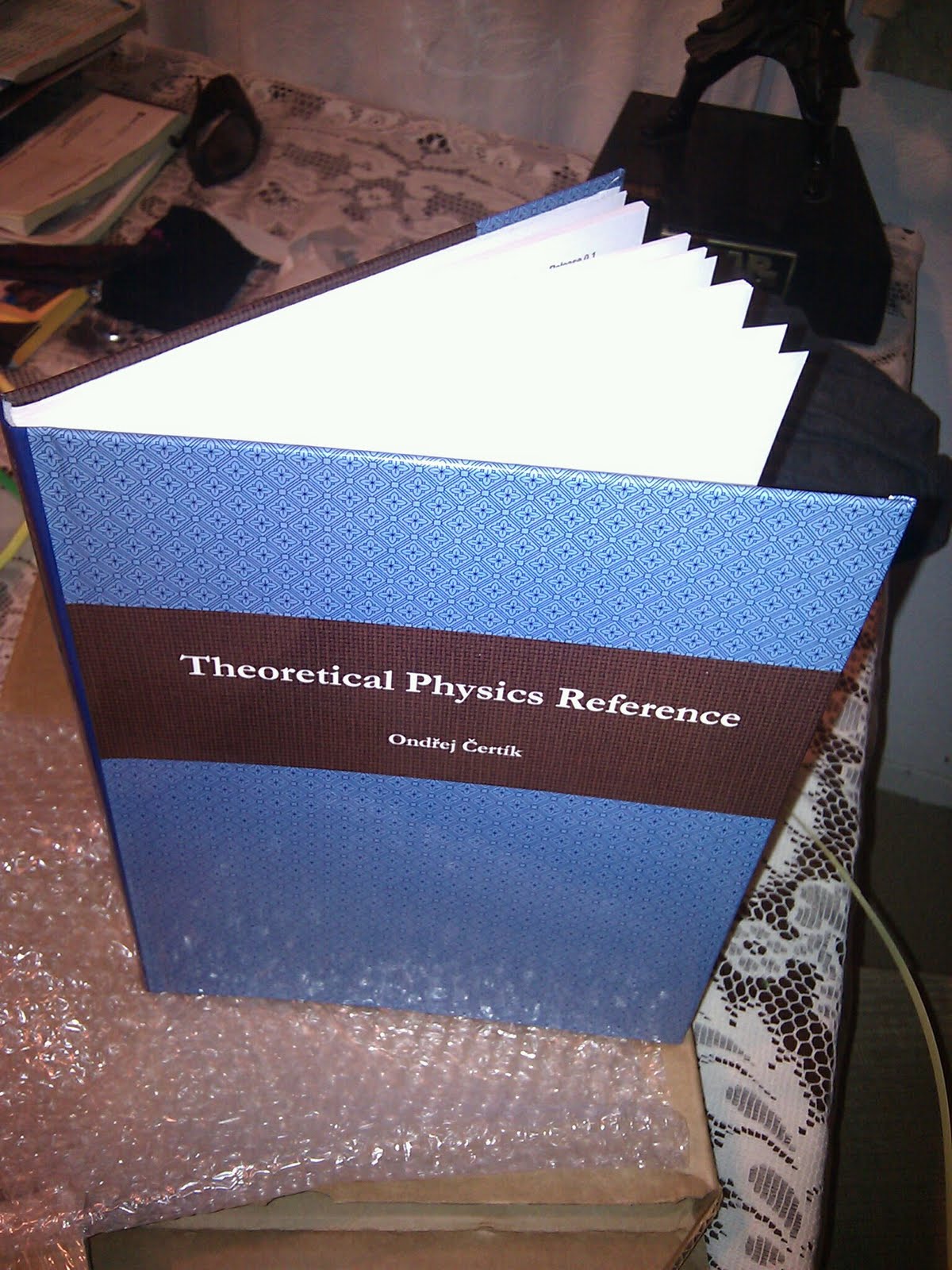
Today I fulfilled my old dream --- I just created my first book! Here is how it looks like:

More images
here.

Here is the source code of the book: http://github.com/certik/theoretical-physics, the repository contains a branch 'master' with the code and 'gh-pages' with the generated html pages, that are hosted at github, at the url theoretical-physics.net.

Then I published the book at Lulu: http://www.lulu.com/product/hardcover/theoretical-physics-reference/11612144, I wanted a hardcover book, so I setup a project at Lulu, used some Lulu templates for the cover and that was it. Lulu's price for the book is $19.20 (166 black & white pages, hardcover), then I can set my own price and the rest of the money probably goes to me. I set the price to $20, because Lulu has free shipping for orders $20 or more. You can also download the pdf (for free) at the above link (or just use my git repository). So far this didn't cost me anything.

I have then ordered the book myself (just like anybody else would, at the above address) and it arrived today. It's a regular hardcover book. Beautiful, you can browse the pictures above. It smells deliciously (that you have to believe me). And all that it cost me was $19.20.

As for the contents itself, you can browse it online at theoretical-physics.net, essentially it's most of my physics notes, that I collected over the years. I'd like to treat books like software --- release early release often. This is my first release and I would call it beta. The main purpose of it was to see if everything goes through, how long it takes (the date inside the book is July 4, 2010, I created and ordered it on July 5, got the physical book on July 19) and what the quality is (excellent). I also wanted to see how the pages correspond to the pdf (you can see for yourself on the photos, click on the picasa link above).

Now I need to improve the first pages a bit, as well as the last pages, improve the index, write some foreword and so on. I also need to think how to better organize the contents itself and generally improve it. I also need to figure out some versioning scheme, so far this is version 0.1. I think I'll do edition 1, edition 2, edition 3, and so on. And whenever I feel that I have added enough new content, I'll just publish it as a new edition. So if you want to buy it, I suggest to wait for my 1.0 version, that will have the mentioned improvements.

It'd be also cool to have all the editions online somehow and create nice webpages for it (currently theoretical-physics.net points directly to the book html itself).

So far the book is just text. I still need to figure out how to handle pictures and also whether or not to use program examples (in Python, using sympy, scipy, etc.). So far I am inclining not to put there any program codes, as then I don't need to maintain them.

Overall I am very pleased with the quality, up to some minor issues that I mentioned above, everything else end up just fine. I think we have come a long way from the discovery of the printing press. Anybody can now create a book for free, and if you want to hold the hardcopy in your hands, it costs around $20. You don't need to order certain amounts of books, nor partner with some publisher etc. I think that's just awesome.

Next.

Previous.