Search Results: "bod"

1 September 2010

Raphaël Hertzog: Free and opensource software to Flattr

Flattr FOSS LogoSince I published How to make 110.28 EUR in one month with free software and Flattr , quite a few people joined the movement and I had less troubles finding projects to Flattr. That s great! :-) Without further ado, here are my recommendations for september:
  1. Smuxi is an IRC application that integrates from the start the need to be permanently connected. You can run the engine on a server and the graphical interface connects there. The engine has all the intelligence so it remembers what message you last saw in each channel (including highlights) and you won t miss anything. I recently switched to it and I like it. It s not perfect but it s improving quickly. The next version even supports Ubuntu s messaging indicator for better integration with the desktop.
  2. Geshi is a PHP class used by many other software to provide enhanced views of code on web pages by coloring the various parts based on the syntax of the respective programming language. It s used by Wikipedia, many blog plugins and lots of other web applications.
  3. Git-buildpackage is a set of tools developed by Guido G nther to make it easier to maintain Debian packages in Git repositories. I use it for several packages that I maintain.
  4. Mixare is an augmented reality browser. Take your Android phone and it will incrust information in the (camera) view of the environment. Impressive video on the website.
  5. Lightspark is is a modern flash player implementation targetting ActionScript 3.0 support (while Gnash only supports older versions). It s one of those few projects that are really needed to get rid of the non-free Adobe plugin that almost everybody installs because there s nothing else that work well enough.
This article is part of the Flattr FOSS project.
Flattr this Share/Bookmark 10 comments Support my work

31 August 2010

John Goerzen: Life snippets

#1: Dreams of a (almost) 4-year-old Yesterday, Terah had something going on in the evening, so it was just Jacob, Oliver, and me. Due to how the logistics worked out, she brought them to the office after work and I took them from there. We went to the post office, pharmacy, and a restaurant. Jacob and I had this conversation at the pharmacy. Jacob: Ooo! We are at the Goessel pharmacy! *claps happily* Me: Hmmm Actually Goessel doesn t have a pharmacy. This is the Hesston pharmacy. Jacob: *gets a serious look on his face* Dad, actually Goessel has a pharmacy . Look! A fire station! Me: That s right. And what can you see inside it? Jacob: FIRE TRUCKS! They are all still. Me: I guess there isn t a fire. Jacob: I think the Goessel pharmacy is on fire! Shall they go there now? Me: I hope it s not on fire. (what are you going to say to that?) Were you wanting to see a fire? Jacob: YEAH! I think it IS on fire. Shall we go see? So now he has an imaginary pharmacy with an imaginary fire and he wants to go see. Fortunately he was OK with just going inside Hesston Pharmacy instead. #2: The Songs on a Ceiling I read a book and sing a song to Jacob for bedtime every night. Over the weekends, sometimes I do that for him at nap time too. This weekend, he wanted us both to get on his bed, lie on our backs, and look at the imaginary songs on his ceiling. He gave me a whole tour, pointing to various (to me, nondescript) parts of the ceiling as he did so. Over there is a song about railroad tracks. There is one about trains. That train is upside down. That other one is stuck. There is a song about Word World. There is a song about preschool. There are the train tracks. There is a train on them. It might bump into the other train. Shall you sing a song about two trains on the tracks and they bump into the other train and go BLAM? He appeared to have a whole map in his head of his songs. The train songs were all at a specific place on the ceiling. #3: Younger Brother Oliver has really been changing lately. He occasionally will take a few steps by himself, and he has started to say a few parts of words. He communicates really well, though, especially with things he wants. He has a deep, vigorous nod to say yes, and sometimes it s accompanied by yesh for extra emphasis. His face is incredibly expressive too, and he has a distinctive Yoda-like expression at times. I almost expect to hear him say one day, Like that green bean I do not. Watermelon better is. Jacob, of course, is a lot bigger and sometimes is rough with Oliver. But they also have started to play together. Sometimes Jacob will put his head by Oliver s face. Oliver will grab fistfuls of Jacob s hair in both hands and pull. Both of them apparently find this hilarious and laugh on and on about it. #4: Viruses and Stomachs Sunday Jacob was complaining of a stomach ache. We were driving home, and shortly after we got home, he vomited on the driveway. Jacob really doesn t like throwing up. It s unpleasant and maybe a bit scary for him. He was about to start crying after vomiting, except One of our cats was hanging around. Claire came over, sniffed Jacob s vomit, and started eating it. Jacob was so fascinated by what was happening that he stopped sniffling and stood there staring at the cat, then gave an excited report of events to Terah and me. That evening, he was afraid he would throw up in bed. So we had a large bowl he held *directly* under his chin during story time. But then he didn t want to lie down, since he was afraid he d throw up in bed. Terah pointed out that he could have the bowl close while he slept. I went up and checked up on him an hour or two later, and he was sound asleep, face in the large bowl. #5: The Jukebox After the pharmacy, Jacob saw Skoops, a local 50s greasy spoon diner place across the street. He really wanted to eat there and get the birthday cake ice cream flavor. So we did. He was jabbering about getting a corn dog as we walked over, so that s what he had to eat. I don t know how he knew Skoops had them, as I don t think he s ever had a corn dog. Oh well. There s a jukebox inside Skoops, and every fifteen minutes or so, it ll spring to life and play a random song even if nobody put coins in it. This was very exciting for Oliver. He d twist all around in his highchair to watch it. And, most amusingly, he d start bopping his head. Not really in time with the music or anything, but it was cute to watch. Sometimes he d get really excited and pretty much his whole body was dancing. Well, as much dancing as you can do when you re 1 and strapped into a high chair, at any rate. One time, he heard the music, started dancing , and looked at me expectantly. So I started nodding in time with the music, and then Jacob saw us both and started sort of flailing about, somewhat in time with the music. All three of us wound up laughing after that.

30 August 2010

Tim Retout: Hacking

Here in the UK we've had a bank holiday weekend. Usually I would have gone to Cambridge for the Debian BBQ, but this year I joined forces with Thomas Adam for some SmoothWall Express on Debian hacking. There are several challenges involved in moving the SWE3 code from its native distribution to Debian; this weekend we worked around some of the permissions problems. On SWE3, the web server and most of the service daemons run as the user 'nobody'. This means that the web server can write out configuration files as the same user as everything else; it can also read the system log files. When the web interface needs to run a privileged action (like setting firewall rules), it sends a command to 'smoothd', which is a daemon running as root. (Admin ssh access is always directly as the root user.) However, web servers in Debian tend to run as user 'www-data', which does not have permission to read log files. Similarly, writing out configuration files as that user would mean that any cgi script (not just ones in the swe3 package) could modify them. I would prefer to run the swe3 cgi scripts as a separate user, and grant this user permission to view logs etc. This debian-webapps thread makes it sound very easy, but if you want to do that with cgi scripts rather than fastcgi, I think you have to run a separate web server for each user. On Sunday afternoon, in a dramatic display of corner-cutting, I gave up on that approach and added www-data to the 'adm' and 'proxy' groups in the postinst. Thomas heroically patched all the cgis to call the "config writers" via smoothd, although I'm wondering whether some careful use of the chgrp command in the postinst might be better than running that code as root. Another hack: in order to actually start a firewall, we needed to know which network card is the "RED" interface, in SWE3 terms; i.e. which one is meant to be the public-facing network device. It's also nice to know which one is "GREEN". So two debconf questions and some hardcoded magic numbers later, we have a basic firewall init script. Lovely. Oh, and at some point I removed the htaccess file, so any user on your network can mess with your firewall. Should probably fix that. Today I started some awful scripts which use Simple-CDD to build an iso containing all the packages we want. We are going to need to extend the networking configuration in the installer to set up multiple network cards. Then we need to figure out a nicer way of assigning IP addresses to devices; unlike on the proprietary version of the product, there seems to be no web configuration of network settings in Express. I've not figured all of this out yet. So, in summary: we are deliberately trading some technical debt in order to quickly produce an initial release that might interest people. (But please note the disclaimer of warranty in the README file in that directory.) And in other news, I've been working at Smoothwall Ltd. for just over one year. Hmm. So this is what they call 'experience'.

Raphaël Hertzog: Understanding Membership Structures in Debian and Ubuntu

Debian and Ubuntu have a set of official membership roles that can be granted to regular contributors. Those roles come with rights that enable the contributors to do their work and to participate in the project governance (elections and other official decision-making processes). It s also a way for the distributions to acknowledge the work done: most contributors are proud of the status they reached. The membership structure plays an important role in the development of a distribution: it defines the kind of contributors that are welcome in the project, it sets expectations of the project towards its contributors and defines their rights. In the end, this shapes the project s ability to recruit new contributors to keep the project alive and kicking. This article introduces the existing statuses in Debian and Ubuntu, and defines the sometimes confusing jargon associated with them. The Debian Case Debian only has two types of official members: Debian Developers (DD) and Debian Maintainers (DM). The rights of the developers are codified in the Debian Constitution while those of the maintainers have been defined in a general resolution of 2007. The Debian Maintainer status is still mostly documented in a wiki page. The integration of this new status in Debian s official processes has been slow to come largely because it was introduced at that time without enough negotiation with the involved parties. Nowadays, it is preferred that people get the DM status before applying for DD. DM is a very limited role: maintainers can only upload packages that already have their name on them (either in the Maintainer or Uploaders field) and a specific flag (DM-Upload-Allowed: yes) that only Debian Developers can add. They have no other rights and limited access to Debian s resources. Besides those official roles, there are also maintainers of packages that have no official status within Debian except that they are listed in the Maintainer field of the package. They are doing the maintenance work but all uploads are done by a Debian Developer after verification of the work done (this is called sponsorship and is the only way to start with official packaging work). Once the DD trusts the maintainer, the developer will typically ask the maintainer to apply for DM status in order to be relieved from the sponsorship work. In the end, that makes three different kind of package maintainers and a lot of confusion when you discuss membership issues in particular when the New Maintainer process is the path that you follow to become a Debian Developer. Don t be fooled by the names when reading Debian s documentation! The Ubuntu Case Ubuntu had, from the start, an official Ubuntu Member status that includes all contributors: developers of course, but also documentation writers, artists, translators, etc. This status notably grants the right to vote in elections of the Community Council, the right to participate on Planet Ubuntu, and the @ubuntu.com email alias. For developers, the situation is more complicated: the wiki page lists no less than five different statuses. Initially, developers were split between Ubuntu Core Developers and the MOTU (Masters Of The Universe). The latter were responsible of the universe/multiverse sections of the archive while the former also had upload rights for the main/restricted sections. But, inspired by the Debian Maintainers concept and facing concrete problems in terms of archive management, they changed their infrastructure to offer more fine-grained control on package uploads. Ubuntu can now grant upload permissions on a package-per-package basis, but it can also delegate the right to grant upload permissions with the same granularity. This lead to the new Per-Package Uploader status which is simply an Ubuntu Member with upload rights on a limited set of packages where they have a specific expertise. The more generic Ubuntu Developers status now encompasses members of various development teams that have been delegated the right to manage upload permissions on a (usually large) package set (the current teams are Ubuntu Desktop, Mythubuntu, Kubuntu, and Edubuntu). Those teams can define their own policy to add new members provided they follow the basic rules defined by the Developer Membership Board (see this wiki page). Ubuntu Contributing Developer is an intermediate status for someone who is not yet ready for one of the other developer statuses but who has still shown enough commitment to be an Ubuntu Member. All those statuses can be obtained in a similar way: you prepare a wiki page listing your past contributions, you collect testimonials from existing members that you have worked with, you add yourself in the agenda of the next meeting of the board (or council) that grants the status that you seek, and you attend the meeting. The members of the board will decide whether you are ready for the status (or not) based on what you provided in the wiki, based on your answers during the meeting (and on a mailing-list for developers), and based on what others have to say about you. The most important boards are usually elected by the community while others are commonly appointed by the community council. Those governance bodies include Canonical employees but not as many as one would expect: two out of eight in the Developer Membership Board, two out of eight in the Community Council, but all six members of the Technical Board. The last figure, while not intended, is not surprising given the high expectations set on potential members of the technical board. Mark, as the founder, is the only person to have a permanent seat on both the Community Council and the Technical Board. Comparison of the Statuses Between Debian and Ubuntu The following table summarizes the rights given to each developer role in the two projects (Put the mouse over the abbreviations to know what they are referring to).
Rights Debian Ubuntu
DM DD UM PPU/UD MOTU UCD
Package maintenance via sponsorshipYN/AYYYN/A
Official email alias-YYYYY
Participate in votes for members-YYYYY
Participate in votes for developers-Y-YYY
Upload rights restricted to pre-approved packagesY--Y--
Upload rights restricted to a section of the archive----Y-
Unlimited upload rights-Y---Y
Number of contributors (as of 2010-07-27)117904462278563
Please note that the number of contributors are not 100% accurate for Ubuntu. A contributor can have multiple statuses (direct membership to a launchpad group) granted over time (while gaining experience). The problem has been mostly avoided by calculating differences between number of members of the various groups but it s not perfect and it can t be: some MOTU are also PPU for packages in main and it s legitimate (but I only counted them as MOTU and not as PPU). Another limitation is that members of some administrative teams are included indirectly in many teams and thus appear in the count while they should not. Anyway, this simple table makes it obvious that Ubuntu s structure offers a broader choice of statuses. They acknowledge the work of all contributors from the start while still giving the most critical rights only to those who have proven that they deserve them. Despite this difference, Debian still has a significant advantage in terms of number of developers. That number does not tell the whole story though: the Ubuntu contributors include many Canonical employees (e.g. 36 out of 63 core developers have a @canonical.com email registered on their launchpad account) that are likely to spend more time working on the distribution than the average Debian member. But even if comparing person-hours would be a challenging thought experiment, in practice it s of not much interest if both projects continue to cooperate and if more and more of the contributions flow in both directions. Debian is aware of the shortcomings of its structure. Changes to better accommodate non-packagers have been discussed several times already. The last efforts in that direction were unfortunately perceived as a solution ready to go rather than a proposal to be discussed, and the project got quickly buried by a general resolution (GR). Even if that resolution invited for further discussion and a new proposal, the truth is that when someone s initiative is corrected by way of GR, it usually kills any motivation to go forward. Possible Evolution? On the Ubuntu side, the infrastructural changes were completed recently and they don t expect any further change in the near future. They do plan, however, to expand usage of those new features so that more teams benefit from the possibility to control upload rights on packages that are relevant to them, and so that more individuals developers apply to become Per-Package Uploaders on packages that they know very well. On the Debian side, a recent discussion on the debian-project list brought back the topic of the bad terminology and it was agreed that the New Maintainer process should be renamed into something else ( New Developer process has been suggested). But Christoph Berg Debian Account Manager and hence heavily involved in the New Maintainer Team suggested that Debian would be better off implementing the long-awaited membership changes before trying to update all the documentation. It would certainly imply some more vocabulary updates. Later in the discussion, he confirmed that membership reform is on the top of the TODO list of the new maintainer team (just after the rewrite of the nm.debian.org website). What can be expected from this reform? The following answers are my own guesses based on my experience of Debian, but the project hasn t decided anything yet. Almost two years have elapsed since the previous efforts in that direction, the new maintainer team has recruited new members and is in a general better shape. Hopefully, the next episode of this saga will have a better outcome.
This article was first published in Linux Weekly News. In a comment, Mark Shuttleworth tried to explain how the Ubuntu community is being setup.
Flattr this Share/Bookmark 10 comments Support my work

29 August 2010

Bernd Zeimetz: the guruplug server plus - major design and qa fail

As a lot of people are coming to my blog to read the installing instructions for Debian on the GuruPlug Server Plus, I shall not hide my opinion about it: It is a major design and QA fail. Don't waste your money on it.
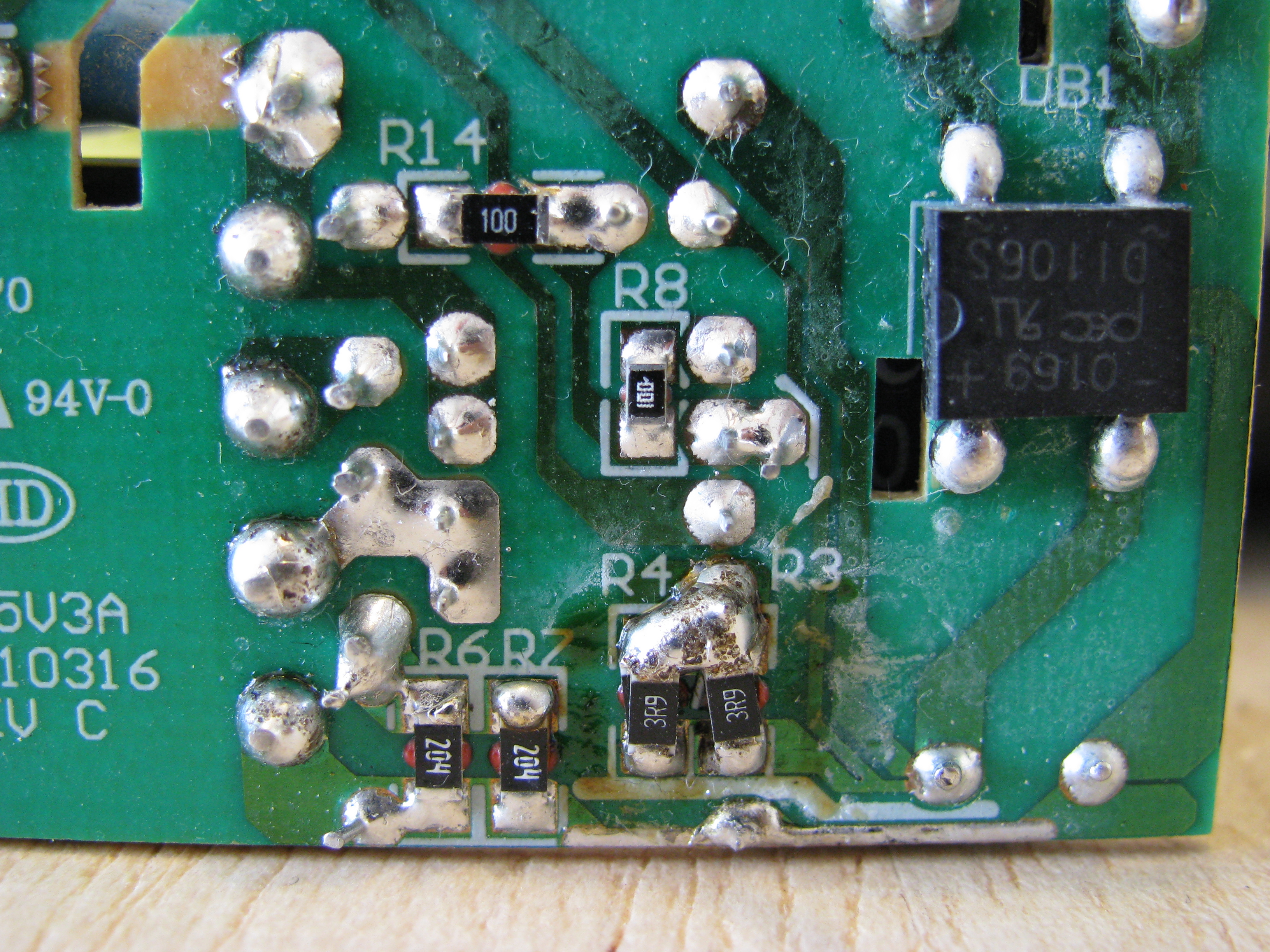
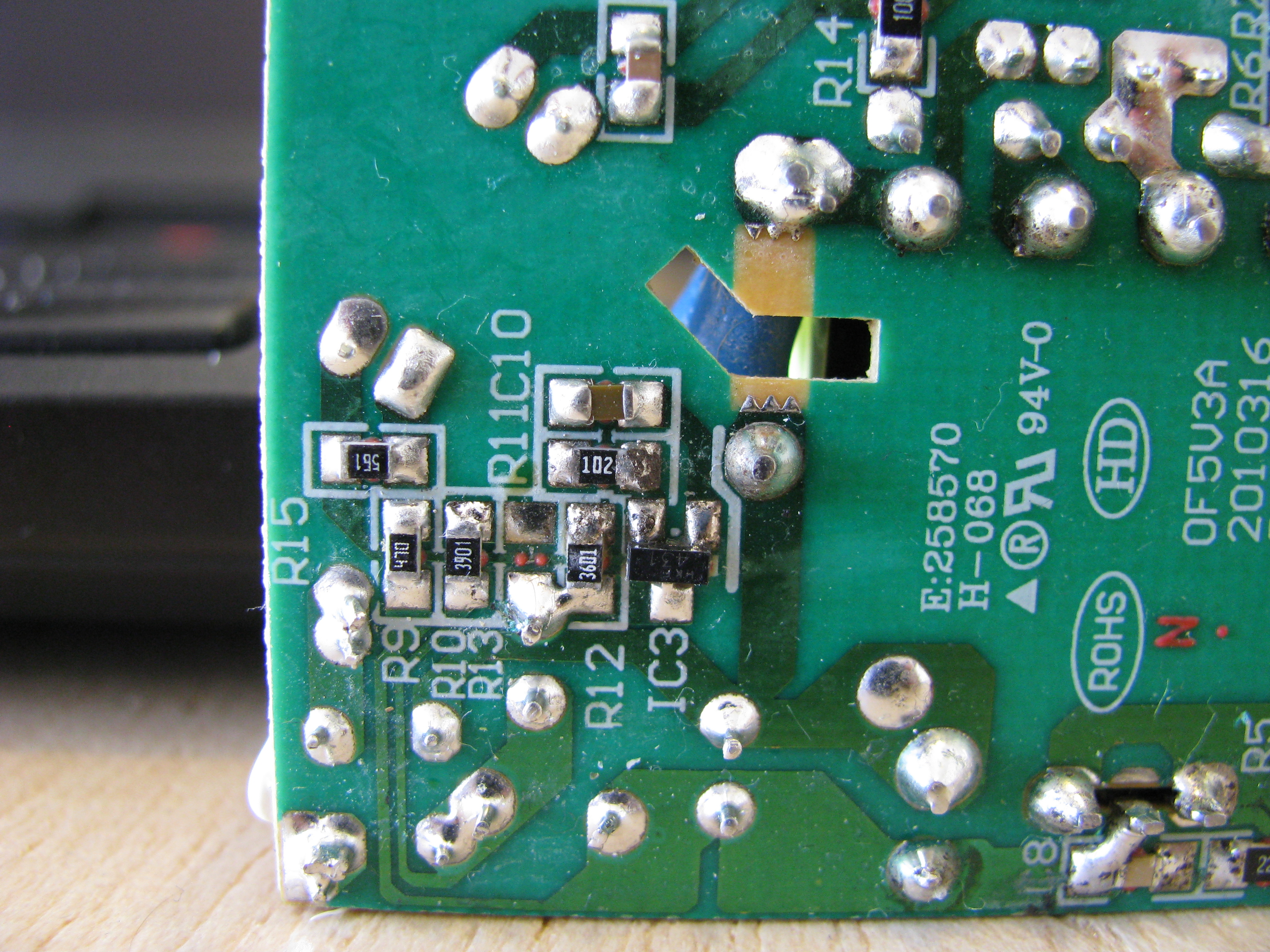
The power supply Although I've ordered the Guruplug pretty early with the promise, that I'd have it in April, it arrived at the end of May due to QA issues with the power supply. While I appreciate that they didn't deliver broken power supplies, I would have preferred not to receive one which was "fixed" by somebody who uses the soldering iron like an axe. Here are some macro photos to show the gory details: GuruPlug Server Plus PSU 1 GuruPlug Server Plus PSU 2 GuruPlug Server Plus PSU 3

Software issues The version of UBoot which shipped with the device was only able to boot from NAND and network. Booting from USB failed and ext2 support was missing, too. Didn't have a look if the community came up with a fixed UBoot version yet, but in my opinion a piece of hardware for >100 EUR should not have such flaws.

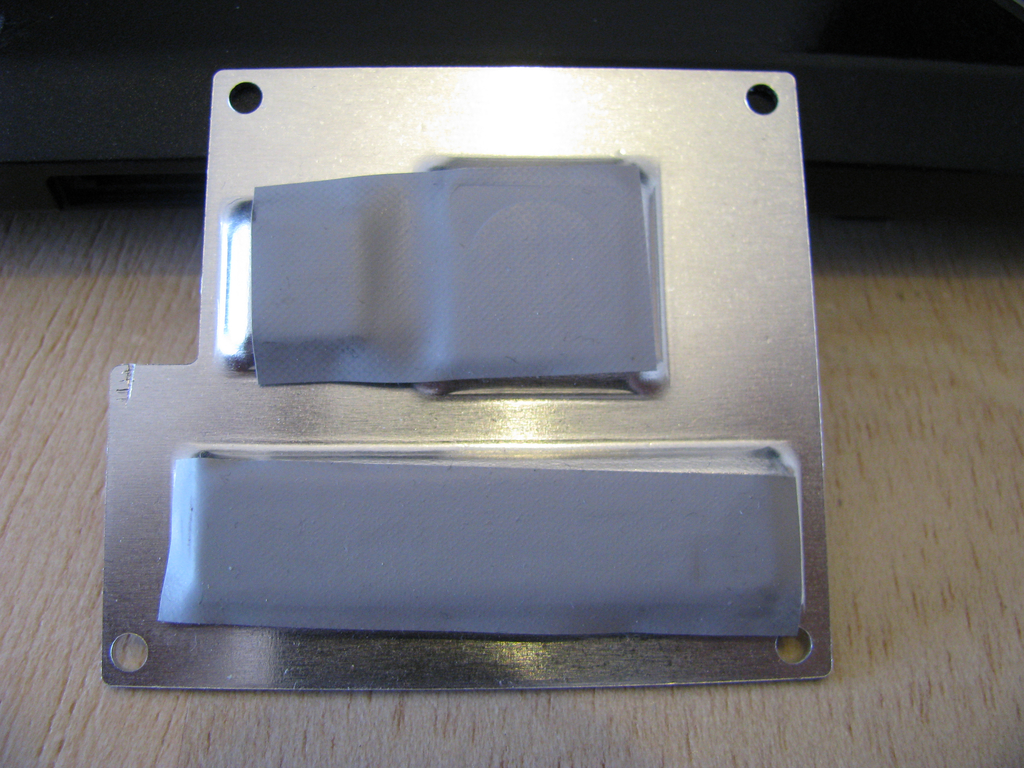
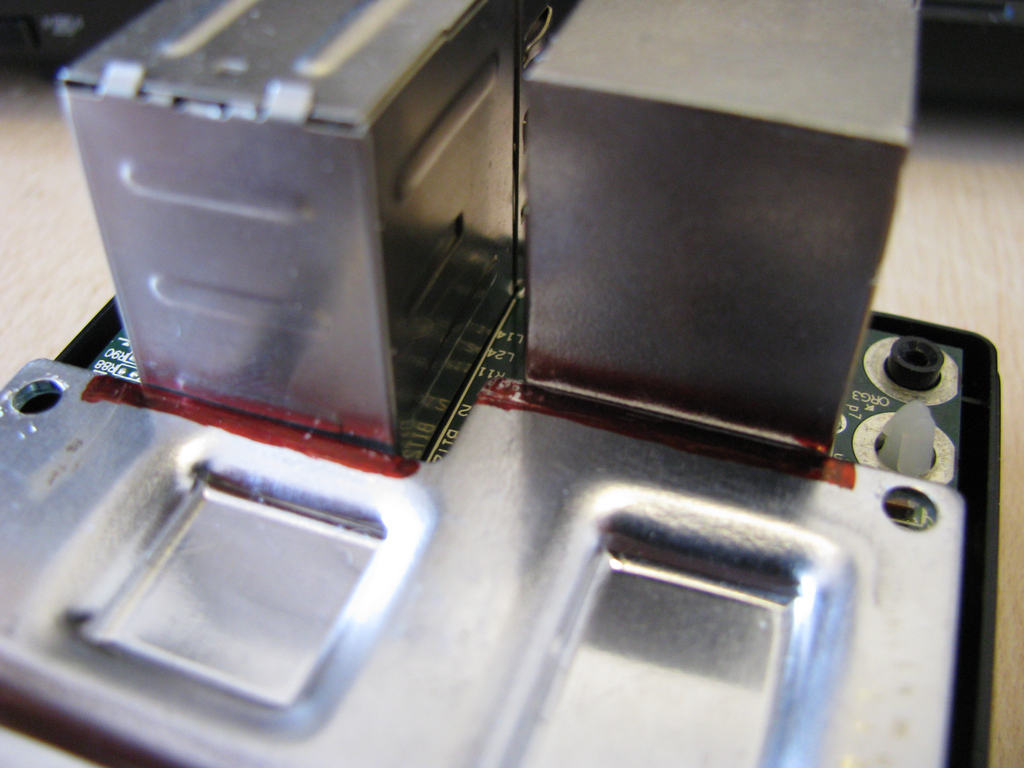
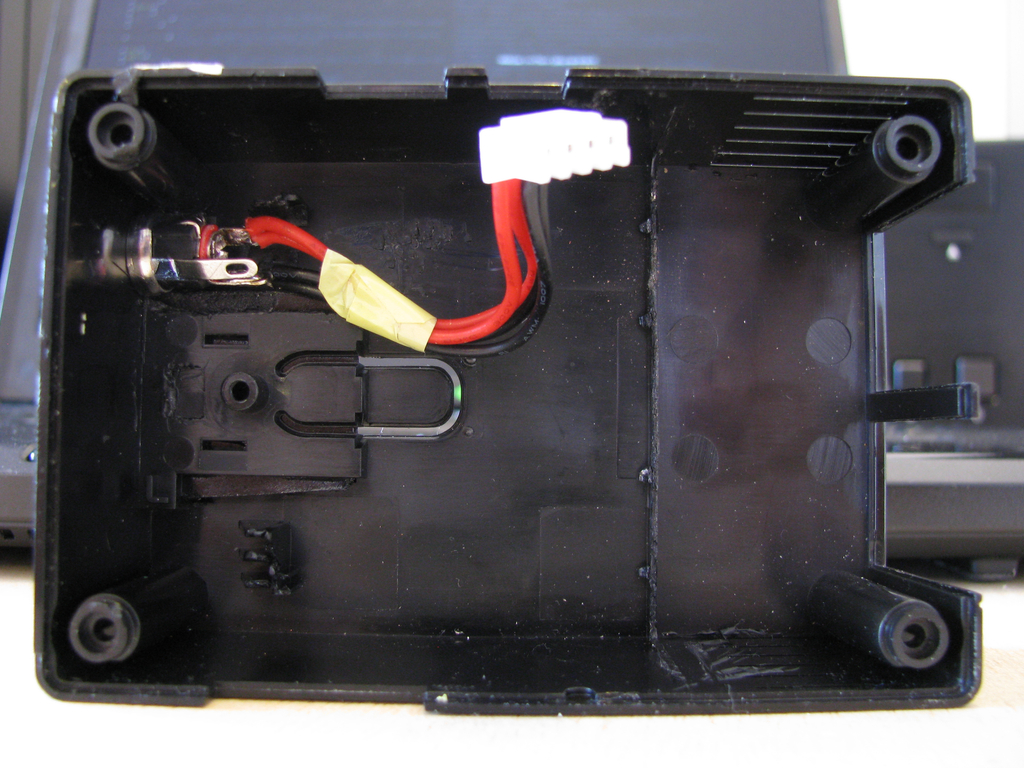
Thermal issues Using the Guruplug with more than one 100 MBit/s connection is just not possible, as it would toast itself to death. For the details have a look at this discussion in the NewIT forum, it links to a lot of interesting photos and postings. This issue is a major design and QA failure. Even without knowing what the datasheets say, it is easy to imagine that a thin piece of alloy is not the proper way to cool a CPU and network chip. Especially not when it is mounted with cheapish pads instead of a proper paste. GuruPlug Server Plus Cooling 1 As it seems the plan was to send the heat to the shielding of the network/USB/eSata ports (the area is marked red as my first plan was to remove that part of the alloy and reuse the heat-spreader), a strong indication for that is that this is the only area with holes for air circulation. I could imagine that it was not possible to have these holes next to the PSU, which was mounted above the heat-spreader, to avoid electrical shocks. GuruPlug Server Plus Cooling 2 As there was no other opening for the heat to leave the case, even the microSD card became pretty hot - I've measured temperatures around 60 deg. C next to the card - while CPU and 100MB/s network were idling. The official information from GlobalScale Technologies is that only 10/100MBit/s should be used as workaround to avoid overheating until a "Professional Upgrade Kit" is released. As mentioned here the upgrade kit announcement was removed silently from GST's website. To be honest, this doesn't make me wonder. There is no way to fix the Guruplug with an external fan or any other external magic as the only way to fix it is to cool the CPU and networking chip properly. There are various workarounds for the cooling issues posted to the forums. I've decided to rip out the power supply and heat spreader out of the case and get a nice external PSU. The new connector is mounted, ready to supply the GuruPlug's board with power. GuruPlug Server Plus power connector Currently I'm waiting for the new heat sinks and glue to arrive. Then I'll give it a try to mount eveything in the small case again, probably with some additional air holes. As soon as I have a workign solution, I'll blog about it again.

Bernd Zeimetz: the guruplug server plug - major design and qa fail

As a lot of people are coming to my blog to read the installing instructions for Debian on the GuruPlug Server Plus, I shall not hide my opinion about the Guruplug Server Plus: It is a major design and QA fail. Don't waste your money on it.
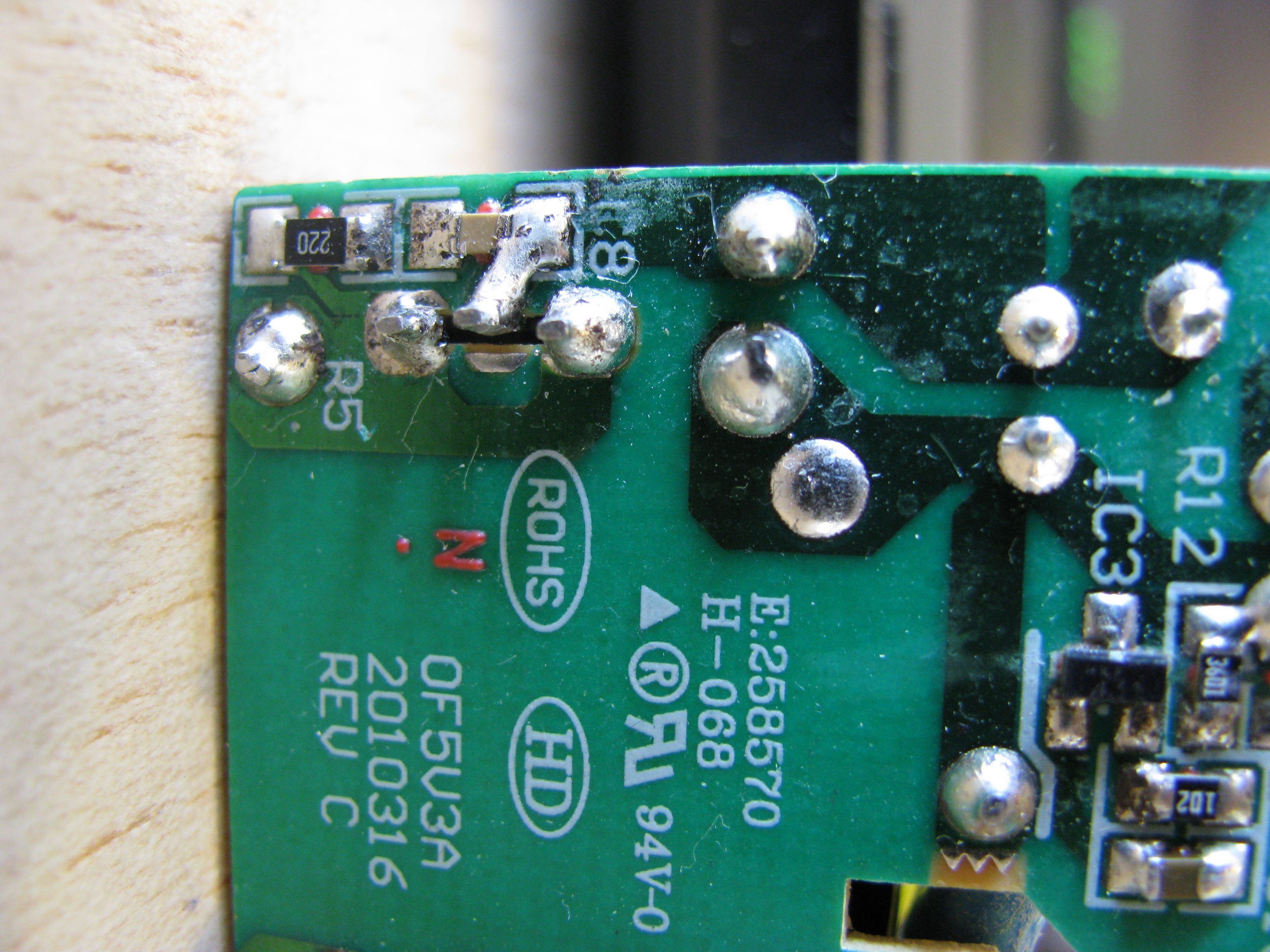
The power supply Although I've ordered the Guruplug pretty early with the promise, that I'd have it in April, it arrived at the end of March due to QA issues with the power supply. While I appreciate that they didn't deliver broken power supplies, I would have preferred not to receive one which was "fixed" by somebody who uses the soldering iron like an axe. Here are some macro photos to show the gory details: GuruPlug Server Plus PSU 1 GuruPlug Server Plus PSU 2 GuruPlug Server Plus PSU 3

Software issues The version of UBoot which shipped with the device was only able to boot from NAND and network. Booting from USB failed and ext2 support was missing, too. Didn't have a look if the community came up with a fixed UBoot version yet, but in my opinion a piece of hardware for >100 EUR should not have such flaws.

Thermal issues Using the Guruplug with more than one 100 MBit/s connection is just not possible, as it would toast itself to death. For the details have a look at this discussion in the NewIT forum, it links to a lot of interesting photos and postings. This issue is a major design and QA failure. Even without knowing what the datasheets say, it is easy to imagine that a thin piece of alloy is not the proper way to cool a CPU and network chip. Especially not when it is mounted with cheapish pads instead of a proper paste. GuruPlug Server Plus Cooling 1 As it seems the plan was to send the heat to the shielding of the network/USB/eSata ports (the area is marked red as my first plan was to remove that part of the alloy and reuse the heat-spreader), a strong indication for that is that this is the only area with holes for air circulation. I could imagine that it was not possible to have these holes next to the PSU, which was mounted above the heat-spreader, to avoid electrical shocks. GuruPlug Server Plus Cooling 2 As there was no other opening for the heat to leave the case, even the microSD card became pretty hot - I've measured temperatures around 60 deg. C next to the card - while CPU and 100MB/s network were idling. The official information from GlobalScale Technologies is that only 10/100MBit/s should be used as workaround to avoid overheating until a "Professional Upgrade Kit" is released. As mentioned here the upgrade kit announcement was removed silently from GST's website. To be honest, this doesn't make me wonder. There is no way to fix the Guruplug with an external fan or any other external magic as the only way to fix it is to cool the CPU and networking chip properly. There are various workarounds for the cooling issues posted to the forums. I've decided to rip out the power supply and heat spreader out of the case and get a nice external PSU. The new connector is mounted, ready to supply the GuruPlug's board with power. GuruPlug Server Plus power connector Currently I'm waiting for the new heat sinks and glue to arrive. Then I'll give it a try to mount eveything in the small case again, probably with some additional air holes. As soon as I have a workign solution, I'll blog about it again.

28 August 2010

Erich Schubert: Facebook closing up for third party developers?

It looks a lot as if Facebook is closing up on third party developers. Seems like they've cherry picked the features they want to copy, and now are no longer interested in third parties anymore:Expect once-famous Facebook applications such as SuperPoke to disappear on the long run - their integration hooks have been pulled. The API gets more and more limited for the cash cow use case: games. And of course marketing. Oh, I forgot one type of "applications". The one that basically embeds you regular web page within a Facebook tab. Wow. That's technology!If it was really about the users, Facebook would seriously fight Facebook spam, worms and fraud. They still don't have that under control (and none of them used either of the removed features!). They do even less to prevent users from clicking on such bad links such as the Free iPad scam, which has been around for at least a week now. Or the famous "dislike button" scam. They could not spell much more clearly that they do not care about their users - they just want your data to sell more directed advertising to you. Forget about privacy, too!Now that all my three Facebook applications are pretty much dead, this comes with a good side for me: I've been considering to disable/suspend/kill my Facebook account for quite some time. But I wasn't sure if that would also kill my applications for their users. Now that they're dead anyway, there is not much keeping me anymore.

27 August 2010

Alexander Reichle-Schmehl: Release Critical Bug report for Week 34

The unofficial rc bug tracker currently knows about the following bugs:
In Total:390
Affecting Squeeze:299
Squeeze only:82
Remaining to be fixed in Squeeze:217
Of these 217 bugs, the following tags are set:
Pending in Squeeze:18
Patched in Squeeze:35
Duplicates in Squeeze:21
Contrib or non-free in Squeeze:14
Claimed in Squeeze:3
Delayed in Squeeze:10
Can fixed in a security Update:13
Otherwise fixed in Squeeze:17
Ignoring all the above (multiple tags possible), 126 bugs need to be fixed by Debian Contributers to get Debian 6.0 Squeeze released. However, with the view of the Release Managers, 245 need to be dealt with for the release to happen. Please see my older post for an explanation of the different numbers.

25 August 2010

Joey Hess: at the beach

view from the beach house
This year at the beach we're being lazy and instead of camping, have rented a beach house. It's less intense but has its perks. :)
Update: Added an ocracode for this trip:
OBX1.1 P7/3 L7 S67+++(Pawley Island beach house)d++++ U10 T0f0b0 R1t
Bn---b---m--- F+++u+++ SC-s---g3 H++f0i0 V+++s---m0 E++r++++

Jonathan Wiltshire: Taking good care of your keyring

Recently I was surprised to find that many of the rules I took for granted when dealing with an OpenPGP keyring, and the other activities associated with a web of trust, were new to some people I spoke to. These rules are born from a mixture of experience, accepted good practice, and wider reading, with a small dose of paranoia thrown in for good measure. And some rules about signing and signatures: Do you have other rules or guidelines that you use when dealing with keys and signatures?
Comments flattr this!

Kumar Appaiah: Browsing with Elinks and using hooks

Even in the modern times of AJAX, Web 2+ and what not, Elinks is one of my favourite browsers, at least for browsing some sites. The reasons are simple: it cuts the unnecessary distractions, and allows you to digest text based information rather quickly. In addition, since it doesn't display any images or flashy elements like Flash, pages load lightning fast even on poor connections, making it an excellent option.Unfortunately, some sites don't really work very well with Elinks, and for those, I do one of two things. For the ones which are really complex, such as secure login sites with too much AJAX, I just resort to one of the "standard" graphical browsers. For some others, I try to work around the problem using Elinks' rich scripting interface available in many programming languages including Perl and Ruby. I chose Lua, since it seemed simple enough to learn. I wanted to share with you some of the simple workarounds I implemented for some sites I visit often.The first quirk is with the Debian BTS, whose CSS isn't properly interpreted by Elinks (see 593804 and 593840 for details). The short story: the BTS renders like this:So, I grabbed the CSS, and made some small changes (described in the above mentioned bug reports), and got a new CSS file. I put it in /home/kumar/Kumar/bugs.css, and added the following to my ~/.elinks/hooks.lua:
-- Use an alternate CSS for the Debian BTS to work around some quirks
function debian_bts_format_html_hook (html)
   return string.gsub(html, "/css/bugs.css", 'file:///home/kumar/Kumar/bugs.css')
end
function pre_format_html_hook (url, html)
   if sstrfind (url, "bugs.debian.org") then
      return blonnet_format_html_hook(html)
   end
   return nil
end
and with it, the BTS renders like this:Much more readable!The second simple example, for which I won't include images, is the Mobile Twitter interface. The mobile Twitter interface is very convenient and functional in Elinks; however, by default, the text font seems to be a light grey, which is not discernible in the bright background. A default user.css file would be a possible solution, but I have not decided whether to go for it just yet. So, for the Twitter site, I add a function like this:
-- Make the status messages black on Mobile Twitter
function mobile_twitter_format_hook(html)
   return string.gsub(html, ".status.- ", '.status  word-wrap: break-word; color : #000; ')
end
And alter the actual hook function to:
function pre_format_html_hook (url, html)
   if sstrfind (url, "bugs.debian.org") then
      return debian_bts_format_html_hook(html)
   elseif sstrfind (url, "mobile.twitter.com") then
      return mobile_twitter_format_hook(html)
   end
   return nil
end
Finally, a more complicated example. I like reading the Indian business newspaper the Hindu Business Line. However, if you try browsing to the site with Elinks, you'll notice that, barring the top hyperlinks in each sectcion, the links on the left are not "linked" at all.In addition, there are some other irritants which are easy to remove, such as the navigation bar on the top, and the text colour being too light for my taste etc. So, I write the following Lua blurb. Why I write this is left for the interested readers to figure out, though it shouldn't be surprising if you open the page. The workaround for the missing links is interesting, though; it is because the website authors have put a hyperlink (<a>) tag before a list item (<li>) tag, and Elinks seems to not like that too much. So, I just swap the two around, and Elinks is happy.
-- Reformat the Business Line website
function blonnet_format_html_hook (html)
   html = string.gsub(html, "<body ", '<body text="#000000"') -- I like the text in black on the white background
   html = string.gsub(html, "<[Ff][Oo][Nn][Tt] class=leftnavi color=brown>.-</[Ff][Oo][Nn][Tt]>", '') -- An ugly hack to remove the navigation bar
   html = string.gsub(html, "<TD align=left vAlign=top width=\"500\"><IMG.-</FONT><BR>", '', 1) -- Remove description
   html = string.gsub(html, "<A class=groupnavi href=\"http://epaper.thehindubusinessline.com/\">.-</FONT><BR>", '', 1) -- Remove other group links
   html = string.gsub(html, "(<[Aa] class=navi.-)<li>(.-</[Aa]>)", "<li>%1%2</li>") -- Fix the erroneous section sidebar
   return html
end
function pre_format_html_hook (url, html)
   if sstrfind (url, "blonnet.com") or sstrfind(url, "thehindubusinessline.com") then
      return blonnet_format_html_hook(html)
   elseif sstrfind (url, "bugs.debian.org") then
      return debian_bts_format_html_hook(html)
   elseif sstrfind (url, "mobile.twitter.com") then
      return mobile_twitter_format_hook(html)
   end
   return nil
end
And here's the old and new rendering:

24 August 2010

Gunnar Wolf: Thinking about how human-machine interaction is categorized

During DebConf, I managed to squeeze out of the middle of everything for long enough to write a column, a short article for a participation I have every three months, for Mexican Software Gur magazine. All in all, I liked the resulting text The current number's main topic is alternative user interfaces. I find it sometimes hard to define what Software Gur 's audience is Probably, project leaders in software development; not the actual developers, but people who actually understand about coding... but care more about The Big Picture, Processes, Architecture Engineering and Buzzword Compliance. It is an interesting magazine, all in all, but with a focus and viewpoint I often feel myself not precisely comfortable with. So, if this trimester's topic was alternative user interfaces, I decided to write on the history and future of the man-machine interface (Spanish only) (version in the magazine's site). My viewpoint comes from the fact that I do not believe we are in a state of so great, innovative changes that everybody is trumpeting, and I'd rather get others to really think on whether user interfaces have gone different in the last decades. Yes, there are many changes, but in form rather than essence. Anyway, I shared this text with some friends. Some days later, when I was back in Mexico, Pooka/Alejandro Miranda lent me a very interesting book: Hacer clic: Hacia Una Sociosemiotica De Las Interacciones Digitales (Do click: Towards a Socio-semiotics of Digital Interaction (Cibercultura)), by Carlos Scolari. I am not yet even halfway through it, but I am enjoying it This book speaks, so far, about the meanings of interfaces, and of the history of interfaces themselves, even forgetting that nowadays we (mostly) refer to interfaces as what we have between the man and the machine. Hacer click (book cover) Sadly, I cannot find this book in English, as it is very well worth a read. But if the topic sounds interesting and you can understand the language, don't hesitate and pick up the book. It gives an interesting insight on the topic, for a group of people (us techies) used to looking at things in a much more human-cognitive-process-oriented way. [update] I found this nice overview of the "Hacer clic" book, written as a presentation for the book. It explains precisely the part I am currently reading - The four metafora for interaction: Conversational, instrumental, superficial and spatial.

23 August 2010

Patrick Schoenfeld: Why do I use facebook and co?

Recently I blogged a serious complain about Facebook marketing practices.
I must note, that, while writing this, this is still a standing fact.
And it somehow leads me to the question why I use facebook (and similar portals like Xing or Meinvz at all) at all.

I would say that I'm a person, who values security. Probably I need to, because my job involves security aspects, even if its only to protect data.
Additionally I value privacy. I would never go onto a toilet in a glass case, where everybody could watch me doing my business.
The idea to keep the door to my flat open all the time would trigger all alarm bells inside of me.
But on the other hand I have a blog on which I write about technical topics, and personal topics. Like the death of my grandma or how my neighbours disturb me. And I use Facebook. And MeinVZ.

I'm well aware of how this makes it easier to trace me. How this could be used against me, if I happen to search for a job. Aware of the everlasting memorization of the internet who will keep this.. eventually forever.
And I have friends who have a serious antipathy against this and probably would never use such a portal at all.
So why do I use it?

That I started using that portals were some kind of peer pressure. I'm a person who likes beeing "thereby" and I like beeing present. Many of my friends were already using those portals and so I followed an invitation to use it, too. But I did think about several points:

I came to the conclusion that there are pros and cons for and against using these services. And I found that I can live with the cons due to the convenience they bring to me. And that I could always stop using them.

However: That does not mean that I have to "Eat or die" what they serve.

Oh and on a side note: I found "Facebook, Br ste und die Currywurst" to be an interesting article about the topic. Its a recommended reading, although only for the people who understand German.

21 August 2010

Guido G nther: Back from Debconf 10

Chris reports back to Debian duty:
Since one week I'm back from NYC where I enjoyed a very nice Debconf. It was my second one after last year in C ceres. When I unpacked all my luggage - three weeks in the US need some stuff - I found these cute green guys between my clothes. Did they break their UFO and use my airplane to travel with me? Anyway. Thanks to all who made Debconf10 in New York possible. It was a great conference! And last but not least: "Happy Squeeze Freeze"'
I too enjoyed DC10 a lot.
cute green guys

20 August 2010

David Welton: Moving data around your code - different approaches

I was thinking about this the other day, and I realized I can't particularly think of a label to attach to this concept. Anyone out there got a name for this? This could be due to my lack of formal computer science training, so I thought I'd ask, at the risk of looking stupid (I'm having an off day, so that's a very real possibility). If you have a series of functions, say: a(x), which in turn calls b(x), which calls c(x), and so on, and you end up with a faily long call chain, out to say m(x), and you subsequently decide that m(x) needs an additional piece of information that is contained in a local variable in the body of the a(x) function - how do you get it to m(x) ? It seems the answers are basically either 1) add the parameter to all the functions and everything that calls them, or 2) use some kind of composite type to stash the one or more values in.
It seems that this is a reasonable common thing to have to do, so it must have a name. How well does your language handle that kind of refactoring?

Alexander Reichle-Schmehl: Release Critical Bug report for Week 33

The unofficial rc bug tracker currently knows about the following bugs:
In Total:401
Affecting Squeeze:302
Squeeze only:83
Remaining to be fixed in Squeeze:219
Of these 219 bugs, the following tags are set:
Pending in Squeeze:18
Patched in Squeeze:43
Duplicates in Squeeze:21
Contrib or non-free in Squeeze:15
Claimed in Squeeze:2
Delayed in Squeeze:13
Can fixed in a security Update:10
Otherwise fixed in Squeeze:19
Ignoring all the above (multiple tags possible), 128 bugs need to be fixed by Debian Contributers to get Debian 6.0 Squeeze released. However, with the view of the Release Managers, 243 need to be dealt with for the release to happen. Please see my older post for an explanation of the different numbers.

18 August 2010

Jonathan Wiltshire: Home, James

Since I didn t actually come home from Debconf, but instead took a further week s holiday and lazed around by the beach, I haven t sat down to write anything about it yet. Most importantly, I should say thank you to Joey Hess, Steve McIntyre and Stefano Zacchiroli for arranging the Debconf Newbies programme, without which I would have been stuck at work watching the videos again (though this does have the advantage of seeing three talks at once). Every year I am astounded at the generosity of certain companies who sponsor the conference, since I ve experienced for myself the difficulty of trying to put a corporate price on free software even more so to specifically sponsor newbies, who by definition probably aren t as active in ways that interest sponsors than more established developers. Right up to the day I flew I was nervous (as in any social situation) at meeting so many new people in one go, on my own, and long way from home after all, it s not really easy to back out and go home after that But in fact, everybody I met was warm and friendly, and very supportive in all sorts of ways. I got to see and hear many talks; in the first two days alone: And of course social events, like Cheese and Wine, Keysigning (handy for putting faces to names), many nights in the third hacklab, a day trip to Coney Island, a privileged viewing of the most nerdy organ in the world, and a trip up the Empire State building: The campus was ideally suited to such a conference, and apart from the mugginess we had excellent weather. I discovered that I rather enjoy watching baseball and that one should repeat the application of sunblock after paddling. But what I enjoyed most of all was being in the same area as so many eminent Debian people, and being so inspired by them to be even more involved technically and socially. I hope to see you all again soon!
Comments<script type="text/javascript"> var flattr_wp_ver = '0.9.11'; var flattr_uid = '32970'; var flattr_url = 'http://www.jwiltshire.org.uk/content'; var flattr_lng = 'en_GB'; var flattr_cat = 'text'; var flattr_tag = 'blog,wordpress,rss,feed'; var flattr_btn = 'large'; var flattr_tle = 'jwiltshire.org.uk'; var flattr_dsc = 'The public face of jwiltshire'; </script> <script src="http://api.flattr.com/button/load.js?v=0.2" type="text/javascript"></script> flattr this!

16 August 2010

David Moreno: curl POST data and newlines

I'm writing a Rails application for the microblogging strategy for Debian (which I used to call, debian-twitter, but you know how us Debian folks are :D ). I came up with a strange issue, that at first I thought was ActionController's fault or some crap. So, I was testing one of my controllers with something like this:
cat /tmp/mm.txt   curl -d @- http://localhost:3000/message/new
/tmp/mm.txt is a PGP signed message which then I just send as POST data to my application. So far so good. However, when accessing the data from Rails, using request.body.read, I was a getting a single line, with the newlines (carriage returns) removed. So I started looking at how ActionController was getting the HTTP data and stuff. But then I tested:
cat /tmp/mm.txt   lwp-request -m POST  http://localhost:3000/message/new
And that had the carriage returns in place. So, I started looking at the curl man page and discovered this little gem:
data-binary <data> (HTTP) This posts data exactly as specified with no extra processing whatsoever. If you start the data with the letter @, the rest should be a filename. Data is posted in a similar manner as data-ascii does, except that newlines are preserved and conversions are never done. If this option is used several times, the ones following the first will append data as described in -d/ data.
cat /tmp/mm.txt   curl --data-binary @- http://localhost:3000/message/new
did indeed the tricky. Maybe someone needs this info some day.

13 August 2010

Alexander Reichle-Schmehl: Release Critical Bug report for Week 32

The unofficial rc bug tracker currently knows about the following bugs:
In Total:448
Affecting Squeeze:329
Squeeze only:108
Remaining to be fixed in Squeeze:221
Of these 221 bugs, the following tags are set:
Pending in Squeeze:24
Patched in Squeeze:43
Duplicates in Squeeze:19
Contrib or non-free in Squeeze:11
Claimed in Squeeze:2
Delayed in Squeeze:8
Can fixed in a security Update:12
Otherwise fixed in Squeeze:21
Ignoring all the above (multiple tags possible), 121 bugs need to be fixed by Debian Contributers to get Debian 6.0 Squeeze released. However, with the view of the Release Managers, 271 need to be dealt with for the release to happen. Please see my older post for an explanation of the different numbers.

12 August 2010

David Moreno: DebConf 10

I was in New York for three full weeks, before, during and after DebConf 10 took place. Unfortunately, I wasn't able to attend talks or go hang out with folks as much as I would've wanted. Most of the time I was busy at the office with a new product launch we have been preparing for the last few months. However, I was able to come and say hi to a few people, attend the C&W party and talk with friends and ran into. I was, however, following all conversations on IRC so I was pretty informed of all of what was going on. Some random thoughts: DebConf 10 rocked and I appreciate everybody's participation in it. See you in Banja Luka, next year!

Next.

Previous.